
Home » Netflix (Page 2)
Category Archives: Netflix

Things I Miss, or Introverts vs Coronavirus

The thing I hate most about self-isolation is how quickly I eased into this new pace of life. Is that the privilege of having somewhere to self-isolate to or does it come with having an introverted personality? Before quarantine, many would perceive me as a mild-mannered individual. I ask a lot of questions. I guess that’s where my affinity for journalism comes from. Yet, in a global crisis, not much has changed. For someone that suffers from anxiety, one would think I would have more emotional unrest during the worst public health crisis in a generation. But no. I’m content, staying at home.
Whilst this pandemic has been liberating for me, it has shown how much privilege I still have despite being at three disadvantages in society: the colour of my skin, my invisible disability and being an introvert in a world designed for extroverts. Yet, cabin fever does set in once in a blue moon and sometimes it does feel like Groundhog Day. Despite being at comfort in my own space, my concept of time is being challenged. Like, what is a weekend? Not even Bill Murray can save me from this paradox. Not my books, nor Disney+ subscription, films, or The Doctor, Martha and that fogwatch.
What I hate about being an introvert in the buzz term of today – “unprecedented times” – is how I’m not suffering like my extroverted friends. Perhaps this is what it means to live in society designed to accommodate you. The world outside of a health crisis – is this what it’s like? Imagine if I also happened to be an able-bodied, White, straight man as well? Just imagine. Today, extroverts are suffering. Ambiverts are suffering. When this is over will we see an increase in agoraphobia?
And in a society where extroverts are privileged over introverts, the outgoing outspoken marketing professional is valued more than the introverted, reclusive schoolteacher.
Yet, today, we are seeing the value of nurses, doctors, teachers, lecturers / academics and so forth. Many of whom will be introverts going against the grain of what feels normal to them. The person seen to be outgoing and talking and networking is regarded as a team player, in comparison to the freelance blogger or journalist writing away on their computer at home. Many of my teacher friends that talk for a living also love to recluse in their homes, as drinking your own drinks and eating your own food in your own house is great. Can you hear the silence, the world in mute? Priceless.
In my job, I recall in the training we did the Myers-Briggs test in order to get to know each other better. Safe to say I was 97% introvert, which had increased somewhat since I was a student. Coincidence, I think not. In a job where I also go to meetings for a living, and network and people (if I can make a verb out of people), it can be draining. The meetings, the networking, the small talk, the different hats and masks people wear.
As awful as Coronavirus is, I will go back to my intro in saying that this new pace of life is almost like a dream, with intermittent periods of cabin fever. I can recharge my life batteries when I want. I can be alone when I want. I can read, watch films and television series when I want. I like to engage in activities that require critical thought. Self-isolation has given ample time for that. And good things have come from my introspection. Moreover, many conversations with myself. No, I’m not Bilbo Baggins. However, to talk with oneself is freeing. It’s the first sign of intelligence, don’t ya know?
But self-isolation to me and many of my introvert colleagues, it’s our normal. Social distancing is a farce because we are still being social. “Physical distancing” is a better term. Not in this era of WhatsApp, Instagram and Zoom, we’ve never been more social. Coronavirus has shown us a social solidarity that I thought I would not see in my lifetime. To put it bluntly, Coronavirus has pretty much eliminated the quite British obsession of small talk, and given me opportune moments to think.

Whilst my extrovert colleagues want to have that picnic in the park, I’m quite happy to sit in the garden. There lies another privilege. Simultaneously, I seldom feel the need to go out. Where I miss my cinema trips, I remember Netflix, Amazon Prime, Britbox and Disney+. Sure they’re not IMAX but they’ll do. I miss the pub but there’s the supermarket with all sorts of choices of IPA to choose from. Indeed, I have found solace in having my access stripped right back. The freedom to choose afforded to me because I work and live in a “developed country” (I use this term loosely).
For those of us that live in Britain, Coronavirus has swiftly shown that we live in a first-world country with a third-world healthcare system and levels of poverty – highly-skilled medical professionals in a perilously underfunded NHS systematically cut for the last ten years by the Tories.
Unlike University, I can mute social media for a couple of hours, and do some reading. I hate that I am so comfortable, whilst others are not. I often think about international students shafted by visa issues, and rough sleepers who don’t have the privilege of thinking about self-isolation. What about those having to self-isolate in tower blocks like Grenfell? What if we were to have another tragedy like Grenfell during a public health crisis? I hate how Coronavirus has exposed underlying inequalities, and how after this, these systems of power will likely carry on like it’s business as usual.
I don’t feel defeated or bored but the other inequalities in society do make me worry. Having been a victim of racism ten times over, both by individuals and institutions, I know that racism is its own disease and it won’t simply go on holiday because we’re in a pandemic. I know increasing police powers will disproportionately impact people from Black backgrounds, especially in working-class communities, but as Black people (pre-Coronavirus) at a rate of nine times more likely to be stopped and searched than a White person in Northamptonshire is bad enough, isn’t it?
This solitude has pushed me creatively with my poetry and own blogs. Take Eric Arthur Blair, or George Orwell as he was known; when he was sick with TB, he wrote Nineteen Eighty-Four. The book we now lord about today is essentially a first draft. Rushed. A last bout before death. In my isolation, I’m excited for the number of dystopian texts that will come out of Coronavirus, particularly political narratives on how Britain and America reacted. I’m looking forward to artistic expression and if the British public will hold the Government to account. One could argue their thoughtlessness, and support of genocide (herd immunity) is a state crime.
Whilst it is easy to blame the Chinese government, our own government have a lot to answer for and metaphorically speaking, someone (or quite a few people) need to hang.
A good friend and confidant has implored me to write a book as a project. Being naturally inward in my personality, I could do it. Though, I have my reservations. Perhaps I could write a work of genius that goes on to define a generation. Nonetheless, I observe that during lockdowns around the world, there will be both introverts and extroverts applying their minds to art and creativity. Writing books. Painting pictures. Discovering theories, like Isaac Newton did when he was “confined” to his estate during the Plague in 1665.
One day the curve will flatten: we will see each other again at the rising of the sun, folks say we must make use of this time; however, this is unprecedented, so it is also perfectly okay to be at peace with your loved ones, cherish those moments, and do absolutely nothing of consequence at all.
Share this:

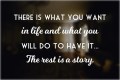
“What do you want to do?”

I was twenty-five when I first applied for university, studying BA Criminology. When I first told my family and friends, they were unsure. They did not understand why I wanted to change my career and study a subject without having a ‘plan’. I had accomplished many things since leaving school, such as buying a house with my partner, buying a dog and at the time I was a supervisor in a nursery. However, I was not satisfied, I wanted to be challenged and wanted to try something new. In all honesty when family and friends asked me what I wanted to do, I did not know.
Growing up, I was told I was not smart enough for university, as a young person you begin to believe it. It wasn’t until I began looking after children when I realised that children should be encouraged and if I was going to reinforce my belief – that you can do whatever you set your mind to – I should believe it in myself.
Choosing criminology was easy for me, crime was something I was sheltered from as a child, I did not experience crime. I only began my fascination, after watching documentaries on Netflix and even then, I was curious about the concept and naively wondered, ‘what makes a criminal?’ After studying for one year, it is now easy to see that it is not an easy question to answer – but don’t take my word for it, study criminology and see for yourself!
Reflecting on my first year, it was a lot of trial and error. Like many students, I was learning how to write essays again and abide by deadlines, work a part time job, balance study, volunteering and home life and try not to consume too much alcohol in the meantime.
As summer comes to an end, I am excited to begin again, the stresses of university become worth it, when you build friendships and have the realisation that you are one step closer to graduating. I will continue to be determined and optimistic in my future, because I believe I can finally be satisfied. The next time someone asks me what I want to do, I can be confident and say, ‘I haven’t decided yet, but you can do anything you set your mind to, and no-one can tell me I am not smart enough for university’.
Share this:


Just Keep Swimming

This isn’t going to be the intellectual blog post I had expected myself to write. I am writing this as I am undertaking my post-grad dissertation and in all honesty, I can’t be bothered anymore. And I feel secure in the fact that I am not the only person who feels this and I most certainly will not be the last. Heck, I’ve been close to giving up altogether a handful of times throughout both my under and post-grad. I will be the first to admit that I don’t know how to leave work mode alone when I have deadlines due. And it is only through friends and family that I have to be reminded that all work and no play, doth not make for a mentally healthy Bronagh. I have always struggled separating the two and have been known to cancel or decline plans so I can do work; low and behold, I don’t write a word.
Be mindful of your mental health. You can’t work at it constantly. Between work and uni, you need to allow yourself those stress-free days off so you can produce the best work that you are capable of. I hate to harp on about the most obvious scenario. But as someone who felt bad for taking time off to have fun and as someone who is currently struggling for the motivation to complete this dissertation, just know that you are not alone. It is not uncommon to feel burnt out towards the end of your degree, be it 1 year, 3 years, or more. Just know that you have not come this far to fall at the final hurdle.
My biggest motivation was having friends going through the same situation. Meeting up to go the library so none of us bailed. Telling one another to “shut up, we need some quiet time”, putting headphones in so as not to get dragged into another one-hour chat about that dire television show we all watched the other night. As with everything, it’s all about moderation. You are your own worst enemy, but it is you who will pull yourself out of your slump and show your self-doubt that you are both capable and worthy. This isn’t forever and you will relish those days where you have no deadlines to worry about, but trust me, you will also miss them. Do not let these tough times get the better of you and certainly do not let them put you off any possibilities of further education. The motivation will come and you will get there in the end. Carry on doing the things you enjoy and take everything in your stride.
Just keep swimming, you’ve got this.
Share this:

Public attitudes towards male victimisation
I graduated from the University of Northampton as a Criminology student in July 2016 and not a day goes by where I don’t miss studying. I miss everything about the University experience, from the lectures and seminars, to the countless hours spent working in the library. One of the positive things about being a graduate however, is that any time spent scrolling through social media or binge-watching a Netflix series is guilt-free. There is no dissertation to write or any exams to revise for any more, meaning you can enjoy your leisure time without the dreaded guilt that you’re not spending your time productively. I have, admittedly, taken this privilege too far, and spend far too much time on my phone. Bizarrely, I spend a lot of my time scrolling through comments on social media posts, even when I know there are bound to be comments which will annoy me.
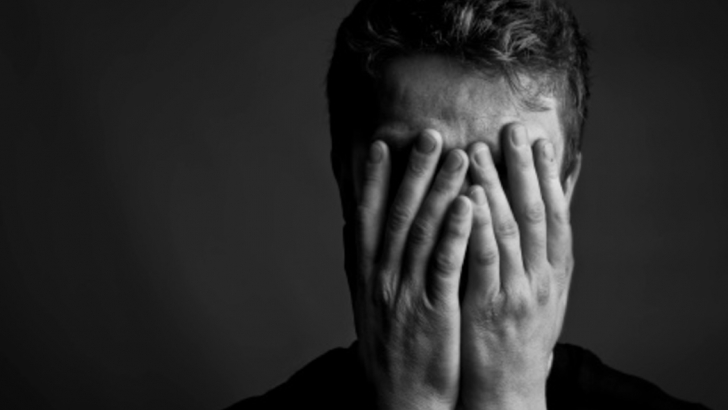
For instance, last month, a video clip from ITV’s ‘This Morning’ emerged on Twitter and Instagram, in which Phillip Schofield and Holly Willoughby interviewed a young male who had suffered as a victim of domestic violence at the hands of his female partner. He revealed how he had been starved, physically and mentally abused by his girlfriend and that his injuries were so severe, they were almost fatal. What was really encouraging to see, were the hundreds of supportive comments left by people online. The majority of people were praising the man for his bravery and recognised that there needs to be much greater awareness for male victimisation. Sadly, the comments that caught my attention were “what a wimp” and “…he shoulda manned up sooner!”. These comments really riled me, as for my own dissertation, I interviewed an organisation specialising in support for male victims of domestic violence. It was shocking to discover the challenges the organisation face in terms of securing public funding, professional support, and most importantly, encouraging male victims to come forward and seek help. One of the over-arching themes which emerged was that men are still very reluctant to seek help, largely due to embarrassment and fears of being ridiculed. There is still a societal perception that men should be able to deal with problems by themselves, and that if they are unable to, they must be “weak”. It is for this reason that these particular comments left by strangers online infuriated me so much. Quite simply, domestic violence is a human issue, not just a gender one. Not only this, but these few words have the potential to be extremely damaging and may deter men who are suffering in silence from getting the help they need.
Over two years have passed since I carried out my research on this topic area and I am still very passionate about it. I have nothing but admiration for the young male on ‘This Morning’ and am hopeful that his bravery will encourage other male victims to seek help. I also hope that the positive comments online will always overshadow the thoughtless, negative ones. Help is out there and no victim, regardless of their gender, should be discouraged from seeking it.
Share this:


Netflix and Study?

Bethany Davies is an Associate Lecturer teaching modules in the first year.
As each year and each term goes by, it brings to light how much more we are all connected through media and also how we use media to socialise and also learn.
Now, watching television, movies and using music to learn is not a new concept, I understand this, but on a personal level, I have found more individuals using television and more specifically, crime documentaries to fuel their interest in criminology and their understanding of elements of the criminal justice system.
I believe firstly, the idea of enjoying, what is termed ‘binge watching’, crime documentaries, an interesting concept. As previously explored on the blog regarding ‘enjoyment’ and ‘fun’ of criminology, the themes in these documentaries are very dark and in most cases, the gorier it is, the more it seems to be enjoyed by some viewers. Each September that rolls around we have the (sometimes dreaded) ‘ice breaker’ session, where we get to know our students and what has made them want to pursue a criminology degree at this University. Within that you will always have some who choose to voice their love of a certain crime TV show. This does not always end at first introductions either, there is often a continuation of comparisons made between that of a serious historical event and that of Netflix documentary (for example) which can often contain more dramatic music and pictures than it does criminological discussion.
The question I would like to present is, do we nourish the idea of using documentaries and crime dramas to keep the interest of those who wish to pursue criminology as a field of learning, or would doing so be disingenuous to what criminology is and neglect the love for reading and debates in criminology? I do not necessarily feel this is a question we have to worry about tremendously as I feel those who seek to study criminology purely based on their love for crime documentaries will either soon realise that there is so much of criminology that does not fit those ideas and either love it or abandon it at that point.
But in years to come these questions may be more significant than they are currently. Especially if used as a tool in universities to attract more students into a certain discipline. There are such large elements of criminology that I feel have to be explored with literature or within a seminar setting with questions and debates, and it can be easy for institutions to say that these elements will always be fundamental to a criminology degree for years to come. However, if other institutions start to use more and more media and visual aids to demonstrate a theory or issue of crime in the future, or what I suspect more as a marketing campaign to attract students, will we conform? There are some articles (from questionable sources) that some institutions are using Snapchat and social media takeovers to help attract students to certain courses, most of which I have read about have been media based, granted. But let’s hope all this drivelling nonsense is just my brain after a long bank holiday weekend and not a possibly looming prospect of the future of criminology, right?

 Thoughts from the criminology team