
Home » Mental health (Page 3)
Category Archives: Mental health

A Snapshot of My Dissertation: Portuguese Drug Decriminalisation and Some Other Things
I submitted my dissertation back in April, and now the dust has settled I thought it would be good to share the most interesting parts of my research, think of this blog post as an abridged version of my dissertation. Towards the end I’ve also included some tips for completing a dissertation, along with some reading you might like to do if you found this interesting.
What Was my Research About?
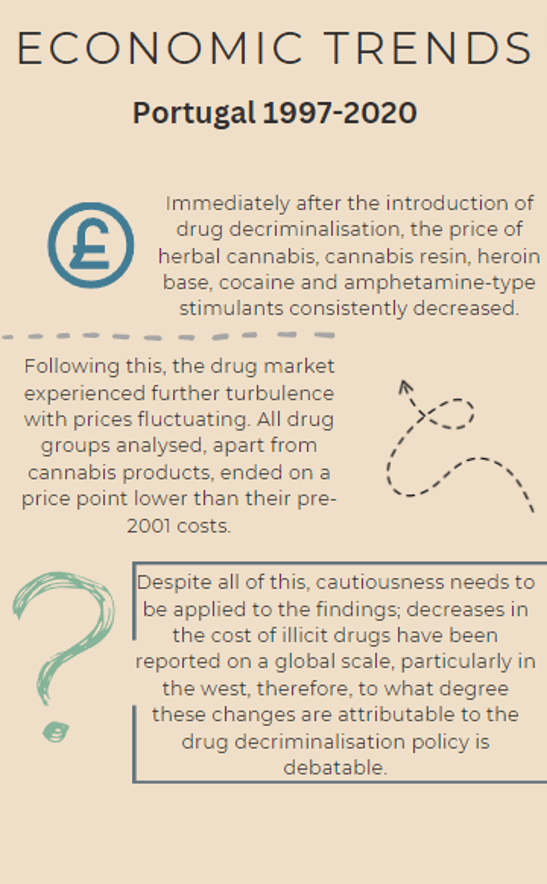
My research was about two main areas; Firstly, I wanted to assess the effects of Portugal’s 2001 drug policy whereby all illicit drugs were decriminalised, meaning drug offences relating to personal possession result in a civil punishment rather than a criminal punishment. I assessed key indicators within Portuguese society, gathering data from international, European and national databases which measured public health trends, criminal justice trends and economic trends. Some fields of data I looked at included prices of drugs at market level, drug seizure data, HIV/ AIDS rates among people who inject drugs and the Portuguese prison population.
The second part of my research involved understanding whether a drug decriminalisation policy similar to Portugal’s could currently happen in the UK. I researched this by performing a discourse analysis on drug related House of Commons debate occurring between the years 1970- 2023, selecting roughly one debate every two years. By doing this, I was able to analysis common themes across the years, understanding the political barriers which may mean drug decriminalisation is not a feasible policy idea at the moment given the political attitude and climate within the House of Commons when it comes to illicit drug policy.
What Did I Find Out?
Look through the slideshow below to view summaries of my findings.



Some Final Comments and Conclusions:
Generally, my research found that Portuguese drug decriminalisation correlated with effects that can be seen as positives. Of course, my research needs to be looked at critically, I don’t claim that all of the societal indicators are directly attributable to the drug decriminalisation policy, however, the correlations that were found are promising. Policy is always a really complex, multi-faceted topic and it would be simplistic to suggest otherwise.
So is a drug decriminalisation policy likely to happen in the UK? The short answer is probably not very likely at all. My discourse analysis pointed towards five decades of debate which was hyper focused on a law and order approach to drug use, a fixation on low level cannabis use and an insistence on the idea that deterrence measures and the war on drugs is actually working. The debates felt stagnant, with new and progressive approaches being hindered by penal populism and ‘tough on crime’ stances.
During my research I found some really interesting reads and different points of view that I hadn’t considered before. I’ve listed some of my favourite pieces below if you’d like to have a read further into this subject.
- Cebral T.S. (2017) “The 15th anniversary of the Portuguese Drug Policy: Its history, its success and its future,” Drug Science, Policy and Law, 3. https://doi.org/10.1177/2050324516683640
- Eastwood, N., Fox, E. and Rosmarin, A. (2016) “Portugal,” in A quiet revolution: Drug decriminalisation across the Globe. London, UK: Release drugs the law and human rights. https://www.release.org.uk/sites/default/files/pdf/publications/A%20Quiet%20Revolution%20-%20Decriminalisation%20Across%20the%20Globe.pdf
- Goldstein, P.J. (1985) “The drugs/violence nexus: A Tripartite Conceptual Framework,” Journal of Drug Issues, 15(4). https://doi.org/10.1177/002204268501500406
- Jacques, S. and Allen, A. (2015) “Drug market violence: Virtual anarchy, police pressure, predation, and retaliation,” Criminal Justice Review, 40(1). https://doi.org/10.1177/0734016814553266
All of the data used is available from The Hansard Archives, European Monitoring Centre for Drugs and Drug Addiction, European Centre for Disease Prevention and Control and The World Prison Brief. Also, I used Taguette to analyse my qualitative data, it’s totally free and it was so useful.

Share this:


Can Barbie ever be Feminist?

Barbie certainly has people talking, the commentary surrounding the film takes a variety of angles. A quick google search shows that Barbie’s ironic take on the patriarchy appears to have ruffled the fragility feathers with some viewers describing it as ‘man-hating’. I could not help but chuckle at a YouTube video titled; Barbie Bombs Innocent Families with Feminist Propaganda…because apparently, equality is such a bad idea.
There have been some superficial and tokenistic attempts to ‘diversify’ the brand. Yet, at its core the imagery of Barbie still appears to be an obvious symbol of oppressive white feminism. The Barbie doll could be seen to project the white feminine beauty ideal, and the main character within the film, Margot Robbie, appears to embody this ideal. I.e., the appearance of a white, cis-gender, heterosexual women with the wealth to be able to afford all sorts of powdery pink capitalist goods and a body type which is impossible to achieve.
In the contemporary era this ideal continues to be damaging. Even for the most privileged of women, it promotes the spending of much more of women’s income than men on items such as beauty, food and lifestyles, and encourages restrictive dieting practices, which can be damaging to physical and mental health (Naomi Wolf, 1990). For marginalised women there is damage caused due to living in a world which promotes the white privileged as normative. Some examples include, the advertising and selling of skin bleaching products to achieve this white or ‘light’ beauty ideal, to schools excluding Black and Brown school children for having afro textured hair (Emma Dabiri, 2019 and Ibram X. Kendi, 2019).
Whilst the Barbie film apparently has a dig at capitalism, the film and the merchandise sold will produce huge profits by selling this particular brand of feminism. So those interested can buy into feminism and make the capitalists happy rather than being political or radical.
Apparently, the film depicts a comedic take on the patriarchy, with Ken’s toxicity and Barbie having to deal with microaggressions when entering the ‘real world’. How far does the film go with illustrating patriarchal oppression? Is the intersectional oppression experienced by the most marginalised of women present? Does Barbie and Co have issues with femicide, police brutality, poverty, mental ill health, rape, incarceration, immigration detention, homelessness or drowning whilst in a boat whilst trying to seek refuge? Or is the patriarchy in film only palatable and profitable if it presents itself in the form of privileged women experiencing comedic microagressions?
Maybe Barbie will lead to some (probably white and privileged) people thinking more critically or feeling empowered but it doesn’t seem to be a type of feminism ‘for all people’, so perhaps it’s not feminism at all (bell hooks, 1982).
I wonder what will happen to the profits made from the film…
Note* I have not watched the Barbie film so apologies for the vague analysis and sketchy details*
References:
Dabiri, Emma. (2020) Don’t touch my hair. United Kingdom: Penguin Books.
hooks, bell. (1982) Ain’t I a Woman : Black women and feminism. London: Pluto.
Kendi, Ibram. X. (2019) How to be an antiracist. London: The Bodley Head.
Wolf, Naomi. (1991) The Beauty Myth : How images of beauty are used against women. New York: William Morrow and Company.
Share this:


Reproductive Healthcare Ramblings

Reproductive health in England and Wales is a shambles: particularly for women and people who menstruate. The failings start early, where, as with most things, stereotypes and ‘norms’ are enforced upon children from GPs, schools, from parents/guardians who have experienced worse, or who do not know any different, which keep children from speaking up. These standards and stereotypes come from a male dominated health care system especially in relation to gynaecology, and our patriarchal society silences children without the children even realising they are being silenced. As a child, you are expected to go about your daily routine, sit your exams, look after your siblings, represent the school at the tournament of the week, and do all this while, for some, bleeding, cramping, being fatigued but not be expected to talk about it. After all, you are told time and time again: it’s normal.
Moving through life, women and people who menstruate face similar stigma, standards, assumptions during adulthood as they faced during childhood. There is more awareness now of endometriosis, adenomyosis, uterine fibroids, Polycystic Ovary Syndrome Condition (PCOS) to name but a few. But women and people who menstruate report feelings of being gaslighted by [male] gynaecologists, encouraged to have children in order to regulate their hormones (pregnancy and childbirth comes with a whole new set of healthcare problems and conditions), to take the contraceptive pill and deal with the migraines, mood swings, weight gain and depression which many women and girls report. Some of the above chronic illnesses impact fertility, so ‘try for a baby’ is not an easy, or even a wanted path. Diagnosis is also complex: for example a diagnosis for endometriosis takes on average 8 years (Endometriosisuk, 2023), and can only be confirmed with surgery. That relies on women and people who menstruate going to their GP, reporting their symptoms, listening to the ‘have you tried the pill’ or ‘having a baby will help manage your symptoms’: which relies on trust. Not everyone trusts the NHS, not everyone feels comfortable being dismissed by a nurse, or GP or then their gynaecologist. Especially when a number of these illnesses are framed and seen as a white-woman illness. Communities of women and people who menstruate remain hidden, dealing with the stigma and isolation that our reproductive health system carries in England and Wales. And this is not a new issue.
The reproductive healthcare for women and people who menstruate is dire. Just ask anyone who has experienced it. What then is it like for women in prison? The pains of imprisonment are well documented: deprivation of goods, loss of liberty, institutionalisation, no security, depreciation of mental health (Sykes, 1958; Carlen, 1983). The gendered pains, fears and harms less so, but we know women in prison are fearful about the deterioration of relationships (especially with children), lack of facilities to support new mothers, physical and sexual abuse, and poor mental and physical health support including reproductive health. The poor reproductive healthcare available to women and people who menstruate within society, is a grade above what is available in prisons. These women are quite literally isolated, alone and withdrawn from society (through the process of imprisonment), and for some, they will become further isolated and withdrawn via the pains of their chronic illness.
There isn’t really a point to this blog: more like a rambling of frustrations towards all the children who will journey through our subpar reproductive healthcare system, who will navigate the stigma and assumptions littered within society. To all the women and people who menstruate who are currently wading through this sh*t show, educating themselves, their family, their friends and in some cases their GPs, those people unable to speak out, not knowing how or simply not wanting to. And to those in the Secure Estate, grappling with the pains of imprisonment and having their reproductive healthcare needs ignored, overlooked or missed.
I haven’t even mentioned menopause…
References:
Carlen, P. (1983) Women’s Imprisonment, Abingdon: Routledge.
Corston, Baroness J. (2007) The Corston Report: A Review on Women with Particular Vulnerabilities in the Criminal Justice System, London: Home office.
Endometriosis UK (2023) Endometriosis Facts and Figures [online] Available at: https://www.endometriosis-uk.org/endometriosis-facts-and-figures#:~:text=Endometriosis%20affects%201.5%20million%20women,of%20those%20affected%20by%20diabetes.&text=On%20average%20it%20takes%208,symptoms%20to%20get%20a%20diagnosis. [Accessed 24th August 2023]
Sykes, G. (1958/2007) The Society of Captives: A Study of a Maximum Security Prison, Princeton: Princeton University Press.

Share this:


Behind the Filter: Navigating the Fine Line Between Genuine Parenting and Child Exploitation in the World of Influencers

As the world of social media influencers continues to expand, certain high-profile cases have brought the issue of mum influencers exploiting their children into the spotlight. These cases serve as cautionary tales, highlighting the potential dangers and ethical pitfalls that come with blurring the lines between personal family life and commercial partnerships. It is important to note that while the spotlight has indeed centred on ‘mum’ influencers this discussion cannot go forward without acknowledging, that we should be shaping the discussion on the way PARENTS create content online.
Mum influencers have become a powerful force in the influencer landscape. They provide a glimpse into the daily lives of mothers, discussing topics such as parenting tips, family dynamics, and the challenges of balancing work and family life. Initially, many followers were drawn to these influencers for their relatability and authenticity. This has created an opportunity for dads to also partake in the ‘business’ of family influencing as many people yearn for the whole family picture, which brings a non-traditional demographic of followers and thus an expansion of interest and growth of followers, and thus bringing the allure of financial opportunities.
As followers increase, family influencers often receive offers from brands seeking to collaborate. This is where the ethical dilemma arises – how far is too far when it comes to integrating children into sponsored content? While some collaborations may involve innocent and genuine family moments, others might push the boundaries, putting children in situations that prioritize profit over their well-being. It is essential to differentiate between content that genuinely celebrates parenthood/ family and content that exploits it. Sharing heartfelt stories, documenting milestones, and discussing the challenges of parenthood and family dynamics can be informative and supportive for other parents. However, the line blurs when children are consistently used to endorse products and/ or services in a way that feels forced or invasive.
Children of influencers often have their lives documented from birth, which raises concerns about their privacy. As they grow older, they might not consent to having their childhood experiences permanently etched into the online realm. The potential impact on their mental and emotional well-being as they come to grips with their digital footprint is a significant consideration. We all have that embarrassing childhood picture that parents have on the wall or in a photo album, however that is in the confines of their home and whose eyes view them can be monitored. The tricky nature of the internet removes that possibility. With visibility comes risk. Publicly showcasing one’s life includes exposure to not only praise but also criticism and negativity. Children that have an online presence in the capacity of being influencers can become targets of online trolls or even predators, who might misuse their images or information. Protecting children from these potential dangers should be a priority for any parent, online or offline.
My previous point made on children of influencers being documented from birth begs reflection on the concept of consent. This can be viewed in many ways; however, the notion of consent becomes murky when children are too young to understand the implications of their online presence. While some influencers argue that their children enjoy being part of the content creation process, it is challenging to gauge how much choice a young child truly has. Blurring the lines between what is a personal family moment and what is a scripted advertisement can complicate this matter further.
As family influencers grapple with this dilemma, there’s an increasing call for responsible content creation, and thus drawing clear boundaries between what is acceptable and what crosses the line into exploitation. Making conscious decisions about the type and frequency of content involving children and avoiding situations that compromise their well-being for the sake of likes, shares, and sponsorship should be paramount, but in many ways, this does not always seem to be considered. There are many examples that come to mind, but for this blog entry I will use a particularly shocking case. In 2020 YouTubers Myka and James Stauffer faced backlash after publicly announcing the decision to “rehome” their adopted son with autism. The Stauffer family, known for their parenting content, had initially garnered support for their adoption journey. The family seemed like any other online family that people aspired to be like. They had four biological children and presented their happy loving family for all to see. However, the revelation that they had monetized the adoption process through sponsored content and merchandise raised concerns about the child’s well-being and whether he was being exploited for financial gain. The backlash following their announcement saw them lose thousands of followers. While there were numerous followers and news outlets that spoke out against the Stauffer’s actions, there was little commentary that focused on the impact that the ‘rehoming’ of their adopted son had on him or their other children. The children should have been at the centre of this story but instead they were pushed to the side.

This blog entry servers as poignant reminders of the potential pitfalls in the world of family influencers and their children. While some cases may involve genuine oversight, it’s essential for influencers and brands to exercise caution and ethical responsibility when involving children in their content.
As influencers strive to maintain authenticity while navigating commercial opportunities, it is crucial that they strike a balance between sharing genuine family moments and protecting the well-being, privacy, and dignity of their children. In a landscape where the line between public and private blurs, parent influencers must remember that their children’s well-being is paramount. Instead of exploiting their children for financial gain, fame and clout.
Share this:


Mental Health Awareness Week…Should Be Every Week

When I began my A-Levels, I was an overly confident, happy female, looking forward to studying my chosen topics. By the end, I was holding on by a thread after many chats of dropping out, praying to pass, and wanted to stay inside and never go out again. I went from loving my friends, to finding it a chore to be with them. I would come home, lock myself in my room, and not come out unless I had to. Why was I feeling like this? I always felt I had been fortunate with a privileged upbringing, my family are financially stable, we live in a nice area, I have great friends, so what reason did I have to feel so bad about life?
This is mental health. It does not matter who you are or where you come from; it can affect anyone. After months of brushing it off, it was a shock to the system when I was told that I suffered from Depression and a GAD. But once you acknowledge that there is a problem, you are already one step ahead of the game. However, it is also important to talk to those around you too. Not one of my friends or family knew what I was going through, how could the confident happy girl, be anxious and depressed? It did not match. I could not tell them I was struggling; I would look like a failure. Why did I think like this?
Mental health, although getting better, has become a taboo subject, due to stereotypes being attached to those who suffer. You become dangerous, socially unacceptable, shameful, embarrassing. However, mental health does not come with a label attached; it does not look the same. Your favourite lecturer who is always happy may have PTSD, that chatty boy in class who you envy may be depressed, and that quiet ‘weird’ girl may suffer from social anxiety; we are all too quick to conclude these assumptions about people.
What is not spoken about, is how much studying in university can affect your mental health. The stress about assessments and exams, the anxiety about being behind or waiting for a grade to be released, or the worry about speaking up in class in case someone disagrees with your point. It can all get too much. This is something which is hidden from potential university students.
After coming off of anti-depressants, gaining a love for exercise, and meeting the most supportive friends, I can finally say, I am good. I have my wobbles, like we all do, but I am so proud of the progress I have made. If you are suffering from mental health, you are not alone. The World Health Organization recognises that 1 in every 8 people in the world live with a mental disorder. Let’s start talking about our experiences, normalise mental health chats and empower those who feel hesitant to speak out. From experience, I can promise you it will be worth it.
Share this:


The decline of social interaction

I am writing about the decline of social interaction today – not because of my interest in sociological interactionist perspectives but because of the declining state of social interactions and the general lack of engagement in societies lately. Additionally, as we come to the end of Mental Health Awareness Week, it is important to reflect on the relationship between social interaction and mental health.
Previously, I have written about the students’ lack of engagement in classrooms and their unwillingness to participate and commit to their studies. In that blog, I tried to understand why students are becoming increasingly disinterested in their studies and why attendance has plummeted. I identified some interconnected issues that might be causing these problems, including anxiety, financial difficulties, lack of sense of belonging and the difficulties of readjusting to life after the pandemic. Furthermore, I have also tried to proffer some solutions for how I think students can resolve these challenges and detailed the importance of being part of a community. However, upon reflection, I realised that I might have underestimated the impact of social interactions in societies today.
First, I’d like to define social interactions as a meaning-making process. It is a process through which individuals exchange ideas, relate, manage information, and react to each other’s dealings. Of course, social interaction encompasses communication but constitutes characteristics like mannerisms, gesticulations, eye contact, smiling, slang, etc. Blumer (1969) lays bare the fundamental premise of this approach (and for the sociologists reading, I recognise the work of Mead, so don’t worry) by exploring some basic premises through which interactions form human character. While these characteristics are more appreciated physically, even though they may be passive sometimes, they create a different feel and richness for socialisation, relationships, and interaction. Not only that, they all constitute the genetic makeup of our social behaviour which invariably translates to our social character. However, in recent times, the nuances that we enjoy being physically engaged with one another seem to be slowly disappearing. Our digital presence, emoticons, Gifs, stickers and memes have replaced many of these characteristics and nuances.



It is important to note, though, that being among people, participating in discussions physically and forming peer relationships all provide us with a good recipe through which we can use to improve our psychological well-being, social interactions and skills. Take a ride on the underground trains in London during peak periods, for example, and you will hear how loud the silence is despite the crowded setting.
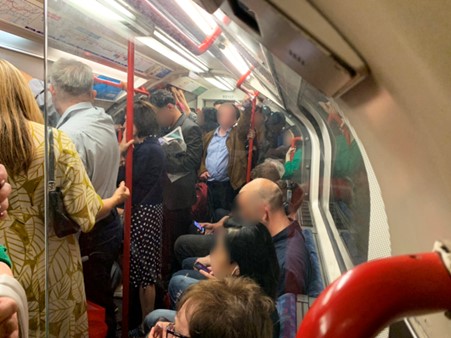
I believe that we are living in a time when people are becoming more and more disconnected from one another, and part of the problem also has to do with the consequences of the pandemic social distancing/quarantine rules – which was a necessary evil.

While the social distancing guidance may have been withdrawn, I think there seems to be a continuous trend where people keep each other’s distance even after the pandemic. Loneliness is becoming more perverse; people are becoming removed from social life, and procrastination seems to have taken centre stage.
Again, the rise and usage of multiple social media platforms have also put us where we are slowly replacing our physical presence with our digital presence. We can easily sit behind our WhatsApp, Twitter or TikTok for hours without speaking – but submerged in this digital world. While I am not in any way condemning the use of social media, I think we risk our physical interactions being replaced with digital interactions, which I also consider a contributing factor to the decline of social interactions we face today.

I agree that we all must move with time; we have to adjust ourselves to this new world, or else we will be left behind. However, I suggest not letting our physical engagement dissipate, nor should we allow our digital presence to become more important than our in-person presence. As indicated earlier, we are witnessing a decline in social interactions, but the task ahead of us as a society is to begin to consider ways to ameliorate this problem. There is value in social interaction, even if some might not see the benefits of it. Some studies in the past have found that ensuring good social interactions can improve psychological well-being. Thus, my assignment for everyone reading this blog today is to pick up your phone and check up on a loved one! The sun is out (well, for now); take a break and go out with your friends, have some food and drinks over the weekend, exchange some jokes, and smile!
Life, indeed, is a beautiful thing to have.

Reference
Blumer, H. (1969). Symbolic interactionism: Perspective and methods. Englewood Cliffs, NJ: Prentice Hall.
Share this:


A race to the bottom
Happy new year to one and all, although I suspect for many it will be a new year of trepidation rather than hope and excitement.
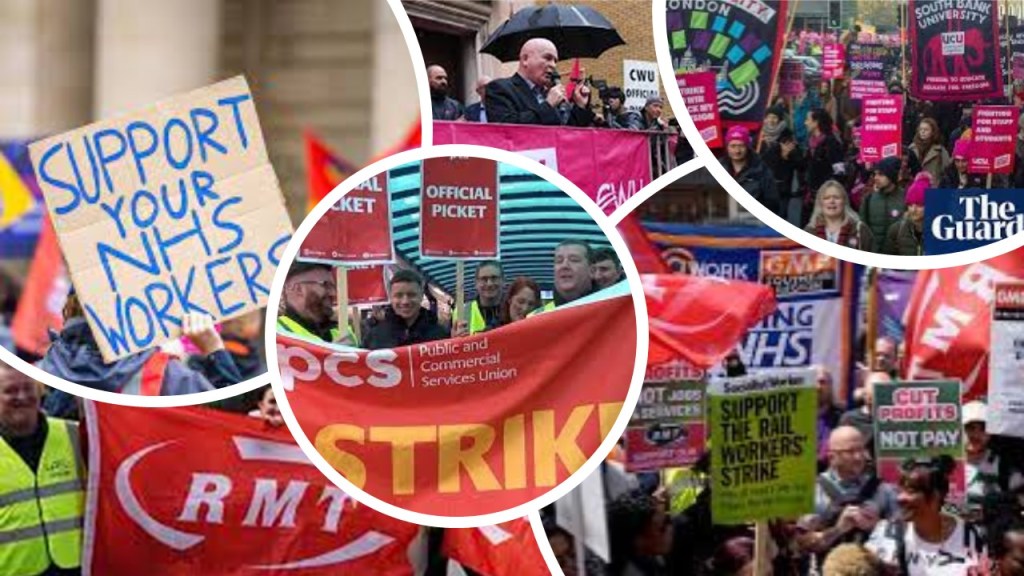
It seems that every way we turn there is a strike or a threat of a strike in this country, reminiscent, according to the media, of the 1970s. It also seems that every public service we think about (I mean this in the wider context so would include Royal Mail for example,) is failing in one way or another. The one thing that strikes me though, pardon the pun, is that none of this has suddenly happened. And yet, if you were to believe media reporting, this is something that is caused by those pesky unions and intransigent workers or is it the other way round? Anyway, the constant rhetoric of there is ‘no money’, if said often enough by politicians and echoed by media pundits becomes the lingua franca. Watch the news and you will see those ordinary members of the public saying the same thing. They may prefix this with ‘I understand why they are striking’ and then add…’but there is no money’.
When I listen to the radio or watch the news on television (a bit outdated I know), I am incensed by questions aimed at representatives of the railway unions or the nurses’ union, amongst others, along the lines of ‘what have you got to say to those businesses that are losing money as a result of your strikes or what would you like to say to patients that have yet again had their operations cancelled’? This is usually coupled with an interview of a suffering business owner or potential patient. I know what I would like to say to the ignorant idiot that asked the question and I’m sure most of you, especially those that know me, know what that is. Ignorant, because they have ignored the core and complex issues, wittingly or unwittingly, and an idiot because you already know the answer to the question but also know the power of the media. Unbiased, my ….
When we look at all the different services, we see that there is one thing in common, a continuous, often political ideologically uncompromising drive to reduce real time funding for public services. As much as politicians will argue about the amount of money ploughed into the services, they know that the funding has been woefully inadequate over the years. I don’t blame the current government for this, it is a succession of governments and I’m afraid Labour laying the blame at the Tory governments’ door just won’t wash. Social care, for example, has been constantly ignored or prevaricated over, long before the current Tories came to power, and the inability of social care to respond to current needs has a significant knock-on effect to health care. I do however think the present government is intransigent in failing to address the issues that have caused the strikes. Let us be clear though, this is not just about pay as many in government and the media would have you believe. I’m sure, if it was, many would, as one rather despicable individual interviewed on the radio stated, ‘suck it up and get on with it’. I have to add, I nearly crashed the car when I heard that, and the air turned blue. Another ignoramus I’m afraid.
Speak to most workers and they will tell you it is more about conditions rather than pay per se. Unfortunately, those increasingly unbearable and unworkable conditions have been caused by a lack of funding, budget restraints and pay restraints. We now have a situation where people don’t want to work in such conditions and are voting with their feet, exacerbating the conditions. People don’t want to join those services because of poor pay coupled with unworkable conditions. The government’s answer, well to the nurses anyway, is that they are abiding by the independent pay review body. That’s like putting two fingers up to the nurses, the health service and the public. When I was in policing it had an independent pay review body, the government didn’t always abide by it, notably, they sometimes opted to award less than was recommended. The word recommendation only seems to work in favour of government. Now look at the police service, underfunded, in chaos and failing to meet the increasing demands. Some of those demands caused by an underfunded social and health care service, particularly mental health care.
Over the years it has become clear that successive governments’ policies of waste, wasted opportunity, poor decision making, vote chasing, and corruption have led us to where we are now. The difference between first and third world country governments seems to only be a matter of degree of ineptitude. It has been a race to the bottom, a race to provide cheap, inadequate services to those that can’t afford any better and a race to suck everyone other than the rich into the abyss.
A government minister was quoted as saying that by paying wage increases it would cost the average household a thousand pound a year. I’d pay an extra thousand pound, in fact I’d pay two if it would allow me to see my doctor in a timely manner, if it gave me confidence that the ambulance would turn up promptly when needed, if it meant a trip to A&E wouldn’t involve a whole day’s wait or being turned away or if I could get to see a dentist rather than having to attempt DIY dentistry in desperation. I’d like to think the police would turn up promptly when needed and that my post and parcels would be delivered on time by someone that had the time to say hello rather than rushing off because they are on an unforgiving clock (particularly pertinent for elderly and vulnerable people).
And I’m not poor but like so many people I look at the new year with trepidation. I don’t blame the strikers; they just want to improve their conditions and vis a vis our conditions. Blaming them is like blaming cows for global warming, its nonsensical.
And as a footnote, I wonder why we never hear about our ex-prime minister Liz Truss and her erstwhile Chancellor Kwasi Kwarteng; what a fine mess they caused. But yesterday’s news is no news and yet it is yesterday’s news that got us to where we are now. Maybe the media could report on that, although I suspect they probably won’t.
Share this:

Avoiding challenge: A strategy for organisational change

Have you ever wondered as a manager or worker what the best way is to avoid having your ideas challenged? Tired of trying to make organisational changes and having those changes called into question. Fed up with trying to instigate something only for someone else to be less than keen. Had enough of trying to do things that will promote your ambitions only to be thwarted by others that just have to add their two pennorth in? Annoyed at extra work being created for you because of a lack of acceptance of your ideas? Are you fed up with the ‘nay sayers’? The answer is simple… don’t communicate anything, just make the changes, and wait for yet another calamity.
The above of course is somewhat tongue in cheek and I am reminded of working with some consultants several years ago (you know the ones; steal your watch to tell you the time). I jest, as they had some sage advice on change management. Two things that come to mind: If you think you have communicated enough about change, you haven’t; communicate more. And find the person or group that needs convincing and work with them, it’s the ‘nay sayers’ that need to be convinced, not the ‘yay sayers’. They are far more valuable to your organisation than those that say ‘yes’.
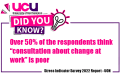
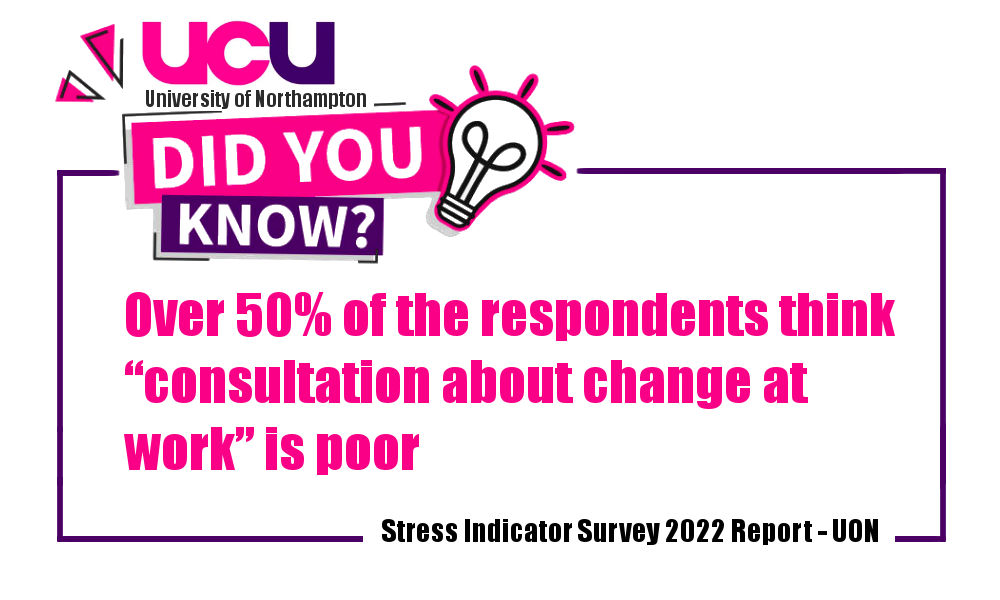
What we were talking about was major organisational change, but even small changes can have a major impact on a workforce. In our own organisation a recent staff survey suggested that ‘Over 50% of respondents considered that consultation about change at work is poor’. That of course relates to previous iterations of change and a new management team would hope to address the issues. However, in doing so there is a need for organisational change.
I’ve had recent experience of being told that something was happening because someone, in agreement with someone else, thought it was a good idea. It promotes their department, showing them in a good light; they took the idea to a meeting and lo and behold, it is agreed. No consultation with those that need to implement the idea, which may be good or bad, who knows. The point being that it is not just change brought about by managers without consultation that causes annoyance, anxiety and stress, it is those daily working practices of people in the organisation that fear challenge of their ideas. Changes are often made with the best of intentions. Sometimes those intentions are to alleviate burgeoning workloads within a department, sometimes to promote the organisation or individuals or to lighten the burden on students, for example. Often, there is consultation, but it is consultation with the wrong people, consultation with the ‘yay sayers’ and those that have little idea about the impact of the change (for the best will in the world, managers can’t know every detail of the work carried out by their staff). Such consultation avoids scrutiny but provides a thin veneer of respectability. Time and again we see staff queuing up to join consultative groups, but how many of these do so with a view to providing a real critique? Take the idea to a management meeting, get it agreed and there you are, its done. If asked about consultation, then the answer is ‘yes of course we did’. The problem is nobody asks the question ‘who exactly did you consult with’?
It will take a huge shift in organisational culture to get the ‘nay sayers’ to volunteer for consultative exercises. They need convincing that their voice is valued and yet they are a valuable asset. Challenge and scrutiny are healthy and help to mitigate unwanted and unintended consequences.
There is nothing worse than having it done to you when it could so easily have been a case of having it done with you. Next time you think about changing something, don’t assume you know best, by doing so you demonstrate how little you value others.

Share this:


Regulation and the Internet

*Trigger warning: article contains mentions of suicide, mental illness and self harm in regard to a recent news article*
It seems that internet usage, regulation and monitoring can be a divisive topic for some. The internet can be a fantastic tool for learning, communicating and employment, among other things. However, as with everything, there is a dark side to it. I once watched a video about the internet and regulation, the narrator likened internet usage to when people drove cars with no seatbelts. The world now has this wonderful tool, with little to no effective safety mechanisms, and with many young people, and vulnerable people being able to view harmful content without regulation, we are seeing extreme and negative repercussions.
I think one of the main appeals of the internet is the inherent freedom that it gives the user, the key word here is freedom. It seems that some people believe that unregulated usage of the internet is now an inherent part of their freedoms. This is perhaps why attempting to further regulate usage could result in disagreement and objection. The topic of internet regulation is a very nuanced topic; it toes the line of freedom and restriction and profit and protection. Algorithms are one way that social media companies can prolong the amount of time a person is scrolling through their newsfeed, for example: If you ‘liked’ a picture of a cat, it is more likely that related content would then be shown to you. For social media companies, more engagement equals more money. The algorithmic style of newsfeeds seems great in theory but they can become harmful. If we replace viewing cat content on Instagram with viewing suicide related content, we can see how this can become very problematic very quickly.
Questions concerning the ‘wild west’ type environment that is the internet are becoming more common. With the recent inquest concerning the suicide of Molly Russel, these questions are even more relevant. Molly Russel saved thousands of images related to self harm and suicide months before her death, posts also included some promoting depressive content and encouragement to not seek the help from a mental health professional. Tech giant Meta’s response in the inquest was that the majority of these posts did not breach their social media posting guidelines (they conceded a few did breach the rules). Their response totally contradicts the reactions of those present at the court, with Molly Russel’s father stating that these images were graphic, dark and harmful. With mental health resources already being stretched beyond capacity, this unregulated environment that is legally accessible to children will surely exacerbate these problems. Molly Russel’s experience will not be the only one, thousands of vulnerable and impressionable people, young and old experience similar things and view similar medias. Whether it be accessing pro-anorexia content, content which promotes weapons and violence or content which advocates for avoiding professional mental health support.
The repercussions of an ineffectively regulated internet are unmeasured and the continuation of this deregulation is for the pursuit of profit fuelled by misguided ideas about what freedom of action and freedom of expression mean.
Share this:


ASUU vs The Federal Government

It will be 8 months in October since University Lecturers in Nigeria have embarked on a nationwide strike without adequate intervention from the government. It is quite shocking that a government will sit in power and cease to reasonably address a serious dispute such as this at such a crucial time in the country.
As we have seen over the years, strike actions in Nigerian Universities constitute an age-long problem and its recurring nature unmasks, quite simply, how the political class has refused to prioritise the knowledge-based economy.
In February 2022, the Academic Staff Union of Universities (ASUU) leadership
(which is the national union body that represents Nigerian University Lecturers during disputes) issued a 4-week warning strike to the Nigerian government due to issues of funding of the public Universities. Currently, the striking University Lecturers are accusing the government of failing to revitalise the dilapidated state of Nigerian Universities, they claim that the government has refused to implement an accountability system called UTAS and that representatives of the government have continued to backtrack on their agreement to adequately fund the Universities.
The government on the other hand is claiming that they have tried their best in negotiating with the striking lecturers – but that the lecturers are simply being unnecessarily difficult. Since 2017, several committees have been established to scrutinize the demands and negotiate with ASUU, but the inability of these committees to resolve these issues has led to this 8-month-long closure of Nigerian Universities. While this strike has generated multiple reactions from different quarters, the question to be asked is – who is to be blamed? Should the striking lecturers be blamed for demanding a viable environment for the students or should we be blaming the government for the failure of efforts to resolve this national embarrassment?
Of course, we can all understand that one of the reasons why the political class is often slow to react to these strike actions is because their children and families do not attend these schools. You either find them in private Universities in Nigeria or Universities abroad – just the same way they end up traveling abroad for medical check-ups. In fact, the problems being faced in the educational sector are quite similar to those found within the Nigerian health sector – where many doctors are already emigrating from the country to countries that appreciate the importance of medical practitioners and practice. So, what we find invariably is a situation where the children of the rich continue to enjoy uninterrupted education, while the children of the underprivileged end up spending 7 years on a full-time 4-year program, due to the failure of efforts to preserve the educational standards of Nigerian institutions.
In times like these, I remember the popular saying that when two elephants fight, it’s the grass that suffers. The elephants in this context are both the federal government and the striking lecturers, while those suffering the consequences of the power contest are the students. The striking lecturers have not been paid their salaries for more than 5 months, and they are refusing to back down. On the other hand, the government seems to be suggesting that when they are “tired”, they will call off the strike. I am not sure that strike actions of the UK UCU will last this long before some sort of agreement would have been arranged. Again, my heart goes out to the Nigerian students during these hard times – because it is just unimaginable what they will be going through during these moments of idleness. And we must never forget that if care is not taken, the idle hand will eventually become the devil’s workshop!
Having said this, Nigerian Universities must learn from this event and adopt approaches through which they can generate their income. I am not inferring that they do not, but they just need to do more. This could be through ensuring large-scale investment programs, testing local/peculiar practices at the international level, tapping into research grant schemes, remodeling the system of tuition fees, and demonstrating a stronger presence within the African markets. As a general principle, any institution that wishes to reap the dividends of the knowledge-based economy must ensure that self-generated revenues should be higher than the government’s grants – and not the other way. So, Universities in Nigeria must strive to be autonomous in their engagements and their organisational structure – while maintaining an apolitical stance at all times.
While I agree that all of these can be difficult to achieve (considering the socio-political dynamics of Nigeria), Universities must remember that the continuous dependence on the government for funds will only continue to subject them to such embarrassments rather than being seen as respected intellectuals in the society. Again, Nigerian Universities need a total disruption; there is a need for a total overhaul of the system and a complete reform of the organisational structure and policies.

 Thoughts from the criminology team