
Home » Insecurity (Page 2)
Category Archives: Insecurity
Homelessness: Shedding an unfavourable light on a beautiful town!

Let me start by apologising for the tone of this blog and emphasis that what follows is rant based on my own opinion and not that of the university or co-authors of the blog. On 3 January I was incensed by a story in the Guardian outlining comments made by Simon Dudley, the Royal Borough of Windsor and Maidenhead’s Conservative leader, regarding homelessness and the impact (visually) that this could have on the forthcoming royal wedding. Mr Dudley commented that having homeless people on the streets at the time of the wedding would present “a beautiful town in a sadly unfavourable light” and that “Windsor is different and requires a more robust approach to begging” (Dudley, cited in Sherwood, 2018, online). Unfortunately, I am no longer shocked by such comments and have come to expect nothing less of Conservative leaders. I am however profoundly saddened that such a deep rooted social issue is brought back into the spot light, not because it reflects wider issues of inequality, disadvantage, poverty, or social exclusion that need addressing but because of a class based narrative driven by a royal wedding. Is Windsor really in need of special treatment? Is their experience of homelessness really worse than every other city in the UK? Or is simply that in an area with such wealth, and social connection, showing the world that we have a problem with homelessness is taking it a step too far. Whatever the reason, Shelter’s[1] (2017) tweet on the 29 December reminds us that homelessness is ‘…a crisis we are not handling as a country’.
As we approached the Christmas period it was estimated that children experiencing homelessness had reached a 10 year high with headlines like ‘Nearly 130,000 children to wake up homeless this Christmas’ (Bulman, 2017) marking our approach to the festive season. Similarly, Shelter warned of a Christmas homeless crisis and as the temperatures dropped emergency shelters were opened across London, contrary to the policy of only opening after three consecutive days of freezing temperatures (TBIF, 2017). Yet the significance of these headlines and the vast body of research into the homelessness crisis appears lost on Mr Dudley whose comments only add to an elitist narrative that if we can’t see it, it isn’t a problem. My issue is not with Mr Dudley’s suggestion that action is needed against aggressive begging and intimidation but with his choice of language. Firstly, to suggest that homelessness is a ‘sad’ thing is a significant understatement made worse by the fact that the focus of this sadness is not on homelessness itself but the fact that it undermines the tone of an affluent area. Secondly, the suggestion that the police should clear the homeless from the streets along with their ‘bags and detritus’ (Dudley, cited in Sherwood, 2018) is symbolic of much of the UK’s approach to difficult social issues; sticking a band aid on a fatal wound and hoping it works. Thirdly, and more deeply disturbing for me is the blame culture evident in his suggestion that homelessness is a choice that those begging in Windsor are ‘…not in fact homeless, and if they are homeless they are choosing to reject all support services…it is a voluntary choice’ (Dudley, cited in Sherwood, 2018). Homelessness is complex and often interlinked with other deeply rooted problems, therefore this blame attitude is not just short sighted but highly ignorant of the difficulties facing a growing proportion of the population.
Shelter. (2017) A safe, secure home is a fundamental right for everyone. It’s a crisis we are not handling as a country [Online]. Twitter. 29 December. Available from: https://twitter.com/shelter?lang=en [Accessed 4 January 2018].
Sherwood, H., (2018) Windsor council leader calls for removal of homeless before royal wedding. The Guardian [online]. Available from: https://www.theguardian.com/society/2018/jan/03/windsor-council-calls-removal-homeless-people-before-royal-wedding [Accessed 04 January 2018].
The Big Issue Foundation. (2017) TBIF joins the Mayor of London’s Coalition to tackle rough sleeping [Online]. The Big Issue Website. Available from: https://www.bigissue.org.uk/news [Accessed 4 January 2018].
[1] a charity offering advice and support to those facing or experiencing homelessness
Share this:


Thank f**k it’s Christmas!

Jessica is an Associate Lecturer teaching modules in the first year.
We have arrived at that time of the year once again: CHRISTMAS! ‘Tis’ the season to celebrate, party, give and receive gifts, catch up with friends and family, and most importantly… catch up on some much needed sleep. We have arrived at the end of the first term of the academic year, and all I can think is: Thank f**k it’s Christmas. The first term always feels the longest: whether you are first years beginning your academic journey, second and third years re-gathering yourselves after the long summer, or staff getting back into the swing of things and trying to locate and remember all the new and old names. But now is the time to kick back, relax and enjoy the festive season: ready to return to academic life fresh faced and eager come the New Year, ready to start it all over again. Well not quite…
According to Haar et al., (2014) work-life balance is something which is essential to all individuals, in order to ensure job satisfaction, life satisfaction and positive mental health. If Christmas is as needed as it feels; perhaps we are not managing a good work-life balance, and perhaps this is something we can use the Christmas break to re-consider. Work-life balance is subjective and relies on individual acceptance of the ‘balance’ between the commitments in our lives (Kossek et al., 2014). Therefore, over the Christmas break, perhaps it would be appropriate to re-address our time management skills, in order to ensure that Easter Break doesn’t feel as desperately needed as Christmas currently does.
Alongside an attempt to re-organise our time and work load, it is important that we remember to put ourselves first; whether this be through furthering our knowledge and understanding with our academic endeavours, or whether it is spending an extra 15 minutes a day with a novel in order to unwind. Work-life balance is something we are (potentially) all guilty of undermining, at the risk of our mental health (Carlson, et al., 2009). I am not suggesting that we all ignore our academic responsibilities and say ‘yes’ to every movie night, or night out that is offered our way. What I am suggesting, and the Christmas break seems like a good place to start, is that we put the effort in with ourselves to unwind, in order to ensure that we do not burn out.
Marking, reading, writing and planning all need to be done over the Christmas break; therefore it is illogical to suggest taking our feet off the pedals and leaving academia aside in order to have the well needed break we are craving. What I am suggesting, is that we put ourselves in neutral and coast through Christmas, without burning out: engaging with our assignments, marking and reading, therefore still moving forward. BUT, and it is a big but, we remember to breathe, have a lie in, go out and socialise with friends and family, and celebrate completing the first term of this academic year. And with this in mind, try to consider ways, come the new term, where you can maintain a satisfying work-life balance, so that when Easter comes, it doesn’t feel so desperately needed.
However, it is highly likely that this will still be the case: welcome to the joys and stresses of academia.
Merry Christmas everyone!
References:
Carlson, D.S., Grzywacz, J.G. and Zivnuska, S. (2009) ‘Is work family balance more than conflict and enrichment?’ Human Relations. 62(10): 1459-1486.
Haar, J.M., Russo, M., Sune, A. and Ollier- Malaterre, A. (2014) ‘Outcomes of work-life balance on job satisfaction, life satisfaction and mental health: A study across seven cultures’. Journal of Vocational Behaviour. 85: 361-373.
Kossek, E.E., Valcour, M. and Kirio, P. (2014) ‘The sustainable workforce: Organizational strategies for promoting work-life balance and well-being’. In: Cooper, C. and Chen, P. (Eds) Work and Well-being. Oxford: Wiley-Blackwell. Pp:295-318.
Bibliography:
Ashurst, A. (2014) ‘How to… Manage time and resources effectively’. Nursing and Residential Care. 16(5): 296-297.
Kuhnel, J., Zacher, H., De Bloom, J and Bledow, R. (2017) ‘Take a Break! Benefits of sleep and short breaks for daily work engagement’. European Journal of Work and Organization Psychology. 26(4): 481-491.
Logan, J., Hughes, T. and Logan, B. (2016) ‘Overworked? An Observation of the relationship Between Student Employment and Academic Performance’. Journal of College Student Retention: Research, Theory and Practice. 18(3): 250-262.
Lyness, K.S. and Judiesch, M.K. (2014) ‘Gender egalitarianism and work-life balance for managers: Multisource perspectives in 36 countries’. Applied Psychology. 63(1): 96-129.
Mona, S. (2017) ‘Work-life Balance: Slow down, move and think’. Journal of Psychological Nursing and Mental Health Services. 55(3):13-14.
Share this:

“A Christmas Carol” for the twenty-first century

The build up to Christmas appears more frenetic every year, but there comes a point where you call it a day. This hiatus between preparation and the festivities lends itself to contemplation; reflection on Christmases gone by and a review of the year (both good and bad). Some of this is introspective and personal, some familiar or local and some more philosophical and global.
Following from @manosdaskalou’ recent contemplation on “The True Message of Christmas”, I thought I might follow up his fine example and explore another, familiar, depiction of the festive period. While @manosdaskalou focused on wider European and global concerns, particularly the crisis faced by many thousands of refugees, my entry takes a more domestic view, one that perhaps would be recognised by Charles Dickens (1812- 1870) despite being dead for nearly 150 years.
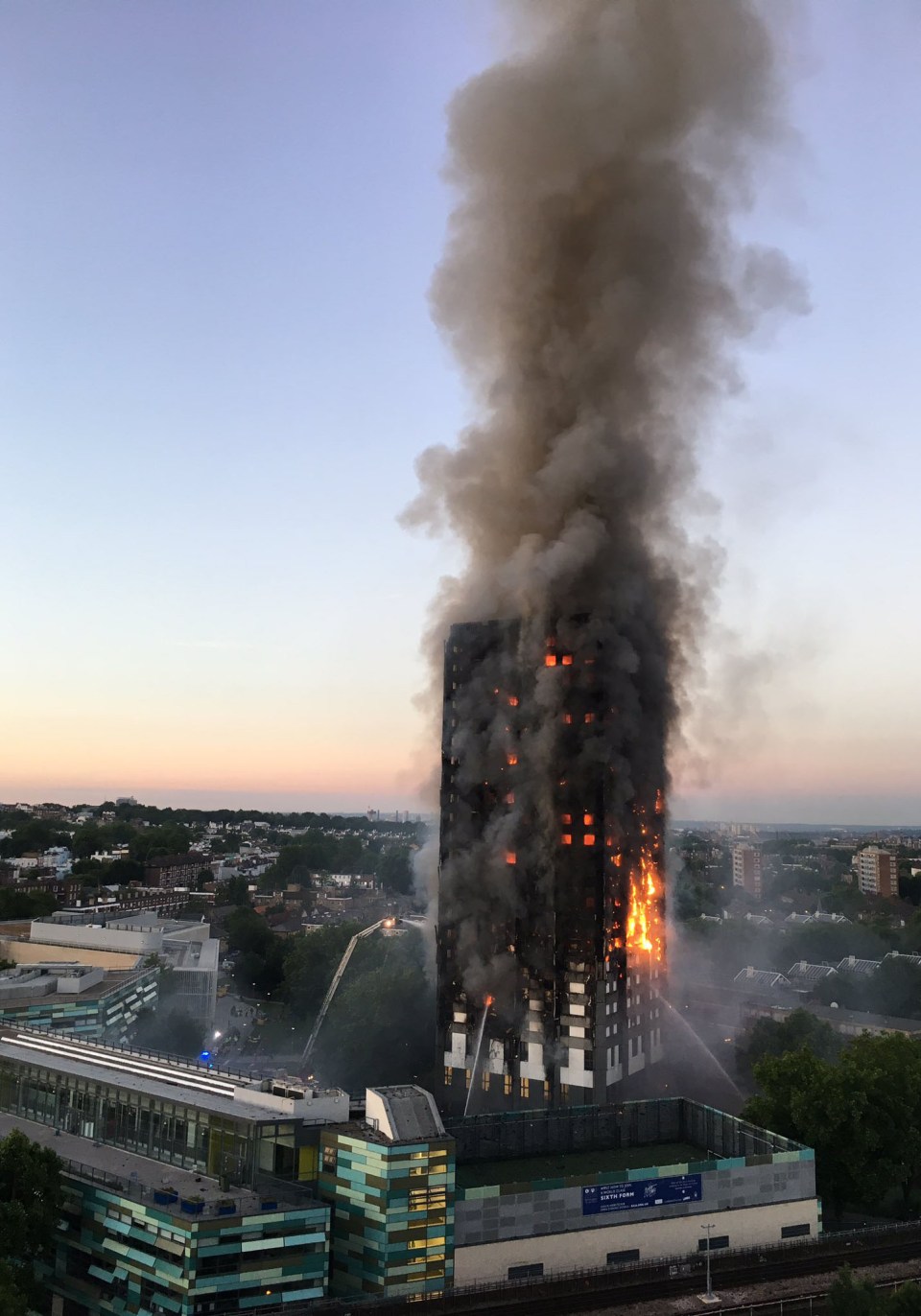
One of the most distressing news stories this year was the horrific fire at Grenfell Tower where 71 people lost their lives. [1] Whilst Dickens, might not recognise the physicality of a tower block, the narratives which followed the disaster, would be all too familiar to him. His keen eye for social injustice and inequality is reflected in many of his books; A Christmas Carol certainly contains descriptions of gut wrenching, terrifying poverty, without which, Scrooge’s volte-face would have little impact.
In the immediacy of the Grenfell Tower disaster tragic updates about individuals and families believed missing or killed in the fire filled the news channels. Simultaneously, stories of bravery; such as the successful endeavours of Luca Branislav to rescue his neighbour and of course, the sheer professionalism and steadfast determination of the firefighters who battled extremely challenging conditions also began to emerge. Subsequently we read/watched examples of enormous resilience; for example, teenager Ines Alves who sat her GCSE’s in the immediate aftermath. In the aftermath, people clamoured to do whatever they could for survivors bringing food, clothes, toys and anything else that might help to restore some normality to individual life’s. Similarly, people came together for a variety of different celebrity and grassroots events such as Game4Grenfell, A Night of Comedy and West London Stand Tall designed to raise as much money as possible for survivors. All of these different narratives are to expected in the wake of a tragedy; the juxtaposition of tragedy, bravery and resilience help people to make sense of traumatic events.
Ultimately, what Grenfell showed us, was what we already knew, and had known for centuries. It threw a horrific spotlight on social injustice, inequality, poverty, not to mention a distinct lack of national interest In individual and collective human rights. Whilst Scrooge was “encouraged” to see the error of his ways, in the twenty-first century society appears to be increasingly resistant to such insight. While we are prepared to stand by and watch the growth in food banks, the increase in hunger, homelessness and poverty, the decline in children and adult physical and mental health with all that entails, we are far worse than Scrooge. After all, once confronted with reality, Scrooge did his best to make amends and to make things a little better. While the Grenfell Tower Inquiry might offer some insight in due course, the terms of reference are limited and previous experiences, such as Hillsborough demonstrate that such official investigations may obfuscate rather than address concerns. It would seem that rather than wait for official reports, with all their inherent problems, we, as a society we need to start thinking, and more, importantly addressing these fundamental problems and thus create a fairer, safer and more just future for everyone.
In the words of Scrooge:
“A merry Christmas to everybody! A happy New Year to all the world!” (Dickens, 1843/1915: 138)
[1] The final official figure of 71 includes a stillborn baby born just hours after his parents had escaped the fire.
Dickens, Charles, (1843/1915), A Christmas Carol, (Philadelphia: J. B. Lippincott Co.)
Share this:


“Letters from America”: I

This weekend @manosdaskalou and I flew from London to the USA and thus had the opportunity of experiencing two different airports. Travelling is always an insightful – if sometimes physically draining – experience and even more so when crossing continents. It is striking that one of the very first things that you confront upon arriving at your destination (no matter whether home or abroad) is generally a very long queue. There are queues to check in, queues to drop bags, queues for security, queues to get on the plane and to get off the other end. These are followed by yet more queues to enter the country and a wait to collect your bags. All of this is par for the course and perhaps to be expected given the volume of people travelling. What is perhaps more unexpected is the overall patience demonstrated by those in the seemingly endless queues.
I find the airport an interesting no-man’s land where individuals appear to become simply part of a giant machine. Once inside the airport you become subject to the whims and vagaries of the machinery. “Take off your shoes”, “take off your coats, jackets, scarves”, “laptops here”, “bags there’ ,”show your clear plastic bag containing approved liquids”, the list goes on and that’s before you’ve even let the country. If we want to fly we accept these rituals as a price worth paying. However, it is worth considering if many would tolerate such rituals away from this setting?
All of these processes are predicated on an ethos of security and the protection of life and limb. However, we do not insist on such protocols when we use other forms of transport; buses, trains, trams or the tube where similar conditions prevail (i.e.lots of people, baggage etc. moving from place to place. The tactics used in the airport are far more reminiscent of the police station or the prison than they are of travel yet we simply grit our teeth and bear the incongruity and indignity of the situation.
Whilst not suggesting that security is unimportant, it is worth considering that we focus far greater attention on flying than we do on other modes of transport. Of course, for those who fly infrequently this can be absorbed as a part of their travelling experience as predictable as a trip to the duty free shop. On a daily basis, as part of the 9-5 commute, such tactics would bring the world to a grinding halt…
Share this:


Leave my country

One image, one word, one report can generate so much emotion and discussion. The image of the naked girl running away from a napalm bombed village, the word “paedo” used in tabloids to signal particular cases and reports such as the Hillsborough or the Lamy reports which brought centre stage major social issues that we dare not talk about.*
Regardless of the source, it is those media that make a cultural statement making an impact that in some cases transcends their time and forms our collective consciousness. There are numerous images, words and reports, and we choose to make some of these symbols that explain our theory of the world around us.
It was in the news that I saw a picture of a broken window, a stone and a sign next to it: “Leave my country”. The sign was held by an 11 year old refugee with big brown eyes asking why. This is not the only image that made it to the news this week; some days ago following the fatal car crash in New York the image of a 29 year old suspect from Uzbekistan appeared everywhere. These two images are of course unconnected across continents and time but there is some semiology worth noting.
We make sense of the world around us by observing. It is the media that are our eyes helping us to explore this wider world and witness relationships, events and situations that we may never considered possible. It must have been a very different world when over a century ago news of the sinking of the Titanic came through. We store images and words that help us define the way our world functions. In criminology, words are always attached to emotion and prejudice.
I deliberately chose two images: a victimised child and an adult suspect of an act of terror. They have nothing in common other than both appear foreign in the way I understand those who are not like me. Of course neither of these images is personally relatable to me but their story is compelling for different reasons. Then of course as I explore both stories and images, I wonder what is that remains of my understanding of the foreigner?
Last year, the satirical magazine Charlie Hebdo produced a caricature of what would little Aylan would have done if he was to grow up, presented as a sex pest. The caricature caused public outcry but at the time, like this week, I started considering the images and their meanings. Do we put stories together based on the images we see around us? If that is a way of defining and explaining our social world then the imagery of good and bad foreigners, young and old, victims and villains may merge in a deconstruction of social reality that defines the foreigner. In that case and at that point the sign next to the 11 year old may not be voiced but it can become an implicit collective objective.
*At this stage I would like to mention that I was considering to write about the media’s “surprise” over the abuse allegations following revelations for a Hollywood producer but decide not to, due to the media’s attempt to saturate one of the most significant social issues of our times with other studies with varying levels of credibility. We observed a similar situation after the Jimmy Saville case.
Share this:

A Troubling Ambiguous Order?
Sallek is a graduate from the MSc Criminology. He is currently undertaking doctoral studies at Stellenbosch University, South Africa.
Having spent the early years of my life in Nigeria, one of the first culture shock I experienced in the UK was seeing that its regular police do not wield arms. Unsurprising, in my lecture on the nature and causes of war in Africa, a young British student studying in Stellenbosch University also shared a similar but reverse sentiment – the South African police and private security forces wield arms openly. To her, this was troubling, but, even more distressing is the everyday use of most African militaries in society for internal security enforcement duties. This is either in direct conflict to the conventional understanding on the institutions involved in the criminal justice system, or African States have developed a unique and unconventional system. Thus, this raises a lot of questions needing answers and this entry is an attempt to stimulate further, thoughts and debate on this issue.
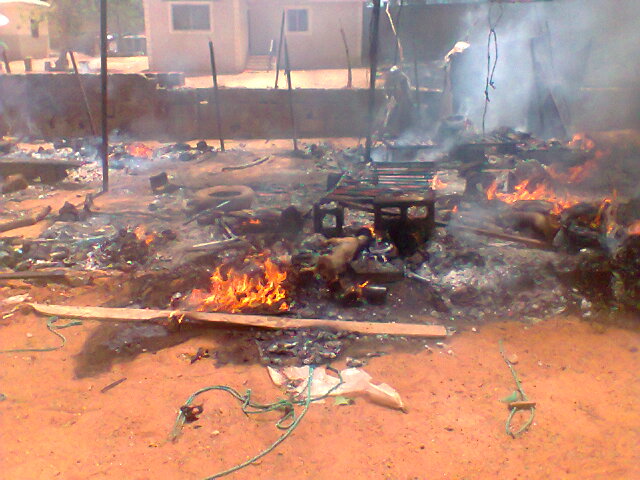
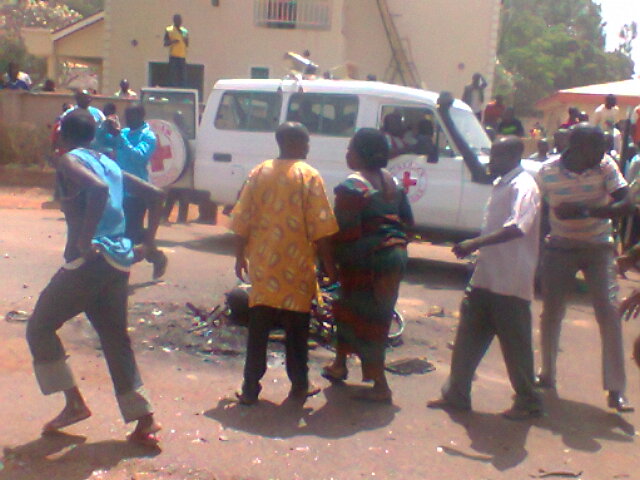
Conventionally, two spheres make up state security, the internal sphere of policing and law enforcement and the external sphere of defence and war-fighting. However, since the end of the Cold War, distinguishing between the two has become particularly difficult because of the internal involvement of the military in society. Several explanations explain why the military has become an active player in the internal sphere doing security enforcement duties in support of the police or as an independent player. Key among this is the general weakness and lack of legitimacy of the police, thus, the use of the military which has the capacity to suppress violence and ‘insurgence.’ Also, a lack of public trust, confidence, and legitimacy of the government is another key reason States resort to authoritarian practices, particularly using the military to clamp down civil society. The recent protests in Togo which turned ‘bloody’ following violent State repression presents a case in point. The recent carnage in Plateau State, Nigeria where herdsmen of similar ethnic origin as the President ‘allegedly’ killed over fifty civilians in cold blood also presents another instance. The President neither condemned the attacks nor declared a national mourning despite public outcry over the complicity of the military in the massacre.
Certainly, using the military for internal security enforcement otherwise known as military aid to civil authority in society comes with attendant challenges. One reason for this is the discrepancy of this role with its training particularly because military training and indoctrination focuses extensively on lethality and the application of force. This often results to several incidences of human rights abuses, the restriction of civil liberty and in extreme cases, summary extrajudicial killings. This situation worsens in societies affected by sectarian violence where the military assumes the leading role of law enforcement to force the return to peace as is the case in Plateau State, Nigeria. The problem with this is, in many of these States, the criminal justice system is also weak and thereby unable to guarantee judicial remedy to victims of State repression.
Consequently, citizens faced by the security dilemma of State repression and violence from armed groups may be compelled to join or seek protection from opposition groups thereby creating further security quandary. In turn, this affects the interaction of the citizenry with the military thereby straining civil-military relations in the State with the end result been the spinning of violence cycle. It also places huge economic burden with lasting impact on State resources, individuals, and corporate bodies and where the military is predatory, insecurity could worsen. The sectarian violence in Plateau State and the Niger Delta region in Nigeria where such military heavy-handedness remains the source of (in)security shows the weakness of this approach, and unless reconsidered, peace could remain elusive. Thus, now more than ever, this ambiguous (dis)order requires reconsideration for a civil approach to security in Africa.

 Thoughts from the criminology team