
Home » Ethnicity (Page 2)
Category Archives: Ethnicity

The struggle is real

© Jonathan McHugh
Stephanie is a BA Criminology graduate of 2019 and was motivated to write this blog through the experience of her own dissertation.
Last year was a very important time for me, during my second year of studying Criminology I began doing a work placement with Race Act 40, which was an oral history project to celebrate 40 years of the Race Relations Act 1974. The interviews that were conducted during my placement allowed me to get a variety of in-depth stories about racial inequalities of Afro-Caribbean migration settlers in the UK. During my time with the Race Act 40 project it became clear to me that the people who had volunteered their stories had witnessed a long line of injustices from not only individuals within society, but also institutions that makeup the ‘moral fabric’ within society. When exploring whether they have seen changes post and pre-Race Relations they insisted that although the individual within society treated them better and accepted them post-Race relations, to an extent there is a long way to go to improve the hostile relationships that has been formed with politicians and police.
The notion of hostility between politicians and the Afro-Caribbean community was reinforced, as the UK was going through the Windrush scandal which affected the core of every Afro-Caribbean household within the UK. This was extremely important for me as both paternal and maternal grandparents were first generation Windrush settlers. During the scandal my father became extremely anxious and the ramifications of the Windrush scandal hit home when some of his friends that came to the UK in 1961, the same time as he did, were detained and deported on the grounds of them being ‘illegals’. The UK Government used their ‘Hostile Environment’ policy to reintroduce Section 3 paragraph 8 of the Immigration Act 1971, which puts burden of proof on anyone that is challenged about their legal status in the UK’.
The UK government was ‘legally’ able to deport Caribbean settlers, as many of them did not have a British passport and could not prove their legal right to be in the UK and the Home Office could not help them prove their legal rights because all archival documents had been destroyed. This was a hard pill to swallow, as the United Kingdom documents and preserves all areas of history yet, overnight, the memory of my family’s journey to the UK was removed from the National Archives, without any explanation or reasoning. The anxiety that my father felt quickly spread over my whole family and while I wanted to scream and kick down doors demanding answers, I used my family’s history and the experiences of other Black people under British colonial rule as the basis for my dissertation. The hostility that they faced stepping off the Windrush echoed similar hostility they were facing in 2018, the fact that the British government had started deporting people who were invited into the country as commonwealth workers to build a country that had been torn apart as a corollary of war was a slap in the face.
Under Winston Churchill’s government, officials were employed to research Black communities to prove they were disproportionately criminal as a strategy to legally remove them from the UK and although they did not have any evidence to prove this notion the government did not apologize for the distasteful and racist treatment they demonstrated. It is hard to convince Black people in 2019 that they are not targets of poor similar treatment when they have been criminalised again and documents have been destroyed to exonerate them from criminality.
A final thought:
I have outlined the reasons why this topic has been important to me and my advice to any Criminology student who is going to be writing a dissertation is, to find a topic that is important and relevant to you, if you are passionate about a topic it will shine through in your research.
Share this:

How literature failed me as a black student

My name is Francine Bitalo, I am 21 years old and a Criminology undergraduate at the University of Northampton. Coming from a black African background I have always had a strong interest in the Criminal Justice System and its treatment towards different groups in society.
My dissertation was based on the impact of police practices such as stop and search on young black men and their families. Whilst statistics present the alarming racial disproportionately which exist in many areas in the criminal justice system, it fails to portray the long-lasting effects it has had on Black families. For example, the daily harassment and differential treatment subjected to young Black men has forced black families to reinvent themselves to conform to institutional racism. Coming from a Black family myself and having male family member, the findings in my dissertation quickly became personal to me, as I could constantly relate them to the structuring of my own family. For example, the fact that it would take my father longer to find a job due to institutional racism, making my mother the breadwinner, or when my mother is preparing my brothers for police harassment and discrimination, but not me and sisters.
While conducting my research I was quick to learn that what literature may describe as a phenomenon, for many of us is a reality. If I am honest the writing stage of my dissertation was difficult for me because it was a passionate topic. I experienced a lot of self-doubt regarding my positionality for example, being a Black woman and facing my own forms of discrimination and now having to talk about the experiences of young Black men. I think my dissertation tutor would agree with me on this as I remember emailing her after I submitted my work expressing how I felt like I didn’t effectively capture the effects and the voices of the young Black men I interviewed, despite that being my main goal. I mean who would blame me, as a student, if I am honest I felt like literature really let me down for instance, when writing my literature review I found that literature neglected the subject of racism solely from the perspectives of young Black men, despite statistics showing them to being the largest group to experience institutional racism. At this point I had to laugh at the criminal justice system and its propositions to improving police relations as well as re offending.
With that being said the information I did come across I couldn’t help but sense the notion of white privilege lingering in the perspective of some scholars. I understand this is a strong claim to make however I say this because not only did literature provide little of the work of Black scholars regarding the topic, yet it was evident that most white scholars did not see the issue with stop and search and its discriminate use. Arguments for this were discussed in my dissertation for example, some argued that the process of racial socialisation in Black households were ineffective to police relations and the functioning of their services, which creates the notion that the Black community should submit to discrimination and harassment in favour of procedures and compliance during police encounter. Some tried to justify the disproportionality in stop and search by claiming that young Black men should be harassed because they tend to be out more especially in certain urban areas or the disproportionate targeting of Black minors is due to parental criminality. I felt there was a lack of accountability from white scholar thus, little understanding in the issue of race which is natural because their experiences do not allow them to understand. Yet this led me to ask questions such as why shouldn’t Black mothers have the right to prepare their sons for police discrimination, does it matter what time and area should a person of colour be around for them to be targeted at?
After completing my dissertation and getting a First Class I felt extremely proud of myself, the fact that I did not shy away from the research topic despite it being limited in literature. As a result, it was satisfying to know that I was able to articulate the experiences of others to a First Class standard. I hope this can encourage others to trust in their abilities and put aside any doubts especially when choosing a research topic. As a student writing a dissertation or even an assignment, I believe we should explore the unexplored, open the unopened and always be willing to discover and learn. Do not be afraid of researching something that is limited or has never been done. Lastly as my dissertation was extremely passionate to me I have decided to turn it into a personal project and continue researching the topic
Share this:


Come Together

For much of the year, the campus is busy. Full of people, movement and voice. But now, it is quiet… the term is over, the marking almost complete and students and staff are taking much needed breaks. After next week’s graduations, it will be even quieter. For those still working and/or studying, the campus is a very different place.
This time of year is traditionally a time of reflection. Weighing up what went well, what could have gone better and what was a disaster. This year is no different, although the move to a new campus understandably features heavily. Some of the reflection is personal, some professional, some academic and in many ways, it is difficult to differentiate between the three. After all, each aspect is an intrinsic part of my identity.
Over the year I have met lots of new people, both inside and outside the university. I have spent many hours in classrooms discussing all sorts of different criminological ideas, social problems and potential solutions, trying always to keep an open mind, to encourage academic discourse and avoid closing down conversation. I have spent hour upon hour reading student submissions, thinking how best to write feedback in a way that makes sense to the reader, that is critical, constructive and encouraging, but couched in such a way that the recipient is not left crushed. I listened to individuals talking about their personal and academic worries, concerns and challenges. In addition, I have spent days dealing with suspected academic misconduct and disciplinary hearings.
In all of these different activities I constantly attempt to allow space for everyone’s view to be heard, always with a focus on the individual, their dignity, human rights and social justice. After more than a decade in academia (and even more decades on earth!) it is clear to me that as humans we don’t make life easy for ourselves or others. The intense individual and societal challenges many of us face on an ongoing basis are too often brushed aside as unimportant or irrelevant. In this way, profound issues such as mental and/or physical ill health, social deprivation, racism, misogyny, disablism, homophobia, ageism and many others, are simply swept aside, as inconsequential, to the matters at hand.
Despite long standing attempts by politicians, the media and other commentators to present these serious and damaging challenges as individual failings, it is evident that structural and institutional forces are at play. When social problems are continually presented as poor management and failure on the part of individuals, blame soon follows and people turn on each other. Here’s some examples:
Q. “You can’t get a job?”
A “You must be lazy?”
Q. “You’ve got a job but can’t afford to feed your family?
A. “You must be a poor parent who wastes money”
Q. “You’ve been excluded from school?”
A. “You need to learn how to behave?”
Q. “You can’t find a job or housing since you came out of prison?”
A. “You should have thought of that before you did the crime”
Each of these questions and answers sees individuals as the problem. There is no acknowledgement that in twenty-first century Britain, there is clear evidence that even those with jobs may struggle to pay their rent and feed their families. That those who are looking for work may struggle with the forces of racism, sexism, disablism and so on. That the reasons for criminality are complex and multi-faceted, but it is much easier to parrot the line “you’ve done the crime, now do the time” than try and resolve them.
This entry has been rather rambling, but my concluding thought is, if we want to make better society for all, then we have to work together on these immense social problems. Rather than focus on blame, time to focus on collective solutions.
Share this:

Documenting inequality: how much evidence is needed to change things?
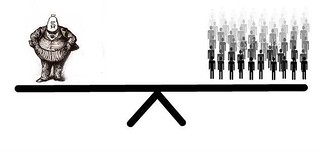
In our society, there is a focus on documenting inequality and injustice. In the discipline of criminology (as with other social sciences) we question and read and take notes and count and read and take more notes. We then come to an evidence based conclusion; yes, there is definite evidence of disproportionality and inequality within our society. Excellent, we have identified and quantified a social problem. We can talk and write, inside and outside of that social problem, exploring it from all possible angles. We can approach social problems from different viewpoints, different perspectives using a diverse range of theoretical standpoints and research methodologies. But what happens next? I would argue that in many cases, absolutely nothing! Or at least, nothing that changes these ingrained social problems and inequalities.
Even the most cursory examination reveals discrimination, inequality, injustice (often on the grounds of gender, race, disability, sexuality, belief, age, health…the list goes on), often articulated, the subject of heated debate and argument within all strata of society, but remaining resolutely insoluble. It is as if discrimination, inequality and injustice were part and parcel of living in the twenty-first century in a supposedly wealthy nation. If you don’t agree with my claims, look at some specific examples; poverty, gender inequality in the workplace, disproportionality in police stop and search and the rise of hate crime.
- Three years before the end of World War 2, Beveridge claimed that through a minor redistribution of wealth (through welfare schemes including child support) poverty ‘could have been abolished in Britain‘ prior to the war (Beveridge, 1942: 8, n. 14)
- Yet here we are in 2019 talking about children growing up in poverty with claims indicating ‘4.1 million children living in poverty in the UK’. In addition, 1.6 million parcels have been distributed by food banks to individuals and families facing hunger
- There is legal impetus for companies and organisations to publish data relating to their employees. From these reports, it appears that 8 out of 10 of these organisations pay women less than men. In addition, claims that 37% of female managers find their workplace to be sexist are noted
- Disproportionality in stop and search has long been identified and quantified, particularly in relation to young black males. As David Lammy’s (2017) Review made clear this is a problem that is not going away, instead there is plenty of evidence to indicate that this inequality is expanding rather than contracting
- Post-referendum, concerns were raised in many areas about an increase in hate crime. Most attention has focused on issues of race and religion but there are other targets of violence and intolerance
These are just some examples of inequality and injustice. Despite the ever-increasing data, where is the evidence to show that society is learning, is responding to these issues with more than just platitudes? Even when, as a society, we are faced with the horror of Grenfell Tower, exposing all manner of social inequalities and injustices no longer hidden but in plain sight, there is no meaningful response. Instead, there are arguments about who is to blame, who should pay, with the lives of those individuals and families (both living and dead) tossed around as if they were insignificant, in all of these discussions.

As the writer Pearl S. Buck made explicit
‘our society must make it right and possible for old people not to fear the young or be deserted by them, for the test of a civilization is in the way that it cares for its helpless members’ (1954: 337).
If society seriously wants to make a difference the evidence is all around us…stop counting and start doing. Start knocking down the barriers faced by so many and remove inequality and injustice from the world. Only then can we have a society which we all truly want to belong to.
Selected bibliography
Beveridge, William, (1942), Report of the Inter-Departmental Committee on Social Insurance and Allied Services, (HMSO: London)
Buck, Pearl S. (1954), My Several Worlds: A Personal Record, (London: Methuen)
Lammy, David, (2017), The Lammy Review: An Independent Review into the Treatment of, and Outcomes for, Black, Asian and Minority Ethnic Individuals in the Criminal Justice System, (London: Ministry of Justice)
Share this:


The logic of racism

A few weeks ago, Danny Rose the Tottenham and England footballer was in the headlines for all the wrong reasons. He indicated he couldn’t wait to quit football because of racism in the game. He’s not the only black player that has spoken out, Raheem Stirling of Manchester City and England had previously raised the issue of racism and additionally pointed to the way the media portrayed black players.
I have no idea what its like to be subjected to racist abuse, how could I, I’m a white, middle class male? I have however, lived in and was for the best part of my life brought up in, a country dominated by racism. I lived in South Africa during the apartheid regime and to some extent I suppose I suffered some racism there, being English, a rooinek (redneck) but it was in the main limited to name calling from the other kids in school and after all, I was still white. There was some form of logic in apartheid; separate development was intended to maintain the dominance of the white population. Black people were viewed as inferior and a threat, kaffirs (non-believers) even though the majority were probably more devout than their white counterparts. I understand the logic of the discourse around ‘foreigners coming into this country and taking our jobs or abusing our services’, if you are told enough times by the media that this is the case then eventually you believe. I always say to colleagues they should read the Daily Mail newspaper and the like, to be informed about what news fables many of the population are fed.
I understand that logic even though I cannot ever condone it, but I just don’t get the logic around football and racism. Take the above two players, they are the epitome of what every footballing boy or girl would dream of. They are two of the best players in England, they have to be to survive in the English Premiership. In fact, the Premiership is one of the best football leagues in the world and has a significant proportion of black players in it, many from other parts of the world. It is what makes the league so good, it is what adds to the beautiful game.
So apart from being brilliant footballers, these two players are English, as English as I am, maybe more so if they spent all of their lives in this country and represent the country at the highest level. They don’t ‘sponge’ off the state, in fact through taxes they pay more than I and probably most of us will in my lifetime. They no doubt donate lots of money to and do work for charities, there aren’t many Premiership footballers that don’t. The only thing I can say to their detriment, being an avid Hammers fan, is that they play for the wrong teams in the Premiership. I’m not able to say much more about them because I do not know them. And therein lies my problem with the logic behind the racist abuse they and many other black players receive, where is that evidence to suggest that they are not entitled to support, praise and everything else that successful people should get. The only thing that sets them aside from their white fellow players is that they have black skins.
To make sense of this I have to conclude that the only logical answer behind the racism must be jealousy and fear. Jealousy regarding what they have and fear that somehow there success might be detrimental to the racists. They are better than the racists in so many ways, and the racists know this. Just as the white regime in South Africa felt threatened by the black population so too must the racists* in this country feel threatened by the success of these black players. Now admit that and I might be able to see the logic.
*I can’t call them football supporters because their behaviour is evidence that they are not.
Share this:


White and Male: the diversity of the judiciary
My name is Anita and I graduated with a Criminology degree in 2016. I did have a great time at the University of Northampton. The course was challenging and intense however this meant that it provided me with the opportunity to overcome my barriers and develop myself both academically and personally. I miss going to lectures and seminars, revising for exams and even writing the dissertation. If you are reading this and you are in your third year, you are probably thinking that I am mad but I do miss it. I can’t help it! I can honestly say that going to University was the best decision I ever made and I would love to go back and do a postgraduate course. My advice to all students is enjoy it because time goes by so fast.
Before we start, please stop and think…… What percentage of court judges would you guess are women? How many members of the judiciary are from ethnic minorities?
If your guess is that we have a substancial amount of women and members from ethnic minorities in the judiciary, then this blog post might dissapoint you.
Let’s define the judiciary before we progress any further. The judiciary can be defined as ‘the judges of a country or a state, when they are considered as a group’ (Hornby, 2000, p.700).
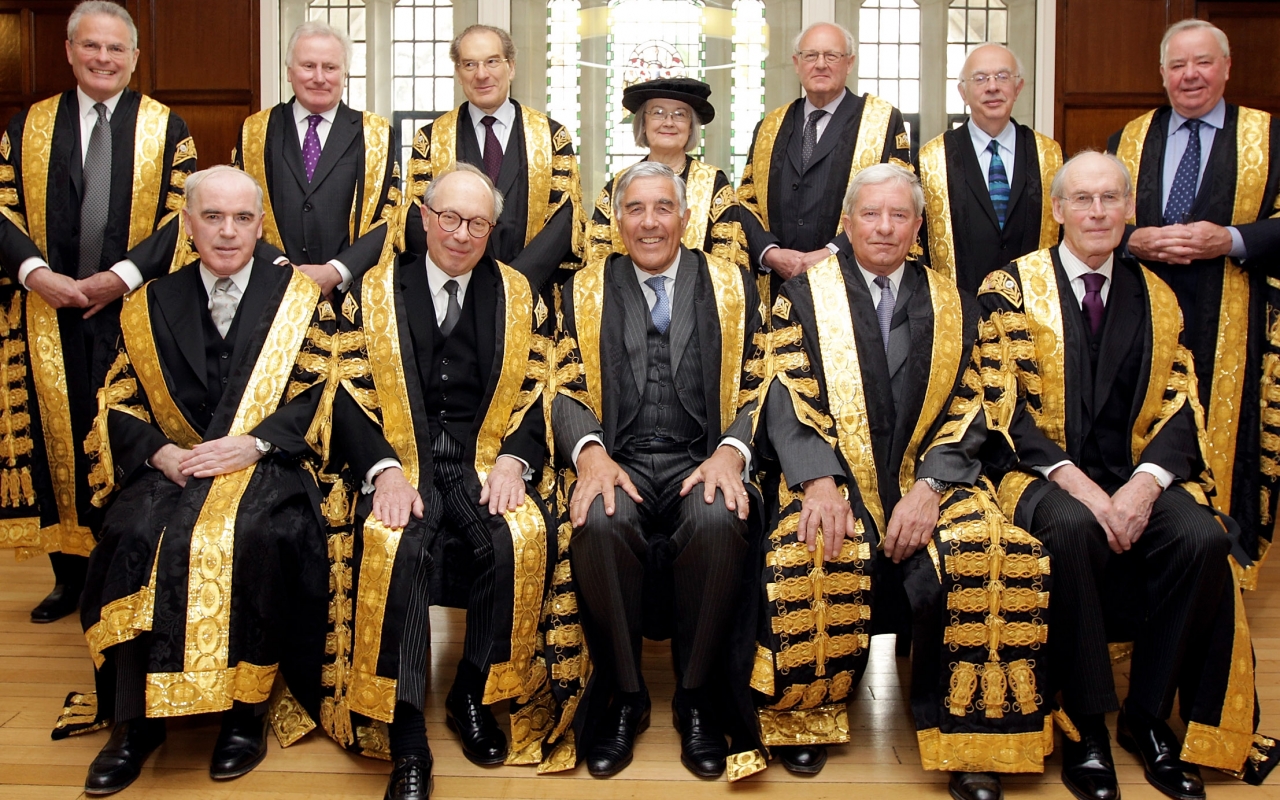
The judiciary in the UK is dominated by Oxbridge educated white middle-class men. It is estimated that three quarters of all judges in England and Wales are male and 95% are white (Lieven, 2017). The gender imbalance can be well illustrated by looking at the Supreme Court. There is only one woman among the 12 Justices on the Supreme Court. Lady Hale is the only woman ever to serve on the Court and all of the judges are and have always been white. Only Armenia and Azerbaijan have lower proportions of women in their judiciary than the UK (Lieven, 2017). This is unacceptable in 2018, changes must be made to address this gender imbalance.
In terms of race, as at 1 April 2017, only 7% of court judges were Black, Asian or Minority Ethnic (BAME). Of these Asian and Asian British accounted for 3% and the remaining three groups, Black and Black British, Mixed Ethnicity and Other Ethnic Group at around 1% each (Ministry of Justice, 2017).
This shows that judges are not reflective of wider society. This is a significant problem because the public should be confident that the judiciary delivers justice fairly. The lack of diversity means that concerns about the legitimacy and objectivity of judgements may be raised.
There are three main explanations for the continuing lack of diversity. The first explanation is that there are not enough women, BAME people and people from less privileged backgrounds who would be suitable for appointment. However, I would question the validity of this argument. This explanation seems to suggest that women or BAME people might be lacking lacking adequate knowledge or experience. There is no evidence to support this argument.
The second explanation given is that women and BAME candidates do not apply for appointment. However, it could be argued that the issue is more complicated than simply failing to apply. For example, Allen (2009) found that when BAME candidates and solicitors do apply for appointment they are significantly less likely to be successful than white candidates or barristers. This shows that the issue is not the lack of applications received from women or BAME candidates but perhaps the discriminatory recruitment process.
The third explanation is that the key principle governing our appointments to judicial office is merit. Unfortunately, the term ‘merit’ is not defined, but the implication is that achieving merit and diversity are at odds.
In conclusion, the lack of diversity in the judicial system is very concerning and should be addressed as soon as possible. This needs to be done to ensure that our justice system is fair, accessible and efficient. It is in our interest to produce a judiciary of the highest quality that reflects the make-up of our nation. Difference should be valued and not feared.
References
Allen, A (2009) Barriers to Application for Judicial Appointment Research. London: Judicial Appointments Commission.
Hornby, A.S (2000) Oxford Advanced Learner’s Dictionary. 6th ed. Oxford: Oxford University Press.
Lieven, N (2017) Increasing judicial diversity. London: Justice.
The Ministry of Justice (2017) Judicial Diversity Statistics 2017. London: MOJ.
Share this:


Oh, just f*** off.

A strange title to give to a blog but, one that expresses my feelings every time I turn the television and watch politicians procrastinating about a major issue. How else do I try and express my utter contempt for the leaders of this country that cause chaos and misery and yet take no responsibility for what they have done.
I watch Donald Trump on television and I’m simply given to thinking ‘You’re an idiot’, I appreciate that others may have stronger words, particularly some immigrants, legal or illegal, in the United States. I will draw parallels with his approach later, how could I not, given the Empire Windrush disgrace.
A week or so ago a significant topic on the news was the gender pay gap. The Prime Minister Theresa May was all over this one, after all it is the fault of corporations and businesses the pay gap exists. No responsibility there then but votes to be had.
Within the same news bulletin, there was an interview with a teacher who explained how teachers were regularly taking children’s clothes home to wash them as the family couldn’t afford to do so. Children were appearing at school and the only meal they might have for the day was the school meal. Now that might seem terrible in a third world country but he wasn’t talking about a third world country he was talking about England. Surprisingly, the prime minister was not all over that one, no votes to be had.
Within the same time frame there were more deaths in London due to gang crime. The Prime Minister and the Home Secretary Amber Rudd were all over that one, well of sorts, but then it is a political hot potato. The police and the community need to do more, an action plan is produced.
Then we have the Windrush debacle, tragedy and disgrace. The Home Secretary eventually said she was sorry and blamed the civil servants in the Home Office. They had become inhuman, clearly not her fault. The Prime Minister said sorry, it was under her watch at the Home Office that the first seeds of this disaster were plotted and then hatched, clearly though not her fault either. Got the right wing votes but seem to have lost a few others along the way.
What ties all of these things together; class structure, inequality and poverty and an unwillingness in government to address these, not really a vote winner. The gender pay gap is someone else’s fault and even if addressed, won’t deal with the inequalities at the bottom of the pay structure. Those women on zero hour contracts and minimum wages won’t see the benefit, only those in middle or higher ranking jobs. Votes from some but not from others, a gain rather than any loss.
The fact that children exist in such poverty in this country that teachers have to intervene and take on welfare responsibilities is conveniently ignored. As is the fact that much of the violence that plagues the inner city streets happens to occur in poor neighbourhoods where social and economic deprivation is rife. The Windrush issue is just another example of right wing rhetoric leading to right wing action that impacts most on the vulnerable.
When the gender pay gap hit the news there was a senior figure from a company that appeared in the news. He said that addressing the gender pay gap by having more women in higher positions in his company was good for the company, good for the country, and good for the economy.
Judging from the example given by the country’s senior management, I have to say I am far from convinced. And yes as far as I’m concerned, when they open their mouths and pontificate, they can just f*** off.
Share this:

LET’S END HATE CRIME
Chris is a BA Criminology graduate of 2017 and was motivated to write this blog through the experience of his own dissertation. His dissertation was on the Experience of Hate crime: Exploring professional perspectives of racist hate crime against ethnic minority.

The issue of racially motivated violence against ethnic minority groups in the UK was an important focus of media discussion both during and after the referendum on leaving the EU. Hate crimes, in general, have often been a source of debate for legal theorists, academics, politicians, journalists and law enforcement officials. Many perceive it to be a crime that is usually driven by prejudice towards the victim. Professionals working in the field have therefore all made efforts to understand and address hate crime, as one of the most unpleasant manifestations of human prejudice.
As a research topic, racist hate crime within the UK has been widely explored ever since the unprovoked racist murder of black teenager Stephen Lawrence, who was stabbed to death in south-east London twenty-three years ago. His unfortunate death led to a determined campaign for justice by his family spanning many years. It is therefore argued that “Stephen’s death had come to personify racial violence in the UK”; the vigorous campaign by Stephen’s parents had since led to changes in the law and given a voice to victims of hate crimes.
The findings in my dissertation revealed that victims of racially aggravated incidents experience immense psychological and physical harm. In essence, racially motivated incidents harm society and destroy community cohesion among different ethnic groups. The racial abuse inflicted on victims often leaves them in constant fear that the incident may happen again. Eastern Europeans were particularly found to be prone to racial attacks following the decision of the UK to leave the EU. Racial violence is an ongoing social phenomenon, as incidents of such violence often seem to occur without end.
The data I collected suggested that victims of racist hate crime isolate themselves and adopt different ways to avoid direct contact with the offender; hence this creates barriers for the victim and their family members and may prevent them from using local amenities. Victims of racist crime would rather use the facilities of nearby cities or towns, and this further deepens their social isolation from the local community. Victims will constantly worry about where to socialise, which community to live in, which school their children should attend and where to work.
New victims are being targeted as a result of the recent arrival of refugees, asylum seekers and migrant workers from Eastern Europe. Indeed, migrant workers from the EU have suffered the greatest number of racial attacks in the past year. This has occurred in line with the view presented by some politicians in the media that the purpose of the EU referendum is to enable the UK to take control of its borders.
The issue of race and immigration has been shown to be consistent within the broader research literature on racist hate crime. Like wise, my dissertation findings also suggest links between race and immigration, as both of my participants did not generalise the concept of race. Instead, they discussed and associated it with ethnic minority groups or those deemed inferior by the dominant population. In other words, participants associated race with individuals that have experienced racial abuse and hostility by the host population.
Indeed, race and immigration have been socially constructed and this has reinforced stigmatisation towards already marginalised groups. In essence, there is very little political will to change or even challenge prejudiced and discriminatory views against foreigners. Racial violence is an ongoing social phenomenon, as incidents of such violence often seem to occur without end. A recent data recorded by the Crime Survey for England and Wales indicates that victims of hate crimes are more likely to be repeat victims and up to four times more likely to suffer more serious psychological impacts.
In sum, the data I collected towards my dissertation strongly suggests that victims of racially aggravated incidents undergo an immense amount of psychological and physical harm. The racial abuse inflicted on victims was found to leave an enduring impression of constant fear that the incident may happen again. Nevertheless, with one voice let’s end Hate Crime.

 Thoughts from the criminology team