
Home » Education (Page 6)
Category Archives: Education
Technology and Learning: A baby and the bathwater moment

I recently shared some thoughts about the problems with technology and working from home. I suppose the nub of the matter was twofold firstly, if I have problems with technology, why would this not also impact some of my colleagues and students, thus limiting what can be delivered online. Secondly, whatever is delivered online does not suit everyone and whilst as educators we need to adapt to circumstances and new ways of working, we should be cognisant that simply imposing the new ways on students does not always suit what they want or more importantly, what they need. If we acknowledge that everyone learns in different ways at different times, then a one size fits all approach is not delivering anything like a premium learning environment.
In writing my previous blog, I also started to think about how difficult it is to be motivated whilst working from home and how my experiences have at least partially prepared me for this. I say partially because past experiences did not encompass being in lockdown.
When I was 15, I returned from overseas and went to the local college to study for my ‘O’ levels (GCSE now) rather than a school. It was far more relaxed in respect of attending classes. This was a time when at 16 people could leave school, so the college was full of students who were 16 and essentially independent from the school regime. I turned 16 whilst at college. I remember not going to every class, sometimes perhaps because I preferred to spend time playing football in the sunshine and at other times because there was some casual work somewhere that would earn me a bit of money. There were no distractions such as computers and mobile phones so actually attending college was in the main better than being bored outside of it. That was one incentive to engage in my education, I had others such as friends being at college but probably above all I recognised I needed some qualifications. I think my parents might also have been a little peeved if I’d not done anything. I had a structure to my life and a major part of it was getting up in the morning and attending college on my bicycle; rain or shine, for the most part I was there.
At an early point in my policing career, I decided I would like to take the promotion exam to sergeant. An annual exam which incorporated, as I recall, three two-hour papers, one relating to crime, one traffic and one general police duties. An awful lot of legislation and procedure was to be tested and all of it could be found in the regularly updated promotion manual. A tome, if ever there was one, divided into various sections that covered everything a would-be sergeant needed to know and in addition, legislation for the inspector’s exam. Years went by with well intentioned attempts to study, followed by a lack of action. I just couldn’t get my head round how to do this, despite trying to answer the questions in the promotion section of the Police Review magazine.
I can’t remember exactly when it was but there was an announcement that the promotion process was to change, the exam which gave you a ticket to a promotion board, was to be replaced with an assessment centre. This new way involved not only an exam, but scenario based assessments. That year I decided I really needed to pass the promotion exam to avoid the new process, so I purchased access to a correspondence course. It wasn’t cheap, and it was before computers as we know them. I received a plethora of books each divided up into various chapters and each requiring me to answer questions that were then sent by mail to someone to mark and provide feedback. What this required was organisation and commitment. I was lucky, I was working in a very disciplined job, organisation and commitment were to some extent, if I set my mind to it, second nature. And two added incentives, an easier passage to promotion as I saw it, and I’d paid out a lot of money that I wasn’t going to waste. That year I passed the sergeants and the inspector’s exam, two in the bank although it was still some time before I was promoted.
When I embarked on my degree, I had to apply the same self-discipline. Despite it being part-time, attendance for lectures and seminars was difficult, there was no way I could attend everything whilst doing shift work, but I tried my best. I even had to take time out because I was involved in a major investigation that took me away from home for 6 months. By this time, I had a very young family, so every assignment was a challenge to complete and there was no online Google access to papers and blogs and the like. It was library based work, sometimes the university library, other times local libraries and often late nights in the office at work. What it needed was self-discipline, commitment and a structure to each day, well as best as possible given the demands of shift work, major enquiries and long working hours. Every time I faltered I reminded myself that I’d done a lot of work, put a lot into this and I wasn’t about to throw all of that away.
When I embarked on my Ph.D. my commitment and self-discipline was sorely tested at times. Tragedy and life altering events pushed me to the limits, but I managed to maintain that commitment and self-discipline, sometimes aided by others at work who tried to make things a little easier. The office at work provided space for both my day job and my Ph.D. The two morphing into one at times.
Why tell you all of this, well its simply this. I ask myself what makes a student engage in their course and more importantly, what inhibits them? Firstly, they need self-discipline. When I went to college, there were a number of things that ensured I would turn up; my parents wouldn’t have countenanced my staying in bed or around the house all day; day time telly was rubbish (only three channels) and there wasn’t an awful lot else to do. My friends were either at school, at college or working and there were no mobile phones, so contact was either at college or in the evenings and weekends. Learning could only be done at college, no recorded lectures or Collaborate or e-books. I also recognised I needed qualifications to get on in life.
When I embarked on my promotion exams I recognised the need to have a structure to my learning. This was partly provided by the correspondence course and the way it was set up and partly provided by discipline I learnt in my work. It did though need a structure provided by the course and an incentive to do it at that moment in time.
My degree also needed self-discipline, nobody chased me to turn up and nobody chased me for assignments. Not being there, meant missing out on discussions and learning from other students, not just the lecturers. I’d paid for this as well so another incentive to succeed, this was not some loan to be possibly paid in the future, this was real money, my money up front. And the more I did the more determined I became that I wasn’t going to waste my efforts.
Anyone will tell you that a Ph.D. is challenging and that for the most part, the achievement is not about knowledge or brilliance but about gritted determination to complete it. That determination requires self-discipline and that self-discipline for me was aided by tagging the Ph.D. onto my job. My office at work was my sanctuary, it was easier to stop working on one thing and then seamlessly move onto writing up the Ph.D. I had a structure to my studying and my work.
So, I begin to wonder, do recorded lectures, Collaborate, ebooks, the internet, social media and a plethora of other advances really help students? Why get up in the morning to attend lectures if you can watch a recorded version of it later, ‘a must get round to it moment’? Why bother to go to the library when you can Google stuff and read, well at least skim’ e-books? Why bother with classes when you can chat with your mates and so called ‘friends’ on Facebook or the plethora of other social media apps. There is no financial incentive when the payment for the course is made on your behalf and whilst you have a massive debt on paper, the reality is that you will never pay it back (If you don’t believe me, have a look at the Martin Lewis website). There are no parents to get you up in the morning or to scorn your lethargy, at worst any failure will be chided sometime in the misty future. All that students can rely on is self-discipline and their own belief in commitment. A hard ask when you don’t have all the anchors you had at school and college. I was lucky, I grew up in an era of much fewer distractions. I was employed in a job that required a high degree of disciple, so self-discipline was much easier. I was also a mature student so could call on a vast amount of experience.
I’ll leave you with a thought. The year 1840 saw the introduction of the first stamp, the Penny Black. Despite the advent of emails, texts and the internet, nearly two hundred years later, Royal Mail are still delivering letters and packages. Whilst you can get your bank statements online, you can still have paper copies. Whilst you can read books on Kindle and other contraptions, book stores still exist, and hard copy books are still sold by the millions. Whilst, music can now be delivered in so many different electronic formats, there is still a clamour for vinyl records. Whilst films are available at home in so many different ways, people still go to see films at the cinema.
Technology is wonderful and is a great enabler in so many ways. That doesn’t give us licence though to ignore the value of what by some may be seen as ‘old fashioned, stick in the mud’ structures, processes and transactions. Sometimes things are the way they are for a reason, change them and there are at times problematic unintended consequences. Making changes through the use of technology and ignoring tried and trusted methods might actually be akin to ‘throwing out the baby with the bathwater’.
Share this:


Please don’t clap or cheer

In an uncomfortable irony, my regular blog entry has fallen on the 8 May 2020, the seventy-fifth anniversary of the end of World War 2 in Europe. I say uncomfortable because I find this kind of commemoration particularly challenging to comprehend, given my pacifist tendencies. I’m therefore going to take a rather circuitous route through this entry.
On the 20 March 2020 I wrote the first Thoughts from the Criminology team blog entry (focused on Covid-19), just a few hours after the University had moved to virtual working. Since then the team has tackled the situation in a variety of different ways. In that I detailed my feelings and observations of life, as we knew it, suddenly coming to abrupt halt. Since then we have had 7 weeks of lockdown and it is worth taking stock of where we are currently.
At present the UK has recorded over 30,000 deaths attributed to the virus. These figures are by necessity inaccurate, the situation has been moving extremely fast. Furthermore, it is incredibly challenging to attribute the case of death, particularly in cases where there is no prior diagnosis of Covid-19. There has been, and remains a passionate discourse surrounding testing (or the lack of it), the supplies of Personal Protective Equipment (or the lack of it) and the government’s response (or lack of) to the pandemic. Throughout there has been growing awareness of disparity, discrimination and disproportionality. It is clear that we are not in all this together and that some people, some groups, some communities are bearing the brunt of the current crisis.
Having studied institutional violence for many years, it is evident that the current pandemic has shown a spotlight on inequality, austerity and victimisation. The role of institutions has been thrown into sharp relief, with their many failings in full view of anyone who cared to look. In 1942, Beveridge was clear that his “five giant evils” could have been addressed, prior to World War 2, yet in the twenty-first century we have been told these are insurmountable. Suddenly, in the Spring of 2020, we find that councils can house the homeless, that hungry children can be fed, that money can be found to ensure that those same children have access to educational resources. We also find that funds can be located to build emergency hospitals and pay staff to work there and across all other NHS sites.
Alongside this new-found largesse, we find NHS staff talking about the violences they face. The violence of being unable to access the equipment they need to do their jobs, the violence of being deprived of regular breaks, the violence of racism, which many staff face both internally and externally. We hear similar tales from care workers, supermarkets workers, delivery drivers, the list goes on. Yet we are told by the government that we are all in this together. This we are told, is demonstrated by gathering on doorsteps to clap the NHS and carers. It can be compared with the effort of those during World War II, or so we are told. If we just invoke that “Blitz Spirit” “We’ll Meet Again” at the “White Cliffs of Dover”.
However, such exhortations come cheap, it costs nothing in time, or money, to clap, or to sing war time songs. To do so puts a veneer of respectability and hides the violent injustices inherent in UK society and the government which leads it. It disguises and obfuscates the data that shows graphic racial and social economic disparity in the death toll. Similarly, it avoids discussion of the role that different individuals, groups and communities play in working to combat this horrible virus. As a society we have quickly forgotten discussions around deserving/undeserving poor, the “hostile environment” and those deemed “low-skilled”. It camouflages the millions of people who are terrified of unemployment, poverty and all of the other injustices inherent within such statuses. It hides the fact that these narratives are white and male and generally horribly jingoistic by ignoring the contribution of anyone, outside of that narrow definition, to WWII and to the current pandemic. It is trite and demonstrates an indifference to human suffering across generations.
Let’s stop focusing on the cheap, the obvious and the trite and instead, once this is over, treat people (all people) with respect. Pay decent wages, enable access to good quality nutrition, education, health care, welfare and all of the other necessities for a good life. And by all means commemorate the anniversary of whatever you like, but do not celebrate war, the biggest violence of all, without which many more lives would be improved.
Share this:


That old familiar feeling

It would seem it’s human nature to seek out similarities in times of uncertainty. An indication that someone somewhere has experience they can share. Some sort of wisdom they can provide or at the very least a recognisable element that can somehow be interpreted to give an indication, that when it happened before everything turned out ok in the end. With the current world pandemic leaving so much free time to think and observe what is going on, one has to wonder at some point if the differences should be a more prominent focus point.
Historically world pandemics are not new. The plague, small pox, Spanish flu, all form part of a collective historical account of the global devastating impacts a new disease has on mankind. I found myself re-reading The Plague (Camus, 1947/2002) and pondering the similarities. Self-isolation and whole town isolation, the socioeconomic impacts on the poor seeking employment, despite the risk to health these roles carried and the heart-breaking accounts of families unable to say goodbye to loved ones or bury the dead in a dignified, ordinary manner.
Early on politicians and media were quick to compare the pandemic with war. Provocative language became commonplace. Talk of fighting the invisible enemy in the new ‘war’, with the ‘frontline’ NHS staff our new heroes giving the country hope we could win. It came as no surprise to wake one morning and see ‘memes’ shared on social media portraying Boris Johnson as the new Churchill.
Media quickly changed. Suddenly films which dramatised pandemics grew in popularity. These fictitious accounts of how the world would respond, the mistakes which would be made and the varying outcomes individual responses towards official advice would have on their chances of survival. Even I have to admit a scene from Contagion discussing the use of hand washing and refraining from touching your face seemed to echo government advice. Fortunately, the scenes of supermarket looting were overdramatic but the empty supermarket shelves and panic buying hysteria was all the same.
There were however, some comparisons made, which haunted me. I’m sure everyone has their own reasons for finding distaste and maybe mine were unique to me. A combination of my academic knowledge and background mixed amongst my own personal views and current situation. As a mother of three, I had suddenly become a teacher with the closure of schools. My recent master’s degree in education fortunately allowed me a basic, self-researched understanding of mainstream education and home education methods.
I watched as friends and family members concerns grew about how they as parents could provide an education. Initially most looked-for similarities once again. Similar timetables to school, similar methods of teaching, trying as a parent to morph into a similar role their children’s teacher has. I think most parents felt overwhelmed quite early on. Many most likely still do, because the thing is, home education is not comparable to mainstream education in many ways at all. That’s not to say one is superior, this is certainly not my opinion. Quite simply, they’re fundamentally different approaches.
I often find myself throughout my academic journey looking for comparison with concepts and areas in which I’m familiar. My undergrad in law and criminology makes occasional appearance in most of my writing, perhaps more often than not, in fact, I used my continued interest in criminological and legal concepts to make my education MA my own. Further reinforcing the idea, familiarity provides some sort of comfort as we enter something unknown.
One comparison which deeply worried me that finds its roots in criminological concepts, is those who have compared self-isolation with prison. Having experienced a long, heated debate previously following a comment I made displaying my disgust for the re-introduction of the death penalty, it seemed futile to raise the issues with this in the only social environment I had access to currently, social media. I remain hopeful, most criminologists recognise the obvious differences between the two.
In the end when we look back at this moment in history, there will no doubt be many more comparisons made. We often look to history to learn lessons and I’m not sure we can do that without recognising some sort of parallels with the situation. Whether that be for comfort, guidance, information or to learn, entirely depends on the individual. I will leave you with a quote of something I heard a few days ago which has stuck with me and provided inspiration for this writing…
“History doesn’t repeat itself but it often rhymes”
With that in mind, I would suggest we take comfort in the familiarity of similar situations, that this pandemic won’t last forever, but the difference it may make on our lives will always be our personal experiences. When we look back and search for comparison of life during the pandemic and life afterwards, we may well appreciate the experiences we once took for granted.
Reference
Camus, A (2002). The Plague. London: Penguin classics
Share this:


Behind Closed Doors
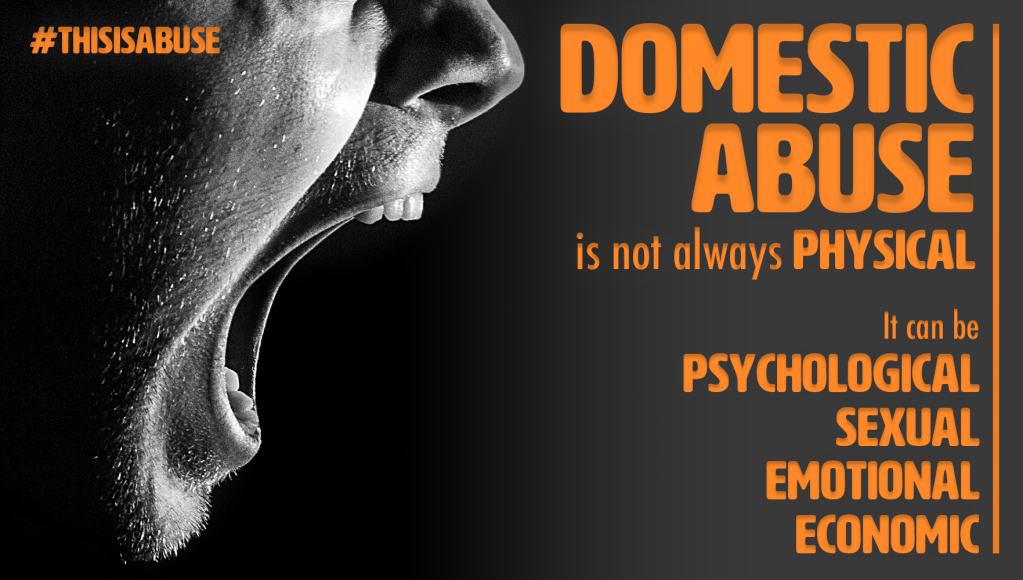
1 in 4 women will be affected by intimate partner violence (1).
I remember when I first heard that statistic in my teenage years, I thought to myself ‘that’s a lot of women! That’s a scary statistic!’ Having never been in a relationship till my mid-twenties, it was something I had never personally experienced, but saw it happen to some of my friends, and I know many people, and have met so may women, (and some men) who have been in violent and abusive relationships…
At the age of 17, whilst doing my A-levels, I saw some of my close female friends suddenly not show up to class. 6 months later, she came back and opened up about being in a violent relationship, and how her partner made her sick, and used to physically beat her.
When I was a university student, another friend of mine was in a violent relationship and struggled to cope with the ordeal whilst doing her degree. To this day, I still do not know how she pulled through being a university student whilst going through what she experienced.
At my local food bank, I have met many women who escaped violent relationships, and were living in supported accommodation. One lady I helped had even escaped honor based violence! She was no longer allowed to go back to her home country otherwise she would be killed for divorcing a violent man.
Following an event with the Himaya Haven (2) with a guest speaker talking about her experience of domestic violence, I was inspired and felt compelled to do more to help women affected by domestic abuse. After weeks of planning, praying, preparations and getting everything arranged, the event took place. October 25th 2018, with the help of a dear friend, we hosted and ran a domestic violence workshop, followed by a beauty therapy session to help women who had been affected by domestic violence. This was blogged about here: Incredible Women!
The types of domestic abuse I encountered was not just physical or psychological… I met women who were affected by financial domestic abuse, sexual violence and rape, honor based violence, coercion, possessiveness, controlling behavior, stalking, manipulation and gas-lighting, and some had even been banned from seeing family members and friends, and were not allowed to leave their homes unless their partners/husbands went with them….
Whilst I aim to raise awareness of this for International Women’s Day, let’s also highlight that women are extraordinary! All of my friends, family members and colleagues who have been affected by the scourge that is intimate partner violence, are still exceptional and exemplary human beings who are unique and amazing in their own special way.
Women are powerful – whatever is thrown at us, we will power through it and overcome it! Every single one of my friends and family members who have been affected by domestic abuse are powerful women who overcame all odds; regardless of the situation.
More statistics from Living Without Abuse and Office for National Statistics
- Domestic abuse will affect 1 in 4 women and 1 in 6 men in their lifetime
- 2 women are murdered each week and 30 men per year from domestic abuse
- Has more repeat victims than any other crime (on average there will have been 35 assaults before a victim calls the police) (3)
- The year ending March 2019, 2.4 million adults had experienced domestic abuse (1.6 million women and 786,000 men) (4)
References
(1) Living Without Abuse (LWA) Statistics Available online at: https://www.lwa.org.uk/understanding-abuse/statistics.htm Accessed on 08/03/2020
(2) Himaya Haven About Us Available online at: http://himayahaven.co.uk Accessed on 08/03/2020
(3) Living Without Abuse (LWA) Statistics Available online at: https://www.lwa.org.uk/understanding-abuse/statistics.htm Accessed on 08/03/2020
(4) Office for National Statistics ‘Analysis of Domestic Abuse Data’ Available online at: https://www.ons.gov.uk/peoplepopulationandcommunity/crimeandjustice/bulletins/domesticabuseinenglandandwalesoverview/november2019 Accessed on 08/03/2020
Share this:


Ode to ‘radical openness’ at school. #BlackenAsiaWithLove
“The classroom remains the most radical space of possibility in the academy”
bell hooks, Teaching to Transgress: Education as the Practice of Freedom.
Many of my students have never felt safe at school. I know because I ask. Early in my career, this thread of inquiry was prompted by students’ guardedness and/or surprise that I encourage dialogue, including debate and dissent. I insist that we all listen and endeavor to appreciate our distinct voices. I demonstrate that personal experience is as valuable as ‘book knowledge’ when both are subjected to criticality. This is distinct from the conventional objectiveness and alleged neutrality that we now know as universalising whiteness, maleness, bourgeois values (e.g. hooks, 1994: 16). If they hadn’t known, my students quickly learn what it means to bring the whole self into the classroom.
Many fellow educators have never known a classroom where teachers build a community of “mutual engagement,” through what bell hooks calls “radical openness” (1994: 205). I am frustrated that rather than transform, they opt to re-instantiate the dominance/subordination of conventional pedagogy. This dynamic “often creates a context where the student is present in the classroom to serve the will of the professor, meeting his or her needs, whether it be the need for an audience… or the need to assert dominance over subordinated students” (hooks, 2003: 91). This is intellectual sadomasochism (hooks, 2000: 165).
Unsurprisingly, that conventional banking’ model “where students are regarded merely as passive consumers” still receives credence in bureaucratic institutions worldwide (hooks, 1994: 40). Like abused children, many are eager to uphold that status quo due to “their cathected feelings for those adults” who were otherwise meant to care (hooks, 2000: 49).
Safe(r) in school
I have always liked school. From the memories I (now) select to represent the institution to me, it has always been a safe space of ‘radical openness’. The irony, of course, is that to love a place with integrity, one must know its opposite: I have experienced both love and terror within the classroom. I knew both by the time I was 6.
I continue to teach because I earnestly believe the classroom is the most radical space on the planet. It is the one space where there seems universal agreement that humans must grow. There is universal agreement that classrooms SHOULD be safe, though clearly there is no agreement on how that safety should be met. For example, I first realised I was gay inside a classroom, accepted it in another, and understood both its potential destructive and transformative implications in yet others.
In first grade, I had a crush on a guy named Freddie and a girl named Renée. In retrospect, I realised I wanted Freddie to like me the way that all the boys seemed to like Renée – the lightest-skinned black girl with the longest, bone-straight hair. Gay, right?
In 7th grade, when I was 12, I had two clear epiphanies during two separate chorus classes. First, an older classmate mocked my speech pattern as ‘gay’ to which I retorted: “Just because I talk proper doesn’t mean I’m gay.” He was one of the star basketballers on our school’s team; everyone looked up to him and laughed at his jokes. At that moment, it was hurtful and confusing. Crucially, however, that same classmate seamlessly continued to treat me like a little brother, and we grew even closer over the years. Teasing was his only means of discussing alternate masculinities. Typical jock, right?
Shortly thereafter, when our beloved chorus teacher went on maternity leave, her replacement was an effeminate Black man – what Brits call ‘camp’. Unlike our other teachers, he never said anything about his life outside the classroom – this was the Bible Belt in the 80’s. Yet, there was an immediate cathartic sense of identification that still warms me. I distinctly recall working out in my 12-year-old head that not only my school, but my state’s school system had to have approved of this individual. I was for the first time seeing someone like me ‘in the world’. Years later when I bumped into him at ‘the club’ I thanked him for his service. Representation matters!
That summer I participated in an enrichment program on the university campus where my parents and godparents all met one another. During one class, the guest speaker concluded his motivational talk by mocking an effeminate man who’d come to meet him after another talk. It was unclear why campiness had suddenly become the topic, so I asked a question to quickly change the subject. As the speaker began his response, another student muttered loudly “you’re talking to one right now”. No one came to my defense, including me. I couldn’t believe that a room full of kids and adults had allowed such a hateful slur. I felt terrified, yet held my tears for the bus ride home.
 Such incidents at 12 years old convinced me of two things: 1) The classroom is the safest space for radical openness, and 2) I had to leave Kentucky, as George Michael sang in Flawless: “You know you’re wasted here, wasted here/And there ain’t no miracles happening any time soon.”
I am an exile, yet at home everywhere else in the world where there is a classroom. Students generally appreciate my honesty and willing openness about my life’s journey. As educators, we tend to forget that unless challenged, students somehow believe that we were born like this – as fully formed teachers. Share your journey; it allows them to map their own.
For more inFormation
hooks, bell.
– (1994) Teaching to Transgress: Education as the Practice of Freedom. New York: Routledge.
– (2000) All About Love: New Visions. New York: William Marrow and Co.
– (2003) Teaching Community: A Pedagogy of Hope. New York: Routledge.
Share this:


Empathy Amid the “Fake Tales of San Francisco”*

This time last week, @manosdaskalou and I were in San Francisco at the American Society of Criminology’s conference. This four-day meeting takes place once a year and encompasses a huge range of talkers and subjects, demonstrating the diversity of the discipline. Each day there are multiple sessions scheduled, making it incredibly difficult to choose which ones you want to attend.
Fortunately, this year both of our two papers were presented on the first day of the conference, which took some of the pressure off. We were then able to concentrate on other presenters’ work. Throughout discussions around teaching in prison, gun violence and many other matters of criminological importance, there was a sense of camaraderie, a shared passion to understand and in turn, change the world for the better. All of these discussions took place in a grand hotel, with cafes, bars and restaurants, to enable the conversation to continue long after the scheduled sessions had finished.
Outside of the hotel, there is plenty to see. San Francisco is an interesting city, famous for its Golden Gate Bridge, the cable cars which run up and down extraordinarily steep roads and of course, criminologically speaking, Alcatraz prison. In addition, it is renowned for its expensive designer shops, restaurants, bars and hotels. But as @haleysread has noted before, this is a city where you do not have to look far to find real deprivation.
I was last in San Francisco in 2014. At that point cannabis had been declassified from a misdemeanour to an infraction, making the use of the drug similar to a traffic offence. In 2016, cannabis was completely decriminalised for recreational use. For many criminologists, such decriminalisation is a positive step, marking a change from viewing drug use as a criminal justice problem, to one of public health. Certainly, it’s a position that I would generally subscribe to, not least as part of a process necessary to prison abolition. However, what do we really know about the effects of cannabis? I am sure my colleague @michellejolleynorthamptonacuk could offer some insight into the latest research around cannabis use.
When a substance is illegal, it is exceedingly challenging to research either its harms or its benefits. What we know, in the main, is based upon problematic drug use, those individuals who come to the attention of either the CJS or the NHS. Those with the means to sustain a drug habit need not buy their supplies openly on the street, where the risk of being caught is far higher. Thus our research population are selected by bad luck, either they are caught or they suffer ill-effects either with their physical or mental health.
The smell of cannabis in San Francisco is a constant, but there is also another aroma, which wasn’t present five years ago. That smell is urine. Furthermore, it has been well documented, that not only are the streets and highways of San Francisco becoming public urinals, there are also many reports that public defecation is an increasing issue for the city. Now I don’t want to be so bold as to say that the decriminalisation of cannabis is the cause of this public effluence, however, San Francisco does raise some questions.
- Does cannabis cause or exacerbate mental health problems?
- Does cannabis lead to a loss of inhibition, so much so that the social conventions around urination and defecation are abandoned?
- Does cannabis lead to an increase in homelessness?
- Does cannabis increase the likelihood of social problems?
- Does the decriminalisation of cannabis, lead to less tolerance of social problems?
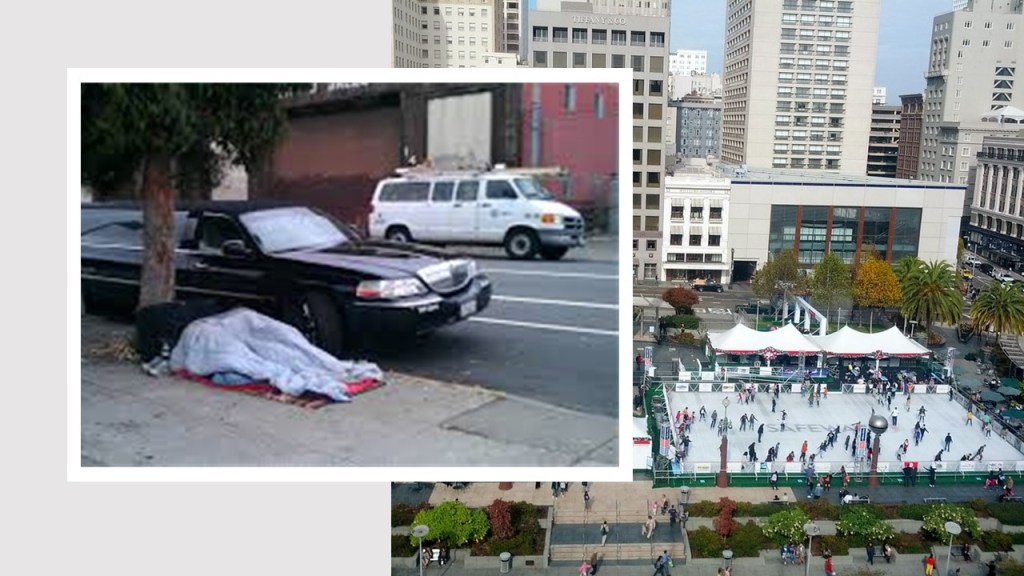
I don’t have any of the answers, but it is extremely difficult to ignore these problems. The juxtaposition of expensive shops such as Rolex and Tiffany just round the corner from large groups of confused, homeless people, make it impossible to avoid seeing the social problems confronted by this city. Of course, poor mental health and homelessness are not unique to San Francisco or even the USA, we have similar issues in our own town, regardless of the legal status of cannabis. Certainly the issue of access to bathroom facilities is pressing; should access to public toilets be a right or a privilege? This, also appears to be a public health, rather than CJS problem, although those observing or policing such behaviour, may argue differently.
Ultimately, as @haleysread found, San Francisco remains a City of Contrast, where the very rich and the very poor rub shoulders. Unless, society begins to think a little more about people and a little less about business, it seems inevitable that individuals will continue to live, eat, urinate and defection and ultimately, die upon the streets. It is not enough to discuss empathy in a conference, no matter how important that might be, if we don’t also empathise with people whose lives are in tatters.
*Turner, Alex, (2006), Fake Tales of San Francisco, [CD]. Recorded by Arctic Monkeys in Whatever People Say I Am, That’s What I’m Not, The Chapel: Domino Records
Share this:


Care Leavers, Criminal Justice and Higher Education

“These children are in our care; we, the state, are their parents- and what are we setting them up for…the dole, the streets, an early grave? I tell you: this shames our country and we will put it right.”
David Cameron MP, Prime Minister October 2015 at the Conservative Party Conference.
Well, I think it would be fair to say that politicians’ minds have not been exercised unduly over the fate of care leavers since David Cameron made the above promise in 2015. I worked with children in care and care leavers involved in the youth justice system for over thirty years and although his analysis of the outcomes for care leavers was simplistic and crude, tragically Cameron’s statement rings true for many of those leaving care.
With regard to the criminal justice system, Lord Laming’s independent review “In Care, Out of Trouble” http://www.prisonreformtrust.org.uk/Portals/0/Documents/In%20care%20out%20of%20trouble%20summary.pdf, notes that there is no reliable data on the numbers of looked after children in custody. However, based on data from a number of sources, the review came to the conclusion that around 400 looked after children are in custody at any one time. The total number of children in custody for July 2019 is 817. So, slightly less than half of those children in custody are looked after children according to the best estimates available, drawn from different sources. http://youthjusticeboard.newsweaver.co.uk/yots2/1g2x6m3h9q315chudc9elc?email=trueYJBulletin
Moving the spotlight, a huge 40% of care leavers are not engaged in Education, Training or Employment and only 6% of care leavers gain entry to university https://assets.publishing.service.gov.uk/government/uploads/system/uploads/attachment_data/file/464756/SFR34_2015_Text.pdf . This at a time when around 50% of children now have access to Higher Education and the opportunities that this can provide. Also, 20% of young people who are homeless have previously been in care.
Naturally, we have to be careful to provide a level of balance to the above rather desperate and shocking figures. Lord Laming’s review found that 94% of children in care did not get in trouble with the law. However, children in care are six times more likely to be cautioned, or convicted of an offence than children in the wider population. Furthermore, children in care who come to police attention are more likely to be prosecuted and convicted than cautioned when compared to the wider child population.
So, what has happened since 2015 when David Cameron declared his intention to “put it right”? In truth, there have been some steps forward and these need to be celebrated and built upon. The Care Leaver Covenant, a promise made by private, public or voluntary organisations to provide support for care leavers aged 16-25 has meant the availability of employment opportunities for young care leavers in the Civil Service, local authorities and a range of private sector organisations. Closer to home, here at the University of Northampton, we have launched a new package of support for care leavers who want to study with us. The package offers the possibility, from 2020, of a fully funded place in our Halls of Residence for the first academic year, a contract which extends their accommodation lease to include the summer vacation. A block for many care leavers entering Higher Education is the very real issue of where to live at the end of the academic year, so this tries to address this issue. Another block experienced is financial hardship; the offer provides a non-means tested financial award of up to £1,500 per year to help with course and living costs, and this alongside the local authority’s statutory responsibility to support access to higher education may also help. We also have a designated member of support staff to provide advice and guidance. All these demonstrate our commitment to widening participation and encouraging ambition.
Of course, this is only part of the picture. Arguably, our engagement with young people in care needs to start shortly after their transition to secondary school. The wider social structures which perpetuate disadvantage and poverty will continue to challenge those who are children in care and leaving care. The “adverse childhood experiences” – a rather unedifying term for physical, sexual, and emotional abuse perpetrated by carers or parents-will still have an impact for this group and potentially impair their ability or commitment to study.
If however, I learnt anything from my years working with children in care and children leaving care, it is that you should not underestimate their ability to overcome the obstacles placed in their way. With the right support and a child centred approach, education can provide the right framework for opportunities. Victor Hugo famously said that if you open a school door, you close a prison. Let’s kick open the door of Higher Education a little wider and increase the life chances of these children in OUR care.
As a footnote, I should say that my mum was in care from the age of four until she was fifteen when she was adopted. I would therefore be happy to acknowledge that this has some influence on my perspective and my interest in this group of young people.
Dave Palmer Lecturer in Criminal Justice Services
Share this:


#BlackenAsiawithLove: Welcome to our travelling blogger
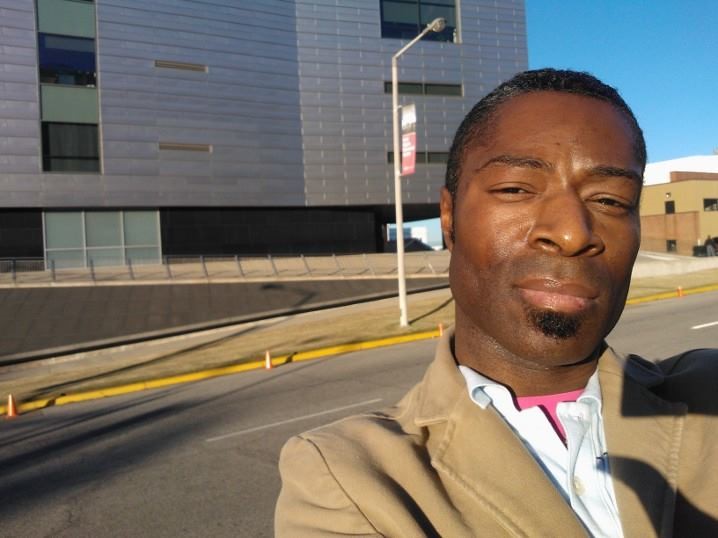
Dr Diepiriye S. Kuku-Siemons earned his PhD in Sociology at Delhi University (2011). He joined the University of Northampton in 2012, where he is currently a Senior Lecturer in International Business, and is on sabbatical in Hanoi. He has also been a visiting lecturer in business ethics and cross-cultural management at FH-Aachen, Germany and ESDES Lyon, France (2015-17). Diepiriye is from Louisville, Kentucky and avidly follows American media and political history. His current research areas are popular culture; Artificial Intelligence in society; Engaged Pedagogy, Intersectionality; Sustainability.
Diepiriye previously worked in international development: In Delhi, he worked with several community-based and international development organisations (Oxfam, UNAIDS, USAID) organisations. While earning his MPH in International Heath and Development at Tulane University’s School Public Health and Tropical Medicine (2003), he interned at the Institute for Human Rights in Colombo and spent a semester studying health systems management at the ASEAN Institute for Health Development at Mahidol University in Bangkok. His first graduate posting was with the Peace Corps, where he worked with a local cooperative and taught ESL in rural Mali (1997-99). He earned a B.A. in Biochemistry and Africana studies from Oberlin College (1997). Diepiriye loves to dance.
Share this:


A month of Black history through the eyes of a white, privileged man… an open letter

Dear friends,
Over the years, in my line of work, there was a conviction, that logic as the prevailing force allows us to see social situations around (im)passionately, impartially and fairly. Principles most important especially for anyone who dwells in social sciences. We were “raised” on the ideologies that promote inclusivity, justice and solidarity. As a kid, I remember when we marched as a family against nuclear proliferation, and later as an adult I marched and protested for civil rights on the basis of sexuality, nationality and class. I took part in anti-war marches and protested and took part in strikes when fees were introduced in higher education.
All of these were based on one very strongly, deeply ingrained, view that whilst the world may be unfair, we can change it, rebel against injustices and make it better. A romantic view/vision of the world that rests on a very basic principle “we are all human” and our humanity is the home of our unity and strength. Take the environment for example, it is becoming obvious to most of us that this is a global issue that requires all of us to get involved. The opt-out option may not be feasible if the environment becomes too hostile and decreases the habitable parts of the planet to an ever-growing population.
As constant learners, according to Solon (Γηράσκω αεί διδασκόμενος)[1] it is important to introspect views such as those presented earlier and consider how successfully they are represented. Recently I was fortunate to meet one of my former students (@wadzanain7) who came to visit and talk about their current job. It is always welcome to see former students coming back, even more so when they come in a reflective mood at the same time as Black history month. Every year, this is becoming a staple in my professional diary, as it is an opportunity to be educated in the history that was not spoken or taught at school.
This year’s discussions and the former student’s reflections made it very clear to me that my idealism, however well intended, is part of an experience that is deeply steeped in white men’s privilege. It made me question what an appropriate response to a continuous injustice is. I was aware of the quote “all that is required for evil to triumph is for good men to do nothing” growing up, part of my family’s narrative of getting involved in the resistance, but am I true to its spirit? To understand there is a problem but do nothing about it, means that ultimately you become part of the same problem you identify. Perhaps in some regards a considered person is even worse because they see the problem, read the situation and can offer words of solace, but not discernible actions. A light touch liberalism, that is nice and inclusive, but sits quietly observing history written in the way as before, follow the same social discourses, but does nothing to change the problems. Suddenly it became clear how wrong I am. A great need to offer a profound apology for my inaction and implicit collaboration to the harm caused.
I was recently challenged in a discussion about whether people who do not have direct experience are entitled to a view. Do those who experience racism voice it? Of course, the answer is no; we can read it, stand against it, but if we have not experienced it, maybe, just maybe, we need to shut up and let other voices be heard and tell their stories. Black history month is the time to walk a mile in another person’s shoes.
Sincerely yours
M
[1] A very rough translation: I learn, whilst I grow, life-long learning.
Share this:


You can’t tell me what to do….
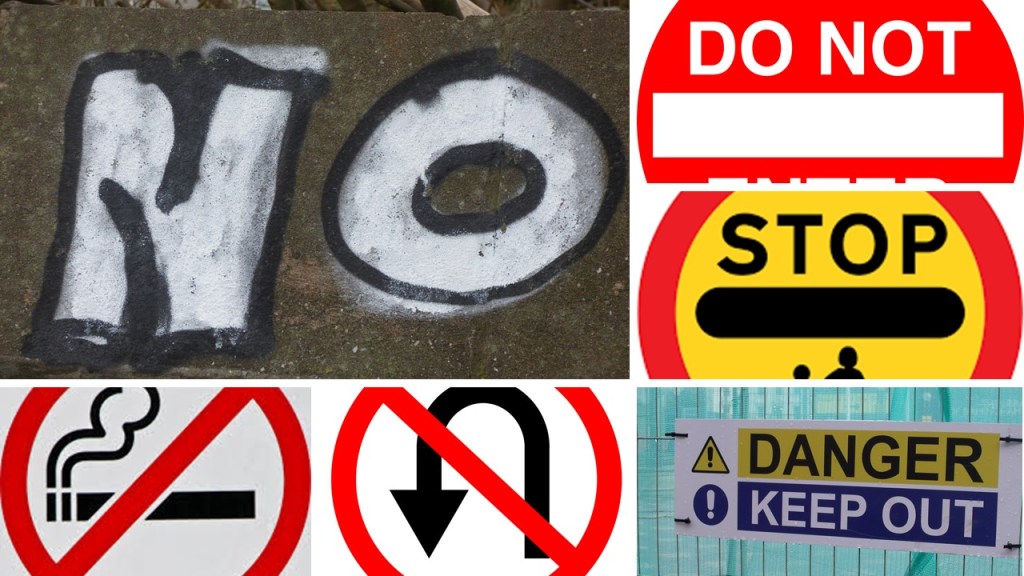
It seems that much criminological discussion centres on motivation. This ranges from focusing on the motivation to commit crime, the motivation to report victimisation, the motivation to work within the criminal justice system, all the way though to the motivation for punishment. In each of these circumstances, much is taken for granted, assumed and reacted to as if there were a consensus.
However, how much do we really know about motivation? To be sure, there are plenty of criminological theories focusing on individual explanations for criminality and deviance, particularly around psychopathy, personality and biology. Others, such as Classical theory assume that we are all the same, rational creatures motivated by the same factors. But take a moment and consider what motivates you? Are those factors positive or negative?
Let’s take the prison for example. According to some politicians, the media and other commentators, incarceration can punish and rehabilitate, frighten people out of crime whilst also empowering them to move away from crime. It offers an opportunity to desist from drug taking, whilst simultaneously enabling prisoners to develop a drug habit. Prison can offer a haven from social problems on the outside, whilst also creating a dangerous environment on the inside and these are just a few of the many pronouncements on the prison. Although oppositional, these differing narratives all indicate the prison as a place of change; transformation, the only difference is whether this is positive or negative, in essence does prison make people better or worse?
Considering much of the blog’s readership is focused on education, it might be useful to apply the prison experience to our own personal motivations. Would it be helpful to have someone constantly telling you what to do? Escorting you to and from the toilet, the classroom, the workplace? Controlling your every move? Deciding when and what you eat? Determining if you can access a shower, the library, the gym and so on? Passing judgement on who can visit you and when they can come? Would these “motivational” factors inspire you to study more? What if you were locked in a very small room (think student accommodation) for hour upon end, would your essays be any better?
For me personally, all of the above, would not motivate; they might frighten or even terrify me. They would allow me to feel resentful, bitter, alienated, perhaps even aggressive. Maybe I would become depressed, self-harm, or turn to drugs for consolation. Maybe, I could retreat into studying as release from an oppressive regime, but is that motivation? or escapism? or even institutionalisation?
I wonder, surely there must be far better, less harmful ways of tapping into motivation? By looking at our own experiences and considering what has motivated us in a positive way previously, we can begin to consider how we might motivate ourselves and others. Some of the motivational factors I can identify from my own life include, people who are prepared to listen to my ideas (good and bad) without interrupting, to guide (but not tell, never tell!) me to finding solutions to problems and to treat me with dignity and respect. Other examples, include introducing me to important literature, but not batting an eyelid when I excitedly tell them all about the content. Being there for me as a fellow human regardless of status (perceived or otherwise), when everything is a challenge, and I just want to vent and celebrating all successes (however tiny). These are just a few, personal reflections, but what they have in common, is the focus on another human who matters to you, who is cheering you on from the side-lines and is able to empathise and encourage. The other commonality, of course, is that these factors are not entrenched within the prison or the wider criminal justice system.[1]
Have a think for yourself and see if you can find anything currently within the prison or CJS that would motivate you! If it doesn’t, you need to question what it is the prison is actually trying to achieve.
[1] This does not preclude individual positive interpersonal relationships within the prison or CJS, but it is not a primary function of either.


