
Home » Education (Page 5)
Category Archives: Education

We are Spartacus: the publishing industry and race
As one of only a handful of non-white authors on the British crime fiction map, I thought it might be worthwhile spending a moment reflecting on the worldwide rebalancing touched off by the George Floyd killing in America. Fear not. There’s no need to put on your tin hats and dive for the trenches. My purpose isn’t to haul anyone over the coals. But there’s little doubt that some of what I say might make for uncomfortable reading. More importantly, I will ask you to reflect, at a personal level, on what we mean by systemic inequality, particularly as it applies to the publishing industry.

First, some background. My parents are from the subcontinent. They came to the UK in the early seventies, lured by the immigrant dream. The streets of London may not have been paved with gold, but they were paved with opportunity. My father, who was not literate, spent his life in honest labour, in an industrial bakery, while my mother raised children, demonstrating the much-lauded immigrant work ethic by slaving away at her sewing machine every hour she wasn’t feeding us or stopping us from poking each other’s eyes out with eraser-tipped pencils. She instilled in us the need, above all else, to study, to educate ourselves, to progress.
So far, so good.
But what if I were to tell you that my parents were, in a broad sense, xenophobes, too? Not overtly. They didn’t oppress anyone; or traffic slaves across the oceans; or pillage defenceless communities for profit. But their attitude towards black people – cultivated by the insular world they had grown up in – was, at best, indifferent, or, at worst, mistrustful.
Here’s a simple, unpalatable truth. Racism, in its most basic form, is a feature of most societies. It shouldn’t be. But it is. A simple example illustrates my point.
The outpouring of angst and handwringing currently gripping the world has seen celebrities across the globe express their views on racism (rightly so), only for some to discover that a seat on this particular bandwagon can be an uncomfortable one. In India, numerous Bollywood stars were called out for the disparity between their #blacklivesmatter tweets and the fact that they had fronted campaigns for skin-lightening creams. Across the subcontinent, lighter skin has traditionally been valued (usually alluded to in matrimonial ads by the rainbow-bending adjective “wheatish”), so much so that white foreigners, especially Brits, are treated with overt deference, while black people are routinely afforded a lesser welcome. An odd perversity, given that it was the whites that pillaged the subcontinent for three centuries while, with those of Afro-Caribbean descent, one might assume Indians would evince a colonial-era solidarity.
Let me be clear: this idea of a sort of universal xenophobic instinct does not in any way excuse or mitigate the horrors of the slave trade, or the enormous, long-term damage done to black people because of that terrible practice. Nor does it justify the entrenched, systemic prejudice that continues to colour western societies, prejudice that culminates in overt racism of the kind that permits white American policemen to routinely kill black men with little fear of reprisal, and prejudice of the less obvious kind that serves to keep black people ‘in their place’. My point was merely to demonstrate that, in the wider, global race equality agenda now under discussion, we all have a part to play.
Part of the issue is that many well-meaning efforts to redress the balance are hampered by a profound lack of insight into how unconscious bias can affect the lives of people of colour, in a million different, small, but, ultimately, debilitating ways. The problem is further hampered by an education system that often fails to properly tackle the ‘race issue’.
Yet, the problem must be addressed. Because the world has become a smaller place. The goldfish bowl has shrunk and we are now all swimming in the same seas. It behoves us to make the effort, not just because it is the right thing to do, but because it is also the most effective means of progressing humanity towards a more equitable, more meritocratic, global society. If the Covid-19 pandemic has proven anything, it is how interdependent we are.
Coming, now, to the publishing industry. Cards on the table. Since my first book was published six years ago, I have received tremendous support from my agent, publisher, critics, bloggers, readers, event organisers, and crime writers. My experience is not typical. A simple look at the statistics tells us what we already know. Any way you slice it and dice it – diversity of publishing staff, published writers of colour, books featuring characters of colour – the industry is dominated by white thought and enterprise. Some of this can be ascribed to the fact that, in terms of population, BAME communities, by definition, are a minority. You wouldn’t expect there to be a 50:50 split along these dimensions. That isn’t the issue. The problem is the entrenched attitudes that make it so damned difficult for writers of colour to break into the industry and then to enjoy the same rewards and freedom of expression that is accorded to their white counterparts.
The world’s most successful crime writer, James Patterson, became famous with a series about a streetwise black detective, Alex Cross. James Patterson is not black. Nothing wrong with that scenario, in my opinion. Authors should not be constrained by artificial constructions of propriety. But, if the industry is being honest with itself, it will acknowledge that a writer of colour attempting to do something similar – trying, as it were, to write outside of their cultural straightjacket – is rarely accorded the same privilege. Questions of ‘authenticity’, ‘voice’ and ‘cultural appropriation’ suddenly come racing to the fore, like Cinderella’s ugly sisters questioning our right to go to the ball. Asian writers, for instance, are often expected to pen literary tomes about colonialism or exposes of the immigrant experience. Again, nothing wrong with that, and, indeed, brilliant writing is regularly published exploring those themes. But there are so many other stories that we would like to tell. White writers can be published writing about matters far outside their experience – wizards, serial killers, aliens. But for non-white writers, the same consideration is much harder to find. A lot of this is not the result of overt racism, but rather the mindset that accepts as perceived wisdom the idea that profitability comes almost entirely from white authors writing white stories, or writers of colour writing stories suited to their ethnic background. This thought is so prevalent in the industry that it may as well be an eleventh commandment.
A terrific article by Laura B. McGrath, associate director of the Stanford University Literary Lab, in a Jan 2019 issue of the Los Angeles Review of Books, entitled “Comping White” identifies the true nature of the problem. Paraphrasing her research, it goes like this: publishers buy new books by comparing them to books that have been successful. Is this the new Harry Potter? Is this the next Gone Girl? Given that the majority of books are white, the process becomes a closed loop, a vicious cycle. The industry buys and promotes white books because they sell. White books sell because they’re the only books the industry buys and promotes. Do you see the problem?
Making the gatekeepers more diverse, McGrath argues, will have only a marginal impact. It’s the system that’s at fault. The same applies to practically any walk of life that you might care to name – hence the reason so few people of colour in boardrooms, or lecturing at top universities, or opening Michelin-starred restaurants. White people have done all those things successfully before, so why take a chance on the unproven?
Until we change this structural, often unconscious, bias, all the current furore around race will do little to improve the prospects of the average BAME person.
Can readers help? Of course! By voting with their feet. By buying books written by authors of colour, readers signal to publishers that they won’t be put off by a ‘funny-sounding’ name on the cover, or a protagonist who doesn’t share their own cultural background. The only bar should be quality.
In an ideal world, a good story, well told, should stand on its own merits.
What else can we do? In my opinion, people shape people. If we want better, more thoughtful attitudes in the industry, we must all stand up and be counted. Solidarity is the name of the game. A solidarity of thought that acknowledges that a genuine change of perspective is needed. From agent to reader, all along the chain. What we need, in other words, is for all of us to stand up and say: ‘We are Spartacus.’
Vaseem Khan, author, Midnight at Malabar House and Baby Ganesh series
London, June 2020
Share this:


Ignorance is bliss: the problem with education

I woke up this morning with a feeling of the weight of the world on my shoulders. My problems are insignificant compared to many others, but I did think, wouldn’t it be nice to get off this merry-go-round. Wouldn’t it be nice if I could stop thinking about the injustices in the world and the part I play in them, how the problems might be solved, how best I can do my job online and give all of my students what they need, how best I can deal with tricky relationships at work and do my best for all concerned How I might ensure that my family are looked after and take on significant responsibilities in looking after the interests of an elderly relative whilst ensuring fairness all round. How can I do the right thing and not send myself into bouts of depression?
And as I thought of all of these things I came to an interesting question. Is it better to be ignorant, inept and irresponsible?
If I was ignorant, if I didn’t bother to watch the news, to critique, to engage in discussion, to think about the social world and my place in it. If I was to carry on in blissful ignorance of what is going on around me would I not be happier? If I am not aware of social injustices, then it would be easy to take a stance that what matters is simple, law and order for instance. I could become a Sun reader, more interested in the pictures than the content. The headlines would capture my imagine for a nano second and I could simply agree about how terrible this or that issue is before blissfully moving on to something else. I don’t know what everyone else is complaining about, I’m alright Jack, or should that be Jill, I must stop thinking.
If I was inept, I make a bit of an assumption here that I’m not, I guess others will judge, then that ineptitude would ensure that I wasn’t given any responsibilities, well none that really mattered. Cock things up a few times and suddenly you find that nobody wants to give you the work and nobody really wants to do any work to deal with your ineptitude, and nobody thanks them if they do. In other words, you are ‘quids in’, minimal work and nobody on your back. Couple this with blissful ignorance and life is so much easier.
If I was irresponsible, or at least seen as that, then I wouldn’t be asked to take on responsibility and all of the ramifications that go with it. No longer asked to do something that is important and has significant ramifications if you cock it up. That takes us back to ineptitude, being inept leads to no responsibility, being irresponsible gives the appearance of being inept. If I am blissfully ignorant of what people might think of me or what I might have cocked up, then no need to worry.
The only fly in the ointment here, is that in being educated, I am able to write this blog. I am able to place myself in society and sadly acknowledge my part in it. I pride myself in doing a good job and I don’t shy away from responsibility although I might get there kicking and screaming at myself for the angst and inner turmoil it sometimes creates. Knowledge is powerful, education gives you knowledge and self-awareness. The greater the knowledge the greater the self-awareness, the greater the self-awareness, the greater the thirst for knowledge. Unfortunately, there is nothing blissful to be found there though.
Share this:


“I can’t breathe”

George Floyd’s words: “I can’t breathe”, have awaken almost every race and creed in relevance to the injustice of systematic racism faced by black people across the world. His brutal murder has echoed and been shared virtually on every social media platform – Floyd’s death has changed the world and showed that Black people are no longer standing alone in the fight against racism and racial profiling. The death of George Floyd has sparked action within both the white and black communities to demand comprehensive police reforms in regards to police brutality and the use of unjust force towards ethnic minorities.
There have been many cases of racism and racial profiling against black people in the United Kingdom, and even more so in the United State. Research has suggested that there have been issues with police officers stereotyping ethnic minorities, especially black people, which has resulted in a vicious cycle of the stopping and searching of those that display certain physical features. Other researchers have expounded that the conflict between the police and black people has no correlation with crime, rather it is about racism and racial profiling. Several videos circulating on social media platforms depict that the police force does harbour officers who hold prejudice views towards black people within its ranks.
Historically, black people have been deprived, excluded, oppressed, demonised and brutally killed because of the colour of their skin. As ex-military personnel in Her Majesty’s Armed Forces and currently working as a custody officer, I can say from experience that the use of force used during the physical restraint on George Floyd was neither necessary nor proportionate to the circumstances. In the video recorded by bystanders, George Floyd was choked in the neck whilst fighting for his life repeating the words “I can’t breathe”. Perhaps the world has now noticed how black people have not been able to breathe for centuries.
The world came to halt because of Covid-19; many patients have died because of breathing difficulties. Across the world we now know what it means if a loved one has breathing issues in connection with Covid-19 or other health challenges. But nothing was done by the other police officers to advise their colleague to place Floyd in the recovery position, in order to examine his breathing difficulties as outlined in many restraint guidelines.
Yet that police officer did not act professional, neither did he show any sign of empathy. Breath is not passive, but active, breathing is to be alive. Racial profiling is a human problem, systematic racism has destroyed the world and further caused psychological harm to its victims. Black people need racial justice. Perhaps the world will now listen and help black people breathe. George Floyd’s only crime was because he was born black. Black people have been brutally killed and have suffered in the hands of law enforcement, especially in the United States.
Many blacks have suffered institutional racism within the criminal justice system, education, housing, health care and employment. Black people like my own wife could not breathe at their workplaces due to unfair treatment and systematic subtle racial discrimination. Black people are facing unjust treatment in the workplace, specifically black Africans who are not given fair promotional opportunities, because of their deep African accent. It is so naïve to assume that the accent is a tool to measure one’s intelligence. It is not overt racism that is killing black people, rather the subtle racism in our society, schools, sports and workplace which is making it hard for many blacks to breathe.
We have a duty and responsibility to fight against racism and become role models to future generations. Maybe the brutal death of George Floyd has finally brought change against racism worldwide, just as the unprovoked racist killing of black teenager Stephen Lawrence had come to embody racial violence in the United Kingdom and led to changes in the law. I pray that the massive international protest by both black and other ethnicities’ will not be in vain. Rather than “I can’t breathe” reverberating worldwide, it should turn the wheel of police reforms and end systematic racism.
“Restricting someone’s breath to the point of suffocation is a violation of their Human Rights”.
Share this:


When I grow up what will I be?
Wherever I go in life, whatever I do, as long as I am helping others and making a positive difference, I will be happy”
For many years, that has been my take on looking for jobs – helping people, and making a positive difference.
What will I do with my life? Where will life lead me? I’ll say my prayers, and find out!
As a child (between 5-9 years old), I wanted to be a nurse; I have a caring nature, and love helping people! Imagining myself in a nurse’s uniform, and putting bandages on patients and making them better, was something I dreamed about.
Life moves forward, and at the age of 13 I wanted to be so much!
I considered becoming a teacher of either English or Religious Studies. At 13, I loved English and learning about all world faiths. It fascinated me! My teacher had a degree and masters from Oxford University; and I absorbed everything I could! Religious Studies was my favourite subject (alongside art, drama and English) I also had my first, most profound spiritual experience, deepening my Catholic faith (written in more detail in chapter 1 of Everyday Miracles).
My hobbies included reading, writing and drawing. Throughout my teenage years, I devoured the Harry Potter books, the Lord of the Rings books, and Phillip Pullman’s His Dark Materials books. I had a library card, and would borrow books from the library in my village and would read regularly at home. I wanted to be an artist and author, and would often write poetry and short stories, and kept a sketchbook to do drawings in. I dreamed of being a published author, and to be an artist – however, these were seemingly beyond my reach. I prayed to God, that I would be able to fulfil these life ambitions one day.
Alongside of this, I also did some charity work – any change that I got from my lunches, I would put in an empty coffee jar and save them up. I was given the rather cruel nickname, ‘penny picker’, which resulted in bullying from people across different year groups, because I picked up pennies off the floor and put them in my charity pot. Though I did get a mention in the school newsletter stating that the money I raised amounted to quite a large sum, and went to CAFOD, and a homeless charity. I have always done charity work, and still do charity work today!
In school, there were 2 sets in each year; the A-band and the B-band. The A-band were the high academic performers, and those who got high grades. The B-band was the lower set… the set which I was in… This meant that when it came to picking GCSEs, I could only choose 2, not 3, which the A-band students were able to do.
In my Citizenship and Religious studies lessons, I began learning more about the globalized world, human rights, and social issues. Here, I learned in great detail about slavery (slightly covered in history too), prejudice and discrimination, the Holocaust, and 3rd world issues, such as extreme poverty, deprivation, and lack of basic human necessities, such as water, food and sanitation. We even touched upon the more horrific human rights abuses such as extraordinary rendition, religious persecution, torture, and rape and sexual violence.
My ambitions began to evolve more, and I dreamed of becoming a lawyer and even a judge. I wanted to serve justice, make communities safer, and to do more to combat these issues. With my soft heart, and a love of helping people, I knew that being a lawyer would help with doing this!
Moving forward to Year 10; choosing my GCSEs…. I spoke with one of the school heads, and asked for advice. I was still adamant on being a lawyer, and so was advised to do drama and history. Drama as it would boost my confidence, public speaking and expressive skills. History, because of the analytical thinking and examination of evidence that lawyers need when presenting their arguments. I was very happy with this! I loved drama and I enjoyed history – both the teachers were great and supportive!
At the age of 15, I was diagnosed with Asperger Syndrome – this explained so much about me and my idiosyncrasies. Ironically, it was my drama and my history teacher who picked up on it, due to my odd gait, social skills, and how I processed information. At parents’ evening, both teachers discussed with my mum about the diagnosis, and getting support. It was a big shock when I spoke with each of my teachers individually about the diagnosis.
At the end of doing my GCSEs, I was a pretty average student with mostly C grades. When it came to picking A-levels, I was unable to to the subjects that I really wanted to do…. Philosophy, Theology, Law and Psychology…. After a few weeks of battling and trying to get onto a course that would accept me, I ended up doing Travel and Tourism, A-level Media, Applied Sciences and Forensics (which had a criminology module), and, in Year 13, I took on an Extended Project, to boost my chances of getting into university.
I felt somewhat disillusioned… I’m studying courses that will only accept me because of my grades – an odd combination, but a chance to learn new things and learn new skills! In my mind, I wondered what I would ever do with myself with these qualifications…
Deciding to roll with it, I went along. I was much more comfortable in my Sixth Form years as I learned to embrace my Asperger’s, and started being included in different socials and activities with my peers.
Those 2 years flew by, and during my science course, when I did the criminology unit, I was set on studying that joint honors at a university. Criminology gripped me! I loved exploring the crime rates in different areas, and why crime happens (I had been introduced briefly to Cesare Lombroso, and the Realist theories). I have always loved learning.
Fast forward, I decided to go to Northampton University to do Criminology and Education, and even had the hope that I may be able to get a teaching job with the education side. However, due to an education module no longer being taught, I majored in Criminology.
However, in my second year of studies, I did a placement at a secondary special needs college, and helped the children with their learning! All the children would have a day at a vocational training centre doing carpentry, arts and crafts, and other hands on and practical courses. Back in their classrooms, they had to write a log of what they learned. The students I helped were not academic, and so I would write questions on the board to guide them with their log writing, and would write words that they struggled to spell – my opportunity to help students with their education! Later in life, I worked as a Support Worker for students with additional needs at both Northampton, and Birmingham City University, so still learning whilst helping others.
July 2015, I graduated with a 2:1 in my degree, and I had been encouraged to do an LLM in International Criminal Law and Security – a degree in law! It was unreal! From being told I could not do A-level law, here, I was able to do a masters in law! I applied for the Santander Scholarship, and got enough money to cover my course and some living costs – basically, a Masters degree for free!
During those 2 years of being a part time post graduate, I set up and ran the Uni-Food Bank Team and continued with running Auto-Circle Spectrum Society. January 2016 saw a downward dive in my mental health and I was diagnosed with severe depression (When the Darkness Comes).
I learned to cope and found my own way of healing myself through art and painting (which I later began painting on canvasses and sold at arts and crafts fayres).
February 2018 – I graduate with my LLM; the first on my dad’s side of the family to go to university, and on my mum’s side, the first to have a masters’ degree.
Going back to the question of this blog; When I grow up, what will I be?
I will be everything that I ever wanted to be! I am now a published author (mentioned at the start of the blog), have done freelance writing and art (everything I have written on every platform used can be accessed here: Blog Home Page: Other Writing Pieces)! I got a degree in Criminology with Education, and a Masters degree in International Criminal Law and Security!
I have have utilised my knowledge of human rights to fight for the rights of Persecuted Christians, political and social activists, and write to someone on death row too! (Serving Our Persecuted Brothers and Sisters Globally, I See You, Prisoners of Conscience, Within Grey Walls
I still do loads of charity work, and support my local food bank along the side too! (Brain Tumor Research; Helping Those in Need)
It’s safe to say that God answered every single one of my prayers, and even gave me strength in some circumstances!
Currently, I am working as the administrator of an an addiction recovery unit in my home village! A job I thoroughly enjoy – it is challenging, my colleagues are the funniest bunch I have ever met! I have learned so much, and am thriving!
Most importantly, as I’ve grown up, I’ve learned to be happy, learned to overcome all odds that are against me, and to always help others regardless of the circumstance. I’ve learned to be compassionate and strong ❤
Share this:


Home educating in a pandemic
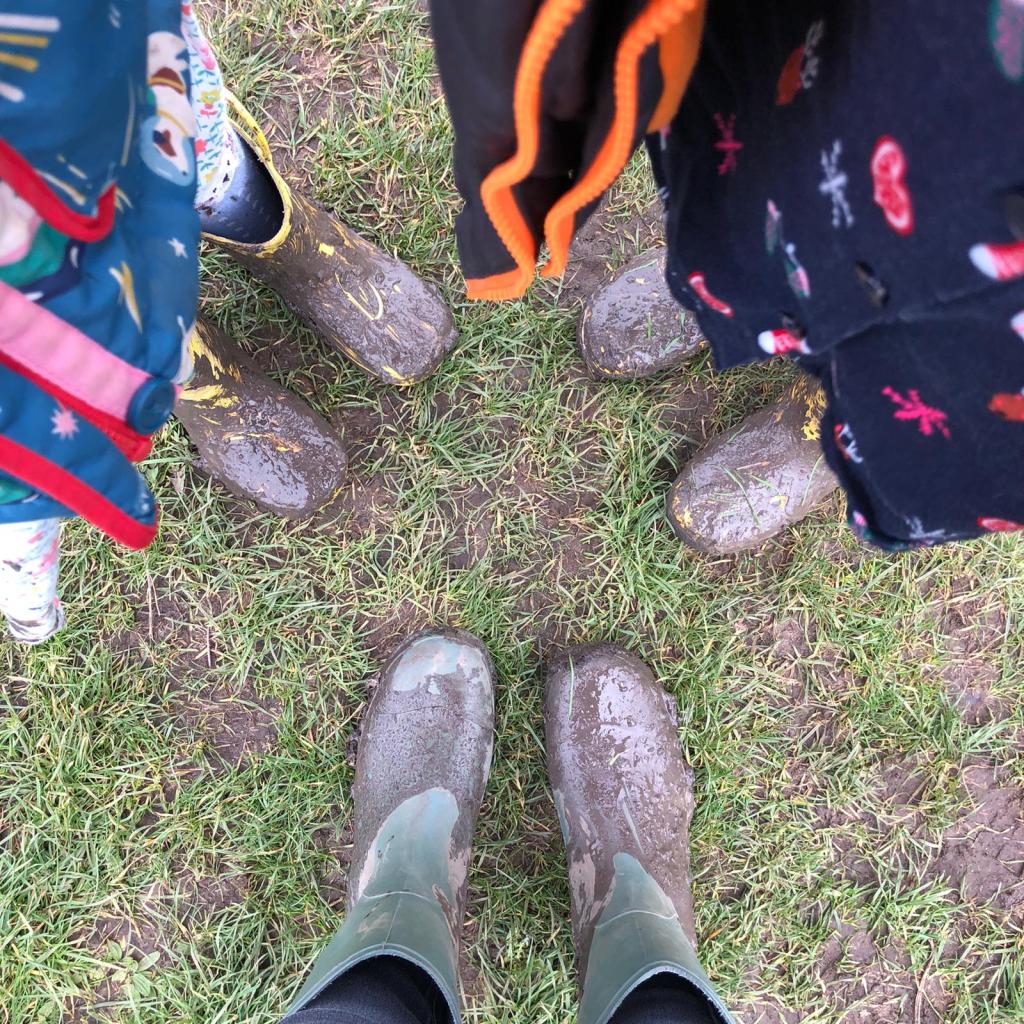
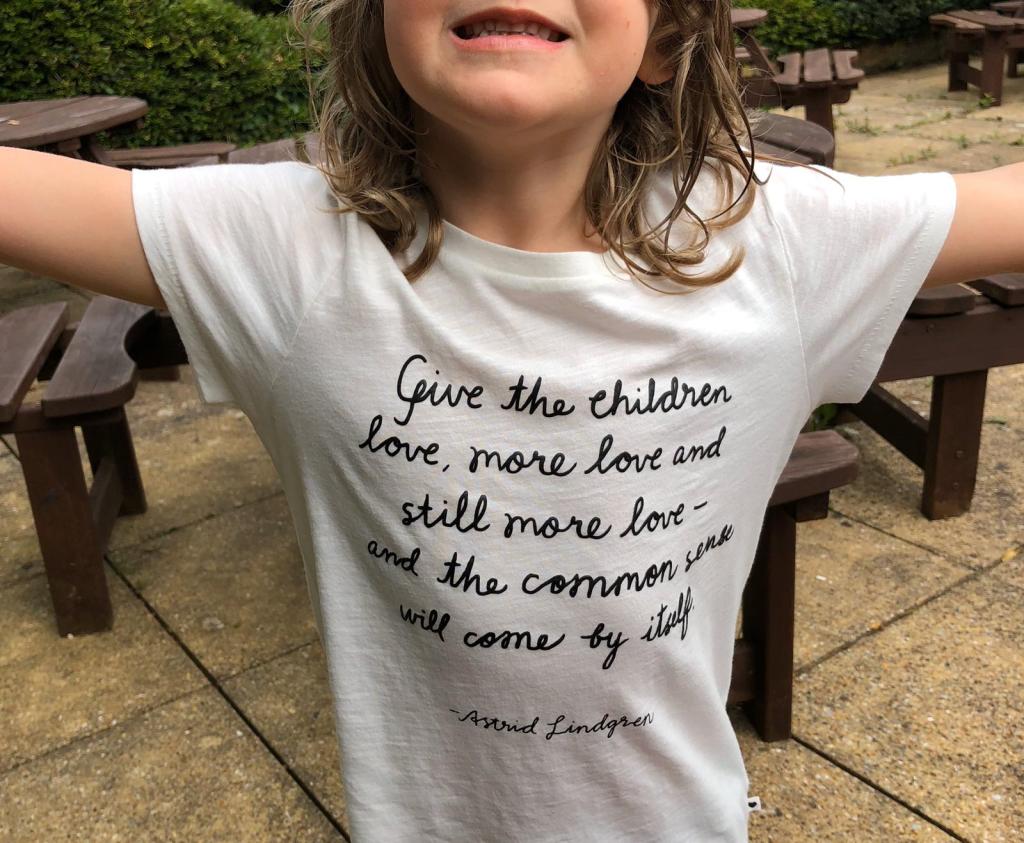
“Give the children love, more love and still more love - and the common sense will come by itself” - Astrid Lindgren
My children are aged 5 and 7 and they have never been to school. We home educate and though ‘home’ is in the title, we are rarely there. Our days are usually filled with visits to museums and galleries, meet-ups with friends, workshops in lego, drama and science and endless hours at the park. We’ve never done a maths lesson: sometimes they will do workbooks, but mostly they like to count their money, follow a recipe, add up scores in a game, share out sweets… I am not their teacher but an enthusiastic facilitator – I provide interesting ideas and materials and see what meaning they can take and make from them. Children know their own minds and learning is what they are built for.
If there was ever a time to throw away the rulebook it’s when the rules have all changed. Put ‘home’ at the centre of your homeschooling efforts. Make it a safe and happy place to be. Fill it with soft, warm and beautiful things. Take your time.
All this to say that what children need most is your love and attention. This is so far from an ideal situation for anyone – so cut yourselves some slack and enjoy your time together. You don’t need to model your home like a school. Share stories and poems, cuddle, build dens, howl at the moon, play games, look for shapes in clouds and stars, do experiments round your kitchen table, bake cakes, make art, explore your gardens and outside spaces and look for nature everywhere. This is the stuff that memories are made of.
As adults we don’t continue to categorise our learning by subjects – we see the way things are interconnected across disciplines, sometimes finding parallels in unlikely places. When we allow children to pursue their own interests we give them the tools and the freedom to make their own connections.
What’s important is their happiness, their kindness, their ability to love and be loved in return. They are curious, they are ready made learning machines and they seek out the knowledge they need when they need it.
It’s an interesting time to be a home educator – more children than ever are currently out of school and the spotlight is on ‘homeschooling’. I prefer the term ‘home educator’ because for me and my family it isn’t about replicating the school environment at home and perhaps it shouldn’t be for you either.
Treat it as an extended holiday and do fun stuff together but also let them be bored.
Share this:


“My Favourite Things”: samc0812

My favourite TV show - My favourite current show is Friday Night Dinner. My all-time favourite has to be Breaking Bad, I’ve watched from beginning to end three times!

My favourite place to go - Definitely has to be the beach, I always find being by the sea calming. My favourite place in the world is Thailand. I’ve never met such happy, friendly people. Thai street food is amazing and it’s a beautiful peaceful part of the world

My favourite city - London. I have so many memories of day trips, nights out and experiences in London. Every time I probably don’t spend as much time there as I would like actually considering how easily it’s reached from where I live

My favourite thing to do in my free time - Bake. You can’t beat a home-made cake. I’ve been baking a lot lately, my children are fed up of cake!

My favourite athlete/sports personality - I’m not a huge sports fan but I have a lot of respect for Usain Bolt. I watched a documentary about his life once, his commitment to training and resilience was incredible

My favourite actor - Morgan Freeman. He always seems to choose roles well that suit him. I don’t think I’ve seen any film’s he’s been in that I haven’t enjoyed

My favourite author – I don’t think I could choose. It’s not very often I read books by the same author for myself. I do with my children though, my favourite children’s author is probably A.A. Milne or Roald Dahl because they’re classics which never grow old

My favourite drink - Chocolate milkshake… I’m not sure I’ve ever grown out of drinking chocolate milk!

My favourite food - Cheeseburgers. My friends call me a connoisseur of cheeseburgers because I eat them so much. Everyone I know asks me before trying out a new burger restaurant

My favourite place to eat - My mum and dads house. My mum makes an amazing roast dinner. There’s nothing better than a family meal, even if I do normally end up washing up at the end

I like people who - are open minded, honest and empathetic. I don’t see any reason to be anyone other than yourself. I also think the best way to learn and grow as a person is to remain open minded. As for as being empathetic, I think people show this in many different ways, sometimes it’s less obvious. I like to believe most people have some good in there somewhere

I don’t like it when people - are closed minded and argumentative. I think there’s a fine line between intelligent debate and opinionated argument

My favourite book - Since I was a teenager my favourite book has always been Junk by Melvin Burgess

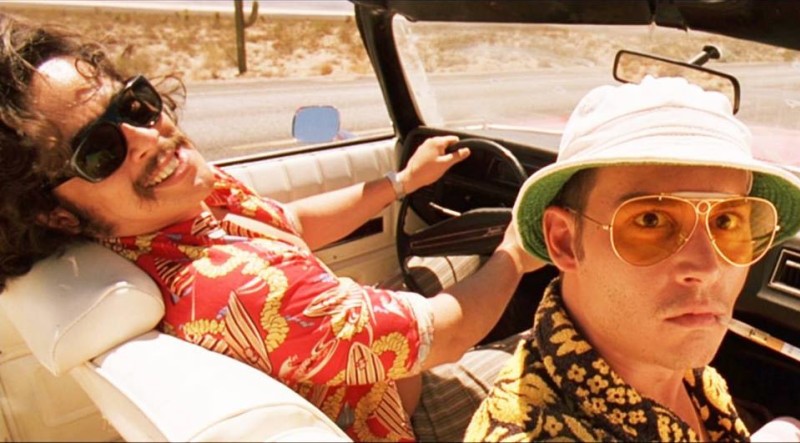
My favourite book character - Raoul Duke in Fear and loathing in Las Vegas. I find it interesting the way the character is a representation of the way the author views his life. Hunter S. Thompson was an interesting enough character without needing a fictional version

My favourite film - Interstellar. Space fascinates me. I like to ponder over the possibilities of time travel. I love that physicist Nolan Thorne was hired to make the explanation of a black hole accurate

My favourite poem -
Warning by Jenny Joseph. I read it on my wedding day. It was actually the priest who suggested it, I think he saw I was a little bit of a wild, independent woman!

My favourite artist/band - I’ve been going to raves since I was 16 so most of my favourite artists are small and less well-known DJ’s. My husband Dj’s as well, so many of them I met through him, and are now good friends of mine. I don’t think I could pick just one

My favourite song - This a tough one, I like so many genres of music. I guess if I had to choose one, it would be “The way you look tonight” by Tony Bennet because it was my wedding dance song and it always makes me think of my grandparents

My favourite art - My favourite type of art is portraits. I watched a documentary with artist Grayson Perry and he described how portraits are an interpretation of how the artist see’s that person. I like to look at portraits and imagine what I think that person is like

My favourite person from history - It would have to be Albert Hoffman. My area of research is mostly based in psychedelic medicines and drug policy. Albert Hoffman is the scientist who discovered LSD. He’s quite well-known for accidentally administering himself the first documented dose of LSD and riding his bicycle home. He was one of the first people to recognise the potential pharma psychological benefits of hallucinogens, I like to think one day modern science will make a strong enough case to revolutionise psychiatric care with substances like LSD. Although Hoffman discovered LSD in 1943 we still don’t fully understand the full complexities of how it works on the mind
Share this:

When I grow up what will I be?

Don’t worry I’ve not regressed, well not yet anyway. I was watching Match of the Day last night, not quite the usual programme, as there are no football matches at the moment. In its place was a podcast by three football legends, the usual presenter Gary Lineker (he does more than Walkers’ crisp adverts), Ian Wright and Alan Shearer. It was more like three old codgers around a kitchen table reminiscing about football than a Match of the Day programme, but it was funny and enlightening. One of the topics that arose was what made a top striker, was it being gifted or was it hard work and tenacity? I have to confess by this time I was half falling asleep aided by three gin and tonics and a large helping of pizza, but I do recall through the haze, that the three of them seemed to agree that it was a bit of both, maybe 50/50. What did make me sit up was when Shearer declared , or was it Lineker, who cares, there were a number of more talented players around when they were younger but they didn’t stick at it and, I presume fell by the wayside. So, three very talented footballers agree that hard work and tenacity has a major part to play in success.
When I was young, I wanted to be a doctor. By the age of 14, I had this firmly set in my mind. I was good at the sciences, maths and English were no problem and I was predicted to get good grades when leaving school, university was on the cards. Then the teenage years really took hold, I grew lazy, rebelled, preferred football, rugby and girls. Hard work at school sucked and I stopped working, anyway someone told me that I had to do 7 years at medical school if I wanted to be a doctor. F*** that, I thought, I want out of school now, not to prolong it by another 7 years. We were overseas at the time, so when I returned to England, I ended up going to college to complete my ‘O’ levels. I remember thinking the work was a breeze, it seemed that I had been working at a higher level at my overseas school. I found myself a part time job, occasionally skipped college classes but in general my attendance was good. I achieved 5 good ‘O’ level grades. I do remember working very hard at science as a subject (I achieved an A for that) but the rest, well you know, it just happened. English language was my worst subject (a grade C), mind numbingly boring.
So, after school, well a job in a petrol station as a cashier, it was a job, better than nothing. I do remember one of my college lecturers coming into the station and was almost apoplectic about me working there. I was better than that, I think was the gist of it. Then my family went back overseas again. I found myself a few jobs overseas and simply drifted; I could have had an apprenticeship, but we were returning to England, so not much point. On our return though I decided I needed a job, not so easy. This was the early 1980s, UB40 released a song One in Ten, I was one of those one in ten unemployed souls. Disheartening wouldn’t describe it adequately. My working mates were going out to pubs and clubs and eating kebabs after to soak up the alcohol, I couldn’t afford a kebab, let alone the alcohol and you don’t meet girls on the dole queue.
I always had a hankering to join the Royal Navy, probably fuelled by the fact my grandad had been in the navy. I liked the idea of being an engineer, so I went along to the recruitment office and eventually turned up for an entrance exam. I failed, maths of all things. I remember sitting there and panicking whilst trying to do equations and fractions. Basic stuff that I’d breezed through at ‘O’ level. Nobody told me about preparation, and I didn’t even think about it. Why would I, up to that point I really hadn’t had to work hard at anything other than my science subject at ‘O’ level. Reality hit home. I signed up for an A level maths course at college – free to the unemployed. I wrote to Whitehall to explain how well I’d done in my entrance exam apart from the sticky little subject, maths, but pointed out that I was doing something about that. I didn’t want to wait the usual statutory year to retake the exam and I wasn’t disappointed; they wrote back stating I could take it in 6 months’ time. Someone obviously thought this boy’s got a bit of gumption. But six months of unemployment is a long and depressing time. An advert in the local Sunday newspaper caught my attention, the police were recruiting. I applied and found myself in a career that was to last thirty years. Not something I planned or even wanted.
Maybe that’s when the hard work and tenacity started, I don’t know. Maybe it started when I was driven by the desperation of being unemployed. One thing I learnt though is that sitting on your backside and drifting along doesn’t get you anywhere. Having a gift or intelligence will not in itself get you success. Only hard work and of course, that all important thing called opportunity, helps to garner something.
The recruitment process for the police wasn’t the same as it is now. Maybe I should leave that for another blog.
Share this:

Technology and Learning: A baby and the bathwater moment
I recently shared some thoughts about the problems with technology and working from home. I suppose the nub of the matter was twofold firstly, if I have problems with technology, why would this not also impact some of my colleagues and students, thus limiting what can be delivered online. Secondly, whatever is delivered online does not suit everyone and whilst as educators we need to adapt to circumstances and new ways of working, we should be cognisant that simply imposing the new ways on students does not always suit what they want or more importantly, what they need. If we acknowledge that everyone learns in different ways at different times, then a one size fits all approach is not delivering anything like a premium learning environment.
In writing my previous blog, I also started to think about how difficult it is to be motivated whilst working from home and how my experiences have at least partially prepared me for this. I say partially because past experiences did not encompass being in lockdown.
When I was 15, I returned from overseas and went to the local college to study for my ‘O’ levels (GCSE now) rather than a school. It was far more relaxed in respect of attending classes. This was a time when at 16 people could leave school, so the college was full of students who were 16 and essentially independent from the school regime. I turned 16 whilst at college. I remember not going to every class, sometimes perhaps because I preferred to spend time playing football in the sunshine and at other times because there was some casual work somewhere that would earn me a bit of money. There were no distractions such as computers and mobile phones so actually attending college was in the main better than being bored outside of it. That was one incentive to engage in my education, I had others such as friends being at college but probably above all I recognised I needed some qualifications. I think my parents might also have been a little peeved if I’d not done anything. I had a structure to my life and a major part of it was getting up in the morning and attending college on my bicycle; rain or shine, for the most part I was there.
At an early point in my policing career, I decided I would like to take the promotion exam to sergeant. An annual exam which incorporated, as I recall, three two-hour papers, one relating to crime, one traffic and one general police duties. An awful lot of legislation and procedure was to be tested and all of it could be found in the regularly updated promotion manual. A tome, if ever there was one, divided into various sections that covered everything a would-be sergeant needed to know and in addition, legislation for the inspector’s exam. Years went by with well intentioned attempts to study, followed by a lack of action. I just couldn’t get my head round how to do this, despite trying to answer the questions in the promotion section of the Police Review magazine.
I can’t remember exactly when it was but there was an announcement that the promotion process was to change, the exam which gave you a ticket to a promotion board, was to be replaced with an assessment centre. This new way involved not only an exam, but scenario based assessments. That year I decided I really needed to pass the promotion exam to avoid the new process, so I purchased access to a correspondence course. It wasn’t cheap, and it was before computers as we know them. I received a plethora of books each divided up into various chapters and each requiring me to answer questions that were then sent by mail to someone to mark and provide feedback. What this required was organisation and commitment. I was lucky, I was working in a very disciplined job, organisation and commitment were to some extent, if I set my mind to it, second nature. And two added incentives, an easier passage to promotion as I saw it, and I’d paid out a lot of money that I wasn’t going to waste. That year I passed the sergeants and the inspector’s exam, two in the bank although it was still some time before I was promoted.
When I embarked on my degree, I had to apply the same self-discipline. Despite it being part-time, attendance for lectures and seminars was difficult, there was no way I could attend everything whilst doing shift work, but I tried my best. I even had to take time out because I was involved in a major investigation that took me away from home for 6 months. By this time, I had a very young family, so every assignment was a challenge to complete and there was no online Google access to papers and blogs and the like. It was library based work, sometimes the university library, other times local libraries and often late nights in the office at work. What it needed was self-discipline, commitment and a structure to each day, well as best as possible given the demands of shift work, major enquiries and long working hours. Every time I faltered I reminded myself that I’d done a lot of work, put a lot into this and I wasn’t about to throw all of that away.
When I embarked on my Ph.D. my commitment and self-discipline was sorely tested at times. Tragedy and life altering events pushed me to the limits, but I managed to maintain that commitment and self-discipline, sometimes aided by others at work who tried to make things a little easier. The office at work provided space for both my day job and my Ph.D. The two morphing into one at times.
Why tell you all of this, well its simply this. I ask myself what makes a student engage in their course and more importantly, what inhibits them? Firstly, they need self-discipline. When I went to college, there were a number of things that ensured I would turn up; my parents wouldn’t have countenanced my staying in bed or around the house all day; day time telly was rubbish (only three channels) and there wasn’t an awful lot else to do. My friends were either at school, at college or working and there were no mobile phones, so contact was either at college or in the evenings and weekends. Learning could only be done at college, no recorded lectures or Collaborate or e-books. I also recognised I needed qualifications to get on in life.
When I embarked on my promotion exams I recognised the need to have a structure to my learning. This was partly provided by the correspondence course and the way it was set up and partly provided by discipline I learnt in my work. It did though need a structure provided by the course and an incentive to do it at that moment in time.
My degree also needed self-discipline, nobody chased me to turn up and nobody chased me for assignments. Not being there, meant missing out on discussions and learning from other students, not just the lecturers. I’d paid for this as well so another incentive to succeed, this was not some loan to be possibly paid in the future, this was real money, my money up front. And the more I did the more determined I became that I wasn’t going to waste my efforts.
Anyone will tell you that a Ph.D. is challenging and that for the most part, the achievement is not about knowledge or brilliance but about gritted determination to complete it. That determination requires self-discipline and that self-discipline for me was aided by tagging the Ph.D. onto my job. My office at work was my sanctuary, it was easier to stop working on one thing and then seamlessly move onto writing up the Ph.D. I had a structure to my studying and my work.
So, I begin to wonder, do recorded lectures, Collaborate, ebooks, the internet, social media and a plethora of other advances really help students? Why get up in the morning to attend lectures if you can watch a recorded version of it later, ‘a must get round to it moment’? Why bother to go to the library when you can Google stuff and read, well at least skim’ e-books? Why bother with classes when you can chat with your mates and so called ‘friends’ on Facebook or the plethora of other social media apps. There is no financial incentive when the payment for the course is made on your behalf and whilst you have a massive debt on paper, the reality is that you will never pay it back (If you don’t believe me, have a look at the Martin Lewis website). There are no parents to get you up in the morning or to scorn your lethargy, at worst any failure will be chided sometime in the misty future. All that students can rely on is self-discipline and their own belief in commitment. A hard ask when you don’t have all the anchors you had at school and college. I was lucky, I grew up in an era of much fewer distractions. I was employed in a job that required a high degree of disciple, so self-discipline was much easier. I was also a mature student so could call on a vast amount of experience.
I’ll leave you with a thought. The year 1840 saw the introduction of the first stamp, the Penny Black. Despite the advent of emails, texts and the internet, nearly two hundred years later, Royal Mail are still delivering letters and packages. Whilst you can get your bank statements online, you can still have paper copies. Whilst you can read books on Kindle and other contraptions, book stores still exist, and hard copy books are still sold by the millions. Whilst, music can now be delivered in so many different electronic formats, there is still a clamour for vinyl records. Whilst films are available at home in so many different ways, people still go to see films at the cinema.
Technology is wonderful and is a great enabler in so many ways. That doesn’t give us licence though to ignore the value of what by some may be seen as ‘old fashioned, stick in the mud’ structures, processes and transactions. Sometimes things are the way they are for a reason, change them and there are at times problematic unintended consequences. Making changes through the use of technology and ignoring tried and trusted methods might actually be akin to ‘throwing out the baby with the bathwater’.
Share this:


Please don’t clap or cheer

In an uncomfortable irony, my regular blog entry has fallen on the 8 May 2020, the seventy-fifth anniversary of the end of World War 2 in Europe. I say uncomfortable because I find this kind of commemoration particularly challenging to comprehend, given my pacifist tendencies. I’m therefore going to take a rather circuitous route through this entry.
On the 20 March 2020 I wrote the first Thoughts from the Criminology team blog entry (focused on Covid-19), just a few hours after the University had moved to virtual working. Since then the team has tackled the situation in a variety of different ways. In that I detailed my feelings and observations of life, as we knew it, suddenly coming to abrupt halt. Since then we have had 7 weeks of lockdown and it is worth taking stock of where we are currently.
At present the UK has recorded over 30,000 deaths attributed to the virus. These figures are by necessity inaccurate, the situation has been moving extremely fast. Furthermore, it is incredibly challenging to attribute the case of death, particularly in cases where there is no prior diagnosis of Covid-19. There has been, and remains a passionate discourse surrounding testing (or the lack of it), the supplies of Personal Protective Equipment (or the lack of it) and the government’s response (or lack of) to the pandemic. Throughout there has been growing awareness of disparity, discrimination and disproportionality. It is clear that we are not in all this together and that some people, some groups, some communities are bearing the brunt of the current crisis.
Having studied institutional violence for many years, it is evident that the current pandemic has shown a spotlight on inequality, austerity and victimisation. The role of institutions has been thrown into sharp relief, with their many failings in full view of anyone who cared to look. In 1942, Beveridge was clear that his “five giant evils” could have been addressed, prior to World War 2, yet in the twenty-first century we have been told these are insurmountable. Suddenly, in the Spring of 2020, we find that councils can house the homeless, that hungry children can be fed, that money can be found to ensure that those same children have access to educational resources. We also find that funds can be located to build emergency hospitals and pay staff to work there and across all other NHS sites.
Alongside this new-found largesse, we find NHS staff talking about the violences they face. The violence of being unable to access the equipment they need to do their jobs, the violence of being deprived of regular breaks, the violence of racism, which many staff face both internally and externally. We hear similar tales from care workers, supermarkets workers, delivery drivers, the list goes on. Yet we are told by the government that we are all in this together. This we are told, is demonstrated by gathering on doorsteps to clap the NHS and carers. It can be compared with the effort of those during World War II, or so we are told. If we just invoke that “Blitz Spirit” “We’ll Meet Again” at the “White Cliffs of Dover”.
However, such exhortations come cheap, it costs nothing in time, or money, to clap, or to sing war time songs. To do so puts a veneer of respectability and hides the violent injustices inherent in UK society and the government which leads it. It disguises and obfuscates the data that shows graphic racial and social economic disparity in the death toll. Similarly, it avoids discussion of the role that different individuals, groups and communities play in working to combat this horrible virus. As a society we have quickly forgotten discussions around deserving/undeserving poor, the “hostile environment” and those deemed “low-skilled”. It camouflages the millions of people who are terrified of unemployment, poverty and all of the other injustices inherent within such statuses. It hides the fact that these narratives are white and male and generally horribly jingoistic by ignoring the contribution of anyone, outside of that narrow definition, to WWII and to the current pandemic. It is trite and demonstrates an indifference to human suffering across generations.
Let’s stop focusing on the cheap, the obvious and the trite and instead, once this is over, treat people (all people) with respect. Pay decent wages, enable access to good quality nutrition, education, health care, welfare and all of the other necessities for a good life. And by all means commemorate the anniversary of whatever you like, but do not celebrate war, the biggest violence of all, without which many more lives would be improved.
Share this:


That old familiar feeling

It would seem it’s human nature to seek out similarities in times of uncertainty. An indication that someone somewhere has experience they can share. Some sort of wisdom they can provide or at the very least a recognisable element that can somehow be interpreted to give an indication, that when it happened before everything turned out ok in the end. With the current world pandemic leaving so much free time to think and observe what is going on, one has to wonder at some point if the differences should be a more prominent focus point.
Historically world pandemics are not new. The plague, small pox, Spanish flu, all form part of a collective historical account of the global devastating impacts a new disease has on mankind. I found myself re-reading The Plague (Camus, 1947/2002) and pondering the similarities. Self-isolation and whole town isolation, the socioeconomic impacts on the poor seeking employment, despite the risk to health these roles carried and the heart-breaking accounts of families unable to say goodbye to loved ones or bury the dead in a dignified, ordinary manner.
Early on politicians and media were quick to compare the pandemic with war. Provocative language became commonplace. Talk of fighting the invisible enemy in the new ‘war’, with the ‘frontline’ NHS staff our new heroes giving the country hope we could win. It came as no surprise to wake one morning and see ‘memes’ shared on social media portraying Boris Johnson as the new Churchill.
Media quickly changed. Suddenly films which dramatised pandemics grew in popularity. These fictitious accounts of how the world would respond, the mistakes which would be made and the varying outcomes individual responses towards official advice would have on their chances of survival. Even I have to admit a scene from Contagion discussing the use of hand washing and refraining from touching your face seemed to echo government advice. Fortunately, the scenes of supermarket looting were overdramatic but the empty supermarket shelves and panic buying hysteria was all the same.
There were however, some comparisons made, which haunted me. I’m sure everyone has their own reasons for finding distaste and maybe mine were unique to me. A combination of my academic knowledge and background mixed amongst my own personal views and current situation. As a mother of three, I had suddenly become a teacher with the closure of schools. My recent master’s degree in education fortunately allowed me a basic, self-researched understanding of mainstream education and home education methods.
I watched as friends and family members concerns grew about how they as parents could provide an education. Initially most looked-for similarities once again. Similar timetables to school, similar methods of teaching, trying as a parent to morph into a similar role their children’s teacher has. I think most parents felt overwhelmed quite early on. Many most likely still do, because the thing is, home education is not comparable to mainstream education in many ways at all. That’s not to say one is superior, this is certainly not my opinion. Quite simply, they’re fundamentally different approaches.
I often find myself throughout my academic journey looking for comparison with concepts and areas in which I’m familiar. My undergrad in law and criminology makes occasional appearance in most of my writing, perhaps more often than not, in fact, I used my continued interest in criminological and legal concepts to make my education MA my own. Further reinforcing the idea, familiarity provides some sort of comfort as we enter something unknown.
One comparison which deeply worried me that finds its roots in criminological concepts, is those who have compared self-isolation with prison. Having experienced a long, heated debate previously following a comment I made displaying my disgust for the re-introduction of the death penalty, it seemed futile to raise the issues with this in the only social environment I had access to currently, social media. I remain hopeful, most criminologists recognise the obvious differences between the two.
In the end when we look back at this moment in history, there will no doubt be many more comparisons made. We often look to history to learn lessons and I’m not sure we can do that without recognising some sort of parallels with the situation. Whether that be for comfort, guidance, information or to learn, entirely depends on the individual. I will leave you with a quote of something I heard a few days ago which has stuck with me and provided inspiration for this writing…
“History doesn’t repeat itself but it often rhymes”
With that in mind, I would suggest we take comfort in the familiarity of similar situations, that this pandemic won’t last forever, but the difference it may make on our lives will always be our personal experiences. When we look back and search for comparison of life during the pandemic and life afterwards, we may well appreciate the experiences we once took for granted.
Reference
Camus, A (2002). The Plague. London: Penguin classics

 Thoughts from the criminology team