
Home » Criminology (Page 72)
Category Archives: Criminology

A licence to kill?

The recent news around “Marine A’s” (Alexander Blackman) successful appeal to have his conviction changed from murder to manslaughter made headlines. The act which led to Blackman’s conviction took place in Helmand Province, Afghanistan in 2011. On the day in question, Blackman was filmed shooting dead an injured man on the ground. During the killing, Blackman can be heard clearly citing Shakespeare, followed by an acknowledgement that ‘I just broke the Geneva Convention’. Furthermore, he announced, after the killing, that ‘It’s nothing you wouldn’t do to us’. All of which seemed to suggest that this was an open and shut case, but such a conclusion would ignore both the military context and apparent public feeling.
For many, this appeal judgement appeared to vindicate Blackman and excuse his behaviour on the grounds of mental health. The media circus, which surrounded both the original conviction and the later appeals (the first reduced the tariff on his life sentence from 10 to 8 years), almost seemed to imply that he had been acquitted rather than his conviction amended. Indeed, for those who supported Blackman, many of which were military personnel, the fact that he had even been charged was seen as an affront to the dignity of both the soldier and the Marines.
It is interesting to consider why the case has caused so much furor. Blackman was the first British soldier to be convicted of murder, the crime itself was recorded (inadvertently) for posterity but the case raises much wider questions. For a criminal justice system which is based primarily on Classicism’s understanding of crime and punishment there seemed to be very little focus on Blackman as an individual responsible for his own behaviour. After all, Blackman made clear his rationale for the killing, even going so far as to cite the Geneva Convention and remind his colleagues that they could never talk about these events. However, the continual focus appears to have been on his chosen occupation as a military man, representative of all those soldiers who went before and those who would follow the same career path. Rather than individual agency and motivation, it would appear that the focus has been on conditions of war and the nature of soldiering as well as, his supposed mental state on the day.
Outside the Royal Courts of Justice, on verdict day, Blackman’s wife claimed that the downgrading of her husband’s offence was a better reflection of “the circumstances that [he] found himself in during that terrible tour of Afghanistan”. Whilst civilian courts have long paid heed to evidence of mental health conditions, it is worth considering whether they would go to such lengths for a civilian, regardless of past trauma or the circumstances of their crime. Likewise, we need to acknowledge that the modern servicemen (unlike his conscripted WWI/WWII/National Service forefathers) does not find himself on the battleground but has chosen to enlist in the military with all that such a career entails, in the twenty first century.
Share this:


Erasmus in the time of Brexit

There are few things I tend to do when I am on Erasmus in a long running partner. I get a morning fredo coffee from their refectory, then into the classroom, followed by a brief chat with their administration staff and colleagues. The programme is usually divided between teaching sessions and academic discussions.
My last session was on learning disabilities and empowerment. The content forms part of a module on people with special needs. The curriculum in the host institution combines social sciences differently and therefore my hard criminological shell is softened during my visit. It is also interesting to see how sciences and disciplines are combined together and work in a different institution.
In the first two hours we were talking about advocacy and the need for awareness. The questions posed by the students raised issues of safeguarding, independence and the protection of the people with learning disabilities. I posed a few dilemmas and the answers demonstrated the difficulties and frustrations we feel beyond academia, shared among practitioners. This is “part of the issues professionals face on a daily basis”. Then there were some interesting conversations “how can you separate a mother from her baby even if there are concerns regarding her suitability as a mum”? “How do we safeguard the rights of people who cannot live an independent life”? Then we discussed wider educational concerns “we are preparing for our placement but we are not sure what to expect”. “Interesting”, I thought that is exactly what my second year students feel right about now.
As I was about to close the session I told them the thought that has been brewing at the back of my head since the start of my visit….”I may not be able to see you next year…today the UK will be starting the process of Brexit.” One of the students gasped the rest looked perplexed.
It is the kind of look I am beginning to become accustomed to every time I talk about Brexit to people on the continent.
After the class the discussion with colleagues and administrative staff was on Brexit. It seemed that each person had their own version of what will happen next. Ironically they assumed that I knew more about it. Thinking about it, the process is now activated but very little is known. This is because Brexit is actually not a process but a negotiation. A long or a very long negotiation. The EU devised a mechanism of exit but not a process that this mechanism needs to follow. Despite the reasons why we are leaving the EU the order and the issues that this will leave open are numerous. In HE, we are all still considering what will happen once the dust settles. From research grants for the underfunded humanities and social sciences to mobility programmes for academics and students. My visit was part of staff mobility that allows colleagues to teach and exchange knowledge away from their institution. The idea was to allow the dissemination of different ideas, cooperation and cultural appreciation of different educational systems. The programme was originally set up in the late 80s when the vision for European integration was alive and kicking. The question which emerges now, post-Brexit, is what is the wider vision for HE?
Share this:


The Commodification of Abstinence

The inspiration for this short blog post comes from an incredibly stimulating discussion with some of my second year students studying the criminology module ‘Outsiders’. In class we were discussing how rather than constituting active forms of rebellion that resist the mainstream, various ‘trendy’ acts of so-called deviance, such as graffiti, parkour and ‘rooftopping’, have actually become absorbed into the mainstream consumer culture. Following this we began to discuss ‘new’ ways of resisting. Amongst the ideas offered was the notion of somehow disconnecting ourselves from the now ever-present network of social media and its frequent and avid advertisement of consumer items. Interestingly, having already discussed the tendency for social media’s ‘revolutionary potential’ to be integrated within rather than threaten capitalism (Crary 2013), this proposed disconnect would also require avoiding the latest online driven micro-revolution. The result of this discussion was the idea of ‘going mobile free for a week’.
The problem with this proposed ‘period of abstinence’ is that it becomes another micro-revolution that simply represents a new opportunity for commodification. This is because capitalism has the uncanny ability “to incorporate every attack by integrating the attack into the system” (McGowan 2016:12). It does this by taking the seemingly revolutionary practice and transforming it into a marketable commodity. With this in mind, we started to consider how such periods of abstinence would be integrated and commodified. It was suggested that a number of high-street retailers such as Game and HMV would perhaps have preparatory sales the week before to help us cope with the inevitable upset of ‘going mobile free for a week’. Similar offers would no doubt be made by a range of other providers; why not get into cycling, mountain climbing, or Zumba? That is after buying all the essential gear and merchandise of course. Then, once this period of abstinence is over, what better way to show how ‘resistant’ you were than by posting pictures of, or tweeting about, all the things you got up to during this ‘rebellious’ period; thereby further contributing to the marketing of consumer items.
Rather than representing some form of resistance then, this period of abstinence becomes commodified and successfully integrated into contemporary consumer capitalism. This does not mean that there is no alternative to capitalism, it simply means that if we wish to make a genuine attempt at resistance we should avoid being absorbed or forced into the next ‘trendy’ micro-revolution or simulated rebellion (Hall et al. 2008). Precisely how we do this is of course another matter entirely.
Justin Kotzé, March 2017
References
Crary, J. (2013) 24/7: Late Capitalism and the Ends of Sleep. London: Verso.
Hall, S., Winlow, S. and Ancrum, C. (2008) Criminal Identities and Consumer Culture: Crime, Exclusion and the New Culture of Narcissism. Cullompton: Willan Publishing.
McGowan, T. (2016) Capitalism and Desire: The Psychic Cost of Free Markets. New York: Columbia University Press.
Share this:


(The Absence of) Technology in the Classroom
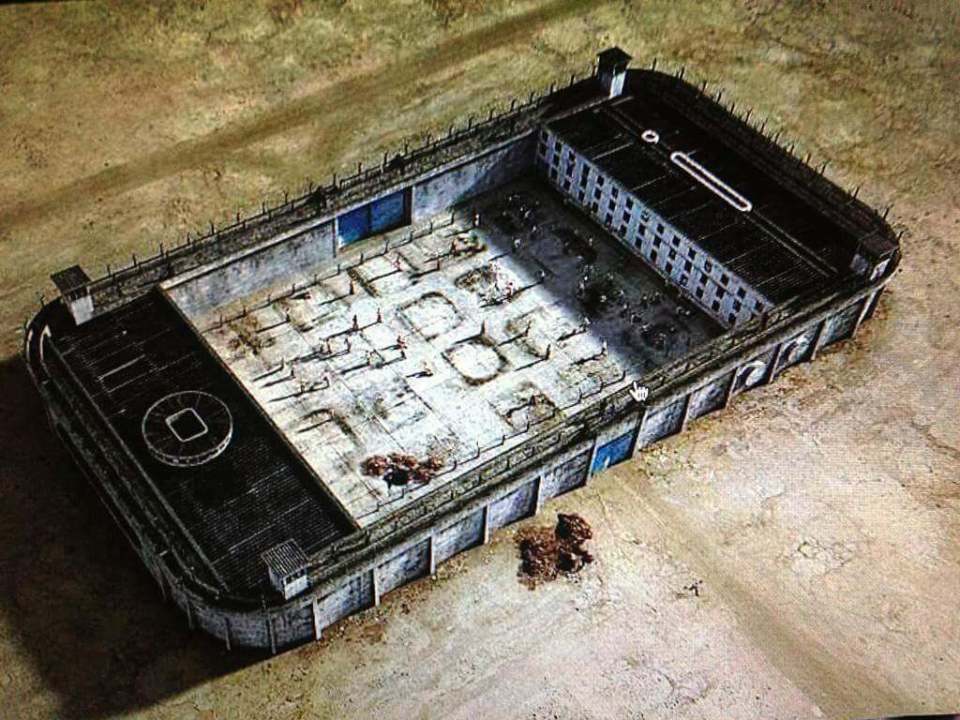
Following on from Manos’ ‘Reflections from a pilot’ I shall continue in a similar vein. The pilot has formed part of our academic thoughts and discussions for some months and now it has finished we are in reflective mode. Much of what we have experienced throughout the pilot was striking and will give us food for thought for some time to come. For this entry, I am going to focus on an aspect that I had not really considered, or at least, not very much beyond the prosaic.
We knew before the pilot that prison and technology do not make comfortable bedfellows. Whilst on the outside, technology permeates virtually every aspect of our waking lives, the same cannot be said for those incarcerated. From the moment you step inside the prison gate, signs remind you of what you cannot bring into the carceral environment; top of the list are mobile phones, computers, USBs and recording devices. This meant that in very basic terms there could be no powerpoint, video clips or recordings of lectures. It also meant that we could not rely upon the internal learners having a shared knowledge of current affairs beyond that which was available in newspapers or on radio or television. All the above could be perceived as inadequacies and deprivations, however, we found a number of positives side-effects of these supposed failings.
In the university classroom, technology is commonplace; smartboards, computer lecterns, laptops, tablets and smartphones. All of this technology can enable learning on many levels, but can also provide irresistible diversion from the task at hand. Whilst the intention may be educational; for example taking notes on a laptop, the temptation to drift into social media, email and so can prove to be seductive. Conversely, the prison classroom contains little to attract attention, beyond some posters on the wall and the view from the windows which offered nothing of real interest. From the outset, and throughout the entire pilot, it appeared that the absence of technology heightened concentration. This was observable through increased eye-contact, body language and engagement with both academic discussions and general conversations across all learners. Furthermore, the absence of technological distraction impelled students to self-reliance in way (for the external learners, at least) they were largely unused to and generally unprepared for.
It should be acknowledged that this increase in engagement may also have been impacted by the strangeness of the prison environment (for the external students) and the anxiety involved in meeting new people (for all students). Nevertheless, engagement did not seem to decrease despite increasing familiarity with both the surroundings and participants.
All of the above is not to say that technology has no place in education; the ease of access to educational materials and the ability to engage in academic discourse globally demonstrate its power. What I would suggest it does is offer us all an opportunity to reflect upon our own use (and dare I say, reliance) upon technology as a replacement for deep learning.
Share this:

Welcome to the Criminology Team’s blog
Welcome to the Criminology Team’s blog, live from Fawsley 1!
Over the forthcoming weeks and months we plan to write some short opinion pieces, as well as longer narratives, focused on all different facets of criminology, as well as wider social issues.
Disclaimer: The views expressed here belong to individual contributors and do not necessarily reflect the views of the team or the institution.
If you have any suggestions for subjects you might like to appear on the blog, please get in touch


