
Home » Criminology (Page 53)
Category Archives: Criminology
The ‘other’ BBC worldservice. #BlackenAsianWithLove
The ‘other’ BBC worldservice.
If you google “BBC+Mandingo,” please be aware that it is NSFW. Use your imagination. Now, imagine an auction block. Imagine a slave standing there. Breeding slaves underpinned the ‘white supremacist, capitalist, patriarchal’ system that placed their bodies upon that auction block. Hyper-sexualisation of Black bodies began right there. It is bell hooks’ Intersectionality lens that’s necessary for a holistic gaze upon consumer commodification.
Now, imagine that one Black boy in class, vying for attention just as any other adolescent, yet he’s got an entire multitude of hyper-sexualised images filling the heads of virtually everyone in the room. By the time they hit the locker-room, everyone is expecting to see this kid’s BBC. I’ve had many (non-Black) adults say that to me explicitly, inexplicably in any given situation where one might not otherwise imagine penis size would surface so casually in conversation. Hence, we can all imagine that with the crudeness of adolescent male vernacular: Your kid is asking my kid why his penis isn’t what all the rappers rap about. 
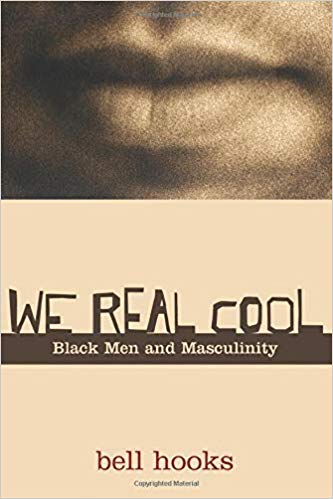
Why are so many commercially successful rappers’ fantasies reduced to “patriarchal f*cking?” Reading Michael Kimmel’s essay “Fuel for Fantasy: The Ideological Construction of Male Lust,” in her seminal book We Real Cool: Black Masculinity, bell hooks clarifies: “In the iconography of black male sexuality, compulsive-obsessive fucking is represented as a form of power when in actuality it is an indication of extreme powerlessness” (hooks: 67-8).
It’s auto-asphyxiation, a kind of nihilistic sadomasochism that says, if the world thinks of me as a beast, then a beast I shall be. Plenty of kids work this out by the time they hit the playground. “Patriarchy, as manifest in hip-hop, is where we can have our version of power within this very oppressive society,” explains writer/activist Kevin Powell (qtd. in hooks: 56). Ironically, Powell came to fame in the 90’s on MTV through the original reality show aptly entitled “The Real World.”
Plantation Politics 101
Since at least 2017, commercial rap has been the most widely sold musical genre; it’s pop. Beyond roughly 700,000 sales, Black people are not the primary purchasers of commercialised rap, as explained in the documentary Hip-Hop: Beyond Beats and Rhymes. It takes millions to earn ‘multi-platinum’ status. Yet, while created by and for Black and brown people in ghettoized communities, it has morphed into a transnational commodity having little to do with the realities of its originators, save for the S&M fantasies of wealth beyond imagination. And what do they boast of doing with that power, read as wealth? Liberating the masses from poverty? Intervening on the Prison Industrial Complex? Competing with the “nightmare” racist landlords like Donald Trump’s dad Fred? No! They mimic the very gangsters they pretend to be. Once Italian-Americans held hard that stereotype, but now it’s us. It’s always about power. Truly, ‘it’s bigger than Hip-Hop’.
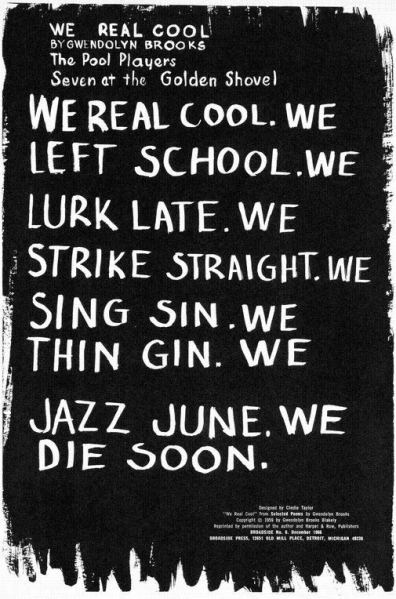 The more painful question few bother asking is why commercial rap music focuses so keenly on pimps, thugs, b*tches and whores? Like other commodities, commercial rap is tailored to the primary consumer base, which isn’t (fellow) Black people, but white youth. What is it about contemporary white youth that craves images of salacious, monstrous, licentious and violent Black people boasting about killing and maiming one another? Describing this mass commercial “Misogynistic rap music,” hooks states: “It is the plantation economy, where black males labor in the field of gender and come out ready to defend their patriarchal manhood by all manner of violence against women and men whom they perceive to be weak and like women” (hooks: 57-8). Plainly, the root of commercial rap’s global prominence is the reenactment of “sadomasochistic rituals of domination, of power and play” (hooks: 65).
Hyper-sexualisation is a form of projection onto Black people a mass white anxiety about our shared “history of their brutal torture, rape, and enslavement of black bodies” (hooks: 63). She goes on to explain: “If white men had an unusual obsession with black male genitalia it was because they had to understand the sexual primitive, the demonic beast in their midst. And if during lynchings they touched burnt flesh, exposed private parts, and cut off bits and pieces of black male bodies, white folks saw this ritualistic sacrifice as in no way a commentary on their obsession with black bodies, naked flesh, sexuality” (ibid). Hence the BBC obsession finds a consumer home safely in pop music!
“I am ashamed of my small penis,” a stranger recently mentioned to me in a grilled wing joint I happened upon here in Hanoi. The confession came from nowhere, having nothing to do with anything happening between us at the time. Is this the locker-room banter I always hear about? Are straight men really so obsessed with their penises? Given his broken English and my non-existent Vietnamese, I tried comforting him by explaining in the simplest terms the saying: “It’s not the size of the wave but the motion of the ocean.” Colloquialisms never translate easily, but I did at least deflect the subject away from ethno-sexual myths spread worldwide through contemporary consumer culture.
We’ve got to talk about ethno-sexual myths with openness, honesty and integrity. Silence is the master’s tool; silence = death! Further, echoing ‘black, lesbian, mother, warrior, poet’ Audre Lorde, ‘The master’s tools will never dismantle the master’s house”. I am Black in Asia, and there are perhaps no two groups of men at polar opposites of ethno-sexual myths. Like the hyper-sexualisation of women of colour, these myths reveal that neither Blackness nor Asianess is at the centre of these globally circulated myths. Hyper-sexual in comparison to who or what? Hegemonic heteronormative whiteness. Say it with me: Duh!
To get In-formation:
hooks, b. (2004) We Real Cool: Black Men and Masculinity. New York: Routledge.
Lorde, A. (1984) Sister Outsider: Essays and Speeches. Berkeley: Crossing Press.
Share this:


my dyspraxia is making order out of chaos
Inspired from “On being a University Student with Asperger Syndrome” – Stephanie Nixon

When I returned for my third year at the new Waterside Campus in October 2018, my world fell apart. It was like the sky was falling: confused at the layout, annoyed at the classroom style, mobile desks in my poetry classes (on BA Creative Writing). I thought the university had gone mad. What were they thinking? I was now used to Avenue Campus. It was nice. It was familiar. It was comfortable. And honestly, I never thought I’d ever go to university, since I had extra lessons every week only to just maybe have a chance at keeping up with everyone else. I struggled to achieve academically at both GCSE and A-Level. What they’d now label Special Educational Needs (or SEN). Another box. And, at nine years old I was diagnosed with the development disorder known as Dyspraxia.

So, now fifteen years diagnosed. A disorder that impacts the way brain orders movement and thought. It really is a wonder how I got to grips with cricket, both with bat and ball. Having five and half ounces thrown at me at school pushed me into the deep end. It showed me how to hide it a bit more. At the crease, my sense of direction is very good. In villages, it’s good. In the home counties, my sense of direction is good. It’s familiar. It’s comfortable. But drop me in London or New York. Ha! I navigate those places with GPS and headphones, someone speaking to me, guiding me. Really like Iron Man. Though, Google Maps is no match for J. A. R. V. I. S or F. R. I. D. A Y.
I have to find my way through verbal instructions. And over the years, like with any condition, hidden or not, you develop coping mechanisms. And I lived set on not playing the victim. No special treatment for Tré (for it not infringe on my life). I tried to live like everyone else. Why would I do that when I wasn’t like everyone else? That’s a question, isn’t it? Why?
I would avoid certain types of places. Things that were very twisty and turny were a no-go. Fairs. Oh, and UCL destroyed my spirit when I visited. Basically, a real world version of Hogwarts. No talking pictures, but the stairs like to change!
Northampton College’s Booth Lane corridors challenged me between the years of 2012 and 2016, where I went from BTEC Level 2 qualifications through A-Levels and into the first year of a HND before coming to university. Where I was befuddled by the hexagonal building. Or was it octagonal? I forget. One of those types of shape where my perceptions of depth were challenged five days a week for four years.

Anyone that’s seen me work, knows that I love a good folder. I love highlighters. Clipboards, post-it notes. I’m a stationary freak! At work, I print more than most. I like to lay things out on a desk, or seven. Or have it on a pinboard. I spread my belongings out and apologise later. I love White boards. I don’t like E-Books. That’s a struggle. Give me that new book smell.
I found many of the discussions around Dyspraxia to be about co-ordination but it’s also includes perception and memory. As a youth, tasks would take me longer to do simply because of the thought processes I would take to go through and then translating those thoughts to action.
Dyspraxia, often confused with clumsiness, is more than just having two left feet. I struggled to learn – write, read, learn, to play sports. But I got it eventually. And even to walk in a straight line. From scanning your card on the barriers to pressing buttons on the lifts to ascending the stairs and paying for stuff at the checkout, Dyspraxia is real and often goes undiagnosed. And the links between attainment and academic performance; is it worth looking into things like this in regards to attainment in HE – be it, race, class, sexuality or otherwise?
I knew I was academically able, but in the education system (Level 1 – 4 + FE) as it stood, I was not achieving academically on paper. Graduating with a 2.1 in Creative Writing in July 2019, it showed me that the problem wasn’t me (as I once thought), but the sector, in how it deals with and treats individuals with SEN and other issues that can act as barriers to study.
I didn’t choose to talk about my Dyspraxia on entry to university because I wanted people to see me as a person, not a dyspraxic person (for some tick box exercise). At school, my Dyspraxia was humiliating. Poor co-ordination 70% of the time. Spilling drinks. Missing my mouth at dinner. Walking into stuff. Occasionally ridiculed for it by teachers, who meant it in jest but didn’t have a clue.
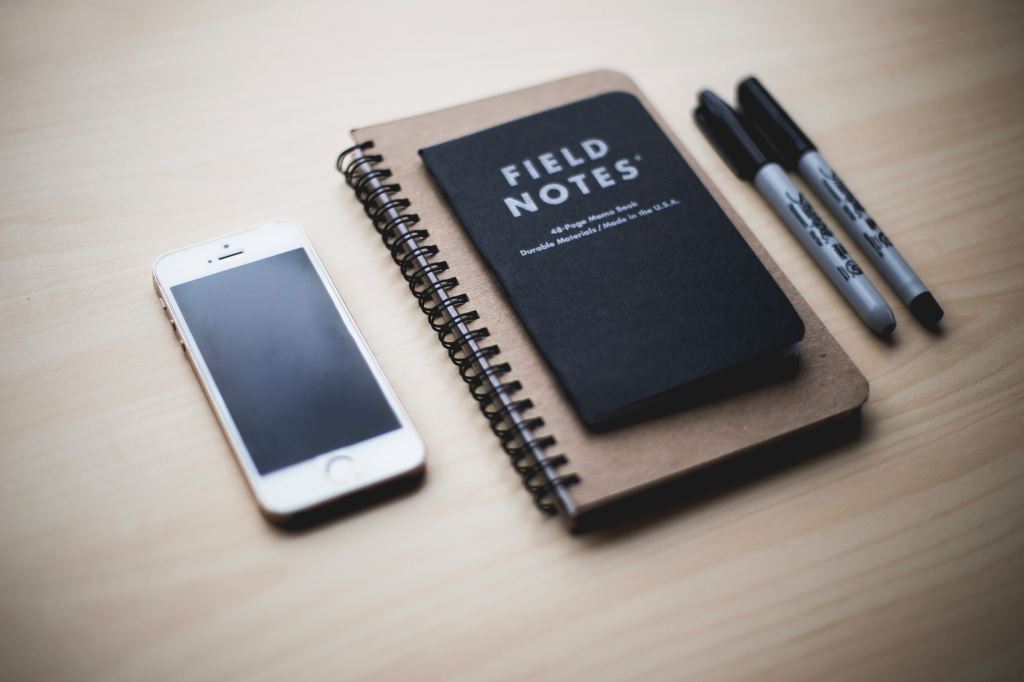
So, anything that makes order of chaos is a gift. Lists. Boards, like the ones you see in crime dramas with all the bits of a crime scene – photographs, bulletpoints etc. Anything that brings clarity is a godsend. To learn, I had to teach myself how other people think. That’s why doing A-Level Communication and Culture helped a lot. I had to analyse people. Why do people think that way in certain situations? The series Lie to Me was helpful too, teaching me how to come to conclusions, finding method in madness.
It took me six months to accept Waterside, and another six months to get used to it. The almost Milton Keynes-like repetition, John Carpenter’s They Live in the view of John Franklin and Thomas Beckett. George Orwell laughing violently at the smell of rotten cabbage and hegemony.
But I have my lists. Boards. Cutting out the noise. Stripping through the bullshit; an alternative view of society through the lens of someone who sees the world different.
Share this:


Empathy Amid the “Fake Tales of San Francisco”*
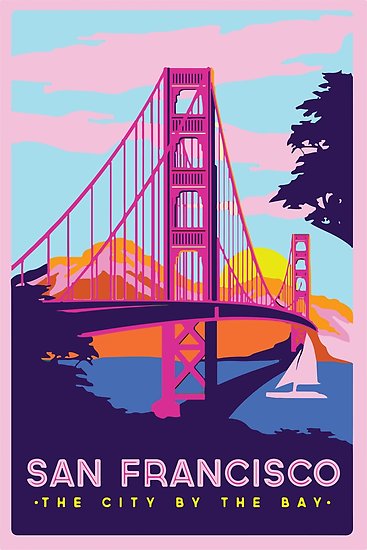
This time last week, @manosdaskalou and I were in San Francisco at the American Society of Criminology’s conference. This four-day meeting takes place once a year and encompasses a huge range of talkers and subjects, demonstrating the diversity of the discipline. Each day there are multiple sessions scheduled, making it incredibly difficult to choose which ones you want to attend.
Fortunately, this year both of our two papers were presented on the first day of the conference, which took some of the pressure off. We were then able to concentrate on other presenters’ work. Throughout discussions around teaching in prison, gun violence and many other matters of criminological importance, there was a sense of camaraderie, a shared passion to understand and in turn, change the world for the better. All of these discussions took place in a grand hotel, with cafes, bars and restaurants, to enable the conversation to continue long after the scheduled sessions had finished.
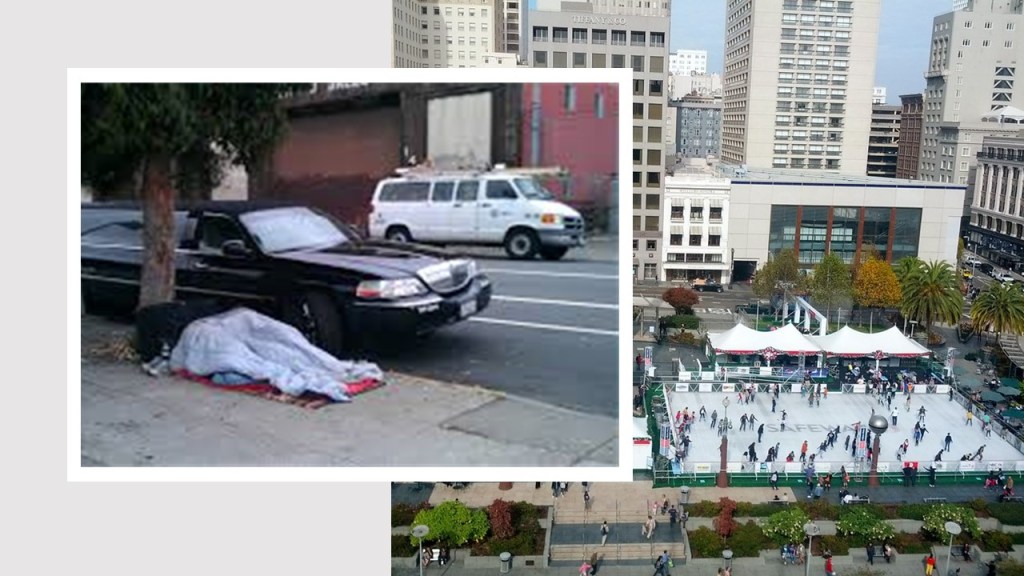
Outside of the hotel, there is plenty to see. San Francisco is an interesting city, famous for its Golden Gate Bridge, the cable cars which run up and down extraordinarily steep roads and of course, criminologically speaking, Alcatraz prison. In addition, it is renowned for its expensive designer shops, restaurants, bars and hotels. But as @haleysread has noted before, this is a city where you do not have to look far to find real deprivation.
I was last in San Francisco in 2014. At that point cannabis had been declassified from a misdemeanour to an infraction, making the use of the drug similar to a traffic offence. In 2016, cannabis was completely decriminalised for recreational use. For many criminologists, such decriminalisation is a positive step, marking a change from viewing drug use as a criminal justice problem, to one of public health. Certainly, it’s a position that I would generally subscribe to, not least as part of a process necessary to prison abolition. However, what do we really know about the effects of cannabis? I am sure my colleague @michellejolleynorthamptonacuk could offer some insight into the latest research around cannabis use.
When a substance is illegal, it is exceedingly challenging to research either its harms or its benefits. What we know, in the main, is based upon problematic drug use, those individuals who come to the attention of either the CJS or the NHS. Those with the means to sustain a drug habit need not buy their supplies openly on the street, where the risk of being caught is far higher. Thus our research population are selected by bad luck, either they are caught or they suffer ill-effects either with their physical or mental health.
The smell of cannabis in San Francisco is a constant, but there is also another aroma, which wasn’t present five years ago. That smell is urine. Furthermore, it has been well documented, that not only are the streets and highways of San Francisco becoming public urinals, there are also many reports that public defecation is an increasing issue for the city. Now I don’t want to be so bold as to say that the decriminalisation of cannabis is the cause of this public effluence, however, San Francisco does raise some questions.
- Does cannabis cause or exacerbate mental health problems?
- Does cannabis lead to a loss of inhibition, so much so that the social conventions around urination and defecation are abandoned?
- Does cannabis lead to an increase in homelessness?
- Does cannabis increase the likelihood of social problems?
- Does the decriminalisation of cannabis, lead to less tolerance of social problems?
I don’t have any of the answers, but it is extremely difficult to ignore these problems. The juxtaposition of expensive shops such as Rolex and Tiffany just round the corner from large groups of confused, homeless people, make it impossible to avoid seeing the social problems confronted by this city. Of course, poor mental health and homelessness are not unique to San Francisco or even the USA, we have similar issues in our own town, regardless of the legal status of cannabis. Certainly the issue of access to bathroom facilities is pressing; should access to public toilets be a right or a privilege? This, also appears to be a public health, rather than CJS problem, although those observing or policing such behaviour, may argue differently.
Ultimately, as @haleysread found, San Francisco remains a City of Contrast, where the very rich and the very poor rub shoulders. Unless, society begins to think a little more about people and a little less about business, it seems inevitable that individuals will continue to live, eat, urinate and defection and ultimately, die upon the streets. It is not enough to discuss empathy in a conference, no matter how important that might be, if we don’t also empathise with people whose lives are in tatters.
*Turner, Alex, (2006), Fake Tales of San Francisco, [CD]. Recorded by Arctic Monkeys in Whatever People Say I Am, That’s What I’m Not, The Chapel: Domino Records
Share this:

‘Guilty’ of Coming Out Daily – Abroad. #BlackenAsiaWithLove
I am annoyed that our apartment-building manager told my husband that a two-bedroom had recently become available, and that we should move in because we would be “more comfortable.” My husband always takes such statements at face value, then performs his own cost/benefits analysis. Did the manager offer a discount, I asked? I mean, if he’s genuinely concerned about our comfort, shouldn’t he put his money where his mouth is? That’s probably just the American in me talking: He was either upselling the property or probing us to see what the deal was – not at all concerned about our comfort. I speak code, too.
The most homophobic thing that anyone has ever said to me is not any slur, but that gay people should not “flaunt it.” As if concealing our identities would magically erase homophobia. This reveals that the speaker either doesn’t know – or doesn’t care to know – how readily people everywhere speak about our personal lives. There are random people I have met in every single part of the world, that ask my marital status. It comes shortly after asking my name and where I’m from. The words used are revealing – just ask any divorced person who has engaged with any society’s traditions. Is it deceptive to say that they are “single,” instead? What’s more, regardless of language, preferred terms like “unmarried” reveal the value conferred upon this status. You’re not a whole person until you’re married, and a parent. It is only then that one is genuinely conferred what we sociologists call ‘personhood’. Also, are married lesbians called two Mrs.?
Come out, come out wherever you are.
In many parts of the world, being ‘out’ carries the death penalty, including parts of my father’s homeland, Nigeria. I’ve literally avoided visiting Nigeria because of the media-fueled fear of coming out. I hate the distance it’s wedged between my people, our culture and I. There was a time when coming out was literally the hardest thing I ever had to do. Now, l must come out daily.
Back in the UK, many educators would like to believe that they don’t discuss their personal lives with students. But who hasn’t been casually asked how one spent the weekend? Do I not say “My husband and I…” just as anyone else might? Abroad, do I correct co-workers when they refer to us as ‘friends’? Yesterday, I attended an academic conference. All the usual small talk. I came out a dozen times by lunch.
In teaching English here in Asia, isn’t it unfair for me to conceal from my students the gender of my “life-partner,” which is actually our formal legal status? Am I politicising my classroom by simply teaching gender-neutral terms like ‘spouse’ or ‘partner’? Or, do I simply use the term ‘husband’ and skim over their baffled faces as they try to figure out if they have understood me properly? Am I denying them the opportunity to prepare for the sought-after life in the west? Further, what about the inevitability of that one ‘questioning’ student in my classroom searching for signs of their existence!
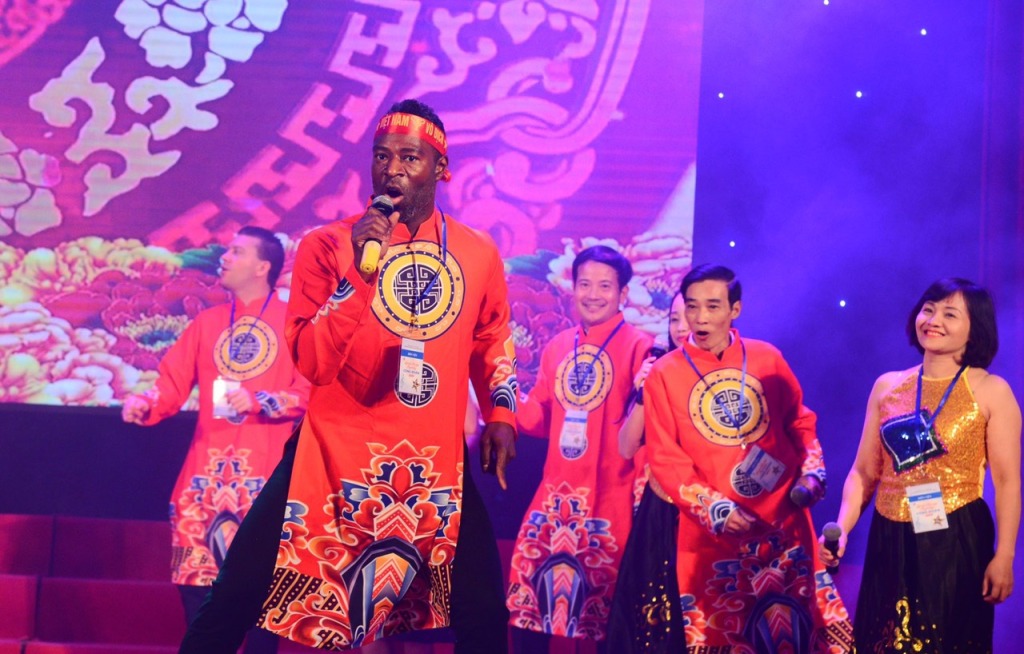
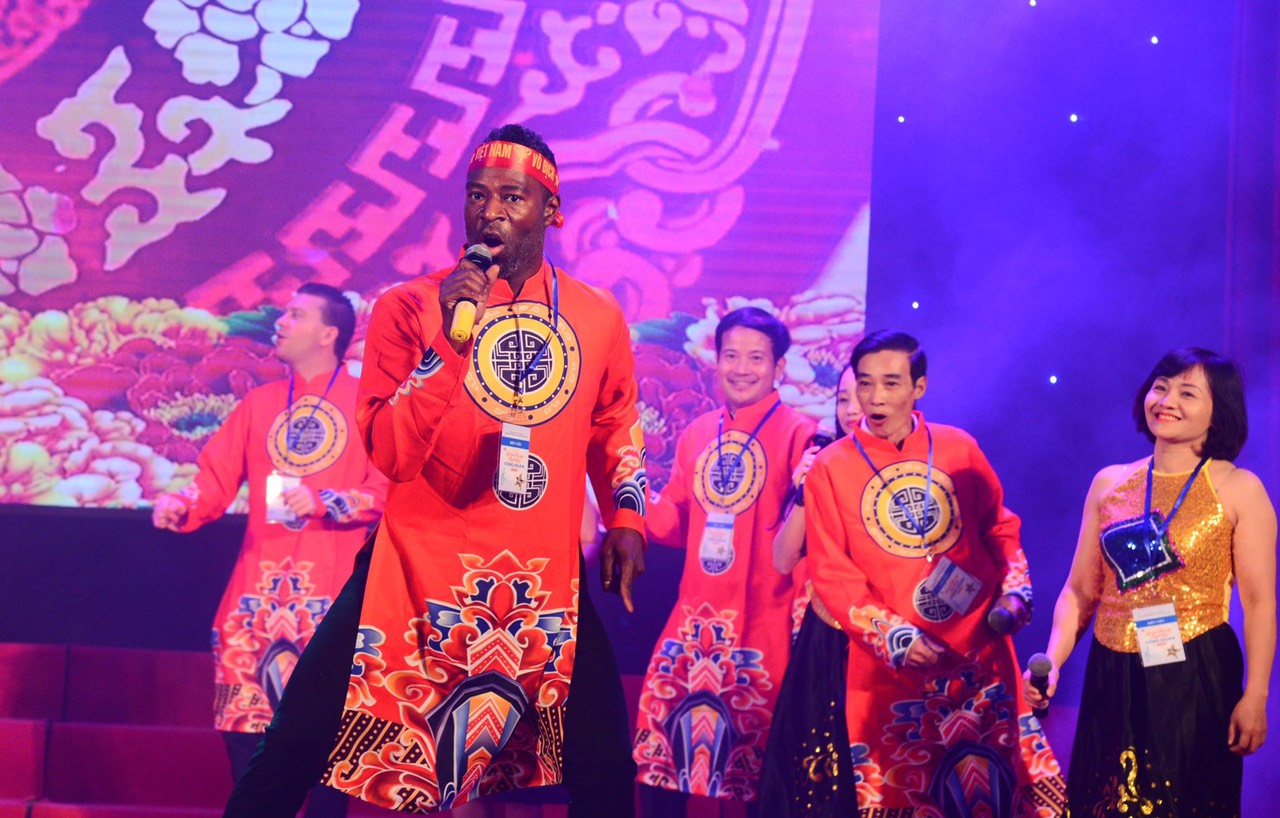
I was recently cornered in the hallway by the choreographer hired by our department to support our contribution to the university’s staff talent competition (see picture below*). She spoke with me in German, explaining that she’d lived several years in the former GDR. There are many Vietnamese who’d been ‘repatriated’ from the GDR upon reunification. So, given the historical ties to Communism, it’s commonplace to meet German (and Russian) speakers here. Naturally, folks ask how/why I speak (basic) German. My spouse of seventeen years is German, so it’d be weird if I hadn’t picked up any of the language. It’s really deceptive to conceal gender in German, which has three. I speak German almost every day here in Hanoi.
The word is ‘out’.
In Delhi, we lived in the same 2-bedroom flat for over 7 years. It became clear to our landlady very early on that we slept in one bedroom. Neighbours, we’re told, also noticed that we only ever had one vehicle between us and went most places together. Neither the landlady nor any neighbour ever confronted us, so we never had to formally come out. Yet, the chatter always got back to us.
As a Peace Corps volunteer in rural Mali in the late 90’s, I learned to speak Bambara. Bambara greetings are quite intimate: One normally asks about spouses, parents and/or children, just as Black-Americans traditionally would say “How yo’ momma doin?’” In Mali, village people make it their business to get single folks hitched. Between the Americans, then, it became commonplace to fake a spouse, just so one would be left in peace. Some women wore wedding bands for added protection, as a single woman living alone was unconscionable. The official advice for gays was to stay closeted L. While I pretended to be the husband of several volunteers, I could never really get the gist of it in my village. Besides, at 23 years old, being a single man wasn’t as damning as it is for women. I only needed excuses to reject the young women villagers presented to me. Anyhow, as soon as city migrants poured back to the village for Ramadan, I quickly discovered that there are plenty of LGBTQ+ folks in Mali! This was decades before Grindr.
Here in Hanoi, guys regularly, casually make gestures serving up females, as if to say: ‘Look, she’s available, have her’. I’ve never bothered to learn the expected response, nor paid enough attention to how straight men handle such scenarios. Recently, as we left a local beer hall with another (gay) couple, one waiter rather cheekily made such gestures at a hostess. In response, I made the same gestures towards him; he then served himself up as if to say ‘OK’. That’s what’s different about NOW as opposed to any earlier period: Millennials everywhere are aware of gay people.
A group of lads I sat with recently at a local tea stall made the same gestures to the one girl in their group. After coming out, the main instigator seamlessly gestured towards the most handsome in his clique. When I press Nigerian youth about the issue, the response is often the same: We don’t have a problem with gay people, we know gay people, it’s the old folk’s problem. Our building manager may be such a relic.
*Picture from The 2019 Traditional Arts Festival at Hanoi University of Science and Technology (HUST)
Share this:


Whiteness Walks into a Bar
When we think about race: the narratives, stories and experiences of people of colour are raised. And to be “of colour,” is essentially tied to anything from Black to Polynesian, Middle Eastern and Asian, including mixed-race. The perception of whiteness is the absence of blackness / brownness, that makes people that look like me up to nine times more likely to be stop and searched by police in Northamptonshire than a White person. But white is a colour too, is it not? When it comes to talks about “whiteness,” not a peep is to be heard from the people it impacts most, White European-looking people. Shocked? Not really! It can’t just be up to people of colour to talk to about whiteness. White people need to be talking about whiteness!
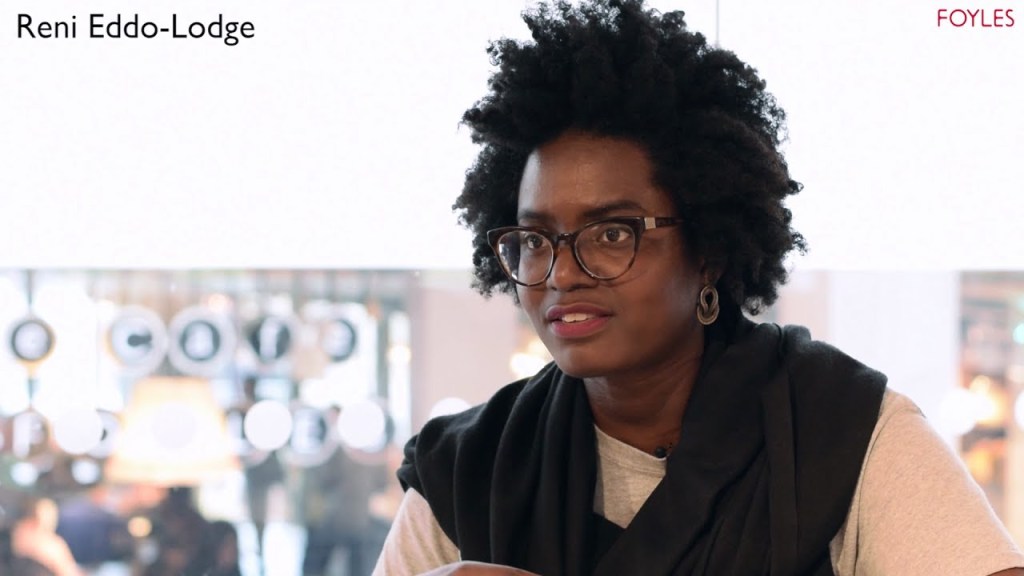
Photo Credit: Foyles
In the conversations about unconscious bias, as far as race is concerned, too often the focus is on the prejudice and discrimination that’s inherently built into the system. That’s fine and all, but unconscious bias also impacts White people. Whilst it’s a tool of institutional violence to working-class people, irrespective of race, bias also favours those born into the hue of lighter skin.
Look at drugs, for example; Black people are routinely stereotyped as drug dealers. However, going to private schools for twelve years in my youth showed me that the worst consumers and dealers of drugs were middle-class White people. The ones whose parents were lawyers and judges or rich landowners with reputations to uphold. And when you watch shows like The Wire or Toy Boy, which shows Black people a certain way, you begin to see how these racial stereotypes have taken root in people’s minds.
Whilst working-class White people will struggle, their struggles won’t be because they are White.
How whiteness is peddled can be both positive and negative. There are examples of White people using their privilege for great good, and great evil: from the White clergy that marched at Selma, to groups like Extinction Rebellion, slammed for being a White middle-class movement that glamourises arrest. Arrest is racialised and a White encounter with the police is not the same for a person who is not White, loaded with history: from Brixton to Emmett Till, lynchings and slave plantations. Call it stop and search, call it police brutality; call it the Southampton Insurrection, same symbols, different uniform, be it with blue sirens or burning crosses.
Looking at XR, Brock Turner and the Selma peace march, here lies a spectrum of White privilege: from the freedom to protest (without thinking of the consequence of arrest) – all the way up to rape and sexual assault on university campuses, with The People v. Turner.
White Privilege is existing in society without the consequences of racism, as discussed by Reni Eddo-Lodge in Why I’m No Longer Talking to White People About Race. Whiteness is living in a postcolonial world, disregarding the impact colonialism has in how race (historically), and the racial neo-politic continues to permeate society: from racism on university campuses to the legacy of colonialism, stop and search and the ongoing Windrush crisis.
Whiteness is cultural appropriation and the loots in the V&A / the British Museum. It’s White British academics having more authority on racism than academics of colour, even when it’s their lived experience. Stories lodged in their throats. It’s teaching children that Christopher Columbus was an explorer, finder – not invader, rapist, coloniser, thief, slaver.
What can White (British) academics tell you about racism other than what’s in theories and articles? Whilst White British people can experience prejudice, I believe racism is about power, and when you look at who holds the social power in society (in this country), it’s Whites, British or otherwise.
And you can bet that employer is second guessing the CVs with names like Muhammad or Asante, not Smith and Jones or even Lowell or Roberts (though those last ones could just as well be a Black person too). The legacy of colonialism in our names. The legacy of whiteness is in Tré Ventour, from the slaves of the Fontenoy Estate in St. George, Grenada. And if you want to get that loan, or that promotion, “Debroah, you should be less confrontational.” Why do Black people have to censor their mannerisms for their White colleagues? Laugh quieter. Walk slower. Breathe lighter.
I write this blog in a language I didn’t get to choose. It was given to my ancestors at the end of the sword, along with the songs of Solomon, bibles and this name that I carry. White Privilege is the freedom to choose – your language, beliefs, name, your essence of being. But you call us stupid.
Whiteness walks into a bar like he owns it. The bar is any institution. Any industry. Any topic of discussion. Brexit. Black History Month. Diwali. Whiteness is an authority because whiteness built the bar for himself.
Whiteness asks:
“Where did you learn to speak English so well?”
Whiteness asks:
“Do you hate White people? Why do you talk about slavery? It’s long lost, in the past
Whiteness asks:
Explain to me how I can be a better person

Critical Race Pedagogy (Theory) tells us that it’s deeper than the individual racist. It’s the system. How do you fight an abstraction? How do you get more Black and brown people into policing? Into academia or education?
However, if you don’t address the violence already in those spaces, what you’re doing is sending people of colour (unarmed) into a conflict, POWs with no hope of escape.
Works of Interest
Legacies of British slave-ownership – LBS, University College London.
Top Boy (2011 – 2013) – Channel 4 (Netflix)
People of the State of California v. Brock Allen Turner
People of the State of California v. Orenthal James Simpson (O. J Simpson)
The People v. O. J. Simpson: American Crime Story (2016) – FX (Netflix)
‘The True Legacy of Christopher Columbus’ – George Monbiot (YouTube)
‘Whiteness Walks into a Bar’ – by Franny Choi (Button Poetry, YouTube)
‘White Privilege’ – by Kyla Jenée Lacey (WAN Poetry, YouTube)
The Wire (2002 – 2008) – HBO
Why I’m No Longer Talking to White People About Race – Reni Eddo-Lodge
Share this:


Visa by Impression, Atavism or Exploitation?
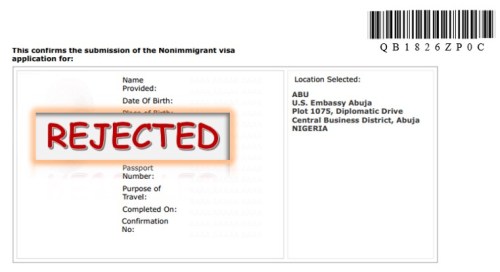
My paper, ‘beyond institutional autonomy: a quadrumvirate interaction theory of civil-military relations’ was accepted for presentation at the 2019 Biennial International Conference of the Inter-University Seminar on Armed Forces and Society scheduled for November 8-10, 2019 at the Hyatt Regency, Reston, Virginia. However, I am unable to attend the conference because I was denied visa at the US Embassy in Abuja, Nigeria. In this entry, I wish to highlight and add my voice to the concerns academics and non-academics, especially those from the ‘Global South’ face in securing visas to enable them attend conferences in the supposed ‘developed world.’ Hence, this entry is a personal reflection on the US visa regime in Nigeria, and its nexus with criminology.
Individual visas are often issued based on the merit of an application and the adequacy of the supporting documents submitted by applicants who are also required to pay certain fees and charges for the application. The issuing authorities would normally consider the criminal background record of an applicant, their previous travel history and the adequacy of funds to cover for the cost of the trip. In some cases, as typical with the US visa regime in Nigeria, applicants are required to present themselves before a consular officer for a visa interview and the decision to issue a visa is at the discretion of the consular officer.
Given this, one would expect that the consular officer would in the least, view/review the supporting documents of an applicant, in addition to asking some pertinent questions. The rationale being that the US visa web-application platform does not provide a link/option for submitting the supporting system prior to the interview. However, this was not the case when I was denied a visa. In fact, the interview barely lasted two minutes, and the following was the ‘interview’ conversation I had with the male consular officer:
Why do you want to go to Reston Virginia? To attend a conference.
What do you intend to do in the conference? I will be presenting a paper, a theory from my PhD research.
Who would pay for the conference and travel fee? The conference organisers and (he interjects with the next question, but I told him I still have another source of income, but he replied saying I had told him enough and that I should answer the next question).
What is your highest academic qualification? A PhD from the University of Stellenbosch, South Africa, I just concluded last December.
What do you do for a living? I just concluded a Postdoctoral Fellowship with the University of Stellenbosch and I have just accepted an appointment with the University of Jos as a Lecturer.
Do you have a family? Yes, a wife and a child, and we are expecting another.
For how long have you been married? 3 years
How old is your child? 1 year and 8 months
What does your wife do for a living? She is a housewife, she looks after the family
Are you travelling alone? Yeah (At this point, he faced his computer keyboard, typed some few words, then turned to me and told me, unfortunately we cannot issue you the visa while handing over a pre-printed form containing the reasons for visa denials).
From this ‘interview’ conversation, two things stood out for me. One is the fact that the consular officer made his decisions without viewing or considering any of my supporting documents and the second was the question, what did I do, say, or answer wrongly?
In terms of the latter, I found nothing wrong with my responses, but I found a huge systemic fault with regards to the former. The internet is rife with complaints from individuals, organisations and recently countries accusing the US of implementing a harsh visa regime which deliberately frustrates and traumatises visa applicants. My web application process in Nigeria is nothing short of this, in fact, I thought it was easier to make heaven than to obtain the US visa from Nigeria.
Having carefully thought about the visa regime in the light of my ‘interview,’ I concluded that the US visa regime is anachronistically atavistic, an exploitative business strategy, or both. My opinion is simply that I was denied visa not because of my responses to the questions but because the consular officer found a questionable impression through observing my face as he had not viewed or considered my supporting documents. For this, I appreciate Cesare Lombroso and one needs not be a Criminologist before knowing that facial impression and appearance are never better yardstick than considering the merits of the supporting documents.
A fair and equitable visa system will consider the merit of an application, the travel history of an applicant (which I have a reasonable one), whether the supporting documents are convincing, the criminal record background, purpose of travel, sufficiency of funds, and the existence of a strong tie with one’s origin. However, this was not the case, and this led me to the business exploitation opinion.
Customarily, when one pays for a service, the norm is to provide quality and effective service worth the value of the money paid or promised, anything short of this is clear exploitation – unfortunately, this is how the US visa regime operates in Nigeria. On the day of my interview, there were at least seventy (70) persons queuing up for theirs early in the morning, but it is not my intention to analyse how much income the US derives from this.
Share this:


The Euthanasia of the Youth in Asia: Milky White Skin #BlackenAsiawithLove
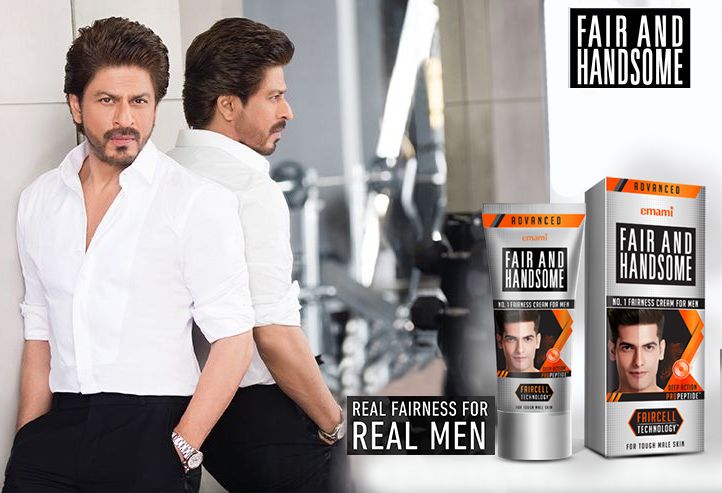
Shahrukh Khan (SRK) is arguably the Indian film industry’s biggest global star and commercial brand ambassador. In one early advertisement, he strikes a match from a dark-skinned kid’s face to show just how abhorrent it is as a trait. In another ad, ostensibly more humorous, SRK disses a group of traditional Northern Indian wrestlers for wearing skirts and make-up. The star chides them for using the feminine product instead of (converting to) the newly available male version (i.e. re-packaged in gray rather than pink). The product? The skin bleach Fair and Handsome. In both ads, the transformed, ‘fairer’ skinned consumer is pummeled with young girls virtually appearing from nowhere.
This follows the ty pical consumerist trope: The product makes users more popular and sexually appealing. Yet, things got worse. Clean and Dry’s ‘intimate’ bleaching shower gel for women (C&D). Yes, you read right: A bleaching shower gel aimed at lightening brown women’s crotches. There’s no male equivalent, save for a well-circulated spoof called Gore Gote: India’s #1 Testicular Fairness Cream (Mukherjee). In the initial shot of the C&D advertisement, a pouty-mouthed (fair-skinned) woman is ignored by her (fair-skinned) husband in their (upper-middle-class) apartment. Naturally, it seems, she bleaches her labia with C&D. After displaying the product’s virtues, the husband literally chases the wife around the fancy flat as she playfully dangles (his) keys. Her secret to happiness: A newly bleached intimate area. Is this a proxy for a white woman’s vagina?
What’s wrong with consumerism? The marketplace will not save you. As a Black person interested in self-love, it is clear that the market is murderous. There, the fetish of blackness is made widely available, as if one could bottle stereotypical ‘coolness’ and sell it to the youth in Asia, one of the largest consumer groups in the world. Fashion shops targeting youth regularly plaster posters of Bob Marley or Hip-Hop thugs to peddle goods to youth. Yet, standing in the rotunda of this mall, one could see shops of every major western cosmetics brand, including Clinique, Mac, Estée Lauder. Here in Asia, the flagship product in each shop is skin bleach! Black is cool, but white is power. Ironically, at the time I was modeling for a campaign in Vogue and Elle Décor in India, yet none of the make-up artists carried my mocha shade (shady, right).
YELLOW FEVER
 The skin bleach industry is by far the most virulent of all consumer products – even fast food. The bulk of this industry is meted out on the bodies of women…and girls who learn early that fate of darkness (just check out any Indian Matrimonials page). According to an August 2019 article in Vogue: “Per a recent World Health Organization report (WHO), half of the population in Korea, Malaysia, and the Philippines uses some kind of skin lightening treatment. And it’s even higher in India (60%) and African countries, such as Nigeria (77%).” After a 7 minutes instrumental intro to his 1976 hit, Yellow Fever, Fela Kuti chants: “Who steal your bleaching?/Your precious bleaching?…/Your face go yellow/Your yansh go show/Your mustache go show/Your skin go scatter/You go die o.”
It’s lethal, often a mercurous poison used to kill the soul. It is a fetishization of whiteness, that reveals the “internalization of the coloniser’s inferiorisation of dark skin as native and Other” (Thapan: 73). It’s euthanasia. Skin bleachers are painlessly killing themselves, willingly participating in their own annihilation. Not only does it quite literally murder the melanin in one’s skin, it symbolically kills one’s ‘dark and native’ self, giving birth to a new and improved modern identity. It requires constant application and reflects a consumerist’s self-regulation. Bleach is expensive, despite the industry’s ‘bottom of the pyramid’ approach to the marketing 4P’s – bleach sold in cheap tiny packages for the poor. Skin bleach is a form of mimesis, to actually embody modernity through crafting the ‘cultivated, developed and perfected’ self (Thapan: 70).
When I began teaching at UoN, I was asked to propose topics for business ethics modules, which were then optional. Hesitantly, I suggested skin bleach and hair weaves. Looking at the composition of the student body, this would be as familiar to them, as the products were locally available (see picture below taken in an ‘ethnic’ hair shop on Northampton’s high street). Several students have subsequently pursed these subjects in their dissertations. I was sad to learn that in colloquial Somali, ‘fair skin’ is a moniker for pretty, just as we western Blacks use ‘light skin and long hair’. Colourism makes dark-skinned people unsafe in our own homes.
I was pleasantly surprised at the support from the module leader, an older, straight white man. He said he knew little about the politics of black and brown skin and hair, yet listened with great interest and did his own research into the matter. What’s more, he stood by me both literally and figuratively. He was there when I was called to account for some negative student feedback such as “I’m a guy, I don’t wear make-up,” when asked to consider the differential impact of beauty standards on the psyches and earnings of women in business. He stood by me when I’d dropped the F-word (feminism) into the curriculum. This was before the Gender Pay Gap became more widely known or theBritish government required audits from large organisations. He is an ally. He stood by me in ways that may have been riskier for individuals outside the circles of normative power of gender, race and class. Talk about a way to use one’s privilege!

References
Kuti, F. (1976). Yellow Fever. [LP] Decca 8 Track Studios. Available at: https://genius.com/Fela-kuti-and-africa-70-yellow-fever-annotated [Accessed 13 Nov. 2019].
Mukherjee, R., Banet-Weiser, S. and Gray, H. (2019). Racism Postrace. Durham, N.C.
Thapan, M. (2009). Living the Body: Embodiment, Womanhood and Identity in Contemporary India. New Delhi: SAGE.
Share this:

In Armistice, do Black lives matter?

Over a century ago in Sarajevo (Serbia), an Austrian archduke was shot. And next, millions more non-archdukes were shot, faffing about at The Front. And for what? And to me, learning about this war at school, it seemed more of a class war than anything else. Kaiser Wilhelm II being the grandson of Queen Victoria and his cousins being the monarchs of Britain and its vast empire, from India, to the Caribbean and bits of Africa.
And I never saw anyone that looked like me; I thought this war was for White people. And, I know now over four million non-Whites contributed, giving their lives, but that’s not the narrative I was sold at school. And at eleven o’clock on the 11th November 1918, screams sang into silence.
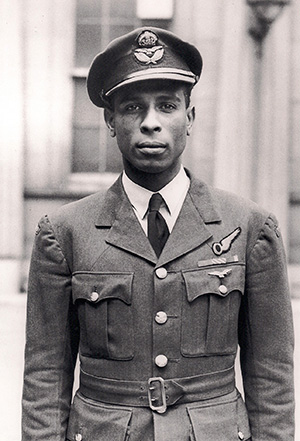
who went onto to be lawyer and instrumental
in Ghanaian independence in 1957
Knowing what I know now about history, even if it is just a basic knowledge (I’m no historian) Armistice Day does not mark peacetime. The fallout of the war to end all wars was a Pandora’s Box no signed treaty could contain. And in all conflicts it’s always the working-class who suffer most.
And it would be the archdukes of that world who would be having a jolly old time as if nothing had happened. But 1919 ushered in a wind of change: mass unemployment and uncertainty followed working-class communities from France and Belgium onto the streets of London, Cardiff and Liverpool.
When I think Armistice, I’m scratching my head as to when peacetime really does begin. 1919 brought in the Liverpool Race Riots where a one Charles Wotten was lynched at Albert Dock. Films like Doctor Zhivago depicting the Russian Civil War (1917 – 1922) remind me of the violence that occurred outside of the main narrative of the war (during and after). What of those calls for independence, Easter Risings on streets of Dublin?
HBO’s Watchmen, based on the Alan Moore comic – a vivid depiction of Tulsa, a section of American history most people haven’t heard of, including Black people. Why would people have heard of it? Vital parts of our own history have been erased, (I think) because it makes “the victors” look bad.
Tulsa, Oklahoma 1921:
Often referred to as the Tulsa Race Massacre (or Riot), this was when a White mob attacked the residents, livelihoods, homes and businesses of the majorly Black Greenwood area of Tulsa in the state of Oklahoma. This was what we’d now call a White supremacist attack and an act of domestic terrorism, or even genocide. Hundreds killed and thousands displaced.
In 1915, D. W. Griffith’s Birth of a Nation was released and has often been blamed for the resurgence of the Klu Klux Klan. After The War, there was a spike in racial tension in America, and Tulsa was basically Black Wall Street. The U. S Army was racially segregated in itself too. 1921 Greenwood was booming, a success story for Black business owners, despite high crime rates and racial segregation. However, history is a hotbed for Black excellence, but when Black people gain momentum, the establishment shoots them down, literally – from Fred Hampton to Medgar Evers.
At school, I was not taught, not once, about the four million non-Whites non-European that fought and laboured in those four years. I think if I was able to see myself in this history from when I was a child, I would have more time for Armistice. The great stage of the First and Second World War is tied up in Britain’s popular memory / national identity, and British identity is in crisis. Still, today, I’ve found to be British, is to be White.
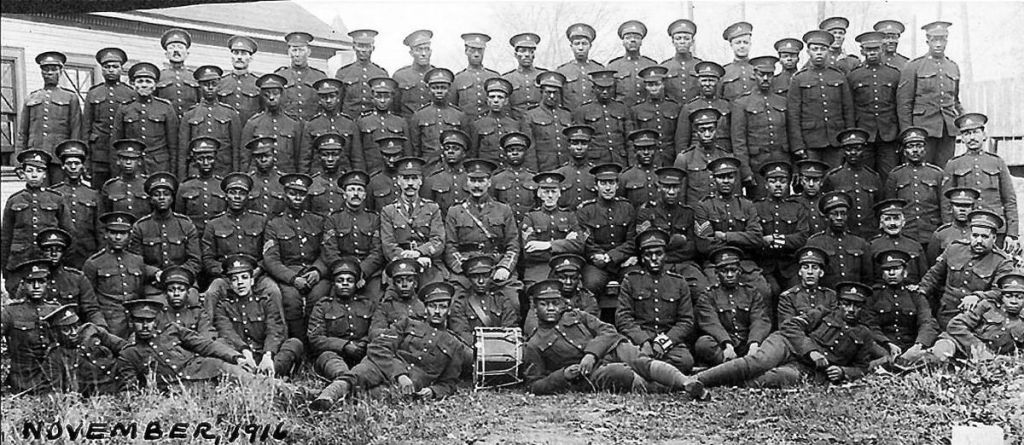
(The Black Cultural Center for Nova Scotia)
The yearly cycle of remembrance; from the procession in Northampton to interviews on BBC with veterans of the Second World War, I’ve always found it’s the voices of White British people. But there was racism at the front. The imperial mindset of European colonialism ran rampant in the British and German armies, tools of institutional racism, and by extension an instrument to whip up hate and institutional violence against colonial servicemen from places that included Senegal, China and the West Indies.
“Troops formed of coloured individuals belonging to savage tribes and barbarous races should not be employed in a war between civilised states. The enrolling, however, of individuals belonging to civilised coloured races and the employment of whole regiments of disciplined coloured soldiers is not forbidden.”
1914 Manual of Military Law
AND:
“Commissions in the special reserves of officers are given to qualified candidates who are natural-born or naturalised British subjects of pure European descent.”
1914 Manual of Military Law
Where are those stories of race at war? To be a soldier of colour, British-born or otherwise would not be the same as being a White (European) soldier, soldiers that toiled in France but also in the skirmishes of the African continent, Asia and the Middle East – erased out of our nationhood.
Over a million soldiers from what was then British India (pre-1947) fought for the allies, along with over two million from French Indo-China, as well as 100,000 Chinese labourers. But I did not have this on my history curriculum, when we looked at the stories between 1914 – 1918. But I was bludgeoned with images of White European soldiers having a great time.

To me, Armistice Day is in remembrance of a White Man’s war. And to (begrudgingly) mimic poet, colonialist and Jungle Book author Rudyard Kipling, it feels like a “White man’s burden,” even if people of colour fought too. In seeing how Britain portrays those wars in schools but also how they are represented in popular memory, can you blame activists and academics looking at the stories of race and racism on the front lines under a microscope?
Race / racial identity are massive factors in these conflicts, as historian David Olusoga talks about in his article. We would not need to keep talking about race if race wasn’t treated like a minor inconvenience and those often treating it like an that are White people, refusing to acknowledge their own whiteness and White Privilege.
However, if we really are serious about Armistice, we have to acknowledge that working-class people yet again were at the whim of the titled and the entitled. We remember the soldiers but never their victims, portraying death (murder) as honorable, as said in Wilfred Owen’s (from Horace) Dulce et Decorum Est “pro patria mori” (“it is sweet and proper to die for one’s country”). What is sweet about sending good men to the slaughterhouse?
Both wars are riddled with nationalism, and portray patriotism with grandeur. Great Britain raised at half-mast, celebrating Britain’s militarism –from Churchill to the Dreadnought (but no love for Bengal or Dresden). In how the wars are taught (popular nationalism), we encourage the living to join the dead, an ode to the Union Jack, even today in a postcolonial world.
“The colour bar on non-regular officers in the armed forces, designed and imposed by the political and military, is explicitly in the Short Guide to Observing a Commission in the Special Reserve of Officers, published by His Majesty’s Stationary Office in 1912.” – Phil Vasili
The world wars are full of people that are products of empire, in the ruins of class but also race. An archduke gets shot and millions of non-archdukes pay the price. Millions dead. After the war – widespread unemployment, uncertainty, race riots, class divides, The Depression, a grim state of affairs.
When you add the layer of race into that, it makes it more complex. Colonial soldiers coming to Britain after the First World War who were left out of the victory parades. Charles Wotten’s lynching in Liverpool. Men from British colonies who came here after the Second World War – to fill in labour shortages – White Supremacist fever and contested Britishness.

The narrative of Black soldiers goes all the way back to Roman Britain. Olusoga stated “Black soldiers were expendable – then forgotten” and I agree. In erasing Black and brown soldiers from the narrative, it’s a declaration of White lives being worth more than Black / brown lives.
And yes, we have the red poppy which is supposed to include everyone but it feels very exclusionary; and Britain’s popular memory is selective and needs to explore its colonial legacy – how imperial racial thinking played a role in both wars, otherwise we are continuing to tell stories that only include the experiences and memories of a White European majority.
“Black subjects had their actions during the war written out of history.” – Emma Dabiri
Works Mentioned
1914 Manual of Military Law
BBC Stories. “Alt History: White-washing black soldiers from WW1- BBC Stories.” YouTube. 27/06/19. Online. 10/11/19.
BBC Stories. “Alt History: A British lynching – BBC Stories.” YouTube. 13/07/19. Online. 10/11/19/
Birth of a Nation. Dir. D. W. Griffith. 1915, Epoch Producing Company. YouTube.
Channel 4 Documentary. “Dulce Et Decorum Est by Wilfred Owen: Read by Christopher Eccleston | Remembering World War 1 | C4”. Youtube. 07/11/13. Online. 08/09/19.
Doctor Zhivago. Dir. David Lean. 1965, MGM. DVD
History.com Editors. “Tulsa Race Massacre.” History.com. 2019. Web. Accessed: 10/11/19.
Lindeloff, Damien, creator. Watchmen. White Rabbit, Paramount Television, DC Entertainment, Warner Bros. Television, 2019.
Olusoga, David. “Black soldiers were expendable – then forgettable.” theguardian.com. 2018. Web. Accessed: 09/11/19
Vasili, Phil. Walter Tull, 1888 – 1918 Officer, Footballer […] Surrey: Raw Pres, 2010. Print.
Share this:


Care Leavers, Criminal Justice and Higher Education

“These children are in our care; we, the state, are their parents- and what are we setting them up for…the dole, the streets, an early grave? I tell you: this shames our country and we will put it right.”
David Cameron MP, Prime Minister October 2015 at the Conservative Party Conference.
Well, I think it would be fair to say that politicians’ minds have not been exercised unduly over the fate of care leavers since David Cameron made the above promise in 2015. I worked with children in care and care leavers involved in the youth justice system for over thirty years and although his analysis of the outcomes for care leavers was simplistic and crude, tragically Cameron’s statement rings true for many of those leaving care.
With regard to the criminal justice system, Lord Laming’s independent review “In Care, Out of Trouble” http://www.prisonreformtrust.org.uk/Portals/0/Documents/In%20care%20out%20of%20trouble%20summary.pdf, notes that there is no reliable data on the numbers of looked after children in custody. However, based on data from a number of sources, the review came to the conclusion that around 400 looked after children are in custody at any one time. The total number of children in custody for July 2019 is 817. So, slightly less than half of those children in custody are looked after children according to the best estimates available, drawn from different sources. http://youthjusticeboard.newsweaver.co.uk/yots2/1g2x6m3h9q315chudc9elc?email=trueYJBulletin
Moving the spotlight, a huge 40% of care leavers are not engaged in Education, Training or Employment and only 6% of care leavers gain entry to university https://assets.publishing.service.gov.uk/government/uploads/system/uploads/attachment_data/file/464756/SFR34_2015_Text.pdf . This at a time when around 50% of children now have access to Higher Education and the opportunities that this can provide. Also, 20% of young people who are homeless have previously been in care.
Naturally, we have to be careful to provide a level of balance to the above rather desperate and shocking figures. Lord Laming’s review found that 94% of children in care did not get in trouble with the law. However, children in care are six times more likely to be cautioned, or convicted of an offence than children in the wider population. Furthermore, children in care who come to police attention are more likely to be prosecuted and convicted than cautioned when compared to the wider child population.
So, what has happened since 2015 when David Cameron declared his intention to “put it right”? In truth, there have been some steps forward and these need to be celebrated and built upon. The Care Leaver Covenant, a promise made by private, public or voluntary organisations to provide support for care leavers aged 16-25 has meant the availability of employment opportunities for young care leavers in the Civil Service, local authorities and a range of private sector organisations. Closer to home, here at the University of Northampton, we have launched a new package of support for care leavers who want to study with us. The package offers the possibility, from 2020, of a fully funded place in our Halls of Residence for the first academic year, a contract which extends their accommodation lease to include the summer vacation. A block for many care leavers entering Higher Education is the very real issue of where to live at the end of the academic year, so this tries to address this issue. Another block experienced is financial hardship; the offer provides a non-means tested financial award of up to £1,500 per year to help with course and living costs, and this alongside the local authority’s statutory responsibility to support access to higher education may also help. We also have a designated member of support staff to provide advice and guidance. All these demonstrate our commitment to widening participation and encouraging ambition.
Of course, this is only part of the picture. Arguably, our engagement with young people in care needs to start shortly after their transition to secondary school. The wider social structures which perpetuate disadvantage and poverty will continue to challenge those who are children in care and leaving care. The “adverse childhood experiences” – a rather unedifying term for physical, sexual, and emotional abuse perpetrated by carers or parents-will still have an impact for this group and potentially impair their ability or commitment to study.
If however, I learnt anything from my years working with children in care and children leaving care, it is that you should not underestimate their ability to overcome the obstacles placed in their way. With the right support and a child centred approach, education can provide the right framework for opportunities. Victor Hugo famously said that if you open a school door, you close a prison. Let’s kick open the door of Higher Education a little wider and increase the life chances of these children in OUR care.
As a footnote, I should say that my mum was in care from the age of four until she was fifteen when she was adopted. I would therefore be happy to acknowledge that this has some influence on my perspective and my interest in this group of young people.
Dave Palmer Lecturer in Criminal Justice Services
Share this:


100% of the emotional labour, 0% of the emotional reward: #BlackenAsiawithLove

Last night over dinner and drinks, I spoke about race in the classroom with two white, upper-middle-class gay educators. Neither seemed (able) to make any discernable effort to understand any perspective outside their own. I had to do 100% of the emotional labour, and got 0% of the emotional reward. It was very sad how they went on the attack, using both passive and active aggression, yet had the nerve to dismiss my words as ‘victimhood discourse’. This is exactly why folks write books, articles, and blogs like ‘Why I’m No Longer Talking to White People About Race’.
Worse, they both had experienced homophobia in the classroom, at the hands of both students and parents. Nonetheless, they had no ability to contribute to the emotional labour taking place as we spoke about race. Even worse, the one in charge of other educators had only 24 hours earlier performed the classic micro-aggression against me: The brown blur. He walked right past me at our initial meeting as I extended my hand introducing myself while mentioning the mutual friend who’d connected us because, as he said, he was “expecting” to see a white face. He was the one to raise that incident, yet literally threw his hands in the air, nodding his head dismissively as he refused any responsibility for the potential harm caused.
“I’m an adult,” I pled, explaining the difference between me facing those sorts of aggressions, versus the young people we all educate. This all fell on deaf ears. Even worse still, he’d only moments earlier asked me to help him understand why the only Black kid in one of his classes called himself a “real nigger.” Before that, he had asked me to comment on removing the N-word from historical texts used in the classroom, similar to the 2011 debate about erasing the N-word and “injun” from Huckleberry Finn, first published in 1884. According to the Guardian, nigger is “surely the most inflammatory word in the English language,” and “appears 219 times in Twain’s book.”
Again, he rejected my explanations as “victimhood.” He even kept boasting about his own colorblindness – a true red flag! Why ask if you cannot be bothered to listen to the answer, I thought bafflingly? Even worse, rather than simply stay silent – which would have been bad enough – the other educator literally said to him “This is why I don’t get involved in such discussions with him.” They accused me of making race an issue with my students, insisting that their own learning environments were free of racism, sexism and homophobia.
They effectively closed ranks. They asserted the privilege of NOT doing any of the emotional labour of deep listening. Neither seemed capable of demonstrating understanding for the (potential) harm done when they dismiss the experiences of others, particularly given our differing corporealities. I thought of the “Get Out” scene in the eponymously named film.
“Do you have any Black teachers on your staff,” I asked knowing the answer. OK, I might have said that sarcastically. Yet, it was clear that there were no Black adults in his life with whom he could pose such questions; he was essentially calling upon me to answer his litany of ‘race’ questions.
Armed with mindfulness, I was able to get them both to express how their own corporeality impacts their classroom work. For example, one of the educators had come out to his middle-school students when confronted by their snickers when discussing a gay character in a textbook. “You have to come out,” I said, whereas I walk in the classroom Black.” Further still, they both fell silent when I pointed out that unlike either of them, my hips swing like a pendulum when I walk into the classroom. Many LGBTQ+ people are not ‘straight-acting’ i.e. appear heteronormative, as did these two. They lacked self-awareness of their own privilege and didn’t have any tools to comprehend intersectionality; this discussion clearly placed them on the defense.
I say, 100% of the emotional labour and none of the emotional reward, yet this is actually untrue. I bear the fruits of my own mindfulness readings. I see that I suffer less in those instances than previously. I rest in the comfort that though understanding didn’t come in that moment, future dialogue is still possible. As bell hooks says on the first page in the first chapter of her groundbreaking book Killing Rage: Ending Racism: “…the vast majority of black folks who are subjected daily to forms of racial harassment have accepted this as one of the social conditions of our life in white supremacist patriarchy that we cannot change. This acceptance is a form of complicity.” I accept that it was my decision to talk to these white people about race.
I reminded myself that I had foreseen the micro-aggression that he had committed the previous day when we first met. A mutual friend had hooked us up online upon his visit to this city in which we now live. I doubted that she’d mentioned my blackness. Nonetheless, I had taken the chance of being the first to greet our guest, realizing that I am in a much safer space both in terms of my own mindfulness, as well as the privilege I had asserted in coming to live here in Hanoi; I came here precisely because I face such aggression so irregularly in Vietnam that these incidents genuinely stand out.
—
Works mentioned:
Eddo-Lodge, R. (2018). Why I’m No Longer Talking to White People About Race. London: Bloomsbury Publishing.
Hanh, T. (2013). The Art of Communicating. New York: HarperOne.
hooks, b. (1995). Killing rage: Ending racism. New York: Henry Holt and Company, Inc.


