
Home » Criminology (Page 41)
Category Archives: Criminology

8 Kids and Judging
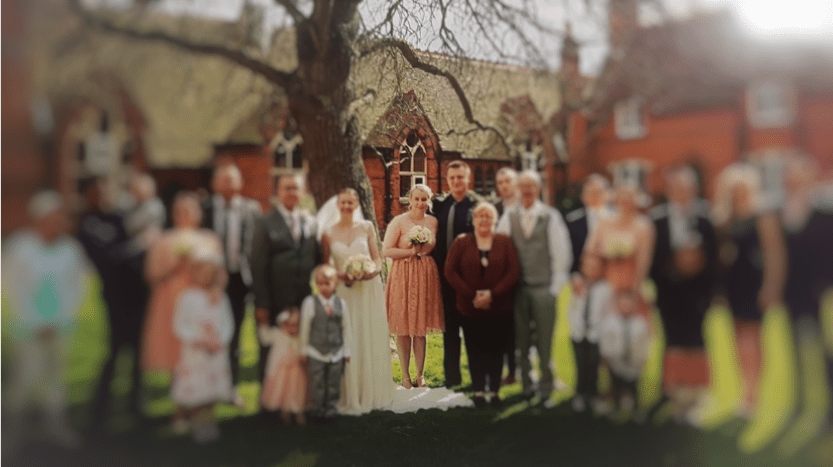
Written by @bethanyrdavies with contributions from @haleysread
Big Families are unique, the current average family size is 2.4 (Office for National Statistics, 2017) which has declined but remained as such for the past decade. Being 1 of 8 Children is unique, it’s an interesting fact both myself and Haley (also a former graduate and also 1 of 8) both fall back on when you have those awful ice breakers and you have to think of something ‘special’ about yourself.
There is criminological research which identifies ‘large families’ as a characteristic for deviance in individuals (Farrington & Juby, 2001; Wilson, 1975). It’s argued alongside other family factors, such as single-parent households, which maybe more people are familiar with in those discussions. In fact, when looking for criminological research around big families, I didn’t find a great deal. Most of what I found was not looking at deviance but how it affects the children, with suggestions of how children in big families suffer because they get less attention from their parents (Hewitt et al. 2011). Which may be the reality for some families, but I also think it’s somewhat subjective to determine an amount of time for ‘attention’ rather than the ‘quality’ of time parents need to spend with children in order to both help fulfil emotional and cognitive needs. This certainly was not the case from both Haley’s and experience.
When I first thought about writing this piece and talking to Haley about her experiences. I did question myself on how relevant this was to criminology. The answer to that I suppose depends on how you perceive the vastness of criminology as an academic field. The family unit is something we discuss within criminology all the time, but family size is not always the focus of that discussion. Deviance itself by definition and to deviate from the norms of society, well I suppose myself and Haley do both come from ‘deviant’ families.
However, from speaking with Haley and reflecting on my own experience, it feels that the most unique thing about being part of a large family, is how others treat you. I would never think to ask anyone or make comments such as; “How much do your parents earn to look after you all?” or “Did they want a family that big or was it lots of accidents?” or even just make comments, about how we must be on benefits, be ‘Scroungers’ or even comments about my parents sexual relationship. Questions and comments that both I and Haley have and occasionally still experience. Regardless of intent behind them, you can’t help but feel like you have to explain or defend yourself. Even as a child when others would ask me about my family, I had always made a point of the fact that we are all ‘full siblings’ as if that could protect me from additional shame , shame that I had already witnessed in conversations and on TV, with statements such as “She’s got 5 kids all different dads”. Haley mentioned how her view of large families was presented to her as “Those on daytime television would criticise large families” and “A couple of people on our street would say that my parents should stop having kids as there are enough of us as it is.”
Haley and I grew up in different parts of the UK. Haley grew up in the Midlands and describes the particular area as disadvantaged. Due to this Haley says that it wasn’t really a problem of image that the family struggled financially, as in her area everyone did, so therefore it was normal. I grew up in a quite affluent area, but similar to Haley, we were not well-off financially. My childhood home was a council house, but it didn’t look like one, my mum has always been house proud and has worked to make it not look like a council house, which in itself has its own connotations of the ‘shame’ felt on being poor, which Haley also referenced to me. It was hard to even think of labeling us as ‘poor’, as similar to Haley, we had loads of presents at Christmas, we still had nice clothes and did not feel like we were necessarily different. Though it appears me and Haley were also similar in that both our dads worked all the hours possible, I remember my dad worked 3 jobs at one point. I asked my dad about what it was like, he said it was very hard, and he remembers that they were working so hard because if they went bankrupt, it would be in the newspaper and the neighbors would see. Which I didn’t even know was something that happened and has its own name and shame the poor issues for another post. Haley spoke of similar issues and the stress of ‘childcare and the temporary loss of hot water, electric and gas.’
The main points that came from both mine and Haley’s discussions were actually about how fun it is to have a large family, especially as we were growing up. It may not seem like it from my earlier points around finance, but while it was a factor in our lives, it also didn’t feel as important as actually just being a part of that loving family unit. Haley put it perfectly as “I loved being part of a large family as a child. My brothers and sisters were my best friends”. We spoke of the hilarity of simple things such as the complexities of dinner times and having to sit across multiple tables to have dinners in the evening. I had brothers and sisters to help me with my homework, my eldest sister even helped me with my reading every night while I was in primary school. Haley and I both seemed to share a love for den making, which when your parents are big into DIY (almost a necessity when in a big family) you could take tools and wood to the forest and make a den for hours on end. There is so much good about having a large family that I almost feel sorry for those who only believe the negatives. This post was simply to share a snippet of my findings, as well as mine and Haley’s experience. At the very least I hope it will allow others to think of large families in an alternative way and to realise the problems both me and Haley experienced, weren’t necessarily solely linked to our family size, but rather attitudes around social norms and financial status.
References:
Juby, H. and Farrington, D., 2001. Disentangling the Link between Disrupted Families and Delinquency: Sociodemography, Ethnicity and Risk Behaviours. The British Journal of Criminology, 41(1), pp.22-40.
Office for National Statistics. (2017). Families and households in the UK, Available at: https://www.ons.gov.uk/peoplepopulationandcommunity/birthsdeathsandmarriages/families/bulletins/familiesandhouseholds/2017 (Accessed: 5th June 2020).
Regoli, R., Hewitt, J. and DeLisi, M., 2011. Delinquency In Society. Boston: McGraw-Hill Higher Education.
Wilson, H., 1975. Juvenile Delinquency, Parental Criminality and Social Handicap. The British Journal of Criminology, 15(3), pp.241-250.
Share this:


The pandemic and me – Lessons I’ve learnt from the #lockdown

This lockdown has certainly given us time to think and perhaps reflect on a variety of topics and situations. I’ve shared a few thoughts below and I wonder just how many are universal in some way.
I need to ensure I have a structure to my day and week. I think we all need some sort of structure to our lives and that structure is often given to us by work and perhaps other sociable events such as going to the gym or going to a coffee shop. It may be that the weekly shopping provides us with an anchor, Saturday may be a shopping day or religion might dictate a visit to a place of worship on a particular day. At times I’ve found myself getting confused about what day it is, Groundhog Day, I think. However, for the most part, I think I’ve got it sorted out. My wife and I discuss our schedule every morning over a cup of coffee. We have sorted out a routine of work, daily chores, fun bits and exercise.
My willpower is tested but I can be determined. I have never been a heavy drinker, the occasional binge, yes but then who hasn’t? It is however, quite easy to slip into the habit of having a glass or two of wine in the evening, every evening and perhaps a gin and tonic or two. I can’t go anywhere so thinking about having to drive the next day is not an issue. It’s not until you start totting up the consumption that you realise maybe you might have to reign this in. ‘School nights’ are back again, no drinking in the week. I make up for it at the weekend though.
I’m not risk adverse, I just like to think I’m logical. I don’t think it takes a rocket scientist or in fact any scientist to work out that the government (particularly a Conservative government) would not enforce the cessation of most business in the country without a very, very, very good reason. Stay in has been the mantra and of course we all know how difficult it is and we all know that as usual, the most vulnerable in society have been hit the hardest by this pandemic. Logic dictates, well at least to me, that going out to any store anywhere carries a risk. Some risks are necessary, for instance a trip to the chemist to pick up a prescription, but a trip to a DIY store, really? I’m sorry but given the risks, I think it’s a no brainer. Not only do I not want to catch the virus, but I would be distraught if I thought that through my own selfishness I had passed it onto someone else.
I never really thought about all those people that are truly special. We clap every week for the carers and the NHS and all those involved who are truly remarkable. I do ask myself though, would I want to turn up to work in a supermarket? Would I want to be out delivering parcels or the post? Would I be a NHS volunteer? Would I be happy working on public transport or emptying dust bins? There are so many people doing ordinary, even mundane jobs and volunteering roles that I now appreciate more than ever. And I would go far as to say I am humbled by what they do and continue to do despite the risks.
I appreciate the world around me. Not being able to go out and socialise in some way, be that work, or friends or family has provided more time for other activities. Our walks to the next village and back on roads devoid of most traffic has revealed an astonishing array of wildlife to be gazed upon and appreciated. That is of course if you’re not gasping for breath following a walk up a steep hill (well I call it steep but in a car its barely noticeable).
Some things don’t change. I’ve also noticed the gate to the footpath across the fields near our house has gone. A heavy wooden gate which, apparently has been stolen. On our walks we have noticed the increased number of cyclists whizzing along the road. Most give a wide birth, but some don’t seem to have a care for others, one nearly colliding with us as he flew around the corner. It seems with the reduction of cars; the idiotic driver has now given way to the idiotic cyclist.
What will a ‘new normal’ look like. At some stage we will get back to normal but its difficult to contemplate when that will be and what it will look like. Maybe getting back to the old normal is not what is needed. I’m trying to envisage how I will make changes in consideration of what I have learnt during this lockdown. What changes will you make?
Share this:


#Criminology Book Club: The Silent Patient
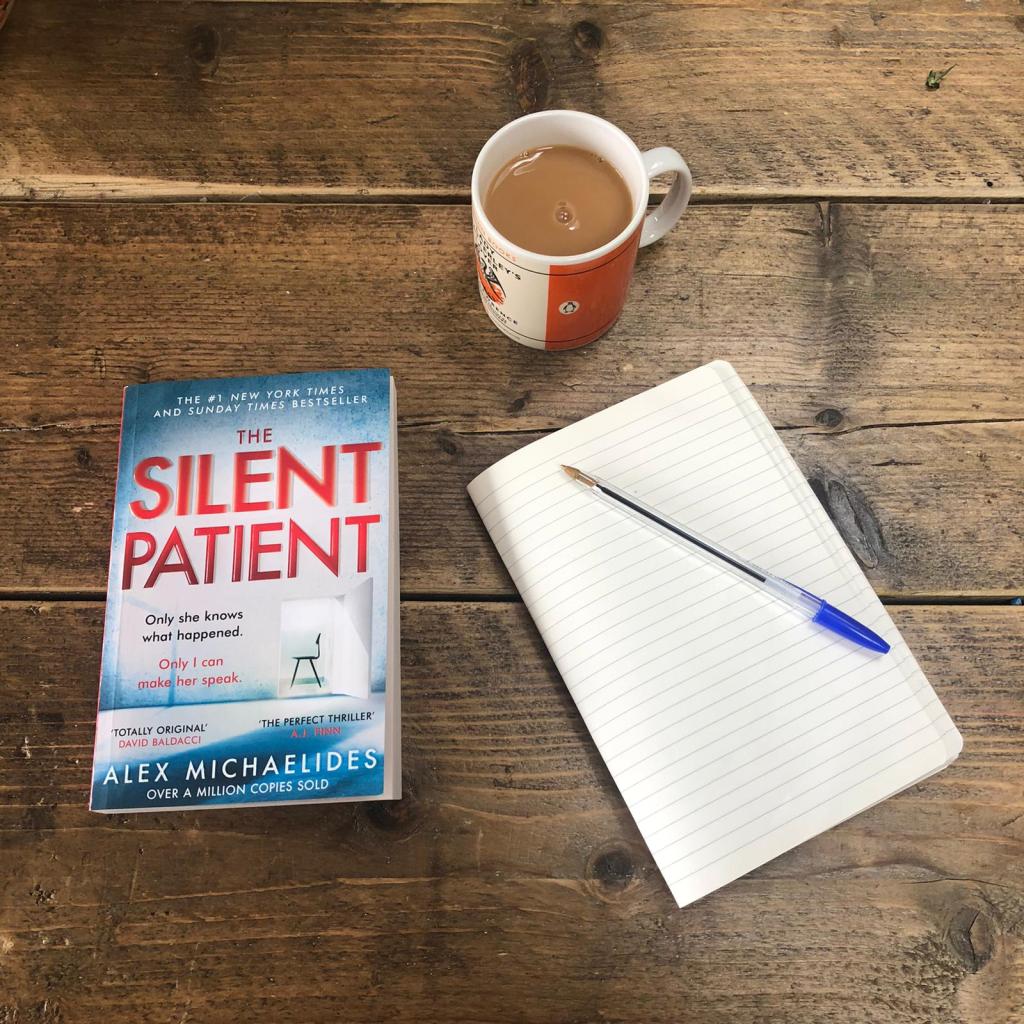
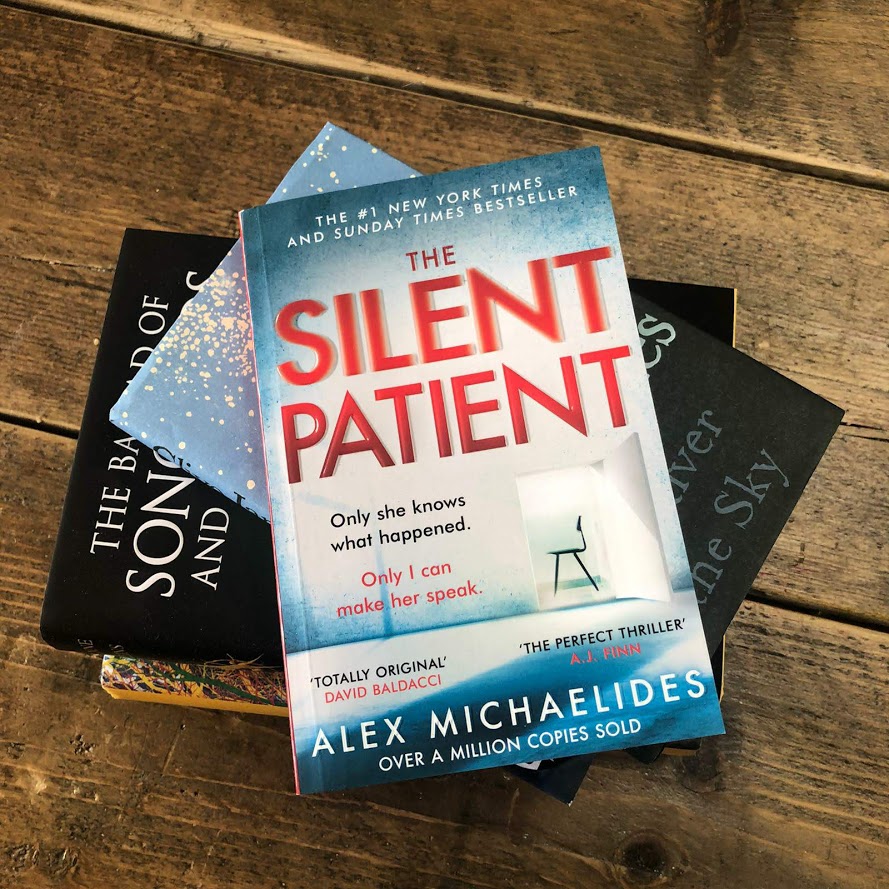
As you know from our last #CriminologyBookClub entry a small group of us decided the best way to thrive in lockdown was to seek solace in reading and talking about books. Building on the success of the last blog entry, we’ve decided to continue with all seven bloggers contributing! Our third book was chosen by @5teveh and it’s got us all talking! Without more ado, let’s see what everyone thought:
I enjoyed reading The Silent Patient – it was a quick and gripping read that kept me guessing (and second guessing!) throughout. I found it almost impossible to put down and could have happily read it in one sitting if time allowed. I didn’t empathise with many of the characters however, and found a couple of the plot points frustrating. I’d still recommend it though!
@saffrongarside

This is a psychological thriller that embraces Greek drama and pathos. From the references to Alcestis by Euripides and the terrible myth of death swapping to the dutiful Dr Diomedes, the characters are lined up as they are preparing from their dramatic solo. The doctor is trying to become a comforting influence in the fast pace of the story only to achieve the exact opposite. In the end he leaves in a puff of smoke from one of his cigars. The background of this story is played in a psychiatric facility, that is both unusual and conducive to amplify the flaws of the characters. This is very reminiscent of all Greek tragedies where the hero/heroine is to meet their retribution for their hubris. Once punishment comes the balance of the story is restored. This norm seems to be followed here.
@manosdaskalou
Well done to @Steve for selecting the anxiety inducing book that is The Silent Patient. I found it difficult to put this book down, as it was easy to read and a definite page turner. Once I started reading, I desperately wanted to find out what had actually happened. If Alicia had a perfect life then why would she shoot her husband FIVE TIMES in the head? It’s difficult to say much about this book without giving the plot away. I did feel for Alicia as she was surrounded by a sea of creepy and unlikable characters. Some might find the portrayal of mental health and Alicia (as the main female character) slightly insulting. Although, as we discussed in the book club, perhaps we should see this book for the thriller that it- and not try to criminologically analyse it?! As far as thrillers go, I think the book is a very good read.
@haleysread
The Silent Patient is 339 pages of suspense-filled, gripping fiction which leaves the reader with their jaw wide open. As a novel it is brilliant. Binge-worthy, unbelievable and yet somehow believable: that is until you have finished the book, and you sit back and start to pull the novel apart. DO NOT DO THIS! Get lost in the story of Theo and Alicia, be gripped and seated on the edge of your seat. It is worthy of the hype (in my humble opinion)!
@jesjames50
The Silent Patient is without a doubt a page turner! From start to finish the mystery of Alicia Berenson’s silence keeps you guessing. It is important for me to warn perspective readers that, when you start reading, it is difficult to put down, so clear your schedule. Throughout the novel you are guided through the complex life of psychotherapist Theo Faber and his mission to understand and connect with his patient that has ‘refused’ to talk, after she is found guilty of killing her husband. Alicia Berenson is admitted to a mental health hospital. This is the backdrop to disturbing yet intriguing story of how Alicia’s seemingly perfect life comes crashing down. With quirky characters, shocking revelations and suspense throughout The Silent Patient is a must read. Don’t take the story at face value, as there is a brilliant twist at the end.
As is only right and proper, we’ll leave the final word to @5teveh, after all he did choose the book 🙂
@svr2727
Not the normal sort of book I’d read, I was drawn in by the comments on the cover. It is impossible to warm to any character in The Silent Patient. The book is quite fast paced, and the writing makes it a real page turner. If you think you’ve got it, you are probably wrong. This is not a usual ‘who done it’ narrative. There are twists and turns that lead the reader through a small maze of sub plots involving characters in a tight setting. If you are looking for a hero or heroine and a happy ending, this is not the book for you. An enjoyable read in a sadistic sort of way.
@5teveh
Share this:

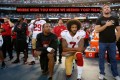
Dear Media: Do BLM?
Media.
By now, we’ve all seen all 8 minutes and 46 seconds of
A Minneapolis officer using his full-body weight
To press his knee on a handcuffed Black man against the ground.
Several cops stood around, rather calmly shooing bystanders away.
With the cop’s knee on his neck, we watch a grown man cry out for his momma,
Which some have said showed the man was already crossing over to the other side to see her.
The killer cop, the one pressing his knee on Floyd’s neck, was training the other cops.
These junior officers were just days on the job, so
It’s safe to assume the head officers was showing off his skills:
He may have thought that he was showing the rookies how to put down a n*gger!
He actually showed them how to perform a. Modern day lynching.
The Minneapolis mayor didn’t bother watching the video until Mr. Floyd died.
Da mayor’d been told about the incident while the man lay dying in the hospital and
The murderous cops roamed free.
This is what’s carefully declared in a public radio interview.
Da mayor can’t be fake in the face of this very disarming journalist, who is also white.
There is absolutely no anger in the journalist’s voice.
Da mayor was animate that this was a pattern, when
The journalist disarmingly confronted him with statements by local Black leaders who’ve told Da mayor the city would burn if the cops’ behavior continued unabated.
Oh, now Da mayor wants to separate himself from 45!
45 is calling for complete suppression,
Even bullying governors and mayors into said suppression.
Folks in his flock are breaking ranks, denouncing his deployment of the military against Americans.
Social media rated 45’s words incendiary.
Facebook employees even staged a walk-out!
George Wallace couldn’t tweet in those days!
Yet, then and now, all your silence is complicity.
Silence = Death!
The journalist presses on: You were warned.
Da mayor conceded: He’d ignored explicit, non-violent warnings, neglected evident signs.
Chronic poverty kills.
Police murders maim families.
Racist stereotypes murder souls, and
Breaks the social contract.
The journalist asks Da mayor if he felt any responsibility for the riots.
Again, there is absolutely no emotion at all in the journalist’s voice.
He asks flatly, fumbling through his words, just as he always does.
He simply applies the critical questions to this issue, just as he has countless other topics.
This has gone on for years.
They’ve covered this issue before, but not like this.
Are they only covering it now because of the horrific video of Mr. Floyd’s murder?
Now, they want to uncover the truth that’s been staring them in the face all these years.
We watched Rodney King get beat, and
We waited a year for the trial on mediocre charges, and
We rioted when the officers who beat him were set as free as Emmet Till’s killers!
NOW, now, now THEY wanna stop the violence!
Where were you back when?
Even this liberal journalist can’t claim to have raised the alarm before today.
These murders eerily echo one another.
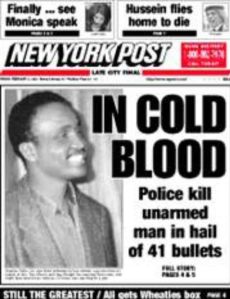
Amadou Diallo was at his front door.
There are no videos of the 1999 incident.
No 9-11 calls to replay.
Just giant headlines: 41 shots!
We DO even have surveillance footage of the 2014 murder of 12-year-old Tamir Rice,
Shot playing in a park.
The surveillance video is lengthy, and
From the video we can see from his movement and stature.
He’s playing with what we now know was a toy gun, and
On the 9-11 call, we hear the caller calmly explain:
Probably a juvenile, you know.
“The guy keeps pulling it out of his pants…is probably fake, but you know what? It’s scaring the sh*t outta me”
“He’s sitting on a swing right now, but he’s pulling it in and out of his pants and pointing it at people… He’s probably a juvenile, you know?”
This (white) man can’t even talk to a (Black) kid.
The dispatcher fails to announce ANY of these details, save for:
‘He’s in the park by the youth center…’
Apparently, that was all they needed to hear: Black guy, gun.
Recall Tamir was twelve, Black, brandishing a toy gun in the kids’ area of a city park.
We see cops rush up on him in the park and shoot Tamir dead within seconds.
In dispatch recording after the incident, when officers are standing just feet away from Tamir’s body, they say: “Shots fired. Male down. Black Male. Probably 20.”
Later officers claimed to have commanded Tamir to show his hands in those split seconds.
Two officers responding to a routine, white citizen’s call about a potential Black threat.
But we know it’s BEEN going on since emancipation.
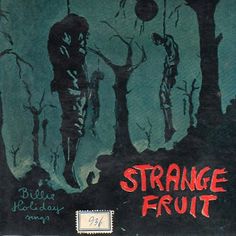
‘Here is a fruit for the crows to pluck.’
Share this:


Life in the UK: Nigerians migrating from the other side

Damilola is a 2017 graduate having read BA Criminology with Sociology. Her blog entry reflects on the way in which personal experience can inform and be informed by research. Her dissertation is entitled Life in the UK: The individual narratives of Nigerians living in the United Kingdom and the different problems they faced during their integration into the UK
During my research on the topic of migration and integration, it was important to me, to make the individuals the focal point. This is because the majority of research in this area, depicts a holistic perspective. Therefore, understanding each individual story was vital during my research. It enabled an insight into the different coping mechanisms the Nigerian migrants used, to compensate for the sense of othering they often felt.
One of the most eye opening stories was that of a woman who had bleached her skin to become lighter. She felt…
View original post 658 more words
Share this:


LET’S END HATE CRIME

Chris is a BA Criminology graduate of 2017 and was motivated to write this blog through the experience of his own dissertation. His dissertation was on the Experience of Hate crime: Exploring professional perspectives of racist hate crime against ethnic minority.
The issue of racially motivated violence against ethnic minority groups in the UK was an important focus of media discussion both during and after the referendum on leaving the EU. Hate crimes, in general, have often been a source of debate for legal theorists, academics, politicians, journalists and law enforcement officials. Many perceive it to be a crime that is usually driven by prejudice towards the victim. Professionals working in the field have therefore all made efforts to understand and address hate crime, as one of the most unpleasant manifestations of human prejudice.
As a research topic, racist hate crime within the UK has been widely explored ever…
View original post 560 more words
Share this:

Not My ‘Wokeness’: In Defense of Amazon
Whilst cancel culture has been badged on celebrities that have said something offensive or inflammatory in the past, often when they were young and stupid, seldom have I seen cancel culture done on works of literature. Essentially, cancel culture is a medium of boycotting someone (now something) we disagree with for a past misdemanour or an opinion we don’t like. Yet, this month was the first time I had seen “cancelling” enacted on a work of literature. This reiterates a time when Britain actually banned books. One such example being when Penguin were taken to court over D. H. Lawrence’s Lady Chatterley’s Lover, accused for being too sexual.
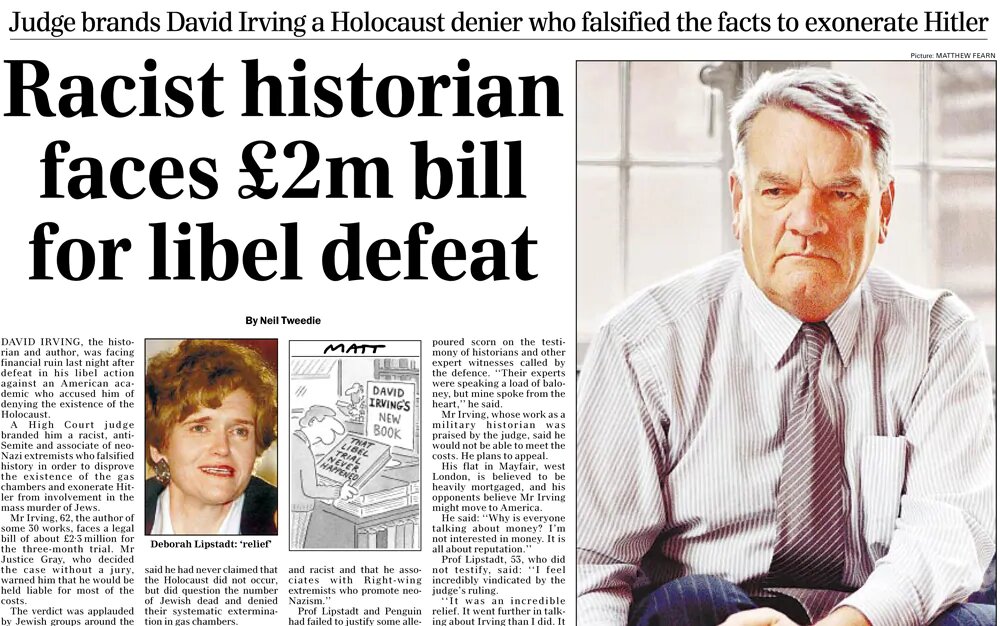
Moreover, books like To Kill a Mockingbird being taken off US school curricula, ironically the go-to text of the 20th century about racism is by a White person (but that’s another conversation). The fact of the matter is I thought book boycotts were something that didn’t happen in this country, well not in my lifetime anyway, nor my parents’ life time. That when we disagreed with something we dismantled it point by point. Another example would be David Irving who has also published books and in 1996 took historian Deborah Lipstadt to court for calling some of his statements and writings, “holocaust denial”, in her book Denying the Holocaust (1993).
But it was on a sunny May day when I happened to get a text from Criminology’s @paulaabowles with a link to a Huffington Post article calling for Amazon to pull a text from circulation. The text on display, was a collectable edition of And Then There Were None. The title on display is the original, then Ten Little Niggers. Over time it’s had many titles and is now called And Then There Were None. Obviously, the original title is overtly racist and its imagery plays up stereotypes of Black people, very much in the style of blackface minstrelsy, something that was on BBC TV until 1978!
However, studying Creative Writing as a Black student (of which many of my modules were English Literature), I think the reaction to this article is emotional; impulsive; and rather quite unnecessary. On my degree, there were books that I would call racist texts, including Dracula (Stoker), The Island of Doctor Moreau (Wells) and Heart of Darkness (Conrad). The use of the slur on this book has sparked outrage amongst Black writers and activists. But what they are doing is putting modern values onto a text that was published in a time when the British Empire still held weight.
Before Indian partition; before independence movements took hold; before the Suez Crisis, and my family’s countries’ calls for independence – not until 1966 (Jamaica) and 1974 (Grenada), both within living memory for many people.
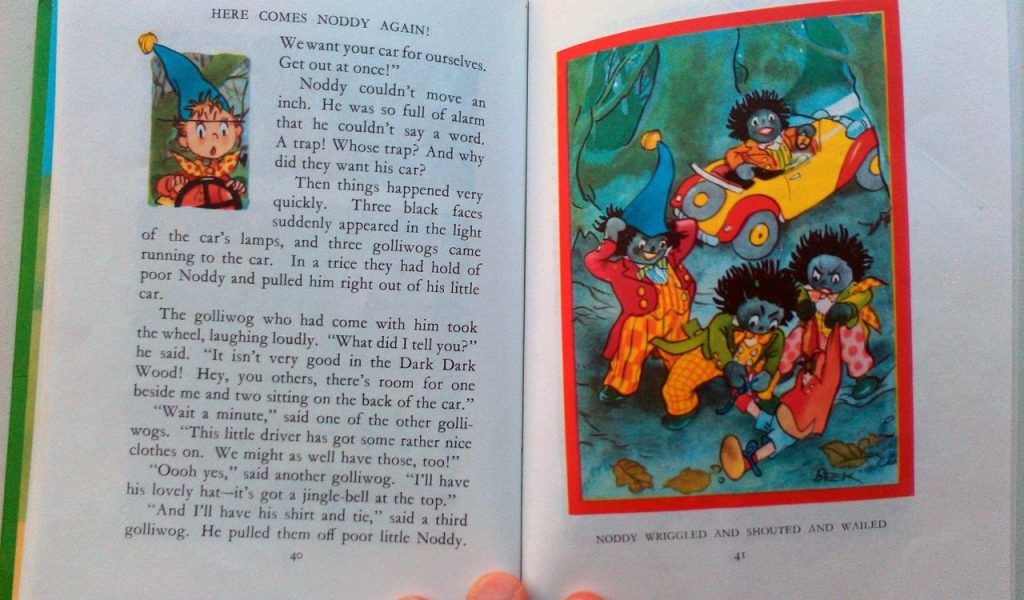
I suppose it is rather ironic that some of my favourite books ever written could in fact be labelled racist. As a boy, I read Enid Blyton. Now, I critique stories such as Noddy for its racist leanings. We all read Dr. Seuss as children, an antisemite. Do we have to cancel him as well? I love Cat in the Hat. Tolkien’s depictions of the orcish peoples in Middle Earth can be interpreted as a disdain for racial mixing. The Carlomens in C. S Lewis’ The Horse and His Boy (my favourite Narnia book) are most definitely based on colonial stereotypes of Arabs, and their interactions with King Lune and his Archenlanders are very much reminiscent of “Anglo-Europe and The Rest.”
Whilst I get the idea to take this book off Amazon, does that mean there is going to be a movement to go after authors who could by today’s standards be deemed racist? Not even alive to defend themselves. I question, that if we cancel these kinds of books, does this allow people to forget? The N-Word is not nice but people are not reading this academically, in the context that it comes from a bygone era. As early as the start of the Second World War when colonial sentiment was still valued around the world.
If we “cancel” it, is this simply picking and choosing what is / isn’t offensive enough? Despite their sentiments, I still read Tolkien and C. S. Lewis. In cancelling this collectors item Ten Little Niggers, we are picking and choosing what is offensive. This is everything that’s wrong with woke culture. It works until it doesn’t. I find it short-sighted that supposedly “woke” activists want to get rid of a text that could well be studied under decolonisation movements, not cancelled in hindsight of modern values.
This is one of the moments I find cancel culture and workness so toxic; I’m certainly one of those people that would read these sorts of books so I can learn about how different parts of that society thought about other races
This campaign against Amazon is impulsive, in an age where many are quick to anger without forethought, particularly in countries like Britain and the US which have selective memories about their history. We criticise the Nazis for book burnings and their propaganda machine, but have we looked outside recently? The moment we censor literature, is the moment we censor learning, particularly as books like this are historical fingerprints to an era where racial thinking ran brigand. A racial thinking born in colonial times, lending its ear to many issues we see today, including White Supremacy, ethnicity award gaps, stop and search and White Privilege.
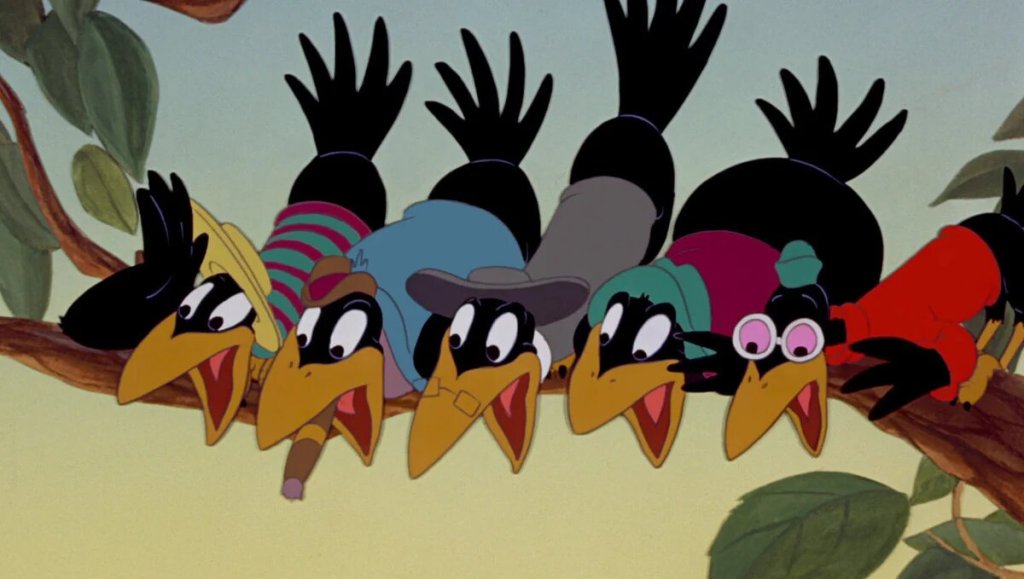
Are we going to stop people reading The Jungle Book, or stop kids watching pretty much every Disney animated film made between 1939 and 2000? I could make a chunky list of problematic books and films but they allow us a doorway into history. History is facts (sort of) and facts don’t care about your feelings. Dickens wrote about what he saw (more social history than fiction). Books allow us to see how different peoples may have thought and felt about other peoples of the time. That there is a reason why Black soldiers were excluded from the victory parades in 1918 (for example).
The cancelling is a metaphor for a country that is denial of its past and present. As someone who grew up going to school being called nigger, as someone who was monkeychanted, I do not agree with cancelling this book. It allows people to forget how the British Empire won the war on race, sorely evident in the texts on university degrees. I feel these antiracism activists have acted brashly (this time) with no forethought about context, study, or history, since I believe if the British Empire was taught (especially racial thinking), we would not even be having this conversatioin.
But to be frank, when I see antiracism activists accepting MBEs and condeming stuff like this (trying to be “woke”), I think to myself are they this ignorant or simply, do they not care? And more importantly, how dare they speak for me
Share this:


An Officer’s Perspective

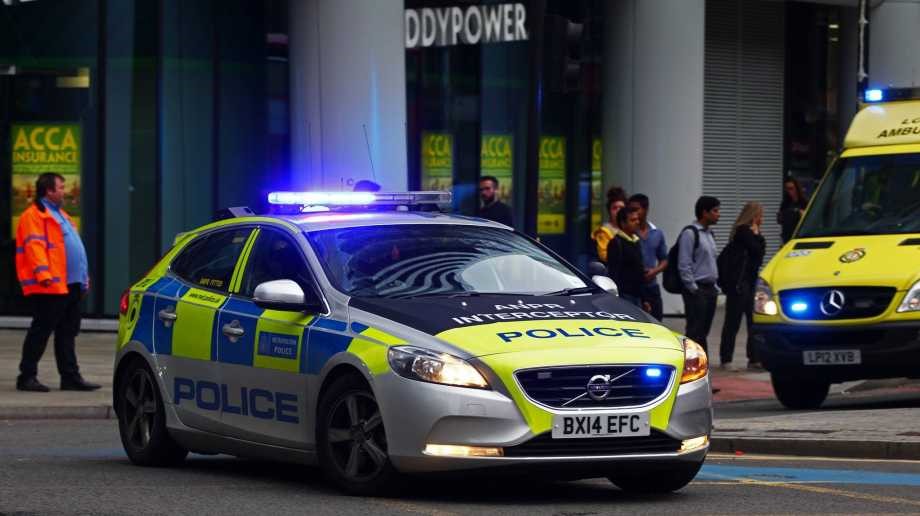
Northampton University…. In 2011, I first moved up to Northampton to study criminology and sociology. At the time I had never moved away from home before and it was a somewhat daunting experience. However, now looking back at this, it was one of the best decisions I have made.
Before I set out to go to university I had always said to my family I wanted to join the police force. I chose to study criminology as I believed this was going to help me with joining the police and also provide me with an insight as to what I was potentially going to be letting myself in for.
From studying criminology for three years I learnt about various ideas surrounding police and their interactions with communities, portrayal within the media and about the history of the police and how it has developed into the service we have today.
I…
View original post 514 more words
Share this:


The Other Side of Intelligence


After I graduated I had a bit of tunnel vision of what I wanted to do. I wanted to either work with young offenders or work with restorative justice. Many opportunities actually came up for me to do several different things, but nothing really worked out and nothing felt right.
I carried on working in retail till February 2018; I was honestly starting to lose hope that I would find something that I would enjoy. I started working for a security company that does many things; from employment vetting to gaining intelligence of various kinds. Although the role is not focused on the criminality side entirely, the theme is very much apparent. I find myself thinking about all the different concepts of criminology and how it ties in to what I am doing.
A big part of my role is intelligence and at first, I didn’t think I would enjoy…
View original post 288 more words
Share this:

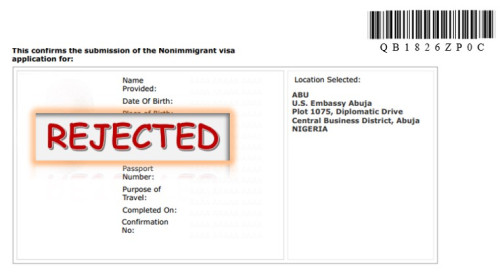
Visa by Impression, Atavism or Exploitation?

My paper, ‘beyond institutional
autonomy: a quadrumvirate interaction theory of civil-military relations’ was
accepted for presentation at the 2019 Biennial International Conference of the Inter-University
Seminar on Armed Forces and Society scheduled for November 8-10, 2019 at the
Hyatt Regency, Reston, Virginia. However, I am unable to attend the conference
because I was denied visa at the US Embassy in Abuja, Nigeria. In this entry, I
wish to highlight and add my voice to the concerns academics and non-academics,
especially those from the ‘Global South’ face in securing visas to enable them
attend conferences in the supposed ‘developed world.’ Hence, this entry is a
personal reflection on the US visa regime in Nigeria, and its nexus with criminology.
Individual visas are often issued
based on the merit of an application and the adequacy of the supporting
documents submitted by applicants who are also required to pay certain fees and
charges…
View original post 760 more words


