
Home » Criminology (Page 40)
Category Archives: Criminology
Visa by Impression, Atavism or Exploitation?

My paper, ‘beyond institutional
autonomy: a quadrumvirate interaction theory of civil-military relations’ was
accepted for presentation at the 2019 Biennial International Conference of the Inter-University
Seminar on Armed Forces and Society scheduled for November 8-10, 2019 at the
Hyatt Regency, Reston, Virginia. However, I am unable to attend the conference
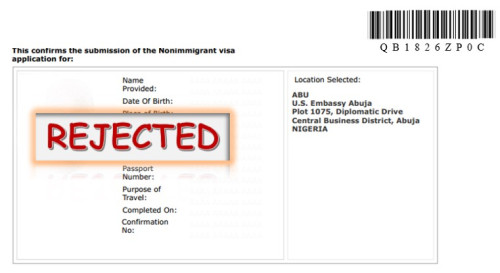
because I was denied visa at the US Embassy in Abuja, Nigeria. In this entry, I
wish to highlight and add my voice to the concerns academics and non-academics,
especially those from the ‘Global South’ face in securing visas to enable them
attend conferences in the supposed ‘developed world.’ Hence, this entry is a
personal reflection on the US visa regime in Nigeria, and its nexus with criminology.
Individual visas are often issued
based on the merit of an application and the adequacy of the supporting
documents submitted by applicants who are also required to pay certain fees and
charges…
View original post 760 more words
Share this:


Whiteness Walks into a Bar

When we think about race: the narratives, stories and experiences of people of colour are raised. And to be “of colour,” is essentially tied to anything from Black to Polynesian, Middle Eastern and Asian, including mixed-race. The perception of whiteness is the absence of blackness / brownness, that makes people that look like me up to nine times more likely to be stop and searched by police in Northamptonshire than a White person. But white is a colour too, is it not? When it comes to talks about “whiteness,” not a peep is to be heard from the people it impacts most, White European-looking people. Shocked? Not really! It can’t just be up to people of colour to talk to about whiteness. White people need to be talking about whiteness!
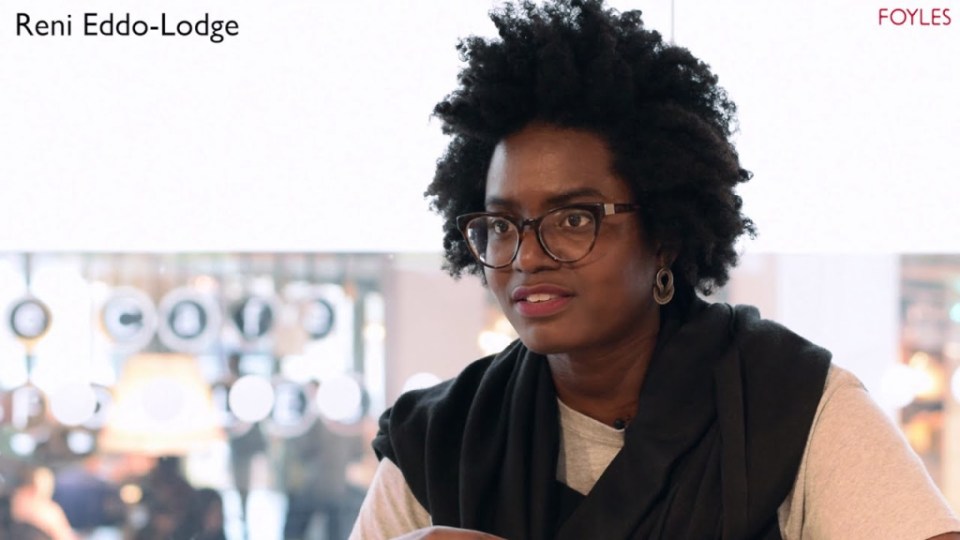
Photo Credit: Foyles
In the conversations about unconscious bias, as far as race…
View original post 892 more words
Share this:


The Voice Behind the Music


Marginalised voices were the focal point of my dissertation.
My dissertation explored social issues through the musical genres of Rap and Hip-Hop. During the time period of writing my dissertation there was the rising debate surrounding the association of a new genre, Drill music, being linked to the rise in violent crimes by young people in England (London specifically). The following link to an article from the Guardian newspaper will provide a greater insight to the subject matter:
The idea of music having a direct correlation with criminality sweeps issues such as poverty, social deprivation, class and race all under the rug; when in reality these are just a few of the definitive issues that these marginalised groups face. We see prior examples of this in the late 80s, with rap group N.W.A with their song “F*** the police”. The song surrounded the topic of police brutality and…
View original post 274 more words
Share this:


Racism in the work place


Growing up in a small town and having dealt with racism from a young age; I felt as if getting a degree would prove that I deserve to sit with the top dogs and that would be the end of me experiencing racism.
But I was sadly mistaken. I have experienced racism at 3 out of the 4 jobs I have had since graduating. I never dealt with it head on. I would just apply for other jobs and pray that the next job would be different. Thinking of reporting people for the comments they said was never an option for me as they were managers or supervisors.
Until I had the 3rd person who said a racist comment and I broke down. At this point I was done with running. I reporte d it and it was dealt with. But since then I have been dealing with covert racism…
View original post 166 more words
Share this:

News Flash #BlackenAsiaWithLove #SpokenWord

This Spoken word piece was inspired by watching the TV news with my aunt Shirley. Shout-out to Evelyn from the Internets, because I’m calling in Black tomorrow.
Audience/Reader: Hum, snap, step, clap, sing ‘Another One Bites the Dust’
Newsflash at dawn:
After several overnight reports of disturbances,
Police are on thelookoutthis morning for a smart negro male,
Accused of bringing up racism and angering the masses.
The suspect is considered armed with intelligence,
and other deadly weapons such as pen and paper.
Bang!
9 0’clock morning News:
Police are on thelookout for a smart negro male,
Accused of bringing up racism and angering the masses.
Suspect is considered armed with intelligence and other deadly weapons.
The public is advised NOT to approach the suspect,
And notify authorities immediately…
Immediately…
Sohe can be shot.
Bang!
Bang!
News at noon.
Police are on thelookout for a smart negro male,
Accused…
View original post 649 more words
Share this:


How literature failed me as a black student

My name is Francine Bitalo, I am 21 years old and a Criminology undergraduate at the University of Northampton. Coming from a black African background I have always had a strong interest in the Criminal Justice System and its treatment towards different groups in society.
My dissertation was based on the impact of police practices such as stop and search on young black men and their families. Whilst statistics present the alarming racial disproportionately which exist in many areas in the criminal justice system, it fails to portray the long-lasting effects it has had on Black families. For example, the daily harassment and differential treatment subjected to young Black men has forced black families to reinvent themselves to conform to institutional racism. Coming from a Black family myself and having male family member, the findings in my dissertation quickly became personal to me, as I could constantly relate them to…
View original post 650 more words
Share this:

This is America: Riot is the History of US

Photograph: Keystone-France/Gamma-Keystone via Getty Images
Riot does not roll off the tongue so nicely these days but it is not possible to talk about the history of the United States without telling a story written in violence. A story written with the blood of slavery, and nearly one hundred million Indigineous bodies when Columbus and his soldiers came. Stories of Bostonian patriots who threw imperial tea into Boston Harbour. Tales of slaves inciting rebellion in a slave-stricken South – Nat Turner and the Southampton Insurrection; Harriet Tubman on the railroad; Frederick Douglass as a pioneer of abolition. On Edmund Pettus Bridge, (named for the KKK big shot), in 1965 state police go to work on peaceful protesters. What US history shows us is that there is a pattern of rebellion and dissent.
Once, the United States was a beacon of anti-colonial rebellion and radical opposition to British rule, perhaps this is a chance now for the US to show us who they are
Now, in light of the murders of Breonna Taylor, Ahmaud Arbery and George Floyd, the tear-gassing of protesters and the attempted murder of Chris Cooper, Black America shows its teeth. America is a tinderbox. London marches in solidarity. Social media, well… there is some hope that they are not just more hashtags that amount to nothing. The riots in Minnesota show me America hasn’t lost its touch under Trump. Not beaten blue by America’s first-born son, the scurge of public executions and White supremacy.
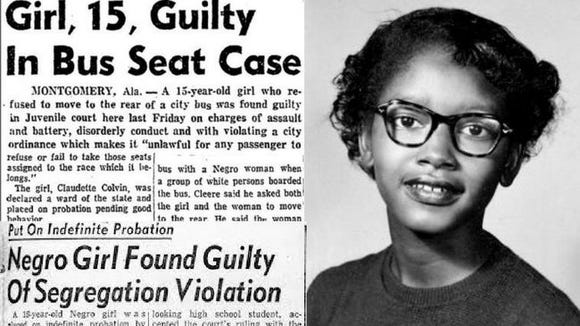
Here, I will not condemn the violence. I applaud it. Violence against the American establishment is not only necessary but completely justifiable. White Power did not like the peaceful protesting. Not when Claudette Colvin and Rosa Parkes set the ball rolling; not when Colin Kaepernick took a knee or when activists marched with Black Lives Matter. You murdered Malcolm, Martin, and Medgar before they reached 40. You killed Fred Hampton at 21; you nearly put Angela Davis on death row and forced Assatta Shakur to flee the country. Anti-establishment dissent is as American as apple pie.
We must stand in solidarity with antifacists; we have defeated facism before and I know we will do it again.
I have no time for naysayers; I have no ears for their brand of “wokeness” and liberal piety, that riot is unacceptable at a time when Black lives are on the clock, from both COVID and a police officer’s footprint, like a confederate flag. Disease or the noose, public executions are not a thing of a bygone era of cotton pickers and segregated schools, and water fountains in a southern state come hell or highwater. “There is no chip on my shoulder, that’s your foot on my neck” and Malcolm’s words have not aged a day.
“I incite this meeting to rebellion” said Emmeline Pankhurst and when I see White allies in Kentucky weaponising their whiteness against the forces that feed it, this is how you use your White privilege for good; that is antiracism in action
I once believed there were good police and bad police. Now, I’m not sure. It’s like saying there were good slave masters. NWA wrote that song ‘Fuck Tha Police‘. Today, I think of bad police and police that are silent. However, silence is violence “cause they’ll slam ya down to the street top / Black police showin’ out for the white cop.” Whiteness is a psychosis and Black police and other police officers of colour are also complicit in holding up racist structures, like police departments that do not care about them and theirs.
Freedom is never gifted, it is fought for. Suez. Haiti. Independence is never gifted it is fought for. Ghana. Jamaica. India. Human rights are never given, they are fought for. Votes for Women. Stonewall. Apartheid. What about when the Jews and the Irish kicked Oswald Mosely out of Cable Street? What about when Lancashire’s white working class stood in solidarity with American slaves during Cotton Panic of the 1860s? Nelson Mandela wasn’t “one of the good ones” in his time, he was branded a terrorist. Martin Luther King was on the FBI’s radar. They tapped his phone for God’s sake.
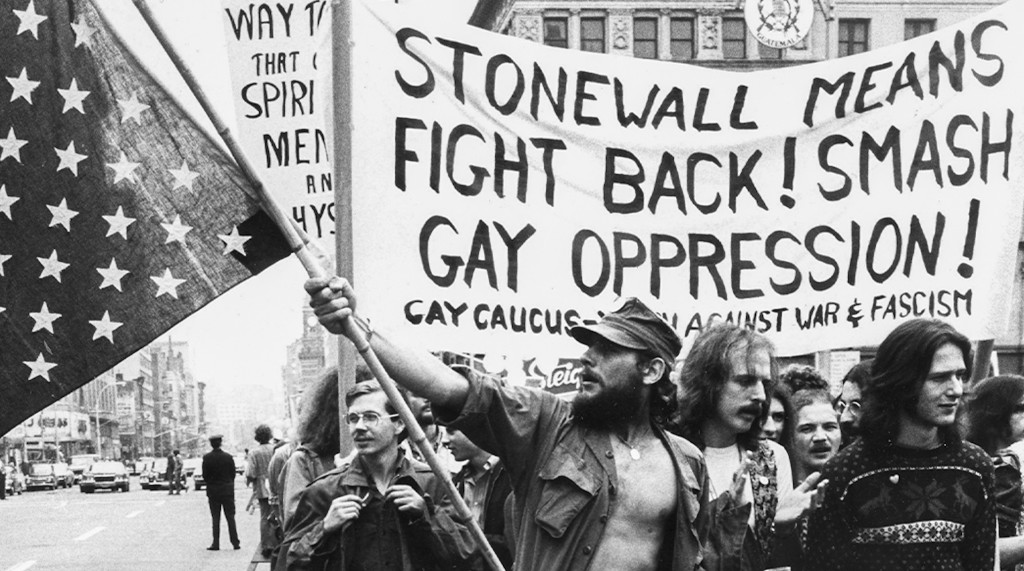
marking a turning point in the gay rights movement (Summer, 1969)
When we study anti-colonial movements (incl. independence struggles), I struggle to follow how people condemn Black America for this uprising, knowing the story of America’s conception (Hamilton, Burr and Washington in toe). That even when Black America is having its rights and dignity as human beings curtalied, people still say but. That in what Harvard’s Michelle Alexander calls a “new Jim Crow”, there are many out there who would gladly see over forty million citizens back on slave plantations.
“If men use explosives and bombs for their own purpose they call it war, and the throwing of a bomb that destroys other people is then described as a glorious and heroic deed. Why should a woman not make use of the same weapons as men?”
Christabel Pankhurst (1913)
I still have not brought myself to watch the video of George Floyd’s murder. The stills of his body were enough. I’ve heard versions of “violence is not the answer” and “rioting is counter-productive.” At this point, when the bodies keep mounting, some want the angry to write sternly-worded letters (how very British, might I add). I don’t think one can blame folks for taking to the streets. If violence is not the answer to attack White supremacy and systemic racism in a country born out of violence, what is? March? Vote in a different president? (White supreamcy far predates the days of Trump).
But change has never come by waiting around, change has always come from civil disobedience and rocking the boat; at what point in history has change come from being nice?
Obama showed us that the ballot will not stop the bullet. I have not seen a worldwide reaction to US police violence in this way since Fergurson in 2014. We are seeing sometimes violence is all that’s left. We like to pretend that the best of us are not capable of such things but we are all capable of anything given half a chance. And this part of the Civil Rights movement is glossed over, how “non-violent” political movements like women’s suffrage are sanatised, because they are not as clean-cut as we’re taught they are.
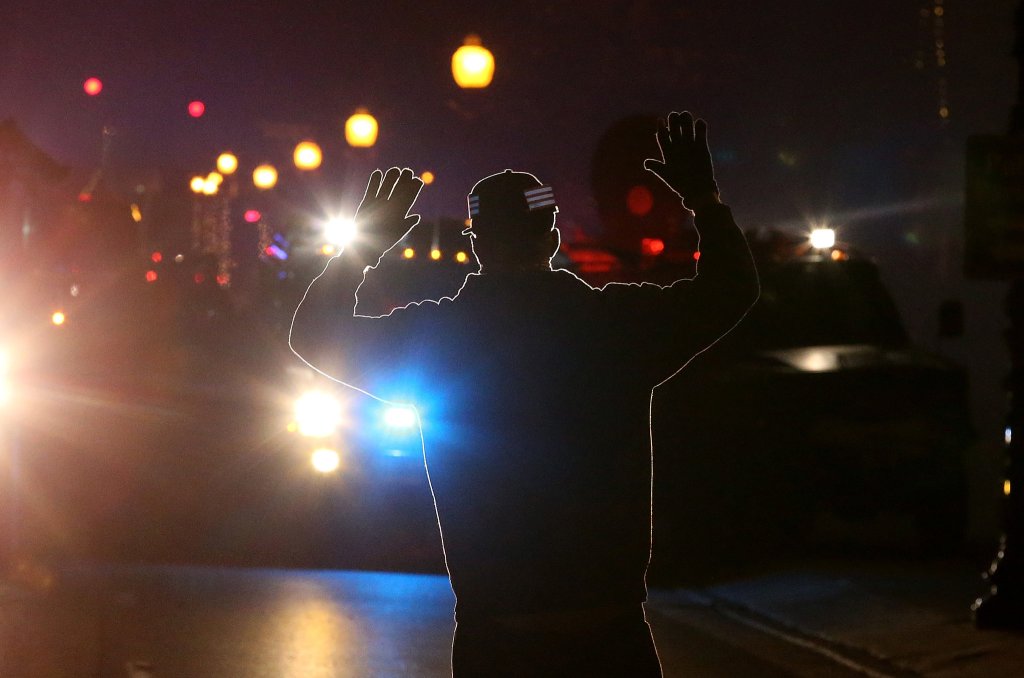
Once, to harbour runaway slaves was a crime. Once, caught runaways would lose a half a foot to stop them running. Once, slave women were raped by Master. Once, slaves would kill their babies to stop them becoming slaves. Once, black bodies swayed in the breeze of a Louisianan sunset. Violence is not always the answer but when you’ve been oppressed so long, it looks like the only answer. When is enough, enough? When do you stop watching people being kicked when they’re down, saying “I can’t breathe.”
Post-traumatic slave syndrome tells me that police violence is not just police violence, but a single part of a racist system that’s been allowed to fester for over 400 years; and more importantly, begs the question: when will Black men and Black women be able to move freely in a society where they can love themselves without fear of (social) persecution?
Share this:


“My Favourite Things”: Manos

My favourite TV show - Those who know me, probably will understand why I find this one difficult to answer but considering the situation I shall go with Years and Years from the BBC

My favourite place to go - I am reluctant to say because it is my fortress of solitude, but it is an island somewhere in the Ionian sea

My favourite city - Thessaloniki, the second largest city in Greece and a place that is in my heart and in my memories

My favourite thing to do in my free time - I like to read, usually fiction with a drink and some music on the background; classical music ideally but jazz is also good.

My favourite athlete/sports personality - who came up with these questions? I had to think long and hard on this and I am going with Greg Louganis.  An inspiration to many

My favourite actor - Charlie Chaplin in The Great Dictator his speech at the end remains one of the most potent antifascist speeches.  Ironic considering that he made his career in silent movies!

My favourite author - Milan Kundera the author of several of my favourite books, The Unbearable Lightness of Being, Immortality and Life is Elsewhere.  Thoughtful novels full of very complex ideas.

My favourite drink - Lemon juice, ideally harvested springtime from an Ionian island; a couple of spoonfuls of sugar and some iced water and plenty of freshly squeezed lemon juice.

My favourite food - Spinach and cheese filo pie

My favourite place to eat - A little taverna by the sea; there is a little place, that my mind wonders to; the food may not gourmet but its honest, homemade food.

I like people who - speak their mind, are honest and have a positive outlook in life

I don’t like it when people - lie, gossip and pretend to know everything

My favourite book - Eichmann in Jerusalem an excellent study on the "banality of evil" a very interesting criminological idea

My favourite book character - elementary, Sherlock Holmes

My favourite film - The Life of Brian this is the movie that evokes old blasphemy laws because of its content.  A good demonstration of how art can reflect on life and call institutions to heel

My favourite poem - Ithaca by Kavafis, a wonderful journey through the eyes of the cosmopolitan Greek

My favourite artist/band- David Bowie, I cannot choose a particular era; definitely a incredibly creative mind.

My favourite song - Bitter Sweet Symphony

My favourite art - The Creation of Adam by Michelangelo

My favourite person from history - Marie Curie so much more than a woman, a scientist, a wife.  An enduring example to scientific reasoning

Share this:


“My Favourite Things”: Saffron Garside
My favourite TV show - It's probably Peep Show, I've rewatched it so many times and it doesn't stop being funny. I often find myself quoting it to other people too and it's what I put on when I don't want to think about anything

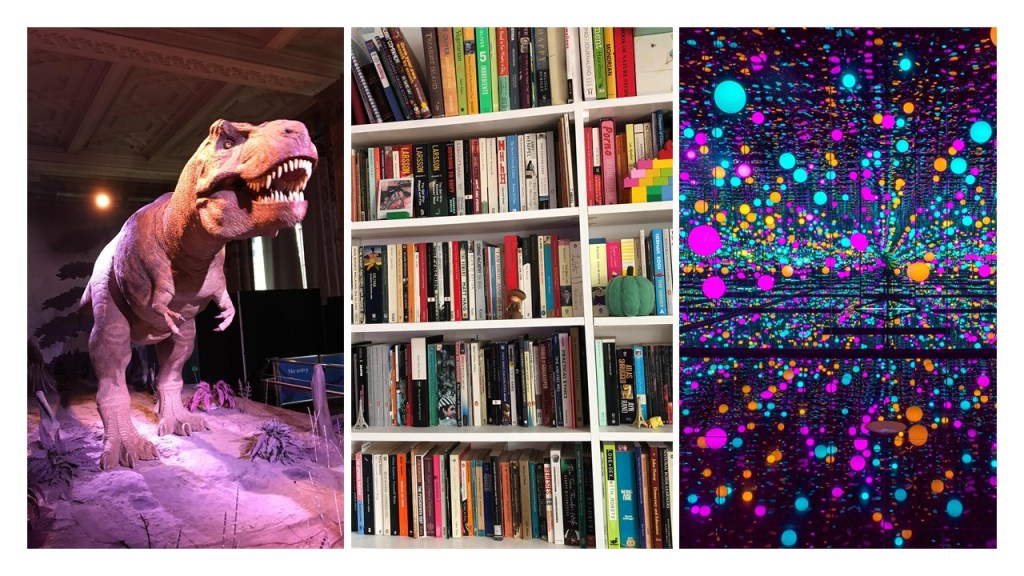
My favourite place to go - The Natural History Museum has been my favourite place to go for a very long time - the building is beautiful and you could spend days in there and still not see everything. I learn something new every time I go. I also love taking the kids there now - some stuff is still the same as when I was small like the T-Rex and the earthquake room! It'll be one of the first places we go when museums and galleries reopen

My favourite city - It's definitely Paris - it really reminds me of London in a lot of ways, it feels small and big at the same time and there is so much to see and do there. I was lucky enough to go at the beginning of March on a surprise trip - it was fun to be a tourist and we walked so much!

My favourite thing to do in my free time - Read! If I'm not doing something else then I'm usually reading. I carry a book everywhere just in case I get a couple of minutes to read. I'm in two book clubs so always juggling a few books at once

My favourite athlete/sports personality - I'm not a big sports fan and I'm not sure this counts but the kids and I have been loving doing PE with Joe Wicks. It's been great for keeping us moving during the lockdown and it's a pretty big commitment to show up every day. He always seems so positive

My favourite actor - Edward Norton. I think I've seen nearly all the films he's ever been in!

My favourite author - It's too difficult to choose. I really like Chuck Palahniuk and I've reread the Harry Potter series by J.K. Rowling a lot of times!

My favourite drink - I'm not sure you can beat a good cup of tea. It's about the most comforting thing I can think of and it's never not a good time to put the kettle on

My favourite food - caramel shortbread - but it has to be one of the really good ones (no digestive base!) and you need a good chocolate to caramel ratio!

My favourite place to eat - Every Sunday my husband and I take it in turns to cook a big family meal (complete with pudding!) and we play lots of board games after. It's one of my favourite times in the week and it always feels special.

I like people who - are enthusiastic about life and the things they are learning about, who want to share stories and make spontaneous decisions

I don’t like it when people - don't communicate their feelings or try to resolve things through conversation - I think things would often be simpler if people tried to talk about things honestly

My favourite book - I think my favourite book of all time is Treasure Island by Robert Louis Stevenson it's such a good adventure story and bits of it are really scary!

My favourite book character - Bilbo Baggins! I really enjoyed The Hobbit as a child and my kids love it so much we've already read it together twice. There is something wonderful about how his character develops throughout his quest - he goes from being a reluctant adventurer to the person holding the whole thing together. He isn't motivated by greed or fame and commits himself to seeing it through. Whenever he feels disheartened he dreams of the comforts of home; cooked meals, a boiling kettle, a warm fire

My favourite film - Fight Club is easily my favourite film- great actors, great soundtrack, great twist!

My favourite poem - Wild Geese by Mary Oliver. She's my absolute favourite poet and it felt like magic when I first discovered her! She writes about nature with such reverence and wonder

My favourite artist/band -  For more than half my life it's been Green Day so I think I am stuck with them now!

My favourite song - In My Mind - Amanda Palmer. I really, really love this song - positive messages and ukulele, what more do you need?

My favourite art - I don't know if I have a very favourite piece of art - I love going to a modern art gallery like the Tate Modern in London or the Centre Pompidou in Paris and just spending hours losing myself in all the emotions that get stirred up. I really love the work of Yayoi Kusama but haven't been lucky enough to see her art in person yet

My favourite person from history - Mary Anning made some really important fossil discoveries but didn't really get the recognition she deserved during her lifetime. Plus she was struck by lightning as a baby, which is a pretty cool story!
Share this:


Criminology 2020 AD

2020 will be a memorable year for a number of reasons. The big news of course was people across the world going into lockdown and staying home in order to stop the transmission of a coronavirus Covid-19. Suddenly we started counting; people infected, people in hospitals, people dead. The social agenda changed and our priorities altered overnight. During this time, we are trying to come to terms with a new social reality, going for walks, knitting, baking, learning something, reading or simply surviving, hoping to see the end of something so unprecedented.
People are still observing physical distancing, and everything feels so different from the days we were discussing future developments and holiday plans. During the last days before lockdown we (myself and @paulaabowles) were invited to the local radio by April Dawn to talk about, what else, but criminology. In that interview we revealed that the course started 20 years ago and for that reason we shall be having a big party inviting prospective, current and old students together to mark this little milestone. Suffice to say, that did not happen but the thought of celebrating and identifying the path of the programme is very much alive. I have written before about the need to celebrate and the contributions our graduates make to the local, regional and national market. Many of whom have become incredibly successful professionals in the Criminal Justice System.
On this entry I shall stand on something different; the contribution of criminology to professional conduct, social sciences and academia. Back in the 1990s Stan Cohen, wrote the seminal Against Criminology, a vibrant collection of essays, that identified the complexity of issues that once upon a time were identified as radical. Consider an academic in the 1960s imagining a model that addresses the issue of gender equality and exclusion; in some ways things may not have changed as much as expected, but feminism has entered the ontology of social science.
Criminology as a discipline did not speak against the atrocities of the Nazi genocide, like many other disciplines; this is a shame which consecutive generations of colleagues since tried to address and explain. It was in the 1960s that criminology entered adulthood and embraced one of its more fundamental principles. As a theoretical discipline, which people outside academia, thought was about reading criminal minds or counting crime trends only. The discipline, (if it is a discipline) evolved in a way to bring a critical dimension to law and order. This was something more than the original understanding of crime and criminal behaviour and it is deemed significant, because for the first time we recognised that crime does not happen in a social vacuum. The objectives evolved, to introduce scepticism in the order of how systems work and to challenge established views.
Since then, and through a series of events nationally and internationally, criminology is forging a way of critical reflection of social realities and professional practices. We do not have to simply expect a society with less crime, but a society with more fairness and equality for all. The responsibilities of those in position of power and authority is not to use and abuse it in order to gain against public interest. Consider the current pandemic, and the mass losses of human life. If this was preventable, even in the slightest, is there negligence? If people were left unable to defend themselves is that criminal? Surely these are questions criminology asks and this is why regardless of the time and the circumstances there will always be time for criminology to raise these, and many more questions.

 Thoughts from the criminology team