
Home » Criminology (Page 37)
Category Archives: Criminology

It is not the job of Black people to teach white people Black history

I like to think I have been doing anti-racist work since I was a child — from the days when I telling my schoolmates about slavery to my teen years where I was educating my peers on the connotations of the N-Word and why it is wrong. I remember a few years ago my editor at The Nenequirer Steve was interviewing me for a piece and he made a passing statement about me being an “equality activist.” He meant it lovingly and in good faith. I laughed, jokingly — thinking that equality wasn’t a political issue, so how could it be activism? Now, even more cynical than I was in in 2017, but grown, equality is very much a political issue, as we have seen with the Black Lives Matter movement and I now carry the label of “anti-racism activist”, a job I have been doing for nearly 20 years, in a professional and non-professional capacity.
The fact I never regarded equality as a political issue is something I have thought about time and time again. Building my name as a poet in my community, much of my work being on race and nation, I have been called all types of things. Being called “anti-Britain” is not an accolade I thought I would recieve, as anyone that knows me knows I am more British than Queenie herself — from custard creams to Doctor Who, The Crown and test match cricket, there are few people alive who can out-Britain me.
So, to be called “anti-Britain” is insulting really. And, in light of the Black Lives Matter protests, lately, I have been asked to answer all sorts of questions on race / racism by friends and colleagues, unknowing that what all Black people are going through now, as we have always done, is traumatic.
I hear a lot of my Black colleagues saying “it’s not the job of Black people to teach white people about racism, (and Black history.)” I heartily agree, but I also question the place this statement comes from in the first place. Lots of my colleagues have been asking me about the Black History and what they should be reading and I am quite fortunate in the sense that I know where to send them for information because I have spent nearly fifteen out of twenty-four years doing the reading and learning (outside of the system).
However, most Black people, really do not know their own history because they came through the same education system as white people, with its blinkered curriculum!
So, whilst we are Black, we, too, are disillusioned. We cannot teach you about our history because we do not know it ourselves. Those that do know it have taught themselves it. The reason I can challenge the Wilberforce narrative on slavery is because I have made efforts to find the other stories around that narrative. I have made efforts to look at the centuries before the fifty years of Wilberforce — centuries of rebellions and dissent from the first abolitionists, the slaves themselves, on the ships and the plantations.
I have found that Black teachers are really struggling because they also came through the same system. So, if teachers don’t know, (let alone Black teachers) how can they teach it to students? What really needs to happen, in addition to decolonising curricula is decolonise initial teacher education [ITE]. When our teachers are being taught about race and Black history, and the contributions of ethnic minorities to Britain, then we might get somewhere, because it’s being taught to the grownups… not just the youth.
I am fortunate to have parents that have degrees in Law and Internation Studies, fortunate to have parents that were part of their African-Caribbean Society at UEL and took part in anti-apartheid marches. Very politicised students who then became politicised parents and professionals, and now I am politicised too. I learned a bit from my parents and some stuff from my Windrush grandparents (that lived through the 60s, 70s and 80s) and then more stuff from different family members about all sorts of things.
But most of all, from doing the reading:
Akala, Malorie Blackman, bell hooks, Frederick Douglas, Harriet Jacobs, Mary Prince, Maya Angelou, Chinua Achebe, Frantz Fanon, Dean Atta, Roger Robinson, Miranda Kaufmann, John Agard, Reni Eddo Lodge, Afua Hirsch, James Baldwin, Peter Fryer, Gwendolyn Brooks, Richard Benjamin, Olivette Otele, Beverly Tatum, Maya Goodfellow, Paul Gilroy, Gary Younge, Kehinde Andrews, Hakim Adi, Bernadine Evaristo, Eric Williams, Andrea Levy et al…
I did the reading. Learned. Challenged. It’s no overnight success and I am still learning. The BBC had a whole season on Black Britishness, including documetaries Black is the New Black, Black and British: A Forgotten History and other bits. Yet, don’t be conned that more Black faces in the mainstream means Black people have made it and racism is over. The fact there are more Black people on TV has opened the floodgates for more debate on whether racism actually exists, if the likes of (Professor) David Olusoga can make it — or Afua Hirsch; or Reni Eddo-Lodge and many more.

Heck, Meghan Markle being “accepted” into the most elitist institution in Britain. That whilst we have books like Black and British by David Olusoga showing how far Black British history goes and showing the good things we have contributed, there are also texts like Slay in Your Lane by Elizabeth Ubivenne and Yomi Adegoke and Taking Up Space by Chelsea Kwakye and Ore Ogunbiyi, both just so raw and unflinching, straight at the jugular.
“Black Lives Matter; no justice, no peace; Black power” — chanted at the Northampton protest in July by nearly one thousand protesters. A moment in Black history we are living together but still some of us not really getting it. The murders of George Floyd and Breonna Taylor and the others sparked outrage across the world. But I would emphasise to the white masses, this has been happening since 1619 (US) and at least 1562 (Britain), when John Hakwins, from Plymouth, hijacked a Portegeuse slave ship and made a small fortune in the Spanish Caribbean, with further voyages that decade funded by Elizabeth I. This Black history I only know about from reading Staying Power by Peter Fryer, a white male author. Read. Research.
I wonder if the next generations of Black people to come in the future will know about Black Lives Matter, (because it’ll be taught in the schools), or will they have strangers and relatives telling them about their history just like I did?
I expect it is rather horrifying for Black people that do not know their history being asked by white people and other non-Black people about it, like being Black is a pass to knowing. Education is the pass and the education system doesn’t teach it but I can say we represent “3% of the [British] population but account for 13% of the prison inmates. Black people also represent 9% of deaths after police contact that were independently investigated” (Andrews, 2018: xxiii). We do not know our history but we are living it now, including our disproportionate overrepresentation in police and prison statistics.

When it comes educating ourselves on Black history, in my opinion, it follows a coalition of learning together. That whilst it looks semantically questionable having white academics being the main leads on subjects like slavery and Black Tudors (nationally), their knowledge is valuable, and so are the contributions in academia made by Black academics in history (what few that exist), as well as other subjects like sociology and criminology.
White people, stop burdening your Black friends and colleagues with teaching you about Black history; the likelihood is they do not know it in enough volume to teach you it. However, the literature is there, in volume, teach yourselves and grow, otherwise you are simply adding to the “drip drip” sensation of the tap we call emotional labour.
Andrews, Kehinde (2018). Back to Black: Black Radicalism for the 21st Century. London: ZED. Print.
See my reading and film resource, made in reply to Black Lives Matter. It’s public and for the benefit of all — from small children to adults: on race and Black history. This is an ongoing project and will continue long after anti-racism stops being sexy. This is always being updated, check it out.
Share this:


What is the value of your ‘yes’ when you never say ‘no’?

A good few years ago a senior colleague asked me that very question. It was more of a statement, than a question and it was designed to make me think about how I approached work and perhaps more importantly how others saw me in the workplace. It fits very nicely with another saying, ‘if you want the job done, give it to a busy person’. It seems there are those in the workplace that get the job done and those that don’t. There are those that always say ‘yes’ and others that often say ‘no’. There are those that solve problems and those that don’t. Another saying from a senior manager, ‘don’t bring me problems, just bring me solutions’ sums up the majority of relationships in organisations.
My experience of managers (both middle and upper) has been varied, but unfortunately most have fallen into the category of poor, bordering on awful. Perhaps that colours my judgement, but I do know that I’ve also had some very good managers. The good managers always made me feel like I was working in partnership with them and, yet I knew who was the boss. I always tried to find a solution to a problem but if I couldn’t then the boss knew that it was a problem he or she needed to deal with, they trusted my judgement. Often what appears to be the most trivial of problems can be a show stopper, a good boss knows this. If I said ‘no’ to a piece of work, then the boss negotiated which other piece of work would be set to one side for now. Sometimes everything is a priority, and everything is important, it is for those at the most senior level to make the decisions about what will or will not get done. Making no choice is an abrogation of responsibility, suggesting it is another person’s problem is just as bad if not worse.
Good managers understand how much work people are doing and trust their workers to get on with the job in hand. A good manager knows that even the most menial of tasks takes more time than might be imagined and that things rarely go exactly to plan. There is always an element of redundancy. When someone says ‘no’ to a piece of work they understand that there is a reason for that ‘no’ and rather than simply seeing that person as being difficult or lazy, they listen and seek solutions. More importantly, they take responsibility for the problem, ‘bring me the problem and I’ll help you find the solution’.
As we move into a summer of uncertainty where the ‘new normal’ is an anxious time for most, where the ‘yes’ people are needed more than ever, and the managers need to lead from the front, if you are a manager, what will you response be when your undervalued ‘yes’ person says ‘no’?
Share this:


For the Trayvons, Since Blackface is a weapon #BlackenAsiaWithLove
2 April 2012 Hanoi
The real Blackface that’s the weapon is the minstrel show,
The Blackface that labeled me out,
Showing people a side of me never seen
But projected onto me,
Such that when so many see my own Blackface,
They see that other
They see that other one.
The one told to them over their kitchen tables.
The one sold to them at the movie show –
Hoop dreams
Baller creams
Holla dolla-dolla bill, y’all.
‘Cause we also know that there are real Black faces
That see those minstrel black faces
Staring them back in the face,
So blinded by the light that they cannot see their own.
That’s one side of Trayvon’s story-
Then we all know how precious of a story this really is
That a mother lost her darling son
That a grandmother lost the one who used to babysit for the other gran’kids
That the little cousins are still unclear about where that dear boy is.
Blackface means that as soon as your voice starts to drop
As soon as that fuzzy hair starts to sprout all over
As soon as your knock knees start to look bold
You’re no longer a kid
Your childhood is lost
And you must learn to act in ways that would make most sane adults stumble
You learn how not to offend white people
How to speak in a soft voice
Or perish
How to walk slowly, with an unassuming gate
Lest you appear as a threat
With the knowledge that any of these threatened folks can annihilate you
Wipe you from this earth
Where only a generation or two ago
Men hanged like tree-ripened fruit
Aged on a rope in an instant
From kid prankster
To adult menace in a matter of moments
We’ve all seen that photo of one of America’s last lynchings
Not nearly the first
Not nearly the haste, carnage and human waste that made people cease.
In 1930, not in anywhere near the deep south
Not from one of our southern willows that sway
But in the mid-west
In Indiana, less than a 150 miles from where Michael Jackson was born
And less than 30 years before he came to be,
So that years later when he sings about hate in our multicultural hearts
Or smashes a window in the video
Enraged with anger
Mad from hypocrisy
The sort that we all know all too well
The gap between the promise and dream.
The reality versus the verses etched all around the capital,
Versus the slave hands that laid those very stones.
The women folk whose very gender made them slaves
And the Black women whose faces made them chattel –
But exploitation of a sexual kind
Yes, we all know too well
What a Blackface can do
How a Blackface can scare you
Even when it’s yours.
So, we now the rage Michael felt,
The hate he seemed to have fought though lost,
Internalized but never giving up.
Yet he was born into a world that hated Blackfaces
Where his was a real threat,
Lest he learn to sing and dance.
The hate is real life minstrelsy.
It’s that same song and dance that we as boys learn to perform
And I am tired of dancing
Trying to make nice when people approach me as cold as ice
Smiling and trying to behave
While all their body language tells me that they are scared to death of me
And that they see my Blackface as chilling.
We all know that all the Trayvons in this place
Learn from an age too early to have to teach kids such harsh cruelties of life
That by 13, he could be nearly 6 feet tall and that factor alone endangers his life
Were he to play sports and his body develop.
He would stand no chance of being treated like anything other than a gladiator.
So it’s even more ironic that Trayvon was a scrawny boy they called “Slim”
Seems there’s no real way to win
Though I think that if we as a people can get through this
If we as a nation can have this conversation
The one mothers like Trayvon’s have with their sons
For we all know how people react to Black
Share this:


We are Spartacus: the publishing industry and race
As one of only a handful of non-white authors on the British crime fiction map, I thought it might be worthwhile spending a moment reflecting on the worldwide rebalancing touched off by the George Floyd killing in America. Fear not. There’s no need to put on your tin hats and dive for the trenches. My purpose isn’t to haul anyone over the coals. But there’s little doubt that some of what I say might make for uncomfortable reading. More importantly, I will ask you to reflect, at a personal level, on what we mean by systemic inequality, particularly as it applies to the publishing industry.

First, some background. My parents are from the subcontinent. They came to the UK in the early seventies, lured by the immigrant dream. The streets of London may not have been paved with gold, but they were paved with opportunity. My father, who was not literate, spent his life in honest labour, in an industrial bakery, while my mother raised children, demonstrating the much-lauded immigrant work ethic by slaving away at her sewing machine every hour she wasn’t feeding us or stopping us from poking each other’s eyes out with eraser-tipped pencils. She instilled in us the need, above all else, to study, to educate ourselves, to progress.
So far, so good.
But what if I were to tell you that my parents were, in a broad sense, xenophobes, too? Not overtly. They didn’t oppress anyone; or traffic slaves across the oceans; or pillage defenceless communities for profit. But their attitude towards black people – cultivated by the insular world they had grown up in – was, at best, indifferent, or, at worst, mistrustful.
Here’s a simple, unpalatable truth. Racism, in its most basic form, is a feature of most societies. It shouldn’t be. But it is. A simple example illustrates my point.
The outpouring of angst and handwringing currently gripping the world has seen celebrities across the globe express their views on racism (rightly so), only for some to discover that a seat on this particular bandwagon can be an uncomfortable one. In India, numerous Bollywood stars were called out for the disparity between their #blacklivesmatter tweets and the fact that they had fronted campaigns for skin-lightening creams. Across the subcontinent, lighter skin has traditionally been valued (usually alluded to in matrimonial ads by the rainbow-bending adjective “wheatish”), so much so that white foreigners, especially Brits, are treated with overt deference, while black people are routinely afforded a lesser welcome. An odd perversity, given that it was the whites that pillaged the subcontinent for three centuries while, with those of Afro-Caribbean descent, one might assume Indians would evince a colonial-era solidarity.
Let me be clear: this idea of a sort of universal xenophobic instinct does not in any way excuse or mitigate the horrors of the slave trade, or the enormous, long-term damage done to black people because of that terrible practice. Nor does it justify the entrenched, systemic prejudice that continues to colour western societies, prejudice that culminates in overt racism of the kind that permits white American policemen to routinely kill black men with little fear of reprisal, and prejudice of the less obvious kind that serves to keep black people ‘in their place’. My point was merely to demonstrate that, in the wider, global race equality agenda now under discussion, we all have a part to play.
Part of the issue is that many well-meaning efforts to redress the balance are hampered by a profound lack of insight into how unconscious bias can affect the lives of people of colour, in a million different, small, but, ultimately, debilitating ways. The problem is further hampered by an education system that often fails to properly tackle the ‘race issue’.
Yet, the problem must be addressed. Because the world has become a smaller place. The goldfish bowl has shrunk and we are now all swimming in the same seas. It behoves us to make the effort, not just because it is the right thing to do, but because it is also the most effective means of progressing humanity towards a more equitable, more meritocratic, global society. If the Covid-19 pandemic has proven anything, it is how interdependent we are.
Coming, now, to the publishing industry. Cards on the table. Since my first book was published six years ago, I have received tremendous support from my agent, publisher, critics, bloggers, readers, event organisers, and crime writers. My experience is not typical. A simple look at the statistics tells us what we already know. Any way you slice it and dice it – diversity of publishing staff, published writers of colour, books featuring characters of colour – the industry is dominated by white thought and enterprise. Some of this can be ascribed to the fact that, in terms of population, BAME communities, by definition, are a minority. You wouldn’t expect there to be a 50:50 split along these dimensions. That isn’t the issue. The problem is the entrenched attitudes that make it so damned difficult for writers of colour to break into the industry and then to enjoy the same rewards and freedom of expression that is accorded to their white counterparts.
The world’s most successful crime writer, James Patterson, became famous with a series about a streetwise black detective, Alex Cross. James Patterson is not black. Nothing wrong with that scenario, in my opinion. Authors should not be constrained by artificial constructions of propriety. But, if the industry is being honest with itself, it will acknowledge that a writer of colour attempting to do something similar – trying, as it were, to write outside of their cultural straightjacket – is rarely accorded the same privilege. Questions of ‘authenticity’, ‘voice’ and ‘cultural appropriation’ suddenly come racing to the fore, like Cinderella’s ugly sisters questioning our right to go to the ball. Asian writers, for instance, are often expected to pen literary tomes about colonialism or exposes of the immigrant experience. Again, nothing wrong with that, and, indeed, brilliant writing is regularly published exploring those themes. But there are so many other stories that we would like to tell. White writers can be published writing about matters far outside their experience – wizards, serial killers, aliens. But for non-white writers, the same consideration is much harder to find. A lot of this is not the result of overt racism, but rather the mindset that accepts as perceived wisdom the idea that profitability comes almost entirely from white authors writing white stories, or writers of colour writing stories suited to their ethnic background. This thought is so prevalent in the industry that it may as well be an eleventh commandment.
A terrific article by Laura B. McGrath, associate director of the Stanford University Literary Lab, in a Jan 2019 issue of the Los Angeles Review of Books, entitled “Comping White” identifies the true nature of the problem. Paraphrasing her research, it goes like this: publishers buy new books by comparing them to books that have been successful. Is this the new Harry Potter? Is this the next Gone Girl? Given that the majority of books are white, the process becomes a closed loop, a vicious cycle. The industry buys and promotes white books because they sell. White books sell because they’re the only books the industry buys and promotes. Do you see the problem?
Making the gatekeepers more diverse, McGrath argues, will have only a marginal impact. It’s the system that’s at fault. The same applies to practically any walk of life that you might care to name – hence the reason so few people of colour in boardrooms, or lecturing at top universities, or opening Michelin-starred restaurants. White people have done all those things successfully before, so why take a chance on the unproven?
Until we change this structural, often unconscious, bias, all the current furore around race will do little to improve the prospects of the average BAME person.
Can readers help? Of course! By voting with their feet. By buying books written by authors of colour, readers signal to publishers that they won’t be put off by a ‘funny-sounding’ name on the cover, or a protagonist who doesn’t share their own cultural background. The only bar should be quality.
In an ideal world, a good story, well told, should stand on its own merits.
What else can we do? In my opinion, people shape people. If we want better, more thoughtful attitudes in the industry, we must all stand up and be counted. Solidarity is the name of the game. A solidarity of thought that acknowledges that a genuine change of perspective is needed. From agent to reader, all along the chain. What we need, in other words, is for all of us to stand up and say: ‘We are Spartacus.’
Vaseem Khan, author, Midnight at Malabar House and Baby Ganesh series
London, June 2020
Share this:


Misogynoir: What’s a Black man to say?
Two months ago, London-born author-journalist and activist Reni Eddo-Lodge was the first Black British author to top the UK book charts. In addition to her being well-known for her book Why I’m No Longer Talking White People About Race, it was this text among others that inspired my dissertation on race-identity politics. I have reread the chapter ‘Histories’ countless times and come to the idea that current discourse on race and Black history is not as intersectional as it could be. Historically, I have seen Black History Month celebrations where women that do not fit into the cisgender, neurotypical, able-bodied, and / or heterosexual norms of society get side-lined.
Additionally, how we as a society oversimplify the Black Lives Matter movement as just a race issue baffles me.
In 2010, Black queer feminist Moya Bailey coined the term misogynoir – phrase denoting discrimination against Black-racialised women where both race and gender play roles of bias. Reni Eddo-Lodge becoming the first Black British author to top the UK book charts is an indictment in two ways:
- It took this long for a Black British author to reach the top
- It took this long for a Black British woman to reach the top
Even ahead of Malorie Blackman, Bernadine Evaristo, Zadie Smith, and the late Small Island writer-author Andrea Levy.
Are not enough people buying books by Black British (female) authors or are they simply being denied access to publishing houses? Systemic discrimination in publishing is a criticism blessed by history, where English literature in the 18th, 19th and the 20th centuries was dominated by white men. At this time, many women wrote under pseudonyms, as the system would not take their authentic voices and selves seriously, as women.

Whilst I am a man, my mother is a woman and so are my grandmothers. My godmother is a Black female academic with stories of her own about misogynoir in higher education and the British school system. My late aunt was an actor-singer. I have female cousins who also have stories about misogynoir in arts, corporate, healthcare and other parts of society. I know, having been raised by Black women that this discrimination is endemic and I know Black men are complicit in as well – from hearing Black men labelling Black women as “high maintenace” to perpetuating colourism.
Does Black History Month and how Black history is taught play a role? Is the way we study Black history inclusive, or, despite ticking the race box, does it follow cisgender, neurotypical, able-bodied, heterosexual (very always male) norms? Are we doing everything we can in the narrative of Black historical scholarship to implement intersectionality?
In her essay (1989: 140), Kimberlé Crenshaw coins that buzzterm of today intersectionality. She writes “any analysis that does not take intersectionality into account cannot sufficiently address the particular manner in which Black women are subordinated.” Today, we can read this to the experiences of Black women on the autism spectrum; Black women who are transgender; Black women who are working class with disabilities.
How we view Black women’s history is troubling, as diversities of their experiences are being excluded from the story for “a more comfortable” cisgender, straight, male and / or able-bodied norm. Whilst we criticise white institutions for not doing diversity work, we must be careful as to not look like hypocrites, embodying our very own Prof. Coupland. One example is the slave narrative. In the teaching of the Slave Trade (when it’s actually taught), are we pushing for the inclusion of Black women experiences?
Despite learning of the Underground Railroad, I would also have liked to have learned about slavery’s darker side, including rape on the plantations and the histories of enslaved mothers as wet nurses for white children, often at the expense of their own. Moreover, slavery as an economics system, and “Black women’s reproductive systems were industrialised. Children born into slavery were the default property of slaveowners, and this meant limitless labour at no extra cost” (Eddo-Lodge, 2017: 4). A system where they were exploited on the basis of their race and sex.
Whilst, I would caution educators about relegating Black women’s histories during the years of slavery into narratives of sexual violence with no counter balance (i.e female empowerment), these are also stories pertinent to the lives of women today, not just Black women. In light of #MeToo, would it be so wrong to investigate human history of sexual violence? If we did that, we would then be forced to interrogate women’s history at war, for example. What about sex workers during the World War One? Today, intersectionality may bend to age’s links with race, sex and “the adultification of Black girls” (Center on Poverty and Inequality, 2017).

Using Reni Eddo-Lodge’s achievement as a conduit, I would argue there is no way we can achieve lasting change without the inclusion and amplification of Black women voices, who are themselves constantly hitting glass ceilings across all of society. This must include intersectional approaches to the Black past and anti-racist work. Whilst as a Black man I hit the glass ceiling, I can see through it. However, I know for my Black female colleagues this is a bleak look into the opaque.
The spine of the Black Lives Matter movement is unarguably kept together by Black, female leadership, as is the bulk of equalities work in academia with Black and brown academics. In revealing how Black women were agents in key moments of British history, including immeasurable contributions to civil rights movements and politics, we will understand
the history Black women are making now, truly embodying Black Britain and reimagining Black liberation. And it is in this train of thought, I believe when Black women matter, everyone will matter; when they win, everyone wins.
Referencing
Center on Poverty and Inequality (2017). Girlhood Interrupted: The Erasure of Black Girl’s Childhood. Washington D.C: Georgetown Law.
Crenshaw, K (1989). Demarginalizing the Intersection of Race and Sex: A Black Feminist Critique of Antidiscrimination Doctrine, Feminist Theory and Antiracist Politics. University of Chicago Legal Forum 1(8), pp. 139-167.
Eddo-Lodge, R (2017). Why I’m No Longer Talking to White People About Race. London: Bloomsbury. Print.
Share this:


How I became an evil man
My love of poetry came in my sleep like a dream, a fever I could not escape and in little hours of the day I would read some poetry from different people who voice the volume of their emotions with words. In one of those poems by Elleni Vakalo How he became a bad man, she introduced me to a new understanding of criminological thinking. The idea of consequences, that lead a seemingly good person to become bad, without the usual motivational factors, other than fear. This was the main catalyst that became the source of this man’s turn to the bad.
This almost surrealistic description of criminal motivation has since fascinated me. It is incredibly focused, devoid of social motivations and personal blame. In fact, it demonstrates a social cognition that once activated is powerful enough to lead a seemingly decent person to behave in uncharacteristic moves of violence. This interesting perspective was forged during the war and the post war turmoil experienced. Like Camus, the act of evil is presented as a matter of fact and the product of thoughts that are originally innocent and even non-threatening.
The realisation in this way of thinking, is not the normalisation of violence, but the simplicity that violence in innate to everyone. The person who commits it, is not born for it, does not carry an elaborate personal story or trauma and has no personal compulsion to do it. In some ways, this violence is more terrifying, as criminality can be the product of any person without any significant predispositions, an everyday occurrence that can happen any time.
The couple that will meet, fall in love, cohabit, and get married, starting a family, follow all the normal everyday stages that millions of people follow or feel socially obliged to follow. In no part of this process do they discuss how he will control her, demean her, call her names, slap her, hit her or kick her. There is no plan or discussion of how terrified she will become, socially isolated and humiliated. At no point in the planning, will she be thinking of ways to exit their home, access helplines or spend a day in court. It happens, as a product of small thoughts and expressed emotions, that convert into micro aggressions, that become overt hostility, that leads to violence. No significant changes, just a series of events that lead to a prolonged suffering.
In some way, this matter of fact violence explains the confusion the victims feel, trapped in a relationship that they cannot recognise as abusive, because all other parts fall under the normality of everyday life. Of course, in these situations, emotion plays a key role and in a way that rearranges logic and reason. We are driven by emotion and if we are to leave criminological theory for a minute a series of decisions, we will make daily take a journey from logic to emotions and back.
This emotional change, the manifestation of thoughts is not always criminal nor destructive. The parents who are willing to fight an entire medical profession so that their newborn has a fighting chance are armed with emotion. Many stories come to mind of those who owe their lives to their determination of their parents who fought logic and against the odds, fought to keep them alive. Friends and partners of people who have been written off by the criminal justice system that assessed them as high risk for society and stuck with them, holding on to emotion as logic departs.
In Criminology, we talk about facts and figures, we consider theories and situations, but above all as a social science we recognise that we deal with people; people without emotions do not exist. So how do you/how do I become a bad man? Simple…the same way you are/I am a good man.
This is the poem by Eleni Vakalo, with my painful translation:
How He Became A Bad Man

I will tell you how it happened
In that order
A good little man met on his way
a battered man
the man was so close from him laying
he felt sad for him
He was so sad
That he became frightened
Before approaching him to bend down to
help him, he thought better
“What do you want, what are you looking for”
Someone else will be found by so many around here,
to assist this poor soul
And actually
I have never seen him
And because he was scared
So he thought
Would he not be guilty, after all no one is hit without being guilty?
And they did him good since he wanted to play with the nobles
So he started as well
To hit him
Beginning of the fairy tale
Good morning
Share this:


Parole in Lockdown

It’s a sad fact of life in and after lockdown that everything is a bit rubbish. We have called groups of friends a few times to chat via Zoom. It’s nice to see everyone but the conversation doesn’t flow. You can’t pick up the cues to detect who wants to speak next and if everyone talks at once you can’t hear anything. Zoom quizzes are fun, but, for the same reasons, they lack the banter of a real pub quiz and are therefore focussed and functional. A couple of times we have sat down as a family to watch streamed theatre performances. They were very good but it’s not the same as a night at the theatre and, without the atmosphere of a live performance, you might as well watch a TV drama which has been written for the medium through which it is presented. Things which were once simple are now complicated – you need an appointment to go to the tip for heaven’s sake! And while Peter Crouch: Save Our Summer is quite amusing, it is no substitute for the live international football that the Euros were promising.
On 23rd March 2020, the Parole Board made the decision to postpone all face to face hearings with immediate effect. The decision was inevitable – prisons had closed their gates to visitors and it was no longer possible for members and witnesses to travel the country for hearings. A couple of weeks of frenzied activity followed as cases were reviewed. Some were deferred, some were decided on the papers, others were converted to telephone or video hearings. Since then, I have participated in 20 remote Parole hearings, all conducted by Skype / telephone. So, has the Parole process, like so many other things, become a bit rubbish?
The simple answer to that is, surprisingly, no. Remote technology has been available to the Parole Board since I was appointed ten years ago. A new “Parole Hub” had just been established and its virtues were extolled at my initial training. The idea was that the panel would convene in a suite in London while the prisoner and witnesses would join via video link. It was to be the future. In reality, hub hearings never took off in the way that was hoped. While the Parole Hub has been running continuously, only a few prisons have the necessary technology. Most cases were considered too complex to risk making a decision without seeing the prisoner. Any suggestions of learning difficulties, mental health problems, serious or unusual offending meant that cases were deemed unsuitable to be heard remotely. Despite expressing a willingness to conduct hub hearings, I have only done two in ten years.
All that changed on 23rd March. If we had deferred every “complex” case, we would have a massive backlog by now. Instead, after the initial confusion of the first couple of weeks, the Parole system has adjusted. We are now hearing just as many cases as we would have expected in normal times and the backlog is reducing rather than increasing. Telephone hearings are by no means perfect. Sometimes the line crackles and you have to ask people to repeat themselves. Sometimes participants disappear altogether. In one of my hearings, the chair vanished for 10 minutes but after a few frantic e-mails he was able to re-join. Sometimes witnesses don’t pick up the non-verbal cues that they have answered the question and ramble on for longer than they may otherwise. As a result, remote hearings tend to take slightly longer than face to face hearings.
But there are advantages too. In my experience, telephone hearings start on time – everyone logs on when they are supposed to, no one gets stuck in traffic. From a personal point of view, I can wear what I like, I can get up and stretch, I can drink coffee and eat snacks during the hearing, all without looking unprofessional. Hearings may take a little longer but I don’t have a long drive home afterwards, so they are less tiring. If one of my hearings is cancelled, it is relatively easy to find another one to take its place because I’m no longer restricted by geography – I can pick up a vacancy anywhere in the country. And remote hearings cost the tax payer a lot less in travel expenses and hotel costs. As long as solicitors are able to consult with their clients by telephone prior to hearings, they are able to represent their interests effectively. Several of my remote hearings have involved vulnerable prisoners, with learning difficulties, mental health problems, physical health problems and dementia. Prior to 23rd March, none of these would have been considered for remote hearings but in most cases, despite these challenges, the prisoners were able to participate just as effectively as they would have been in face to face hearings.
The crucial issue, however, is whether the quality of our decisions is affected by our new way of working. That remains to be seen. We will have to wait for the statistics to see whether we are more risk averse and reluctant to release from remote hearings. Time will tell whether serious further offences by prisoners on Parole increase. In theory, the fact that we don’t know what the prisoners we are dealing with look like, may help to reduce unconscious bias and make our decisions fairer. It is very difficult to tell whether someone is lying to you, whether you can see them or not. Not being able to see the “whites of their eyes” is unlikely to make much difference to whether or not we are fooled by prisoners who present themselves well but have made little genuine change to the risk they present.
So remote Parole hearings are probably here to stay. While face to face hearings will return for the most complex and vulnerable prisoners, the majority will continue on the telephone or video link. COVID-19 has forced technological change on the Board in a way that the Parole Hub did not. This may be a good thing or it may not – we will have to wait and see.
Share this:


BLM will get “Wilberforced” into history if it’s not careful
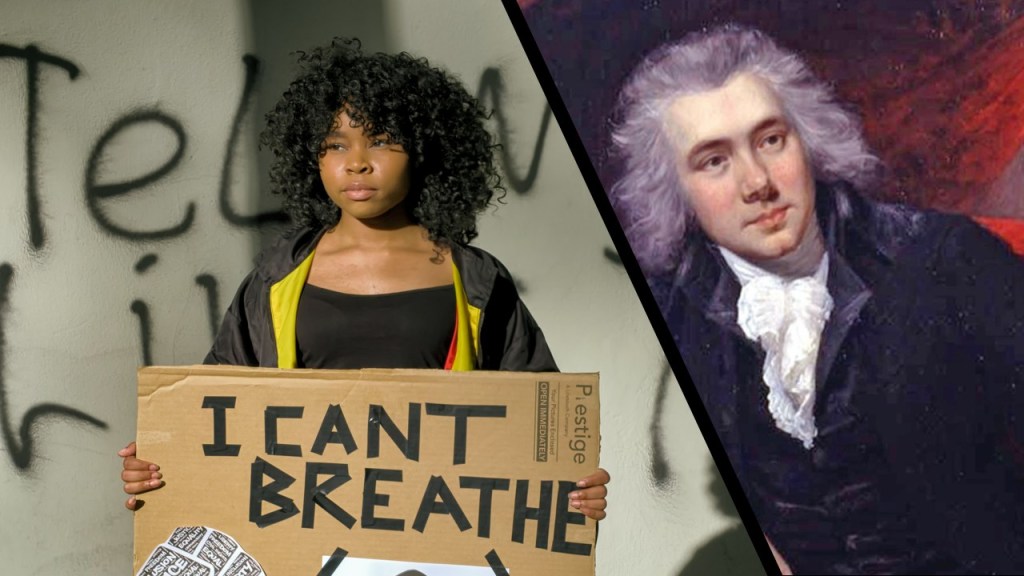
As Britain draws near to the 187th anniversary of the Slave Emancipation Act, (though albeit after a period of years), we must not forget the events that let “freedom” reign on the enslaved Africans and their descedents in the British Empire. If we are to take Coupland’s way of abolition to heart, we would be led to believe that Wilberforce and co freed the slaves of their own goodwill. The same Professor Reginald Coupland who lead the way in documenting abolition as a good part of British history propelled by the humanitarian good intentions of the British. That after centuries of lucrative profits from the sugar economy, the British elite suddenly had a change of heart.
What the Wilberforce narrative misses out is how Black people in Britain and the British Empire did not sit idly by for centuries waiting to be freed. In Insurgent Empire Prof. Priyamvada Gopal talks about how the African-American ex-slave and abolitionist Frederick Douglass discussed the abolition movements in the then British West Indies in an address he made in New York in 1857. He pays homage to British abolitionists, which also included Black British activists like Olaudah Equiano. His autobiography (1789) brought the movement into the public eye. There was also Mary Prince, the first Black woman to publish an autobiography in England – a detailed account on her experiences of slavery in the [British] Caribbean.

Published in 1831, The History of Mary Prince lit a fire under the anti-slavery movement in the run up to the 1833 Slave Emancipation Act. Moreover, Ottobah Cugoano, a close friend of Equiano, who together worked in ‘Sons of Africa’ which was a Black abolitionist collective. Cugoano’s Narrative of the Enslavement of a Native of Africa was published in 1787 retelling his abduction from his home in what today is Ghana, and his then enslavement and subjugation in Grenada. His Narrative was also the first public demand for the total abolition by an African in Britain.
It’s pertinent to consider Black political expression in relation to the guerrilla Black Lives Matter movement, which is simply another example of Black seemingly “radical” ideas. Whilst first instigated in response to the aquittal of George Zimmerman in July 2013 after he murdered Trayvon Martin, this movement saw a resurgence in the aftermath of the recent murders of George Floyd, Breonna Taylor and other victims of American police forces. It could also be argued to encompass issues in the UK like Black deaths in police custody, whitewashed curricula and The Windrush Scandal, case studies on how Black Lives Matter is not just a US problem.
It shows how it is also a British problem. Tying back to the Wilberforce narrative, it’s telling me that we cannot wait or rely on the elite establishment to do the right thing. That whilst now, it is not Black against white but more positively, anti-racists vs the rest, I am also of the mind that as Black people we are tired of waiting for our white colleagues to educate themselves. The looming anniversary makes me question what freedom is and what race equity / equality looks like, as we are breaking new ground.
That whilst the abolition movement lasted for fifty years, there was centuries before that of slave resistance on the slave ships and on the plantations themselves. The concept of freedom makes me raise eyebrows because of what the abolition movement had to sacrifice in order to get that legislation passed. In order to get the slave-owning class to agree, in the final moments of Britain’s slave-owning saga, for a moment the abolitionists had to acknowledge slaves as property. They had to say yes to Parliament compensating the slave-owners to a sum of £20m (£17bn today), loved by men like Wilberforce’s contemporary plantocrat George Hibbert. For true equality for Black people globally, what will the establishment make Joe and Jane Bloggs agree to? Will we have to sell our souls again for another piece of legislation? In all honesty, in concept I believe anti-racism only works if every single person holds every single person to the same moral and ethical standards.
In 1807, Parliament passed The Slave Trade Act, outlawing the trading of slaves in the British Empire but it was a further three decades until slavery was outlawed outright in Britain and the British colonies. The fact it took another thirty years to convince The House is a seperate issue to the logic of having two individual pieces of legislation of slavery and slave-trading.

Black Lives Matter… a slogan ringing through many of our minds. The protesters shout “no justice, no peace” but justice and peace are relative terms. To the enslaved Africans, not being slaves anymore was peace and justice. To those that marched at Selma, that was an end to those Jim Crow Laws. To me living in Britain, who has never been enslaved nor had his voting rights curtailed by state police at the polls, what does that look like? Was Mansfield’s landmark ruling against the slavers on the Zong Case justice? Did he dispense justice on the Somerset Case in 1772? That whilst James Somerset wasn’t repatriated to the Caribbean, the fact he was part of a society and system where he could have been, is an indictment in itself.
The Wilberforce characters of the 18th and 19th century shouted the loudest and historians wrote slave abolition narratives about them. BLM is about anti-Black discrimination; I sit cautiously now thinking in the years to come, will I be reading about Blacktivism or I will be reading whitewashed history books penned by another Professor Coupland saying how white people gave us justice?
Share this:


“Things you need to know about criminology”: A student perspective – Natalie Humphrey, 1st Year student

We are all living in very strange times, not sure when life will return to normal...but if you're thinking about studying criminology, here is some advice from those best placed to know!

The most important module to my understanding of criminology is: At the beginning of the year I believed the True Crime module to be the most important in understanding why crimes are caused. However, I quickly learned that these are not always the best source of information! The Science module is the basis of Criminology in the first year, laying down where it emerged, with Lombroso and Bertillon. I believe these figures are important to understand to grasp criminology.


The academic criminology book you must read:
The SAGE dictionary of Criminology has helped me with the basics of the subject. If there was something I became stuck on, this book would usually have an explanation for it. It also has examples which make it much easier to apply

The academic journal article you must read:
Attitudes towards the use of Racial/Ethical Profiling to Prevent Crime and Terrorism, by Johnson, D et al.(2011)
I came across this article when researching my Independant Project on racial stereotyping. It goes into the systematic racism that black people face and how disproportionate racism truly is. With more recently, the George Floyd case, this is still a very prominent article that is true to date

The criminology documentary you must watch:
I am a lover of many true crime documentaries and am always first to watch the new one that has been added to Netflix! The famous ones, such as Ted Bundy’s confession tapes, are fascinating to me, Bundy especially. However, there are many injustices that need to be addressed, not just the notorious serial killers. Jeffrey Epstein’s new documentary is very important in understanding sexual abuse that happened to over 200 underage girls. Athlete A also shows the sexual abuse of underage girls who were part of USA gymnastics.

The most important criminologist you must read:
Becker stood out to me this year as a very important figure. Understanding how young people are so heavily influenced by the labels people and society give, so much so it can shape their lives. Even older people can be easily labelled. This was quite surprising to me at the beginning of my studies.

Something criminological that fascinates me:
DNA and fingerprinting are fascinating to me. I find the science behind the discovery of what occurred at a crime scene and how they unpick it very interesting. This is definitely something I would like to study further.

The most surprising thing I know about criminology is:
It is a much wider subject than I first thought, it involves so much more than you could imagine. It questions everything in society.

The most important thing I've learnt from studying criminology is:
I have learned how unjust our criminal justice system is and how much, we as individuals, stereotype every person we meet. I’ve become more aware of this and have a better understanding of what needs to change.

The most pressing criminological problem facing society is:
Racism is a massive problem today. The racism black people face, especially in the US, is hard to understand as a white woman, but difficult to even contemplate people are treated in such ways. George Floyd, as I mentioned before, was killed because of his race. Problems like this would not happen to a white male, especially when his alleged crime was not violent. Young black men are labelled by the media to be seen as a thug and dangerous, causing many to be assumed of acts they just would not commit. Jane Elliott’s experiment on racism and eye colour from the 1970s is still a lesson that needs to be learned today!

When family and friends ask, I tell them criminology is:
Its more than it seems. Most just think it's about crime, which yes it is, but there is so much more to it. It is not one subject, it is so many put together. Science, psychology, sociology for example.

Share this:


Zombie Apocalypse

In post-war cinema, movies became part of political propaganda, especially when the creators did not want to tackle directly on a particular issue.* The use of metaphors and euphemisms became part of the story telling especially when the creators tried to avoid strong opposition from censors and political groups. This allowed social commentary to be made under the nose of “puritan” critics! Visual semiotics in modern cinema revealed a new reality in social symbolism.
One of those symbolisms was the living dead, later known as zombies! Zombies appear on the screens in the late 40s and 50s but predominately appear with the name in the 70s. The critics show in their representation of apathetic citizens who are not alert to the dangers of communism. Originally the zombie and the alien body-snatcher became metaphors of the red danger in the US at the time of McCarthyism. The fear of communist expansion was fertile ground to play with public fears. It became evident that a good citizen in order to avoid zombification has to take up arms and resist the menace. Inaction is accessory to the crime of overthrowing the social order.
As the paranoia leading to the red danger subsided, the zombie metaphor began to lose it potency and it become a cult population for those who love watching “B-movies.” In the 80s and 90s, zombie movies became aligned with the impeding doom of the millennium and technological bug that allegedly was coming to wipe out civilisation as we know it.
In the new century, zombie became a representation of those who succumb to technology and become its blind users. Generations Y and Z were accused of spending more time than before on game consoles, surfing the web and becoming “couch potatoes.” The gamers who binge on games for days, losing all other engagements with life until the game is completed. The motionless body of the gamer sitting in the same spot, non-engaging in conversation, was likened to the brainless zombie who slowly moves in space with no volition and conscience.
More recently, the zombie movie genre promoted the idea of a global medical pandemic, mostly caused by a virus that mutates people and turn them into flesh eating abominations! The virus breakout of the zombie disease became so convincing that a concerned member of the public back in 2011 asked Leicester City Council about their preparation in case of an invasion. Of course, at the time, cultural sociologists argued how zombies are a representation of “the other” in terms of race, nationality, and of course gender. Whilst others saw them as a representation of end of days, an eschatological message that bring an end to life as we know it.
Therefore, in the situation of Covid-19 the contagion of the potent virus that can kill some whilst others carry it without even realising it, brings to the surface the zombie fears Hollywood warn us about. In a recent survey a third of US believe that the virus was created in a lab, and whilst most people according to WHO acknowledge the seriousness of the pandemic there are those who question its existence. With opinions divided about the causes of covid19, life in 2020 appears to be a prequel to a post-apocalyptic reality.
Back in zombie movies and we are coming out of a lockdown when cities and towns feel deserted like 28 Days Later, people came out with protective masks like in Resident Evil and became frightened of the invisible threat like in every movie in the genre. Back in 2011, we laughed at the question “how ready are we for a zombie apocalypse?” Maybe if we asked is there a likelihood for a pandemic we could have planned and prepared for now, slightly better. There are great lessons to be learned here and possibly we can establish that when we are looking at healthcare and services, we cannot do more with less! Just whatever what you do, do not take lessons from Hollywood!
Until the next time!
*At this stage, I would like to apologise to my younger colleague and blog comrade @treventoursu who is far more knowledgeable than myself on movies!


