
Home » Criminology (Page 36)
Category Archives: Criminology

How I became an evil man
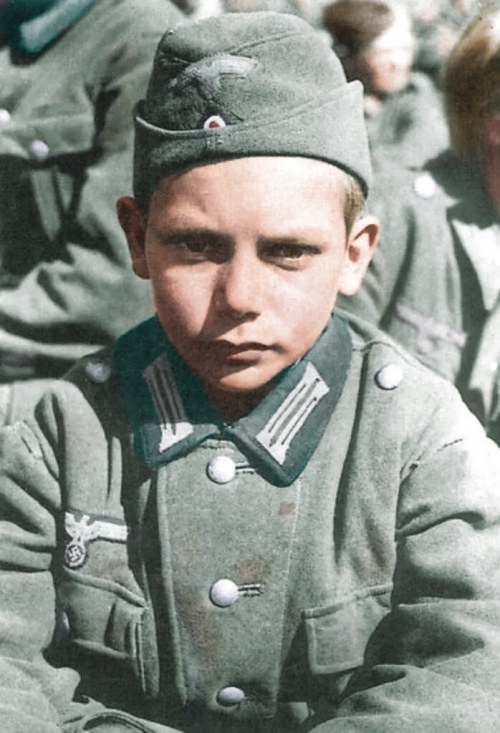
My love of poetry came in my sleep like a dream, a fever I could not escape and in little hours of the day I would read some poetry from different people who voice the volume of their emotions with words. In one of those poems by Elleni Vakalo How he became a bad man, she introduced me to a new understanding of criminological thinking. The idea of consequences, that lead a seemingly good person to become bad, without the usual motivational factors, other than fear. This was the main catalyst that became the source of this man’s turn to the bad.
This almost surrealistic description of criminal motivation has since fascinated me. It is incredibly focused, devoid of social motivations and personal blame. In fact, it demonstrates a social cognition that once activated is powerful enough to lead a seemingly decent person to behave in uncharacteristic moves of violence. This interesting perspective was forged during the war and the post war turmoil experienced. Like Camus, the act of evil is presented as a matter of fact and the product of thoughts that are originally innocent and even non-threatening.
The realisation in this way of thinking, is not the normalisation of violence, but the simplicity that violence in innate to everyone. The person who commits it, is not born for it, does not carry an elaborate personal story or trauma and has no personal compulsion to do it. In some ways, this violence is more terrifying, as criminality can be the product of any person without any significant predispositions, an everyday occurrence that can happen any time.
The couple that will meet, fall in love, cohabit, and get married, starting a family, follow all the normal everyday stages that millions of people follow or feel socially obliged to follow. In no part of this process do they discuss how he will control her, demean her, call her names, slap her, hit her or kick her. There is no plan or discussion of how terrified she will become, socially isolated and humiliated. At no point in the planning, will she be thinking of ways to exit their home, access helplines or spend a day in court. It happens, as a product of small thoughts and expressed emotions, that convert into micro aggressions, that become overt hostility, that leads to violence. No significant changes, just a series of events that lead to a prolonged suffering.
In some way, this matter of fact violence explains the confusion the victims feel, trapped in a relationship that they cannot recognise as abusive, because all other parts fall under the normality of everyday life. Of course, in these situations, emotion plays a key role and in a way that rearranges logic and reason. We are driven by emotion and if we are to leave criminological theory for a minute a series of decisions, we will make daily take a journey from logic to emotions and back.
This emotional change, the manifestation of thoughts is not always criminal nor destructive. The parents who are willing to fight an entire medical profession so that their newborn has a fighting chance are armed with emotion. Many stories come to mind of those who owe their lives to their determination of their parents who fought logic and against the odds, fought to keep them alive. Friends and partners of people who have been written off by the criminal justice system that assessed them as high risk for society and stuck with them, holding on to emotion as logic departs.
In Criminology, we talk about facts and figures, we consider theories and situations, but above all as a social science we recognise that we deal with people; people without emotions do not exist. So how do you/how do I become a bad man? Simple…the same way you are/I am a good man.
This is the poem by Eleni Vakalo, with my painful translation:
How He Became A Bad Man

I will tell you how it happened
In that order
A good little man met on his way
a battered man
the man was so close from him laying
he felt sad for him
He was so sad
That he became frightened
Before approaching him to bend down to
help him, he thought better
“What do you want, what are you looking for”
Someone else will be found by so many around here,
to assist this poor soul
And actually
I have never seen him
And because he was scared
So he thought
Would he not be guilty, after all no one is hit without being guilty?
And they did him good since he wanted to play with the nobles
So he started as well
To hit him
Beginning of the fairy tale
Good morning
Share this:


Parole in Lockdown

It’s a sad fact of life in and after lockdown that everything is a bit rubbish. We have called groups of friends a few times to chat via Zoom. It’s nice to see everyone but the conversation doesn’t flow. You can’t pick up the cues to detect who wants to speak next and if everyone talks at once you can’t hear anything. Zoom quizzes are fun, but, for the same reasons, they lack the banter of a real pub quiz and are therefore focussed and functional. A couple of times we have sat down as a family to watch streamed theatre performances. They were very good but it’s not the same as a night at the theatre and, without the atmosphere of a live performance, you might as well watch a TV drama which has been written for the medium through which it is presented. Things which were once simple are now complicated – you need an appointment to go to the tip for heaven’s sake! And while Peter Crouch: Save Our Summer is quite amusing, it is no substitute for the live international football that the Euros were promising.
On 23rd March 2020, the Parole Board made the decision to postpone all face to face hearings with immediate effect. The decision was inevitable – prisons had closed their gates to visitors and it was no longer possible for members and witnesses to travel the country for hearings. A couple of weeks of frenzied activity followed as cases were reviewed. Some were deferred, some were decided on the papers, others were converted to telephone or video hearings. Since then, I have participated in 20 remote Parole hearings, all conducted by Skype / telephone. So, has the Parole process, like so many other things, become a bit rubbish?
The simple answer to that is, surprisingly, no. Remote technology has been available to the Parole Board since I was appointed ten years ago. A new “Parole Hub” had just been established and its virtues were extolled at my initial training. The idea was that the panel would convene in a suite in London while the prisoner and witnesses would join via video link. It was to be the future. In reality, hub hearings never took off in the way that was hoped. While the Parole Hub has been running continuously, only a few prisons have the necessary technology. Most cases were considered too complex to risk making a decision without seeing the prisoner. Any suggestions of learning difficulties, mental health problems, serious or unusual offending meant that cases were deemed unsuitable to be heard remotely. Despite expressing a willingness to conduct hub hearings, I have only done two in ten years.
All that changed on 23rd March. If we had deferred every “complex” case, we would have a massive backlog by now. Instead, after the initial confusion of the first couple of weeks, the Parole system has adjusted. We are now hearing just as many cases as we would have expected in normal times and the backlog is reducing rather than increasing. Telephone hearings are by no means perfect. Sometimes the line crackles and you have to ask people to repeat themselves. Sometimes participants disappear altogether. In one of my hearings, the chair vanished for 10 minutes but after a few frantic e-mails he was able to re-join. Sometimes witnesses don’t pick up the non-verbal cues that they have answered the question and ramble on for longer than they may otherwise. As a result, remote hearings tend to take slightly longer than face to face hearings.
But there are advantages too. In my experience, telephone hearings start on time – everyone logs on when they are supposed to, no one gets stuck in traffic. From a personal point of view, I can wear what I like, I can get up and stretch, I can drink coffee and eat snacks during the hearing, all without looking unprofessional. Hearings may take a little longer but I don’t have a long drive home afterwards, so they are less tiring. If one of my hearings is cancelled, it is relatively easy to find another one to take its place because I’m no longer restricted by geography – I can pick up a vacancy anywhere in the country. And remote hearings cost the tax payer a lot less in travel expenses and hotel costs. As long as solicitors are able to consult with their clients by telephone prior to hearings, they are able to represent their interests effectively. Several of my remote hearings have involved vulnerable prisoners, with learning difficulties, mental health problems, physical health problems and dementia. Prior to 23rd March, none of these would have been considered for remote hearings but in most cases, despite these challenges, the prisoners were able to participate just as effectively as they would have been in face to face hearings.
The crucial issue, however, is whether the quality of our decisions is affected by our new way of working. That remains to be seen. We will have to wait for the statistics to see whether we are more risk averse and reluctant to release from remote hearings. Time will tell whether serious further offences by prisoners on Parole increase. In theory, the fact that we don’t know what the prisoners we are dealing with look like, may help to reduce unconscious bias and make our decisions fairer. It is very difficult to tell whether someone is lying to you, whether you can see them or not. Not being able to see the “whites of their eyes” is unlikely to make much difference to whether or not we are fooled by prisoners who present themselves well but have made little genuine change to the risk they present.
So remote Parole hearings are probably here to stay. While face to face hearings will return for the most complex and vulnerable prisoners, the majority will continue on the telephone or video link. COVID-19 has forced technological change on the Board in a way that the Parole Hub did not. This may be a good thing or it may not – we will have to wait and see.
Share this:


BLM will get “Wilberforced” into history if it’s not careful
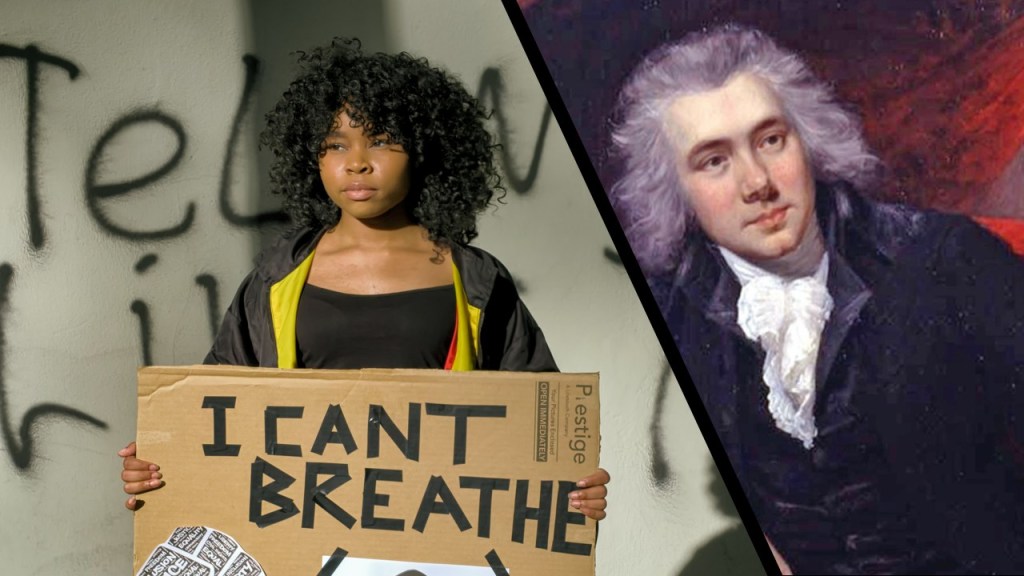
As Britain draws near to the 187th anniversary of the Slave Emancipation Act, (though albeit after a period of years), we must not forget the events that let “freedom” reign on the enslaved Africans and their descedents in the British Empire. If we are to take Coupland’s way of abolition to heart, we would be led to believe that Wilberforce and co freed the slaves of their own goodwill. The same Professor Reginald Coupland who lead the way in documenting abolition as a good part of British history propelled by the humanitarian good intentions of the British. That after centuries of lucrative profits from the sugar economy, the British elite suddenly had a change of heart.
What the Wilberforce narrative misses out is how Black people in Britain and the British Empire did not sit idly by for centuries waiting to be freed. In Insurgent Empire Prof. Priyamvada Gopal talks about how the African-American ex-slave and abolitionist Frederick Douglass discussed the abolition movements in the then British West Indies in an address he made in New York in 1857. He pays homage to British abolitionists, which also included Black British activists like Olaudah Equiano. His autobiography (1789) brought the movement into the public eye. There was also Mary Prince, the first Black woman to publish an autobiography in England – a detailed account on her experiences of slavery in the [British] Caribbean.

Published in 1831, The History of Mary Prince lit a fire under the anti-slavery movement in the run up to the 1833 Slave Emancipation Act. Moreover, Ottobah Cugoano, a close friend of Equiano, who together worked in ‘Sons of Africa’ which was a Black abolitionist collective. Cugoano’s Narrative of the Enslavement of a Native of Africa was published in 1787 retelling his abduction from his home in what today is Ghana, and his then enslavement and subjugation in Grenada. His Narrative was also the first public demand for the total abolition by an African in Britain.
It’s pertinent to consider Black political expression in relation to the guerrilla Black Lives Matter movement, which is simply another example of Black seemingly “radical” ideas. Whilst first instigated in response to the aquittal of George Zimmerman in July 2013 after he murdered Trayvon Martin, this movement saw a resurgence in the aftermath of the recent murders of George Floyd, Breonna Taylor and other victims of American police forces. It could also be argued to encompass issues in the UK like Black deaths in police custody, whitewashed curricula and The Windrush Scandal, case studies on how Black Lives Matter is not just a US problem.
It shows how it is also a British problem. Tying back to the Wilberforce narrative, it’s telling me that we cannot wait or rely on the elite establishment to do the right thing. That whilst now, it is not Black against white but more positively, anti-racists vs the rest, I am also of the mind that as Black people we are tired of waiting for our white colleagues to educate themselves. The looming anniversary makes me question what freedom is and what race equity / equality looks like, as we are breaking new ground.
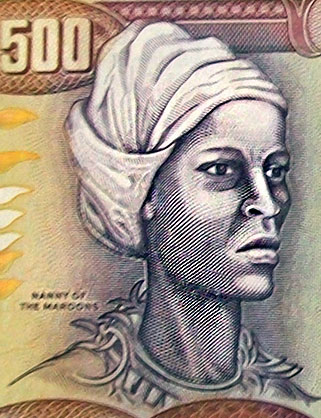
That whilst the abolition movement lasted for fifty years, there was centuries before that of slave resistance on the slave ships and on the plantations themselves. The concept of freedom makes me raise eyebrows because of what the abolition movement had to sacrifice in order to get that legislation passed. In order to get the slave-owning class to agree, in the final moments of Britain’s slave-owning saga, for a moment the abolitionists had to acknowledge slaves as property. They had to say yes to Parliament compensating the slave-owners to a sum of £20m (£17bn today), loved by men like Wilberforce’s contemporary plantocrat George Hibbert. For true equality for Black people globally, what will the establishment make Joe and Jane Bloggs agree to? Will we have to sell our souls again for another piece of legislation? In all honesty, in concept I believe anti-racism only works if every single person holds every single person to the same moral and ethical standards.
In 1807, Parliament passed The Slave Trade Act, outlawing the trading of slaves in the British Empire but it was a further three decades until slavery was outlawed outright in Britain and the British colonies. The fact it took another thirty years to convince The House is a seperate issue to the logic of having two individual pieces of legislation of slavery and slave-trading.

Black Lives Matter… a slogan ringing through many of our minds. The protesters shout “no justice, no peace” but justice and peace are relative terms. To the enslaved Africans, not being slaves anymore was peace and justice. To those that marched at Selma, that was an end to those Jim Crow Laws. To me living in Britain, who has never been enslaved nor had his voting rights curtailed by state police at the polls, what does that look like? Was Mansfield’s landmark ruling against the slavers on the Zong Case justice? Did he dispense justice on the Somerset Case in 1772? That whilst James Somerset wasn’t repatriated to the Caribbean, the fact he was part of a society and system where he could have been, is an indictment in itself.
The Wilberforce characters of the 18th and 19th century shouted the loudest and historians wrote slave abolition narratives about them. BLM is about anti-Black discrimination; I sit cautiously now thinking in the years to come, will I be reading about Blacktivism or I will be reading whitewashed history books penned by another Professor Coupland saying how white people gave us justice?
Share this:


“Things you need to know about criminology”: A student perspective – Natalie Humphrey, 1st Year student

We are all living in very strange times, not sure when life will return to normal...but if you're thinking about studying criminology, here is some advice from those best placed to know!

The most important module to my understanding of criminology is: At the beginning of the year I believed the True Crime module to be the most important in understanding why crimes are caused. However, I quickly learned that these are not always the best source of information! The Science module is the basis of Criminology in the first year, laying down where it emerged, with Lombroso and Bertillon. I believe these figures are important to understand to grasp criminology.


The academic criminology book you must read:
The SAGE dictionary of Criminology has helped me with the basics of the subject. If there was something I became stuck on, this book would usually have an explanation for it. It also has examples which make it much easier to apply

The academic journal article you must read:
Attitudes towards the use of Racial/Ethical Profiling to Prevent Crime and Terrorism, by Johnson, D et al.(2011)
I came across this article when researching my Independant Project on racial stereotyping. It goes into the systematic racism that black people face and how disproportionate racism truly is. With more recently, the George Floyd case, this is still a very prominent article that is true to date

The criminology documentary you must watch:
I am a lover of many true crime documentaries and am always first to watch the new one that has been added to Netflix! The famous ones, such as Ted Bundy’s confession tapes, are fascinating to me, Bundy especially. However, there are many injustices that need to be addressed, not just the notorious serial killers. Jeffrey Epstein’s new documentary is very important in understanding sexual abuse that happened to over 200 underage girls. Athlete A also shows the sexual abuse of underage girls who were part of USA gymnastics.

The most important criminologist you must read:
Becker stood out to me this year as a very important figure. Understanding how young people are so heavily influenced by the labels people and society give, so much so it can shape their lives. Even older people can be easily labelled. This was quite surprising to me at the beginning of my studies.

Something criminological that fascinates me:
DNA and fingerprinting are fascinating to me. I find the science behind the discovery of what occurred at a crime scene and how they unpick it very interesting. This is definitely something I would like to study further.

The most surprising thing I know about criminology is:
It is a much wider subject than I first thought, it involves so much more than you could imagine. It questions everything in society.

The most important thing I've learnt from studying criminology is:
I have learned how unjust our criminal justice system is and how much, we as individuals, stereotype every person we meet. I’ve become more aware of this and have a better understanding of what needs to change.

The most pressing criminological problem facing society is:
Racism is a massive problem today. The racism black people face, especially in the US, is hard to understand as a white woman, but difficult to even contemplate people are treated in such ways. George Floyd, as I mentioned before, was killed because of his race. Problems like this would not happen to a white male, especially when his alleged crime was not violent. Young black men are labelled by the media to be seen as a thug and dangerous, causing many to be assumed of acts they just would not commit. Jane Elliott’s experiment on racism and eye colour from the 1970s is still a lesson that needs to be learned today!

When family and friends ask, I tell them criminology is:
Its more than it seems. Most just think it's about crime, which yes it is, but there is so much more to it. It is not one subject, it is so many put together. Science, psychology, sociology for example.

Share this:


Zombie Apocalypse

In post-war cinema, movies became part of political propaganda, especially when the creators did not want to tackle directly on a particular issue.* The use of metaphors and euphemisms became part of the story telling especially when the creators tried to avoid strong opposition from censors and political groups. This allowed social commentary to be made under the nose of “puritan” critics! Visual semiotics in modern cinema revealed a new reality in social symbolism.
One of those symbolisms was the living dead, later known as zombies! Zombies appear on the screens in the late 40s and 50s but predominately appear with the name in the 70s. The critics show in their representation of apathetic citizens who are not alert to the dangers of communism. Originally the zombie and the alien body-snatcher became metaphors of the red danger in the US at the time of McCarthyism. The fear of communist expansion was fertile ground to play with public fears. It became evident that a good citizen in order to avoid zombification has to take up arms and resist the menace. Inaction is accessory to the crime of overthrowing the social order.
As the paranoia leading to the red danger subsided, the zombie metaphor began to lose it potency and it become a cult population for those who love watching “B-movies.” In the 80s and 90s, zombie movies became aligned with the impeding doom of the millennium and technological bug that allegedly was coming to wipe out civilisation as we know it.
In the new century, zombie became a representation of those who succumb to technology and become its blind users. Generations Y and Z were accused of spending more time than before on game consoles, surfing the web and becoming “couch potatoes.” The gamers who binge on games for days, losing all other engagements with life until the game is completed. The motionless body of the gamer sitting in the same spot, non-engaging in conversation, was likened to the brainless zombie who slowly moves in space with no volition and conscience.
More recently, the zombie movie genre promoted the idea of a global medical pandemic, mostly caused by a virus that mutates people and turn them into flesh eating abominations! The virus breakout of the zombie disease became so convincing that a concerned member of the public back in 2011 asked Leicester City Council about their preparation in case of an invasion. Of course, at the time, cultural sociologists argued how zombies are a representation of “the other” in terms of race, nationality, and of course gender. Whilst others saw them as a representation of end of days, an eschatological message that bring an end to life as we know it.
Therefore, in the situation of Covid-19 the contagion of the potent virus that can kill some whilst others carry it without even realising it, brings to the surface the zombie fears Hollywood warn us about. In a recent survey a third of US believe that the virus was created in a lab, and whilst most people according to WHO acknowledge the seriousness of the pandemic there are those who question its existence. With opinions divided about the causes of covid19, life in 2020 appears to be a prequel to a post-apocalyptic reality.
Back in zombie movies and we are coming out of a lockdown when cities and towns feel deserted like 28 Days Later, people came out with protective masks like in Resident Evil and became frightened of the invisible threat like in every movie in the genre. Back in 2011, we laughed at the question “how ready are we for a zombie apocalypse?” Maybe if we asked is there a likelihood for a pandemic we could have planned and prepared for now, slightly better. There are great lessons to be learned here and possibly we can establish that when we are looking at healthcare and services, we cannot do more with less! Just whatever what you do, do not take lessons from Hollywood!
Until the next time!
*At this stage, I would like to apologise to my younger colleague and blog comrade @treventoursu who is far more knowledgeable than myself on movies!
Share this:


CONned by CONfederates #BlackenAsiaWithLove
I come from a town named after the French king who supported America’s independence struggle from Great Britain. A large statue of him sits in front of our old courthouse, across from the old town hall. The fleur-de-lis covering his robe was consequently adopted as the symbol of my city, as well as New Orleans and several other municipalities around our nation. I am from a county named after a slaveholding ‘founding father’, the nation’s third president, who was the governor of the Virginia territory that was split then to eventually create my ole Kentucky home.
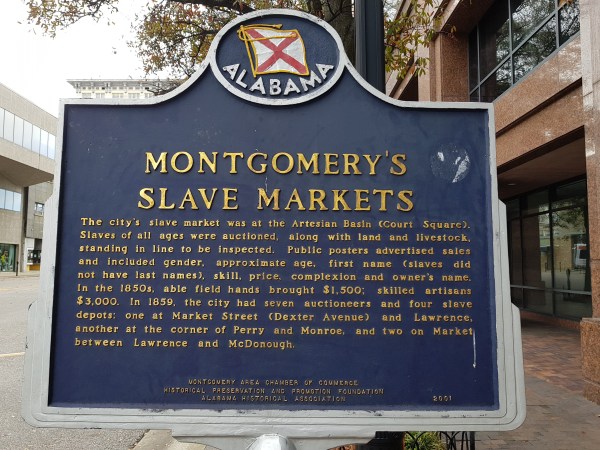
Thomas Jefferson drafted the Declaration of Independence at the same time as he was a prominent slave-owner. Our nation fought for nearly two centuries to (openly) recognize the long-term relationship Jefferson had with a teenage slave. Contemporary CONfederates & other zealots fought against recognizing their descendants.
Dixie Highway is one of the largest roads crisscrossing my city, and it’s even the best way to get to Fort Knox, where our nation used to hold its gold. There are other CONfederate activists who are venerated locally in bronze. I never had to “wish I was in Dixie.”I was born there.

Rosa Parks statue in downtown Montgomery, AL
Although the Sons of CONfederate Veterans resisted, my parents’ alma mater moved a 70-foot-tall CONfederate monument off its campus and out of the city. It wasn’t destroyed, but perhaps, hopefully, better contextualized.
There are umpteen items in my hometown named after President Zachary Taylor who was born into a prominent plantation-owning family. He held slaves during his short-lived term and danced all around the issue of slavery with his CONfederate chums.
Where my grandparents are from in Alabama, the Black high school is named after a CONfederate war general. Right now, the first white house of the CONfederacy sits smack in the middle of the seat of city, county, and state government.

“First White House of the Confederacy,” Montgomery, AL 2013.
History needs to be re-written to include all the people that made the history.
Share this:

Domestic Abuse Misinterpreted: Beyond the Scope of Violence
Background
The framework behind my dissertation arose from a lifelong unanswered question in my mind: “why is psychological and emotional abuse often overlooked in domestic abuse scenarios?” This question had formed in my precocious mind as a child, this was due to experiencing domestic abuse in the family home for many years and in many forms.
Early Stages of the Dissertation
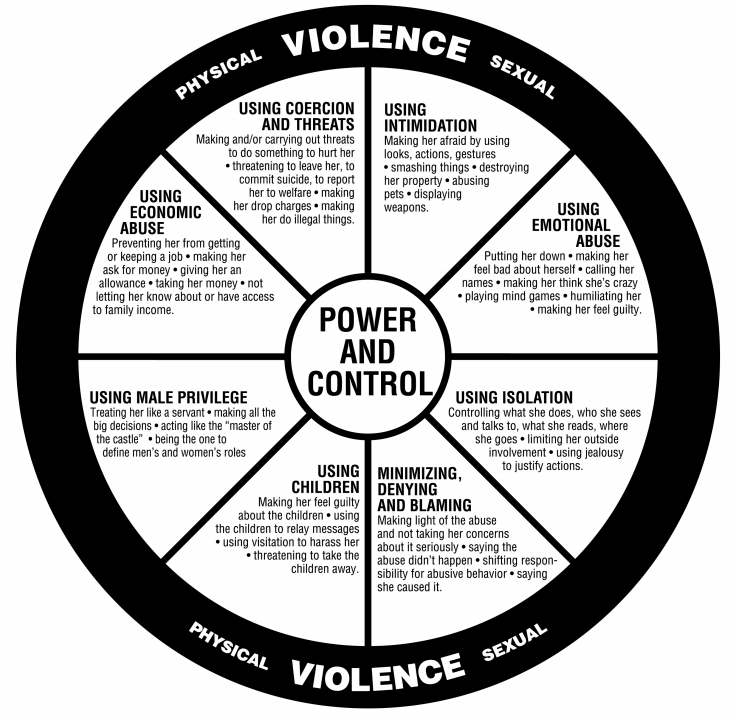
It was only when I began studying criminology at university that I unearthed many underlying questions relating to the abuse I suffered as a child and from watching my mother be psychically and mentally abused. I was understanding my experiences from an academic standpoint, as well as my peers’ experience of domestic abuse too. As a child, I had recognised that the verbal and psychological abuse was increasingly more detrimental on the victim’s mental wellbeing than the physical violence; the physical violence is a tactic used by abusers to install fear in the victim. In the early stages of my dissertation, I was gathering literature to aid my understanding on domestic abuse. I came across two essential books, one book was recommended by @paulaabowles, my dissertation supervisor: Scream Quietly or the Neighbours Will Hear (1979) by Erin Pizzey. This book provided great insight to the many aspects of domestic abuse from the memoires of Erin Pizzey who founded the first domestic abuse refugee in London 1971 known as, Chiswick Women’s Aid. The second book was: Education Groups for Men Who Batter: The Duluth Model (1993) by Pence and Paymar. This book aided my knowledge on the management of male abusers and how their abusive behaviour is explained by the using the visual theoretical framework known as, the Duluth Model; the Power and Control Wheel. I gathered more literature on domestic abuse and formed the backbone for my dissertation, it was time to self-reflect and establish my standpoint so that I could conduct my research as effectively and ethically.
The Research
This was the most important aspect of the dissertation; the most influential too. In my second-year studies, we were required to conduct research in a criminal justice agency to form a placement report; I chose a charitable organisation based in Northampton that provided support to female victims and offenders in the criminal justice system. For my dissertation, I chose to go back to the facility to conduct further research, this time my focus was on the detrimental effects experienced by female victims of domestic abuse.
Using a feminist standpoint alongside an autoethnographic method/ methodology, I was able to conduct primary research together with the participants of the study. I chose feminism as my standpoint due to the fundamental theoretical question centred in the social phenomenon of domestic abuse: gender inequality. I believe the feminist perspective was the most compatible and reliable standpoint to tackle my research with, it allowed room for self-reflection to identify my own biases and to recognise societal influences on how I interpret experiences and emotions. The standpoint’s counterpart – autoethnography – was employed so that I could actively insert myself into the research; this was supported by my research tool of observation participation and by recording qualitative data in a research diary. Over the course of nine weeks, I had formed trustworthy and respectful relationships with the participants, I had also encountered epiphanies and clarities regarding my own experiences of domestic abuse. Through using the research method observation participation, I was able to observe the body language and facial expressions of the participants alongside witnessing their emotions and participating in conversation. Collectively, my research methods enabled me to gather in-depth, first-hand accounts of the women’s experiences of domestic abuse. When writing the conclusion for my dissertation, I was able to establish that psychological and emotional abuse can be more detrimental to the victim than the physical violence itself. Interestingly, I had identified patterns and trends in the abuser’s behaviour and how it impacts the victim’s response; the victims tend to mimic their abusive partners traits e.g. anger and guilt.
I was able to conclude my dissertation with supporting evidence to credit my original question, through using personal experience and the experience of the wonderful women that participated in my research. Many of the women’s experiences highlighted in my dissertation research corresponded with the Duluth Model thesis embedded in my literature review. I was able to demonstrate how the elements of power and control in the abusive partner behaviour can adversely affect the victim; consequences of mental health issues, substance misuse and changes in victim’s lifestyle and behaviour. Overall, the experience was incredibly insightful and provided me with transferable interpersonal and analytical skills.
Share this:


Take a leap…it might just be worth it!
When I was asked to write a blog about doing research for my dissertation, I immediately went to https://thoughtsfromthecriminologyteam.blog/category/first-class-dissertation/ to read what others had written before me. Previous entries covered race and discrimination, homelessness, hate crime, and working with sex offenders, among other things; all good meaty stuff that is highly relevant to the study of criminology, and to society.
I knew I was taking a risk when I decided to mix it up and write a criminology dissertation that was based on historical crime and punishment, as there was the chance that it fell into neither camp. From a historian’s perspective, I wasn’t researching a primary source, per se, and from a criminologist’s perspective, would it have enough relevant criminological theory?
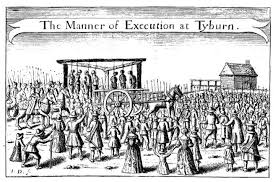
I just knew I wanted to do something to do with historical crime and punishment, but I didn’t know where to start. Eventually I came across two quotes that I thought were relevant to my subject area: ‘the rulers of eighteenth-century England cherished the death sentence’ (Hay, 1975:17), and; ‘a quasi-judicial role such as [the royal pardon] is not a suitable function for the executive’ (Travis, 2009:9). From these, my idea was firstly to examine who received the death penalty and why, and why some were pardoned while others were not. Secondly, when it came to pardoning, who had the power to pardon and what were the criteria used? I was also particularly interested in the political aspect of this.
What soon became obvious was that even 200 plus years ago, it was the same people committing crime as it is today: the working-class poor, the marginalised and the desperate. And just as today, when those with money, power and connections commit crime, it was not considered crime in the same way, and therefore, the punishment was not the same. I could see then, that I would be able to apply relevant criminological theory. I also needed to incorporate a fair bit of law and constitutional changes to the criminal justice system. As we were always being reminded that criminology is a ‘rendezvous’ subject that encompasses many other disciplines, this gave me the confidence to forge ahead!
I actually really enjoyed researching my dissertation, especially the case studies. After doing lots of research on the Old Bailey Online, I found 3 cases from 1789 which highlighted 3 different outcomes for the same crime, as a way of showing the criteria used for deciding who was pardoned and who was left to hang. I also examined several more recent death penalty cases from the 20th and 21st centuries, to show that the royal pardon is still an essential part of the criminal justice system, despite modernisations designed to replace it, like the introduction of the Criminal Cases Review Commission.
My advice to students in year 2 is: start thinking about your dissertation early! It took me a long, long time to decide what I wanted to research, and I researched a lot of stuff that I didn’t end up using. At one point I was so worried that I even talked to @paulaabowles about deferring my dissertation until next year! But I’m so glad I didn’t do that. I won’t lie to you, it is hard work and requires a lot of time and dedication, which is why it’s so important to pick something that interests you. In the end, though I still worried that it would be too ‘in the middle’ to please either camp, I thoroughly enjoyed doing this piece of work, and was quite sad when it was finished. To be rewarded with a First was beyond anything I could have hoped for, and I’d like to think that was due not only to my hard work, but also to the passion I had for the subject matter.
References:
Hay, D. (1975). Property, Authority and the Criminal Law. In: Hay, D., Linebaugh, J., Rule, J., Thompson, E. and Winslow, C. (Eds). Albion’s Fatal Tree: Crime and Society in Eighteenth-Century England. London: Verso. Pp. 17-63.
Travis, A. (2009). National: Royal Pardon: Legal Reform: I shouldn’t be able to make these decisions, says Straw (Guardian Homepages). The Guardian (London, England). P.9.
Share this:


Some lessons from the lockdown
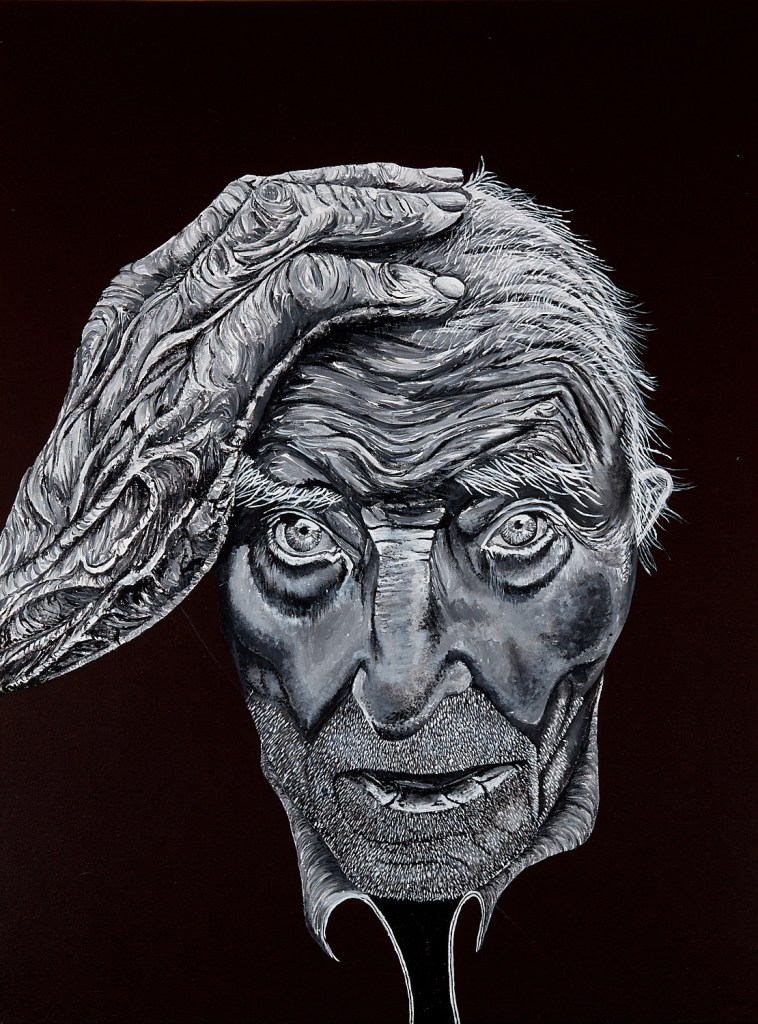
Koestler Arts (2019), Another Me: The Redwoods Centre (secure mental health unit), James Wood QC Silver Award for Portrait, 2019
In March 23, 2020, the UK went into lockdown. The advice given, albeit conflicting in parts, was clear. Do not leave your home unless absolutely necessary, banning all travel and social interactions. This unprecedented move forced people to isolate at home for a period, that for some people will come to an end, when the WHO announces the end of the pandemic. For the rest of us, the use of a face mask, sanitiser and even plastic gloves have become modern day accessories. The way the lockdown was imposed and the threat of a fine, police arrest if found outside one’s home sparked some people to liken the experience with that of detention and even imprisonment.
There was definite social isolation during the pandemic and there is some future work there to be done to uncover the impact it has had on mental health. Social distancing was a term added to our social lexicon and we discovered online meetings and working from home. Schools closed and parents/guardians became de facto teachers. In a previous blog entry, we talked about the issues with home schooling but suffice to say many of our friends and colleagues discovered the joys of teaching! On top of that a number of jobs that in the past were seeing as menial. Suddenly some of these jobs emerge as “key professions”
The first lesson therefore is:
Our renewed appreciation for those professions, that we assumed just did a job, that was easy or straightforward. As we shall be coming back eventually to a new normality, it is worth noting how easy it will be to assign any job as trivial or casual.
As online meetings became a new reality and working from home, the office space and the use of massive buildings with large communal areas seemed to remain closed. This is likely to have a future impact on the way business conduct themselves in the future.
Second lesson:
Given how many things had to be done now, does this mean that the multi occupancy office space will become redundant, pushing more work to be done from home. This will alter the way we divide space and work time.
During the early stages of the lockdown, some people asked for some reflection of the situation in relation to people’s experiences in prisons. The lockdown revealed the inequality of space. The reality is that for some families, space indicated how easy is to absorb the new social condition, whilst other families struggled. There is anecdotal information about an increase on mental health and stress caused from the intensive cohabitation. Several organisations raised the alarm that since the start of the lockdown there has been a surge in incidents of domestic violence and child abuse. The actual picture will become clearer of the impact the lockdown had on domestic violence in future years when comparisons can be drawn. None the less it reveals an important issue.
Third lesson:
The home is not always the safest place when dealing with a global pandemic. The inequality of space and the inequality in relationships revealed what need to be done in the future in order to safeguard. It also exposed the challenges working from home for those that have no space or infostructure to support it.
In the leading up to the lockdown many households of vulnerable people struggled to cope with family members shielding from the virus. These families revealed weaknesses in the welfare system and the support they needed in order to remain in lockdown. Originally the lack of support was the main issue, but as the lockdown continued more complex issues emerged, including the financial difficulties and the poverty as real factors putting families at risk.
Fourth lesson:
Risk is a wider concern that goes beyond personal and family issues. The lockdown exposed social inequality, poverty, housing as factors that increase the vulnerability of people. The current data on Covid-19 fatalities reveal a racial dimension which cannot longer be ignored.
During the lockdown, the world celebrated Easter and commemorated Mayday, with very little interaction whilst observing social distancing. At the end of May the world watched a man gasping for breath that died in police custody. This was one of the many times the term police brutality has related to the dead of another black life. People took to the streets, protested and toppled a couple of statues of racists and opened a conversation about race relations.
Fifth lesson:
People may be in lockdown, but they can still express how they feel.
So, whilst the lockdown restrictions are easing and despite having some measures for the time being, we are stepping into a new social reality. On the positive side, a community spirit came to the surface, with many showing solidarity to those next to them, taking social issues to heart and more people talked of being allies to their fellow man. It seems that the state was successful to impose measures that forced people indoors that borderline in totalitarianism, but people did accept them, only as a gesture of goodwill. This is the greatest lesson of them all in lockdown; maybe people are out of sight, appear to be compliant in general but they are still watching, taking note and think of what is happening. What will happen next is everyone’s guess.
Share this:


Mobile-impaired drivers. #BlackenAsiaWithLove
Mobile-impaired drivers.
So, try to imagine a man driving a motorbike, a 5-year-old standing on the tiny platform between him and the handlebars, a tall toddler standing behind him on the seat, clinging round his neck, and a woman sitting side-saddle behind the baby. Both adults are bent over scrolling on the phone. In the middle of traffic. I see this every day, but a few days back, I saw a toddler playing peek-a-boo with his dad while he was driving. Interestingly, as he struggled to move the baby’s hands away, the man never shifted his eyes away from his phone.
Between the two adults described above, nobody had one good eye on the road. Said plainly, the man was impaired; he drove with one eye, one hand. Look around, so many are. All I could do was laugh. I didn’t find the spectacle funny. I chuckled to myself, mostly about my own helplessness. I feel like there’s nothing I can do about the risk they face, or the danger they place on others. Their kids are at a severe disadvantage, being precociously exposed to such mindlessness. Many of the motorists around here are similarly disabled. It’s a common affliction.

What if the baby decides it’s not time to stop peek-a-boo, as babies do, despite the man using his hand to wave him away in frustration? What if they hit a bump – because he wasn’t looking – and either child slipped? Or, what if some driver is speeds towards you in the exact same scenario? Or, what if either dropped their phone? We know that there is a strong impulse to reach for a falling object – even in traffic. Imagine dropping something that holds great value for you. Would instinct kick in? Could it be worse now since heavy social media usage paves neural pathways of impulsive behaviours?
As I move around on the streets, it’s as if most people have only one hand and one eye on the road. It’s nothing to see someone driving a motorcycle holding their phones to their ear, enthralled in conversation, just one hand guiding their vehicle through torrid traffic and very bumpy roads. Potholes and sewage covers, for example, are regularly too deep to tackle with two wheels, so drivers usually swiftly go around. A quick swerve. What’s more, it’s the normal thing to carry one’s entire family along on these adventure rides. Yet, even with two-to-three generations in tow, I’ve seen drivers driving around with their phone in one hand, dialing, texting or scrolling, lifted so they could see it.
I can count on one hand the number of moto-taxi drivers I’ve had with any hands-free brace to hold the phone as it displays our route. Some, at least, leave their devices in their pockets, and only check-in at stoplights. (I should start mentioning this in my ratings – not just stars.)

Devices? Mobile phones sold in this part of the world have two SIM card slots, but it’s also quite common to see people jostling two phones at a time. Perhaps one for private use, and the other professional, and so forth. It suggests a deeply entrenched mobile phone culture here, now.
In any public space, on any form of transportation, no matter what’s going on, you can look in any given direction and see most people glued to their phones. Alone, with friends, families, co-workers all are online. Face-to-face is never enough. The most distressing is seeing adults snub kids for their phones – or worse get them hooked early and stuff device in their hands, too. What’s a kid supposed to think if mommy and daddy drive while mobile impaired? Yes, kids, it’s not gone unnoticed that parents are spending more time with their phones than their own kids. Even during a commute. Ah, riding with my folks used to be such good quality time.
Smartphones are powerful. So, it comes to no surprise that folks would take to squeezing in every free moment to scroll through social media. If folks aren’t handling it directly, their phones are sitting right there in front of them, the perfect escape for even a moment’s silence, uncertainty, doubt, loneliness, longing, or even curiosity. The mobile provides it all. It has disabled our ability to focus, even when operating heavy machinery.
Why not take time during that long drive to pick and jive with friends on the net? What’s a matter with liking a few of my friends’ Facebook posts at the traffic light? It’s not like my kids have anything interesting to say. I can respond to a few work messages by the time I get to where I’m going; who cares if I slow-up traffic. Oh, let me stop right here, in the middle of the road, to finish this text. This has to be done now; I am unable to refuse. While cruising along, why not just let my friends know that I’m just a few minutes away (even if I’ve already shared my live locations and texted them just as I set off on my way).
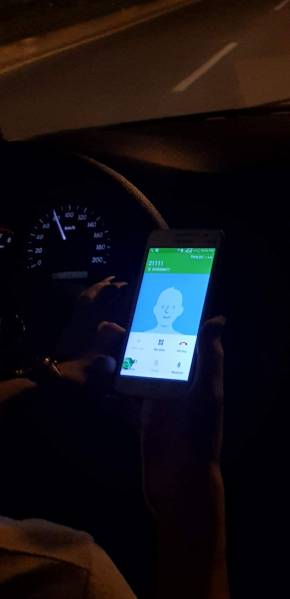
Though cognitively we know that we tend to overestimate the things that we can divide our attention between. Vehicles are keenly designed to allow drivers to focus on the road ahead, having a forward-facing display and any needed amenity at one’s fingertips. On two wheels, acceleration and brakes, blinkers and even widely used horns are all there at drivers’ fingertips. Cars compete for the easiest to reach radio, seat, and climate controls. In my last car, I could even do all these things and more from my steering wheel. Yet here, I even seen the biggest, most fully equipped cars being driven around by mobile disabled drivers. These brand-spanking new vehicles come with hands-free technology, but it’s a miss to me as to why there’s no widespread usage of these. Plus, no moto-makers have designed these two-wheelers for one-handed, one-eyed driving.

 Thoughts from the criminology team