
Home » Criminology (Page 35)
Category Archives: Criminology

Black British history does not just mean England

In July 2020 I was fortunate enough to be part of a project with The Guardian newspaper on fifty varied young, Black, British perspectives on Black Lives Matter – fifty Black Britons from across the country – from the Shetland Islands to Sunderland; from Northampton to Norfolk; from London to Glasgow and Edinburgh. The inclusion of Scotland in particularly, fascinates me, because I know if you ever call the Scots, English (or British), many will have your head. That whilst Scotland is part of Britain, it has its own culture and history, including a Black history. Though, to this day I have not been to Scotland and all the Scots I have met have been white. I know the first time I meet and hear a Black person with a Scottish accent will be a special day indeed.
When people talk about Scottish history, it is often one of fighting off English invaders. I think of films such as Outlaw King or even the not-so-historically-accurate Braveheart. Moreover, depictions of highland culture in Outlander, including the Jacobite cause being quashed at Culloden in 1745. However, whilst Scotland was oppressed by the English (British), they were also, like the English, complicit in slavery. Today, Glasgow is called the Merchant City, for the tobacco merchants. If you had a tobacco addiction in the 1700s (puffing away), your smoking habit was made in Glasgow and it was tainted with the violence of slave plantations across the Atlantic.
And yet, whilst Scotland was complicit in the Slave Trade, Black Scottish history goes back to Roman times. The Afro-Romans in Scotland “defending Hadrian’s wall in the third century AD was a ‘division of Moors’ (numerous Maurorum Aurelianorum) named after Marcus Aurelius or a later emperor known officially by the same name” (Fryer, 1984: 1). Today there is a small but thriving population of Black people in Scotland, one of Glasgow’s most famous being Ugandan-born poet Tawona Sithole. His poem ‘Good English’ resonates with me as a Black Briton of Caribbean heritage. And I expect it would resonate with many Black Scottish youth coming through now too, also at the mercy of micro-aggressive behaviours from the white population including the constant where are you froms?
In Ireland, additionally, there are communities of Irish people of African and Caribbean heritage. At University, a white Irish friend spoke to me about the number of Black African clergy in the Irish Catholic church. However, screen depictions of the Irish have often perpetuated stereotypes of alcoholism and violence. In screen media, both Northern Ireland and the Republic, are represented as white countries, with their own histories of conflict with English colonisers, including the famines, the Easter Risings (1916) and the thirty-year conflict known as The Troubles.
Furthermore, like the Scottish, the Irish have their own connections with slavery, especially as overseers on the plantations. Whilst the myth of Irish slaves has been debunked many times, there is a history of indentured labour on islands like Jamaica and Barbados. Black and Irish are often seen as juxtaposed but they needn’t be. Historian Peter Fryer talks about an African presence in the British isles “some 400 or 500 years after the Romans left” (Fryer, 1984: 2) and “an ancient Irish chronicle records that ‘blue men’ (fir gorma) were seized by Vikings in Morocco in the ninth century and carried off to Ireland, where they stayed for a long time” (ibis).
Whilst both Northern Ireland and the Republic are incredibly white nations now, especially in the rural areas, there is still a Black Irish history worthy of scholarship.
Black Irish history is something I hope to see more of in academia. SOAS academic Emma Dabiri growing up in 1980s inner-city Dublin is a start with her text Don’t Touch My Hair and quite an act to follow in the mainstream. Yet, there has not been a significant Black population in Ireland for long. Following the previous comment about African immigrant clergy in Ireland, however, many of the mixed-race children Dabiri came into contact with as a mixed-race Irish girl, in the 1980s were institutionalised:
“They were often the ‘illegitimate offspring of Irish women and African students. Not to put too fine a point on it, unmarried mothers were generally, in Ireland, treated like scum. Add the disgrace of a black child and, sure, you couldn’t really sink much lower.”
DABiri, 2018: 5
The arrival of mixed-race Black-racialised children in Ireland that grew up with single white mothers holds a similar sentiment to one case study in Wales. There were more Black people in Britain in 1944 than in 1948 (before the arrival of the Empire Windrush) – simply because of the influx of African-American soldiers, as “on the eve of D-Day, in June 1944, there was a hundred and thirty thousand African-American GIs, both army and air force, stationed in Britain” (Olusoga, 2017: 467).
In 1942, the segregated United States sent a racially-segreated force to Britain. During the war years, Black American soldiers were also deployed to Wales. In the last episode of Black and British, ‘Homecoming’, Prof. David Olusoga meets with members of a Welsh village called Abersychan, including the descendants that came out of the unions between the Black men and white women – unknowingly participating in a social experiment.
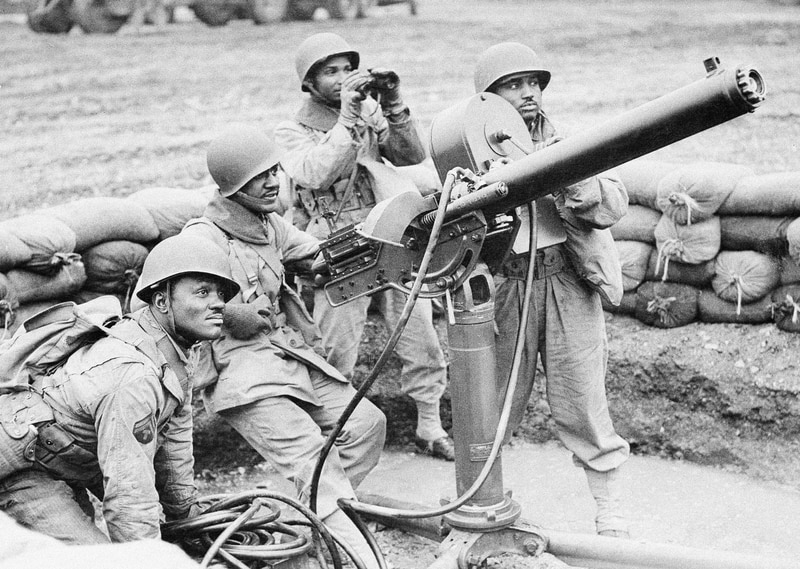
What the experiences of Black and mixed-race Black-racialised communities in Ireland, Scotland and Wales show us, is that Britain is not post-racial and that race matters, both in 2020 and during the war years.
And more importantly, to forget the history we think we know, as seemingly white villages like Abersychan, have diverse histories worth talking and shouting about.
References
Dabiri, E (2018). Don’t Touch My Hair. London: Allen Lane
Fryer, P (1984/2018). Staying Power. London: Pluto
Olusoga, D (2017). Black and British. London: Pan Books.
Share this:


Road trip
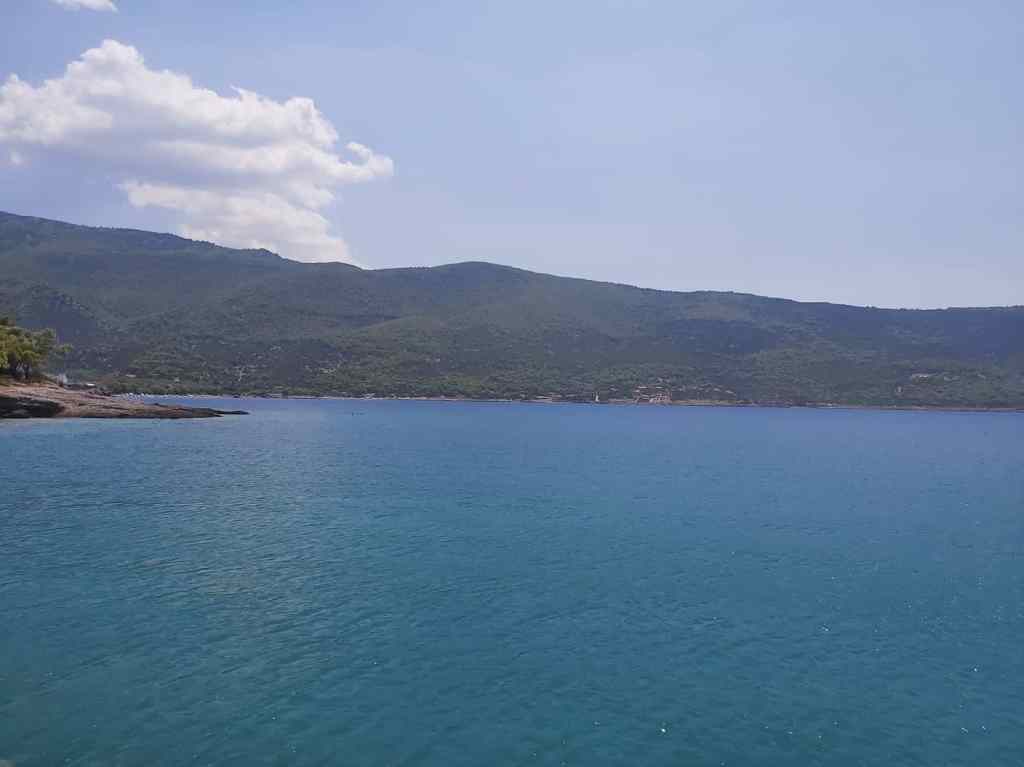
In all fairness a road trip is a metaphor for life. We live in perpetual motion, moving forward and going from place to place. Our time is spent through journeys in our space, through the time of our lifespan. Alone or with others, planned or unplanned journeys are to happen. That is life as it is.
Sometimes of course a road trip is nothing more than an actual trip in a countryside, quickly to be forgotten replaced by the next one! On this occasion, I shall try to narrate it as it happened, as it is fresh in my mind and the images can be vividly recalled. Maybe in future it would serve as a reminder, but on this occasion, it is merely a reminder of a very odd trip! At this stage, I would like to state that no humans nor animals were hurt during this road trip.
I am driving on one of the island’s country roads, the road is narrow going through the lush pine forest, some sycamore trees on the side. The track is leading up and down the mountainous path. The scenery is scenic and probably the reason people choose it. The road alternates views from the forest, the valleys, the canyons and the sea in the distance. Hues of green, and blue everywhere; and the smell. The pines joined with thyme and other fragrant herbs, a combination that gives the air that scent I cannot describe. The light blue of the sky meet the Aegean blue in the distance.
As per usual, on a road trip I prepare my maps, and plan the route in advance, but just in case I also keep an eye on the road in case there is a change. On this occasion, the public works are working wonders; the street signs are non-existent so I opted out. Interestingly instead of traffic information there were signs but not about the road ahead. Somewhere is the midst of the journey there is the first sign about Jesus. According to the sign “He is the truth, the way and the life”. I am unsure about the destination, but at least Jesus is aware. The next couple of signs involve Jesus and his teachings whilst the last one is making me feel a bit uncomfortable. “Jesus died for your sins” it proclaims! Ok fair enough, let’s say that he did. Any chance of knowing also whereabouts I am and where I am heading. The route continues with further signs until we come to a stop.
Finally, more signs. On this occasion there are some holy sites and monasteries. One of them is of a Saint most revered that apparently most of his body rests in a nearby location, (minus an arm and a shin). Later, I discover the Saint helps sick children and those who suffer from cancer. Admirable, considering that he’s almost 300 years dead. Still no actual traffic information on the road! At least the signs got me reading of a fascinating man long gone. It is fascinating reading on beliefs and miracles. Within them they hold peoples’ most secret expectations, those that under normal circumstances, they dare not to speak about. This is a blog post for another time; back on the road trip and almost two hours on the journey.
At this point, a herd of cows who have been lunching on the side of the road, decided to take a nap on the road. To be honest, it is only one of them who is blocking the way, but the rest are near idly watching. At this stage, I come to a stop waiting for the cow to move. The cow who was napping opened her eyes and looks at me, I look back, she looks away and continues to lay motionless in the middle of the road. I briefly evoke the Saint. Nothing. I am contemplating Jesus and still nothing. After some time, around an hour of cow staring I am going for my last resort. I get out of the car and promise that unless the cow moves, I shall part with vegetarianism. Now I am openly threatening the cow to eat her. This is when nature retaliates. A flock of goats join the cow. They meander around me and the stubborn bovine. The road is now akin to a petting zoo.
I employ a trick I picked up from cowboy films. I raise my hat, luckily, I am wearing a hat, weaving my arms furiously and making sounds. The cow is despondent at first and the goats just talk back. After a few minutes I have managed to get the cow to move and the goats are now at the side of the road. That’s my opportunity to leave. As I turn back, I notice another car behind me; they are also travelers who begin to applaud my efforts at husbandry. The road is clear, and I am on my way.
The next hour is less eventful although the road is still hairpinned; now it’s heading downwards and from the mountains its heading to the sea. I arrive at the sea way over the expected time and I manage to find a spot to park. One the wall, next to the spot someone wrote “you vote for them every four years like cows”. The writing is black, so I assume an anarchist, or maybe the author had a similar driving experience to me, or it’s just an unfortunate metaphor. The sea is cool and the views of the sea and in the distance a group of islands, spectacular. There are hot springs near by but in this weather the sea is more than enough. After all that drive, a stop at a local taverna is inevitable. Speciality dish mosxaraki or beef stew! I think the Saint is testing me!
On the way back, the road is empty. The cows rest on the side of the road. I slow down, I look out…they look away. At a local coffee shop a patron asks for the Covid-special coffee. I suppose a joke about the thing that occupies everyone’s mind. He doesn’t wear a mask and doesn’t seem to believe this pandemic “nonsense”. I was wondering if he is related to the stubborn cow. The trip ended and it formed another of those planned road trips. There was nothing spectacular about it. There is however the crux of my point. Like life, most of our roadtrips are unspectacular on their own. It is what we remember of them that matters. In the last months millions of people went into lockdown. Their lives seemed to stand still; a road trip can also be a metaphor, provided we don’t forget the details.
Share this:


My second grade teacher was radical (For Johanna). #BlackenAsiaWithLove
My second grade teacher
Took us to her house.
It was the first time I’d been in a white, middle-class house.
In the East End.
Walking distance from the park!
We walked there from our field-trip to the zoo,
And I was aware that this was a white neighborhood.
I was aware that some of my classmates lived nearby –
They pointed it out along the way: “Oh, there’s my bus.”
Some of my white classmates lived in the East End.
I was also aware that most-if-not all of the black people lived on the other side of town –
we caught the same bus home.
Separate, but equal.
And unlike our days spent at school,
The bus was either black or white.
This was all of our first chance to meet outside the classroom, in a home.
We were six and seven years old.
My second-grade teacher took us to her house.
She wasn’t bragging about her gigantic house.
No, she wasn’t trying to show off to us.
Even at that age I could tell that she just wanted to expose us,
To help us get to know how everyone in our city lived,
And that every part of town was ours.
And that we should expect to be in each other’s house.
And that even teachers have a life.
(BTW, I am suggesting that us educators are essential workers).
My second-grade teacher took us to her house.
She’s a white woman, and I was a black boy.
She lived in the white part of town, and I in the black.
Our worlds were different,
Yet we were one, under her care.
Momma taught me that she could trust different people with my care.
I learned that I could care about all different people.
Suddenly instead of her students she treated us like guests.
She respected us and we respected her home.
She told us about the people in the pictures on the walls,
And the places she’d been to collect all those interesting things.
(I wanted to go places, too.)
We knew the profundity of the experience.
Even at that age we knew that race and class should have kept us apart,
At least according to the world outside our class.
It was all our first year at that school,
And we quickly learned that everyone knew THAT skewl was kewl.*
Radical.
When knew our teacher was radical.
Share this:


“I can’t breathe”: Criminology, Science and Society

Sometimes the mind wanders; the associations it produces are random and odd, but somehow, they connect. In the book of Genesis, there is reference to the first murder. Cain murdered Abel with a stone making it the original murder weapon. After some questioning from God, who acted as an investigating officer, and following a kind-of admission, God then assumed the role of the judge and jury, sentencing him to wander the earth. This biblical tale is recounted by all three main monotheistic religions, a what to do in the case of murder. The murderer is morally fallen and criminally dealt by with a swift punishment.
There is no reason to explore the accuracy of the tale because that is not the point. Religion, in the absence of science, acted as a moral arbitrator, sentencing council and overall the conscience of society. In a society without science, the lack of reason allows morality to encroach on personal choices, using superstition as an investigative tool. As scientific discovery grew, the relevance of religion in investigation was reduced. The complexity of society required complex institutions that cared for people and their issues.
When the Normans landed in England, they brought with them a new way of dealing with disputes and conflict. Their system of arbitration, using the King as a divine representative, was following Roman tradition and theology but it soon became apparent that a roaming court may not be as efficient. The creation of the magistrates and the statutes on legal representation introduced the idea of bringing professionals into justice. The creation of new institutions fostered the age of the scholar, who uses evidence-based practice.
This new approach removed more religious practices, instead favouring the examination of facts, the investigation of testimony and the study of law. It was a long way away from the system we know now as the witch trials can attest to; a number of whom took place in East Anglia (including Northampton). In the end the only thing that has been left from the early religious trials is the oath witness take when they submit their testimony.*
The more we learn the better we become in understanding the world around us. The conviction that science can resolve our problems and alleviate social issues was growing and by the 19th century was firm. The age of discovery, industrialisation and new scientific reasoning introduced a new criminal justice system and new institutions (including the police). Scientific reasoning proposed changes in the penal code and social systems. Newly trained professionals, impervious to corruption and nepotism, were created to utilise a new know-how to investigate people and their crimes.
Training became part of skilling new mandarins in a system that reflected social stratification and professionalism. The training based on secular principles became focused on processes and procedures. The philosophy on the training was to provide a baseline of the skills required for any of the jobs in the system. Their focus on neutrality and impartiality, seemed to reflect the need for wider social participation, making systems more democratic. At least in principle that was the main idea. Over centuries of public conflict and social unrest the criminal justice system was moving onto what people considered as inclusive.
Since then the training was incorporated into education, with the new curriculum including some BTECs, diplomas, foundation studies and academic degrees that take on a variety of professions from investigative fields to law enforcement and beyond. This academic skilling, for some was evidence that the system was becoming fairer and their professionals more educated. Police officers with knowledge of the system, akin to lawyers to the probation service and so on. So far so good…but then how do we explain the killing of George Floyd? Four officers trained, skilled, educated and two of them experienced in the job.
If this was a one, two three, four, -offs then the “bad apple” defence seems to be the most logical extrapolation on what went wrong. If, however this is not the case, if entire communities are frightened of those who allegedly serve and protect them, then there is “something rotten in the state of Denmark”. Whilst this case is American, it was interesting to read on social media how much it resonated, in communities across the globe of those who felt that this was nothing more than their own everyday experience with law enforcement. For them, police is merely a mechanism of repression.
Since the murder I have read a number of analyses on the matter and maybe it worth going a bit further than them. In one of them the author questioned the validity of education, given than two of the officers in the Floyd case hold a criminal justice and a sociology degree respectively. There is a vein of truth there; educators have some responsibility to forge and promote professional conduct and ethical practice among their alumnus. There are however some other issues that have not been considered and it is time for these to be brought to the surface.
Education or training alone is not adequate to address the complexities of our society. Social awareness, cultural acceptance and the opportunity to reflect on the rules using problem solving and insight are equally important. Foucault has long argued that the justice system is inherently unfair because it preserves privileges and blocks anyone outside from challenging it. Reflecting on that, all major constitutional changes took place after a revolution or a war, indicating the truism in his observation.
If we are to continue to train people on procedures and processes the “bad apples” are likely to strike again. The complexity of social situations requires an education that ought to be more rounded, critical and evaluative. If a doctor takes an oath to do no harm, then so should every other professional who works in their community. If the title of the office is more appealing than the servitude, then the officer is not fulfilling their role. If we do not recognise equality among all people, then no training will allow us to be fair. Suddenly it becomes quite clear; we need more education than less, we need knowledge instead of information and we need more criminology for those who wish to serve the system.
*Even that can now be given as an affirmation

Share this:


Power and Prayer #BlackenAsiaWithLove
A prayer.
It’s been over half a year since the bulk of the world began dealing with Corona. With that, neither everyday movements nor international travel has not been the same. Now, we’re midway through summer. School terms have been extended globally, altered drastically from any norm. While some are staggering their re-openings, there is no settle new way of doing old things. Educating youth may never be the same. Students are in a unique position to reform education from the ground up. This is my prayer for youth: Stand courageously as we ride these waves of change.
Travel and tourism. While could spew a bunch of statistics about this fallen industry, any of us can go through the tediousness of searching and scrolling through the numbers. It’s been over six months, so many numbers are rolling in: There are masses of jobs that may never recover. By the time people figure out what to do during this unending period of lockdowns, lock-ins, closings, shut-downs, downscales, too many bellies will have gone unfed, too many months’ rent gone unpaid. A tsunami of bills threatens to drown a plenty. My prayer is that your creativity prevails. There is no apparent swift solution to these current ills, nor can we predict any end with any confidence. My prayer for you is that you rise like the phoenix.
Essential workers. From corner shop-keepers to grocery workers, from fast-food workers to farmers, from cleaners to manufacturers, from bank workers to customer services worldwide, to all the delivery folk, sanitation folk, safety and security folk, healthcare folk, please know our eternal indebtedness to you. Your lives matter. Each one of you. You are often poorly paid, regularly poorly treated, and certainly too frequently mis-regarded. You supply the gloved hands that handle our goods, provide our services, scrape up the crap we leave on the streets … even get our bodies into beds when we’re no longer able. It is true that many societies have tended to severely undervalue you. My prayer is that essential workers be better respected, compensated and protected.
May our common, global experience of living with Corona provide us all some well-needed respite from the hustle and bustle of everyday-life-as-usual to truly appreciate the many lives that make our own lives possible. There was something eerily usual about the way emergency-care worker Breonna Taylor died in her home at the hands of the police. My prayer is that such knowledge sits less comfortably with us all, and that we seek change, no matter where we are. Witnessing the risks peaceful protestors take to bring about change, and seeing the propaganda that plays out in the news vilifying them along caste lines, my prayer is that empathy prevails.
May we all know better and do better. Do right.

Share this:


It is not the job of Black people to teach white people Black history

I like to think I have been doing anti-racist work since I was a child — from the days when I telling my schoolmates about slavery to my teen years where I was educating my peers on the connotations of the N-Word and why it is wrong. I remember a few years ago my editor at The Nenequirer Steve was interviewing me for a piece and he made a passing statement about me being an “equality activist.” He meant it lovingly and in good faith. I laughed, jokingly — thinking that equality wasn’t a political issue, so how could it be activism? Now, even more cynical than I was in in 2017, but grown, equality is very much a political issue, as we have seen with the Black Lives Matter movement and I now carry the label of “anti-racism activist”, a job I have been doing for nearly 20 years, in a professional and non-professional capacity.
The fact I never regarded equality as a political issue is something I have thought about time and time again. Building my name as a poet in my community, much of my work being on race and nation, I have been called all types of things. Being called “anti-Britain” is not an accolade I thought I would recieve, as anyone that knows me knows I am more British than Queenie herself — from custard creams to Doctor Who, The Crown and test match cricket, there are few people alive who can out-Britain me.
So, to be called “anti-Britain” is insulting really. And, in light of the Black Lives Matter protests, lately, I have been asked to answer all sorts of questions on race / racism by friends and colleagues, unknowing that what all Black people are going through now, as we have always done, is traumatic.
I hear a lot of my Black colleagues saying “it’s not the job of Black people to teach white people about racism, (and Black history.)” I heartily agree, but I also question the place this statement comes from in the first place. Lots of my colleagues have been asking me about the Black History and what they should be reading and I am quite fortunate in the sense that I know where to send them for information because I have spent nearly fifteen out of twenty-four years doing the reading and learning (outside of the system).
However, most Black people, really do not know their own history because they came through the same education system as white people, with its blinkered curriculum!
So, whilst we are Black, we, too, are disillusioned. We cannot teach you about our history because we do not know it ourselves. Those that do know it have taught themselves it. The reason I can challenge the Wilberforce narrative on slavery is because I have made efforts to find the other stories around that narrative. I have made efforts to look at the centuries before the fifty years of Wilberforce — centuries of rebellions and dissent from the first abolitionists, the slaves themselves, on the ships and the plantations.
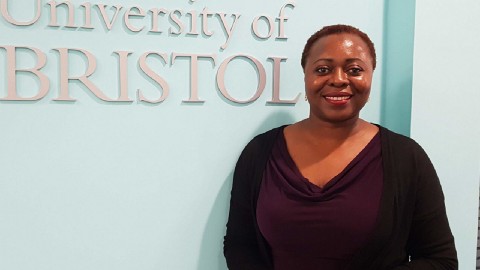
I have found that Black teachers are really struggling because they also came through the same system. So, if teachers don’t know, (let alone Black teachers) how can they teach it to students? What really needs to happen, in addition to decolonising curricula is decolonise initial teacher education [ITE]. When our teachers are being taught about race and Black history, and the contributions of ethnic minorities to Britain, then we might get somewhere, because it’s being taught to the grownups… not just the youth.
I am fortunate to have parents that have degrees in Law and Internation Studies, fortunate to have parents that were part of their African-Caribbean Society at UEL and took part in anti-apartheid marches. Very politicised students who then became politicised parents and professionals, and now I am politicised too. I learned a bit from my parents and some stuff from my Windrush grandparents (that lived through the 60s, 70s and 80s) and then more stuff from different family members about all sorts of things.
But most of all, from doing the reading:
Akala, Malorie Blackman, bell hooks, Frederick Douglas, Harriet Jacobs, Mary Prince, Maya Angelou, Chinua Achebe, Frantz Fanon, Dean Atta, Roger Robinson, Miranda Kaufmann, John Agard, Reni Eddo Lodge, Afua Hirsch, James Baldwin, Peter Fryer, Gwendolyn Brooks, Richard Benjamin, Olivette Otele, Beverly Tatum, Maya Goodfellow, Paul Gilroy, Gary Younge, Kehinde Andrews, Hakim Adi, Bernadine Evaristo, Eric Williams, Andrea Levy et al…
I did the reading. Learned. Challenged. It’s no overnight success and I am still learning. The BBC had a whole season on Black Britishness, including documetaries Black is the New Black, Black and British: A Forgotten History and other bits. Yet, don’t be conned that more Black faces in the mainstream means Black people have made it and racism is over. The fact there are more Black people on TV has opened the floodgates for more debate on whether racism actually exists, if the likes of (Professor) David Olusoga can make it — or Afua Hirsch; or Reni Eddo-Lodge and many more.

Heck, Meghan Markle being “accepted” into the most elitist institution in Britain. That whilst we have books like Black and British by David Olusoga showing how far Black British history goes and showing the good things we have contributed, there are also texts like Slay in Your Lane by Elizabeth Ubivenne and Yomi Adegoke and Taking Up Space by Chelsea Kwakye and Ore Ogunbiyi, both just so raw and unflinching, straight at the jugular.
“Black Lives Matter; no justice, no peace; Black power” — chanted at the Northampton protest in July by nearly one thousand protesters. A moment in Black history we are living together but still some of us not really getting it. The murders of George Floyd and Breonna Taylor and the others sparked outrage across the world. But I would emphasise to the white masses, this has been happening since 1619 (US) and at least 1562 (Britain), when John Hakwins, from Plymouth, hijacked a Portegeuse slave ship and made a small fortune in the Spanish Caribbean, with further voyages that decade funded by Elizabeth I. This Black history I only know about from reading Staying Power by Peter Fryer, a white male author. Read. Research.
I wonder if the next generations of Black people to come in the future will know about Black Lives Matter, (because it’ll be taught in the schools), or will they have strangers and relatives telling them about their history just like I did?
I expect it is rather horrifying for Black people that do not know their history being asked by white people and other non-Black people about it, like being Black is a pass to knowing. Education is the pass and the education system doesn’t teach it but I can say we represent “3% of the [British] population but account for 13% of the prison inmates. Black people also represent 9% of deaths after police contact that were independently investigated” (Andrews, 2018: xxiii). We do not know our history but we are living it now, including our disproportionate overrepresentation in police and prison statistics.

When it comes educating ourselves on Black history, in my opinion, it follows a coalition of learning together. That whilst it looks semantically questionable having white academics being the main leads on subjects like slavery and Black Tudors (nationally), their knowledge is valuable, and so are the contributions in academia made by Black academics in history (what few that exist), as well as other subjects like sociology and criminology.
White people, stop burdening your Black friends and colleagues with teaching you about Black history; the likelihood is they do not know it in enough volume to teach you it. However, the literature is there, in volume, teach yourselves and grow, otherwise you are simply adding to the “drip drip” sensation of the tap we call emotional labour.
Andrews, Kehinde (2018). Back to Black: Black Radicalism for the 21st Century. London: ZED. Print.
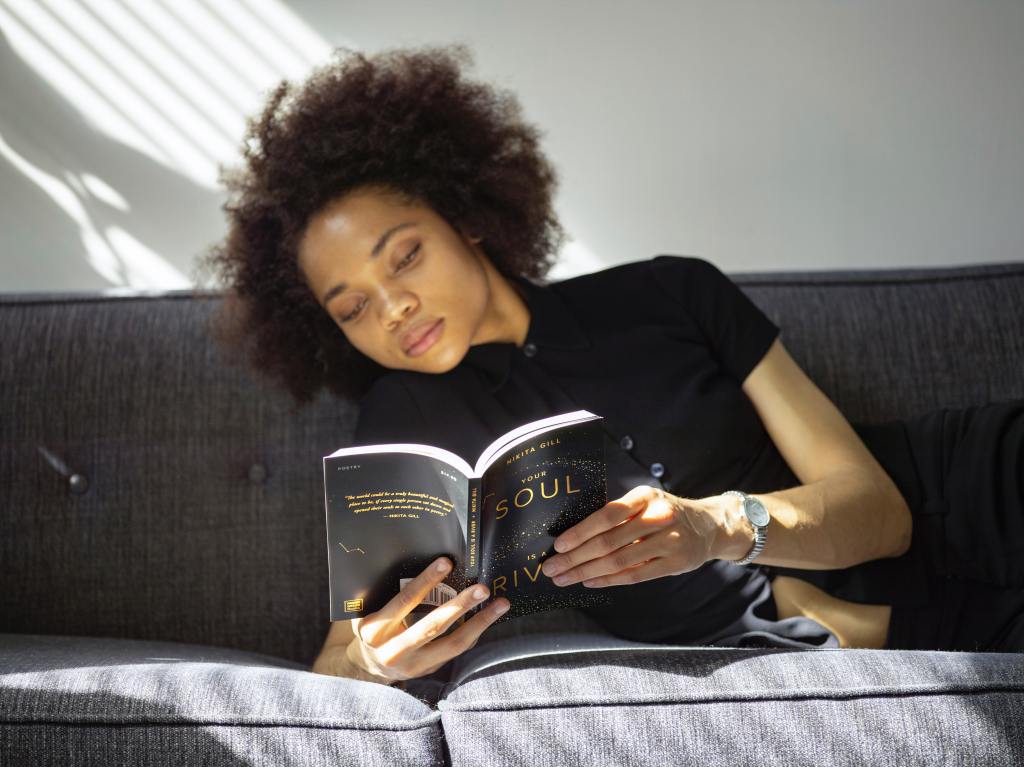
See my reading and film resource, made in reply to Black Lives Matter. It’s public and for the benefit of all — from small children to adults: on race and Black history. This is an ongoing project and will continue long after anti-racism stops being sexy. This is always being updated, check it out.
Share this:


What is the value of your ‘yes’ when you never say ‘no’?

A good few years ago a senior colleague asked me that very question. It was more of a statement, than a question and it was designed to make me think about how I approached work and perhaps more importantly how others saw me in the workplace. It fits very nicely with another saying, ‘if you want the job done, give it to a busy person’. It seems there are those in the workplace that get the job done and those that don’t. There are those that always say ‘yes’ and others that often say ‘no’. There are those that solve problems and those that don’t. Another saying from a senior manager, ‘don’t bring me problems, just bring me solutions’ sums up the majority of relationships in organisations.
My experience of managers (both middle and upper) has been varied, but unfortunately most have fallen into the category of poor, bordering on awful. Perhaps that colours my judgement, but I do know that I’ve also had some very good managers. The good managers always made me feel like I was working in partnership with them and, yet I knew who was the boss. I always tried to find a solution to a problem but if I couldn’t then the boss knew that it was a problem he or she needed to deal with, they trusted my judgement. Often what appears to be the most trivial of problems can be a show stopper, a good boss knows this. If I said ‘no’ to a piece of work, then the boss negotiated which other piece of work would be set to one side for now. Sometimes everything is a priority, and everything is important, it is for those at the most senior level to make the decisions about what will or will not get done. Making no choice is an abrogation of responsibility, suggesting it is another person’s problem is just as bad if not worse.
Good managers understand how much work people are doing and trust their workers to get on with the job in hand. A good manager knows that even the most menial of tasks takes more time than might be imagined and that things rarely go exactly to plan. There is always an element of redundancy. When someone says ‘no’ to a piece of work they understand that there is a reason for that ‘no’ and rather than simply seeing that person as being difficult or lazy, they listen and seek solutions. More importantly, they take responsibility for the problem, ‘bring me the problem and I’ll help you find the solution’.
As we move into a summer of uncertainty where the ‘new normal’ is an anxious time for most, where the ‘yes’ people are needed more than ever, and the managers need to lead from the front, if you are a manager, what will you response be when your undervalued ‘yes’ person says ‘no’?
Share this:


For the Trayvons, Since Blackface is a weapon #BlackenAsiaWithLove
2 April 2012 Hanoi
The real Blackface that’s the weapon is the minstrel show,
The Blackface that labeled me out,
Showing people a side of me never seen
But projected onto me,
Such that when so many see my own Blackface,
They see that other
They see that other one.
The one told to them over their kitchen tables.
The one sold to them at the movie show –
Hoop dreams
Baller creams
Holla dolla-dolla bill, y’all.
‘Cause we also know that there are real Black faces
That see those minstrel black faces
Staring them back in the face,
So blinded by the light that they cannot see their own.
That’s one side of Trayvon’s story-
Then we all know how precious of a story this really is
That a mother lost her darling son
That a grandmother lost the one who used to babysit for the other gran’kids
That the little cousins are still unclear about where that dear boy is.
Blackface means that as soon as your voice starts to drop
As soon as that fuzzy hair starts to sprout all over
As soon as your knock knees start to look bold
You’re no longer a kid
Your childhood is lost
And you must learn to act in ways that would make most sane adults stumble
You learn how not to offend white people
How to speak in a soft voice
Or perish
How to walk slowly, with an unassuming gate
Lest you appear as a threat
With the knowledge that any of these threatened folks can annihilate you
Wipe you from this earth
Where only a generation or two ago
Men hanged like tree-ripened fruit
Aged on a rope in an instant
From kid prankster
To adult menace in a matter of moments
We’ve all seen that photo of one of America’s last lynchings
Not nearly the first
Not nearly the haste, carnage and human waste that made people cease.
In 1930, not in anywhere near the deep south
Not from one of our southern willows that sway
But in the mid-west
In Indiana, less than a 150 miles from where Michael Jackson was born
And less than 30 years before he came to be,
So that years later when he sings about hate in our multicultural hearts
Or smashes a window in the video
Enraged with anger
Mad from hypocrisy
The sort that we all know all too well
The gap between the promise and dream.
The reality versus the verses etched all around the capital,
Versus the slave hands that laid those very stones.
The women folk whose very gender made them slaves
And the Black women whose faces made them chattel –
But exploitation of a sexual kind
Yes, we all know too well
What a Blackface can do
How a Blackface can scare you
Even when it’s yours.
So, we now the rage Michael felt,
The hate he seemed to have fought though lost,
Internalized but never giving up.
Yet he was born into a world that hated Blackfaces
Where his was a real threat,
Lest he learn to sing and dance.
The hate is real life minstrelsy.
It’s that same song and dance that we as boys learn to perform
And I am tired of dancing
Trying to make nice when people approach me as cold as ice
Smiling and trying to behave
While all their body language tells me that they are scared to death of me
And that they see my Blackface as chilling.
We all know that all the Trayvons in this place
Learn from an age too early to have to teach kids such harsh cruelties of life
That by 13, he could be nearly 6 feet tall and that factor alone endangers his life
Were he to play sports and his body develop.
He would stand no chance of being treated like anything other than a gladiator.
So it’s even more ironic that Trayvon was a scrawny boy they called “Slim”
Seems there’s no real way to win
Though I think that if we as a people can get through this
If we as a nation can have this conversation
The one mothers like Trayvon’s have with their sons
For we all know how people react to Black
Share this:


We are Spartacus: the publishing industry and race
As one of only a handful of non-white authors on the British crime fiction map, I thought it might be worthwhile spending a moment reflecting on the worldwide rebalancing touched off by the George Floyd killing in America. Fear not. There’s no need to put on your tin hats and dive for the trenches. My purpose isn’t to haul anyone over the coals. But there’s little doubt that some of what I say might make for uncomfortable reading. More importantly, I will ask you to reflect, at a personal level, on what we mean by systemic inequality, particularly as it applies to the publishing industry.

First, some background. My parents are from the subcontinent. They came to the UK in the early seventies, lured by the immigrant dream. The streets of London may not have been paved with gold, but they were paved with opportunity. My father, who was not literate, spent his life in honest labour, in an industrial bakery, while my mother raised children, demonstrating the much-lauded immigrant work ethic by slaving away at her sewing machine every hour she wasn’t feeding us or stopping us from poking each other’s eyes out with eraser-tipped pencils. She instilled in us the need, above all else, to study, to educate ourselves, to progress.
So far, so good.
But what if I were to tell you that my parents were, in a broad sense, xenophobes, too? Not overtly. They didn’t oppress anyone; or traffic slaves across the oceans; or pillage defenceless communities for profit. But their attitude towards black people – cultivated by the insular world they had grown up in – was, at best, indifferent, or, at worst, mistrustful.
Here’s a simple, unpalatable truth. Racism, in its most basic form, is a feature of most societies. It shouldn’t be. But it is. A simple example illustrates my point.
The outpouring of angst and handwringing currently gripping the world has seen celebrities across the globe express their views on racism (rightly so), only for some to discover that a seat on this particular bandwagon can be an uncomfortable one. In India, numerous Bollywood stars were called out for the disparity between their #blacklivesmatter tweets and the fact that they had fronted campaigns for skin-lightening creams. Across the subcontinent, lighter skin has traditionally been valued (usually alluded to in matrimonial ads by the rainbow-bending adjective “wheatish”), so much so that white foreigners, especially Brits, are treated with overt deference, while black people are routinely afforded a lesser welcome. An odd perversity, given that it was the whites that pillaged the subcontinent for three centuries while, with those of Afro-Caribbean descent, one might assume Indians would evince a colonial-era solidarity.
Let me be clear: this idea of a sort of universal xenophobic instinct does not in any way excuse or mitigate the horrors of the slave trade, or the enormous, long-term damage done to black people because of that terrible practice. Nor does it justify the entrenched, systemic prejudice that continues to colour western societies, prejudice that culminates in overt racism of the kind that permits white American policemen to routinely kill black men with little fear of reprisal, and prejudice of the less obvious kind that serves to keep black people ‘in their place’. My point was merely to demonstrate that, in the wider, global race equality agenda now under discussion, we all have a part to play.
Part of the issue is that many well-meaning efforts to redress the balance are hampered by a profound lack of insight into how unconscious bias can affect the lives of people of colour, in a million different, small, but, ultimately, debilitating ways. The problem is further hampered by an education system that often fails to properly tackle the ‘race issue’.
Yet, the problem must be addressed. Because the world has become a smaller place. The goldfish bowl has shrunk and we are now all swimming in the same seas. It behoves us to make the effort, not just because it is the right thing to do, but because it is also the most effective means of progressing humanity towards a more equitable, more meritocratic, global society. If the Covid-19 pandemic has proven anything, it is how interdependent we are.
Coming, now, to the publishing industry. Cards on the table. Since my first book was published six years ago, I have received tremendous support from my agent, publisher, critics, bloggers, readers, event organisers, and crime writers. My experience is not typical. A simple look at the statistics tells us what we already know. Any way you slice it and dice it – diversity of publishing staff, published writers of colour, books featuring characters of colour – the industry is dominated by white thought and enterprise. Some of this can be ascribed to the fact that, in terms of population, BAME communities, by definition, are a minority. You wouldn’t expect there to be a 50:50 split along these dimensions. That isn’t the issue. The problem is the entrenched attitudes that make it so damned difficult for writers of colour to break into the industry and then to enjoy the same rewards and freedom of expression that is accorded to their white counterparts.
The world’s most successful crime writer, James Patterson, became famous with a series about a streetwise black detective, Alex Cross. James Patterson is not black. Nothing wrong with that scenario, in my opinion. Authors should not be constrained by artificial constructions of propriety. But, if the industry is being honest with itself, it will acknowledge that a writer of colour attempting to do something similar – trying, as it were, to write outside of their cultural straightjacket – is rarely accorded the same privilege. Questions of ‘authenticity’, ‘voice’ and ‘cultural appropriation’ suddenly come racing to the fore, like Cinderella’s ugly sisters questioning our right to go to the ball. Asian writers, for instance, are often expected to pen literary tomes about colonialism or exposes of the immigrant experience. Again, nothing wrong with that, and, indeed, brilliant writing is regularly published exploring those themes. But there are so many other stories that we would like to tell. White writers can be published writing about matters far outside their experience – wizards, serial killers, aliens. But for non-white writers, the same consideration is much harder to find. A lot of this is not the result of overt racism, but rather the mindset that accepts as perceived wisdom the idea that profitability comes almost entirely from white authors writing white stories, or writers of colour writing stories suited to their ethnic background. This thought is so prevalent in the industry that it may as well be an eleventh commandment.
A terrific article by Laura B. McGrath, associate director of the Stanford University Literary Lab, in a Jan 2019 issue of the Los Angeles Review of Books, entitled “Comping White” identifies the true nature of the problem. Paraphrasing her research, it goes like this: publishers buy new books by comparing them to books that have been successful. Is this the new Harry Potter? Is this the next Gone Girl? Given that the majority of books are white, the process becomes a closed loop, a vicious cycle. The industry buys and promotes white books because they sell. White books sell because they’re the only books the industry buys and promotes. Do you see the problem?
Making the gatekeepers more diverse, McGrath argues, will have only a marginal impact. It’s the system that’s at fault. The same applies to practically any walk of life that you might care to name – hence the reason so few people of colour in boardrooms, or lecturing at top universities, or opening Michelin-starred restaurants. White people have done all those things successfully before, so why take a chance on the unproven?
Until we change this structural, often unconscious, bias, all the current furore around race will do little to improve the prospects of the average BAME person.
Can readers help? Of course! By voting with their feet. By buying books written by authors of colour, readers signal to publishers that they won’t be put off by a ‘funny-sounding’ name on the cover, or a protagonist who doesn’t share their own cultural background. The only bar should be quality.
In an ideal world, a good story, well told, should stand on its own merits.
What else can we do? In my opinion, people shape people. If we want better, more thoughtful attitudes in the industry, we must all stand up and be counted. Solidarity is the name of the game. A solidarity of thought that acknowledges that a genuine change of perspective is needed. From agent to reader, all along the chain. What we need, in other words, is for all of us to stand up and say: ‘We are Spartacus.’
Vaseem Khan, author, Midnight at Malabar House and Baby Ganesh series
London, June 2020
Share this:


Misogynoir: What’s a Black man to say?
Two months ago, London-born author-journalist and activist Reni Eddo-Lodge was the first Black British author to top the UK book charts. In addition to her being well-known for her book Why I’m No Longer Talking White People About Race, it was this text among others that inspired my dissertation on race-identity politics. I have reread the chapter ‘Histories’ countless times and come to the idea that current discourse on race and Black history is not as intersectional as it could be. Historically, I have seen Black History Month celebrations where women that do not fit into the cisgender, neurotypical, able-bodied, and / or heterosexual norms of society get side-lined.
Additionally, how we as a society oversimplify the Black Lives Matter movement as just a race issue baffles me.
In 2010, Black queer feminist Moya Bailey coined the term misogynoir – phrase denoting discrimination against Black-racialised women where both race and gender play roles of bias. Reni Eddo-Lodge becoming the first Black British author to top the UK book charts is an indictment in two ways:
- It took this long for a Black British author to reach the top
- It took this long for a Black British woman to reach the top
Even ahead of Malorie Blackman, Bernadine Evaristo, Zadie Smith, and the late Small Island writer-author Andrea Levy.
Are not enough people buying books by Black British (female) authors or are they simply being denied access to publishing houses? Systemic discrimination in publishing is a criticism blessed by history, where English literature in the 18th, 19th and the 20th centuries was dominated by white men. At this time, many women wrote under pseudonyms, as the system would not take their authentic voices and selves seriously, as women.

Whilst I am a man, my mother is a woman and so are my grandmothers. My godmother is a Black female academic with stories of her own about misogynoir in higher education and the British school system. My late aunt was an actor-singer. I have female cousins who also have stories about misogynoir in arts, corporate, healthcare and other parts of society. I know, having been raised by Black women that this discrimination is endemic and I know Black men are complicit in as well – from hearing Black men labelling Black women as “high maintenace” to perpetuating colourism.
Does Black History Month and how Black history is taught play a role? Is the way we study Black history inclusive, or, despite ticking the race box, does it follow cisgender, neurotypical, able-bodied, heterosexual (very always male) norms? Are we doing everything we can in the narrative of Black historical scholarship to implement intersectionality?
In her essay (1989: 140), Kimberlé Crenshaw coins that buzzterm of today intersectionality. She writes “any analysis that does not take intersectionality into account cannot sufficiently address the particular manner in which Black women are subordinated.” Today, we can read this to the experiences of Black women on the autism spectrum; Black women who are transgender; Black women who are working class with disabilities.
How we view Black women’s history is troubling, as diversities of their experiences are being excluded from the story for “a more comfortable” cisgender, straight, male and / or able-bodied norm. Whilst we criticise white institutions for not doing diversity work, we must be careful as to not look like hypocrites, embodying our very own Prof. Coupland. One example is the slave narrative. In the teaching of the Slave Trade (when it’s actually taught), are we pushing for the inclusion of Black women experiences?
Despite learning of the Underground Railroad, I would also have liked to have learned about slavery’s darker side, including rape on the plantations and the histories of enslaved mothers as wet nurses for white children, often at the expense of their own. Moreover, slavery as an economics system, and “Black women’s reproductive systems were industrialised. Children born into slavery were the default property of slaveowners, and this meant limitless labour at no extra cost” (Eddo-Lodge, 2017: 4). A system where they were exploited on the basis of their race and sex.
Whilst, I would caution educators about relegating Black women’s histories during the years of slavery into narratives of sexual violence with no counter balance (i.e female empowerment), these are also stories pertinent to the lives of women today, not just Black women. In light of #MeToo, would it be so wrong to investigate human history of sexual violence? If we did that, we would then be forced to interrogate women’s history at war, for example. What about sex workers during the World War One? Today, intersectionality may bend to age’s links with race, sex and “the adultification of Black girls” (Center on Poverty and Inequality, 2017).

Using Reni Eddo-Lodge’s achievement as a conduit, I would argue there is no way we can achieve lasting change without the inclusion and amplification of Black women voices, who are themselves constantly hitting glass ceilings across all of society. This must include intersectional approaches to the Black past and anti-racist work. Whilst as a Black man I hit the glass ceiling, I can see through it. However, I know for my Black female colleagues this is a bleak look into the opaque.
The spine of the Black Lives Matter movement is unarguably kept together by Black, female leadership, as is the bulk of equalities work in academia with Black and brown academics. In revealing how Black women were agents in key moments of British history, including immeasurable contributions to civil rights movements and politics, we will understand
the history Black women are making now, truly embodying Black Britain and reimagining Black liberation. And it is in this train of thought, I believe when Black women matter, everyone will matter; when they win, everyone wins.
Referencing
Center on Poverty and Inequality (2017). Girlhood Interrupted: The Erasure of Black Girl’s Childhood. Washington D.C: Georgetown Law.
Crenshaw, K (1989). Demarginalizing the Intersection of Race and Sex: A Black Feminist Critique of Antidiscrimination Doctrine, Feminist Theory and Antiracist Politics. University of Chicago Legal Forum 1(8), pp. 139-167.
Eddo-Lodge, R (2017). Why I’m No Longer Talking to White People About Race. London: Bloomsbury. Print.

 Thoughts from the criminology team