
Home » Criminology (Page 34)
Category Archives: Criminology
The Lockdown Lowdown
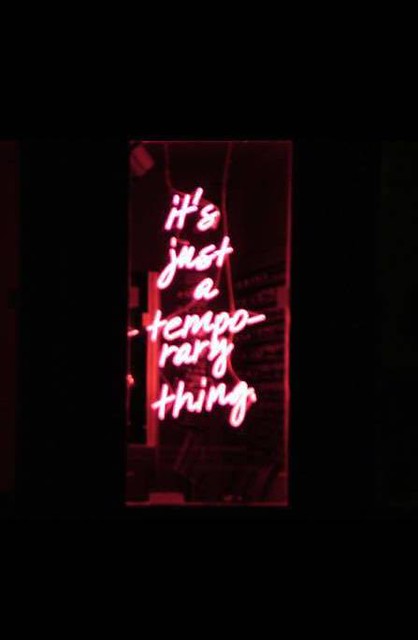
I took this photo a few years ago on a solo visit to Copenhagen, I had just quit my job and was in the process of leaving where I called home, my PTSD was certainly at its worst and the future was entirely uncertain…
A cosy Sunday evening, the flat has been hoovered, the washing is out to dry, lunch has been prepped for the following day…yet despite all of this normality me and my partner sit here on our cosy Sunday armed with the knowledge that another national lockdown is imminent. So whats next for us?
Before I explore whats next I want to reflect on what has been, it was only this time last year that my mental health was at its worst since I was diagnosed with PTSD some years ago and it was during this month last year that I found out I was pregnant. After many difficult conversations I decided that that chapter of my life was not ready to begin, not just yet, and so the guilt consumed me and I relied on anti-depressants to help me through that difficult time. Eventually as time passed so did the guilt and my mental health became stronger, because I willed it so, and after a short stint I stopped using the anti-depressants because I knew within myself I didn’t have to rely on them…
…More time passed and I found that the strength of my mental health had started to peak, I set myself goals that only I knew about and only I could achieve, I started to be critical of the people I surround myself with to ensure that I was living as authentically true to who I am as possible. This was my attempt at self care, As I withdrew from these friendships I simultaneously removed my negative addictions and repeated behaviours (drugs, alcohol, time-wasting, self-depreciation), I realised that my actions allowed me to concentrate my full energy on the things that truly matter in my life (my studies, my family, my relationship)… and then lockdown happened.
And boy was I prepared for that, I wont deny that I grew a few stretch marks and after some self hate Ive learnt to accept and love them as a natural process of my body. I realised I didn’t do much exercise during lockdown and my appetite was unruly, with zoom quiz night’s came alcohol and snacks (lots of them). Despite my growing waist I was okay mentally and yes I wont deny that having my own apartment and living with my partner helps but also having dealt with a bit of a breakdown some months prior helped order my perspective on my life, how I want to live it and how I would tackle this challenging time. As a 2nd year student I lost all hope and focus for a while as the outstanding assignments were piling up and I was heavily relying on the august submission date, I felt like I wasn’t worthy of being a university student, that I was never going to graduate and self doubt quickly reappeared into my life, Its a strange thing really during lockdown I didn’t really do anything at all, but I also never found the time to study? And the strangest thing is that actually most students felt this way and when me and my peers communicated how we were feeling we were able to support each other more and eventually those assignments were submitted and here we are… 3rd years!
So 3 days to go before lockdown 2 and how can I get through this?… how can you get through this? Undoubtedly there are many people who have dealt with a world of pain since coronavirus first graced our planet and yet in my experience I found this year to be quite grounding and it has allowed me to focus my energy on me, who I am, what I want and who I want to be (without sounding narcissistic but rather rightfully selfish), because I have no control over external happenings neither do you and thats okay. what we can do is focus on our little world; ourselves and the people around us. heres a few quotes I find to be quite relevant to this train of thought.
“To what goal are you straining? The whole future lies in uncertainty; live immediately” – Seneca
“Just keep in mind the more we value things outside our control, the less control we have” – Epictetus
“Man conquers the world by conquering himself” – Zeno
So how can you, how can we, get through lockdown? granted it may not be as-long as the last one but we’ve had a taste of normality again and so this time round it may be harder, this time we have long winter days and a lack of vitamin D combined with the uncertainty of celebrating Christmas with family looming over us, so in consideration of Epictetus’ wise words lets focus on what we can control; 1. lets schedule consistent self care( for me that comes in the medium of being disciplined, in terms of uni work.. and diet), 2. Lets move our bodies! go for a walk outside and pick up litter? (later in this blog post you’ll find some of my suggestions for walks around Northamptonshire), 3. don’t pressure yourself into being consistently pro-active! 4. do drink hot chocolate. 5. And if your sad about missing out on getting your Christmas shopping in early then try to buy from local independant businesses, you might find many local stores posting available items onto their social media pages and offering contact-free deliveries! 6. Check up on your friends and family, be mindful of keeping communication going, you don’t know who just might be struggling! 7. Buy a homeless person a warm meal!
(TIP: when looking for businesses check out this new hashtag on instagram introduced by some local Northampton businesses to get people buying more locally)… #SHOPLOCALSAVECHRISTMAS
https://www.instagram.com/explore/tags/shoplocalsavechristmas/
Overall lets focus on our own self betterment and where possible our local communities betterment (and as always wear a mask!!)
And most importantly if you are struggling then reach out to someone and let them know, as always with my posts as the focus tends to be on mental health I will provide links to the university’s, the local communities and national charities mental health resources, so please take note and rely on them if you need to.
For my previous blogs/context have a read of the following:
Navigating Mental Health at University
Navigating your mental health whilst studying at university during a worldwide health pandemic
“Joy comes to us from those whom we love even when they are absent” – Seneca
“Never let the future disturb you. You will meet it, if you have to, with the same weapons of reason which today arm you against the present” – Marcus Aurelius
“Don’t hope that events will turn out the way you want, welcome events in whichever way they happen: this is the path to peace” – Epictetus
I could continue on with a great deal more of these philosophical quotes and if you are interested in them then I’d recommend reading up on the discipline of stoicism, but if you’d like to read on you’ll find a few suggestions of areas to walk in and around Northamptonshire in aid of keeping your body moving during this lockdown, (and if you can take a bag and pick up litter).
Exploring Northampton’s Parks and Reservoirs
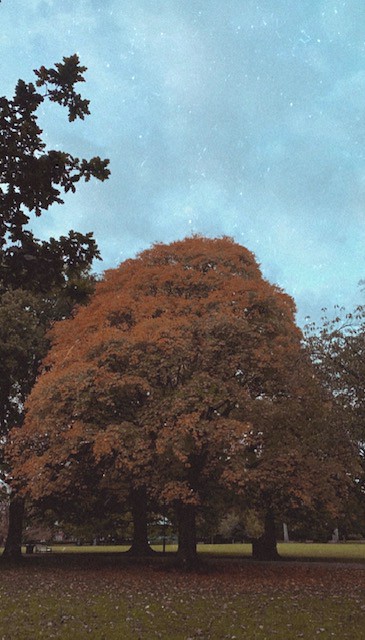
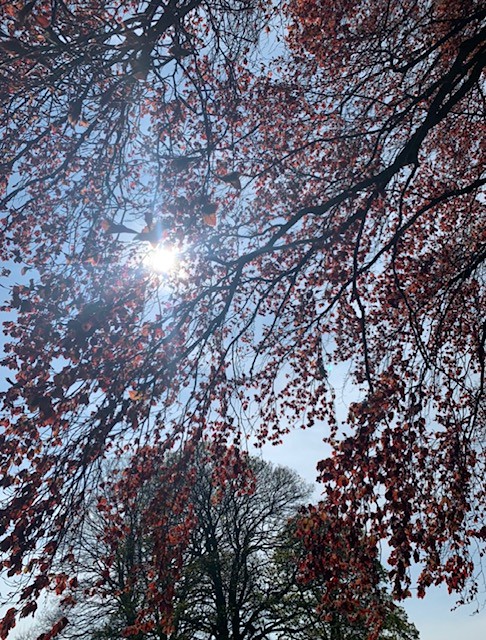
Abington Park; Located in the NN1 postcode a short distance from the town centre. The park has plenty of areas to explore with ponds, forestry areas and it offers some lovely autumnal photo opportunities, heres a particularly orangey-ember tree that caught my eye.

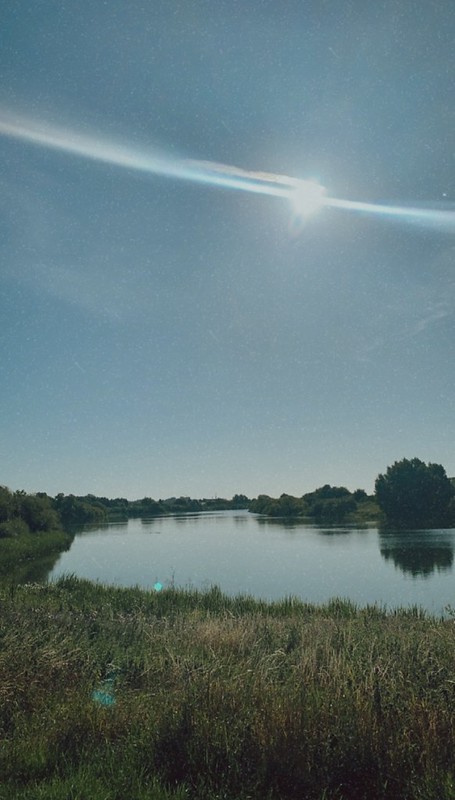
Sixfields lakes and reservoir; Unless you know of this lake you wouldn’t know it was there, Its situated a little down from the Sixfields football stadium, there is a small roundabout you can take to go up towards the cinema (Walter Tull Way), down Edgar Mobbs way, or join the A5076, and there is a fourth almost hidden turning that will take you down a road adjacent to Duston mill road, it is down this road that you will find this little gem.
There are two lakes to walk around, one being the main option where most people park up (there is parking on site) at a leisurely stroll the walk will take around an hour, you may see plenty of fishermen and lots of wildlife!
There is a second walk which I’ve only recently discovered myself, just down from the car park there is a small gate and it is through there you can explore to your hearts content!
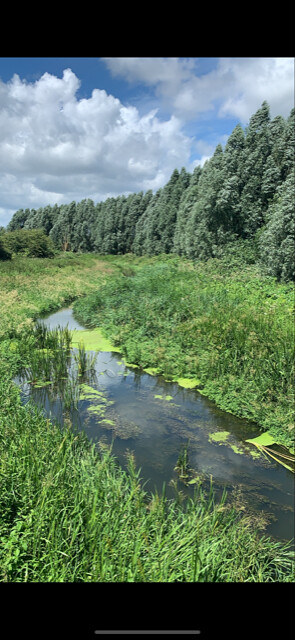
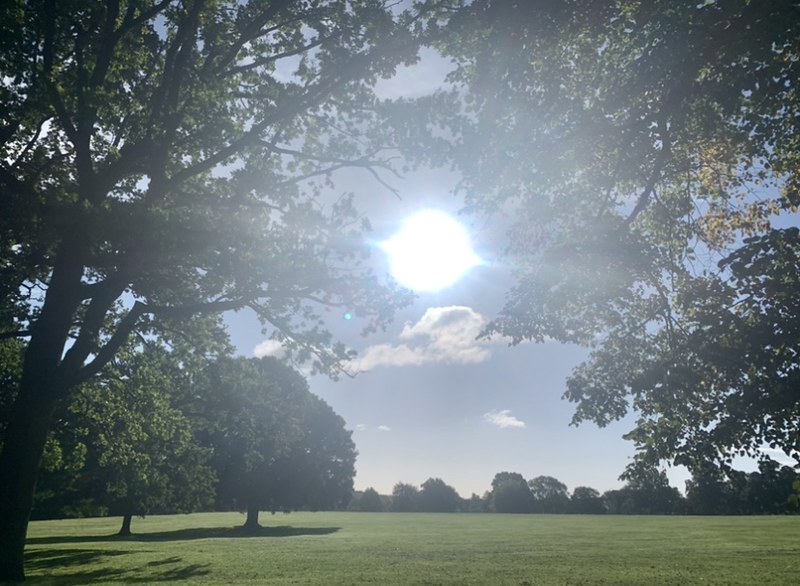
The Racecourse; I Imagine plenty of students and teachers alike will be aware of this location as it housed the university campus for many many years. As a budding criminologist I cant ignore the fact that the Racecourse has developed a rather unruly reputation for crime, I’ve personally never experienced anything and Ive lived in Northampton the majority of my life but thats not to say that it doesn’t happen, so as always be wise about your walk, perhaps avoid late night’s, let someone know where you are walking and stick to the street lights. The racecourse is a roughly 15 minute walk from the town centre and on good weather days offers views like this;

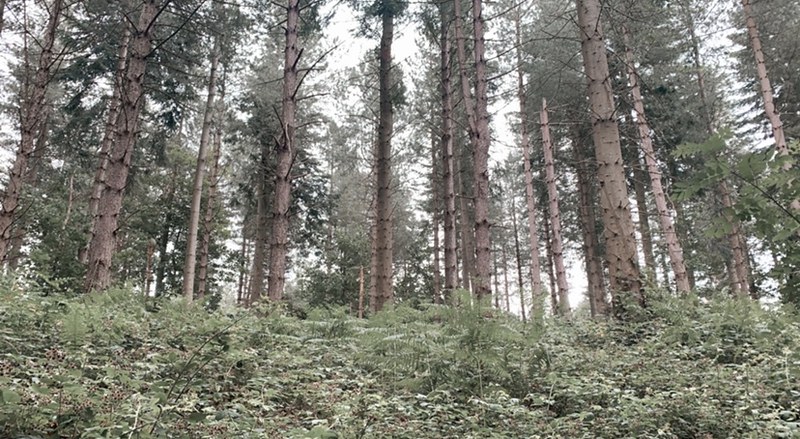
a-bit further afield: Harlestone Firs; I would recommend driving to this location if you can, there may be local busses that run in the area but I would recommend checking the COVID guidance with regard to bus routes. So Harlestone Firs is a fantastic location to get lost in the woods for a few hours, and I literally mean get lost… I have been there countless times and I still lose myself in there, but its a welcome loss. You’ll find endless amounts of huge ferns, fir trees, endless pathways and there is a working timber yard in amongst this location too. Wear boots for this spot I always choose my trusty Dr.Martens.
Brixworth Country Park/ Pitsford Reservoir; Another location you’ll likely need a vehicle to visit. This huge location offers a giant walk or a bike ride, you can of-course take your pooch with you too but keep them on a lead as theres plenty of cyclists at this location. I recently made the mistake of biking around here with the pooch on an extremely hot day and wow was that an interesting experience. There is paid parking on site or a little slip road you can park along. If you need to just take a few hours or even the whole day go and visit this location, take a packed lunch and sit and enjoy the view.
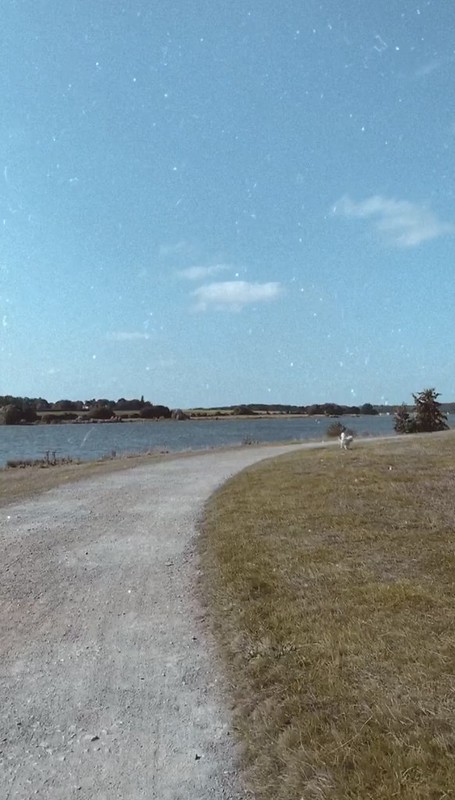
Here are some more locations that you may already know about and can explore during this lockdown, do make sure to check local COVID guidance, and even if you cant visit some locations now then make a note of them and visit them when you get a chance, Northamptonshire has such a vast amount of countryside to offer!
Becketts Park – Located just of the university campus offering a short distanced walk but plenty of wildlife and a nice view of the canals and lake.
Sywell Reservoir – You’ll likely need a vehicle to visit this location but you could also take the X46 bus (or X47?) Sywell takes around 2-3 hours to walk depending on pace, its one of my favourite spots as I grew up walking around this location.
Victoria Park and Dallington Park – Both are situated in St.James, and both are relatively small in comparison to the other locations but well worth incorporating into your daily exercise if you live within this location.
– Brackmills Country Park
– Delapre Park and Delapre Wood
– Earls Barton just of Doddington road, a pathway leading down to Summer Leys, here you can explore plenty of the river nene, beautiful views of the surrounding landscape and lots of horses!
– Rectory Farm fields; Here you can explore the fields (but be respectful of the farmers land) these fields stretch out to Overstone and Sywell, if you’d like to visit sywell reservoir and living within rectory farm then just take the fields route this route would take around 30 mins to walk to sywell reservoir and its well worth it.
So thats it for me, if you have any of your own suggestions not just in regard to walks around Northamptonshire but also how to keep your mind healthy during this next lockdown then please do comment any suggestions you might have, were all in this together!
If you’ve read this far then here’s one last quote to guide you into your day…
“The impediment to action advances action, what stands in the way becomes the way” – Marcus Aurelius
see below for references to guidance and advice.
- Counsellors – The Counsellors will listen to you and help you respond to the difficulties in your life, they will allow you to develop your abilities to address and resolve issues in your life. https://www.northampton.ac.uk/student-life/support/counselling-and-mental-health-team/counsellors@northampton.ac.uk
- Mental Health Advisors – The Mental Health Advisors will provide a private and comfortable space to discuss your mental health difficulties and work with you to develop coping strategies whilst studying. https://www.northampton.ac.uk/student-life/support/counselling-and-mental-health-team/
mha@northampton.ac.uk - Assist – Assist can give you advice and guidance for managing your disability whilst studying, for me they helped with a DSA application regarding my Anti-Depressant medication, the DSA application will give me the opportunity to have 6 appointments with the counselling team who can further help me work through my issues by providing me with a safe and comfortable space to talk. https://www.northampton.ac.uk/student-life/support/about-assist/ ASSIST@northampton.ac.uk
- Speak to your GP, they can refer you to the NHS Mental Health Services.
- https://www.nhs.uk/using-the-nhs/nhs-services/mental-health-services/how-to-access-mental-health-services/
- Other helpful support links (local and national)
- https://www.mind.org.uk/
- http://thelowdown.info/
- https://www.mentalhealth.org.uk/
Share this:


The industry of hope
There is expectation in hope that things will change. Every personal and social issue that is not going according to plan, all the adversities and the misfortunes, are placed on the anticipation that eventually, things will change. The conviction for the change is hope. Hope is a feeling based on emotions, irrational and inexplicable.
Hope is a refuge for those whose lives are wronged and feel unable to do anything but to hope. Millions of people hope for better days, better health, better relationships, better lives. This hope keeps expectations high even when you are told of the opposite.
Consider the following dialogues:
“The environment is changing, global warming, the pandemic and the economic recession. It looks like we’ve had it! We are one meteor away from a catastrophic event”. “I agree with what you say, but I hope that despite all these we will find a way out of all these.”
“Your crime is too serious; looks like you are going to jail”. “I hope the judge is lenient and maybe I will not go to prison”
“The tests indicate that your health has deteriorated, it is unlikely to change; I am afraid you have only a few months to live”. “I hope that God will listen to my prayer and cure me”.
“I do not love you anymore, I want to leave you! “Don’t break my heart; I hope you change your mind.”
All these have one thing in common. The respondent’s hope for something, despite the overwhelming evidence to the contrary. This unwavering conviction comes at a price! The entire world is built on an industry of hope. Institutions, systems, “experts” and many more who profit from the misfortune of others. One of the main benefactors in this industry is undoubtedly religious institutions and belief experts.
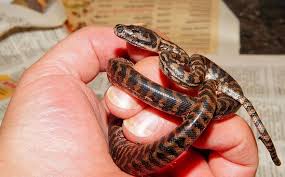
Some years ago, in one of my trips, in found myself in a monastery that has a tradition of snakes appearing on the day of the ascension of the Virgin Mary. The revellers regard it as a sign of good fortune and favour from her grace. I was in the monastery on a different day, when a group of boisterous Russian tourists were trying to buy some grace. The lady in the church was clear; a small bottle of holy water 3 euros, a small bottle of oil 5 euros. There were bigger sizes and of course for more certainty of hope, a purchase of both is indicated. Since then, it got me thinking; what is the price of hope?
Faced with a terminal disease, how much would any of us will pay to live a little bit longer? The question is merely rhetorical, because each of us is likely to pay according to what they can afford. There are those who may care less for themselves, but are willing to sacrifice anything for someone special; or a great idea.
Since the discovery of electricity, Victorian scientists dispelled the expertise of those charlatans that spoke with the dead and commuted with the spirits. Even though there have been mounting evidence against them, their industry of hope is still booming. People like to hope. They embrace its positive message. After all Dum Spiro Spero.*
There is of course the other side; Nikos Kazantzakis famously said; “I hope for nothing. I fear nothing. I am free.” It is liberating not to hope, but it is very difficult to achieve. Personally, despite experiencing negative situations, and even after meeting some naysayers armed with a sour face in life, I will never stop hoping that people are better inside and they can change and embrace their better selves. My hope, I fear, is incurable.
*While I breathe, I hope
Share this:


My Criminology Journey: Haley

The start of my criminology journey is not very exciting. I am not fully sure of how or why I ended up studying the subject. I was advised to study hairdressing at school as my predicted grades were not good enough for university, but the idea of trusting myself with a pair of scissors was very unnerving. I had a dilemma at college as I was unable to decide whether I wanted to study healthcare or construction – two courses which bore no similarity. In the end I give up trying to make decisions and studied A Levels because that was what my friends were doing.
University may as well have been on Mars at this point, as it was completely mysterious and unknown to me. Whilst at college, I was asked by my tutor to go to an open day at Oxford University. I saw this as an opportunity to unmask this university ‘thing’ for what it really was, so I agreed to go. I felt completely out of place throughout the day and found myself gobsmacked by the sheer privilege of the place, the culture and the students etc. At the same time, I was fascinated by the available courses, so I decided to continue my studies into higher education.
My first attempt at university did not go as well as I had intended it to. I had other issues to contend with at the time, so I dropped out after two weeks. However, in 2010 I enrolled at the UoN and never really left. I had a great time studying criminology at UoN as I thought that my course was very interesting and the teaching staff (aka @paulaabowles and @manosdaskalou) were spectacular.
I did not realise this it at the time but I was well prepared for critical criminological discussions because I came from a background where people would be demonized for a whole host of social problems – it was clear to me at the time that this was unfair. Whilst enjoying the course content I did have to make a considered effort to improve on my writing skills, but it was worth the effort as this improvement worked wonders on my grades. As an undergraduate, I used my overdraft and savings from working part-time jobs to go travelling at the end of each academic year, this was beneficial for helping me to understand criminological issues outside of the UK.
In 2015 I began teaching as an associate lecturer at UoN and I really enjoyed it. I also completed an MA degree in Social Research. To fast-forward to today, I now work as a lecturer in criminology – and this really is, beyond my wildest dreams!
Studying is not always a smooth ride for some, but if you work hard, you never know where you might end up.

Share this:


Solitude. (Ode to Bankass) #BlackenAsiaWithLove
I first began to respect solitude in Bankass, the village on the edge of the Sahara, in central Mali, in which I lived for two years as a Peace Corps volunteer. At that time, there were no wireless anythings – no WiFi, no, tablets, no Bluetooth, and certainly no smartphones. This was the late 90’s, well when that technology was just growing among consumers.
Early in the morning, just after morning prayer, you could hear radios in the distance, men roaming around in the dark with their personal transistors. AM, FM and shortwaves, men would just go for a morning constitution. In case you’re unaware, outside of the light pollution of cities, the world can be pitch-dark. Yet even then, the fuzzy buzz of short-waves roamed around in the pre-dawn.
I had one, too, a rather swanky, handheld short-wave radio, the final gift from my godfather as I left America. That’s how I got hooked on BBC Worldservice. Outside of music, short-wave BBC was the only English I’d hear in any given day. Plus, I had my own CD player and a portable-enough collection of favorites. There I was, alone in my hut with the bootleg CD’s of the latest hits I’d obtained in shops in the regional capital, Mopti, half-a-day away by bush taxi. Janet’s Velvet Rope and Madonna’s Ray of Light; in my solitude.
Luckily, music was everywhere. It was young people wanting to understand Hip-Hop that got me to teaching English in the village school. Even back in training camp, boys my age called on me to translate and explain the poetic lyricism of Bob Marley, and I was only a nascent fan back then. Still, young people there fully expected me to speak knowingly about that music, first in French, then in Bambara, too. To help my own French, I got my friend Ali to break down Black So Man to me man to man, line by line, and eventually graduated to singing in Bambara.
As I am not Muslim, I did not rise with the pre-dawn call to prayer; this mesmerizing chant soothed me into a morning daze. What an awakening! And then I’d drift off back to sleep. Shortly thereafter, I’d hear the men roaming around the village with their radios. Then after that, I knew the kids would show up.
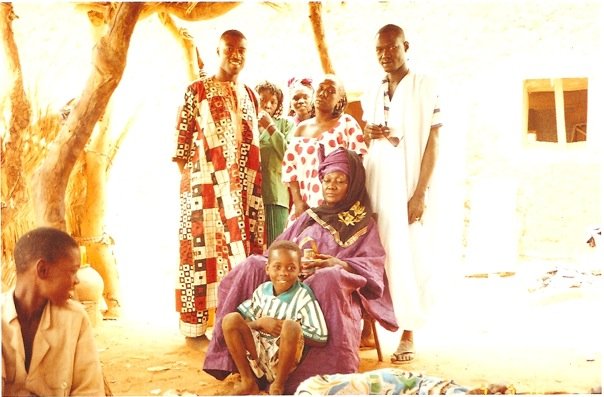
Just after morning prayer and breakfast, a group of boys – aged around 6-8 – would show up at my doorstep, knocking on my window, unable to conceive that any adult would sleep past morning prayer. “Moussa, Moussa,” they’d call out to me, using the name I’d been given by my host family in our training village. Enjoying the company and not wanting to disappoint, I would rise to their calls like clockwork. What would be this morning’s adventure before the kids were off to school? Could we tend to my meager garden which paled in comparison to the crops of millet their parents grew? Or perhaps, we could go fetch a few buckets of water at the local robinet, faucets of underground water, pumped into a tower, and sold for cheap in every neighborhood, compliments of the German government. Being the godson of Dan Massie, anyone who came around me had to be put to work – we could support each other in whatever needed to be done. Mind you, this was Dogon country, and so all the kids spoke Fulani and a few local Dogon dialects. Like me, they mostly learned Bambara in a classroom, not at home, so we were on the same level. Communication was fluid. Plenty of solitude, but I was never lonely.
Share this:

The power of the written word: fact, fiction and reality
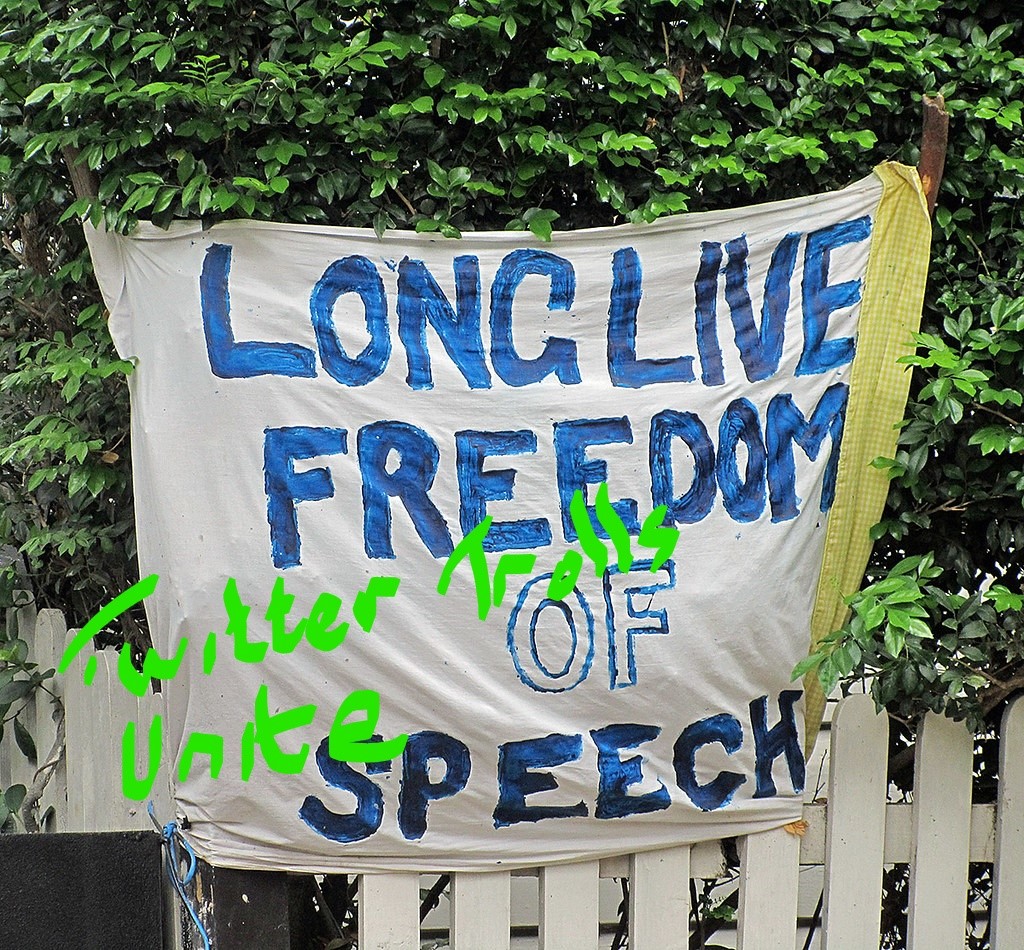
The written word is so powerful, crucial to our understanding and yet so easily abused. So often what gets written is unregulated, even when written in the newspapers. Whilst the press is supposedly regulated independently, we have to question how much regulation actually occurs. Freedom of the press is extremely important, so is free speech but I do wonder where we draw the line. Is freedom of speech more important than regulating damaging vitriolic hyperbole and rhetoric? Is freedom of speech more important than truth?
We only have to read some of the sensationalist headlines in some newspapers to realise that the truth is less important than the story. What we read in papers is about what sells not about reality. The stories probably tell us more about the writer and the editor than anything else. We more often than not know nothing about the circumstances or individuals that are being written about. Stories are told from the viewpoint of others that purport to be there, or are an ‘expert’ in a particular field. The stories are just that, stories, they may represent one person’s reality but not another’s. Juicy parts are highlighted, the dull and boring downplayed. Whilst this can be aimed at newspapers, can the same not be said about other forms of media?
A few weeks ago, I was paging through LinkedIn on my phone catching up with the updates I had missed. Why I have LinkedIn I don’t really know. I think its because a long time ago when I was about to go job hunting someone told me it was a good idea. Anyway, I digress, what caught my eye was a number of people congratulating Rachel Swann on becoming the next Chief Constable of Derbyshire. I recognised her from the news, remember the story when the dam was about to burst?
It wasn’t the fact that she’d been promoted that caught my eye, it was the fact that someone had written that she should ignore the trolls on Twitter. I had a quick look to see what they were on about. To say they were vitriolic is an understatement. But all of the comments based her ability to do the job on her looks and her sexuality. I thought to myself at the time, how do you get away with this? I doubt that any of those people that wrote those comments have any idea about her capabilities. Unkind, rude and I dare say hurtful comments, made that are totally unregulated. The comments say more about the writers than they do about Rachel Swann. You don’t get to the position of Assistant Chief Constable let alone Chief Constable without having displayed extraordinary qualities.
And then I think about Twitter and the nonsense that people are allowed to write on this medium. President Trump is a prime example. There isn’t a day that goes by without him writing some vitriolic nonsense about someone or some nation. Barack Obama used to be in his sights and now it’s Joe Biden. I know nothing about any of them, but if I follow the Trump twit feed, they are incompetent fools and disaster looms if Biden is elected as president. As I said before, sometimes what is written says more about the writer than anyone else.
I’m conscious that I’m writing this for a blog and many that read it don’t know me. Blogs are no different to other media outlets. If I am to criticise others for what they have written, then I ought to be careful about what I write and how. I have strong views and passionately believe in free speech, but I do not believe that the privilege I have been given allows me to be hurtful to others. My views are my views and sometimes I think readers get a little glimpse of the real me, the chances are they have a better idea about me than what I am writing about. I write with a purpose and often from the heart, but I try not to be unkind nor stretch the truth or tell outright lies. I value my credibility and if I believe that people know more about me than the story, I owe it to myself to try to be true to my values. I just wish sometimes that when people write for the newspapers, post comments on Twitter or write blogs that they thought about what they are writing and indulged in a bit of self-reflection. Maybe they don’t because they wont like what they see.
Share this:


‘Honours’ is also a Black Lives Matter issue

Part 1 of a two-part post on the Honours System
Growing up Black, being told Black people are criminals, lazy, stupid, thieves, rapists, illiteratre, how do you think society rewards those that exceed white expectations? When I see people that look like me accepting Honours from the establishment, I wonder what they are thinking. That when I see them with those three letters after their name, I remember the stories I read – about Nanny and the Maroons; and those about Morant Bay, where red-coated soldiers slaughtered children and pregnant mothers where they stood – and how the Arawaks jumped from Grenadine hills to avoid enslavement; how my ancestors were confined to those death camps we call slave plantations, where they were raped, tortured, killed… what I call a Black Holocaust.
The same system of oppression that kidnapped us from the African continent, forced Black people to endure Middle Passage and be thrown from the Zong, is a version of the system that orchestrated the Windrush Scandal, treats the Grenfell victims with contempt, and allowed London Met’s racial bias to run brigand throughout the Stephen Lawrence Inquiry (1993/94). That while we have been the victims of institutional violence throughout history from the establishment, we are also some of its proudest members, particularly with activists, academics and community workers.

There are people in my own community who have these awards; Black people and white people, in addition to people who are women and working class. This award carries with it a jingoism I saw in [hard] Brexit fever, harking back to the days of Suez, slavery and the Potato Famine. This insistence that Britons from Black and Brown backgrounds should be the diversity in a society that has shunned us since the days of Granville Sharp and the Black Poor. That in having Black and Brown people accepting Honours, it makes them okay for everyone else, because diversity:
“often creates a happy impression; it is how an organisation appears welcoming to those who appear different by drawing on those who appear different. Diversity can appear as an invitation, an open door, translated into a tagline: minorities welcome! Come in, come in” (Ahmed, 2018: 334).
To honour Black Britain in this way is a dishonour (especially during Black History Month and post-George Floyd). To honour people who are working class, women, gay, trans… in this way is a dishonour – since colonialism discriminated on more grounds than just race. That deserving people, especially still during Coronavirus, have been honoured – NHS staff, educators, and more – but when British history holds so much violence, how can one in good conscience accept that on the shoulders of your name?
For me, the British Empire is more than a historical footnote to a darker time in British history. It’s inside my identity: my ancestors’ blood, sweat and tears, which is my blood, sweat and tears. My last name, my slave name is the crime scene. My being, is an everlasting symbol of trauma and violence in this winter of our discontent that I cannot walk away from. When I think how both Benjamin Zephaniah and Ken Loach declined Honours, it gives me hope. But when I see Labour MPs with honours, it’s a disrespect to how the Jews and the Irish kicked Oswald Mosely out of Cable Street; it’s also in contempt of how Rochdale millworkers stood in solidarity with enslaved African-American during the Lancashire Cotton Famine.
Yet, in the 21st century, where more people that look like me are writing books and speaking out, could it be down to empire not being taught on curricula to the reason why so many accept these awards? Is there an “I’ve made it” attitude from my parents’ and grandparents’ generation? Do my generation simply not know their history, so do not understand the significance? Though, I wonder if people that look like me think about the history when they accept these awards. That while they are “honoured”, I can hear the establishment cackling in the aftermath of Stephen Lawrence and Hillsborough, Jamaica 50, Grenfell and the trauma of stop and search.

In closing, how can anyone know the history and accept the (dis)honour, in the strong arms of colonial laws that stopped people who were Black / Brown, working class, women, gay, trans or had disabilities from realising themselves? And while Black and Brown activists are some of the establishment’s proudest members, they are overrepresented in the morgue, because of inequalities enabled by murderous policies that disproportionately impact people of colour. Evident now in COVID-19. And in the language of today, these are “unprecedented times”, or so they say.
Growing up British-Caribbean, it’s safe to say that I feel like an alien among my own people. That my relatives would accept an honour on the basis, that “they’ve made it” in the “Motherland.” I know them and many of their friends would go to stately homes unhindered by the qualms of colonialism. To dine in halls that would have hosted slave traders like John Locke, Sir John Hawkins, George Washington and members of the Royal African Company. Do I judge those that accept Honours? Not all of them. I have bigger issues with the system, and the educated – activists and historians,
the politicians… who should know better. Many of whom, whose work I have an enormous respect for. Which begs the question, did the sun ever really set on the British Empire?
Share this:


Witches and warlocks
Time and time again we revisit previous times of our lives, especially when trying to come to terms with unprecedented realities. Society works with precedent and continuity that allows people to negotiate their own individual identities. We live in a society that fostered the culture of the one, and played down the importance of the collective, especially when people in positions of power declared that they can do more with less.
One pandemic later, and we clapped at the heroes those we regarded as needy money-grabbers previously, those we acknowledge now, that we previously cast aside as low skilled workers. One pandemic later, and social movements came to prominence, asking big questions about the criminal justice system and the way it interacts with those numerous people, that are not perceived as “mainstream”. Across Western countries, people are registering the way the system is operating to maintain social order, through social injustice. Each case that appears in the news is not an individual story as before, but are becoming evidence of something wider, systemic and institutional.
Covid-19 affects people, and so we must maintain social distancing, cover our faces and clean our hands. Clear advice from WHO about the pandemic, but people also die when they drown as refugees crossing troubled waters. People also die when someone puts a knee on their throat (who knew?), people die when they have to deal with abject poverty and have no means to cover their basic subsistence. People die, and we record their deaths but officially some of those are normalised to the point that they become expected. Every year I pose the question about good and evil to a group of young adults who seem uncertain about the answer.
I was recently reminded of a statement made a long time ago by Manos Xatzidakis in relation to the normalisation of evil: “If you are not afraid of the face of evil it means that you have become accustomed to it. Then you accept the horror and you are frightened by beauty”. When we are expecting death for seemingly preventable causes, we have crossed that Rubicon according to Xatzidakis.
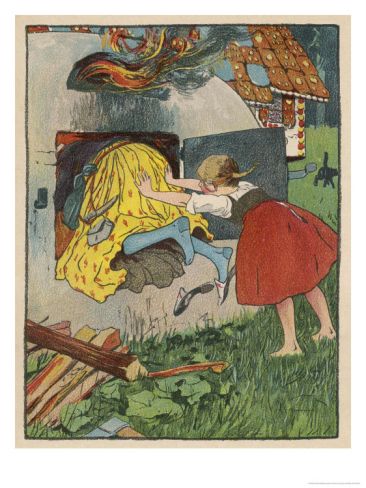
As a kid, one of my favourite stories was Hansel and Gretel. Like all fairy-tales it has a moral signature and is a cautionary lesson. In my mind it contracted the first image of evil, that of a witch. The illustration made it very real, but also quite specific. An oversized, badly dressed witch, with an unsatisfiable taste for children’s flesh. It was the embodiment of true evil. In later years, reading The Witches by Roald Dahl exacerbated the fear of this creature, seemingly normal but with layers of ugly under their skin. The evil that was on the face of the beholder, their intentions clear and their behaviour manipulative but clear on their objectives. This, I learn as an adult, is an evil that only exists in stories.
This kind of witch, is a demonstration of the social vilification of women and especially those who actively try to challenge the status quo, but not the evil that runs in our societies. The construction of social demons is a convenient invention to evoke fears and maintain order; well that is something a sceptic may say…but social scientists ought to question everything and be a bit of a sceptic. In my version of the fairytale the wicked witch is pushed into the oven by Hansel and Gretel, the image of her oversized bottom sticking out, whilst the rest of her body is consumed by the flames.
Admittedly, I was too old to get into the Harry Potter genre and read the books but the image of his opposition made it to popular culture. The “He who cannot be named” became another convenient, albeit complex, evil capable of unspeakable evils. An icon in its own right of the corruptive nature of evil.
The reality of course is slightly different. The big evils do not get extinguished with flames or other means. They do not cease and there is not necessarily happy ever after; social injustice and unfairness is continuous and so is the struggle to fight them. The victories are not complete, but gradual and small. If the pandemic shows us something other than death and heartache, it is the brittleness of life and the need to ask for more in a society that is geared to prime individualism over social solidarity. It is perhaps a good time, for those who never did, to engage with social movements, for those who left them to return and all find their passion of sharing human experience, that is predicated on equality and fairness.
Fairytales, are interesting insomuch of giving us some moral direction but they do not help us to understand the wider social issues and the actions people have to take. The witches out there may not carry brooms and mix spells in cauldrons but evil carries indifference, apathy and lack of empathy. As Edmund Burke said “The only thing necessary for the triumph of evil is for good men to do nothing”, now that is true evil. After all, is there such a thing called evil or are we content with finding easy answers?
Share this:


Children will be Children only Once: COVID and the 100 Acre-Paradise
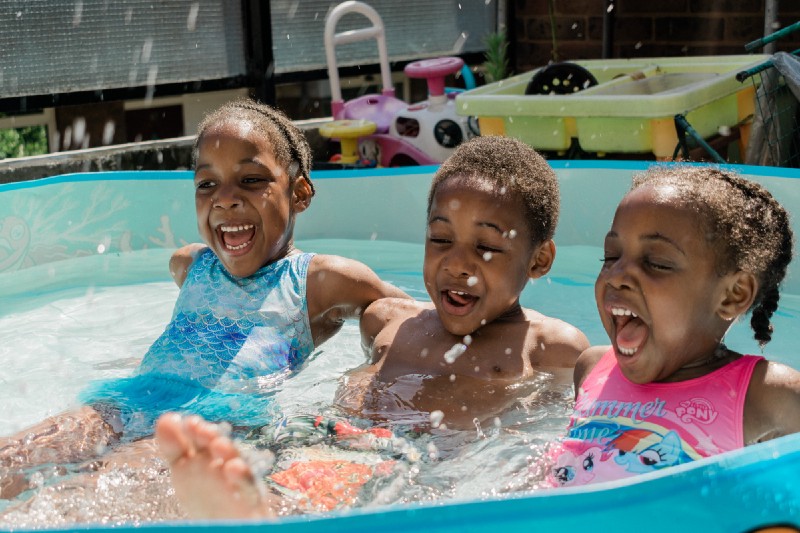
Since children have gone back to school, there’s been a lot of umming and arghing about whether it’s safe to go back. Having lived with my younger brother more closely these last six months since the lockdown, I have seen him become more in tune with himself. What I have also seen is a shift in what it could possibly mean to be a child in this world, as the gap widens between innocence and experience. When I was a boy, for me, innocence was Winnie the Pooh and the 100-Acre Wood and reading Enid Blyton novels. My brother is twelve years my junior and is really the first generation to grow up with the internet. There are a few saying that the Coronavirus pandemic has taken away this generation of children’s innocence.
However, I am not sure if there was any innocence there to begin with — growing up with the internet, social media and influencers alike.
At twelve, I had MSN and Myspace but his peers have Facebook, Twitter, Instagram, Snapchat, Tik Tok and more, and are more exposed to the ills of the world than I was. I’m not saying today’s 20-somethings grew up without the internet. Simply, we were on the margins of both worlds. Born in 2008, he will never know a world before YouTube. In April, an article entitled ‘Coronavirus isn’t the end of ‘childhood innocence,’ but an opportunity to rethink children’s rights’ was published by The Conversation. Not only is this the time to rethink their rights but also what it means to be a child in the twenty-first century. As despite there being just over 10 years between us, that is long enough to entertain a sort of generation gap.

Whilst I was born in 1995, growing up in the 2000s, he will never understand why Pokémon was all the rage. That despite Pokémon still being around now (like Pokemon Go), it’s not what it was. When I was ten and twelve, Pokémon was it, including those Game Boy cartridges. What about Tamogotchi, Jetix and Toonatic? Despite being an active user of social media now, this is a new feeling for me, since this stuff wasn’t a dominant when I was younger. To put into context, I was eight when Facebook (2004) was launched, nine with YouTube (2005), and ten with Twitter (2006). And I was sort of banned from social media until I left school.
At fourteen (2010), Instagram was launched. Social media is not something I was born into but it’s something that just arrived as I progressed through my formative years.
In 2017, Simon Curtis’ film Goodbye Christopher Robin was released. A film about children’s author A. A. Milne, with Domhnall Gleeson in the lead role. It follows Milne and his relationship with his son, Christopher Robin Milne. His son went on to inspire Christopher Robin in the Winnie the Pooh stories. Here was a film that shows childhood innocence being stripped away with both Billy (as he was known) becoming a child celebrity, and growing up under a father with shellshock from war (today, PTSD). This picture shows the life of a child that carried the weight of the world on his shoulders and came through it “okayish” in the end. However, did it have to be that way?
It’s a story that shows children at their most innocent — from the direct approach of asking questions to their frankness, to loving-nature and playfulness, and jolly humour. And despite COVID, which has impacted everyone to varying degrees, children continue to show their resilience. The pandemic may have interrupted their childhood but their innocence to some extent has not been lost because it wasn’t there to begin with — in a society that is global and information has never been so accessible, the ability for children to be naive has fast slipped away, unlike when my parents were kids. My parents protected me from a lot when I was ten and twelve (2005–2007) which is not as easy over a decade later for my brother — a time where information is more accessible and where trauma can be streamed onto a smartphone or tablet.
What I admire most about parents today is how they parent between the wide-reaching spectrum of innocence and experience. Now having to discuss Black Lives Matter and racism with their children, not just in reaction to societal trauma, but because it is right. From discussing police violence to the slow ‘drip-drip’ of racial microaggressions and the legacy colonialism left behind. Being a parent in 2020 in this “perfect storm”of Coronavirus and Black Lives Matter… it looks tough, but children are often more open than grownups and are constantly full of surprises.
On what would become Winnie the Pooh, Domhnall Gleeson’s Milne says “the creatures in the story are toys — they’re toys but the woods are real.” The days of my early years are gone now, playing in the woods of Salcey Forest without a care in the world. The winds have changed. I grew up on the margins — on the faultlines of a new world. To my brother, as there is over a decade between us, I am a relic to a bygone era. I am a person that does not remember 9/11 outright but also someone that remembers how it made other people feel. I am someone that remembers how the world wasn’t the same after that, and then the wars in both Iraq and Afghanistan, trauma porn on BBC News at Ten.

When I watch him online with his friends playing videogames, am I seeing innocence, an innocene applicable for his generation and generations to come? When he’s at drama engaged in theatrics and dance, am I seeing it again? Childhood innocence is ineffable and it alters from generation to generation. Do children his age have more in common with the children that lived through the Spanish Flu pandemic (1918) than they do with me? Maybe that’s a stretch. Where is the line between innocence, ignorance and experience? To no longer believe in Father Christmas or the Boogie Man, or the Tooth Fairy, creatures and monsters in the closet. And to not see the sadness behind your parents’ eyes when they pick you up from school.
He (my brother) is often asking me if I am okay. “Are you okay, Tré?” he says. “Are you okay?”
Innocence is more than ignorance and / or lack of experience. I suppose it can often feel like magic — going to the cinema and shutting off for two hours, excluding yourself from the society outside. Maybe this is why I associate popular culture so heavily with feelings of innocence — Paddington Bear and his marmalade sandwiches included. And other things, like Christmas; and Easter eggs; and stories of seagods and mythical beasts — things so divorced from this war-torn world of rationality, as if that is all there is to hang on to.
Childhood innocence is a myth but the perception of it is clung to. Yet, we cannot deny the fact children all experience sadness and grief, pandemic or no. And for children that have experienced disease, hurricanes, earthquakes, poverty, and traumas — but also the children that experience racism and xenophobia — COVID-19 and Black Lives Matter will not be the first time they are faced with reliving those traumas. Yet, in the West, where concepts of “childhood innocence” are most dominant, this may be a chance to decolonise these concepts, which really are only most prevalent when you walk through halls of middle-upper class straight, cis, white, male privilege — somewhat very 19th/ early 20th Century — from Victorian novels to Disney princess films.

I remember when he was born and I often have to stop myself thinking about him as a small child when he will be man before long. What the pandemic is also showing is that children still need to be allowed to be children. Most of us are taking precautions to protect ourselves and our families (quite rightly) but like many diseases, I am thinking Coronavirus is simply one more that we will all have to grow accustomed to, following our ancestors that lived in a world post-Spanish Flu which was then followed by an economic crisis (1929) and the Second World War. Despite COVID and the biggest anti-racist movement in history, as well as a tattered economy, children will still find ways to be children and they must always find ways.
And whilst this concept of “childhood innocence” is mythic, that does not make it negative. That spirit that comes so naturally to children should not be stifled with excuses like “it’s time to grow up now” (there’s plenty of time to adult later). Despite the myth of innocence, children will be children only once. Like the Spanish Flu (1918) and The Bubonic Plague (1665) before COVID, children must be allowed to exist in their ‘100-Acre Paradise’, whatever that looks like. No matter our locale, children have always found ways to express themselves in the ways that come most naturally to them.
What I do know is that he is very happy to be back at school seeing his friends and teachers, despite the measures; the classroom can be a 100-Acre Paradise and the world my parents are raising him in is not the same as the one in which they raised me.
Share this:

Time to meet our newest colleague: Jessica James

It is quite difficult to write an introductory blog, introducing yourself to new, current and Alumni Criminology students at UoN when you have been there for the past 8 years as either a student or member of staff. What is particularly difficult is figuring out where to start: how do I (re)introduce myself to students, both past and present? What do students want to know? What am I willing to share? What follows is a brief overview of my own journey as a student and with the UoN, as well as a some ‘fun’ (I use this term very lightly) facts about me.
I began my criminological journey in 2012 at the UON. I lived in halls, and had no previous knowledge of anything criminological (or so I thought). I had studied Philosophy and Ethics at A-level which proved helpful throughout my degree (and life in all honesty), but I had not studied psychology or sociology before. I don’t have the fondest memories of year 1; it was all quite overwhelming and A LOT of information to absorb and try to make sense of. And in all truthfulness my grades for the first year were not great (by my standards at least). I think I had feedback from every assessment throughout that first year telling me to check the Harvard Reference Guide! And thankfully in the summer between year 1 and 2, I did check the Guide, in fact I studied the full 100 odd page guide, and never looked back (well occasionally).
Year 2 I decided I was going to get serious about my studies, and serious I got! I didn’t miss a session, I read pretty much everything on the reading lists for my modules and found my voice in a number of seminars. I would say that in comparison to year 1, I really enjoyed my second year of Criminology, especially the placement (yes: even I have completed the placement report and presentation). And my grades reflected the commitment, passion and seriousness which I had applied.
Year 3 was pretty similar to year 2, although the stress levels were heightened. I loved my dissertation, which was an empirical piece on single parenthood and fears around juvenile delinquency. I also loved all the modules I took in year 3, which I cannot say the same for the previous years (sorry team)! Year 3 is when I realised that I would never be bored in Criminology. That is not to say that I do not find some topic areas less interesting than others, or that there are not some theories or perspectives that I do not agree with. But they are not boring (although some topics areas are pushing it). So in one way or another I had decided that my academic journey in Criminology would not end after graduation. And it didn’t.
I became an Associate Lecturer the September after I graduated, and have been on True Crime and Other Fictions and The Science of Crime and Criminals since that first year. I have also led seminars in Research Methods for Criminology, and taken lectures for Violence: From Domestic to Institutional. And basically I never left!
Alongside my AL role, I have completed my MSc in Criminology from the University of Leicester (would have done it at UON but they do not run one: cough cough). I had assumed I would continue my focus on juvenile offending in some capacity, but no I took an entirely different route to one I was familiar with and completed an empirical dissertation on The Prevalence of Rape Myths. Going forward I will hopefully do a PhD, and I currently envisage it being within the realm of Violence Against Women (VAW): but who knows?
In terms of ‘fun’ facts about me, you can know the following:
- I have two house rabbits who are both 6 years old, and have chewed every note book/pad I have ever owned. If the connection goes via online teaching, they might be responsible
- I adore pretty much all of the Disney animations, yes even the outright racist and misogynistic ones
- I eat chocolate every day without fail: pretty sure my body would just stop without it. The same goes for coffee
- And shocker: I love to read!
So to all new Criminology students, I look forward to meeting you (albeit virtually for the time being) and to all returning students (most of whom I shall have met in some capacity) I look forward to meeting you again! And finally I look forward to the next stage in my academic journey as a Lecturer in Criminology.
Share this:


More Grotesque Black Death #BlackenAsiaWithLove
Each time I turn on the news I see more black death.
It’s grotesque. In my country, ‘Merika, there are peaceful protestors all around the country combatting police violence. Initially, when George Floyd was murdered, these peaceful protests spread across the world, as folks rose in solidarity for peace against white supremacy in America. Many more Black bodies have died in dubious police circumstances since. In the popular rhetoric, sadly, the peaceful protestors are held to account for the violence sweeping our streets. One of Dr. King’s major battles was to convince a people who’d been born into a nation of violence, how to be peaceful; we are a nation born of violence. Dr. King believed and taught that “non-violent resistance… [is] a courageous confrontation of evil by the power of love” (King, Stride, 80). That was just to boycott the local busses in the 1950’s. Working people choosing to spend their hard-earned money as they pleased, and still Jim and Jane Crow showed up to verbally and physically harass each one of them. By the 60’s Black university students worked in solidarity with students of all colors to teach, preach and practice non-violent civil disobedience.

It’s in bad faith to focus on the rioters and overlook those attempting to exercise their first amendment rights. I say “attempting,” because even the lone Black woman in Kentucky house of representatives, Attica Scott, can be arrested in our hometown for peacefully protesting #JusticeForBreonnaTaylor, #AtticaScott4Ky. Without the 1st amendment, there’s no second. And let’s not forget all those anti-mask protestors that showed up at city and state halls around the country – in 2020 – armed to the teeth, so-called peacefully protesting any ordinance to protect ‘us’ from the spread of CoVit. How peacefully will the po-po resolve this conflict instigated by their own violence? The white supremacist way, of course. Look at 45, head hood and chief of their klan. “’Cause God’s stopped keeping score,” as George Michael sang.
Back then leading the cause of segregation, we had white supremacists like 4-term Alabama governor George Wallace, and Birmingham public safety commissioner, Bull Connor, (in)famous for sending in fire hoses and attack dogs against children peacefully protesting. Right now, there are all kinds of icons named after ole George. Just a few years ago, I went to my little cousin’s high school basketball game in Tallassee, Alabama, and the public high school gym was named after good ole George’s wife, who’d held onto his governorship for a bit because law forbade him from serving consecutive terms. It’s as if only a few strong survivors believe us when we speak about how white supremacy has its hooves on our necks. It tuns out 8 minutes and 46 seconds changed that.

Read, will you, what good ole George said in a 1986 interview about sending in troops to squash the peaceful protests in Birmingham, after those four little girls got bombed in the 16th Street Baptist Church, on a Sunday in September 1963. As you’d expect, no one was held to account. The good governor says:
“I sent Colonel Lingo there because they were, there was some trouble there, we tried to maintain law and order, we’re not trying to maintain segregation there, it was a matter of law and order, and uh, as I recall that nobody got hurt in any of the things, in the demonstrations, uh, except that whoever those evil mean, minded men were who had something to do with the blowing up of that church.”

Sound familiar? Sounds like 45. Like then, today’s protestors are regularly intimidated and assaulted by the police and troops. This too often seals the cycle of violence instigated by the police, who are further instigated by the commanders and their chief.
It’s grotesque, and understandably, even more grotesque to look at, if you’ve rarely looked at it before, tucked it away, and not thought about it because it did not impact your daily life. “It’s hard to love, there’s so much to hate,” and you sang along. You knew it was happening, but your eyes betrayed you, and because you didn’t see it in your neighborhood, in your schools and streets, you let your faith in humanity go.
You let yourself believe that we, Black people, did something to deserve to be the nightly feature on the news: Weather, sports, celebrities, national headlines, and the local Black criminal; that’s literally fed into our homes each night on the news. And if you’ve been spending your time with Fox and ilk, then certainly you’ve been trained in a language that pits them against us, and posits losers and sinners against the righteous folks like you who are just trying to make it in this world. How could the Blacks live such a radically different existence? You lie to yourself and say that they can’t, that all the opportunities they lose are theirs alone. It’s all down to individual decisions, just like you. We each chose our own fates, right? There’s no system, and certainly no systemic oppression. F #MeToo, too, you say… at home with only the family and kids to hear. The kids repeat it at school, grow up and vote like that. They cycle repeats, whiteness is rendered, effectively, invisible. Only the Blacks are not acting right.


