
Home » Criminology (Page 33)
Category Archives: Criminology

#CriminologyBookClub: The Strange Disappearance of a Bollywood Star
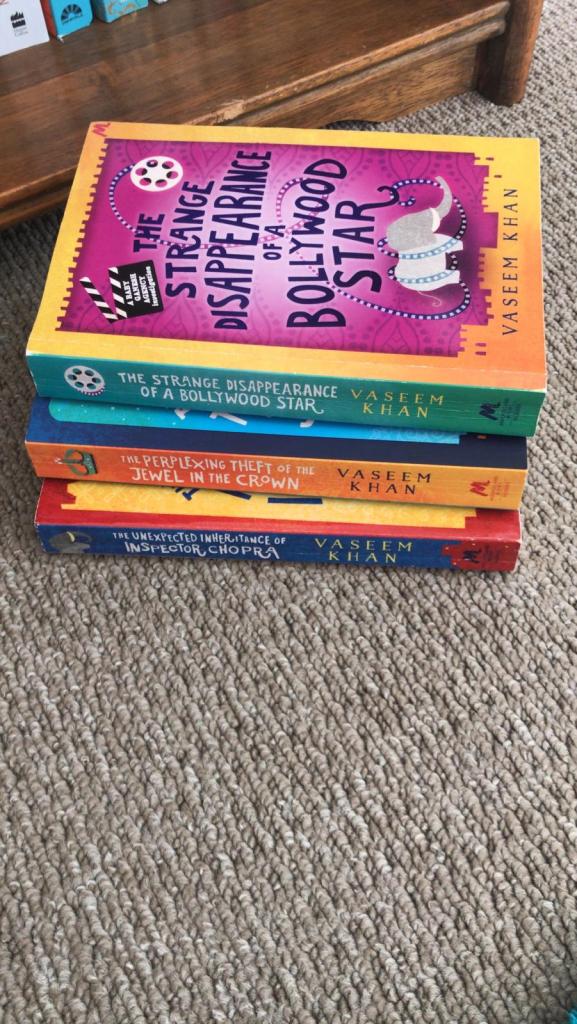
As you know from our last #CriminologyBookClub entry a small group of us decided the best way to thrive in lockdown was to seek solace in reading and talking about books. Building on on what has quickly become standard practice, we’ve decided to continue with all bloggers contributing! Our seventh book was chosen by all of us (unanimously) after we fell in love with the first and second instalment. While we struggled with fitting in the discussions of book club, due to the rigours of an academic term, we all found space for reading about the adventures of Inspector Chopra (retired) et al.:
I find the predictable happy endings of Vaseem’s novels to be quite comforting, especially during such an unprecedented time. What I enjoy mostly about these novels is that each has a moral message. In this novel it is characters like the blind homeless teacher, the prison inmates and the eunuchs that remind me that we should all try to be better people, as this will help to build a better society. The Chopra series continues to be a top lockdown read.
@haleysread

The 3rd mystery for Inspector Chopra brings him to the glittering world of Bollywood. An unusual place for the inspector and his pet elephant who seems to enjoy the attention conjuring images of other elephants working in the entertainment industry. This instalment of the crime mystery novels seemed to have matured the characters, giving their relationships more depth. Even the acerbic mother-in-law grows in ways to give us a greater understanding of their lives. The combination of the everyday with the obscure is done seamlessly and makes the surrealism even more profound. Even the pachyderm, gains more of a character reaching the intellectual age of a rebellious teenager. In the end, the mystery is solved, revealing some more social injustices behind the façade of the sparkling movie industry. As always we are left, wanting more.
@manosdaskalou
The third Chopra book was a welcome return to familiar and colourful characters. This was my favourite book in the series so far for its strong themes of kindness and reflections on what it means to be a good person. The subplot was just as gripping as the main story and lovely Ganesha kept me smiling throughout.
@saffrongarside
You could be forgiven for ignoring the plaudits on the first page of most novels, consigning them to the usual blurb written by reviewers that feel the need to say something nice to aid publicity and sales. In this case you would be foolish to ignore the plaudits, if anything they are somewhat understated. Having read the first two books in the series I picked this up with anticipation and excitement. I wasn’t disappointed. Transported to a world of vivid colour, pungent and aromatic smells and the hubbub of a bustling metropolis, the description of Mumbai and its citizens fuels the imagination and leaves the reader eagerly turning pages. The bifurcation of the storyline means there is never a dull moment, Insp. Chopra (retired) has his hands full and as a consequence ‘The Baby Ganesh Agency’ has to make use of its ever-increasing, albeit quirky staff and associates. And so Rangwalla, Chopra’s sidekick finds himself in a rather trying and unusual circumstance. Of course, what is now becoming the indomitable Ganesh gets his usual share of adventure and inevitably saves the day at some point aided by Poppy, Chopra’s wife and rock. The book is a triumph as it provides wonderful descriptions of both the lighter and darker side of the city and its residents. As usual good triumphs over evil but in the case of Chopra’s nemesis, ACP Rao, the door has been left firmly open for more mischief to come.
@5teveh
Rarely do I get the opportunity to read a book that I struggle to put down. A book that put a smile on my face and gave me a warm feeling at its conclusion.
The third instalment of Chopra and gang is just as delightful and entertaining as the previous novels. For me, the third story in the series has crossed over to the fantasy genre, whereas the previous two were toeing the line. I want to make it abundantly clear: this is not a criticism of the book. I still loved every page, as I have with the others. But for me, when reading I felt as if I was in a fantasy world with villains and heroines, magical elephants and mystical tales. The realism was somewhat lost on me this time around.
What I absolutely adored about ‘The Strange Disappearance of a Bollywood Star’ was how Vaseem Khan beautifully tackles the topic area of prejudices. Rangwalla’s journey in this book was possibly my favourite aspect of the Inspector Chopra series so far. Rangwalla attempts to face his prejudices; and in a way that mirrors reality. Vaseem has reminded us through Rangwalla’s experienced that our prejudices need to be constantly put in check, and this requires a conscious effort from us all. Roll on book number 4!
@jesjames50
If ever a year called for some escapism, 2020 certainly did. Fortunately, @vaseemk2’s tales of Inspector Chopra et al. have provided that, in bucket loads. The books transport me to a place I’ve never been, the heat, the colour and the vibrancy recreate India in front of my very eyes. The third volume in the series, is probably my favourite to date. The sparkling glamour of Bollywood, juxtaposed against dark issues of discrimination, prejudice and social injustice, creates a story which will stay with me. In particular, the bringing to life of the eunuch community and the recognition that prejudice is within us all and can be combatted, gave me a great deal of pause for thought. With it’s overarching themes of kindness and striving to do the right thing against all odds, this book captures the (hopefully) enduring lessons of lockdown, that we all need each other.
@paulaabowles

Share this:


Covid -19: An opportunity too good to miss
And so, vast swathes of the country have gone into a new lock down (tier 4). We all must have known in hearts that this was coming and those of us that are not in tier 4 will be wondering just when the new lock down will hit us. We can all moan about our ruined Christmas and feel bitterly disappointed about not seeing relatives and friends. We can blame Boris for this monumental cock up, but we have to face facts, Covid -19 is here and something has to be done to stop the spread of the disease.
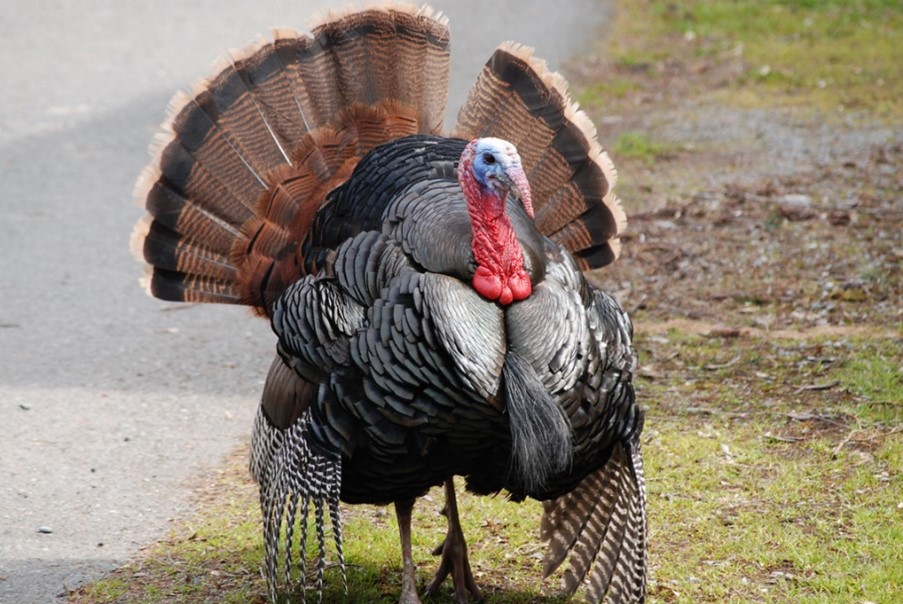
I, like so many, am upset that I will not be able to see my family in person this Christmas but over the last few days I began to wonder just how much of a hardship that is. There was a man on the news the other day that was moaning about the Christmas restrictions, he and his wife had a 15 lb turkey that was now going to waste. My first thought was, so you’d rather catch Covid you *^&$£” **. But this morning I thought, aren’t you lucky to have a 15lb turkey and, as my wife and I discussed whether we will be having a roast on Christmas day and the Sunday after, I thought aren’t I lucky too. There are two things that strike me, I’m able to have what food I want on Christmas day and I’m saving a bloody fortune not having to have all the family round or take them out for Christmas dinner and drinks. The pandemic has some upsides.
But, this is the crux of the matter, how can I sit down to my Christmas lunch knowing that I have money I would have spent sitting in the bank when there are people out there who will be wondering right now, not about the massive turkey, or the family not coming round, or whether to have chicken on Christmas day and Sunday but, whether they can feed themselves and their family tomorrow, let alone Christmas day. We could of course blame Boris and his government (a very rational decision) but judging by Reece Mogg’s comments the other day, they have little interest. We could just ignore it, don’t think about it, pretend all is well and on Christmas day raise a glass to our nearest and dearest and those that we are missing. But as we must face facts that Covid – 19 is here, so must we face facts that people, real people, are starving in this country. It shouldn’t be like that, but it is.
So my wife and I have decided that we will work out how much extra we would have spent this Christmas, by going out, by going to parties, by catering for family and we will spend that money on food and give it to a food bank. It won’t be very much in the greater scheme of things, but it will be something. I’m not writing this blog to say how marvellous we are, far from it, but rather to challenge all of you to do the same. Even a little extra in your shopping before Christmas is going to make a huge difference. Let’s turn this Christmas into one we can remember for the right reasons and turn the Covid- 19 pandemic into an opportunity that we seized for the good.
Please see below for a list of local and national organisations helping families this Christmas and throughout the year:
AmplifiedNN Community Group
AmplifiedNN Festive Family Fundraiser
Northamptonshire Food Poverty Network
Share this:


Reality and the fairy tale world of policy and procedures

In the concept of managerialism, we see that both policy and procedures form part of the techniques employed to enhance productivity and cultural changes. These changes use a ‘calculative and rationalistic knowledge base’ which appears both ‘universalistic’, and [at first sight] ‘seems entirely good sense’ (Gilling, 2014:82).
However, this knowledge base is far from universalistic and to the ‘street level bureaucrat’ (Lipsky, 1980) often falls little short of complete naivety. Lipsky (2010) provides a valuable insight into how individuals in public service adapt unworkable policies and procedures as the idealistic meets the reality of overstretched resources and ever demanding and needy consumers of services.
Whilst both working in and studying the police as an organisation subjected to and adopting managerialist policies, I witnessed the nonsensical notions of measuring activities and the subjugation of professionalism to management ideals (Hallam, 2009). Perhaps, there could be no better example than the measurement of the length of time a call handler spent dealing with a call. This derived from the need to answer calls within a target time period. It all made sense until you begin to take into account reality – the lack of resources and the nature of calls which demanded that on some occasions operators ought to spend far longer on the phone to deal with more protracted matters, such as someone in crises who really needed help and a comforting voice whilst someone was on their way. The result of the measurements was often counterproductive, officers being sent to incidents that amounted to little more than a waste of time, ‘My Jimmy is missing and I haven’t seen him for three days’ – when the officers turn up, Jimmy turns out to be a cat or, officers being sent to locations where information regarding the incident is scant because little time has been spent on the phone to get sufficient details. In the clinical world of the policy maker, there are ideal call takers, those that have knowledge about every eventuality, and ideal call makers, those that are precise, unemotional and to the point. Nothing of course could be further from reality.
Disappointingly, I find little solace in academia. Policy and procedures abound. Teaching styles are based, not on the nuances of student types but on the ideal student. The student that has the requisite skills to read and write and think critically. The student that is always engaged and always turns up and above all else, teaching is based on idealistic (see Morse and Lewis for tutorial sizes) small student classes. Policies that are well meaning such as catering for additional needs, become unworkable in an environment where class sizes and teaching demands outstrip available resources. Like the call handler, for the lecturer, it becomes impossible to cater for those that need more attention and time. And like the call handler, lecturers are subjected to managerialist idealistic measurements of success and failure. I once heard of a manager that referred to academics as ‘slackademics’, I think is probably just an indication of how far removed from reality managers are. There are two worlds in organisations that provide a service to the public, one is based on reality the other, a fairy tale world of policies and procedures based on the ideal.
References
Gilling, D. (2014) Reforming police governance in England and Wales: managerialisation and the politics of organisational regime Change, Policing and Society, 24 (1): 81-101.
Lipsky, M. (2010) Street-Level Bureaucracy: Dilemmas of the Individual in Public Services. New York: Russell Sage Foundation.
Share this:


Don’t resign Steve McQueen’s ‘Education’ to history, the sector is still failing Black students

Watching last night’s finale to Steve McQueen’s Small Axe took me back to when I was at school. Unknown to many, I was a student that was considered Special Educational Needs [SEN]. Today, as a Black Caribbean SEN boy I would be 168 times more likely than my white counterpart to be excluded (Crenna-Jennings, 2017). I had extra classes and was in the minds of the white education system “educationally subnormal” [ESN]. How my experience of school differs to a good many Black students in this country though, in that I was at private school. Being the only Black student in the school to then need extra classes to keep up has a specific set of connotations. Looking back on this part of my personal history now, shows me that did I really need extra classes, or does education still not know how to treat students as individals? Moreover, is the system not designed for such an endeavour? The added invisible disability of dyspraxia also brought its own challenges. So, last night, I know if I was a boy in the 1970s, I would have been put in an ESN. No doubt about it.
McQueen’s picture has also cast my mind back to earlier on in the summer, when the cancelling of A-Level and GCSE examinations saw a resurgence of discussion about the embedded racism in the education system… when Race Equality specialist Sofia Akel wrote “predicted grades are a lottery of privilege where Black students almost always lose.” Unlike me, many Black students in this country, just like Kingsley go / went through the state system, just like my parents did during the 1980s. And I know my grandparents, also from Grenada, would remember the publication of Grenadian politician Bernard Coard’s seminal pamphlet How the West Indian Child is made Educationally Sub-normal in the British School System (1971).
Those schools no longer exist as those schools, they’re simply called “Pupil Referral Units”, or the same students that would be put into an ESN are today now excluded, Black Caribbeans disproportionately (Department of Education), along with Irish Traveller and Roma students, respectively… however, stats do not give you context.
Roma and Irish Traveller communities in Wales, for example, do not typically engage in the mainstream school system to the same levels as other ethnic groups (Fensham-Smith, 2014) and in the UK at large, we are some way from removing those barriers to this community (Hamilton, 2017). So, to see the data to also include this community despite so few of them in mainstream education, is a damning indictment as a whole. However, exclusion/isolation data for Black Caribbeans is also shocking and it has precedent going back 50 years.
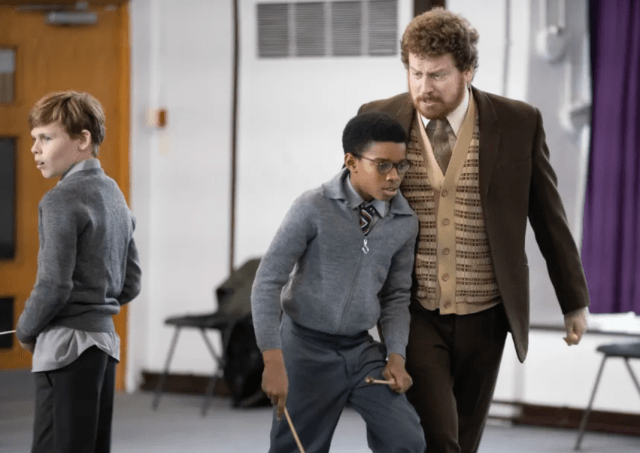
Growing up, my mother and godmother started the Garvey Saturday School (2010) to combat the barriers facing Black Caribbean students in Northamptonshire. Amongst Caribbean communities, especially women in my experience, education is thought of as vital part of life, much alike breathing. Especially being around my mother’s friends, my aunties, grandmothers, women cousins… the passion about education was at the centre of Caribbean matriarchs and I hold fond memories of them telling me to study. But above that, learn, and to find something I was passionate about. Akel goes on to discuss the long-held idea that Black people must “work twice as hard to get half as far, an adage that has very real implications in 21st century UK schooling.”
At the higher end of the educational chain at universities; as a sabbatical officer it was evident to see the number of Black students being pulled through disciplinary panels in both housing misdemeanors but also assessment offenses (academic misconduct). What were then called ESNs in the school system are now Pupil Referral Units that set up Black students for jail, whilst simultaneously those university disciplinary panels feeling a lot like what I believe a police custody interrogation to feel like. Schools set students up for prison, especially Black students, and higher education is simply another violent institution should that student avoid the jail cell schools set them up for. And the hegemonic processes at schools (and universities) “are based in assumption about what embodied discipline looks like” (Graham, 2019: 132).
By showing the trajectory that Black students go, from the moment they enter the education system, private included (it just has differences), we are able to see the nature of the beast of racism in the education sector to the point that my colleague Liz Pemberton AKA The Black Nursery Manager runs an establishment in Birmingham that prides itself around issues of race and culture, very much catering for Afro-Caribbean children. You would think there isn’t racism in Early Years, right? Wrong. Liz has been doing some sterling work and I recommend you all follow her on Instagram and LinkedIn, and it truly shows to critique racism in education we also need to look at Early Years.
Presented by David Harewood, in 2017, the BBC aired the documentary Will Britain Ever Have a Black Prime Minister? (above). It explored the chances of a Black British child progressing through life via the education system, from the biased marking of in-school test scores to university chances and independently-marked GCSEs (where markers don’t know the student’s ethnicity). This was backed by research from Professor Simon Burgess that shows teachers that know their students, have a clear bias (not that unconscious). The finale to Steve McQueen’s Small Axe makes me think to education and COVID and looking at the impact that predicted grades have on Black students in a system that is already rigged against them, even outside of the grades part.
Even after Black students slog through school fighting off all numbers of barriers, they then come to the ivory towers of academia and UCAS, very much following the tradition of structural racism entrenched in the education system, as Black students are also twenty-two times more likely to face investigation by UCAS’ verification services compared to their white counterparts (Busby, 2018). Despite slogging through Britain’s education system as I have, my struggle was less so without the added layer of class. Even in my experience, at that time, I drew the golden ticket of privilege of private education where my only challenge was racism. Classism was there, not in the barriers to access but more the prejudice because I came from that background.
Bernard Coard’s seminal pamphlet is as relevant now as it was in 1971; the ESNs have changed their face but Black students continue to be failed by the education system at every level, from Early Years and Primary, to Secondary, Further Education [FE] and universities, don’t even get me started on the experiences of Black educators in schools and higher education… that’s for another blog for another Monday. Indeed!
Referencing
Frensham-Smith, Amber (2014) Gypsy and Traveller Education: Engaging Families – A Research Report. Cardiff: Welsh Government. Available: https://dera.ioe.ac.uk/21443/1/141125-gypsy-traveller-education-engaging-families-en.pdf
Graham, Karen (2019) The British School-to-Prison Pipeline. In: Andrews, K and Palmer, Lisa Amanda. Blackness in Britain. London: Routledge. pp.130-142.
Hamilton, Paula (2017) Engaging Gypsy and Traveller pupils in secondary education in Wales: tensions and dilemmas of addressing difference. International Studies in Sociology of Education. 27(1). pp. 4-22. Available: https://www.tandfonline.com/doi/pdf/10.1080/09620214.2017.1377100?needAccess=true
Share this:


Black people have every right to question western science
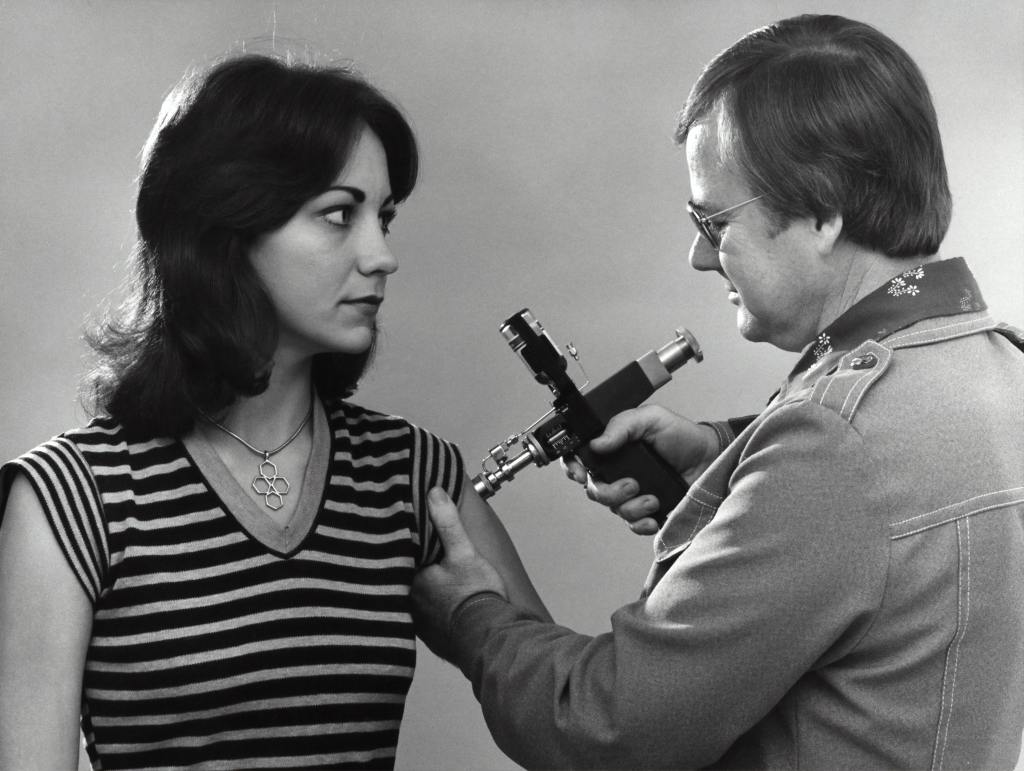
As vaccines are now being rolled out across the UK, Black people are questioning not only whether they should take it, but also the intergity of the vaccine. Does it have their welfare at heart? Whilst vaccines historically have done a lot of good for communities in battling against disease, it cannot be forgotten that science and medical trials under the umbrella of “colonial medicine” do not have a flattering past in the context of African diasporic peoples. However, we also know that for the vaccine to have maximum impact Black and Brown communities need to take part as well. We are the global majority and the vaccine will essentially fail without us. Coronavirus disproportionately impacts Black Africans and Caribbeans but also South Asians. Without everyone’s participation, there could come a day when people are laying blame for the continuation of Coronavirus in the UK on ethnic minority groups that don’t trust it.
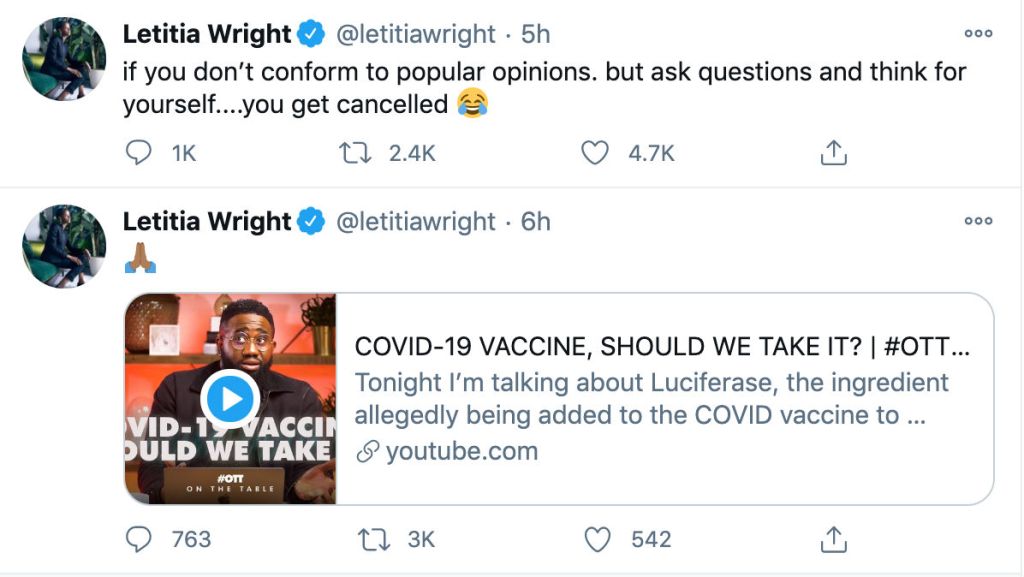
Despite being tagged to a YouTube video (urgh), an ill-thoughtout tweet that went viral by Small Axe star Letitia Wright asked questions about the integrity of a vaccine, only for her to later delete the tweet/her account when the torrents of abuse came.
The disproportionate outcomes with the Coronavirus show Black people in the UK and the United States as part of the groups most likely to die from issues relating to the disease. In Britain, a Channel 4 documentary entitled Is COVID Racist? shows that it’s not the disease as a singular entity that is killing us off at a disproportionate rate, but entrenched inequality, including poverty and structural racism. The first ten NHS staff to die from COVID-related afflictions were from a Black, Brown or ethnic minority background. A 100% death rate is unheard of and now two thirds of NHS deaths from the virus are from a Black, Brown or ethnic minority background.
By itself, Coronavirus is not racist but the environmental factors that plague Black and Brown people are, which then adds to the biological weathering: from nearly 3 in 5 ethnic minority UK households in poverty, to being stopped and searched on the way to work, these are the sorts of things that consistently add to the biological weathering.
When we look at the history of science in the West, in the context of the Africann diaspora it is not pleasant reading. Surveys done in both the United States and England show a mistrust in this vaccine with Black and Brown groups, whilst white people seem more likely to get the vaccine at large. With specifically Black communities, why they are less likely to get the vaccine could be a whole number of factors: from the history of experimentation on Black people throughout the colonial era to how Black people have been treated during the pandemic and lockdowns by society as a whole. Really, to think (all) institutions have your best interest at heart comes with degrees of privilege. In this case, one could conclude, a white privilege.
Growing up as I have, around Caribbeans who have a very real experience of white supremacy on those islands, but also when they came to this country as immigrants, it’s not really surprising to see vaccine scepticism. Caribbean interraction with white public bodies has rarely been positive. But vaccines have been one of the most effective things to help communities in the last century. However, there have been mistakes; and for Black communities, there have been outright acts of violence committed against us in the name of “science.” Despite a good safety record, there is a history of untold untaught horrors committed against Black people in the name of science and “public good.” It would do us well to not lump their scepticism of vaccinations with the anti-vaxxers that get their info from YouTube hacks. Black people asking questions about vaccines can be viewed as a Black lives matter issue, since there is a legacy of poor medical treatment and dubious practices.
To understand the roots of why there are activist movements to make Black lives matter, we need to understand the racial pseudoscience that underpinned racist colonial ideology. Even prior to colonialism as we know it, contempt for Black dignity is beyond reasonable doubt. Bristol University professor Olivette Otele writes about how European fourteenth century medical scholars drew on Aristotle’s ideas about blood and heat, arriving at the conclusion “that the milk of black women had more nutrients … the body heat of dark and dusky women rendered their milk more digestible and therefore better quality for the child” (2020: 28).
However, the thinker that has done untold damage to how Africans are seen was historian Edward Long, a slaveowner and the son of a slaveowner, with his ideas about Black people and Africa widely accepted as scientific fact in his day, even though he was not even a scientist. His book The History of Jamaica donned the African continent as “the parent of everything that is monstrous in nature” (p383) with many sections denouncing Blackness and Africanness as inferior and less than human. The fact he spent twelve years in the Caribbean gave the audiences of the 18th century some “certainty” he was credible. Echoes of his work can be seen in novels that came after him by writers, including Joseph Conrad, H.G Wells and Bram Stoker. Poisonous ‘race science’ was also perpetuated by medical professionals. In the late 1700s, an English physician by the name of Charles White (1799) provided empirical science for the hierachies of race, claiming Black people had a seperate origin to white people, namely Black people came from primates and white people did not.
In Black and British, Professor David Olusoga says that the first user of Victorian “new racism” (2017: 349) was an essayist and critic called Thomas Carlyle. In 1849, he pens an essay called ‘The Negro Problem’.
See this extract:
“…till the European white man first saw them, some three short centuries ago, those islands had produced mere jungle, savagery, poison reptiles and swamp malaria till the white European first saw them, they were, as if not yet created; their noble elements of cinnamon — sugar, coffee, pepper, black and gray, lying all asleep, waiting the white Enchanter, who should say to them, awake!” (Carlyle, 1849)
Another thinker in this field was French novelist Arthur de Gobineau (1853), writing “… the Polynesian negroes, the Samoyedes and others in the far north, and the majority of the African races, have never been able to shake themselves free from their impotence.”
According to Emma Dabiri (2019), he was famous for his views on Aryanism and the concept that Black people were privileged for being allowed to exist on the lowest rungs of the racial order. Additionally, he was an aristocrat most famous for helping to legitamise racism through the use of scientific theory and “racial demography”, moreover, developing the theory of the Aryan master race.
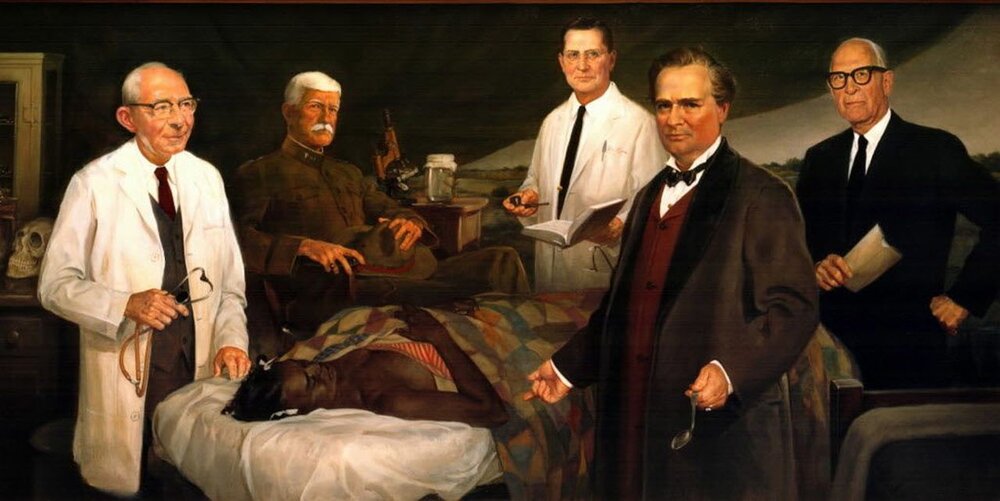
The ideas perpetuated by these academics, medical experts and so forth underpinned colonialism and enslavement. It put Black life at the bottom of the pile. We are still living with this legacy today… from overpolicing Black communities, to low expectations of Black students (Busby, 2018). This is what allowed J. Marion Simms to experiment on enslaved Black women in pursuit of what today is called gynaecology, with his unethical torturous practices. Yet, since there were intellectual justifications made by academics prior, these acts could be carried out without a thought. In the eyes of the law and in public consciousness, Black people were subhuman in colony and metropole.
The case of Henrietta Lacks and her family in the United States is another example of contempt for Black life; where her cells were taken from her before she died. They were used to study diseases without her permission and shared around the world. Moreover, in the years of French colonialism in Africa, what about the horrific experimentations carried out on Black African people? There is a precedent behind current mistrust.
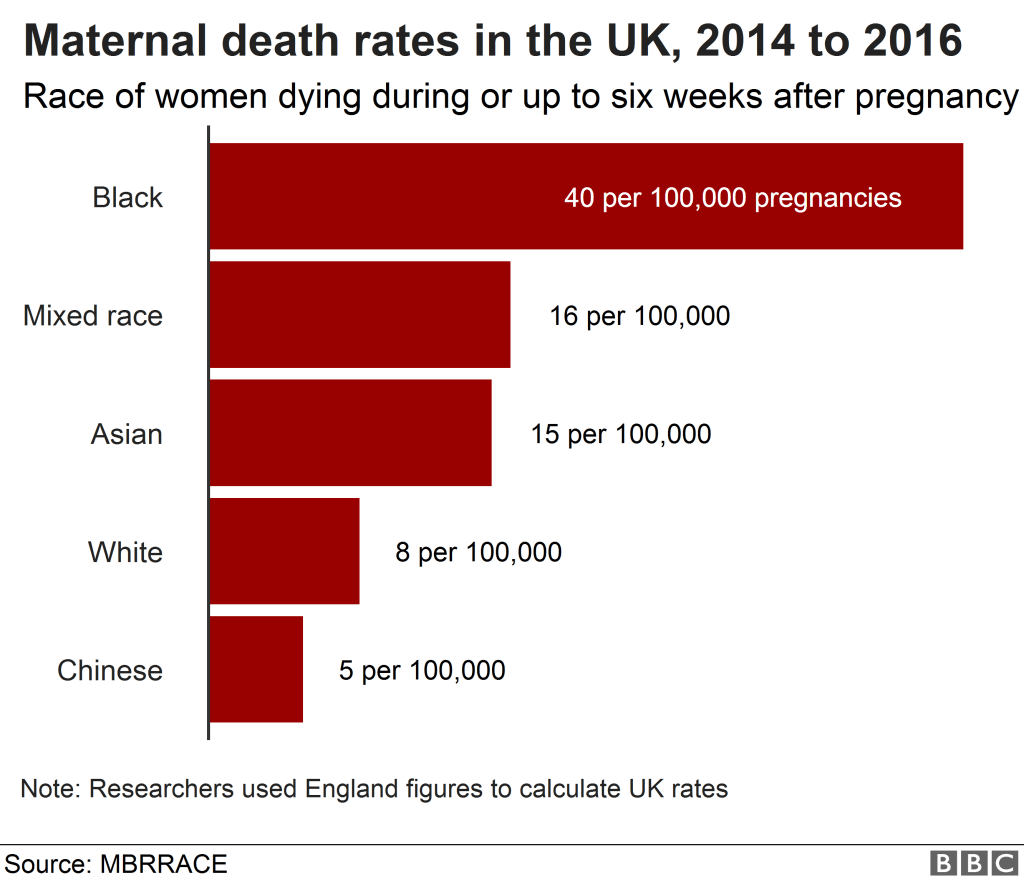
African diasporic vaccine scepticism may be inspired by the trend set by history but it also may have something to do with the present, where Black people continue to be treated with contempt by healthcare and medical services. Disproportionate deaths from Coronavirus is just one example. In the UK, Black people are four times more likely to be detained under The Mental Health Act (DoH, 2019/20) and Black women are five times more likely to die from childbirth or related complications (MBRRACE UK, 2019). Additionally, on the African continent itself, there has been discussion around concerns about a number of clinical trials such as the malaria trial by World Health Organization [WHO]. Furthermore, a legal battle between Pfizer, and Kano in Nigeria over the tests being done on Trovan, a drug to combat meningitis.
There is a Black history to clinical trials and science that isn’t being taught or widely known. This is the irony that the people disproportionately impacted by Coronavirus (significantly helped along by systemic inequality) are also the same people hesitant to take a vaccine. However, these same communities don’t trust the system because of history and a contemporary where the system has not worked for them. If the UK government wants Black people to take a vaccine (not necessarily this current one), they need to change the messaging around COVID, like government aides and advisors saying institutional racism doesn’t exist. Whilst the history articulated so far is damaging on racial grounds, there are also histories written in violence in the context of gender, class, sexuality and disability as well – from electrock therapy to eugenics.
The story of Black communities’ historic interactions with western science/scientists is damning; the present contemporary narrative of healthcare’s interactions with Black UK and Black American communities is also damning and both are well evidenced, there’s lots of improvements to made on both sides of the pond and we can do better.
Referencing
Carlyle, T (1849) “Occasional Discourse on the Negro Question” Fraser’s Magazine for Town and Country (London, Vol. XL., February 1849). Available from:
https://www.hetwebsite.net/het/texts/carlyle/carlyle1849negroquestion.htm
Dabiri, Emma (2019) Don’t Touch My Hair. London: Allen Lane.
De Gobineau, J, A (1853) The Inequality of Human Races. London: William Heinemann. Available: https://ia800501.us.archive.org/27/items/inequalityofhuma00gobi/inequalityofhuma00gobi.pdf
Long, E (1774/2002). The History of Jamaica, Volume 2: Reflections on its Situation, Settlements, Inhabitants, Climate, Products, Commerce, Laws, and Government. London: Ian Randle.
Olusoga, D (2017) Black and British: A Forgotten History. London: Pan Macmillan.
Otelle, Olivette (2020) African European. London: Hurst and Company, London.
White, C (1799) An account of the regular gradation in man, and in different animals and vegetables. Edinburgh: C, Dilly. Available: https://archive.org/details/b24924507/page/n3/mode/2up
Share this:


Yorkshire Ripper: Not an Obituary
Wilma McCann, 28
Emily Jackson, 42
Irene Richardson, 28
Patricia Atkinson, 32
Jayne MacDonald, 16
Jean Jordan, 21
Yvonne Pearson, 22
Helen Rytka, 18
Vera Millward, 40
Josephine Whitaker, 19
Barbara Leach, 20
Marguerite Walls, 47
Jacqueline Hill, 20
As the team northerner I took it upon myself to write about Peter Sutcliffe after hearing of his death. Sutcliffe was a serial killer who operated in West Yorkshire and the North West of England. He was convicted of murdering 13 women and attempting to kill 7 more in the 1970s, and was serving 20 life sentences for his crimes.
Ironically, the ripper was killed by covid-19, the deadliest killer of 2020 (incidentally I asked students to imagine covid-19 being a serial killer in a lecture yesterday). Reports suggest that he was in ill health prior to contracting the coronavirus, was obese and had diabetes. He died 2 days after his diagnosis after refusing treatment.
When I started writing about the Yorkshire Ripper, I couldn’t help but think about his victims. Those he killed (named above – remember them), those he harmed and who survived, the relatives of both and the women in the areas in which he would prey on his victims, who feared leaving their homes every day for half a decade. These are the people I am thinking about, those who are in my thoughts. How do they feel about the news of his death? How have they felt every time they have heard his name for the last few decades? How, 40+ years later, are the living victims coping?
I didn’t know a lot about Peter Sutcliffe. It was before my time so when I read about the secondary victimisation as a result of police and the prosecution blaming the victims it made me angry. Peter Sutcliffe would prey on women, often prostitutes. The police at the time differentiated between the victims who were sex workers and the victims who weren’t and referred to those that weren’t as ‘innocent victims’, insinuating that the sex workers were not entirely blameless and may have precipitated their fate. Thankfully, West Yorkshire Police have issued a statement to apologise for the language and tone used at the time but the damage has already done.
I’d like to say society has learned from its mistakes, but sadly I don’t think we have. There is still evidence of victim blaming, particularly in cases of femicide and rape. Think of the Grace Millane murder and the protests in Ireland after a barrister suggest the jury consider the victim’s underwear, questioning consent. I hope one day we, as a society, learn. I hope the victims of Peter Sutcliffe get some sort of relief from both his passing and the apology from West Yorkshire Police.
Share this:


A Lockdown Moan
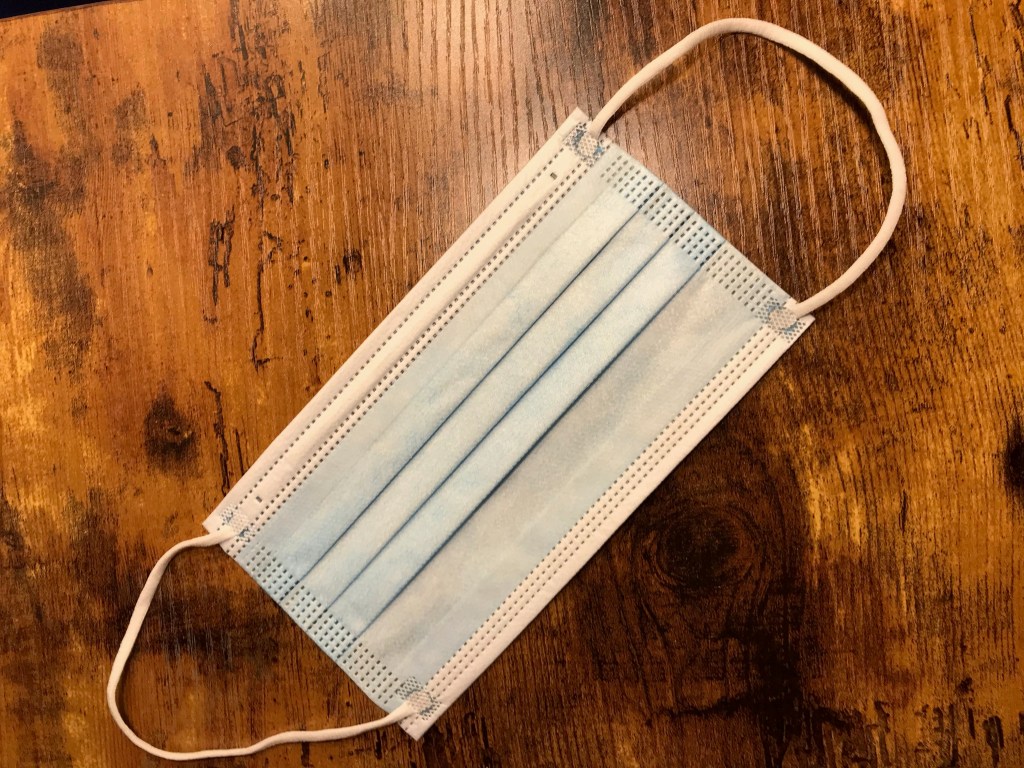
As the second lockdown has come to an end, I find myself reflecting on my own lockdown experiences quite a lot. My overall sense is that of gratitude, in that I have been fortunate enough to maintain and be offered new employment during this difficult time.
During the first lockdown I was a key worker and travelled to and from work on public transport whilst everyone else was ordered to ‘stay safe, and stay at home’. At times this was frustrating, and although I generally had faith in humanity my views on this were tested. During, lockdown 1.0 I witnessed people being much more aggressive to key workers. I worked in a place where I did not expect people to be nice to me, but even on my route to and from work I found that I was subjected to the odd remark.
One morning at 6am whilst in the city center I was even called ‘a rapist’ because I did not have any change to give to a homeless person, he then sort of offered to fight me. Of course, I wouldn’t ever fight anyone, and he would have been completely unaware that I had just finished a night shift so I would not prove to be a worthy opponent in any sense. I also remember sitting on the bus one night whilst a man, who appeared mentally unwell, persisted to cough all over me (mask free) before exiting at his stop.
I didn’t take any of these experiences personally, and thankfully I didn’t get Covid. It was clear that these people had many of their own problems – many of which may have been exacerbated due to Covid. The lack of understanding of Covid for some people also highlights a key issue i.e., that mainstream concerns are not being communicated to wider population within our society.
I did find myself frustrated by the general population who in my experience, did not appear as positive and kind as the media seemed to suggest. I experienced many incidents of people being selfish, such as people snapping and venting their frustrations at others who are simply just trying to do their jobs (with shocking pay and poor contracts might I add). On top of this was the notion of visiting a supermarket after a 12 hour night shift whilst people scramble for the last scraps of essentials whilst you are walking around like a zombie. With bare shelves, rude people and long queues….what more could key workers ask for? For Christ sake, someone even tried to steal a tin of beans out of my shopping trolley on one occasion!
During lockdown 2.0 I have been very privileged indeed, as I am able to work from home. Staying in this bubble of mine has also made me feel much less frustrated. But I do still wonder, why is it that we feel that those who provide a ‘service’ to us are not people themselves? People with their own problems, thoughts and feelings. Do we think that people are robots? Is this why some people think that it is ok to vent their frustrations at others? I am sure that other people have had more positive experiences than this, but I can’t understand why people aren’t being more kind and understanding of each other. There is a difference between being a service provider and being a servant…people seem to forget this sometimes.
Share this:


Tré Ventour: His Northants Male Role Model of the Year Speech in Full
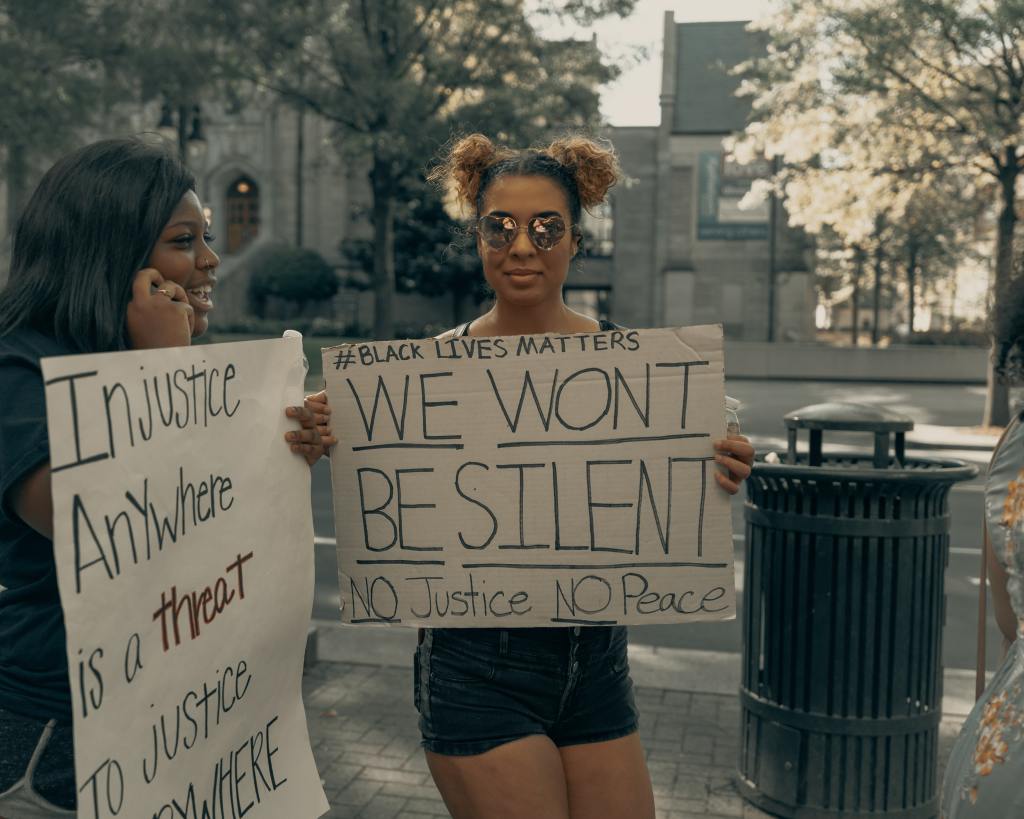
I think I speak for most people when I say, nobody expected 2020. The Coronavirus pandemic tied with the murder of George Floyd by American police officers and the subsequent anti-racism protests across the UK, the US and the rest of the world has created what one would call a perfect storm. 2020 has allowed Northampton and the county as a whole to show us who it is, who the people are in their hearts and real the definition of community. I started this year thinking about the Windrush Scandal, as that injustice has continued through the pandemic with the prolonging of the government’s hostile environment policies.
Wendy Williams’ Windrush Lessons Learned report published in March (just as we went into the first lockdown) struck a note for me, as members of that Windrush Generation would also have been caught up in the Coronavirus pandemic, a contagion that has disproportionate outcomes against Black, Brown and ethnic minority communities. Being nominated for this award really took me by surprise, as it was totally unexpected. I have come to realise that what people and in some cases me myself have defined as activism, is simply doing what I think to be right. The moral thing.
Pushes for equal rights like Black lives matter shouldn’t be political but they are by their nature. Whether we’re talking about Votes for Women in the early 20th century to workers’ rights with the Miners Strikes in the Thatcher era as well as the Poll Tax Riots… or even the narrative around race with Stephen Lawrence. All movements for equality have inspired me and continue to do today, including the Black Lives Matter movement and the pushes for gay rights and trans rights both now in the 21st century but also the movements from which it started dating back to Stonewall in 1969.
International Men’s Day encompasses men from all parts of society, an intersectionality of experiences: Black men, white men; gay men, straight men; trans, autistic, working-class, middle-class, immigrants, refugees… an intersectionality of experiences all worth exploring and celebrating. In the process of my activism if you want to call it that, and pushing for equality; especially in the buzzword of 2020 ‘anti-racism’, many have come to see me as a role model. First and foremost, I would like to thank my parents for showing me what activism looks like.
My parents that survived the 1980s for me to be here (not everyone was so lucky. That decade is the closest this country has to a Civil Rights-era level event. My mother growing up in Northamptonshire which back then was its own battleground in terms of racism, and also my father from Lichfield, Staffordshire having numerous experiences of racism in Birmingham and Handsworth.
They lived and survived, so I could live and survive, and my grandparents for making that trip from the West Indies… members of that Windrush Generation that give so much and take so little. People like me are my ancestors’ wildest dreams but we also have much farther to go.
So, thanks to them. I want to thank Hannah Litt, Emma Shane, Josh West and the members of Amplified NN who have come out for their community, also as activists in their own right. I want to thank Paula Bowles and Manos Daskalou, the senior lecturers of University of Northampton’s criminology department, for standing by me and supporting my work during my time at Waterside and still continueing to do so now, as colleagues and my friends.
I also want to than Anjona Roy and the team at Northamptonshire Rights and Equality Council for supporting things I have done, both as a director at NREC but also when I was at the university, and prior. I would also like to thank Rebecca Clark, Karen Adams and team at Black Lives Matter Buckingham for welcoming me into their ranks and really for allowing me to push for change in that community as well. If this pandemic has shown us anything, I think it’s that we need to stand by our words and principles.

We all need to be leaders in our communities. Too many leaders and authority figures are the embodiment of “do as I say, not say as I do.” In this award, I have tried to encompass the opposite. Stand with your community where possible and I will end with a quote from the famous slave abolitionist and human rights campaigner Frederick Douglass…
“Power concedes nothing without a demand. It never did and it never will.” And as Douglass said again, “if there is no struggle, there is no progress.” I graciously accept this award but we need to keep it pushing.
Thanks very much.
Share this:


Intolerance, frustration and stupidity
‘Stupid is, as stupid does’ a phrase that many people will recall from that brilliant film Forrest Gump, although as I understand the phrase was originally coined in the 19th century. I will return to the phrase a little later but my starting point for this blog is my colleague @jesjames50’s self-declared blog rant and an ensuing WhatsApp (other media are available) conversation resulting in a declaration that ‘maybe we are becoming less tolerant’.
So, I ask myself this, what do we mean by tolerant or intolerant and more importantly what behaviours should we tolerate? To some extent my thoughts were driven by two excellent papers (Thomson, 1971, 1985) set as reading for assessment questions for our first-year criminology students. The papers describe ethical dilemmas and take us through a moral maze where the answers, which are so seemingly obvious, are inevitably not so.
As a starting point I would like you to imagine that you frequent a public house in the countryside at weekends (I know that its not possible at the moment, but remember that sense of normality). You frequently witness another regular John drinking two to three pints of beer and then leave, getting into his car and driving home. John does not think he is incapable of driving home safely. John may or may not be over the proscribed limit (drink driving), but probably is. Would you be able to make some excuse for him, would you tolerate the behaviour?
Let us imagine that John had a lot to drink on one night and being sensible had a friend drive him and his car home. The next morning, he wakes up and drives to work and is over the proscribed limit, but thinks he’s fine to drive. Would you be able to make some excuse for him, would you tolerate the behaviour?
Of course, the behaviour becomes absolutely intolerable if he has a collision and kills someone, I think we would all agree on that. Or even if he simply injures someone, I think we would say we cannot tolerate this behaviour. Of course, our intolerance becomes even greater if we know or are in somehow related to the person killed or injured. Were we to know that John was on the road and we or someone we know was also driving on the same road, would we not be fearful of the consequences of John’s actions? The chances of us coming across John are probably quite slim but nonetheless, the question still applies. Would we tolerate what he is doing and continue with our own journey regardless?
Now imagine that John’s wife Jane is driving a car (might as well keep the problems in one family) and Jane through a moment of inattention, speeds in a residential street and knocks over a child, killing them. Can we make excuses for Jane? How tolerant would you be if the child were related to you? Inattention, we’ve all been there, how many times have you driven along a road, suddenly aware of your speed but unsure as to what the speed limit is? How often have you driven that all familiar journey and at its end you are unable to recall the journey?
The law of course is very clear in both the case of John and Jane. Driving whilst over the proscribed limit is a serious offence and will lead to a ban from driving, penalty points and a fine or even imprisonment. Death by dangerous driving through drink or drugs will lead to a prison sentence. Driving without due care and attention will lead to a fine and penalty points, death by careless driving is likely to result in a prison sentence.
So I ask this, what is the difference between the above and people’s behaviours during the Covid-19 pandemic?
Just to be clear, contracting Covid-19 may or may not kill you, of course we know the risk factors go up dependant on age, ethnicity and general health but even the youngest, healthiest have been killed by this virus. Covid-19 can cause complications, known as long Covid. Only now are we starting to see its long-term impact on both young and old people alike.
Now imagine that Michael has been out to the pub the night before and through social contact has contracted Covid but is unaware that he has the disease. Is it acceptable him to ignore the rules in the morning on social distancing or the wearing of a mask? What is the difference between him and John driving to work. What makes this behaviour more acceptable than John’s?
Imagine Bethany has symptoms but thinks that she may or may not have Covid or maybe just a cold. Should you tolerate her going to work? What if she says she must work to feed her family, can John not use the same excuse? If John’s behaviour is intolerable why should we tolerate this?
If people forget to move out of the way or get too close, what makes this behaviour any different to Jane’s? Of course, we see the immediate impact of Jane’s inattention whereas the actions of our pedestrians on the street or in a supermarket are unseen except by those close to the person that dies resultant of the inattention. Should we tolerate this behaviour?
To my colleagues that debated whether they have become less tolerant I say, no you have not. There are behaviours that are acceptable and those that are not, just because this is a new phenomenon does not negate the need for people to adhere to what are acceptable behaviours to protect others.
To those of you that have thought it was a good idea to go to a party or a pub before lockdown or do not think the rules need apply to you. You are worse than John and Jane combined. It is akin to getting drunk, jumping in your cars and racing the wrong way down a busy motorway. ‘Stupid is as stupid does’ and oh boy, some people really are stupid.
References
Thomson, Judith Jarvis, (1971), ‘A Defense of Abortion,’ Philosophy & Public Affairs, 1, 1: 47-66
Thomson, Judith Jarvis, (1985), ‘The Trolley Problem,’ The Yale Law Journal, 94, 6 : 1395-1415,
Share this:


Bang! Smash! Pow! Representation Matters. #BlackenAsiaWithLove
A superhero walks into a bar.
A reporter walks up and offers a drink.
They end up spending the night together, and a love affair ensues.
*
A superheroine walks into a bar.
A reporter walks up to her and offers a drink.
They end up spending the night together, and a love affair ensues.
*
A Black superheroine walks into a bar.
A Black reporter walks up to her and offers a drink.
They end up spending the night together, and a love affair ensues.
*
A Black superheroine walks into a bar.
A Black woman reporter walks up to her and offers a drink.
They end up spending the night together, and a love affair ensues.
That’s Black Lightning.
*
Superman and Lois Lane got to love one another, and
Wonder Woman fell in love with the first man she met.
For generations of Sci-Fi and superheroes,
Everybody was straight and white.
The Star Trek franchise has been imagining a fairer future since the 60’s, but
It’s only now -on the newest Star Trek show – that
Yellow, black, white, red and brown people portray species from throughout the galaxy.
Finally, things as fickle as religion or gender identity aren’t barriers to love.
*
I earnestly wonder if it was the creators or the audiences who couldn’t see anybody else loved, but straight white people?!?
That only straight white men could save the day.
Representation matters.
Which superhero did you see at first?


