
Home » Criminology Team (Page 14)
Category Archives: Criminology Team

Criminology is everywhere!
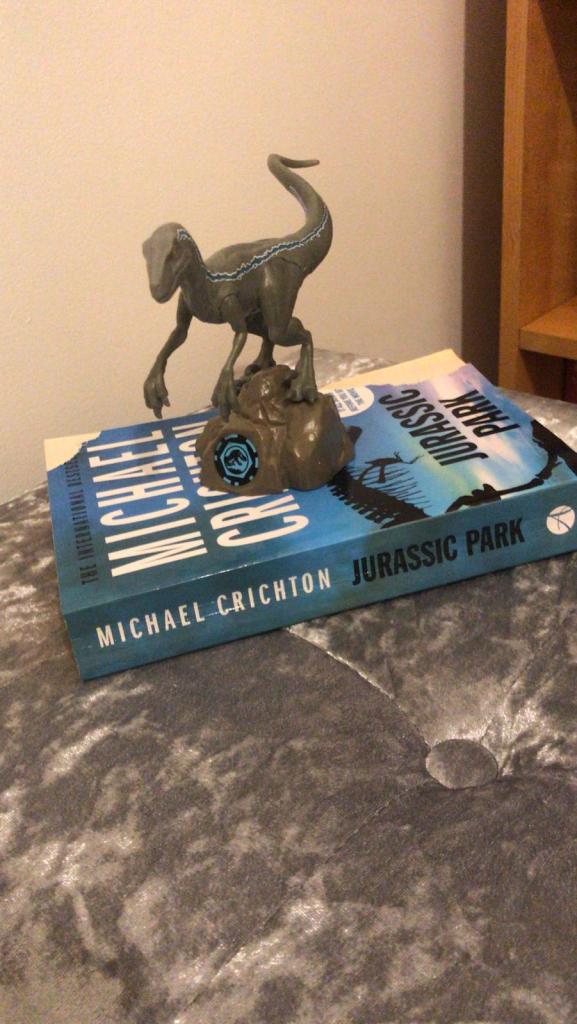
When I think back to thinking about choosing a degree, way back when, I remember thinking Criminology would be a good choice because it is specific in terms of a field: mainly the Criminal Justice System (CJS). I remember, naively, thinking once I achieved my degree I could go into the Police (a view I quickly abandoned after my first year of studies), then I thought I could be involved in the Youth Justice System in some capacity (again a position abandoned but this time after year 2). And in third year I remember talking to my partner about the possibility of working in prisons: Crime and Punishment, and Violence: from domestic to institutional (both year 3 modules) kicked that idea to the curb! I remember originally thinking Criminology was quite narrow and specific in terms of its focus and range: and oh my was I wrong!
Whilst the skills acquired through any degree transcend to a number of career paths, what I find most satisfying about Criminology, is how it infiltrates everything! A recent example to prove my point which on the outside may have nothing to do with Criminology, when in actual fact it could be argued it has criminological concepts and ideas at its heart is the 2015 film: Jurassic World. It is no secret that I am a huge lover of Crichton novels but also dinosaurs. But what I hope to illustrate is how this film is excellent, not just in relation to dinosaur content: but also in relation to one of my interests in Criminology.
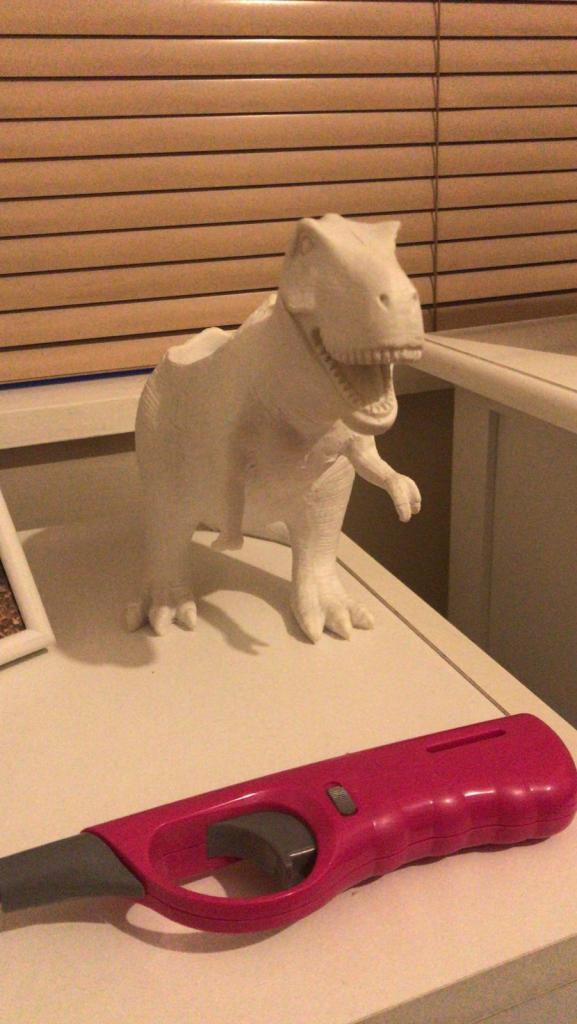
Jurassic World, for those of you who have not had the pleasure of viewing, focuses on the re-creation of a Jurassic Park, sporting new attractions, rides and dinosaurs in line with the 21st century. The Indominus Rex is a genetically modified hybrid which is ‘cooked-up’ in the lab, and is the focus of this film. Long story short, she escapes, hunts dinosaurs and people for sport, and is finally killed by a joint effort from the Tyrannosaurus, Blue the Velociraptor and the Mosasaurus: YAY! But what is particularly Criminological, in my humble opinion, is the focus and issues associated with the Indominus Rex being raised in isolation with no companionship in a steeled cage. Realistically, she lives her whole life in solitary confinement, and the rangers, scientists and management are then shocked that she has 0 social skills, and goes on a hunting spree. She is portrayed in the film as a villain of sorts, but is she really?
Recently in Violence: from domestic to institutional, we looked at the dangers and harms of placing individuals in solitary confinement or segregation. Jurassic World demonstrates this: albeit with a hybrid dinosaur which is fictitious. The dangers, and behaviours associated with the Indominus Rex are symbolic to the harms caused when we place individuals in prison. The space is too small, there is no interaction, empathy or relationships formed with the dinosaur apart from with the machine that feeds it. The same issues exist when we look at the prison system and it raises questions around why society is shocked when individuals re-offend. The Indominus Rex is a product of her surroundings and lack of relationships: there are some problematic genes thrown in there too but we shall leave that to one side for now.
There are a number of criminological issues evident in Jurassic World, (have a watch and see) and all of the Jurassic Park movies. Criminology is everywhere: in obvious forms and not so obvious forms. The issues with the prison system, segregation specifically, transcend to schools and hospitals, society in general and to dinosaurs in a fictional movie. Criminology, and with it critical thinking, is everywhere: even in the Lego Movie where everything is awesome! Conformity and deviance wrapped up in colourful bricks and catchy tunes: have a watch and see…
Share this:


Switching off?
I am not sure whether this relates to age or not but during my late 20s I became increasingly reluctant to engage with watching television, using my phone and engaging in social media. I suppose there are a number of reasons for this. One reason is that I enjoy being able to ‘switch-off’ from looking at any form of screen. The change in the nature of my job role and in this current lockdown context means that at the moment I am less able to ‘switch-off’.
The increased screen time demand plays all sorts of tricks on the human body. We seem to be a nation of people that are experiencing the sensation of a ‘buzzing brains’, ‘square eyes’, headaches and ‘burning faces’ due to too much screen time.
Recently, I made an irrational decision to watch the rather grim Fifteen Million Merits episode of Black Mirror. This episode consists of individuals being forced to look at screens at all hours, and it also included much seedier scenes. This episode has absolutely no resemblance to the current situation that we are all in. Although, the episode did remind me of some of the diffculties that people may be experiencing in terms of not being able to ‘switch-off’ from looking at screens whilst working from home.
Work now consists of me using my laptop in my office. I do wonder whether living in smaller living spaces makes matters worse? In terms of my own flat, my office is six steps away from my living room and two steps away from my bedroom. I have never experienced such close proximity to work. When work ends I then attempt to ‘wind-down’ by using my phone or watching the television. My whole day seems to consist of looking at some form of screen. Some of us are fortunate to have gardens. I wonder if this helps people to spend a bit or time relaxing whilst working from home?

Maybe we will all be diagnosed with ‘square eyes’ and ‘buzzing brain’ disorders in the future. Maybe these terms will make it into the dictionary. What I do know is that when lockdown ends I would love to spend a whole day just staring into space, lying on the grass or floating in a warm sea somewhere outside of the U.K. Is it just me that feels this way? Maybe I have just lost the plot.
The moral of this story is, do not watch dystopian television programmes during a lockdown. As you may begin to reflect about all sorts of nonsense!
Share this:


Data collection in a pandemic: Discovering what’s up with WhatsApp *or any other instant messaging service

Many of our students will be thinking about or preparing for, their dissertations. Ordinarily this is the fun part of a degree. The part where you have the freedom to research a topic of interest. Two or three years ago, none of us could have predicted we would be in the midst of a global pandemic which limits research opportunities, particularly for undergraduates who have practical and ethical limitations. One thing that I would encourage students – or indeed anyone doing research in the pandemic – to do, is to be innovative and think outside of the box when planning research. Here in the UK we are lucky enough that most of us have access to the internet. The way I communicate with friends, family and colleagues most frequently is using instant messaging services and so I incorporated this technology into my own research. In sharing my own experience of using instant messaging as a data collection tool, I hope to offer some hope that where there are obstacles, there are also ways to overcome them.
I conducted my most recent research prior to the pandemic, however I had other barriers to navigate. I was researching the victimisation of asylum seekers, and wanted to understand if, and how, they coped with these experiences. I was lucky enough to undertake two face to face interviews with most of the participants which helped me to gain an understanding of their life histories and the broader aspects of their experiences but I also wanted to understand the day to day stressors and how they coped with these events. I knew that a diary method would be an appropriate approach to elicit the data I required, however there were some limitations with using traditional written journals. All the asylum seekers who participated in my research spoke some English as a second language and some spoke the language but could not read or write proficiently. In addition to this, traditional journal entries can be time consuming and there were additional practical considerations to consider such as how I would retrieve the journals. To overcome these obstacles I decided to use digital technology to collect diary data, in part because electronic methods have been found to increase response rates, but also because most asylum seekers I have come across own a mobile phone. Mobile phones are essential to enable to contact their family in their country of origin as well as maintaining contact with their solicitor and other agencies working with them.
Once I had decided to use mobile technology, I sent weekly messages to each of the people I interviewed, asking them how they were that day and how their week had gone, what were some of the good and bad things that had happened. I did this for 12 weeks before conducting their follow up interviews. For the purpose of my doctoral thesis, the method provided data that would help me understand the day to day stress of being an asylum seeker, often resulting from structural harms perpetrated by the Home Office. This may be the mother feeling guilty after being late to pick her children up from school because she had to catch three buses to report to the Home Office and fulfil the conditions of her immigration bail; or the feeling of dread in the pit of her stomach when a brown envelope came through the door, fearful that this may be what feels like a death warrant from the Home Office ordering her deportation. Events such as these were often not mentioned during interview, when interviewees would often recall the major life events and forget the moments of everyday life. Using mobile technology meant that participants could write in their first language and either them or I could translate it. It also meant that they could quickly send a message in the moment, while a particular event was fresh in their minds.
Using mobile technology to collect data worked well for me as it helped me to stay in contact with participants and inform my follow up interviews as well as providing the information I required to answer the research questions. As anticipated the response rate was good – even those who could not afford credit were often able to access Wi-Fi and send a message from a public space. The use of mobile technology to collect diary entries overcame more barriers than it presented, and the method proved fit for purpose, gaining the data required to get a fuller picture of those I was researching. For students planning dissertations or other research projects that are to be undertaken soon, I urge you to think creatively about your research methods and modes of data collection. Although a large part of our teaching focuses on traditional methods, I encourage you to be independent thinkers and so solve the problem of doing research in a pandemic.
Share this:


Education, education, education: We’ve lost the plot

Some of you might remember Tony Blair’s speech introducing the Labour party’s education manifesto in 2001. In it he proclaimed that education was at the forefront of government policy. Education is often high on government’s agenda even if it is only to berate previous administrations for failing our youngsters. I have watched with interest the current government’s farcical approach to education and in particular the attainment of qualifications during the first period of Covid lockdown and to some extent even felt sorry for them as they grappled with what were not insignificant problems. My benevolence, however, has long been drained as I watch the news more recently only to see the same farce emerging. But what really intrigues me is the conflation of the notion of qualifications and education. It seems to me the clamber to get children back into school is only right given that they are missing out on education and other social aspects. However, I cannot see how the dealing with the qualifications issue can ignore the fact that the students have not received all of their education.
In a previous blog I have used the analogy of a driving instructor giving lessons to a pupil. In that blog the point being made was that the education of the pupil was a two-way enterprise. If the pupil didn’t engage or didn’t turn up for their lessons, then the instructor could not be held responsible for the pupil’s failure in the driving test. But what of the test itself, what is that designed to achieve? It is not simply to provide a person with a driving licence, what would be the point of that? It is to ensure that the person taking the test can drive to a satisfactory standard that would help ensure the roads were safe for all users. So, the point of the driving lessons is to provide the education in ‘road craft’ and the point of the driving test is to test knowledge and ability in that ‘road craft’ to ensure it meets satisfactory standards. The driving licence is a form of certificate that states the driver has achieved the knowledge and skills required.
So, what of education? Surely GCSEs, A levels, BTec and so on are a test of the knowledge and skills acquired. A degree is the same, is it not? How then could we reasonably expect students to pass any of these tests if they have lost significant periods of tutorship or teaching? The suggestion, dumb down the tests in some way by only testing what they have been taught, or as in the case of university students suggestions, be more lenient with the marking. Now as I understand it, that would be akin to saying to a learner driver that because through no fault of their own, they could not engage in all of their lessons, they will only be tested on their ability to park and not on their ability to carry out an emergency stop as they hadn’t been taught the latter. How ridiculous would that be? Imagine then that the very same driver, who now has a driving licence, goes onto some advanced motoring course. A course that starts with the premise that they have all the skills tested in a ‘full’ driving test.
Whilst, I can understand students’ preoccupation with tests and qualifications, I somehow think that government and teaching establishments should be more concerned with education and the knowledge gap. How will they ensure that students have the requisite skills and knowledge? Tony Blair may have said ‘Education, Education, Education’ and subsequent governments might well nod in agreement, but somehow I think they’ve all lost the plot.
Share this:


A pit and no pendulum
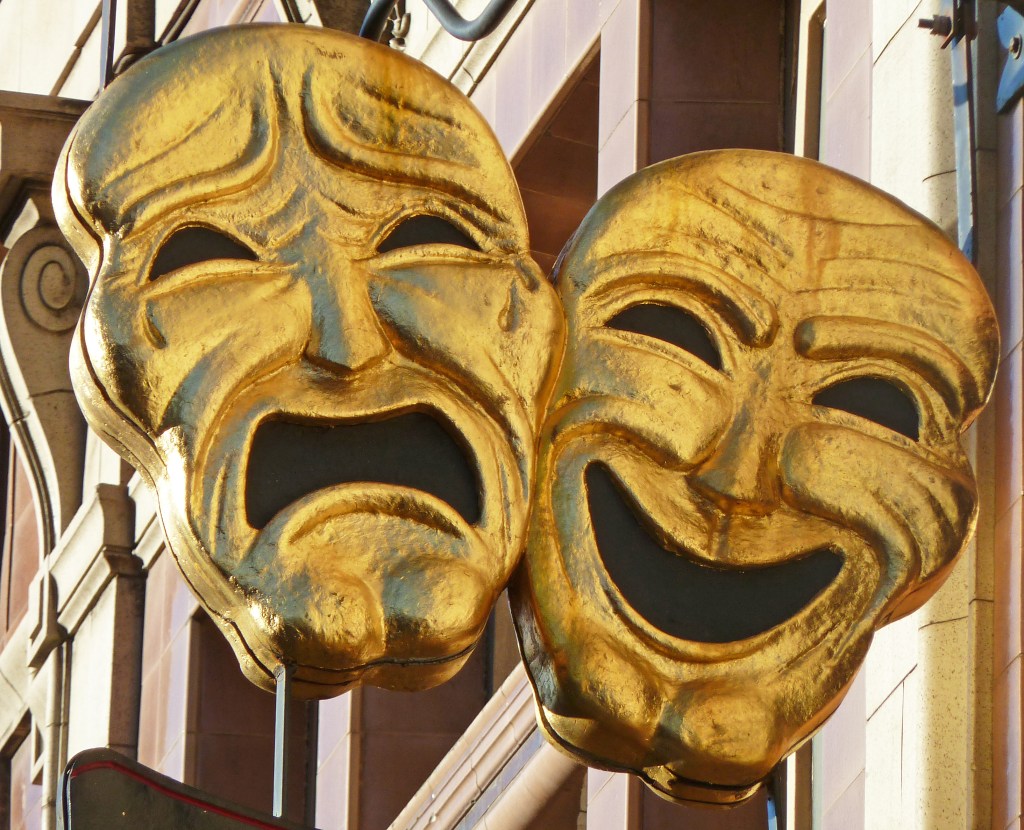
Laughter is a great healer; it makes us forget miserable situations, fill us with endorphins, decreases our stress and make us feel better. Laughter is good and we like people that make us laugh. Comedians are like ugly rock-stars bringing their version of satire to everyday situations. Some people enjoy situational comedy, with a little bit of slapstick, others like jokes, others enjoy parodies on familiar situations. Hard to find a person across the planet that does not enjoy a form of comedy. In recent years entertainment opened more venues for comedy, programmes on television and shows on the theatres becoming quite popular among so many of us.
In comedy, political satire plays an important part to control authority and question the power held by those in government. People like to laugh at people in power, as a mechanism of distancing themselves from the control, they are under. The corrosive property of power is so potent that even the wisest leaders in power are likely to lose control or become more authoritarian. Against that, satire offers some much needed relief on cases of everyday political aggression. To some people, politics have become so toxic that they can only follow the every day events through the lens of a comedian to make it bearable.
People lose their work, homes and even their right to stay in a country on political decisions made about them. Against these situations, comedy has been an antidote to the immense pain they face. Some politicians are becoming aware of the power comedy has and employ it, whilst others embrace the parody they receive. It was well known that a US president that accepted parody well was Ronald Reagan. On the other end, Boris Johnson embraced comedy, joining the panel of comedy programmes, as he was building his political profile. Tony Blair and David Cameron participated in comedy programmes for charity “taking the piss” out of themselves. These actions endear the leaders to the public who accept the self-deprecating attitude as an acknowledgment of their fallibility.
The ability to humanise leaders is not new, but mass media, including social media, make it more possible now. There is nothing wrong with that, but it is something that, like smoking, should come with some health warnings. The politicians are human, but their politics can sometimes be unfair, unjust or outright inhuman. A person in power can make the decision to send people to war and ultimately lead numerous people to death. A politician can take the “sensible option” to cut funding to public spending directed at people who may suffer consequently. A leader can decide on people’s future and their impact will be long lasting. The most important consequence of power is the devastation that it can cause as the unanticipated consequence of actions. A leader makes the decision to move people back into agriculture and moves millions to farms. The consequence; famine. A leader makes the decision not to accept the results of an election; a militia emerges to defend that leader. The political system is trying to defend itself, but the unexpected consequences will emerge in the future.
What is to do then? To laugh at those in power is important, because it controls the volume of power, but to simply laugh at politicians as if they were comedians, is wrong. They are not equivalent and most importantly we can “take the piss” at their demeanour, mannerisms or political ideology, but we need to observe and take their actions seriously. A bad comedian can simply ruin your night, a bad politician can ruin your life.
Share this:


A year of many firsts
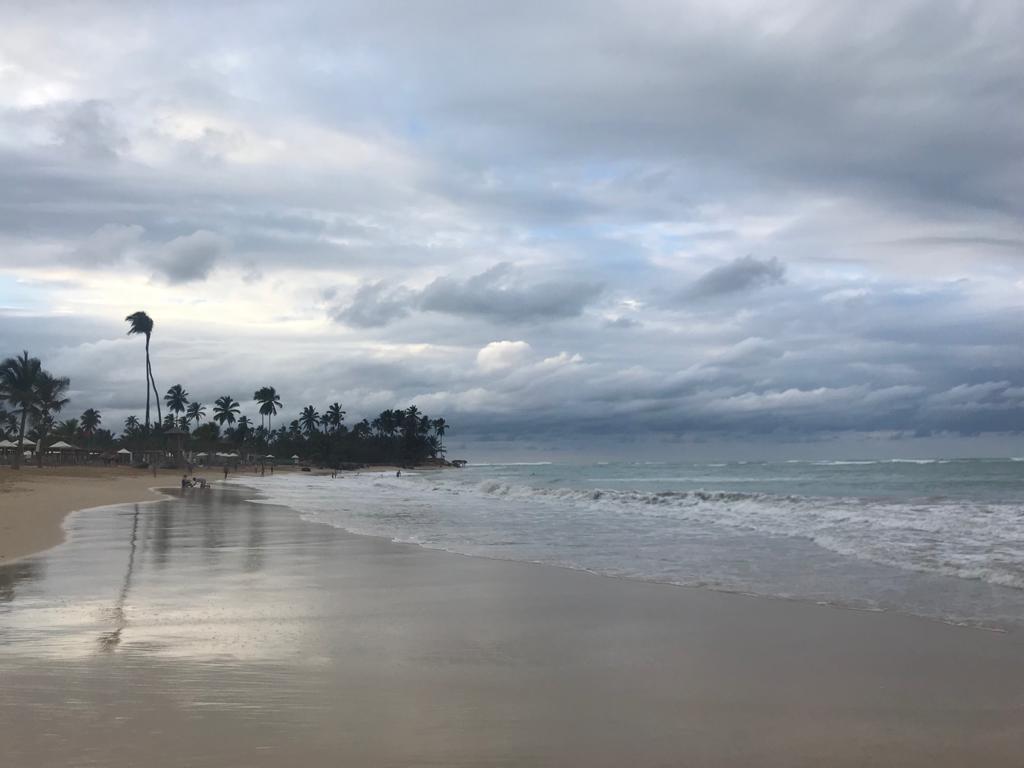
2020 was a year of many firsts for myself, and therefore in spite of the global pandemic (which brought with it the destruction of lives both figuratively and literally) it was actually quite an interesting personal year. I am exceptionally fortunate to be able to say I still have my health (physical, cannot claim with as much certainty about my mental health), a job, a roof over my head and have not suffered direct loss of loved ones due to COVID. Therefore, I feel a content warning is required: this blog does not look to boast or minimalize all the loss, hardship and destruction that was experienced in 2020. But taking a leaf out of my colleagues’ book, I would like to try and reflect upon 2020 positively where possible: and in all honesty I experienced some really beautiful firsts in 2020.
January 2020 saw the most magical ‘first’ I have experienced in my life: the first (and I am very hopeful my only) day as a bride! The day was filled with so much love, joy, food and laughter: where memories where created which cause me to smile on even my darkest days! And with this magical day came a wonderful honeymoon where my first experiences as a newly-wed were not too shabby at all! The Dominican Republic was beautiful in scenery, activities and people! Again, memories which fill me with warmth.
January also saw me graduate with my first masters, although I did not attend the graduation as was sunning it up with cocktails and novels in the DR!
During the first lockdown, my partner and I moved. This brought with it my first experience of living without a washing machine, along with my first experience of purchasing a washing machine (not that fun and quite expensive!). It was also my first experience of living in a house with my partner, with more than 3 rooms! Which, during a lockdown, proved to be essential in many ways: a luxury I know many could not afford.
The Criminology book club began in lockdown (not my first book club: sorry guys), but it was my first virtual book club which is something! Along with this came the delivery of workshops online, another first, and later in the year the delivery of lectures online, again another first! I also experienced my first online interview (panel, presentation the whole works) which was joyous. And received my first offer of full-time employment.
The holiday season brought with it the odd few firsts as well. It was the first holiday season my partner did not work in all the years I have known them (not through choice unfortunately), it was the first time we both drank on Christmas day (partner is usually driving or conscious of work on Boxing day). And it was the first time I did not feel the ‘lull’ in between Christmas and New Years, which was more scary than anything else.
2020 started out with such promise and hope, and threw some serious ‘end of the world’ vibes at us, and for some these were more than just vibes. It has been hard for all and catastrophic for many, but there have been glimmers throughout the year which have kept us going when it did not seem possible. For me 2020 will always be the year of destruction but also a year of firsts: some of which are currently up there as the best days, experiences and moments of my life 😊
Share this:


2020: A Year on “Plague Island”

Last year in this blog, I argued that 2019 had been a year of violence. My colleague, @5teveh provided a gentle riposte, noting that whilst things had not been that good, they were perhaps not as bad as I had indicated. Looking back at both entries it is clear that my thoughts were well-evidenced, but it is @5teveh‘s rebuttal that has proved most prescient in respect of what was to come….
The year started off on a positive, personally and professionally, when both @manosdaskalou and I were nominated for Changemaker Awards. Although beaten by some very tough competition, shortly before leaving campus we were both awarded High Sheriff Awards, alongside our prison colleagues, for our module CRI3006 Beyond Justice. As colleagues and students will know, this module is taught entirely in prison to year 3 criminology students and their incarcerated peers. Unfortunately, the awards took place in the last week on campus, but we are hopeful that we can continue to work together in the near future.
Understandably much of our attention this year has been on Covid-19 and the changes it has wrought on individuals, communities, society and globally. Throughout this year, the Thoughts from the Criminology Team have documented the pandemic in a variety of different ways. From my very early thoughts, written in the panic of abandoning campus for the experience of lockdown to entries from @helentrinder @treventoursu @jesjames50 @cherylgardner2015 @5teveh @manosdaskalou @anfieldbhoy @samc0812 @drkukustr8talk @zeechee @saffrongarside @svr2727 @haleysread The blog has explored Covid-19 from a variety of different angles reflecting on the unprecedented experience of living through a pandemic. It is interesting to see how the situation and our understanding and responses have adapted over the past 9 months.
Alongside the serious materials, it was obvious very early on that we also needed to ensure some lightness for the team and our readers. With this in mind, early in the first lock down, we created the #CriminologyBookClub. We’re currently on our 8th novel and we’ve been highly critical of some of the texts ;), as well as fallen in love with others. However, I know I speak for my fellow members when I say this has offered some real respite for what’s going on around us.
Another early initiative was to invite all our bloggers to contribute an entry entitled #MyFavouriteThings. We ended up with over twenty entries (which you’ll find via the link) from the criminology team, students, as well as a our regular and occasional contributors. Surprisingly we learnt a lot about each other and about ourselves. The process of something as basic as writing down your favourite things, proved to be highly cathartic.
Whilst supporting each other in our learning community, we also didn’t forget our friends and colleagues in prison. Although, the focus has rightly been on the NHS and carers, the pandemic has hit the prison communities very hard. Technology can solve some of the issues of loneliness, but to be locked in a small room, far away from family and friends creates additional problems. For the men and the staff, the last 9 months has brought challenges never seen before. Although, we could not teach the module, we did our best, along with colleagues in Geography and the Vice Chancellor @npetfo, to provide quizzes and competitions to help pass the hours.
In June, the world was shocked by the killing of George Floyd in the USA. For many of us, this death was one in a long line of horrific killings of Black men and women, whereby society generally turned a blind eye. However, in the middle of a pandemic, the killing of George Floyd meant that people could not turn away from what was playing on every screen and every platform. This lead to a resurgence of interest in Black Lives Matter and an outpouring of statements by individuals, organisations, institutions and the State.
For a week in June, the Thoughts from the Criminology Team muted all their social media to make space for the #AmplifyMelanatedVoices initiative from Alishia McCullough and Jessica Wilson This was a tiny gesture in the grand scheme of things but refocused the team’s attention on making sure there is a space for anyone who wants to contribute.
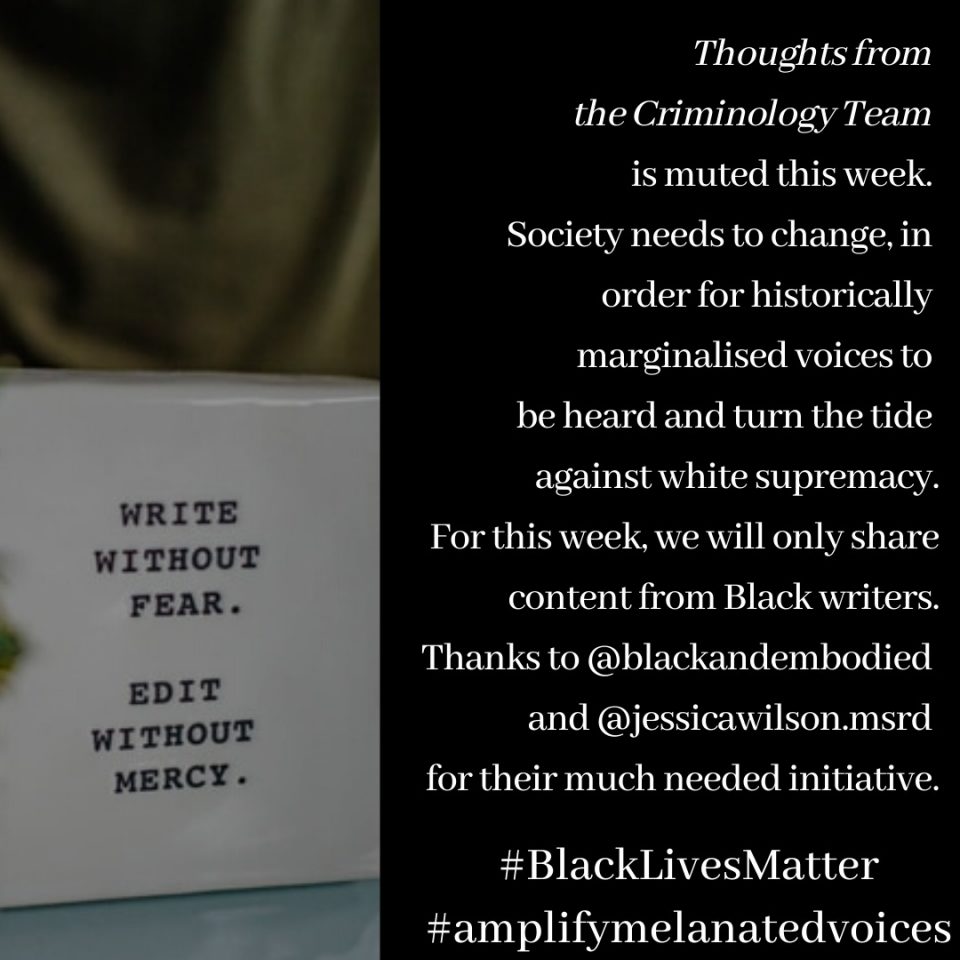
Whether this new found interest in Black Lives Matters and discussions around diversity, racism, decolonisation and disproportionality continue, remains to be seen. Hopefully, the killing of George Floyd, alongside the profound evidence of privilege and need made evident by the pandemic, has provided a catalyst for change. One thing is clear, everyone knows now, we can no longer hide, there are no more excuses and we all can and must do better.
This year some old faces left for pastures new and we welcomed some new colleagues to the Criminology Team. If you haven’t already, you can read about our new (or, in some cases, not so new) team members’ – @jesjames50 @haleysread and @amycortvriend – academic journeys to becoming Lecturers in Criminology.
Finally, looking back over the last 12 months, certain themes catch my eye. Some of these are obvious, the pandemic and Black Lives Matter have occupied a lot of our minds. The focus has often been on high profile individuals – Captain Tom Moore, Joe Wickes, Marcus Rashford – but has also shone on teams/organisations/institutions such as the NHS, carers, shop workers, delivery drivers, the scientists working on the vaccines, the list goes on. Everyone has played a part, even if that is just by staying at home and out of the way, leaving space for those with a frontline role to play. Upon reflection it is evident that the over-riding themes (and why @5teveh was right last year) are ones of kindness, of going the extra mile, of trying to listen to each other, of reaching out to each other, acknowledging unfairness and privileges, recognising the huge loss of life and the impact of illness and bereavement and trying to make things a little better for all. Hope has become the default setting for all of us, hope that the pandemic will be over, alongside hopes that we can build a better world with its passing. It has also become extremely clear that critical thinking is at a premium during a pandemic, with competing narratives, contradictory evidence and uncertainty, testing all of our ability to cope with change and respond with humility and humanity.
There is no doubt 2020 has been an unprecedented year and one that will stay with us for ever in the collective memory. Going into 2021 it’s important that we remember to consider the positives and keep trying to do better. Hopefully, in 2021 we will get to celebrate Criminology’s 21st Birthday together
Remember to stay safe, strong and well and look out for yourself and others.

Share this:


A Christmas blog

What is Christmas? A date in the calendar in winter towards the end of the year to celebrate one of the main religious festivals of the Christian calendar. The Romans replaced a pagan festival with the birth of the head of the, then new, religion. Since then as time progresses, more customs and traditions are added, to make this festival more packed with meaning and importance. The gift of the 20th century’s big corporations was the addition to the date, the red Santa Claus who travels the planet on his sledge from the North Pole in a single day, offering gifts to all the well-behaved kids. The birth of Christ is miles away from the Poles but somehow the story’s embellishment continues.
In schools, kids across the world will re-enact the nativity scene, a romantic version of the birth of Jesus, minus their flight to Egypt and the slaughter of the infants. The nativity, is for many, their first attempt at theatre and most educators’ worst nightmare, as they will have to include all children regardless of talent or interest to this production. The play consists mostly of male characters (usually baby Jesus is someone’s doll) except for one. That of the mother of Jesus. The virgin Mary is located centre stage, sitting quietly, the envy of all other parent’s that their kid was not cast in such a reverent role. In recent years, charlatans tried to add more female roles by feminising the Angels and even giving the Inn keeper a daughter or even a wife. In most cases it was the need of introducing more characters in the play. Most productions now include barn animals (cats and dogs included), reindeers, trees, villagers, stars and even a moon. All castable parts not necessarily with a talking part.
The show usually feels that it lasts longer than it does. The actors become nervous, some forget their lines, others remember different lines, the music is off key and the parents jostle to get to prime position in order to record this show, that very few will ever watch. The costumes will be coming apart almost right after the show and the props are just about holding on with a lot of tape and superglue. The play will signal the end of the school season carrying the joyful message from the carpark to the people’s homes. This tradition carries on regardless of religious sentiments and affiliations. People to commemorate the birth of a man that billions of people consider the head of their faith.
Nativity is symbolic but its meaning changes with the times, leaving me wondering what our nativity will be in the 21st century. Imagine a baby Jesus floating face down on torrential Aegean waters, a virgin Mary hoping that this will be the last client for the day on the makeshift brothel maybe today is the day she gets her passport back; Joseph a broken man, laying by the side of the street on a cardboard; the angel a wingless woman living alone in emergency accommodation, living in fear, the villagers stunned in fear and everyone carrying on . Not as festive as the school production but after all, people living for year in austerity, and a lockdown and post-referendum decisions make it difficult to be festive. Regardless of the darkness that we live in, the nativity has a more fundamental message: life happens irrespective of circumstances and nothing can stop the birth of a new-born.
Merry Christmas to all from the Criminology Team
Share this:


Covid -19: An opportunity too good to miss
And so, vast swathes of the country have gone into a new lock down (tier 4). We all must have known in hearts that this was coming and those of us that are not in tier 4 will be wondering just when the new lock down will hit us. We can all moan about our ruined Christmas and feel bitterly disappointed about not seeing relatives and friends. We can blame Boris for this monumental cock up, but we have to face facts, Covid -19 is here and something has to be done to stop the spread of the disease.
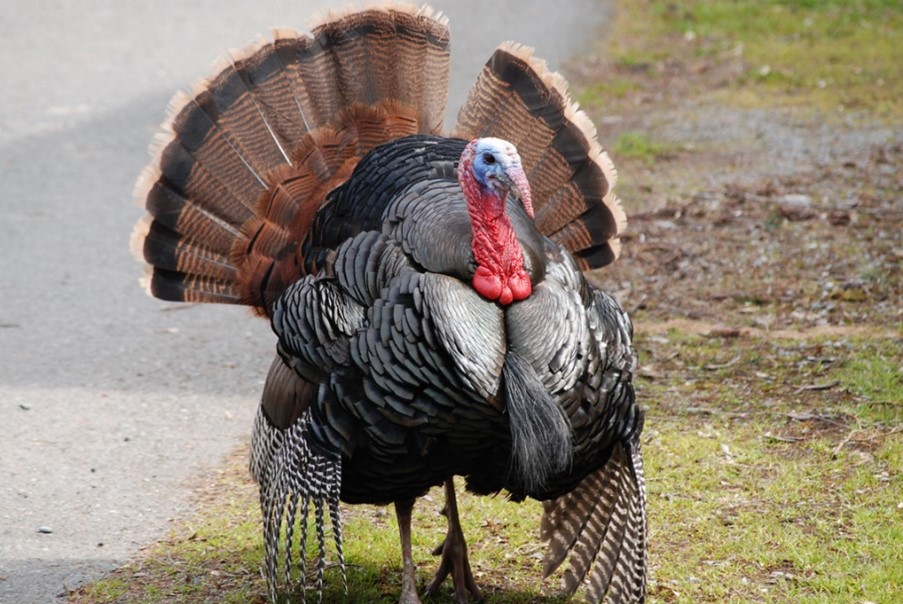
I, like so many, am upset that I will not be able to see my family in person this Christmas but over the last few days I began to wonder just how much of a hardship that is. There was a man on the news the other day that was moaning about the Christmas restrictions, he and his wife had a 15 lb turkey that was now going to waste. My first thought was, so you’d rather catch Covid you *^&$£” **. But this morning I thought, aren’t you lucky to have a 15lb turkey and, as my wife and I discussed whether we will be having a roast on Christmas day and the Sunday after, I thought aren’t I lucky too. There are two things that strike me, I’m able to have what food I want on Christmas day and I’m saving a bloody fortune not having to have all the family round or take them out for Christmas dinner and drinks. The pandemic has some upsides.
But, this is the crux of the matter, how can I sit down to my Christmas lunch knowing that I have money I would have spent sitting in the bank when there are people out there who will be wondering right now, not about the massive turkey, or the family not coming round, or whether to have chicken on Christmas day and Sunday but, whether they can feed themselves and their family tomorrow, let alone Christmas day. We could of course blame Boris and his government (a very rational decision) but judging by Reece Mogg’s comments the other day, they have little interest. We could just ignore it, don’t think about it, pretend all is well and on Christmas day raise a glass to our nearest and dearest and those that we are missing. But as we must face facts that Covid – 19 is here, so must we face facts that people, real people, are starving in this country. It shouldn’t be like that, but it is.
So my wife and I have decided that we will work out how much extra we would have spent this Christmas, by going out, by going to parties, by catering for family and we will spend that money on food and give it to a food bank. It won’t be very much in the greater scheme of things, but it will be something. I’m not writing this blog to say how marvellous we are, far from it, but rather to challenge all of you to do the same. Even a little extra in your shopping before Christmas is going to make a huge difference. Let’s turn this Christmas into one we can remember for the right reasons and turn the Covid- 19 pandemic into an opportunity that we seized for the good.
Please see below for a list of local and national organisations helping families this Christmas and throughout the year:
AmplifiedNN Community Group
AmplifiedNN Festive Family Fundraiser
Northamptonshire Food Poverty Network
Share this:


Reality and the fairy tale world of policy and procedures

In the concept of managerialism, we see that both policy and procedures form part of the techniques employed to enhance productivity and cultural changes. These changes use a ‘calculative and rationalistic knowledge base’ which appears both ‘universalistic’, and [at first sight] ‘seems entirely good sense’ (Gilling, 2014:82).
However, this knowledge base is far from universalistic and to the ‘street level bureaucrat’ (Lipsky, 1980) often falls little short of complete naivety. Lipsky (2010) provides a valuable insight into how individuals in public service adapt unworkable policies and procedures as the idealistic meets the reality of overstretched resources and ever demanding and needy consumers of services.
Whilst both working in and studying the police as an organisation subjected to and adopting managerialist policies, I witnessed the nonsensical notions of measuring activities and the subjugation of professionalism to management ideals (Hallam, 2009). Perhaps, there could be no better example than the measurement of the length of time a call handler spent dealing with a call. This derived from the need to answer calls within a target time period. It all made sense until you begin to take into account reality – the lack of resources and the nature of calls which demanded that on some occasions operators ought to spend far longer on the phone to deal with more protracted matters, such as someone in crises who really needed help and a comforting voice whilst someone was on their way. The result of the measurements was often counterproductive, officers being sent to incidents that amounted to little more than a waste of time, ‘My Jimmy is missing and I haven’t seen him for three days’ – when the officers turn up, Jimmy turns out to be a cat or, officers being sent to locations where information regarding the incident is scant because little time has been spent on the phone to get sufficient details. In the clinical world of the policy maker, there are ideal call takers, those that have knowledge about every eventuality, and ideal call makers, those that are precise, unemotional and to the point. Nothing of course could be further from reality.
Disappointingly, I find little solace in academia. Policy and procedures abound. Teaching styles are based, not on the nuances of student types but on the ideal student. The student that has the requisite skills to read and write and think critically. The student that is always engaged and always turns up and above all else, teaching is based on idealistic (see Morse and Lewis for tutorial sizes) small student classes. Policies that are well meaning such as catering for additional needs, become unworkable in an environment where class sizes and teaching demands outstrip available resources. Like the call handler, for the lecturer, it becomes impossible to cater for those that need more attention and time. And like the call handler, lecturers are subjected to managerialist idealistic measurements of success and failure. I once heard of a manager that referred to academics as ‘slackademics’, I think is probably just an indication of how far removed from reality managers are. There are two worlds in organisations that provide a service to the public, one is based on reality the other, a fairy tale world of policies and procedures based on the ideal.
References
Gilling, D. (2014) Reforming police governance in England and Wales: managerialisation and the politics of organisational regime Change, Policing and Society, 24 (1): 81-101.
Lipsky, M. (2010) Street-Level Bureaucracy: Dilemmas of the Individual in Public Services. New York: Russell Sage Foundation.

 Thoughts from the criminology team