
Home » Class
Category Archives: Class

25 years is but a drop in time!

If I was a Roman, I would be sitting in my comfortable triclinium eating sweet grapes and dictating my thoughts to a scribe. It was the Roman custom of celebrating a double-faced god that started European celebrations for a new year. It was meant to be a time of reflection, contemplation and future resolutions. It is under these sentiments that I shall be looking back over the year to make my final calculations. Luckily, I am not Roman, but I am mindful that over 2025 years have passed and many people, have tried to look back. Since I am not any of these people, I am going to look into the future instead.
In 25 years from now we shall be heading to the middle of the 21st century. A century that comes with great challenges. Since the start of the century there has been talk of economic bust. The banking crisis slowed down the economy and decreased real income for people. Then the expectation was that crime will rise as it did before; whilst the juries may still be out. the consensus is that this crime spree did not come…at least not as expected. People became angry and their anger was translated in changes on the political map, as many countries moved to the right.
Prediction 1: This political shift to the right in the next 25 years will intensify and increase the polarisation. As politics thrives in opposition, a new left will emerge to challenge the populist right. Their perspective will bring another focus on previous divisions such as class. Only on this occasion class could take a different perspective. The importance of this clash will define the second half of the 21st century when people will try to recalibrate human rights across the planet. Globalisation has brought unspeakable wealth to few people. The globalisation of citizenship will challenge this wealth and make demands on future gains.
As I write these notes my laptop is trying to predict what I will say and put a couple of words ahead of me. Unfortunately, most times I do not go with its suggestions. As I humanise my device, I feel sorry for its inability to offer me the right words and sometimes I use the word as to acknowledge its help but afterwards I delete it. My relationship with technology is arguably limited but I do wonder what will happen in 25 years from now. We have been talking about using AI for medical research, vaccines, space industry and even the environment. However currently the biggest concern is not AI research, but AI generated indecent images!
Prediction 2: Ai is becoming a platform that we hope will expand human knowledge at levels that we could have not previously anticipated. One of its limitations comes from us. Our biology cannot receive the volume of information created and there is no current interface that can sustain it. This ultimately will lead to a divide between people. Those who will be in favour of incorporating more technology into their lives and those who will ultimately reject it. The polarisation of politics could contribute to this divide as well. As AI will become more personal and intrusive the more the calls will be made to regulate. Under the current framework to fully regulate it seems rather impossible so it will lead to an outright rejection or a complete embrace. We have seen similar divides in the past during modernity; so, this is not a novel divide. What will make it more challenging now is the control it can hold into everyday life. It is difficult to predict what will be the long-term effects of this.
During the late 20th and early 21st centuries drug abuse and trafficking seemed to continue to scandalise the public and maintain attention as much as it did back in the 1970s and 80s. Drugs have been demonised and became the topic of media representation of countless moral panics. Its reach in the public is wide and its emotional effect rivals only that of child abuse. Is drugs abuse an issue we shall be considering in 25 years from now?
Prediction 3: People used substances as far back as we can record history. Therefore, there will be drugs in the future to the joy of all these people who like to get high! It is most likely that the focus will be on synthetic drugs that will be more focused on their effects and how they impact people. The production is likely to change with printers being able to develop new substances on a massive scale. These will create a new supply line among those who own technology to develop new synthetic forms and those who own the networks of supply. In previous times a takeover did happen so it is likely to happen again, unless these new drugs emerge under formal monopolies, like drug companies who will legalise their recreative use.
One of the biggest tensions in recent years is the possibility of another war. Several European politicians have already raised it pretending to be making predictions. Their statements however are clear signs of war preparation. The language is reminiscent of previous eras and the way society is responding to these seems that there is some fertile ground. Nationalism is the shelter of every failed politician who promises the world and delivers nothing. Whether a citizen in Europe (EU/UK) the US or elsewhere, they have likely to have been subjected to promises of gaining things, better days coming, making things great…. only to discover all these were empty vacant words. Nothing has been offered and, in most cases, working people have found that their real incomes have shrunk. This is when a charlatan will use nationalism to push people into hating other people as the solution to their problems.
Prediction 4: Unfortunately, wars seem to happen regularly in human history despite their destructive nature. We also forget that war has never stopped and elusive peace happens only in parts of the world when different interests converge. There is a combination of patriotism, national pride and rhetoric that makes people overlook how damaging war is. It is awfully blindsided not to recognise the harm war can do to them and to their own families. War is awful and destroys working people the most. In the 20th century nuclear armament led to peace hanging by a thread. This fear stupidly is being played down by fraudsters pretending to be politicians. Currently the talk about hybrid war or proxy war are used to sanitise current conflicts. The use of drones seems to have altered the methodology of war, and the big question for the next 25 years is, will there be someone who will press THAT button? I am not sure if that will be necessary because irrespective of the method, war leaves deep wounds behind.
In recent years the discussion about the weather have brought a more prevailing question. What about the environment? There is a recognised crisis that globally we seem unable to tackle, and many make already quite bleak predictions about it. Decades ago, Habermas was exploring the idea of “colonization of the lifeworld” purporting that systemic industrial agriculture will lead to environmental degradation. Now it seems that this form of farming, the greenhouse gasses and deforestation are becoming the contributing factors of global warming. The inaction or the lack of international coordination has led calls for immediate action. Groups that have been formed to pressure political indecision have been met with resistance and suspicion, but ultimately the problem remains.
Prediction 5: The world acts when confronted with something eminent. In the future some catastrophic events are likely to shape views and change attitudes. Unfortunately, the planet runs on celestial and not human time. When a prospective major event happens, no one can predict its extent or its impact. The approach by some super-rich to travel to another planet or develop something in space is merely laughable but it is also a clear demonstration why wealth cannot be in the hands of few oligarchs. Life existed before them and hopefully it will continue well beyond them. On the environment I am hopeful that people’s views will change so by the end of this century we will look at the practices of people like me and despair.
These are mere predictions of someone who sits in a chair having read the news of the day. They carry no weight and hold no substantive strength. There is a recognition that things will change at some level and we shall be asked to adapt to whatever new conditions we are faced with. In 25 years from now we will still be asking similar questions people asked 100 years ago. Whatever happens, however it happens, life always finds a way to continue.
Share this:


Meet the Team: Angela Charles, Senior Lecturer in Criminology

I would like to take this opportunity to say a warm hello to my colleagues and to the students at the University of Northampton.
I am Angela Charles, a senior lecturer in criminology. I have a passion and deep interest in this discipline for a number of reasons. Firstly, criminology is such a fascinating and thought-provoking subject that is constantly evolving and expanding. Secondly, criminology is a subject where I believe social justice can be fought for and in many cases achieved, through researching and gaining evidence to push for change, and through perseverance. Thirdly, criminology requires us to discuss, debate, analyse and build on what has been previously argued and discussed; thereby strengthening, tweaking or dismantling and rebuilding previous theoretical knowledge and criminological concepts.
My research interests are within prisons and penology, and race and gender. My most recent research explored and analysed the experiences of Black women in English prisons, paying particular attention to the intersections of race, class and gender. Black women are at the margins of society and face multiple intersecting oppressions. The prison is arguably a microcosm of society and perpetuates the same oppressive structural inequalities. It is often these racialised and gendered pains of imprisonment that are rarely discussed or mentioned both within scholarly literature and the public realm more widely. I hope to disseminate my research in the coming years and amplify some of the voices of Black women in UK prisons.
I’m also keen to explore research methods that arguably move away from traditional research methods and instead aim to decolonise research methods. Criminologists need to adapt the methods they use to suit the differing backgrounds and cultures of the participants that we research, and we need to incorporate different cultural aspects into the research process. I believe this not only will create richer data, but will also increase participant engagement as they become co-producers of knowledge.
Lastly, I look forward to working closely with my colleagues to learn about their research interests, passions and to collaborate on ensuring that studying criminology is enjoyable, rewarding and insightful at the University of Northampton!

Share this:

Refugee Week 2023

Monday 19th June commences the 2023 Refugee Week and this year’s theme is compassion, a quality we have seen little of in Fortress Europe policy and practice this year. As many of you will know, Jessica James and I founded the Northampton Freedom From Torture local supporter’s group earlier this year. Part of the reason for setting up the group was to help foster compassion towards people seeking safety in our local area. Admittedly, we’ve been pretty quiet so far (workloads, life etc. – we welcome volunteers to help organise events) but for Refugee Week we have organised a film screening of MATAR and The First Drop of Rain: Making MATAR.
MATAR is a WaterBear Original following the story of an asylum seeker in England who, when confronted with the hostile immigration system in the UK, is forced to live on the fringes of society and rely on his bike to survive.
A powerful and poignant story of resilience and perseverance, based on the lived experience of co-writer Ayman Alhussein. MATAR stars actor Ahmed Malek (The Swimmers) in the titular role, with BAFTA-nominated actor Youssef Kerkour (Home) and Elmi Rashid Elmi (The Swimmers). This docu-fiction short film is directed by BAFTA-winning Hassan Akkad and produced by Deadbeat Studios in association with Choose Love.
The event will be hosted on Wednesday 21st June 2023 from 5.30pm in the Morley Room at the University of Northampton. Tickets are free and can be booked here but we welcome donations and sponsorship for @jesjames50’s forthcoming half marathon.
In October, Jes will be running the Royal Parks Half Marathon to fundraise for Freedom From Torture. Running is one of Jes’ favourite hobbies and is enjoyed by millions across the globe as a popular pastime and fitness activity. However, running in this capacity is a privilege. For some it is forced upon them to flee harm, torture and unlawful prosecution. Freedom For Torture is a charity which is dedicated to helping, healing and protecting people who have survived torture. The half marathon is 13.1miles and has raised nearly £60million for over 1000 charity partners since 2008, and in 2023 we are aiming to contribute to this! Watch this space for more details about the upcoming fundraising activities and sponsoring Jes take on her longest run ever for survivors of torture. You can find Jes’ Just Giving page here.

Now we have the promotion out of the way, let’s talk about why compassion matters. The UK government is intent on ‘stopping the boats’, yet the policies they propose to achieve this do not include opening safe and legal routes to those seeking safety here. Instead, governments throughout much of Europe opt for deterrent measures, the results of which mean border deaths as we have seen in the tragedy off the coast of Greece this week. The omission of opening safe routes contributes to the structural violence of immigration policy and practice in Europe and means that deaths at the border are, as Shahram Khosravi argues, an acceptable consequence of border practices. There exists a gaping chasm where the compassion should be.
Meanwhile, those who do show compassion such as those volunteering to help refugees, protesters and even refugees themselves risk criminal prosecution. Sara Mardini is among a group of volunteers who faced prosecution in Greece earlier this year for a number of charges relating to their voluntary work with refugees. Although acquitted of a number of charges, some of the volunteers still face investigation for people smuggling and other offences. Meanwhile in the UK protesters are routinely arrested for protesting inhumane deportation and the Nationality and Borders Act 2022 allows maximum sentences of life imprisonment for those piloting small boats to smuggle migrants into the UK, not considering that many of these people will be refugees themselves who have paid smugglers and been forced to pilot boats, or who have agreed to pilot a boat in return for their passage. The stakes are high for acts of compassion.
As a border criminologist and activist, the refugee ‘crisis’, political, media and public responses to people seeking safety can feel overwhelming at times. It is difficult to comprehend what one person can do, yet there is power where lots of individuals stand up against injustice. Just over a year ago, I was at a protest outside an immigration removal centre on the day the first flight to Rwanda was due to take place. There were others there and at various locations around the country, and even more mobilised on social media. Campaign groups, charities and lawyers worked together to bring a court case against the UK government. While the war is ongoing, we won the battle that day and the plane was not allowed to leave.
We can all do something to spread compassion towards people seeking safety. Actions could be as simple as learning about refugees by watching a film or reading a book. It could mean sharing your thoughts in conversations and viA social media platforms. You could write to your MP and ask them to show some compassion or volunteer with a group like our Freedom From Torture local group or participate in a protest.
Share this:


If we could empathize with all life, we… [fill in the blank]
In Honour of my two teachers’ passing (seen together here). Rest In Power, bell hooks (d. 15/12/21) and Thich Nhat Hanh (d. 22/01/22).
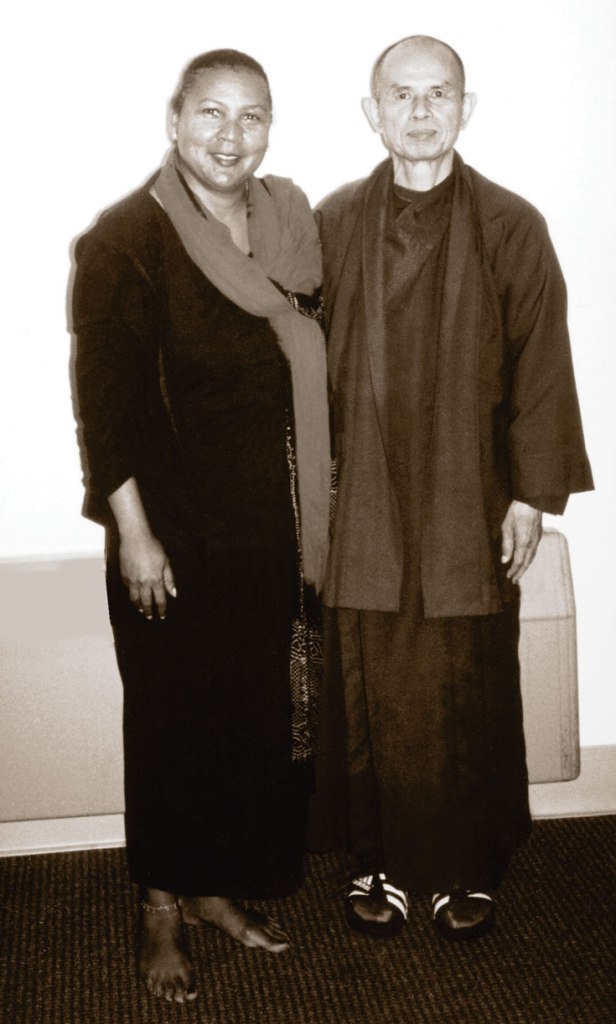
If we could empathize with all life, we…
… wouldn’t treat all animals as either food or fodder.
… wouldn’t develop nuclear technology into bombs.
…would never show an interest in making so many guns and ways of destroying life.
…would more genuinely aim to achieve mutual understanding between individuals.
…wouldn’t have so much intergenerational trauma within families, communities, nations.
…would be more neighborly in all our affairs.
…wouldn’t treat trade like a sport, a winner-takes-all competition over natural resources.
…would harness the power of the sun for it shines on all life collectively.
…would cultivate care, and be kinder as a general rule.
… would teach kindness in school, a required class on every campus.
…would not build entire ideologies, systems of government, religions, arts, and culture around patriarchy.
… would not be reduced to binaries, not just in gender, but ‘black or white’ in our overall thinking, because that’s where it came from: A false yet powerful and enduring dichotomy.
Binary thinking produced gender binaries, not the other way around. Knowing this is key to its undoing. Please know that capitalism produced racism, and greed crafted classism. A2 + B2 = C2, still. Racism is exponentially untamed greed; and patriarchy an inferiority complex run rampant and amok. Such cultures of greed can’t be conquered by competition; greed can’t be beat! We need a new dimension.
If we could empathize with all life, we would aspire to be far more fair.
If we could empathize with all life, we would love more.
Your turn.
Fill in the blank.
Share this:


‘White Women, Race Matters’: The White Man’s Burden
This post in-part takes its name from a book by the late Whiteness Studies academic Ruth Frankenberg (1993) and is the final of three that will discuss Whiteness, women, and racism.
Chapter III: Your Problem but not Your Problem
Despite women’s investment in football, at least socially, in terms of Women’s Football (much better than the men’s game in my opinion), it was interesting to observe the reactions of White men that positioned themselves as progressives when I challenged the national response to racism in the game. When we realise that ‘football hooligans’ all have jobs across sector, I would bring people to consider this is not just a working-class issue, as football is a game that transcends socioeconomic lines. This post isn’t necessarily about the violence White women have commited against me but is certainly their problem, and they could have a deciding voice of how White men act at football matches. When we consider racial hiearchies, I am reminded of the gendered components of colonialism where White men are at the top of that hierachy followed by the White woman. In spite of White women’s complicity in those histories of racism (Ware, 1992), logic dictates that White women’s privilege will have some sway when White men act in hostility to people of colour. That said, still today I find White women all too happy to take on misogyny / patriarchy but not racism / White supremacy. In this blog, I will start with a Twitter encounter where I dared to say there isn’t a “racism-in-football-problem” but a more societal issue of White supremacy. Until we start thinking about White supremacy as a political system, just as women have done patriarchy (DeBeavoir, 1949; Friedan, 1963; Davis, 1981; hooks, 1991; Adichie, 2014) and others have done class (Marx and Engles, 1848; Chomsky, 1999; Tom Nicholas, 2020), we will never solve this racism issue.
When I challenged the concept of “racism in football” in July 2021, a local BBC journalist claimed I could make it both about ‘racism in football’ and in society. The problem with this is, dominant media discourses have already stitched it all up by relegating racism to specific spaces somewhat divorced from a global system of violence. At this time as well, I saw the term ‘football hooliganism’ being used as double talk for ‘working-class thuggery’. However, to understand how football got to where it is today, we need to know how football was not originally made by the working-class.
Much alike my favourite sport cricket (Tre Ventour Ed, 2021), football started as a sport for characteristically ‘English gentlemen’. It was made for the rich by the rich to really celebrate themselves. Their game by their rules. When the working-class started to advocate for players playing for money, in its day (so the late nineteenth century), it was thought controversial. Yet, the rich controlled the boards and they could afford to play for free, taking days off for matches. The proleterians could not. Here, then you see that it came down to money, where a game made by the wealthy for them and their friends was then changed forever by working people, no less than mill and factoryworkers.

Actions that society most associates with the working-class majority today – including public fights, vandalism, brawls, and riotting in Britain are not new phenomena but has a long history going back to even before 1900 uncoincidentally coinciding with the construction of London Metropolitan Police Service in 1829 (Storch, 1975). Following the signing of the Armistice in November 1918, for example, so-called ‘race riots’ took place in no fewer than nine port communities between January and August 1919 (Jenkinson, 1996: 92). However, media footage and pictures of British riots before the Second World War have rarely been seen by the public but “…individual memories of civil disorder [in those days were] surprisingly widespread” and when riotting did happen, “governments often denied they had, and censored the newsreel pictures” (Forbidden Britain). Historically speaking, these uprisings grew out of a response to state-sanctioned violence frequently mass unemployment and poverty. Under the threat of poverty, homelessness, or even death, groups will attack shops and other structures to acquire food where “the turbulence of the colliers is, of course, to be accounted for by something more elementary than politics: it was the instinctive reaction of virility to hunger” (Ashton and Sykes, 1967: 131). Yet, the male violence that occured at the England v Italy Euro finale football match in London July 2021 has a precedent going back to the days of Walter Tull where his biographer historian Phil Vasili writes:
“In 1919, working-class Britain was in a rebellious state. Whether the war created the mood of revolt among workers – sometimes taking a horribly distorted and misguided form as we saw with the race riots – or merely speeded up the process that had been years in fermentation, is not for debate here. The fact is it happened. Families, individuals, veterans were changed by the war, including Tull, his eagerness to enlist souring to a hatred for carnage.”
Vasili, 2010: 229
On the morning of the final, I saw evidence of local Northamptonians heading to the pubs to get their fill as early as 8AM before the game that evening at 8PM (@cllrjameshill). In London, however, White (let’s be honest of course dominantly heterosexual cisgendered) patriarchal violence, was in full swing on Leicester Square, described as a “fanzone for thousands of England fans” before even two o’clock. Furthermore, according to Hutchinson (1975), “riots, unruly behaviour, violence, assault and vandalism, appear to have been a well-established, but not necessarily dominant pattern of crowd behaviour at football matches, at least from the 1870s” (p11). Whilst football today has united people across racial and class lines, many Black men of my dad’s generation (born 1971) would not find themselves anywhere near a match when they were my age or even as teenagers purely for the fact that these crowds were frequently racist and the risk of violence was significant. Today, while racism in football is largely in response to the actions of White people against Black players, there is a further history of White racism against Black fans too.
As I do not doubt that there is racism in women’s football (there is racism at every level of society), I wonder why women’s sports (especially football) is not associated with violence. Heck, other men’s sports do not have these connotations attached. We do not see it in cricket, nor do we see it in rugby to these extremes or tennis. Looking at the conversations in what happened following the game, it seemed to me that people were trying so hard to divorce this male violence from the rest of society, as if it is only specific to football. I would argue this is Britain’s soul, an unfiltered and grandiose example of the gendered racial privilege that comes with being a White man in the UK. It is very easy to stigmatise the working-class in this instance and call them “thugs”, but when we know football unites across class divides, it would do us well to consider how lots of the perpetrators were also probably middle-class as well, with jobs that permeate every level of British society: from accounting to education to sports, unions and more. That while it is incredibly easy to scapegoat them as there are histories of working-class responding with riots against state violence (no less than sports riots), we must think about how for some reason, football in particular, turns lots of men feral.
I was talking to one family member who claimed this is where men get to claim their base instincts, that violence seems to come naturally. I would need to think more on this, but it must be said that many social settings condition violence out of us, from school to the workplace. Even so, that in schools violence is punished, many students (especially boys) being placed pupil referral units. Whilst society brutalises in many ways, the pugilistic scenes we are witness to at football matches is one that is considered unsavoury by most. Men gathering together at the football … does this flick a switch? In the late nineteenth century, polymath Gustave LeBon writes about what he called “the collective mind” (1896: 2) whilst another scholar later states “the natural crowd is the open crowd; there are no limits … it does not recognise houses, doors, or locks and those that shut themselves in are suspect” (Canetti, 1962: 16). Football matches may be an apt site to discuss what the psychology profession now calls ‘crowd theory’ which was further developed on by psychologist Neil Smelser analysing the American ‘race riots’ in the first half of the last century (1962: 253, 260-61).
In my last post, I talked about ‘Karen’ in relation to racist middle-aged White women that harrass Black people minding their business. Yet, one does not see White women congregating like this together in mass as instigators of violence, where if at all in my experience violence from White women has been more individualistic or covert. Though, if women friends/colleagues disagree and know more, I’m happy to be put right from their personal experience (and do more reading). Rioting, however, is frequently often hypermasculine (Gary Younge in: DDN, 2020) and so is the violence around football. The role of White women in racism can be more insidious but my encounter on Twitter with this White man comes after my many encounters with White men that think they know more than Black people about racism.
Both White men and women are complicit in White supremacy as aggressors and bystanders. To keep this on topic, every time a White woman watches a White man’s racism but stays silent, they are as bad as they are really showing how White supremacy is the symptom and racism is the problem.
Now, you have three entries. Have a think on them.
Reference
Adichie, C.N. (2014) We Should All Be Feminists. London: 4th Estate.
Ashton, T. S., and Sykes, J. (1967). The Coal Industry of the Eighteenth Century. 2nd ed. New York: A. M. Kelley.
Canetti, E. (1962) Crowds and Power. London: Gollancz.
Chomsky, N (1999) Profit over People. New York: Seven Story Press.
Davis, A. (1981) Women, Race, and Class. London: Penguin.
DeBeauvoir, S. (1949) The Second Sex. London: Vintage.
[DDN] Double Down News (2020) Black Lives Matter & The Question of Violence | Gary Younge. YouTube [online].
Forbidden Britain (1994) Riots Episode 3 [via YouTube]. London: BBC 2.
Frankenberg, R. (1993) White Women, Race Matters. MI: University Press.
Friedan, B (1963) The Feminine Mystique. London: Penguin.
hooks, b (1991) All About Love: New Vision. London: HarperCollins.
Hutchinson, J. (1975) Some aspects of football crowds before 1914. In. The Working Class. University of Sussex Conference Report.
Jenkinson, J (1996) The 1919 Riots. In: Panayi, P (ed) Racial Violence in Britain in the Nineteenth and Twentieth Centuries. Leicester: University Press, pp. 92-111.
Le Bon, G (1896) The Crowd: A Study of the Popular Mind. London: T. Fisher Unwin.
Marx, K and Engels, F. (1848/1967) The Communist Manifesto. London: Penguin.
Smelser, N. (1962/2011) Theories of Collective Behaviour. New Orleans, LA: Quid Pro.
Storch, R.D. (1975) The Plague of the Blue Locusts: Police Reform and Popular Resistance in Northern England, 1840–57. International Review of Social History, 20 (1), pp.61-90
Tom Nicholas (2020) Whiteness: WTF? White Privilege and the Invisible Race. YouTube.
Tre Ventour Ed. (2021) 22 Yards of Whiteness: ‘You Don’t Have to be Posh to be Privileged’. YouTube.
Vasili, P. (2010) Walter Tull, (1888-1918), Officer, Footballer: All the Guns in France Couldn’t Wake Me. London: Raw.
Ware, V. (1992/2015) Beyond the Pale: White Women, Racism, and History. London: Verso.
Share this:


Visiting the Zoo: a staple of privilege
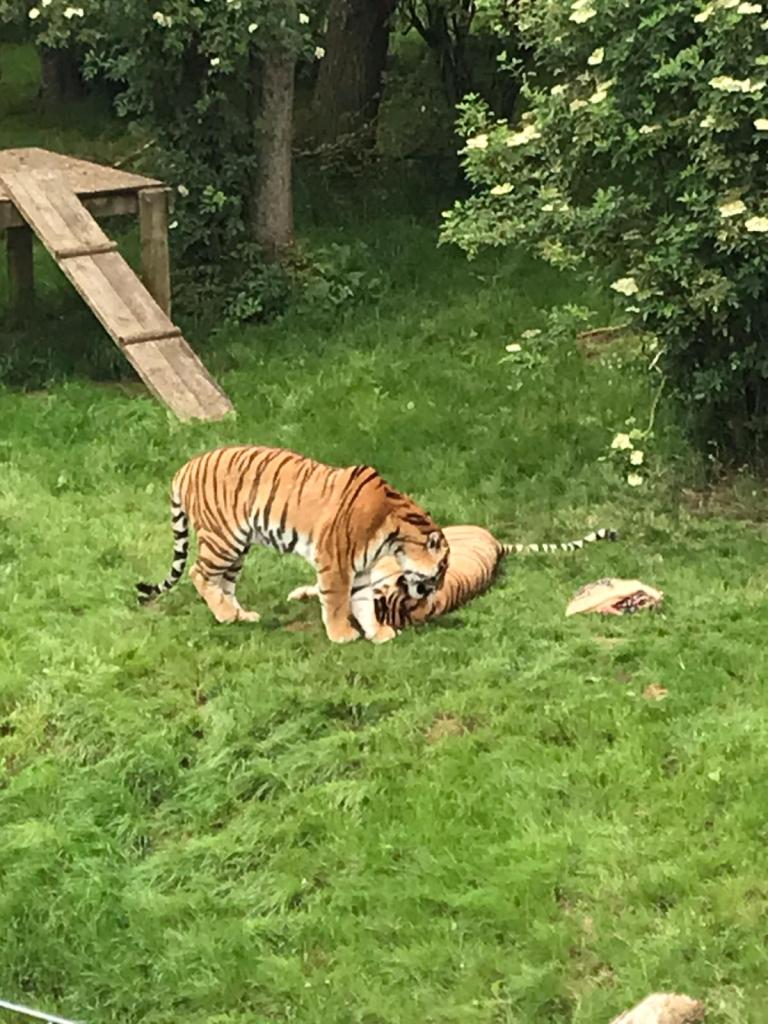
Whilst the current weather may not imply it, we are into the summer months! At this time of year staff and students begin to take a much needed and well-deserved rest after the challenging academic year we have all faced. With this time, holidays, day trips, meals out, picnics, walks and many more joyful pastimes begin to fill up the calendar, although many of us find ourselves quite restricted due to the ongoing pandemic. Nevertheless, we should all make the most of the time off to re-charge and spend time with our loved ones. For myself and my partner, this meant a day trip to Whipsnade Zoo!
Whilst the weather app assured us it would not rain, we spent a fairly windy and wet day walking around Whipsnade Zoo viewing the animals and all in all having a fabulous day. The schools are not out yet, therefore most visitors were adults on annual leave, individuals who I assume are retired, or parents with small children. We had plenty of space and time throughout the day to see the animals, read the information plaques and enjoy a wet but scrummy picnic. I dread to think what it would have been like in the height of the summer holidays!
But where am I going with this other than to brag about my fabulous day at the Zoo and what has this got to do with checking our privilege? Well, it begins with the cost to entire said Zoo. I have not been to a Zoo since I was in my school years. We used to visit Colchester Zoo most summer holidays with the Tesco Clubcard vouchers, which in a nutshell meant you could exchange Clubcard points for vouchers/tickets which included the Zoo. Therefore a trip to the Zoo when we were younger cost petrol money and a picnic (which was always done on the cheap). This is an affordable day out, but we were only a family of 3 (1 adult and 2 children), so not that many Clubcard points required, and quite a minimal picnic. Also we were fortunate enough to have a car which is not the case for all families. So even with the vouchers and picnic I cannot help but reflect and think how privileged we were to be able to visit the Zoo.
The Zoo trip this week cost just short of £50 for a student admission and an adult admission. I did think this was quite a lot. I think about what the cost would be for 2 adults and a child (or multiple children). Already this is gearing up to be an expensive day out. The Zoo has lots of interactive parts for children to engage with and learn from, and of course they have animals. But is the Zoo really aimed at educating all children or is it only those children whose families can afford it (E.I children belonging of a certain socio-economic status)? Once we arrived at the Zoo and looked around the carpark we couldn’t see a Bustop. What about the families who cannot afford a car? The food outlets were extortionate: £4 for a coffee!! Its cheaper in the West End! The same statement although different prices applies to ice-cream. I feel good that we have taken our makeshift picnic and flasks with us: but what about those who cannot?
The long-winded and verbose point I am trying to make is that even everyday things require us to check our privilege. I spoke to my partner on the drive home about the beauty and wonder of the Zoo and how we are fortunate to be able to go and how I was fortunate to go most summers as a child. But once the Clubcard vouchers stopped, so did the trips to the Zoo. There are many who are unable to enjoy the Zoo, to gain from the educational experience of learning about the animals, what they eat, where they live etc. And I can’t help but reflect and wonder is this establishment really inclusive to all? Is there something society can do to break down the class barriers which appear to be present when planning a trip to the Zoo?
Share this:


Praise for Miss Saundra. #EssentialWorkers @ School
In the second grade, I started in a new school that was designed as a progressive environment where students, teachers and administrators were all on a first-name basis. Radical, even in ’82, our school was forward about gender, race and class diversity. Despite this, I only had one Black teacher in my elementary school years – the amazing music teacher. As kids, we could see few other Black adults: the assistant librarian, a handful of the lunchroom ladies, as well as the Black middle- and high-school teachers we saw in the same building. This meant that the Black adult we most consistently interacted with was Miss Saundra, the janitor.
Miss Saundra appeared around corners, could surprise you out of a closet you hadn’t even noticed was there. She was always on hand should there be any major mess or spill. Best of all, our school gleamed from top to bottom, every classroom, every hallway, every bookshelf, every restroom – every desk! It felt lovely to go to school every day, the floors shined, the windows sparkled, and even the banisters were pristine. I am certain this level of hygiene must have taken a team, but I remember Miss Saundra, probably because she was friendly to me. I can still see her, unbending her back to look at us, and speak face to face.
If I ever had to come to school early to play in the gym or have breakfast, or stay late for an after-school activity, Miss Saundra would likely be there, tidying up. She always took time to greet us. She was even there for school dances, and asked nothing in return, and we knew nothing of her outside the labor she devoted to us in the background. She was our school’s magic negro.
Other than the school guard who was not armed with anything but charm, Miss Saundra, might have been the first at school, followed by the ladies making breakfast. These were our essential workers – like the air we breathed in the heart of our city. I like to think because of their personalities we felt at home in our environment and therefore enjoyed school more fully.
Kids carry on.
When I was in the third grade, our teacher – a tall, grey-haired white man of grand stature who taught me I could master math even though it wasn’t easy for me – sent all the girls ahead to music class. He held the boys back for a chat. Apparently, someone had urinated in the second-floor boys’ bathroom, and they’d worked out that only our class had taken a break between cleanings. Since teachers had separate restrooms, I thought it must have been Miss Saundra who’d discovered the mess, and so I wondered what that conversation was like with our teacher, who was now accusing us! Though he didn’t demand we rat out the culprit, he called it “nasty,” and said we could get electrocuted, because “electricity travels through water,” wagging his index finger like it was on fire. With that, he sent us off to music!
This was probably the first time that I’d been explicitly asked to identify as a gender, and it was over THIS! I knew that whoever had done it would have needed an audience. So not only did some fool piss on the wall, some other fool(s) stood around and watched! I thought, what bastard did this! Didn’t they know Miss Saundra would have to clean it? Didn’t she greet them, and ask them how they’re doing like she does me? Did they ‘see’ Miss Saundra everyday like she saw us? Why would they piss on her parade? Why give Miss Saundra the blues for your pissing contest!
I stopped by the bathroom on the way back from music class. Sure enough, Miss Saundra had been done had it squeaky, bleachy clean! I could never have imagined girls’ doing something like that.
I knew that like me, Miss Saundra was an outsider in a space where I belonged. I knew people like Miss Saundra, so she was not a stranger to me. I had no ambitions of becoming a janitor, but I certainly knew women, in my family and in my community, who did this sort of work. And those women I knew who did that sort of work encouraged people like me to do well in school, so I could take advantage of the kinds of choices they didn’t have. I had no reason to think Ms. Saundra less of me. What’s more, even though I felt strange in my own body, she treated me as human, especially. The gratitude I feel for her sounds like a tambourine in my own theme song.
#EssentialWorkers, #SanitationWorkers
Share this:


A racist and no solution

I am a white, middle class some might say (well my students anyway), ageing, male. I wasn’t always middle class, I’m from working class stock. I’m a university lecturer now but wasn’t always. I spent 30 years in the police service in a small, ethnically diverse, county in England. I didn’t consider myself a racist when I was in the police service and I don’t consider myself a racist now. Nobody has called me a racist to my face, so why the title? It’s how I’m constantly labelled. Every time someone says the police are racist or the police are institutionally racist, they are stating that about me. Just because I have left the police organisation doesn’t change who I am, my beliefs or my values. So, if the police are racist, then by default, I must be.
I’m not suggesting that some police officers are not racist, of course some are. Nor am I denying that there has been and probably still is some form of institutional racism within the police service, perhaps as a whole or perhaps at a more localised or departmental level. But bad apples and poorly thought-out, naïve or even reckless policies, strategies and procedures are not enough to explain what is going on in policing and policing of ethnic minority groups in particular. I’m talking about policing in this country, not across the pond where policing is very different in so many ways that it is hard to even suggest a realistic comparison. That of course is the first problem, what happens in the United States of America is immediately translated into what happens here.
As a lecturer, I constantly hear from students and read students’ work about the racist and brutal police, often interchanging commentary from the United States with commentary here in the United Kingdom, whilst also failing to recognise that there is different policing in Scotland and Northern Ireland. Institutional racism, as defined by Macpherson, is now part of the lexicon, but it no longer has the meaning Macpherson gave it, it is now just another way of saying the police are and every police officer is racist. Some students on finding out that I was a police officer show an instant dislike and distrust of me and sometimes it can take the whole three years to gain their trust, if at all. Students have been known to request a different dissertation supervisor, despite the fact that their research subject is in policing. This is not a complaint, just a statement of facts, painful as it is.
As I try to make sense of it all, I have so many unanswered questions. What is exactly going on? What is causing this conflict between the police and ethnic minority groups? Why is there a conflict, why is there distrust? More importantly, how can it be fixed? Some of the answers may lay in what the police are asked to do, or at least think they are asked to do. Reiner suggests that policing is about regulating social conflict, but which conflict and whose conflict is it? Other authors have suggested that the police are simply a means to allow the rich and privileged to maintain power. There may be some merit in the argument, but most policing seems to take place in areas of deprivation where the disadvantaged are committing crimes against the disadvantaged. The rich and powerful of course commit crimes but they are nowhere near as tangible or easy to deal with. One the problems might be that the rich and powerful are not particularly visible to policing but the disadvantaged are.
Maybe some of the answers lay in notions of stereotyping, sometimes even unconsciously. Experience or narratives of experiences cause a wariness, even a different stance to one people might normally assume. Being thumped on the nose by a drunk, does tend to make a person wary of the next drunk they encounter. So, could stereotyping be a problem on both sides of the divide? My dissertation student that didn’t want me as a supervisor was later to reveal experiences of racist abuse aimed at the police officers she went out on patrol with. Policing is dominated by white males and despite recruitment drives to address the ethnicity gap, this really hasn’t been that successful. If it was meant to help solve a problem, it hasn’t.
I get the sense though that the problem is much deeper routed than policing. Policing and the problems of policing is just a sub plot in a much wider issue of a divided society and one that is in constant conflict with itself. If the police are guilty of racism, then it is society that has caused this. Our society’s values, our society’s beliefs. An unequal society where the poorest suffer the most and the rich get richer regardless. A society where we are all equal but only because someone somewhere said so at some time, it is not reality. I think of Merton’s ‘American Dream’, I don’t buy into the whole concept, but there is something about not having opportunities, equally when I think of Lea and Young and the concept of relative deprivation, whilst not explaining all crime, it has some merit in that notion that the disenfranchised have no voice.
As I write this I am conscious that I have commentated on a very emotive subject particularly at this time. As I watch the events unfold in America, I fear the worst, action followed by reaction. Both becoming increasingly violent and I see the possibility of it happening in this country. I fear that the term ‘police racism’ will become another convenient label. Convenient in the sense that the problems are seen solely as that of policing. If we examine it through a different lens though, we might just find that policing is simply part of the whole rotten tree, society. Fix society and you fix policing. If the label racist fits, it fits the society we live in.

Share this:

Angie Smallwood thought we were bank-robbers #BlackenAsiaWithLove
Thus far, this has been the only time someone has called the cops on me – excluding those late-night noise violations at university for my 21st birthday parties. Plus a few routine traffic stops back home, two of which involved routine racial profiling. I’m lucky. There are far too many stories when these police encounters didn’t go well.
What if Ms. Angie had notified the guard, and he’d then decided to take things into his own hands? What if the police had come in pointing guns as they are want to do? What if my mother weren’t clasping tightly to my hand – as far as they knew – a senior citizen in need of (their) protection, a long-time customer of the bank discussing the mortgage on my grandparent’s old house? I have to wonder about these possibilities, to be sensitive and aware :-(. To be Young, Gifted and Black :-).
Dead giveaway
Like Charles Ramsey, “I knew something was wrong” when I saw two cops circle the bank and enter from two different directions. They weren’t there for banking and there weren’t any other customers. This was hubby’s (then boyfriend) first visit to my hometown, so I’d explicitly warned him to sit down while we waited in the lobby for my mother to handle her business. It was a small branch, yet still, like many banks at the time, the safe sat wide open, as if for inspection. Hubby was hovering. I even gave him change so he could get a lollipop from the charity pot sitting on several teller stations. You’d think someone would come over and offer a tour.
I had entered the small office once or twice. I greeted the agent speaking with my mother, then let momma know where we waited. Meanwhile, hubby insisted on wondering around – he’s generally restless. He was looking at all the posters promoting the bank’s services. Incredibly high-interest rates! Few savings options! He’s fascinated with the levels of credit exploitation permitted in America; the average German has net assets while most all us Americans have debt! He couldn’t even understand how a nation would let its population not have access to a basic bank account – as a right. He measured everything by good German standards.
How do people in America live with such instability! At that time, all this was totally foreign to him. At least in our neighborhood most folks were homeowners, so hubby and I understood one another on that. We’d both grown up taking care of our family’s homes and helping the neighbors. We’ve mowed many a lawn and trimmed many a hedge. We still do now.
“Me and my boyfriend,” the new Bonnie & Clyde
Angie Smallwood’s branch has now closed. After being heavily frisked, ID-ed and having the car license plates checked, the manager told us that Angie Smallwood had been involved in “5 or 6 armed robberies.” He explained – in that managerial tone where you know you’re being handled – that Angie had become suspicious because of hubby’s foreign accent. I found that part hilarious and yet most plausible then and there, in Louisville, KY. In spite of their constant romanticization of their European roots, they couldn’t communicate with one actual F.O.B. standing right in front of them. As a European, hubby needed this education about his own whiteness.. He even came up with his own phrase for the phenomenon “those are not my white people.”
I suppose the manager was suggesting that Angie Smallwood was trigger happy. Or, perhaps he was just trying to elicit our sympathies. It’s not as if we were going to cause a scene, the cops were still standing menacingly by. Of course, my husband blurted out why they’d placed someone so traumatized on front desk duty anyway? I am also not certain if they expected my mother to continue her business with them, or if they even cared, but the cops did ask hubby and I to leave – as if my mother was just going to go back inside. At least the manager could have apologized to my mother. He could not.
“Like I said, we just got a call about a potential crime.”
What if my mother didn’t have outstanding credit, or relationships with other banks, and therefore didn’t have other options? Angie’s antics would have just ruined that. This was the most disrespectful part – their staunch, comprehensive reminder that there’s systemic power behind their individual prejudices. Their silences. My silence.
My silence: I had already policed myself. I dressed for success, sat calmly in a visible area, not made any noise and not touched anything save for the flyer next to me on the table. I used my best diction and inside voice when I made sure to smile and greet every staffer I could see. I showed them my teen as if to announce “I’m not a threat.” If all that hadn’t disarmed them, it occurred to me – yet again- that they could not be appeased.
No level of respectability would protect me in public – we were all a part of a system, and as far as they were all concerned, everyone was just doing their job. Imagine, not only could the cops not offer any apology, they couldn’t even stand down from their hostile posture and tone. I actually felt sorry for them – as big, armed and trained as they were, they acted threatened by us!
At the time I thought they’d refused to de-escalate the situation, perhaps pride? The cops had no kind words for my mother whom they’d found out was there on legitimate business. Naw, they escorted us outside and menacingly watched us drive away. Sometimes I feel that even screwball ‘Police Academy’movies from the 80’s showed more emotional intelligence than that.
Though hubby usually drives, momma insisted that she take the wheel under the cops’ eyes, worrying they’d then challenge the foreigner’s right to drive. Yet, now I’m convinced they couldn’t have de-escalated the situation. Cops’ weeks of training doesn’t routinely include conflict resolution. They don’t know no better. They just got a call, and so they could no longer be human.
Educate cops. Arm them with de-escalation tools so that the public sees their power. Arm cops with non-violence so that they model this behavior for our society. Teach cops to be able to identify emotional distress as much as any professional would. Don’t let a weapon be their only peacemaker.
Share this:


Another one bites the dust #AhmaudAbery #BlackenAsiaWithLove
There is newly released video evidence of Maud, as he was known to kin, minutes before he was shot to death during a so-called citizen’s arrest. On the video, Maud paused during his job, caught his breath, and for exactly six minutes can be seen on video surveillance surveying a neighborhood construction site shortly before he was killed by a “homegrown posse.” This is exactly as my husband would do along his jogs.

‘Let’s get in Formation!’
My husband is fascinated with how things work, and how they are built. He can repair and engine, a toilet, a lawn-mower, locks, hinges, and plenty of things on our house. He got that from his daddy, who has an entire workshop in their basement dedicated towards up-keeping their home. He even made hubby and I a bench. My husband grew up in a German village believing that owning property was a communal enterprise. He certainly feels entitled to inspect any work that impacts the landscape of the hood. So now when he ‘inspects’ things, he behaves as if he has the right to know what’s going on in the world. I don’t have those rights.
A citizen’s arrest means an entitled citizen can stop and attain anyone whom they believe to be a criminal; legally they must have witnessed the crime. On the 9-1-1 call, Maud’s killers couldn’t even tell the emergency responder what crime they’d supposedly seen, nor were there records of these so-called string of break-ins that had allegedly occurred, justifying their anger and pursuit of the unarmed jogger. “Why make a citizen’s arrest when 9-1-1 was an available option?” emphasizes one cable news pundit during the rolling coverage of yet another Black boy slain.

I hasten to think of how Fox News is covering this story. Does it matter that he was unarmed? So what if the law doesn’t consider Maud’s right to stand his ground? Why even mention that some neighbors regularly saw Maud out jogging? Who cares that Maud was loved? We’ll forget that Maud’s alleged crime does not fit the punishment.

We make our own videos. Beyoncé’s controversial music video Formation ends in a back alley, a little Black boy slays a whole SWAT team in attack formation, with the graffiti: “Stop killing us” This directly echoes the censored ending to Michael Jackson’s 1991 Black or White video. After the music finishes, a black panther morphs into our hero, who then slays racist graffiti in the back alley of a fancy Hollywood studio. Ouch. Importantly, “as his skin became whiter, his work became blacker,” observed one Guardian writer 11 years after the singer’s tragic death. Jackson removed it and apologized after public outcry over his violence and crotch-grabbing. Maybe it reminded folks of a lynching!

 Thoughts from the criminology team