
Home » Academia (Page 3)
Category Archives: Academia

Are my interests childish or are you missing the bigger picture?
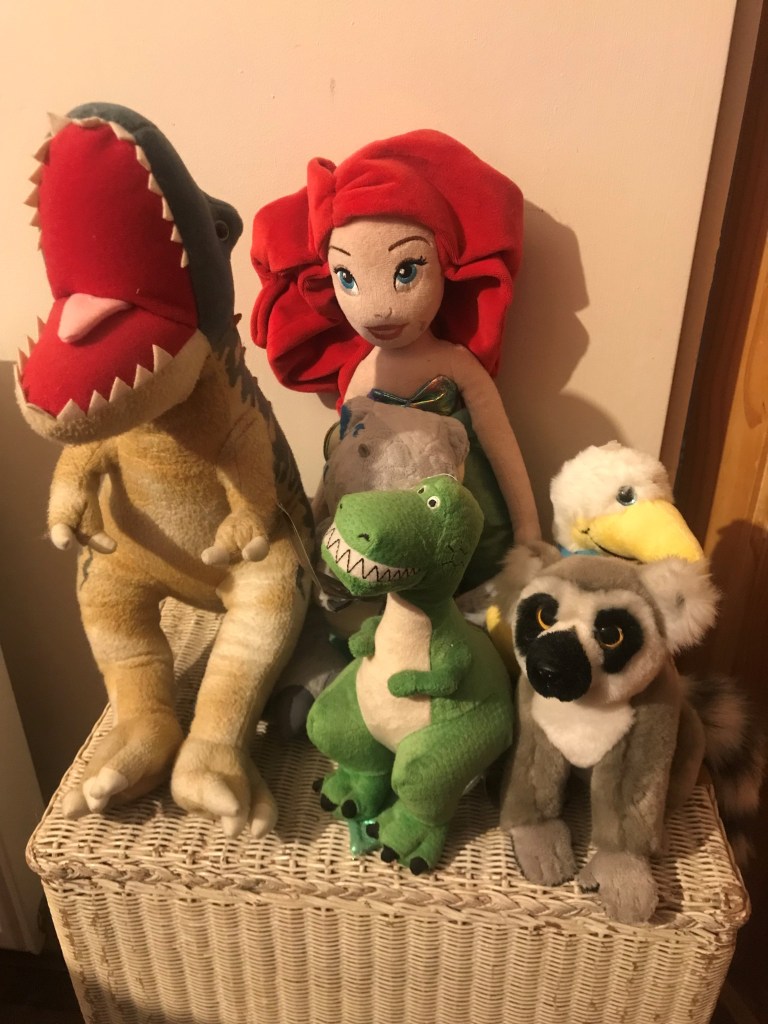
In semester 2, the level 4 BA Criminology students have been navigating different forms of socialisation for children, and thinking critically about where standards, assumptions and pressures on our children come from. Its been an interesting few weeks full of discussions building on personal experiences, documentaries and the wider academic literature. Now, whilst I could write a detailed reflection on the classroom discussions, what instead I want to, shockingly, moan about in the blog this week are the labels applied to young adults and adults implying being ‘childish’ is something to be ashamed of.

Many who know me will be aware I am a huge Disney fan, particularly Disney and Disney Pixar animations, which includes watching, gaming, clothing and accessories which all match my love for these films. I am also a big, big, big fan of dinosaurs, although if I’m being honest, its more so the Jurassic Park/World franchise. Again, books, films, toys, stuffed dinosaurs (shout out to my Beta stuffed toy – pictured above) from the Natural History Museum) and also a tattoo. These things bring me joy and also peace. Many a times when I’m overwhelmed, the go to is a Disney animation or Jurassic Park (much to my partner’s pain) for familiarity, comfort and relaxation. Yet despite the comfort and joy it brings me, often I am met with commentary about my ‘childish’ interests and questions around ‘when will I grow up’.
Now for clarity, most of these comments (but not all) are from friends and loved-ones who are saying so (I presume) in jest. There is no malice behind the comments, but still it has given me food for thought. Lots of people of all ages share the same joys as myself (social media fan pages are many), but is there any harm in pressing people to justify and commenting on their pastimes? Possibly. I am in a fortunate position to be able to afford various Disney-themed items of clothing (huge shout out to Primark and their Stitch section), Jurassic Park official merchandise, POP! Figures, clothes, posters etc whereas when I was younger, this was not something we could afford. Being in a privileged position and having a disposable income means I get to explore interests from my childhood, and have them develop into passions. Something which wasn’t available to me as a child, or even as a young adult at University. Being older and engaging with interests from childhood also uncovers new ways of appreciating the messages, artwork, and stories.
The presumption that my interests are ‘childish’ is not clearly explained by those who comment. What is meant by ‘childish’ and why is it presumed to be negative is not clear. But there appears to be some stigma around it. There is a push, as we are slowly uncovering in classroom discussions, for everyone to ‘grow-up’, but is this what is best for the individual? Or does this serve some greater purpose for society? I’m not sure what the point of the above ramblings are for, other than it might be best to keep opinions to yourself if you do not share the same interest. In a word that is full of harm and disadvantage, especially for children, let people enjoy their interests and passions, commentary free, if they aren’t harming you!
Share this:


Aspiration and Independence: A tale of Lego, Learning and Universities

A couple of year’s ago to mark the completion of my PhD, my husband presented me with a Lego kit, a Lego typewriter to be precise! This was an incredibly thoughtful gift, a nod to the start of my working life where I had used a very similar typewriter daily at the Magistrates’ Court. It was also recognition of the years I had spent writing the thesis. Simultaneously, it was also rather a surprising kit, my only other foray into Lego as an adult was building a Lego Yellow Submarine some years before. That kit had taken me considerable hours to build, which I had enjoyed, in part because of my love for the Beatles. However, I digress….
I embarked upon building the typewriter, which looked rather big and scary in its box, and even more daunting when I saw the huge instruction manual and lots and lots of bags of pieces. Nevertheless, how difficult can it be to build a Lego kit? I started with confidence, working my way through the step-by-step instructions, occasionally accidentally missing a step and having to go back through the booklet. However, about halfway through, I got completely stuck, I couldn’t make sense of the diagram and turned to google. Here I found lots of articles and videos, each of which seemed to stress that this was an extremely challenging kit, one of the most complex produced to date and not for the faint hearted. Regardless, I found some information about my particular hurdle and carried on working my way through the steps.
As time went on, I found the idea that what I was doing was difficult, playing across my mind. Increasingly, as I found a part challenging, rather than working my way backwards and forwards through the instructions, trying pieces one way and another, in trial and error, I turned again and again to google. Of course, each time I did this, as well as the answer, I was confronted by the continual narrative of challenge and difficulty. As I went on, I felt as if I could not complete this kit. Then disaster struck! As I fought to put in a moving part, a part of the model collapsed, I obviously hadn’t pressed the pieces in hard enough. I found myself facing what had been almost complete model (only one bag of pieces to go) but was now a complete mess. Now, remember this is just a model, not a matter of life and death, but I felt this mistake deeply. All of the commentators, self-proclaimed Lego “experts” were right, this was not a kit for me, a mere amateur.
This anecdote, really ends there, the kit is still in pieces in its box. I haven’t been able to bring myself to dismantle what’s left and start again. The fact that I haven’t completed the kit, plays on my mind. I don’t give up on anything (my work, education and family history attest to this), but here I am defeated by a toy![i] This “failure” got me thinking about learning and teaching and the role self-belief (or the lack of it) plays in the academic journey. This chimes with recent thoughts around independence and aspiration when it comes to excelling in study.
First a proviso, this is not about my institution, but seemingly every educational establishment and more broadly society. Everywhere I look it seems that young people are being told that they are incapable, that they need support in all aspects of their lives, including studying. That university study is incredibly difficult and probably not something that can done without enormous support. Sometimes this is an implicit message absorbed on daily basis, other times more explicit, posters, advertisements advising how to defer assessments, how to get in touch with support services, where to go for financial guidance, people you can talk to and so on. Now all of these are really important, but they are not the primary purpose of a university. That purpose is to provide a space for education, for thinking, for reading, for intellectual discourse, a place full of challenging ideas, allowing individuals to develop themselves in a variety of different and sometimes, surprising ways. It is also a place to make mistakes on that learning journey. After all, if we knew everything before we started studying for a degree, there would be little point in studying.
Nevertheless, in the modern university, there is little tangible evidence that this is what a university is for. To quote Nike (1988) where is the “Just do it”. Where does it remind us, that humans are powerful, resourceful, adaptable, that we can learn anything we put our minds to, we can succeed? Where are the messages designed to build self-confidence, self-esteem, and aspiration. Yes, there is help available, don’t be afraid to ask for support! There is no stigma, you are paying for every part of your university experience. Yes, studying is challenging, but so are lots of things in life; learning to drive, holding down a job, caring responsibilities, many of which we rely upon others for support.
Obviously, there is a big difference between Lego and an academic qualification, nevertheless they both (comparatively) require a big financial outlay, levels of dedication, concentration, aspiration and a desire for successful completion. I have three degrees, each has cost me financially, temporally and emotionally. This studying has given me the lowest of lows and the highest of highs along the way, but I have grown in ways I could never have imagined at the beginning of my studies. Along the way I have utilised support from academics and university professional services, for which I am very thankful, but the hard work is mine. Even better, those three pieces of paper belong to me and me alone, they are proof of my stamina, my perseverance and my ability to bounce back again and again. Nobody, can take those away from me!
It is for all these reasons that I will complete that Lego set! But I also recognise that I may need some expert help to build up my confidence again. This time I won’t call upon academics for support, but another expert, my 11 year old grandson, who has proved time and again, that no Lego kit will defeat him! With perseverance and an expert who will gently guide and enable me, that Lego kit will be complete in no time. Watch this space for the finished article!
EDIT Sunday 18 February: Mission Accomplished

[i] Apologies to all Lego aficionados, I fully recognise that Lego is so much more than a toy.
Share this:


Meet the Team: Liam Miles, Lecturer in Criminology

Hello!
I am Liam Miles, a lecturer in criminology and I am delighted to be joining the teaching team here at Northampton. I am nearing the end of my PhD journey that I completed at Birmingham City University that explored how young people who live in Birmingham are affected by the Cost-of-Living Crisis. I conducted an ethnographic study and spent extensive time at two Birmingham based youth centres. As such, my research interests are diverse and broad. I hold research experience and aspirations in areas of youth and youth crime, cost of living and wider political economy. This is infused with criminological and social theory and qualitative research methods. I am always happy to have a coffee and a chat with any student and colleague who wishes to discuss such topics.
Alongside my PhD, I have completed two solo publications. The first is a journal article in the Sage Journal of Consumer Culture that explored how violent crime that occurs on British University Campuses can be explained through the lens of the Deviant Leisure perspective. An emerging theoretical framework, the Deviant Leisure perspective explores how social harms are perpetuated under the logics and entrenchment of free-market globalised capitalism and neoliberalism. As such, a fundamental source of culpability towards crime, violence and social harm more broadly is located within the logics of neoliberal capitalism under which a consumer culture has arisen and re-cultivated human subjectivity towards what is commonly discussed in the literature as a narcissistic and competitive individualism. My second publication was in an edited book titled Action on Poverty in the UK: Towards Sustainable Development. My chapter is titled ‘Communities of Rupture, Insecurity, and Risk: Inevitable and Necessary for Meaningful Political Change?’. My chapter explored how socio-political and economic moments of rupture to the status quo are necessary for the summoning of political activism; lobbying and subsequent change.
It is my intention to maintain a presence in the publishing field and to work collaboratively with colleagues to address issues of criminal and social justice as they present themselves. Through this, my focus is on a lens of political economy and historical materialism through which to make sense of local and global events as they unfold. I welcome conversation and collaboration with colleagues who are interested in these areas.
Equally, I am committed to expanding my knowledge basis and learning about the vital work undertaken by colleagues across a breadth of subject areas, where it is hoped we can learn from one another.
I am thoroughly looking forward to meeting everyone and getting to learn more!
Share this:


Is Criminology Up to Speed with AI Yet?
On Tuesday, 20th June 2023, the Black Criminology Network (BCN) together with some Criminology colleagues were awarded the Culture, Heritage, and Environment Changemaker of the Year Award 2023. The University of Northampton Changemaker Awards is an event showcasing, recognising, and celebrating some of the key success and achievements of staff, students, graduates, and community initiatives.
For this award, the BCN, and the team held webinars with a diverse audience from across the UK and beyond to mark the Black History Month. The webinars focused on issues around the ‘criminalisation of young Black males, the adultification of Black girls, and the role of the British Empire in the marking of Queen Elizabeth’s Jubilee.’. BCN was commended for ‘creating a rare and much needed learning community that allows people to engage in conversations, share perspectives, and contextualise experiences.’ I congratulate the team!
The award of the BCN and Criminology colleagues reflects the effort and endeavour of Criminologists to better society. Although Criminology is considered a young discipline, the field and the criminal justice system has always demonstrated the capacity to make sense of criminogenic issues in society and theorise about the future of crime and its administration/management. Radical changes in crime administration and control have not only altered the pattern of some crime, but criminality and human behaviour under different situations and conditions. Little strides such as the installation and use of fingerprints, DNA banks, and CCTV cameras has significantly transformed the discussion about crime and crime control and administration.
Criminologist have never been shy of reviewing, critiquing, recommending changes, and adapting to the ever changing and dynamic nature of crime and society. One of such changes has been the now widely available artificial intelligence (AI) tools. In my last blog, I highlighted the morality of using AI by both academics and students in the education sector. This is no longer a topic of debate, as both academics and students now use AI in more ways than not, be it in reading, writing, and formatting, referencing, research, or data analysis. Advance use of various types of AI has been ongoing, and academics are only waking up to the reality of language models such as Bing AI, Chat GPT, Google Bard. For me, the debate should now be on tailoring artificial intelligence into the curriculum, examining current uses, and advancing knowledge and understanding of usage trends.
For CriminologistS, teaching, research, and scholarship on the current advances and application of AI in criminal justice administration should be prioritised. Key introductory criminological texts including some in press are yet to dedicate a chapter or more to emerging technologies, particularly, AI led policing and justice administration. Nonetheless, the use of AI powered tools, particularly algorithms to aid decision making by the police, parole, and in the courts is rather soaring, even if biased and not fool-proof. Research also seeks to achieve real-world application for AI supported ‘facial analysis for real-time profiling’ and usage such as for interviews at Airport entry points as an advanced polygraph. In 2022, AI led advances in the University of Chicago predicted with 90% accuracy, the occurrence of crime in eight cities in the US. Interestingly, the scholars involved noted a systemic bias in crime enforcement, an issue quite common in the UK.
The use of AI and algorithms in criminal justice is a complex and controversial issue. There are many potential benefits to using AI, such as the ability to better predict crime, identify potential offenders, and make more informed decisions about sentencing. However, there are also concerns about the potential for AI to be biased or unfair, and to perpetuate systemic racism in the criminal justice system. It is important to carefully consider the ethical implications of using AI in criminal justice. Any AI-powered system must be transparent and accountable, and it must be designed to avoid bias. It is also important to ensure that AI is used in a way that does not disproportionately harm marginalized communities. The use of AI in criminal justice is still in its early stages, but it has the potential to revolutionize the way we think about crime and justice. With careful planning and implementation, AI can be used to make the criminal justice system fairer and more effective.
AI has the potential to revolutionize the field of criminology, and criminologists need to be at the forefront of this revolution. Criminologists need to be prepared to use AI to better understand crime, to develop new crime prevention strategies, and to make more informed decisions about criminal justice. Efforts should be made to examine the current uses of AI in the field, address biases and limitations, and advance knowledge and understanding of usage trends. By integrating AI into the curriculum and fostering a critical understanding of its implications, Criminologists can better equip themselves and future generations with the necessary tools to navigate the complex landscape of crime and justice. This, in turn, will enable them to contribute to the development of ethical and effective AI-powered solutions for crime control and administration.
Share this:


Violence on the Frontline: Guest speakers and CRI3003

Before starting the CRI3003 module, if you asked me what violence was, I was pretty confident that I could answer. Violence, of course, is a “behaviour involving physical force intended to hurt, damage, or kill someone or something” (Oxford Dictionary). Alike to the Oxford Dictionary, this was also my understanding. It wasn’t until I started the module that I was bombarded by a whole different understanding: violence as institutional.
At first, this concept confused me. I think anybody who believes they fully understand the complexities of violence is not yet finished in their journey to understanding. This module, unlike other modules on the course, allowed students to listen to guest speakers from the frontline of the many institutions in which we learnt about. This, for me, proved invaluable. It helped me understand institutional violence, and why it is so complex. The speakers, albeit brilliant and informing, sometimes themselves didn’t completely understand the concept of institutional violence, and for me this highlighted the exact reason why it flourishes: lack of understanding within the institution. As violence is not understood as institutional, its insidious nature will never be understood, and neither will its impact. Instead, institutions desperately want to point the finger, and struggle to understand violence which has no actor.
In my opinion, not only did I learn as a student from the guest speakers, I believe the guest speakers also learnt from us. The interaction and questioning as a result of these sessions is where the crucial learning took place, as it allowed me as a student to understand an institutionalised perspective, and it allowed the guest speaker to understand an outsider perspective; a view they may not be encouraged to adopt within the institution in which they operate. This cross examination of ideas allowed for a more informed, deeper understanding. I think it is very easy to think you understand a concept, but applying it in your evaluation of the guest speaker’s experiences accelerates your understanding.
It is fair to say I learnt a lot from all the guest speakers on the module, and I believe it is a great opportunity and privilege to have had as an undergraduate student. Just when you think you understand a case in class, the guest speaker will make you re-evaluate everything you had learnt previously. This is a skill which is not only useful for a criminology degree, but also for everyday life when you enter the social world in which is made up by such institutions.
It is for the reasons stated above that I believe CRI3003: Violence from Domestic to Institutional is a brilliant module. Personally, it was my favourite. It consolidated my learning perfectly and allowed me to demonstrate all of the knowledge I had previously learnt. As I said before, the guest speakers allowed students to question their own understanding, and perhaps view a case in an alternative lens. This multifaceted understanding of such complex concepts is crucial in criminology, and life as a whole.
From my experience, the guest speaker sessions are only as good as the questions asked, so come prepared! In asking the right questions, invisible violence becomes visible, and all of the content learnt before finally falls into place.
Share this:


Rise of the machines: fall of humankind

May is a pretty important month for me: Birthdays, graduations, what feels like a thousand Bank Holidays, marking deadlines, end of Semester 2 and potentially some annual leave (if I haven’t crashed and crumbled beforehand). And all of the above is impacted by, or reliant on the use of machines. Their programming, technology, assistance, and even hindrance will all have a large impact on my month of May and what I am finding, increasingly so, is that the reliance on the machines for pretty much everything in relation to my list above is making my quite anxious for the days to come…
Employment, education, shopping, leisure activities are all reliant on trusty ol’ machines and technology (which fuels the machines). The CRI1003 cohort can vouch, when I claim that machines and technology, in relation to higher education, can be quite frustrating. Systems not working, or going slow, connecting and disconnecting, machines which need updates to process the technology. They are also fabulous: online submissions, lecture slides shown across the entirety of the room not just one teeny tiny screen, remote working, access to hundreds of online sources, videos, typing, all sorts! I think the convoluted point I am trying to get too is that the rise of the reliance on machines and technology has taken humankind by storm, and it has come with some frustrations and some moments of bliss and appreciation. But unfortunately the moments of frustration have become somewhat etched onto the souls of humankind… will my laptop connect? Will my phone connect to the internet? Will my e-tickets download properly? Will my banking app load?
Why am I pondering about this now?
I am quite ‘old school’ in relation to somethings. I am holding on strong to paper books (despite the glowing recommendations from friends on Kindles and E-readers), I use cash pretty much all the time (unless it is not accepted in which case it is a VERY RARE occasion that the business will receive my custom), and I refuse to purchase a new phone or update the current coal fuelled device I use (not literally but trying to be creative). Why am I so committed to refusing to be swept along in the rise of the machines? Simple: I don’t trust them.
I have raised views about using card/contactless to purchase goods elsewhere and I fully appreciate I am in a minority when it comes to the reliance on cash. However, what happens when the card reader fails? What happens when the machine needs an update which will take 40mins and the back up machine also requires an update? Do traders and businesses just stop? What happens when the connection is weak, or the connection fails? What happens when my e-tickets don’t load or my reservation which went through on my end, didn’t actually go through on their end? See, if I had spoken to someone and got their name and confirmed the reservation, or had the physical tickets, or the cash: then I would be ok. The reliance on machines removes the human touch. And often adds an element of confusion when things go wrong: human error we can explain, but machine error? Harder to explain unless you’re in the know.
May should be a month of celebrations and joy: Birthdays, graduations, end of the Semester, for some students the end of their studies. But all of this hinders of machines. Yes, it requires humans to organise and use the technology but very little of it is actually reliant on humans themselves. I am oversimplifying. But I am also anxious. Anxious that a number of things we enjoy, rely on and require for daily life is becoming more and more machine-like by the day. I have an issue, can I talk to a human- nope! Talk to a bot first then see if a human is needed. So much of our lives are becoming reliant on machines and I’m concerned it means more will go wrong…
Share this:


The Moral Dilemma of Using Artificial Intelligence
Background
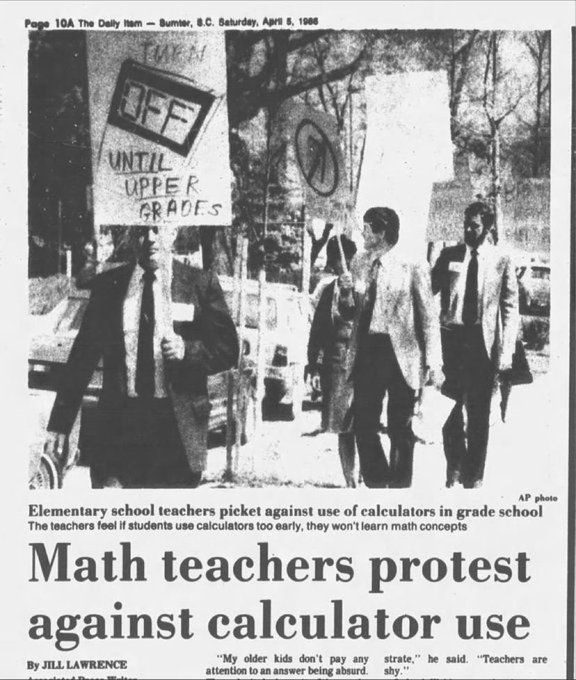
Many academics, students, and industry practitioners alike are currently faced with the moral dilemma of whether to use or apply artificial intelligence (AI) to different aspects of their work and assessments. However, this is not the first-time humans are faced with such a moral dilemma, particularly in academia. Between 2003 and 2005 when I wrote at least 3 entrance examinations administered by the Joint Admission Matriculation Board Examination for university admission seekers in Nigeria, the use of electronic or scientific calculators were prohibited. Few years afterwards, the same exam board that prohibited my generation from using calculators for our accounting and mathematics exams started providing the same scientific calculators to students registered for the same exam. Understandably, AI is significantly different from scientific calculators, but similar rhetoric and condemnation resulted from the introduction of calculators in schools, same as the emergence of Google with its search capabilities.
For the most part, ChatGPT, the free OpenAi model publicly released in November 2022 drew public attention to the use and capability of AI and is often considered as the breakthrough of AI. However, prior to this, humans have long embraced and used certain aspects of AI to perform tasks that normally require human intelligence, such as learning, reasoning, problem-solving, and decision-making. Many academics not only use reference managers, but also encourage students to do so. We also use and teach students how to use the numerous computer-aided data analysis software for statistical and qualitative data analysis given the potential and capability of these software to replicate tasks that would ordinarily take us longer to accomplish. These are but few examples of some of the AI tools we use, while many others exist.
Types and examples of AI
There are several types of AI, including machine learning, natural language processing, expert systems, robotics, and computer vision. Machine learning is the commonly used type of AI. It involves training algorithms to learn from data and improve their performance over time, typical examples include Google Bard which performs similar tasks as ChatGPT. Natural language processing allows machines to understand and interpret human language, while expert systems are designed to replicate the decision-making capabilities of human experts. Robotics involves the development of machines that can perform physical tasks, and computer vision focuses on enabling machines to interpret and analyse visual information. Other common examples of AI include virtual personal assistants like Siri and Alexa, self-driving cars, and facial recognition software. With the wide array of AI tools, it is obvious that AI can be applied in different fields of human endeavour.
Application of AI
AI is currently being used in various institutions of society, including healthcare, finance, education, transportation, and the military. In healthcare, AI is being used to develop personalized treatment plans, predict disease outbreaks, improve medical image analysis, and carebots consultations is a near possibility. In finance, AI is being used for fraud detection, risk management, and algorithmic trading. In transportation, self-driving cars and drones are being developed and currently tested using AI, while in the military, AI is being used for autonomous weapons systems and intelligence gathering. In education, AI is being used for personalized learning, student assessment, referencing, and teacher training through the help of numerous AI tools. I recently responded to reviewer feedback on a book chapter and in doing so, I noticed my reference list which was not spotted by my reviewers was not appropriately aligned with the examples provided from the publisher. It would take me 2 hours to format the list despite already having the complete information of sources I cited. Interestingly, I did not spend half of this time on the reference list of my doctoral thesis because I used a reference manager.
Benefits of AI
Clearly, AI has many potential benefits. It has the potential to improve efficiency and accuracy in various industries, leading to cost savings and improved outcomes. AI can also provide personalized experiences for users, such as in the case of virtual assistants and personalized learning platforms. More so, where properly applied, it would not only improve productivity and save time, but result in increased efficiency. Researchers would appreciate the ability to make sense of bulky data using clicks and programmed controls in graphical, visual, or even coded formats. In healthcare, AI can improve diagnosis and treatment, leading to better patient outcomes. In addition, AI can be used for environmental monitoring and conservation efforts. The benefits from the use and application of AI across human endeavours are legion and I would be understating the significance if I attempt to elaborate further.
Shortcomings of AI, Concerns, and Reactions
Nonetheless, AI evokes certain concerns. New York City education department reportedly blocked ChatGPT on school devices and networks, and in respond to a tweet on this, Elon Musk replied, ‘it’s a new world. Goodbye homework.’ Musk’s reply reflects the array of reactions and responses emanating from the understanding of society with the capability of AI tools. And without a doubt, machine learning AI tools such as ChatGPT and Google Bard can be used to generate essay contents, likewise content for academic work. I imagine students have already began taking advantage of the capabilities of these tools, including others capable of summarising articles. Some Tweeps who regularly tweet about the capability and how to use AI tools have experienced astronomical growth in the number of their followers and engagement with such tweets over the past few months.
Without a doubt, academics have reasons to be concerned, particularly because AI undermines learning and scholarship by offering easy alternatives to reading, learning, and engaging with course materials. Students could generate essays with AI and gain unfair advantage over non-users and although the machine learning models do generate false, bias, and discriminatory results, they could over time generate the capability to overcome these. Claims have also been made that automation using AI has the potential to result in job losses for academics and other professionals, but beyond this, concerns over data safety and regulation are rife.
AI Regulation
Some tech leaders including Elon Musk recently signed a statement urging that further development of AI beyond the capability of ChatGPT 4 should be halted until adequate regulations are put in place as it portends profound risks to society. The Turnitin plagiarism software provider which acclaims itself as ‘the leading provider of academic integrity solutions’ introduced and integrated the Turnitin’s AI writing detection tool for their service users. Universities and other users may likely adopt this to discourage students from using AI for assessments. However, the practicability of this enforcement is still challenging as issues around real-world false-positive report rates have been observed. An alternative approach adopted by some publishers including Taylor & Francis, Sage, and Elsevier is that authors declare the use of AI in their work with justification. Italy recently blocked ChatGPT over privacy concerns prompting the significance of AI regulation.
Conclusion
AI has the potential to improve efficiency and accuracy in various industries, leading to cost savings and improved outcomes, however, it is important to be aware of the potential risks associated with the technology. While AI has significant benefits, such as improved efficiency and accuracy, it also has drawbacks that must be considered. Academics must find ways to balance the benefits and drawbacks of AI to ensure that learning and scholarship are not undermined. It is important to recognize that AI is not a substitute for reading, learning, and engaging with course materials, and it should be used as a tool to augment human intelligence rather than replace it. Equally, it is also important to ensure that AI is used in a responsible and ethical manner. By carefully considering the pros and cons of AI, we can ensure that it is used to its full potential while minimizing the risks.
PS. Some parts of this blog were edited/generated by AI.
Share this:


When This is Over: Reflections on an Unequal Pandemic
This week a book was released which I both co-edited and contributed to and which has been two years in the making. When This is Over: Reflections on an Unequal Pandemic is a volume combining a range of accounts from artists to poets, practitioners to academics. Our initial aim of the book was borne out of a need for commemoration but we cannot begin to address this without considering inequalities throughout the pandemic.
Each of the four editors had both personal and professional reasons for starting the project. I – like many – was (and still is) deeply affected by the COVID-19 pandemic. When we first went into lockdown, we were shown the data every day, telling us the numbers of people who had the virus and of those who had died with COVID-19. Behind these numbers, I saw each and every person. I thought about their loved ones left behind, how many of them died alone without being able to say goodbye other than through a video screen. I thought about what happened to the bodies afterwards, how death rites would be impacted and how the bereaved would cope without hugs and face to face social support. Then my grandmother died. She had overcome COVID-19 in the way that she was testing negative. But I heard her lungs on the day she died. I know. And so, I became even more consumed with questions of the COVID-19 dead, with/of debates. I was angry at the narratives surrounding the disposability of people’s lives, at people telling me ‘she had a good innings’. It was personal now.
I now understood the impact of not being able to hug my grandpa at my grandmother’s funeral, and how ‘normal’ cultural practices surrounding death were disturbed. My grandmother loved singing in choirs and one of the traumatic parts of our bereavement was not being able to sing at her funeral as she would have wanted and how we wanted to remember her. Lucy Easthope, a disaster planner and one of my co-authors speaks of her frustrations in this regard:
“we’ve done something incredibly traumatising to the families that is potentially bigger than the bereavement itself. In any disaster you should still allow people to see the dead. It is a gross inhumanity of bad planning that people couldn’t’t visit the sick, view the deceased’s bodies, or attend funerals. Had we had a more liberal PPE stockpile we could have done this. PPE is about accessing your loved ones and dead ones, it is not just about medical professionals.”
The book is divided into five parts, each addressing a different theme all of which I argue are relevant to criminologists and each part including personal, professional, and artistic reflections of the themes. Part 1 considered racialised, classed, and gendered identities which impacted on inequality throughout the pandemic, asking if we really are in this together? In this section former children’s laureate Michael Rosen draws from his experience of having COVID-19 and being hospitalised in intensive care for 48 days. He writes about disposability and eugenics-style narratives of herd immunity, highlighting the contrast between such discourse and the way he was treated in the NHS: with great care and like any other patient.
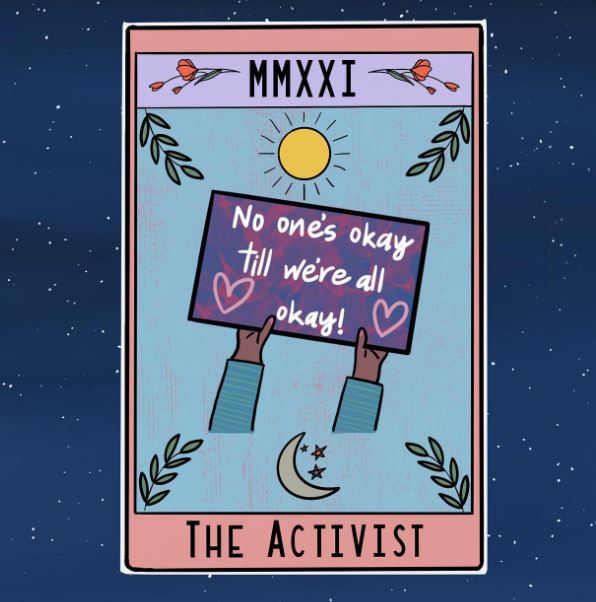
The second part of the book considers how already existing inequalities have been intensified throughout the pandemic in policing, law and immigration. Our very own @paulsquaredd contributed a chapter on the policing of protests during the pandemic, drawing on race in the Black Lives Matter protests and gender in relation to Sarah Everard. As my colleagues and students might expect, I wrote about the treatment of asylum seekers during the initial lockdown periods with a focus on the shift from secure and safe self-contained housing to accommodating people seeking safety in hotels.
Part three considers what happens to the dead in a pandemic and draws heavily on the experiences of crematoria and funerary workers and how they cared for the dead in such difficult circumstances. This part of the book sheds light on some of the forgotten essential workers during the pandemic. During lockdown, we clapped for NHS workers, empathised with supermarket workers and applauded other visible workers but there were many less visible people doing valuable unseen work such as caring for the dead. When it comes to death society often thinks of those who cared for them when they were alive and the bereaved who were left to the exclusion of those who look after the body. The section provides some insight into these experiences.
Moving through the journey of life and death in a pandemic, the fourth section focusses on questions of commemoration, a process which is both personal and political. At the heart of commemorating the COVID-19 dead in the UK is the National COVID Memorial Wall, situated facing parliament and sat below St Thomas’ hospital. In a poignant and political physical space, the unofficial wall cared for by bereaved family members such as Fran Hall recognises and remembers the COVID dead. If you haven’t visited the wall yet, there will be a candlelit vigil walk next Wednesday, 29th March at 7pm and those readers who live further afield can digitally walk the wall here, listening to the stories of bereaved family members as you navigate the 150,837 painted hearts.

The final part of the book both reflects on the mistakes made and looks forward to what comes next. Can we do better in the next pandemic? Emergency planner Matt Hogan presents a critical view on the handling of the pandemic, returning to the refrain, ‘emergency planning is dead. Long live emergency planning’. Lucy Easthope is equally critical, developing what she has discussed in her book When the Dust Settles to consider how and what lessons we can learn from the management of the pandemic. Lucy calls out for activism, concluding with calls to ‘Give them hell’ and ‘to shout a little louder’.
Concluding in his afterword, Gary Younge suggests this is ‘teachable moment’, but will we learn?
When This is Over: Reflections on an Unequal Pandemic is published by Policy Press, an imprint of Bristol University Press. The book can be purchased directly from the publisher who offer a 25% discount when subscribing. It can also be purchased from all good book shops and Amazon.
Share this:


Avoiding challenge: A strategy for organisational change

Have you ever wondered as a manager or worker what the best way is to avoid having your ideas challenged? Tired of trying to make organisational changes and having those changes called into question. Fed up with trying to instigate something only for someone else to be less than keen. Had enough of trying to do things that will promote your ambitions only to be thwarted by others that just have to add their two pennorth in? Annoyed at extra work being created for you because of a lack of acceptance of your ideas? Are you fed up with the ‘nay sayers’? The answer is simple… don’t communicate anything, just make the changes, and wait for yet another calamity.
The above of course is somewhat tongue in cheek and I am reminded of working with some consultants several years ago (you know the ones; steal your watch to tell you the time). I jest, as they had some sage advice on change management. Two things that come to mind: If you think you have communicated enough about change, you haven’t; communicate more. And find the person or group that needs convincing and work with them, it’s the ‘nay sayers’ that need to be convinced, not the ‘yay sayers’. They are far more valuable to your organisation than those that say ‘yes’.
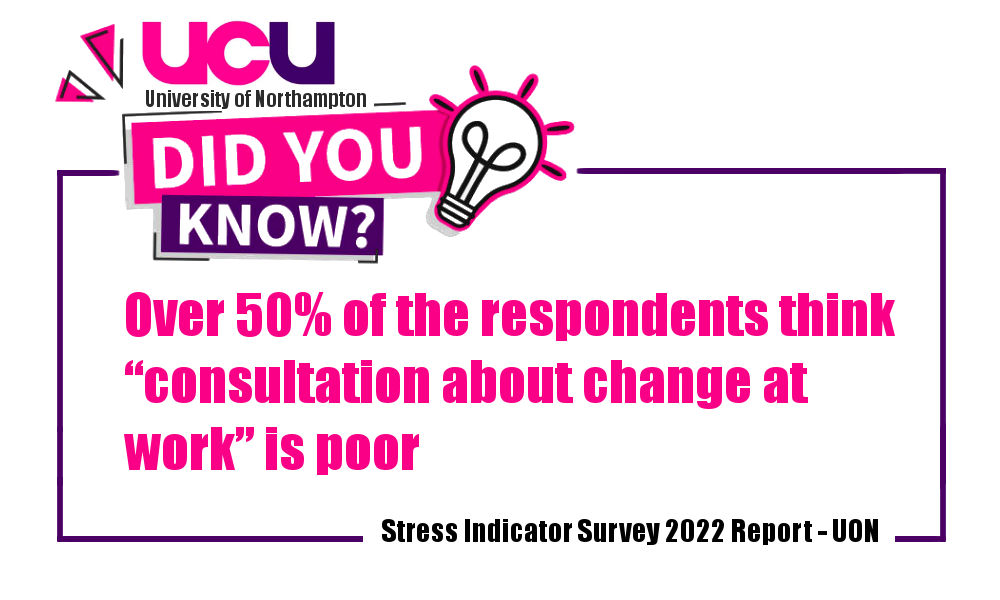
What we were talking about was major organisational change, but even small changes can have a major impact on a workforce. In our own organisation a recent staff survey suggested that ‘Over 50% of respondents considered that consultation about change at work is poor’. That of course relates to previous iterations of change and a new management team would hope to address the issues. However, in doing so there is a need for organisational change.
I’ve had recent experience of being told that something was happening because someone, in agreement with someone else, thought it was a good idea. It promotes their department, showing them in a good light; they took the idea to a meeting and lo and behold, it is agreed. No consultation with those that need to implement the idea, which may be good or bad, who knows. The point being that it is not just change brought about by managers without consultation that causes annoyance, anxiety and stress, it is those daily working practices of people in the organisation that fear challenge of their ideas. Changes are often made with the best of intentions. Sometimes those intentions are to alleviate burgeoning workloads within a department, sometimes to promote the organisation or individuals or to lighten the burden on students, for example. Often, there is consultation, but it is consultation with the wrong people, consultation with the ‘yay sayers’ and those that have little idea about the impact of the change (for the best will in the world, managers can’t know every detail of the work carried out by their staff). Such consultation avoids scrutiny but provides a thin veneer of respectability. Time and again we see staff queuing up to join consultative groups, but how many of these do so with a view to providing a real critique? Take the idea to a management meeting, get it agreed and there you are, its done. If asked about consultation, then the answer is ‘yes of course we did’. The problem is nobody asks the question ‘who exactly did you consult with’?
It will take a huge shift in organisational culture to get the ‘nay sayers’ to volunteer for consultative exercises. They need convincing that their voice is valued and yet they are a valuable asset. Challenge and scrutiny are healthy and help to mitigate unwanted and unintended consequences.
There is nothing worse than having it done to you when it could so easily have been a case of having it done with you. Next time you think about changing something, don’t assume you know best, by doing so you demonstrate how little you value others.

Share this:


ASUU vs The Federal Government

It will be 8 months in October since University Lecturers in Nigeria have embarked on a nationwide strike without adequate intervention from the government. It is quite shocking that a government will sit in power and cease to reasonably address a serious dispute such as this at such a crucial time in the country.
As we have seen over the years, strike actions in Nigerian Universities constitute an age-long problem and its recurring nature unmasks, quite simply, how the political class has refused to prioritise the knowledge-based economy.
In February 2022, the Academic Staff Union of Universities (ASUU) leadership
(which is the national union body that represents Nigerian University Lecturers during disputes) issued a 4-week warning strike to the Nigerian government due to issues of funding of the public Universities. Currently, the striking University Lecturers are accusing the government of failing to revitalise the dilapidated state of Nigerian Universities, they claim that the government has refused to implement an accountability system called UTAS and that representatives of the government have continued to backtrack on their agreement to adequately fund the Universities.
The government on the other hand is claiming that they have tried their best in negotiating with the striking lecturers – but that the lecturers are simply being unnecessarily difficult. Since 2017, several committees have been established to scrutinize the demands and negotiate with ASUU, but the inability of these committees to resolve these issues has led to this 8-month-long closure of Nigerian Universities. While this strike has generated multiple reactions from different quarters, the question to be asked is – who is to be blamed? Should the striking lecturers be blamed for demanding a viable environment for the students or should we be blaming the government for the failure of efforts to resolve this national embarrassment?
Of course, we can all understand that one of the reasons why the political class is often slow to react to these strike actions is because their children and families do not attend these schools. You either find them in private Universities in Nigeria or Universities abroad – just the same way they end up traveling abroad for medical check-ups. In fact, the problems being faced in the educational sector are quite similar to those found within the Nigerian health sector – where many doctors are already emigrating from the country to countries that appreciate the importance of medical practitioners and practice. So, what we find invariably is a situation where the children of the rich continue to enjoy uninterrupted education, while the children of the underprivileged end up spending 7 years on a full-time 4-year program, due to the failure of efforts to preserve the educational standards of Nigerian institutions.
In times like these, I remember the popular saying that when two elephants fight, it’s the grass that suffers. The elephants in this context are both the federal government and the striking lecturers, while those suffering the consequences of the power contest are the students. The striking lecturers have not been paid their salaries for more than 5 months, and they are refusing to back down. On the other hand, the government seems to be suggesting that when they are “tired”, they will call off the strike. I am not sure that strike actions of the UK UCU will last this long before some sort of agreement would have been arranged. Again, my heart goes out to the Nigerian students during these hard times – because it is just unimaginable what they will be going through during these moments of idleness. And we must never forget that if care is not taken, the idle hand will eventually become the devil’s workshop!
Having said this, Nigerian Universities must learn from this event and adopt approaches through which they can generate their income. I am not inferring that they do not, but they just need to do more. This could be through ensuring large-scale investment programs, testing local/peculiar practices at the international level, tapping into research grant schemes, remodeling the system of tuition fees, and demonstrating a stronger presence within the African markets. As a general principle, any institution that wishes to reap the dividends of the knowledge-based economy must ensure that self-generated revenues should be higher than the government’s grants – and not the other way. So, Universities in Nigeria must strive to be autonomous in their engagements and their organisational structure – while maintaining an apolitical stance at all times.
While I agree that all of these can be difficult to achieve (considering the socio-political dynamics of Nigeria), Universities must remember that the continuous dependence on the government for funds will only continue to subject them to such embarrassments rather than being seen as respected intellectuals in the society. Again, Nigerian Universities need a total disruption; there is a need for a total overhaul of the system and a complete reform of the organisational structure and policies.

 Thoughts from the criminology team