
Home » Articles posted by Paula Bowles (Page 11)
Author Archives: Paula Bowles

How do you punish the incorrigible?
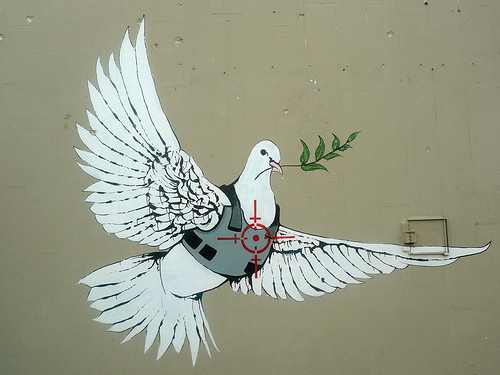
This week saw the (very low key) commemoration of International Conscientious Objectors Day (15 May) which got me thinking about a number of different contemporary issues. Although the events which I describe happened a century ago, the criminalisation, and indeed, punishment of conscience has never truly been resolved.
Conscientious objection in the UK first came to the attention for most after the passing of the Military Services Act 1916. This legislation allowed for the conscription of certain categories of men into the military. The enactment of this law enabled men to be forcibly coerced into military service regardless of their personal and individual aspirations. Subsequent to this, further legislation was passed (Military Training Act 1939, National Service (Armed Forces) Act 1939, National Service Act 1948) continuing this system of coercive enlistment into the military. By default, such legislation also laid the foundations for conscientious objection; after all, without such coercion there is no need to register dissent, simply don’t enlist in the military.
During WWI (and for some considerable time after) Conscientious Objectors [COs] were bullied, cajoled, ridiculed and stigmatised, not to mention, incarcerated, multiple times. In one horrific incident it was alleged that COs were driven to the trenches of France and threatened with a firing squad if they did not comply. Despite this type of treatment the vast majority of COs continued to resist, strongly suggesting that their conscience, moral compass or faith was far stronger than anything the state could throw at them.
In the UK the individual and collective dilemma of the conscientious objector has largely faded into history; although the same cannot be said internationally (for instance; Greece, Israel and the USA). However, their very existence and that of other non-conformists (at different times and places) raises questions around the purpose and supposed effectiveness of incarceration. In essence; what do we do when the “deviant” refuses to conform, how far are we prepared to go, as a society to punish the incorrigible and persistent offender and what do we do when nothing seems to work?
We could attempt the practices used with the WWI COs and keep convicting whilst ratcheting up the tariff of their sentence each time. However, we know from their experiences that this appeared to consolidate their objections and harden their resolve. We can try and talk to individuals in order to help them see the “errors of their ways” but given the conviction held by COs, that the war was fundamentally at odds with their belief system, this is also likely to fail. We could try punishment in the community, but for many of the COs anything which they felt compromised their standpoint was equally resisted, making any such approach also likely to be unsuccessful.
Although the “problem” of the COs no longer exists in 21st century Britain, other individuals and groups have filled the space they have vacated. We could replace the COs with the Black civil rights movement (think Rosa Parks or Martin Luther King) or other protests (think “Tank Man” in Tiananmen Square or Ieshia Evans in Baton Rouge) or those deemed traitors by many (as were the COs) , such as Chelsea Manning, Julian Assange and Edward Snowden. The question remains: is it possible to rehabilitate the heart and mind of someone who is so clear as to their moral standpoint and committed to doing what they perceive to be “the right thing”?
Share this:


Plagiarism on trial
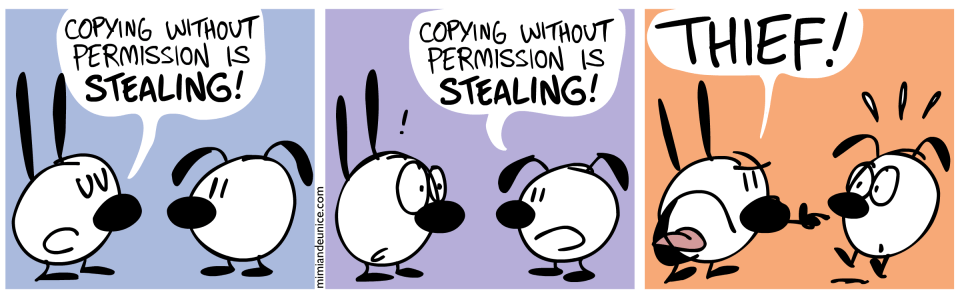
For many students, I suspect it is difficult to imagine what an academic does aside from lectures, seminars and marking. The answer can range across several different activities including module or programme development, research, reading, university/faculty committee meetings, working groups and so on. Alongside my responsibilities within Criminology, I am also an Academic Integrity and Misconduct Officer (or AIMO for short). I have undertaken this role for the past few years and thought it might be interesting to share some of my thoughts.
The process involved in suspected academic misconduct is relatively straightforward. The marking tutor spots an issue, either through their subject knowledge, or increasingly with the help of originality reports such as those provided by Turnitin. They then make a referral, complete with the evidence they have compiled and hand it over to be dealt with by an AIMO. The AIMO reviews the evidence and decides whether to interview the student. After this they write a report and the student is informed as to the outcome. All of the above sounds extremely procedural but plagiarism and academic misconduct more generally are far more complex than this would suggest.
As a criminologist, I am used to studying theories around offending, rehabilitation, punishment, recidivism and so on. Perhaps that is why it seems obvious to me to conceptualise academic misconduct along the same lines. For instance; the referral process is undertaken by the university police (that is the referring tutor) who gathers together the evidence for submission to the CPS. In the case of suspected academic misconduct this referral comes to an AIMO who makes the decision as to whether or not there is a case worth answering. If the evidence appears compelling, the AIMO will explore the issue further, in essence, taking the place of the Magistrates’ Court in the CJS. If the offence is deemed to be relatively minor or a first time offence, sentence can be passed by the AIMO. Alternatively, the case can be passed to the Crown Court an Academic Misconduct Panel where the evidence will be heard by three AIMOs. These panels have far greater sanctions available to them (including termination of studies) and they can also hear appeals.
So far the analogy works, but what about the other, more human, aspects. When considering criminal motivation, it is clear the reasons for committing academic misconduct are as wide-ranging as those detailed in court. As with crime, some admit to their wrongdoings at the first opportunity whilst others do not accept that they have done anything wrong. Likewise, in terms of mitigation both types of “suspect” cite family problems, mental health issues, financial problems, as well as, ignorance of the rules and regulations.
But in the case of academic misconduct; who is the victim? Arguably, the answer to that is academia as a whole. If there is an absence of integrity in any, or all of our studies, academia is impoverished and ultimately the academy and its pursuit of knowledge could fall. As with crime, the impact on individuals is immeasurable and hugely detrimental to wider society.
As would be expected in an entry about academic misconduct, the image used is copyright free. It is available for use and modification from wikimedia
Share this:


A licence to kill?
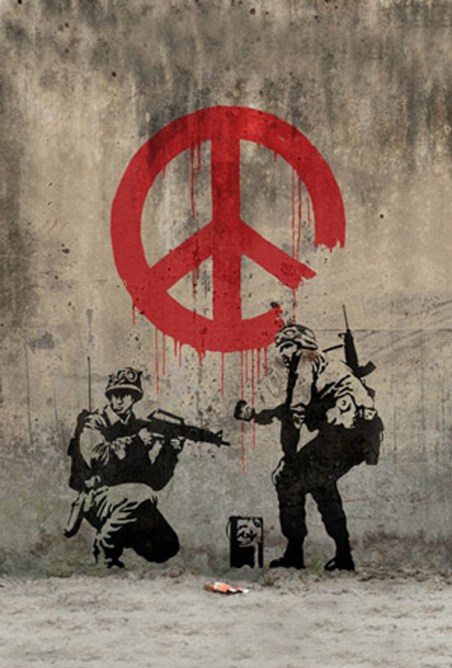
The recent news around “Marine A’s” (Alexander Blackman) successful appeal to have his conviction changed from murder to manslaughter made headlines. The act which led to Blackman’s conviction took place in Helmand Province, Afghanistan in 2011. On the day in question, Blackman was filmed shooting dead an injured man on the ground. During the killing, Blackman can be heard clearly citing Shakespeare, followed by an acknowledgement that ‘I just broke the Geneva Convention’. Furthermore, he announced, after the killing, that ‘It’s nothing you wouldn’t do to us’. All of which seemed to suggest that this was an open and shut case, but such a conclusion would ignore both the military context and apparent public feeling.
For many, this appeal judgement appeared to vindicate Blackman and excuse his behaviour on the grounds of mental health. The media circus, which surrounded both the original conviction and the later appeals (the first reduced the tariff on his life sentence from 10 to 8 years), almost seemed to imply that he had been acquitted rather than his conviction amended. Indeed, for those who supported Blackman, many of which were military personnel, the fact that he had even been charged was seen as an affront to the dignity of both the soldier and the Marines.
It is interesting to consider why the case has caused so much furor. Blackman was the first British soldier to be convicted of murder, the crime itself was recorded (inadvertently) for posterity but the case raises much wider questions. For a criminal justice system which is based primarily on Classicism’s understanding of crime and punishment there seemed to be very little focus on Blackman as an individual responsible for his own behaviour. After all, Blackman made clear his rationale for the killing, even going so far as to cite the Geneva Convention and remind his colleagues that they could never talk about these events. However, the continual focus appears to have been on his chosen occupation as a military man, representative of all those soldiers who went before and those who would follow the same career path. Rather than individual agency and motivation, it would appear that the focus has been on conditions of war and the nature of soldiering as well as, his supposed mental state on the day.
Outside the Royal Courts of Justice, on verdict day, Blackman’s wife claimed that the downgrading of her husband’s offence was a better reflection of “the circumstances that [he] found himself in during that terrible tour of Afghanistan”. Whilst civilian courts have long paid heed to evidence of mental health conditions, it is worth considering whether they would go to such lengths for a civilian, regardless of past trauma or the circumstances of their crime. Likewise, we need to acknowledge that the modern servicemen (unlike his conscripted WWI/WWII/National Service forefathers) does not find himself on the battleground but has chosen to enlist in the military with all that such a career entails, in the twenty first century.
Share this:


(The Absence of) Technology in the Classroom
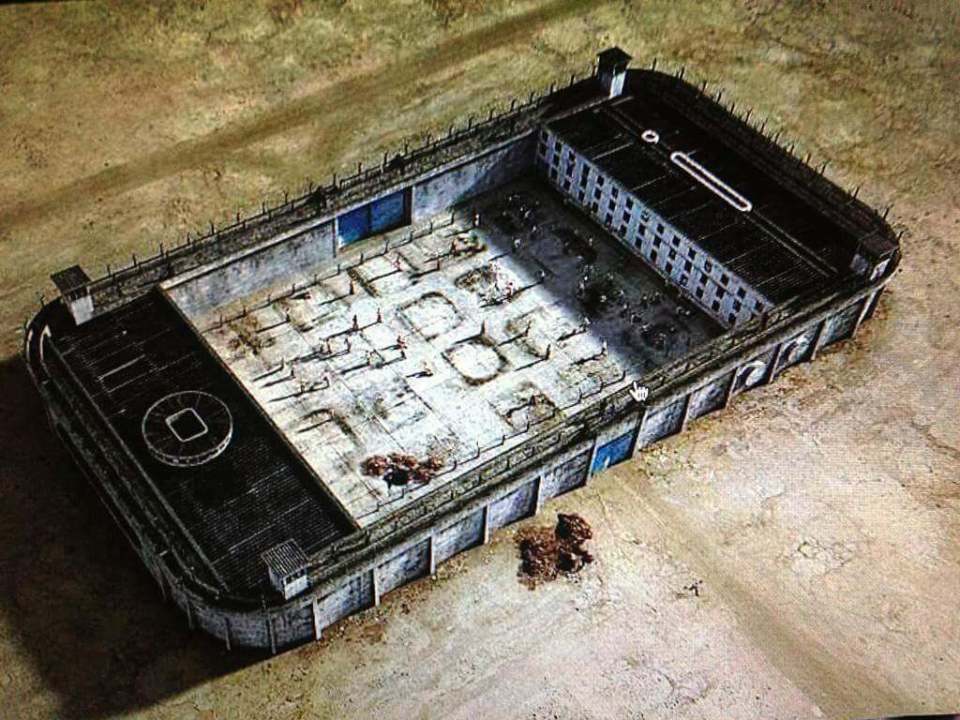
Following on from Manos’ ‘Reflections from a pilot’ I shall continue in a similar vein. The pilot has formed part of our academic thoughts and discussions for some months and now it has finished we are in reflective mode. Much of what we have experienced throughout the pilot was striking and will give us food for thought for some time to come. For this entry, I am going to focus on an aspect that I had not really considered, or at least, not very much beyond the prosaic.
We knew before the pilot that prison and technology do not make comfortable bedfellows. Whilst on the outside, technology permeates virtually every aspect of our waking lives, the same cannot be said for those incarcerated. From the moment you step inside the prison gate, signs remind you of what you cannot bring into the carceral environment; top of the list are mobile phones, computers, USBs and recording devices. This meant that in very basic terms there could be no powerpoint, video clips or recordings of lectures. It also meant that we could not rely upon the internal learners having a shared knowledge of current affairs beyond that which was available in newspapers or on radio or television. All the above could be perceived as inadequacies and deprivations, however, we found a number of positives side-effects of these supposed failings.
In the university classroom, technology is commonplace; smartboards, computer lecterns, laptops, tablets and smartphones. All of this technology can enable learning on many levels, but can also provide irresistible diversion from the task at hand. Whilst the intention may be educational; for example taking notes on a laptop, the temptation to drift into social media, email and so can prove to be seductive. Conversely, the prison classroom contains little to attract attention, beyond some posters on the wall and the view from the windows which offered nothing of real interest. From the outset, and throughout the entire pilot, it appeared that the absence of technology heightened concentration. This was observable through increased eye-contact, body language and engagement with both academic discussions and general conversations across all learners. Furthermore, the absence of technological distraction impelled students to self-reliance in way (for the external learners, at least) they were largely unused to and generally unprepared for.
It should be acknowledged that this increase in engagement may also have been impacted by the strangeness of the prison environment (for the external students) and the anxiety involved in meeting new people (for all students). Nevertheless, engagement did not seem to decrease despite increasing familiarity with both the surroundings and participants.
All of the above is not to say that technology has no place in education; the ease of access to educational materials and the ability to engage in academic discourse globally demonstrate its power. What I would suggest it does is offer us all an opportunity to reflect upon our own use (and dare I say, reliance) upon technology as a replacement for deep learning.
Share this:

Welcome to the Criminology Team’s blog
Welcome to the Criminology Team’s blog, live from Fawsley 1!
Over the forthcoming weeks and months we plan to write some short opinion pieces, as well as longer narratives, focused on all different facets of criminology, as well as wider social issues.
Disclaimer: The views expressed here belong to individual contributors and do not necessarily reflect the views of the team or the institution.
If you have any suggestions for subjects you might like to appear on the blog, please get in touch


