
Home » Articles posted by manosdaskalou (Page 10)
Author Archives: manosdaskalou

The Criminology of the Future

As we are gleefully coming towards the start of yet another academic year, we tend to go through a number of perpetual motions; reflect on the year past, prepare material for the upcoming year and make adjustments on current educational expectations. Academics can be creatures of habit, even if their habit is to change things over. Nonetheless, there are always milestones that we all observe no matter the institution or discipline. The graduation, for example brings to an end the degree aspirations of a cohort, whilst Clearing and Welcome Week offer an opportunity of a new group of applicants to join a cohort and begin the process again. Academia like a pendulum swings constantly, replenishing itself with new generations of learners who carry with them the imprint of their social circumstance.
It was in the hectic days at Clearing that my mind began to wonder about the future of education and more importantly about criminology. A discipline that emerged at an unsettled time when urban life and modernity began to dominate the Western landscape. Young people (both in age and/or in spirit) began to question traditional notions about the establishment and its significance. The boundaries that protect the individual from the whim of the authorities was one of those fundamental concerns on criminological discourses. A 19th century colleague questions the notion of policing as an established institution, thus challenging its authority and necessity. An end of 20th century colleague may be involved in the training of those involved in policing. Changing times, arguably. Quite; but what is the implications for the discipline?
My random example can be challenged on many different fronts; the contested nature of a colleague as a singular entity that sees the world in a singular gaze; or the ability to diversify on the perspectives each discipline observes. It does nonetheless, raises a key question: what expectations can we place on the discipline for the 21st century.
If we and our students are the participants of social change as it happens in our society then our impressions and experiences can help us formulate a projective perspective of the future. Our knowledge of the past is key to supplying an understanding of what we have done before, so that we can comprehend the reality in a way that will allow us to give it the vocabulary it deserves. A colleague recently posted on twitter her agony about “vehicles being the new terrorist weapon,” asking what is the answer. The answer to violence is exactly the same; whether a person gets in a van, or goes home and uses a bread knife to harm their partner. Everyday objects that can be utilised to harm. A projection in the future could assert that this phenomenon is likely to continue. The Romans called it Alea iacta est and it was the moment you decide to act. In my heart this is precisely the debate about the future of criminology; is it crime with or without free will?
Share this:


Terrorism? No thank you

Recent terrorist attacks in Manchester and the capital, like others that happened in Europe in recent years, made the public focus again on commonly posed questions about the rationale and objectives of such seemingly senseless acts. From some of the earliest texts on Criminology, terrorism has been viewed as one of the most challenging areas to address, including defining it.
There is no denial that acts, such as those seen across the world, often aimed at civilian populations, are highly irrational. It is partly because of the nature of the act that we become quite emotional. We tend question the motive and, most importantly, the people who are willing to commit such heinous acts. Some time ago, Edwin Sutherland, warned about the development of harsh laws as a countermeasure for those we see as repulsive criminals. In his time it was the sexual deviants; whilst now we have a similar feeling for those who commit acts of terror. We could try to apply his theory of differential association to explain some terrorist behaviours. however it cannot explain why these acts keep happening again and again.
At this point, it is rather significant to mention that terrorism (and whatever we currently consider acts of terror) is a fairly old phenomenon that dates back to many early organised and expansionist societies. We are not the first, and unfortunately not the last, to live in an age of terror. Reiner, a decade ago, identified terrorism as a vehicle to declare crime as “public enemy number 1 and a major threat to society” (2007: 124). In fact, the focus on individualised characteristics of the perpetrator detract from any social responsibility leading to harsher penalties and sacrifices of civil liberties almost completely unopposed. As White and Haines write, “the concern for the preservation of human rights is replaced by an emphasis on terrorism […] and the necessity to fight them by any means necessary” (1996: 139).
For many old criminologists who forged established concepts in the discipline, to simply and totally condemn terrorism, is not so straightforward. Consider for example Leon Radzinowicz (1906-1999) who saw the suppression of terror as the State’s attempt to maintain a state of persecution. After all, many of those who come from countries that emerged in the 19th and 20th centuries probably owe their nationhood to groups of people originally described as terrorists. This of course is the age old debate among criminologists “one man’s terrorist is another man’s freedom fighter”. Many, of course, question the validity of such a statement at a time when the world has seen an unprecedented number of states make a firm declaration to self-determination. That is definitely a fair point to make, but at the same time we see age-old phenomena like slavery, exploitation and suppression of individual rights to remain prevalent issues now. People’s movements away from hotbeds of conflict remain a real problem and Engels’ (1820- 1895) observation about large cities becoming a place of social warfare still relevant.
Reiner R (2007), Law and Order, an honest citizen’s guide to crime and control, Cambridge, Polity Press
White R and Haines F (1996), Crime and Criminology, Oxford, Oxford University Press
Share this:


The criminology of real life

Ever since I joined academia as a criminology lecturer, I found the question asked “what do you do” to be one that is followed by further questions. The role or rather title of a criminologist is one that is always met with great curiosity. Being a lecturer is a general title that most people understand as a person who does lectures, seminars, tutorials and workshops, something akin to a teacher. But what does a criminology lecturer do? Talks about crime presumably…but do they understand criminals? And more to the point, how do they understand them?
The supposed reading of the criminal mind is something that connects with the collective zeitgeist of our time. Some of our colleagues have called this the CSI factor or phenomenon. A media portrayal of criminal investigation into violent crime, usually murder, that seems to follow the old whodunit recipe sprinkled with some forensic science with some “pop” psychology on the side. The popularity of this phenomenon is well recorded and can easily be demonstrated by the numerous programmes which seemingly proliferate. I believe that there are even television channels now devoted completely to crime programmes. Here, it would be good to point out that it is slightly hypocritical to criticise crime related problems when some of us, on occasion, enjoy a good crime dramatisation on paper or in the movies.
Therefore I understand the wider interest and to some degree I expect that in a society dominated with mass and social media, people will try to relate fiction with academic expertise. In fact, in some cases I find it quite interesting as a contemporary tool of social conversation. You can have for example, hours of discussion about profiling, killers and other crimes with inquisitive taxi-drivers, border-control officers, hotel managers etc. They ask profession, you respond “criminologist” and you can end up having a long involving conversation about a programme you may have never seen.
There is however, quite possibly a personal limitation, a point where I draw the line. This is primarily when I get asked about particular people or current live crime cases. In the first year I talk to our students about the Soham murders. A case that happened close to 15 years ago now. What I have not told the students before, is the reason I talk about the case.
Fifteen years ago I was returning from holiday and I took a taxi home. The taxi driver, once he heard I was a criminology lecturer, asked me about the case. I remember this conversation as the academic and the everyday collided. He could not understand why I could not read the criminal intentions of the “monsters” who did what they did. To him, it was so clear and straightforward and therefore my inability to give him straight answers was frustrating. I thought about it since and of course other situations in similar criminal cases that I have been asked about. Why do people want complete and direct answers to the most complex of human behaviours?
One of the reasons that there is a public expectation to be able to talk about individual cases rests on the same factor that makes crime popular; its media portrayal. The way we collectively respond to real crime cases reflects a popularised dramatisation. So, this is not just a clash between academic and lay, but reality and fiction.
Share this:


Erasmus in the time of Brexit

There are few things I tend to do when I am on Erasmus in a long running partner. I get a morning fredo coffee from their refectory, then into the classroom, followed by a brief chat with their administration staff and colleagues. The programme is usually divided between teaching sessions and academic discussions.
My last session was on learning disabilities and empowerment. The content forms part of a module on people with special needs. The curriculum in the host institution combines social sciences differently and therefore my hard criminological shell is softened during my visit. It is also interesting to see how sciences and disciplines are combined together and work in a different institution.
In the first two hours we were talking about advocacy and the need for awareness. The questions posed by the students raised issues of safeguarding, independence and the protection of the people with learning disabilities. I posed a few dilemmas and the answers demonstrated the difficulties and frustrations we feel beyond academia, shared among practitioners. This is “part of the issues professionals face on a daily basis”. Then there were some interesting conversations “how can you separate a mother from her baby even if there are concerns regarding her suitability as a mum”? “How do we safeguard the rights of people who cannot live an independent life”? Then we discussed wider educational concerns “we are preparing for our placement but we are not sure what to expect”. “Interesting”, I thought that is exactly what my second year students feel right about now.
As I was about to close the session I told them the thought that has been brewing at the back of my head since the start of my visit….”I may not be able to see you next year…today the UK will be starting the process of Brexit.” One of the students gasped the rest looked perplexed.
It is the kind of look I am beginning to become accustomed to every time I talk about Brexit to people on the continent.
After the class the discussion with colleagues and administrative staff was on Brexit. It seemed that each person had their own version of what will happen next. Ironically they assumed that I knew more about it. Thinking about it, the process is now activated but very little is known. This is because Brexit is actually not a process but a negotiation. A long or a very long negotiation. The EU devised a mechanism of exit but not a process that this mechanism needs to follow. Despite the reasons why we are leaving the EU the order and the issues that this will leave open are numerous. In HE, we are all still considering what will happen once the dust settles. From research grants for the underfunded humanities and social sciences to mobility programmes for academics and students. My visit was part of staff mobility that allows colleagues to teach and exchange knowledge away from their institution. The idea was to allow the dissemination of different ideas, cooperation and cultural appreciation of different educational systems. The programme was originally set up in the late 80s when the vision for European integration was alive and kicking. The question which emerges now, post-Brexit, is what is the wider vision for HE?
Share this:


Reflections from a Pilot
Firstly, I would like to apologise for the use of the first person. I have made an entire career of telling my students to use the third person. However, writing a blog is generally informal and a bit more personal.
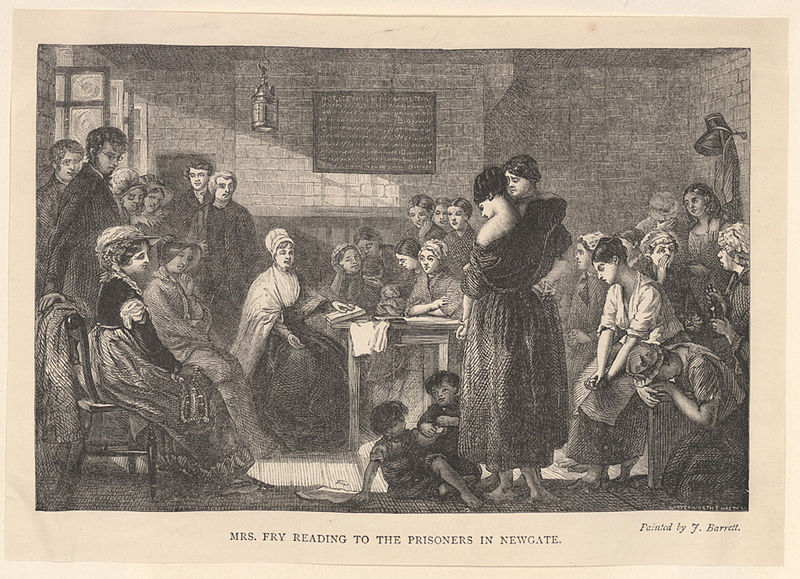
Throughout my years in academia there are a number of things I continue to find incredibly edifying; transferring research interests into teaching is one of them, even better when that is done outside of the traditional educational environment. The idea of education in prison is definitely not new, with roots in the old reformers (notably in the UK; Elizabeth Fry), with a clear focus on combating illiteracy. This was a product of penal policy that reflected a different social reality. In the 21st century, we have to re-imagine penal policy, alongside education, which can cater for the changed nature of our world.
Our recent pilot, was designed to explore some new approaches to education in both the prison and the university* . The idea was to bring university students and prisoners together and teach them the same topics encouraging them to engage with each other in discussions. This was envisaged as a process whereby all participants would be equal learners; leaving all other identities behind. The main thinking behind the approach taken was predicated on universal notions; the respect for humanity and the opportunity to express oneself uninhibited among equals. With this in mind, teaching in prisons should not be any different to teaching at University, provided that all learners feel safe and they are ready to engage. In the planning stages, my concerns were primarily on the way equality could be maintained. In addition, the levels of engagement and the material covered were also issues that created some trepidation. The knowledge that this pilot would be the blueprint for the design of a new level 6 module made the undertaking even more exciting.
The pilot involved 9 hours of teaching in prison with additional sessions before and after in order to familiarise all learners with each other, the environment and the learning process. Through the three teaching sessions, we all observed the transformative effect of education. From early suspicion and reluctance among learners to the confident elaboration of complex arguments. It took one simple statement to get the learning process going. This is when the pilot became a new lens through which I saw education, in prison with all my students, as a thriving learning environment.

 Thoughts from the criminology team