
Home » Posts tagged 'TV'
Tag Archives: TV

Hate crime in The Period Drama fanbase is endemic

After reading a blog by History’s Drew Grey on ‘Racism, Diversity and Contested Histories: Some Reflection on Christmas Just Past’, I began to think about my favourite television genre (by some distance), the Period Costume Drama. Reading his post took me back to when I saw David Olusoga presenting Black and British for the first time on the BBC, but more specifically his monologues about mixed-race families in Georgian Britain. Whilst Drew’s post boasts diversity in the latest adaptation of A Christmas Carol (based on the Charles Dickens story) by Peaky Blinders‘ Stephen Knight, diversity in the Period Drama fanbase is a contentious discussion.
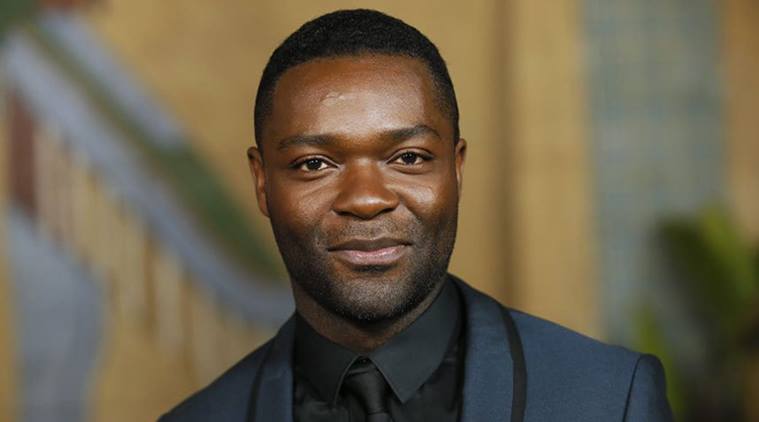
His post reminded me of my dissertation where I was looking at my roots. Finding myself. Lost in my race-identity politics, it feels like a decade ago reading Reni Eddo-Lodge’s Why I’m No Longer Talk to White People About Race for the first time. A text that colleague and blogger @paulaabowles calls “a machine gun,” (with a smirk). It’s simply relentless. However, it was David Oyelowo’s quote in the Radio Times that’s stayed with me ever since.
“We make period dramas [in Britain], but there are almost never any black people in them, even though we’ve been on these shores for hundreds of years. I remember taking a historical drama with a black figure at its centre to a British executive with greenlight power, and what they said was if it’s not Jane Austen or Dickens, the audience do not understand.” – David Oyelowo (in Eddo-Lodge, p55)
Oyelowo goes on to say “I thought – OK – you are stopping people having a context for the country they live in and you are marginalising me.” So, is it any wonder why so many of our Black actors have gone to Hollywood and made it big? Idris Elba made it as Stringer Bell in The Wire before we knew him as DCI John Luther. Oyelowo was Martin Luther King in Selma (as well as his British co-star Carmen Ejogo as Coretta Scott King), and has had roles in The Help, Queen of Katwe and Disney’s Star Wars Rebels. John Boyega was in Star Wars and Daniel Kaluuya slayed as Chris Washington in Get Out.
Whilst many of these works aren’t all costume pieces, the fact that Black actors have to go overseas bothers me. Yet, Black History to British audiences has always been African-American history. To find Black British history, you really have to look for it. So, when we see characters like Kitty Despard (Poldark) or Miss Lambe (Sanditon) or even Dev Patel as David in the upcoming The Personal History of David Copperfield, it’s in opposition to the histories we think we know, the histories we were taught at school.
So, why is there such a backlash to non-White people in this genre? Is it one more example of Black and brown people being where they shouldn’t? You know Black faces in White spaces? From the streets of Georgian London to Walter Tull mobbed by 20,000 Bristol fans in 1909. Or is it a consequence of a population bludgeoned by historical misinformation? After all, isn’t the best way to have complacent people, to cut them off from knowledge? And if you don’t know your own history, do you know who you really are?
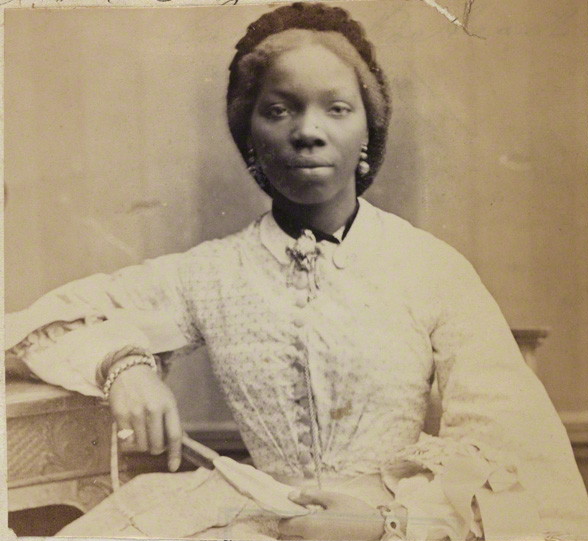
Photo Credit: Camille Silvy (September 1862)
In the same century Charles Dickens was writing about Jacob Marley, Scrooge and Tiny Tim, Queen Victoria’s African goddaughter Sarah Forbes Bonnetta was growing up in England wondering the streets of London, as “part of Britain’s imperial project.” It’s the story of Black Victorians, many of which could “only be told through the words of others” (Olusoga, p331).
Whilst these discussion forums, are majorly female, they are some of the most misogynistic places I’ve seen on the internet. There’s one Facebook group where I have been labelled a “troublemaker” for calling out racism and homophobia, as many members are also American, card-carrying Republicans who voted for Donald Trump. And feminism is only White. They see intersectionality as an inconvenient myth and the stories of non-White women in history an afterthought. That’s how White Privilege works.
This culture of hate against non-normative voices is dominant in the Fandom Menace, as I like to call it. The online forums are infested with racism, misogyny and homophobia: from Gentleman Jack to Beecham House, Drew’s descriptions of the backlash to the mixed-race Cratchit family act as a metaphor for a toxic fanbase, and contesting these histories can often be a homophobic act, a racist act, even if it’s born from ignorance.
There is an endemic problem within society, where we allow older generations, including “sweet old ladies” in The Period Drama fanbase to get away with hate speech because that’s “how they are” and they “don’t really know any different.”
What’s more, and what was great about A Christmas Carol was how unapologetic the makers were about their diversity. This family were Black and they were White. This was mixed-race Britain in the 19th century. Moreover, Mary Cratchit and how Black women take on everyone’s emotional labour. Be it modern times or Victorian times, Black women are in the business of saving grown-ass men from their own emotional work!
Mixed-race inclusion is a testament to our history and a thumb bite to Englishness as a synonym for whiteness, and the colonised imperatives that continue to dominant storytelling, as said (but not so bluntly) by Darren Chetty in ‘You Can’t Say That! Stories Have to be About White People‘. Due to the inherent whiteness of institutions, they recruit in their own image, and history is no different. What’s that saying about apples and trees?
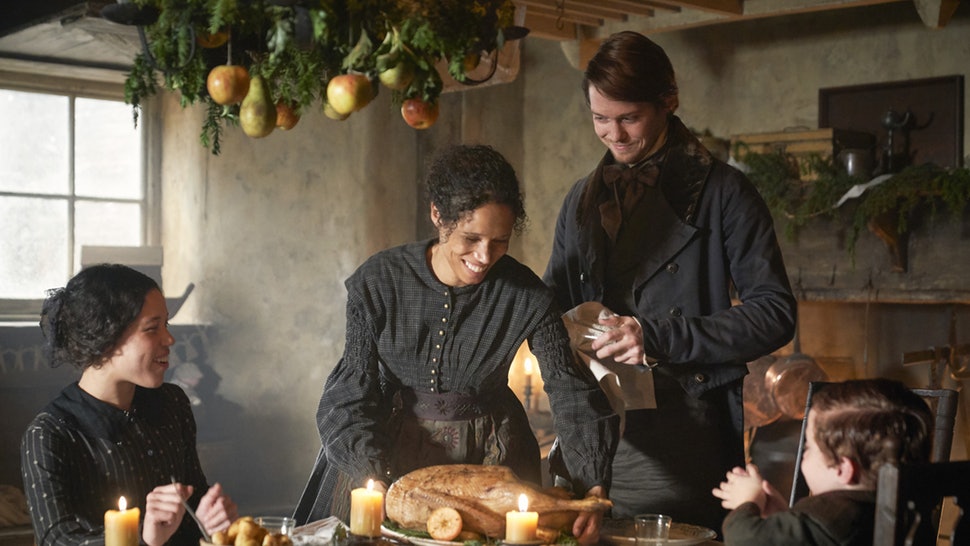
Certain members of the Period Drama community would like to believe Britain was only White before the 1950s. No, it’s simply the establishment has done a grand job of writing us out of British history books, but Black people have been part of every era of British history. I can tell you that.
BBC’s A Christmas Carol shows why representation matters and that history is not only the responsibility of historians. Artists also carry the load of telling these social histories (that’s what Dickens is) accurately and they can do better when it comes to the spectrum of diversity in the Period Drama.
And due to how History has been taught to every generation at all levels of education, is it surprising I encounter “sweet old ladies” using “historical (in)accuracy,” as a conduit to enable their racist, homophobic and misogynistic views?
Works Mentioned
Chetty, D. (2017). You Can’t Say That! Stories Have to Be About White People. In: Shukla, N (ed). The Good Immigrant. London: Unbound Publishing, pp. 96 – 107.
Kwakye, C and Ogunbiyi, O. (2019). Taking Up Space. London: Merky Books.
Lodge-Eddo, R. (2017). Why I’m No Longer Talking to White People About Race. London: Bloomsbury.
Olusoga, D. (2017). Black and British. London: Macmillan.
Share this:


Game of Thrones ain’t shit
This poem’s inspired from ‘Megatron’ by British poet Hollie McNish, and obviously there’s spoilers to follow. So, if you haven’t watched it and you read it, don’t come crying to me.
she said:
“the dragon queen’s the best
if I was a queen, I’d side with her and her kin
Dany’s nice and all that
but it’s Cersei who really wins
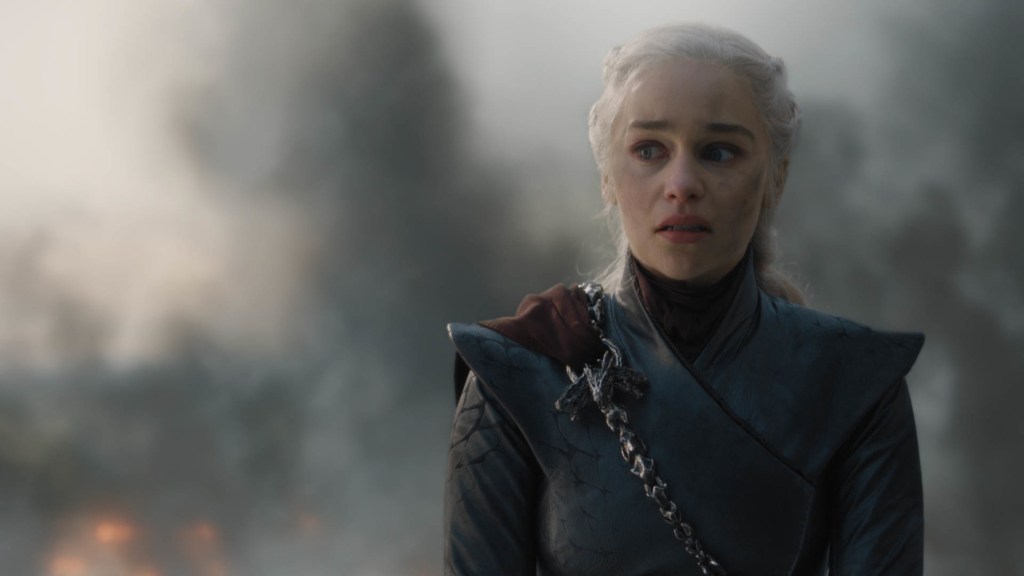
(Game of Thrones, HBO)
so many times, I’ve listened to this
since the end of HBO’s fantasy hit
and unto the fans, I say:
that show Game of Thrones ain’t shit
and every season since 2014
it continued in its pursuits
of sex, sweat and pleasure
but where it lacked in story
it cloaked itself in plot armour
saying that Arya and Jon
are unkillable, basically
because they can live forever

(Game of Thrones, HBO)
but these characters aren’t real
Dany, Jon, and the Lannisters…
if you want to see bad writing
look how Dany broke the wheel
I watched this show from the start
something we call a farce
including the gradual build up
when they killed off Ned Stark
at the top of those steps
never did I think a show could fall
as my heart shifted six inches left
and I knew every character’s name
and D&D, one bullet to our brains
to us the fans, who pledged
our fealty to the houses and clans
he said
“I felt this way after The Sopranos.”
he said
“I know, it’s the same”

it’s not the same, this wasn’t one episode
and after that season finale
I sat in silence, hung my head in shame
my name’s not Jon, as his body
started to change, ribs realigned,
lungs redesigned. Bran defied nature
nine kingdoms out of seven
and D&D sent seasons 1 – 4 to heaven
and I’m still pissed off up to now
filled six episodes with air
an amniotic sack of stuff
HBO hacks are the ones that dared
destroy the show, look how it came to this
cus I know Game of Thrones ain’t shit
she said
you’re so extra
and that was it, because I know she’s
got to be taking the piss.
And every time, they’d praise Dany
I remember parents named
their children named after that shit
how she sacked the Capital
after travelling West
the dragon queen and her hoards
who freed herself and freed cities
but you know that show
Game of Thrones ain’t the best
and every time
I think about seasons 1 – 4
like when Bobby Baratheon
was skewered by that boar
my heart shifts to the right
it reverts back to this
and after four years
of doing that, I remember
how Game of Thrones ain’t shit
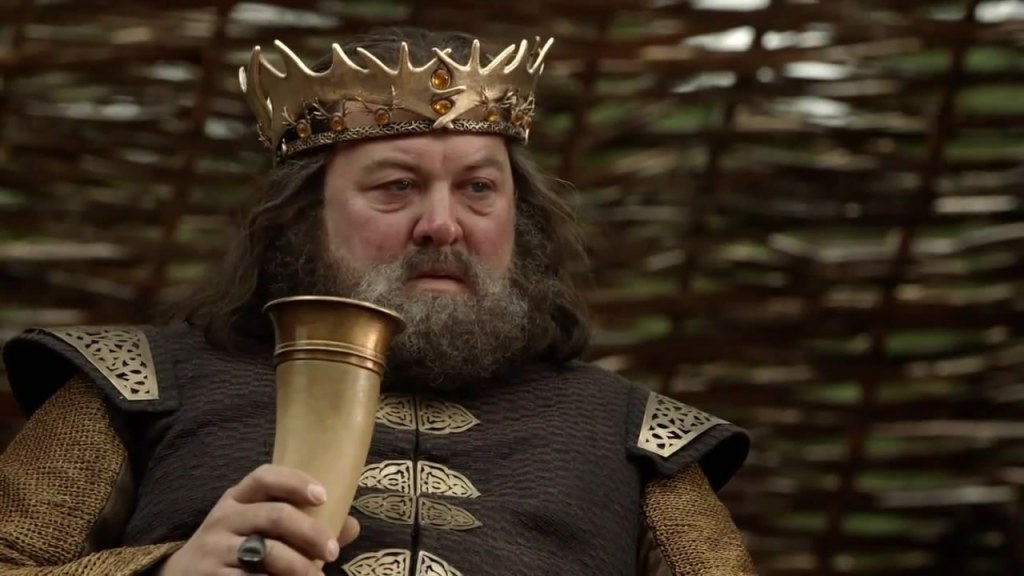
(Game of Thrones, HBO)
compared to many others shows
this one stood bold as brass
and the only thing fans gave
to these long games of thrones
(showing me nothing lasts forever)
is unwavering fealty
of which HBO gave no shits whatsoever.

 Thoughts from the criminology team