
Home » (Page 2)
Archives

Christmas ’20: I Bought Presents for the First Time in a Decade
As someone that lives in the privilege of not actually had to experience Coronavirus (to my knowledge), I have spent a good portion of last year on the sidelines. Losing my auntie during my undergrad in January 2017, and then my cousin Steve at the start of 2020 (some of you may know him as the owner of Kettering Road’s Driver), I think many would agree with me when I say ‘grief makes you humble.’ In typical Caribbean fashion, Steve’s wake made me remember the importance of community and togetherness. He ran Drivers Menswear in Northampton and if you blinked you wouldn’t know it was there, a shop that had been there since the 1980s. With its closure in 2020, that marked the end of an era, and I will now have to find somewhere else to buy jeans!
Growing up here, many of the people I know in the community and work with have actually known me for years. And in some cases, have known me for all my life (basically), very much including staples of the West Indian community like at Inspiration FM
Some time after Steve’s funeral, we were thrust into Lockdown 1.0 by the Government and it was in those months between March and June that I saw that power of community again. Albeit a symbolic gesture, clapping for the National Health Service on Thursdays in some cases was the one thing keeping some people going. It was a recurrence that kept their mind at bay in the chaos of the pandemic. I ran events online too, and people were grateful. In that same breath, it is evident to see the number of people grassing up their neighbours for flouting the rules, or attacking people for criticising the police’s £10,000 fines for those that break the rules. Last year, I also watched a number of films, including a rewatch of Goodfellas. Even in a health crisis where people have broken the rules, Robert DeNiro’s voice as Jimmy Conway is in my head telling me “to never rat on your friends and always keep your mouth shut.” When in doubt, listen to Scorsese!

These people may be rule-breakers but I know if it comes to the wire, these are also the same people (not government) that would put people ahead of profit. Fellow blogger @drkukustr8talk wrote a Facebook post saying “If anything, Corona taught us____” and I commented “There is more of a community than I thought there was”, to which he replied “NOW, dear Tre, THAT is a LOT coming from you.” Yes, I’m sure @paulaabowles and @manosdaskalou will attest to that too, seeing from our number of conversations since meeting them in September 2019. Cynicism and realism are two sides of the same coin and I grew up in The Commmunity. However, not like I have seen this past year. My work as an educator engaging with people inside and outside Northamptonshire’s borders tied, with the Murder of George Floyd/the protests and the pandemic, it’s left me thinking that when I gave humanity chance, locally, humanity actually delivered.
November came and I was awarded ‘Northampton’s Male Role Model of the Year.’ That was humbling. It wasn’t the award that really got to me. It’s the love and respect of your neighbours, and that’s not something one can articulate in words. I thought about this feeling again when I found myself watching the 1970 adaptation of The Railway Children. Albert Perks has always been my favourite character, very much a man of his generation. Not taking charity but also respects his community. You do right to others, they do right to you. That sort of mentality. This is a character I came across at twelve years old and I have not been the same since. The award is second to the number of people that voted for me, and I will take that to my grave.

December came, and I bought Christmas presents. I am as surprised as you. For years, I have famously been a humbug inside and outside of my family. Forever anti-Christmas on the basis it was “a super-spreader of consumerism” (Ventour, 2010). My mother makes jokes about it, recalling to when I was kid walking around Abington Street in a hat with bah humbug on the side. The pandemic tied with BLM and meeting all the wonderful people at Amplified NN allowed me to break my “life rules.” Grief makes you humble. With the addition of Coronavirus, you could say it has made me soft (not that I was an awful person before). If the COVID pandemic and lockdowns have taught us anything, it’s that so many of us were living life on incompatible frequencies and were trying to make the parts fit. We also saw how kindness was a shock to the system, since in the words Tennessee Williams so few have ever “depended on the kindness of strangers.”
I bought presents for the first time in ten years; I have the love and respect of my neighbours and I started a Masters in September. I don’t spend my days waving at ‘kind old gentlemen’ on the trains going by, but I think in fifty years that there may be three children that may think of me as that old gentleman (but not that old of course), or by the time I’m forty-one… I’m not too different to Albert Perks and there is power in that.
Share this:


My Criminology Journey: Haley

The start of my criminology journey is not very exciting. I am not fully sure of how or why I ended up studying the subject. I was advised to study hairdressing at school as my predicted grades were not good enough for university, but the idea of trusting myself with a pair of scissors was very unnerving. I had a dilemma at college as I was unable to decide whether I wanted to study healthcare or construction – two courses which bore no similarity. In the end I give up trying to make decisions and studied A Levels because that was what my friends were doing.
University may as well have been on Mars at this point, as it was completely mysterious and unknown to me. Whilst at college, I was asked by my tutor to go to an open day at Oxford University. I saw this as an opportunity to unmask this university ‘thing’ for what it really was, so I agreed to go. I felt completely out of place throughout the day and found myself gobsmacked by the sheer privilege of the place, the culture and the students etc. At the same time, I was fascinated by the available courses, so I decided to continue my studies into higher education.
My first attempt at university did not go as well as I had intended it to. I had other issues to contend with at the time, so I dropped out after two weeks. However, in 2010 I enrolled at the UoN and never really left. I had a great time studying criminology at UoN as I thought that my course was very interesting and the teaching staff (aka @paulaabowles and @manosdaskalou) were spectacular.
I did not realise this it at the time but I was well prepared for critical criminological discussions because I came from a background where people would be demonized for a whole host of social problems – it was clear to me at the time that this was unfair. Whilst enjoying the course content I did have to make a considered effort to improve on my writing skills, but it was worth the effort as this improvement worked wonders on my grades. As an undergraduate, I used my overdraft and savings from working part-time jobs to go travelling at the end of each academic year, this was beneficial for helping me to understand criminological issues outside of the UK.
In 2015 I began teaching as an associate lecturer at UoN and I really enjoyed it. I also completed an MA degree in Social Research. To fast-forward to today, I now work as a lecturer in criminology – and this really is, beyond my wildest dreams!
Studying is not always a smooth ride for some, but if you work hard, you never know where you might end up.

Share this:


Not My ‘Wokeness’: In Defense of Amazon
Whilst cancel culture has been badged on celebrities that have said something offensive or inflammatory in the past, often when they were young and stupid, seldom have I seen cancel culture done on works of literature. Essentially, cancel culture is a medium of boycotting someone (now something) we disagree with for a past misdemanour or an opinion we don’t like. Yet, this month was the first time I had seen “cancelling” enacted on a work of literature. This reiterates a time when Britain actually banned books. One such example being when Penguin were taken to court over D. H. Lawrence’s Lady Chatterley’s Lover, accused for being too sexual.
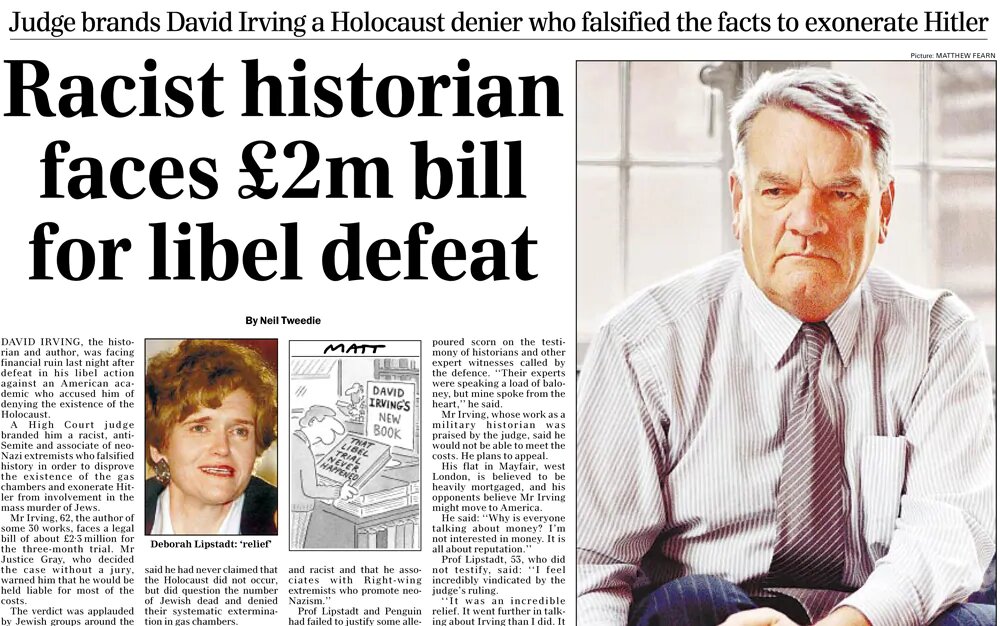
Moreover, books like To Kill a Mockingbird being taken off US school curricula, ironically the go-to text of the 20th century about racism is by a White person (but that’s another conversation). The fact of the matter is I thought book boycotts were something that didn’t happen in this country, well not in my lifetime anyway, nor my parents’ life time. That when we disagreed with something we dismantled it point by point. Another example would be David Irving who has also published books and in 1996 took historian Deborah Lipstadt to court for calling some of his statements and writings, “holocaust denial”, in her book Denying the Holocaust (1993).
But it was on a sunny May day when I happened to get a text from Criminology’s @paulaabowles with a link to a Huffington Post article calling for Amazon to pull a text from circulation. The text on display, was a collectable edition of And Then There Were None. The title on display is the original, then Ten Little Niggers. Over time it’s had many titles and is now called And Then There Were None. Obviously, the original title is overtly racist and its imagery plays up stereotypes of Black people, very much in the style of blackface minstrelsy, something that was on BBC TV until 1978!
However, studying Creative Writing as a Black student (of which many of my modules were English Literature), I think the reaction to this article is emotional; impulsive; and rather quite unnecessary. On my degree, there were books that I would call racist texts, including Dracula (Stoker), The Island of Doctor Moreau (Wells) and Heart of Darkness (Conrad). The use of the slur on this book has sparked outrage amongst Black writers and activists. But what they are doing is putting modern values onto a text that was published in a time when the British Empire still held weight.
Before Indian partition; before independence movements took hold; before the Suez Crisis, and my family’s countries’ calls for independence – not until 1966 (Jamaica) and 1974 (Grenada), both within living memory for many people.
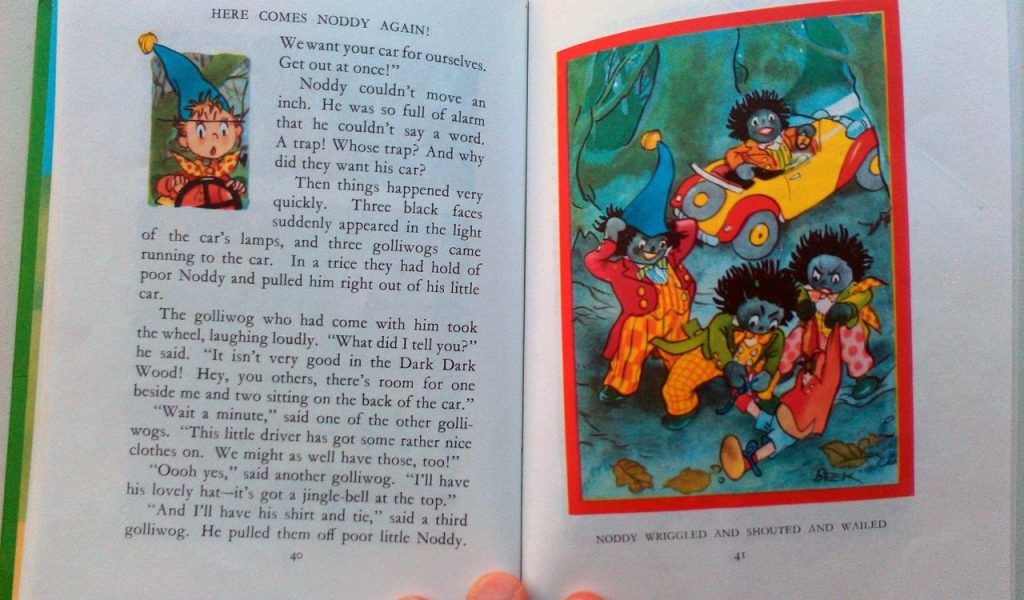
I suppose it is rather ironic that some of my favourite books ever written could in fact be labelled racist. As a boy, I read Enid Blyton. Now, I critique stories such as Noddy for its racist leanings. We all read Dr. Seuss as children, an antisemite. Do we have to cancel him as well? I love Cat in the Hat. Tolkien’s depictions of the orcish peoples in Middle Earth can be interpreted as a disdain for racial mixing. The Carlomens in C. S Lewis’ The Horse and His Boy (my favourite Narnia book) are most definitely based on colonial stereotypes of Arabs, and their interactions with King Lune and his Archenlanders are very much reminiscent of “Anglo-Europe and The Rest.”
Whilst I get the idea to take this book off Amazon, does that mean there is going to be a movement to go after authors who could by today’s standards be deemed racist? Not even alive to defend themselves. I question, that if we cancel these kinds of books, does this allow people to forget? The N-Word is not nice but people are not reading this academically, in the context that it comes from a bygone era. As early as the start of the Second World War when colonial sentiment was still valued around the world.
If we “cancel” it, is this simply picking and choosing what is / isn’t offensive enough? Despite their sentiments, I still read Tolkien and C. S. Lewis. In cancelling this collectors item Ten Little Niggers, we are picking and choosing what is offensive. This is everything that’s wrong with woke culture. It works until it doesn’t. I find it short-sighted that supposedly “woke” activists want to get rid of a text that could well be studied under decolonisation movements, not cancelled in hindsight of modern values.
This is one of the moments I find cancel culture and workness so toxic; I’m certainly one of those people that would read these sorts of books so I can learn about how different parts of that society thought about other races
This campaign against Amazon is impulsive, in an age where many are quick to anger without forethought, particularly in countries like Britain and the US which have selective memories about their history. We criticise the Nazis for book burnings and their propaganda machine, but have we looked outside recently? The moment we censor literature, is the moment we censor learning, particularly as books like this are historical fingerprints to an era where racial thinking ran brigand. A racial thinking born in colonial times, lending its ear to many issues we see today, including White Supremacy, ethnicity award gaps, stop and search and White Privilege.
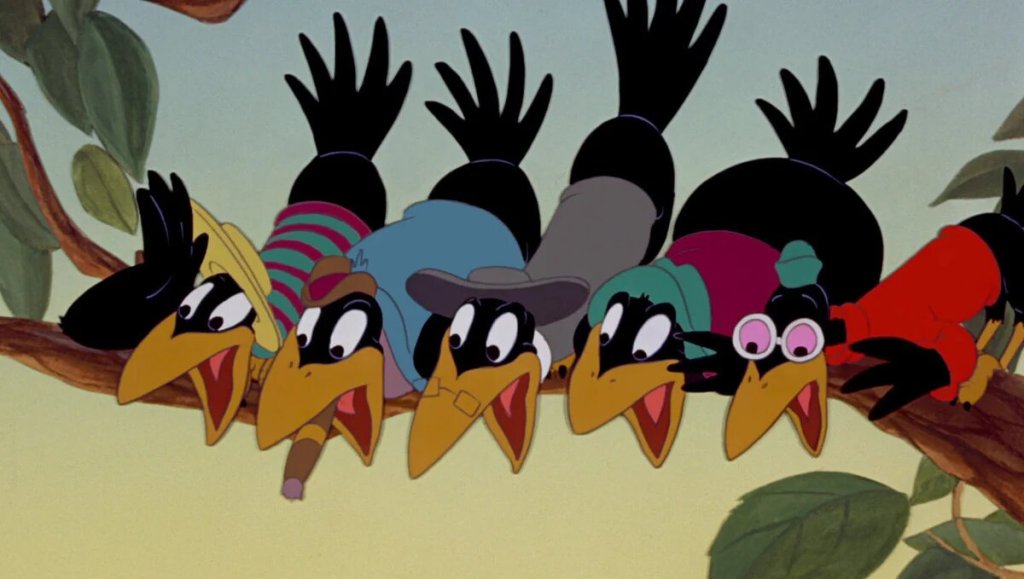
Are we going to stop people reading The Jungle Book, or stop kids watching pretty much every Disney animated film made between 1939 and 2000? I could make a chunky list of problematic books and films but they allow us a doorway into history. History is facts (sort of) and facts don’t care about your feelings. Dickens wrote about what he saw (more social history than fiction). Books allow us to see how different peoples may have thought and felt about other peoples of the time. That there is a reason why Black soldiers were excluded from the victory parades in 1918 (for example).
The cancelling is a metaphor for a country that is denial of its past and present. As someone who grew up going to school being called nigger, as someone who was monkeychanted, I do not agree with cancelling this book. It allows people to forget how the British Empire won the war on race, sorely evident in the texts on university degrees. I feel these antiracism activists have acted brashly (this time) with no forethought about context, study, or history, since I believe if the British Empire was taught (especially racial thinking), we would not even be having this conversatioin.
But to be frank, when I see antiracism activists accepting MBEs and condeming stuff like this (trying to be “woke”), I think to myself are they this ignorant or simply, do they not care? And more importantly, how dare they speak for me
Share this:


Criminology 2020 AD

2020 will be a memorable year for a number of reasons. The big news of course was people across the world going into lockdown and staying home in order to stop the transmission of a coronavirus Covid-19. Suddenly we started counting; people infected, people in hospitals, people dead. The social agenda changed and our priorities altered overnight. During this time, we are trying to come to terms with a new social reality, going for walks, knitting, baking, learning something, reading or simply surviving, hoping to see the end of something so unprecedented.
People are still observing physical distancing, and everything feels so different from the days we were discussing future developments and holiday plans. During the last days before lockdown we (myself and @paulaabowles) were invited to the local radio by April Dawn to talk about, what else, but criminology. In that interview we revealed that the course started 20 years ago and for that reason we shall be having a big party inviting prospective, current and old students together to mark this little milestone. Suffice to say, that did not happen but the thought of celebrating and identifying the path of the programme is very much alive. I have written before about the need to celebrate and the contributions our graduates make to the local, regional and national market. Many of whom have become incredibly successful professionals in the Criminal Justice System.
On this entry I shall stand on something different; the contribution of criminology to professional conduct, social sciences and academia. Back in the 1990s Stan Cohen, wrote the seminal Against Criminology, a vibrant collection of essays, that identified the complexity of issues that once upon a time were identified as radical. Consider an academic in the 1960s imagining a model that addresses the issue of gender equality and exclusion; in some ways things may not have changed as much as expected, but feminism has entered the ontology of social science.
Criminology as a discipline did not speak against the atrocities of the Nazi genocide, like many other disciplines; this is a shame which consecutive generations of colleagues since tried to address and explain. It was in the 1960s that criminology entered adulthood and embraced one of its more fundamental principles. As a theoretical discipline, which people outside academia, thought was about reading criminal minds or counting crime trends only. The discipline, (if it is a discipline) evolved in a way to bring a critical dimension to law and order. This was something more than the original understanding of crime and criminal behaviour and it is deemed significant, because for the first time we recognised that crime does not happen in a social vacuum. The objectives evolved, to introduce scepticism in the order of how systems work and to challenge established views.
Since then, and through a series of events nationally and internationally, criminology is forging a way of critical reflection of social realities and professional practices. We do not have to simply expect a society with less crime, but a society with more fairness and equality for all. The responsibilities of those in position of power and authority is not to use and abuse it in order to gain against public interest. Consider the current pandemic, and the mass losses of human life. If this was preventable, even in the slightest, is there negligence? If people were left unable to defend themselves is that criminal? Surely these are questions criminology asks and this is why regardless of the time and the circumstances there will always be time for criminology to raise these, and many more questions.
Share this:


#CriminologyBookClub: The Yellow Room

In times of crisis it is beneficial to occupy yourself with things to do. This helps us to cope with boredom, and to distract us from the bleakness of reality. What better way to help with this than to start a book club? That’s right, whilst some of us were sitting at home twiddling our thumbs, @paulaabowles had sent us all a book that we were to read and discuss in virtual book club meetings. Little did we know that this book club was to be our very own ray of sunshine during such an unprecedented time.
Our first book is The Yellow Room by Mary Robert Rinehart (dubbed the American Agatha Christie by the blurb, which is generous). Set in Maine (USA) during WWII, this is a classic whodunit crime novel. With the wealthy Spencer family finding themselves tangled in a web of evidence that instigates their involvement with a dead woman that is found in the closet of their holiday home. The book is filled with intrigue and the plot thickens with each chapter, with more and more clues being thrown into the mix. Until too much is thrown in, and what is left of the book is quite simply… a mess.
The book consists of 30 chapters, and we think the club is in agreeance that the first 20-24 chapters are pretty great. Rinehart throws a number of spanners in the works, with near misses, burning hillsides, death by frights, illegitimate children and secret marriages. We all had our theories, some boarding on plagiarism (they know who they are!). However as it turns out a few of us were half right, and then so were some of the others. We will not give away any spoilers, but the ending, the answer we were all waiting for was disappointing and quite frankly we are still not 100% sure who did it, and what was actually done. The leading lady of the book Carol Spencer, dubbed drippy Carol by the club, because she is, well… DRIPPY, does nothing but smoke and drink coffee, whilst surrounded by crime and uncertainty. But, alas, when all is righted, she finds herself in the arms of an arrogant moody man, all happily engaged! Possibly a romance (although a bad one) or possible a classic whodunit (a half decent one), who can tell?
Overall the book was a success: it inspired intrigue and discussion! The virtual book club even more so! A bunch of misfits, gathered together (20minutes after the allotted time because one member of the group is late- @manosdaskalou), discussing the book, thinking about the social context, the characters, and how it is received today. It is a fantastic virtual club consisting of familiar suspects: the princess, the athlete, the criminal, the brain, the basket case, the parent and the “carol” (representations may not be literal or accurate). What will the misfits think of the next book? Will they all agree? Will one read ahead and sit silently and sheepishly, without the others knowing? Stay tuned…
@jesjames50 and @haleysread – founding members of the #CriminologyBookClub
Share this:


Love Film: You Can’t Blame The Youth

On the basis of a reliable academic study, research by The University’s top senior lecturers on Criminology, I am by their words and definition “the Youth of Today.” However, my younger brother (age 12) is The Youth of Tomorrow. In our group chat, this ongoing conversation (now months old) also includes (not Harvard) references to The Youth of Yesterday (age 30+) or Yesteryear (if you’re ancient, ahem). It’s really quite amusing. Am I The Youth of Today? I hadn’t listened to any Stormzy until he did Glastonbury and our conversations around “Vossi Bop” really are worthy of critical acclaim. Is one’s youth status pigeon-holed to their date of birth?
By the time I was 17, I had watched most of Hitchcock’s catalogue and I think Woody Allen is one of the funniest writers alive (despite his controversy). Is this the point in the blog where I need to mention someone other than a White man? Again, another point of discussion in our chats. Diversity. So, true to form, I have seen the entire filmography of Vivien Leigh. I think Diane Keaton is understated in The Godfather films and Claudine with Diahann Carroll is underrated, and should be on seminal film lists when we talk about working-class life in America. It’s a lesson to us now in Britain, haunted by depressions of austerity and universal credit.

Yet, this blog isn’t about group chats, but generalisations. Are today’s youth beyond the grasp of Old Hollywood or even films made before the 2000s that aren’t franchise, or nostalgia pictures like Jumanji? I aim this question at The Youth of Tomorrow too (born post-7/7). Is it true? Maybe, maybe not. The idea remains that many people despite age are still dismissive of Old Hollywood in general, and the classic films made before the 1990s.
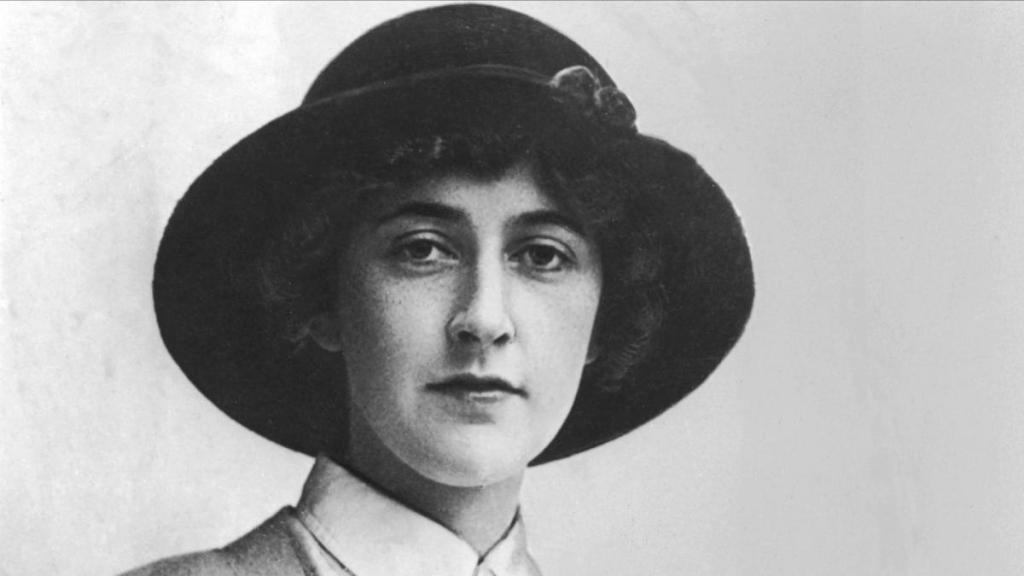
Criminology senior lecturer @paulaabowles has an affinity for Agatha Christie but seldom do I hear young people talk about Agatha when thinking crime stories, be it literature or not. I hear much love for Idris Elba as DI John Luther. Yet, it is arguable to say there would be no modern whodunnit without the massive contributions of crime writer Agatha Christie, who a century ago was defining the things we now we would call clichés. These people are seriously missing out by dismissing “The Old”. All it takes is the right story to alter perceptions, changing minds forever.
I do love to read, but film / the moving-image is more my thing. One of my favourite films is Mr Smith Goes to Washington. I’m of that generation that some of the boomer generation are talking about when they say “kids today” in relation to not enjoying the films that were around in their youth. I watched this film when I was 19 and I still am surprised by how complex yet simple it is. Audiences who have watched things like Veep, Netflix’s House of Cards or Thick of It will get on with James Stewart as Mr Smith.
Its searing portrayal of how systems of power crush good people just wanting to do the right thing can still be seen in society today; from politics to policing, exploring corruption and greed in the deeply flawed human imagination whilst simultaneously acting as a commentary for humanity’s blitz spirit in a film, which I would not be surprised influenced Stan Lee in creating the character of Captain America in 1941. No matter how hard you try, what keeps human beings going is their determination to fight on.
I could be offended at people that say my generation “wouldn’t know a good film if it was staring at them in the face” because “Hollywood only now makes films for sixteen year-olds and China” (both real quotes) but I’m not, because in my experience outside of online film groups on Facebook, and Film Twitter, I have seen this to be true. I will never forget the time when a former-colleague refused to watch Ridley Scott’s Alien because it was old.
When people ask me for recommendations, I need to get a notion of that person’s likes first in case I get a repeat Alien situation (I am still salty about this) Nonetheless, I think everyone should watch classic cinema, including black and white films, as they are some of the best films ever made.
In a time now where sex sells, another in for classic cinema would be to introduce them to Old Hollywood through pictures like Some Like It Hot. Most people have heard of Marilyn Monroe, and the Youth of Today or Yesterday may in fact be seduced by the “crude” title and its star, only then to get mesmerised by a God-ordained masterpiece of American cinema, mixing film noir with banter and action, a film that is certainly not boring.

Though, very much a product of the late 1960s, To Sir with Love hasn’t aged a day. Growing up in a household where education and learning were core values, watching this film at 20 was a homecoming for me. Only to then screen it at the Students’ Union as part of Black History Month 2019. It reminds me of today in how we are in a sector where many students don’t want to learn and many teachers don’t want to teach, before we even get to issues of disparities of outcomes between different student groups.
Mark Thackeray (Sidney Poitier) is the teacher we all wish we had, and certainly an entrance into Old Hollywood for The Youth of Tomorrow, let alone the wonderful song by Lu Lu. To Sir, with Love is optimistic while still commenting on social issues, including race and class. It’s pure of heart in its ideas about British education but also access to education for poor working-class communities in the East End of London. Moreover, how teaching back then was a noble profession and a pillar of the community.
If “kids today” are to have access to these films, it will often be how I had access to them. Through a clunky VHS system at school watching things for English class like Elia Kazan’s A Streetcar Named Desire. I will never forget the time my brother asked me what a VHS was. And I then thought I had failed my duties. Or am I just passed it? Does he think I’m ancient? I think we’re at DVD now, or even BluRay? Who decides what a classic is? That’s another question and that debate will have to wait for another time.
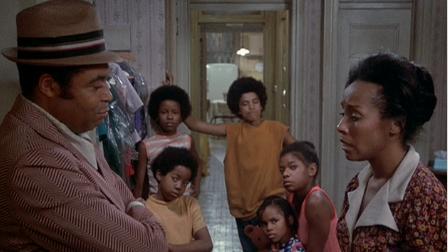
Do kids today know who Steven Spielberg is? He has had a defining film for every decade of his career. Surely, they know who he is? They must have watched Jaws? Sometimes, I want to despair but I was in their position once, possibly when I was in nappies. I think I might have had grey hair then too. As we all sit in lockdown, there is no better time to watch the epics. Whilst many of us will be bingeing the likes of Peter Jackson’s Lord of the Rings, what about the epics of the silver screens of Old Hollywood?
When talking to young people, we do often look at how accessible a film is, and whether it’s in high definition? Those are two selling points. Gone with the Wind, Giant, Lawrence of Arabia, Cleopatra, Doctor Zhivago, Spartacus, Ben-Hur – these are some of my favourite epics. Cleopatra sits at a wholesome 5hrs 20mins. These were event films in the same way we court Lord of the Rings today. We don’t get many event films anymore but you can’t blame the youth for not knowing what they do not know.
And with a massive diversity of content across streaming platforms like Netflix and Amazon Prime as well, do the Youth of Today (and Tomorrow) need older films, or am I locked in the time trap of nostalgia and golden age thinking?
Share this:


Hate crime in The Period Drama fanbase is endemic

After reading a blog by History’s Drew Grey on ‘Racism, Diversity and Contested Histories: Some Reflection on Christmas Just Past’, I began to think about my favourite television genre (by some distance), the Period Costume Drama. Reading his post took me back to when I saw David Olusoga presenting Black and British for the first time on the BBC, but more specifically his monologues about mixed-race families in Georgian Britain. Whilst Drew’s post boasts diversity in the latest adaptation of A Christmas Carol (based on the Charles Dickens story) by Peaky Blinders‘ Stephen Knight, diversity in the Period Drama fanbase is a contentious discussion.
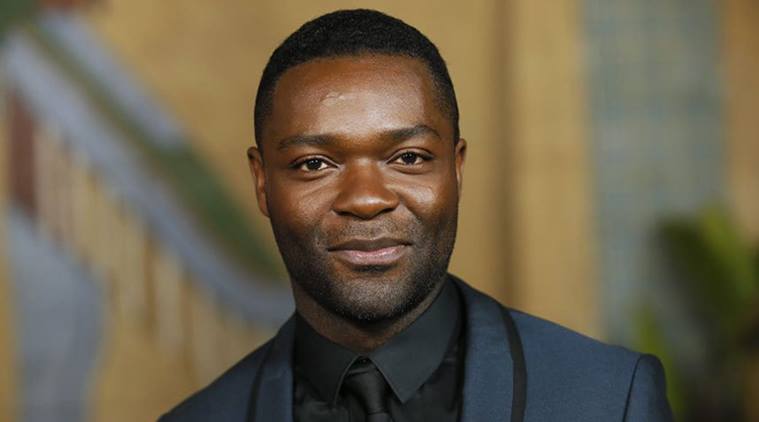
His post reminded me of my dissertation where I was looking at my roots. Finding myself. Lost in my race-identity politics, it feels like a decade ago reading Reni Eddo-Lodge’s Why I’m No Longer Talk to White People About Race for the first time. A text that colleague and blogger @paulaabowles calls “a machine gun,” (with a smirk). It’s simply relentless. However, it was David Oyelowo’s quote in the Radio Times that’s stayed with me ever since.
“We make period dramas [in Britain], but there are almost never any black people in them, even though we’ve been on these shores for hundreds of years. I remember taking a historical drama with a black figure at its centre to a British executive with greenlight power, and what they said was if it’s not Jane Austen or Dickens, the audience do not understand.” – David Oyelowo (in Eddo-Lodge, p55)
Oyelowo goes on to say “I thought – OK – you are stopping people having a context for the country they live in and you are marginalising me.” So, is it any wonder why so many of our Black actors have gone to Hollywood and made it big? Idris Elba made it as Stringer Bell in The Wire before we knew him as DCI John Luther. Oyelowo was Martin Luther King in Selma (as well as his British co-star Carmen Ejogo as Coretta Scott King), and has had roles in The Help, Queen of Katwe and Disney’s Star Wars Rebels. John Boyega was in Star Wars and Daniel Kaluuya slayed as Chris Washington in Get Out.
Whilst many of these works aren’t all costume pieces, the fact that Black actors have to go overseas bothers me. Yet, Black History to British audiences has always been African-American history. To find Black British history, you really have to look for it. So, when we see characters like Kitty Despard (Poldark) or Miss Lambe (Sanditon) or even Dev Patel as David in the upcoming The Personal History of David Copperfield, it’s in opposition to the histories we think we know, the histories we were taught at school.
So, why is there such a backlash to non-White people in this genre? Is it one more example of Black and brown people being where they shouldn’t? You know Black faces in White spaces? From the streets of Georgian London to Walter Tull mobbed by 20,000 Bristol fans in 1909. Or is it a consequence of a population bludgeoned by historical misinformation? After all, isn’t the best way to have complacent people, to cut them off from knowledge? And if you don’t know your own history, do you know who you really are?
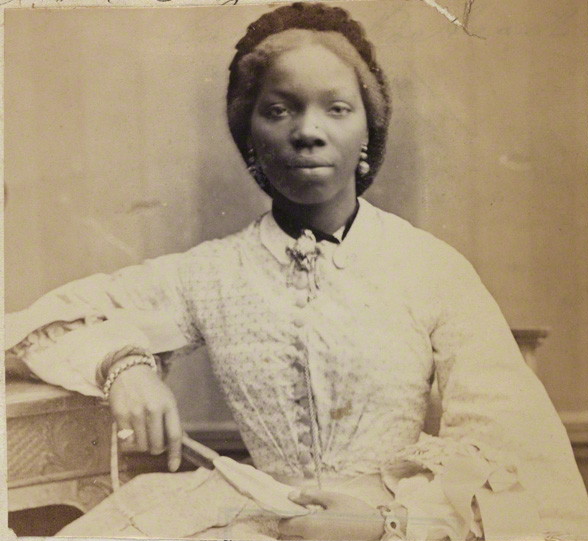
Photo Credit: Camille Silvy (September 1862)
In the same century Charles Dickens was writing about Jacob Marley, Scrooge and Tiny Tim, Queen Victoria’s African goddaughter Sarah Forbes Bonnetta was growing up in England wondering the streets of London, as “part of Britain’s imperial project.” It’s the story of Black Victorians, many of which could “only be told through the words of others” (Olusoga, p331).
Whilst these discussion forums, are majorly female, they are some of the most misogynistic places I’ve seen on the internet. There’s one Facebook group where I have been labelled a “troublemaker” for calling out racism and homophobia, as many members are also American, card-carrying Republicans who voted for Donald Trump. And feminism is only White. They see intersectionality as an inconvenient myth and the stories of non-White women in history an afterthought. That’s how White Privilege works.
This culture of hate against non-normative voices is dominant in the Fandom Menace, as I like to call it. The online forums are infested with racism, misogyny and homophobia: from Gentleman Jack to Beecham House, Drew’s descriptions of the backlash to the mixed-race Cratchit family act as a metaphor for a toxic fanbase, and contesting these histories can often be a homophobic act, a racist act, even if it’s born from ignorance.
There is an endemic problem within society, where we allow older generations, including “sweet old ladies” in The Period Drama fanbase to get away with hate speech because that’s “how they are” and they “don’t really know any different.”
What’s more, and what was great about A Christmas Carol was how unapologetic the makers were about their diversity. This family were Black and they were White. This was mixed-race Britain in the 19th century. Moreover, Mary Cratchit and how Black women take on everyone’s emotional labour. Be it modern times or Victorian times, Black women are in the business of saving grown-ass men from their own emotional work!
Mixed-race inclusion is a testament to our history and a thumb bite to Englishness as a synonym for whiteness, and the colonised imperatives that continue to dominant storytelling, as said (but not so bluntly) by Darren Chetty in ‘You Can’t Say That! Stories Have to be About White People‘. Due to the inherent whiteness of institutions, they recruit in their own image, and history is no different. What’s that saying about apples and trees?
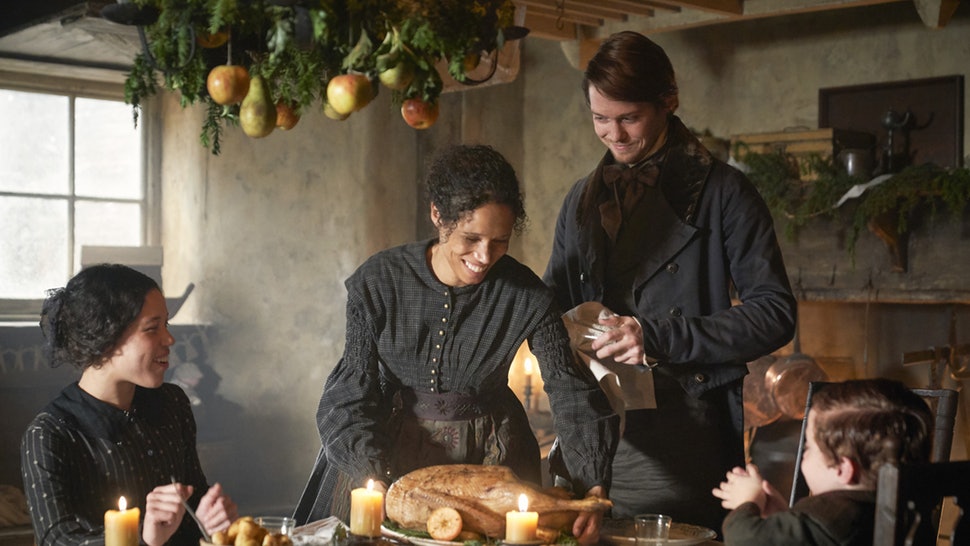
Certain members of the Period Drama community would like to believe Britain was only White before the 1950s. No, it’s simply the establishment has done a grand job of writing us out of British history books, but Black people have been part of every era of British history. I can tell you that.
BBC’s A Christmas Carol shows why representation matters and that history is not only the responsibility of historians. Artists also carry the load of telling these social histories (that’s what Dickens is) accurately and they can do better when it comes to the spectrum of diversity in the Period Drama.
And due to how History has been taught to every generation at all levels of education, is it surprising I encounter “sweet old ladies” using “historical (in)accuracy,” as a conduit to enable their racist, homophobic and misogynistic views?
Works Mentioned
Chetty, D. (2017). You Can’t Say That! Stories Have to Be About White People. In: Shukla, N (ed). The Good Immigrant. London: Unbound Publishing, pp. 96 – 107.
Kwakye, C and Ogunbiyi, O. (2019). Taking Up Space. London: Merky Books.
Lodge-Eddo, R. (2017). Why I’m No Longer Talking to White People About Race. London: Bloomsbury.
Olusoga, D. (2017). Black and British. London: Macmillan.
Share this:


Thinking “outside the box”
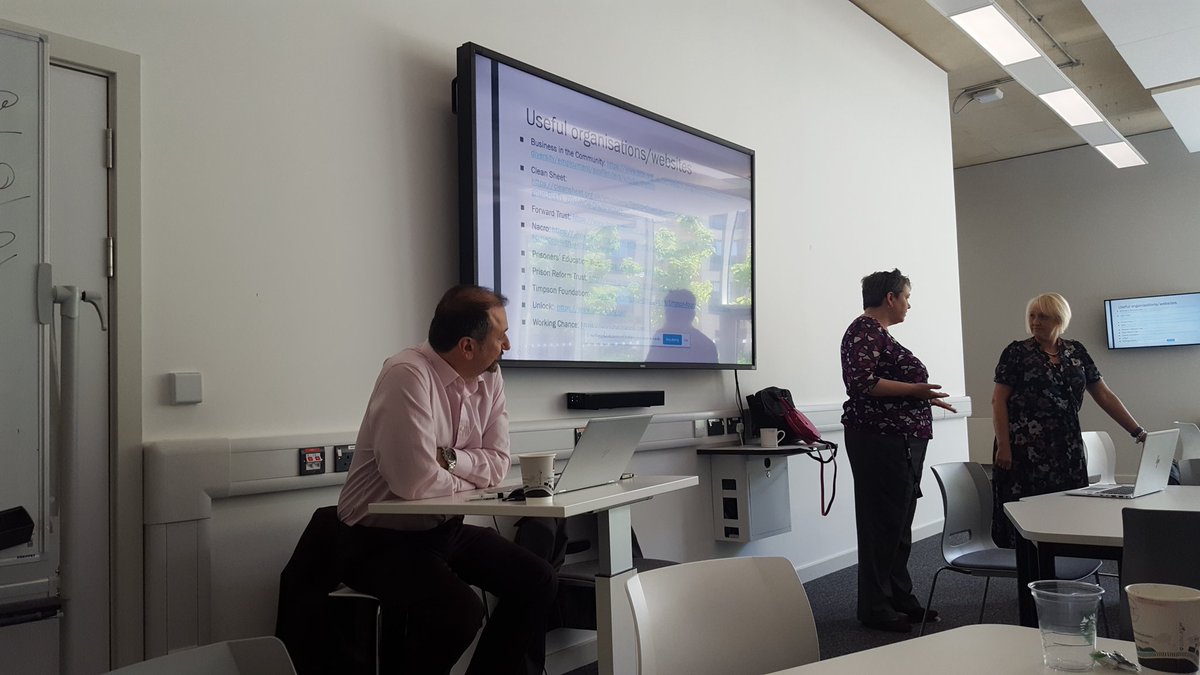
Having recently done a session on criminal records with @paulaabowles to a group of voluntary, 3rd sector and other practitioners I started thinking of the wider implications of taking knowledge out of the traditional classroom and introducing it to an audience, that is not necessarily academic. When we prepare for class the usual concern is the levelness of the material used and the way we pitch the information. In anything we do as part of consultancy or outside of the standard educational framework we have a different challenge. That of presenting information that corresponds to expertise in a language and tone that is neither exclusive nor condescending to the participants.
In the designing stages we considered the information we had to include, and the session started by introducing criminology. Audience participation was encouraged, and group discussion became a tool to promote the flow of information. Once that process started and people became more able to exchange information then we started moving from information to knowledge exchange. This is a more profound interaction that allows the audience to engage with information that they may not be familiar with and it is designed to achieve one of the prime quests of any social science, to challenge established views.
The process itself indicates the level of skill involved in academic reasoning and the complexity associated with presenting people with new knowledge in an understandable form. It is that apparent simplicity that allows participants to scaffold their understanding, taking different elements from the same content. It is easy to say to any audience for example that “every person has an opinion on crime” however to be able to accept this statement indicates a level of proficiency on receiving views of the other and then accommodating it to your own understanding. This is the basis of the philosophy of knowledge, and it happens to all engaged in academia whatever level, albeit consciously or unconsciously.
As per usual the session overran, testament that people do have opinions on crime and how society should respond to them. The intriguing part of this session was the ability of participants to negotiate different roles and identities, whilst offering an explanation or interpretation of a situation. When this was pointed out they were surprised by the level of knowledge they possessed and its complexity. The role of the academic is not simply to advance knowledge, which is clearly expected, but also to take subjects and contextualise them. In recent weeks, colleagues from our University, were able to discuss issues relating to health, psychology, work, human rights and consumer rights to national and local media, informing the public on the issues concerned.
This is what got me thinking about our role in society more generally. We are not merely providing education for adults who wish to acquire knowledge and become part of the professional classes, but we are also engaging in a continuous dialogue with our local community, sharing knowledge beyond the classroom and expanding education beyond the campus. These are reasons which make a University, as an institution, an invaluable link to society that governments need to nurture and support. The success of the University is not in the students within but also on the reach it has to the people around.
At the end of the session we talked about a number of campaigns to help ex-offenders to get forward with work and education by “banning the box”. This was a fitting end to a session where we all thought “outside the box”.
Share this:


Ignorance to curiosity
My name is Sean, I started studying Criminology at the University of Northampton in 2012, graduating in July 2016.
I started University as a switched off young man. I was very much in tune with media and social attitudes as wearing them cost very little and seemed to reap gratification. Studying was always enjoyable as it sparked my brain in ways television and games, or at least my choices in such, didn’t. Appreciating the concept and the opportunity however was always lacking in my 18 year old self. Coming to University and experiencing the electricity of passion mixed with contempt was very perplexing time. Not for long had I decided to think freely or passionately; choosing to study Criminology was a start. Meeting peers and idols of simultaneous do-good and work little nature, was an intense influence. Gratification ultimately came from within and this was the basis to which I began to restructure myself.
Personally, the highest credit should be placed with my course leaders and the content provided. Never in an academical setting had I experienced someone ask me so many questions, yet rather than make me feel stupid; made me feel unprepared. Rather than build themselves up to be superior and towering; made them feel wise and welcoming. It was this, paired with the already enticingly dark yet morally complex content of Criminology that lead to me to free many barriers and much ignorance. This is when the real questions followed and the search for real answers began. Never before had I truly questioned what I had read, seen, heard, even felt or experienced and wholly questioned myself.
This change truly opened a new way of living for me. I am fully aware that such reasoning and ways of thinking could been explored previously, however it was my ignorance and choices, rebellion and ego, that locked these gates. In reference to the timeless ‘Nature vs Nurture’ topic; it was within my path that University, Criminology, @paulaabowles and @manosdaskalou were to be the ones to trigger the break in the lock. Now, admittedly, this was not just an overnight spawning of a butterfly from a larva. I still, like many in life, held onto what was familiar with a tight grasp as for an ignorant; change is to admit defeat. Furthermore, to change, to really change, requires dedication and belief. But once logically thinking, questioning and reasoning, alongside giving in to pure curiosity; it is extremely hard not to follow the exciting direction within a moral compass.
From here I can genuinely say I have enjoyed life more and all of its experiences. I have appreciated people more, and taken much more time to try and understand exactly where they stand and come from. I have spent a long time questioning everything, looking for answers or options wherever I can, trying to better myself as a human and continuing to do so. I am honestly far from where I would like to ideally be, but I am truly proud of my experience and change. When I finished University I saw this as the end of my further education, and having worked full time for a few years I could feel my curiosity shift towards less academic interests and the passion begin to fade. However it was not long before a shift back began. This is where I came to a conclusion, which fills me with a happy heart when taken with a positive perspective, that we are all students; students of life. The stronger my curiosity is, the more passionately I will study. So thank you, Criminology Team, for igniting mine. I intend to try and share this passion wherever I go.
Share this:


Which mindset are you? This may depend on the sort of week you are having…..
This blog is inspired by an article posted on our Facebook group by my colleague @paulaabowles, from the work of Dweck (2016), suggesting mindsets can be categorised as either growth or fixed. It is interesting to consider how such a mindset can shape the way your life goes, but for me, any psychological analysis is always just part of the picture. That said, Dweck’s work is interesting and made me reflect on my life up until this week. This is a week where I seem to be waiting patiently (mostly) for acceptance of PhD corrections and to exchange contracts on my new house. Both of these processes are out of my control, require continued patience and a need to accept there is nothing I can do but wait.
For a lot of reasons, I immediately identified with the ‘growth’ mindset, being open to challenges, seeing intelligence as something to be nurtured and developed, worth the effort, understanding the need to learn from mistakes and being inspired by others. The other seems to me a life of stagnation, dismissal of anything new and creating a world which may be low risk, but ultimately unfulfilling. The fixed mindset also presents intelligence and success as something you are born with and therefore little effort is required to fulfil potential – almost as if life is mapped out for you, but it also belies a sense of entitlement, and inability to deal with failure as a challenge to move on from. However, if you are not somehow ‘blessed’ with the tools necessary for success, you must accept your fate. There are obvious social and cultural influences which can reinforce these messages, so perhaps, a fixed mindset leading to a life of success aligns with a life of privilege, but a life without this success identifies someone who cannot see a way to improve, blames others for their misfortune and doesn’t value their own ability to change. My parents always taught me the value of education (well, a lecturer and a teacher – of course they would!), and I never felt any limits were placed on me. But a big part of this must be attributed to me not facing the limits placed on individuals facing poverty, loss, psychological trauma or physical disabilities – my life, so far has largely been the outcomes of my decisions, and I count myself lucky to be able to say that.
That’s not to say I haven’t doubted my abilities, suffered ‘impostor syndrome’ and come up against challenges which have tested my resolve. It seems having a ‘growth’ mindset perhaps enables individuals to strive despite what life throws at you, and also despite how others may perceive you.
So, back to my week of waiting patiently and trying not to let anxieties come to the fore. Being able to call myself Dr Atherton and having my own house in the town I also work in is something I am really looking forward to, for obvious reasons. Years of work on the thesis and years of commuting from Birmingham to various parts of the Midlands (I know the M6 far too well) are about to lead to significant rewards. However, it also occurred to me none of this would be happening if I had given up on the PhD, stayed in a job which was not right for me, decided to carry on commuting and not made this decision to buy a house. It also occurred to me perhaps having a fixed mindset would be less stressful – you have to admit, my timing is spot on – but I don’t think that is the case. I chose the PhD and new job path because I was not happy, I chose to buy a house as M6 commuting is just not something I want to do anymore, and I want to feel more settled in my new post. As for the PhD, I knew I needed time away from a full-time job to complete it, and while it was risky to leave a permanent post, it seems my mindset pushed me to strive for something which was a better fit for me. My mindset helped me believe this was all possible, crucially it was down to me to do this and also, support from friends, family, ex and current colleagues have helped get me here. But, my social and economic circumstances also enabled all of this – we cannot just assume that psychological tools can overcome disadvantage, discrimination and a lack of opportunity.
Dweck suggests that these mindsets are a ‘view you adopt for yourself’. Fixed mindsets can impede development and the belief in change, and they also seem to create people whose concerns about others’ perceptions of them can be all-consuming, and no doubt lead to them avoiding situations where they will be judged. Those with the growth mindset see their traits as a starting point, from which anything can happen and they value the unknowable – the opportunities ahead, the hurdles and rewards. The fixed mindset creates a different kind of stress, a constant need for affirmation of beliefs, disregard of the need to adapt to changing circumstances, and god forbid, simply go with the flow. As much as I identify with the growth mindset, I can empathise with those who simply are unable to take risks, accept failure and manage the unknowable – there are times I have wanted to give up, take the easy path and feel more in control.
A day after starting this blog, the clouds parted and the sun shone down as the much-awaited email from the De Montfort University Doctoral College came to confirm my PhD corrections were accepted and I was to be awarded my doctorate. Suddenly after weeks of anxiety, the reward was certainly worth the wait. There will be plenty of days ahead to bask in the glory and enjoy this moment, and just for now, it is making me worry less about the house exchange, it will happen, I will be settled in my new home soon and enjoy a short drive to work for the first time in years. So, I will continue to strive, develop and take risks – not doing this may have meant a less anxious time this week, but they also lead to great rewards, and hopefully, even better things to come.
Dr. Susie Atherton
Senior Lecturer in Criminology

 Thoughts from the criminology team