
Home » Writing (Page 3)
Category Archives: Writing

Home educating in a pandemic
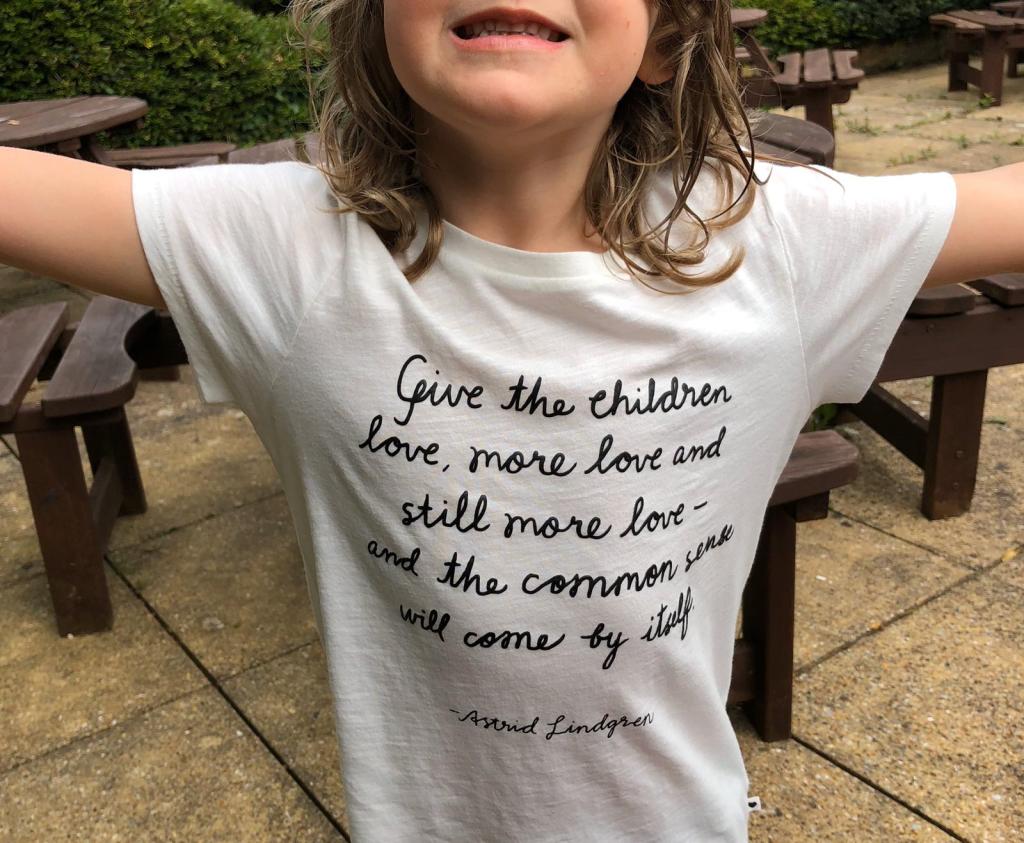
“Give the children love, more love and still more love - and the common sense will come by itself” - Astrid Lindgren
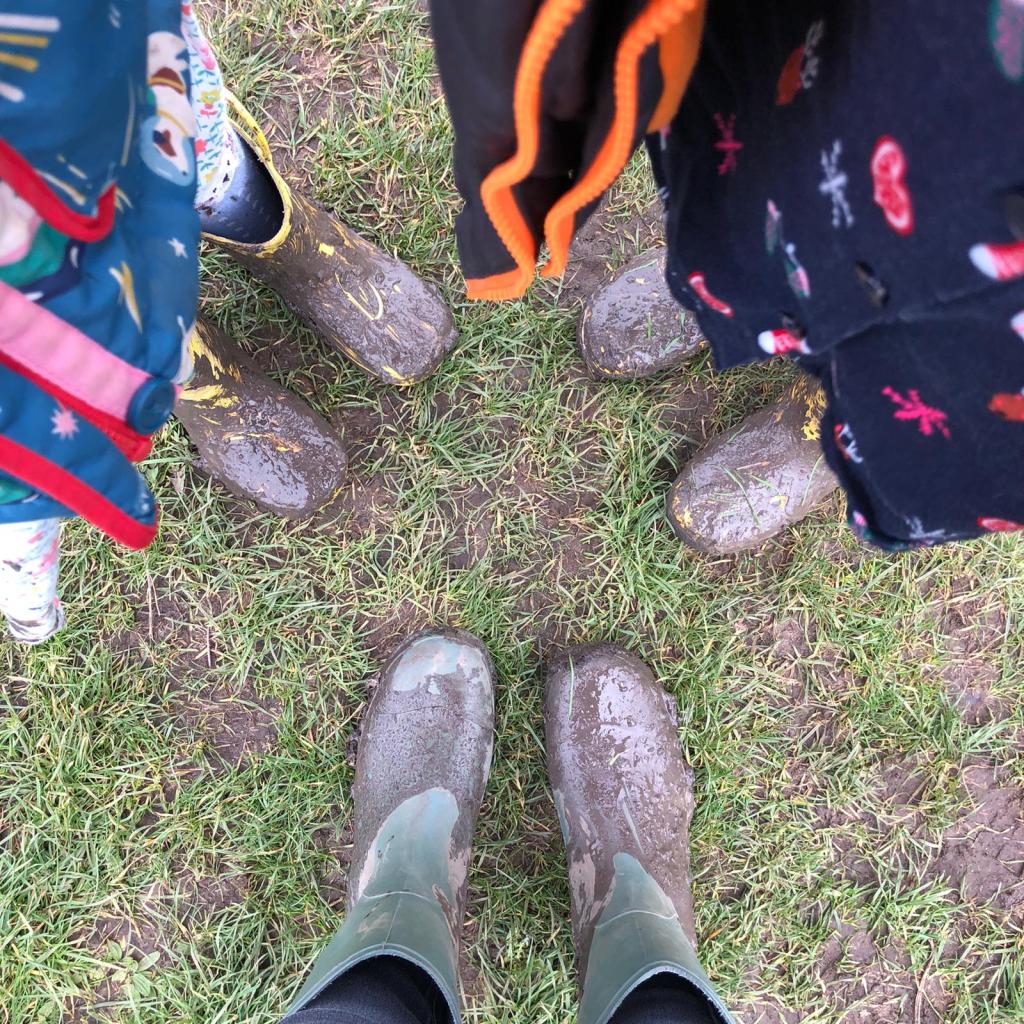
My children are aged 5 and 7 and they have never been to school. We home educate and though ‘home’ is in the title, we are rarely there. Our days are usually filled with visits to museums and galleries, meet-ups with friends, workshops in lego, drama and science and endless hours at the park. We’ve never done a maths lesson: sometimes they will do workbooks, but mostly they like to count their money, follow a recipe, add up scores in a game, share out sweets… I am not their teacher but an enthusiastic facilitator – I provide interesting ideas and materials and see what meaning they can take and make from them. Children know their own minds and learning is what they are built for.
If there was ever a time to throw away the rulebook it’s when the rules have all changed. Put ‘home’ at the centre of your homeschooling efforts. Make it a safe and happy place to be. Fill it with soft, warm and beautiful things. Take your time.
All this to say that what children need most is your love and attention. This is so far from an ideal situation for anyone – so cut yourselves some slack and enjoy your time together. You don’t need to model your home like a school. Share stories and poems, cuddle, build dens, howl at the moon, play games, look for shapes in clouds and stars, do experiments round your kitchen table, bake cakes, make art, explore your gardens and outside spaces and look for nature everywhere. This is the stuff that memories are made of.
As adults we don’t continue to categorise our learning by subjects – we see the way things are interconnected across disciplines, sometimes finding parallels in unlikely places. When we allow children to pursue their own interests we give them the tools and the freedom to make their own connections.
What’s important is their happiness, their kindness, their ability to love and be loved in return. They are curious, they are ready made learning machines and they seek out the knowledge they need when they need it.
It’s an interesting time to be a home educator – more children than ever are currently out of school and the spotlight is on ‘homeschooling’. I prefer the term ‘home educator’ because for me and my family it isn’t about replicating the school environment at home and perhaps it shouldn’t be for you either.
Treat it as an extended holiday and do fun stuff together but also let them be bored.
Share this:


Things I Miss (and don’t) – Flower Violet (Stephanie Nixon)

“Once this is all over, Steph, you can come over and we can have a great big hug!”
Things I miss… let’s just start by highlighting that it is a lot of things!
Since the lockdown and being furloughed, my daily routine been shot, and all the freedoms that everyone once had have now been restricted. However, I am taking each day as it comes, and I endeavor to remain as positive as possible and do what makes me happy. This pandemic has opened up people’s eyes to everything that they take for granted on a daily basis, whether it’s visiting friends and family, going shopping or spending time out with others.
Here are some of the things that I miss:
I miss visiting some of my friends in the local area. I miss having cups of tea and doing shopping with them too.
I miss my occasional trip to Costa, or some cafe, where I can sit on my own, gather my thoughts, and put together my to-do list.
I miss going to my 2 church services on Saturday evenings, and Sunday Mornings. I miss serving the church community, and spending time with people that I love, and supporting Christian campaigns.
I miss taking my dad who his favourite Indian restaurant, and my mum to her favourite Singaporean and Malaysian restaurant.
I miss doing all my face-to-face community work and activities, and meeting with members of the community.
I miss visiting family members, and have had to call and text them to check in on them, and make sure that they are safe.
I miss going out to collect donations of glasses and small ink jets for my local Lions club as part of our local and international service.
I miss being able to regularly leave my house and go out as many times as I would like to. Before the pandemic, I would often leave the house on multiple occasions (predominantly on Saturdays as I work Monday-Friday) whether it’s to do a family shop run, post bottle tops to Lush, visiting friends and family, or going for a long walk.
However, whilst there is so much I miss doing, I am getting as much done as I possibly can during this time too, so, it’s not all that bad and negative.
I am doing so much more writing, have drafted multiple blog posts and have even tried my hand at poetry! (1) I have also immersed myself in other hobbies, such as reading more books, doing longer and multiple workouts at home. I’ve also got more time to continue working on my author page and reach more people (2).
I am calling my partner multiple times a day! Due to being furloughed and my partner working from home, we can speak on the phone for longer periods, and call each other during the day to check in on each other! It’s wonderful being able to check in on each other regularly! ❤️
As I am at home most of the time now, I am using the time to rest, recharge my batteries, and clear my head. Something which I really need to do more of…
I’ve caught up with people that I haven’t spoken to in a while. I’ve connected with old friends from university, and kept in touch with people to see how everyone is doing during this time. It’s been great catching up and speaking to people who I love and care about ❤️

In my part time job as a Member Pioneer, myself and the store have worked tirelessly to help the community. Together, we have donated PPE equipment to district nurses, donated care packs to the police, fire service and NHS staff for their work, and donated 100 Easter Eggs, 50 for nurses and 50 for a local food pantry, to say thank you, and help struggling families. This was earlier blogged about here: Love, Resilience and Practicality in the face of a Pandemic ❤️
In addition, there has been a massive increase in the time spent with the family at home! Everyone is together, and we have played games, laughed together, done family workouts, done more baking, did a family BBQ in the hot sunshine, and have spent so much more time together! The family bonding has been wonderful!
It does ask the question; once this pandemic is over, will we ever take for granted all the liberties and freedoms that were restricted? I know I certainly will not!
Let’s just take each day at a time – we’ll all pull through this!
Links
(1) The poem I wrote: Mercy! Mercy! https://blog.sivanaspirit.com/mercy-mercy/
(2) https://www.facebook.com/LifeOfMiraclesAndLove/
Other
My author page: https://www.facebook.com/LifeOfMiraclesAndLove/
Share this:


That old familiar feeling

It would seem it’s human nature to seek out similarities in times of uncertainty. An indication that someone somewhere has experience they can share. Some sort of wisdom they can provide or at the very least a recognisable element that can somehow be interpreted to give an indication, that when it happened before everything turned out ok in the end. With the current world pandemic leaving so much free time to think and observe what is going on, one has to wonder at some point if the differences should be a more prominent focus point.
Historically world pandemics are not new. The plague, small pox, Spanish flu, all form part of a collective historical account of the global devastating impacts a new disease has on mankind. I found myself re-reading The Plague (Camus, 1947/2002) and pondering the similarities. Self-isolation and whole town isolation, the socioeconomic impacts on the poor seeking employment, despite the risk to health these roles carried and the heart-breaking accounts of families unable to say goodbye to loved ones or bury the dead in a dignified, ordinary manner.
Early on politicians and media were quick to compare the pandemic with war. Provocative language became commonplace. Talk of fighting the invisible enemy in the new ‘war’, with the ‘frontline’ NHS staff our new heroes giving the country hope we could win. It came as no surprise to wake one morning and see ‘memes’ shared on social media portraying Boris Johnson as the new Churchill.
Media quickly changed. Suddenly films which dramatised pandemics grew in popularity. These fictitious accounts of how the world would respond, the mistakes which would be made and the varying outcomes individual responses towards official advice would have on their chances of survival. Even I have to admit a scene from Contagion discussing the use of hand washing and refraining from touching your face seemed to echo government advice. Fortunately, the scenes of supermarket looting were overdramatic but the empty supermarket shelves and panic buying hysteria was all the same.
There were however, some comparisons made, which haunted me. I’m sure everyone has their own reasons for finding distaste and maybe mine were unique to me. A combination of my academic knowledge and background mixed amongst my own personal views and current situation. As a mother of three, I had suddenly become a teacher with the closure of schools. My recent master’s degree in education fortunately allowed me a basic, self-researched understanding of mainstream education and home education methods.
I watched as friends and family members concerns grew about how they as parents could provide an education. Initially most looked-for similarities once again. Similar timetables to school, similar methods of teaching, trying as a parent to morph into a similar role their children’s teacher has. I think most parents felt overwhelmed quite early on. Many most likely still do, because the thing is, home education is not comparable to mainstream education in many ways at all. That’s not to say one is superior, this is certainly not my opinion. Quite simply, they’re fundamentally different approaches.
I often find myself throughout my academic journey looking for comparison with concepts and areas in which I’m familiar. My undergrad in law and criminology makes occasional appearance in most of my writing, perhaps more often than not, in fact, I used my continued interest in criminological and legal concepts to make my education MA my own. Further reinforcing the idea, familiarity provides some sort of comfort as we enter something unknown.
One comparison which deeply worried me that finds its roots in criminological concepts, is those who have compared self-isolation with prison. Having experienced a long, heated debate previously following a comment I made displaying my disgust for the re-introduction of the death penalty, it seemed futile to raise the issues with this in the only social environment I had access to currently, social media. I remain hopeful, most criminologists recognise the obvious differences between the two.
In the end when we look back at this moment in history, there will no doubt be many more comparisons made. We often look to history to learn lessons and I’m not sure we can do that without recognising some sort of parallels with the situation. Whether that be for comfort, guidance, information or to learn, entirely depends on the individual. I will leave you with a quote of something I heard a few days ago which has stuck with me and provided inspiration for this writing…
“History doesn’t repeat itself but it often rhymes”
With that in mind, I would suggest we take comfort in the familiarity of similar situations, that this pandemic won’t last forever, but the difference it may make on our lives will always be our personal experiences. When we look back and search for comparison of life during the pandemic and life afterwards, we may well appreciate the experiences we once took for granted.
Reference
Camus, A (2002). The Plague. London: Penguin classics
Share this:


Solitude.
Time alone, socially with ourselves, can be a truly healing ordeal. When we’re alone, we tend to think. Thinking is hard work. It really takes a disciplined mind to reflect, to look at different items in life and piece them together differently than they are presented to us.…perhaps with more clarity. We may experience anxiety, left with our own thoughts in the solitude of quarantine. From whatever source or another, you may feel anxious about being alone. Develop calming practices. Curate calming activities in your life that bring you peace.
You may experience restlessness. What to do with all that time? Many of you will want to be productive. Do something you enjoy. What do you like to do with your (wrestling) hands? Hold a book? Saw wood? Bake? Knit me a scarf?!?
Whether you enjoy listening to music and talking about the memories and times music evokes, explore what you like to do. Me? I dance, read, write, binge on TV series, and digging my hands in dirt to grow stuff. I especially love propagating plants. I try any plant I can get ahold of. In my garden, I have a beautiful crawling flower I clipped in Barcelona. It spreads over soil and has bright green leaves with bright red flowers that unfold into a star at dusk. Curate creative activities in your life that bring you peace.
Solitude gives us time for introspection – a kind of dialogue with ourselves. We love all forms of art because of the internal dialogue with ourselves as we observe a movie, painting, sculpture, fashion, performance, etc. We know at the heart of each of those creations, there was an artist in solitude.
In my solitude…

First edition
Alice walker sat and wrote The Color Purple with pen and paper. The screenwriters later came along and did the same. Each actor received their own script. On screen we watch Ms. Sofia tell Ms. Celie to “bash Mister’s head in and think about heaven later,” after confronting her for telling her step-son to beat her. Imagine how Oprah read all of THAT from just a few letters to god. On the page, Celie acknowledges her jealousy of Sofia’s power – she’s just as “poor, Black and ugly” as she. She apologizes and reconciles by helping Harpo’s next woman recognize her own power. There’s a whole storyline about this. The book more keenly develops more characters and their transformations. In our solitude, we read The Color Purple and for the first time view it in Technicolor.
In the book, of course, we neither see the bruises and blood nor hear the screams the children must have hears when Mister beats Celie senselessly throughout their marriage. We read how Celie gained the courage to leave this batterer. Oh, and the grandest surprise is that Shug reveals to Celie that God ain’t a man, and he ain’t white, neither. If God were a white man, neither could believe in him, according to the book. Both their redemptions came from there, not as the film shows. In the film, Shug is a floozy who redeems herself by becoming ‘respectable’. The film doesn’t question the heteropatriarchal god, a central narrative in the book.
The book is really queer. Harpo loves to cook, clean and take care of kids while his woman works. Harpo resolves his Oedipal dilemma by accepting that he’s not a patriarch like his father. The film depicts his struggle but not this resolution. In the book, there’s an entire sub-narrative about how Celie’s kids in Africa – raised by her sister Nettie – reject the traditional gender roles. This is only hinted at in the film.

Celie & Shug’s only on-screen kiss
Of course, Celie’s a lesbian, Shug’s bisexual and Mister is cool with their love triangle. In the book, Mister’s redemption is there, literally becoming just a tiny bit more feminist, though still not nearly as the flashy boxer Shug later marries. Another big twist is that in the book is that Shug and her husband split amicably; he moves south of the border with Harpo’s woman, Mary Agnes, to run their very own marijuana plantation.
Celie encouraged Mary Agnes to stop people from calling her Squeak, a sub-narrative that only is hinted at in the film’s iconic Thanksgiving scene, aka Celie’s uprising. I love Celie’s nasty retort to Mister’s sinister dad in this scene: “Seem like if he hadn’t been your boy, he might a made somebody a halfway decent man.” Shug helps Mary Agnes have her own singing career, as implied in the Thanksgiving scene when she says she’s leaving with Celie and Shug Avery. In a deep hearty laugh that breaks the dramatic tension, Sofia declares: “Oh, Sofia(‘s) home.”

“You told Harpo to beat me!” Oprah’s breakout character & breakout scene
Self-love and women supporting women are huge themes that can’t be captured in a movie, it needs a whole mini-series to watch at home. Serendipitously, at the end of the scene when their boarding the car, Celie’s hex on Mister is almost taken directly from the pages. “Until you do right by me, ev’ry thing you even think about gonna fail!”
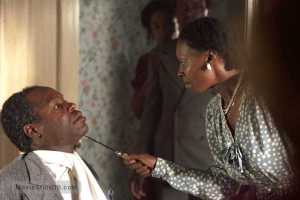
Celie’s Thanksgiving uprising
Finally, in the book, Celie and Mister eventually become friends. Come back with her long-lost kids and the dear sister Nettie he’d banished and “whoop his ass.” I love, love, love the film, but all of this was erased from book to script. I discovered all of this in my solitude.
The Color Purple was originally written as Celie’s prayers, the way she escaped the hell of her existence. In the book, she found this through love. On the paper, we can see that she stops writing to “God” and instead addresses the letters to her sister Nettie, the one who taught her to read (in both versions). The pages, not the movie, clearly reveal this spiritual transformation. Celie continues to write to Nettie, not knowing anything of her fate, only having found the old letters Mister had stashed away for years. Their love was so strong that in her solitude, writing the letters brought her peace. Curate writing activities that bring you peace.

The revised book cover following the film’s success
Do you keep a journal, dabble in poetry, admire the prose in your head? Set aside time as a family for writing and reading. Experience solitude together. Share your work. Curate activities that bring you peace. Use this quarantine to strengthen your capacity to love.
Share this:


A $40 tip at the all-day-breakfast joint (A Prose about this American moment). #BlackenAsiaWithLove

1st Sunday 2020 Sunrise over Lake Jordan, Alabama
It’s 6:20am.
I’ve stopped by an infamous breakfast food chain and ordered a bottomless coffee, and a breakfast combo that comes with two fried eggs, two different rations of fried pork and bottomless pancakes.
Waiting for my order, I notice that not less than four varieties of syrup rest on the table, accompanied by salt, pepper, and a ceramic cup full of packages of sugar and two varieties of artificial sweeteners.
A whole tub of single-serve full fat creamers comes with my bottomless coffee, which I promptly sent back.
The young lady serving is massively obese, as are most of the other people who both serve and patronize this business.
And this is business as usual throughout the south, and now most of America, particularly at these sorts of times, especially in these sorts of businesses.
The joint had only been open since the top of the hour, and so I could overhear the duty manager dealing out the day’s duty rations.
As two of the team followed her around, I heard her explain that she was reserving the spillover seating section for whoever showed up “super-late.”
Knowing management speak, I heard ‘super-late’ as a shaming label used to monitor and control behavior.
I heard her punctuate these instructions by explaining that someone’s shift had started at 5:30 yet they still hadn’t shown up.
“You ok, sweetie,” the young lady breezes over and asks me casually.
“I’m fine,” I quickly replied, adding: “It’s good, too,” as if she or the cook had actually hand-made any of this meal.
They’ve each opened a prescribed set of processed-food packages, followed heavily prescribed recipes, and followed heavily prescribed orders passed down from management.
And yet I do appreciate their labour.
In my capacity, I get to sit and muse about them, while THIS is their career.
Yesterday, while sitting in another infamously southern* roadside-mass-food-chain, my uncle mentioned that he was pleased to see that young people were working at these types of places again.
“Uh huh,” I hummed agreeingly as I panned the restaurant noting the youthfulness of the staff.
Since the 90’s and certainly since the recession, these jobs had become life-long career moves, where previously these were held down by early-career part-timers.
Whether paying their way through school or training, or beefing their resumes for eventual factory employment, these part-timer jobs weren’t suitable for adults as they come with few, if any, benefits…most notably, healthcare.
This satellite town, for example, sits just outside the seat of Civil Rights and grew during Jim Crow around a large paper mill that one can still smell miles away.
Back in my bottomless breakfast, my server keeps inquiring if I’m ok as she goes about setting up the condiments and flatware for each table.
I’m the only one here, which I remark upon.
This is the south, so that remark garnered a whole commentary on her part.
She detailed when they opened and closed, and that she’d recently shifted from the nightshift to mornings, as “making $10 here and $10 there don’t cut it.”
She then added that she’d served a party of 15 who’d left her a $40 tip.
She further explained that last year she’d served at a 1-year old’s birthday party, “because they didn’t have no cake.”
By now, I’ve gotten a good look at the server and sense that she’s in her mid-twenties.
As I listen, I, of course, contemplate what sort of tip I should leave: Would it be obscene to leave a $10 tip which I could easily afford. Afterall, I had shown up in what must seem like a large, expensive, exotic European vehicle (how could she know it’s my mom’s not mine; how would she know that I’m just passing through town).
This year, she continued, they had her “second birthday party right back there,” pointing to a far corner.
Remember, all I did to kick off this conversation was remark how quiet it was at this time in the morning.
From then on, the server kept offering me little tidbits of info each time she passed by.
I hadn’t lived in the south for many years, but it was still this sort of human interaction that drummed-up home for me.
“I’m gonna go ahead and do my syrups,” she quipped as she passed each table over lightly with a dry cloth.
Then, after passing to reassure me that my next helping of pancakes was on its way, she explained that the location was under new management.
Pointing to the woman I’d overheard earlier dealing out duties and instructions, the server said, “This one’s only been here since Sunday.”
It’s Tuesday morning.
Now, I notice that the server has leaned against a nearby chair, pausing with her other hand on her hip.
It’s as if settling in to tell me a good story. She is now giving me unsolicited insider information.
I start to realize and remember just how such interactions are so disarming. She had something to say each time she was within earshot, as if mindfully managing our shared personal space.
I smile at this realization, recalling the familiarity with which people speak in Vietnam. The distance of more formal ways of being and communicating seem silly here…and there.
I am simultaneously reminded of life in Mali, where people genuinely do greet anyone nearby, referring to those in their personal space with some term of familial familiarity depending on the relationship and perceived ages like auntie/uncle, or else girl/boy-friend (teri- muso/ce), big/little- sister/brother (koro-/dogo- muso/ce).
It’s as if all of these experiences collide into the present moment, and I experience them all at once, like Dr. Manhattan.
The server then explained in detail how the previous manager had fallen ill and could therefore only show up intermittently.
Apparently, the point of all this was that they were hiring a manager, and sought someone outside the current team, because, as my server said, “We all know one another.”
“Don’t that make sense,” she said raising her brow, nodding grinningly.
“So, if you know anybody with management experience,” she said, then tailored off.
I suddenly wonder what Flannery O’Conner must have witnessed in her life and times in the dirty south.
I was on my way to grab a coffee at THAT internationally known coffee house, but passed this all-day-breakfast joint on the way.
I recalled the bottomless offers here and knew I could get more value here than a $5 Latte. Sure, I’ve got country music in the background, but at least it’s not tuned to conservative propaganda Faux News like in most other public spaces here in Alabama.
Indeed, for just a few dollars more, I’ve got access to bottomless filtered coffee and well more than any human should eat in any one sitting.
Besides, no one is in here posing, and, as I said, I got a side of free companionship.
—
*Infamously southern food consists of mostly fried foods negotiated in ingredients and meaning along the color line.
Share this:

A Love Letter: in praise of Agatha Christie

For most of my life, I have been an avid reader of all types of books. As my family will confirm, from childhood, I was never without a book. As an adult, I have regularly selected coats with large pockets and bags purely on the basis that they can hold a book. As many students will attest, my answer to most academic questions is “read, read and read some more”. Despite the growth of the internet and other media, which as @drkukustr8talk has noted recently, diverts and subverts our attention and concentration, reading remains my first and truest love.
This, my third ‘Love Letter’, focuses on my favourite author, above all others, Agatha Christie. I have previously dedicated ‘Love Letters’ to poetry, and art. Both of these forms took a long time for me to develop my understanding of and my love for. This ‘Love Letter’ is slightly different.
I first discovered Christie’s novels when I was about 12, since then they have formed a regular backdrop to my life. They act as a comfort blanket when I am tired, stressed, sad or away from home. I have read and reread everything she wrote and know the stories inside and out. Despite my decades of adoration, it remains challenging to know exactly what it is that appeals to me so much about Christie’s novels.
Perhaps it is the symmetry, the fact that for Christie every crime has a solution. Conceivably, given my pacifist tendencies, it could be the absence of explicit violence within her books. Maybe it’s Christie use of stereotypical characters, who turn out to be anything but. You don’t have to look very far to find the oh-so suspicious foreigner, who turns out to be a caring father (Dr Jacob Tanois) or the shell-shocked former military man trained in violence, who metamorphosises into a rather lonely man, who suffers from epilepsy (Alexander Cust). In all these cases, and many others, Christie plays with the reader’s prejudices, whatever they might be, and with deft sleight of hand, reveals that bias as unfounded.
To be honest, until relatively recently, I did not think much about the above, reading Christie was so much part of my life, that I took it very much for granted. All that changed in 2017, when I spotted a ‘Call for Chapters’
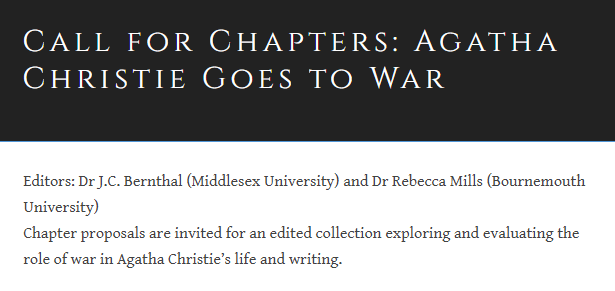
It seemed too good an opportunity to miss, after all I had spent a lifetime reading Christie, not to mention more than a decade studying war and crime. After all, what did I have to lose? I submitted an abstract, with no real expectation that someone who had never studied fiction academically, would be accepted for the volume. After all, who would expect a criminologist to be interested in the fictional writing of a woman who had died over 40 years ago? What could criminology learn from the “golden age” of “whodunnit” fiction?
Much to my surprise the abstract was accepted and I was invited to contribute a chapter. The writing came surprisingly easy, one of very few pieces of writing that I have ever done without angst. Once I got over the hurdle of forcing myself to send my writing to strangers (thank you @manosdaskalou for the positive reassurance and gentle coercion!) , what followed was a thoroughly pleasant experience. From the guidance of the volume’s editors , Drs J. C. Bernthal and Rebecca Mills, to the support from many colleagues, not mention the patience of Michelle (Academic Librarian) who restrained from strangling me whilst trying to teach me the complexities of MLA. Each of these people gave me confidence that I had something different to say, that my thinking and writing was good enough.
Last week, my copy of the book arrived. It was very strange to see my chapter in print, complete with my name and a brief biography. Even more surreal was to read the editors’ introduction and to see my work described therein, with its contribution to the volume identified. I doubt many people will ever read my chapter, it is published in a very expensive academic book destined for academics and libraries. Nevertheless, I have left the tiniest of marks in academic literature and perhaps more importantly, publicly acknowledged my love for the writing of Agatha Christie.
The finished article:
Bowles, Paula, (2020), ‘Christie’s Wartime Hero: Peacetime Killer’ in Rebecca Mills and J. C. Bernthal, Agatha Christie Goes to War, (Abingdon: Routledge): 28-45
Share this:


Things I used to could do without a phone. #BlackenAsiaWithLove
A Spoken Word poem for young people everywhere, esp Youth in Asia, who may never know WE LIVED before smartphones…and live to tell about it.
Walk.
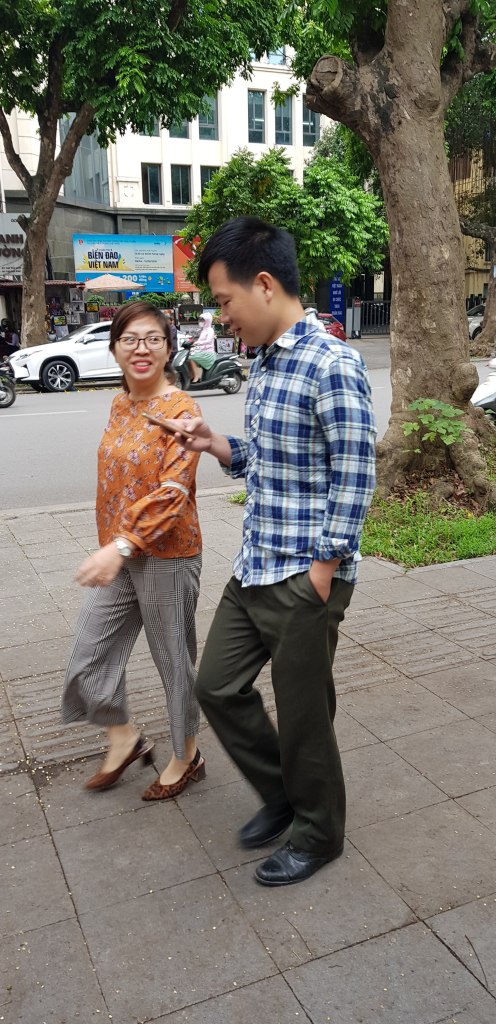
Walk down the street.
Find my way.
Go someplace.
Go someplace I had previously been.
Go someplace I had previously not been.
Meet.
Meet friends.
Meet friends at a specific time and place.
Meet new people.
Meet new people without suspicion.
Strike up a conversation with a stranger.
Make myself known to a previously unknown person.
Now, everything and everyone unknown is literally described as ‘weird’.
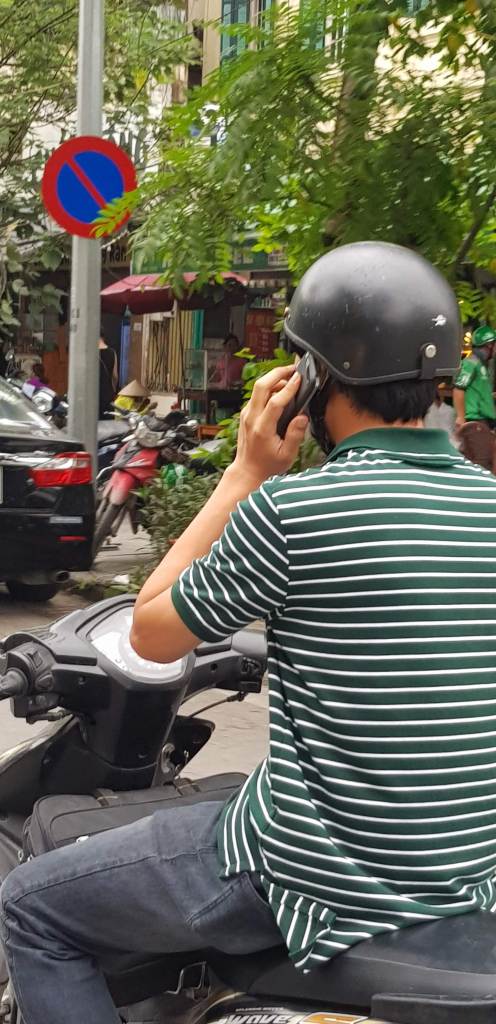
Eat.
Eat in a restaurant by myself.
Pay attention to the waiter.
Wait for my order to arrive.
Sit.
Sit alone.
Sit with others.
Listen.
Listen to the sound of silence.
Listen to music.
Listen to a whole album.
Listen to the cityscape.
Overhear others’ conversations in public.
Watch kids play.
Shop.
Share.
Share pictures.
Take pictures.
Develop pictures.
Frame pictures.
See the same picture in the same spot.
Read.
Read a book.
Read a long article.
Read liner notes.
Pee.
I used to be able to stand at a urinal and focus on what I was doing,
Not feeling bored,
Not feeling the need to respond to anything that urgently.
Nothing could be so urgent that I could not, as the Brits say, ‘take a wee’.
Wait.
Wait at a traffic light.
Wait for a friend at a pre-determined place and time.
Wait for my turn.
Wait for a meal I ordered to arrive.
Wait in an office for my appointment.
Wait in line.
Wait for anything!
I used to appreciate the downtime of waiting.
Now waiting fuels FOMO.
I used to enjoy people watching…
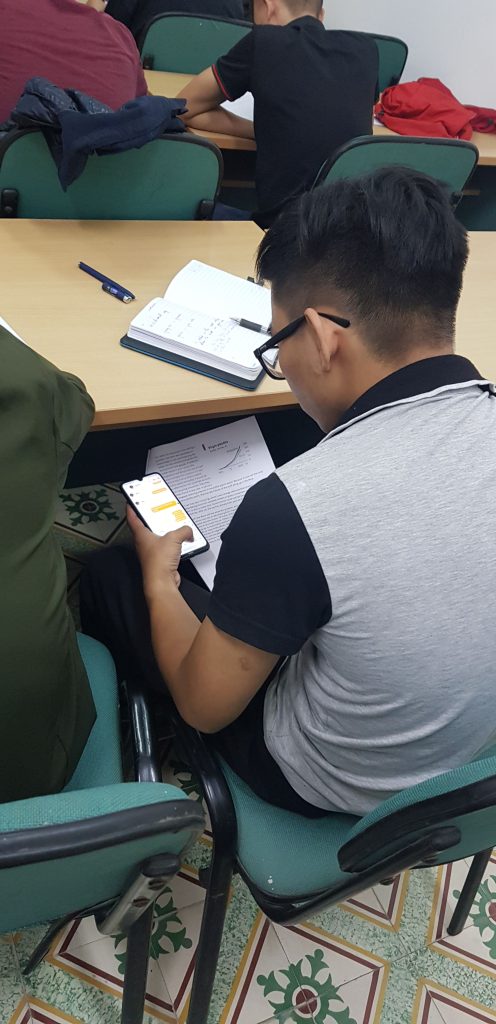
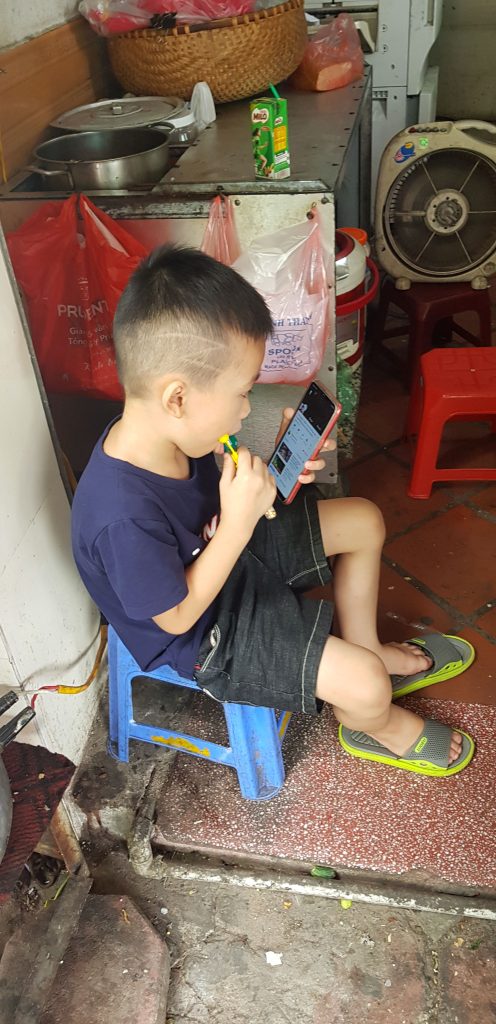
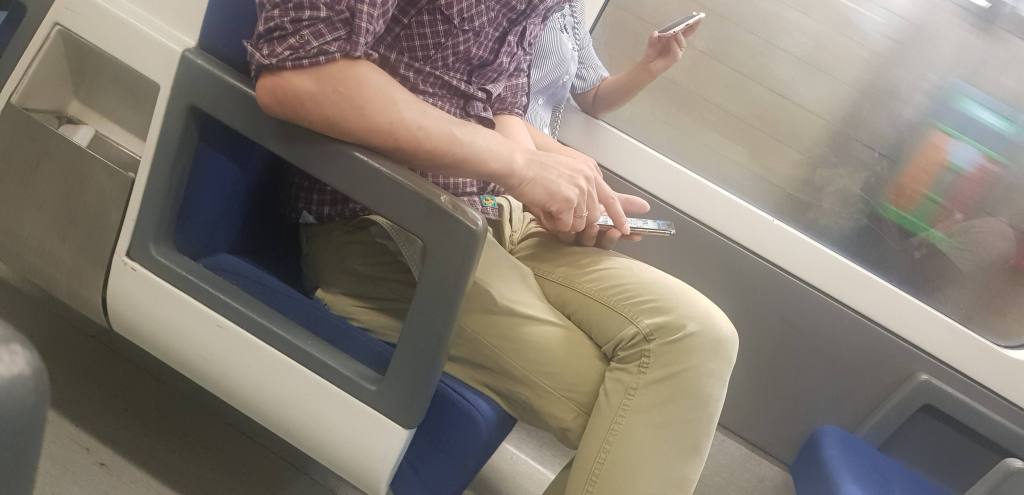
Now I just watch people on their phones.
It’s genuine anxiety.
Walk.
Walk from point A to B.
I used to could walk between two known points without having to mark the moment with a post.
Now I can’t walk down the hall,
Or through the house or even to the toilet without checking my phone.
I avoid eye contact with strangers.
Anyone I don’t already know is strange.
I used to could muscle through this awkwardness.
Talk.
Have a conversation.
A friend and I recently lamented about how you used to could have a conversation and
Even figure out a specific thing that you couldn’t immediately recall…
Just by talking.
I also appreciate the examples we discussed.
Say you wanted to mention a world leader but couldn’t immediately remember their name. What would you do before?
Rattle off the few facts you could recall and in so doing you’d jog your memory.
Who was the 43rd US president?
If you didn’t immediately recall his name,
You might have recalled that the current one is often called “45” since
Many folks avoid calling his name.
You know Obama was before him, therefore he must’ve been number “44.”
You know Obama inherited a crap economy and several unjust wars,
Including the cultural war against Islam. And
That this was even one of the coded racial slurs used against him: “A Muslim.”
Putting these facts together,
You’d quickly arrive at Dubya! And
His whole warmongering cabinet. And
Condi Rice. And
General Powell’s botched PowerPoint presentation at the UN. And
Big dick Cheney, Halliburton and that fool shooting his friend while hunting.
That whole process might have taken a full minute,
But so would pulling up 43’s name on the Google.
This way, however, you haven’t lost the flow of conversation nor the productive energy produced between two people when they talk.
(It’s called ‘limbic resonance’, BTW).
Yeah, I used to be able to recall things…
Many more things about the world without my mobile phone.

Wonder.
Allow my mind to wander.
Entertain myself with my own thoughts.
Think.
Think new things.
Think differently just by thinking through a topic.
I used to know things.
Know answers that weren’t presented to me as search results.
I used to trust my own knowledge.
I used to be able to be present, enjoying my own company,
Appreciating the wisdom that comes with the mental downtime.
Never the fear of missing out,
Allowing myself time to reflect.
It is in reflection that wisdom is born.
Now, most of us just spend our time simply doing:
Surfing, scrolling, liking, dissing, posting, sharing and the like.
Even on a wondrous occasion, many of us would rather be on our phones.
Not just sharing the wonderful occasion –
Watching an insanely beautiful landscape through our tiny screens,
Phubbing the people we’re actually with,
Reducing a wondrous experience to a well-crafted selfie –
But just making sure we’re not missing out on something rather mundane happening back home.
I used to could be in the world.
Now, I’m just in cyberspace.
I used to be wiser.
Share this:


You can’t tell me what to do….
It seems that much criminological discussion centres on motivation. This ranges from focusing on the motivation to commit crime, the motivation to report victimisation, the motivation to work within the criminal justice system, all the way though to the motivation for punishment. In each of these circumstances, much is taken for granted, assumed and reacted to as if there were a consensus.
However, how much do we really know about motivation? To be sure, there are plenty of criminological theories focusing on individual explanations for criminality and deviance, particularly around psychopathy, personality and biology. Others, such as Classical theory assume that we are all the same, rational creatures motivated by the same factors. But take a moment and consider what motivates you? Are those factors positive or negative?
Let’s take the prison for example. According to some politicians, the media and other commentators, incarceration can punish and rehabilitate, frighten people out of crime whilst also empowering them to move away from crime. It offers an opportunity to desist from drug taking, whilst simultaneously enabling prisoners to develop a drug habit. Prison can offer a haven from social problems on the outside, whilst also creating a dangerous environment on the inside and these are just a few of the many pronouncements on the prison. Although oppositional, these differing narratives all indicate the prison as a place of change; transformation, the only difference is whether this is positive or negative, in essence does prison make people better or worse?
Considering much of the blog’s readership is focused on education, it might be useful to apply the prison experience to our own personal motivations. Would it be helpful to have someone constantly telling you what to do? Escorting you to and from the toilet, the classroom, the workplace? Controlling your every move? Deciding when and what you eat? Determining if you can access a shower, the library, the gym and so on? Passing judgement on who can visit you and when they can come? Would these “motivational” factors inspire you to study more? What if you were locked in a very small room (think student accommodation) for hour upon end, would your essays be any better?
For me personally, all of the above, would not motivate; they might frighten or even terrify me. They would allow me to feel resentful, bitter, alienated, perhaps even aggressive. Maybe I would become depressed, self-harm, or turn to drugs for consolation. Maybe, I could retreat into studying as release from an oppressive regime, but is that motivation? or escapism? or even institutionalisation?
I wonder, surely there must be far better, less harmful ways of tapping into motivation? By looking at our own experiences and considering what has motivated us in a positive way previously, we can begin to consider how we might motivate ourselves and others. Some of the motivational factors I can identify from my own life include, people who are prepared to listen to my ideas (good and bad) without interrupting, to guide (but not tell, never tell!) me to finding solutions to problems and to treat me with dignity and respect. Other examples, include introducing me to important literature, but not batting an eyelid when I excitedly tell them all about the content. Being there for me as a fellow human regardless of status (perceived or otherwise), when everything is a challenge, and I just want to vent and celebrating all successes (however tiny). These are just a few, personal reflections, but what they have in common, is the focus on another human who matters to you, who is cheering you on from the side-lines and is able to empathise and encourage. The other commonality, of course, is that these factors are not entrenched within the prison or the wider criminal justice system.[1]
Have a think for yourself and see if you can find anything currently within the prison or CJS that would motivate you! If it doesn’t, you need to question what it is the prison is actually trying to achieve.
[1] This does not preclude individual positive interpersonal relationships within the prison or CJS, but it is not a primary function of either.
Share this:


Are you faking it? : Impostor Syndrome in Academia

Bethany Davies is an Associate Lecturer teaching modules in the first year.
I really enjoyed my time at university but for me it felt almost like I’d got in by some whim of luck, I worked hard to get there but I still felt as though I had got in by chance. Which meant by I had even started; I feared others would think that too and I would become exposed. I’d picture that in class everyone would know something about a really important event in history that I was ignorant to not have heard of. I remember wishing there was a documentary I could watch or a book I could read that gave a brief summary of everything that was meant to be important so I could at least have a basic knowledge of everything and maybe I could fake the rest.
Impostor syndrome doesn’t go away, it evolves and alters and that doesn’t mean it necessarily grows or decreases in time. But rather it just seems like an annoying person sat in the back of hall that occasionally shouts loud enough that you can hear it.
I think it’s important to talk about it, I’m not even sure what it could be regarded as, I don’t believe it be a disease or a form of anxiety but rather something just in its own class that to a degree I like to think everybody has. It doesn’t have to ruin your university experience, it didn’t ruin mine, but it was certainly a part of it, almost like a step in the process; go to lectures, deal with the feeling that I’m pretending I belong there, go home, revise.
I had really only became aware of it properly further in my studies and it continues when working in academia. The labels of what degree you have or what level you are and how many certificates you have can give you the confidence you need to overcome this, but it can also feed it.
There will be students starting University in the next few weeks who already feel like this, asking questions of themselves or even dreading having to talk in lectures in case they reveal what they most fear – that they are a fake and do not actually know what they think they should know by now. There will be others submitting essays or dissertations who think they have got to where they are by pure luck and chance and that this is the time where it might be made public that they are not worthy of their previous grades. There are individuals who are considered as ‘Experts’ on a particular subject by everyone but themselves as they feel the area is so vast that even they are at the basics of the subject.
Even when I received high grades, or was given positive feedback, it didn’t silence the thoughts that I somehow didn’t earn them. From graduation to working in academia, I thought that would be it, I would prove to myself that I knew enough and that I wasn’t an impostor. To an extent, it did help, mainly because I didn’t have to prove myself in an essay or a test anymore. But I still think it’s there, because I know there is always another step when you are in academia, you can keep going forever and you’ll never truly be done.
If that sounds familiar, it is something you can take some comfort in the number of others with the same feelings. It should give you comfort because it shows the inaccuracy in those intrusive thoughts, as surely, we can’t all be faking it and impostors in our academic journeys? And if we are… then there isn’t really a problem either.
I’m not a psychologist nor would I be so impostorous to claim to be (do you like what I did there?) but I think we all know that the negative things we say about ourselves are not true, but they are a way to stop ourselves from doing something out of our comfort zone, which in itself is subjective – but that’s starting a philosophical ramble.
This blog post isn’t to make you overly aware of your fears nor do you have to address them right now. But rather, my intention is letting students know you are not alone, it doesn’t go away but it can get better if you separate how you think you feel about yourself from the reality of what you are achieving whether that be good feedback or even achieving a degree. The same way as receiving negative feedback, should not reaffirm your fears. Learn to accept that you will never know everything and that it’s okay to not know something even if everyone makes you feel like you should. Be kind to yourself in your studies, otherwise you might forget to enjoy the process of learning.
Share this:


How to prepare for a year in University

In our society consumerism seems to rain supreme. We can buy stuff to make us feel better and we can buy more stuff to express our feeling to others and mark almost most events around us. Retail and especially all the shops have long been aware of this and so they have developed their seasonal material. These seasonal promotions may have become consumer events now although they do signify something incredibly important to culture and our collective consciousness. There is time for Christmas decorations and festive foods, Easter time and chocolate eggs, mother’s day and nauseating cards father’s day for equally grinchworthy cards. There is valentine’s day to say I love you in full fat chocolates, Halloween to give little kids rotten teeth and a red poppy to remember some of our dead. To those add the summer season with the disposable BBQs and of course the back to school season!
The back to school is one of the interesting ones. Geared to prepare pupils and parents for going back to school and plan ahead. From ordering the uniforms to getting all the stationery and books required. I remember this time of the year with some rather mixed emotions. It was the end of my summer holidays, but it was also the time to get back to school. Until one day I finished school and I went to university. Education is seen as part of a continuous process that we are actively involved from the first day at school to the last day in high school and more recently for more people also involve the first day of going to university. Every year is more challenging than the next, but we move up and continue. For those of us who enjoy education we continue the journey further to further or high education.
There is something to said about the preparation process coming to University; it is interesting seeing advertisements on education this time of the year on the tv and social media promoting stuff for this transition; from the got to have smartphone to the best laptop, the fastest printer scanner all in one thingy to the greatest sound system and many more stuff that would get you ready for the year ahead. Do they really help us out and if not, what do we got to do to prepare for coming to university?
Unfortunately, there is no standard formula here but there is a reason for that. Higher education is adult education. This is the first time in our educational journey that we are sitting firmly on the driving seat. We choose to study (or ought to) what we wish to study. It is an incredibly liberating process to have choice. This however is only the beginning. We make plans of our time. In higher education the bulk of the time required is independent study, and as such we got to negotiate how we will plan our time. We got to decide which reading we are going to do first which notes to read what seminar we shall prepare and what assignment we will make a draft of.
There will be days spent in the library looking for a book, days in a coffee shop talking to fellow students about the seminar reading, days in the learning hub working on an assignment. There are highs, lows and everything in between. But regardless of the emotion at every stage thee will be a sense of ownership of knowledge.
In the first couple of sessions, the bulk of the students keep quiet expecting the correct answer to be given. One interpretation or one truth that describes all. It takes a few times before the realisation emerges that the way we analyse, and project knowledge can be different provided we go through the same processes of scrutiny and analysis. Then conversation emerges and the more reading the better the quality of the ideas that shall emerge.
The first year at University is definitely a declaration of independence and the realisation that we all have a voice. Getting on to the road on empowerment. This is a long journey, and on occasions arduous but incredibly rewarding because it leads to an insight greater than before that removes ignorance and lifts the veil of the unfamiliar.
To our newest students – Welcome to the University and to our returning 2 and 3 years – Welcome back!

 Thoughts from the criminology team