
Home » Violence (Page 5)
Category Archives: Violence

Looking in all the wrong places and finding no answers
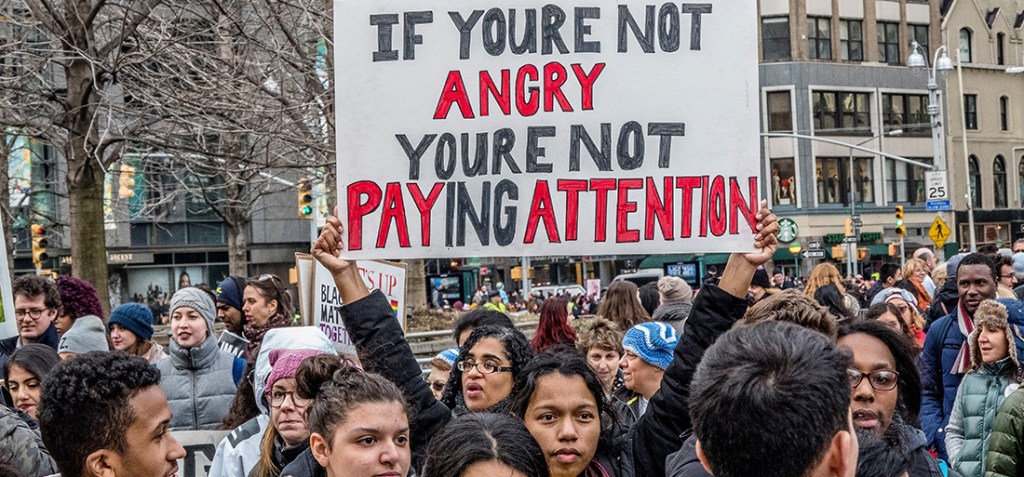
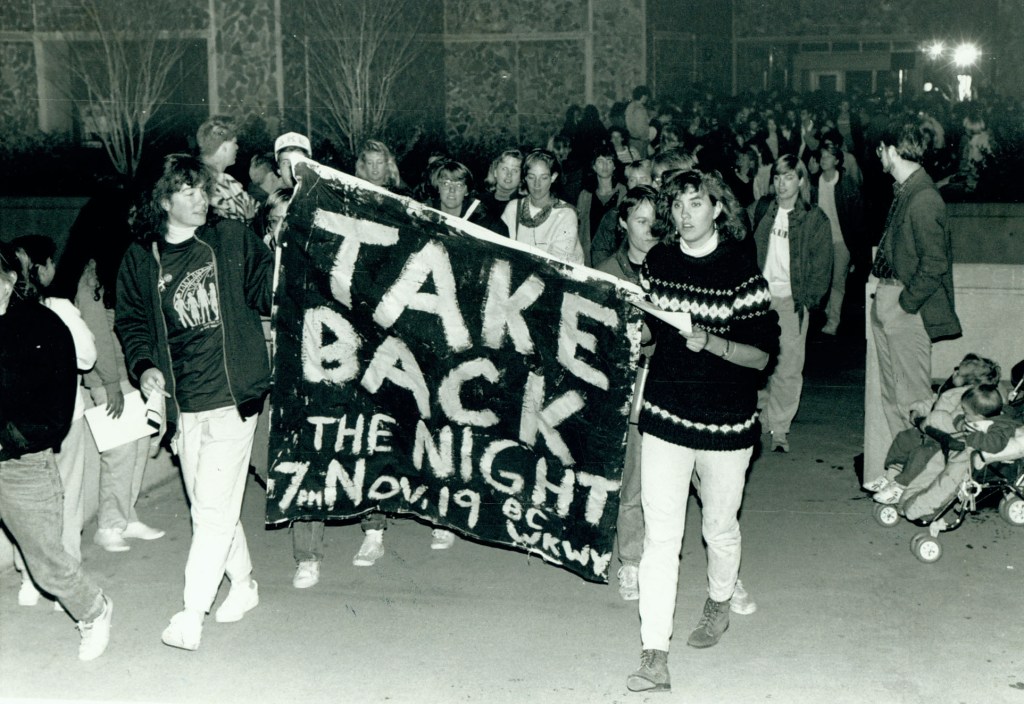
Recently we saw the killer of Sarah Everard receive a whole life sentence for her murder and with the sentence came the usual rhetoric from the politicians and media alike. I could tell you how I feel as a former police officer, but I just don’t think that really matters, others have said it but what they say, undoubtedly with conviction, seems rather hollow. What matters is that another life has been taken as a result of male violence, not just violence, male violence. I don’t disagree with those that want to make the streets safe for women, reclaim the streets, I don’t disagree with the ‘me too movement’, but somehow, I feel that the fundamental issue is being missed. Somehow, I think that all the rhetoric and calls for action concentrate too much on women as victims and looking for someone or some organisation to blame. There seems to be a sense created that this is a problem for women and in doing so concentrates on the symptoms rather than the cause. This is a problem for men and our society. Let’s not dress it up, pretend it could be something else, use terms like ‘not all men’, it is a fact nearly all violence, whether that be against women or men is perpetrated by … you guessed it, men.
I was watching a tv programme the other day about migraines and as it transpires there are millions of migraine sufferers around the world, most are women. It seems as a man I’m in the minority. One of the interviewees, a professor was asked why so little had been done in terms of research and finding a cure. He was frank, if it had been a male problem then there would have been more done. I’m not sure I totally subscribe to that because there are lots of other factors, after all prostate cancer a major cause of male deaths seems to have received comparatively little coverage until recently. But he made me think, if men, particularly those of influence accepted there was a problem would they be inclined to act? We call for more females in policing, we call for more females in the boardroom, predominately because we want to make things look a little fairer, a bit more even. We still have a massive gender pay gap in so many businesses and the public sector, we still have accusations and proven cases of sexual harassment. We still have archaic attitudes to women in so many walks of life, including religion. Words are great, useless but great. If you own the problem, you find solutions, men don’t own the problem and that is a problem.
So, it seems to me, that we are looking in the wrong place. Removing Cressida Dick as the head of the Metropolitan Police service isn’t going to change things. Blaming the police as an organisation isn’t going to change things. Look around you, look at all the scandals, all the sexual offences against women, against children. Look at where the perpetrators are placed in society, in positions of trust, as members of a variety of organisations, organisations that traditionally we thought we could turn to in our need. And look at the gender of those that commit those crimes, almost always men.
The solution to all of this is beyond me. As a criminologist I know of so many theories about why people commit crime or are victims of crime. Some are a little ridiculous but are a product of their time, others fit quite nicely into different circumstances, but none fully explain why. There are no real certainties and predicting who and where is almost impossible. Somehow, we need our leaders, predominately men, to grasp the mettle, to accept this a problem for men. If we owned the problem, we might start to tackle the causes of male violence, whatever they might be. Maybe then we might start to address the symptoms, society will be a safer place, and nobody will need to reclaim the streets.
https://www.theloquitur.com/get-educated-and-be-aware-sexual-assault-will-affect-your-life/
Share this:

Organisational reputation: A euphemism for institutional corruption and violence
The Independent Inquiry into Child Sexual Abuse published a damming report regarding child protection in religious organisations and settings. One of the findings was that ‘In many cases, concerns about external involvement are connected to a desire to protect the reputation of a religious organisation’. Of course, there are many other issues highlighted in the report, but I wanted to concentrate on this notion of protecting organisational reputation. When I hear the phrase ‘organisational reputation’ my blood generally runs cold because I know that behind these words lay a multitude of sins.
Companies and public sector bodies have policies that are designed, at least in part to protect organisational reputation. The rationale behind these policies often lacks transparency. It might be that the protection of the organisation’s reputation ensures it maintains its customer or client base, an enhanced reputation sees more customers or clients, a poor reputation might see this dwindle, to the detriment of the organisation and ultimately to the detriment of its employees and owners. It is difficult to recover from a poor reputation and in the case of business, this is sometimes catastrophic.
However, behind the notions of organisational reputation and policies lays a multi-layer of complex organisational and human behaviours which ultimately lead to institutional corruption and violence. Things will go wrong in organisations, whether that be as a result of human behaviour such as poor decision making or illegal activity or as a result of system failure, such as the failure of software or hardware. Any of these failures might harm the reputation of the organisation and herein lies the nub of the matter. When there are failures, because of organisational culture, which often finds its basis in finding someone to blame, there is a propensity to try to keep the issues ‘in house’, to protect the organisation. By doing so, managers and those in charge ensure that they are not scrutinised regarding the failure, be that individual failures, failures of policies or failures of systems and processes. So, the organisational reputation is not necessarily about protecting the organisation, it is more about avoiding scrutiny of those individuals in power. The mention of organisational reputation in policies and processes has another effect, it silences employees. Whistle blowing policies are subjugated to notions of organisational reputation and as a result silence is maintained for fear of some form of informal sanction. The maintenance of silence ensures organisational reputation, but this corruption also ensures continued institutional violence and corrupt practices. The longer it continues the more those in power have a vested interest in ensuring that the issues are not addressed, lest they are uncovered as offenders through their inaction. ‘We are all in this together’ takes on a new meaning. Thus, corrupt or criminal practices simply continue.
And if the wrongdoing is uncovered, becomes public, then the first reaction is to find a scapegoat thus avoiding the scrutiny of those in power. Rarely in these inquiries do we find that those put in the dock are the managing directors, the chief constables, the heads of children’s services, the archbishops or politicians. Rarely do we see those that caused the problem through inadequate or unworkable policies or strategies or working conditions are ever brought to book. Often its simply portrayed as one or two bad apples in the organisation. Thus, organisational reputation is maintained by further institutional violence perpetrated against the employee. That is not to say that in some cases, the employee should not be brought to book, but rarely should they be standing in the dock on their own.
For ‘organisational reputation, just read institutional corruption and violence.
Share this:


‘White Women, Race Matters’: The White Man’s Burden
This post in-part takes its name from a book by the late Whiteness Studies academic Ruth Frankenberg (1993) and is the final of three that will discuss Whiteness, women, and racism.
Chapter III: Your Problem but not Your Problem
Despite women’s investment in football, at least socially, in terms of Women’s Football (much better than the men’s game in my opinion), it was interesting to observe the reactions of White men that positioned themselves as progressives when I challenged the national response to racism in the game. When we realise that ‘football hooligans’ all have jobs across sector, I would bring people to consider this is not just a working-class issue, as football is a game that transcends socioeconomic lines. This post isn’t necessarily about the violence White women have commited against me but is certainly their problem, and they could have a deciding voice of how White men act at football matches. When we consider racial hiearchies, I am reminded of the gendered components of colonialism where White men are at the top of that hierachy followed by the White woman. In spite of White women’s complicity in those histories of racism (Ware, 1992), logic dictates that White women’s privilege will have some sway when White men act in hostility to people of colour. That said, still today I find White women all too happy to take on misogyny / patriarchy but not racism / White supremacy. In this blog, I will start with a Twitter encounter where I dared to say there isn’t a “racism-in-football-problem” but a more societal issue of White supremacy. Until we start thinking about White supremacy as a political system, just as women have done patriarchy (DeBeavoir, 1949; Friedan, 1963; Davis, 1981; hooks, 1991; Adichie, 2014) and others have done class (Marx and Engles, 1848; Chomsky, 1999; Tom Nicholas, 2020), we will never solve this racism issue.
When I challenged the concept of “racism in football” in July 2021, a local BBC journalist claimed I could make it both about ‘racism in football’ and in society. The problem with this is, dominant media discourses have already stitched it all up by relegating racism to specific spaces somewhat divorced from a global system of violence. At this time as well, I saw the term ‘football hooliganism’ being used as double talk for ‘working-class thuggery’. However, to understand how football got to where it is today, we need to know how football was not originally made by the working-class.
Much alike my favourite sport cricket (Tre Ventour Ed, 2021), football started as a sport for characteristically ‘English gentlemen’. It was made for the rich by the rich to really celebrate themselves. Their game by their rules. When the working-class started to advocate for players playing for money, in its day (so the late nineteenth century), it was thought controversial. Yet, the rich controlled the boards and they could afford to play for free, taking days off for matches. The proleterians could not. Here, then you see that it came down to money, where a game made by the wealthy for them and their friends was then changed forever by working people, no less than mill and factoryworkers.

Actions that society most associates with the working-class majority today – including public fights, vandalism, brawls, and riotting in Britain are not new phenomena but has a long history going back to even before 1900 uncoincidentally coinciding with the construction of London Metropolitan Police Service in 1829 (Storch, 1975). Following the signing of the Armistice in November 1918, for example, so-called ‘race riots’ took place in no fewer than nine port communities between January and August 1919 (Jenkinson, 1996: 92). However, media footage and pictures of British riots before the Second World War have rarely been seen by the public but “…individual memories of civil disorder [in those days were] surprisingly widespread” and when riotting did happen, “governments often denied they had, and censored the newsreel pictures” (Forbidden Britain). Historically speaking, these uprisings grew out of a response to state-sanctioned violence frequently mass unemployment and poverty. Under the threat of poverty, homelessness, or even death, groups will attack shops and other structures to acquire food where “the turbulence of the colliers is, of course, to be accounted for by something more elementary than politics: it was the instinctive reaction of virility to hunger” (Ashton and Sykes, 1967: 131). Yet, the male violence that occured at the England v Italy Euro finale football match in London July 2021 has a precedent going back to the days of Walter Tull where his biographer historian Phil Vasili writes:
“In 1919, working-class Britain was in a rebellious state. Whether the war created the mood of revolt among workers – sometimes taking a horribly distorted and misguided form as we saw with the race riots – or merely speeded up the process that had been years in fermentation, is not for debate here. The fact is it happened. Families, individuals, veterans were changed by the war, including Tull, his eagerness to enlist souring to a hatred for carnage.”
Vasili, 2010: 229
On the morning of the final, I saw evidence of local Northamptonians heading to the pubs to get their fill as early as 8AM before the game that evening at 8PM (@cllrjameshill). In London, however, White (let’s be honest of course dominantly heterosexual cisgendered) patriarchal violence, was in full swing on Leicester Square, described as a “fanzone for thousands of England fans” before even two o’clock. Furthermore, according to Hutchinson (1975), “riots, unruly behaviour, violence, assault and vandalism, appear to have been a well-established, but not necessarily dominant pattern of crowd behaviour at football matches, at least from the 1870s” (p11). Whilst football today has united people across racial and class lines, many Black men of my dad’s generation (born 1971) would not find themselves anywhere near a match when they were my age or even as teenagers purely for the fact that these crowds were frequently racist and the risk of violence was significant. Today, while racism in football is largely in response to the actions of White people against Black players, there is a further history of White racism against Black fans too.
As I do not doubt that there is racism in women’s football (there is racism at every level of society), I wonder why women’s sports (especially football) is not associated with violence. Heck, other men’s sports do not have these connotations attached. We do not see it in cricket, nor do we see it in rugby to these extremes or tennis. Looking at the conversations in what happened following the game, it seemed to me that people were trying so hard to divorce this male violence from the rest of society, as if it is only specific to football. I would argue this is Britain’s soul, an unfiltered and grandiose example of the gendered racial privilege that comes with being a White man in the UK. It is very easy to stigmatise the working-class in this instance and call them “thugs”, but when we know football unites across class divides, it would do us well to consider how lots of the perpetrators were also probably middle-class as well, with jobs that permeate every level of British society: from accounting to education to sports, unions and more. That while it is incredibly easy to scapegoat them as there are histories of working-class responding with riots against state violence (no less than sports riots), we must think about how for some reason, football in particular, turns lots of men feral.
I was talking to one family member who claimed this is where men get to claim their base instincts, that violence seems to come naturally. I would need to think more on this, but it must be said that many social settings condition violence out of us, from school to the workplace. Even so, that in schools violence is punished, many students (especially boys) being placed pupil referral units. Whilst society brutalises in many ways, the pugilistic scenes we are witness to at football matches is one that is considered unsavoury by most. Men gathering together at the football … does this flick a switch? In the late nineteenth century, polymath Gustave LeBon writes about what he called “the collective mind” (1896: 2) whilst another scholar later states “the natural crowd is the open crowd; there are no limits … it does not recognise houses, doors, or locks and those that shut themselves in are suspect” (Canetti, 1962: 16). Football matches may be an apt site to discuss what the psychology profession now calls ‘crowd theory’ which was further developed on by psychologist Neil Smelser analysing the American ‘race riots’ in the first half of the last century (1962: 253, 260-61).
In my last post, I talked about ‘Karen’ in relation to racist middle-aged White women that harrass Black people minding their business. Yet, one does not see White women congregating like this together in mass as instigators of violence, where if at all in my experience violence from White women has been more individualistic or covert. Though, if women friends/colleagues disagree and know more, I’m happy to be put right from their personal experience (and do more reading). Rioting, however, is frequently often hypermasculine (Gary Younge in: DDN, 2020) and so is the violence around football. The role of White women in racism can be more insidious but my encounter on Twitter with this White man comes after my many encounters with White men that think they know more than Black people about racism.
Both White men and women are complicit in White supremacy as aggressors and bystanders. To keep this on topic, every time a White woman watches a White man’s racism but stays silent, they are as bad as they are really showing how White supremacy is the symptom and racism is the problem.
Now, you have three entries. Have a think on them.
Reference
Adichie, C.N. (2014) We Should All Be Feminists. London: 4th Estate.
Ashton, T. S., and Sykes, J. (1967). The Coal Industry of the Eighteenth Century. 2nd ed. New York: A. M. Kelley.
Canetti, E. (1962) Crowds and Power. London: Gollancz.
Chomsky, N (1999) Profit over People. New York: Seven Story Press.
Davis, A. (1981) Women, Race, and Class. London: Penguin.
DeBeauvoir, S. (1949) The Second Sex. London: Vintage.
[DDN] Double Down News (2020) Black Lives Matter & The Question of Violence | Gary Younge. YouTube [online].
Forbidden Britain (1994) Riots Episode 3 [via YouTube]. London: BBC 2.
Frankenberg, R. (1993) White Women, Race Matters. MI: University Press.
Friedan, B (1963) The Feminine Mystique. London: Penguin.
hooks, b (1991) All About Love: New Vision. London: HarperCollins.
Hutchinson, J. (1975) Some aspects of football crowds before 1914. In. The Working Class. University of Sussex Conference Report.
Jenkinson, J (1996) The 1919 Riots. In: Panayi, P (ed) Racial Violence in Britain in the Nineteenth and Twentieth Centuries. Leicester: University Press, pp. 92-111.
Le Bon, G (1896) The Crowd: A Study of the Popular Mind. London: T. Fisher Unwin.
Marx, K and Engels, F. (1848/1967) The Communist Manifesto. London: Penguin.
Smelser, N. (1962/2011) Theories of Collective Behaviour. New Orleans, LA: Quid Pro.
Storch, R.D. (1975) The Plague of the Blue Locusts: Police Reform and Popular Resistance in Northern England, 1840–57. International Review of Social History, 20 (1), pp.61-90
Tom Nicholas (2020) Whiteness: WTF? White Privilege and the Invisible Race. YouTube.
Tre Ventour Ed. (2021) 22 Yards of Whiteness: ‘You Don’t Have to be Posh to be Privileged’. YouTube.
Vasili, P. (2010) Walter Tull, (1888-1918), Officer, Footballer: All the Guns in France Couldn’t Wake Me. London: Raw.
Ware, V. (1992/2015) Beyond the Pale: White Women, Racism, and History. London: Verso.
Share this:


The crime of war

a depiction of Troy
Recently after yet another military campaign coming to an end, social media lit all over with opinions about what should and should not have been done as military and civilians are moving out. Who was at fault, and where lies the responsibility with. There are those who see the problem as a matter of logistics something here and now and those who explore the history of conflict and try to explain it. Either side however does not note perhaps the most significant issue; that the continuation of wars and the maintenance of conflict around the world is not a failure of politics, but an international crime that is largely neglected. For context, lets explore this conflict’s origin; 20 years ago one of the wealthiest countries on the planet declared war to one of the poorest; the military operations carried the code name “Enduring Freedom”! perhaps irony is lost on those in positions of power. The war was declared as part of a wider foreign policy by the wealthy country (and its allies) on what was called the “war on terror”. It ostensibly aimed to curtail, and eventually defeat, extremist groups around the world from using violence and oppressing people. Yes, that is right, they used war in order to stop others from using violence.
In criminology, when we talk about violence we have a number of different ways of exploring it; institutional vs interpersonal or from instrumental to reactive. In all situations we anticipate that violence facilitates more violence, and in that way, those experiencing it become trapped in a loop, that when repeated becomes an inescapable reality. War is the king of violence. It uses both proactive and emotional responses that keep combatants locked in a continuous struggle until one of them surrenders. The victory attached to war and the incumbent heroism that it breeds make the violence more destructive. After all through a millennia of warfare humans have perfected the art of war. Who would have thought that Sun Tzu’s principles on using chariots and secret agents would be replaced with stealth bombers and satellites? Clearly war has evolved but not its destructive nature. The aftermath of a war carries numerous challenges. The most significant is the recognition that in all disputes violence has the last word. As we have seen from endless conflicts around the world the transition from war to peace is not as simple as the signing of a treaty. People take longer to adjust, and they carry the effects of war with them even in peace time.
In a war the causes and the motives of a war are different and anyone who studied history at school can attest to these differences. It is a useful tool in the study of war because it breaks down what has been claimed, what was expected, and what was the real reason people engaged in bloody conflict. The violence of war is different kind of violence one that takes individual disputes out and turns people into tribes. When a country prepares for war the patriotic rhetoric is promoted, the army becomes heroic and their engagement with the war an act of duty. This will keep the soldiers engaged and willing to use their weapons even on people that they do not know or have any personal disputes with. Among wealthy countries that can declare wars thousands of miles away this patriotic fervour becomes even more significant because you have to justify to your troops why they have to go so far away to fight. In the service of the war effort, language becomes an accomplice. For example they refrain from using words like murder (which is the unlawful killing of a person) to casualties; instead of talking about people it is replaced with combatants and non-combatants, excessive violence (or even torture) is renamed as an escalation of the situation. Maybe the worst of all is the way the aftermath of the war is reflected. In the US after the war in Vietnam there was a general opposition to war. Even some of the media claimed “never again” but 10 year after its end Hollywood was making movies glorifying the war and retelling a different rendition of events.
Of course the obvious criminological question to be asked is “why is war still permitted to happen”? The end of the second world war saw the formation of the United Nations and principles on Human Rights that should block any attempt for individual countries to go to war. This however has not happened. There are several reasons for that; the industry of war. Almost all developed countries in the world have a military industry that produces weapons. As an industry it is one of the highest grossing; Selling and buying arms is definitely big business. The UK for example spends more for its defence than it spends for the environment or for education. War is binary there is a victor and the defeated. If a politician banks their political fortunes on being victorious, engaging with wars will ensure their name to be carved in statues around cities and towns. During the war people do not question the social issues; during the first world war for example the suffragettes movement went on a pause and even (partly) threw itself behind the war effort.
What about the people who fight or live under war? There lies the biggest crime of all. The victimisation of thousands or even millions of people. The civilian population becomes accustomed to one of the most extreme forms of violence. I remember my grandmother’s tales from the Nazi occupation; seeing dead people floating in the nearby river on her way to collect coal in the morning. The absorption of this kind of violence can increase people’s tolerance for other forms of violence. In fact, in some parts of the world where young people were born and raised in war find it difficult to accept any peaceful resolution. Simply put they have not got the skills for peace. For societies inflicted with war, violence becomes currency and an instrument ready to be used. Seeing drawings of refugee children about their home, family and travel, it is very clear the imprint war leaves behind. A torched house in a child’s painting is what is etched in their mind, a trauma that will be with them for ever. Unfortunately no child’s painting will become a marble statue or receive the honours, the politicians and field marshals will. In 9/11 we witnessed people jumping from buildings because a place crashed into them; in the airport in Kabul we saw people falling from the planes because they were afraid to stay in the country. Seems this crime has come full circle.
Share this:


Do we have to care?

In recently published The end-to-end rape review report on findings and actions the responsible minister admitted that “victims of rape [are] being failed”. This stark admission is based on data that indicates that the current situation on dealing with rape is far worst than 5 years ago. The ministers are “ashamed” of the data but luckily in their report they offer some suggestions on how to improve things; what to do to bring the conviction rates to the 2016 level and to move more cases forward for trial, leading to successful convictions. At that point, the report presents the Criminal Justice System [CJS] as a singular entity that needs to address the issue collectively. This, in part, is a fair assessment although it ignores the cultural differences of the constituent parts of the system. Nonetheless, the government has identified a problem, commissioned a report and has a clear “ambitious” plan of how to address it.
The report indeed presents some interesting findings and I urge people to review it whenever they can (https://www.gov.uk/government/publications/end-to-end-rape-review-report-on-findings-and-actions). We know for example already that the number of cases that went into prosecution were low; in the last years this has become even lower. That despite the prevalence rate remaining more or less the same. Victims report that they are treated poorly, not believed arguing that the investigative model needs changing. No wonder the ministers appear apologetic of the situation. A headline crime category that is likely to cause an uproar and whilst thinking of the political fallout they come out in support of the victims! Who wouldn’t? Supporting a victim of crime, any crime is one of the main objectives of the CJS; once they have handed out retribution and prioritised on making an example of specific crimes and focusing on particular criminals, then their focus is on the victims! The findings were expected, but even so when reading about the higher vulnerability of disabled women to rape and sexual abuse, underscores the systemic failure to deal with this crime. It does not read like care!
If I was an agitator, I would say that a criminal committing rape has less chance (statistically) to be convicted than someone who commits theft; but then I will be making a criminological cardinal sin; conflating criminalities and confusing the data. In our profession we deal with data all the time. Many of them come in the form of metrics looking at the way different crimes are reported, recorded etc. We also know that context gives a perspective to these data. Numbers may look the same, but that is arguably part of the problem. It does not take into account the source of the data and their circumstances. Not all numbers are the same and most importantly they do not measure similar trends. The way the success rates are to be measured is not dissimilar from before and without owning a magic ball, it can be foreseen that rape will remain as is. Of course, the metrics may change colour to signal improvement, but that will not alter the fundamental issues.
On the day, one may have their car broken into, to report the incident can be a requirement from their insurance if they are to cover the cost. On the day, the said person got raped by a current/former partner the matter is not about insurance. These acts are not similar and to treat criminality as a singularity draws up uneven comparisons. In this case we have a list of recommendations trying to ameliorate the bad metrics. What are the recommendations? The focus is again on the police and the Crime Prosecution Service [CPS] and the court experience the victims will have. Again, indicates that these institutions have been criticised before for similar failings. The change of practices in the police does not go as far as exploring the institutional culture. The CPS’s requirement to do more is tied with the successful cases they will prosecute. The need for the two organisations to work together more closely has been a discussion point for the last 20 years; as for the better experience in courts, it is definitely welcomed but in recent years, Victim Support as an organisation was stripped bare, the additional services cut and the domestic violence shelters disappearing. The call for more services was continuously met with the offer of voluntary organisations stepping in, into such a complex area to provide help and support. One may think that if we are to prioritise on victim experience these services may need to become professional and even expand the current ones.
Lastly in this document the tone is clear; the focus yet again is reactionary. We have some bad data that we need to change somehow; we have got some clear action plans and we can measure them (as the report intimates) at regular times. This approach is the main problem on dealing with rape! It does not offer any interventions prior to the crime. There is nothing to deal say with rape culture, the degradation of women, the inequality and the rape myths that women are still subjected to. Interestingly there are mention of empathy toward the rape victim but there is not a plan to instil empathy for people more widely. No plan to engage the educational system with respect for the other (whoever the other is; a woman, a person of colour, disability, different origin) regarding sexual behaviours. The report tenuously mentions consent (or lack of understanding it) instead of making plans how it can be understood across. Unfortunately, this crime reveals the challenges we face in the discipline but also the challenges we face as a society that has traded care for metrics and the tyranny of managerialism.
Share this:


Thinking Criminologically: Engaging with darkness

Often when you mention the word criminology to lay people outside of the academy, the initial response is “ooh that’s interesting” or “that sounds exciting”. The next step in the conversation usually reverts to the most extreme forms of interpersonal violence, murderers, serial killers and so on. For many, criminology appears to be the home of “whodunnits”. People talk of Ted Bundy, Ian Brady and Myra Hindley, Fred and Rose West and want to know why they did what they did. For decades, the unsolved case of Jack the Ripper has been pored over by authors, television makers and the general public. For those who choose to engage, we have seen the female victims of this unknown man, eviscerated, degraded and ultimately slain, again and again for the reader/viewers’ delectation. This is not criminology.
Criminology recognises there are no winners in crime, only people left shattered, those devastated by their actions or those impacted by criminality. People are left bloody, bowed and bereaved through victimisation by individuals, institutions and the State. Yet just look on a bookshops ‘Crime’ shelves or flick through the programme schedules and you will find no sign of this. As a society we revel in this darkness and package it as entertainment. This is not criminology.
On the news we see discussions around crime and criminals. What should we do? Shall we give the police yet more powers? Shall we give those oh so lenient judges less leeway for discretion? Should we lock the offenders up and throw away the key? Should we bring back National Service? What about a boot camp? Should we consider bringing back the death penalty? How can we teach these people a lesson they won’t forget? Notice that all of these suggestions are designed to be more and more punitive, no discussions are focused around purely rehabilitative programmes, defunding the police or penal abolition. This is not criminology.
The problem with all of the ideas contained within the preceding paragraphs, is they are entirely negative. Criminology despite its focus on crime, criminality and criminalisation, has a positive focus, motivated by empathy and non-violence, if not pacifism. It is about trying to understand complexity and nuance in human and institutional behaviour. It is not interested in simplistic, quick fire, off the cuff answers for crime. It is forward looking, unconcerned with the status quo and more focused on what ought or might be. It intrinsically has social justice at its heart, an overwhelming desire for fairness for everyone, not just some. This is criminology.
This month is Gypsy, Romany, Traveller History Month, this week is also Refugee Week. Both are groups rarely treated fairly, they are criminalised and subjected to victimisation by individuals, institutions and the State. Their narratives have profound importance to our society. These experiences are far more central to Criminology than who Jack the Ripper might have been. This is criminology.
Also the beginning of this week marked the fourth anniversary of the disaster at Grenfell Tower. The graffiti above (I know, @5teveh and @jesjames50!) seems to capture the feelings of many when we consider this horrific tragedy. I taught for the first time on Grenfell in 2020/2021 and again this year. Both times I have been wracked with huge concerns around whether it was appropriate (many of our students are intimately connected), whether it was too soon and whether I could teach around the disaster with sensitivity. Running counter to this was a strong belief that criminology had a duty to acknowledge the disaster and enable our students to also make sense of such horror. In classes we have utilised poetry, music, graffiti and testimony in sessions to give us all space to consider how we can respond as a society. The biggest question of all, is what would justice look like for the bereaved, the survivors, friends, families and neighbours, the first responders? Some of that discussion is focused on the Grenfell Inquiry but far more is on how we can support those involved, what kind of advocacy can we engage with and how we can all raise our voices. As a society we cannot bring the dead back to life, but we can insist that the survivors and their families get meaningful answers. We can also insist that we make room for these individuals and families to have their voices heard. We can demand that fundamental changes are made so that disasters like these do not happen again. That we learn valuable lessons. This is criminology.
Unfortunately, experience tells us that previous victims of similarly horrible disasters do not receive anything that approximates justice, consider the events at Hillsborough in 1989. Likewise, as a society we do not seem able to learn lessons from inquiries, think about the deaths of Victoria Climbié and Peter Connelly. Nevertheless, as humans we have huge capacity for change, we do not need to keep repeating the same behaviours ad nauseum. As scholars of criminology we are well placed to argue for this change, to understand holistically, the complexities of crime and deviance, to empathise and to make space for marginalised voices to be heard. In addition we must be prepared to challenge and advocate for change. Some of us may be pacifist in orientation, but we must never be passive! This is Criminology.
Share this:


A smorgasbord of thought (AKA a head full of magic)

Its been a few weeks since I’ve written a blog and whilst there are plenty of topics to pick from, I never quite got my head round writing about anything in depth. I’ve thought about a lot, I never stop thinking about a lot, some it meaningful and some of it not. I like to think that some of the stuff is quite profound but that’s just in my imagination, I think. Anyway, rather than trying to put together some deep and meaningful narrative about the state of the world I thought I’d provide a few highlights.
When I read Jes’ blog the other week about graffiti, I couldn’t help thinking that we do far too much to try to justify and somehow nullify the effects of criminality. For all our theorising and empathising as criminologists, we shouldn’t lose sight of the fact that crime results in victims and being a victim of crime is at best an unpleasant experience. So, I have to disagree with Jes on one point, grafitti is not art, its criminal damage, vandalism if you like. Very rarely have I ever gazed upon a graffiti covered bridge, wall, shop front, shutter, railway station siding or railway carriage and thought to myself, wow that’s nice. Let’s call it what it is.
I think it was the same week that I read a post on ‘LinkedIn’ about the silence surrounding the murder of Julia James, a 53-year-old Police Community Support Officer. The silence the author of the post was referring to was the contrast between the public response to Julia James’ death and that of Sarah Everard, a 33-year-old marketing executive. No vigil, no public outrage, no ‘claim the streets back’. I wondered what dictates the public response to such horrific events. Is it age, occupation, circumstance or just timing?
I watched the news this week somewhat bemused by the response of some industry chiefs and business owners. The airline industry is less than pleased with the government’s approach to relaxing of restrictions around travel and some business owners are apoplectic about the fact that the removal of restrictions might be delayed. It might be a bit simplistic to state this, but it seems that they value business more than lives.
As for those that went on holiday abroad, thinking they wouldn’t need to quarantine when they came back only to find that the rules changed, and they now have to. More fool you, maybe I’ve missed a trick here, but I don’t think the Covid virus and its mutations will wait for you to enjoy the rest of your holiday before spreading a little more. Don’t complain about quarantine nor the cost of testing, you put yourself in that position, now take some responsibility and suck it up instead of blaming someone else.
In a conversation, a friend of mine told me ‘the problem is people don’t like being told what to do’. This was said in the context of Covid and our discussion about the idiots that think any rules or guidance just doesn’t apply to them. The comment did however make me think about a paper I read some time ago by Storch (1975). When the new police were introduced into this country in 1829, there were few who looked upon them favourably. One of the main issues was simply that the populace did not like being restricted in their ‘immoral or illegal’ pastimes. We can have a debate about who makes the rules but it seems to me the most pressing point is that little has changed. Take off the rose-tinted glasses, there never was a golden era of policing, the police have never been liked and never will be. I wonder how the population would act if there were no police though?
I’m a little weary now, all of this thinking and writing has worn me out. Time for a lie down in a darkened room.
Share this:


Alex park: a space of criminological interest?
Almost every day I walk my puppy in the local park. Most days I go around 6-7am when there’s barely anyone around. He’s made a couple of dog friends and we often stop for a chat. It’s tranquil and calm. I’ll listen to an audio book or the birds. The dog mother of Hazel the Italian greyhound tells me which birds are calling.
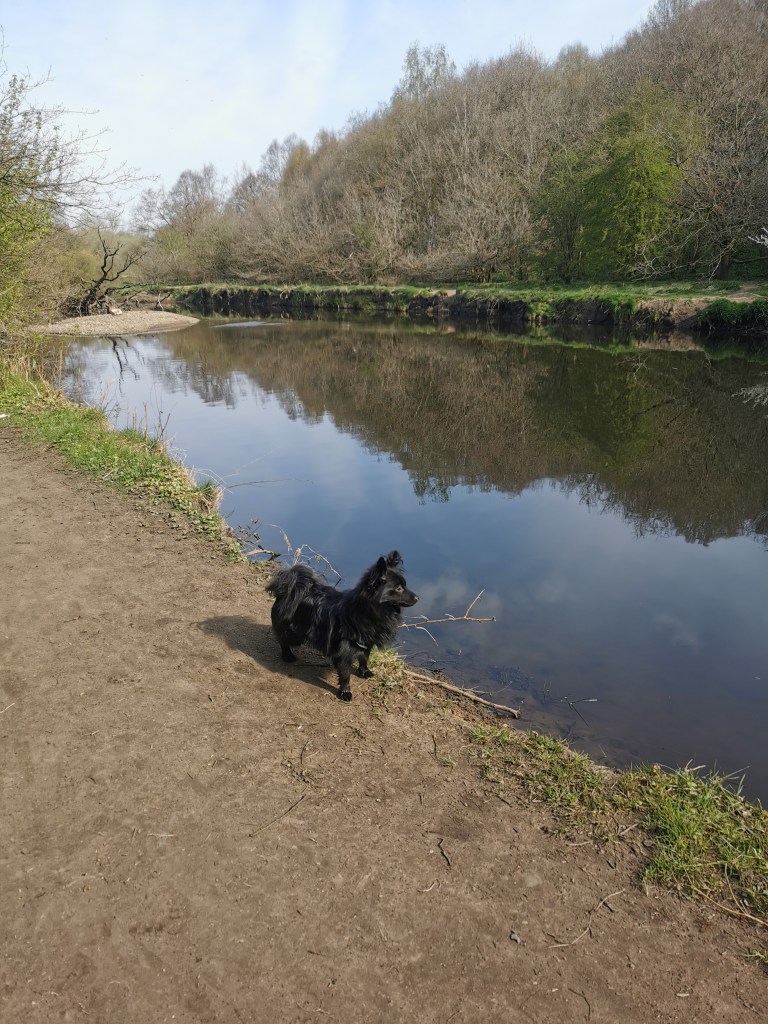
Usually in the evening we go to a huge field so he can quite literally run rings around me. A few weeks ago, we broke tradition and went to the local park in the late afternoon. I had spent the entire day in front of a screen and needed a break. We got to the park and it was different – it looked different, sounded different, and felt different. The sun was out so of course it was busier, and as you’d expect after school there were children playing on the skate park and the playground. There were about a dozen dogs in the dog park (it’s not as fancy as it sounds – just a patch of grass where the dogs dig holes and fetch sticks). Prince was a bit overwhelmed and so was I – at this point I hadn’t seen so many people in one place since pre-covid!
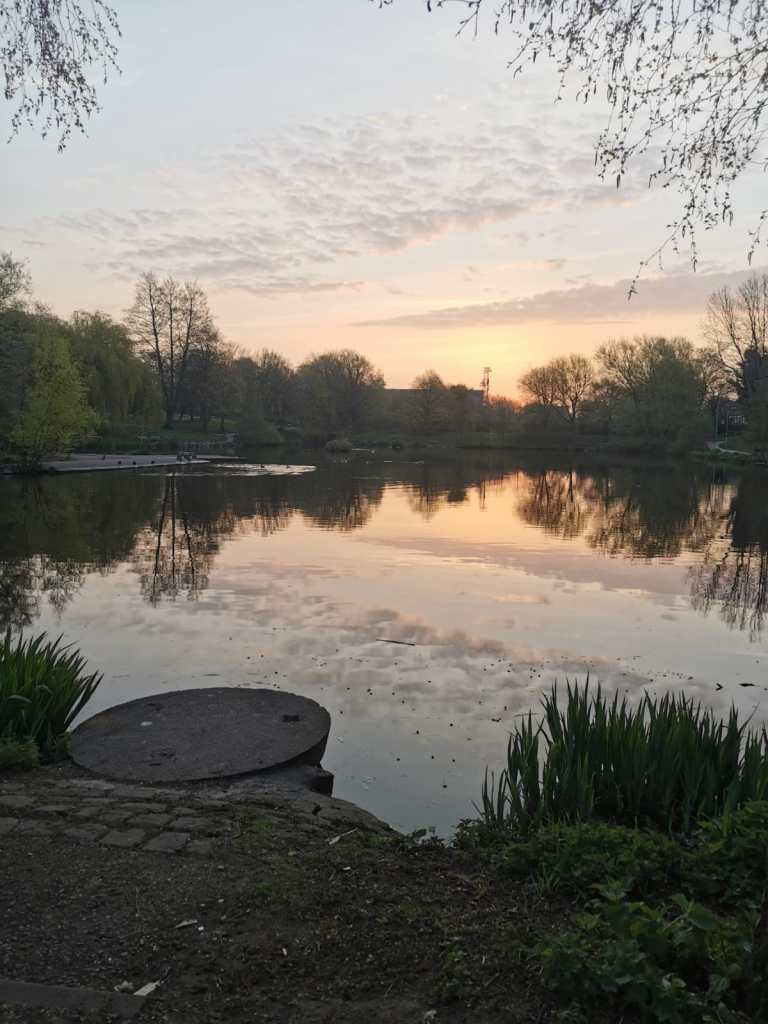
I soon learned that I couldn’t let Prince off his lead on a Monday because the mess from the weekend (even before the outdoor rule of six) would not yet be cleaned and he would eat everything. One Monday he walked an entire lap of the park with a croissant in his mouth that was bigger than his head. Another day he picked up half a joint of cooked meat. I noticed the signs of people having good (and not so good) times, particularly after sunny weekends. Sometimes when it’s warm there’s groups of men fishing, pulling all-nighters, smoking cannabis and drinking. Once, we followed a trail of blood around the path and although it could just as easily come from a child after a fall, the empty, broken alcohol bottles led me to imagine scenarios of violence.
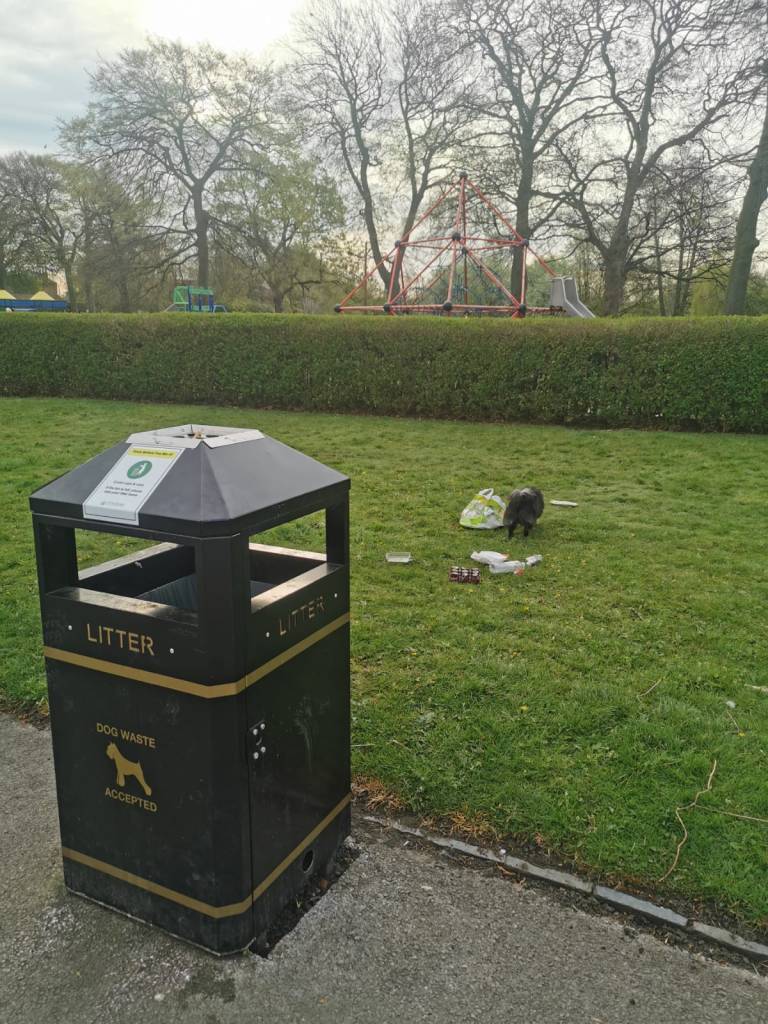
During my visits to the park over the last few months I have seen evidence of alcohol and drug use, and possible violence. In May last year, there were reports of gunshots fired, leading to a man being arrested on suspicion of possessing a firearm. Quite worrying considering I live only a couple of hundred metres away. There have also been incidents involving youths wielding baseball bats and setting fires before attacking firefighters. I had a look at the crime data for the area but Greater Manchester Police have had some IT issues affecting data from 2019 onwards (that’s another story…), however older data showed a pattern of anti-social behavior, arson and a few violent offences as well. This is all very different to the place of tranquility I visit daily with the puppy.

The next day we returned for our early morning walk and I reflected upon the changes in the character of the park and the actors and events that create this. I started thinking about criminology and the environment around us, about how places can change so much throughout the day and across the seasons. I thought about situational crime prevention. My work brain truly switched on and I stopped hearing the birds and started seeing the CCTV and the lighting. I thought to myself that I would not go to the park when it gets dark but if I did, I would stay in the lit areas where the cameras could see me. I would stay away from the groups of fishermen because they were sure to be drunk and stoned by nightfall. I haven’t seen them behave in a threatening manner although I have overheard verbal threats. They are usually asleep when I walk by but as a single woman I’d think twice about walking past a group of lively, drunk men at night.

This local park is just one example based on my observations, but the question is, is it a criminogenic space? Or am I criminologist who sees things of criminological interest in everything, everywhere? Or a woman who constantly assesses personal safety? Luckily I haven’t had enough thinking time and space to ponder these questions otherwise this would have been a long read.
Share this:


The Chauvin verdict may not be the victory we think it is
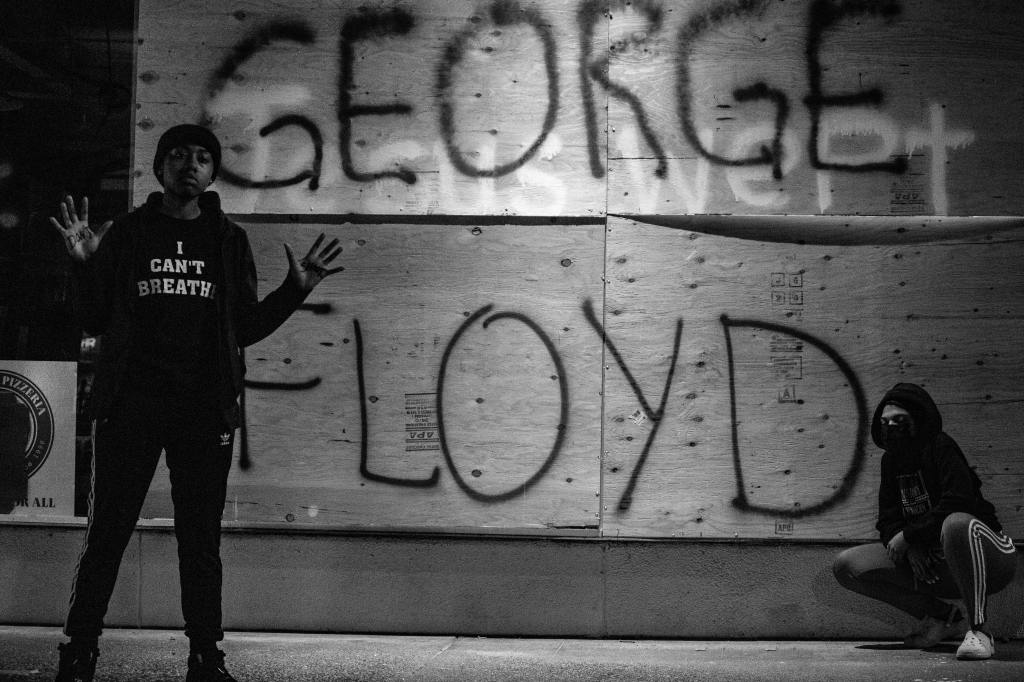
At times like this I often hate to be the person to take what little hope people may have had away from them, however, I do not believe the Chauvin verdict is the victory many people think it is. I say people, but I really mean White people, who since the Murder of George Floyd are quite new to this. Seeing the outcry on social media from many of my White colleagues that want to be useful and be supportive, sometimes the best thing to do in times like these is to give us time to process. Black communities across the world are still collectively mourning. Now is the time, I would tell these institutions and people to give Black educators, employees and practitioners their time, in our collective grief and mourning. After the Murder of George Floyd last year, many of us Black educators and practitioners took that oppurtunity to start conversations about (anti)racism and even Whiteness. However, for those of us that do not want to be involved because of the trauma, Black people recieving messages from their White friends on this, even well-meaning messages, dredges up that trauma. That though Derek Chauvin recieved a guilty verdict, this is not about individuals and he is still to recieve his sentence, albeit being the first White police officer in the city of Minneapolis to be convicted of killing a Black person.
Under the rallying cry “I can’t breathe” following the 2020 Murder of George Floyd, many of us went to march in unison with our American colleagues. Northamptonshire Rights and Equality Council [NREC] organised a successful protest last summer where nearly a thousand people turned up. And similar demonstrations took place across the world, going on to be the largest anti-racist demonstration in history. However, nearly a year later, institutional commitments to anti-racism have withered in the wind, showing us how performative institutions are when it comes to pledges to social justice issues, very much so in the context race. I worry that the outcome of the Chauvin verdict might become a “contradiction-closing case”, reiterating a Facebook post by my NREC colleague Paul Crofts.
For me, a sentence that results in anything less than life behind bars is a failure of the United States’ criminal justice system. This might be the biggest American trial since OJ and “while landmark cases may appear to advance the cause of justice, opponents re-double their efforts and overall little or nothing changes; except … that the landmark case becomes a rhetorical weapon to be used against further claims in the future” (Gillborn, 2008). Here, critical race theorist David Gillborn is discussing “the idea of the contradiction-closing case” originally iterated by American critical race theorist Derrick Bell. When we see success enacted in landmark cases or even movements, it allows the state to show an image of a system that is fair and just, one that allows ‘business as usual’ to continue. Less than thirty minutes before the verdict, a sixteen-year-old Black girl called Makiyah Bryant was shot dead by police in Columbus, Ohio. She primarily called the police for help as she was reportedly being abused. In her murder, it pushes me to constantly revisit the violence against Black women and girls at the hands of police, as Kimberlé Crenshaw states:
“They have been killed in their living rooms, in their bedrooms, in their cars, they’ve been killed on the street, they’ve been killed in front of their parents and they’ve been killed in front of their children. They have been shot to death. They have been stomped to death. They have been suffocated to death. They have been manhandled to death. They have been tasered to death. They have been killed when they have called for help. They have been killed while they have been alone and they have been killed while they have been with others. They have been killed shopping while Black, driving while Black, having a mental disability while Black, having a domestic disturbance while Black. They have even been killed whilst being homeless while Black. They have been killed talking on the cellphone, laughing with friends, and making a U-Turn in front of the White House with an infant in the back seat of the car.”
Professor Kimberlé Crenshaw (TED, 2018)
Whilst Chauvin was found guilty, a vulnerable Black girl was murdered by the very people she called for help in a nearby state. Richard Delgado (1998) argues “contradiction-closing cases … allow business as usual to go on even more smoothly than before, because now we can point to the exceptional case and say, ‘See, our system is really fair and just. See what we just did for minorities or the poor’.” The Civil Rights Movement in its quest for Black liberation sits juxtaposed to what followed with the War on Drugs from the 1970s onwards. And whilst the Stephen Lawrence Inquiry was seemingly one of the high points of British race relations followed with the 2001 Race Relations Act, it is a constant fallback position in a Britain where racial inequalities have exasperated since. That despite Macpherson’s landmark report, nothing really has changed in British policing, where up until recently London Metropolitan Police Service had a chief that said it wasn’t helpful to label police as institutionally racist.
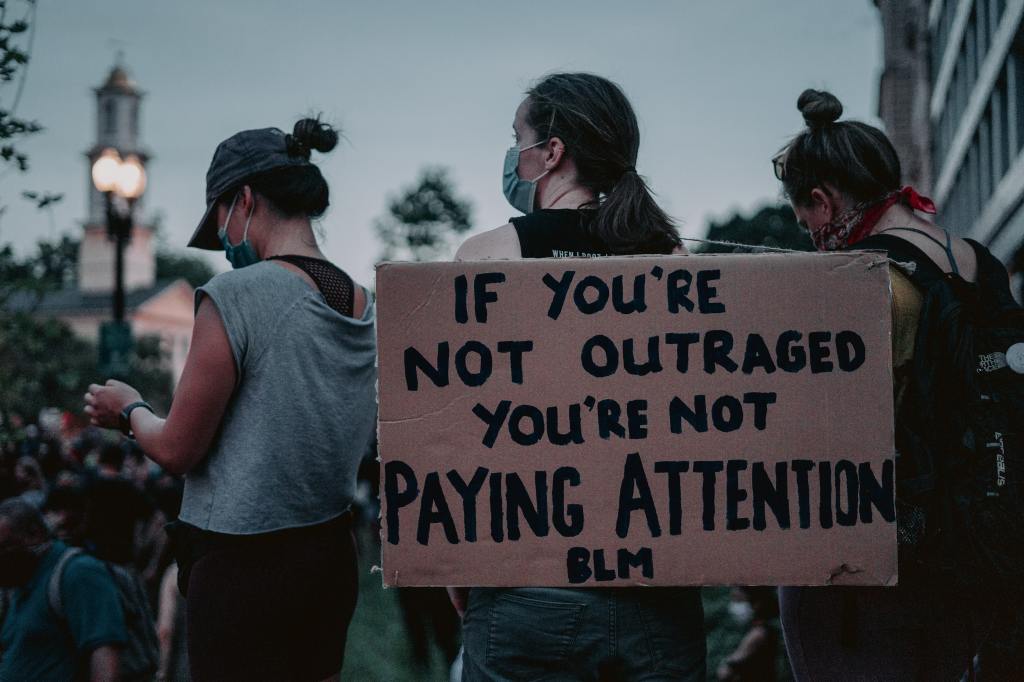
Scrolling the interweb after the ruling, it was telling to see the difference of opinion between my White friends and colleagues in comparison to my Black friends and colleagues. White people wrote and tweeted with more optimism, claiming to hope that this may be the beginning of something upward and forward-thinking. Black people on the other hand were more critical and did not believe for a second that this guilty verdict meant justice. Simply, this ruling meant accountability. Since the Murder of George Floyd, there have been numbers of conversations and discourses opened up on racism, but less so on White supremacy as a sociopolitical system (Mills, 2004). My White colleagues still thinking about individuals rather than systems/institutions simply shows where many of us still are, where this trial became about a “bad apple”, without any forethought to look at the system that continues enable others like him.
Even if Derek Chauvin gets life, I am struggling to be positive since it took the biggest anti-racist demonstration in the history of the human story to get a dead Black man the opportunity at police accountability. Call me cynical but forgive me for my inability to see the light in this story, where Derek Chauvin is the sacrificial lamb for White supremacy to continue unabted. Just as many claimed America was post-racial in 2008 with the inaugaration of Barack Obama into the highest office in the United States, the looming incarceration (I hope) of Derek Chauvin does not mean policing suddenly has become equal. Seeing the strew of posts on Facebook from White colleagues and friends on the trial, continues to show how White people are still centering their own emotions and really is indicative of the institutional Whitenesses in our institutions (White Spaces), where the centreing of White emotions in workspaces is still violence.
Derek Chauvin is one person amongst many that used their power to mercilessly execute a Black a person. In our critiques of institutional racism, we must go further and build our knowledge on institutional Whiteness, looking at White supremacy in all our structures as a sociopolitical system – from policing and prisons, to education and the third sector. If Derek Chauvin is “one bad apple”, why are we not looking at the poisoned tree that bore him?
Referencing
Delgado, Richard. (1998). Rodrigo’s Committee assignment: A sceptical look at judicial independence. Southern California Law Review, 72, 425-454.
Gillborn, David. (2008). Racism and education: Coincidence or conspiracy? London: Routledge.
Mills, Charles (2004) Racial Exploitation and the Wages of Whiteness. In: Yancy, George (ed). What White Looks Like: African American Philosophers on the Whiteness Question. London: Routledge.
TED (2018). The urgency of intersectionality | Kimberlé Crenshaw. YouTube [online]. Available.
White Spaces. Institutional Witnesses. White Spaces. Available.
Share this:


We are not the same…respectfully
Disclaimer: whilst I can appreciate that it’s Women’s History Month and it would be appropriate that we all come together in support of one another, especially in the notion of us vs them (men). However, I am undoubtedly compelled to talk about race in this matter, in all matters in that sense. I can only speak on the influence of the women who are around me and of women who look like me. Black women. So, to the lovely white girl on twitter who felt the need to express under my thread how disheartened she was by the racial separation of womanhood in feminism … from the bottom of my heart, I am not sorry.
Sometime last year I stumbled across a book called They Were Her Property: White Women as Slave Owners in the American South by the marvellous Stephanie Jones Rogers. The book protested against the belief that white women were delicate and passive bystanders to the slave economy due to masculine power in the 18th century. Instead, it explores the white supremacy of white women and the high level of protection they had which, which often led to the lynching and killing of many Black men and boys (Emmett Till, 1955). The book also looks at the role of enslaved wet nurses, as many white women perceived breastfeeding to be uncultured and therefore avoided it. However, while enslaved children were flourishing and healthy, many of the white babies were dying. As a result, Black mothers were forced to separate from their babies and dedicate their milk and attention to the babies of their mistresses.
Consequently, this led to the high rise of neglect and death of black babies as cow’s milk and dirty water was used as a substitute (Jones-Rogers, 2019). Furthermore, Rogers goes on to explain how the rape of Black women was used to ensure the supply of enslaved wet nurses. As you can imagine the book definitely does not sugar coat anything and I am struggling to finish it due to my own positionality in the subject. One thing for sure is that after learning about the book I was pretty much convinced that general feminism was not for me.
When I think about the capitalisation and intersectional exploitation that black women endured. I lightly emphasise the term ‘history’ when I say women’s history, because for Black women, it is timeless. It is ongoing. We see the same game play out in different forms. For example, the perception that white women are often the victims (Foley, et al., 1995) and therefore treated delicately, while Black women receive harsher/ longer sentences (Sharp, 2000). The high demand of Black women in human trafficking due to sexual stereotypes (Chong, 2014), the injustice in birth where Black women are five times more likely to die from pregnancy and childbirth than white women in the UK (University of Oxford, 2019) and the historical false narrative that Black women feel less pain than white women (Sartin, 2004, Hoffman et al, 2016).
So again, we are not the same…. Respectfully.
It is important for me to make clear that we are not the same, because we are viewed and treated differently than white women. We are not the same, because history tells us so. We are not the same, because the criminal justice system shows us so. We are not the same, because the welfare system and housing institutions show us so. We are not the same, because of racism.
This year’s women’s history month was more so about me learning and appreciating the Black women before me and around me. As I get older, it represents a subtle reminder that our fight is separate to much of the world. There is nothing wrong in acknowledging that, without having to feel like I am dismissing the fight of white women or the sole purpose of feminism in general. I am a Black feminist and to the many more lovely white women who may feel it’s unnecessary or who are disheartened by the racial separation of womanhood in feminism, I am truly, truly not sorry.
P.s to Nicole Thea, Sandra Bland, Toyin Salau, Blessing Olusegun, Belly Mujinga and Mary Agyeiwaa Agyapong. I am so sorry the system let down and even though you are not talked about enough, you will never be forgotten.
References:
Chong, N.G., (2014). Human trafficking and sex industry: Does ethnicity and race matter?. Journal of Intercultural Studies, 35(2), pp.196-213.
Foley, L.A., Evancic, C., Karnik, K., King, J. and Parks, A. (1995) Date rape: Effects of race of assailant and victim and gender of subjects on perceptions. Journal of Black Psychology, 21(1), pp.6-18.
Hoffman, K.M., Trawalter, S., Axt, J.R. and Oliver, M.N. (2016) Racial bias in pain assessment and treatment recommendations, and false beliefs about biological differences between blacks and whites. Proceedings of the National Academy of Sciences, 113(16), pp.4296-4301.
Jones-Rogers, S.E.(2019). They were her property: White women as slave owners in the American South. Yale University Press.
Sartin, J.S. (2004) J. Marion Sims, the father of gynecology: Hero or villain?. Southern medical journal, 97(5), pp.500-506.
Sharp, S.F., Braley, A. and Marcus-Mendoza, S. (2000) Focal concerns, race & sentencing of female drug offenders. Free Inquiry in Creative Sociology, 28(2), pp.3-16.
University of Oxford. (2019) NPEU News: Black women are five times more likely to die in childbirth than white women. Why? {Online}. Available from:https://www.npeu.ox.ac.uk/mbrrace-uk/news/1834-npeu-news-black-women-are-five-times-more-likely-to-die-in-childbirth-than-white-women-why {Accessed 29th March 2021}

 Thoughts from the criminology team