
Home » True Crimes (Page 3)
Category Archives: True Crimes

Am I a criminologist? Are you a criminologist?
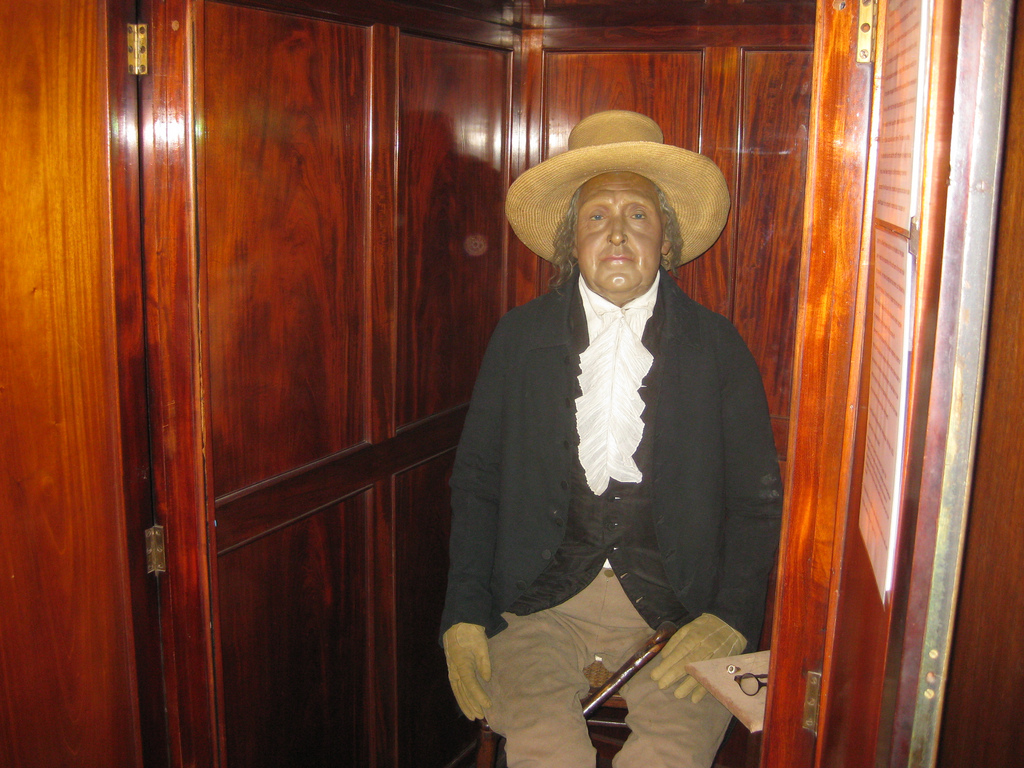
I’m regularly described as a criminologist, but more loathe to self-identify as such. My job title makes clear that I have a connection to the discipline of criminology, yet is that enough? Can any Tom, Dick or Harry (or Tabalah, Damilola or Harriet) present themselves as a criminologist, or do you need something “official” to carry the title? Is it possible, as Knepper suggests, for people to fall into criminology, to become ‘accidental criminologists’ (2007: 169). Can you be a criminologist without working in a university? Do you need to have qualifications that state criminology, and if so, how many do you need (for the record, I currently only have 1 which bears that descriptor)? Is it enough to engage in thinking about crime, or do you need practical experience? The historical antecedents of theoretical criminology indicate that it might not be necessary, whilst the existence of Convict Criminology suggests that experiential knowledge might prove advantageous….
Does it matter where you get your information about crimes, criminals and criminal justice from? For example, the news (written/electronic), magazines, novels, academic texts, lectures/seminars, government/NGO reports, true crime books, radio/podcasts, television/film, music and poetry can all focus on crime, but can we describe this diversity of media as criminology? What about personal experience; as an offender, victim or criminal justice practitioner? Furthermore, how much media (or experience) do you need to have consumed before you emerge from your chrysalis as a fully formed criminologist?
Could it be that you need to join a club or mix with other interested persons? Which brings another question; what do you call a group of criminologists? Could it be a ‘murder’ (like crows), or ‘sleuth’ (like bears), or a ‘shrewdness’ (like apes) or a ‘gang’ (like elks)? (For more interesting collective nouns, see here). Organisations such as the British, European and the American Criminology Societies indicate that there is a desire (if not, tradition) for collectivity within the discipline. A desire to meet with others to discuss crime, criminality and criminal justice forms the basis of these societies, demonstrated by (the publication of journals and) conferences; local, national and international. But what makes these gatherings different from people gathering to discuss crime at the bus stop or in the pub? Certainly, it is suggested that criminology offers a rendezvous, providing the umbrella under which all disciplines meet to discuss crime (cf. Young, 2003, Lea, 2016).
Is it how you think about crime and the views you espouse? Having been subjected to many impromptu lectures from friends, family and strangers (who became aware of my professional identity), not to mention, many heated debates with my colleagues and peers, it seems unlikely. A look at this blog and that of the BSC, not to mention academic journals and books demonstrate regular discordance amongst those deemed criminologists. Whilst there are commonalities of thought, there is also a great deal of dissonance in discussions around crime. Therefore, it seems unlikely that a group of criminologists will be able to provide any kind of consensus around crime, criminality and criminal justice.
Mannheim proposed that criminologists should engage in ‘dangerous thoughts’ (1965: 428). For Young, such thinking goes ‘beyond the immediate and the pragmatic’ (2003: 98). Instead, ‘dangerous thoughts’ enable the linking of ‘crime and penality to the deep structure of society’ (Young, 2003: 98). This concept of thinking dangerously and by default, not being afraid to think differently, offers an insight into what a criminologist might do.
I don’t have answers, only questions, but perhaps it is that uncertainty which provides the defining feature of a criminologist…
References:
Knepper Paul, (2007), Criminology and Social Policy, (London: Sage)
Lea, John, (2016), ‘Left Realism: A Radical Criminology for the Current Crisis’, International Journal for Crime, Justice and Social Democracy, 5, 3: 53-65
Mannheim, Hermann, (1965), Comparative Criminology: A Textbook: Volume 2, (London: Routledge and Kegan Paul)
Young, Jock, (2003), ‘In Praise of Dangerous Thoughts,’ Punishment and Society, 5, 1: 97-107
Share this:


Productive Procrastination
 There’s the saying ‘Find your passion and you’ll never work a day in your life,’ however I much prefer the updated version ‘Find your passion and you’ll work every day of your life’ BUT you’ll love it. Criminology and the law are everything to me and I enjoy my profession and my ability to work in a field that allows me to direct my interests. It is a very special position to be in and not something I take for granted. I am fortunate to be starting at The University of Northampton this coming semester as a criminology lecturer and I’m looking forward to meeting and getting to know all my colleagues and students.
As a student you may not always want to study, and it is also important to take time off. You may feel guilty if you’re not studying as there is always more reading or research to do for your assignment – it is a veritable rabbit hole. I highly recommend that you undertake ‘Productive Procrastination.’ Productive Procrastination is not working on the task you should be working on, but it is still related closely enough to your work that you don’t feel guilt. (Yes, maybe some mental gymnastics to get to this point!)
It is very important to stay up to date with the current news and research in criminology and criminal justice. To achieve this I use Twitter, read books, and listen to so many podcasts. Apart from being entertaining and educational, the best thing about listening and reading is it often gives your mind to think about what you’re learning differently.
Some of my top podcast recommendations are:
- Criminal
- My Favorite Murder
- Once Upon a Crime
- RedHanded
- Casefile
- Hidden Brain
- They Walk Among Us
- Death in Ice Valley
Some book recommendations from my reading over the last couple of months are:
- Memoirs of a Radical Lawyer – Michael Mansfield
- All that Remains: A life in Death – Sue Black
- Home Fire – Kamila Shamsie
- Outliers – Malcolm Gladwell
- Why I’m No Longer Talking to White People About Race – Reni Eddo-Lodge
- In Cold Blood – Truman Capote
- The Secret Barrister
- Women & Power: A Manifesto – Mary Beard
If you like any of these podcasts or books, please let me know as I can make a lot more recommendations. Alternatively, please provide me suggestions! Happy Productive Procrastination!
I have a personal blog Academic Traveller if you would like to read more about my experiences.
Reference:
Image is inspired by New Yorker Cartoon: Sipress, D. (2014). The New Yorker Daily Cartoon: Friday, December 5th [Online image]. Retrieved from <https://www.newyorker.com/cartoons/daily-cartoon/daily-cartoon-friday-december-5th?mbid=social_twitter> Image created by Glen Holman.
Share this:


Netflix and Study?

Bethany Davies is an Associate Lecturer teaching modules in the first year.
As each year and each term goes by, it brings to light how much more we are all connected through media and also how we use media to socialise and also learn.
Now, watching television, movies and using music to learn is not a new concept, I understand this, but on a personal level, I have found more individuals using television and more specifically, crime documentaries to fuel their interest in criminology and their understanding of elements of the criminal justice system.
I believe firstly, the idea of enjoying, what is termed ‘binge watching’, crime documentaries, an interesting concept. As previously explored on the blog regarding ‘enjoyment’ and ‘fun’ of criminology, the themes in these documentaries are very dark and in most cases, the gorier it is, the more it seems to be enjoyed by some viewers. Each September that rolls around we have the (sometimes dreaded) ‘ice breaker’ session, where we get to know our students and what has made them want to pursue a criminology degree at this University. Within that you will always have some who choose to voice their love of a certain crime TV show. This does not always end at first introductions either, there is often a continuation of comparisons made between that of a serious historical event and that of Netflix documentary (for example) which can often contain more dramatic music and pictures than it does criminological discussion.
The question I would like to present is, do we nourish the idea of using documentaries and crime dramas to keep the interest of those who wish to pursue criminology as a field of learning, or would doing so be disingenuous to what criminology is and neglect the love for reading and debates in criminology? I do not necessarily feel this is a question we have to worry about tremendously as I feel those who seek to study criminology purely based on their love for crime documentaries will either soon realise that there is so much of criminology that does not fit those ideas and either love it or abandon it at that point.
But in years to come these questions may be more significant than they are currently. Especially if used as a tool in universities to attract more students into a certain discipline. There are such large elements of criminology that I feel have to be explored with literature or within a seminar setting with questions and debates, and it can be easy for institutions to say that these elements will always be fundamental to a criminology degree for years to come. However, if other institutions start to use more and more media and visual aids to demonstrate a theory or issue of crime in the future, or what I suspect more as a marketing campaign to attract students, will we conform? There are some articles (from questionable sources) that some institutions are using Snapchat and social media takeovers to help attract students to certain courses, most of which I have read about have been media based, granted. But let’s hope all this drivelling nonsense is just my brain after a long bank holiday weekend and not a possibly looming prospect of the future of criminology, right?
Share this:


The criminology of real life

Ever since I joined academia as a criminology lecturer, I found the question asked “what do you do” to be one that is followed by further questions. The role or rather title of a criminologist is one that is always met with great curiosity. Being a lecturer is a general title that most people understand as a person who does lectures, seminars, tutorials and workshops, something akin to a teacher. But what does a criminology lecturer do? Talks about crime presumably…but do they understand criminals? And more to the point, how do they understand them?
The supposed reading of the criminal mind is something that connects with the collective zeitgeist of our time. Some of our colleagues have called this the CSI factor or phenomenon. A media portrayal of criminal investigation into violent crime, usually murder, that seems to follow the old whodunit recipe sprinkled with some forensic science with some “pop” psychology on the side. The popularity of this phenomenon is well recorded and can easily be demonstrated by the numerous programmes which seemingly proliferate. I believe that there are even television channels now devoted completely to crime programmes. Here, it would be good to point out that it is slightly hypocritical to criticise crime related problems when some of us, on occasion, enjoy a good crime dramatisation on paper or in the movies.
Therefore I understand the wider interest and to some degree I expect that in a society dominated with mass and social media, people will try to relate fiction with academic expertise. In fact, in some cases I find it quite interesting as a contemporary tool of social conversation. You can have for example, hours of discussion about profiling, killers and other crimes with inquisitive taxi-drivers, border-control officers, hotel managers etc. They ask profession, you respond “criminologist” and you can end up having a long involving conversation about a programme you may have never seen.
There is however, quite possibly a personal limitation, a point where I draw the line. This is primarily when I get asked about particular people or current live crime cases. In the first year I talk to our students about the Soham murders. A case that happened close to 15 years ago now. What I have not told the students before, is the reason I talk about the case.
Fifteen years ago I was returning from holiday and I took a taxi home. The taxi driver, once he heard I was a criminology lecturer, asked me about the case. I remember this conversation as the academic and the everyday collided. He could not understand why I could not read the criminal intentions of the “monsters” who did what they did. To him, it was so clear and straightforward and therefore my inability to give him straight answers was frustrating. I thought about it since and of course other situations in similar criminal cases that I have been asked about. Why do people want complete and direct answers to the most complex of human behaviours?
One of the reasons that there is a public expectation to be able to talk about individual cases rests on the same factor that makes crime popular; its media portrayal. The way we collectively respond to real crime cases reflects a popularised dramatisation. So, this is not just a clash between academic and lay, but reality and fiction.

 Thoughts from the criminology team