
Home » Teaching (Page 7)
Category Archives: Teaching

Some lessons from the lockdown

Koestler Arts (2019), Another Me: The Redwoods Centre (secure mental health unit), James Wood QC Silver Award for Portrait, 2019
In March 23, 2020, the UK went into lockdown. The advice given, albeit conflicting in parts, was clear. Do not leave your home unless absolutely necessary, banning all travel and social interactions. This unprecedented move forced people to isolate at home for a period, that for some people will come to an end, when the WHO announces the end of the pandemic. For the rest of us, the use of a face mask, sanitiser and even plastic gloves have become modern day accessories. The way the lockdown was imposed and the threat of a fine, police arrest if found outside one’s home sparked some people to liken the experience with that of detention and even imprisonment.
There was definite social isolation during the pandemic and there is some future work there to be done to uncover the impact it has had on mental health. Social distancing was a term added to our social lexicon and we discovered online meetings and working from home. Schools closed and parents/guardians became de facto teachers. In a previous blog entry, we talked about the issues with home schooling but suffice to say many of our friends and colleagues discovered the joys of teaching! On top of that a number of jobs that in the past were seeing as menial. Suddenly some of these jobs emerge as “key professions”
The first lesson therefore is:
Our renewed appreciation for those professions, that we assumed just did a job, that was easy or straightforward. As we shall be coming back eventually to a new normality, it is worth noting how easy it will be to assign any job as trivial or casual.
As online meetings became a new reality and working from home, the office space and the use of massive buildings with large communal areas seemed to remain closed. This is likely to have a future impact on the way business conduct themselves in the future.
Second lesson:
Given how many things had to be done now, does this mean that the multi occupancy office space will become redundant, pushing more work to be done from home. This will alter the way we divide space and work time.
During the early stages of the lockdown, some people asked for some reflection of the situation in relation to people’s experiences in prisons. The lockdown revealed the inequality of space. The reality is that for some families, space indicated how easy is to absorb the new social condition, whilst other families struggled. There is anecdotal information about an increase on mental health and stress caused from the intensive cohabitation. Several organisations raised the alarm that since the start of the lockdown there has been a surge in incidents of domestic violence and child abuse. The actual picture will become clearer of the impact the lockdown had on domestic violence in future years when comparisons can be drawn. None the less it reveals an important issue.
Third lesson:
The home is not always the safest place when dealing with a global pandemic. The inequality of space and the inequality in relationships revealed what need to be done in the future in order to safeguard. It also exposed the challenges working from home for those that have no space or infostructure to support it.
In the leading up to the lockdown many households of vulnerable people struggled to cope with family members shielding from the virus. These families revealed weaknesses in the welfare system and the support they needed in order to remain in lockdown. Originally the lack of support was the main issue, but as the lockdown continued more complex issues emerged, including the financial difficulties and the poverty as real factors putting families at risk.
Fourth lesson:
Risk is a wider concern that goes beyond personal and family issues. The lockdown exposed social inequality, poverty, housing as factors that increase the vulnerability of people. The current data on Covid-19 fatalities reveal a racial dimension which cannot longer be ignored.
During the lockdown, the world celebrated Easter and commemorated Mayday, with very little interaction whilst observing social distancing. At the end of May the world watched a man gasping for breath that died in police custody. This was one of the many times the term police brutality has related to the dead of another black life. People took to the streets, protested and toppled a couple of statues of racists and opened a conversation about race relations.
Fifth lesson:
People may be in lockdown, but they can still express how they feel.
So, whilst the lockdown restrictions are easing and despite having some measures for the time being, we are stepping into a new social reality. On the positive side, a community spirit came to the surface, with many showing solidarity to those next to them, taking social issues to heart and more people talked of being allies to their fellow man. It seems that the state was successful to impose measures that forced people indoors that borderline in totalitarianism, but people did accept them, only as a gesture of goodwill. This is the greatest lesson of them all in lockdown; maybe people are out of sight, appear to be compliant in general but they are still watching, taking note and think of what is happening. What will happen next is everyone’s guess.
Share this:


When I grow up what will I be?

Wherever I go in life, whatever I do, as long as I am helping others and making a positive difference, I will be happy”
For many years, that has been my take on looking for jobs – helping people, and making a positive difference.
What will I do with my life? Where will life lead me? I’ll say my prayers, and find out!
As a child (between 5-9 years old), I wanted to be a nurse; I have a caring nature, and love helping people! Imagining myself in a nurse’s uniform, and putting bandages on patients and making them better, was something I dreamed about.
Life moves forward, and at the age of 13 I wanted to be so much!
I considered becoming a teacher of either English or Religious Studies. At 13, I loved English and learning about all world faiths. It fascinated me! My teacher had a degree and masters from Oxford University; and I absorbed everything I could! Religious Studies was my favourite subject (alongside art, drama and English) I also had my first, most profound spiritual experience, deepening my Catholic faith (written in more detail in chapter 1 of Everyday Miracles).
My hobbies included reading, writing and drawing. Throughout my teenage years, I devoured the Harry Potter books, the Lord of the Rings books, and Phillip Pullman’s His Dark Materials books. I had a library card, and would borrow books from the library in my village and would read regularly at home. I wanted to be an artist and author, and would often write poetry and short stories, and kept a sketchbook to do drawings in. I dreamed of being a published author, and to be an artist – however, these were seemingly beyond my reach. I prayed to God, that I would be able to fulfil these life ambitions one day.
Alongside of this, I also did some charity work – any change that I got from my lunches, I would put in an empty coffee jar and save them up. I was given the rather cruel nickname, ‘penny picker’, which resulted in bullying from people across different year groups, because I picked up pennies off the floor and put them in my charity pot. Though I did get a mention in the school newsletter stating that the money I raised amounted to quite a large sum, and went to CAFOD, and a homeless charity. I have always done charity work, and still do charity work today!
In school, there were 2 sets in each year; the A-band and the B-band. The A-band were the high academic performers, and those who got high grades. The B-band was the lower set… the set which I was in… This meant that when it came to picking GCSEs, I could only choose 2, not 3, which the A-band students were able to do.
In my Citizenship and Religious studies lessons, I began learning more about the globalized world, human rights, and social issues. Here, I learned in great detail about slavery (slightly covered in history too), prejudice and discrimination, the Holocaust, and 3rd world issues, such as extreme poverty, deprivation, and lack of basic human necessities, such as water, food and sanitation. We even touched upon the more horrific human rights abuses such as extraordinary rendition, religious persecution, torture, and rape and sexual violence.
My ambitions began to evolve more, and I dreamed of becoming a lawyer and even a judge. I wanted to serve justice, make communities safer, and to do more to combat these issues. With my soft heart, and a love of helping people, I knew that being a lawyer would help with doing this!
Moving forward to Year 10; choosing my GCSEs…. I spoke with one of the school heads, and asked for advice. I was still adamant on being a lawyer, and so was advised to do drama and history. Drama as it would boost my confidence, public speaking and expressive skills. History, because of the analytical thinking and examination of evidence that lawyers need when presenting their arguments. I was very happy with this! I loved drama and I enjoyed history – both the teachers were great and supportive!
At the age of 15, I was diagnosed with Asperger Syndrome – this explained so much about me and my idiosyncrasies. Ironically, it was my drama and my history teacher who picked up on it, due to my odd gait, social skills, and how I processed information. At parents’ evening, both teachers discussed with my mum about the diagnosis, and getting support. It was a big shock when I spoke with each of my teachers individually about the diagnosis.
At the end of doing my GCSEs, I was a pretty average student with mostly C grades. When it came to picking A-levels, I was unable to to the subjects that I really wanted to do…. Philosophy, Theology, Law and Psychology…. After a few weeks of battling and trying to get onto a course that would accept me, I ended up doing Travel and Tourism, A-level Media, Applied Sciences and Forensics (which had a criminology module), and, in Year 13, I took on an Extended Project, to boost my chances of getting into university.
I felt somewhat disillusioned… I’m studying courses that will only accept me because of my grades – an odd combination, but a chance to learn new things and learn new skills! In my mind, I wondered what I would ever do with myself with these qualifications…
Deciding to roll with it, I went along. I was much more comfortable in my Sixth Form years as I learned to embrace my Asperger’s, and started being included in different socials and activities with my peers.
Those 2 years flew by, and during my science course, when I did the criminology unit, I was set on studying that joint honors at a university. Criminology gripped me! I loved exploring the crime rates in different areas, and why crime happens (I had been introduced briefly to Cesare Lombroso, and the Realist theories). I have always loved learning.
Fast forward, I decided to go to Northampton University to do Criminology and Education, and even had the hope that I may be able to get a teaching job with the education side. However, due to an education module no longer being taught, I majored in Criminology.
However, in my second year of studies, I did a placement at a secondary special needs college, and helped the children with their learning! All the children would have a day at a vocational training centre doing carpentry, arts and crafts, and other hands on and practical courses. Back in their classrooms, they had to write a log of what they learned. The students I helped were not academic, and so I would write questions on the board to guide them with their log writing, and would write words that they struggled to spell – my opportunity to help students with their education! Later in life, I worked as a Support Worker for students with additional needs at both Northampton, and Birmingham City University, so still learning whilst helping others.
July 2015, I graduated with a 2:1 in my degree, and I had been encouraged to do an LLM in International Criminal Law and Security – a degree in law! It was unreal! From being told I could not do A-level law, here, I was able to do a masters in law! I applied for the Santander Scholarship, and got enough money to cover my course and some living costs – basically, a Masters degree for free!
During those 2 years of being a part time post graduate, I set up and ran the Uni-Food Bank Team and continued with running Auto-Circle Spectrum Society. January 2016 saw a downward dive in my mental health and I was diagnosed with severe depression (When the Darkness Comes).
I learned to cope and found my own way of healing myself through art and painting (which I later began painting on canvasses and sold at arts and crafts fayres).
February 2018 – I graduate with my LLM; the first on my dad’s side of the family to go to university, and on my mum’s side, the first to have a masters’ degree.
Going back to the question of this blog; When I grow up, what will I be?
I will be everything that I ever wanted to be! I am now a published author (mentioned at the start of the blog), have done freelance writing and art (everything I have written on every platform used can be accessed here: Blog Home Page: Other Writing Pieces)! I got a degree in Criminology with Education, and a Masters degree in International Criminal Law and Security!
I have have utilised my knowledge of human rights to fight for the rights of Persecuted Christians, political and social activists, and write to someone on death row too! (Serving Our Persecuted Brothers and Sisters Globally, I See You, Prisoners of Conscience, Within Grey Walls
I still do loads of charity work, and support my local food bank along the side too! (Brain Tumor Research; Helping Those in Need)
It’s safe to say that God answered every single one of my prayers, and even gave me strength in some circumstances!
Currently, I am working as the administrator of an an addiction recovery unit in my home village! A job I thoroughly enjoy – it is challenging, my colleagues are the funniest bunch I have ever met! I have learned so much, and am thriving!
Most importantly, as I’ve grown up, I’ve learned to be happy, learned to overcome all odds that are against me, and to always help others regardless of the circumstance. I’ve learned to be compassionate and strong ❤
Share this:


Ask the expert, if you can find one

It was around four years ago I discovered the title of ‘Doctor’ extended beyond medical staff. I’m not sure many people outside of the academic world fully understand or have any reason to know the order in which post nominal letters are awarded or titles are given. Gaining the title of ‘doctor’ at the very beginning of any academic journey, seems so distantly part of any future plan, its barely imaginable. Some career paths seem wildly ambitious. Wanting to be an ‘expert’ in your field for the humble student, feels much like aspiring to become an astronaut midway through a physics degree.
Once you enter the world of academia, the titles people hold seem to determine an awful lot of their credibility. It’s rare to find a university lecturer who isn’t working towards doctoral qualification, most already have one. The papers, books and research journals are filled with the knowledge of individuals who once were nothing more than students. I often wonder though, at what point someone becomes an expert? At what point, (if ever) do the most academically qualified individuals refer to themselves as experts within a narrow area of their field.
The government often talks about relying on ‘expert’ evidence. Watching the experts stand beside the PM discussing the current pandemic, they appear uneasy, particularly when questions are raised about a different expert having a contradicting opinion. One thing I feel quite sure of is that experts seem to rarely agree. As Bertrand Russell (1927/42) states, “even when all the experts agree, they may well be mistaken” . Maybe that’s because it’s questionable if anyone can ever truly know everything on a given subject area.
The scientific committee seems to be buzzing with accusations that the experts are not quite what they seem. The ‘data scientists’ advising government and sitting on SAGE are not all from a background which comfortably implies they are qualified to discuss virology or immunology. In the background lingers the fact with such a new virus, with so little known about it, expert knowledge in a narrow sense, is undoubtedly in its infancy and will probably require some degree of hindsight later on.
In the past week one of the UK’s leading experts has resigned from his job after breaking his own guidance. Meanwhile the public watched Matt Hancock ‘snap’ at an opposition MP in parliament. A woman who despite being no more of an ‘expert’ than himself, at least has experience as a qualified A&E doctor to base her opinions and views on. It seems last week’s experts and heroes are this week’s victims in the ongoing witch-hunt for someone to blame.
I’ve started to wonder if labelling someone an ‘expert’ is something other people do to install confidence that a piece of research being relied upon is credible, rather than the experts referring to themselves that way. There’s almost an assumption of arrogance for anyone who dares to protest that their knowledge should be recognised with a title, outside of the academic world anyway. Maybe people simply don’t understand what it took to reach that level of knowledge in the first place.
I’ve looked a lot at ‘labelling’ within the criminological context and it seems to me the labels that are attached to us, almost always seem to come from someone else. In an age of self-proclaimed ‘internet experts’ the real experts, it seems are hard to find.
Reference
Russell, Bertrand (1927/1942) cited in The Collected Papers of Bertrand Russell: A Fresh Look at Empiricism, 1927-42, edited by by John Slater and Assisted by Peter Köllner, (London: Routledge)
Share this:


Teaching, Technology, and reality

I’m not a fan of technology used for communication for the most part, I’d rather do things face to face. But, I have to admit that at this time of enforced lockdown technology has been to a large extent our saviour. It is a case of needs must and if we want to engage with students at all, we have to use technology and if we want to communicate with the outside world, well in the main, its technology.
However, this is forced upon us, it is not a choice. Why raise this, well let me tell you about my experiences of using technology and being shut at home! Most, if not all my problems, probably relate to broadband. It keeps dropping out, sometimes I don’t notice, that is until I go to save my work or try to add the final comment to my marking. I know other colleagues have had the same problem. Try marking on Turnitin only to find that nearly all of your feedback has just disappeared in a flash. Try talking to colleagues on Webex and watch some of them disappearing and reappearing. Sometimes you can hear them, sometimes you can’t. And isn’t it funny when there is a time lag, a Two Ronnies moment when the question before the last is answered. ‘You go, no you go’, we say as we all talk over each other because the social cues relied on in face to face meetings just aren’t there. I’ve tried discussion boards with students, it’s not like WhatsApp or Messenger or even text. It is far more staid than that. Some students take part, but most don’t and that in a module where attendance in class before the shutdown was running at over seventy per cent. I’m lucky to get 20% involved in the discussion board. Colleagues using Collaborate tell me a similar tale, a tale of woe where only a few students, if any appear. Six hours of emptiness, thumb twiddling and reading, that’s the lecturer, not the students.
Now I don’t know whether my problems with the internet are resultant of the increased usage across the country, or just in my area. I suspect not because I had problems before the lockdown. I live in a village and whilst my broadband package promises me, and delivers brilliant broadband speed at times, it is inconsistent, frequently inexplicably dropping out for a minute or two. It is frustrating at times, even demoralising. I have a very good laptop (supplied by the university) and it is hardwired in, so not reliant on Wi-Fi, but it makes little difference. I suspect the problems could be anywhere in the broadband ether. It could be at the other end, the university, it could be at Turnitin for instance or maybe its somewhere in a black hole in the middle. Who knows, and I increasingly think, who cares? When my broadband disappeared for a whole day, a colleague suggested that I could tether my phone. A brilliant idea I thought as our discussion became distorted and it sounded like he was talking to me from a goldfish bowl. I guess the satellite overhead moved and my signal gradually disappeared. I can tell you now that my mobile phone operator is the only one that provides decent coverage in my area. Tethered to a goldfish bowl, probably not a solution, but thanks anyway.
If I suffer from IT issues, then what about students? We are assured that those that live on campus have brilliant Wi-Fi but does this represent the majority of our student body? Not usually and certainly not now. Do they all have good laptops; do they all have a decent Wi-Fi package? I hazard a guess, probably not. But even if what they have is on par with what I have available to me could they not also be encumbered with the same problems? We push technology as the way forward in education but don’t bother to ask the end user about their experience in using it. I can tell you from student feedback that many don’t like Collaborate, find the discussion boards difficult to engage with and some are completely demotivated if they cannot attend physical classes. That’s not to say that all students feel this way, some like recorded lectures as it gives them the opportunity to watch it at their leisure, but many don’t take that final step of actually watching it. They intend to, but don’t for whatever reason. Some like the fact that they can get books electronically, but many don’t, preferring to read from a hard copy. Even browsing the shelves in the library has for some, a mystical pleasure.
I’ll go back to the beginning, technology has undoubtedly been our saviour at this time of lockdown, but wouldn’t it be a real opportunity to think about teaching and technology after this enforced lockdown? Instead of assuming all students are technology savvy or indeed, want to engage with technology regardless of what it is, should we not ask them what works for them. Instead of telling staff what they can do with technology, e.g. you can even remotely mark students’ work on a Caribbean island, should we not ask staff what works? Let’s change the negative narrative, “you’re not engaging with technology”, to the positive what works in teaching our students and how might technology help in that. Note I say our students, not other students at other universities or some pseudo student in a theoretical vacuum. We should simply be asking what is best for our students and a starting point might be to ask them and those that actually teach them.
Share this:


Social Psychology in a Time of Crisis

I am currently sitting in an empty classroom because, although face to face teaching is not officially suspended until tomorrow, none of my seminar students have turned up. In this rather depressing situation, however, there is much for a psychologist to reflect upon, particularly the process of social influence.
First there is the phenomenon of obedience to authority. In his seminal series of experiments, Milgram (1974) was trying to understand the destructive power of obedience; the tendency of people to do what they are told even when it is morally wrong and they know it to be so. The current situation is different. While it is always important to question science (as anyone who has studied CRI1007) should be well aware!) large scale public health measures have no hope of working unless everyone obeys. Milgram did not just explore how obedient people can be – he also investigated the conditions under which obedience is strongest. One of the factors that enhanced obedience was an aura of scientific authority. Participants were more likely to obey when they were instructed by a person in a white coat, who worked in a smart laboratory in a reputable university and who made reference to science, research and experiments, than when they were confronted by someone in scruffy clothes in a run-down building in a tatty back street. Boris Johnson has a poor record of telling the truth and inspiring trust. It is no coincidence that he is currently delivering his daily briefings flanked by his chief medical officer and chief scientific advisor.
Then there is the phenomenon of panic buying. There is probably a deep-seated evolutionary drive that causes us to hoard food in times of potential shortage. Just as the onset of autumn drives squirrels to bury hazelnuts, so the mention of self-isolation drives humans to buy pasta and tinned tomatoes (or potatoes in the case of one of my elderly relatives). My grandmother, who was her family’s main breadwinner through the Second World War, kept a stash of sugar under her bed until the day she went into a care home. And I guess Freud might have had something to say about the fact that the items we are hoarding most fervently are toilet rolls!
Evolutionary drives are, however, not the whole story and social influences play a part too. We panic buy because everyone else is panic buying. In his research on conformity, Asch (1956) identified two main reasons why people went along with the crowd: some just wanted to fit in and be socially accepted (compliance); others doubted their own judgment and believed that everyone else must be correct (conversion). The latter process is helping to drive the current retail crisis – people think “everyone else is panic buying, so there must be a good reason to do so, so I need to do it too!”
Asch was investigating the influence of majorities but minorities can be influential too, often for similar reasons (Moscovici, 1976). As if we didn’t have enough disease to worry about, I have just passed a screen warning students about outbreaks of mumps in British universities. The reason why mumps is on the rise among students is that 20 years ago, when the current generation of students were babies, a small minority of scientific opinion suggested a link between the MMR vaccine and autism. Backed by authoritative sounding research and confident and charismatic individuals, it led parents to doubt mainstream opinion and reject vaccination for their children.
Another topic which has puzzled social psychologists for many years is that of altruism. Are we ever truly, selflessly altruistic? Or are we good to others because it has rewards for us? Looking at the Facebook group for the village where I live, there are some heart-breaking accounts of selfishness over the last few days. The grandmother desperately appealing for Calpol for a 5-month-old baby with chicken pox, because every shop she has tried has been cleared out by panic buyers. And the farm that sells eggs by the side of the road with an honesty box that is now asking customers to phone with orders because someone has stolen all the eggs and all the cash. But there are some lovely examples of altruism too. People offering to shop or collect prescriptions for the elderly and vulnerable. People offering to cook meals for health professionals. People setting up Facebook and WhatsApp groups in order to maintain social contact. And the wonderful woman who offered free mango chutney to anyone in the village, just because she was making a batch and wanted to share the love!
We live in interesting times! Stay safe, keep calm and use this opportunity to read and reflect.
References
Asch, S.E. (1956) Studies of independence and submission to group pressure: 1 A minority of one against a unanimous majority. In Psychological Monographs, 70, (9) (Whole No. 416).
Milgram, S. (1974) Obedience to Authority. New York: Harper and Row.
Moscovici, S. (1976). Social influence and social change. London: Academic Press.
Share this:


Happiness is, happiness ain’t. #BlackenAsiaWithLove
Outside of ecumenical discussions, far too little is said about the subject of happiness. This is a drawback of western secularism, as discussed below. In the world of work, Occupational Health and Leadership have taken up this mantle, yet still only manage to approximate happiness through measurable factors that contribute to increasing satisfaction and decreasing dissatisfaction (i.e. Herzberg’s 2-Factor Theory). Taking Maslow’s Hierarchy of Needs into greater account, that understanding eventually incorporated terms such as wellbeing. Yet, again, outside of ‘continuing professional development’ aimed at improving workplace efficiency and effectiveness, far too few resources seem devoted to higher needs such as belonging, esteem and self-actualisation.
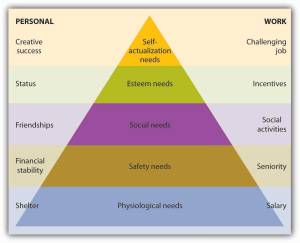
Those management terms all circle back to mindfulness, to personal empathy and the ability of both the individual and environment to foster dialogue in order to transform conflict. Be it conflicts or differences in needs/wants between co-workers – or across the bargaining table – the ability to communicate and find common ground is increasingly the skill that distinguishes human talents from Artificial Intelligence (AI).
Now, at least, there is a greater focus on developing so-called ‘soft skills’. This trend responds to our failure to contend with an increasing reliance on, and addiction to technology. What’s more, still, as technology increasingly supplants entire portfolios of routine management duties, how will future workplaces valorise empathy within known matrices?
How do we teach students the value of happiness, the practice of compassion and the skills for effective communication, negotiation and conflict resolution? In so far as leading culturally diverse workforces, the research is as clear as a prayer bell: Innovation requires dialogue – actual talk between equals. Innovation is therefore built on collaboration. Collaboration requires cooperation. Cooperation requires commitment. Commitment cultivates inclusion. Inclusion fosters commitment. Commitment depends on trust-building. Trust-building requires dialogue. Cooperation must be practiced and rehearsed, in addition to celebrated and applauded. We are effectively teaching how to work within a community. Those tools must play the greater part of management toolkit, over and well-over more punitive means of enforcing compliance to rules.
“I’m not here to be your friend.”
Those are words I hope no one would ever hear neither in the classroom from educators, nor in the workplace from managers. It implies the speaker’s inability to distinguish friendliness from being friends. It is indeed a thin line. Social media interactions with colleagues have virtually erased that line – at least re-drawn it. Irregardless – as we say in Kentucky for emphasis – kindness matters! I genuinely pity those who have not learned kindness at home or school; it’s traumatic.
In order to collaborate, to genuinely work together, requires some level of friendliness, beyond cordiality. It is irrational to lead through control and project the image of being in control through distant, dispassionate unfriendliness. BTW, the notion of dispassionate rationality and objectivity have been historically valorized academia even when it was clear.
I would not be the first university student to observe (though lacking the skills to explain): “The professors who prided themselves on their capacity to be objective were most often those who were directly affirmed in their caste, class, or status position” (hooks, 2003: 128). Their inability to connect, acknowledge and come to peace with their own emotionality and spirituality. “At times objectivism in academic settings is a smokescreen, masking disassociation (ibid: 129). Objectivity is a crutch:
“Denying the emotional presence and wholeness of students may help professors who are unable to connect focus more on the task of sharing information, facts, data, their interpretations, with no regard for listening to and hearing from students. (ibid: 129).”
The smoke and mirrors masks a pain so cutting so deep that skilled educators carve it out of their work, and further discourage it in peers and students. Sadly, I believe that managers have been taught to operate under the same logic. Hurt people hurt people.
Hurt people hurt people.
Today, we’re better able to acknowledge the maturity needed to reveal both one’s strengths and weaknesses – including with subordinates. The key skill is emotional flexibility and consequentially, the ability to seek and offer support. Failing to do so reduces opportunities for team members’ whole-hearted contributions of knowledge and skills. While it is still professional to keep some amount of distance between one’s private and personal lives, social media is a typical example of how those norms no longer apply. Yeah, it’s weird if you’re not Facebook friends with at least some of your colleagues.
What are responsible ways to use one’s public image that aligns with our own personal ambitions and goals? This was simply NOT an area of thinking in the classroom prior to social media. Yet, ‘bullying’ is a relatively modern concept brought to light by the LGBTQ community response to the suicide of a university student as a result of cyber-bullying because he was gay.
In 2010, Tyler Clementi, a first-year university student in America, was secretly filmed being intimate with another man by his roommate and a mutual friend, (or so he believed). The two colluded to threaten to out Clementi in what they all knew as a homophobic (university) environment. This resulted in Clementi’s suicide. Imagine such blackmail, bullying and harassment at work! What skills should the educational environments have provided Tyler and his roommates?
The response from the queer community was clear: Hope. For example, activist/journalist Dan Savage launched an internet campaign that encouraged LGBTQ+ youth, which was picked up by mainstream media outlets and entertainment. The #ItGetsBetter campaign quickly amasses hundreds of posts by celebrities of all flavors to combat anti-gay bullying. Things did get better. We put bullying on the map! Be it work or school, bullying is no longer tolerated…at least formally.
Yet, what of genuine happiness, not just survival? While I can’t speak for every faith, the notion of happiness if central to Buddhist philosophy. “The gratification of desire is not happiness,” writes Buddhist teacher Daisaku Ikeda in his 2017 essay collection, Hope is a Decision. What’s more, individual happiness is tied to our interconnectivity. The Soka Gaikkai, a global Buddhist organisation mentored by Ikeda, operates under the slogan “World peace through individual happiness” to acknowledge the interconnectivity of both humanity as a whole, and the place of happiness with the broader objective of peace.
Seen one way, happiness is neatly balanced at the tip of the pyramid of needs, and its inverse: wants and desires. For clarity: While adults may scoff when a teenager says they “need” the latest iPhone or they’ll ‘die’ we responsibly know that those youthful aches and pains are as real to them as any physical trauma one might suffer. We know that showing up at school with the latest cool gadget has as much to do with the higher-order needs for them as we may wish them to perceive their basic needs such as food, shelter and security. Hence, the parenting task becomes one of teaching skills to contextualise such desires and value delayed gratification.
These lessons are too often relegated to parenting due to the secularisation of schooling and workplaces in the west. Western secularism often fails to distinguish religion from spirituality, to the detriment of the latter since we remain staunchly Christian societies, especially to the extent of chauvinism when faced with an ‘other’. Any non-Christian in the west can see the secularism is superficial – even Stevie Wonder can see that. Echoing her own call for greater attention to spirituality in secular education bell hooks quotes HH Dalai Lama’s thoughts in the need for the distinction in the second installment of her seminal teaching trilogy:
 Spirituality I take to be concerned with those qualities of the human spirit—such as love and compassion, patience, tolerance, forgiveness, contentment, a sense of responsibility, a sense of harmony—which brings happiness to both self and others. … (hooks, ‘Spirituality in Education’ in Teaching Community: A Pedagogy of Hope, 2003 pg. 157-164)
Makes place in and around the classroom. As a lecturer, I am a coach, guide, mentor, leader and have even befriended students (particularly after their graduations). One primary aim and source of satisfaction in the classroom is facilitating values-based dialogue across differences in perspectives. My role is not just to dump selective parts of my knowledge into students’ heads, nor simply to train certain skills. Nay, we’re always teaching how to live in a diverse community.
To get more in-formation:
- hooks, bell. Teaching Community: A Pedagogy of Hope. New York: Routledge, 2003. Print.
- Ikeda, Daisaku (2017). Hope Is a Decision: Selected Essays. Middleway Press. ISBN 978-0-9779245-8-5.
Share this:


100% of the emotional labour, 0% of the emotional reward: #BlackenAsiawithLove

Last night over dinner and drinks, I spoke about race in the classroom with two white, upper-middle-class gay educators. Neither seemed (able) to make any discernable effort to understand any perspective outside their own. I had to do 100% of the emotional labour, and got 0% of the emotional reward. It was very sad how they went on the attack, using both passive and active aggression, yet had the nerve to dismiss my words as ‘victimhood discourse’. This is exactly why folks write books, articles, and blogs like ‘Why I’m No Longer Talking to White People About Race’.
Worse, they both had experienced homophobia in the classroom, at the hands of both students and parents. Nonetheless, they had no ability to contribute to the emotional labour taking place as we spoke about race. Even worse, the one in charge of other educators had only 24 hours earlier performed the classic micro-aggression against me: The brown blur. He walked right past me at our initial meeting as I extended my hand introducing myself while mentioning the mutual friend who’d connected us because, as he said, he was “expecting” to see a white face. He was the one to raise that incident, yet literally threw his hands in the air, nodding his head dismissively as he refused any responsibility for the potential harm caused.
“I’m an adult,” I pled, explaining the difference between me facing those sorts of aggressions, versus the young people we all educate. This all fell on deaf ears. Even worse still, he’d only moments earlier asked me to help him understand why the only Black kid in one of his classes called himself a “real nigger.” Before that, he had asked me to comment on removing the N-word from historical texts used in the classroom, similar to the 2011 debate about erasing the N-word and “injun” from Huckleberry Finn, first published in 1884. According to the Guardian, nigger is “surely the most inflammatory word in the English language,” and “appears 219 times in Twain’s book.”
Again, he rejected my explanations as “victimhood.” He even kept boasting about his own colorblindness – a true red flag! Why ask if you cannot be bothered to listen to the answer, I thought bafflingly? Even worse, rather than simply stay silent – which would have been bad enough – the other educator literally said to him “This is why I don’t get involved in such discussions with him.” They accused me of making race an issue with my students, insisting that their own learning environments were free of racism, sexism and homophobia.
They effectively closed ranks. They asserted the privilege of NOT doing any of the emotional labour of deep listening. Neither seemed capable of demonstrating understanding for the (potential) harm done when they dismiss the experiences of others, particularly given our differing corporealities. I thought of the “Get Out” scene in the eponymously named film.
“Do you have any Black teachers on your staff,” I asked knowing the answer. OK, I might have said that sarcastically. Yet, it was clear that there were no Black adults in his life with whom he could pose such questions; he was essentially calling upon me to answer his litany of ‘race’ questions.
Armed with mindfulness, I was able to get them both to express how their own corporeality impacts their classroom work. For example, one of the educators had come out to his middle-school students when confronted by their snickers when discussing a gay character in a textbook. “You have to come out,” I said, whereas I walk in the classroom Black.” Further still, they both fell silent when I pointed out that unlike either of them, my hips swing like a pendulum when I walk into the classroom. Many LGBTQ+ people are not ‘straight-acting’ i.e. appear heteronormative, as did these two. They lacked self-awareness of their own privilege and didn’t have any tools to comprehend intersectionality; this discussion clearly placed them on the defense.
I say, 100% of the emotional labour and none of the emotional reward, yet this is actually untrue. I bear the fruits of my own mindfulness readings. I see that I suffer less in those instances than previously. I rest in the comfort that though understanding didn’t come in that moment, future dialogue is still possible. As bell hooks says on the first page in the first chapter of her groundbreaking book Killing Rage: Ending Racism: “…the vast majority of black folks who are subjected daily to forms of racial harassment have accepted this as one of the social conditions of our life in white supremacist patriarchy that we cannot change. This acceptance is a form of complicity.” I accept that it was my decision to talk to these white people about race.
I reminded myself that I had foreseen the micro-aggression that he had committed the previous day when we first met. A mutual friend had hooked us up online upon his visit to this city in which we now live. I doubted that she’d mentioned my blackness. Nonetheless, I had taken the chance of being the first to greet our guest, realizing that I am in a much safer space both in terms of my own mindfulness, as well as the privilege I had asserted in coming to live here in Hanoi; I came here precisely because I face such aggression so irregularly in Vietnam that these incidents genuinely stand out.
—
Works mentioned:
Eddo-Lodge, R. (2018). Why I’m No Longer Talking to White People About Race. London: Bloomsbury Publishing.
Hanh, T. (2013). The Art of Communicating. New York: HarperOne.
hooks, b. (1995). Killing rage: Ending racism. New York: Henry Holt and Company, Inc.
Share this:


How to prepare for a year in University

In our society consumerism seems to rain supreme. We can buy stuff to make us feel better and we can buy more stuff to express our feeling to others and mark almost most events around us. Retail and especially all the shops have long been aware of this and so they have developed their seasonal material. These seasonal promotions may have become consumer events now although they do signify something incredibly important to culture and our collective consciousness. There is time for Christmas decorations and festive foods, Easter time and chocolate eggs, mother’s day and nauseating cards father’s day for equally grinchworthy cards. There is valentine’s day to say I love you in full fat chocolates, Halloween to give little kids rotten teeth and a red poppy to remember some of our dead. To those add the summer season with the disposable BBQs and of course the back to school season!
The back to school is one of the interesting ones. Geared to prepare pupils and parents for going back to school and plan ahead. From ordering the uniforms to getting all the stationery and books required. I remember this time of the year with some rather mixed emotions. It was the end of my summer holidays, but it was also the time to get back to school. Until one day I finished school and I went to university. Education is seen as part of a continuous process that we are actively involved from the first day at school to the last day in high school and more recently for more people also involve the first day of going to university. Every year is more challenging than the next, but we move up and continue. For those of us who enjoy education we continue the journey further to further or high education.
There is something to said about the preparation process coming to University; it is interesting seeing advertisements on education this time of the year on the tv and social media promoting stuff for this transition; from the got to have smartphone to the best laptop, the fastest printer scanner all in one thingy to the greatest sound system and many more stuff that would get you ready for the year ahead. Do they really help us out and if not, what do we got to do to prepare for coming to university?
Unfortunately, there is no standard formula here but there is a reason for that. Higher education is adult education. This is the first time in our educational journey that we are sitting firmly on the driving seat. We choose to study (or ought to) what we wish to study. It is an incredibly liberating process to have choice. This however is only the beginning. We make plans of our time. In higher education the bulk of the time required is independent study, and as such we got to negotiate how we will plan our time. We got to decide which reading we are going to do first which notes to read what seminar we shall prepare and what assignment we will make a draft of.
There will be days spent in the library looking for a book, days in a coffee shop talking to fellow students about the seminar reading, days in the learning hub working on an assignment. There are highs, lows and everything in between. But regardless of the emotion at every stage thee will be a sense of ownership of knowledge.
In the first couple of sessions, the bulk of the students keep quiet expecting the correct answer to be given. One interpretation or one truth that describes all. It takes a few times before the realisation emerges that the way we analyse, and project knowledge can be different provided we go through the same processes of scrutiny and analysis. Then conversation emerges and the more reading the better the quality of the ideas that shall emerge.
The first year at University is definitely a declaration of independence and the realisation that we all have a voice. Getting on to the road on empowerment. This is a long journey, and on occasions arduous but incredibly rewarding because it leads to an insight greater than before that removes ignorance and lifts the veil of the unfamiliar.
To our newest students – Welcome to the University and to our returning 2 and 3 years – Welcome back!
Share this:


Terrorised into compliance

Learning and teaching is a complex business, difficult to describe even by those in the process of either/or both. Pedagogy, as defined by Lexico is ‘[t]he method and practice of teaching, especially as an academic subject or theoretical concept’. It underpins all teaching activity and despite the seemingly straightforward definition, is a complex business. At university, there are a variety of pedagogies both across and within disciplines. How to teach, is as much of a hot topic, as what to teach and the methods and practices are varied.
So how would you feel if I said I wanted Criminology students to quake in their boots at the prospect of missing classes? Or “literally feel terror” at the thought of failing to do their reading or not submitting an assessment? Would you see this as a positive attempt to motivate an eager learner? A reaction to getting the best out of lazy or recalcitrant students? A way of instilling discipline, keeping them on the straight and narrow on the road to achieving success? After all, if the grades are good then everything must be okay? Furthermore, given many Criminology graduate go on to careers within Foucault’s ‘disciplinary society’ maybe it would be useful to give them a taste of what’s to come for the people they deal with (1977: 209).
Hopefully, you are aghast that I would even consider such an approach (I promise, I’m definitely not) and you’ve already thought of strong, considered arguments as to why this would be a very bad idea Yet, last week the new Home Secretary, Pritti Patel stated that she wanted people to “literally feel terror” at the prospect of becoming involved in crime. Although presented as a novel policy, many will recognise this approach as firmly rooted in ideas from the Classical School of Criminology. Based on the concepts of certainty, celerity and severity, these ideas sought to move away from barbaric notions and practices to a more sophisticated understanding of crime and punishment.
Deterrence (at the heart of Classical School thought) can be general or specific; focused on society or individuals. Patel appears to be directing her focus on the latter, suggesting that feelings of “terror” will deter individuals from committing crime. Certainly, one of the classical school’s primary texts, On Crime and Punishment addresses this issue:
‘What is the political intention of punishments? To terrify, and to be an example to others. Is this intention answered, by thus privately torturing the guilty and the innocent?’
(Beccaria, 1778: 64)
So, let’s think through this idea of terrorising people away from crime, could it work? As I’ve argued before if your crime is a matter of conscience it is highly unlikely to work (think Conscientious Objectors, Suffragettes, some terrorists). If it is a crime of necessity, stealing to feed yourself or your family, it is also unlikely to succeed, certainly the choice between starvation and crime is terrifying already. What about children testing boundaries with peers, can they really think through all the consequences of actions, research suggests that may not be case (Rutherford, 1986/2002). Other scenarios could include those under the influence of alcohol/drugs and mental health illnesses, both of which may have an impact on individual ability to think through problems and solutions. All in all, it seems not everyone can be deterred and furthermore, not all crimes are deterrable (Jacobs, 2010). So much for the Home Secretary’s grand solution to crime.
As Drillminister demonstrates to powerful effect, violent language is contextual (see @sineqd‘s discussion here). Whilst threats to kill are perceived as violence when uttered by young, black men in hoods, in the mouths of politicians they apparently lose their viciousness. What should we then make of Pritti Patel’s threats to make citizens “literally feel terror”?
Selected bibliography
Beccaria, Cesare, (1778), An Essay on Crimes and Punishments, (Edinburgh: Alexander Donaldson), [online]. Available from: https://archive.org/details/essayoncrimespu00Becc/page/n3
Foucault, Michel, (1977), Discipline and Punish: The Birth of the Prison, tr. from the French by Alan Sheridan, (London: Penguin Books)
Jacobs, Bruce A., (2010), ‘Deterrence and Deterrability’, Criminology, 48, 2: 417-441
Rutherford, Andrew, (1986/2002), Growing Out of Crime: The New Era, (Winchester: Waterside Press)
Share this:


The tyranny of populism

Himmler (1943)
So, we have a new prime minister Boris Johnson. Donald Trump has given his endorsement, hardly surprising, and yet rather than having a feeling of optimism that Boris in his inaugural speech in the House of Commons wished to engender amongst the population, his appointment fills me with dread. Judging from reactions around the country, I’m not the only one, but people voted for him just the same as people voted for Donald Trump and Volodymyr Zelensky, the recently elected Ukrainian president.
The reasons for their success lie not in a proven ability to do the job but in notions of popularity reinforced by predominantly right-wing rhetoric. Of real concern, is this rise of right wing populism across Europe and in the United States. References to ‘letter boxes’ (Johnson, 2018), degrading Muslim women or tweeting ethnic minority political opponents to ‘go back to where they came from’ (Lucas, 2019) seems to cause nothing more than a ripple amongst the general population and such rhetoric is slowly but surely becoming the lingua franca of the new face of politics. My dread is how long before we hear similar chants to ‘Alle Juden Raus!’ (1990), familiar in 1930s Nazi Germany?
It seems that such politics relies on the ability to appeal to public sentiment around nationalism and public fears around the ‘other’. The ‘other’ is the unknown in the shadows, people who we do not know but are in some way different. It is not the doctors and nurses, the care workers, those that work in the hospitality industry or that deliver my Amazon orders. These are people that are different by virtue of race or colour or creed or language or nationality and, yet we are familiar with them. It is not those, it is not the ‘decent Jew’ (Himmler, 1943), it is the people like that, it is the rest of them, it is the ‘other’ that we need to fear.
The problems with such popular rhetoric is that it does not deal with the real issues, it is not what the country needs. John Stuart Mill (1863) was very careful to point out the dangers that lie within the tyranny of the majority. The now former prime minister Theresa May made a point of stating that she was acting in the national Interest (New Statesman, 2019). But what is the national interest, how is it best served? As with my university students, it is not always about what people want but what they need. I could be very popular by giving my students what they want. The answers to the exam paper, the perfect plan for their essay, providing a verbal precis of a journal article or book chapter, constantly reminding them when assignments are due, turning a blind eye to plagiarism and collusion*. This may be what they want, but what they need is to learn to be independent, revise for an exam, plan their own essays, read their own journal articles and books, plan their own assignment hand in dates, and understand and acknowledge that cheating has consequences. What students want has not been thought through, what students need, has. What students want leads them nowhere, hopefully what students need provides them with the skills and mindset to be successful in life.
What the population wants has not been thought through, the ‘other’ never really exists and ‘empire’ has long gone. What the country needs should be well thought out and considered, but being popular seems to be more important than delivering. Being liked requires little substance, doing the job is a whole different matter.
*I am of course generalising and recognise that the more discerning students recognise what they need, albeit that sometimes they may want an easier route through their studies.
Alle Juden Raus (1990) ‘All Jews Out’, Directed by Emanuel Rund. IMDB
Himmler, H. (1943) Speech made at Posen on October 4, 1943, U.S. National Archives, [online] available at http://www.historyplace.com/worldwar2/holocaust/h-posen.htm [accessed 26 July 2019].
Johnson, B. (2018) Denmark has got it wrong. Yes, the burka is oppressive and ridiculous – but that’s still no reason to ban it, The Telegraph, 5th August 2018.
Lucas, A. (2019) Trump tells progressive congresswomen to ‘go back’ to where they came from, CNBC 14 July 2019 [online] available at https://www.cnbc.com/2019/07/14/trump-tells-progressive-congresswomen-to-go-back-to-where-they-came-from.html [accessed 26 July 2019]
Mill, J. S. (1863) On Liberty, [online] London: Tickner and Fields, Available from https://play.google.com/store/books [accessed 26 July 2019]
New Statesman (2019) Why those who say they are acting in “the national interest” often aren’t, [online] Available at https://www.newstatesman.com/politics/uk/2019/01/why-those-who-say-they-are-acting-national-interest-often-arent [accessed 26 July 2019]


