
Home » Structural Violence (Page 6)
Category Archives: Structural Violence

Some lessons from the lockdown
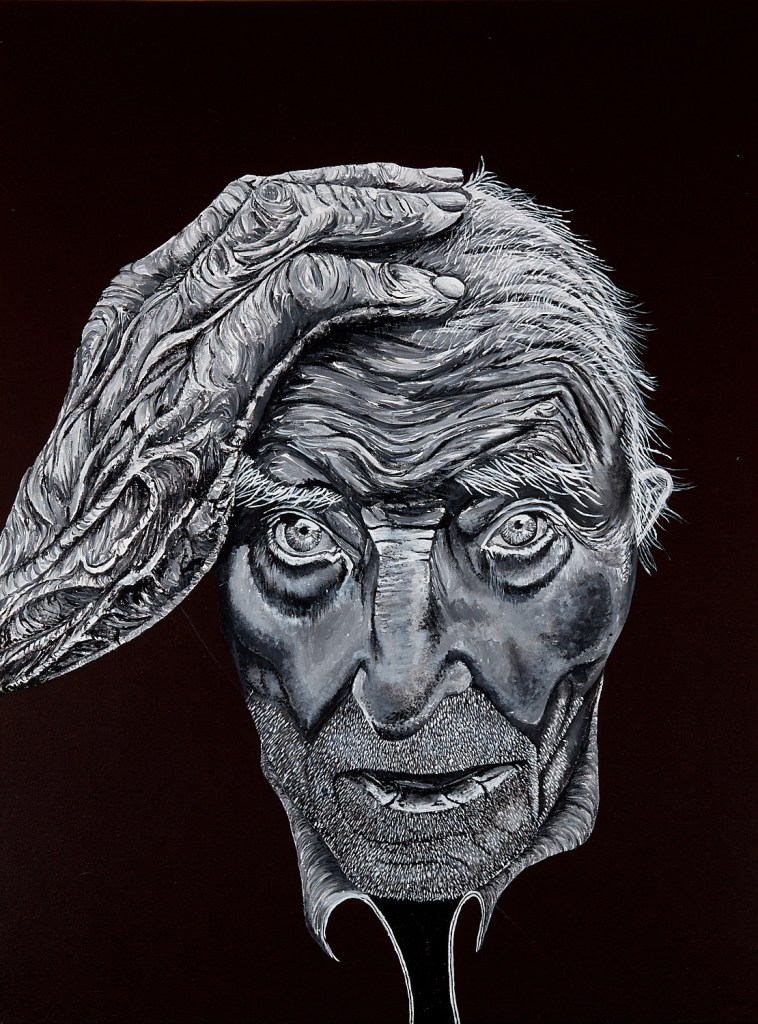
Koestler Arts (2019), Another Me: The Redwoods Centre (secure mental health unit), James Wood QC Silver Award for Portrait, 2019
In March 23, 2020, the UK went into lockdown. The advice given, albeit conflicting in parts, was clear. Do not leave your home unless absolutely necessary, banning all travel and social interactions. This unprecedented move forced people to isolate at home for a period, that for some people will come to an end, when the WHO announces the end of the pandemic. For the rest of us, the use of a face mask, sanitiser and even plastic gloves have become modern day accessories. The way the lockdown was imposed and the threat of a fine, police arrest if found outside one’s home sparked some people to liken the experience with that of detention and even imprisonment.
There was definite social isolation during the pandemic and there is some future work there to be done to uncover the impact it has had on mental health. Social distancing was a term added to our social lexicon and we discovered online meetings and working from home. Schools closed and parents/guardians became de facto teachers. In a previous blog entry, we talked about the issues with home schooling but suffice to say many of our friends and colleagues discovered the joys of teaching! On top of that a number of jobs that in the past were seeing as menial. Suddenly some of these jobs emerge as “key professions”
The first lesson therefore is:
Our renewed appreciation for those professions, that we assumed just did a job, that was easy or straightforward. As we shall be coming back eventually to a new normality, it is worth noting how easy it will be to assign any job as trivial or casual.
As online meetings became a new reality and working from home, the office space and the use of massive buildings with large communal areas seemed to remain closed. This is likely to have a future impact on the way business conduct themselves in the future.
Second lesson:
Given how many things had to be done now, does this mean that the multi occupancy office space will become redundant, pushing more work to be done from home. This will alter the way we divide space and work time.
During the early stages of the lockdown, some people asked for some reflection of the situation in relation to people’s experiences in prisons. The lockdown revealed the inequality of space. The reality is that for some families, space indicated how easy is to absorb the new social condition, whilst other families struggled. There is anecdotal information about an increase on mental health and stress caused from the intensive cohabitation. Several organisations raised the alarm that since the start of the lockdown there has been a surge in incidents of domestic violence and child abuse. The actual picture will become clearer of the impact the lockdown had on domestic violence in future years when comparisons can be drawn. None the less it reveals an important issue.
Third lesson:
The home is not always the safest place when dealing with a global pandemic. The inequality of space and the inequality in relationships revealed what need to be done in the future in order to safeguard. It also exposed the challenges working from home for those that have no space or infostructure to support it.
In the leading up to the lockdown many households of vulnerable people struggled to cope with family members shielding from the virus. These families revealed weaknesses in the welfare system and the support they needed in order to remain in lockdown. Originally the lack of support was the main issue, but as the lockdown continued more complex issues emerged, including the financial difficulties and the poverty as real factors putting families at risk.
Fourth lesson:
Risk is a wider concern that goes beyond personal and family issues. The lockdown exposed social inequality, poverty, housing as factors that increase the vulnerability of people. The current data on Covid-19 fatalities reveal a racial dimension which cannot longer be ignored.
During the lockdown, the world celebrated Easter and commemorated Mayday, with very little interaction whilst observing social distancing. At the end of May the world watched a man gasping for breath that died in police custody. This was one of the many times the term police brutality has related to the dead of another black life. People took to the streets, protested and toppled a couple of statues of racists and opened a conversation about race relations.
Fifth lesson:
People may be in lockdown, but they can still express how they feel.
So, whilst the lockdown restrictions are easing and despite having some measures for the time being, we are stepping into a new social reality. On the positive side, a community spirit came to the surface, with many showing solidarity to those next to them, taking social issues to heart and more people talked of being allies to their fellow man. It seems that the state was successful to impose measures that forced people indoors that borderline in totalitarianism, but people did accept them, only as a gesture of goodwill. This is the greatest lesson of them all in lockdown; maybe people are out of sight, appear to be compliant in general but they are still watching, taking note and think of what is happening. What will happen next is everyone’s guess.
Share this:


A racist and no solution

I am a white, middle class some might say (well my students anyway), ageing, male. I wasn’t always middle class, I’m from working class stock. I’m a university lecturer now but wasn’t always. I spent 30 years in the police service in a small, ethnically diverse, county in England. I didn’t consider myself a racist when I was in the police service and I don’t consider myself a racist now. Nobody has called me a racist to my face, so why the title? It’s how I’m constantly labelled. Every time someone says the police are racist or the police are institutionally racist, they are stating that about me. Just because I have left the police organisation doesn’t change who I am, my beliefs or my values. So, if the police are racist, then by default, I must be.
I’m not suggesting that some police officers are not racist, of course some are. Nor am I denying that there has been and probably still is some form of institutional racism within the police service, perhaps as a whole or perhaps at a more localised or departmental level. But bad apples and poorly thought-out, naïve or even reckless policies, strategies and procedures are not enough to explain what is going on in policing and policing of ethnic minority groups in particular. I’m talking about policing in this country, not across the pond where policing is very different in so many ways that it is hard to even suggest a realistic comparison. That of course is the first problem, what happens in the United States of America is immediately translated into what happens here.
As a lecturer, I constantly hear from students and read students’ work about the racist and brutal police, often interchanging commentary from the United States with commentary here in the United Kingdom, whilst also failing to recognise that there is different policing in Scotland and Northern Ireland. Institutional racism, as defined by Macpherson, is now part of the lexicon, but it no longer has the meaning Macpherson gave it, it is now just another way of saying the police are and every police officer is racist. Some students on finding out that I was a police officer show an instant dislike and distrust of me and sometimes it can take the whole three years to gain their trust, if at all. Students have been known to request a different dissertation supervisor, despite the fact that their research subject is in policing. This is not a complaint, just a statement of facts, painful as it is.
As I try to make sense of it all, I have so many unanswered questions. What is exactly going on? What is causing this conflict between the police and ethnic minority groups? Why is there a conflict, why is there distrust? More importantly, how can it be fixed? Some of the answers may lay in what the police are asked to do, or at least think they are asked to do. Reiner suggests that policing is about regulating social conflict, but which conflict and whose conflict is it? Other authors have suggested that the police are simply a means to allow the rich and privileged to maintain power. There may be some merit in the argument, but most policing seems to take place in areas of deprivation where the disadvantaged are committing crimes against the disadvantaged. The rich and powerful of course commit crimes but they are nowhere near as tangible or easy to deal with. One the problems might be that the rich and powerful are not particularly visible to policing but the disadvantaged are.
Maybe some of the answers lay in notions of stereotyping, sometimes even unconsciously. Experience or narratives of experiences cause a wariness, even a different stance to one people might normally assume. Being thumped on the nose by a drunk, does tend to make a person wary of the next drunk they encounter. So, could stereotyping be a problem on both sides of the divide? My dissertation student that didn’t want me as a supervisor was later to reveal experiences of racist abuse aimed at the police officers she went out on patrol with. Policing is dominated by white males and despite recruitment drives to address the ethnicity gap, this really hasn’t been that successful. If it was meant to help solve a problem, it hasn’t.
I get the sense though that the problem is much deeper routed than policing. Policing and the problems of policing is just a sub plot in a much wider issue of a divided society and one that is in constant conflict with itself. If the police are guilty of racism, then it is society that has caused this. Our society’s values, our society’s beliefs. An unequal society where the poorest suffer the most and the rich get richer regardless. A society where we are all equal but only because someone somewhere said so at some time, it is not reality. I think of Merton’s ‘American Dream’, I don’t buy into the whole concept, but there is something about not having opportunities, equally when I think of Lea and Young and the concept of relative deprivation, whilst not explaining all crime, it has some merit in that notion that the disenfranchised have no voice.
As I write this I am conscious that I have commentated on a very emotive subject particularly at this time. As I watch the events unfold in America, I fear the worst, action followed by reaction. Both becoming increasingly violent and I see the possibility of it happening in this country. I fear that the term ‘police racism’ will become another convenient label. Convenient in the sense that the problems are seen solely as that of policing. If we examine it through a different lens though, we might just find that policing is simply part of the whole rotten tree, society. Fix society and you fix policing. If the label racist fits, it fits the society we live in.

Share this:


Volunteering Matters

Some people volunteer because they have to, I volunteer because I want to. From a personal perspective I knew that the foodbank was the place that I wanted to be at.
I started volunteering in 2016, doing just 1 day a week and as the years have gone by it has meant more hours spread over a couple of days, especially during the Christmas holidays which are incredibly busy. Proving that many volunteers are necessary and needed to help keep it going.
It is a place that suits me because its local and fits around my studies. I am able to learn new skills and gain insightful knowledge. The volunteers are very welcoming and warm people. However, over the years I’ve noticed a dramatic increase in the use of the foodbank and its diversity. In theory, its usage should be on the decrease.
Within the foodbank, we deal with some very complex individuals who require different approaches. It sounds cliché, but I volunteer to make a difference and eradicate the myth that the foodbank is used for those in society that are labelled as people who can’t budget properly.
I have found that service users are predominantly people living on low incomes. People who are working on zero hours contracts; or have reduced hours and having their wages topped up with benefits like Universal Credit. As a result, they just don’t have enough money coming in; leaving hardly anything for essentials such as food and heat. I found during my research that many families have been without electricity, that means no cooking facilities or warmth! Pushing them further into poverty. In this day and age people should not be without the basics.
In my time as a volunteer I have met some lovely people who have been affected by different adverse life events and it is heartbreaking to witness, but equally by giving something back I can see their eyes light up when they are given their food parcels. I feel I am learning to be more compassionate. However, if the person has no access to electricity how are they supposed to cook or provide a meal for their children without electricity?
On a weekly basis we see many different people from so many backgrounds; from civil servants, to social workers and the homeless. Service users can often be emotional and sometimes defensive, who feel they don’t deserve to be given food because they are working. The foodbank does not discriminate, it sees everyone as equal.
What does that say about the world we live in? That being food poor or food insecure is something that must stay hidden and not be talked about…people living with food insecurity would rather go without, than ask for help. The basic income does not cover the essentials such as food after paying bills.
It makes me mad that poverty is an accepted part of society and service users state they feel undervalued and unaccepted. The question that must be asked ‘Is poverty violence? The answer is a resounding YES, due to the structures within society that prevent people living with food insecurity from accessing food. Therefore, locking them into poverty, preventing them from moving out of the cycle of deprivation.
It is left to charitable organisations to do whatever they can to help that person to be able to eat and survive. But how long can these charities go on for? The Trussell Trust began in 2000 in the UK….
Children and families should not be going without food, as it is a fundamental right that everyone should have access to the basics. Food insecurity is more prominent now than ever with The Trussell Trust (2020) reporting an increase of 81% in emergency food parcels.
The foodbank is available to help people to access a 3 day food parcel to ‘see them through” a difficult period in their lives. During my time spent conducting my dissertation within the foodbank, food poverty was a combination of a variety of reasons such as low income, often together with a contributory factor such as an adverse life event. For example, the loss of employment or breakdown of a relationship which will only add more shame and stigma. The foodbank is not just about giving away free food, it’s about offering a safe place to sit and get warm and service users can relax, tell their stories and feel free for as long as they can, before they have to face more challenges from the world.
Furthermore, some in society see the foodbank as the sticking plaster that holds the poor in society together. I would say that without the foodbank many people would be committing crimes or be starving. Some politicians have stated that food banks are the heart of community cohesion. The only time I have seen the local MP at our foodbank is for a photo opportunity. The poor in society are forgotten and its about time they weren’t!
The service users are people who are neglected by society and the government, who by definition, make them feel they are to blame for their situation. By visiting the foodbank we show them respect and compassion.
Share this:


The victimisation of one

One of the many virtues of criminology is to talk about many different crimes, many different criminal situations, many different deviant conditions. Criminology offers the opportunity to consider the world outside the personal individual experience; it allows us to explore what is bigger than the self, the reality of one.
Therefore, human experience is viewed through a collective, social lens; which perhaps makes it fascinating to see these actions from an individual experience. It is when people try to personalise criminological experience and carry it through personal narratives. To understand the big criminological issues from one case, one face, one story.
Consider this: According to the National Crime Agency over 100K children go missing in the UK each year; but we all remember the case of little Madeleine McCann that happened over 13 years ago in Portugal. Each year approximately 65 children are murdered in the UK (based on estimates from the NSPCC, but collectively we remember them as James Bulger, Holly Wells and Jessica Chapman. Over 100 people lost their lives to racially motivated attacks, in recent years but only one name we seem to remember that of Stephen Lawrence (Institute of Race Relations).
Criminologists in the past have questioned why some people are remembered whilst others are forgotten. Why some victims remain immortalised in a collective consciousness, whilst others become nothing more than a figure. In absolute numbers, the people’s case recollection is incredibly small considering the volume of the incidents. Some of the cases are over 30 years old, whilst others that happened much more recently are dead and buried.
Nils Christie has called this situation “the ideal victim” where some of those numerous victims are regarded “deserving victims” and given legitimacy to their claim of being wronged. The process of achieving the ideal victim status is not straightforward or ever clear cut. In the previous examples, Stephen Lawrence’s memory remained alive after his family fought hard for it and despite the adverse circumstances they faced. Likewise, the McGann family did the same. Those families and many victims face a reality that criminology sometimes ignores; that in order to be a victim you must be recognised as one. Otherwise, the only thing that you can hope for it that you are recorded in the statistics; so that the victimisation becomes measured but not experienced. This part is incredibly important because people read crime stories and become fascinated with criminals, but this fascination does not extend to the victims their crimes leave behind.
Then there are those voices that are muted, silenced, excluded and discounted. People who are forced to live in the margins of society not out of choice, people who lack the legitimacy of claim for their victimisation. Then there are those whose experience was not even counted. In view of recent events, consider those millions of people who lived in slavery. In the UK, the Slavery Abolition Act of 1833 and in the US the Emancipation Proclamation Act of 1863 ostensibly ended slavery.
Legally, those who were under the ownership of others became a victim of crime and their suffering a criminal offence. Still over 150 years have passed, but many Black and ethnic minorities identify that many issues, including systemic racism, emanate from that era, because they have never been dealt with. These acts ended slavery, but compensated the owners and not the slaves. Reparations have never been discussed and for the UK it took 180 years to apologise for slavery. At that pace, compensation may take many more decades to be discussed. In the meantime, do we have any collective images of those enslaved? Have we heard their voices? Do we know what they experience? Some years ago, whilst in the American Criminology Conference, I came across some work done by the Library of Congress on slave narratives. It was part of the Federal Writers’ Project during the great depression, that transcribed volumes of interviews of past slaves. The outcome is outstanding, but it is very hard to read.
In the spirit of the one victim, the ideal victim, I am citing verbatim extracts from two ex-slaves Hannah Allen, and Mary Bell, both slaves from Missouri. Unfortunately, no images, no great explanation. These are only two of the narratives of a crime that the world tries to forget.
“I was born in 1830 on Castor River bout fourteen miles east of Fredericktown, Mo. My birthday is December 24. […] My father come from Perry County. He wus named Abernathy. My father’s father was a white man. My white people come from Castor and dey owned my mother and I was two years old when my mother was sold. De white people kept two of us and sold mother and three children in New Orleans. Me and my brother was kept by de Bollingers. This was 1832. De white people kept us in de house and I took care of de babies most of de time but worked in de field a little bit. Dey had six boys. […] I ve been living here since de Civil War. Dis is de third house that I built on dis spot. What I think ‘bout slavery? Well we is getting long purty well now and I believe its best to not agitate”.
Hannah Allen
“I was born in Missouri, May 1 1852 and owned by an old maid named Miss Kitty Diggs. I had two sisters and three brothers. One of my brothers was killed in de Civil War, and one died here in St. Louis in 1919. His name was Spot. My other brother, four years younger than I, died in October, 1925 in Colorado Springs. Slavery was a mighty hard life. Kitty Diggs hired me out to a Presbyterian minister when I was seven years old, to take care of three children. I nursed in da family one year. Den Miss Diggs hired me out to a baker named Henry Tillman to nurse three children. I nurse there two years. Neither family was nice to me.”
Mary Bell
When people said “I don’t understand”, my job as an educator is to ask how can I help you understand? In education, as in life, we have to have the thirst of knowledge, the curiosity to learn. Then when we read the story of one, we know, that this is not a sole event, a bad coincidence, a sad incident, but the reality for people around us; and their voices must be heard.
References
Nils Christie (1986) The Ideal Victim, in Fattah Ezzat A (eds) From Crime Policy to Victim Policy, Palgrave Macmillan, London
Missouri Slave Narratives, A folk History of Slavery in Missouri from Interviews with Former Slaves, Library of Congress, Applewood Books, Bedford
Share this:


“I can’t breathe”

George Floyd’s words: “I can’t breathe”, have awaken almost every race and creed in relevance to the injustice of systematic racism faced by black people across the world. His brutal murder has echoed and been shared virtually on every social media platform – Floyd’s death has changed the world and showed that Black people are no longer standing alone in the fight against racism and racial profiling. The death of George Floyd has sparked action within both the white and black communities to demand comprehensive police reforms in regards to police brutality and the use of unjust force towards ethnic minorities.
There have been many cases of racism and racial profiling against black people in the United Kingdom, and even more so in the United State. Research has suggested that there have been issues with police officers stereotyping ethnic minorities, especially black people, which has resulted in a vicious cycle of the stopping and searching of those that display certain physical features. Other researchers have expounded that the conflict between the police and black people has no correlation with crime, rather it is about racism and racial profiling. Several videos circulating on social media platforms depict that the police force does harbour officers who hold prejudice views towards black people within its ranks.
Historically, black people have been deprived, excluded, oppressed, demonised and brutally killed because of the colour of their skin. As ex-military personnel in Her Majesty’s Armed Forces and currently working as a custody officer, I can say from experience that the use of force used during the physical restraint on George Floyd was neither necessary nor proportionate to the circumstances. In the video recorded by bystanders, George Floyd was choked in the neck whilst fighting for his life repeating the words “I can’t breathe”. Perhaps the world has now noticed how black people have not been able to breathe for centuries.
The world came to halt because of Covid-19; many patients have died because of breathing difficulties. Across the world we now know what it means if a loved one has breathing issues in connection with Covid-19 or other health challenges. But nothing was done by the other police officers to advise their colleague to place Floyd in the recovery position, in order to examine his breathing difficulties as outlined in many restraint guidelines.
Yet that police officer did not act professional, neither did he show any sign of empathy. Breath is not passive, but active, breathing is to be alive. Racial profiling is a human problem, systematic racism has destroyed the world and further caused psychological harm to its victims. Black people need racial justice. Perhaps the world will now listen and help black people breathe. George Floyd’s only crime was because he was born black. Black people have been brutally killed and have suffered in the hands of law enforcement, especially in the United States.
Many blacks have suffered institutional racism within the criminal justice system, education, housing, health care and employment. Black people like my own wife could not breathe at their workplaces due to unfair treatment and systematic subtle racial discrimination. Black people are facing unjust treatment in the workplace, specifically black Africans who are not given fair promotional opportunities, because of their deep African accent. It is so naïve to assume that the accent is a tool to measure one’s intelligence. It is not overt racism that is killing black people, rather the subtle racism in our society, schools, sports and workplace which is making it hard for many blacks to breathe.
We have a duty and responsibility to fight against racism and become role models to future generations. Maybe the brutal death of George Floyd has finally brought change against racism worldwide, just as the unprovoked racist killing of black teenager Stephen Lawrence had come to embody racial violence in the United Kingdom and led to changes in the law. I pray that the massive international protest by both black and other ethnicities’ will not be in vain. Rather than “I can’t breathe” reverberating worldwide, it should turn the wheel of police reforms and end systematic racism.
“Restricting someone’s breath to the point of suffocation is a violation of their Human Rights”.
Share this:


2020 Vision
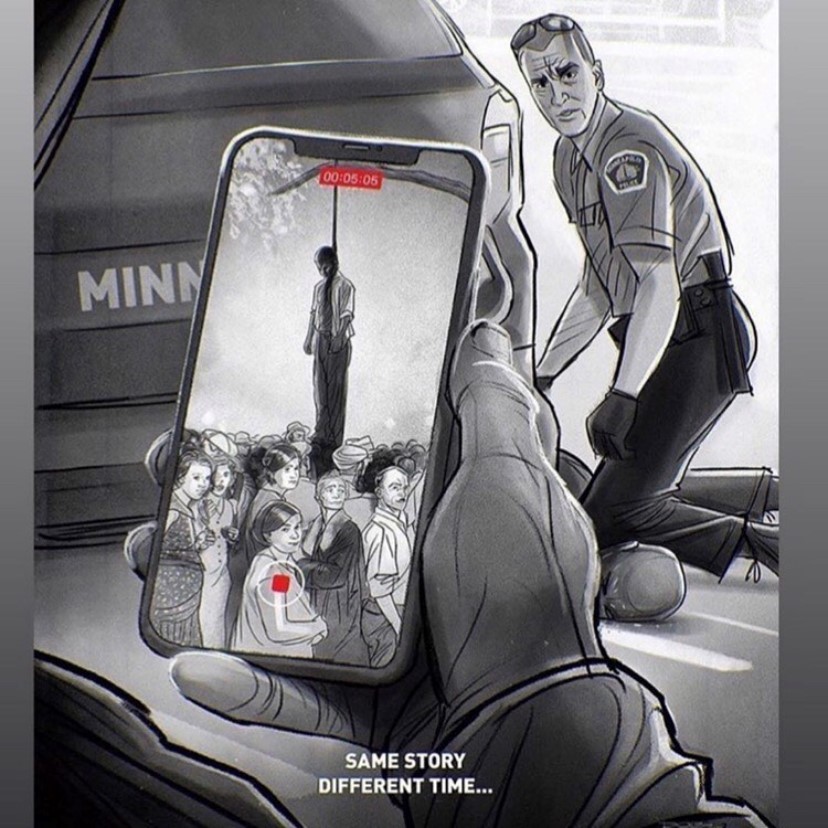
From a young age the Golden Rule is instilled in us, treat others the way you want to be treated. We follow the rule staying home to protect the NHS in these difficult times, we are all humans we want to be safe; we want to protect our loved ones and cover them with a blanket of safety. We supported captain Tom on his quest to raise money for the NHS, we have complimented his humanitarianism.
It has been a hard time for us all. But in a time of uncertainty we have come together as a community to support each other. We have all had a sense of worry, if we leave the house to buy the necessities, the fear of the invisible killer plagues us. We have all helped play the part in flattening the curve. We have felt sadness for the families that have become victims to this killer. But we have not lost hope, we are still hoping for a vaccination to be ready to protect us. Its great that we have the NHS to help us if we are attacked by this enemy. The police were given extra powers to prevent us from breaking the rules and whatever the opinion is of the police we have to acknowledge that these powers that they have been given symbolises law and order and the order being the contribution to stopping the spread of this horrific virus which in essence will help to protect us.
I am contemplating on this because although there have been bumps in the road throughout this lockdown, we all have the same goal……… to live. If we didn’t want to live we would leave our houses unmasked, ignoring all government advice. If we didn’t want to protect our loved ones and our community we wouldn’t support the NHS.
I am going into deep thought……….
Imagine a world where you are not protected, imagine being at war every time you leave your house, imagine a world where you are not safe in your house……..
Picture this an intruder walks into your house, is outraged by the colour of your skin BANG she shoots you in cold blood. The offender uses the excuse she thought she was being robbed, she thought you were the intruder. However, she was the one who let herself into your house. The media and the police sympathise with this woman, as she is a police officer. In their eyes she does not look dangerous, the victim of this crime is seen as a danger to society based only on the colour of his skin. She is not arrested straight away because she has a thing that is more powerful than anything in America, she has White privilege. Imagine a loved one is killed in this way and during the sentencing of the murderer, the judge hugs the offender as if she has done nothing wrong and disregards the feelings of your loved ones. How would you feel?
This did not happen during the civil rights movement, this happened in 2019.
Imagine going for a for some much needed exercise, you are jogging, listening to your music, taking in the fresh air. You are thinking about getting your physique ready for the summer. Two men hunt you down like cattle where they shoot you in broad daylight and they are not arrested straight away. instead your innocence is debated because you are a BLACK man that has left your neighbourhood and entered theirs…..
Imagine it is not a secret that your race can and is used as a weapon against you.
I have seen people gossip about the activities of others during lockdown. I have witnessed the police being called on youths that are skateboarding in a skate park. I have seen the outrage of the people who have been reported by the police for leaving their houses and seemingly not following the rules. Imagine going to the park, having a picnic, going for a walk and being told by a stranger they are going to call the police on you and they can use your race as a weapon, they know by telling the police the colour of your skin it will have an automatic punishment. After all, All Black people are criminals right?
Imagine the police are called on your father as he is suspected of committing a non-violent crime. He is handcuffed and pinned to the floor by a police officer. The officer is leaning on your father’s neck. He can’t breathe, he is begging for mercy, he is calling out for your grandmother, his mother…… he’s an EX con, a criminal, he took drugs, he robbed somebody, he went to prison. But I ask this should he have been executed?
Imagine the people who can see this crime being committed, imagine your 17 year old sister, daughter, friend recorded the execution of George Floyd and she could only record the crime because she fears that the other officers will turn their guns on her if she speaks out.…..After all we must protect the police from these ANGRY BLACK WOMEN they are a big problem with society……
Imagine being BLACK in America.
In recent months I have struggled to go on Facebook. The reason why is because, while many people enjoy the platform discussing current issues and sharing pictures, more and more I have seen subtle tokens of racism becoming more and more prevalent. I refuse to argue with morons who seemed to have lost all sense of humanity. It is gut wrenching when you have Facebook friends who think it’s acceptable to be outright racist. I understand we do not all hold the same values, I understand we do not all advocate for the the hurt and pain of others. But I do not stand with people who do not want to try and understand that their actions destroy communities. No, I’m not talking about the ones who use the sentiment #All Lives Matter, I agree all lives do matter. But there is a deeper message to the Black Lives Matter movement. And so many people of different colours have been understanding of this notion and want to get an understanding of the disproportionate treatment of the Black community and for that I appreciate your support.
I’m talking about the ones that use George Floyd’s reputation to try and denounce the feelings of the Black community. I’m talking about the ones who act surprised that police brutality against the BLACK community is not a new phenomena. I’m talking about the ones who have a problem with #Blackout Tuesday, #Black Lives Matter and the ones who have jumped on the band wagon to make their businesses and institutions look like they are progressive when they have done nothing but use oppressive practices keep BLACK people in their place. I SEE YOU!
It is very hard to understand how people have been so sheltered by this phenomena, even though social media has been covered with news footage of the Breonna Taylor’, Oscar Grant’, Ahmaud Arbery’, Jordan Davis’ the Tamir Rice’ murder I could go on……..
So, I’m going to round this post off by saying a few small words. For the ones who I have a problem with. I am not your bredrin, don’t use me as the Black friend when you run your mouth and show your true racism and need a token Black friend to save you from your mess. It’s cool when you want to dance to our music, eat our food, wear our fashion, appropriate our hairstyles and when you have a fifth cousin twice removed that has mixed race kids or you decide you want to experiment by dating someone that is Black I SEE YOU! don’t try and hide behind the smoke and mirrors and don’t use your relationships as a platform to validate your racism. You have no right to talk negatively about our oppression, you have no right to invalidate our pain. Don’t pretend you see us as your equal, don’t pretend we are accepted into your circle. Stay silent while we are being brutalised, stay silent while we are disproportionately dying of Covid! continue to stay in your bubble I hope you never need to call on the Black community to speak up for YOU! A lot of people have said 2020 is a year they will cancel, as it’s been a year of devastation, but I say 2020 has given me the 2020 vision to see people for exactly who they are.
Share this:


Another one bites the dust #AhmaudAbery #BlackenAsiaWithLove
There is newly released video evidence of Maud, as he was known to kin, minutes before he was shot to death during a so-called citizen’s arrest. On the video, Maud paused during his job, caught his breath, and for exactly six minutes can be seen on video surveillance surveying a neighborhood construction site shortly before he was killed by a “homegrown posse.” This is exactly as my husband would do along his jogs.

‘Let’s get in Formation!’
My husband is fascinated with how things work, and how they are built. He can repair and engine, a toilet, a lawn-mower, locks, hinges, and plenty of things on our house. He got that from his daddy, who has an entire workshop in their basement dedicated towards up-keeping their home. He even made hubby and I a bench. My husband grew up in a German village believing that owning property was a communal enterprise. He certainly feels entitled to inspect any work that impacts the landscape of the hood. So now when he ‘inspects’ things, he behaves as if he has the right to know what’s going on in the world. I don’t have those rights.
A citizen’s arrest means an entitled citizen can stop and attain anyone whom they believe to be a criminal; legally they must have witnessed the crime. On the 9-1-1 call, Maud’s killers couldn’t even tell the emergency responder what crime they’d supposedly seen, nor were there records of these so-called string of break-ins that had allegedly occurred, justifying their anger and pursuit of the unarmed jogger. “Why make a citizen’s arrest when 9-1-1 was an available option?” emphasizes one cable news pundit during the rolling coverage of yet another Black boy slain.
I hasten to think of how Fox News is covering this story. Does it matter that he was unarmed? So what if the law doesn’t consider Maud’s right to stand his ground? Why even mention that some neighbors regularly saw Maud out jogging? Who cares that Maud was loved? We’ll forget that Maud’s alleged crime does not fit the punishment.

We make our own videos. Beyoncé’s controversial music video Formation ends in a back alley, a little Black boy slays a whole SWAT team in attack formation, with the graffiti: “Stop killing us” This directly echoes the censored ending to Michael Jackson’s 1991 Black or White video. After the music finishes, a black panther morphs into our hero, who then slays racist graffiti in the back alley of a fancy Hollywood studio. Ouch. Importantly, “as his skin became whiter, his work became blacker,” observed one Guardian writer 11 years after the singer’s tragic death. Jackson removed it and apologized after public outcry over his violence and crotch-grabbing. Maybe it reminded folks of a lynching!
-No justice, no peace.
Share this:


Within Grey Walls
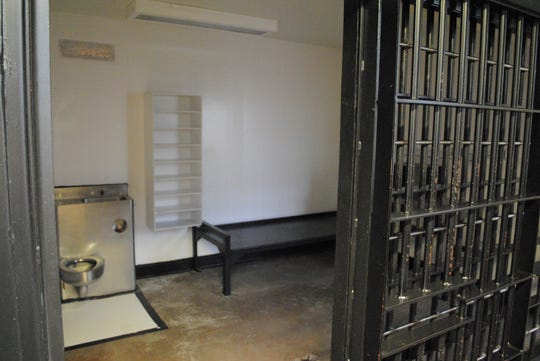
“Waking up to gray walls and black bars…in the silence of ones own thoughts, leaves one to a feeling of somberness…as those around begin to stir and began their individual day, hope creeps into ones mind….as the discussions regarding legal strategies began, hope then becomes more than just a shadow…as guys began to discuss their potential future beyond prison and being locked in a cell for days at a time, hope becomes more than just a fleeting moment! Silence can sometimes be ones own enemy on death row:-…So I condition myself to discover the “why” I fight through the fits of depression and despair, instead of focusing on the “how’s”….because pursuit of the “why’s” bring about methods of finding a solution….encouragement to remain hopeful!”
Everyone has the right to life, liberty and security of person (1).
Without the right to life, we cannot enjoy the freedoms set forth in the Universal Declaration of Human Rights.
However, what if one’s life was imprisoned and waiting to be ended for crime? In addition, what if a person was to be put to death for associating with a particular demographic?
The death penalty is the authorization of the state to kill a citizen for a crime, whether it’s murder, rape, treason, or more severe crimes, such as crimes against humanity and genocide (2).
Whilst the death penalty can be a deterrent, provide justice, and be the ultimate punishment for a crime and justice for victims, it is also used in some countries to persecute minority groups, such as the LGBT community (3) (4). (In references, there is a link to an interactive map of countries that utilize the death penalty for LGBT groups).
According to the Death Penalty Information Centre (DPIC), around 82% of cases involving capital punishment, race was a determining factor of giving this punishment, in comparison to white counterparts (5). However, the justice system is far from perfect, and miscarriages of justice occur. Due to issues of racism and racial bias (particularly within the American Justice System), this has seen members of minority groups and innocent people put on death row whilst a criminal still walks free. A damning example of a miscarriage of justice, and a clear demonstration of racism, is the case of George Stinney, whom, at the age of 14, was wrongly accused of murdering 2 girls. He was taken to court, tried by an all white jury, and was given the electric chair (6).
This, ultimately, is the state failing to protect its citizens, and causing irreparable damage to others. The George Stinney case is a condemnatory example of this. On top of that, it is hard to measure deterrence, and whether capital punishment actually deters people from committing crime.
However, what is it actually like being on death row?
June 2017 saw the start of a new friendship – a unique friendship. What simply started out with me wanting to reach out and be a ray of light to someone on death row, turned into a wonderful experience of sharing, support and immeasurable beauty. In June 2017, I began writing to a man on death row, and simply wanted to be a ray of light to someone in a dark place.
He has shared some of his thoughts of what it is like to be on death row:
“Perseverance. This is key when facing a day in prison (physically and mentally) because is never “where” you are physically, but your ability and willingness took push through those times of adversity and overcome the very things that have the power to bring you down….such as evil”. BUT- when we examine the word “evil” look closely…. Do you see it yet? ….. It’s “LIVE” backwards and to me its when we lose our patience to “LIVE” that we have brushes with “evil”…no???? So within these walls I do my best to find the “silver lining” and develop the better aspects of me”.
Now, it may seem effortlessly -but- in all honestly….its very difficult to face each day with the uncertainty of knowing whether the presence I have is one that has significance….in here I have to prepare myself on a constant basis in order to be the best version of myself no matter what lays ahead.
Thankfully….I have met an incredible person, who guides me by way of her words…offers me comforts by way of her thoughts and prayer and encourages me through her never ending presence! She is beautiful in every aspect of the word…She has helped me to discover that EVERYTHING and NOTHING awaits beyond forever!
References
(1) Universal Declaration of Human Rights (UNDH) Article 1 Available online at: https://www.un.org/en/universal-declaration-human-rights/ Accessed on 21/01/2020
(2) Louise Gaille ’15 Biggest Capitol Pros and Cons’ Available online at: https://vittana.org/15-biggest-capital-punishment-pros-and-cons Accessed on 24/03/2020
(3) The Human Dignity Trust ‘Saudi Arabia: Types of Criminalisation’ Available online at: https://www.humandignitytrust.org/country-profile/saudi-arabia/ Accessed on 24/03/2020
(4) Death Penalty Information Centre ‘Executions By Race and Race of Victim’ Available online at: https://deathpenaltyinfo.org/executions/executions-overview/executions-by-race-and-race-of-victim
(5) Ibid
(6) Snopes Fact Check ‘Did South Carolina Execute 14-year-old George Stinney, then declare him innocent 70 years later?’ Available online at: https://www.snopes.com/fact-check/george-stinney-execution-exoneration/ Accessed on 24/03/2020
Other
Interactive map of countries where the death penalty is used against the LGBT community: https://www.humandignitytrust.org/lgbt-the-law/map-of-criminalisation/?type_filter=crim_gender_exp
Human Writes: https://www.humanwrites.org
Share this:


New Heroes for the Twenty-First Century? (Clue: they don’t wear khaki)
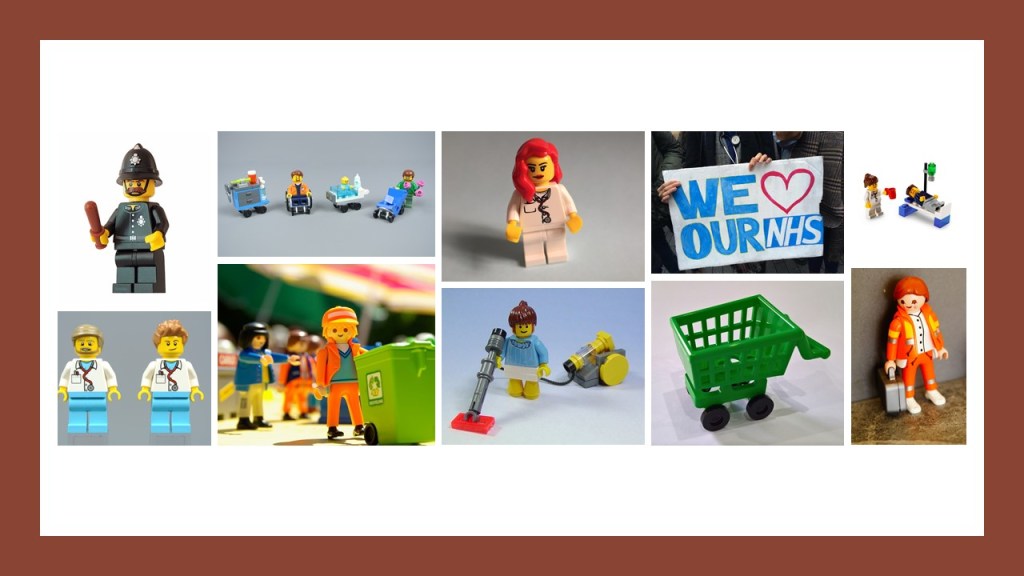
I have blogged before on the way in which society seems to choose what to remember and what to forget. Similarly, I have mused on remembrance, the poppy and the increasing militarisation inherent in paying homage to Britain’s war generation. In the current crisis, despite the despair, I sense a change in our understanding of the term heroism, which I will explore further below.
In the 20th century there was concerted focus on idolising the military man and his function within British society. This is unsurprising, it is not for nothing that Camus describes this period as ‘the century of fear’ (1946/2007: 27). This period was, and remains remarkable, for the two world wars, as well as a variety of other conflicts, within which Britain was involved (along with many other nations). The two world wars provide foundations for the way in which the twentieth-century is discussed and understood, with substantial periods of time often delineated into the short-hand of pre-war, inter-war and post-war.
Although only twenty years in, it is clear that the twenty-first century, cannot be described as peaceful. Rather it has continued with the same approach to international relations, often argued to be immoral, if not illegal, of using military violence to obtain, what Britain views as, reasonable and tangible gains. Whether we focus on Afghanistan, Iran, Iran, Libya, Sierra Leone or Syria, British military might is deemed appropriate, proportionate and necessary (as least in Britain). Certainly, a number of authors have already dubbed our current century, as being in a perpetual, ‘war without end’ (cf. McAlister, 2002, Tertrais, 2004, Schwartz, 2008).
However, in 2020 the world is facing a far more challenging enemy, one which threatens us all, Coronovirus, or as it is more scientifically known, Covid-19. More importantly this is an enemy that cannot be shot, exploded, tortured or conquered in the traditional, well-worn ways of warfare. Instead, this crisis calls for a different kind of hero, one who does not have recourse to an arsenal of increasingly, terrifying weapons.
As with the war, there are two distinctly different experiences, those on the front line and those who are not. Each group has a role to play, for some they will take their lives in their hands, on a daily basis, to tend to the sick, to deliver supplies to organisations, communities and individuals, to maintain vital services. This group will see things, again and again, that are upsetting, that will test their resolve, their empathy, their patience, good-humour and their confidence. For others, their role is to stay out of the way, to stay indoors, to ensure that the disease does not spread further. Each group will have their own tales to tell to each other, as well as to the generations which will follow.

Once this is all over, once we emerge from our enforced isolation, we will have a return to some kind of “normality”, yet this experience is unlikely to disappear from our individual and collective memories. As our forebears, had the war experience to shape their lives, and that of those who followed them (in many unexpected ways), so shall we have a similar defining moment. Whilst the hero of the twentieth century was indisputably a white, straight, able bodied, (nominally) Christian man dressed in khaki, the hero of the twenty-first century will appear in a variety of diverse guises. From the supermarket worker to the school teacher to the carer to the paramedic to the police officer to the undertakers to the cleaners to the small business owners to the scientists, to the nurses, paramedics, doctors, surgeons and all the others, each are serving on the front line of the fight against coronavirus. They are women, men, Black, Asian, white, Muslim, Buddhist, Sikh, Christian and atheist, they are young and old, they are experienced professionals and those just starting out on their working lives, they are well-renumerated, they are poorly paid, they have fears and anxieties, families, friends, and those that love and fear for their safety.
These people have little in common but their humanity and they are redefining heroism second by second, minute by minute, hour by hour, day by day.

References
Calhoun, Laurie, (2002), ‘The Phenomenology of Paid Killing,’ The International Journal of Human Rights, 6, 1: 1-18
Camus, Albert, (1946/2007), Neither Victims Nor Executioners: An Ethic Superior to Murder, tr. from the French by Dwight Macdonald, (Eugene: Wipf and Stock Publishers)
McAlister, Melani, (2002), ‘A Cultural History of the War without End,’ The Journal of American History, 89, 2: 439-455
Tertrais, Bruno, (2004), War Without End, (New York: The New Press)
Schwartz, Michael, (2008), War Without End: The Iraq Debacle in Context, (Chicago: Haymarket Books)

 Thoughts from the criminology team