
Home » stories
Category Archives: stories
Festive Frights

The festive season is almost upon us, and for many of us this means a well-deserved break! As the calendar wraps up and the holidays beckon, why not give your criminological mind a holiday, too? It’s the perfect opportunity to let your imagination soar and dive headfirst into the thrilling world of paranormal fiction.
Taking a temporary step away from cold, hard facts allows us to explore narratives that defy easy explanation, using different parts of our investigative minds. This shift from reality to the realm of the supernatural can be a refreshing break and a wonderful way to recharge before heading into a new year.
This year, something spooky happened! The core mission of the Kids’ Criminology Club, which focuses on expanding knowledge, logic, deduction, and evidence, was temporarily suspended. For a one-off Halloween-esque special, the club transformed into the Kids Paranormal Club.
I am a senior lecturer in Law with a keen interest in the paranormal, and I took our young investigators on a journey into the inexplicable. Together, we explored theories such as the Stone Tape Theory and shared accounts of supernatural phenomena. Following our fascinating session, I challenged the kids to channel their inner storytellers and enter a paranormal story writing competition, with a strict limit of no more than 500 words. The results were chilling, creative, and certainly a departure from Criminology and the Law! All entries, including the winning entry, can be found below.
As you settle in for your holiday break, we hope you’ll find inspiration in these young authors’ terrifying tales. Whether you’re investigating a fictional haunting or simply enjoying a peaceful evening, remember to let your mind wander beyond the police tape and evidence markers. Enjoy the comfort and quiet, and maybe keep an ear out for any strange sounds in your own home…
And finally, while you’re enjoying the comfort and safety of the season and your well-earned break from reality, spare a thought for those who may be facing their own real-life terrors, or simply without the security, warmth, company and peace we often take for granted at Christmas time.
🏆 The Winning Stories
Here are those standout entries that captured our imaginations and sent shivers down our spines.
🥇 Winner: The Radio in Number 13 by Paisley G., age 10
9th October 1967 11:00 pm I have been prompted to start this journal because of an experience I have had in which I don’t feel safe, so I am creating this just in case. My first experience was at night. I was listening to the radio like I always do before bed, there was some show on, I wasn’t really listening; I never really listen, it was just something to do, I suppose. I’m sitting at my desk when I hear footsteps. I live alone and don’t have any pets, that’s when I realised the voices had stopped with a shocking realisation. I knew that the footsteps were coming from the radio. It sounded like heavy boots on stone. I live in a large house with a stone road leading up to the front door. There was a static noise and then the voices were back. I was unsettled but didn’t think much about it. My wife had died only a couple of weeks ago, and I had an odd feeling that they were connected somehow. She was a lovely woman,n and she used to always wear a pair of big black boots.
10th October 1967 11:00 pm Slept uneasy last night – I had a nagging feeling of not being alone. I went about my usual business as normal and had the same experience again: same time, same show, same footsteps.
11th October 1967 11:00 pm Uneasy sleeping again. In the morning, when I left my house, I saw my neighbour Lucy. She is usually a lovely old lady, but when I walked past he house, she ran outside and grabbed me by the hands, looked right into my eyes and said ‘Don’t do it! Don’t open the door! They’re coming!’ Then she ran back inside. It was unsettling, but again didn’t think much of it. The noises were different tonight, footsteps and again they stopped, and I thought the talking would start again, but no, not yet there was the sound of knocking on a door, then it cut back to the show.
12th October 1967 11:00 pm Decided to test it tonight I don’t know what made me do it, but I left the front door open, brought the radio down and sat on a chair by the door. The old lady’s words were ringing in my head, but I had a weird feeling of wanting to prove her wrong. I turned on the radio there was more knocking th-
3:41 am I woke up in my bed, confused about what happened. I ran downstairs to check the door, but it was closed, the chair back in its place, the radio on my desk, as if it had never happened.
13th October 1967 I just turned on the radio the footsteps were going upstairs. They stopped, then the sound of a door rattling my my my door is being shaken help help please pleas ple-
Note from the doctor: The subject had no apparent injuries; they just… died.
Note from the builder: The walls have a trace of a type of mould that could lead to possible madness.
Ghost Mary by Riddhi P., age 11
Fourteen-year-old Isabel Smith and her best friend Anna Hazel live in Riverbend town. Isabel’s twin sister Mary had died two years ago from mysterious reasons, but when Isabel and Anna begin getting chilling messages from her, they find out, she had been taken by wicked blood ghosts that can only take souls on the Day of the Dead! The girls discover a book that says they may be able to bring Mary back by going to the ghost underworld. Desperate, the girls decide to do a ritual that can teleport them to the ghost world! They lit one hundred candles in a perfect circle,e and they both sat in the middle and whispered the forbidden words. When Isabel opened her eyes, she wasn’t in her room anymore; she was in a dark, gloomy place that looked like a graveyard. Fog pressed her skin, whispering, never lifting. Isabel and Anna looked around when Isabel froze. Her heart stopped! Mary was standing just a couple of feet away from them! Mary’s face looked white, her eyes were a pit of black, her clothes were torn and filthy, a black mist surrounded her body. Mary opened her mouth to say something, but before she could, the girls grabbed her hand and pulled her in the circle of candles. “We have to chant the forbidden words backwards fifteen times,” they told her. They began chanting the words once, twice, three times…. “Wait! We have to get the book and burn it, or the blood ghosts will be able to take me and many others again,” cried Mary. Anna dashed to grab the book, but in the shadows, she saw something terrifying – the blood ghosts! Their hollow eyes oozing blood staring at her, their skeleton hands reaching out trying to catch her. Anna grabbed the book and ran towards the circle where Isabel’s voice trembled as she started to chant the words for the tenth time. “Quick, burn the book!” yelled Mary. Just then, the blood ghosts lunged at them and grabbed Mary’s arm. Mary screamed; they were pulling her away from them! Isabel quickly grabbed Mary and dragged her back into the circle. As soon as she did, Anna threw the book in the flames. There was a gust of wind, a ball of energy cloaked the circle of candles like a shield, and the blood ghosts screamed in agony, fading to dust. Isabel finished chanting, the world flippe,d and they were back in Isabel’s room. “What just happened?” Whispered Mary. “It’s over. We’re home!” answered Isabel. They hugged. No more blood ghosts, underworlds or magic words. They were safe. Or were they?.
The Towers of Terror by Quinn G., age 12
Welcome to the Towers of Terror annual story release. Ok, I’m hoping you know what the stone tape theory is. If not, here is a quick rundown: basically, it is the theory that buildings or places have a memory and can replay it, hence ghosts. But what happens at sea? Well, I can tell you that they go to the nearest lighthouse house which then replays them through its beam, and it’s my job to tell the world the stories of wrecked ships, crashed planes and fallen sailors.
Southwold Lighthouse, Norfolk 31/10/2020 Keeper John 12:30 am I’m in for a night tonight with it being Halloween and all. 6:00 pm, just some light activity, a couple of fishing boats, S.S.Mary, an unnamed skipper, a rowboat and a cliff jumper who didn’t want to come to the surface. 7:00 pm, it’s weird that the projections have just stopped. 7:30 pm still nothing. Wait! It is back. No. It’s me, I’m on shore – wait – I’m crumpling to the ground, there is a figure behi-
That’s where his lighthouse log ends, when his colleague went up to take over and found him dead with his pen still clutched in his hand. It is not unusual for things to creep out of the projections. That is why he was there in the first place, to monitor the lighthouse. Even though it is not in operation for ships, you can’t have all those stories building up in such a small space because they will find a way out. But what happened that night was different. Never before has one of the projections interacted with the world outside the projections. There are several other accounts that all go the same way: projections stop, they start again, you see yourself crumble to the floor, and … dead, so we can’t just have people dropping like flies, someone will notice! But if we leave them unattended, they will cause more destruction. So, what would you do? Well, I will tell you what I did/am doing. Finding what came out and how to stop it from coming out again.
That was 5 years ago, and now I can bring you up to date: The entity that was coming out of the projections is now known as the Siren Reaper of the drowned and lost and cannot be explained away. Believe me, I’ve tried, but to no avail. Now to get on to the solution: the one thing that connects the deaths of those keepers was that they had all had a connection with the se, old captains, anglers, sea goers and other jobs that are to do with the sea. After years of contemplation, I have a theory. I think that the Reaper has killed these people because it thinks that they have escaped from it. The solution is to make the keepers not connected with the sea, because then the Reaper will have no business with them. But this does not explain why the projections just stop beforehand, or why the Reaper shows them their death….
Share this:


#CriminologyBookClub: The Reluctant Fundamentalist

As you know from our regular #CriminologyBookClub entries a small group of us decided the best way to thrive in lockdown was to seek solace in reading and talking about books. Building on on what has quickly become standard practice, we’ve decided to continue with all eight bloggers contributing! Our tenth book was chosen by @amycortvriend As can be seen from below, this text gave us plenty to think and talk about.
This was an interesting choice. Having lived through 2001, it was interesting to reflect on events almost two decades ago. I’ve read quite a lot of material around the area, so the content of The Reluctant Fundamentalist didn’t really have any surprises. The use of just one voice to tell the story was interesting and left you wondering what (if anything) the other person in the conversation was saying. I found the sex scenes with Erica rather disturbing, primarily recognising that this was a vulnerable women, regardless of Changez’ motivations. Overall an interesting read, with many unanswered questions left hanging. I know I’ve filled in the blanks, but equally I recognise that other members of the criminology book club may have very different answers….
@paulaabowles
Set in a Lahore café it is easy to imagine the scene and the changing scenery as day turns to night and a one-sided conversation takes place between the narrator and a stranger. In a story of the clash of two cultures and ideologies, the protagonist explains how he at first embraces the ‘American Dream’, soaking up the capitalist vision and the pathway to riches and success only to turn against these ideas as a result of some inner turmoil that he cannot fully explain. For the reader the explanation may become somewhat clearer as each page is turned but still you are left with the question, what is the purpose of this conversation? All becomes clear at the end or does it? A cleverly written plot that captivates from the start. The storyline takes the reader on a journey that is carefully narrated and beautifully descriptive. I really enjoyed the book and it took me back to some of the academic work around terrorism and fundamentalism. A good read that certainly makes you ponder some western values.
@5teveh
When I think back to The Reluctant Fundamentalist, I remember being swept up in the unique style of writing, the timely and thought-provoking themes and the somewhat questionable characters. I struggled to put it down and I think it navigates some themes well (I’ll be careful of spoilers). However, once I had finished the book I was left with a crucial question: ‘What is the ending?’. I struggled with the ‘love’ relationship depicted, even more so upon reflection. And was rooting for a love interest between the protagonist and his boss, Jim, but that was not to be. All in all, I could not put the book down and thoroughly enjoyed it, however as always when I take time for critical reflection: things become a little unstuck. However, excellent choice @amycortvriend!
@jesjames50
The book mostly consists of a person telling his life-story in a restaurant. For me, the storyteller’s life experiences were at times very sad, and when reflecting on scenes involving the women who he loved…maybe even a little strange. The book includes plenty of themes that are relevant to the field of criminology so I think it’s a book that criminology students would find interesting. I was intrigued by this book as I wanted to know more about the main character’s story, I also wanted to know why he was bothering to tell his story to a stranger in such detail in the first place. Overall, I thought the book was good, despite ambiguous ending!
@haleysread
I did not enjoy this book. I really struggled to get past the style in which it was written which I found at times irritating and at others uncomfortable. The descriptions of the narrator’s ‘relationship’ with Erica were particularly difficult to read. There were too many things left unknown to the reader which made it difficult to feel sympathetic to any of the characters involved and the ambiguous ending was more frustrating than intriguing.
@saffrongarside
The Reluctant Fundamentalist, is a novel that we as a society should read. This novel will not give you a manual on how to treat people, but it will hopefully get you to reflect on the implicit ignorance of society and the violence that is legitimised in the name of politics.
Although the backdrop of the novel is set during the 9/11 terror attacks, Mohsin Hamid, does not address the clichés of terrorism, or the morals of individuals. The focus of the novel rests on the problematic treatment and labels that society pushes onto ‘suspect’ communities, and the power that Western society holds over the rest of the world.
The main character of the story Changez, is not necessarily a likeable or loveable character, he is human, he is flawed he holds the qualities that all humans possess. But being a Pakistani national that is living in the U.S at such a volatile time, creates an atmosphere of angst that is exclusive to him and people that look like him. Throughout the novel I constantly wanted him to comply with the ideals of Western society so that he could fit in to win and be Othered less.
As an individual that is deemed different than the ‘norm’ and part of a suspect community, it is difficult to ignore how hard it is to be completely accepted and given access into a society that only gives you part membership. The blurred boundaries between fiction and nonfiction of this novel, allows for uncomfortable reflection of my own tireless navigation through society and the problematic narratives that has been thrust upon others.
This book will not solve the problems of the world, but it will allow us to reflect on who we are, how we treat each other and how we can do better as humans.
@svr2727
The Reluctant Fundamentalist was definitely a fascinating read. It leaves an impression to you. There is something unsettling about the way the story progresses, and you are always on edge about what is likely to happen next. The story is a constant narration as a one-way conversation. At first the novelty of the conversation is interesting and engaging, but in parts it is stretching it, feeling a bit exaggerated. The protagonist is unclear if they are a hero or a villain, friend or foe and this sustains that suspense even further. We are left wondering as we trace different parts of his story through a seemingly random recollection of events. The writing is good and engaging leaving you wanting to know more, but for those who like the certainty of what happens this may not be for you. After I finished the book, I wasn’t sure if I liked it or not, mainly because I wasn’t sure of how I felt about the characters. One thing is for sure the subject matter and the pace of writing will leave you guessing.
@manosdaskalou
Having read another of the author’s novels, I was looking forward to The Reluctant Fundamentalist and it did not disappoint. It took me a chapter or two to get used to the writing style which was almost a one-sided conversation which made you constantly wonder who the other person is, why they are there and what they are saying. Spoiler alert: we never find out. I like that the ending is open, leaving the reader to draw their own conclusions. I also enjoyed the journey of the protagonist from his desperation of wanting to succeed in his pursuit of the American dream to the realisation, triggered by 9/11, that he never truly would fit in, nor does he want to anymore.
@amycortvriend
Share this:


#CriminologyBookClub: The Tiger’s Wife
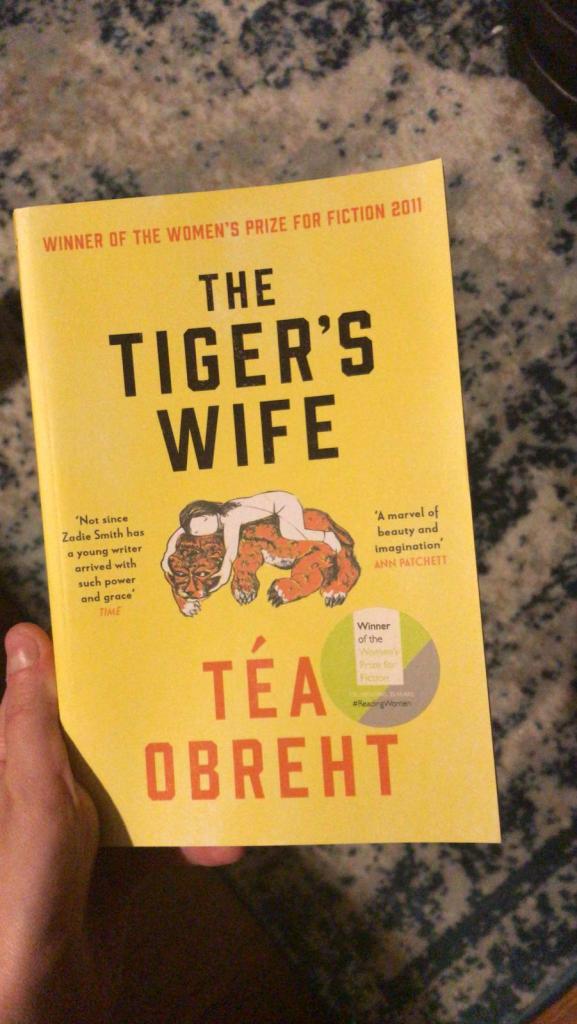
I selected The Tiger’s Wife for us all to read for book club. On first impressions the book seemed to be very interesting. My understanding was that the book would be about a tiger, his wife, a grandad and The Jungle Book. I have very little knowledge of Disney, but I did enjoy the upbeat ‘Bare Necessities’ Jungle Book song as a child. As it turns out, both The Jungle Book and The Tiger’s Wife are both grim tales. In terms of The Tiger’s Wife, I enjoyed the elements of humour within the book. I also enjoyed reading about the smells, scenery and tastes of another country given that I have not been able to leave Britain for a while. The ‘deathless man’ character was also quite intriguing. I do feel unsure about this book though. At times I was puzzled about the plot. It is also an incredibly sad and heavy tale which covers themes like war, death, disease and domestic violence – perhaps not the most appropriate choice given that we are in a national lockdown! I think this is a book that I may return to in better times.
@haleysread
What struck me about the book was that it centred around death but was largely devoid of emotion. The grandmother was described as being emotional about the death of her husband, but the book was narrated in such a way that this emotion was not felt by the reader because the grandmother was not wholly present. She was always at the other end of the phone and therefore removed from the reader. Instead, the book was lightened with humorous characters such as the Deathless Man and folk tales of superstition. These characters and tales transformed what could (and perhaps should) have been a depressing tale to a mildly sorrowful yet darkly comedic series of tragedies.
@amycortvriend
This was quite possibly my favourite of all the book club reads so far, although it is a particularly tight call (4th instalment of inspector Chopra is a gem: but shhhh spoilers)! I am quite surprised by how much I enjoyed this book which appears much to the contrast of my esteemed friends in book club. It was beautifully written, depressing, full of escapism and challenging at the same time. I was truly lost in this book as a story: I am not sure I can tell you what the story is about or what the message or meaning behind it is. But I adored it. It made me think of Big Fish and The Bee Keeper of Aleppo all mixed together (another 2 gems if you have not read them). I can appreciate how perhaps it was not the most fitting for a global pandemic, but nevertheless it is a text that I will most certainly read again!
@jesjames50
In a far away corner in Europe, people try to live with the aftermath of a war. The conflict has brought up in the community, wounds that take time to heal and the doctors who look after the physical wounds are trying to cope with the long-term effects of harm. In the backdrop of that, the story of a young doctor who is remembering her beloved grandfather takes central stage. The woman discovers a grandfather through the eyes of others. This is a post war society and many things do not make sense. The author, Téa Obreht, stitches together a story of reality with a lot of surrealism to underline the absurdness of war especially a civil conflict. Symbolism becomes intricate to the story and in the end you are left wondering who is The Tiger’s Wife?
@manosdaskalou
I found the book to be hard going. That’s not to say that there weren’t some parts of it that I enjoyed but on the whole I didn’t find much in the book to excite me and at the end I was left with a feeling of …’and’. I found that too often I was unable to follow the plot getting bogged down in, what I must admit, were beautiful descriptions of countryside, villages, animals and people. For me, the story lacked purpose, describing old superstitions, combined with historical tales which seemed to have little purpose other than to provide perhaps a vivid description of the cruelty of war and its aftermath. On a more positive note, it has prompted me to research the wars in the Balkans and maybe, that will push me to return to the book
@5teveh
The timing of The Tiger’s Wife as our book club read was impeccable. Leading up to the Christmas holidays, everything seemed to become overwhelming and I felt rather numb. Reading The Tiger’s Wife with its dreamlike qualities suited my mood extraordinarily well. The subject of war, and the damage it causes, is close to my heart. In this book, it is not tales of heroes and villains, but the quiet, pervasive harm which war leaves in its wake, touching everyone and everything, in small, often indiscernible ways. We may not be at war in the UK, but it made me consider what life will be like after the pandemic, when many of those harms are also prevalent. For instance, our NHS workers may not have been in battlefield hospitals, but treating severely ill Covid-19 patients, with a high death rate, on a daily basis will undoubtedly have a profound impact. Ultimately, The Tiger’s Wife is an anti-war book, with more questions than answers, but as the pandemic has shown us, uncertainty does not mean the end of hope.
@paulaabowles

Share this:


Witches and warlocks
Time and time again we revisit previous times of our lives, especially when trying to come to terms with unprecedented realities. Society works with precedent and continuity that allows people to negotiate their own individual identities. We live in a society that fostered the culture of the one, and played down the importance of the collective, especially when people in positions of power declared that they can do more with less.
One pandemic later, and we clapped at the heroes those we regarded as needy money-grabbers previously, those we acknowledge now, that we previously cast aside as low skilled workers. One pandemic later, and social movements came to prominence, asking big questions about the criminal justice system and the way it interacts with those numerous people, that are not perceived as “mainstream”. Across Western countries, people are registering the way the system is operating to maintain social order, through social injustice. Each case that appears in the news is not an individual story as before, but are becoming evidence of something wider, systemic and institutional.
Covid-19 affects people, and so we must maintain social distancing, cover our faces and clean our hands. Clear advice from WHO about the pandemic, but people also die when they drown as refugees crossing troubled waters. People also die when someone puts a knee on their throat (who knew?), people die when they have to deal with abject poverty and have no means to cover their basic subsistence. People die, and we record their deaths but officially some of those are normalised to the point that they become expected. Every year I pose the question about good and evil to a group of young adults who seem uncertain about the answer.
I was recently reminded of a statement made a long time ago by Manos Xatzidakis in relation to the normalisation of evil: “If you are not afraid of the face of evil it means that you have become accustomed to it. Then you accept the horror and you are frightened by beauty”. When we are expecting death for seemingly preventable causes, we have crossed that Rubicon according to Xatzidakis.
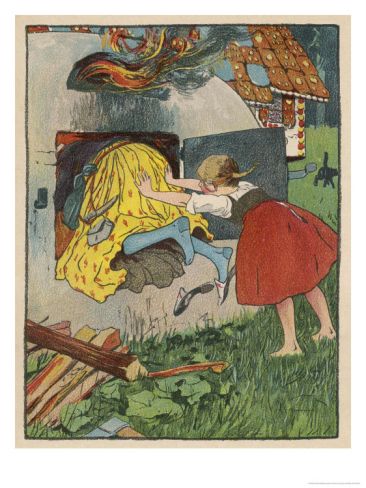
As a kid, one of my favourite stories was Hansel and Gretel. Like all fairy-tales it has a moral signature and is a cautionary lesson. In my mind it contracted the first image of evil, that of a witch. The illustration made it very real, but also quite specific. An oversized, badly dressed witch, with an unsatisfiable taste for children’s flesh. It was the embodiment of true evil. In later years, reading The Witches by Roald Dahl exacerbated the fear of this creature, seemingly normal but with layers of ugly under their skin. The evil that was on the face of the beholder, their intentions clear and their behaviour manipulative but clear on their objectives. This, I learn as an adult, is an evil that only exists in stories.
This kind of witch, is a demonstration of the social vilification of women and especially those who actively try to challenge the status quo, but not the evil that runs in our societies. The construction of social demons is a convenient invention to evoke fears and maintain order; well that is something a sceptic may say…but social scientists ought to question everything and be a bit of a sceptic. In my version of the fairytale the wicked witch is pushed into the oven by Hansel and Gretel, the image of her oversized bottom sticking out, whilst the rest of her body is consumed by the flames.
Admittedly, I was too old to get into the Harry Potter genre and read the books but the image of his opposition made it to popular culture. The “He who cannot be named” became another convenient, albeit complex, evil capable of unspeakable evils. An icon in its own right of the corruptive nature of evil.
The reality of course is slightly different. The big evils do not get extinguished with flames or other means. They do not cease and there is not necessarily happy ever after; social injustice and unfairness is continuous and so is the struggle to fight them. The victories are not complete, but gradual and small. If the pandemic shows us something other than death and heartache, it is the brittleness of life and the need to ask for more in a society that is geared to prime individualism over social solidarity. It is perhaps a good time, for those who never did, to engage with social movements, for those who left them to return and all find their passion of sharing human experience, that is predicated on equality and fairness.
Fairytales, are interesting insomuch of giving us some moral direction but they do not help us to understand the wider social issues and the actions people have to take. The witches out there may not carry brooms and mix spells in cauldrons but evil carries indifference, apathy and lack of empathy. As Edmund Burke said “The only thing necessary for the triumph of evil is for good men to do nothing”, now that is true evil. After all, is there such a thing called evil or are we content with finding easy answers?

 Thoughts from the criminology team