
Home » Social justice (Page 9)
Category Archives: Social justice

A racist and no solution

I am a white, middle class some might say (well my students anyway), ageing, male. I wasn’t always middle class, I’m from working class stock. I’m a university lecturer now but wasn’t always. I spent 30 years in the police service in a small, ethnically diverse, county in England. I didn’t consider myself a racist when I was in the police service and I don’t consider myself a racist now. Nobody has called me a racist to my face, so why the title? It’s how I’m constantly labelled. Every time someone says the police are racist or the police are institutionally racist, they are stating that about me. Just because I have left the police organisation doesn’t change who I am, my beliefs or my values. So, if the police are racist, then by default, I must be.
I’m not suggesting that some police officers are not racist, of course some are. Nor am I denying that there has been and probably still is some form of institutional racism within the police service, perhaps as a whole or perhaps at a more localised or departmental level. But bad apples and poorly thought-out, naïve or even reckless policies, strategies and procedures are not enough to explain what is going on in policing and policing of ethnic minority groups in particular. I’m talking about policing in this country, not across the pond where policing is very different in so many ways that it is hard to even suggest a realistic comparison. That of course is the first problem, what happens in the United States of America is immediately translated into what happens here.
As a lecturer, I constantly hear from students and read students’ work about the racist and brutal police, often interchanging commentary from the United States with commentary here in the United Kingdom, whilst also failing to recognise that there is different policing in Scotland and Northern Ireland. Institutional racism, as defined by Macpherson, is now part of the lexicon, but it no longer has the meaning Macpherson gave it, it is now just another way of saying the police are and every police officer is racist. Some students on finding out that I was a police officer show an instant dislike and distrust of me and sometimes it can take the whole three years to gain their trust, if at all. Students have been known to request a different dissertation supervisor, despite the fact that their research subject is in policing. This is not a complaint, just a statement of facts, painful as it is.
As I try to make sense of it all, I have so many unanswered questions. What is exactly going on? What is causing this conflict between the police and ethnic minority groups? Why is there a conflict, why is there distrust? More importantly, how can it be fixed? Some of the answers may lay in what the police are asked to do, or at least think they are asked to do. Reiner suggests that policing is about regulating social conflict, but which conflict and whose conflict is it? Other authors have suggested that the police are simply a means to allow the rich and privileged to maintain power. There may be some merit in the argument, but most policing seems to take place in areas of deprivation where the disadvantaged are committing crimes against the disadvantaged. The rich and powerful of course commit crimes but they are nowhere near as tangible or easy to deal with. One the problems might be that the rich and powerful are not particularly visible to policing but the disadvantaged are.
Maybe some of the answers lay in notions of stereotyping, sometimes even unconsciously. Experience or narratives of experiences cause a wariness, even a different stance to one people might normally assume. Being thumped on the nose by a drunk, does tend to make a person wary of the next drunk they encounter. So, could stereotyping be a problem on both sides of the divide? My dissertation student that didn’t want me as a supervisor was later to reveal experiences of racist abuse aimed at the police officers she went out on patrol with. Policing is dominated by white males and despite recruitment drives to address the ethnicity gap, this really hasn’t been that successful. If it was meant to help solve a problem, it hasn’t.
I get the sense though that the problem is much deeper routed than policing. Policing and the problems of policing is just a sub plot in a much wider issue of a divided society and one that is in constant conflict with itself. If the police are guilty of racism, then it is society that has caused this. Our society’s values, our society’s beliefs. An unequal society where the poorest suffer the most and the rich get richer regardless. A society where we are all equal but only because someone somewhere said so at some time, it is not reality. I think of Merton’s ‘American Dream’, I don’t buy into the whole concept, but there is something about not having opportunities, equally when I think of Lea and Young and the concept of relative deprivation, whilst not explaining all crime, it has some merit in that notion that the disenfranchised have no voice.
As I write this I am conscious that I have commentated on a very emotive subject particularly at this time. As I watch the events unfold in America, I fear the worst, action followed by reaction. Both becoming increasingly violent and I see the possibility of it happening in this country. I fear that the term ‘police racism’ will become another convenient label. Convenient in the sense that the problems are seen solely as that of policing. If we examine it through a different lens though, we might just find that policing is simply part of the whole rotten tree, society. Fix society and you fix policing. If the label racist fits, it fits the society we live in.

Share this:


“A small case of injustice”

Pride as a movement in the UK but also across the world signals a history of struggles for LGBTQ+ community and their recognition of their civil rights. A long journey fraught with difficulties from decriminalisation to legalisation and the eventual acceptance of equal civil rights. The movement is generational, and in its long history revealed the way social reactions mark our relationship to morality, prejudice, criminalisation and the recognition of individual rights. In the midst of this struggle, which is ongoing, some people lost their lives, others fell compelled to end theirs whilst others suffer social humiliation, given one of the many colourful pejoratives the English language reserved for whose accused or suspected for being homosexuals.
This blog will focus on one of the elements that demonstrates the relationship between the group of people identified homosexual and the law. In sociological terms, marginalised groups, has a meaning and signals how social exclusion operates against some groups of people, in these case homosexuals but it does apply to any group. These groups face a “sharper end” of the law, that presumably is equal to all. This is the fallacy of the law; that there are no inherent unfairness or injustice in laws. The contention for marginalised groups is that there are presumptions in the law on purported normality that disallows them to engage fully with the wider community in some cases forced to live a life that leads all the way to segregation.
Take for example “entrapment”. Originally the practice was used by law enforcement officers to identify counterfeit money, later to investigate the sales of untaxed tobacco or the use of unlicensed taxis. The investigation in law allows for the protection of the public, non uniform officers to pose as customers in order to reveal criminalities that occur in the dark corners of society. The focus predominantly was to protect consumers and the treasury from unpaid tax. So, from that how did the law enforcement officers use it to arrest homosexuals? It is interesting to note we can separate the letter of the law as opposed to the spirit of the law. This distinction is an important one criminologically whilst for the law enforcement agencies evidently there is no such distinction.
The most recent celebrity case led to the arrest of George Michael in Los Angeles, US; the operation led to the outing of the artist and his conviction. As a practice across many years, entrapment played a significant part in the way numerous homosexuals found themselves arrested given a criminal record, loss of employment and in some cases ending up in prison. It is important to note that prior to the Sexual Offences Act of 1967, the biggest sexual crime in England and Wales was that of homosexuality (recorded as indecency or buggery). It took decades for that statistic to change, although historically remains still the highest category.
The practice of entrapment employed by the police demonstrates the uphill struggle the LGBTQ+ community faced. Not only they had to deal with social repulsion of the wider community that detested, both their practices and their existence, but also with public officials who used entrapment to criminalise them. This was happening whilst the professionals were divided about the origins of homosexual “anomaly” and how to deal with it, the practice of entrapment added new convictions and supplied more humiliation to those arrested. For the record, the criminological community was split along theoretical lines on this; the classicists such as Bentham argued for the decriminalisation of sodomy whilst the positivists namely Lombroso considered homosexuals to be in the class of moral criminals (one of the worst because they are undeterred) .
The issue however is neither theoretical, nor conceptual; for those who were aware of their sexuality it was real and pressing. During the post WWII civil rights movement, people started taking note of individual differences and how these should be protected by privacy laws allowing those who do not meet the prescribed “normal” lifestyles to be allowed to live. It emerged that people who were successful in their professional lives, like Alan Turing, John Forbes Nash Jr, John Gielgud etc etc, found themselves facing criminal procedures, following string operations from the police. This injustice became more and more evident raising the profile of the change in the law but also in the social attitudes.
In 2001 Lord Nicholls of Birkenhead addressed the issue of entrapment head on. In his judgement in Regina v Looseley:
“It is simply not acceptable that the state through its agents should lure its citizens into committing acts forbidden by the law and then seek to prosecute them for doing so. That would be entrapment. That would be a misuse of state power, and an abuse of the process of the courts. The unattractive consequences, frightening and sinister in extreme cases, which state conduct of this nature could have are obvious. The role of the courts is to stand between the state and its citizens and make sure this does not happen.”
This was the most damming condemnation of the practice of entrapment and a vindication for all those who faced prosecution as the unintended consequence of the practise. For the record, in 2017 under the Policing and Crime Act, included the “Alan Turing law” that pardoned men who were cautioned or convicted for historical homosexual acts. The amnesty received mixed reviews and some of those who could apply for denied doing so because that would require admission of wrongdoing. The struggle continues…
Regina v Looseley, 2001 https://publications.parliament.uk/pa/ld200102/ldjudgmt/jd011025/loose-1.htm
Share this:


Volunteering Matters

Some people volunteer because they have to, I volunteer because I want to. From a personal perspective I knew that the foodbank was the place that I wanted to be at.
I started volunteering in 2016, doing just 1 day a week and as the years have gone by it has meant more hours spread over a couple of days, especially during the Christmas holidays which are incredibly busy. Proving that many volunteers are necessary and needed to help keep it going.
It is a place that suits me because its local and fits around my studies. I am able to learn new skills and gain insightful knowledge. The volunteers are very welcoming and warm people. However, over the years I’ve noticed a dramatic increase in the use of the foodbank and its diversity. In theory, its usage should be on the decrease.
Within the foodbank, we deal with some very complex individuals who require different approaches. It sounds cliché, but I volunteer to make a difference and eradicate the myth that the foodbank is used for those in society that are labelled as people who can’t budget properly.
I have found that service users are predominantly people living on low incomes. People who are working on zero hours contracts; or have reduced hours and having their wages topped up with benefits like Universal Credit. As a result, they just don’t have enough money coming in; leaving hardly anything for essentials such as food and heat. I found during my research that many families have been without electricity, that means no cooking facilities or warmth! Pushing them further into poverty. In this day and age people should not be without the basics.
In my time as a volunteer I have met some lovely people who have been affected by different adverse life events and it is heartbreaking to witness, but equally by giving something back I can see their eyes light up when they are given their food parcels. I feel I am learning to be more compassionate. However, if the person has no access to electricity how are they supposed to cook or provide a meal for their children without electricity?
On a weekly basis we see many different people from so many backgrounds; from civil servants, to social workers and the homeless. Service users can often be emotional and sometimes defensive, who feel they don’t deserve to be given food because they are working. The foodbank does not discriminate, it sees everyone as equal.
What does that say about the world we live in? That being food poor or food insecure is something that must stay hidden and not be talked about…people living with food insecurity would rather go without, than ask for help. The basic income does not cover the essentials such as food after paying bills.
It makes me mad that poverty is an accepted part of society and service users state they feel undervalued and unaccepted. The question that must be asked ‘Is poverty violence? The answer is a resounding YES, due to the structures within society that prevent people living with food insecurity from accessing food. Therefore, locking them into poverty, preventing them from moving out of the cycle of deprivation.
It is left to charitable organisations to do whatever they can to help that person to be able to eat and survive. But how long can these charities go on for? The Trussell Trust began in 2000 in the UK….
Children and families should not be going without food, as it is a fundamental right that everyone should have access to the basics. Food insecurity is more prominent now than ever with The Trussell Trust (2020) reporting an increase of 81% in emergency food parcels.
The foodbank is available to help people to access a 3 day food parcel to ‘see them through” a difficult period in their lives. During my time spent conducting my dissertation within the foodbank, food poverty was a combination of a variety of reasons such as low income, often together with a contributory factor such as an adverse life event. For example, the loss of employment or breakdown of a relationship which will only add more shame and stigma. The foodbank is not just about giving away free food, it’s about offering a safe place to sit and get warm and service users can relax, tell their stories and feel free for as long as they can, before they have to face more challenges from the world.
Furthermore, some in society see the foodbank as the sticking plaster that holds the poor in society together. I would say that without the foodbank many people would be committing crimes or be starving. Some politicians have stated that food banks are the heart of community cohesion. The only time I have seen the local MP at our foodbank is for a photo opportunity. The poor in society are forgotten and its about time they weren’t!
The service users are people who are neglected by society and the government, who by definition, make them feel they are to blame for their situation. By visiting the foodbank we show them respect and compassion.
Share this:


The victimisation of one

One of the many virtues of criminology is to talk about many different crimes, many different criminal situations, many different deviant conditions. Criminology offers the opportunity to consider the world outside the personal individual experience; it allows us to explore what is bigger than the self, the reality of one.
Therefore, human experience is viewed through a collective, social lens; which perhaps makes it fascinating to see these actions from an individual experience. It is when people try to personalise criminological experience and carry it through personal narratives. To understand the big criminological issues from one case, one face, one story.
Consider this: According to the National Crime Agency over 100K children go missing in the UK each year; but we all remember the case of little Madeleine McCann that happened over 13 years ago in Portugal. Each year approximately 65 children are murdered in the UK (based on estimates from the NSPCC, but collectively we remember them as James Bulger, Holly Wells and Jessica Chapman. Over 100 people lost their lives to racially motivated attacks, in recent years but only one name we seem to remember that of Stephen Lawrence (Institute of Race Relations).
Criminologists in the past have questioned why some people are remembered whilst others are forgotten. Why some victims remain immortalised in a collective consciousness, whilst others become nothing more than a figure. In absolute numbers, the people’s case recollection is incredibly small considering the volume of the incidents. Some of the cases are over 30 years old, whilst others that happened much more recently are dead and buried.
Nils Christie has called this situation “the ideal victim” where some of those numerous victims are regarded “deserving victims” and given legitimacy to their claim of being wronged. The process of achieving the ideal victim status is not straightforward or ever clear cut. In the previous examples, Stephen Lawrence’s memory remained alive after his family fought hard for it and despite the adverse circumstances they faced. Likewise, the McGann family did the same. Those families and many victims face a reality that criminology sometimes ignores; that in order to be a victim you must be recognised as one. Otherwise, the only thing that you can hope for it that you are recorded in the statistics; so that the victimisation becomes measured but not experienced. This part is incredibly important because people read crime stories and become fascinated with criminals, but this fascination does not extend to the victims their crimes leave behind.
Then there are those voices that are muted, silenced, excluded and discounted. People who are forced to live in the margins of society not out of choice, people who lack the legitimacy of claim for their victimisation. Then there are those whose experience was not even counted. In view of recent events, consider those millions of people who lived in slavery. In the UK, the Slavery Abolition Act of 1833 and in the US the Emancipation Proclamation Act of 1863 ostensibly ended slavery.
Legally, those who were under the ownership of others became a victim of crime and their suffering a criminal offence. Still over 150 years have passed, but many Black and ethnic minorities identify that many issues, including systemic racism, emanate from that era, because they have never been dealt with. These acts ended slavery, but compensated the owners and not the slaves. Reparations have never been discussed and for the UK it took 180 years to apologise for slavery. At that pace, compensation may take many more decades to be discussed. In the meantime, do we have any collective images of those enslaved? Have we heard their voices? Do we know what they experience? Some years ago, whilst in the American Criminology Conference, I came across some work done by the Library of Congress on slave narratives. It was part of the Federal Writers’ Project during the great depression, that transcribed volumes of interviews of past slaves. The outcome is outstanding, but it is very hard to read.
In the spirit of the one victim, the ideal victim, I am citing verbatim extracts from two ex-slaves Hannah Allen, and Mary Bell, both slaves from Missouri. Unfortunately, no images, no great explanation. These are only two of the narratives of a crime that the world tries to forget.
“I was born in 1830 on Castor River bout fourteen miles east of Fredericktown, Mo. My birthday is December 24. […] My father come from Perry County. He wus named Abernathy. My father’s father was a white man. My white people come from Castor and dey owned my mother and I was two years old when my mother was sold. De white people kept two of us and sold mother and three children in New Orleans. Me and my brother was kept by de Bollingers. This was 1832. De white people kept us in de house and I took care of de babies most of de time but worked in de field a little bit. Dey had six boys. […] I ve been living here since de Civil War. Dis is de third house that I built on dis spot. What I think ‘bout slavery? Well we is getting long purty well now and I believe its best to not agitate”.
Hannah Allen
“I was born in Missouri, May 1 1852 and owned by an old maid named Miss Kitty Diggs. I had two sisters and three brothers. One of my brothers was killed in de Civil War, and one died here in St. Louis in 1919. His name was Spot. My other brother, four years younger than I, died in October, 1925 in Colorado Springs. Slavery was a mighty hard life. Kitty Diggs hired me out to a Presbyterian minister when I was seven years old, to take care of three children. I nursed in da family one year. Den Miss Diggs hired me out to a baker named Henry Tillman to nurse three children. I nurse there two years. Neither family was nice to me.”
Mary Bell
When people said “I don’t understand”, my job as an educator is to ask how can I help you understand? In education, as in life, we have to have the thirst of knowledge, the curiosity to learn. Then when we read the story of one, we know, that this is not a sole event, a bad coincidence, a sad incident, but the reality for people around us; and their voices must be heard.
References
Nils Christie (1986) The Ideal Victim, in Fattah Ezzat A (eds) From Crime Policy to Victim Policy, Palgrave Macmillan, London
Missouri Slave Narratives, A folk History of Slavery in Missouri from Interviews with Former Slaves, Library of Congress, Applewood Books, Bedford
Share this:


“I can’t breathe”

George Floyd’s words: “I can’t breathe”, have awaken almost every race and creed in relevance to the injustice of systematic racism faced by black people across the world. His brutal murder has echoed and been shared virtually on every social media platform – Floyd’s death has changed the world and showed that Black people are no longer standing alone in the fight against racism and racial profiling. The death of George Floyd has sparked action within both the white and black communities to demand comprehensive police reforms in regards to police brutality and the use of unjust force towards ethnic minorities.
There have been many cases of racism and racial profiling against black people in the United Kingdom, and even more so in the United State. Research has suggested that there have been issues with police officers stereotyping ethnic minorities, especially black people, which has resulted in a vicious cycle of the stopping and searching of those that display certain physical features. Other researchers have expounded that the conflict between the police and black people has no correlation with crime, rather it is about racism and racial profiling. Several videos circulating on social media platforms depict that the police force does harbour officers who hold prejudice views towards black people within its ranks.
Historically, black people have been deprived, excluded, oppressed, demonised and brutally killed because of the colour of their skin. As ex-military personnel in Her Majesty’s Armed Forces and currently working as a custody officer, I can say from experience that the use of force used during the physical restraint on George Floyd was neither necessary nor proportionate to the circumstances. In the video recorded by bystanders, George Floyd was choked in the neck whilst fighting for his life repeating the words “I can’t breathe”. Perhaps the world has now noticed how black people have not been able to breathe for centuries.
The world came to halt because of Covid-19; many patients have died because of breathing difficulties. Across the world we now know what it means if a loved one has breathing issues in connection with Covid-19 or other health challenges. But nothing was done by the other police officers to advise their colleague to place Floyd in the recovery position, in order to examine his breathing difficulties as outlined in many restraint guidelines.
Yet that police officer did not act professional, neither did he show any sign of empathy. Breath is not passive, but active, breathing is to be alive. Racial profiling is a human problem, systematic racism has destroyed the world and further caused psychological harm to its victims. Black people need racial justice. Perhaps the world will now listen and help black people breathe. George Floyd’s only crime was because he was born black. Black people have been brutally killed and have suffered in the hands of law enforcement, especially in the United States.
Many blacks have suffered institutional racism within the criminal justice system, education, housing, health care and employment. Black people like my own wife could not breathe at their workplaces due to unfair treatment and systematic subtle racial discrimination. Black people are facing unjust treatment in the workplace, specifically black Africans who are not given fair promotional opportunities, because of their deep African accent. It is so naïve to assume that the accent is a tool to measure one’s intelligence. It is not overt racism that is killing black people, rather the subtle racism in our society, schools, sports and workplace which is making it hard for many blacks to breathe.
We have a duty and responsibility to fight against racism and become role models to future generations. Maybe the brutal death of George Floyd has finally brought change against racism worldwide, just as the unprovoked racist killing of black teenager Stephen Lawrence had come to embody racial violence in the United Kingdom and led to changes in the law. I pray that the massive international protest by both black and other ethnicities’ will not be in vain. Rather than “I can’t breathe” reverberating worldwide, it should turn the wheel of police reforms and end systematic racism.
“Restricting someone’s breath to the point of suffocation is a violation of their Human Rights”.
Share this:


The pandemic and me – Lessons I’ve learnt from the #lockdown

This lockdown has certainly given us time to think and perhaps reflect on a variety of topics and situations. I’ve shared a few thoughts below and I wonder just how many are universal in some way.
I need to ensure I have a structure to my day and week. I think we all need some sort of structure to our lives and that structure is often given to us by work and perhaps other sociable events such as going to the gym or going to a coffee shop. It may be that the weekly shopping provides us with an anchor, Saturday may be a shopping day or religion might dictate a visit to a place of worship on a particular day. At times I’ve found myself getting confused about what day it is, Groundhog Day, I think. However, for the most part, I think I’ve got it sorted out. My wife and I discuss our schedule every morning over a cup of coffee. We have sorted out a routine of work, daily chores, fun bits and exercise.
My willpower is tested but I can be determined. I have never been a heavy drinker, the occasional binge, yes but then who hasn’t? It is however, quite easy to slip into the habit of having a glass or two of wine in the evening, every evening and perhaps a gin and tonic or two. I can’t go anywhere so thinking about having to drive the next day is not an issue. It’s not until you start totting up the consumption that you realise maybe you might have to reign this in. ‘School nights’ are back again, no drinking in the week. I make up for it at the weekend though.
I’m not risk adverse, I just like to think I’m logical. I don’t think it takes a rocket scientist or in fact any scientist to work out that the government (particularly a Conservative government) would not enforce the cessation of most business in the country without a very, very, very good reason. Stay in has been the mantra and of course we all know how difficult it is and we all know that as usual, the most vulnerable in society have been hit the hardest by this pandemic. Logic dictates, well at least to me, that going out to any store anywhere carries a risk. Some risks are necessary, for instance a trip to the chemist to pick up a prescription, but a trip to a DIY store, really? I’m sorry but given the risks, I think it’s a no brainer. Not only do I not want to catch the virus, but I would be distraught if I thought that through my own selfishness I had passed it onto someone else.
I never really thought about all those people that are truly special. We clap every week for the carers and the NHS and all those involved who are truly remarkable. I do ask myself though, would I want to turn up to work in a supermarket? Would I want to be out delivering parcels or the post? Would I be a NHS volunteer? Would I be happy working on public transport or emptying dust bins? There are so many people doing ordinary, even mundane jobs and volunteering roles that I now appreciate more than ever. And I would go far as to say I am humbled by what they do and continue to do despite the risks.
I appreciate the world around me. Not being able to go out and socialise in some way, be that work, or friends or family has provided more time for other activities. Our walks to the next village and back on roads devoid of most traffic has revealed an astonishing array of wildlife to be gazed upon and appreciated. That is of course if you’re not gasping for breath following a walk up a steep hill (well I call it steep but in a car its barely noticeable).
Some things don’t change. I’ve also noticed the gate to the footpath across the fields near our house has gone. A heavy wooden gate which, apparently has been stolen. On our walks we have noticed the increased number of cyclists whizzing along the road. Most give a wide birth, but some don’t seem to have a care for others, one nearly colliding with us as he flew around the corner. It seems with the reduction of cars; the idiotic driver has now given way to the idiotic cyclist.
What will a ‘new normal’ look like. At some stage we will get back to normal but its difficult to contemplate when that will be and what it will look like. Maybe getting back to the old normal is not what is needed. I’m trying to envisage how I will make changes in consideration of what I have learnt during this lockdown. What changes will you make?
Share this:


Criminology 2020 AD

2020 will be a memorable year for a number of reasons. The big news of course was people across the world going into lockdown and staying home in order to stop the transmission of a coronavirus Covid-19. Suddenly we started counting; people infected, people in hospitals, people dead. The social agenda changed and our priorities altered overnight. During this time, we are trying to come to terms with a new social reality, going for walks, knitting, baking, learning something, reading or simply surviving, hoping to see the end of something so unprecedented.
People are still observing physical distancing, and everything feels so different from the days we were discussing future developments and holiday plans. During the last days before lockdown we (myself and @paulaabowles) were invited to the local radio by April Dawn to talk about, what else, but criminology. In that interview we revealed that the course started 20 years ago and for that reason we shall be having a big party inviting prospective, current and old students together to mark this little milestone. Suffice to say, that did not happen but the thought of celebrating and identifying the path of the programme is very much alive. I have written before about the need to celebrate and the contributions our graduates make to the local, regional and national market. Many of whom have become incredibly successful professionals in the Criminal Justice System.
On this entry I shall stand on something different; the contribution of criminology to professional conduct, social sciences and academia. Back in the 1990s Stan Cohen, wrote the seminal Against Criminology, a vibrant collection of essays, that identified the complexity of issues that once upon a time were identified as radical. Consider an academic in the 1960s imagining a model that addresses the issue of gender equality and exclusion; in some ways things may not have changed as much as expected, but feminism has entered the ontology of social science.
Criminology as a discipline did not speak against the atrocities of the Nazi genocide, like many other disciplines; this is a shame which consecutive generations of colleagues since tried to address and explain. It was in the 1960s that criminology entered adulthood and embraced one of its more fundamental principles. As a theoretical discipline, which people outside academia, thought was about reading criminal minds or counting crime trends only. The discipline, (if it is a discipline) evolved in a way to bring a critical dimension to law and order. This was something more than the original understanding of crime and criminal behaviour and it is deemed significant, because for the first time we recognised that crime does not happen in a social vacuum. The objectives evolved, to introduce scepticism in the order of how systems work and to challenge established views.
Since then, and through a series of events nationally and internationally, criminology is forging a way of critical reflection of social realities and professional practices. We do not have to simply expect a society with less crime, but a society with more fairness and equality for all. The responsibilities of those in position of power and authority is not to use and abuse it in order to gain against public interest. Consider the current pandemic, and the mass losses of human life. If this was preventable, even in the slightest, is there negligence? If people were left unable to defend themselves is that criminal? Surely these are questions criminology asks and this is why regardless of the time and the circumstances there will always be time for criminology to raise these, and many more questions.
Share this:


Please don’t clap or cheer

In an uncomfortable irony, my regular blog entry has fallen on the 8 May 2020, the seventy-fifth anniversary of the end of World War 2 in Europe. I say uncomfortable because I find this kind of commemoration particularly challenging to comprehend, given my pacifist tendencies. I’m therefore going to take a rather circuitous route through this entry.
On the 20 March 2020 I wrote the first Thoughts from the Criminology team blog entry (focused on Covid-19), just a few hours after the University had moved to virtual working. Since then the team has tackled the situation in a variety of different ways. In that I detailed my feelings and observations of life, as we knew it, suddenly coming to abrupt halt. Since then we have had 7 weeks of lockdown and it is worth taking stock of where we are currently.
At present the UK has recorded over 30,000 deaths attributed to the virus. These figures are by necessity inaccurate, the situation has been moving extremely fast. Furthermore, it is incredibly challenging to attribute the case of death, particularly in cases where there is no prior diagnosis of Covid-19. There has been, and remains a passionate discourse surrounding testing (or the lack of it), the supplies of Personal Protective Equipment (or the lack of it) and the government’s response (or lack of) to the pandemic. Throughout there has been growing awareness of disparity, discrimination and disproportionality. It is clear that we are not in all this together and that some people, some groups, some communities are bearing the brunt of the current crisis.
Having studied institutional violence for many years, it is evident that the current pandemic has shown a spotlight on inequality, austerity and victimisation. The role of institutions has been thrown into sharp relief, with their many failings in full view of anyone who cared to look. In 1942, Beveridge was clear that his “five giant evils” could have been addressed, prior to World War 2, yet in the twenty-first century we have been told these are insurmountable. Suddenly, in the Spring of 2020, we find that councils can house the homeless, that hungry children can be fed, that money can be found to ensure that those same children have access to educational resources. We also find that funds can be located to build emergency hospitals and pay staff to work there and across all other NHS sites.
Alongside this new-found largesse, we find NHS staff talking about the violences they face. The violence of being unable to access the equipment they need to do their jobs, the violence of being deprived of regular breaks, the violence of racism, which many staff face both internally and externally. We hear similar tales from care workers, supermarkets workers, delivery drivers, the list goes on. Yet we are told by the government that we are all in this together. This we are told, is demonstrated by gathering on doorsteps to clap the NHS and carers. It can be compared with the effort of those during World War II, or so we are told. If we just invoke that “Blitz Spirit” “We’ll Meet Again” at the “White Cliffs of Dover”.
However, such exhortations come cheap, it costs nothing in time, or money, to clap, or to sing war time songs. To do so puts a veneer of respectability and hides the violent injustices inherent in UK society and the government which leads it. It disguises and obfuscates the data that shows graphic racial and social economic disparity in the death toll. Similarly, it avoids discussion of the role that different individuals, groups and communities play in working to combat this horrible virus. As a society we have quickly forgotten discussions around deserving/undeserving poor, the “hostile environment” and those deemed “low-skilled”. It camouflages the millions of people who are terrified of unemployment, poverty and all of the other injustices inherent within such statuses. It hides the fact that these narratives are white and male and generally horribly jingoistic by ignoring the contribution of anyone, outside of that narrow definition, to WWII and to the current pandemic. It is trite and demonstrates an indifference to human suffering across generations.
Let’s stop focusing on the cheap, the obvious and the trite and instead, once this is over, treat people (all people) with respect. Pay decent wages, enable access to good quality nutrition, education, health care, welfare and all of the other necessities for a good life. And by all means commemorate the anniversary of whatever you like, but do not celebrate war, the biggest violence of all, without which many more lives would be improved.
Share this:


Teaching, Technology, and reality

I’m not a fan of technology used for communication for the most part, I’d rather do things face to face. But, I have to admit that at this time of enforced lockdown technology has been to a large extent our saviour. It is a case of needs must and if we want to engage with students at all, we have to use technology and if we want to communicate with the outside world, well in the main, its technology.
However, this is forced upon us, it is not a choice. Why raise this, well let me tell you about my experiences of using technology and being shut at home! Most, if not all my problems, probably relate to broadband. It keeps dropping out, sometimes I don’t notice, that is until I go to save my work or try to add the final comment to my marking. I know other colleagues have had the same problem. Try marking on Turnitin only to find that nearly all of your feedback has just disappeared in a flash. Try talking to colleagues on Webex and watch some of them disappearing and reappearing. Sometimes you can hear them, sometimes you can’t. And isn’t it funny when there is a time lag, a Two Ronnies moment when the question before the last is answered. ‘You go, no you go’, we say as we all talk over each other because the social cues relied on in face to face meetings just aren’t there. I’ve tried discussion boards with students, it’s not like WhatsApp or Messenger or even text. It is far more staid than that. Some students take part, but most don’t and that in a module where attendance in class before the shutdown was running at over seventy per cent. I’m lucky to get 20% involved in the discussion board. Colleagues using Collaborate tell me a similar tale, a tale of woe where only a few students, if any appear. Six hours of emptiness, thumb twiddling and reading, that’s the lecturer, not the students.
Now I don’t know whether my problems with the internet are resultant of the increased usage across the country, or just in my area. I suspect not because I had problems before the lockdown. I live in a village and whilst my broadband package promises me, and delivers brilliant broadband speed at times, it is inconsistent, frequently inexplicably dropping out for a minute or two. It is frustrating at times, even demoralising. I have a very good laptop (supplied by the university) and it is hardwired in, so not reliant on Wi-Fi, but it makes little difference. I suspect the problems could be anywhere in the broadband ether. It could be at the other end, the university, it could be at Turnitin for instance or maybe its somewhere in a black hole in the middle. Who knows, and I increasingly think, who cares? When my broadband disappeared for a whole day, a colleague suggested that I could tether my phone. A brilliant idea I thought as our discussion became distorted and it sounded like he was talking to me from a goldfish bowl. I guess the satellite overhead moved and my signal gradually disappeared. I can tell you now that my mobile phone operator is the only one that provides decent coverage in my area. Tethered to a goldfish bowl, probably not a solution, but thanks anyway.
If I suffer from IT issues, then what about students? We are assured that those that live on campus have brilliant Wi-Fi but does this represent the majority of our student body? Not usually and certainly not now. Do they all have good laptops; do they all have a decent Wi-Fi package? I hazard a guess, probably not. But even if what they have is on par with what I have available to me could they not also be encumbered with the same problems? We push technology as the way forward in education but don’t bother to ask the end user about their experience in using it. I can tell you from student feedback that many don’t like Collaborate, find the discussion boards difficult to engage with and some are completely demotivated if they cannot attend physical classes. That’s not to say that all students feel this way, some like recorded lectures as it gives them the opportunity to watch it at their leisure, but many don’t take that final step of actually watching it. They intend to, but don’t for whatever reason. Some like the fact that they can get books electronically, but many don’t, preferring to read from a hard copy. Even browsing the shelves in the library has for some, a mystical pleasure.
I’ll go back to the beginning, technology has undoubtedly been our saviour at this time of lockdown, but wouldn’t it be a real opportunity to think about teaching and technology after this enforced lockdown? Instead of assuming all students are technology savvy or indeed, want to engage with technology regardless of what it is, should we not ask them what works for them. Instead of telling staff what they can do with technology, e.g. you can even remotely mark students’ work on a Caribbean island, should we not ask staff what works? Let’s change the negative narrative, “you’re not engaging with technology”, to the positive what works in teaching our students and how might technology help in that. Note I say our students, not other students at other universities or some pseudo student in a theoretical vacuum. We should simply be asking what is best for our students and a starting point might be to ask them and those that actually teach them.
Share this:


The day after!
“I know not with what weapons World War III will be fought, but World War IV will be fought with sticks and stones.” This quote allegedly belongs to A. Einstein who imagined a grim day in the aftermath of a world war among nations who carried nuclear arms.
It is part of human curiosity to imagine beyond the current as to let the mind to wonder on the aftermath of this unique international lockdown! Thoughts wonder on some prosaic elements of the lockdown and to wonder the side effects on our psyche. Obviously as I do not have a vast epidemiological knowledge, I can only consider what I know from previous health scares.
The previous large-scale health scare was in the 1980s. I still remember the horrible ad with the carved headstone that read AIDS. One word that scared so many people then. People were told to practice safe sex and to avoid sharing needles. People became worried and at the time an HIV diagnoses was a death sentence. Images of people suffering Kaposi’s sarcoma began to surface in what became more than a global epidemic; it became a test in our compassion. Early on, gay people reported discrimination, victimisation and eventual, vilification. It took some mobilisation from the gay community and the death of some famous people to turn the tide of misconceptions, before we turned the tide of the disease. At this stage, HIV is not a death sentence and people who are in receipt of medical attention can live full and long lives.
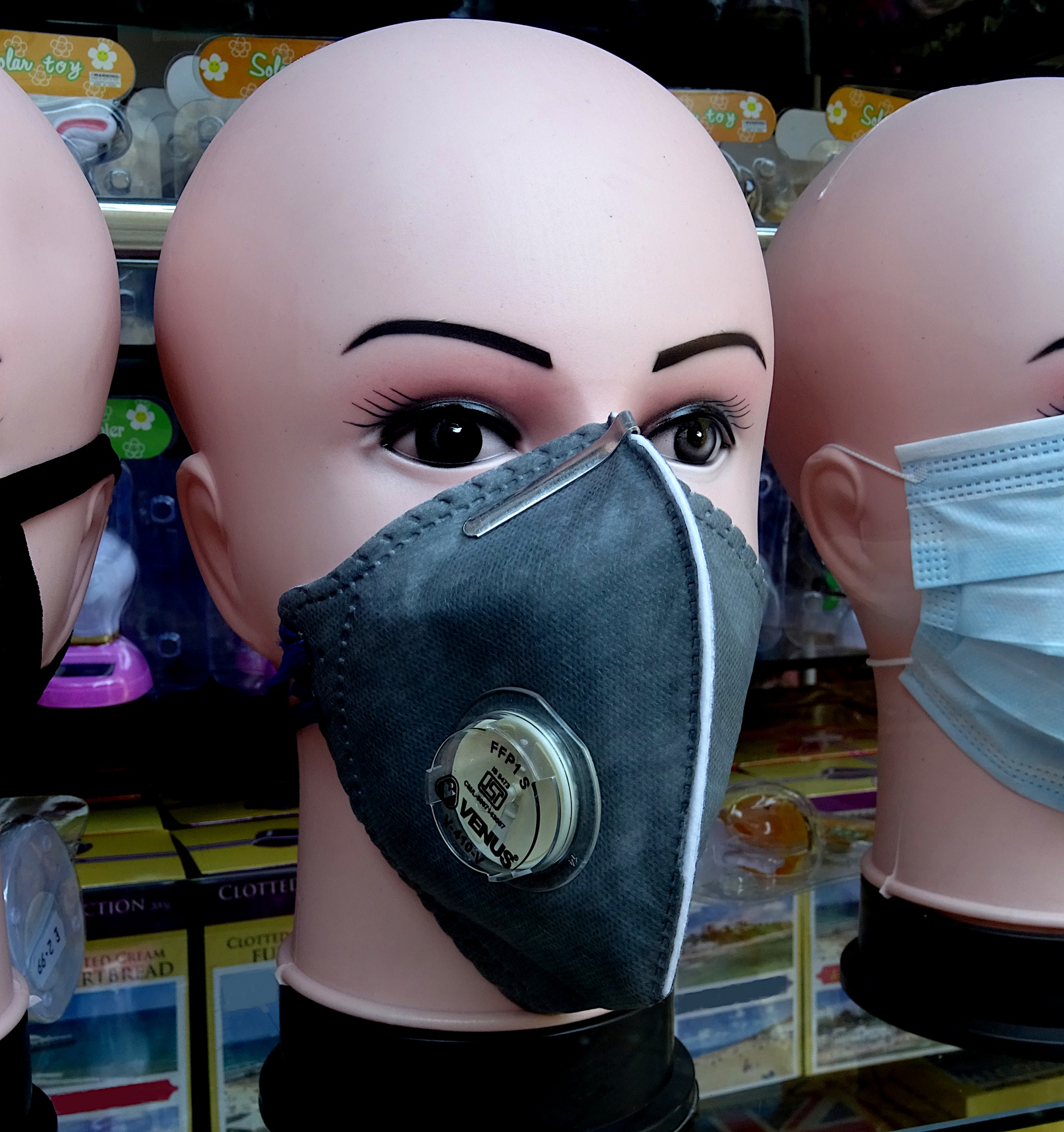
It is interesting to consider how we will react to the easing of the restrictions and the ushering on a new age. In some Asian countries, since SARS in 2003 some people wear face masks and gloves. Will that become part of our attire and will it be part of professional wear beyond the health care professions? If this becomes a condition, how many people will comply, and what will happen to those who will defy them.
We currently talk about resilience and the war spirit (a very British motif) but is this the same for all? This is not a lockdown on equal terms. There are people in isolation in mansions, whilst some others share rooms or even beds with people, they would rather they did not. At the same time, we talk about resilience, all domestic violence charities speak of a surge in calls that have reached crisis levels. “Social distancing” has entered the lexicon of our everyday, but there are people who simply cannot cope. One of the effects the day after, will be several people who will be left quite traumatised. Some may develop an aversion to people and large crowds so it will be interesting to investigate if agoraphobia will surge in years to come.
In one of my exercise walks. I was observing the following scene. Grandparents waving at their children and grandchildren from a distance. The little ones have been told not to approach the others. You could see the uneasiness of contactless interaction. It was like a rehearsal from an Ibsen play; distant and emotionally frigid. If this takes a few more months, will the little ones behave differently when these restrictions are lifted? We forget that we are social animals and although we do not consciously sniff each other like dogs, we find the scent of each other quite affirming for our interactions. Smell is one of the senses that has the longest memory and our proximity to a person is to reinforce that closeness.
People can talk on social media, use webcams and their phones to be together. This is an important lifeline for those fortunate to use technology, but no one can reach the level of intimacy that comes from a hug, the touch on the skin, the warmth of the body that reassures. This was what I missed when my grandparents died, the ability to touch them, even for the last time.
If we are to come out of social distancing, only to go into social isolation, then the disease will have managed something that previous epidemics did not; to alter the way we socialise, the way we express our humanity. If fear of the contagion makes us withdrawn and depressed, then we will suffer a different kind of death; that of what makes us human.
During the early stages of the austerity we saw the recurrence of xenophobia and nationalism across Europe. This was expected and sociologically seemed to move the general discussions about migration in rather negative terms. In the days before the lockdown people from the Asian community already reported instances of abusive behaviour. It will be very interesting to see how people will react to one another once the restrictions are lifted. Will we be prepared to accept or reject people different from ourselves?
In the meantime, whilst doctors will be reassessing the global data the pandemic will leave behind, the rest of us will be left to wonder. Ultimately for every country the strength of healthcare and social systems will inevitably be evaluated. Countries will be judged, and questions will be asked and rightfully so. Once we burry our dead, we must hold people to account. This however should not be driven by finding a scapegoat but so we can make the most of it for the future. Only if we prepare to see the disease globally, we can make good use of knowledge and advance our understanding of the medicine.
So maybe, instead of recriminations, when we come outside from our confinement, we connect with our empathy and address the social inequalities that made so many people around us, vulnerable to this and many other diseases.


