
Home » Social justice (Page 14)
Category Archives: Social justice

(In)Human Rights in the “Compliant Environment”
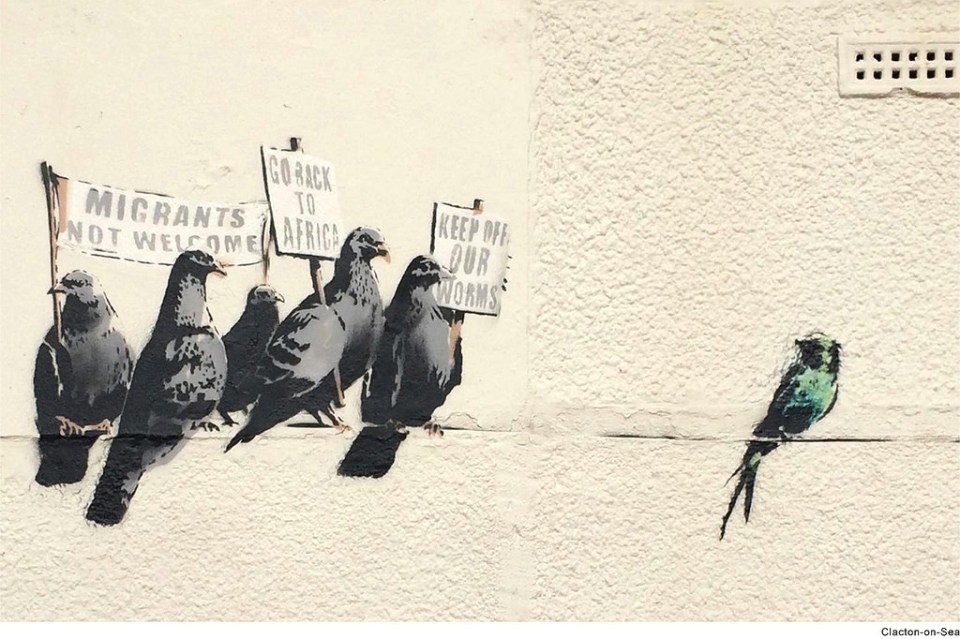
In the aftermath of the Windrush generation debacle being brought into the light, Amber Rudd resigned, and a new Home Secretary was appointed. This was hailed by the government as a turning point, an opportunity to draw a line in the sand. Certainly, within hours of his appointment, Sajid Javid announced that he ‘would do right by the Windrush generation’. Furthermore, he insisted that he did not ‘like the phrase hostile’, adding that ‘the terminology is incorrect’ and that the term itself, was ‘unhelpful’. In its place, Javid offered a new term, that of; ‘a compliant environment’. At first glance, the language appears neutral and far less threatening, however, you do not need to dig too deep to read the threat contained within.
According to the Oxford Dictionary (2018) the definition of compliant indicates a disposition ‘to agree with others or obey rules, especially to an excessive degree; acquiescent’. Compliance implies obeying orders, keeping your mouth shut and tolerating whatever follows. It offers, no space for discussion, debate or dissent and is far more reflective of the military environment, than civilian life. Furthermore, how does a narrative of compliance fit in with a twenty-first century (supposedly) democratic society?
The Windrush shambles demonstrates quite clearly a blatant disregard for British citizens and implicit, if not, downright aggression. Government ministers, civil servants, immigration officers, NHS workers, as well as those in education and other organisations/industries, all complying with rules and regulations, together with pressures to exceed targets, meant that any semblance of humanity is left behind. The strategy of creating a hostile environment could only ever result in misery for those subjected to the State’s machinations. Whilst, there may be concerns around people living in the country without the official right to stay, these people are fully aware of their uncertain status and are thus unlikely to be highly visible. As we’ve seen many times within the CJS, where there are targets that “must” be met, individuals and agencies will tend to go for the low-hanging fruit. In the case of immigration, this made the Windrush generation incredibly vulnerable; whether they wanted to travel to their country of origin to visit ill or dying relatives, change employment or if they needed to call on the services of the NHS. Although attention has now been drawn to the plight of many of the Windrush generation facing varying levels of discrimination, we can never really know for sure how many individuals and families have been impacted. The only narratives we will hear are those who are able to make their voices heard either independently or through the support of MPs (such as David Lammy) and the media. Hopefully, these voices will continue to be raised and new ones added, in order that all may receive justice; rather than an off-the-cuff apology.
However, what of Javid’s new ‘compliant environment’? I would argue that even in this new, supposedly less aggressive environment, individuals such as Sonia Williams, Glenda Caesar and Michael Braithwaite would still be faced with the same impossible situation. By speaking out, these British women and man, as well as countless others, demonstrate anything but compliance and that can only be a positive for a humane and empathetic society.
Share this:


Oh, just f*** off.

A strange title to give to a blog but, one that expresses my feelings every time I turn the television and watch politicians procrastinating about a major issue. How else do I try and express my utter contempt for the leaders of this country that cause chaos and misery and yet take no responsibility for what they have done.
I watch Donald Trump on television and I’m simply given to thinking ‘You’re an idiot’, I appreciate that others may have stronger words, particularly some immigrants, legal or illegal, in the United States. I will draw parallels with his approach later, how could I not, given the Empire Windrush disgrace.
A week or so ago a significant topic on the news was the gender pay gap. The Prime Minister Theresa May was all over this one, after all it is the fault of corporations and businesses the pay gap exists. No responsibility there then but votes to be had.
Within the same news bulletin, there was an interview with a teacher who explained how teachers were regularly taking children’s clothes home to wash them as the family couldn’t afford to do so. Children were appearing at school and the only meal they might have for the day was the school meal. Now that might seem terrible in a third world country but he wasn’t talking about a third world country he was talking about England. Surprisingly, the prime minister was not all over that one, no votes to be had.
Within the same time frame there were more deaths in London due to gang crime. The Prime Minister and the Home Secretary Amber Rudd were all over that one, well of sorts, but then it is a political hot potato. The police and the community need to do more, an action plan is produced.
Then we have the Windrush debacle, tragedy and disgrace. The Home Secretary eventually said she was sorry and blamed the civil servants in the Home Office. They had become inhuman, clearly not her fault. The Prime Minister said sorry, it was under her watch at the Home Office that the first seeds of this disaster were plotted and then hatched, clearly though not her fault either. Got the right wing votes but seem to have lost a few others along the way.
What ties all of these things together; class structure, inequality and poverty and an unwillingness in government to address these, not really a vote winner. The gender pay gap is someone else’s fault and even if addressed, won’t deal with the inequalities at the bottom of the pay structure. Those women on zero hour contracts and minimum wages won’t see the benefit, only those in middle or higher ranking jobs. Votes from some but not from others, a gain rather than any loss.
The fact that children exist in such poverty in this country that teachers have to intervene and take on welfare responsibilities is conveniently ignored. As is the fact that much of the violence that plagues the inner city streets happens to occur in poor neighbourhoods where social and economic deprivation is rife. The Windrush issue is just another example of right wing rhetoric leading to right wing action that impacts most on the vulnerable.
When the gender pay gap hit the news there was a senior figure from a company that appeared in the news. He said that addressing the gender pay gap by having more women in higher positions in his company was good for the company, good for the country, and good for the economy.
Judging from the example given by the country’s senior management, I have to say I am far from convinced. And yes as far as I’m concerned, when they open their mouths and pontificate, they can just f*** off.
Share this:


‘I read the news today, oh boy’
 The English army had just won the war
A crowd of people turned away
But I just had to look
Having read the book
(Lennon and McCartney, 1967),
The news these days, without fail, is terrible. Wherever you look you are confronted by misery, death, destruction and terror. Regular news channels and social media bombard us with increasingly horrific tales of people living and dying under tremendous pressure, both here in the UK and elsewhere in the world. Below are just a couple of examples drawn from the mainstream media over the space of a few days, each one an example of individual or collective misery. None of them are unique and they all made the headlines in the UK.
‘Deaths of UK homeless people more than double in five years’
‘Syria: 500 Douma patients had chemical attack symptoms, reports say’
‘London 2018 BLOODBATH: Capital on a knife edge as killings SOAR to 56 in three months’
So how do we make sense of these tumultuous times? Do we turn our backs and pretend it has nothing to do with us? Can we, as Criminologists, ignore such events and say they are for other people to think about, discuss and resolve?
At the beginning of the twenty-first century, Stanley Cohen, posed a similar question; ‘How will we react to the atrocities and suffering that lie ahead?’ (2001: 287). Certainly his text States Of Denial: Knowing about Atrocities and Suffering makes clear that each of us has a part to play, firstly by ‘knowing’ that these things happen; in essence, bearing witness and acknowledging the harm inherent in such atrocities. But is this enough?
Cohen, persuasively argues, that our understanding has fundamentally changed:
The political changes of the last decade have radically altered how these issues are framed. The cold-war is over, ordinary “war” does not mean what it used to mean, nor do the terms “nationalism”, “socialism”, “welfare state”, “public order”, “security”, “victim”, “peace-keeping” and “intervention” (2001: 287).
With this in mind, shouldn’t our responses as a society, also have changed, adapted to these new discourses? I would argue, that there is very little evidence to show that this has happened; whilst problems are seemingly framed in different ways, society’s response continues to be overtly punitive. Certainly, the following responses are well rehearsed;
- “move the homeless on”
- “bomb Syria into submission”
- “increase stop and search”
- “longer/harsher prison sentences”
- “it’s your own fault for not having the correct papers?”
Of course, none of the above are new “solutions”. It is well documented throughout much of history, that moving social problems (or as we should acknowledge, people) along, just ensures that the situation continues, after all everyone needs somewhere just to be. Likewise, we have the recent experiences of invading Iraq and Afghanistan to show us (if we didn’t already know from Britain’s experiences during WWII) that you cannot bomb either people or states into submission. As criminologists, we know, only too well, the horrific impact of stop and search, incarceration and banishment and exile, on individuals, families and communities, but it seems, as a society, we do not learn from these experiences.
Yet if we were to imagine, those particular social problems in our own relationships, friendship groups, neighbourhoods and communities, would our responses be the same? Wouldn’t responses be more conciliatory, more empathetic, more helpful, more hopeful and more focused on solving problems, rather than exacerbating the situation?
Next time you read one of these news stories, ask yourself, if it was me or someone important to me that this was happening to, what would I do, how would I resolve the situation, would I be quite so punitive? Until then….
Whoever fights monsters should see to it that in the process he does not become a monster. And when you look long into an abyss, the abyss also looks into you (Nietzsche, 1886/2003: 146)
References:
Cohen, Stanley, (2001), States Of Denial: Knowing about Atrocities and Suffering, (Cambridge: Polity Press)
Lennon, John and McCartney, Paul, (1967), A Day in the Life, [LP]. Recorded by The Beatles in Sgt Pepper’s Lonely Hearts Club Band, EMI Studios: Parlaphone
Nietzsche, Friedrich, (1886/2003), Beyond Good and Evil: Prelude to a Philosophy of the Future, tr. from the German by R. J. Hollingdale, (London: Penguin Books)
Share this:


Is Easter a criminological issue?

Spring is the time that many Christians relate with the celebration of Easter. For many the sacrament of Easter seals their faith; as in the end of torment and suffering, there is the resurrection of the head of the faith. All these are issues to consider in a religious studies blog and perhaps consider the existential implications in a philosophical discourse. How about criminology?
In criminology it provides great penological and criminological lessons. The nature of Jesus’s apprehension, by what is described as a mob, relates to ideas of vigilantism and the old non-professional watchmen who existed in many different countries around the world. The torture, suffered is not too dissimilar from the investigative interrogation unfortunately practiced even today around the world (overtly or covertly). His move from court to court, relates to the way we apply for judicial jurisdiction depending on the severity of the case and the nature of the crime. The subsequent trial; short and very purposefully focused to find Jesus guilty, is so reminiscent of what we now call a “kangaroo court” with a dose of penal appeasement and penal populism for good measure. The final part of this judicial drama, is played with the execution. The man on the cross. Thousands of men (it is not clear how many) were executed in this method.
For a historian the exploration of past is key, for a legal professional the study of black letter law principles and for a criminal justice practitioner the way methods of criminal processes altered in time. What about a reader in criminology? For a criminologist there are wider meanings to ascertain and to relate them to our fundamental understanding of justice in the depth of time. The events which unfolded two millennia back, relate to very current issues we read in the news and study in our curriculum. Consider arrest procedures including the very contested stop and search practice. The racial inequalities in court and the ongoing debates on jury nullification as a strategy to combat them. Our constant opposition as a discipline to the use of torture at any point of the justice system including the use of death penalty. In criminology we do not simply study criminal justice, but equally important, that of social justice. In a recent talk in response to a student’s question I said that that at heart of each criminologist is an abolitionist. So, despite our relationship and work with the prison service, we remain hopeful for a world where the prison does not become an inevitable sentence but an ultimate one, and one that we shall rarely use. Perhaps if we were to focus more on social justice and the inequalities we may have far less need for criminal justice
Evidently Easter has plenty to offer for a criminologist. As a social discipline, it allows us to take stock and notice the world around us, break down relationships and even evaluate complex relationships defying world belief systems. Apparently after the crucifixion there was also a resurrection; for more information about that, search a theological blog. Interestingly in his Urbi et Orbi this year the Pope spoke for the need for world leaders to focus on social justice.


