
Home » Social justice (Page 13)
Category Archives: Social justice

Questions, questions, questions…..
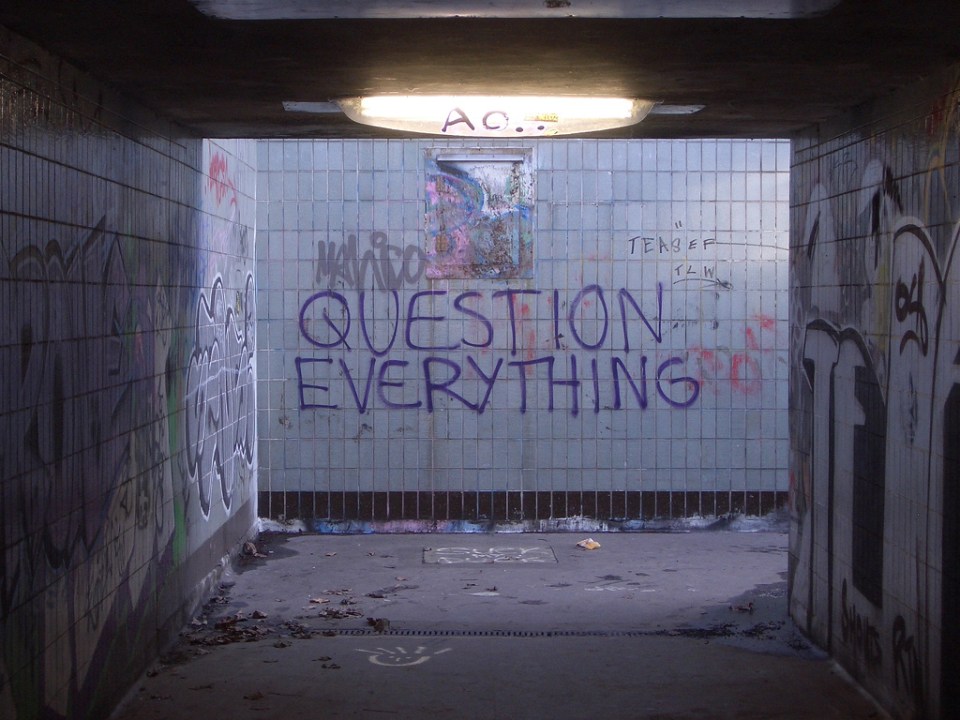
Over the last two weeks we have welcomed new and returning students to our brand-new campus. From the outside, this period of time appears frenetic, chaotic, and incredibly noisy. During this period, I feel as if I am constantly talking; explaining, indicating, signposting, answering questions and offering solutions. All of this is necessary, after all we’re all in a new place, the only difference is that some of us moved in before others. This part of my role has, on the surface, little to do with Criminology. However, once the housekeeping is out of the way we can move to more interesting criminological discussion.
For me, this focuses on the posing of questions and working out ways in which answers can be sought. It’s a common maxim, that within academia, there is no such thing as a silly question and Criminology is no exception (although students are often very sceptical). When you are studying people, everything becomes complicated and complex and of course posing questions does not necessarily guarantee a straightforward answer. As many students/graduates over the years will attest, criminological questions are often followed by yet more criminological questions… At first, this is incredibly frustrating but once you get into the swing of things, it becomes incredibly empowering, allowing individual mental agility to navigate questions in their own unique way. Of course, criminologists, as with all other social scientists, are dependent upon the quality of the evidence they provide in support of their arguments. However, criminology’s inherent interdisciplinarity enables us to choose from a far wider range of materials than many of our colleagues.
So back to the questions…which can appear from anywhere and everywhere. Just to demonstrate there are no silly questions, here are some of those floating around my head currently:
- This week I watched a little video on Facebook, one of those cases of mindlessly scrolling, whilst waiting for something else to begin. It was all about a Dutch innovation, the Tovertafel (Magic Table) and I wondered why in the UK, discussions focus on struggling to feed and keep our elders warm, yet other countries are interested in improving quality of life for all?
- Why, when with every fibre of my being, I abhor violence, I am attracted to boxing?

3. Why in a supposedly wealthy country do we still have poverty?
4. Why do we think boys and girls need different toys?

5. Why does 50% of the world’s population have to spend more on day-to-day living simply because they menstruate?
6. Why as a society are we happy to have big houses with lots of empty rooms but struggle to house the homeless?

7. Why do female ballroom dancers wear so little and who decided that women would dance better in extremely high-heeled shoes?
This is just a sample and not in any particular order. On the surface, they are chaotic and disjointed, however, what they all demonstrate is my mind’s attempt to grapple with extremely serious issues such as inequality, social deprivation, violence, discrimination, vulnerability, to name just a few.
So, to answer the question posed last week by @manosdaskalou, ‘What are Universities for?’, I would proffer my seven questions. On their own, they do not provide an answer to his question, but together they suggest avenues to explore within a safe and supportive space where free, open and academic dialogue can take place. That description suggests, for me at least, exactly what a university should be for!
And if anyone has answers for my questions, please get in touch….
Share this:


Criminology: in the business of creating misery?
I’ve been thinking about Criminology a great deal this summer! Nothing new you might say, given that my career revolves around the discipline. However, my thoughts and reading have focused on the term ‘criminology’ rather than individual studies around crime, criminals, criminal justice and victims. The history of the word itself, is complex, with attempts to identify etymology and attribute ownership, contested (cf. Wilson, 2015). This challenge, however, pales into insignificance, once you wander into the debates about what Criminology is and, by default, what criminology isn’t (cf. Cohen, 1988, Bosworth and Hoyle, 2011, Carlen, 2011, Daly, 2011).
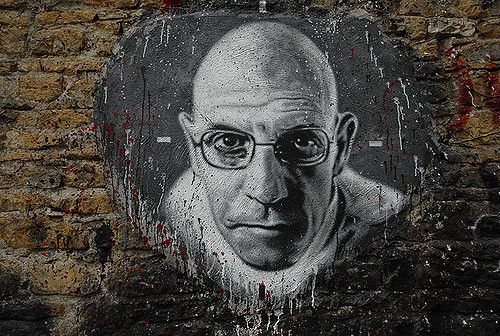
Foucault (1977) infamously described criminology as the embodiment of utilitarianism, suggesting that the discipline both enabled and perpetuated discipline and punishment. That, rather than critical and empathetic, criminology was only ever concerned with finding increasingly sophisticated ways of recording transgression and creating more efficient mechanisms for punishment and control. For a long time, I have resisted and tried to dismiss this description, from my understanding of criminology, perpetually searching for alternative and disruptive narratives, showing that the discipline can be far greater in its search for knowledge, than Foucault (1977) claimed.
However, it is becoming increasingly evident that Foucault (1977) was right; which begs the question how do we move away from this fixation with discipline and punishment? As a consequence, we could then focus on what criminology could be? From my perspective, criminology should be outspoken around what appears to be a culture of misery and suspicion. Instead of focusing on improving fraud detection for peddlers of misery (see the recent collapse of Wonga), or creating ever increasing bureaucracy to enable border control to jostle British citizens from the UK (see the recent Windrush scandal), or ways in which to excuse barbaric and violent processes against passive resistance (see case of Assistant Professor Duff), criminology should demand and inspire something far more profound. A discipline with social justice, civil liberties and human rights at its heart, would see these injustices for what they are, the creation of misery. It would identify, the increasing disproportionality of wealth in the UK and elsewhere and would see food banks, period poverty and homelessness as clearly criminal in intent and symptomatic of an unjust society.
Unless we can move past these law and order narratives and seek a criminology that is focused on making the world a better place, Foucault’s (1977) criticism must stand.
References
Bosworth, May and Hoyle, Carolyn, (2010), ‘What is Criminology? An Introduction’ in Mary Bosworth and Carolyn Hoyle, (2011), (eds), What is Criminology?, (Oxford: Oxford University Press): 1-12
Carlen, Pat, (2011), ‘Against Evangelism in Academic Criminology: For Criminology as a Scientific Art’ in Mary Bosworth and Carolyn Hoyle, (eds), What is Criminology?, (Oxford: Oxford University Press): 95-110
Cohen, Stanley, (1988), Against Criminology, (Oxford: Transaction Books)
Daly, Kathleen, (2011), ‘Shake It Up Baby: Practising Rock ‘n’ Roll Criminology’ in Mary Bosworth and Carolyn Hoyle, (eds), What is Criminology?, (Oxford: Oxford University Press): 111-24
Foucault, Michel, (1977), Discipline and Punish: The Birth of the Prison, tr. from the French by Alan Sheridan, (London: Penguin Books)
Wilson, Jeffrey R., (2015), ‘The Word Criminology: A Philology and a Definition,’ Criminology, Criminal Justice Law, & Society, 16, 3: 61-82
Share this:


Racism in the work place

Growing up in a small town and having dealt with racism from a young age; I felt as if getting a degree would prove that I deserve to sit with the top dogs and that would be the end of me experiencing racism.
But I was sadly mistaken. I have experienced racism at 3 out of the 4 jobs I have had since graduating. I never dealt with it head on. I would just apply for other jobs and pray that the next job would be different. Thinking of reporting people for the comments they said was never an option for me as they were managers or supervisors.
Until I had the 3rd person who said a racist comment and I broke down. At this point I was done with running. I reporte d it and it was dealt with. But since then I have been dealing with covert racism. Being the only black person in a department of over 100 people has not been easy. I have not always received the same opportunities as my colleagues. But I never gave up. I might have my melt down for a few hours or days. But I knew I had to work twice as hard as a white person to even get recognition. I have a degree that relates to my occupation and have paid over a £1,000 for courses just to be recognised. Yet, my colleagues never had to pay for those courses.
The truth of the matter is, it has taken centuries for prejudicial thoughts to be embedded in people’s heads. And it will take the same amount of time to get rid of it. That does not excuse it or make it right. All, you can do is work hard and never give up. You should not have to accept being mistreated. Stand up for yourself, no matter what. Do not suffer in silence!
Share this:


The Other Side of Intelligence

After I graduated I had a bit of tunnel vision of what I wanted to do. I wanted to either work with young offenders or work with restorative justice. Many opportunities actually came up for me to do several different things, but nothing really worked out and nothing felt right.
I carried on working in retail till February 2018; I was honestly starting to lose hope that I would find something that I would enjoy. I started working for a security company that does many things; from employment vetting to gaining intelligence of various kinds. Although the role is not focused on the criminality side entirely, the theme is very much apparent. I find myself thinking about all the different concepts of criminology and how it ties in to what I am doing.
A big part of my role is intelligence and at first, I didn’t think I would enjoy it because I remember in third year in the module, Violence: Institutional Perspectives*; we looked at the inquiry Stockwell 1; an inquiry into the metropolitan police force following the death of Jean Charles de Menezes. Jean Charles was mistaken by intelligence officers for Hussain Osman, one of the terrorists responsible for the failed bomb attacks in London. This particular inquiry frustrated me a lot, because I just felt like, how is it possible for the police to mistake an individual for an innocent person. I just couldn’t accept when we were going through this case how trained officers were able to fail to identify the correct person, regardless of all the other factors that pointed to Jean Charles being the culprit. However, now being in a similar position I understand more how difficult it actually is to identify an individual and being 100% sure. There have been times in my line of work that I have had to question myself 2, 3, even 8 times if the person I found was really who I was looking for.
I do think I question it a lot more because I know how much my job can affect a person’s life and/or future. I do think criminology has been one of the best decisions I made. I know that I view things differently from other people I work with, even my family. Just little things that people tend not to notice I see myself. Thinking, but could it be because of this, or could it be because of that. Criminology really is part of everyday life, it is everywhere, and knowing everything I know today I wouldn’t have it any other way.
*Now CRI3003 – Violence: From Domestic To Institutional
Share this:


The Voice Behind the Music

Marginalised voices were the focal point of my dissertation.
My dissertation explored social issues through the musical genres of Rap and Hip-Hop. During the time period of writing my dissertation there was the rising debate surrounding the association of a new genre, Drill music, being linked to the rise in violent crimes by young people in England (London specifically). The following link to an article from the Guardian newspaper will provide a greater insight to the subject matter:
The idea of music having a direct correlation with criminality sweeps issues such as poverty, social deprivation, class and race all under the rug; when in reality these are just a few of the definitive issues that these marginalised groups face. We see prior examples of this in the late 80s, with rap group N.W.A with their song “F*** the police”. The song surrounded the topic of police brutality and brought light to the disgust and outrage of the wider community to this issue. Simultaneously to this, the N.W.A were refused from running concerts as they were accused of starting revolts. The song was made as a response to their environment, but why is freedom of speech limited to certain sectors of society?
In the present day, we see young people having lower prospects of being homeowners, high rates of unemployment, and the cost of living increasing. In essence the rich are getting richer and the poor continue to struggle; the violence of austerity at its finest. Grenfell Tower is the perfect example of this, for the sake of a cheaper cost lives were lost. Simply because these individuals were not in a position to greatly impact the design of their housing. Monetary status SHOULD NOT determine your right to life, but unfortunately in those circumstances it did.
The alienation of young people was also a topic that was highlighted within my research into my dissertation. In London specifically, youth clubs are being closed down and money is being directed heavily towards pensions. An idea would be to invest in young people as this would potentially provide an incentive and subsequently decrease the prospect of getting involved in negative activities.
In no means, was the aim to condone the violence but instead to simply shed light on the issues that young people face. There is a cry for help but the issue is only looked at from the surface as a musical problem. If only it were that simple, maybe considering the voice behind the music would lead to the solution of the problem.
Share this:

White and Male: the diversity of the judiciary
My name is Anita and I graduated with a Criminology degree in 2016. I did have a great time at the University of Northampton. The course was challenging and intense however this meant that it provided me with the opportunity to overcome my barriers and develop myself both academically and personally. I miss going to lectures and seminars, revising for exams and even writing the dissertation. If you are reading this and you are in your third year, you are probably thinking that I am mad but I do miss it. I can’t help it! I can honestly say that going to University was the best decision I ever made and I would love to go back and do a postgraduate course. My advice to all students is enjoy it because time goes by so fast.
Before we start, please stop and think…… What percentage of court judges would you guess are women? How many members of the judiciary are from ethnic minorities?
If your guess is that we have a substancial amount of women and members from ethnic minorities in the judiciary, then this blog post might dissapoint you.
Let’s define the judiciary before we progress any further. The judiciary can be defined as ‘the judges of a country or a state, when they are considered as a group’ (Hornby, 2000, p.700).
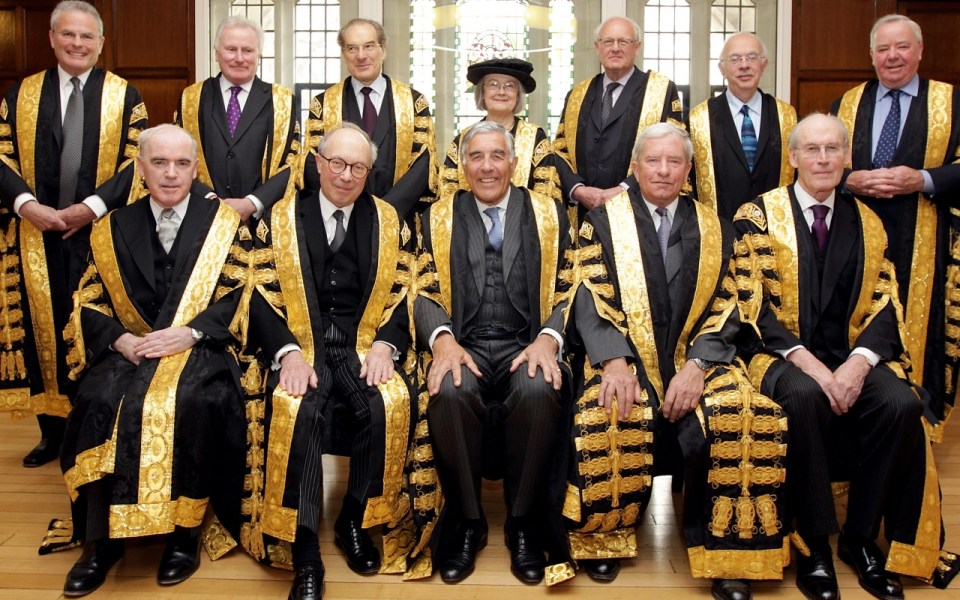
The judiciary in the UK is dominated by Oxbridge educated white middle-class men. It is estimated that three quarters of all judges in England and Wales are male and 95% are white (Lieven, 2017). The gender imbalance can be well illustrated by looking at the Supreme Court. There is only one woman among the 12 Justices on the Supreme Court. Lady Hale is the only woman ever to serve on the Court and all of the judges are and have always been white. Only Armenia and Azerbaijan have lower proportions of women in their judiciary than the UK (Lieven, 2017). This is unacceptable in 2018, changes must be made to address this gender imbalance.
In terms of race, as at 1 April 2017, only 7% of court judges were Black, Asian or Minority Ethnic (BAME). Of these Asian and Asian British accounted for 3% and the remaining three groups, Black and Black British, Mixed Ethnicity and Other Ethnic Group at around 1% each (Ministry of Justice, 2017).
This shows that judges are not reflective of wider society. This is a significant problem because the public should be confident that the judiciary delivers justice fairly. The lack of diversity means that concerns about the legitimacy and objectivity of judgements may be raised.
There are three main explanations for the continuing lack of diversity. The first explanation is that there are not enough women, BAME people and people from less privileged backgrounds who would be suitable for appointment. However, I would question the validity of this argument. This explanation seems to suggest that women or BAME people might be lacking lacking adequate knowledge or experience. There is no evidence to support this argument.
The second explanation given is that women and BAME candidates do not apply for appointment. However, it could be argued that the issue is more complicated than simply failing to apply. For example, Allen (2009) found that when BAME candidates and solicitors do apply for appointment they are significantly less likely to be successful than white candidates or barristers. This shows that the issue is not the lack of applications received from women or BAME candidates but perhaps the discriminatory recruitment process.
The third explanation is that the key principle governing our appointments to judicial office is merit. Unfortunately, the term ‘merit’ is not defined, but the implication is that achieving merit and diversity are at odds.
In conclusion, the lack of diversity in the judicial system is very concerning and should be addressed as soon as possible. This needs to be done to ensure that our justice system is fair, accessible and efficient. It is in our interest to produce a judiciary of the highest quality that reflects the make-up of our nation. Difference should be valued and not feared.
References
Allen, A (2009) Barriers to Application for Judicial Appointment Research. London: Judicial Appointments Commission.
Hornby, A.S (2000) Oxford Advanced Learner’s Dictionary. 6th ed. Oxford: Oxford University Press.
Lieven, N (2017) Increasing judicial diversity. London: Justice.
The Ministry of Justice (2017) Judicial Diversity Statistics 2017. London: MOJ.
Share this:


Why Criminology terrifies me

Cards on the table; I love my discipline with a passion, but I also fear it. As with other social sciences, criminology has a rather dark past. As Wetzell (2000) makes clear in his book Inventing the Criminal: A History of German Criminology 1880-1945 the discipline has (perhaps inadvertently) provided the foundations for brutality and violence. In particular, the work of Cesare Lombroso was utilised by the Nazi regime because of his attempts to differentiate between the criminal and the non-criminal. Of course, Lombroso was not responsible (he died in 1909) and could not reasonably be expected to envisage the way in which his work would be used. Nevertheless, when taken in tandem with many of the criticisms thrown at Lombroso’s work over the past century or so, this experience sounds a cautionary note for all those who want to classify along the lines of good/evil. Of course, Criminology is inherently interested in criminals which makes this rather problematic on many grounds. Although, one of the earliest ideas students of Criminology are introduced to, is that crime is a social construction, which varies across time and place, this can often be forgotten in the excitement of empirical research.
My biggest fear as an academic involved in teaching has been graphically shown by events in the USA. The separation of children from their parents by border guards is heart-breaking to observe and read about. Furthermore, it reverberates uncomfortably with the historical narratives from the Nazi Holocaust. Some years ago, I visited Amsterdam’s Verzetsmuseum (The Resistance Museum), much of which has stayed with me. In particular, an observer had written of a child whose wheeled toy had upturned on the cobbled stones, an everyday occurrence for parents of young children. What was different and abhorrent in this case was a Nazi soldier shot that child dead. Of course, this is but one event, in Europe’s bloodbath from 1939-1945, but it, like many other accounts have stayed with me. Throughout my studies I have questioned what kind of person could do these things? Furthermore, this is what keeps me awake at night when it comes to teaching “apprentice” criminologists.
This fear can perhaps best be illustrated by a BBC video released this week. Entitled ‘We’re not bad guys’ this video shows American teenagers undertaking work experience with border control. The participants are articulate and enthusiastic; keen to get involved in the everyday practice of protecting what they see as theirs. It is clear that they see value in the work; not only in terms of monetary and individual success, but with a desire to provide a service to their government and fellow citizens. However, where is the individual thought? Which one of them is asking; “is this the right thing to do”? Furthermore; “is there another way of resolving these issues”? After all, many within the Hitler Youth could say the same.
For this reason alone, social justice, human rights and empathy are essential for any criminologist whether academic or practice based. Without considering these three values, all of us run the risk of doing harm. Criminology must be critical, it should never accept the status quo and should always question everything. We must bear in mind Lee’s insistence that ‘You never really understand a person until you consider things from his point of view. Until you climb inside of his skin and walk around in it’ (1960/2006: 36). Until we place ourselves in the shoes of those separated from their families, the Grenfell survivors , the Windrush generation and everyone else suffering untold distress we cannot even begin to understand Criminology.
Furthermore, criminologists can do no worse than to revist their childhood and Kipling’s Just So Stories:
I keep six honest serving-men
(They taught me all I knew);
Their names are What and Why and When
And How and Where and Who (1912: 83)
Bibliography
Browning, Christopher, (1992), Ordinary Men: Reserve Police Battalion 101 and the Final Solution in Poland, (London: Penguin Books)
Kipling, Rudyard, (1912), Just So Stories, (New York: Doubleday Page and Company)
Lee, Harper, (1960/2006), To Kill a Mockingbird, (London: Arrow Books)
Lombroso, Cesare, (1911a), Crime, Its Causes and Remedies, tr. from the Italian by Henry P. Horton, (Boston: Little Brown and Co.)
-, (1911b), Criminal Man: According to the Classification of Cesare Lombroso, Briefly Summarised by His Daughter Gina Lombroso Ferrero, (London: G. P. Putnam’s Sons)
-, (1876/1878/1884/1889/1896-7/ 2006), Criminal Man, tr. from the Italian by Mary Gibson and Nicole Hahn Rafter, (London: Duke University Press)
Solway, Richard A., (1982), ‘Counting the Degenerates: The Statistics of Race Deterioration in Edwardian England,’ Journal of Contemporary History, 17, 1: 137-64
Wetzell, Richard F., (2000), Inventing the Criminal: A History of German Criminology 1880-1945, (Chapel Hill: The University of North Carolina Press)
Share this:

The Power of Education
“Education is the most powerful weapon which we can use to change the world” (Nelson Mandela)
My name is Stephanie, and I was a Criminology (with Education Studies) student at Northampton from 2012-2015. After graduating, I proceeded with my masters in International Criminal Law and Security at Northampton still. I graduated with my Masters in February 2018. This blog post is a dedication to how one lecture and one seminar, from 2 different modules at different points in my university ignited a fire in me, which is still in me today.
Education opens our minds to new things; we see things differently and can use it as a force to make the world a better place and we can better understand the world around us. It can empower us to make change, teach and impart our knowledge to others.
During the 1st year of my undergrad, in a lecture in Crime and Society focussing on sexual crime, my heart sank. I thought back to when I was 13 years old, I was sexually assaulted at school. I didn’t realise it at that time, until that session on sexual crime.
I reminisced of the horrible occasion, telling the boy who assaulted me to stop and pushed his hands away. Despite any efforts to stop him, he still invaded my personal space and touched me without my consent, leaving deep emotional scars, my body feeling utterly violated, physically sick and was uncomfortable in my own skin (of which hung with me for a number of years after).
In the session on sexual crime, anger and distress bubbled in my stomach, as I tried to ignore the memories that were resurfacing. It was not until my final year in a Crime and Punishment seminar, where a role play of a rape victim reporting to the police demonstrated in class was done that a fire of inspiration was ignited. A fierce passion burned inside me, and I deeply felt that I had to do something.
This was inspiration behind my petition on making it compulsory to teach consent in schools: https://www.change.org/p/rt-hon-justine-greening-mp-to-make-it-compulsory-to-teach-consent-within-secondary-school-pshe-sex-education-classes
That seminar left me feeling a mixture of things; firstly, I was (and still am) appalled by the rape myths that are riddled in our society and justice system, and the lack of compassion shown to rape victims. I felt angry and somewhat distressed, because of my own experience of sexual assault.
It most importantly, started a fire of wanting to make change to better inform people in society of these rape myths, and to understand consent. To all who have read this, please sign, share and encourage others to do the same for this petition.
On another note, you are also more than welcome to follow my personal blog here at: https://wordpress.com/stats/day/flowervioletblog.wordpress.com
Share this:


The never-changing face of justice

There are occasions that I consider more fundamental questions beyond criminology, such as the nature of justice. Usually whilst reading some new sentencing guidelines or new procedures but on occasions major events such as the fire at Grenfell and the ensuing calls from former residents for accountability and of course justice! There are good reasons why contemplating the nature of justice is so important in any society especially one that has recently embarked on a constitutional discussion following the Brexit referendum.
Justice is perhaps one of the most interesting concepts in criminology; both intangible and tangible at the same time. In every day discourses we talk about the Criminal Justice System as a very precise order of organisations recognising its systemic nature or as a clear journey of events acknowledging its procedural progression. Both usually are summed up on the question I pose to students; is justice a system or a process? Of course, those who have considered this question know only too well that justice is both at different times. As a system, justice provides all those elements that make it tangible to us; a great bureaucracy that serves the delivery of justice, a network of professions (many of which are staffed by our graduates) and a structure that (seemingly) provides us all with a firm sense of equity. As a process, we identify each stage of justice as an autonomous entity, unmolested by bias, thus ensuring that all citizens are judged on the same scales. After all, lady justice is blind but fair!
This is our justice system since 1066 when the Normans brought the system we recognise today and even when, despite uprisings and revolutions such as the one that led to the 1215 signing of the Magna Carta, many facets of the system have remained quite the same. An obvious deduction from this is that the nature of justice requires stability and precedent in order to function. Tradition seems to captivate people; we only need a short journey to the local magistrates’ court to see centuries old traditions unfold. I imagine that for any time traveler, the court is probably the safest place to be, as little will seem to them to be out of place.
So far, we have been talking about justice as a tangible entity as used by professionals daily. What about the other side of justice? The intangible concept on fairness, equal opportunity and impartiality? This part is rather contentious and problematic. This is the part that people call upon when they say justice for Grenfell, justice for Stephen Lawrence, justice for Hillsborough. The people do not simply want a mechanism nor a process, but they want the reassurance that justice is not a privilege but a cornerstone of civic life. The irony here; is that the call for justice, among the people who formed popular campaigns that either led or will lead to inquiries often expose the inadequacies, failings and injustices that exist(ed) in our archaic system.
These campaigns, have made obvious something incredibly important, that justice should not simply appear to be fair, but it must be fair and most importantly, has to learn and coincide with the times. So lady justice may be blind, but she may need to come down and converse with the people that she seeks to serve, because without them she will become a fata morgana,a vision that will not satisfy its ideals nor its implementation. Then justice becomes another word devoid of meaning and substance. Thirty years to wait for an justice is an incredibly long time and this is perhaps this may be the lesson we all need to carry forward.
Share this:

The changing face of criminology

We can profess that those of us in academia get to own a small nugget of knowledge on their chosen subject. This is how specialism is developed and cultivated. We start our long journey into knowledge first by learning the discipline as a whole, going through the different theories and issues, becoming aware of the critical debates, before we embrace the next step of in depth understanding. Little by little knowledge becomes a road full of junctions, intersections and byroads, constantly fueled by one of the most basic but profound parts of human experience, curiosity. Academia, was originally developed by a person looking up in the wider cosmos and wondering; surely there is more to life than this. When the recorded experience aligned with imagination it produced results; civilization emerged as a collective testament of being. Arguably the first ever question, whenever it was posed and however it was phrased, philosophy was born; any attempt to answer it generated reason and logic.
The process of learning is painstaking because education is a process and as such it requires us to grow as we absorb it. This process is never ending because “The eye never has enough of seeing, nor the ear its fill of hearing” to quote Ecclesiastes and therefore learning is lifelong. In academia, in particular, this thirst for knowledge is unquenchable and because of it we progress our respective disciplines further, constantly expanding the boundaries. Anyone of us who had a discussion in or out of a classroom will testify that even on the same topic, with the same material, a seminar is never the same. The main reason for this is, education is active and as a learner I gain from whatever I can relate to and comprehend. Time and time again, I go back to my own learning as I adapt my pedagogy, because to teach is a dialectic; we impart an idea and we let it flourish to those who shall be taking it further.
There is a reason why I am so reflecting of education on this entry; recently we had a reunion of our alumni and in preparation of the event, I was looking back at the way we taught criminology, what changed and how things have progressed. Colleagues, moved on as expected and the student demographics may have changed but the subject is still taught. It is this ongoing process that fascinated me in that reflection. The curriculum and the ideas behind it. As an institution we offer a number of subject areas, criminology included, that other institutions around the world do, but no other institution will have the unique blend of what we offer. This part is quite astounding that in the reproduction of ideas and across the continuity of disciplinary knowledge, there is always a place for originality.
On the day, I could hear the stories from some of our alumni with a latent sense of pride as they spoke with some confidence about their life plans, work commitments and ideas. These were the same people who some years ago, blushed in a seminar from shyness, were anxious about their exam results and worried about their degree classification. Now with confidence, they embrace their education with the realisation that they have just made the first step into a terra incognita… their journey into learning continues. During the next weeks (and hopefully, months), a number of our alumni (and current students) will put pen to paper of their thoughts, on our blog and talk about their experiences and their criminology. We thank them in advance and are looking forward to read their thoughts.


