
Home » Social interaction (Page 3)
Category Archives: Social interaction

Alex park: a space of criminological interest?
Almost every day I walk my puppy in the local park. Most days I go around 6-7am when there’s barely anyone around. He’s made a couple of dog friends and we often stop for a chat. It’s tranquil and calm. I’ll listen to an audio book or the birds. The dog mother of Hazel the Italian greyhound tells me which birds are calling.
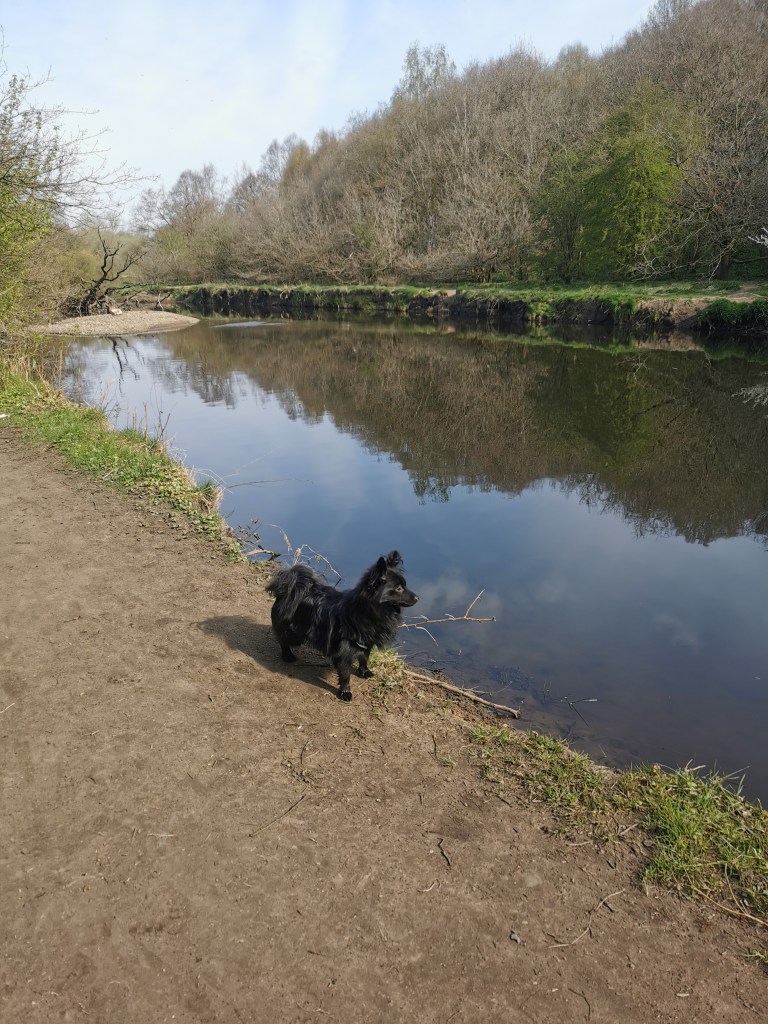
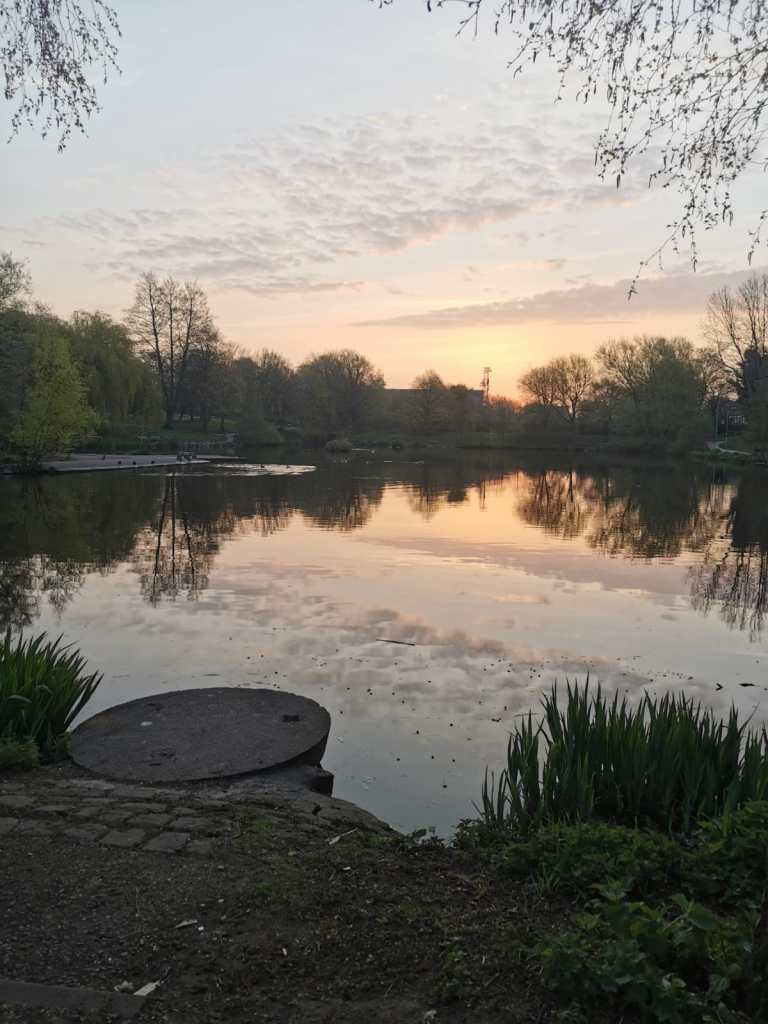
Usually in the evening we go to a huge field so he can quite literally run rings around me. A few weeks ago, we broke tradition and went to the local park in the late afternoon. I had spent the entire day in front of a screen and needed a break. We got to the park and it was different – it looked different, sounded different, and felt different. The sun was out so of course it was busier, and as you’d expect after school there were children playing on the skate park and the playground. There were about a dozen dogs in the dog park (it’s not as fancy as it sounds – just a patch of grass where the dogs dig holes and fetch sticks). Prince was a bit overwhelmed and so was I – at this point I hadn’t seen so many people in one place since pre-covid!
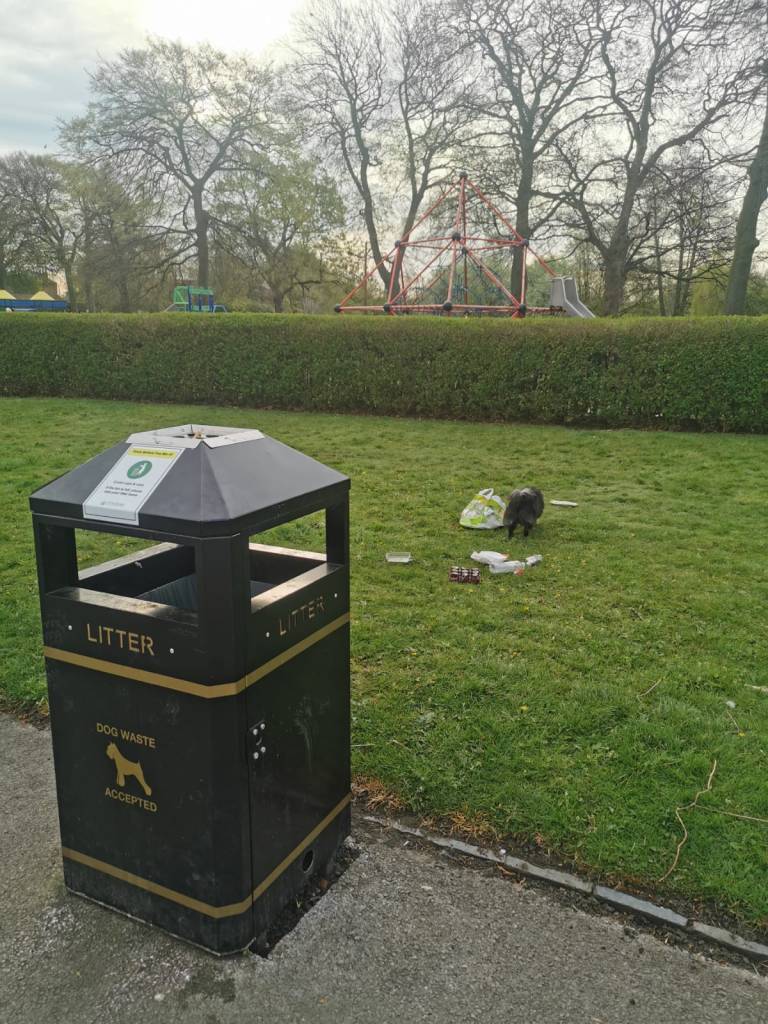
I soon learned that I couldn’t let Prince off his lead on a Monday because the mess from the weekend (even before the outdoor rule of six) would not yet be cleaned and he would eat everything. One Monday he walked an entire lap of the park with a croissant in his mouth that was bigger than his head. Another day he picked up half a joint of cooked meat. I noticed the signs of people having good (and not so good) times, particularly after sunny weekends. Sometimes when it’s warm there’s groups of men fishing, pulling all-nighters, smoking cannabis and drinking. Once, we followed a trail of blood around the path and although it could just as easily come from a child after a fall, the empty, broken alcohol bottles led me to imagine scenarios of violence.
During my visits to the park over the last few months I have seen evidence of alcohol and drug use, and possible violence. In May last year, there were reports of gunshots fired, leading to a man being arrested on suspicion of possessing a firearm. Quite worrying considering I live only a couple of hundred metres away. There have also been incidents involving youths wielding baseball bats and setting fires before attacking firefighters. I had a look at the crime data for the area but Greater Manchester Police have had some IT issues affecting data from 2019 onwards (that’s another story…), however older data showed a pattern of anti-social behavior, arson and a few violent offences as well. This is all very different to the place of tranquility I visit daily with the puppy.

The next day we returned for our early morning walk and I reflected upon the changes in the character of the park and the actors and events that create this. I started thinking about criminology and the environment around us, about how places can change so much throughout the day and across the seasons. I thought about situational crime prevention. My work brain truly switched on and I stopped hearing the birds and started seeing the CCTV and the lighting. I thought to myself that I would not go to the park when it gets dark but if I did, I would stay in the lit areas where the cameras could see me. I would stay away from the groups of fishermen because they were sure to be drunk and stoned by nightfall. I haven’t seen them behave in a threatening manner although I have overheard verbal threats. They are usually asleep when I walk by but as a single woman I’d think twice about walking past a group of lively, drunk men at night.
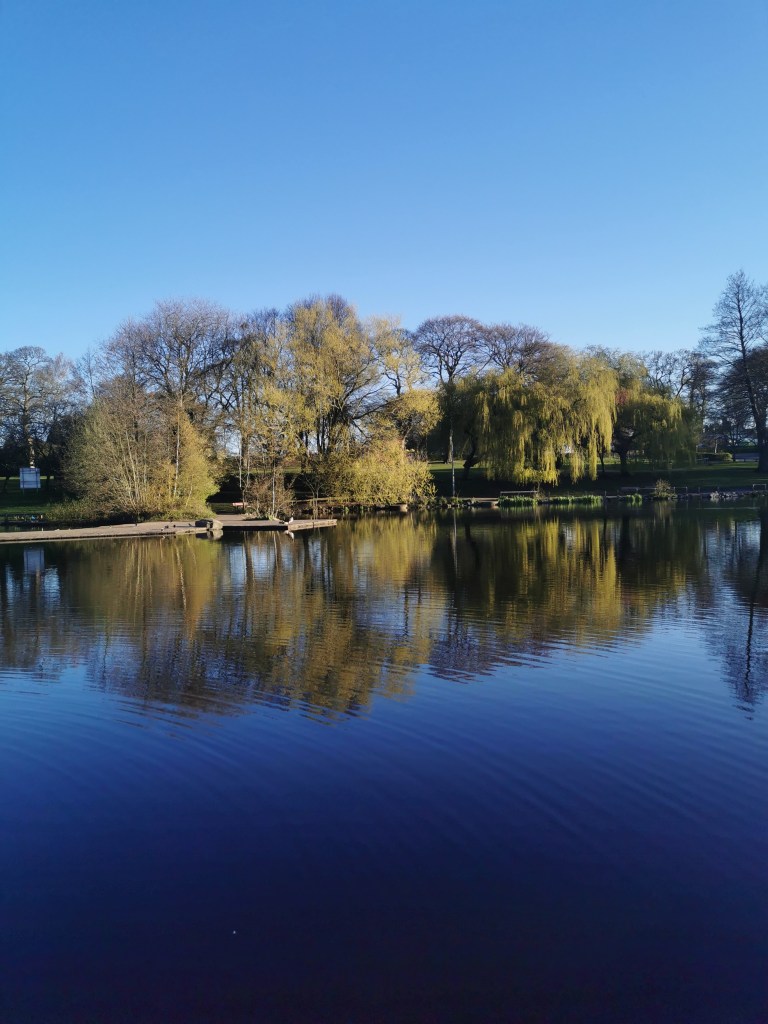
This local park is just one example based on my observations, but the question is, is it a criminogenic space? Or am I criminologist who sees things of criminological interest in everything, everywhere? Or a woman who constantly assesses personal safety? Luckily I haven’t had enough thinking time and space to ponder these questions otherwise this would have been a long read.
Share this:


The 7 shots of Isaiah Brown (April, post-George Floyd murder case) #BlackenAsiaWithLove
Isaiah Brown was shot by the policeman who’d given him a ride home less than an hour earlier, after his car had broken down at a gas station. He was shot 3 minutes into his 9-1-1 call. The cop mistook the cordless phone Isaiah was holding for a gun. This was the very phone he’d mentioned to the 9-11 dispatcher, using the very same cordless phone from his home. On the 9-1-1 call, Isaiah is explicitly asked, and confirms that he is unarmed, also that he was walking down the street on the phone, escaping a volatile situation.
On the call, it’s clear that Isaiah was reaching out for a lifeline – calling out from hell in sheer crisis. It wasn’t that he was in danger, he had the emotional maturity to call for help when he felt himself at risk of endangering another. “I’m about to kill my brother,” he calmly tells the dispatcher, who by now can start to hear him panting from walking.
“Do you understand that you just threatened to kill your brother on a recorded line on 9-1-1,” she asks calmly. “Mmm Hmm,” he confirms casually. He was calling her for help, and by now it’s clear that she’s attempting to keep him talking, i.e. redirect his attention from his crisis by having him describe the crisis. She’s helping Isaiah to look at his situation objectively, and it’s working. This is a classic de-escalation tool that anyone who has ever taken care of a toddler knows. Isaiah calmly and rationally confirmed that he knew the implications of his words, and he kept pleading for help.
This was a call about a domestic dispute and there was talk of a gun, which never materialized, neither did the caller nor his brother in the background suggest the actual presence of a gun. Isaiah can be heard twice ushering someone out with him, and by his tone it seemed that he was speaking to a child, using a Black girl’s name. None of Isaiah’s ushering is noted in the transcript. In hearing so many keystrokes, one wonders which parts of this is being taken down. Again, she asked him to confirm that he was unarmed. In fact, she seemed bewildered that he was using a house phone, yet still able to walk down the street, again, evidently attempting to de-escalate the situation. How many times have you told some to “take a walk!”
“How are you walking down the road with the house phone,” she asks. “because I can,” he says, and leaves it at that.
In the background of the call, we hear police sirens approaching. “You need to hold your hands up,” she says. “Huh,” he asks. “Hold your hands up,” she says sharply, as if anticipating the coming agitation. It’s interesting to note here that we, too, know that despite the casual nature of this distress call, despite all clear and explicit confirmation that the gentleman was unarmed, and regardless of the fact that the dispatcher knew that Isaiah would be in the street when officers approached, the raising in alarm in her voice betrayed the fact that she knew the officer would escalate the situation.
“Why would you want to do something like that,” she calmly asks, he calmly answers. She engages him in this topic for a while, and we can hear the background become quieter. His explanations are patchy and make little sense, yet he remains calm. By now, it’s clear that the caller is of danger to no one else but his brother, and that he’d managed to create some physical distance between the two. So far, nothing suggests anyone is about to die. Yet, the officer arrives, and within 30 seconds, 7 shots are fired, Isaiah is down.
After the 7 shots are fired, you can hear someone moaning in pain, and you can’t exactly tell if it’s Isaiah or the dispatcher; the dispatcher’s recording continues. After the shots are fired, and it’s clear from the audio that the victim is moaning in pain, the cop continues to bark out orders: “Drop the gun” and so forth. He’s just 7 times, we hear a fallen man, and the cop is still barking in anger and anguish. Is he saying “drop the gun” to Isaiah, or performing for the record, as Black twitter has suggested? Confusingly, moments later the officer is heard playing Florence Nightingale, complete with gentle bedside manner. We hope Isaiah survives; issuing aid at this moment is life-saving.
“He just shot ‘em, the dispatcher says to someone off call, who can now be heard on another dispatch call regarding the incident. “I got you man” the policeman says to Isaiah moments after shooting him, then mercifully: “I’m here for you, ok.”
Now, in the distance, we hear the familiar voice of Isaiah’s brother calling out, “Hey, what’s going on, bro?” “It’s ok” the officer calls out quickly. He never says what’s just happened. Then, “Go to my car, grab the medical kit,” he calls out to the brother. “You shot ‘em,” the brother asks. The cop says nothing.
The previous news report on the network nightly news was about Merrick Garland launching a civil rights investigation into my hometown’s police force, just over a year after the police murdered Breonna Taylor on my mother’s birthday. “It’s necessary because, police reform quite honestly, is needed, in nearly every agency across the country” says Louisville Metro Police Chief, Erika Shields. On that area’s local news website reporting this story, the next news story bleeds reads: “ Black gun ownership on the rise,” on no one should wonder why. But, this is America, so the headline finishes with: “But Black gun store owners are rare.” The all-American solution – more peace-makers!
Please stop ignoring our distress, or minimizing our pain with your calls to “go slow.” How slow did Isaiah have to move to avoid getting shot 7 times by a cop who’d just shown him an act of kindness and mercy!?! #BLM #BlackLivesMatter #Seriously #Nokidding
Share this:


Thank F**k it’s Easter!

A number of years ago I wrote a blog entitled: ‘Thank F**k it’s Christmas!’. In it, I had a general moan (nothing new there) about how exhausted the staff and students were in the first term of the new academic year: Christmas break felt desperately needed. At the time, I was still an Associate Lecturer but had just begun my MSc at Leicester as well as supporting my partner on the weekends. I felt burned out, overwhelmed, and ridiculously grateful that the Christmas break had arrived. I also commented on the importance and need for work-life balance for both staff and students, something which many of us have still not managed to achieve and something which appeared increasingly challenging during the various Lockdowns. Yes; a number of us have worked/studied from home, but that has blurred what used to be clear working hours (in theory), and home life. I honestly do not know where one ends and the other begins. Therefore, I find myself back in a head space which is screaming: ‘Thank F**k it’s Easter!’.
This term has been challenging, term 2 always is. We have navigated another lockdown, assessments, lectures, workshops, all sorts. Now, throw into the mix a cyber attack on the University and ‘Thank F**k it’s Easter’ rings louder. Staff and students have persevered in the name of education and demonstrated resilience. Something I think we should all be proud off. But the anxiety, frustrations and exasperation which the lack of IT services has generated, feels like it might take some time to overcome. I am cautious to advise us to consider work-life balance as we go into the Easter Break, as I fear I will sound hypocritical. I advised the need to take time to ourselves before, and to organise some kind of work-life balance, and in all fairness that went straight out the window once we returned from Christmas break (maybe a week of two after, I am sure I attempted a balance to begin with).
Nevertheless, I do think it is important to recognise our strengths, our achievements and to take time to breathe! For many of us, we have been without our families and friends for months. Lockdown is easing, and I am naively hopeful that this will mean we can see those who are dear to us again soon: safely and sensibly. But until we reach that point, I am also exceptionally grateful that the Easter weekend is upon us. Whether we celebrate the bringing of chocolate by the Easter Bunny, or the death and resurrection of Christ: we should all celebrate that we have made it to the end of term 2. Celebrate our achievements no matter how big or small, timetable some time to yourselves: read, run, drink gin, watch films, cross-stitch, do whatever brings you some kind of peace and most importantly: breathe. The University is closed from Friday 2nd April and re-opens on Wednesday 7th April. Lets all take some time for ourselves and breathe. Happy Easter Everyone!
Share this:


Never Fear….Spring is almost here (part II)

A year ago, we left the campus and I wrote this blog entry, capturing my thoughts. The government had recently announced (what we now understand as the first) lockdown as a response to the growing global pandemic. Leading up to this date, most of us appeared to be unaware of the severity of the issue, despite increasing international news stories and an insightful blog from @drkukustr8talk describing the impact in Vietnam. In the days leading up to the lockdown life seemed to carry on as usual, @manosdaskalou and I had given a radio interview with the wonderful April Ventour-Griffiths for NLive, been presented with High Sheriff Awards for our prison module and had a wonderfully relaxing afternoon tea with Criminology colleagues. Even at the point of leaving campus, most of us thought it would be a matter of weeks, maybe a month, little did we know what was in store….At this stage, we are no closer to knowing what comes next, how do we return to our “normal lives” or should we be seeking a new normality.
When I look back on my writing on 20 March 2020, it is full of fear, worry and uncertainty. There was early recognition that privilege and disadvantage was being revealed and that attitudes toward the NHS, shop workers and other services were encouraging, demonstrating kindness and empathy. All of these have continued in varying degrees throughout the past year. We’ve recognised the disproportionate impact of coronavirus on different communities, occupations and age groups. We’ve seen pensioners undertaking physically exhausting tasks to raise money for the tax payer funded NHS, we’ve seen children fed, also with tax payer funding, but only because a young footballer became involved. We’ve seen people marching in support of Black Lives Matter and holding vigils for women’s rights. For those who previously professed ignorance of disadvantage, injustice, poverty, racism, sexism and all of the other social problems which plague our society, there is no longer any escape from knowledge. It is as if a lid has been lifted on British society, showing us what has always been there. Now this spotlight has been turned on, there really is no excuse for any of us not to do so much better.
Since the start of the pandemic over 125,000 people in the UK have been killed by Coronavirus, well over 4.3 million globally. There is quotation, I understand often misattributed to Stalin, that states ‘The death of one man: this is a catastrophe. Hundreds of thousands of deaths: that is a statistic!’ However, each of these lives lost leaves a permanent void, for lovers, grandparents, parents, children, friends, colleagues and acquaintances. Each human touches so many people lives, whether we recognise at the time or not and so does their death. These ripples continue to spread out for decades, if not longer.
My maternal great grandmother died during the Spanish flu pandemic of 1918, leaving behind very small children, including my 5 year old nan. My nan rarely talked about her mother, or what happened afterwards, although I know she ended up in a children’s home on the Isle of Wight for a period of time. I regret not asking more questions while I had the chance. For obvious reasons, I never knew my maternal great grandmother, but her life and death has left a mark on my family. Motherless children who went onto become mothers and grandmothers themselves are missing those important family narratives that give a shape to individual lives. From my nan, I know my maternal great grandmother was German born and her husband, French. Beyond that my family history is unknown.
On Tuesday 23 March 2021 the charity Marie Curie has called for a National Day of Reflection to mark the collective loss the UK and indeed, the world has suffered. As you’ll know from my previous entries, here and here, I have reservations about displays of remembrance, not least doorstep claps. For me, there is an internal rather than external process of remembrance, an individual rather than collective reflection, on what we have been, and continue to go, through. Despite the ongoing tragedy, it is important to remember that nothing can cancel hope, no matter what, Spring is almost here and we will remember those past and present, who make our lives much richer simply by being them.
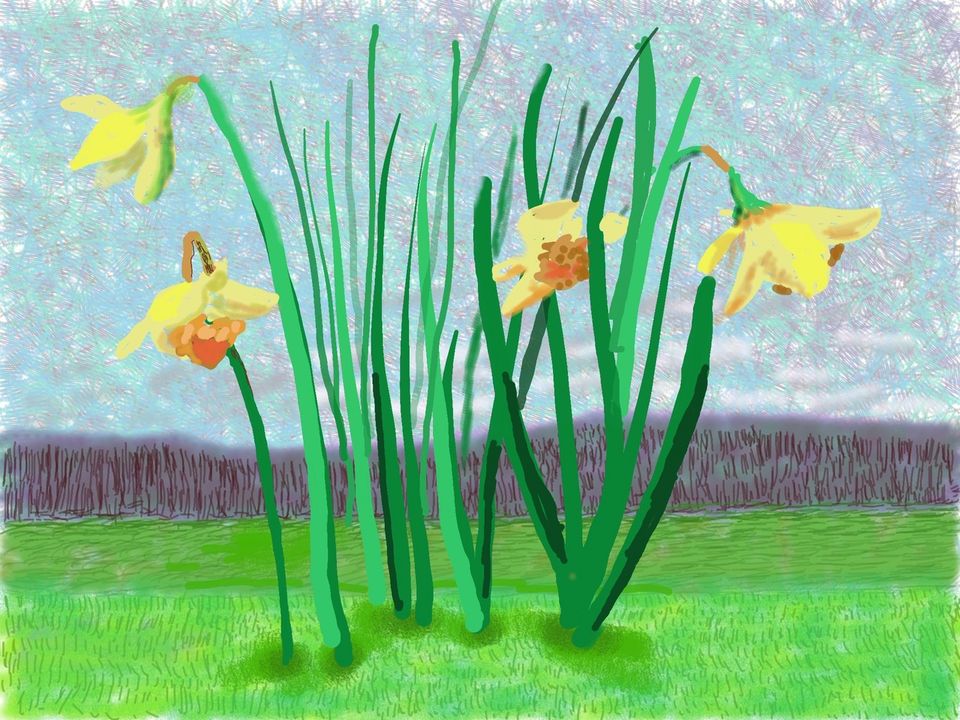
https://www.theartnewspaper.com/comment/a-message-from-david-hockney-do-remember-they-can-t-cancel-the-spring?fbclid=IwAR2iA8FWDHFu3fBQ067A7Hwm187IRfGVHcZf18p3hQzXJI8od_GGKQbUsQU
Share this:


Keep Calm and Forget the Pandemic or What to do in a pandemic? Take advantage of the situation
Eleven months now and there is a new spectre haunting Europe; a plague that has taken hold of our lives and altered our lifestyles. Lockdowns, the r rate, viral transmission, mutations are new terms that common people use as if we are experienced epidemiologists. Masks, made of cloth or the surgical ones, gloves and little bottles of antiseptic have become new fashion accessories. Many people report mental fatigue and others a state of confinement inside their own homes. Some people have started complaining that there is no light in this long tunnel, in country after country face with overwhelmed medical staff and system.
The optimist in me is unequivocal. We can make it through. Life is far more powerful than a disease and it always finds a way to continue, even in the most hostile of conditions. In my view however this is not going to be a feat of a great person; this is not going to be resolved by one solution. The answer is in us as a collective. Humanity thrived when it gets together and the ability to form meaningful bonds that is the backbone of our success to survival.
Imagine our ancestors making their first communities; people that had no speed like the felines, no strength like the great apes and no defensive shell to protect them. Coming out of Africa thousands of years ago, this blood creature had no offensive nor defensive structures to prevail. Our ancestors’ survival must have been on the brink. Who could imagine that some thousands of years ago, we were the endangered species? Our endurance lies on the ability to form a group that worked together and understood each other, carried logic, used tools and communicated with each other.
The current situation is a great reminder of the importance of society and its true purpose. People form societies to protect each other and advance their opportunity for success. We may have forgotten that and understandably so, since we have had people who claimed that there is no such thing as a society, only the individual. The prevailing economic system focuses on individual success, values individual recognition and prioritises individual issues. In short, why worry about others, miles away, feet away, steps away from us if we are doing well.
It is interesting to try to imagine a society as a random collection of indifferent individuals, but more people begin to value the importance of the other. After years of austerity and the promotion of individualism, more people live alone, make relationships through social networking and mostly continue to live a solitary life even when they live with others. Communities, as an ex-prime minister claimed as broken and so people waste no time with them. We take from our communities, the things we need, and we discard the rest. Since the start of the pandemic, deliveries, and online companies have been thriving. Whilst physical shops are facing closure, online ones can hardly cope with the demand. As a system, capitalism is flexible enough to retune the way wealth is made. Of course, when you live alone, there are things you cannot have delivered; intimacy, closeness, intercourse. People can fulfil their basic needs apart from the one that makes them people; their socialisation. We will have to address it and perhaps talk about the need to be a community again.
In the meantime, what happens at the top? In the Bible there was the story of the pool of Siloam. This miraculous pond blessed by an angel offered the opportunity for clemency for those who swam in the waters. Wipe the slate clean and start again. So, what do governments do? Interestingly not as much. Right now, as people try to come to terms with loss, isolation and pain, different governments try to address other political issues. One country is rocked by the revelations that its head of state has created a palace to live in. Another one, has finished construction of his summer palace. In another country they are bringing legislation to end abortions, in another they propose the introduction of police on campuses. Others are restricting the right to protest, and in a country famed for its civil rights, legislation is being introduced not to take pictures of police officers in public, even if they may be regarded in violation of duties. It seems that it is open season for the curtail of civil liberties through the back door. In an island kingdom the system has ordered and moves forward with the construction of more and bigger prisons. A sign that they anticipate public upheaval. Maybe; whatever the reason this opportunity to supress the masses may be tantalising, but it is wrong. When ever we come out of this we need to reconnect as a community. If this becomes an opportunity for some, under the suppression of civic rights, things will become problematic. For starters, people will want to see their patience and perseverance rewarded. My advice to those who rule, listen to your base.
Share this:


Drag queens and space occupying scenes

In closing out LGBTQ+ history month, Luke Ward and I spoke at the UoN Psychology Society about our research on Ru Paul’s Drag Race. Given the popularity of the series (especially now it is available on streaming service Netflix), it is likely that even if you are not a part of the LGBT+ community, you may have seen the show (or at least shared a meme or two).
The series Ru Paul’s Drag Race first began on LGBTQ+ network Logo TV, and over the past decade, has made the move from a niche and community oriented market, to a mass market phenomenon. This echoes the roots of drag, from the underground ballroom scene in 1980s New York, to the accessible (but not always affordable) drag shows and conventions that are available today. We have moved away from the underground to taking up more space – cis, straight, previously unavailable space – which has made drag something more lucrative than its initial inception.
It is within this commercialised region of drag that we see a shift in focus within the community. It is not just a symbol of resistance against societal norms of gender and sexuality, but it is also something of a commodity – something that to our (patriarchal) society, has become useful, in being able to sell products (literally – make up, drag queen merch) to a wider (mostly young, white, and straight) audience. Whilst the majority of the Drag Race series have been based on the US, if we bring in the UK to this conversation, the evidence of wider accessibility of drag can be seen through its showing on the BBC, of all television networks.
Whether the commercialisation of drag is a positive for the community remains to be seen. However, what we can say on the back of the success and accessibility of Ru Paul’s Drag Race is the awareness that has been brought to a range of intersectional issues, from racism to religion, and gender identity to social class. Though some of these issues might not be news to the LGBT+ community, we can most certainly agree that it has brought about discussion of such issues to those who perhaps had not even thought about such positions, let alone experienced them. Especially with the perpetuation of social media, community discussion has never been so lively, both online and offline.
Regardless of your opinion of the series, it has opened up conversations in new spaces that brings visibility to the LGBT+ community. We discuss these issues, as well as the comparisons between US and UK drag, in our recent paper that you can find here.
Share this:


Switching off?
I am not sure whether this relates to age or not but during my late 20s I became increasingly reluctant to engage with watching television, using my phone and engaging in social media. I suppose there are a number of reasons for this. One reason is that I enjoy being able to ‘switch-off’ from looking at any form of screen. The change in the nature of my job role and in this current lockdown context means that at the moment I am less able to ‘switch-off’.
The increased screen time demand plays all sorts of tricks on the human body. We seem to be a nation of people that are experiencing the sensation of a ‘buzzing brains’, ‘square eyes’, headaches and ‘burning faces’ due to too much screen time.
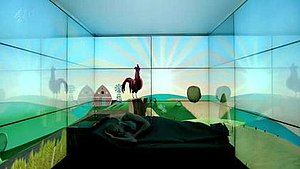
Recently, I made an irrational decision to watch the rather grim Fifteen Million Merits episode of Black Mirror. This episode consists of individuals being forced to look at screens at all hours, and it also included much seedier scenes. This episode has absolutely no resemblance to the current situation that we are all in. Although, the episode did remind me of some of the diffculties that people may be experiencing in terms of not being able to ‘switch-off’ from looking at screens whilst working from home.
Work now consists of me using my laptop in my office. I do wonder whether living in smaller living spaces makes matters worse? In terms of my own flat, my office is six steps away from my living room and two steps away from my bedroom. I have never experienced such close proximity to work. When work ends I then attempt to ‘wind-down’ by using my phone or watching the television. My whole day seems to consist of looking at some form of screen. Some of us are fortunate to have gardens. I wonder if this helps people to spend a bit or time relaxing whilst working from home?

Maybe we will all be diagnosed with ‘square eyes’ and ‘buzzing brain’ disorders in the future. Maybe these terms will make it into the dictionary. What I do know is that when lockdown ends I would love to spend a whole day just staring into space, lying on the grass or floating in a warm sea somewhere outside of the U.K. Is it just me that feels this way? Maybe I have just lost the plot.
The moral of this story is, do not watch dystopian television programmes during a lockdown. As you may begin to reflect about all sorts of nonsense!
Share this:


Late: The word that defines the UK’s Coronavirus pandemic management

Picture the scene. We are in Downing Street and the news media are awaiting another coronavirus press conference. Professor Chris Whitty, the Chief Medical Officer for England is ready. Sir Patrick Vallance the Chief Scientific Advisor is ready. Where is the Prime Minister (PM)? Late again.
I have this vision of our PM frantically scurrying around like the White Rabbit in Alice in Wonderland humming “I’m late I’m late for very important date”. We might all smile at this vision but I’m afraid the analogy of being late is not a laughing matter when it is applied as the major theme for the UK governments management of what I described in a previous blog as the worst public health crisis in my lifetime. I also recall the PM famously using the phrase “A stitch in time saves nine” which is indeed true however in a pandemic being late or not sewing that stitch in time can and has cost thousands of lives.
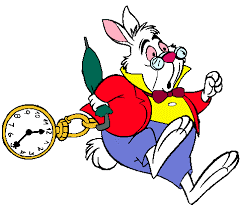
In the week that has seen the UK pass 100,000 deaths it is right to reflect on the tragic loss of life. The call from government saying this is not the time to analyse why the UK has done so badly is in my view the wrong line to take. The government could learn a thing or two from the UK health care professions who for years have developed themselves as reflective practitioners. Donald Schon (1983) wrote extensively about reflection in terms of the creation of learning organisations who can both reflect in and on action. It is the former that has been sadly lacking in the UKs response to the coronavirus crisis. Reflection needs to be on the table throughout the pandemic and had it been, we may not have repeated the same mistakes. The management of pandemics is well documented in the medical literature. Professor Chris Whitty the Chief Medical Officer for England outlines how to manage a pandemic in this useful lecture at Gresham College.
Indeed it is also important to remind us of the words of Sir Patrick Vallance who when recommending the urgency of action in a pandemic implored that we “go earlier than you think you want to, go a bit harder than you think you want to and go broader than you think you want to in terms of restrictions.” My observation of the UK pandemic response leads me to conclude that we failed to do any of these. However, for this blog let’s focus on timing. Going early in terms of restrictions and other actions can have an enormous beneficial impact.
The last year has been to coin an overstated phrase “unprecedented” with many arguing that any government would have been overwhelmed and struggled to manage the crisis. Is this fair? One can look at other countries who have managed the situation better and as such have had better outcomes. New Zealand, Australia, Korea for example. Others will point to the differences between countries in terms of geography, population, culture, transport, relative poverty, healthcare systems, reporting mechanisms and living conditions which make comparisons inherently complex.
With the current death toll in the UK so high and continuing to rise, and many scientists telling us that things will inevitably get worse before they get better the question everyone is asking is : What has gone wrong? In this blog I’m going to argue that in large part our problems are based on a lack of urgency in acting. I’m arguing that we have not followed Sir Patrick Vallance’s recommendation and in particular we have been late to act throughout. Below I will set out the evidence for this and propose some tentative reasons as to why this has been the case.
Firstly, despite a pandemic being recognised as the largest threat to any country (it will always be top of any country’s risk register) the UK was slow to recognise the impending crisis and late to recognise the implications of a virus of this nature and how quickly it can spread globally. History informs us of how quickly Spanish flu spread in 1918. The UK was never going to be immune. Late recognition and poor pandemic preparedness meant we were late to get in place the critical infrastructure required to mount a response. Despite several warnings and meetings of the civil contingencies committee (COBR) the health secretary Matt Hancock was dismissive of the threat playing it down. Indeed, the PM failed to attend several early meetings giving the impression that the UK were not taking this as seriously as they should.
When faced with a looming medical/public health emergency it is important that the scientific advisors are in place early (which they were) and that their advice is acted upon. The evidence clearly points to a slow response to this advice which manifested itself in several critical late decisions early in the pandemic. The UK did not close its borders and implement quarantine measures allowing the virus to seed extensively in all parts of the community. Once community transmission had been established it was too late. It did not have in place a substantive testing regime, largely because we were unprepared. It very quickly became clear when we switched from community testing to testing only those in hospital with Covid symptoms that we lacked critical mass testing capacity and hence spent months trying to catch up. Evidence from previous outbreaks of SARS and MERS demonstrated how important mass testing was in controlling the spread, a position advocated by the World Health Organization (WHO). The UK saw case numbers grow rapidly and was slow to get the important public health messages out. Consequently, hospital admissions increased, and the death toll leapt. We were in serious danger of the NHS becoming overwhelmed with critically ill Covid patients.
Public health, medical and scientific experts suggested through their modelling exercises that the death toll, if we didn’t act quickly, could exceed 500,000; a situation socially and politically unpalatable. Therefore, in the absence of no known treatments and no vaccine we would have to resort to the tried and tested traditional methods for the suppression of a respiratory borne virus. Robust hand hygiene, respiratory/cough etiquette and maintaining social distance to reduce close social interaction. The logical conclusion was that to radically reduce social contacts we needed to lockdown. It is widely acknowledged now that the UK was at least a week late in introducing the first lockdown in March 2020.
In the meantime, the virus was sweeping through vulnerable elderly groups in care homes. We were again late to recognise this threat and late to protect them despite Hancock’s claims of throwing a ring of protection around them. The death toll continued to mount. At this stage both the Health (NHS) and care sectors were under enormous pressure and ill equipped to manage. The greatest worry at that stage was lack of adequate Personal Protective Equipment (PPE). Due to our ill preparedness we were late to provide appropriate PPE to both the NHS and the care home sector, exposing healthcare workers to undue risk. The death toll of healthcare workers in any pandemic is high and we were now starting to see this rise in the UK.
Another major criticism during the earlier months was how slow we were in ramping up testing capacity, tracking, tracing cases and ensuring isolation measures were in place. Indeed, concerns about test, trace and isolation continue today. However, lockdown and other public health measures did reduce the case numbers through the summer but inevitably the virus, which thrives in cold damp conditions started to cause further problems as we approached autumn and winter. Combined with this the UK saw a new variant of the virus emerge in the autumn with greater transmissibility. Cases started to rise again along with the inevitable hospital admissions and deaths. It appeared despite warnings from all scientists and health professionals that a second wave was highly possible we were late to recognise the emergence of a second wave of infections. The signs of which were there in September 2020. This led to a second lockdown in November when the advice from the scientific advisors was to lockdown in mid-October or earlier. This decision was compounded by a complex tiered restrictions arrangement to manage outbreaks locally aimed at the avoidance of unnecessary restrictions. Meanwhile the death toll continued to mount.
Notwithstanding the emergence of a new variant of the virus during the second lockdown everyone’s attention was switched to Christmas. The advice offered from government that restrictions would be relaxed for five days was met with incredulity by health professions who argued that this would simply allow the virus to be spread exponentially through greater household mixing. All the evidence at this stage pointed to household mixing as the primary source of transmission. As the situation worsened following the release of lockdown in early December it became obvious that the Christmas guidance had to change. To no ones surprise the advice was changed at the last-minute meaning everyone would have to rearrange their plans. The late change to the Xmas guidance probably meant more family mixing than would have happened had the advice been robust and communicated to the public earlier. Very quickly after Christmas we saw rapid changes to the tier management despite calls for a further lockdown. Cases rose rapidly, hospital admissions were now worse than in the first wave and scientists called for a lockdown. Consequently, we were late implementing Lockdown 3.
Throughout the pandemic the government has provided detailed guidance on restrictions, care homes, travel arrangements and education. It’s difficult to get this right all the time but the issuing of guidance was at times so late it became difficult to interpret the issues with clarity. Probably one the best examples of this relates to the advice provided to schools. Should they stay open or close? What should the Covid secure measures be? How do you construct bubbles of students to reduce social contact? Covid testing of pupils and staff? examinations and assessment guidance? However, the final straw was surely when schools opened in January after the Christmas break to only be told they had to close the very next day as we moved into Lockdown 3.

In conclusion it is said that to manage a pandemic you need a clear, robust strategic plan. The evidence presented here would suggest a lack of strategic planning with crisis decision making on the hoof. Some have argued that we have a PM who struggles to take the big decisions required, who procrastinates and inevitably is left with Hobson’s choice. If you couple this with a group of key ministers who appear to lack the competence to carry their portfolios we have the recipe for a disaster. The consequence of which means the UK has experienced a terrible outcome across a whole set of health, education and economic indicators.
References
Schon, D. (1983) The reflective practitioner: how professionals think in action Basic Books, New York
Whitty, C. (2018) How to Control an Epidemic https://www.youtube.com/watch?v=rn55z95L1h8
Share this:


Misfortune and the Blame Game
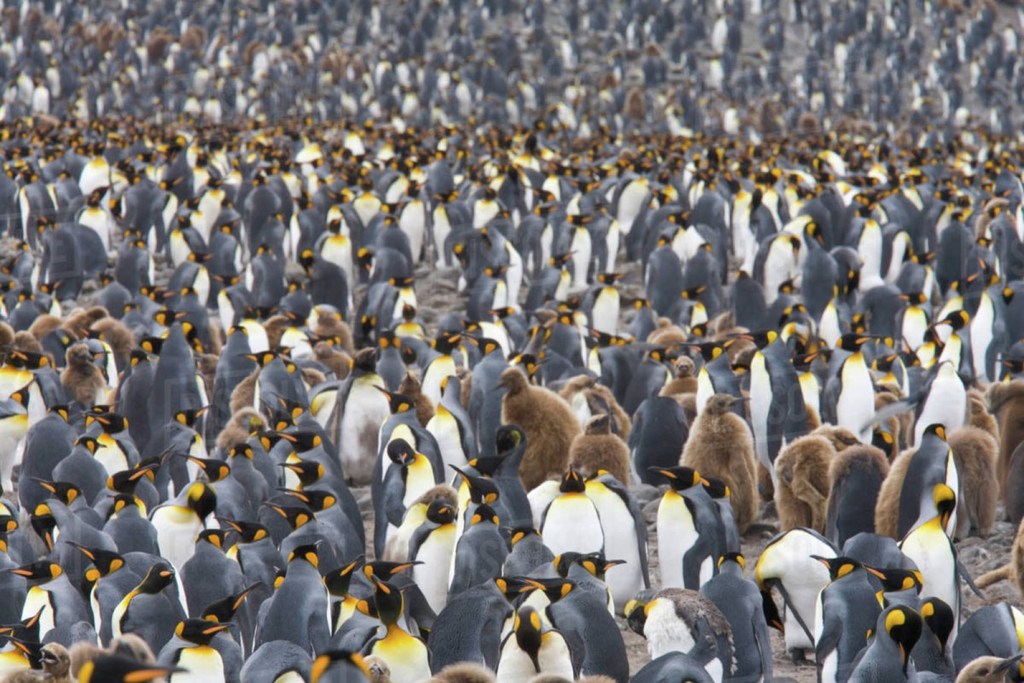
It seems to be a peculiar past-time in this country to moan and find fault with everything and blame anyone but ourselves for our mishaps and misfortune.
I was watching a television programme last night about Britain’s bizarre weather conditions in 2020 and what struck me, actually you could have slapped me round the face with a wet kipper, was the behaviour of people in the heatwave of April 2020. An extraordinary heatwave saw people flocking to parks and to the beach. Some scenes looked more akin to those pictures we see of seals or penguins on a remote island where there isn’t an inch to move without stumbling over the next incumbent, all staking their claim to a little parcel of land on which they can sunbathe or nest. ‘Weren’t we supposed to be social distancing and in lockdown’? Of course, we blame the government for lockdown 2 and the tier system. How unfair it is that we can’t see our loved ones, oh the mental anguish when we miss school, or have to learn online or get made redundant or our business goes belly up. But flock to the seaside we must, go to the park and mingle is a necessity, rush to the pub and drink and make merry, have parties and raves and forget about social distancing and that awful thing that the government keeps wittering on about. Let’s blame the police for dishing out fines, its so unfair and let’s even blame the hospitals, that’s where my loved one caught Corona virus. Yes, the government were to blame for suggesting that we should ‘eat out to help out’, but did we really think it was suddenly fine to plunder food from every outlet that provided a cut-price meal? Like lemmings, people rushed to pack out restaurants and pubs in search of a culinary bargain and many got more than they bargained for. ‘Two for the price of one’ had a new meaning.
None of this of course is a new phenomenon; the virus might be, the behaviour is not. We speed along the road and when caught by the police ask them if they haven’t got anything better to do than stop us. We complain about the NHS but carry on drinking lots, eating rubbish and failing to exercise. Our illness in the morning is due to the bad kebab, not the large amount of alcohol we consumed. We moan about our rubbish grades, somehow expecting that the parties, the staying in bed all day, the failure to attend, the work commitments and all the other hubris will get us an A grade or at least a B. It’s the way the lecturers teach, not our lack of commitment, that’s the problem here, ‘oh and I’m paying for this rubbish’. In football, we blame the referee for not giving a foul or for giving a foul when we are convinced it wasn’t one and yet watch players carry on diving all over the place rolling around as if they’ve been scythed down by the grim reaper and then chewed up by Jaws before being magically revived by the miraculous sponge. More at home with an Equity Card, players constantly seek to bamboozle the referee, it’s no wonder they sometimes get it wrong. We moan about the stampede at the start of the shop sales, not that that’s been a problem this year, well not yet anyway, but we are part of the stampede, shoving and trampling over others to get to the much reduced bargain. We lament the demise of the high street, watching the tumbleweed blow past as we scuttle away to our laptops, pads and phones to do a bit more online shopping only rushing out in droves (social distancing ignored) to take advantage of the demise of yet another retail outlet.
Whilst ministers are trying to hammer out a Brexit deal, posturing and moaning about the intransigence of the other side, they probably secretly hope that there will be no deal. That way we can blame the Europeans and the Europeans can blame us. But are we not to blame for this monstrosity; we voted for it? We live in a democracy and are rightly proud of it and yet Trump like we are quick to point out that we personally didn’t vote for that bit that we don’t like, and the vote was probably rigged anyway. Having realised our error, we still voted in the government that said it would get it done and we didn’t care about the price. Let’s hope that a return to the troubles in Ireland doesn’t become a reality, but if it does, it’ll no doubt be the fault of the Irish. Our sense of history only stretches back to when we saved the world from the Nazis.
We need to look to ourselves and our own action and behaviour before we start blaming everyone and everything around us. Yes, misfortune does fall on some of us and sometimes it isn’t our fault but like it or not, many of the problems are caused by us and we compound the problems by blaming others. If we fail to grip the notion that we have responsibility, then history will judge us as a nation that moaned about everything and did nothing but cause calamitous problems for ourselves and the rest of the world.
Share this:


A Lockdown Moan
As the second lockdown has come to an end, I find myself reflecting on my own lockdown experiences quite a lot. My overall sense is that of gratitude, in that I have been fortunate enough to maintain and be offered new employment during this difficult time.
During the first lockdown I was a key worker and travelled to and from work on public transport whilst everyone else was ordered to ‘stay safe, and stay at home’. At times this was frustrating, and although I generally had faith in humanity my views on this were tested. During, lockdown 1.0 I witnessed people being much more aggressive to key workers. I worked in a place where I did not expect people to be nice to me, but even on my route to and from work I found that I was subjected to the odd remark.
One morning at 6am whilst in the city center I was even called ‘a rapist’ because I did not have any change to give to a homeless person, he then sort of offered to fight me. Of course, I wouldn’t ever fight anyone, and he would have been completely unaware that I had just finished a night shift so I would not prove to be a worthy opponent in any sense. I also remember sitting on the bus one night whilst a man, who appeared mentally unwell, persisted to cough all over me (mask free) before exiting at his stop.
I didn’t take any of these experiences personally, and thankfully I didn’t get Covid. It was clear that these people had many of their own problems – many of which may have been exacerbated due to Covid. The lack of understanding of Covid for some people also highlights a key issue i.e., that mainstream concerns are not being communicated to wider population within our society.
I did find myself frustrated by the general population who in my experience, did not appear as positive and kind as the media seemed to suggest. I experienced many incidents of people being selfish, such as people snapping and venting their frustrations at others who are simply just trying to do their jobs (with shocking pay and poor contracts might I add). On top of this was the notion of visiting a supermarket after a 12 hour night shift whilst people scramble for the last scraps of essentials whilst you are walking around like a zombie. With bare shelves, rude people and long queues….what more could key workers ask for? For Christ sake, someone even tried to steal a tin of beans out of my shopping trolley on one occasion!
During lockdown 2.0 I have been very privileged indeed, as I am able to work from home. Staying in this bubble of mine has also made me feel much less frustrated. But I do still wonder, why is it that we feel that those who provide a ‘service’ to us are not people themselves? People with their own problems, thoughts and feelings. Do we think that people are robots? Is this why some people think that it is ok to vent their frustrations at others? I am sure that other people have had more positive experiences than this, but I can’t understand why people aren’t being more kind and understanding of each other. There is a difference between being a service provider and being a servant…people seem to forget this sometimes.

 Thoughts from the criminology team