
Home » Security
Category Archives: Security
Family life in Tenerife versus the UK
I have recently been on a family holiday with our toddler to Tenerife. We began the journey by getting to an airport in the UK. Whilst there the security checks were done for families alongside everyone else. Toddlers were required to get out of their prams, to have their shoes taken off and could not hold onto their toys. The security seemed relatively tight as my hands were swabbed, my toddler was searched with a security stick and the small volume of water that he was allowed was also swabbed.
Whilst arriving and departing via the airport in Tenerife the security allocated a separate quieter section of space for families, this seemed far more relaxed, staff were smiling and dared to say ‘hola’ and ‘hello’. There were no additional checks and a toddler cup of water was allowed. Some staff were also making a deliberate attempt to identify the names of babies, toddlers and children from boarding passes or passports to be able to greet them by their names with waves and smiles.
Whilst on holiday I could be forgiven for thinking that we were royalty whilst pushing a pram and toddler around the streets. As pedestrians always had the right of way, whenever there is a road to cross, the cars must stop due to zebra-like crossings marking on the ground. There are also plenty of playgrounds and toilets and plenty of opportunity for play outdoors in sea and sand.
Whilst at home in Birmingham (UK) there are far less zebra crossings and on quite a few occasions cars have failed to stop at zebra crossings whilst I have been waiting with a pram and toddler. Baby and toddler swimming pools also seem to be difficult to access due to locations and restrictions on pool opening time frames. There are parks but I have never seen a park within a shopping centre like I did in Tenerife. Despite the UK becoming quite cold in the winter, the ability to access free indoor play during winter time also seems to be a privilege, rather than a given. Whilst there are some fabulous playgroups and library sessions for babies and toddlers, sometimes establishments promoting themselves as ‘family friendly’ places do not always feel friendly to toddlers at all. This is especially the case if toddlers are required to adhere to adult informal rules, such as not touching things or making loud noise. As some how toddlers trying to explore their world are labelled by some as ‘terrible’ at ‘two’ (see below poem by Holly McNish).

Whilst I have no idea about the education system in Tenerife, these experiences did leave me reflecting on the provision of mainstream education for babies, toddlers and children in the UK. In comparison to countries such as Finland, some mainstream UK education settings are often critiqued for limiting play, time spent in the outdoors, creativity and freedom to think (Dorling and Koljonen, 2020). The popularity of European influenced Montessori nurseries and Forest Schools in the UK seem to indicate that some parents do want something different for children. Whilst on mention of difference, UK mainstream educational approaches to difference seem to be about an assimilation type of inclusivity and diversity, rather than celebrating and learning from the variety of UK cultures. For instance, it seems “marvelous” that if attending mainstream schools in the UK some Romany gypsies are required to fit the restrictive and disciplinarian like school mould, i.e., of shutting up and sitting down (see Good English by Tawona Sithole) or sitting straight and not talking (see Julia Donaldson’s children’s book: The Snail and the Whale). Yet there is little (if any) acknowledgment of how some Romany have an educating culture of fostering independence, voice, freedom and creativity through plenty of outdoor play, roaming around and human interaction is a huge positive. Dorling and Koljonen (2020) state that investment in children and family support is incredibly beneficial for society, as well as families. The reflection above left me thinking that more or something different could be done.
Reference:
Dorling, D and Koljonen, A. (2020) Finntopia : What We Can Learn from the World’s Happiest Country. Newcastle upon Tyne: Agenda Publishing.
Share this:


Britain’s new relationship with America…Some thoughts

Within the coming weeks, Keir Starmer is due to meet Donald Trump and in doing so has offered an interesting view into the complexities of managing diplomacy in the modern age. Whilst the UK and US work collaboratively through bi-lateral trade agreements, and national security collaborations, the change in power structures within the UK and USA marks significant ideological difference that can arguably present a myriad of implications for both countries and for those countries who are implicated by these relations between Britain and America. In this blog, I will outline some of the factors that ought to be considered as we fast-approach this new age of international relations.
It can be understood that Starmer meeting Trump, despite some ideological difference is rooted in a pragmatic diplomacy approach and for what some might say is for the greater good. In an age of continual risk and uncertainty, allyship across nations has seldom been more necessary nor consolidated. On addressing issues including climate change, national security, trade agreements within a post-Brexit adversity, the relationship between America and Britain I sense is being foregrounded by Starmer’s Labour Government.
Moreover, I consider that Starmer should tread carefully and not appear globally as though he is too strongly aligned with Trump’s policies, especially on foreign policy. This mistake was once made by Tony Blair, following the New Beginnings movement after 9/11. It is essential that whilst we maintain good relations with America, this does not come at a cost to our own sovereignty and influence on global issues. I see here an opportunity for Starmer to re-build Britain’s place on the global stage. Despite this as what some strategists might call a ‘bigger picture’, it goes without saying that Starmer may face backlash from his peers based on his willingness to enter a liaison with Trump’s Government. For many inside and outside of the Labour Party, the politics of Trump are considered dangerous, regressive, and ideologically dumbfounded. I happen to agree with much of these sentiments, and I think there is a risk for Starmer… that will later develop into a dilemma. This dilemma will be between appeasing the party majority and those who hold traditional Labour values in place of moving further into the clutches of the far right, emboldened by neoliberalism. It is no secret however that the Labour party has entered a dangerous liaison with neoliberalism and has alienated many traditional Labour voters and has offered no real political alternative.
Considering this, I sense an apprehension is in the air regarding Starmer’s relationship building with America and Donald Trump, that some might argue might be more counter-productive than good. Starmer must demonstrate political pragmatism and arguably the impact of this government and the governments to come will weigh on these relations… Albeit time will tell in determining how these future relations are mapped out.
Share this:


SUPREME COURT VISIT WITH MY CRIMINOLOGY SQUAD!

Author: Dr Paul Famosaya
This week, I’m excited to share my recent visit to the Supreme Court in London – a place that never fails to inspire me with its magnificent architecture and rich legal heritage. On Wednesday, I accompanied our final year criminology students along with my colleagues Jes, Liam, and our department head, Manos, on what proved to be a fascinating educational visit. For those unfamiliar with its role, the Supreme Court of the United Kingdom stands at the apex of our legal system. It was established in 2009, and serves as the final court for all civil cases in the UK and criminal cases from England, Wales, and Northern Ireland. From a criminological perspective, this institution is particularly significant as it shapes the interpretation and application of criminal law through precedent-setting judgments that influence every level of our criminal justice system

7:45 AM: Made it to campus just in the nick of time to join the team. Nothing starts a Supreme Court visit quite like a dash through Abington’s morning traffic!

8:00 AM: Our coach is set to whisk us away to London!
Okay, real talk – whoever designed these coach air conditioning systems clearly has a vendetta against warm-blooded academics like me! 🥶 Here I am, all excited about the visit, and the temperature is giving me an impromptu lesson in ‘cry’ogenics. But hey, nothing can hold us down!.

Picture: Inside the coach where you can spot the perfect mix of university life – some students chatting about the visit, while others are already practising their courtroom napping skills 😴
There’s our department Head of Departmen Manos, diligently doing probably his fifth headcount 😂. Big boss is channelling his inner primary school teacher right now, armed with his attendance sheet and pen and all. And yes, there’s someone there in row 5 I think, who’s already dozed off 🤦🏽♀️ Honestly, can’t blame them, it’s criminally early!
9:05 AM The dreaded M1 traffic
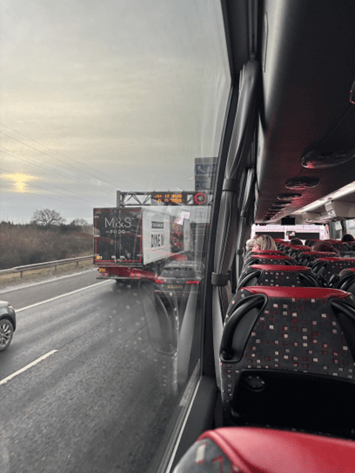
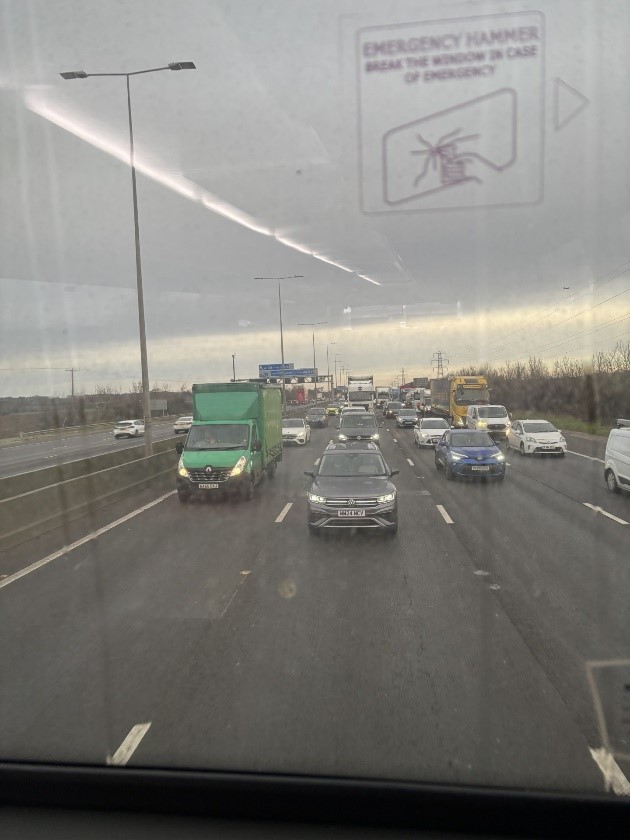
Sometimes these slow moments give us the best opportunities to reflect. While we’re crawling through, my mind wanders to some of the landmark cases we’ll be discussing today. The Supreme Court’s role in shaping our most complex moral and legal debates is fascinating – take the assisted dying cases for instance. These aren’t just legal arguments; they’re profound questions about human dignity, autonomy, and the limits of state intervention in deeply personal decisions. It’s also interesting to think about how the evolution of our highest court reflects (or sometimes doesn’t reflect) the society it serves. When we discuss access to justice in our criminology lectures, we often talk about how diverse perspectives and lived experiences shape legal interpretation and decision-making. These thoughts feel particularly relevant as we approach the very institution where these crucial decisions are made.

The traffic might be testing our patience, but at least it’s giving us time to really think about these issues.
10:07 AM – Arriving London – The stark reality of London’s inequality hits you right here, just steps from Hyde Park.
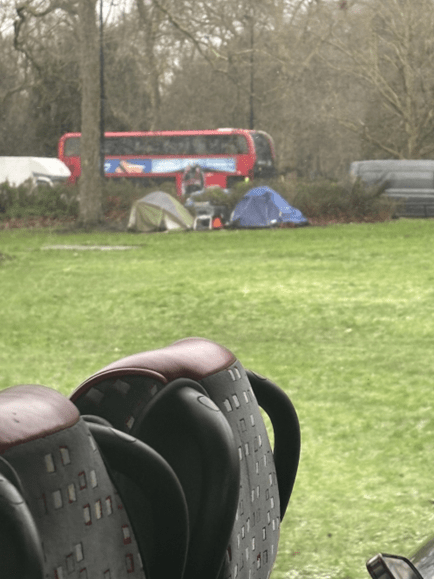
Honestly, this is a scene that perfectly summarises the deep social divisions in our society – luxury cars pulling up to the Dorchester where rooms cost more per night than many people earn in a month, while just meters away, our fellow citizens are forced to make their beds on cold pavements. As a criminologist, these scenes raise critical questions about structural violence and social harms. When we discuss crime and justice in our lectures, we often talk about root causes. Here they are, laid bare on London’s streets – the direct consequences of austerity policies, inadequate mental health support, and a housing crisis that continues to push more people into precarity. But as we say in the Nigerian dictionary of life lessons – WE MOVE!! 🚀
10:31 AM Supreme Court security check time
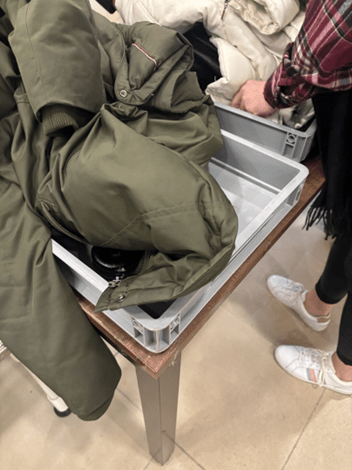
Security check time, and LISTEN to how they’re checking our students’ water bottles! The way they’re examining those drinks is giving: Nah this looks suspicious 🤔

So there I am, breezing through security like a pro (years of academic conferences finally paying off!). Our students follow suit, all very professional and courtroom-ready. But wait for it… who’s that getting the extra-special security attention? None other than our beloved department head Manos! 😂

The security guard’s face is priceless as he looks through his bags back and forth. Jes whispers to me ‘is Manos trying to sneak in something into the supreme court?’ 😂 Maybe they mistook his collection of snacks for contraband? Or perhaps his stack of risk assessment forms looked suspicious? 😂 There he is, explaining himself, while the rest of us try (and fail) to suppress our giggles. He is a free man after all.
10: 44AM Right so first stop, – Court Room 1.


Our tour guide provided an overview of this institution, established in 2009 when it took over from the House of Lords as the UK’s highest court. The transformation from being part of the legislature to becoming a physically separate supreme court marked a crucial step in the separation of powers in the country’s legislation. There’s something powerful about standing in this room where the Justices (though they usually sit in panels of 5 or 7) make decisions. Each case mentioned had our criminology students leaning in closer, seeing how theoretical concepts from their modules materialise in this very room.
10:59 AM Moving into Court 2, the more modern one!


After exploring Courtroom 1, we moved into Court Room 2, and yep, I also saw the contrast! And apparently, our guide revealed, this is the judges’ favourite spot to dispense justice – can’t blame them, the leather chairs felt lush tbh!
Speaking of judges, give it up for our very own Joseph Buswell who absolutely nailed it when the guide asked about Supreme Court proceedings! 👏🏾 As he correctly pointed out, while we have 12 Supreme Court Justices in total, they don’t all pile in for every case. Instead, they work in panels of 3 or 5 (always keeping it odd to avoid those awkward tie situations). 👏🏾 And what makes Court Room 2 particularly significant for public access to justice the cameras and modern AV equipment which allow for those constitutional and legal debates to be broadcast to the nation. Spot that sneaky camera right at the top? Transparency level: 100% I guess!

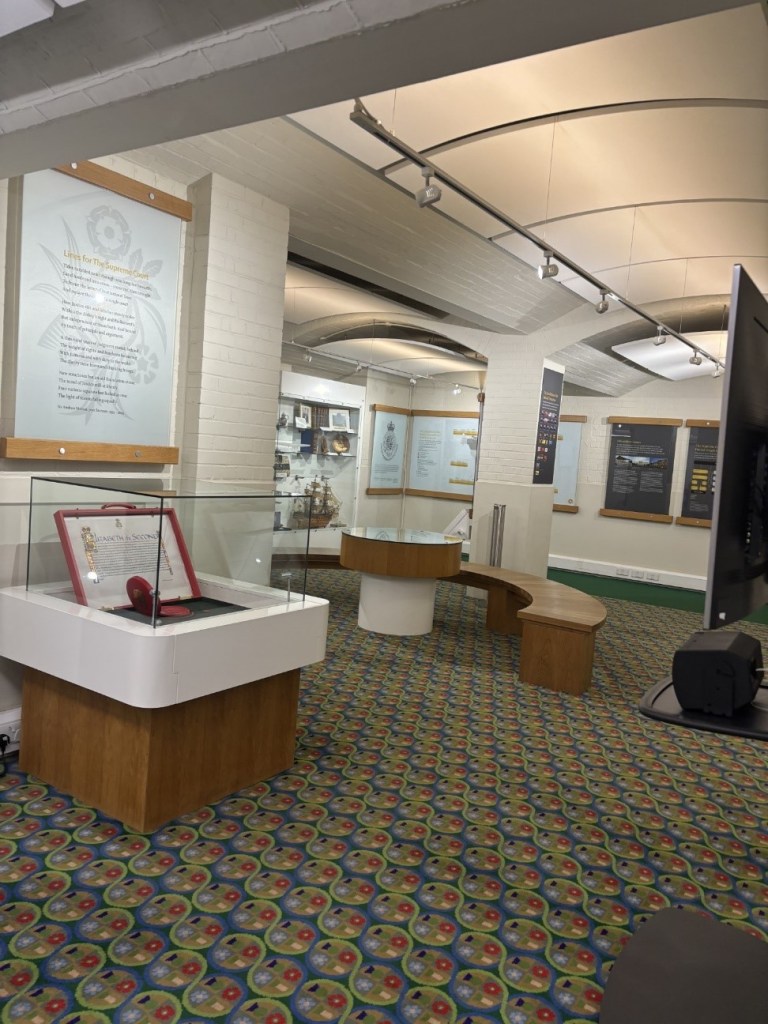
The exhibition area

The exhibition space was packed with rich historical moments from the Supreme Court’s journey. Among the displays, I found myself pausing at the wall of Justice portraits. Let’s just say it offered quite the visual commentary on our judiciary’s journey towards representation…

Beyond the portraits, the exhibition showcased crucial stories of landmark judgments that have shaped our legal landscape. Each case display reminded us how crucial diverse perspectives are in the interpretation and application of law in our multicultural society.


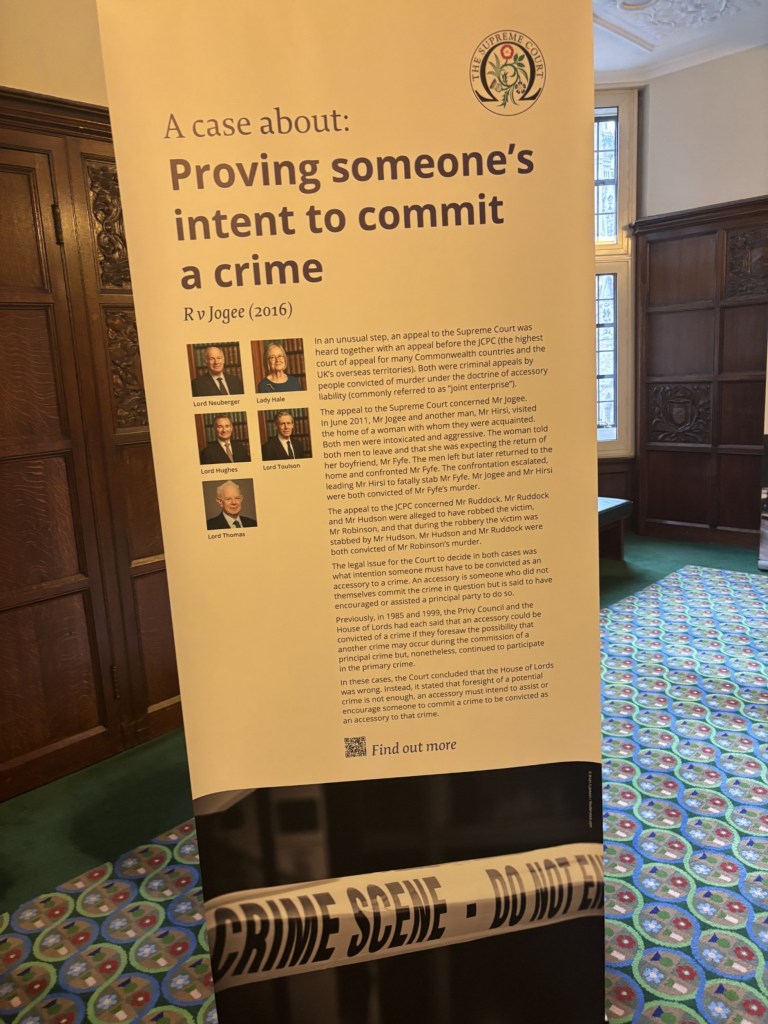
11: 21AM Moving into Court 3, home of the Judicial Committee of the Privy Council (JCPC)

The sight of those Commonwealth flags tells a powerful story about the evolution of colonial legal systems and modern voluntary jurisdiction. Our guide explained how the JCPC continues to serve as the highest court of appeal for various independent Commonwealth countries. The relationship between local courts in these jurisdictions and the JCPC raises critical questions about legal sovereignty and judicial independence and the students were particularly intrigued by how different legal systems interact within this framework – with each country maintaining its own laws and legal traditions, yet looks to London for final decisions.

Breaktime!!!!
While the group headed out in search of food, Jes and I were bringing up the rear, catching up after the holiday and literally SCREAMING about last year’s Winter Wonderland burger and hot dog prices (“£7.50 for entry too? In this Keir Starmer economy?!😱”). Anyway, half our students had scattered – some in search of sustenance, others answering the siren call of Zara (because obviously, a Supreme Court visit requires a side of retail therapy 😉).


But here’s the moment that had us STUNNED – right there on the street, who should come power-walking past but Sir Chris Whitty himself! 😱 England’s Chief Medical Officer was on a mission, absolutely zooming past us like he had an urgent SAGE meeting to get to 🏃♂️. That man moves with PURPOSE! I barely had time to nudge Jes before he’d disappeared. One second he was there, the next – gone! Clearly, those years of walking to press briefings during the pandemic have given him some serious speed-walking skills! 👀
3:30 PM – Group Photo!
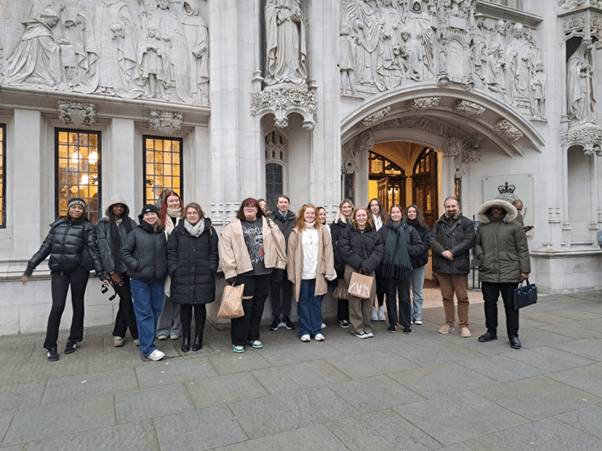
Looking at these final year criminology students in our group photo though! Even with that criminal early morning start (pun intended 😅), they made it through the whole Supreme Court experience! Big shout out to all of them 👏🏾👏🏾👏🏾👏🏾👏🏾👏🏾 Can you spot me? I’m the one on the far right looking like I’m ready for Arctic exploration (as Paula mentioned yesterday), not London weather! 🥶 Listen, my ancestral thermometer was not calibrated for this kind cold today o! Had to wrap up in my hoodie like I was jollof rice in banana leaves – and you know we don’t play with our jollof! 😤
4:55 PM Heading Back To NN

On the journey back to NN, while some students dozed off (can’t blame them – legal learning is exhausting!), I found myself reflecting on everything we’d learned. From the workings of the highest court in our land to the stark realities of social inequality we witnessed near Hyde Park, today brought our theoretical classroom discussions into sharp focus. Sitting here, watching London fade into the distance, I’m reminded of why these field trips are so crucial for our students’ understanding of justice, law, and society.
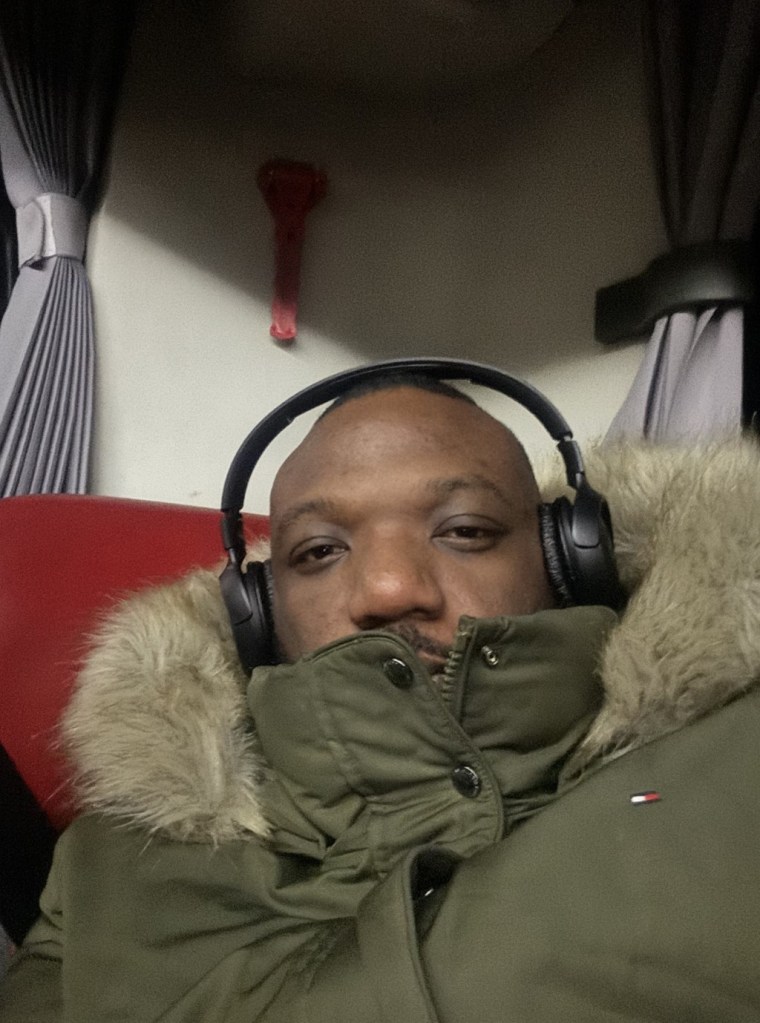

Listen, can we take a moment to appreciate our driver though?! Navigating that M1 traffic like a BOSS, and getting us back safe and sound! The real MVP of the day! 👏🏾👏🏾👏🏾👏🏾👏🏾👏🏾
And just like that, our Supreme Court trip comes to an end. From early morning rush to security check shenanigans, from spotting Chief Medical Officer on the streets to freezing our way through legal history – what a DAY!
To my amazing final years who made this trip extra special – y’all really showed why you’re the future of criminology! 👏🏾 Special shoutout to Manos (who can finally put down his attendance sheet 😂), Jes, and Liam for being the dream team! And to London… boyyyy, next time PLEASE turn up the heat! 🥶
As we all head our separate ways, some students were still chatting about the cases we learned about (while others were already dreaming about their beds 😴), In all, I can’t help but smile – because days like these? This is what university life is all about!
Until our next adventure… your frozen but fulfilled criminology lecturer, signing off! 🙌
Share this:


Feminism, Security and Conflict

Content warning: this blog post mentions feminist theory in relation to issues of rape, genocide and war.
Recently I had the opportunity to do a deep dive into feminist contributions to the field of international relations, a discipline which of course has many parallels and connections to criminology. Feminism as a broad concept often is viewed from a human rights perspective, which makes sense as this is probably the area that is most visible to most people through progressions in the field of political participation, reproductive and sexual rights and working rights. A lesser known contribution is feminist theory to international relations (IR), specifically, its practical and theoretical contribution to security and conflict. This blog post will give a whistle stop tour through the exploration I conducted concerning the themes of security, conflict and feminism. Hopefully I can write this in a way everyone finds interesting as it’s a fairly heavy topic at times!
Security
Within IR, security has usually been defined on a more state-centric level. If a state can defend itself and its sovereign borders and has adequate (or more than adequate) military power, it is seen to be in a condition of security according to realist theory (think Hobbes and Machiavelli). Realism has taken centre stage in IR, suggesting that the state is the most important unit of analysis therefore meaning security has generally taken a state-centric definition.
Feminism has offered a radical rejuvenation of not only security studies, but also the ontological principles of IR itself. While the state is preoccupied with providing military security, often pooling resources towards this sector during times of international fragility, welfare sectors are usually plunged into a state of underfunding- even more so than they usually are. This means that individuals who depend on such sectors are often left in a state of financial and/or social insecurity. Feminism focuses on this issue, suggesting women are often the recipients of various welfare based services. The impact of wartime fiscal policy would not have been uncovered without feminism paying attention to the women typically side-lined and ignored in international politics. So while the state is experiencing a sense of security, its citizens (quite often women) are in a feeling of insecurity.
This individualisation of security also challenges the merit of using such a narrow, state-centric definition of security, ultimately questioning the validity of the dominant, state-focused theory of realism which in IR, is pretty ground-breaking.
Conflict
I’d say that in nearly all social science disciplines, including politics, economics, sociology, IR and criminology, conflict and war is something that is conceptualised as inherently ‘masculine’. Feminist theory was one of the first schools to document this and problematise it through scholarship which interrogated hegemonic masculinity, ‘masculine’ institutions and the manifestations of these things in war zones.
Wartime/ genocidal rape is unfortunately not a rare behaviour to come across in the global arena. The aftermath of the Yugoslav wars and the Rwandan genocide is probably some of the most reported cases in academic literature, and this is thanks to feminist theory shining a light on the phenomena. Feminism articulates wartime/ genocidal rape as constitutive of the dangerous aspects of culturally imbedded conceptions of masculinity being underscored by power and domination and being legitimised by the institutions which champion dangerous elements of masculinity.
Practically, this new perspective provided by feminism has altered the way sexual violence is viewed by the mainstream; once a firmly domestic problem, sexual violence has been brought into foreign policy and recognised as a tactic of war. This articulation by feminist theory is absolutely ground breaking in the social science world as it shifts the onto-epistemological focus that other more conventional schools have been unable to look past.
Share this:

Unravelling the Niger Coup: Shifting Dynamics, Colonial Legacies, and Geopolitical Implications

On July 26, the National Council for Safeguarding the Homeland (CNSP) staged a bloodless coup d’état in Niger, ousting the civilian elected government. This is the sixth successful military intervention in Africa since August 2020, and the fifth in the Sahel region. Of the six core Sahelian countries, only Mauritania has a civilian government. In 2019, it marked its first successful civilian transition of power since the 2008 military intervention, which saw the junta transitioning to power in 2009 as the civilian president.
Military intervention in politics is not a new phenomenon in Africa. Over 90% of African countries have experienced military interventions in politics with over 200 successful and failed coups since 1960 – 1, (the year of independence). To date, the motivation of these interventions revolves around insecurity, wasteful and poor management of state resources, corruption, and poor and weak social governance. Sadly, the current situation in many African countries shows these indicators are in no short supply, hence the adoption of coup proofing measures to overcome supposed coup traps.
The literature evidences adopting ethnic coup proofing dynamics and colonial military practices and decolonisation as possible coup-proofing measures. However, the recent waves of coups in the Sahel defer this logic, and are tilting towards severing ties with the living-past neocolonial presence and domination. The Nigerien coup orchestrated by the CNSP has sent shockwaves throughout the region and internationally over this reason. Before the coup, Mali and France had a diplomatic row. The Malian junta demanded that France and its Western allies withdraw their troops from Mali immediately. These troops were part of Operation Barkhane and Taskforce Takuba. A wave of anti-French sentiments and protests resulted over the eroding credibility of France and accusation of been an occupying force. Mohamed Bazoum, the deposed Nigerien president, accepted the withdrawn French troops and its Western allies in Niger. This was frowned at by the Nigerien military, and as evidenced by the bloodless coup, similar anti-French sentiments resulted in Bazoum’s deposition.
The ousting of President Bazoum resulted in numerous reactions, including a decision by the Economic Community of West African States (ECOWAS), of which Niger is a member and is currently chaired by Nigerian President Bola Ahmed Tinubu. ECOWAS demanded the release and reinstatement of President Bazoum, imposed economic sanctions, and threatened military intervention with a one-week ultimatum. Some argued that the military intervention is unlikely, and some member states pledged support to the junta. At the end of the ultimatum, ECOWAS activated the deployment of its regional standby force but it remains unclear when it will intervene and what the rules of engagement will be. Nonetheless, the junta considers any such act as an aggression, and in addition to closing its airspace, it is understood to have sought support from Wagner, the Russian mercenary.
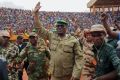
Amongst the citizenry, while some oppose the military intervention, there is popular support for both the intervention and the military with thousands rallying support for the junta. On 6 August, about 30,000 supporters filled the Niamey stadium chanting and applauding the military junta as they parade the crowd-filled stadium. Anti-French sentiments including a protest that led to an attack on the French embassy in Niger followed the declaration of the coup action. In the civil-military relations literature, when a military assumes high political roles yet has high support from society over such actions, it is considered as a popular praetorian military (Sarigil, 2011, p.268). While this is not a professional military attribute (Musa and Heinecken, 2022), it is nonetheless supported by the citizenry.
In my doctoral thesis, I argued that in situations where the population is discontent and dissatisfied with the policies of the political leadership, a civil-military relations crisis could result. I argued that “as citizens are aware that the military is neither predatory nor self-serving, they are happy trusting and supporting the military to restore political stability in the state. It is possible that in situations where political instability becomes intense, large sections of the citizenry could encourage the military to intervene in politics” (Musa, 2018, p.71). The recent waves of military intervention in Africa, together with anti-colonial sentiments evidences this, and further supports my argument on the role of the citizenry in civil-military relations. For many Nigeriens including Maïkol Zodi who leads an anti-foreign troops movement in Niger, the coup symbolises the political independence and stability that Francophone Africa has long desired.
Thus, as the events continue to unfold, I would like to end this blog with some questions that I have been thinking about as I try to make sense of this rather complex military intervention. The intervention is affecting international relations and has the potential to destabilise the current power balance between the major powers. It could also lead to a military conflict in Africa, which would be a disaster for the continent.
- How have recent coups in the Sahel region signalled a shift away from colonial legacies, and how are these sentiments reshaping political dynamics?
- What is the significance of the diplomatic tensions between Mali and France, and how might they have influenced the ousting of President Bazoum and the reactions to it?
- Given the surge in military interventions in politics across the Sahel region, how does this trend reflect evolving dynamics within the affected countries, and does this has the potential to spur similar interventions in other African States?
- What lessons can be drawn from Mauritania’s successful transition from military to civilian rule in 2019, and how might these insights contribute to diplomatic discussions around possible transition to civilian rule in Niger?
- Are the decisions of ECOWAS influenced by external pressures, how effective is ECOWAS’s approach to addressing coups within member states, and how does the Niger coup test the regional organization’s capacity for conflict resolution?
- To what extent do insecurity, mismanagement of resources, corruption, and poor governance collectively contribute to the susceptibility of African nations to military interventions?
- How can African governments strike a balance between improving the quality of life and coup-proofing measures, and which is most effective for preventing or mitigating the risk of military interventions?
- What are the potential ramifications of the coup on the geopolitical landscape, especially in terms of altering power dynamics among major players?
- What are the implications of the coup for regional stability, and how might it contribute to the potential outbreak of conflict and could it destabilize ongoing counterterrorism efforts and impact cooperation among countries in addressing common security threats?
- Why do widespread demonstrations of support for the junta underscore the sentiments of political independence and stability that resonate across Francophone Africa?
- Given the complexities of the situation, what measures can be taken to ensure long-term stability, governance improvement, and democratic progress in Niger?
- Ultimately, is the western midwifed democracy in Africa serving its purpose, and given the poor living conditions of the vast populace in African countries as measured against all indices, can these democracies serve Africans?
Navigating these questions is essential for comprehending the implications of the coup and the potential outcomes for Niger and its neighbours. In an era where regional stability and international relations are at stake, a nuanced understanding of these multifaceted issues is imperative for shaping informed responses and sustainable solutions.
References
Musa, S.Y. (2018) Military Internal Security Operations in Plateau State, North Central Nigeria: Ameliorating or Exacerbating Insecurity? PhD, Stellenbosch University. Available from: https://scholar.sun.ac.za/handle/10019.1/104931. [Accessed 7 March 2019].
Musa, S.Y., Heinecken, L. (2022) The Effect of Military (Un)Professionalism on Civil-Military Relations and Security in Nigeria. African Security Review. 31(2), 157–173.
Sarigil, Z. (2011) Civil-Military Relations Beyond Dichotomy: With Special Reference to Turkey. Turkish Studies. 12(2), 265–278.
Share this:


RTFQ and the real world

The other day I had occasion to contact Her Majesty’s Revenue and Customs (HMRC) and I did this via a web chat. My query was simply about seeking an explanation regarding tax relief. I compiled my question starting off with ‘good morning, I’ve had my tax code updated and am a little confused.’ I then went on to explain in a few short words where the confusion lay.
The response back was quite familiar, it would be to those that use web chat and quite expected, ‘Thank you for your patience, the next available advisor will be with you shortly. You are 7 in the queue’. Little was I to know at this stage, that my patience was about to be severely tested, not by the waiting time but by the advisor who, to avoid any embarrassment to the real person, we will simply call ‘Jo’. After eight minutes of waiting (not a particularly long time) I was through to Jo and greeted with a request for my details for security.
Once supplied, I was told that Jo would be looking at my record. Jo then responded by telling me that the adjustment in my tax code was due to an underpayment from the 18/19 tax year, explained how much it was and the fact it would be collected through the tax code. Now I should point out, this was not the question I was asking, RTFQ, I wanted to know about an aspect of tax relief and just to add to the confusion, the HMRC website tells me I do not owe any tax from the 18/19 year. The latter makes sense to me because I paid off the amount owed in 19/20. A little agitated I responded with my question again trying to make it a little clearer, as if it wasn’t clear enough. I added to this by asking if my assumptions were perhaps incorrect and if so could Jo tell me when the rules had changed. The response was ‘one moment’. Four minutes later I asked, ‘are you still there?’, the terse response was, ‘yeah, i (sic) am looking through the guidance for you’. This does not bode well!
Trying to be helpful, I responded by explaining the tax relief I received last year, and the fact that I ought to receive it this year, unless of course the rules have changed the response, ‘one moment please’. To be followed by ‘the 480 is from 480.00/40% = 1200 so its at 40%’. Now I’m no Trigger (see Only Fools and Horses) but this mathematical genius has me somewhat perplexed, so I pushed a little further to see if I could get an explanation of this. I ended up with ‘480.00/40% =1200 which is 40% of the 480’.
My patience wearing a little thin now, I asked to speak to a supervisor only to be told there was no supervisor available and ‘They will be telling you the same thing, you can call in to speak to someone else if you want’. So, I can hang up on the web chat, start another and in the lottery of numpties, I will take my chance that I might not get another Jo to answer my query, I think not. To add insult to injury, Jo had just previous to this provided me with an answer that was in fact the basis of my question, we seemed to have gone full circle (RTFQ). In desperation and trying to prevent my blood pressure rising further I tried to draw this to a close by pointing out the problem as I see it, prefixing this with, ‘I’m not trying to be difficult. I just want an explanation as to why …’. I followed this up with, ‘If you cannot answer that, then please just say so’. The response, ‘I have explained to you the best way i (sic) can Stephen’. Now that’s me told! Best not push it further.
I recall first hearing the term RTFQ when I was about to sit a promotion exam. RTFQ the invigilator shouted, before gazing upon my quizzical expression, ‘read the f*** question’ he explained. I frequently remind my students of this mantra before they sit exams, it is one that serves us well, not just at university when sitting exams or completing assignments, but in life. Although I’m not sure that RTFQ is something that Jo needs to prioritise whilst tripping through the wonderment of mathematical equations.
Or maybe, just maybe, it is a new tactic by HMRC to limit enquiries. I certainly won’t be calling back in a hurry.
Share this:


Within Grey Walls
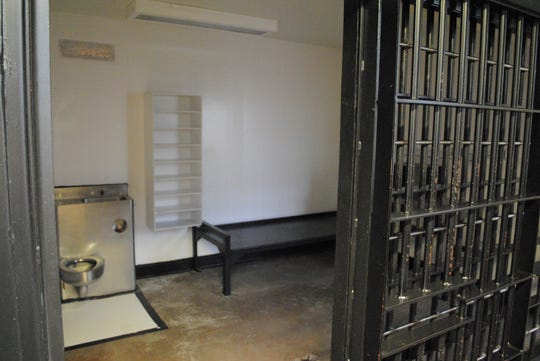
“Waking up to gray walls and black bars…in the silence of ones own thoughts, leaves one to a feeling of somberness…as those around begin to stir and began their individual day, hope creeps into ones mind….as the discussions regarding legal strategies began, hope then becomes more than just a shadow…as guys began to discuss their potential future beyond prison and being locked in a cell for days at a time, hope becomes more than just a fleeting moment! Silence can sometimes be ones own enemy on death row:-…So I condition myself to discover the “why” I fight through the fits of depression and despair, instead of focusing on the “how’s”….because pursuit of the “why’s” bring about methods of finding a solution….encouragement to remain hopeful!”
Everyone has the right to life, liberty and security of person (1).
Without the right to life, we cannot enjoy the freedoms set forth in the Universal Declaration of Human Rights.
However, what if one’s life was imprisoned and waiting to be ended for crime? In addition, what if a person was to be put to death for associating with a particular demographic?
The death penalty is the authorization of the state to kill a citizen for a crime, whether it’s murder, rape, treason, or more severe crimes, such as crimes against humanity and genocide (2).
Whilst the death penalty can be a deterrent, provide justice, and be the ultimate punishment for a crime and justice for victims, it is also used in some countries to persecute minority groups, such as the LGBT community (3) (4). (In references, there is a link to an interactive map of countries that utilize the death penalty for LGBT groups).
According to the Death Penalty Information Centre (DPIC), around 82% of cases involving capital punishment, race was a determining factor of giving this punishment, in comparison to white counterparts (5). However, the justice system is far from perfect, and miscarriages of justice occur. Due to issues of racism and racial bias (particularly within the American Justice System), this has seen members of minority groups and innocent people put on death row whilst a criminal still walks free. A damning example of a miscarriage of justice, and a clear demonstration of racism, is the case of George Stinney, whom, at the age of 14, was wrongly accused of murdering 2 girls. He was taken to court, tried by an all white jury, and was given the electric chair (6).
This, ultimately, is the state failing to protect its citizens, and causing irreparable damage to others. The George Stinney case is a condemnatory example of this. On top of that, it is hard to measure deterrence, and whether capital punishment actually deters people from committing crime.
However, what is it actually like being on death row?
June 2017 saw the start of a new friendship – a unique friendship. What simply started out with me wanting to reach out and be a ray of light to someone on death row, turned into a wonderful experience of sharing, support and immeasurable beauty. In June 2017, I began writing to a man on death row, and simply wanted to be a ray of light to someone in a dark place.
He has shared some of his thoughts of what it is like to be on death row:
“Perseverance. This is key when facing a day in prison (physically and mentally) because is never “where” you are physically, but your ability and willingness took push through those times of adversity and overcome the very things that have the power to bring you down….such as evil”. BUT- when we examine the word “evil” look closely…. Do you see it yet? ….. It’s “LIVE” backwards and to me its when we lose our patience to “LIVE” that we have brushes with “evil”…no???? So within these walls I do my best to find the “silver lining” and develop the better aspects of me”.
Now, it may seem effortlessly -but- in all honestly….its very difficult to face each day with the uncertainty of knowing whether the presence I have is one that has significance….in here I have to prepare myself on a constant basis in order to be the best version of myself no matter what lays ahead.
Thankfully….I have met an incredible person, who guides me by way of her words…offers me comforts by way of her thoughts and prayer and encourages me through her never ending presence! She is beautiful in every aspect of the word…She has helped me to discover that EVERYTHING and NOTHING awaits beyond forever!
References
(1) Universal Declaration of Human Rights (UNDH) Article 1 Available online at: https://www.un.org/en/universal-declaration-human-rights/ Accessed on 21/01/2020
(2) Louise Gaille ’15 Biggest Capitol Pros and Cons’ Available online at: https://vittana.org/15-biggest-capital-punishment-pros-and-cons Accessed on 24/03/2020
(3) The Human Dignity Trust ‘Saudi Arabia: Types of Criminalisation’ Available online at: https://www.humandignitytrust.org/country-profile/saudi-arabia/ Accessed on 24/03/2020
(4) Death Penalty Information Centre ‘Executions By Race and Race of Victim’ Available online at: https://deathpenaltyinfo.org/executions/executions-overview/executions-by-race-and-race-of-victim
(5) Ibid
(6) Snopes Fact Check ‘Did South Carolina Execute 14-year-old George Stinney, then declare him innocent 70 years later?’ Available online at: https://www.snopes.com/fact-check/george-stinney-execution-exoneration/ Accessed on 24/03/2020
Other
Interactive map of countries where the death penalty is used against the LGBT community: https://www.humandignitytrust.org/lgbt-the-law/map-of-criminalisation/?type_filter=crim_gender_exp
Human Writes: https://www.humanwrites.org
Share this:


Can there be Justice for Benjamin Arum Izang? An Unfortunate Victim of Forum Shopping
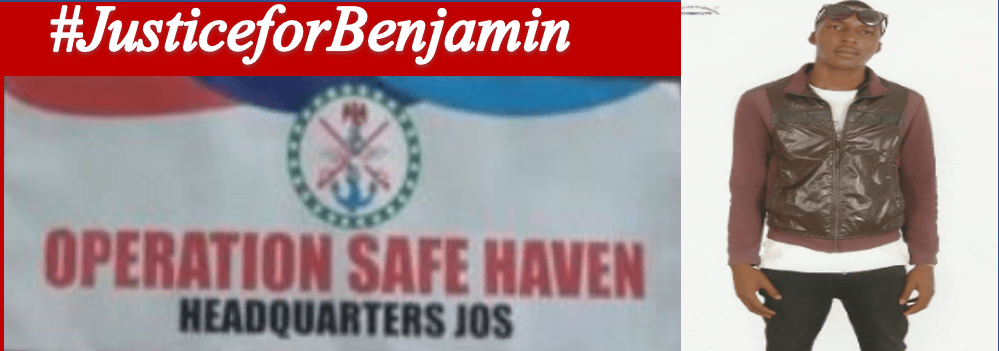
So Jos[1] tweeter community was agog with the scandal of the alleged torture of 31 year old Benjamin Arum Izang by personnel of the Operation Safe Haven (OPSH) Military Special Task Force (STF) conducting internal security operations in Plateau State. The family reported that the torture eventually led to Benjamin’s demise because of the fatality of the injury inflicted on him by the military personnel.
The sad event that led to this unfortunate incidence is reported to be an altercation over a fifty-naira egg (approximately 11 cents) between the deceased and a certain Blessing, an egg hawker whose egg was said to be broken by Benjamin. Failure to reach an understanding led Blessing to report the matter to the personnel of the STF, who quickly swung into action, albeit, one that involved the torture of Benjamin.
An investigation by Dickson S. Adama (a media correspondent) revealed that the Media Officer of the STF indicates not been aware of the incident. However, the family and the concerned public are crying for justice as this is not the first of such cases in the State. Rightfully so, scholars and practitioners of peace and conflict consider this incidence as forum shopping,[2] a decision by disputants to choose a security agency to intervene in their dispute, based on the expectation that the outcome will favour them, even if they are the party at fault. Studies[3] including my doctoral research on the military security operations in Plateau State indicates this as a recurring problem when the military conducts security operations in society.[4]
Often, when dispute ensues between two or more parties and both desire to emerge victorious or to exert their position on the other, desperate actions can be taken to ensure victory. One of such actions is the decision to invite a third party such as the military which is often not the suitable institution to handle matters of civilian disputes. In my doctoral research, I detailed the factors that makes the military the most unsuitable agency for this role, key among which is that they are neither trained nor indoctrinated for law enforcement duties. More so, the task and skill of law enforcement and managing civilian disputes which involves painstaking investigation and ascertaining guilt before conviction/serving punishment is the primary role of the police and the criminal justice system, which the military is not a part of. The military trains for war and combat mission, to kill and to obliterate and essentially, their culture and indoctrination is designed along these tenets.
Given this, when the military is involved internally as in the case of Benjamin and Blessing, it engenders numerous challenges. First, with the knowledge that the military dispenses ‘instant justice’ such as punishment before determining guilt, civilians such as Blessing will always seek this option. Tweeps such as @ByAtsen tweeted for instance that ‘same soldiers at the same outpost did this to another who, unlike Benjamin, is still alive nursing his wounds.’ One challenge is that where forum shopping denies justice, it breeds lawlessness and can further evoke public outrage against the military. In turn, this can erode the legitimacy of the security role of the military. Where this occurs, a more worrying challenge is that it can exacerbate rather than ameliorate insecurity, especially where civilians feel compelled to seek alternative protection from coercion from State forces and threats from the armed groups the military was meant to avert.
[1] Jos is the capital city of Plateau State Nigeria. The State was once the most peaceful State in Nigeria (arguable) but is now embroiled in intermittent and protracted violence, between the mostly Christian natives and Hausa/Fulani ‘settlers,’ and series of insurgent style attacks of rural farming communities by marauding herdsmen widely believed to be Fulani herdsmen.
[2] Keebet Von Benda-Beckmann, ‘Forum Shopping and Shopping Forums: Dispute Processing in a Minangkabau Village in West Sumatra’, Journal of Legal Pluralism, 19 (1981), 117–59.
[3] Judith Verweijen, ‘The Ambiguity of Militarization: The Complex Interaction between the Congolese Armed Forces and Civilians in the Kivu Provinces, Eastern DR Congo’ (Utrecht University, 2015).
[4] Sallek Yaks Musa, ‘Military Internal Security Operations in Plateau State, North Central Nigeria: Ameliorating or Exacerbating Insecurity?’ (Stellenbosch University, 2018) <https://scholar.sun.ac.za/handle/10019.1/104931> [accessed 14 March 2019].
Share this:


Friday the 13th
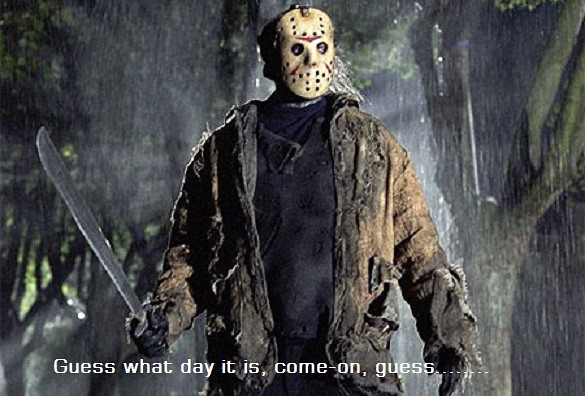
Odd thing superstition, it makes reasonable and seemingly rational people think and behave in the most irrational and inexplicable manner. Always we notice these behaviours and thoughts in other people, but so many of us carry in the back of our minds equally irrational ideas and beliefs. We hear of football club managers who always wear the same clothes at a game, athletes that engage in the same pre-game routine and of course, politicians who act in certain ways during their election campaign. For the rest of us there are ladders in the street, black cats, that we may avoid or there are dates in the calendar that we take notice. Friday the 13th is one of those Anglo-Saxon dates that people take notice of.
I am sure that some of my historian friends will be able to give a good account of the origin of the unfortunate date, but I can only go with the “official tradition” of Jesus, the 13th student, (Judas) and his subsequent arrest on the Friday before the Crucifixion. The day, somehow, became one of those that we notice, even when we are not superstitious. There is even a psychologically recognised fear of the date Triskaidekaphobia; which in Greek means the fear of 13! Of course social fears are blended with wider social anxieties, whether that is the fear of the unknown or the realisation that in life, there are things that we have little control of.
In the days leading up to this Friday the 13th we engaged with political discussions about what direction the country shall take. The health service, the justice system, the state’s responsibility, all the way to welfare and the state of the union, were all eclipsed by one topic that has dominated discourses, that of the execution of leave from the European Union commonly known as Brexit. Ironically the “exit” preface was used before for Greece (Grexit), and Italy (Italexit) but seems that Brexit has won the battle of the modern lexicon. The previous “exits” where used as a cautionary tale for the countries being forced out of the union, whilst Brexit is about leaving the Union.
Having considered all the issues, this one issue became the impetus for people to give politicians a mandate. Complete this issue before and above all the rest. It is an issue likened to a divorce, given a texture, (soft/hard) and has even been seen as the reason for generational conflicts. Therefore the expectation is clear now . Leave the European Union, and then let’s see what we can do next. The message is fairly clear and the expectation is palpable. Beliefs and hopes of the people narrowed down to one political move that shall terminate membership to the European Union. Of course there are subsequent questions and issues that this act of national defiance may come with. As for the state of the Union, that may have to be the next thing we discuss. This follow up conversation may not be as welcome, but it is definitely interesting. If joining the EU back in 1975, warranted a discussion, then the 1536 Act of Union may become the next topic for conversation. As for healthcare, justice, education and welfare, we may have to wait a little bit more longer. Whether this will mark Friday 13th December 2019 as a date of fortune or misfortune, that is yet to be decided, but that is the same for every day of the week.
Just for your records and for the Triskaidekaphobians out there, the next Friday the 13 is in March 2020 followed by the one in November 2020. Just saying…
Share this:


When the Police takes to Tweeter HashTags to Seek ‘Justice’

https://twitter.com/PoliceNG/status/1159548411244371969?s=20)
I am tempted to end this blog in one sentence with the famous Disney lyrics, “disaster is in the air” but this may do no justice to the entry as it lacks a contextual background. So last week, Nigerian Twitter was agog with numerous tweets, retweets, comments, and reactions following the news that soldiers of the Nigerian Army had allegedly killed one civilian and three police personnel in the line of duty. A brief summary of the case is that the killed police personnel had arrested an alleged notorious and ‘wanted’ kidnaper and were transporting him to a command headquarters when they ran into a military checkpoint. Soldiers at the checkpoint allegedly opened fire at close range, killed the police who were said to have attempted identifying themselves, and freed the handcuffed ‘kidnapper.’
In a swift reaction, a Joint Investigation Panel comprised of the Police and the Army was constituted to investigate the incident. Notwithstanding this, the Police took to their Twitter handle @PoliceNG calling out for justice and expressing dissatisfaction and concerns in what metamorphosed into series of threads and hashtags – #WhereIsEspiritDCorp and #ProvideAnswersNigerianArmy. Ordinarily, this should have aroused and generated wide condemnation and national mourning, but, the comments, tweets and reactions on twitter suggests otherwise. While Nigerians expressed sympathy to the victims of the unfortunate incident, they also took to the social media platform to unravel their anger with many unleashing unsympathetic words and re-stating their distrust in the Police. In fact, it was the strong opinion of many that the incident was just a taste of their medicine as they often infringe on the rights of civilians daily, and are notoriously stubborn and predatory.
Certainly, this issue has some criminological relevance and one is that it brings to light the widely debated conversation on the appropriateness and the potency of deploying the military in society for law enforcement duties which they are generally not trained to do. Hence, this evokes numerous challenges including the tendency for it to make civilians loathe to interact with the military. I have previously argued that the internal use of the Nigerian military in law enforcement duties has exacerbated rather than ameliorated insecurity in several parts of the country. As with this instance, this is due to the penchant of the military to use force, the unprofessional conduct of personnel, and a weak system of civil control of the military to hold personnel accountable for their actions.
Similarly, this issue has also raised concerns on the coordination of the security forces and the need for an active operational command which shares security information with all the agencies involved in internal security. However, the reality is that interagency feud among the numerous Nigerian security agencies remains a worrying concern that not only undermine, but hinders the likelihood for an effective coordination of security activities.
Another angle to the conversation is that the social media provides a potent weapon for citizens to compel response and actions from state authorities – including demanding for justice. However, when the police is crippled and seemingly unable to ensure the prosecution of rights violations and extrajudicial killings, and they resort to twitter threads and hashtags to call out for justice, overhauling the security architecture is extremely necessary.

 Thoughts from the criminology team