
Home » Racism (Page 6)
Category Archives: Racism

Your god is cruel #BlackAsiaWithLove

I don’t trust your god
Your god is cruel
Your god is mean
Your god allowed generations of your people to enslave mine
Your god made it okay to look into the Bible and see white power.
You prayed to your god with every slave you took.
You prayed that your catch would be bountiful, and
Your enslavers safe.
You’ve prayed that you would gain money, and fame, and power.
And you did.
Your god gave you everything.
Thanks to your god-given wealth,
You built church after church, and
Cathedral after cathedral, all around the globe,
So that everyone could worship your god.
You prayed that we’d all pay homage to a mean and cruel god.
Your god’s played a trick on you,
Convincing you slavery was god-like, that white was right!
That dark was evil, and so
Your god’s given you moral dominion over the darker peoples of the world.
You and your god dominate.
Don’t you know,
Your god’s cross was used to conquer the Americas, and
A church sits smack in the middle of west Africa’s biggest, extant slave castle!?!
Yes, your god was right there with you as you captured human cargo, and
Stored them right next to your church so they could hear you pray, and
Marched them out of the door of no return, onto feed your greed that your god sanctioned.
You grew fat, bloated with power,
Thanks to your god.
I don’t trust your god.
Nor should you.
Now, with every attempt we have to take back our humanity, you resist.
We say “Black Lives Matter,” and you pray they don’t.
You pray for a champion – a big man – to come down from above and save you.
And when that big, rich, powerful man does descend,
And threatens to shore off all apologists for your god’s cruel past,
You treat him as heaven-sent!
And call out all defectors from your church,
All those so-called Liberals who’ve turned away from your god.
You pray that this big man and his family will bask in the gains of your god’s glory.
That somehow this big man’s glory attests to your god’s power.
You cheer when that big man waves a bible at you, in front of any church, and
You tell yourself: “My God is good,” and
You run-n-fetch your god every time the big man blows the dog-whistle,
Which you hear clear as day.
Run. Stay. Sit.
You follow your god’s orders.
Free yourself from your old god.
To erase that history, to look away from those facts, you must also erase yourself…
Because slavery, and continued subjugation is not just my problem, it’s…
The Problem We All Live With.
It’s in you, too.
Share this:


More Grotesque Black Death #BlackenAsiaWithLove
Each time I turn on the news I see more black death.
It’s grotesque. In my country, ‘Merika, there are peaceful protestors all around the country combatting police violence. Initially, when George Floyd was murdered, these peaceful protests spread across the world, as folks rose in solidarity for peace against white supremacy in America. Many more Black bodies have died in dubious police circumstances since. In the popular rhetoric, sadly, the peaceful protestors are held to account for the violence sweeping our streets. One of Dr. King’s major battles was to convince a people who’d been born into a nation of violence, how to be peaceful; we are a nation born of violence. Dr. King believed and taught that “non-violent resistance… [is] a courageous confrontation of evil by the power of love” (King, Stride, 80). That was just to boycott the local busses in the 1950’s. Working people choosing to spend their hard-earned money as they pleased, and still Jim and Jane Crow showed up to verbally and physically harass each one of them. By the 60’s Black university students worked in solidarity with students of all colors to teach, preach and practice non-violent civil disobedience.

It’s in bad faith to focus on the rioters and overlook those attempting to exercise their first amendment rights. I say “attempting,” because even the lone Black woman in Kentucky house of representatives, Attica Scott, can be arrested in our hometown for peacefully protesting #JusticeForBreonnaTaylor, #AtticaScott4Ky. Without the 1st amendment, there’s no second. And let’s not forget all those anti-mask protestors that showed up at city and state halls around the country – in 2020 – armed to the teeth, so-called peacefully protesting any ordinance to protect ‘us’ from the spread of CoVit. How peacefully will the po-po resolve this conflict instigated by their own violence? The white supremacist way, of course. Look at 45, head hood and chief of their klan. “’Cause God’s stopped keeping score,” as George Michael sang.
Back then leading the cause of segregation, we had white supremacists like 4-term Alabama governor George Wallace, and Birmingham public safety commissioner, Bull Connor, (in)famous for sending in fire hoses and attack dogs against children peacefully protesting. Right now, there are all kinds of icons named after ole George. Just a few years ago, I went to my little cousin’s high school basketball game in Tallassee, Alabama, and the public high school gym was named after good ole George’s wife, who’d held onto his governorship for a bit because law forbade him from serving consecutive terms. It’s as if only a few strong survivors believe us when we speak about how white supremacy has its hooves on our necks. It tuns out 8 minutes and 46 seconds changed that.

Read, will you, what good ole George said in a 1986 interview about sending in troops to squash the peaceful protests in Birmingham, after those four little girls got bombed in the 16th Street Baptist Church, on a Sunday in September 1963. As you’d expect, no one was held to account. The good governor says:
“I sent Colonel Lingo there because they were, there was some trouble there, we tried to maintain law and order, we’re not trying to maintain segregation there, it was a matter of law and order, and uh, as I recall that nobody got hurt in any of the things, in the demonstrations, uh, except that whoever those evil mean, minded men were who had something to do with the blowing up of that church.”

Sound familiar? Sounds like 45. Like then, today’s protestors are regularly intimidated and assaulted by the police and troops. This too often seals the cycle of violence instigated by the police, who are further instigated by the commanders and their chief.
It’s grotesque, and understandably, even more grotesque to look at, if you’ve rarely looked at it before, tucked it away, and not thought about it because it did not impact your daily life. “It’s hard to love, there’s so much to hate,” and you sang along. You knew it was happening, but your eyes betrayed you, and because you didn’t see it in your neighborhood, in your schools and streets, you let your faith in humanity go.
You let yourself believe that we, Black people, did something to deserve to be the nightly feature on the news: Weather, sports, celebrities, national headlines, and the local Black criminal; that’s literally fed into our homes each night on the news. And if you’ve been spending your time with Fox and ilk, then certainly you’ve been trained in a language that pits them against us, and posits losers and sinners against the righteous folks like you who are just trying to make it in this world. How could the Blacks live such a radically different existence? You lie to yourself and say that they can’t, that all the opportunities they lose are theirs alone. It’s all down to individual decisions, just like you. We each chose our own fates, right? There’s no system, and certainly no systemic oppression. F #MeToo, too, you say… at home with only the family and kids to hear. The kids repeat it at school, grow up and vote like that. They cycle repeats, whiteness is rendered, effectively, invisible. Only the Blacks are not acting right.

Share this:


It’s Autumn, and my hometown is on fire. #BlackenAsiaWithLove
It’s Autumn, and my hometown is on fire. [Theme song: When You Gonna Learn, by Jamiroquai]
Jay Kay sang: “Yeah, yeah, have you heard the news today?”
Me: Yeah, yeah, my hometown is on fire.
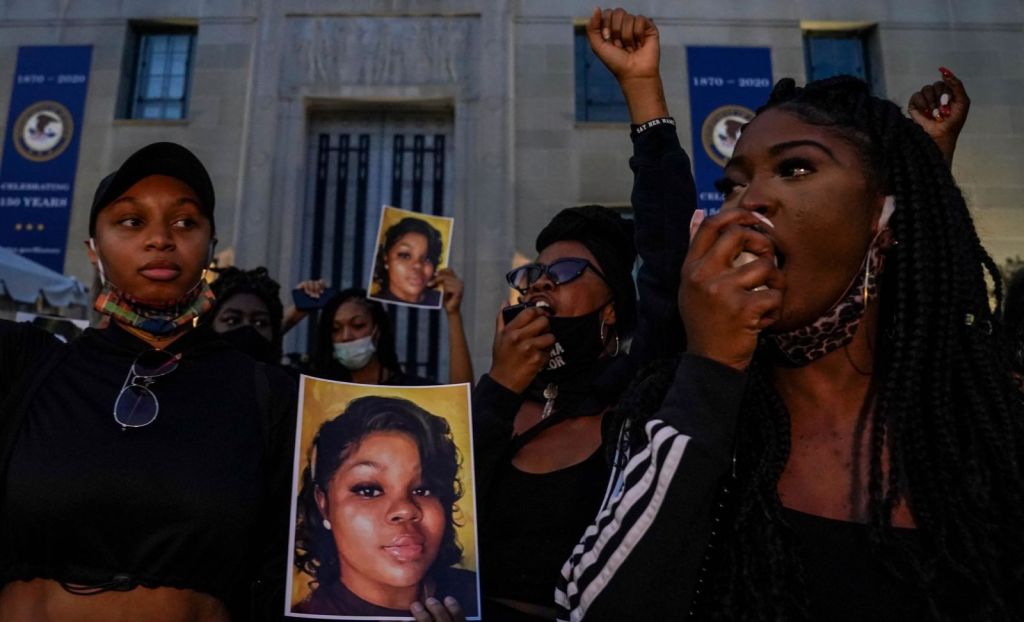
My hometown is on fire. In March, SWAT-armed officers served a warrant, and an EMS worker ended up dead. The deceased was Black and poor, and lived in the poor Black part of town. The officers adhered to the codes of the ruling caste. The media covered the death matter-of-factly. The tag line is: “Breonna Taylor was an innocent person in her own home.” So, by extension, all the other victims were not innocent, and therefore deserved to die. Only Jesus’ death warrants defense…and outrage – according to the actions of the folks who James Baldwin called those who believe themselves to be white. So, Breonna, George Floyd, all of them…these were justifiable killings? Yeah, yeah, casualties of the race war where white supremacy has always had the whip.
My hometown is on fire. The mayor put the city on lockdown days ahead of the grand jury’s announcement, not Corona. Trucks block traffic now; windows were boarded up days ago. All to announce that (only) one of the shooters would be indicted, and on the lower end of charges. The officer was initially denounced and fired, and (only) now charged with “wanton, reckless endangerment.” None of the charges relate to Breonna’s death, so that’s exactly what the courts won’t be able to address.
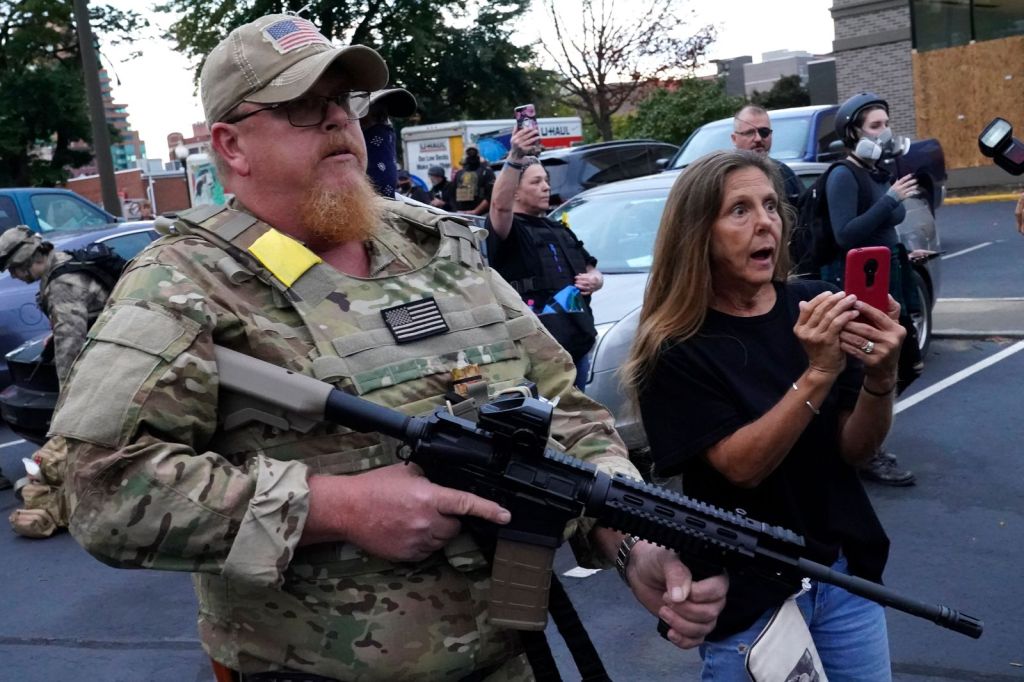
My hometown is on fire. Locals who believe themselves to be white char the memory of the victim, each victim, individually. For Breonna was not perfect, nor was Trayvon, nor George Floyd, nor Sandra Bland, nor countless others … all just human. Not even Amadou Diallo was a perfect-enough-victim for ‘those who believe themselves to be white’. Each family of each victim has had to fight the system individually, as if in a vacuum. Little attention to this incident was paid until the bodies mounted around the country. Everything changed when people of all races marched together, looters rioted and property was lost. Only then did “voters” take notice.
My hometown is on fire. The police have never been held accountable for such deaths. Apparently, the deceased liked bad boys, and was a victim of circumstance. White citizens – the so-called “voters” – resist seeing the systemic causes to these deaths. Just a few weeks ago, after MONTHS of national outrage and protest, the police reached a 12-million-dollar settlement with Breonna Taylor’s family. Every Kentucky tax payer will pay for our collective neglect. My hometown held it down, made the world say her name.
My hometown is on fire. Say her name. “Say her name,” is now a moniker for another fallen Black body. Where whites see no systemic problem, there can be no systemic solutions. Please, “stop it going on.”

Share this:


“I can’t breathe”: Criminology, Science and Society
Sometimes the mind wanders; the associations it produces are random and odd, but somehow, they connect. In the book of Genesis, there is reference to the first murder. Cain murdered Abel with a stone making it the original murder weapon. After some questioning from God, who acted as an investigating officer, and following a kind-of admission, God then assumed the role of the judge and jury, sentencing him to wander the earth. This biblical tale is recounted by all three main monotheistic religions, a what to do in the case of murder. The murderer is morally fallen and criminally dealt by with a swift punishment.
There is no reason to explore the accuracy of the tale because that is not the point. Religion, in the absence of science, acted as a moral arbitrator, sentencing council and overall the conscience of society. In a society without science, the lack of reason allows morality to encroach on personal choices, using superstition as an investigative tool. As scientific discovery grew, the relevance of religion in investigation was reduced. The complexity of society required complex institutions that cared for people and their issues.
When the Normans landed in England, they brought with them a new way of dealing with disputes and conflict. Their system of arbitration, using the King as a divine representative, was following Roman tradition and theology but it soon became apparent that a roaming court may not be as efficient. The creation of the magistrates and the statutes on legal representation introduced the idea of bringing professionals into justice. The creation of new institutions fostered the age of the scholar, who uses evidence-based practice.
This new approach removed more religious practices, instead favouring the examination of facts, the investigation of testimony and the study of law. It was a long way away from the system we know now as the witch trials can attest to; a number of whom took place in East Anglia (including Northampton). In the end the only thing that has been left from the early religious trials is the oath witness take when they submit their testimony.*
The more we learn the better we become in understanding the world around us. The conviction that science can resolve our problems and alleviate social issues was growing and by the 19th century was firm. The age of discovery, industrialisation and new scientific reasoning introduced a new criminal justice system and new institutions (including the police). Scientific reasoning proposed changes in the penal code and social systems. Newly trained professionals, impervious to corruption and nepotism, were created to utilise a new know-how to investigate people and their crimes.
Training became part of skilling new mandarins in a system that reflected social stratification and professionalism. The training based on secular principles became focused on processes and procedures. The philosophy on the training was to provide a baseline of the skills required for any of the jobs in the system. Their focus on neutrality and impartiality, seemed to reflect the need for wider social participation, making systems more democratic. At least in principle that was the main idea. Over centuries of public conflict and social unrest the criminal justice system was moving onto what people considered as inclusive.
Since then the training was incorporated into education, with the new curriculum including some BTECs, diplomas, foundation studies and academic degrees that take on a variety of professions from investigative fields to law enforcement and beyond. This academic skilling, for some was evidence that the system was becoming fairer and their professionals more educated. Police officers with knowledge of the system, akin to lawyers to the probation service and so on. So far so good…but then how do we explain the killing of George Floyd? Four officers trained, skilled, educated and two of them experienced in the job.
If this was a one, two three, four, -offs then the “bad apple” defence seems to be the most logical extrapolation on what went wrong. If, however this is not the case, if entire communities are frightened of those who allegedly serve and protect them, then there is “something rotten in the state of Denmark”. Whilst this case is American, it was interesting to read on social media how much it resonated, in communities across the globe of those who felt that this was nothing more than their own everyday experience with law enforcement. For them, police is merely a mechanism of repression.
Since the murder I have read a number of analyses on the matter and maybe it worth going a bit further than them. In one of them the author questioned the validity of education, given than two of the officers in the Floyd case hold a criminal justice and a sociology degree respectively. There is a vein of truth there; educators have some responsibility to forge and promote professional conduct and ethical practice among their alumnus. There are however some other issues that have not been considered and it is time for these to be brought to the surface.
Education or training alone is not adequate to address the complexities of our society. Social awareness, cultural acceptance and the opportunity to reflect on the rules using problem solving and insight are equally important. Foucault has long argued that the justice system is inherently unfair because it preserves privileges and blocks anyone outside from challenging it. Reflecting on that, all major constitutional changes took place after a revolution or a war, indicating the truism in his observation.
If we are to continue to train people on procedures and processes the “bad apples” are likely to strike again. The complexity of social situations requires an education that ought to be more rounded, critical and evaluative. If a doctor takes an oath to do no harm, then so should every other professional who works in their community. If the title of the office is more appealing than the servitude, then the officer is not fulfilling their role. If we do not recognise equality among all people, then no training will allow us to be fair. Suddenly it becomes quite clear; we need more education than less, we need knowledge instead of information and we need more criminology for those who wish to serve the system.
*Even that can now be given as an affirmation

Share this:


For the Trayvons, Since Blackface is a weapon #BlackenAsiaWithLove
2 April 2012 Hanoi
The real Blackface that’s the weapon is the minstrel show,
The Blackface that labeled me out,
Showing people a side of me never seen
But projected onto me,
Such that when so many see my own Blackface,
They see that other
They see that other one.
The one told to them over their kitchen tables.
The one sold to them at the movie show –
Hoop dreams
Baller creams
Holla dolla-dolla bill, y’all.
‘Cause we also know that there are real Black faces
That see those minstrel black faces
Staring them back in the face,
So blinded by the light that they cannot see their own.
That’s one side of Trayvon’s story-
Then we all know how precious of a story this really is
That a mother lost her darling son
That a grandmother lost the one who used to babysit for the other gran’kids
That the little cousins are still unclear about where that dear boy is.
Blackface means that as soon as your voice starts to drop
As soon as that fuzzy hair starts to sprout all over
As soon as your knock knees start to look bold
You’re no longer a kid
Your childhood is lost
And you must learn to act in ways that would make most sane adults stumble
You learn how not to offend white people
How to speak in a soft voice
Or perish
How to walk slowly, with an unassuming gate
Lest you appear as a threat
With the knowledge that any of these threatened folks can annihilate you
Wipe you from this earth
Where only a generation or two ago
Men hanged like tree-ripened fruit
Aged on a rope in an instant
From kid prankster
To adult menace in a matter of moments
We’ve all seen that photo of one of America’s last lynchings
Not nearly the first
Not nearly the haste, carnage and human waste that made people cease.
In 1930, not in anywhere near the deep south
Not from one of our southern willows that sway
But in the mid-west
In Indiana, less than a 150 miles from where Michael Jackson was born
And less than 30 years before he came to be,
So that years later when he sings about hate in our multicultural hearts
Or smashes a window in the video
Enraged with anger
Mad from hypocrisy
The sort that we all know all too well
The gap between the promise and dream.
The reality versus the verses etched all around the capital,
Versus the slave hands that laid those very stones.
The women folk whose very gender made them slaves
And the Black women whose faces made them chattel –
But exploitation of a sexual kind
Yes, we all know too well
What a Blackface can do
How a Blackface can scare you
Even when it’s yours.
So, we now the rage Michael felt,
The hate he seemed to have fought though lost,
Internalized but never giving up.
Yet he was born into a world that hated Blackfaces
Where his was a real threat,
Lest he learn to sing and dance.
The hate is real life minstrelsy.
It’s that same song and dance that we as boys learn to perform
And I am tired of dancing
Trying to make nice when people approach me as cold as ice
Smiling and trying to behave
While all their body language tells me that they are scared to death of me
And that they see my Blackface as chilling.
We all know that all the Trayvons in this place
Learn from an age too early to have to teach kids such harsh cruelties of life
That by 13, he could be nearly 6 feet tall and that factor alone endangers his life
Were he to play sports and his body develop.
He would stand no chance of being treated like anything other than a gladiator.
So it’s even more ironic that Trayvon was a scrawny boy they called “Slim”
Seems there’s no real way to win
Though I think that if we as a people can get through this
If we as a nation can have this conversation
The one mothers like Trayvon’s have with their sons
For we all know how people react to Black
Share this:


We are Spartacus: the publishing industry and race
As one of only a handful of non-white authors on the British crime fiction map, I thought it might be worthwhile spending a moment reflecting on the worldwide rebalancing touched off by the George Floyd killing in America. Fear not. There’s no need to put on your tin hats and dive for the trenches. My purpose isn’t to haul anyone over the coals. But there’s little doubt that some of what I say might make for uncomfortable reading. More importantly, I will ask you to reflect, at a personal level, on what we mean by systemic inequality, particularly as it applies to the publishing industry.

First, some background. My parents are from the subcontinent. They came to the UK in the early seventies, lured by the immigrant dream. The streets of London may not have been paved with gold, but they were paved with opportunity. My father, who was not literate, spent his life in honest labour, in an industrial bakery, while my mother raised children, demonstrating the much-lauded immigrant work ethic by slaving away at her sewing machine every hour she wasn’t feeding us or stopping us from poking each other’s eyes out with eraser-tipped pencils. She instilled in us the need, above all else, to study, to educate ourselves, to progress.
So far, so good.
But what if I were to tell you that my parents were, in a broad sense, xenophobes, too? Not overtly. They didn’t oppress anyone; or traffic slaves across the oceans; or pillage defenceless communities for profit. But their attitude towards black people – cultivated by the insular world they had grown up in – was, at best, indifferent, or, at worst, mistrustful.
Here’s a simple, unpalatable truth. Racism, in its most basic form, is a feature of most societies. It shouldn’t be. But it is. A simple example illustrates my point.
The outpouring of angst and handwringing currently gripping the world has seen celebrities across the globe express their views on racism (rightly so), only for some to discover that a seat on this particular bandwagon can be an uncomfortable one. In India, numerous Bollywood stars were called out for the disparity between their #blacklivesmatter tweets and the fact that they had fronted campaigns for skin-lightening creams. Across the subcontinent, lighter skin has traditionally been valued (usually alluded to in matrimonial ads by the rainbow-bending adjective “wheatish”), so much so that white foreigners, especially Brits, are treated with overt deference, while black people are routinely afforded a lesser welcome. An odd perversity, given that it was the whites that pillaged the subcontinent for three centuries while, with those of Afro-Caribbean descent, one might assume Indians would evince a colonial-era solidarity.
Let me be clear: this idea of a sort of universal xenophobic instinct does not in any way excuse or mitigate the horrors of the slave trade, or the enormous, long-term damage done to black people because of that terrible practice. Nor does it justify the entrenched, systemic prejudice that continues to colour western societies, prejudice that culminates in overt racism of the kind that permits white American policemen to routinely kill black men with little fear of reprisal, and prejudice of the less obvious kind that serves to keep black people ‘in their place’. My point was merely to demonstrate that, in the wider, global race equality agenda now under discussion, we all have a part to play.
Part of the issue is that many well-meaning efforts to redress the balance are hampered by a profound lack of insight into how unconscious bias can affect the lives of people of colour, in a million different, small, but, ultimately, debilitating ways. The problem is further hampered by an education system that often fails to properly tackle the ‘race issue’.
Yet, the problem must be addressed. Because the world has become a smaller place. The goldfish bowl has shrunk and we are now all swimming in the same seas. It behoves us to make the effort, not just because it is the right thing to do, but because it is also the most effective means of progressing humanity towards a more equitable, more meritocratic, global society. If the Covid-19 pandemic has proven anything, it is how interdependent we are.
Coming, now, to the publishing industry. Cards on the table. Since my first book was published six years ago, I have received tremendous support from my agent, publisher, critics, bloggers, readers, event organisers, and crime writers. My experience is not typical. A simple look at the statistics tells us what we already know. Any way you slice it and dice it – diversity of publishing staff, published writers of colour, books featuring characters of colour – the industry is dominated by white thought and enterprise. Some of this can be ascribed to the fact that, in terms of population, BAME communities, by definition, are a minority. You wouldn’t expect there to be a 50:50 split along these dimensions. That isn’t the issue. The problem is the entrenched attitudes that make it so damned difficult for writers of colour to break into the industry and then to enjoy the same rewards and freedom of expression that is accorded to their white counterparts.
The world’s most successful crime writer, James Patterson, became famous with a series about a streetwise black detective, Alex Cross. James Patterson is not black. Nothing wrong with that scenario, in my opinion. Authors should not be constrained by artificial constructions of propriety. But, if the industry is being honest with itself, it will acknowledge that a writer of colour attempting to do something similar – trying, as it were, to write outside of their cultural straightjacket – is rarely accorded the same privilege. Questions of ‘authenticity’, ‘voice’ and ‘cultural appropriation’ suddenly come racing to the fore, like Cinderella’s ugly sisters questioning our right to go to the ball. Asian writers, for instance, are often expected to pen literary tomes about colonialism or exposes of the immigrant experience. Again, nothing wrong with that, and, indeed, brilliant writing is regularly published exploring those themes. But there are so many other stories that we would like to tell. White writers can be published writing about matters far outside their experience – wizards, serial killers, aliens. But for non-white writers, the same consideration is much harder to find. A lot of this is not the result of overt racism, but rather the mindset that accepts as perceived wisdom the idea that profitability comes almost entirely from white authors writing white stories, or writers of colour writing stories suited to their ethnic background. This thought is so prevalent in the industry that it may as well be an eleventh commandment.
A terrific article by Laura B. McGrath, associate director of the Stanford University Literary Lab, in a Jan 2019 issue of the Los Angeles Review of Books, entitled “Comping White” identifies the true nature of the problem. Paraphrasing her research, it goes like this: publishers buy new books by comparing them to books that have been successful. Is this the new Harry Potter? Is this the next Gone Girl? Given that the majority of books are white, the process becomes a closed loop, a vicious cycle. The industry buys and promotes white books because they sell. White books sell because they’re the only books the industry buys and promotes. Do you see the problem?
Making the gatekeepers more diverse, McGrath argues, will have only a marginal impact. It’s the system that’s at fault. The same applies to practically any walk of life that you might care to name – hence the reason so few people of colour in boardrooms, or lecturing at top universities, or opening Michelin-starred restaurants. White people have done all those things successfully before, so why take a chance on the unproven?
Until we change this structural, often unconscious, bias, all the current furore around race will do little to improve the prospects of the average BAME person.
Can readers help? Of course! By voting with their feet. By buying books written by authors of colour, readers signal to publishers that they won’t be put off by a ‘funny-sounding’ name on the cover, or a protagonist who doesn’t share their own cultural background. The only bar should be quality.
In an ideal world, a good story, well told, should stand on its own merits.
What else can we do? In my opinion, people shape people. If we want better, more thoughtful attitudes in the industry, we must all stand up and be counted. Solidarity is the name of the game. A solidarity of thought that acknowledges that a genuine change of perspective is needed. From agent to reader, all along the chain. What we need, in other words, is for all of us to stand up and say: ‘We are Spartacus.’
Vaseem Khan, author, Midnight at Malabar House and Baby Ganesh series
London, June 2020
Share this:


CONned by CONfederates #BlackenAsiaWithLove
I come from a town named after the French king who supported America’s independence struggle from Great Britain. A large statue of him sits in front of our old courthouse, across from the old town hall. The fleur-de-lis covering his robe was consequently adopted as the symbol of my city, as well as New Orleans and several other municipalities around our nation. I am from a county named after a slaveholding ‘founding father’, the nation’s third president, who was the governor of the Virginia territory that was split then to eventually create my ole Kentucky home.
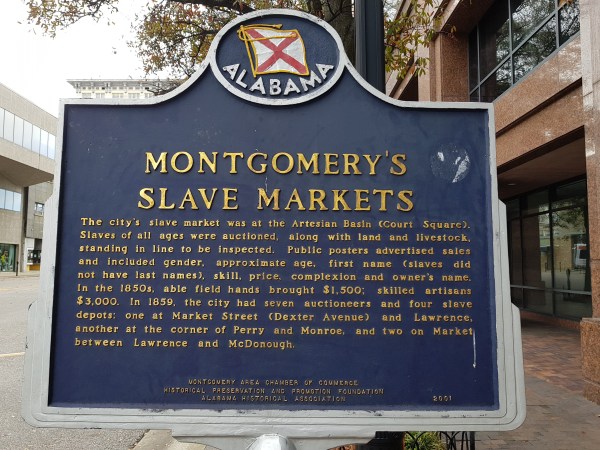
Thomas Jefferson drafted the Declaration of Independence at the same time as he was a prominent slave-owner. Our nation fought for nearly two centuries to (openly) recognize the long-term relationship Jefferson had with a teenage slave. Contemporary CONfederates & other zealots fought against recognizing their descendants.
Dixie Highway is one of the largest roads crisscrossing my city, and it’s even the best way to get to Fort Knox, where our nation used to hold its gold. There are other CONfederate activists who are venerated locally in bronze. I never had to “wish I was in Dixie.”I was born there.

Rosa Parks statue in downtown Montgomery, AL
Although the Sons of CONfederate Veterans resisted, my parents’ alma mater moved a 70-foot-tall CONfederate monument off its campus and out of the city. It wasn’t destroyed, but perhaps, hopefully, better contextualized.
There are umpteen items in my hometown named after President Zachary Taylor who was born into a prominent plantation-owning family. He held slaves during his short-lived term and danced all around the issue of slavery with his CONfederate chums.
Where my grandparents are from in Alabama, the Black high school is named after a CONfederate war general. Right now, the first white house of the CONfederacy sits smack in the middle of the seat of city, county, and state government.

“First White House of the Confederacy,” Montgomery, AL 2013.
History needs to be re-written to include all the people that made the history.
Share this:


Some lessons from the lockdown
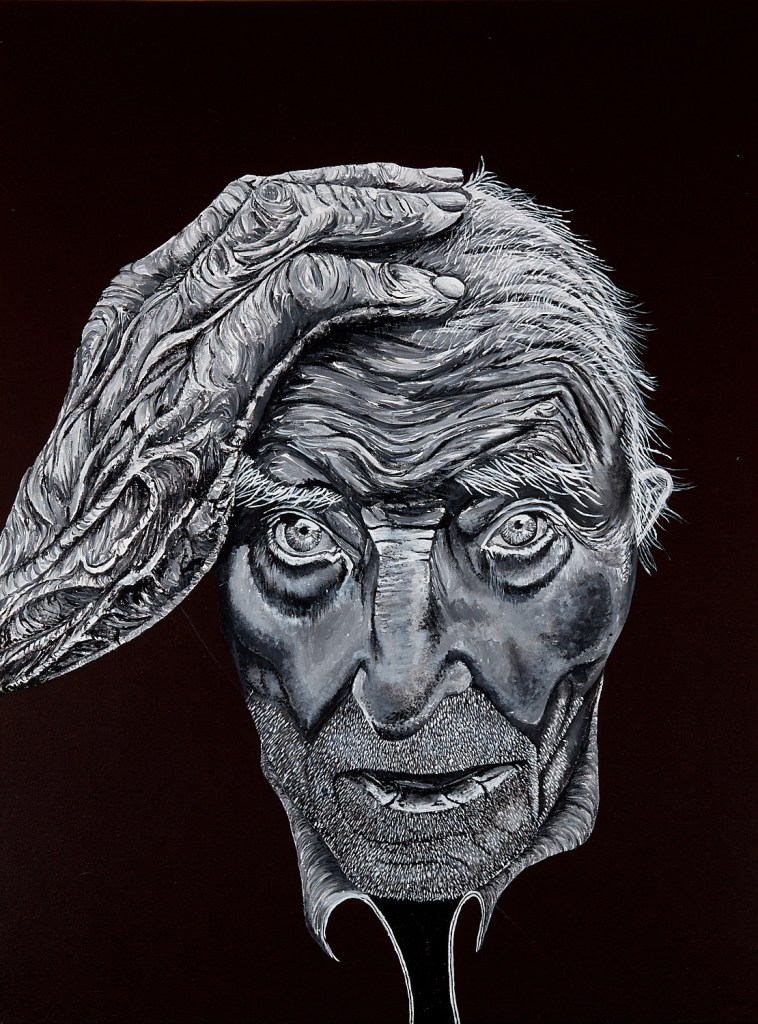
Koestler Arts (2019), Another Me: The Redwoods Centre (secure mental health unit), James Wood QC Silver Award for Portrait, 2019
In March 23, 2020, the UK went into lockdown. The advice given, albeit conflicting in parts, was clear. Do not leave your home unless absolutely necessary, banning all travel and social interactions. This unprecedented move forced people to isolate at home for a period, that for some people will come to an end, when the WHO announces the end of the pandemic. For the rest of us, the use of a face mask, sanitiser and even plastic gloves have become modern day accessories. The way the lockdown was imposed and the threat of a fine, police arrest if found outside one’s home sparked some people to liken the experience with that of detention and even imprisonment.
There was definite social isolation during the pandemic and there is some future work there to be done to uncover the impact it has had on mental health. Social distancing was a term added to our social lexicon and we discovered online meetings and working from home. Schools closed and parents/guardians became de facto teachers. In a previous blog entry, we talked about the issues with home schooling but suffice to say many of our friends and colleagues discovered the joys of teaching! On top of that a number of jobs that in the past were seeing as menial. Suddenly some of these jobs emerge as “key professions”
The first lesson therefore is:
Our renewed appreciation for those professions, that we assumed just did a job, that was easy or straightforward. As we shall be coming back eventually to a new normality, it is worth noting how easy it will be to assign any job as trivial or casual.
As online meetings became a new reality and working from home, the office space and the use of massive buildings with large communal areas seemed to remain closed. This is likely to have a future impact on the way business conduct themselves in the future.
Second lesson:
Given how many things had to be done now, does this mean that the multi occupancy office space will become redundant, pushing more work to be done from home. This will alter the way we divide space and work time.
During the early stages of the lockdown, some people asked for some reflection of the situation in relation to people’s experiences in prisons. The lockdown revealed the inequality of space. The reality is that for some families, space indicated how easy is to absorb the new social condition, whilst other families struggled. There is anecdotal information about an increase on mental health and stress caused from the intensive cohabitation. Several organisations raised the alarm that since the start of the lockdown there has been a surge in incidents of domestic violence and child abuse. The actual picture will become clearer of the impact the lockdown had on domestic violence in future years when comparisons can be drawn. None the less it reveals an important issue.
Third lesson:
The home is not always the safest place when dealing with a global pandemic. The inequality of space and the inequality in relationships revealed what need to be done in the future in order to safeguard. It also exposed the challenges working from home for those that have no space or infostructure to support it.
In the leading up to the lockdown many households of vulnerable people struggled to cope with family members shielding from the virus. These families revealed weaknesses in the welfare system and the support they needed in order to remain in lockdown. Originally the lack of support was the main issue, but as the lockdown continued more complex issues emerged, including the financial difficulties and the poverty as real factors putting families at risk.
Fourth lesson:
Risk is a wider concern that goes beyond personal and family issues. The lockdown exposed social inequality, poverty, housing as factors that increase the vulnerability of people. The current data on Covid-19 fatalities reveal a racial dimension which cannot longer be ignored.
During the lockdown, the world celebrated Easter and commemorated Mayday, with very little interaction whilst observing social distancing. At the end of May the world watched a man gasping for breath that died in police custody. This was one of the many times the term police brutality has related to the dead of another black life. People took to the streets, protested and toppled a couple of statues of racists and opened a conversation about race relations.
Fifth lesson:
People may be in lockdown, but they can still express how they feel.
So, whilst the lockdown restrictions are easing and despite having some measures for the time being, we are stepping into a new social reality. On the positive side, a community spirit came to the surface, with many showing solidarity to those next to them, taking social issues to heart and more people talked of being allies to their fellow man. It seems that the state was successful to impose measures that forced people indoors that borderline in totalitarianism, but people did accept them, only as a gesture of goodwill. This is the greatest lesson of them all in lockdown; maybe people are out of sight, appear to be compliant in general but they are still watching, taking note and think of what is happening. What will happen next is everyone’s guess.
Share this:


Black In Sanity #BlackenAsiaWithLove
One of the most intriguing aspects of being black today is sanity.
How can an individual living in such desperate times exist alongside insane denial of said existence?
How does one remain sane in an insane world?
One that denies we matter?
At the start of my new school in the second grade, my new teacher gave me a nickname.
No one can say your name, she explained, so she’d call me by my initials, DK.
And that’s how things remained for years.
I grew to love that teacher and my classmates, many of whom studied with me until graduation 11 years later.
Needless to say, our small class got to know one another really well.
It’s that knowing of others that I draw upon now to stay sane.
See, I know white people.
I’ve grown up in a diverse world, one where all our differences were brought to light and respected.
I learned that my teacher – then a middle-aged, middle-class white woman- had marched alongside Dr. King in all his major marches for his struggle for Civil Rights.
I knew Jewish kids who I learned were seen as outsiders like me.
I learned that Catholics were marginalized in our city, despite being the largest health care providers.
I learned that the poor white kids where, too, regarded as others.
I saw that not all the black kids could escape.
I learned that despite the school’s efforts at integration, life would segregate us then and now.
As soon as the last bell rang, race and class separated us once again.
We all went to our respective neighbourhoods,
And have largely remained in our respective places as adults.
Now, I as an adult, I am ‘diversity’.
I accepted that you can never judge a book by its cover.
See, in my state, the rural areas are generally considered backwards- and this is taught to us city kids as a fact.
We even had a biology teacher in high school who told us that she’d taught in the hills of Kentucky and the people were in fact born stupid…damaged by oxygen deprivation.
I listened to what was said about ‘them’
But what I heard was the same shit that had been said about us.
No, it didn’t destroy my ability to trust white people,
But it did give me pause for thought:
How is it that ‘they’ could arrive at respect for my people, but then turn around and diss others who are struggling?
This was all just one more piece of the puzzle I was putting together to help me understand society’s cruelty towards me as a kid.
Why did I grow up in total fear of how strangers would react to me?
It’s like a sixth sense that I honed and developed throughout my life- this is one of the many benefits of being a minority.
But tis sixth sense suggests that we live in a world that is largely unsafe for people like me.
That’s the burden I’d like to ease for those who come after me.
I want to develop the implicit assumption that Black Lives Matter.
Unquestionably, unapologetically and unconditionally.
Blackness is no excuse, nor whiteness.
Racism erodes empathy.
That’s insane.
Share this:


“Things you need to know about criminology”: A student perspective – Mary Adams, recent Graduate and mature student.

We are all living in very strange times, not sure when life will return to normal...but if you're thinking about studying criminology, here is some advice from those best placed to know!

The most important module to my understanding of criminology is: I would have to say they are all equally important for understanding different aspects of Criminology. In first year I loved The Science of Crime which showed how things have evolved over time, and that what we now see as funny was actually cutting edge in its day. True Crime also makes you look beyond the sensational headlines and separate fact from fiction. In second year Crime & Justice gave a brilliant grounding in the inner workings, and failings, of the criminal justice system. And in third year, the Violence module explores personal and institutional violence, which is especially relevant in current times

The academic criminology book you must read: Becker’s Outsiders and Cohen’s Folk Devils and Moral Panics are a must. I also found Hopkins-Burke’s An Introduction to Criminological Theory and Newburn’s Criminology essential reading for first year as well as Finch & Fafinski’s Criminological Skills. For second year I recommend Davies, Croall & Tyrer’s Criminal Justice. If you choose the Violence module in third year you will be grateful for Curtin & Litke’s Institutional Violence. And don’t forget Foucault’s Discipline & Punish!

The academic journal article you must read:
There are so many excellent journal articles out there, it’s difficult to choose! Some of my favourites have been:
'Alphonse Bertillon & the measure of man' by Farebrother & Champkin;
'Bad Boys, Good Mothers & the ‘’Miracle’’ of Ritalin by Ilina Singh';
'Detainee Abuse & the Ethics of Psychology' by Kathryn French;
'Attachment, Masculinity & Self-control' by Hayslett-McCall & Bernard;
'Grenfell, Austerity & Institutional Violence' by Cooper & Whyte;
'The Phenomenology of Paid Killing' by Laurie Calhoun;
'A Utilitarian Argument Against Torture Interrogation of Terrorists' by J. Arrigo.

The criminology documentary you must watch:
Without a doubt, a must-see is the Panorama documentary London Tower Fire: Britain’s Shame. I would also highly recommend the movie The Stanford Prison Experiment

The most important criminologist you must read:
Of course you must read Lombroso, Beccaria & Bentham. I also enjoyed reading work by feminist criminologists like Pat Carlen, Carol Smart & Sandra Walklate. And of course, Angela Davis is a must!

Something criminological that fascinates me:
What fascinates me is how the powers that be, and a good proportion of the public, cannot seem to realise that social injustice is one of the major factors behind why people commit crime. And the fact that putting more & more people in prison is seen as a ‘good’ thing is mind-boggling!

The most surprising thing I know about criminology is:
The fact that it is such a diverse subject & incorporates so many other disciplines

The most important thing I've learnt from studying criminology is:
Question everything! Don’t take anything at face-value. Try to look beyond the attention grabbing headlines to find out the real story. Read, read, read!

The most pressing criminological problem facing society is:
Unfortunately I think there are many pressing problems facing society today, the main ones being social injustice & inequality, systemic racism, institutional violence, and mass incarceration


When family and friends ask, I tell them criminology is:
Some people joke that I’m learning how to be a criminal! Others think it’s all about locking people up! I tell them it’s all about looking at the mechanisms in-built in our society that disadvantage & discriminate against whole groups of people, and that, unless we are part of the rich & powerful elite, any one of us could find ourselves in the ‘out’ group at any time. I also tell them to stop reading The Daily Mail, vote Labour, and question everything!!

 Thoughts from the criminology team