
Home » Questions
Category Archives: Questions

Technology: one step forward and two steps back

I read my colleague @paulaabowles’s blog last week with amusement. Whilst the blog focussed on AI and notions of human efficiency, it resonated with me on so many different levels. Nightmarish memories of the three E’s (economy, effectiveness and efficiency) under the banner of New Public Management (NPM) from the latter end of the last century came flooding back, juxtaposed with the introduction of so-called time saving technology from around the same time. It seems we are destined to relive the same problems and issues time and time again both in our private and personal lives, although the two seem to increasingly morph into one, as technology companies come up with new ways of integration and seamless working and organisations continuously strive to become more efficient with little regard to the human cost.
Paula’s point though was about being human and what that means in a learning environment and elsewhere when technology encroaches on how we do things and more importantly why we do them. I, like a number of like-minded people are frustrated by the need to rush into using the new shiny technology with little consideration of the consequences. Let me share a few examples, drawn from observation and experience, to illustrate what I mean.
I went into a well-known coffee shop the other day; in fact, I go into the coffee shop quite often. I ordered my usual coffee and my wife’s coffee, a black Americano, three quarters full. Perhaps a little pedantic or odd but the three quarters full makes the Americano a little stronger and has the added advantage of avoiding spillage (usually by me as I carry the tray). Served by one of the staff, I listened in bemusement as she had a conversation with a colleague and spoke to a customer in the drive through on her headset, all whilst taking my order. Three conversations at once. One full, not three quarters full, black Americano later coupled with ‘a what else was it you ordered’, tended to suggest that my order was not given the full concentration it deserved. So, whilst speaking to three people at once might seem efficient, it turns out not to be. It might save on staff, and it might save money, but it makes for poor service. I’m not blaming the young lady that served me, after all, she has no choice in how technology is used. I do feel sorry for her as she must have a very jumbled head at the end of the day.
On the same day, I got on a bus and attempted to pay the fare with my phone. It is supposed to be easy, but no, I held up the queue for some minutes getting increasingly frustrated with a phone that kept freezing. The bus driver said lots of people were having trouble, something to do with the heat. But to be honest, my experience of tap and go, is tap and tap and tap again as various bits of technology fail to work. The phone won’t open, it won’t recognise my fingerprint, it won’t talk to the reader, the reader won’t talk to it. The only talking is me cursing the damn thing. The return journey was a lot easier, the bus driver let everyone on without payment because his machine had stopped working. Wasn’t cash so much easier?
I remember the introduction of computers (PCs) into the office environment. It was supposed to make everything easier, make everyone more efficient. All it seemed to do was tie everyone to the desk and result in redundancies as the professionals, took over the administrative tasks. After all, why have a typing pool when everyone can type their own reports and letters (letters were replaced by endless, meaningless far from efficient, emails). Efficient, well not really when you consider how much money a professional person is being paid to spend a significant part of their time doing administrative tasks. Effective, no, I’m not spending the time I should be on the role I was employed to do. Economic, well on paper, fewer wages and a balance sheet provided by external consultants that show savings. New technology, different era, different organisations but the same experiences are repeated everywhere. In my old job, they set up a bureaucracy task force to solve the problem of too much time spent on administrative tasks, but rather than look at technology, the task force suggested more technology. Technology to solve a technologically induced problem, bonkers.
But most concerning is not how technology fails us quite often, nor how it is less efficient than it was promised to be, but how it is shaping our ability to recall things, to do the mundane but important things and how it stunts our ability to learn, how it impacts on us being human. We should be concerned that technology provides the answers to many questions, not always the right answers mind you, but in doing so it takes away our ability to enquire, critique and reason as we simply take the easy route to a ready-made solution. I can ask AI to provide me with a story, and it will make one up for me, but where is the human element? Where is my imagination, where do I draw on my experiences and my emotions? In fact, why do I exist? I wonder whether in human endeavour, as we allow technology to encroach into our lives more and more, we are not actually progressing at all as humans, but rather going backwards both emotionally and intellectually. Won’t be long now before some android somewhere asks the question, why do humans exist?
Share this:


25th Year Reflection
I have been part of Criminology at UON as BA Criminology student, then Associate Lecturer then Lecturer in Criminology for about 13 years in total. My last reflection on my Criminology journey was in 2020 as I had just embarked on my new role as a Lecturer in Criminology. Every now and then I reflect on how lucky I am to be able to have a job role which has the potential to encourage a passion for learning, reading, writing, critical thinking as well as other life skills.
When reflecting on the 25th year Criminology anniversary I think mostly of the old Park Campus that I used to frequent and study at as a student. It had quite a nice feel to it and there was also enough surrounding nature for a famous badger to make this place part of its habitat! There were less books available online when I was an undergraduate compared to today so I have fond memories of going to the library often to have a browse and coming away with as many criminology related books that I could fit in my bag at once. Finding places where I could study for hours that were less frequented than the main library also gave me a bit of a buzz. There also used to be a Pavilion bar near to where the majority of exams would take place, one of my favorite past time memories is sipping on a beer in the Pavilion just after the end of my final third year Criminology exam season, (whilst secretly thinking of how I thought the exams went much better than expected).
When reflecting I am also reminded of how lecturers like Dr @manosdaskalou and Dr @paulaabowles can be incredibly inspirational and influential at guiding academic paths (such as my own!). The re-occurring ideas that ‘criminology is everywhere’ and that we should ‘question everything’ has boded well for helping me to make difficult decisions and in thinking about how I interacted with people when I was working within crime related industries.
In more recent years staff and students have moved to a new campus, have worked and studied through the challenges that come with Covid-19 and contextual uncertainties. This year has had some highlights for me, such as working on a new module Imagining Crime. Whereby we used inspiration from the novel 1984 by George Orwell to task students with committing weekly ‘thought crimes’ by seeing/hearing/reading about something criminological and questioning this by using critical thinking. Listening to the development of critical thinking via the ‘thought crime’ method has been a delight. The flexible, creative and multidisciplinary nature of criminology is also quite fabulous for maintaining interest in criminology over a long period of time but also for venturing into new and less explored areas. For instance, staff and students in Imagining Crime had the pleasure of attending a guest speaker session with @saffrongarside about children’s literature and the environment this academic year – at a time when Northampton itself seemed to be struggling to cope with flooding. Of course, this did highlight the importance of seeing environmental issues as criminological issues, but also the importance of considering children’s books as criminologically cultural artifacts, was something completely new and intriguing for me. I also gained a lot from hearing what our students (who are predominantly) young people think about environmental issues outside of the mainstream media angles that I have seen.
To round up, I loved my student life whilst studying BA Criminology and I am sure many others will say ‘ditto to that’. Long may the love for Criminology at UON continue!
Share this:


Festive messages, a legendary truce, and some massacres: A Xmas story

Holidays come with context! They bring messages of stories that transcend tight religious or national confines. This is why despite Christmas being a Christian celebration it has universal messages about peace on earth, hope and love to all. Similar messages are shared at different celebrations from other religions which contain similar ecumenical meanings.
The first official Christmas took place on 336 AD when the first Christian Emperor declared an official celebration. At first, a rather small occasion but it soon became the festival of the winter which spread across the Roman empire. All through the centuries more and more customs were added to the celebration and as Europeans “carried” the holiday to other continents it became increasingly an international celebration. Of course, joy and happiness weren’t the only things that brought people together. As this is a Christmas message from a criminological perspective don’t expect it to be too cuddly!
As early as 390 AD, Christmas in Milan was marked with the act of public “repentance” from Emperor Theodosius, after the massacre of Thessalonica. When the emperor got mad they slaughtered the local population, in an act that caused even the repulson of Ambrose, Bishop of Milan to ban him from church until he repented! Considering the volume of people murdered this probably counts as one of those lighter sentences; but for people in power sentences tend to be light regardless of the historical context.
One of those Christmas celebrations that stand out through time, as a symbol of truce, was the 1914 Christmas in the midst of the Great War. The story of how the opposing troops exchanged Christmas messages, songs in some part of the trenches resonated, but has never been repeated. Ironically neither of the High Commands of the opposing sides liked the idea. Perhaps they became concerned that it would become more difficult to kill someone that you have humanised hours before. For example, a similar truce was not observed in World War 2 and in subsequent conflicts, High Commands tend to limit operations on the day, providing some additional access to messages from home, some light entertainment some festive meals, to remind people that there is life beyond war.
A different kind of Christmas was celebrated in Italy in the mid-80s. The Christmas massacre of 1984 Strage Di Natale dominated the news. It was a terrorist attack by the mafia against the judiciary who had tried to purge the organisation. Their response was brutal and a clear indication that they remained defiant. It will take decades before the organisation’s influence diminishes but, on that date, with the death of people they also achieved worldwide condemnation.
A decade later in the 90s there was the Christmas massacre or Masacre de Navidad in Bolivia. On this occasion the government troops decided to murder miners in a rural community, as the mine was sold off to foreign investors, who needed their investment protected. The community continue to carry the marks of these events, whilst the investors simply sold and moved on to their next profitable venture.
In 2008 there was the Christmas massacre in the Democratic Republic of Congo when the Lord’s Resistance Army entered Haut-Uele District. The exact number of those murdered remains unknown and it adds misery to this already beleaguered country with such a long history of suffering, including colonial ethnic cleansing and genocide. This country, like many countries in the world, are relegated into the small columns on the news and are mostly neglected by the international community.
So, why on a festive day that commemorates love, peace and goodwill does one talk about death and destruction? It is because of all those heartfelt notions that we need to look at what really happens. What is the point of saying peace on earth, when Gaza is levelled to the ground? Why offer season’s wishes when troops on either side of the Dnipro River are still fighting a war with no end? How hypocritical is it to say Merry Christmas to those who flee Nagorno Karabakh? What is the point of talking about love when children living in Yemen may never get to feel it? Why go to the trouble of setting up a festive dinner when people in Ethiopia experience famine yet again?
We say words that commemorate a festive season, but do we really mean them? If we did, a call for international truce, protection of the non-combatants, medical attention to the injured and the infirm should be the top priority. The advancement of civilization is not measured by smart phones, talking doorbells and clever televisions. It is measured by the ability of the international community to take a stand and rehabilitate humanity, thus putting people over profit. Sending a message for peace not as a wish but as an urgent action is our outmost priority.
The Criminology Team, wishes all of you personal and international peace!
Share this:


Unravelling the Niger Coup: Shifting Dynamics, Colonial Legacies, and Geopolitical Implications

On July 26, the National Council for Safeguarding the Homeland (CNSP) staged a bloodless coup d’état in Niger, ousting the civilian elected government. This is the sixth successful military intervention in Africa since August 2020, and the fifth in the Sahel region. Of the six core Sahelian countries, only Mauritania has a civilian government. In 2019, it marked its first successful civilian transition of power since the 2008 military intervention, which saw the junta transitioning to power in 2009 as the civilian president.
Military intervention in politics is not a new phenomenon in Africa. Over 90% of African countries have experienced military interventions in politics with over 200 successful and failed coups since 1960 – 1, (the year of independence). To date, the motivation of these interventions revolves around insecurity, wasteful and poor management of state resources, corruption, and poor and weak social governance. Sadly, the current situation in many African countries shows these indicators are in no short supply, hence the adoption of coup proofing measures to overcome supposed coup traps.
The literature evidences adopting ethnic coup proofing dynamics and colonial military practices and decolonisation as possible coup-proofing measures. However, the recent waves of coups in the Sahel defer this logic, and are tilting towards severing ties with the living-past neocolonial presence and domination. The Nigerien coup orchestrated by the CNSP has sent shockwaves throughout the region and internationally over this reason. Before the coup, Mali and France had a diplomatic row. The Malian junta demanded that France and its Western allies withdraw their troops from Mali immediately. These troops were part of Operation Barkhane and Taskforce Takuba. A wave of anti-French sentiments and protests resulted over the eroding credibility of France and accusation of been an occupying force. Mohamed Bazoum, the deposed Nigerien president, accepted the withdrawn French troops and its Western allies in Niger. This was frowned at by the Nigerien military, and as evidenced by the bloodless coup, similar anti-French sentiments resulted in Bazoum’s deposition.
The ousting of President Bazoum resulted in numerous reactions, including a decision by the Economic Community of West African States (ECOWAS), of which Niger is a member and is currently chaired by Nigerian President Bola Ahmed Tinubu. ECOWAS demanded the release and reinstatement of President Bazoum, imposed economic sanctions, and threatened military intervention with a one-week ultimatum. Some argued that the military intervention is unlikely, and some member states pledged support to the junta. At the end of the ultimatum, ECOWAS activated the deployment of its regional standby force but it remains unclear when it will intervene and what the rules of engagement will be. Nonetheless, the junta considers any such act as an aggression, and in addition to closing its airspace, it is understood to have sought support from Wagner, the Russian mercenary.
Amongst the citizenry, while some oppose the military intervention, there is popular support for both the intervention and the military with thousands rallying support for the junta. On 6 August, about 30,000 supporters filled the Niamey stadium chanting and applauding the military junta as they parade the crowd-filled stadium. Anti-French sentiments including a protest that led to an attack on the French embassy in Niger followed the declaration of the coup action. In the civil-military relations literature, when a military assumes high political roles yet has high support from society over such actions, it is considered as a popular praetorian military (Sarigil, 2011, p.268). While this is not a professional military attribute (Musa and Heinecken, 2022), it is nonetheless supported by the citizenry.
In my doctoral thesis, I argued that in situations where the population is discontent and dissatisfied with the policies of the political leadership, a civil-military relations crisis could result. I argued that “as citizens are aware that the military is neither predatory nor self-serving, they are happy trusting and supporting the military to restore political stability in the state. It is possible that in situations where political instability becomes intense, large sections of the citizenry could encourage the military to intervene in politics” (Musa, 2018, p.71). The recent waves of military intervention in Africa, together with anti-colonial sentiments evidences this, and further supports my argument on the role of the citizenry in civil-military relations. For many Nigeriens including Maïkol Zodi who leads an anti-foreign troops movement in Niger, the coup symbolises the political independence and stability that Francophone Africa has long desired.
Thus, as the events continue to unfold, I would like to end this blog with some questions that I have been thinking about as I try to make sense of this rather complex military intervention. The intervention is affecting international relations and has the potential to destabilise the current power balance between the major powers. It could also lead to a military conflict in Africa, which would be a disaster for the continent.
- How have recent coups in the Sahel region signalled a shift away from colonial legacies, and how are these sentiments reshaping political dynamics?
- What is the significance of the diplomatic tensions between Mali and France, and how might they have influenced the ousting of President Bazoum and the reactions to it?
- Given the surge in military interventions in politics across the Sahel region, how does this trend reflect evolving dynamics within the affected countries, and does this has the potential to spur similar interventions in other African States?
- What lessons can be drawn from Mauritania’s successful transition from military to civilian rule in 2019, and how might these insights contribute to diplomatic discussions around possible transition to civilian rule in Niger?
- Are the decisions of ECOWAS influenced by external pressures, how effective is ECOWAS’s approach to addressing coups within member states, and how does the Niger coup test the regional organization’s capacity for conflict resolution?
- To what extent do insecurity, mismanagement of resources, corruption, and poor governance collectively contribute to the susceptibility of African nations to military interventions?
- How can African governments strike a balance between improving the quality of life and coup-proofing measures, and which is most effective for preventing or mitigating the risk of military interventions?
- What are the potential ramifications of the coup on the geopolitical landscape, especially in terms of altering power dynamics among major players?
- What are the implications of the coup for regional stability, and how might it contribute to the potential outbreak of conflict and could it destabilize ongoing counterterrorism efforts and impact cooperation among countries in addressing common security threats?
- Why do widespread demonstrations of support for the junta underscore the sentiments of political independence and stability that resonate across Francophone Africa?
- Given the complexities of the situation, what measures can be taken to ensure long-term stability, governance improvement, and democratic progress in Niger?
- Ultimately, is the western midwifed democracy in Africa serving its purpose, and given the poor living conditions of the vast populace in African countries as measured against all indices, can these democracies serve Africans?
Navigating these questions is essential for comprehending the implications of the coup and the potential outcomes for Niger and its neighbours. In an era where regional stability and international relations are at stake, a nuanced understanding of these multifaceted issues is imperative for shaping informed responses and sustainable solutions.
References
Musa, S.Y. (2018) Military Internal Security Operations in Plateau State, North Central Nigeria: Ameliorating or Exacerbating Insecurity? PhD, Stellenbosch University. Available from: https://scholar.sun.ac.za/handle/10019.1/104931. [Accessed 7 March 2019].
Musa, S.Y., Heinecken, L. (2022) The Effect of Military (Un)Professionalism on Civil-Military Relations and Security in Nigeria. African Security Review. 31(2), 157–173.
Sarigil, Z. (2011) Civil-Military Relations Beyond Dichotomy: With Special Reference to Turkey. Turkish Studies. 12(2), 265–278.
Share this:


Violence on the Frontline: Guest speakers and CRI3003

Before starting the CRI3003 module, if you asked me what violence was, I was pretty confident that I could answer. Violence, of course, is a “behaviour involving physical force intended to hurt, damage, or kill someone or something” (Oxford Dictionary). Alike to the Oxford Dictionary, this was also my understanding. It wasn’t until I started the module that I was bombarded by a whole different understanding: violence as institutional.
At first, this concept confused me. I think anybody who believes they fully understand the complexities of violence is not yet finished in their journey to understanding. This module, unlike other modules on the course, allowed students to listen to guest speakers from the frontline of the many institutions in which we learnt about. This, for me, proved invaluable. It helped me understand institutional violence, and why it is so complex. The speakers, albeit brilliant and informing, sometimes themselves didn’t completely understand the concept of institutional violence, and for me this highlighted the exact reason why it flourishes: lack of understanding within the institution. As violence is not understood as institutional, its insidious nature will never be understood, and neither will its impact. Instead, institutions desperately want to point the finger, and struggle to understand violence which has no actor.
In my opinion, not only did I learn as a student from the guest speakers, I believe the guest speakers also learnt from us. The interaction and questioning as a result of these sessions is where the crucial learning took place, as it allowed me as a student to understand an institutionalised perspective, and it allowed the guest speaker to understand an outsider perspective; a view they may not be encouraged to adopt within the institution in which they operate. This cross examination of ideas allowed for a more informed, deeper understanding. I think it is very easy to think you understand a concept, but applying it in your evaluation of the guest speaker’s experiences accelerates your understanding.
It is fair to say I learnt a lot from all the guest speakers on the module, and I believe it is a great opportunity and privilege to have had as an undergraduate student. Just when you think you understand a case in class, the guest speaker will make you re-evaluate everything you had learnt previously. This is a skill which is not only useful for a criminology degree, but also for everyday life when you enter the social world in which is made up by such institutions.
It is for the reasons stated above that I believe CRI3003: Violence from Domestic to Institutional is a brilliant module. Personally, it was my favourite. It consolidated my learning perfectly and allowed me to demonstrate all of the knowledge I had previously learnt. As I said before, the guest speakers allowed students to question their own understanding, and perhaps view a case in an alternative lens. This multifaceted understanding of such complex concepts is crucial in criminology, and life as a whole.
From my experience, the guest speaker sessions are only as good as the questions asked, so come prepared! In asking the right questions, invisible violence becomes visible, and all of the content learnt before finally falls into place.
Share this:


It’s different now… it happened to me
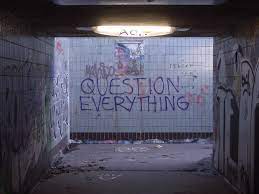
A few weeks ago, @paulaabowles shared an article on the Criminology Facebook page which posed the question of whether graffiti is art or crime. My response was art. And like all art, not all variations, interpretations or styles are for everyone. I know I can look at some graffiti and be quite taken aback at the brightness, boldness and creativity which shines through. I can also look at some and go ‘eugh’. However I have the same reactions to various classical and well-known pieces. My unrefined self does not get all the hype about a number of Picasso’s works (possibly all the ones I have seen). Nevertheless this is the beauty of art: it is down to individual taste.
So for me, I was fairly certain on my opinions and convictions towards graffiti as an art form, and as an example of the CJS further stigmatising and criminalisation young people’s behaviours: something I am certain we are all quite familiar with at this stage in our criminological journey. However those beliefs and informed views were put to the test over the Bank Holiday (BH) Weekend, and in all honesty I think I am still trying to get to grips with them. It is different now…. It happened to me.
Some context: as those of you who have read various blog posts from myself will no doubt remember, my partner runs a small kiosk near one of the Royal Parks in London. Often during the weekends and summer months, I provide an extra pair of hands to help clean and serve during the busier periods. And as a result of the pandemic, my partner finds themselves going from a team of 4 down to just them, and me when I am able to support: this was the case for the BH Weekend. Off we popped, down to London for a day of serving hotdogs, drinks and ice creams. However our day was thrown off course by some ‘ugly’ graffiti all over the front of the kiosk.
My partner was angry, and felt personally attacked (not really sure by who- but guess that’s besides the point). It is not the first time the kiosk has had graffiti on it, but it is the first time I have seen it in person and witnessed my partner’s response. Rather than starting our working day and opening up, we had to clean the graffiti off. My partner set to this: just over 3 hours later some of it has been removed, but so has some of the kiosk’s paint. It looks a mess. We are now at midday and we cannot afford to remain closed and keep cleaning. We have lost 3 hours of trading time to try and remove it, only to remove some of it and some of the kiosk’s paint. I am informed that we shall need to go to B&Q to try and find some graffiti remover: Capitalism wins again! But seeing my partner cleaning for 3 hours, losing the trading hours and for this end result: I can’t help but feel angry, frustrated and in want of some kind of justice. It’s different now… it happened to me.
But what realistically would justice be in the scenario? What do I actually want as a result? I have no idea. I asked my partner who said they just wanted them ‘not to do it’. It is private property, will my partner call the police? Nope: just nuisance annoying behaviour, but not much anyone can do about it. I feel less inclined to call it art. I like my partner’s use of ‘nuisance’ behaviour: it feels very accurate. I do not think my partner was targeted, I think it was available as a surface to be used for that individual or individuals to express themselves. But I am shaken in my previously held convictions. Shouldn’t something be done. We lost 3 hours of trading, the kiosk now needs to be repainted and we shall need to purchase some graffiti remover. All for some expression of ‘art’? Shouldn’t there be some kind of repercussion?
I am not too sure. I also know when this has happened before, and I have not been present to witness the impact it has on my partner and the kiosk I have been very nonchalant about it. ‘Oh dear, that’s frustrating’, ‘ah well, never mind’. But being there and seeing it: I view it differently. And this is something many of us come to grips with when considering hypothetical moral situations and larger ethical questions. We think we will act one way, but if it happened to us: it is quite possible our opinions, informed views and beliefs would change. I still think graffiti is art, but I am not so convinced in my previous assertation that it is not a crime…

Share this:


“Things you need to know about criminology”: A student perspective – Natalie Humphrey, 1st Year student

We are all living in very strange times, not sure when life will return to normal...but if you're thinking about studying criminology, here is some advice from those best placed to know!

The most important module to my understanding of criminology is: At the beginning of the year I believed the True Crime module to be the most important in understanding why crimes are caused. However, I quickly learned that these are not always the best source of information! The Science module is the basis of Criminology in the first year, laying down where it emerged, with Lombroso and Bertillon. I believe these figures are important to understand to grasp criminology.


The academic criminology book you must read:
The SAGE dictionary of Criminology has helped me with the basics of the subject. If there was something I became stuck on, this book would usually have an explanation for it. It also has examples which make it much easier to apply

The academic journal article you must read:
Attitudes towards the use of Racial/Ethical Profiling to Prevent Crime and Terrorism, by Johnson, D et al.(2011)
I came across this article when researching my Independant Project on racial stereotyping. It goes into the systematic racism that black people face and how disproportionate racism truly is. With more recently, the George Floyd case, this is still a very prominent article that is true to date

The criminology documentary you must watch:
I am a lover of many true crime documentaries and am always first to watch the new one that has been added to Netflix! The famous ones, such as Ted Bundy’s confession tapes, are fascinating to me, Bundy especially. However, there are many injustices that need to be addressed, not just the notorious serial killers. Jeffrey Epstein’s new documentary is very important in understanding sexual abuse that happened to over 200 underage girls. Athlete A also shows the sexual abuse of underage girls who were part of USA gymnastics.

The most important criminologist you must read:
Becker stood out to me this year as a very important figure. Understanding how young people are so heavily influenced by the labels people and society give, so much so it can shape their lives. Even older people can be easily labelled. This was quite surprising to me at the beginning of my studies.

Something criminological that fascinates me:
DNA and fingerprinting are fascinating to me. I find the science behind the discovery of what occurred at a crime scene and how they unpick it very interesting. This is definitely something I would like to study further.

The most surprising thing I know about criminology is:
It is a much wider subject than I first thought, it involves so much more than you could imagine. It questions everything in society.

The most important thing I've learnt from studying criminology is:
I have learned how unjust our criminal justice system is and how much, we as individuals, stereotype every person we meet. I’ve become more aware of this and have a better understanding of what needs to change.

The most pressing criminological problem facing society is:
Racism is a massive problem today. The racism black people face, especially in the US, is hard to understand as a white woman, but difficult to even contemplate people are treated in such ways. George Floyd, as I mentioned before, was killed because of his race. Problems like this would not happen to a white male, especially when his alleged crime was not violent. Young black men are labelled by the media to be seen as a thug and dangerous, causing many to be assumed of acts they just would not commit. Jane Elliott’s experiment on racism and eye colour from the 1970s is still a lesson that needs to be learned today!

When family and friends ask, I tell them criminology is:
Its more than it seems. Most just think it's about crime, which yes it is, but there is so much more to it. It is not one subject, it is so many put together. Science, psychology, sociology for example.

Share this:


“Things you need to know about criminology”: A student perspective – Mary Adams, recent Graduate and mature student.
We are all living in very strange times, not sure when life will return to normal...but if you're thinking about studying criminology, here is some advice from those best placed to know!

The most important module to my understanding of criminology is: I would have to say they are all equally important for understanding different aspects of Criminology. In first year I loved The Science of Crime which showed how things have evolved over time, and that what we now see as funny was actually cutting edge in its day. True Crime also makes you look beyond the sensational headlines and separate fact from fiction. In second year Crime & Justice gave a brilliant grounding in the inner workings, and failings, of the criminal justice system. And in third year, the Violence module explores personal and institutional violence, which is especially relevant in current times

The academic criminology book you must read: Becker’s Outsiders and Cohen’s Folk Devils and Moral Panics are a must. I also found Hopkins-Burke’s An Introduction to Criminological Theory and Newburn’s Criminology essential reading for first year as well as Finch & Fafinski’s Criminological Skills. For second year I recommend Davies, Croall & Tyrer’s Criminal Justice. If you choose the Violence module in third year you will be grateful for Curtin & Litke’s Institutional Violence. And don’t forget Foucault’s Discipline & Punish!

The academic journal article you must read:
There are so many excellent journal articles out there, it’s difficult to choose! Some of my favourites have been:
'Alphonse Bertillon & the measure of man' by Farebrother & Champkin;
'Bad Boys, Good Mothers & the ‘’Miracle’’ of Ritalin by Ilina Singh';
'Detainee Abuse & the Ethics of Psychology' by Kathryn French;
'Attachment, Masculinity & Self-control' by Hayslett-McCall & Bernard;
'Grenfell, Austerity & Institutional Violence' by Cooper & Whyte;
'The Phenomenology of Paid Killing' by Laurie Calhoun;
'A Utilitarian Argument Against Torture Interrogation of Terrorists' by J. Arrigo.

The criminology documentary you must watch:
Without a doubt, a must-see is the Panorama documentary London Tower Fire: Britain’s Shame. I would also highly recommend the movie The Stanford Prison Experiment

The most important criminologist you must read:
Of course you must read Lombroso, Beccaria & Bentham. I also enjoyed reading work by feminist criminologists like Pat Carlen, Carol Smart & Sandra Walklate. And of course, Angela Davis is a must!

Something criminological that fascinates me:
What fascinates me is how the powers that be, and a good proportion of the public, cannot seem to realise that social injustice is one of the major factors behind why people commit crime. And the fact that putting more & more people in prison is seen as a ‘good’ thing is mind-boggling!

The most surprising thing I know about criminology is:
The fact that it is such a diverse subject & incorporates so many other disciplines

The most important thing I've learnt from studying criminology is:
Question everything! Don’t take anything at face-value. Try to look beyond the attention grabbing headlines to find out the real story. Read, read, read!

The most pressing criminological problem facing society is:
Unfortunately I think there are many pressing problems facing society today, the main ones being social injustice & inequality, systemic racism, institutional violence, and mass incarceration


When family and friends ask, I tell them criminology is:
Some people joke that I’m learning how to be a criminal! Others think it’s all about locking people up! I tell them it’s all about looking at the mechanisms in-built in our society that disadvantage & discriminate against whole groups of people, and that, unless we are part of the rich & powerful elite, any one of us could find ourselves in the ‘out’ group at any time. I also tell them to stop reading The Daily Mail, vote Labour, and question everything!!
Share this:


Criminology 2020 AD

2020 will be a memorable year for a number of reasons. The big news of course was people across the world going into lockdown and staying home in order to stop the transmission of a coronavirus Covid-19. Suddenly we started counting; people infected, people in hospitals, people dead. The social agenda changed and our priorities altered overnight. During this time, we are trying to come to terms with a new social reality, going for walks, knitting, baking, learning something, reading or simply surviving, hoping to see the end of something so unprecedented.
People are still observing physical distancing, and everything feels so different from the days we were discussing future developments and holiday plans. During the last days before lockdown we (myself and @paulaabowles) were invited to the local radio by April Dawn to talk about, what else, but criminology. In that interview we revealed that the course started 20 years ago and for that reason we shall be having a big party inviting prospective, current and old students together to mark this little milestone. Suffice to say, that did not happen but the thought of celebrating and identifying the path of the programme is very much alive. I have written before about the need to celebrate and the contributions our graduates make to the local, regional and national market. Many of whom have become incredibly successful professionals in the Criminal Justice System.
On this entry I shall stand on something different; the contribution of criminology to professional conduct, social sciences and academia. Back in the 1990s Stan Cohen, wrote the seminal Against Criminology, a vibrant collection of essays, that identified the complexity of issues that once upon a time were identified as radical. Consider an academic in the 1960s imagining a model that addresses the issue of gender equality and exclusion; in some ways things may not have changed as much as expected, but feminism has entered the ontology of social science.
Criminology as a discipline did not speak against the atrocities of the Nazi genocide, like many other disciplines; this is a shame which consecutive generations of colleagues since tried to address and explain. It was in the 1960s that criminology entered adulthood and embraced one of its more fundamental principles. As a theoretical discipline, which people outside academia, thought was about reading criminal minds or counting crime trends only. The discipline, (if it is a discipline) evolved in a way to bring a critical dimension to law and order. This was something more than the original understanding of crime and criminal behaviour and it is deemed significant, because for the first time we recognised that crime does not happen in a social vacuum. The objectives evolved, to introduce scepticism in the order of how systems work and to challenge established views.
Since then, and through a series of events nationally and internationally, criminology is forging a way of critical reflection of social realities and professional practices. We do not have to simply expect a society with less crime, but a society with more fairness and equality for all. The responsibilities of those in position of power and authority is not to use and abuse it in order to gain against public interest. Consider the current pandemic, and the mass losses of human life. If this was preventable, even in the slightest, is there negligence? If people were left unable to defend themselves is that criminal? Surely these are questions criminology asks and this is why regardless of the time and the circumstances there will always be time for criminology to raise these, and many more questions.
Share this:


RTFQ and the real world

The other day I had occasion to contact Her Majesty’s Revenue and Customs (HMRC) and I did this via a web chat. My query was simply about seeking an explanation regarding tax relief. I compiled my question starting off with ‘good morning, I’ve had my tax code updated and am a little confused.’ I then went on to explain in a few short words where the confusion lay.
The response back was quite familiar, it would be to those that use web chat and quite expected, ‘Thank you for your patience, the next available advisor will be with you shortly. You are 7 in the queue’. Little was I to know at this stage, that my patience was about to be severely tested, not by the waiting time but by the advisor who, to avoid any embarrassment to the real person, we will simply call ‘Jo’. After eight minutes of waiting (not a particularly long time) I was through to Jo and greeted with a request for my details for security.
Once supplied, I was told that Jo would be looking at my record. Jo then responded by telling me that the adjustment in my tax code was due to an underpayment from the 18/19 tax year, explained how much it was and the fact it would be collected through the tax code. Now I should point out, this was not the question I was asking, RTFQ, I wanted to know about an aspect of tax relief and just to add to the confusion, the HMRC website tells me I do not owe any tax from the 18/19 year. The latter makes sense to me because I paid off the amount owed in 19/20. A little agitated I responded with my question again trying to make it a little clearer, as if it wasn’t clear enough. I added to this by asking if my assumptions were perhaps incorrect and if so could Jo tell me when the rules had changed. The response was ‘one moment’. Four minutes later I asked, ‘are you still there?’, the terse response was, ‘yeah, i (sic) am looking through the guidance for you’. This does not bode well!
Trying to be helpful, I responded by explaining the tax relief I received last year, and the fact that I ought to receive it this year, unless of course the rules have changed the response, ‘one moment please’. To be followed by ‘the 480 is from 480.00/40% = 1200 so its at 40%’. Now I’m no Trigger (see Only Fools and Horses) but this mathematical genius has me somewhat perplexed, so I pushed a little further to see if I could get an explanation of this. I ended up with ‘480.00/40% =1200 which is 40% of the 480’.
My patience wearing a little thin now, I asked to speak to a supervisor only to be told there was no supervisor available and ‘They will be telling you the same thing, you can call in to speak to someone else if you want’. So, I can hang up on the web chat, start another and in the lottery of numpties, I will take my chance that I might not get another Jo to answer my query, I think not. To add insult to injury, Jo had just previous to this provided me with an answer that was in fact the basis of my question, we seemed to have gone full circle (RTFQ). In desperation and trying to prevent my blood pressure rising further I tried to draw this to a close by pointing out the problem as I see it, prefixing this with, ‘I’m not trying to be difficult. I just want an explanation as to why …’. I followed this up with, ‘If you cannot answer that, then please just say so’. The response, ‘I have explained to you the best way i (sic) can Stephen’. Now that’s me told! Best not push it further.
I recall first hearing the term RTFQ when I was about to sit a promotion exam. RTFQ the invigilator shouted, before gazing upon my quizzical expression, ‘read the f*** question’ he explained. I frequently remind my students of this mantra before they sit exams, it is one that serves us well, not just at university when sitting exams or completing assignments, but in life. Although I’m not sure that RTFQ is something that Jo needs to prioritise whilst tripping through the wonderment of mathematical equations.
Or maybe, just maybe, it is a new tactic by HMRC to limit enquiries. I certainly won’t be calling back in a hurry.

 Thoughts from the criminology team