
Home » policing (Page 5)
Category Archives: policing

For the Trayvons, Since Blackface is a weapon #BlackenAsiaWithLove
2 April 2012 Hanoi
The real Blackface that’s the weapon is the minstrel show,
The Blackface that labeled me out,
Showing people a side of me never seen
But projected onto me,
Such that when so many see my own Blackface,
They see that other
They see that other one.
The one told to them over their kitchen tables.
The one sold to them at the movie show –
Hoop dreams
Baller creams
Holla dolla-dolla bill, y’all.
‘Cause we also know that there are real Black faces
That see those minstrel black faces
Staring them back in the face,
So blinded by the light that they cannot see their own.
That’s one side of Trayvon’s story-
Then we all know how precious of a story this really is
That a mother lost her darling son
That a grandmother lost the one who used to babysit for the other gran’kids
That the little cousins are still unclear about where that dear boy is.
Blackface means that as soon as your voice starts to drop
As soon as that fuzzy hair starts to sprout all over
As soon as your knock knees start to look bold
You’re no longer a kid
Your childhood is lost
And you must learn to act in ways that would make most sane adults stumble
You learn how not to offend white people
How to speak in a soft voice
Or perish
How to walk slowly, with an unassuming gate
Lest you appear as a threat
With the knowledge that any of these threatened folks can annihilate you
Wipe you from this earth
Where only a generation or two ago
Men hanged like tree-ripened fruit
Aged on a rope in an instant
From kid prankster
To adult menace in a matter of moments
We’ve all seen that photo of one of America’s last lynchings
Not nearly the first
Not nearly the haste, carnage and human waste that made people cease.
In 1930, not in anywhere near the deep south
Not from one of our southern willows that sway
But in the mid-west
In Indiana, less than a 150 miles from where Michael Jackson was born
And less than 30 years before he came to be,
So that years later when he sings about hate in our multicultural hearts
Or smashes a window in the video
Enraged with anger
Mad from hypocrisy
The sort that we all know all too well
The gap between the promise and dream.
The reality versus the verses etched all around the capital,
Versus the slave hands that laid those very stones.
The women folk whose very gender made them slaves
And the Black women whose faces made them chattel –
But exploitation of a sexual kind
Yes, we all know too well
What a Blackface can do
How a Blackface can scare you
Even when it’s yours.
So, we now the rage Michael felt,
The hate he seemed to have fought though lost,
Internalized but never giving up.
Yet he was born into a world that hated Blackfaces
Where his was a real threat,
Lest he learn to sing and dance.
The hate is real life minstrelsy.
It’s that same song and dance that we as boys learn to perform
And I am tired of dancing
Trying to make nice when people approach me as cold as ice
Smiling and trying to behave
While all their body language tells me that they are scared to death of me
And that they see my Blackface as chilling.
We all know that all the Trayvons in this place
Learn from an age too early to have to teach kids such harsh cruelties of life
That by 13, he could be nearly 6 feet tall and that factor alone endangers his life
Were he to play sports and his body develop.
He would stand no chance of being treated like anything other than a gladiator.
So it’s even more ironic that Trayvon was a scrawny boy they called “Slim”
Seems there’s no real way to win
Though I think that if we as a people can get through this
If we as a nation can have this conversation
The one mothers like Trayvon’s have with their sons
For we all know how people react to Black
Share this:


Nothing is black and white: the intransigence of fools

One thing we criminologists know is that it is impossible to prevent crime. Many a great criminologist has tried to theorise why crime occurs (my shelves are full of their books) and whilst almost all have made valuable contributions to our understanding of crime, it is an unfortunate fact that crime continues. But then crime itself is difficult to define and has its basis in time, power, opportunity and social discourses. What is criminal today will not be criminal tomorrow and what is important today will lose its importance tomorrow, in favour of some new or maybe, old, manifestation of that elusive concept we call crime. Perhaps we should we grateful, for in the industry of crime lies mass employment. From criminologists to those that attempt to stem the tide of crime, those that deal with its aftermath and those that report on it or write about it (real or fictional), there is money to be made. If we stopped crime, we would all be out of a job.
Most, if not all of us have at some stage in our lives committed some sort of crime. Most crimes will fortunately be almost inconsequential, maybe a flouting of a law such as driving a car over the speed limit. Other crimes will be more serious and whilst some criminals will be brought to book most are not. The inconsequential crime of driving over the speed limit, albeit perhaps due to a lapse of concentration, can have dire consequences. There is clear evidence that the survival rates of pedestrians struck by cars has a direct correlation with speed. So the inconsequential becomes the consequential, the ephemerality of crime, the reality.
When we think of crime, we often have little concept of its reality. We apply labels and our own rules to that we know and find acceptable. Speeding is not criminal, well not generally, unless it’s a boy racer. Drink driving is a no-no, but we might take it to the alcohol limit when having a drink. Drugs (the criminalised type) are ok, well some are and some aren’t, it all depends on your viewpoint. Drugs (the prescription type) are ok, even if they impair our ability to drive. Alcohol, well that’s absolutely ok, even if the abuse of it leads to more deaths than drugs and the consequences of that misuse has a really significant impact on the NHS. Tax evasion, illegal if you get caught, ok if you don’t. A bit like fraud really, ok if you can get away with it but then maybe not, if the victim is a little old lady or me. Assault, well it depends on the seriousness and the situation and probably the victim. Robbery, not good to go into an off licence with a gun and threaten the shopkeeper, bullying if you take lunch money off the lad outside the school gates.
Criminals don’t walk around with a label that says ‘criminal’ and even if they did, there would have to be a method of bestowing the label in an instance. Nonsense of course, only a fool would suggest such a thing. What about the people that committed a crime but have changed their ways I hear my colleagues ask? What about those that haven’t, or have and then relapse, I reply.
Nothing is black and white; the concept of crime is elusive, as are criminals (both by concept and nature). And yet we happily castigate those that attempt to uphold the law on our behalf and in doing so view crime and criminals as clear concepts. Each has a clear label, each is clearly identifiable, so how can they get it so wrong so many times. Whilst criticising those that attempt, and let’s be quite honest, fail most of the time to stem this tide of crime, perhaps we might also think about the impossibility of the job in hand. That’s not to say that a lot of the criticisms are not justified, nor that things should not change, but if we only examine all that is wrong, we lose sight of reality and only an intransigent fool would continue an argument that sees the problems and solutions as simply black and white.
Share this:


#CriminologyBookClub: The Perplexing Theft of the Jewel in the Crown

As you know from our last #CriminologyBookClub entry a small group of us decided the best way to thrive in lockdown was to seek solace in reading and talking about books. Building on on what has quickly become standard practice, we’ve decided to continue with all seven bloggers contributing! Our fourth book was chosen by all of us (unanimously) after we fell in love with the first instalment. Without more ado, let’s see why we all adore Inspector Chopra (retired) et al.:
Another great edition to the Baby Ganesh agency series. After thoroughly enjoying the first book, I was slightly sceptical that book 2 would bring me the same level of excitement as the former. I was pleasantly surprised! The Perplexing Theft of the Jewel in the Crown, will take you on a picturesque journey across Mumbai. The story definitely pumps up the pace giving the reader more mystery and excitement. We now get more of an insight into characters such as inspector Chopra (retired) and his devoted wife Poppy. We also get to meet some new characters such as the loveable young boy Irfan, and of course the star of the show Ganesh, Chopra’s mysterious elephant. This novel has mystery within mystery, humour, suspense and some history, which is a great combination for anyone who wants to have an enjoyable read.
@svr2727

In the second instalment of detective Chopra’s detective (retired) adventures he is investigating the disappearance of the infamous Koh-i-noor diamond. The mythical gem disappears from a well-guarded place putting a strain on Anglo-Indian relations. In the midst of an international incident, the retired inspector is trying to make sense of the case with his usual crew and some new additions. In this instalment of the genre, the cultural clash becomes more obvious, with the main character trying to make sense of the colonial past and his feelings about the imprint it left behind. The sidekick elephant remains youthful, impulsive and at times petulant advancing him from a human child to a moody teenager. The case comes with some twists and turns, but the most interesting part is the way the main characters develop, especially in the face of some interesting sub-plots
@manosdaskalou
I am usually, very critical, of everything I read, even more so of books I love. However, with Inspector Chopra et al., I am completely missing my critical faculties. This book, like the first, is warm, colourful and welcoming. It has moments of delightful humour (unicycles and giant birthday cake), pathos (burns and a comforting trunk) to high drama (a missing child and pachyderm). Throughout, I didn’t want to read too much at any sitting, but that was only because I didn’t want to say goodbye to Vaseem Khan’s wonderful characters, even if only for a short while…
@paulaabowles
It was a pleasure to read the second book of the Inspector Chopra series. Yes, sometimes the characters go through some difficult times, the extreme inequalities between the rich and poor are made clear and Britain’s infamous colonial past (and present) plays a significant part of the plot, yet the book remains a heart-warming and up-beat read. The current character developments and introduction of new character Irfan is wonderfully done. Cannot wait to read the next book in the series!
@haleysread
One of the reasons for critiquing a book is to provide a balanced view for would be readers. An almost impossible task in the case of Vaseem Khan’s second Baby Ganesh Agency Investigation. Lost in a colourful world, and swept along with the intrigue of the plot and multiple sub plots involving both delightful and dark characters, the will to find a crumb of negativity is quickly broken. You know this is not real and, yet it could be, you know that some of the things that are portrayed are awful, but they just add to the narrative and you know and really hope that when the baby elephant Ganesha is in trouble, it will all work out fine, as it should. Knowing these things, rather than detracting from the need to quickly get to the end, just add to the need to turn page after page. Willpower is needed to avoid finishing the book in one hit. Rarely can I say that once again I finished a book and sat back with a feeling of inner warmth and a smile on my face. If there is anything negative to say about the book, well it was all over far too quickly.
@5teveh
The second Inspector Chopra book is even more thrilling than the first! As I read it I felt as though I genuinely knew the characters and I found myself worrying about them and hoping things would resolve for them. The book deals with some serious themes alongside some laugh out loud funny moments and I couldn’t put it down. Can’t wait to read the third instalment!
@saffrongarside
I have always found that the rule for sequels in film is: they are never a good as the original/first. Now, there are exceptions to the rule, however these for me are few and far between. However, when it comes to literature I have found that the sequels are as good if not better than the original- this is the rule. And my favourite writers are ones who have created a literature series (or multiple): with each book getting better and better. The Perplexing Theft of the Jewel in the Crown (Chopra 2.0) by Vaseem Khan has maintained my rule for literature and sequels! Hurray! After the explosive first instalment where we are introduced to Inspector Chopra, Poppy and Baby Ganesha, the pressure was well and truly on for the second book to deliver. And By Joe! Deliver it did! Fast paced, with multiple side-stories (which in all fairness are more important that the theft of the crown), reinforce all the emotion you felt for the characters in the first book and makes you open your heart to little Irfan! Excellent read, beautiful characters, humorous plots! Roll on book number 3!
@jesjames50

Share this:


A racist and no solution

I am a white, middle class some might say (well my students anyway), ageing, male. I wasn’t always middle class, I’m from working class stock. I’m a university lecturer now but wasn’t always. I spent 30 years in the police service in a small, ethnically diverse, county in England. I didn’t consider myself a racist when I was in the police service and I don’t consider myself a racist now. Nobody has called me a racist to my face, so why the title? It’s how I’m constantly labelled. Every time someone says the police are racist or the police are institutionally racist, they are stating that about me. Just because I have left the police organisation doesn’t change who I am, my beliefs or my values. So, if the police are racist, then by default, I must be.
I’m not suggesting that some police officers are not racist, of course some are. Nor am I denying that there has been and probably still is some form of institutional racism within the police service, perhaps as a whole or perhaps at a more localised or departmental level. But bad apples and poorly thought-out, naïve or even reckless policies, strategies and procedures are not enough to explain what is going on in policing and policing of ethnic minority groups in particular. I’m talking about policing in this country, not across the pond where policing is very different in so many ways that it is hard to even suggest a realistic comparison. That of course is the first problem, what happens in the United States of America is immediately translated into what happens here.
As a lecturer, I constantly hear from students and read students’ work about the racist and brutal police, often interchanging commentary from the United States with commentary here in the United Kingdom, whilst also failing to recognise that there is different policing in Scotland and Northern Ireland. Institutional racism, as defined by Macpherson, is now part of the lexicon, but it no longer has the meaning Macpherson gave it, it is now just another way of saying the police are and every police officer is racist. Some students on finding out that I was a police officer show an instant dislike and distrust of me and sometimes it can take the whole three years to gain their trust, if at all. Students have been known to request a different dissertation supervisor, despite the fact that their research subject is in policing. This is not a complaint, just a statement of facts, painful as it is.
As I try to make sense of it all, I have so many unanswered questions. What is exactly going on? What is causing this conflict between the police and ethnic minority groups? Why is there a conflict, why is there distrust? More importantly, how can it be fixed? Some of the answers may lay in what the police are asked to do, or at least think they are asked to do. Reiner suggests that policing is about regulating social conflict, but which conflict and whose conflict is it? Other authors have suggested that the police are simply a means to allow the rich and privileged to maintain power. There may be some merit in the argument, but most policing seems to take place in areas of deprivation where the disadvantaged are committing crimes against the disadvantaged. The rich and powerful of course commit crimes but they are nowhere near as tangible or easy to deal with. One the problems might be that the rich and powerful are not particularly visible to policing but the disadvantaged are.
Maybe some of the answers lay in notions of stereotyping, sometimes even unconsciously. Experience or narratives of experiences cause a wariness, even a different stance to one people might normally assume. Being thumped on the nose by a drunk, does tend to make a person wary of the next drunk they encounter. So, could stereotyping be a problem on both sides of the divide? My dissertation student that didn’t want me as a supervisor was later to reveal experiences of racist abuse aimed at the police officers she went out on patrol with. Policing is dominated by white males and despite recruitment drives to address the ethnicity gap, this really hasn’t been that successful. If it was meant to help solve a problem, it hasn’t.
I get the sense though that the problem is much deeper routed than policing. Policing and the problems of policing is just a sub plot in a much wider issue of a divided society and one that is in constant conflict with itself. If the police are guilty of racism, then it is society that has caused this. Our society’s values, our society’s beliefs. An unequal society where the poorest suffer the most and the rich get richer regardless. A society where we are all equal but only because someone somewhere said so at some time, it is not reality. I think of Merton’s ‘American Dream’, I don’t buy into the whole concept, but there is something about not having opportunities, equally when I think of Lea and Young and the concept of relative deprivation, whilst not explaining all crime, it has some merit in that notion that the disenfranchised have no voice.
As I write this I am conscious that I have commentated on a very emotive subject particularly at this time. As I watch the events unfold in America, I fear the worst, action followed by reaction. Both becoming increasingly violent and I see the possibility of it happening in this country. I fear that the term ‘police racism’ will become another convenient label. Convenient in the sense that the problems are seen solely as that of policing. If we examine it through a different lens though, we might just find that policing is simply part of the whole rotten tree, society. Fix society and you fix policing. If the label racist fits, it fits the society we live in.

Share this:


Deniable racism: ‘I’m alright Jack’

Photograph: Bill Orchard/Rex/Shutterstock
I heard on the news a week or so ago that an investigation by ITV news had found that the majority of NHS Trusts have not completed full risk assessments on BAME staff. Considering that BAME groups are impacted disproportionately by COVID-19 I have to ask why? And, probably more importantly, now that the issue has been raised, what are the government doing to make sure that the risk assessments are carried out? Since I heard about it I’ve seen no response, so I guess I can answer my own question ‘nothing’.
But then maybe I shouldn’t be surprised, I read an article on Racism and the Rule of Law and you can’t but be appalled by the number of recommendations from various inquiries and reviews that have failed to be acted upon. The problem is that the action requires more than just the eloquently spoken or written word; to put it very bluntly and maybe crudely, ‘put your money where your mouth is’. It is easy to state that this is wrong or that is wrong in our institutions, the term ‘institutional racism’ trots off the tongue, seized upon by the wronged and more worryingly banded about by the societal racists of the elite who are only too willing to blame someone else. In thinking about this I wonder whether when we use the term racism, we are all talking the same language. The ‘deniable’ racism is easy to identify, ‘we don’t use that sort of language anymore’, ‘we no longer put those signs in our windows’, we have laws that say you can’t act in that way. ‘Actually, I’m not a racist’. But the statistics don’t lie, they can be bent, manipulated to some extent to favour one argument or another but there are some very basic inescapable facts, BAME groups are over represented in the wrong areas of our society and under represented in the right areas. And most of this I dare say does not owe itself to ‘deniable’ racism, it’s more than that, it’s embedded in our society, it’s not institutional racism, it’s societal racism and it’s hidden. The problem with societal racism is that we only see the positive attributes of people that are like us and we promote those that excel in showing those attributes. Hence, we have the elite in business and government that are not ‘deniable’ racists but nonetheless are the epitome of, and lead a racist society.
I want to return to the idea of ‘putting your money where your mouth is’ mantra. They say money makes the world go around, I’m not sure that is entirely true, but it certainly goes a long way to getting things done and conversely the lack of it ensures that nothing happens or in some cases that good things come to an end. A prime example is the austerity measures put in place in 2010 that saw budgets to government agencies and funding to councils cut significantly. Those that suffered were the most deprived. Even worse, was the fact that funding for youth projects in inner cities suffered and those initiatives that were aimed at reducing violent crime amongst young people ground to a halt. Policing saw huge cuts and with it the withdrawal of neighbourhood policing. This link to communities was severed and any good work that was going on was quickly undone. That doesn’t explain all that is wrong with policing, but it certainly doesn’t help in building bridges. Who in their right mind would embark upon fiscal policies with no regard to such outcomes, our elected government did. If we think now about the so-called return to normality post the Covid-19 pandemic, which caring company or institution would suggest that the most impacted by the virus should continue or return to work, or study, or any other activity, without considering their specific risks and needs? Probably those that have more concern for the bottom line than peoples’ lives. ‘I’m alright Jack’ comes to mind or at least I want to make sure I am.
In thinking about policies, procedures, risk assessments or recommendations, managers have an eye to finance. In the NHS, the day to day business still has to happen, in policing, incidents still need to be attended to, so where is the money to do the extra? Everything comes at a cost and every recommendation in every review will cost something. The NHS risk assessments will cost money. The question is whether government and all of us in society really believe that ‘black lives matter’. If we do, then then it’s time to acknowledge the type of society we live in and who we really are and for government to ‘put the money where its mouth is’ so that the recommendations can be acted on. Or of course, we could just have another review and ‘Jack’ will do very nicely out of that as well thank you.
Share this:

Technology and Learning: A baby and the bathwater moment

I recently shared some thoughts about the problems with technology and working from home. I suppose the nub of the matter was twofold firstly, if I have problems with technology, why would this not also impact some of my colleagues and students, thus limiting what can be delivered online. Secondly, whatever is delivered online does not suit everyone and whilst as educators we need to adapt to circumstances and new ways of working, we should be cognisant that simply imposing the new ways on students does not always suit what they want or more importantly, what they need. If we acknowledge that everyone learns in different ways at different times, then a one size fits all approach is not delivering anything like a premium learning environment.
In writing my previous blog, I also started to think about how difficult it is to be motivated whilst working from home and how my experiences have at least partially prepared me for this. I say partially because past experiences did not encompass being in lockdown.
When I was 15, I returned from overseas and went to the local college to study for my ‘O’ levels (GCSE now) rather than a school. It was far more relaxed in respect of attending classes. This was a time when at 16 people could leave school, so the college was full of students who were 16 and essentially independent from the school regime. I turned 16 whilst at college. I remember not going to every class, sometimes perhaps because I preferred to spend time playing football in the sunshine and at other times because there was some casual work somewhere that would earn me a bit of money. There were no distractions such as computers and mobile phones so actually attending college was in the main better than being bored outside of it. That was one incentive to engage in my education, I had others such as friends being at college but probably above all I recognised I needed some qualifications. I think my parents might also have been a little peeved if I’d not done anything. I had a structure to my life and a major part of it was getting up in the morning and attending college on my bicycle; rain or shine, for the most part I was there.
At an early point in my policing career, I decided I would like to take the promotion exam to sergeant. An annual exam which incorporated, as I recall, three two-hour papers, one relating to crime, one traffic and one general police duties. An awful lot of legislation and procedure was to be tested and all of it could be found in the regularly updated promotion manual. A tome, if ever there was one, divided into various sections that covered everything a would-be sergeant needed to know and in addition, legislation for the inspector’s exam. Years went by with well intentioned attempts to study, followed by a lack of action. I just couldn’t get my head round how to do this, despite trying to answer the questions in the promotion section of the Police Review magazine.
I can’t remember exactly when it was but there was an announcement that the promotion process was to change, the exam which gave you a ticket to a promotion board, was to be replaced with an assessment centre. This new way involved not only an exam, but scenario based assessments. That year I decided I really needed to pass the promotion exam to avoid the new process, so I purchased access to a correspondence course. It wasn’t cheap, and it was before computers as we know them. I received a plethora of books each divided up into various chapters and each requiring me to answer questions that were then sent by mail to someone to mark and provide feedback. What this required was organisation and commitment. I was lucky, I was working in a very disciplined job, organisation and commitment were to some extent, if I set my mind to it, second nature. And two added incentives, an easier passage to promotion as I saw it, and I’d paid out a lot of money that I wasn’t going to waste. That year I passed the sergeants and the inspector’s exam, two in the bank although it was still some time before I was promoted.
When I embarked on my degree, I had to apply the same self-discipline. Despite it being part-time, attendance for lectures and seminars was difficult, there was no way I could attend everything whilst doing shift work, but I tried my best. I even had to take time out because I was involved in a major investigation that took me away from home for 6 months. By this time, I had a very young family, so every assignment was a challenge to complete and there was no online Google access to papers and blogs and the like. It was library based work, sometimes the university library, other times local libraries and often late nights in the office at work. What it needed was self-discipline, commitment and a structure to each day, well as best as possible given the demands of shift work, major enquiries and long working hours. Every time I faltered I reminded myself that I’d done a lot of work, put a lot into this and I wasn’t about to throw all of that away.
When I embarked on my Ph.D. my commitment and self-discipline was sorely tested at times. Tragedy and life altering events pushed me to the limits, but I managed to maintain that commitment and self-discipline, sometimes aided by others at work who tried to make things a little easier. The office at work provided space for both my day job and my Ph.D. The two morphing into one at times.
Why tell you all of this, well its simply this. I ask myself what makes a student engage in their course and more importantly, what inhibits them? Firstly, they need self-discipline. When I went to college, there were a number of things that ensured I would turn up; my parents wouldn’t have countenanced my staying in bed or around the house all day; day time telly was rubbish (only three channels) and there wasn’t an awful lot else to do. My friends were either at school, at college or working and there were no mobile phones, so contact was either at college or in the evenings and weekends. Learning could only be done at college, no recorded lectures or Collaborate or e-books. I also recognised I needed qualifications to get on in life.
When I embarked on my promotion exams I recognised the need to have a structure to my learning. This was partly provided by the correspondence course and the way it was set up and partly provided by discipline I learnt in my work. It did though need a structure provided by the course and an incentive to do it at that moment in time.
My degree also needed self-discipline, nobody chased me to turn up and nobody chased me for assignments. Not being there, meant missing out on discussions and learning from other students, not just the lecturers. I’d paid for this as well so another incentive to succeed, this was not some loan to be possibly paid in the future, this was real money, my money up front. And the more I did the more determined I became that I wasn’t going to waste my efforts.
Anyone will tell you that a Ph.D. is challenging and that for the most part, the achievement is not about knowledge or brilliance but about gritted determination to complete it. That determination requires self-discipline and that self-discipline for me was aided by tagging the Ph.D. onto my job. My office at work was my sanctuary, it was easier to stop working on one thing and then seamlessly move onto writing up the Ph.D. I had a structure to my studying and my work.
So, I begin to wonder, do recorded lectures, Collaborate, ebooks, the internet, social media and a plethora of other advances really help students? Why get up in the morning to attend lectures if you can watch a recorded version of it later, ‘a must get round to it moment’? Why bother to go to the library when you can Google stuff and read, well at least skim’ e-books? Why bother with classes when you can chat with your mates and so called ‘friends’ on Facebook or the plethora of other social media apps. There is no financial incentive when the payment for the course is made on your behalf and whilst you have a massive debt on paper, the reality is that you will never pay it back (If you don’t believe me, have a look at the Martin Lewis website). There are no parents to get you up in the morning or to scorn your lethargy, at worst any failure will be chided sometime in the misty future. All that students can rely on is self-discipline and their own belief in commitment. A hard ask when you don’t have all the anchors you had at school and college. I was lucky, I grew up in an era of much fewer distractions. I was employed in a job that required a high degree of disciple, so self-discipline was much easier. I was also a mature student so could call on a vast amount of experience.
I’ll leave you with a thought. The year 1840 saw the introduction of the first stamp, the Penny Black. Despite the advent of emails, texts and the internet, nearly two hundred years later, Royal Mail are still delivering letters and packages. Whilst you can get your bank statements online, you can still have paper copies. Whilst you can read books on Kindle and other contraptions, book stores still exist, and hard copy books are still sold by the millions. Whilst, music can now be delivered in so many different electronic formats, there is still a clamour for vinyl records. Whilst films are available at home in so many different ways, people still go to see films at the cinema.
Technology is wonderful and is a great enabler in so many ways. That doesn’t give us licence though to ignore the value of what by some may be seen as ‘old fashioned, stick in the mud’ structures, processes and transactions. Sometimes things are the way they are for a reason, change them and there are at times problematic unintended consequences. Making changes through the use of technology and ignoring tried and trusted methods might actually be akin to ‘throwing out the baby with the bathwater’.
Share this:


“My Favourite Things”: 5teveh

My favourite TV show - Probably Ashes to Ashes. I enjoyed Life on Mars but Ashes to Ashes was more my era

My favourite place to go - Newmarket Race course. We had our wedding reception there and we go back regularly for the races

My favourite city - Rome. Every corner turned is another surprise. The architecture and history is just amazing

My favourite thing to do in my free time - Mend clocks. Grandfather clocks can tell you so much about history

My favourite athlete/sports personality - Ian Wright. He just seems so down to earth

My favourite actor - Tom Hanks. He is an amazing actor and plays some fantastic roles. Long live Forrest Gump

My favourite author - It has to be Stephen Hawking. I read Brief Answers to the Big Questions (2018) and it just spoke to me. Having read it I thought ‘I get it’ even though Stephen Hawking points out I’m wasting my time thinking about what was in existence before the big bang

My favourite drink - Probably coffee. Surprised, well its what I drink most of the time. I do like a glass of red wine and certainly gin and tonic. In fact, the more of those I have, the more I consider gin and tonic to be my favourite tipple.

My favourite food - It has to be roast chicken dinner. My wife makes the best roast potatoes ever. Give me a roast anytime

My favourite place to eat - Funnily enough at home. I’ve been lucky enough to eat in places all over the world, South Africa, Hong Kong, Mauritius, West Indies, and Europe (too many places to name). I’ve eaten in Balti houses in Birmingham and even a Michelin starred restaurant, but you really can’t beat just being at home with family and friends

I like people who - I’m not really a people person. But if I have to choose, I like people that are genuine and have integrity. I’ve met a lot of people in my time from all walks of life and I get on with most, but there are not that many I think are genuine and have integrity.

I don’t like it when people - Are disingenuous. I don’t like people that use others to their own ends.

My favourite book - See above re: favourite author, but I have to say, The Circle runs a close second. It really resonates.

My favourite book character - Probably Paddington Bear. I get the hard stare from him.

My favourite film - Jungle Book, there's nothing like the ‘bear necessities of life’

My favourite poem - If by Rudyard Kipling. I think the poem speaks for itself, it’s worth returning to occasionally as a reminder

My favourite artist/band - Queen – Freddie Mercury. What a band and what a talent. I never managed to see them live with Freddie although I’ve seen them twice with Adam Lambert (brilliant singer). My friend introduced Queen to me in 1977, we listened to Brighton Rock on his dad’s hi-fi (that’s a music system invented long after the gramophone but before iPhone). I bought my first single shortly after,

My favourite song - Love of my Life. A Queen classic but I must admit Bridge over Troubled Water by Simon and Garfunkel runs a close second.

My favourite art - Impressionist painting is probably my favourite. Monet’s Impression Sunrise has a life about it that is difficult to describe.

My favourite person from history - Mother Theresa I think. Its difficult to tell because my only knowledge of historic people is what I’ve read or heard about in the news or history books. Mother Theresa stands out because she was from all accounts a loving caring person and had little herself.

Share this:


A utilitarian argument for human rights
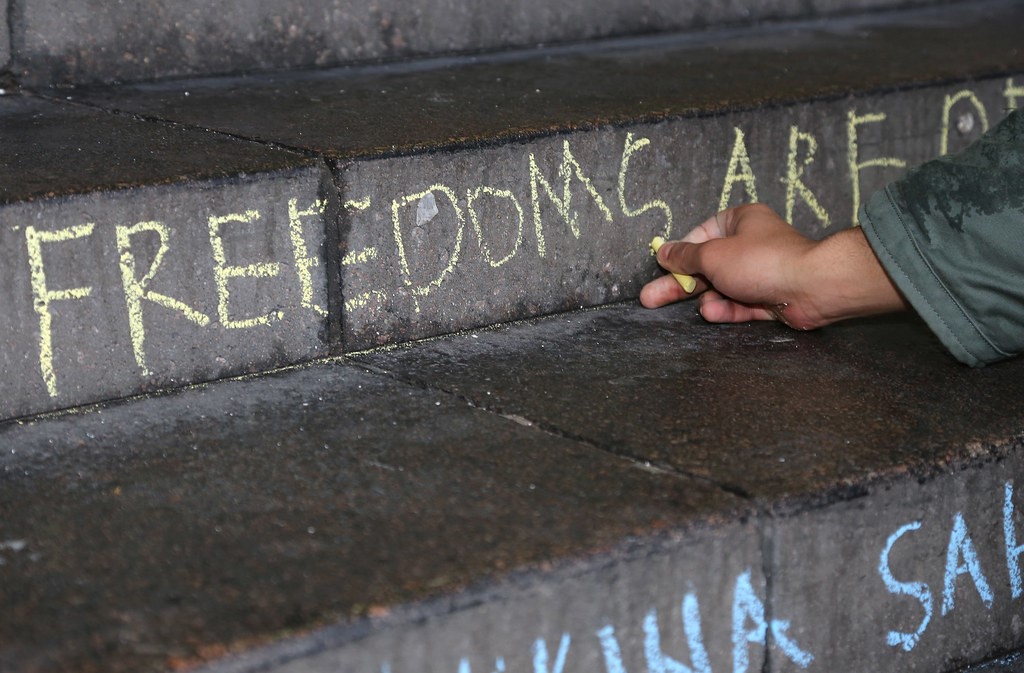
I am minded to write something about both utilitarianism and human rights as a consequence of watching the news the other night. Two separate but linked news articles struck a chord. The first about police being heavy handed in applying the emergency laws surrounding the restricting of movement and the second about the emergency laws being passed to suspend jury trials in Scotland. Both have an impact in respect of human rights.
Turning to the first, the complaint is that the police across England and Wales have in some cases been disproportionate in their dealing with the public when attempting to manage the restrictions around movement. The example shown was the uploading of videos onto social media depicting people walking around the Peak District. The captions simply asked whether the trip was necessary.
The government guidance is pretty clear regarding staying at home but perhaps is a little less clear about travelling to a location to partake in exercise. I must admit though I am a little perplexed at the accusation of heavy handedness. The Human Rights Act 1998 provides for a right to life and it has been held that the government and its agencies have a positive obligation to facilitate this. There are of course some caveats as it would be almost impossible to ensure this in all circumstances. There is no doubt that people are dying from Covid-19. The approach to enforce social distancing, presently predominantly through information and the reliance on responsibility and good will, seems to be the only current viable approach to combating this killer. The curtailment of some Human Rights is it seems necessary to ensure the greater good and to preserve life. The latter of course is a primary duty that most police officers would recognise. The greater good for the many is it seems compatible with a key principle of human rights.
Turning to the second news article. The right to a fair trial is a fundamental human right. The suspension of a jury may be against longstanding legal principles but, the Human Rights Act does not specify that the trial should be before a jury, merely an independent judge. The argument could be made that trials should be suspended but this might be impinging on rights in respect of defendants being held in custody awaiting trial. The convening of a jury would flout the rationale behind current legislation in place to enforce social distancing and would quite simply be contrary to obligations to protect life.
The notions of utilitarianism are often viewed as in conflict with individual rights and therefore the Human Rights Act. Many see the two as incompatible, one relates to the many and the other the individual. This argument though fails to have vision, it is not truly consequentialist. Human Rights are utilitarian in their very nature. Is it not to the greater good that people have a right to life, a right to freedom of association, a right to a fair trail to name but a few? Should it not be considered that every individual case that is examined under the Human Rights Act has consequences for the many as well as the individual? A breach of the Act if unchallenged opens the way for abuses by governments and their agencies, it is utilitarian in nature, it is there for the greater good, not just the individual circumstances that are being examined. But should we also not consider that there is a need to prioritise rights, particularly in the circumstances the country and world finds itself in? Some parts of the Act are in clearly on occasions, incompatible with others. Curtailment of some freedoms and rights is necessary for the greater good but more importantly, it is necessary to save lives, perhaps even the life of the individual complaining of the curtailment. We can but hope that amidst all of this, good sense prevails.

 Thoughts from the criminology team