
Home » Police (Page 9)
Category Archives: Police

A help or a hindrance: The Crime Survey of England and Wales

I recently took part in the Crime Survey for England and Wales and, in the absence of something more interesting to talk about, I thought I would share with you how exchanging my interviewer hat for an interviewee one gave me cause to consider the potential impact that I could have on the data and the validity of the data itself. My reflections start with the ‘incentive’ used to encourage participation, which took the shape of a book of 6 first class stamps accompanying the initial selection letter. This is not uncommon and on the surface, is a fair way of encouraging or saying thank you to participants. Let’s face it, who doesn’t like a freebie especially a useful one such as stamps which are now stupidly expensive. The problem comes when you consider the implications of the gesture and the extent to which this really is a ‘freebie’, for instance in accepting the stamps was I then morally obliged to participate? There was nothing in the letter to suggest that if you didn’t want to take part you needed to return the stamps, so in theory at least I was under no obligation to participate when the researcher knocked on the door but in practice refusing to take part while accepting the stamps, would have made me feel uncomfortable. While the question of whether a book of first class stamps costing £3.90 (Royal Mail, 2018) truly equates to 50 minutes of my time is a moot point, the practice of offering incentives to participate in research raises a moral and/or ethical question of whether or not participation remains uncoerced and voluntary.
My next reflection is slightly more complex because it relates to the interconnected issues associated with the nature and construction of the questions themselves. Take for example the multitude of questions relating to sexual offending and the way in which similar questions are asked with the alteration of just one or two words such as ‘in the last 12 months’ or ‘in your lifetime’. If you were to not read the questions carefully, or felt uncomfortable answering such questions in the presence of a stranger and thus rushed them, you could easily provide an inaccurate answer. Furthermore, asking individuals if they have ‘ever’ experiences sexual offending (all types) raises questions for me as a researcher regarding the socially constructed nature of the topic. While the law around sexual offending is black and white and thus you either have or haven’t experienced what is defined by law as a sexual offence, such questions fail to acknowledge the social aspect of this offence and the way in which our own understanding, or acceptance of certain behaviours has changed over time. For instance, as an 18 year old I may not have considered certain behaviours within a club environment to be sexual assault in the same way that I might do now. With maturity, education and life experience our perception of behaviour changes as do our acceptance levels of them. In a similar vein, society’s perception of such actions has changed over time, shifting from something that ‘just happens’ to something that is unacceptable and inappropriate. I’m not saying that the action itself was right back then and is now wrong, but that quantitative data collected hold little value without a greater understanding of the narrative surrounding it. Such questions are only ever going to demonstrate (quantitatively) that sexual offending is problematic, increasing, and widely experienced. If we are honest, we have always known this, so the publication of quantitative figures does little to further our understanding of the problem beyond being able to say ‘x number of people have experienced sexual offending in their lifetime’. Furthermore, the clumping together of all, or certain sexual offences muddies the water further and fails to acknowledge the varying degree of severity and impact of offences on individuals and groups within society.
Interconnected with this issue of question relevance, is the issue of question construction. A number of questions ask you to reflect upon issues in your ‘local area’, with local being defined as being within a 10-15 minute walk of your home, which for me raised some challenges. Firstly, as I live in a village it was relatively easy for me to know where I could walk to in 10/15 minutes and thus the boundary associated with my responses but could the same be said for someone who 1) doesn’t walk anywhere or 2) lives in an urban environment? This issue is made more complex when it comes to knowing what crimes are happening in the ‘local’ area, firstly because not everyone is an active community member (as I am) therefore making any response speculative unless they have themselves been a victim of crime – which is not what these questions are asking. Secondly, most people spend a considerable amount of time away from home because of work, so can we really provide useful information on crime happening in an area that we spend little time in? In short, while the number of responses to these questions may alleviate some of these issues the credibility, and in turn usefulness of this data is questionable.
I encountered similar problems when asked about the presence and effectiveness of the local police. While I occasionally see a PCSO I have no real experience or accurate knowledge of their ‘local’ efficiency or effectiveness, not because they are not doing a good job but because I work away from home during the day, austerity measures impact on police performance and thus police visibility, and I have no reason to be actively aware of them. Once again, these questions will rely on speculative responses or those based on experiences of victimisation which is not what the question is actually asking. All in all, it is highly unlikely that the police will come out favourable to such questions because they are not constructed to elicit a positive response and give no room for explanation of your answer.
In starting this discussion, I realise that there is so much more I could say, but as I’ve already exceeded my word limit I’ll leave it here and conclude by commenting that although I was initially pleased to be part of something that we as Criminologist use in our working lives, I was left questioning its true purpose and whether my knowledge of the field actually allowed me to be an impartial participant.
Share this:


The trials of Theresa May

Not long after starting my new post at the University of Northampton, I one day remarked ‘you know, I do feel a bit sorry for Theresa May’, or words to that effect. Well, my colleagues were shocked and stunned, clearly I had touched a nerve. But you know what, they were absolutely right to feel this way. Let me first explain myself. I was reflecting on the challenges she has faced as Prime Minister overseeing our exit from the European Union and the seemingly constant questions over her legitimacy and capability as a leader. She had faced a humiliating election result on top of everything else and was criticised for holding Donald Trump’s hand as a symbol of her courting favour with someone many find…..distasteful. So, I thought, she must be feeling attacked from all sides. Also, I did definitely say I was feeling ‘a bit’ sorry for her. However, my colleagues’ reaction did make me think about this view. They pointed out her decisions had led to this and, as it turns out, they also reveal a pattern of behaviour which reinforce their views, not mine. When you examine this from her time as Home Secretary and as Prime Minister, there are numerous examples which show her limitations as a leader.
Let us start with Theresa May, Home Secretary. In 2010, the Conservative-Liberal Democrat coalition promised to tackle the budget deficit and through the ‘Big Society’ initiative, reclaim communities for the ‘law abiding majority’. Theresa’s speech to the Police Federation struck a triumphant tone, and presented a plea to accept her deal to cut spending, to allow the police more autonomy, less bureaucracy and less focus on targets. She celebrated the police as heroes, the front line in the fight to fix the ‘broken society’ and deal with the criminals we were all living in fear of. The slogan of the Conservative Party campaign was reiterated, to tell the police that ‘we’re all in this together’. She promised to always back the police, always fight for them and support them.
Her 2015 speech was less conciliatory and did not celebrate the work of the police. In her announcement to the Police Federation in May 2015, she accused the police service and management of scaremongering as they presented evidence on the impact of cuts, especially on neighbourhood policing functions. Perhaps bolstered by the recent Conservative party election win, she went in all guns blazing. Neighbourhood policing was described as an ‘endangered species’ by serving officers, and they also took this opportunity to plead with her to listen and not resort to her usual position of dismissing their concerns (BBC News, 20 May 2015). For the police service, preserving neighbourhood policing was clearly important. It offers safety, reassurance, a visible police presence and a conduit between the police and public to uphold their legitimacy and consent (Johnston, 2001; Rowe, 2008). Reduced budgets are bound to impact these services not deemed a priority, even though they can help to prevent crime and enable productive partnerships between the police and the citizens they serve (Thurman et al, 2001). For Theresa however, the falling crime rate was proof positive to justify cuts to spending, and that ‘angry and demoralised’ officers with their claims of putting the public in danger were ‘crying wolf’ (BBC News, 20 May, 2015).
It is not surprising then that at the end of Theresa May’s speech, polite applause was all that could be offered. The process of reflection and consideration of the premise that one can be wrong that I undertook, is something Theresa May seems unable to grasp. Her performance at Police Federation conference has further demoralised the police and embedded a sense of hopelessness that anything would change under her leadership. The need for the police to plead with her to listen to them is also a real concern – good leaders should not need to be flattered or cajoled into listening to those who deliver front line services such as policing.
So, as we now seem to be hurtling towards an exit from the EU which means we leave the Custom’s Union, despite the concerns about the impact this will have on the economy and Northern Ireland, Theresa remains resolute, and firmly aligned with the belief that hard Brexit is the way to go. This is presented as appeasing the hard Brexiteers in the Conservative party, who are ready to pounce should she not deliver what they want. However, her speech at Lancaster House presented Brexit as the promise of a new ‘global’ Britain, taking advantage of the opportunities outside the EU, while also offering the hand of friendship with platitudes about our European partners, that we will remain ‘reliable partners, willing allies and close friends.’ Also, she voted remain. She campaigned to keep Britain in the EU in the interests of business and jobs, to maintain security and protections against terrorism and crime, for trade access – and I quote ‘it is in the national interest to remain a member of the European Union.’ I am an ardent remainer, so on this, the Theresa May campaigning in 2016 and I agree. But now we are poles apart.
This is where I have seen the error of my ways to feel sorry for her. Her stance in 2010, celebrating the work of the police when she was new in post, was clearly to cement her status as Home Secretary, so she asked nicely for them to accept the reductions in spending. In 2015, she made a clear shift, to tell the police to stop whining, that there is no more money and she made no reference to the heroic efforts of the police at all. In fact, to her, they were making things worse. The same pattern of shifting loyalties to preserve her position seems to occur on a weekly basis, as we lurch back and forth from soft Brexit to hard Brexit (remember, at one point it was a red, white and blue Brexit?).
So, my problem is not just that we disagree, it is that she does not make decisions based on evidence and what is best for the country. She certainly does not offer leadership in which we can feel reassured about our future. She seems to bend to the will of mysterious others, editors of right wing press, hard Brexiteers and then, occasionally, softens her stance after meetings in Brussels. Or, what I like to call, a reality check. But I no longer think she is struggling to deal with tensions between her belief in a Hard Brexit and the evidence presented to her from her negotiations with the EU. She is also seemingly ignoring concerns raised by MPs, business sectors, universities, and the many who voice their concerns about the legitimacy and consequences of this goal of a hard Brexit. Her leadership style is reflected in the frustration of the press and public when she repeats meaningless platitudes. Remember, ‘strong and stable’, the classic ‘Brexit means Brexit’, prefixing everything with ‘let me be clear’, and then being anything but this. Good leadership is meant to empower others, and in policy making is defined as an approach to generate collective responsibility as found in Belbin’s (1993) ‘team leader’ approach. This is a form of leadership is distinct from role of managers, as they must act to seek new opportunities, transform activities of a group, to be a visionary, to be clear on their goals. The divisions in the Conservative party do not reflect this. It seems that the Maybot’s leadership programming setting has defaulted to her true self and her goal of self-preservation. Therefore, it is not merely a misjudgment to feel even a ‘bit’ of sympathy for her, it is an act of delusion.
Susie Atherton
Senior Lecturer in Criminology
University of Northampton
References
BELBIN, R.M. (1993). Team Roles at Work. Oxford: Butterworth-Heinemann
BBC NEWS (2010) Police Federation crying wolf over cuts, says Theresa May, (see http://www.bbc.co.uk/news/uk-32806520)
JOHNSTON, L. (2001) ‘Crime, fear and civil policing’, Urban Studies, 38(5/6), 959–77.
PRIME MINISTER’S OFFICE (2017) The government’s negotiating objectives for exiting the EU: PM speech (see https://www.gov.uk/government/speeches/the-governments-negotiating-objectives-for-exiting-the-eu-pm-speech)
ROWE, M. (2008) Introduction to Policing. London: Sage.
THURMAN, Q., ZHAO, J. and GIACOMAZZI, A. (2001) Community Policing in a Community Era: An Introduction and Exploration California: Roxbury Publishing Company
Share this:


“Letters from America”: I

This weekend @manosdaskalou and I flew from London to the USA and thus had the opportunity of experiencing two different airports. Travelling is always an insightful – if sometimes physically draining – experience and even more so when crossing continents. It is striking that one of the very first things that you confront upon arriving at your destination (no matter whether home or abroad) is generally a very long queue. There are queues to check in, queues to drop bags, queues for security, queues to get on the plane and to get off the other end. These are followed by yet more queues to enter the country and a wait to collect your bags. All of this is par for the course and perhaps to be expected given the volume of people travelling. What is perhaps more unexpected is the overall patience demonstrated by those in the seemingly endless queues.
I find the airport an interesting no-man’s land where individuals appear to become simply part of a giant machine. Once inside the airport you become subject to the whims and vagaries of the machinery. “Take off your shoes”, “take off your coats, jackets, scarves”, “laptops here”, “bags there’ ,”show your clear plastic bag containing approved liquids”, the list goes on and that’s before you’ve even let the country. If we want to fly we accept these rituals as a price worth paying. However, it is worth considering if many would tolerate such rituals away from this setting?
All of these processes are predicated on an ethos of security and the protection of life and limb. However, we do not insist on such protocols when we use other forms of transport; buses, trains, trams or the tube where similar conditions prevail (i.e.lots of people, baggage etc. moving from place to place. The tactics used in the airport are far more reminiscent of the police station or the prison than they are of travel yet we simply grit our teeth and bear the incongruity and indignity of the situation.
Whilst not suggesting that security is unimportant, it is worth considering that we focus far greater attention on flying than we do on other modes of transport. Of course, for those who fly infrequently this can be absorbed as a part of their travelling experience as predictable as a trip to the duty free shop. On a daily basis, as part of the 9-5 commute, such tactics would bring the world to a grinding halt…
Share this:


Do you consent to read on?

The more eagle-eyed amongst you may have spotted that @manosdaskalou and I are due to present during ‘I Heart Consent’ Week (still plenty of time to book a space!). The topic – ‘Consent in the Classroom’ is one that is close to our hearts and something we have discussed in different environments with different people. In this week’s entry I want to consider why the subject of consent is particularly important for criminologists.
An obvious area to start is research; ethics are fundamental to all of the projects we do from undergraduate all the way through to seasoned academic. Discussions around ensuring participants are able to fully engage in the process of gaining informed consent are imperative. At times this may be viewed as procedural; simply going through the motions but given the sensitivity of much criminological research it has a primacy and an urgency necessary to avoid harm.
The last few weeks have seen a flurry of accusations directed at Hollywood’s “finest” (cf. Harvey Weinstein, Kevin Spacey, Ed Westwick et al.) and government ministers and MPs (cf. Michael Fallon, Stephen Crabb, Kelvin Hopkins et al.). These often, light on factual evidence and heavy on prurient judgement, throw the spotlight once more on the issue of sexual consent. These cases are concerning on many levels and it is apparent from much of the discussion which often ensues whether on television, radio, in the newspapers or on social media, that many people are confused around the very nature of consent. Attempts have been made to counteract these lack of knowledge, often in creative ways; for example ‘Consent: It’s as simple as tea’ but looking at many of the comments, there is still a great deal of work to do. There are also wider issues in relation to consent; the absence of the victims’ consent to have their information paraded to feed the public’s desire for detail Likewise, the nature of summary justice being dispensed (e.g. expulsion from organisations, cancellation of contracts and resignations) deprives suspects of their right to defend themselves in court; there is no option for those suspected to opt for a trial by media.
Notwithstanding, the imperative to understand sexual consent, for Criminology, there is a further complication. When much, if not all crime, criminality and criminal justice, is predicated on the absence of consent, the issue becomes even more tenacious. If we consider that victims don’t consent, offenders may not consent to what ensues; certainly the criminal justice system’s [CJS] apparatus deliberately and meticulously removes consent throughout the process. Even when it comes to the professionals who work within the CJS, they may not consent, rather they are obeying guidance/policy/instructions/orders (delete as appropriate). After all, it cannot be consent if derived at the barrel of a gun, or in a police interview suite or a prison cell or when the economic situation is so bleak you are terrified of losing your job. When there is no room for manoeuvre, there can be no consent. Institutions and individuals may decide that this is a necessary price to pay in respect of crime and punishment, but that decision should never be taken without reflection.
All of the above shows the importance of consent, not only between the sheets, but in all aspects of criminology. Whatever side of criminal justice you might find yourself on, an understanding of consent is essential.
Share this:


Tackling Firearms Trafficking: Follow the Gun!
Dr Helen Poole is Deputy Dean in the Faculty of Health and Society and Lead for University of Northampton’s Research Centre for the Reduction of Gun Crime, Trafficking and Terrorism
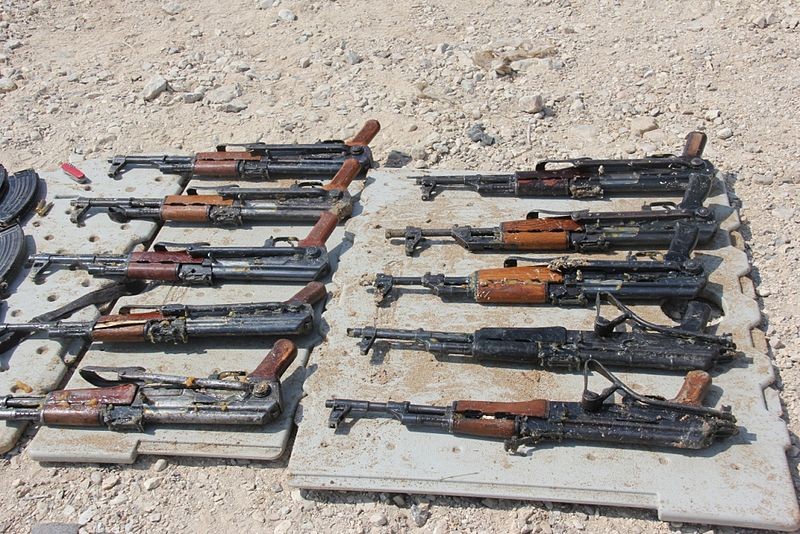
Last week I attended the 4th Interpol Firearms Forensics Symposium in Dubrovnik, Croatia. This was the second I have attended, having presented the interim findings of the EU Project EFFECT in Singapore in 2015. EFFECT, which I co-lead with Professor Erica Bowen, looked at many aspects of gun crime, but the focus on trafficking became the predominant area of interest from our findings and recommendations following the Paris attacks, and was a strong focus of this year’s event. In particular, the links between organised firearms trafficking and terrorism were a key focus.
The UK is landlocked and has some of the most rigorous firearms licensing regulations and criminal legislation in the World which helps to keep us relatively safe from this threat, but still we are seeing rising rates of gun related crime in the UK, and some of the guns in use are moving from post-conflict areas such as the Balkan region. In 2015 The Shilling Gang were intercepted smuggling a large haul of military grade firearms into the UK via boat, a number of which emanated from Eastern Europe, and we know that firearms, their parts and accessories, are being imported from the US and Africa via both the dark web and the open net. The threat from junk, antique, converted and 3D printed weapons also present a threat.
Approximately 200 law enforcement officers, forensics experts and academics were present at the event, which highlighted two issues above all else: the importance of investigating officers to ‘follow the gun’; and the need for international cooperation to reduce the threat posed by small arms and light weapons. All too often officers will seize a firearm and identify the suspect, and close the case as detected. However, such an approach risks losing valuable intelligence in terms of where the gun came from, where else it might have been used, and the identification of trafficking routes. By using ballistics comparison technology, such as the International Ballistics Intelligence Network (IBIN), it is possible to compare ballistics intelligence to match crime scenes and, when combined with other forms of evidence and intelligence, identify the individuals or organised groups behind the supply of weapons. This may also lead to the detection of more crimes. However, this requires cooperation between nations to share information in a timely way, facilitated in many cases by Interpol, as well as a change in the mindset of detectives. Following the gun may be regarded as merely creating more work for the individual officer or department, and the detection of the individual crime may be required as the only positive outcome required. However, in terms of harm reduction, following the gun is more likely to reduce the number of future victims, and the serious harm caused to families and communities as a result of the number of crime guns in circulation.
Share this:


A Troubling Ambiguous Order?

Sallek is a graduate from the MSc Criminology. He is currently undertaking doctoral studies at Stellenbosch University, South Africa.
Having spent the early years of my life in Nigeria, one of the first culture shock I experienced in the UK was seeing that its regular police do not wield arms. Unsurprising, in my lecture on the nature and causes of war in Africa, a young British student studying in Stellenbosch University also shared a similar but reverse sentiment – the South African police and private security forces wield arms openly. To her, this was troubling, but, even more distressing is the everyday use of most African militaries in society for internal security enforcement duties. This is either in direct conflict to the conventional understanding on the institutions involved in the criminal justice system, or African States have developed a unique and unconventional system. Thus, this raises a lot of questions needing answers and this entry is an attempt to stimulate further, thoughts and debate on this issue.
Conventionally, two spheres make up state security, the internal sphere of policing and law enforcement and the external sphere of defence and war-fighting. However, since the end of the Cold War, distinguishing between the two has become particularly difficult because of the internal involvement of the military in society. Several explanations explain why the military has become an active player in the internal sphere doing security enforcement duties in support of the police or as an independent player. Key among this is the general weakness and lack of legitimacy of the police, thus, the use of the military which has the capacity to suppress violence and ‘insurgence.’ Also, a lack of public trust, confidence, and legitimacy of the government is another key reason States resort to authoritarian practices, particularly using the military to clamp down civil society. The recent protests in Togo which turned ‘bloody’ following violent State repression presents a case in point. The recent carnage in Plateau State, Nigeria where herdsmen of similar ethnic origin as the President ‘allegedly’ killed over fifty civilians in cold blood also presents another instance. The President neither condemned the attacks nor declared a national mourning despite public outcry over the complicity of the military in the massacre.
Certainly, using the military for internal security enforcement otherwise known as military aid to civil authority in society comes with attendant challenges. One reason for this is the discrepancy of this role with its training particularly because military training and indoctrination focuses extensively on lethality and the application of force. This often results to several incidences of human rights abuses, the restriction of civil liberty and in extreme cases, summary extrajudicial killings. This situation worsens in societies affected by sectarian violence where the military assumes the leading role of law enforcement to force the return to peace as is the case in Plateau State, Nigeria. The problem with this is, in many of these States, the criminal justice system is also weak and thereby unable to guarantee judicial remedy to victims of State repression.
Consequently, citizens faced by the security dilemma of State repression and violence from armed groups may be compelled to join or seek protection from opposition groups thereby creating further security quandary. In turn, this affects the interaction of the citizenry with the military thereby straining civil-military relations in the State with the end result been the spinning of violence cycle. It also places huge economic burden with lasting impact on State resources, individuals, and corporate bodies and where the military is predatory, insecurity could worsen. The sectarian violence in Plateau State and the Niger Delta region in Nigeria where such military heavy-handedness remains the source of (in)security shows the weakness of this approach, and unless reconsidered, peace could remain elusive. Thus, now more than ever, this ambiguous (dis)order requires reconsideration for a civil approach to security in Africa.

Share this:


The black hole of danger aka online dating

Like so many other singles in the world I decided to join the realms of online dating. Little did I know what I would encounter and the subsequent conversations that would unfold in the office. So, this week’s blog is a reflection on some of those criminogenic discussions that have both amused and appalled us over the last couple of week. I have to start by saying that, on the whole, there are a lot of nice genuine people out there just looking for ‘the one’. That said, this perspective was put into question on Tuesday when I received my first ‘dick pic’. Not being someone who takes this sort of thing too seriously I giggled and deleted the person, however it raised a number of questions about behaviour and our responses to it. For example, on a personal level why was I not offended? Has this type of behaviour become the norm? Is it something that women now expect or at least accept? It’s a big step up from a wolf whistle in the street or the honking horn and leery comment shouted from the window of a passing car.
In essence this is a sex crime, whether you class it as distribution of pornographic material or indecent exposure it is a crime and therefore raises the question of whether I have a moral and or legal obligation to protect other women by reporting it. Yet here in lies the problem, firstly the most the site can or will do is to delete the user who will ultimately just create another profile, secondly in the grand scheme of things the police have neither the resources nor inclination to investigate. Whilst these are pertinent considerations, the fact that I didn’t report it but instead deleted him (and his picture I might add) has, upon reflection, little to do with the potential response and more to do with the perception of risk. The lack of physical proximity provides a sense of security, albeit tenuous, that you wouldn’t have if this happened to you in the street.
In the online world I have a relatively safe profile and I can delete or block those who cause me offence. Whilst it is true that nothing we do online is truly anonymous, there is a sense of detachment created by the lack of proximity and direct risk which can turn deviant behaviour into something abstract. Is that why someone who is otherwise a law-abiding citizen or at least not a sexual predator feels that it is appropriate to send a relative stranger such images? I do wonder whether they actually make the link between physical actions and virtual ones. I suspect that if confronted most of them would not see their behaviour as criminal or even comparable to someone who exposes himself in public.
The more concerning aspect of this is the potential emotional and psychological damage that could be done. While I spent my youth working in clubs and pubs, exposed to a range of male behaviours and thus gained the experience to navigate this terrain, can the same be said for today’s younger population for whom the internet and online dating may be the norm. This led me to consider my daughters and how to prepare them for this online version of the world that I experienced in the physical. How do I explain why guys would send such pictures to an unknown woman when I can’t even begin to fathom that out myself? How do I prepare them for the emotional roller coaster of online dating where a text message lacks the physical prompts needed to decipher it and can easily lead to confusion, misinterpretation, sexual exploitation and psychological harm. Where parenting is concerned the internet and online dating presents a black hole of danger and one which I’ll have to navigate with care if I want to protect my daughters from the ‘dick pic’ senders of the world.
Share this:


Speeding towards disaster: the absence of a capable guardian

Vehicles are lethal weapons, we all recognise that, particularly after the reminders given to us by the terrorist attacks across Europe. Every year in this country, there are more people killed on the roads than there are as a result of murder and yet people still drive on the roads like complete morons. It seems that driving cars, vans, and lorries brings out aggressive behaviour that to most would seem quite out of character. A good few years ago, the media castigated ‘White Van Man’, the drivers of white vans that displayed all the worst of driving behaviours, in particular positioning their vehicles aggressively so close to another vehicles’s rear bumper that they might as well have been sitting in the boot.
The shame of it is that White Van Man is now replaced by the general driving public. Gender and age seem to have no bearing on the manner of driving. Minor mistakes and indiscretions by other drivers are punished with blaring horns, flashing headlights and hand gestures more at home on the football terraces, although if you watched the recent England game, you might suggest on the pitch as well. Drivers barge their way past parked cars despite oncoming traffic and drive at speeds exceeding the speed limit. The dual carriageway that reverts to a single carriageway sees drivers racing to get ahead of each other determined not to let anyone into the now single file of traffic.
And yet, introduce a capable guardian, I borrowed the term from Felson’s 1998 Routine Activity Theory, and behaviour seems to change almost instantaneously; let me explain. The village I live in is fairly large and sits on the outskirts of a county town. The village is expanding rapidly and consequently through traffic can be quite considerable, particularly during school runs. This accompanied by pedestrians on narrow pathways and the gaggle of school children massing around the bus stop waiting for the bus to another village increases risk considerably. The road which meanders in and out of both semi-rural and urbanised space has a thirty mile an hour speed limit and the odd flashing sign that warns motorists to slow down. Not unreasonable given the volume of traffic and pedestrians and yet it has little meaning to drivers, including those carrying children in the car, who regularly exceed the speed limit. Dare to drive at thirty miles an hour and you will rapidly find cars sitting on your rear bumper itching to get by or aggressively getting closer and closer in an attempt to bully you into going faster. A slight glimpse of empty road sees overtaking manoeuvres more suitable to the Silverstone racetrack but accomplished by drivers who probably lack anything like the skill required. Demonic aggression and recklessness is the name of the game and yet the very same drivers will change their driving behaviour just a few minutes later.
About a mile from my village is a small hamlet dissected by a fairly busy road. The speed limit leading up to the hamlet is 40 miles an hour and the speed limit through the hamlet is 30 miles an hour. Watch vehicles traverse this stretch of road and you will see politeness, adherence to the speed limit and gaps between vehicles that would make the author of the highway code proud. Why such change in behaviour, you probably already know? Two somewhat insignificant, inconspicuous, despite the bright yellow paint, average speed cameras. Nobody knows if they function but they certainly work. It seems that altering driver behaviour is simply down to the presence of a capable guardian but it does beg the question why so many people have little regard for the law or their fellow human beings when they get into that driving seat.
Share this:


The Criminology of the Future

As we are gleefully coming towards the start of yet another academic year, we tend to go through a number of perpetual motions; reflect on the year past, prepare material for the upcoming year and make adjustments on current educational expectations. Academics can be creatures of habit, even if their habit is to change things over. Nonetheless, there are always milestones that we all observe no matter the institution or discipline. The graduation, for example brings to an end the degree aspirations of a cohort, whilst Clearing and Welcome Week offer an opportunity of a new group of applicants to join a cohort and begin the process again. Academia like a pendulum swings constantly, replenishing itself with new generations of learners who carry with them the imprint of their social circumstance.
It was in the hectic days at Clearing that my mind began to wonder about the future of education and more importantly about criminology. A discipline that emerged at an unsettled time when urban life and modernity began to dominate the Western landscape. Young people (both in age and/or in spirit) began to question traditional notions about the establishment and its significance. The boundaries that protect the individual from the whim of the authorities was one of those fundamental concerns on criminological discourses. A 19th century colleague questions the notion of policing as an established institution, thus challenging its authority and necessity. An end of 20th century colleague may be involved in the training of those involved in policing. Changing times, arguably. Quite; but what is the implications for the discipline?
My random example can be challenged on many different fronts; the contested nature of a colleague as a singular entity that sees the world in a singular gaze; or the ability to diversify on the perspectives each discipline observes. It does nonetheless, raises a key question: what expectations can we place on the discipline for the 21st century.
If we and our students are the participants of social change as it happens in our society then our impressions and experiences can help us formulate a projective perspective of the future. Our knowledge of the past is key to supplying an understanding of what we have done before, so that we can comprehend the reality in a way that will allow us to give it the vocabulary it deserves. A colleague recently posted on twitter her agony about “vehicles being the new terrorist weapon,” asking what is the answer. The answer to violence is exactly the same; whether a person gets in a van, or goes home and uses a bread knife to harm their partner. Everyday objects that can be utilised to harm. A projection in the future could assert that this phenomenon is likely to continue. The Romans called it Alea iacta est and it was the moment you decide to act. In my heart this is precisely the debate about the future of criminology; is it crime with or without free will?

 Thoughts from the criminology team