
Home » Police (Page 5)
Category Archives: Police

Reality and the fairy tale world of policy and procedures

In the concept of managerialism, we see that both policy and procedures form part of the techniques employed to enhance productivity and cultural changes. These changes use a ‘calculative and rationalistic knowledge base’ which appears both ‘universalistic’, and [at first sight] ‘seems entirely good sense’ (Gilling, 2014:82).
However, this knowledge base is far from universalistic and to the ‘street level bureaucrat’ (Lipsky, 1980) often falls little short of complete naivety. Lipsky (2010) provides a valuable insight into how individuals in public service adapt unworkable policies and procedures as the idealistic meets the reality of overstretched resources and ever demanding and needy consumers of services.
Whilst both working in and studying the police as an organisation subjected to and adopting managerialist policies, I witnessed the nonsensical notions of measuring activities and the subjugation of professionalism to management ideals (Hallam, 2009). Perhaps, there could be no better example than the measurement of the length of time a call handler spent dealing with a call. This derived from the need to answer calls within a target time period. It all made sense until you begin to take into account reality – the lack of resources and the nature of calls which demanded that on some occasions operators ought to spend far longer on the phone to deal with more protracted matters, such as someone in crises who really needed help and a comforting voice whilst someone was on their way. The result of the measurements was often counterproductive, officers being sent to incidents that amounted to little more than a waste of time, ‘My Jimmy is missing and I haven’t seen him for three days’ – when the officers turn up, Jimmy turns out to be a cat or, officers being sent to locations where information regarding the incident is scant because little time has been spent on the phone to get sufficient details. In the clinical world of the policy maker, there are ideal call takers, those that have knowledge about every eventuality, and ideal call makers, those that are precise, unemotional and to the point. Nothing of course could be further from reality.
Disappointingly, I find little solace in academia. Policy and procedures abound. Teaching styles are based, not on the nuances of student types but on the ideal student. The student that has the requisite skills to read and write and think critically. The student that is always engaged and always turns up and above all else, teaching is based on idealistic (see Morse and Lewis for tutorial sizes) small student classes. Policies that are well meaning such as catering for additional needs, become unworkable in an environment where class sizes and teaching demands outstrip available resources. Like the call handler, for the lecturer, it becomes impossible to cater for those that need more attention and time. And like the call handler, lecturers are subjected to managerialist idealistic measurements of success and failure. I once heard of a manager that referred to academics as ‘slackademics’, I think is probably just an indication of how far removed from reality managers are. There are two worlds in organisations that provide a service to the public, one is based on reality the other, a fairy tale world of policies and procedures based on the ideal.
References
Gilling, D. (2014) Reforming police governance in England and Wales: managerialisation and the politics of organisational regime Change, Policing and Society, 24 (1): 81-101.
Lipsky, M. (2010) Street-Level Bureaucracy: Dilemmas of the Individual in Public Services. New York: Russell Sage Foundation.
Share this:


Misfortune and the Blame Game

It seems to be a peculiar past-time in this country to moan and find fault with everything and blame anyone but ourselves for our mishaps and misfortune.
I was watching a television programme last night about Britain’s bizarre weather conditions in 2020 and what struck me, actually you could have slapped me round the face with a wet kipper, was the behaviour of people in the heatwave of April 2020. An extraordinary heatwave saw people flocking to parks and to the beach. Some scenes looked more akin to those pictures we see of seals or penguins on a remote island where there isn’t an inch to move without stumbling over the next incumbent, all staking their claim to a little parcel of land on which they can sunbathe or nest. ‘Weren’t we supposed to be social distancing and in lockdown’? Of course, we blame the government for lockdown 2 and the tier system. How unfair it is that we can’t see our loved ones, oh the mental anguish when we miss school, or have to learn online or get made redundant or our business goes belly up. But flock to the seaside we must, go to the park and mingle is a necessity, rush to the pub and drink and make merry, have parties and raves and forget about social distancing and that awful thing that the government keeps wittering on about. Let’s blame the police for dishing out fines, its so unfair and let’s even blame the hospitals, that’s where my loved one caught Corona virus. Yes, the government were to blame for suggesting that we should ‘eat out to help out’, but did we really think it was suddenly fine to plunder food from every outlet that provided a cut-price meal? Like lemmings, people rushed to pack out restaurants and pubs in search of a culinary bargain and many got more than they bargained for. ‘Two for the price of one’ had a new meaning.
None of this of course is a new phenomenon; the virus might be, the behaviour is not. We speed along the road and when caught by the police ask them if they haven’t got anything better to do than stop us. We complain about the NHS but carry on drinking lots, eating rubbish and failing to exercise. Our illness in the morning is due to the bad kebab, not the large amount of alcohol we consumed. We moan about our rubbish grades, somehow expecting that the parties, the staying in bed all day, the failure to attend, the work commitments and all the other hubris will get us an A grade or at least a B. It’s the way the lecturers teach, not our lack of commitment, that’s the problem here, ‘oh and I’m paying for this rubbish’. In football, we blame the referee for not giving a foul or for giving a foul when we are convinced it wasn’t one and yet watch players carry on diving all over the place rolling around as if they’ve been scythed down by the grim reaper and then chewed up by Jaws before being magically revived by the miraculous sponge. More at home with an Equity Card, players constantly seek to bamboozle the referee, it’s no wonder they sometimes get it wrong. We moan about the stampede at the start of the shop sales, not that that’s been a problem this year, well not yet anyway, but we are part of the stampede, shoving and trampling over others to get to the much reduced bargain. We lament the demise of the high street, watching the tumbleweed blow past as we scuttle away to our laptops, pads and phones to do a bit more online shopping only rushing out in droves (social distancing ignored) to take advantage of the demise of yet another retail outlet.
Whilst ministers are trying to hammer out a Brexit deal, posturing and moaning about the intransigence of the other side, they probably secretly hope that there will be no deal. That way we can blame the Europeans and the Europeans can blame us. But are we not to blame for this monstrosity; we voted for it? We live in a democracy and are rightly proud of it and yet Trump like we are quick to point out that we personally didn’t vote for that bit that we don’t like, and the vote was probably rigged anyway. Having realised our error, we still voted in the government that said it would get it done and we didn’t care about the price. Let’s hope that a return to the troubles in Ireland doesn’t become a reality, but if it does, it’ll no doubt be the fault of the Irish. Our sense of history only stretches back to when we saved the world from the Nazis.
We need to look to ourselves and our own action and behaviour before we start blaming everyone and everything around us. Yes, misfortune does fall on some of us and sometimes it isn’t our fault but like it or not, many of the problems are caused by us and we compound the problems by blaming others. If we fail to grip the notion that we have responsibility, then history will judge us as a nation that moaned about everything and did nothing but cause calamitous problems for ourselves and the rest of the world.
Share this:


Yorkshire Ripper: Not an Obituary
Wilma McCann, 28
Emily Jackson, 42
Irene Richardson, 28
Patricia Atkinson, 32
Jayne MacDonald, 16
Jean Jordan, 21
Yvonne Pearson, 22
Helen Rytka, 18
Vera Millward, 40
Josephine Whitaker, 19
Barbara Leach, 20
Marguerite Walls, 47
Jacqueline Hill, 20
As the team northerner I took it upon myself to write about Peter Sutcliffe after hearing of his death. Sutcliffe was a serial killer who operated in West Yorkshire and the North West of England. He was convicted of murdering 13 women and attempting to kill 7 more in the 1970s, and was serving 20 life sentences for his crimes.
Ironically, the ripper was killed by covid-19, the deadliest killer of 2020 (incidentally I asked students to imagine covid-19 being a serial killer in a lecture yesterday). Reports suggest that he was in ill health prior to contracting the coronavirus, was obese and had diabetes. He died 2 days after his diagnosis after refusing treatment.
When I started writing about the Yorkshire Ripper, I couldn’t help but think about his victims. Those he killed (named above – remember them), those he harmed and who survived, the relatives of both and the women in the areas in which he would prey on his victims, who feared leaving their homes every day for half a decade. These are the people I am thinking about, those who are in my thoughts. How do they feel about the news of his death? How have they felt every time they have heard his name for the last few decades? How, 40+ years later, are the living victims coping?
I didn’t know a lot about Peter Sutcliffe. It was before my time so when I read about the secondary victimisation as a result of police and the prosecution blaming the victims it made me angry. Peter Sutcliffe would prey on women, often prostitutes. The police at the time differentiated between the victims who were sex workers and the victims who weren’t and referred to those that weren’t as ‘innocent victims’, insinuating that the sex workers were not entirely blameless and may have precipitated their fate. Thankfully, West Yorkshire Police have issued a statement to apologise for the language and tone used at the time but the damage has already done.
I’d like to say society has learned from its mistakes, but sadly I don’t think we have. There is still evidence of victim blaming, particularly in cases of femicide and rape. Think of the Grace Millane murder and the protests in Ireland after a barrister suggest the jury consider the victim’s underwear, questioning consent. I hope one day we, as a society, learn. I hope the victims of Peter Sutcliffe get some sort of relief from both his passing and the apology from West Yorkshire Police.
Share this:

The power of the written word: fact, fiction and reality
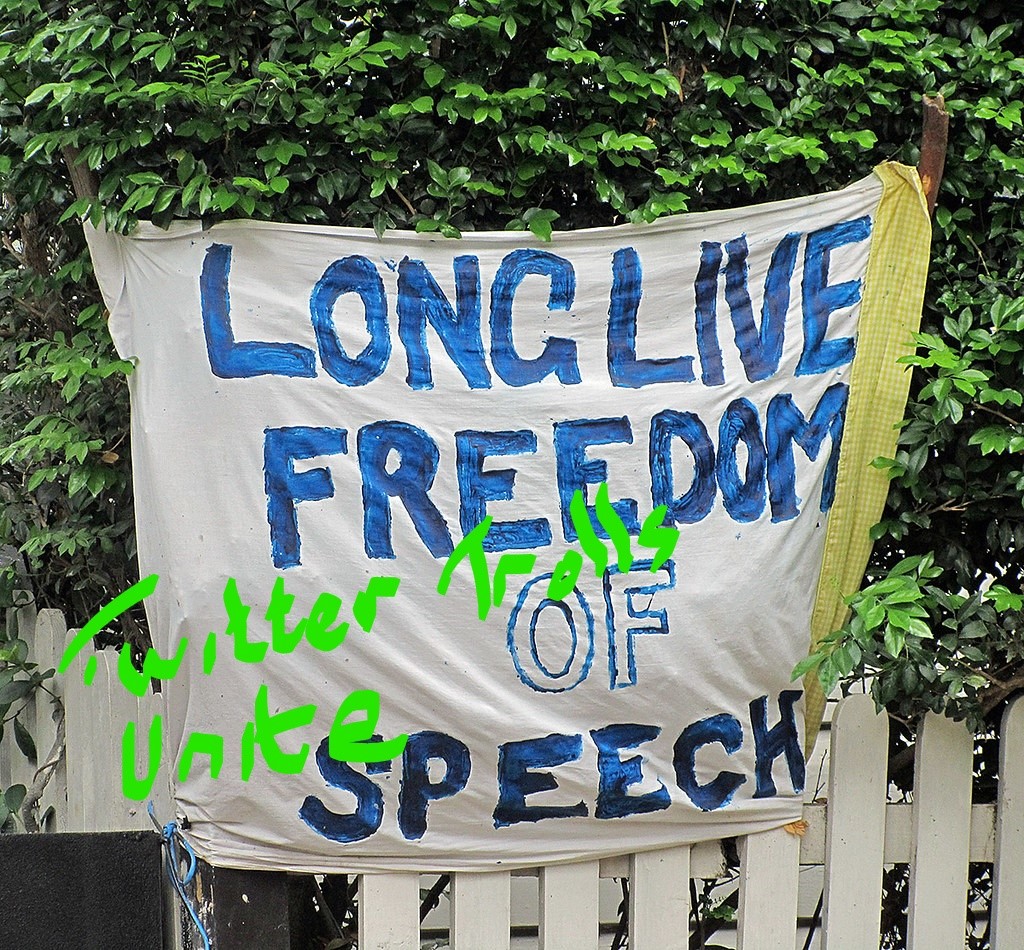
The written word is so powerful, crucial to our understanding and yet so easily abused. So often what gets written is unregulated, even when written in the newspapers. Whilst the press is supposedly regulated independently, we have to question how much regulation actually occurs. Freedom of the press is extremely important, so is free speech but I do wonder where we draw the line. Is freedom of speech more important than regulating damaging vitriolic hyperbole and rhetoric? Is freedom of speech more important than truth?
We only have to read some of the sensationalist headlines in some newspapers to realise that the truth is less important than the story. What we read in papers is about what sells not about reality. The stories probably tell us more about the writer and the editor than anything else. We more often than not know nothing about the circumstances or individuals that are being written about. Stories are told from the viewpoint of others that purport to be there, or are an ‘expert’ in a particular field. The stories are just that, stories, they may represent one person’s reality but not another’s. Juicy parts are highlighted, the dull and boring downplayed. Whilst this can be aimed at newspapers, can the same not be said about other forms of media?
A few weeks ago, I was paging through LinkedIn on my phone catching up with the updates I had missed. Why I have LinkedIn I don’t really know. I think its because a long time ago when I was about to go job hunting someone told me it was a good idea. Anyway, I digress, what caught my eye was a number of people congratulating Rachel Swann on becoming the next Chief Constable of Derbyshire. I recognised her from the news, remember the story when the dam was about to burst?
It wasn’t the fact that she’d been promoted that caught my eye, it was the fact that someone had written that she should ignore the trolls on Twitter. I had a quick look to see what they were on about. To say they were vitriolic is an understatement. But all of the comments based her ability to do the job on her looks and her sexuality. I thought to myself at the time, how do you get away with this? I doubt that any of those people that wrote those comments have any idea about her capabilities. Unkind, rude and I dare say hurtful comments, made that are totally unregulated. The comments say more about the writers than they do about Rachel Swann. You don’t get to the position of Assistant Chief Constable let alone Chief Constable without having displayed extraordinary qualities.
And then I think about Twitter and the nonsense that people are allowed to write on this medium. President Trump is a prime example. There isn’t a day that goes by without him writing some vitriolic nonsense about someone or some nation. Barack Obama used to be in his sights and now it’s Joe Biden. I know nothing about any of them, but if I follow the Trump twit feed, they are incompetent fools and disaster looms if Biden is elected as president. As I said before, sometimes what is written says more about the writer than anyone else.
I’m conscious that I’m writing this for a blog and many that read it don’t know me. Blogs are no different to other media outlets. If I am to criticise others for what they have written, then I ought to be careful about what I write and how. I have strong views and passionately believe in free speech, but I do not believe that the privilege I have been given allows me to be hurtful to others. My views are my views and sometimes I think readers get a little glimpse of the real me, the chances are they have a better idea about me than what I am writing about. I write with a purpose and often from the heart, but I try not to be unkind nor stretch the truth or tell outright lies. I value my credibility and if I believe that people know more about me than the story, I owe it to myself to try to be true to my values. I just wish sometimes that when people write for the newspapers, post comments on Twitter or write blogs that they thought about what they are writing and indulged in a bit of self-reflection. Maybe they don’t because they wont like what they see.
Share this:


What price justice?

Having read a colleague’s blog Is justice fair?, I turned my mind to recent media coverage regarding the prosecution rates for rape in England and Wales. Just as a reminder, the coverage concerned the fact that the number of prosecutions is at an all-time low with a fall of 932 or 30.75% with the number of convictions having fallen by 25%. This is coupled with a falling number of cases charged when compared with the year 2015/16. The Victims’ Commissioner Dame Vera Baird somewhat ironically, was incensed by these figures and urged the Crown Prosecution Service to change its policy immediately.
I’m always sceptical about the use of statistics, they are just simple facts, manipulated in some way or another to tell a story. Useful to the media and politicians alike they rarely give us an explanation of underlying causes and issues. Dame Vera places the blame squarely on the Crown Prosecution Service (CPS) and its policy of only pursuing cases that are likely to succeed in court. Now this is the ironic part, as a former Labour member of parliament, a minister and Solicitor General for England and Wales, she would have been party to and indeed helped formalise and set CPS policy and guidelines. The former Labour Government’s propensity to introduce targets and performance indicators for the public services knew no bounds. If its predecessors, the Conservatives were instrumental in introducing and promulgating these management ideals, the Labour government took them to greater heights. Why would we be surprised then that the CPS continue in such a vein? Of course, add in another dimension, that of drastic budget cuts to public services since 2010, the judicial system included, and the pursuit of rationalisation of cases looks even more understandable and if we are less emotional and more clinical about it, absolutely sensible.
My first crown court case involved the theft of a two-bar electric fire. A landlady reported that a previous tenant had, when he moved out, taken the fire with him. As a young probationary constable in 1983, I tracked down the culprit, arrested him and duly charged him with the offence of theft. Some months later I found myself giving evidence at crown court. As was his right at the time, the defendant had elected trial by jury. The judicial system has moved a long way since then. Trial by jury is no longer allowed for such minor offences and of course the police no longer have much say in who is prosecuted and who isn’t certainly when comes to crown court cases. Many of the provisions that were in place at the time protected the rights of defendants and many of these have been diminished, for the most part, in pursuit of the ‘evil three Es’; economy, effectiveness and efficiency. Whilst the rights of defendants have been diminished, so too somewhat unnoticed, have the rights of victims. The lack of prosecution of rape cases is not a phenomenon that stands alone. Other serious cases are also not pursued or dropped in the name of economy or efficiency or effectiveness. If all the cases were pursued, then the courts would grind to a halt such have been the financial cuts over the years. Justice is expensive whichever way you look at it.
My colleague is right in questioning the fairness of a system that seems to favour the powerful, but I would add to it. The pursuit of economy is indicative that the executive is not bothered about justice. To borrow my colleague’s analogy, they want to show that there is an ice cream but the fact that it is cheap, and nasty is irrelevant.
Share this:


Turning a blind eye: when people remain silent to abuse in the name of religion, tradition, and culture

The thought that people in the 21st Century are silent about abuse appears to be an absurd notion. There has been a significant development in how public opinion is increasing the awareness of the role of abuses that occur behind closed doors, and the responsibility of safeguarding to protect the most vulnerable. Case studies of Daniel Pelka, Baby P, and even the institutional abuses at Winterbourne View Hospital are significant signal crimes, having provided public opinion with the chance to progress its understanding of abuse behind closed doors, being able to question concerning behaviours and beliefs, and for this to be reflected within legislation; with abusers even being sentenced and imprisoned.
Abuses behind closed doors
I raise the progression made on abuses that occur behind closed doors; there is still far to go, however, institutional abuses that occur literally in front of these doors are still an issue in society today.
The power imbalance of the state and police department in recognising their responsibility for the murder of George Floyd is one of many examples of this; the image of the local authority leaning on his neck, with him pleading for his mother and his life, is an image that can never be forgotten. The issues of institutional racism can be traced back decades, with the MacPherson Report highlighting these issues following the murder of Stephen Lawrence in 1993, but how far has society come to know about crimes committed within the family and community, to preserve the honour of religion, culture, and tradition? Deciding to leave one’s religious faith, has the potential to cause disruptions to the ideological framework of the family and community.
This decision appears to increase the level of threat the family and community may feel towards the individual as a result, with an increased likelihood of creating an environment of abuse to foster physical and psychological abuse. Being able to challenge such abuse, which occurs under the veil of religion, tradition, and culture, appears to be difficult. This might be due to how this type of abuse is maintained under collusion and coercive control within the family and community – with maintaining izzat (honour) being deemed the highest priority, instead of maintaining the dignity of the human being. His article aims to reflect upon the notion that apostatic-abuse occurs both in private and public worldwide due to the influences of power involved with this issue.
The definition of “apostate”
An apostate is a term used to describe people who once identified as religious, or with faith, or belief in God, or gods, and now identifies as non-religious. The transition of apostasy is difficult for the individual for a number of reasons, and the example of the Lion King is usually apt in explaining this issue (spoilers follow):
The moment where Mufasa dies, Simba (Mufasa’s son) is blamed for this and is shunned to leave the family home by his uncle Scar, and Scar further directs his hyena-followers to kill Simba. Simba evades the attack and travels across the desert alone and isolated for a considerable amount of time, where he eventually collapses.
The journey of Simba during this moment is similar to the journey of the apostate. The thought that a person can have a different opinion to that of the household can be divisive. For example, public opinion was ideologically divided in the United Kingdom over the recent decision to either remain in or leave the European Union. Having ideological differences on this topic, ruptured the cohesion within society, where family members even stopped talking to each other based on the ideological decision made. These political and ideological differences were used as a rationale by the murderer who sided with leaving the European Union, of Labour MP Jo Cox who sided with remaining in the European Union.
Apostates and their families
Sadly, the act of apostasy, where family members have ideological differences, can cause a similar threat reaction by families and communities towards their family member. When family members are strongly dedicated to the conviction of their ideology, faith, and/or scripture, the assertion of shunning the individual, using violence, and even threatening and causing death can be viable options to maintain the honour of their family home and community, is saddening. This conviction further facilitates an abusive environment to develop within the family and community, with family members silently accepting the abuse as a consequence for holding ideological differences. The reaction of the family members increases the likelihood of the person being isolated and shunned, which further creates an environment suitable for abuse to occur, and in similarity to Simba’s journey, this increases the likelihood of the apostate being left to survive on their own without support from the family that once supported them. The differences in thought and ideology create the dynamic of the family belonging to the in-group, and the apostate being identified in the out-group. This also appears to dehumanise the apostate, labelling them as a traitor to the values held dear by the family and community, thus perceiving abuse as an appropriate and acceptable punishment. The power held against the individual by the family and community increases the likelihood of secrecy and silence towards the harm that may be caused.
Abuses against apostates
The concern currently relates to how society appears to struggle with challenging ideas and beliefs, with origins based in religion, tradition, and culture. Regardless of its origin, however, abuse cannot be tolerated. Abuse is usually about a structural and personal power imbalance. The abuser uses that power as leverage to get the individual to do things, they do not want to do. One can appreciate that abuse of any kind, such as physical, psychological, neglect, and domestic violence, are all means to impede on the life of an individual. The cause for concern grows immensely when family members engage in acts of abuse against their own, and in cases within familial communities where the notion of abuse is hidden. Case studies from the past, such as Victoria Climbie, Shafilea Ahmed, and Surjit and Sarbjit Athwal, provide a rare insight into the damaging consequences of abuse within the family home. Some of the conditions that are similar between these case studies are that families maintained secrecy and a sense of order within the home to ensure the abuse remained hidden. The interesting similarity in these cases is how religion, culture, and/or tradition are used to rationalise the abuse – to maintain the notion of izzat; honour, within the family and community. This consequently creates an environment where the notion of honour is prioritised higher than the notion of humanity. Indeed, abuse cannot be tolerated, and for society to not tolerate such abuse, society needs to become comfortable with Maajid Nawaz’s notion that, “no idea is above scrutiny, and no person is below dignity”. What this means is that we can only challenge this type of abuse by becoming more comfortable with calling-out concerning behaviours and beliefs, regardless of their origin, and by adhering to the view of maintaining the dignity of humanity at all costs. Through this perspective, we can limit the number of vulnerable people that may be victims of such abuse, by not being silent to the abuses occurring behind closed doors.
Two key findings of the study
My recent publication, Apostates as a Hidden Population of Abuse Victims (Parekh & Egan, 2020), was the first research study to identify the worldwide abuses that apostates face within religious households. Two significant issues were found whilst completing the research.
Differences between ex-Muslims and ex-Christians
First, Muslim apostates were more likely than Christian apostates to face abuses in the form of assault (being shoved, pushed), serious assault (being hit, physically hurt, threats of death or injury), and psychological abuse (coercive control, stress, fear). The offenders in cases of apostatic-abuse are usually family members and members of their local community, who are acting under the guise of protecting, preserving and honouring their religion, tradition, and culture. Despite the lower number of people identifying as Muslim apostates in the study, they were significantly more likely to face this level of abuse, which questions the volatility towards apostates within some Muslim households across the world, and raises the wider question of how apostates may be perceived within Islam. The religious scriptures within Islam do not favour the apostate well, how else would a marginalised group cope with people who defect? Sadly, this has been integrated within the legislature of twelve nation-states, where the act of apostasy is still punishable by death, and in seven states where this act is punishable with a prison sentence (Humanists International, 2019; Humanists International, 2020). This shows a link between the way in which the religious scriptures are interpreted, actualised, and how religious sanctions are integrated within the criminal justice systems too. The power held by the state to kill its citizens is a concerning criminological issue; one that I would assert the state should not have, however, what appears to also be concerning is that the notion of human intrigue, inquisition, and intuition, are punishable. How can human beings flourish, if the very nature of being human is open to punishment? The recent case of Mubarak Bala in Nigeria is a testament to the concerns of this study. Enacting blasphemy laws appears to be positively supported as a way of preserving religious, traditional, and cultural values and practices, and by doing so, are perceived as favourable within the religious community. Bala’s post which critiqued Islam on social media was interpreted as insulting to Islam within Nigeria. As such, the full force of the religiously informed criminal justice system has been unhinged in its approach to deny Bala of his basic human rights. But, the power held by such traditionalistic interpretations of Islam, raises considerable concerns for people within a nation-state that may think differently. Cultural rules and values, under the guise of “honour,” are systematically embedded by families and communities to prevent individualisation and the demise of traditional cultural norms held by the parental migrant generation, which causes people to live fearfully within an Orwellian dystopia, enforced by the Sword of Damocles.
Apostates are less likely to report abuse to the police
Second, victims were less likely to inform the local authority of the abuses they were facing. Does this beg the question as to why victims are not reporting their abuse to the police? There are several reasons why victims struggle to report their abuse, and a selection of the reasons are highlighted here. Firstly, does the police truly understand the extent of apostatic-abuse? Secondly, will the police understand the religious, cultural, and traditional significance of this act of abuse? Thirdly, what are the ramifications for the victim within their family and community if they disclose this abuse, and will this cause further retribution? Fourthly, if the victim is under the age of adulthood, will the police take their claim seriously? Fifthly, does the religious community have a sense of power and influence within society that, can be used against the apostate? Sixthly, if the victim is to report the abuse, will they be shunned from the family? Seventhly, can the victim report the abuse, if by identifying as an apostate, they are likely to be punished instead? The study was able to capture the voices of the victims, and the reasons why they struggled to inform the local authority. What becomes concerning is that, despite being abused, victims are still left powerless. The psychological impact of having one’s family member taking part in abuse for having a difference of perspective is open to severely damaging the victim’s perspective of how the world functions, and if law enforcement remains silent too, then this further increases the levels of helplessness felt by the victim. When victims are left in a state of helplessness, this questions the legitimacy of the state in being able to protect its citizens from harm. The rationale of religion, culture, and tradition appear to be sufficient in extending punishment onto the apostate, and for family members, the community, and even police forces to further their assertion that the apostate might deserve the punishment they receive. How dangerous is it then, for a religious person to question deeply held religious views? This is a pertinent issue that fails to be raised – an apostate was once religious. Hence, if a religious person begins to doubt the teachings of their faith, and this is deemed as insulting, then how do religious people remain safe under such draconian infrastructure? If a religious person starts questioning their faith, and this becomes the catalyst for abuse within the home due to notions of dishonour, then how likely is that religious person to continue questioning their beliefs, or raise alarm to the way they are being treated; especially if they are aware that the local authority is less likely to support them? The responsibility for reporting the abuse should not be solely on the shoulders of the abused. The poignant issue here is to highlight the social structures that are involved to inhibit the victim from being aware that they have the power to report the crimes being committed against them.
How to contrast apostatic-abuse?
So, what do we do when dark things and hidden wrongdoings are concealed by social norms? Apostatic-abuse, by its nature, is usually hidden due to the stigma of dishonouring the family and the community, with members maintaining social norms to protect the moral fibre of its community. The consequences of which, can be truly abhorrent for the apostate, where they might have experienced physical and psychological abuse, to being shunned, excommunicated, to even having their life threatened by people who they believed loved them. When abuse can proliferate under secrecy, this increases the difficulties for local authorities to become aware that such victims exist. The example of how activists in the United Kingdom have worked with local authorities to raise awareness of the damaging effects of forced marriage and female genital mutilation to victims and asserting the need to criminalise abusers is a positive step towards legitimising the effect of these crimes towards victims (Council of Europe, 2017; Raptim, 2018). Following a similar model, internationally, would be advocated towards challenging and supporting victims of apostatic-abuse (Metropolitan Police, 2020; NPCC, 2018; Safe Lives, 2017). This model would act as a catalyst to provide training to organisations within criminal justice systems to support their comprehension of this hidden form of abuse. This may also facilitate conversations with members of parliament to further increase support for this abuse being represented within the legislation. This is not an issue within an isolated geographical location, but a worldwide phenomenon. As such, recognition of this form of abuse for organisations that work to support victims would be influential in gaining insight into the effects apostatic-abuse can cause. This form of action, awareness, and support being provided by agencies of criminal justice systems, may reduce the influence of power that abusers may have on victims, as a result of this crime becoming recognised.
Apostatic-abuse is a crime that is maintained through secrecy, social collusion, and coercive control, to maintain power and control over the individual that decides to think differently from their family and community. Sadly, in some nation-states, this perspective has also been criminalised with legislation even advocating for the death of the individual or imprisonment. This remains a crime that is either hidden within families and communities or is carried out by the state, through blasphemy laws, as a form of appeasing the masses to show the integration of religious law to criminal law. When human beings are restricted to how they can think about issues that are pertinent to them, increases the feelings of closure, censure, and control that are not psychologically healthy for the individual. This article, along with the published research, are the first steps to highlight these issues and starting the conversation of how we can help hidden victims around the world.
References
Council of Europe. (2017). Female Genital Mutilation and Forced Marriage. Accessed on 1st August 2020: https://rm.coe.int/female-genital-mutilation-and-forced-marriage/16807baf8f.
Humanists International. (2019). The Freedom of Thought Report. Accessed on 1st August 2020: https://fot.humanists.international/download-the-report/.
Humanists International. (2020). Humanists at Risk: Action Report 2020. Accessed on 1st August 2020: https://humanists.international/wp-content/uploads/2020/06/3098_Humanists-International_Humanists-at-Risk-Action-Report_Amends-V2_LR.pdf.
Parekh, H., & Egan, V. (2020). Apostates as a hidden population of abuse victims. Journal of Interpersonal Violence, DOI: 10.1177/0886260519898428.
Metropolitan Police. (2020). Operation Limelight. Accessed on 1st August 2020: https://assets.publishing.service.gov.uk/government/uploads/system/uploads/attachment_data/file/860625/operation_limelight_instructions.pdf.
National Police Chief’s Council (NPCC). (2018). Honour Based Abuse, Forced Marriage and Female Genital Mutilation: a Policing Strategy for England, Wales & Northern Ireland – Eradicating Honour based Abuse, Force Marriage and Female Genital Mutilation Together. Accessed on 1st August 2020: https://www.npcc.police.uk/Publication/Final%20NPCC%20HBA%20strategy%202015%202018December%202015.pdf
Raptim. (2018). 12 NGOs Fighting Against Female Genital Mutilation. Accessed on 1st August 2020: https://www.raptim.org/fighting-against-female-genital-mutilation/.
Safe Lives (2017). Your Choice: ‘honour’-based violence, forced marriage and domestic abuse. Accessed on 1st August 2020: https://safelives.org.uk/sites/default/files/resources/Spotlight%20on%20HBV%20and%20forced%20marriage-web.pdf.
Share this:


“I can’t breathe”: Criminology, Science and Society

Sometimes the mind wanders; the associations it produces are random and odd, but somehow, they connect. In the book of Genesis, there is reference to the first murder. Cain murdered Abel with a stone making it the original murder weapon. After some questioning from God, who acted as an investigating officer, and following a kind-of admission, God then assumed the role of the judge and jury, sentencing him to wander the earth. This biblical tale is recounted by all three main monotheistic religions, a what to do in the case of murder. The murderer is morally fallen and criminally dealt by with a swift punishment.
There is no reason to explore the accuracy of the tale because that is not the point. Religion, in the absence of science, acted as a moral arbitrator, sentencing council and overall the conscience of society. In a society without science, the lack of reason allows morality to encroach on personal choices, using superstition as an investigative tool. As scientific discovery grew, the relevance of religion in investigation was reduced. The complexity of society required complex institutions that cared for people and their issues.
When the Normans landed in England, they brought with them a new way of dealing with disputes and conflict. Their system of arbitration, using the King as a divine representative, was following Roman tradition and theology but it soon became apparent that a roaming court may not be as efficient. The creation of the magistrates and the statutes on legal representation introduced the idea of bringing professionals into justice. The creation of new institutions fostered the age of the scholar, who uses evidence-based practice.
This new approach removed more religious practices, instead favouring the examination of facts, the investigation of testimony and the study of law. It was a long way away from the system we know now as the witch trials can attest to; a number of whom took place in East Anglia (including Northampton). In the end the only thing that has been left from the early religious trials is the oath witness take when they submit their testimony.*
The more we learn the better we become in understanding the world around us. The conviction that science can resolve our problems and alleviate social issues was growing and by the 19th century was firm. The age of discovery, industrialisation and new scientific reasoning introduced a new criminal justice system and new institutions (including the police). Scientific reasoning proposed changes in the penal code and social systems. Newly trained professionals, impervious to corruption and nepotism, were created to utilise a new know-how to investigate people and their crimes.
Training became part of skilling new mandarins in a system that reflected social stratification and professionalism. The training based on secular principles became focused on processes and procedures. The philosophy on the training was to provide a baseline of the skills required for any of the jobs in the system. Their focus on neutrality and impartiality, seemed to reflect the need for wider social participation, making systems more democratic. At least in principle that was the main idea. Over centuries of public conflict and social unrest the criminal justice system was moving onto what people considered as inclusive.
Since then the training was incorporated into education, with the new curriculum including some BTECs, diplomas, foundation studies and academic degrees that take on a variety of professions from investigative fields to law enforcement and beyond. This academic skilling, for some was evidence that the system was becoming fairer and their professionals more educated. Police officers with knowledge of the system, akin to lawyers to the probation service and so on. So far so good…but then how do we explain the killing of George Floyd? Four officers trained, skilled, educated and two of them experienced in the job.
If this was a one, two three, four, -offs then the “bad apple” defence seems to be the most logical extrapolation on what went wrong. If, however this is not the case, if entire communities are frightened of those who allegedly serve and protect them, then there is “something rotten in the state of Denmark”. Whilst this case is American, it was interesting to read on social media how much it resonated, in communities across the globe of those who felt that this was nothing more than their own everyday experience with law enforcement. For them, police is merely a mechanism of repression.
Since the murder I have read a number of analyses on the matter and maybe it worth going a bit further than them. In one of them the author questioned the validity of education, given than two of the officers in the Floyd case hold a criminal justice and a sociology degree respectively. There is a vein of truth there; educators have some responsibility to forge and promote professional conduct and ethical practice among their alumnus. There are however some other issues that have not been considered and it is time for these to be brought to the surface.
Education or training alone is not adequate to address the complexities of our society. Social awareness, cultural acceptance and the opportunity to reflect on the rules using problem solving and insight are equally important. Foucault has long argued that the justice system is inherently unfair because it preserves privileges and blocks anyone outside from challenging it. Reflecting on that, all major constitutional changes took place after a revolution or a war, indicating the truism in his observation.
If we are to continue to train people on procedures and processes the “bad apples” are likely to strike again. The complexity of social situations requires an education that ought to be more rounded, critical and evaluative. If a doctor takes an oath to do no harm, then so should every other professional who works in their community. If the title of the office is more appealing than the servitude, then the officer is not fulfilling their role. If we do not recognise equality among all people, then no training will allow us to be fair. Suddenly it becomes quite clear; we need more education than less, we need knowledge instead of information and we need more criminology for those who wish to serve the system.
*Even that can now be given as an affirmation

Share this:


For the Trayvons, Since Blackface is a weapon #BlackenAsiaWithLove
2 April 2012 Hanoi
The real Blackface that’s the weapon is the minstrel show,
The Blackface that labeled me out,
Showing people a side of me never seen
But projected onto me,
Such that when so many see my own Blackface,
They see that other
They see that other one.
The one told to them over their kitchen tables.
The one sold to them at the movie show –
Hoop dreams
Baller creams
Holla dolla-dolla bill, y’all.
‘Cause we also know that there are real Black faces
That see those minstrel black faces
Staring them back in the face,
So blinded by the light that they cannot see their own.
That’s one side of Trayvon’s story-
Then we all know how precious of a story this really is
That a mother lost her darling son
That a grandmother lost the one who used to babysit for the other gran’kids
That the little cousins are still unclear about where that dear boy is.
Blackface means that as soon as your voice starts to drop
As soon as that fuzzy hair starts to sprout all over
As soon as your knock knees start to look bold
You’re no longer a kid
Your childhood is lost
And you must learn to act in ways that would make most sane adults stumble
You learn how not to offend white people
How to speak in a soft voice
Or perish
How to walk slowly, with an unassuming gate
Lest you appear as a threat
With the knowledge that any of these threatened folks can annihilate you
Wipe you from this earth
Where only a generation or two ago
Men hanged like tree-ripened fruit
Aged on a rope in an instant
From kid prankster
To adult menace in a matter of moments
We’ve all seen that photo of one of America’s last lynchings
Not nearly the first
Not nearly the haste, carnage and human waste that made people cease.
In 1930, not in anywhere near the deep south
Not from one of our southern willows that sway
But in the mid-west
In Indiana, less than a 150 miles from where Michael Jackson was born
And less than 30 years before he came to be,
So that years later when he sings about hate in our multicultural hearts
Or smashes a window in the video
Enraged with anger
Mad from hypocrisy
The sort that we all know all too well
The gap between the promise and dream.
The reality versus the verses etched all around the capital,
Versus the slave hands that laid those very stones.
The women folk whose very gender made them slaves
And the Black women whose faces made them chattel –
But exploitation of a sexual kind
Yes, we all know too well
What a Blackface can do
How a Blackface can scare you
Even when it’s yours.
So, we now the rage Michael felt,
The hate he seemed to have fought though lost,
Internalized but never giving up.
Yet he was born into a world that hated Blackfaces
Where his was a real threat,
Lest he learn to sing and dance.
The hate is real life minstrelsy.
It’s that same song and dance that we as boys learn to perform
And I am tired of dancing
Trying to make nice when people approach me as cold as ice
Smiling and trying to behave
While all their body language tells me that they are scared to death of me
And that they see my Blackface as chilling.
We all know that all the Trayvons in this place
Learn from an age too early to have to teach kids such harsh cruelties of life
That by 13, he could be nearly 6 feet tall and that factor alone endangers his life
Were he to play sports and his body develop.
He would stand no chance of being treated like anything other than a gladiator.
So it’s even more ironic that Trayvon was a scrawny boy they called “Slim”
Seems there’s no real way to win
Though I think that if we as a people can get through this
If we as a nation can have this conversation
The one mothers like Trayvon’s have with their sons
For we all know how people react to Black
Share this:


Nothing is black and white: the intransigence of fools

One thing we criminologists know is that it is impossible to prevent crime. Many a great criminologist has tried to theorise why crime occurs (my shelves are full of their books) and whilst almost all have made valuable contributions to our understanding of crime, it is an unfortunate fact that crime continues. But then crime itself is difficult to define and has its basis in time, power, opportunity and social discourses. What is criminal today will not be criminal tomorrow and what is important today will lose its importance tomorrow, in favour of some new or maybe, old, manifestation of that elusive concept we call crime. Perhaps we should we grateful, for in the industry of crime lies mass employment. From criminologists to those that attempt to stem the tide of crime, those that deal with its aftermath and those that report on it or write about it (real or fictional), there is money to be made. If we stopped crime, we would all be out of a job.
Most, if not all of us have at some stage in our lives committed some sort of crime. Most crimes will fortunately be almost inconsequential, maybe a flouting of a law such as driving a car over the speed limit. Other crimes will be more serious and whilst some criminals will be brought to book most are not. The inconsequential crime of driving over the speed limit, albeit perhaps due to a lapse of concentration, can have dire consequences. There is clear evidence that the survival rates of pedestrians struck by cars has a direct correlation with speed. So the inconsequential becomes the consequential, the ephemerality of crime, the reality.
When we think of crime, we often have little concept of its reality. We apply labels and our own rules to that we know and find acceptable. Speeding is not criminal, well not generally, unless it’s a boy racer. Drink driving is a no-no, but we might take it to the alcohol limit when having a drink. Drugs (the criminalised type) are ok, well some are and some aren’t, it all depends on your viewpoint. Drugs (the prescription type) are ok, even if they impair our ability to drive. Alcohol, well that’s absolutely ok, even if the abuse of it leads to more deaths than drugs and the consequences of that misuse has a really significant impact on the NHS. Tax evasion, illegal if you get caught, ok if you don’t. A bit like fraud really, ok if you can get away with it but then maybe not, if the victim is a little old lady or me. Assault, well it depends on the seriousness and the situation and probably the victim. Robbery, not good to go into an off licence with a gun and threaten the shopkeeper, bullying if you take lunch money off the lad outside the school gates.
Criminals don’t walk around with a label that says ‘criminal’ and even if they did, there would have to be a method of bestowing the label in an instance. Nonsense of course, only a fool would suggest such a thing. What about the people that committed a crime but have changed their ways I hear my colleagues ask? What about those that haven’t, or have and then relapse, I reply.
Nothing is black and white; the concept of crime is elusive, as are criminals (both by concept and nature). And yet we happily castigate those that attempt to uphold the law on our behalf and in doing so view crime and criminals as clear concepts. Each has a clear label, each is clearly identifiable, so how can they get it so wrong so many times. Whilst criticising those that attempt, and let’s be quite honest, fail most of the time to stem this tide of crime, perhaps we might also think about the impossibility of the job in hand. That’s not to say that a lot of the criticisms are not justified, nor that things should not change, but if we only examine all that is wrong, we lose sight of reality and only an intransigent fool would continue an argument that sees the problems and solutions as simply black and white.
Share this:


#CriminologyBookClub: The Perplexing Theft of the Jewel in the Crown

As you know from our last #CriminologyBookClub entry a small group of us decided the best way to thrive in lockdown was to seek solace in reading and talking about books. Building on on what has quickly become standard practice, we’ve decided to continue with all seven bloggers contributing! Our fourth book was chosen by all of us (unanimously) after we fell in love with the first instalment. Without more ado, let’s see why we all adore Inspector Chopra (retired) et al.:
Another great edition to the Baby Ganesh agency series. After thoroughly enjoying the first book, I was slightly sceptical that book 2 would bring me the same level of excitement as the former. I was pleasantly surprised! The Perplexing Theft of the Jewel in the Crown, will take you on a picturesque journey across Mumbai. The story definitely pumps up the pace giving the reader more mystery and excitement. We now get more of an insight into characters such as inspector Chopra (retired) and his devoted wife Poppy. We also get to meet some new characters such as the loveable young boy Irfan, and of course the star of the show Ganesh, Chopra’s mysterious elephant. This novel has mystery within mystery, humour, suspense and some history, which is a great combination for anyone who wants to have an enjoyable read.
@svr2727

In the second instalment of detective Chopra’s detective (retired) adventures he is investigating the disappearance of the infamous Koh-i-noor diamond. The mythical gem disappears from a well-guarded place putting a strain on Anglo-Indian relations. In the midst of an international incident, the retired inspector is trying to make sense of the case with his usual crew and some new additions. In this instalment of the genre, the cultural clash becomes more obvious, with the main character trying to make sense of the colonial past and his feelings about the imprint it left behind. The sidekick elephant remains youthful, impulsive and at times petulant advancing him from a human child to a moody teenager. The case comes with some twists and turns, but the most interesting part is the way the main characters develop, especially in the face of some interesting sub-plots
@manosdaskalou
I am usually, very critical, of everything I read, even more so of books I love. However, with Inspector Chopra et al., I am completely missing my critical faculties. This book, like the first, is warm, colourful and welcoming. It has moments of delightful humour (unicycles and giant birthday cake), pathos (burns and a comforting trunk) to high drama (a missing child and pachyderm). Throughout, I didn’t want to read too much at any sitting, but that was only because I didn’t want to say goodbye to Vaseem Khan’s wonderful characters, even if only for a short while…
@paulaabowles
It was a pleasure to read the second book of the Inspector Chopra series. Yes, sometimes the characters go through some difficult times, the extreme inequalities between the rich and poor are made clear and Britain’s infamous colonial past (and present) plays a significant part of the plot, yet the book remains a heart-warming and up-beat read. The current character developments and introduction of new character Irfan is wonderfully done. Cannot wait to read the next book in the series!
@haleysread
One of the reasons for critiquing a book is to provide a balanced view for would be readers. An almost impossible task in the case of Vaseem Khan’s second Baby Ganesh Agency Investigation. Lost in a colourful world, and swept along with the intrigue of the plot and multiple sub plots involving both delightful and dark characters, the will to find a crumb of negativity is quickly broken. You know this is not real and, yet it could be, you know that some of the things that are portrayed are awful, but they just add to the narrative and you know and really hope that when the baby elephant Ganesha is in trouble, it will all work out fine, as it should. Knowing these things, rather than detracting from the need to quickly get to the end, just add to the need to turn page after page. Willpower is needed to avoid finishing the book in one hit. Rarely can I say that once again I finished a book and sat back with a feeling of inner warmth and a smile on my face. If there is anything negative to say about the book, well it was all over far too quickly.
@5teveh
The second Inspector Chopra book is even more thrilling than the first! As I read it I felt as though I genuinely knew the characters and I found myself worrying about them and hoping things would resolve for them. The book deals with some serious themes alongside some laugh out loud funny moments and I couldn’t put it down. Can’t wait to read the third instalment!
@saffrongarside
I have always found that the rule for sequels in film is: they are never a good as the original/first. Now, there are exceptions to the rule, however these for me are few and far between. However, when it comes to literature I have found that the sequels are as good if not better than the original- this is the rule. And my favourite writers are ones who have created a literature series (or multiple): with each book getting better and better. The Perplexing Theft of the Jewel in the Crown (Chopra 2.0) by Vaseem Khan has maintained my rule for literature and sequels! Hurray! After the explosive first instalment where we are introduced to Inspector Chopra, Poppy and Baby Ganesha, the pressure was well and truly on for the second book to deliver. And By Joe! Deliver it did! Fast paced, with multiple side-stories (which in all fairness are more important that the theft of the crown), reinforce all the emotion you felt for the characters in the first book and makes you open your heart to little Irfan! Excellent read, beautiful characters, humorous plots! Roll on book number 3!
@jesjames50


 Thoughts from the criminology team