
Home » Police brutality (Page 2)
Category Archives: Police brutality
The Chauvin verdict may not be the victory we think it is
At times like this I often hate to be the person to take what little hope people may have had away from them, however, I do not believe the Chauvin verdict is the victory many people think it is. I say people, but I really mean White people, who since the Murder of George Floyd are quite new to this. Seeing the outcry on social media from many of my White colleagues that want to be useful and be supportive, sometimes the best thing to do in times like these is to give us time to process. Black communities across the world are still collectively mourning. Now is the time, I would tell these institutions and people to give Black educators, employees and practitioners their time, in our collective grief and mourning. After the Murder of George Floyd last year, many of us Black educators and practitioners took that oppurtunity to start conversations about (anti)racism and even Whiteness. However, for those of us that do not want to be involved because of the trauma, Black people recieving messages from their White friends on this, even well-meaning messages, dredges up that trauma. That though Derek Chauvin recieved a guilty verdict, this is not about individuals and he is still to recieve his sentence, albeit being the first White police officer in the city of Minneapolis to be convicted of killing a Black person.
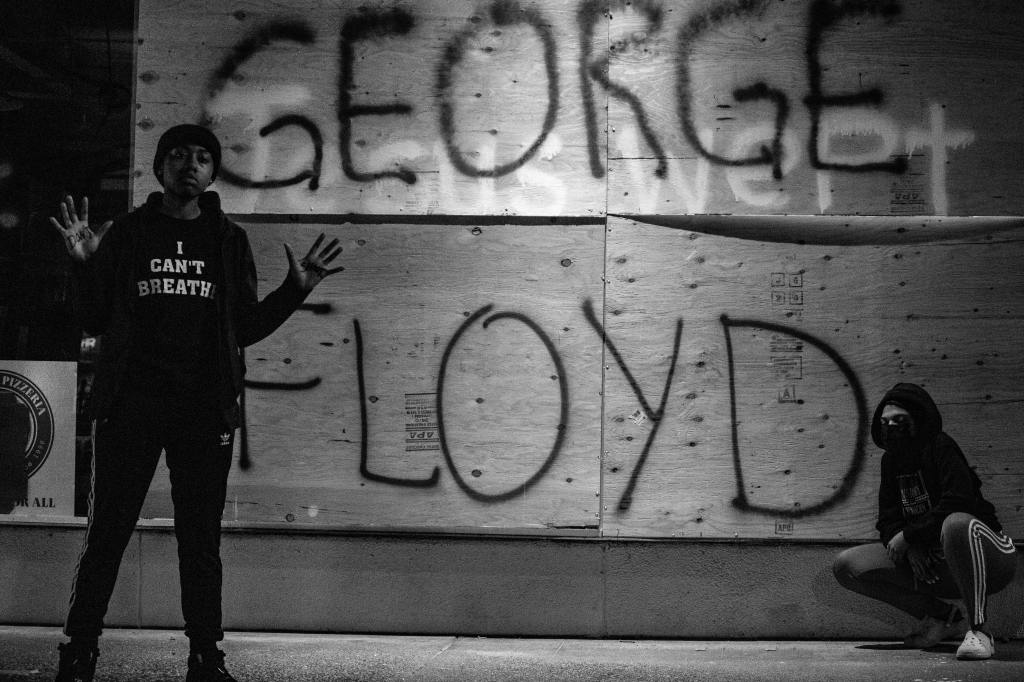
Under the rallying cry “I can’t breathe” following the 2020 Murder of George Floyd, many of us went to march in unison with our American colleagues. Northamptonshire Rights and Equality Council [NREC] organised a successful protest last summer where nearly a thousand people turned up. And similar demonstrations took place across the world, going on to be the largest anti-racist demonstration in history. However, nearly a year later, institutional commitments to anti-racism have withered in the wind, showing us how performative institutions are when it comes to pledges to social justice issues, very much so in the context race. I worry that the outcome of the Chauvin verdict might become a “contradiction-closing case”, reiterating a Facebook post by my NREC colleague Paul Crofts.
For me, a sentence that results in anything less than life behind bars is a failure of the United States’ criminal justice system. This might be the biggest American trial since OJ and “while landmark cases may appear to advance the cause of justice, opponents re-double their efforts and overall little or nothing changes; except … that the landmark case becomes a rhetorical weapon to be used against further claims in the future” (Gillborn, 2008). Here, critical race theorist David Gillborn is discussing “the idea of the contradiction-closing case” originally iterated by American critical race theorist Derrick Bell. When we see success enacted in landmark cases or even movements, it allows the state to show an image of a system that is fair and just, one that allows ‘business as usual’ to continue. Less than thirty minutes before the verdict, a sixteen-year-old Black girl called Makiyah Bryant was shot dead by police in Columbus, Ohio. She primarily called the police for help as she was reportedly being abused. In her murder, it pushes me to constantly revisit the violence against Black women and girls at the hands of police, as Kimberlé Crenshaw states:
“They have been killed in their living rooms, in their bedrooms, in their cars, they’ve been killed on the street, they’ve been killed in front of their parents and they’ve been killed in front of their children. They have been shot to death. They have been stomped to death. They have been suffocated to death. They have been manhandled to death. They have been tasered to death. They have been killed when they have called for help. They have been killed while they have been alone and they have been killed while they have been with others. They have been killed shopping while Black, driving while Black, having a mental disability while Black, having a domestic disturbance while Black. They have even been killed whilst being homeless while Black. They have been killed talking on the cellphone, laughing with friends, and making a U-Turn in front of the White House with an infant in the back seat of the car.”
Professor Kimberlé Crenshaw (TED, 2018)
Whilst Chauvin was found guilty, a vulnerable Black girl was murdered by the very people she called for help in a nearby state. Richard Delgado (1998) argues “contradiction-closing cases … allow business as usual to go on even more smoothly than before, because now we can point to the exceptional case and say, ‘See, our system is really fair and just. See what we just did for minorities or the poor’.” The Civil Rights Movement in its quest for Black liberation sits juxtaposed to what followed with the War on Drugs from the 1970s onwards. And whilst the Stephen Lawrence Inquiry was seemingly one of the high points of British race relations followed with the 2001 Race Relations Act, it is a constant fallback position in a Britain where racial inequalities have exasperated since. That despite Macpherson’s landmark report, nothing really has changed in British policing, where up until recently London Metropolitan Police Service had a chief that said it wasn’t helpful to label police as institutionally racist.
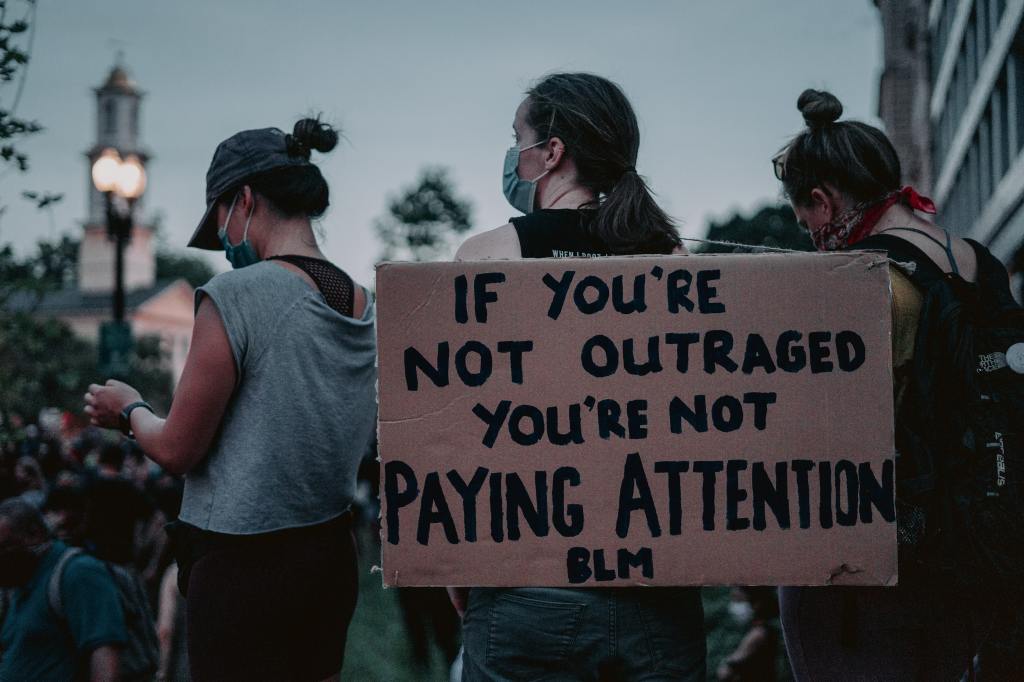
Scrolling the interweb after the ruling, it was telling to see the difference of opinion between my White friends and colleagues in comparison to my Black friends and colleagues. White people wrote and tweeted with more optimism, claiming to hope that this may be the beginning of something upward and forward-thinking. Black people on the other hand were more critical and did not believe for a second that this guilty verdict meant justice. Simply, this ruling meant accountability. Since the Murder of George Floyd, there have been numbers of conversations and discourses opened up on racism, but less so on White supremacy as a sociopolitical system (Mills, 2004). My White colleagues still thinking about individuals rather than systems/institutions simply shows where many of us still are, where this trial became about a “bad apple”, without any forethought to look at the system that continues enable others like him.
Even if Derek Chauvin gets life, I am struggling to be positive since it took the biggest anti-racist demonstration in the history of the human story to get a dead Black man the opportunity at police accountability. Call me cynical but forgive me for my inability to see the light in this story, where Derek Chauvin is the sacrificial lamb for White supremacy to continue unabted. Just as many claimed America was post-racial in 2008 with the inaugaration of Barack Obama into the highest office in the United States, the looming incarceration (I hope) of Derek Chauvin does not mean policing suddenly has become equal. Seeing the strew of posts on Facebook from White colleagues and friends on the trial, continues to show how White people are still centering their own emotions and really is indicative of the institutional Whitenesses in our institutions (White Spaces), where the centreing of White emotions in workspaces is still violence.
Derek Chauvin is one person amongst many that used their power to mercilessly execute a Black a person. In our critiques of institutional racism, we must go further and build our knowledge on institutional Whiteness, looking at White supremacy in all our structures as a sociopolitical system – from policing and prisons, to education and the third sector. If Derek Chauvin is “one bad apple”, why are we not looking at the poisoned tree that bore him?
Referencing
Delgado, Richard. (1998). Rodrigo’s Committee assignment: A sceptical look at judicial independence. Southern California Law Review, 72, 425-454.
Gillborn, David. (2008). Racism and education: Coincidence or conspiracy? London: Routledge.
Mills, Charles (2004) Racial Exploitation and the Wages of Whiteness. In: Yancy, George (ed). What White Looks Like: African American Philosophers on the Whiteness Question. London: Routledge.
TED (2018). The urgency of intersectionality | Kimberlé Crenshaw. YouTube [online]. Available.
White Spaces. Institutional Witnesses. White Spaces. Available.
Share this:

Chauvin’s Guilty Charges #BlackAsiaWithLove
Charge 1: Killing unintentionally while committing a felony.
Charge 2: Perpetrating an imminently dangerous act with no regard for human life.
Charge 3: Negligent and culpable of creating an unreasonable risk.
Guilty on all three charges.
Today, there’s some hope to speak of. If we go by the book, all the prosecution’s witnesses were correct. Former police officer Chauvin’s actions killed George Floyd. By extension, the other two officers/overseers are guilty, too, of negligence and gross disregard for life. They taunted and threatened onlookers when they weren’t helping Chauvin kneel on Floyd. Kneeling on a person’s neck and shoulders until they die is nowhere written in any police training manual. The jury agreed, and swiftly took Chauvin into custody . Yet, contrary to the testimonials of the police trainers who testified against Chauvin’s actions, this is exactly what policing has been and continues to be for Black people in America.
They approached Floyd as guilty and acted as if they were there to deliver justice. No officer rendered aid. Although several prosecution witnesses detailed how they are all trained in such due diligence, yet witnesses and videos confirm not a bit of aid was rendered. In fact, the overseers hindered a few passing-by off-duty professionals from intervening to save Floyd’s life, despite their persistent pleas. They acted as arbiters of death, like a cult. The officers all acted in character.
Teenager Darnella Frazier wept on the witness stand as she explained how she was drowning in guilt sinceshe’d recorded the video of Chauvin murdering Mr. Floyd. She couldn’t sleep because she deeply regrated not having done more to save him, and further worried for the lives many of her relatives – Black men like George Floyd, whom she felt were just as vulnerable. When recording the video, Ms. Frazier had her nine-year-old niece with her. “The ambulance had to push him off of him,” the child recounts on the witness stand. No one can un-see this incident.
History shows that her video is the most vital piece of evidence. We know there would not have even been a trial given the official blue line (lie). There would not have been such global outcry if Corona hadn’t given the world the time to watch. Plus, the pandemic itself is a dramatic reminder that “what was over there, is over here.” Indeed, we are all interconnected.
Nine minutes and twenty seconds of praying for time.
Since her video went viral last May, we’d seen footage of 8 minutes and 46 seconds of Chauvin shoving himself on top of ‘the suspect’. Now: During the trial, we got to see additional footage from police body-cameras and nearby surveillance, showing Chauvin on top of Mr. Floyd for nine minutes and twenty seconds. Through this, Dr. Martin Tobin, a pulmonary critical care physician, was able to walk the jury through each exact moment that Floyd uttered his last words, took his last breath, and pumped his last heartbeat. Using freeze-frames from Chauvin’s own body cam, Dr. Tobin showed when Mr. Floyd was “literally trying to breathe with his fingers and knuckles.” This was Mr. Floyd’s only way to try to free his remaining, functioning lung, he explained.
Nine minutes and twenty seconds. Could you breathe with three big, angry grown men kneeling on top of you, wrangling to restrain you, shouting and demeaning you, pressing all of their weight down against you?
Even after Mr. Floyd begged for his momma, even after the man was unresponsive, and even still minutes after Floyd had lost a pulse, officer Chauvin knelt on his neck and shoulders. Chauvin knelt on the man’s neck even after paramedics had arrived and requested he make way. They had to pull the officer off of Floyd’s neck. The police initially called Mr. Floyd’s death “a medical incident during police interaction.” Yes, dear George, “it’s hard to love, there’s so much to hate.” Today, at least, there’s some hope to speak of.

Share this:


The Case of Mr Frederick Park and Mr Ernest Boulton

As a twenty-first century cis woman, I cannot directly identify with the people detailed below. However, I feel it important to mark LGBT+ History Month, recognising that so much history has been lost. This is detrimental to society’s understanding and hides the contribution that so many individuals have made to British and indeed, world history. What follows was the basis of a lecture I first delivered in the module CRI1006 True Crimes and Other Fictions but its roots are little longer
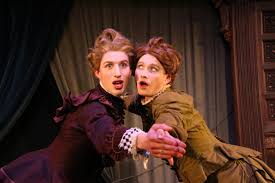
Some years ago I bought a very dear friend tickets for us to go and see a play in London (after almost a year of lockdowns, it seems very strange to write about the theatre).. I’d read a review of the play in The Guardian and both the production and the setting sounded very interesting. As a fan of Oscar Wilde’s writing, particularly The Ballad of Reading Gaol and De Profundis (both particularly suited to criminological tastes) and a long held fascination with Polari, the play sounded appealing. Nothing particularly unusual on the surface, but the experience, the play and the actors we watched that evening, were extraordinary. The play is entitled Fanny and Stella: The SHOCKING True Story and the theatre, Above the Stag in Vauxhall, London. Self-described as The UK’s LGBTQIA+ theatre, Above the Stag is often described as an intimate setting. Little did we know how intimate the setting would be. It’s a beautiful, tiny space, where the actors are close enough to just reach out and touch. All of the action (and the singing) happen right before your eyes. Believe me, with songs like Sodomy on the Strand and Where Has My Fanny Gone there is plenty to enjoy. If you ever get the opportunity to go to this theatre, for this play, or any other, grab the opportunity.

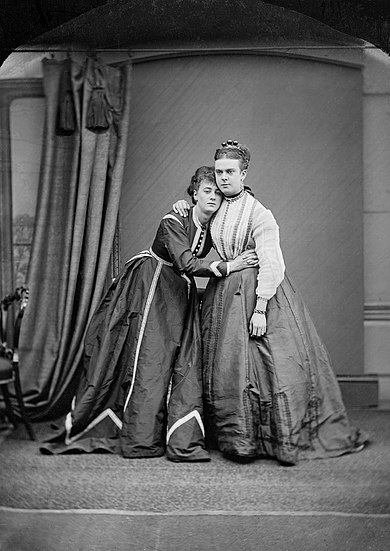
So who were Fanny and Stella? Christened Frederick Park (1848-1881) and Ernest Boulton (1848-1901), their early lives are largely undocumented beyond the very basics. Park’s father was a judge, Boulton, the son of a stockbroker. As perhaps was usual for the time, both sons followed their respective fathers into similar trades, Park training as an articled clerk, Boulton, working as a trainee bank clerk. In addition, both were employed to act within music halls and theatres. So far nothing extraordinary….
But on the 29 April 1870 as Fanny and Stella left the Strand Theatre they were accosted by undercover police officers;
‘“I’m a police officer from Bow Street […] and I have every reason to believe that you are men in female attire and you will have to come to Bow Street with me now”’
(no reference, cited in McKenna, 2013: 7)
Upon arrest, both Fanny and Stella told the police officers that they were men and at the police station they provided their full names and addresses. They were then stripped naked, making it obvious to the onlooking officers that both Fanny and Stella were (physically typical) males. By now, the police had all the evidence they needed to support the claims made at the point of arrest. However, they were not satisfied and proceeded to submit the men to a physically violent examination designed to identify if the men had engaged in anal sex. This was in order to charge both Fanny and Stella with the offence of buggery (also known as sodomy). The charges when they came, were as follows:
‘they did with each and one another feloniously commit the abominable crime of buggery’
‘they did unlawfully conspire together , and with divers other persons, feloniously, to commit the said crimes’
‘they did unlawfully conspire together , and with divers other persons, to induce and incite other persons, feloniously, to commit the said crimes’
‘they being men, did unlawfully conspire together, and with divers others, to disguise themselves as women and to frequent places of public resort, so disguised, and to thereby openly and scandalously outrage public decency and corrupt public morals’
Trial transcript cited in McKenna (2013: 35)
It is worth noting that until 1861 the penalty for being found guilty of buggery was death. After 1861 the penalty changed to penal servitude with hard labour for life.
You’ll be delighted to know, I am not going to give any spoilers, you need to read the book or even better, see the play. But I think it is important to consider the many complex facets of telling stories from the past, including public/private lives, the ethics of writing about the dead, the importance of doing justice to the narrative, whilst also shining a light on to hidden communities, social histories and “ordinary” people. Fanny and Stella’s lives were firmly set in the 19th century, a time when photography was a very expensive and stylised art, when social media was not even a twinkle in the eye. Thus their lives, like so many others throughout history, were primarily expected to be private, notwithstanding their theatrical performances. Furthermore, sexual activity, even today, is generally a private matter and there (thankfully) seems to be no evidence of a Victorian equivalent of the “dick pic”! Sexual activity, sexual thoughts, sexuality and so on are generally private and even when shared, kept between a select group of people.
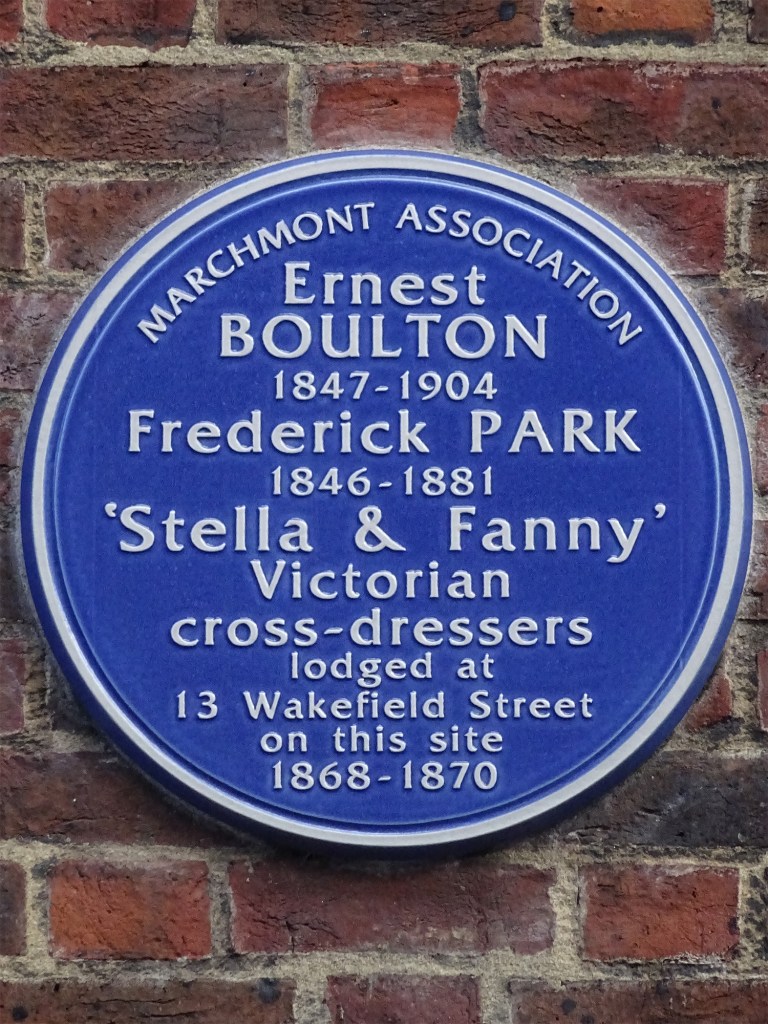
This means that authors working on historical sexual cases, such as that of Fanny and Stella, are left with very partial evidence. Furthermore, the evidence which exists is institutionally acquired, that is we only know their story through the ignominy of their criminal justice records. We know nothing of their private thoughts, we have no idea of their sexual preferences or fantasies. Certainly, the term ‘homosexual’ did not emerge until the late 1860s in Germany, so it is unlikely they would have used that language to describe themselves. Likewise, the terms transvestite, transsexual and transgender did not appear until 1910s, 1940s and 1960s respectively so Fanny and Stella could not use any of these as descriptors. Despite the blue plaque above, we have no evidence to suggest that they ever described themselves as ‘cross-dressers’ In short, we have no idea how either Fanny or Stella perceived of themselves or how they constructed their individual life stories. Instead, authors such as Neil McKenna, close the gaps in order to create a seamless narrative.
McKenna calls upon an excellent range of different archival material for his book (upon which the play is based). These include:
- National Archives in Kew
- British Library/British Newspaper Library, London
- Metropolitan Police Service Archive, London
- Wellcome Institute, London
- Parliamentary Archives, London
- Libraries of the Royal Colleges of Surgeons, London and Edinburgh
- National Archives of Scotland
Nevertheless, these archives do not contain the level of personal detail, required to tell a fascinating story. Instead the author draws upon his own knowledge and understanding to bring these characters to life. Of course, no author writes in a vacuum and we all have a standpoint which impacts on the way in which we understand the world. So whilst, we know the institutional version of some part of Fanny and Stella’s life, we can never know their inner most thoughts or how they thought of themselves and each other. Any decision to include content which is not supported by evidence is fraught with difficulty and runs the risk of exaggeration or misinterpretation. A constant reminder that the two at the centre of the case are dead and justice needs to be done to a narrative where there is no right of response.
It is clear that both the book and the play contain elements that we cannot be certain are reflective of Fanny and Stella’s lives or the world they moved in. The alternative is to allow their story to be left unknown or only told through police and court records. Both would be a huge shame. As long as we remember that their story is one of fragile human beings, with many strengths and frailties, narratives such as this allow us a brief glimpse into a hidden community and two, not so ordinary people. But we also need to bear in mind that in this case, as with Oscar Wilde, the focus is on the flamboyantly illicit and tells us little about the lived experience of some many others whose voices and experiences are lost in time..
References
McKenna, Neil, (2013), Fanny and Stella: The Young Men Who Shocked Victorian England, (London: Faber and Faber Ltd.) Norton, Rictor, (2005), ‘Recovering Gay History from the Old Bailey,’ The London Journal, 30, 1: 39-54 Old Bailey Online, (2003-2018), ‘The Proceedings of the Old Bailey,’ The Old Baily Online, [online]. Available from: https://www.oldbaileyonline.org/ [Last accessed 25 February 2021]
Share this:


A pit and no pendulum
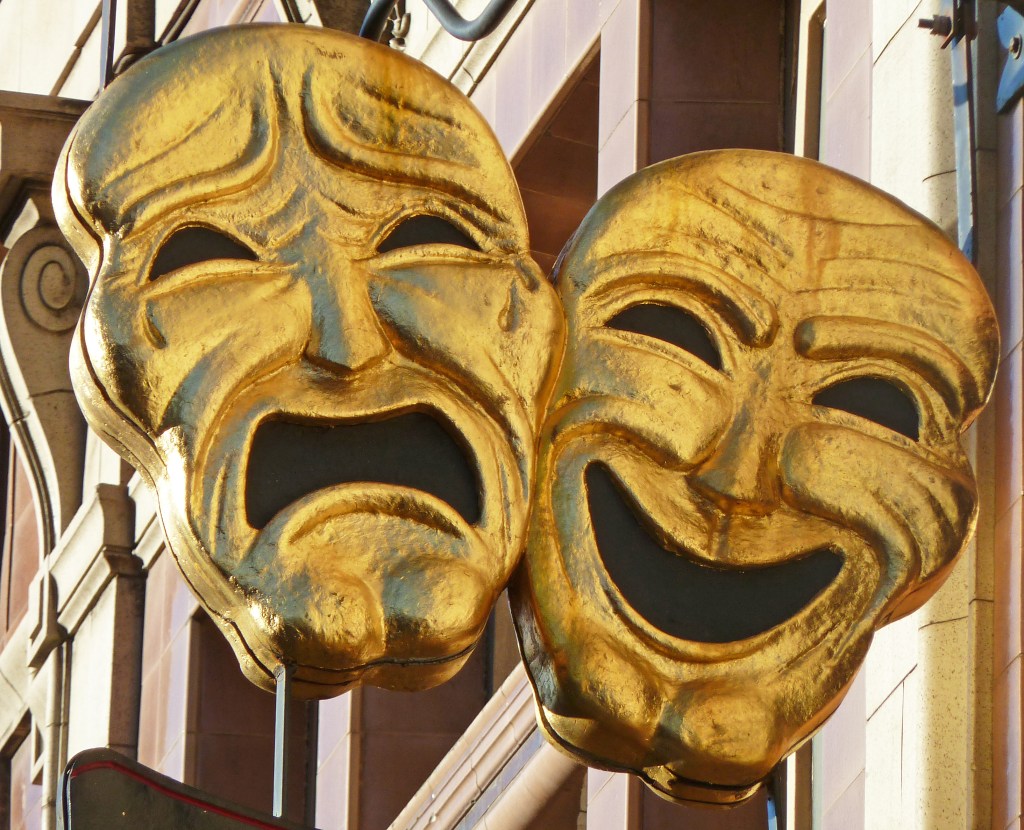
Laughter is a great healer; it makes us forget miserable situations, fill us with endorphins, decreases our stress and make us feel better. Laughter is good and we like people that make us laugh. Comedians are like ugly rock-stars bringing their version of satire to everyday situations. Some people enjoy situational comedy, with a little bit of slapstick, others like jokes, others enjoy parodies on familiar situations. Hard to find a person across the planet that does not enjoy a form of comedy. In recent years entertainment opened more venues for comedy, programmes on television and shows on the theatres becoming quite popular among so many of us.
In comedy, political satire plays an important part to control authority and question the power held by those in government. People like to laugh at people in power, as a mechanism of distancing themselves from the control, they are under. The corrosive property of power is so potent that even the wisest leaders in power are likely to lose control or become more authoritarian. Against that, satire offers some much needed relief on cases of everyday political aggression. To some people, politics have become so toxic that they can only follow the every day events through the lens of a comedian to make it bearable.
People lose their work, homes and even their right to stay in a country on political decisions made about them. Against these situations, comedy has been an antidote to the immense pain they face. Some politicians are becoming aware of the power comedy has and employ it, whilst others embrace the parody they receive. It was well known that a US president that accepted parody well was Ronald Reagan. On the other end, Boris Johnson embraced comedy, joining the panel of comedy programmes, as he was building his political profile. Tony Blair and David Cameron participated in comedy programmes for charity “taking the piss” out of themselves. These actions endear the leaders to the public who accept the self-deprecating attitude as an acknowledgment of their fallibility.
The ability to humanise leaders is not new, but mass media, including social media, make it more possible now. There is nothing wrong with that, but it is something that, like smoking, should come with some health warnings. The politicians are human, but their politics can sometimes be unfair, unjust or outright inhuman. A person in power can make the decision to send people to war and ultimately lead numerous people to death. A politician can take the “sensible option” to cut funding to public spending directed at people who may suffer consequently. A leader can decide on people’s future and their impact will be long lasting. The most important consequence of power is the devastation that it can cause as the unanticipated consequence of actions. A leader makes the decision to move people back into agriculture and moves millions to farms. The consequence; famine. A leader makes the decision not to accept the results of an election; a militia emerges to defend that leader. The political system is trying to defend itself, but the unexpected consequences will emerge in the future.
What is to do then? To laugh at those in power is important, because it controls the volume of power, but to simply laugh at politicians as if they were comedians, is wrong. They are not equivalent and most importantly we can “take the piss” at their demeanour, mannerisms or political ideology, but we need to observe and take their actions seriously. A bad comedian can simply ruin your night, a bad politician can ruin your life.
Share this:


What’s the Capitol of Insurrection? #BlackenAsiaWithLove
A week ago, I was writing -hopefully – about the peaceful transition of power. I was thinking to myself that even if Georgia’s run-off election didn’t release the American senate from the hooves and cleaves of the CONservative right, that somehow, the world would be in a better state now that dialogue-oriented ‘liberals’ were leading the administrative cabinet. This week, however, I am writing about a failed coup d’etat in the United States.
Lynch mob
Much of American history is steeped in the struggle for freedom. To be clear: WE have never, ever been free in America. None of us. Sure, relative to where I sit right now in S.E. Asia, the fact that I am talking openly about politics, and speaking ill of other people’s nasty votes, attests to this relative freedom I enjoy just by having that bald eagle on my passport. The fact that it’s a national pass-time to be critical of power, all the while coveting it for myself, points to the hypocrisy with which each and every American struggles internally. It’s not that people of other nations don’t share this struggle, but it’s just that we Americans do this in the world’s richest, most ethnically diverse nation. And ‘the problem we all live with’ persists.
By signing the Emancipation Proclamation, Lincoln didn’t defeat white supremacy any more than the Declaration of Independence defeated tyranny and injustice. “With great power comes great responsibility,” goes the Spiderman mantra. Yet, here I am on my knees, in tears, crying for the death a of a democracy that’s been in decay ever since my people were brought to those shores in shackles, owned by those mentally enslaved by white-washed Jesus.
Unfortunately, it would be facile and naïve to pretend that this American moment isn’t painful. It hurt me, personally, to see the siege of our Capitol, live and in technicolor, more vivid than any dream I’ve dreamt or nightmare about this very scenario. And I have had both dreams and nightmares about the siege. My mother’s parents grew up southern, Black, poor and politically disenfranchised as a matter of everyday practice under Jim and Jane Crow. It’d would have been nothing for a lynch mob to tackle any negro attempting to vote. That was business as usual, even as they conscripted my grandfather into the army to go to Europe and fight Hitler. The irony has never, ever been lost on any of us.
Many days, in my daydreams, I’ve often wondered what it’d be like if a bunch of freedom-loving folks just stormed the Capitol and occupied the seats of power until the elected leaders conceded to formally grant our freedom. Yet, I would never want to see the mass graves they’d have to dig should any negro or negro-loving white person even gather to talk about storming the Capitol – let alone share plans and munitions. Besides, I am an earnest follower of non-violence and genuinely believe liberation is found therein. Instead, we’ve spent years – decades, nearly a century of recorded history – warning the world where white supremacy would lead us, if left unchecked. I’d be as rich as Jeff Bezos if I had a nickel for every time someone told me that racism was dead, and that I was dredging up hate by insisting we speak about it. Yet, here we are. Whatcha gonna do now?
Share this:


“I can’t breathe”: Criminology, Science and Society
Sometimes the mind wanders; the associations it produces are random and odd, but somehow, they connect. In the book of Genesis, there is reference to the first murder. Cain murdered Abel with a stone making it the original murder weapon. After some questioning from God, who acted as an investigating officer, and following a kind-of admission, God then assumed the role of the judge and jury, sentencing him to wander the earth. This biblical tale is recounted by all three main monotheistic religions, a what to do in the case of murder. The murderer is morally fallen and criminally dealt by with a swift punishment.
There is no reason to explore the accuracy of the tale because that is not the point. Religion, in the absence of science, acted as a moral arbitrator, sentencing council and overall the conscience of society. In a society without science, the lack of reason allows morality to encroach on personal choices, using superstition as an investigative tool. As scientific discovery grew, the relevance of religion in investigation was reduced. The complexity of society required complex institutions that cared for people and their issues.
When the Normans landed in England, they brought with them a new way of dealing with disputes and conflict. Their system of arbitration, using the King as a divine representative, was following Roman tradition and theology but it soon became apparent that a roaming court may not be as efficient. The creation of the magistrates and the statutes on legal representation introduced the idea of bringing professionals into justice. The creation of new institutions fostered the age of the scholar, who uses evidence-based practice.
This new approach removed more religious practices, instead favouring the examination of facts, the investigation of testimony and the study of law. It was a long way away from the system we know now as the witch trials can attest to; a number of whom took place in East Anglia (including Northampton). In the end the only thing that has been left from the early religious trials is the oath witness take when they submit their testimony.*
The more we learn the better we become in understanding the world around us. The conviction that science can resolve our problems and alleviate social issues was growing and by the 19th century was firm. The age of discovery, industrialisation and new scientific reasoning introduced a new criminal justice system and new institutions (including the police). Scientific reasoning proposed changes in the penal code and social systems. Newly trained professionals, impervious to corruption and nepotism, were created to utilise a new know-how to investigate people and their crimes.
Training became part of skilling new mandarins in a system that reflected social stratification and professionalism. The training based on secular principles became focused on processes and procedures. The philosophy on the training was to provide a baseline of the skills required for any of the jobs in the system. Their focus on neutrality and impartiality, seemed to reflect the need for wider social participation, making systems more democratic. At least in principle that was the main idea. Over centuries of public conflict and social unrest the criminal justice system was moving onto what people considered as inclusive.
Since then the training was incorporated into education, with the new curriculum including some BTECs, diplomas, foundation studies and academic degrees that take on a variety of professions from investigative fields to law enforcement and beyond. This academic skilling, for some was evidence that the system was becoming fairer and their professionals more educated. Police officers with knowledge of the system, akin to lawyers to the probation service and so on. So far so good…but then how do we explain the killing of George Floyd? Four officers trained, skilled, educated and two of them experienced in the job.
If this was a one, two three, four, -offs then the “bad apple” defence seems to be the most logical extrapolation on what went wrong. If, however this is not the case, if entire communities are frightened of those who allegedly serve and protect them, then there is “something rotten in the state of Denmark”. Whilst this case is American, it was interesting to read on social media how much it resonated, in communities across the globe of those who felt that this was nothing more than their own everyday experience with law enforcement. For them, police is merely a mechanism of repression.
Since the murder I have read a number of analyses on the matter and maybe it worth going a bit further than them. In one of them the author questioned the validity of education, given than two of the officers in the Floyd case hold a criminal justice and a sociology degree respectively. There is a vein of truth there; educators have some responsibility to forge and promote professional conduct and ethical practice among their alumnus. There are however some other issues that have not been considered and it is time for these to be brought to the surface.
Education or training alone is not adequate to address the complexities of our society. Social awareness, cultural acceptance and the opportunity to reflect on the rules using problem solving and insight are equally important. Foucault has long argued that the justice system is inherently unfair because it preserves privileges and blocks anyone outside from challenging it. Reflecting on that, all major constitutional changes took place after a revolution or a war, indicating the truism in his observation.
If we are to continue to train people on procedures and processes the “bad apples” are likely to strike again. The complexity of social situations requires an education that ought to be more rounded, critical and evaluative. If a doctor takes an oath to do no harm, then so should every other professional who works in their community. If the title of the office is more appealing than the servitude, then the officer is not fulfilling their role. If we do not recognise equality among all people, then no training will allow us to be fair. Suddenly it becomes quite clear; we need more education than less, we need knowledge instead of information and we need more criminology for those who wish to serve the system.
*Even that can now be given as an affirmation

Share this:


For the Trayvons, Since Blackface is a weapon #BlackenAsiaWithLove
2 April 2012 Hanoi
The real Blackface that’s the weapon is the minstrel show,
The Blackface that labeled me out,
Showing people a side of me never seen
But projected onto me,
Such that when so many see my own Blackface,
They see that other
They see that other one.
The one told to them over their kitchen tables.
The one sold to them at the movie show –
Hoop dreams
Baller creams
Holla dolla-dolla bill, y’all.
‘Cause we also know that there are real Black faces
That see those minstrel black faces
Staring them back in the face,
So blinded by the light that they cannot see their own.
That’s one side of Trayvon’s story-
Then we all know how precious of a story this really is
That a mother lost her darling son
That a grandmother lost the one who used to babysit for the other gran’kids
That the little cousins are still unclear about where that dear boy is.
Blackface means that as soon as your voice starts to drop
As soon as that fuzzy hair starts to sprout all over
As soon as your knock knees start to look bold
You’re no longer a kid
Your childhood is lost
And you must learn to act in ways that would make most sane adults stumble
You learn how not to offend white people
How to speak in a soft voice
Or perish
How to walk slowly, with an unassuming gate
Lest you appear as a threat
With the knowledge that any of these threatened folks can annihilate you
Wipe you from this earth
Where only a generation or two ago
Men hanged like tree-ripened fruit
Aged on a rope in an instant
From kid prankster
To adult menace in a matter of moments
We’ve all seen that photo of one of America’s last lynchings
Not nearly the first
Not nearly the haste, carnage and human waste that made people cease.
In 1930, not in anywhere near the deep south
Not from one of our southern willows that sway
But in the mid-west
In Indiana, less than a 150 miles from where Michael Jackson was born
And less than 30 years before he came to be,
So that years later when he sings about hate in our multicultural hearts
Or smashes a window in the video
Enraged with anger
Mad from hypocrisy
The sort that we all know all too well
The gap between the promise and dream.
The reality versus the verses etched all around the capital,
Versus the slave hands that laid those very stones.
The women folk whose very gender made them slaves
And the Black women whose faces made them chattel –
But exploitation of a sexual kind
Yes, we all know too well
What a Blackface can do
How a Blackface can scare you
Even when it’s yours.
So, we now the rage Michael felt,
The hate he seemed to have fought though lost,
Internalized but never giving up.
Yet he was born into a world that hated Blackfaces
Where his was a real threat,
Lest he learn to sing and dance.
The hate is real life minstrelsy.
It’s that same song and dance that we as boys learn to perform
And I am tired of dancing
Trying to make nice when people approach me as cold as ice
Smiling and trying to behave
While all their body language tells me that they are scared to death of me
And that they see my Blackface as chilling.
We all know that all the Trayvons in this place
Learn from an age too early to have to teach kids such harsh cruelties of life
That by 13, he could be nearly 6 feet tall and that factor alone endangers his life
Were he to play sports and his body develop.
He would stand no chance of being treated like anything other than a gladiator.
So it’s even more ironic that Trayvon was a scrawny boy they called “Slim”
Seems there’s no real way to win
Though I think that if we as a people can get through this
If we as a nation can have this conversation
The one mothers like Trayvon’s have with their sons
For we all know how people react to Black
Share this:


“I can’t breathe”

George Floyd’s words: “I can’t breathe”, have awaken almost every race and creed in relevance to the injustice of systematic racism faced by black people across the world. His brutal murder has echoed and been shared virtually on every social media platform – Floyd’s death has changed the world and showed that Black people are no longer standing alone in the fight against racism and racial profiling. The death of George Floyd has sparked action within both the white and black communities to demand comprehensive police reforms in regards to police brutality and the use of unjust force towards ethnic minorities.
There have been many cases of racism and racial profiling against black people in the United Kingdom, and even more so in the United State. Research has suggested that there have been issues with police officers stereotyping ethnic minorities, especially black people, which has resulted in a vicious cycle of the stopping and searching of those that display certain physical features. Other researchers have expounded that the conflict between the police and black people has no correlation with crime, rather it is about racism and racial profiling. Several videos circulating on social media platforms depict that the police force does harbour officers who hold prejudice views towards black people within its ranks.
Historically, black people have been deprived, excluded, oppressed, demonised and brutally killed because of the colour of their skin. As ex-military personnel in Her Majesty’s Armed Forces and currently working as a custody officer, I can say from experience that the use of force used during the physical restraint on George Floyd was neither necessary nor proportionate to the circumstances. In the video recorded by bystanders, George Floyd was choked in the neck whilst fighting for his life repeating the words “I can’t breathe”. Perhaps the world has now noticed how black people have not been able to breathe for centuries.
The world came to halt because of Covid-19; many patients have died because of breathing difficulties. Across the world we now know what it means if a loved one has breathing issues in connection with Covid-19 or other health challenges. But nothing was done by the other police officers to advise their colleague to place Floyd in the recovery position, in order to examine his breathing difficulties as outlined in many restraint guidelines.
Yet that police officer did not act professional, neither did he show any sign of empathy. Breath is not passive, but active, breathing is to be alive. Racial profiling is a human problem, systematic racism has destroyed the world and further caused psychological harm to its victims. Black people need racial justice. Perhaps the world will now listen and help black people breathe. George Floyd’s only crime was because he was born black. Black people have been brutally killed and have suffered in the hands of law enforcement, especially in the United States.
Many blacks have suffered institutional racism within the criminal justice system, education, housing, health care and employment. Black people like my own wife could not breathe at their workplaces due to unfair treatment and systematic subtle racial discrimination. Black people are facing unjust treatment in the workplace, specifically black Africans who are not given fair promotional opportunities, because of their deep African accent. It is so naïve to assume that the accent is a tool to measure one’s intelligence. It is not overt racism that is killing black people, rather the subtle racism in our society, schools, sports and workplace which is making it hard for many blacks to breathe.
We have a duty and responsibility to fight against racism and become role models to future generations. Maybe the brutal death of George Floyd has finally brought change against racism worldwide, just as the unprovoked racist killing of black teenager Stephen Lawrence had come to embody racial violence in the United Kingdom and led to changes in the law. I pray that the massive international protest by both black and other ethnicities’ will not be in vain. Rather than “I can’t breathe” reverberating worldwide, it should turn the wheel of police reforms and end systematic racism.
“Restricting someone’s breath to the point of suffocation is a violation of their Human Rights”.
Share this:


2020 Vision
From a young age the Golden Rule is instilled in us, treat others the way you want to be treated. We follow the rule staying home to protect the NHS in these difficult times, we are all humans we want to be safe; we want to protect our loved ones and cover them with a blanket of safety. We supported captain Tom on his quest to raise money for the NHS, we have complimented his humanitarianism.
It has been a hard time for us all. But in a time of uncertainty we have come together as a community to support each other. We have all had a sense of worry, if we leave the house to buy the necessities, the fear of the invisible killer plagues us. We have all helped play the part in flattening the curve. We have felt sadness for the families that have become victims to this killer. But we have not lost hope, we are still hoping for a vaccination to be ready to protect us. Its great that we have the NHS to help us if we are attacked by this enemy. The police were given extra powers to prevent us from breaking the rules and whatever the opinion is of the police we have to acknowledge that these powers that they have been given symbolises law and order and the order being the contribution to stopping the spread of this horrific virus which in essence will help to protect us.
I am contemplating on this because although there have been bumps in the road throughout this lockdown, we all have the same goal……… to live. If we didn’t want to live we would leave our houses unmasked, ignoring all government advice. If we didn’t want to protect our loved ones and our community we wouldn’t support the NHS.
I am going into deep thought……….
Imagine a world where you are not protected, imagine being at war every time you leave your house, imagine a world where you are not safe in your house……..
Picture this an intruder walks into your house, is outraged by the colour of your skin BANG she shoots you in cold blood. The offender uses the excuse she thought she was being robbed, she thought you were the intruder. However, she was the one who let herself into your house. The media and the police sympathise with this woman, as she is a police officer. In their eyes she does not look dangerous, the victim of this crime is seen as a danger to society based only on the colour of his skin. She is not arrested straight away because she has a thing that is more powerful than anything in America, she has White privilege. Imagine a loved one is killed in this way and during the sentencing of the murderer, the judge hugs the offender as if she has done nothing wrong and disregards the feelings of your loved ones. How would you feel?
This did not happen during the civil rights movement, this happened in 2019.
Imagine going for a for some much needed exercise, you are jogging, listening to your music, taking in the fresh air. You are thinking about getting your physique ready for the summer. Two men hunt you down like cattle where they shoot you in broad daylight and they are not arrested straight away. instead your innocence is debated because you are a BLACK man that has left your neighbourhood and entered theirs…..
Imagine it is not a secret that your race can and is used as a weapon against you.
I have seen people gossip about the activities of others during lockdown. I have witnessed the police being called on youths that are skateboarding in a skate park. I have seen the outrage of the people who have been reported by the police for leaving their houses and seemingly not following the rules. Imagine going to the park, having a picnic, going for a walk and being told by a stranger they are going to call the police on you and they can use your race as a weapon, they know by telling the police the colour of your skin it will have an automatic punishment. After all, All Black people are criminals right?
Imagine the police are called on your father as he is suspected of committing a non-violent crime. He is handcuffed and pinned to the floor by a police officer. The officer is leaning on your father’s neck. He can’t breathe, he is begging for mercy, he is calling out for your grandmother, his mother…… he’s an EX con, a criminal, he took drugs, he robbed somebody, he went to prison. But I ask this should he have been executed?
Imagine the people who can see this crime being committed, imagine your 17 year old sister, daughter, friend recorded the execution of George Floyd and she could only record the crime because she fears that the other officers will turn their guns on her if she speaks out.…..After all we must protect the police from these ANGRY BLACK WOMEN they are a big problem with society……
Imagine being BLACK in America.
In recent months I have struggled to go on Facebook. The reason why is because, while many people enjoy the platform discussing current issues and sharing pictures, more and more I have seen subtle tokens of racism becoming more and more prevalent. I refuse to argue with morons who seemed to have lost all sense of humanity. It is gut wrenching when you have Facebook friends who think it’s acceptable to be outright racist. I understand we do not all hold the same values, I understand we do not all advocate for the the hurt and pain of others. But I do not stand with people who do not want to try and understand that their actions destroy communities. No, I’m not talking about the ones who use the sentiment #All Lives Matter, I agree all lives do matter. But there is a deeper message to the Black Lives Matter movement. And so many people of different colours have been understanding of this notion and want to get an understanding of the disproportionate treatment of the Black community and for that I appreciate your support.
I’m talking about the ones that use George Floyd’s reputation to try and denounce the feelings of the Black community. I’m talking about the ones who act surprised that police brutality against the BLACK community is not a new phenomena. I’m talking about the ones who have a problem with #Blackout Tuesday, #Black Lives Matter and the ones who have jumped on the band wagon to make their businesses and institutions look like they are progressive when they have done nothing but use oppressive practices keep BLACK people in their place. I SEE YOU!
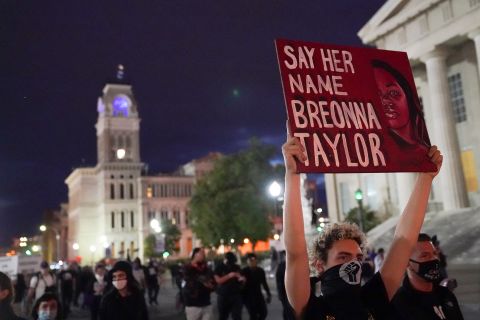
It is very hard to understand how people have been so sheltered by this phenomena, even though social media has been covered with news footage of the Breonna Taylor’, Oscar Grant’, Ahmaud Arbery’, Jordan Davis’ the Tamir Rice’ murder I could go on……..
So, I’m going to round this post off by saying a few small words. For the ones who I have a problem with. I am not your bredrin, don’t use me as the Black friend when you run your mouth and show your true racism and need a token Black friend to save you from your mess. It’s cool when you want to dance to our music, eat our food, wear our fashion, appropriate our hairstyles and when you have a fifth cousin twice removed that has mixed race kids or you decide you want to experiment by dating someone that is Black I SEE YOU! don’t try and hide behind the smoke and mirrors and don’t use your relationships as a platform to validate your racism. You have no right to talk negatively about our oppression, you have no right to invalidate our pain. Don’t pretend you see us as your equal, don’t pretend we are accepted into your circle. Stay silent while we are being brutalised, stay silent while we are disproportionately dying of Covid! continue to stay in your bubble I hope you never need to call on the Black community to speak up for YOU! A lot of people have said 2020 is a year they will cancel, as it’s been a year of devastation, but I say 2020 has given me the 2020 vision to see people for exactly who they are.
Share this:


News Flash #BlackenAsiaWithLove #SpokenWord
This Spoken word piece was inspired by watching the TV news with my aunt Shirley. Shout-out to Evelyn from the Internets, because I’m calling in Black tomorrow.
Audience/Reader: Hum, snap, step, clap, sing ‘Another One Bites the Dust’
Newsflash at dawn:
After several overnight reports of disturbances,
Police are on the lookout this morning for a smart negro male,
Accused of bringing up racism and angering the masses.
The suspect is considered armed with intelligence,
and other deadly weapons such as pen and paper.
Bang!
9 0’clock morning News:
Police are on the lookout for a smart negro male,
Accused of bringing up racism and angering the masses.
Suspect is considered armed with intelligence and other deadly weapons.
The public is advised NOT to approach the suspect,
And notify authorities immediately…
Immediately…
So he can be shot.
Bang!
Bang! 
News at noon.
Police are on the lookout for a smart negro male,
Accused of bringing up racism and angering the masses.
This station has obtained exclusive video of today’s deadly police shooting captured by a member of the public.
This exclusive footage posted to social media shows the suspect reading a book on colonization, before advising authorities who responded immediately…
When authorities arrived,
Suspect was found holding a book,
Defacing it with pens and markers as officers approached.
This exclusive video captured by several members of the public shows suspect refusing the officers’ orders to release the book.
Suspect is seen raising the book,
At which point officers fired 32 shots,
Twelve of which landed in the suspect’s head.
After anti-terrorist units spent several hours clearing the area of any potential radical activity,
Emergency services were allowed on the scene at which point the suspect was pronounced dead.
Bang! Bang!
Bang!
Evening news flash:
This station has new, exclusive CCTV footage from the Central Library where the suspect loitered for several hours.
The suspect is captured on several different cameras,
And can even be seen interacting with several members of the public.
An anonymous informant who works for the library claims that the suspect left several notes in the suggestion box, demanding the library, quote:
“…rectify the deafening void of Black autobiographies in the library’s Great American biographies collection.”
The anonymous library informant said that the suspect always sat at the same table near the ‘African-American literature’ section,
And had been seen furiously taking notes while going through stacks of books.
The anonymous informant says that the library received
“Several complaints about these disturbances.”
None of the complainants ever went on record.
News at 5!
This station’s investigations have also uncovered the Central library’s exclusive files on the suspect.
The suspect joined the library on September 11th of 1984 under a student account and a different name. That’s right.
We’ve obtained an exclusive ‘News at 5’ interview with the suspect’s fourth-grade teacher who initially helped the suspect set-up the library account.
The teacher describes the suspect as quote disruptive and “radical to the core,”
The teacher claims that during a history lesson, the suspect once referred to this nation’s founding fathers as “Unpatriotic, patriarchal, racist oligarchs with a God complex.”
Indeed, this suspect has a pattern of radical, anti-American sentiments.
While these troubling incidents were well before the terrible radical Islamic attacks of 9-11,
The pattern suggests early radicalization!
Authorities are still trying to understand why the suspect checked out a Koran,
And other books on Islam,
Just days after those terrible, Islamic attacks.
The suspect visited the library regularly and checked out biographies of other known negro Muslim radicals such as Malcolm X and Muhammad Ali.
Experts believe that reading these texts lead to the suspect’s radicalization.
From 2006 to 2007,
The suspect checked out every collection of essays by James Baldwin.
This triggered the FBI’s terrorist watch protocols.
Nightly news flash:
New evidence has surfaced regarding today’s tragic case of domestic terrorism.
Authorities have found that the suspect was quote very active
In the known radical hate group Black-and-Proud.
Our investigative reporters have uncovered proof that
The suspect was a key member of this radical hate-group.
Apparently, authorities had infiltrated Black-and-Proud’s on-line forum as early as 2006.
An anonymous police informant closely tied to the case believes that the suspect may have worked within an organized cell within Black-and-Proud.
Authorities are not calling it a terrorist plot,
But are calling on the public for any leads.
This station has obtained exclusive footage of Black-and-proud operatives conducting an indoctrination program for kids as young as five.
In this newly obtained footage from Black-and-Proud’s own website,
The suspect can be seen reading portions of the autobiography of Malcolm X to what looks like a negro kindergarten class.
Authorities are calling it a justified homicide.
Case closed.
—
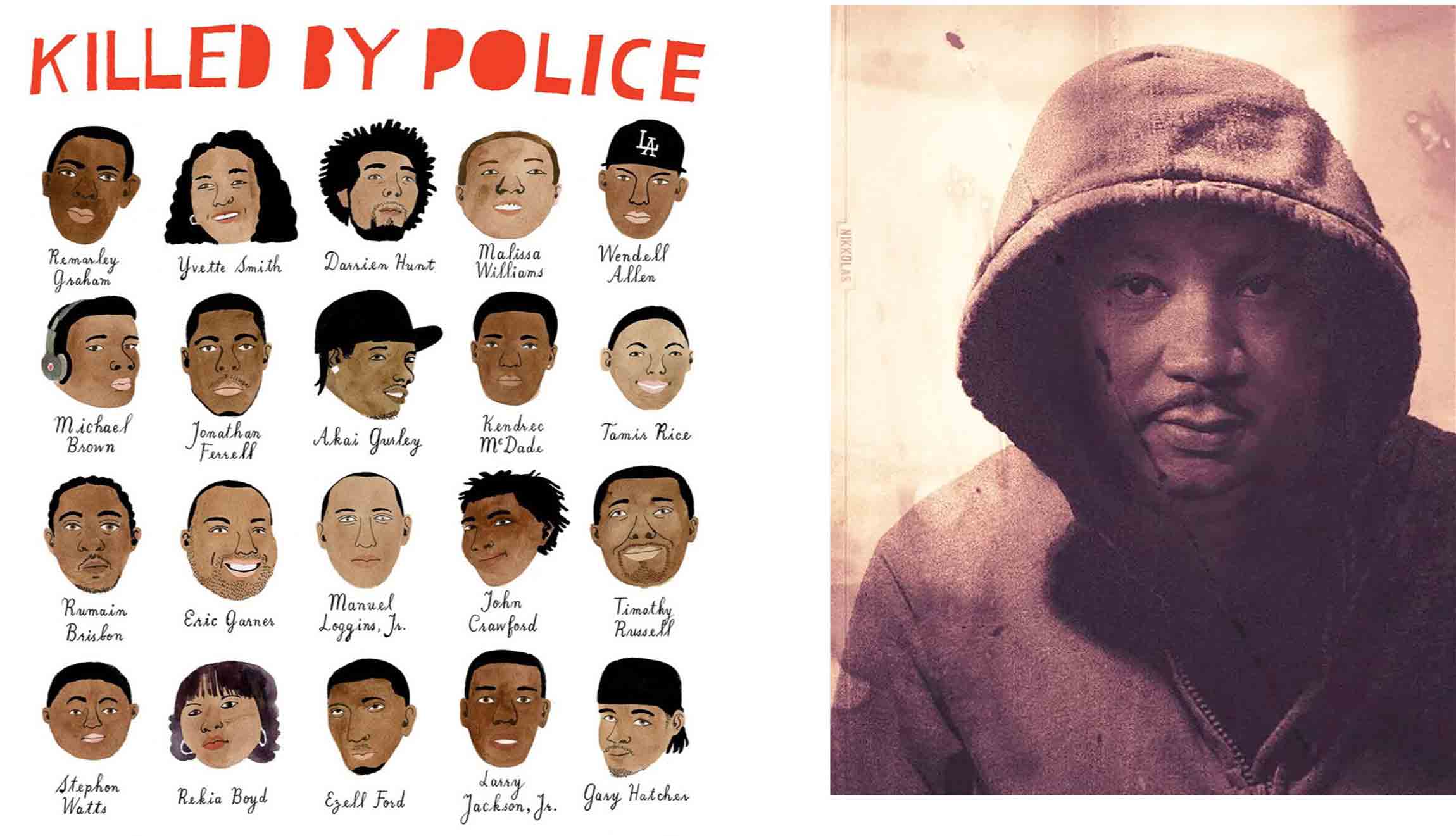
Photo credit:
The most powerful art from the #BlackLivesMatter movement, three years in
Washington Post, July 2016

 Thoughts from the criminology team