
Home » Pandemic (Page 6)
Category Archives: Pandemic

The pandemic and me – Paula
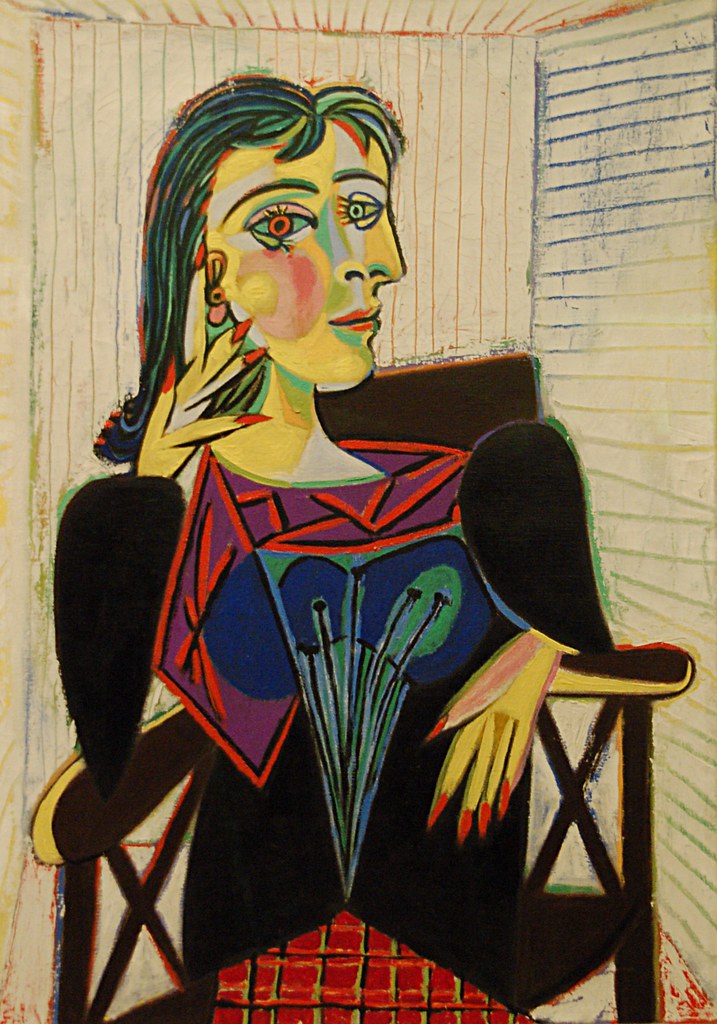
Portrait de Dora Maar, Pablo Picasso, 1937
The last time I physically went to work was Thursday 19 March, over 12 weeks ago. Within days, I blogged about the panic and fear that risked overwhelming us all in the light of a pandemic. Some of that entry was based on observation and the media, other parts, my own feelings and emotions.
Prior to the pandemic, I had been the kind of person that felt the need to be at work, often for 10-12 hours a day This was partly to kid myself that there was a clear delineation between the personal and the professional (something, I’ve never managed to achieve since joining academia). Part of it was due to my previous career in retail; when there are customers there must be staff, so there is a necessity to presence. Part of it was tied up with notions of work ethic and fear of missing out, dropping out, losing connection. The regularity of the Monday to Friday (and sometimes, Saturdays for events) commute there and back, the same familiar route, the same familiar timetable, the same familiar faces. Even prosaic matters, like my wardrobe, is primarily designed for my professional life, however, #lockdown life requires something different than formal suit, dresses and court shoes. Similarly, make-up seems out of place, why paint your face or nails, without the rest of the professional apparatus, deemed so necessary to what Goffman (1969/1990) identified as The Presentation of Self in Everyday Life.
In his play Huis Clos (No Exit) Jean-Paul Sarte famously claimed that ‘Hell is—other people’ (1947/1989: 45). This is often interpreted as if the company of others is hellish, but that is a misreading. Sartre, like Mead (1934) before him recognised the role of the other, in our own understanding of ourselves. In essence, we can only ever see ourselves through the lens of others. In lockdown that lens dissipates or even disappears entirely, even with technology, which although we appreciate as an enabler of communication, I’ve yet to hear anyone say it is a complete replacement for human interaction.
Nevertheless, lockdown has forced us to look again and not only at our wardrobes. Once the panic and the novelty of not going to work, socialising and all the other activities, that are part and parcel of our lived experience passed, a new normality replaced this. Introspection is often missing in twenty-first century life, even among those of us that spend considerable amounts of time, professionally, if not personally, reflecting on what we’ve said, what we’ve done and how we can change, amend and ultimately improve as human beings. It’s also provided space to consider what we can’t wait to get back to, what we’re glad to have a break from and what we are looking for ways to avoid in the future.
For me, part of that introspection has focused on my need to be present at work. After all, in academia there is less pressure to be on campus, particularly on one which has been designed with the future in mind. There is no office, where I need to water plants, (most of) my academic books are here and I also have a work laptop, as well as my own pc. At home, I can have silence, or music while I work. If I am hungry or thirsty I can satisfy those needs. If I am overwhelmed, I can simply walk away for a little while, without explanation. If I am lonely, confused or need advice, I can pick up the phone, message, video call and everything else that technology can offer. My professional life can pretty much continue without too much interruption.
So what happens when things return to normal, should I throw myself back into the same patterns as before? I am hoping the answer is no, that I will do things differently, not least for my own wellbeing. Although I love the look and feel of the campus, I have always struggled with what, criminologists will understand as the panoptic gaze (Foucault, 1977). The sense that wherever you are, the threat of observation is ever present. The panoptic gaze does not differentiate between deviant or pro-social activity, it simply retains its disciplinary function designed to constrain and control For many, it is an open welcoming space, however, as a person who thrives on quietness, on privacy, on spending time away from human contact, it can have the opposite effect. Not all of the time, but at least some of it, I wouldn’t want to abandon campus life completely. The lockdown has shown me that it is possible to have the best of both worlds
References
Foucault, Michel, (1977), Discipline and Punish: The Birth of the Prison, tr. from the French by Alan Sheridan, (London: Penguin Books)
Goffman, Erving, (1959/1990), The Presentation of Self in Everyday Life, (London: Penguin)
Mead, George Herbert. (1934). Mind, Self and Society: From the Standpoint of a Social Behaviorist. (Ed. Charles W. Morris). (Chicago: Chicago University Press)
Sartre, Jean-Paul, (1947/1989), No Exit and Three Other Plays, (New York: Vintage International)
Share this:


A weekend in London…. It’s not what you think

The weekend just gone has mirrored many weekends we have experienced in lockdown: glorious sunshine, hot temperatures, and longing to spend time with family and friends! However this weekend marked the beginning of an attempt at normalcy for our household, as we spent the weekend in London serving hotdogs, burgers, ice creams and cold drinks to park visitors. Something we have done year on year, summer after summer, weekend after weekend: yet this weekend was remarkably different. Therefore the notion that we can return to normalcy soon, doesn’t seem to be ringing true.
For some context: my partner works in/runs a takeaway kiosk by a park in London. It has been closed during lockdown, but re-opened this weekend. This time last year, there were 3, sometimes 4 members of staff (including myself in the summer and on weekends when an extra pair of hands are required), serving customers and giving directions to residents, visitors and tourists of London. This year, there is my partner and I: in a 4metre kiosk it is not possible to safely maintain a 2metre distance so the other members of staff are left waiting until it is safe and viable for them to come to work. They know this, and are happy with the decision as in times like these, safety should be at the forefront of all decisions.
And the added safety precautions are what makes this weekend so unrecognisable at the little kiosk in London (albeit rightly so). It is and has always been a cash business: cash is quicker to process, easier to return should it be required and safer with regards to checking for counterfeit (no issues of hacking machines or someone using stolen cards). In line with the current climate, the decision was made to try and move to contactless payments in order to help reduce the spread of COVID-19. This in itself was hassle and problematic, but I shall not bore you with those details. Alas the machine is here, and off we go. But it requires a steady 4G signal, which by a park is hit and miss, it also disconnects when it has not been used for periods of 30minutes, which happened frequently over the weekend, and there is a minimum spend in order to make the interest rate/payment of the machine justifiable. It is also slow when customer’s contactless does not work, in which case they have to hold and touch the machine, which then results in us having to clean down the machine after this has happened before we can move on to the next transaction, which is certainly not quicker than cash. And whilst most customers I must say have been patient and understanding, this has resulted in several getting quite verbal at the time it is taking to serve them (we are talking a matter of minutes instead of what used to be seconds with cash).
The differences are not just with the use of card, but also how the hot food is done (my area of expertise). Usually customers could apply their own sauces, but now in order to prevent lots of people touching the various sauces on offer and potentially spreading anything, it is left to me to apply. This has resulted in a whole host of comments relating to being stingy with sauces: ‘I know times are hard but come on’, or ‘I actually want to be able to taste the mustard’. I, personally, like to drown food in sauce, no actually mayo, not that fussed about other sauces. However my partner is the complete opposite, the smallest most pathetic amount of sauce you could imagine: that is what he applies to his food! But it is safer and easier to apply too little and add more than the other way, so I am justified in using a little amount of sauce! It has nothing to do with what the sauce costs! Grrrrrr! Cold drinks used to be placed on the top counter, which customers could take themselves, and then once all their selected items have been placed on top, we would charge them and handle the money. Now at the risk of people touching and then returning the item (which results in us having to clean down the bottle or can, slowing everything down), we are asking for money first: which people apparently are not pleased about. They want to feel how cold the drink is: it has come out of the fridge, which it has been in overnight and business is so slow the drinks are not being re-stocked: so trust me it is cold! (Face hitting emoji!)
All in all, it was a stressful weekend, when the amount of customers we served should not have meant it was stressful. I do not mind change and I appreciate that the changes in place are needed to keep everyone safer, which is fine. But things will be slower, things will be different. The media has pushed at the 15th June to resemble something we recognise as ‘normal’: but I do not think this is the case. ‘Normal’ whatever that really means, will not return and maybe this is not such a bad thing. But I will be grateful when it is safe again for customers to apply their own blooming sauces!
Share this:


The pandemic and me – Lessons I’ve learnt from the #lockdown

This lockdown has certainly given us time to think and perhaps reflect on a variety of topics and situations. I’ve shared a few thoughts below and I wonder just how many are universal in some way.
I need to ensure I have a structure to my day and week. I think we all need some sort of structure to our lives and that structure is often given to us by work and perhaps other sociable events such as going to the gym or going to a coffee shop. It may be that the weekly shopping provides us with an anchor, Saturday may be a shopping day or religion might dictate a visit to a place of worship on a particular day. At times I’ve found myself getting confused about what day it is, Groundhog Day, I think. However, for the most part, I think I’ve got it sorted out. My wife and I discuss our schedule every morning over a cup of coffee. We have sorted out a routine of work, daily chores, fun bits and exercise.
My willpower is tested but I can be determined. I have never been a heavy drinker, the occasional binge, yes but then who hasn’t? It is however, quite easy to slip into the habit of having a glass or two of wine in the evening, every evening and perhaps a gin and tonic or two. I can’t go anywhere so thinking about having to drive the next day is not an issue. It’s not until you start totting up the consumption that you realise maybe you might have to reign this in. ‘School nights’ are back again, no drinking in the week. I make up for it at the weekend though.
I’m not risk adverse, I just like to think I’m logical. I don’t think it takes a rocket scientist or in fact any scientist to work out that the government (particularly a Conservative government) would not enforce the cessation of most business in the country without a very, very, very good reason. Stay in has been the mantra and of course we all know how difficult it is and we all know that as usual, the most vulnerable in society have been hit the hardest by this pandemic. Logic dictates, well at least to me, that going out to any store anywhere carries a risk. Some risks are necessary, for instance a trip to the chemist to pick up a prescription, but a trip to a DIY store, really? I’m sorry but given the risks, I think it’s a no brainer. Not only do I not want to catch the virus, but I would be distraught if I thought that through my own selfishness I had passed it onto someone else.
I never really thought about all those people that are truly special. We clap every week for the carers and the NHS and all those involved who are truly remarkable. I do ask myself though, would I want to turn up to work in a supermarket? Would I want to be out delivering parcels or the post? Would I be a NHS volunteer? Would I be happy working on public transport or emptying dust bins? There are so many people doing ordinary, even mundane jobs and volunteering roles that I now appreciate more than ever. And I would go far as to say I am humbled by what they do and continue to do despite the risks.
I appreciate the world around me. Not being able to go out and socialise in some way, be that work, or friends or family has provided more time for other activities. Our walks to the next village and back on roads devoid of most traffic has revealed an astonishing array of wildlife to be gazed upon and appreciated. That is of course if you’re not gasping for breath following a walk up a steep hill (well I call it steep but in a car its barely noticeable).
Some things don’t change. I’ve also noticed the gate to the footpath across the fields near our house has gone. A heavy wooden gate which, apparently has been stolen. On our walks we have noticed the increased number of cyclists whizzing along the road. Most give a wide birth, but some don’t seem to have a care for others, one nearly colliding with us as he flew around the corner. It seems with the reduction of cars; the idiotic driver has now given way to the idiotic cyclist.
What will a ‘new normal’ look like. At some stage we will get back to normal but its difficult to contemplate when that will be and what it will look like. Maybe getting back to the old normal is not what is needed. I’m trying to envisage how I will make changes in consideration of what I have learnt during this lockdown. What changes will you make?
Share this:

Technology and Learning: A baby and the bathwater moment

I recently shared some thoughts about the problems with technology and working from home. I suppose the nub of the matter was twofold firstly, if I have problems with technology, why would this not also impact some of my colleagues and students, thus limiting what can be delivered online. Secondly, whatever is delivered online does not suit everyone and whilst as educators we need to adapt to circumstances and new ways of working, we should be cognisant that simply imposing the new ways on students does not always suit what they want or more importantly, what they need. If we acknowledge that everyone learns in different ways at different times, then a one size fits all approach is not delivering anything like a premium learning environment.
In writing my previous blog, I also started to think about how difficult it is to be motivated whilst working from home and how my experiences have at least partially prepared me for this. I say partially because past experiences did not encompass being in lockdown.
When I was 15, I returned from overseas and went to the local college to study for my ‘O’ levels (GCSE now) rather than a school. It was far more relaxed in respect of attending classes. This was a time when at 16 people could leave school, so the college was full of students who were 16 and essentially independent from the school regime. I turned 16 whilst at college. I remember not going to every class, sometimes perhaps because I preferred to spend time playing football in the sunshine and at other times because there was some casual work somewhere that would earn me a bit of money. There were no distractions such as computers and mobile phones so actually attending college was in the main better than being bored outside of it. That was one incentive to engage in my education, I had others such as friends being at college but probably above all I recognised I needed some qualifications. I think my parents might also have been a little peeved if I’d not done anything. I had a structure to my life and a major part of it was getting up in the morning and attending college on my bicycle; rain or shine, for the most part I was there.
At an early point in my policing career, I decided I would like to take the promotion exam to sergeant. An annual exam which incorporated, as I recall, three two-hour papers, one relating to crime, one traffic and one general police duties. An awful lot of legislation and procedure was to be tested and all of it could be found in the regularly updated promotion manual. A tome, if ever there was one, divided into various sections that covered everything a would-be sergeant needed to know and in addition, legislation for the inspector’s exam. Years went by with well intentioned attempts to study, followed by a lack of action. I just couldn’t get my head round how to do this, despite trying to answer the questions in the promotion section of the Police Review magazine.
I can’t remember exactly when it was but there was an announcement that the promotion process was to change, the exam which gave you a ticket to a promotion board, was to be replaced with an assessment centre. This new way involved not only an exam, but scenario based assessments. That year I decided I really needed to pass the promotion exam to avoid the new process, so I purchased access to a correspondence course. It wasn’t cheap, and it was before computers as we know them. I received a plethora of books each divided up into various chapters and each requiring me to answer questions that were then sent by mail to someone to mark and provide feedback. What this required was organisation and commitment. I was lucky, I was working in a very disciplined job, organisation and commitment were to some extent, if I set my mind to it, second nature. And two added incentives, an easier passage to promotion as I saw it, and I’d paid out a lot of money that I wasn’t going to waste. That year I passed the sergeants and the inspector’s exam, two in the bank although it was still some time before I was promoted.
When I embarked on my degree, I had to apply the same self-discipline. Despite it being part-time, attendance for lectures and seminars was difficult, there was no way I could attend everything whilst doing shift work, but I tried my best. I even had to take time out because I was involved in a major investigation that took me away from home for 6 months. By this time, I had a very young family, so every assignment was a challenge to complete and there was no online Google access to papers and blogs and the like. It was library based work, sometimes the university library, other times local libraries and often late nights in the office at work. What it needed was self-discipline, commitment and a structure to each day, well as best as possible given the demands of shift work, major enquiries and long working hours. Every time I faltered I reminded myself that I’d done a lot of work, put a lot into this and I wasn’t about to throw all of that away.
When I embarked on my Ph.D. my commitment and self-discipline was sorely tested at times. Tragedy and life altering events pushed me to the limits, but I managed to maintain that commitment and self-discipline, sometimes aided by others at work who tried to make things a little easier. The office at work provided space for both my day job and my Ph.D. The two morphing into one at times.
Why tell you all of this, well its simply this. I ask myself what makes a student engage in their course and more importantly, what inhibits them? Firstly, they need self-discipline. When I went to college, there were a number of things that ensured I would turn up; my parents wouldn’t have countenanced my staying in bed or around the house all day; day time telly was rubbish (only three channels) and there wasn’t an awful lot else to do. My friends were either at school, at college or working and there were no mobile phones, so contact was either at college or in the evenings and weekends. Learning could only be done at college, no recorded lectures or Collaborate or e-books. I also recognised I needed qualifications to get on in life.
When I embarked on my promotion exams I recognised the need to have a structure to my learning. This was partly provided by the correspondence course and the way it was set up and partly provided by discipline I learnt in my work. It did though need a structure provided by the course and an incentive to do it at that moment in time.
My degree also needed self-discipline, nobody chased me to turn up and nobody chased me for assignments. Not being there, meant missing out on discussions and learning from other students, not just the lecturers. I’d paid for this as well so another incentive to succeed, this was not some loan to be possibly paid in the future, this was real money, my money up front. And the more I did the more determined I became that I wasn’t going to waste my efforts.
Anyone will tell you that a Ph.D. is challenging and that for the most part, the achievement is not about knowledge or brilliance but about gritted determination to complete it. That determination requires self-discipline and that self-discipline for me was aided by tagging the Ph.D. onto my job. My office at work was my sanctuary, it was easier to stop working on one thing and then seamlessly move onto writing up the Ph.D. I had a structure to my studying and my work.
So, I begin to wonder, do recorded lectures, Collaborate, ebooks, the internet, social media and a plethora of other advances really help students? Why get up in the morning to attend lectures if you can watch a recorded version of it later, ‘a must get round to it moment’? Why bother to go to the library when you can Google stuff and read, well at least skim’ e-books? Why bother with classes when you can chat with your mates and so called ‘friends’ on Facebook or the plethora of other social media apps. There is no financial incentive when the payment for the course is made on your behalf and whilst you have a massive debt on paper, the reality is that you will never pay it back (If you don’t believe me, have a look at the Martin Lewis website). There are no parents to get you up in the morning or to scorn your lethargy, at worst any failure will be chided sometime in the misty future. All that students can rely on is self-discipline and their own belief in commitment. A hard ask when you don’t have all the anchors you had at school and college. I was lucky, I grew up in an era of much fewer distractions. I was employed in a job that required a high degree of disciple, so self-discipline was much easier. I was also a mature student so could call on a vast amount of experience.
I’ll leave you with a thought. The year 1840 saw the introduction of the first stamp, the Penny Black. Despite the advent of emails, texts and the internet, nearly two hundred years later, Royal Mail are still delivering letters and packages. Whilst you can get your bank statements online, you can still have paper copies. Whilst you can read books on Kindle and other contraptions, book stores still exist, and hard copy books are still sold by the millions. Whilst, music can now be delivered in so many different electronic formats, there is still a clamour for vinyl records. Whilst films are available at home in so many different ways, people still go to see films at the cinema.
Technology is wonderful and is a great enabler in so many ways. That doesn’t give us licence though to ignore the value of what by some may be seen as ‘old fashioned, stick in the mud’ structures, processes and transactions. Sometimes things are the way they are for a reason, change them and there are at times problematic unintended consequences. Making changes through the use of technology and ignoring tried and trusted methods might actually be akin to ‘throwing out the baby with the bathwater’.
Share this:


That old familiar feeling

It would seem it’s human nature to seek out similarities in times of uncertainty. An indication that someone somewhere has experience they can share. Some sort of wisdom they can provide or at the very least a recognisable element that can somehow be interpreted to give an indication, that when it happened before everything turned out ok in the end. With the current world pandemic leaving so much free time to think and observe what is going on, one has to wonder at some point if the differences should be a more prominent focus point.
Historically world pandemics are not new. The plague, small pox, Spanish flu, all form part of a collective historical account of the global devastating impacts a new disease has on mankind. I found myself re-reading The Plague (Camus, 1947/2002) and pondering the similarities. Self-isolation and whole town isolation, the socioeconomic impacts on the poor seeking employment, despite the risk to health these roles carried and the heart-breaking accounts of families unable to say goodbye to loved ones or bury the dead in a dignified, ordinary manner.
Early on politicians and media were quick to compare the pandemic with war. Provocative language became commonplace. Talk of fighting the invisible enemy in the new ‘war’, with the ‘frontline’ NHS staff our new heroes giving the country hope we could win. It came as no surprise to wake one morning and see ‘memes’ shared on social media portraying Boris Johnson as the new Churchill.
Media quickly changed. Suddenly films which dramatised pandemics grew in popularity. These fictitious accounts of how the world would respond, the mistakes which would be made and the varying outcomes individual responses towards official advice would have on their chances of survival. Even I have to admit a scene from Contagion discussing the use of hand washing and refraining from touching your face seemed to echo government advice. Fortunately, the scenes of supermarket looting were overdramatic but the empty supermarket shelves and panic buying hysteria was all the same.
There were however, some comparisons made, which haunted me. I’m sure everyone has their own reasons for finding distaste and maybe mine were unique to me. A combination of my academic knowledge and background mixed amongst my own personal views and current situation. As a mother of three, I had suddenly become a teacher with the closure of schools. My recent master’s degree in education fortunately allowed me a basic, self-researched understanding of mainstream education and home education methods.
I watched as friends and family members concerns grew about how they as parents could provide an education. Initially most looked-for similarities once again. Similar timetables to school, similar methods of teaching, trying as a parent to morph into a similar role their children’s teacher has. I think most parents felt overwhelmed quite early on. Many most likely still do, because the thing is, home education is not comparable to mainstream education in many ways at all. That’s not to say one is superior, this is certainly not my opinion. Quite simply, they’re fundamentally different approaches.
I often find myself throughout my academic journey looking for comparison with concepts and areas in which I’m familiar. My undergrad in law and criminology makes occasional appearance in most of my writing, perhaps more often than not, in fact, I used my continued interest in criminological and legal concepts to make my education MA my own. Further reinforcing the idea, familiarity provides some sort of comfort as we enter something unknown.
One comparison which deeply worried me that finds its roots in criminological concepts, is those who have compared self-isolation with prison. Having experienced a long, heated debate previously following a comment I made displaying my disgust for the re-introduction of the death penalty, it seemed futile to raise the issues with this in the only social environment I had access to currently, social media. I remain hopeful, most criminologists recognise the obvious differences between the two.
In the end when we look back at this moment in history, there will no doubt be many more comparisons made. We often look to history to learn lessons and I’m not sure we can do that without recognising some sort of parallels with the situation. Whether that be for comfort, guidance, information or to learn, entirely depends on the individual. I will leave you with a quote of something I heard a few days ago which has stuck with me and provided inspiration for this writing…
“History doesn’t repeat itself but it often rhymes”
With that in mind, I would suggest we take comfort in the familiarity of similar situations, that this pandemic won’t last forever, but the difference it may make on our lives will always be our personal experiences. When we look back and search for comparison of life during the pandemic and life afterwards, we may well appreciate the experiences we once took for granted.
Reference
Camus, A (2002). The Plague. London: Penguin classics
Share this:


Never fear…. Spring is almost here

https://shop.royalacademy.org.uk/david-hockney-arrival-of-spring-poster
There is no doubt, we are living in a time of crisis. Everywhere we look there are signs of disorder, disruption and chaos, impinging on our real and virtual lives. You can see it in the faces of family, friends, colleagues, the old and the young from children to pensioners, and everyone in between. There is nothing else on anyone’s lips beyond what they’ve heard, what they’ve seen, how they’ve prepared, or haven’t for this human disaster. Scientific words like Covid-19, Coronavirus, criminological words such as isolation, criminalisation and newly minted words; social distancing are being pushed into conversations. These appear alongside the more prosaic questions, which shops have bread? toilet rolls? milk? eggs? Is this open, is that open, can I get there, am I allowed to go out?
Over the past week I have seen this fear develop, evolve and spread. It threatens to swallow us all up in our panic. Many people, myself included, are desperately trying to maintain the everyday, the mundane, some routine, some semblance of normality. My institution is trying to be supportive, lots of extra email, how to move your teaching online, what advice to give students, how to look after your mental and physical health and that of others, at a time like this. All of this advice is well-intentioned and aims to alleviate fear, after all scientia potentia est, or so we are told.
The problem with trying to recreate our real lives in a virtual environment is far more profound than simply changing our modes of operation. When people are worried, frightened and saddened, no amount of pretending that it is “business as usual” will distract them from the everyday lived experience. We can pretend, but when you are worried about your own health, that of your family, when you don’t know where you are going to be able to get the basics of life from, and for many, how on earth you will be able to pay for it with limited or no income, everything else pales into insignificance.
So far we have seen so much evidence of privilege: those that aren’t worried because they’re healthy, those that stockpile food and other essential products, because they can afford to and those that isolate themselves in the lap of luxury, because they have access to money, property and contacts. All of which feeds the fear by the second, minute and hour. Competing with this negativity are the stories around kindness, the narratives from the NHS, the police, carers, shop workers, the list goes on showing that the human spirit is still burning strong, that we have a choice about our behaviour, our thoughts and our feelings. That we can make a difference, if only we want to.
This week has felt like a nightmare, so dark, so stressed, the walls are closing in on all of us, forcing us into confinement. We look out of the window and nobody is moving outside. It has all the ingredients of my favourite genre, dystopic fiction, but this time we’re all fully immersed and we have no idea how the novel ends. How many will die, how many will find their finances, relationships, employment, education disrupted and/or destroyed?
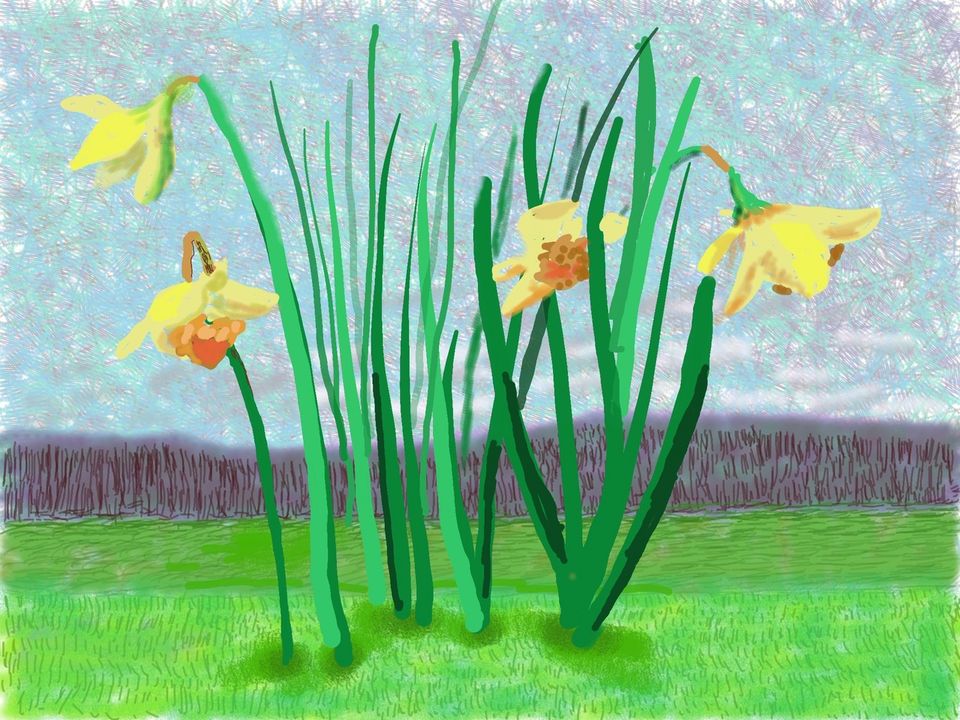
That changed for me yesterday, when I stumbled upon a message from the artist David Hockney. The message was incredibly simple ‘Do remember they can’t cancel the spring’. I should declare in advance, I am a little biased, he’s one of my favourite artists, but with Hockney’s simple statement he touched on a profound truth. We are humans, infinitely resourceful, extremely adaptable, incredibly social.
Look after yourselves and each other, if not face to face, then virtually. Check in, touch base and create a life line for each other. But also remember to take some time away from the screens, look out of the window and remember the world is still a beautiful place, filled with many wonders, including humankind.
https://www.theartnewspaper.com/comment/a-message-from-david-hockney-do-remember-they-can-t-cancel-the-spring?fbclid=IwAR2iA8FWDHFu3fBQ067A7Hwm187IRfGVHcZf18p3hQzXJI8od_GGKQbUsQU

 Thoughts from the criminology team