
Home » Pandemic (Page 5)
Category Archives: Pandemic

Christmas ’20: I Bought Presents for the First Time in a Decade
As someone that lives in the privilege of not actually had to experience Coronavirus (to my knowledge), I have spent a good portion of last year on the sidelines. Losing my auntie during my undergrad in January 2017, and then my cousin Steve at the start of 2020 (some of you may know him as the owner of Kettering Road’s Driver), I think many would agree with me when I say ‘grief makes you humble.’ In typical Caribbean fashion, Steve’s wake made me remember the importance of community and togetherness. He ran Drivers Menswear in Northampton and if you blinked you wouldn’t know it was there, a shop that had been there since the 1980s. With its closure in 2020, that marked the end of an era, and I will now have to find somewhere else to buy jeans!
Growing up here, many of the people I know in the community and work with have actually known me for years. And in some cases, have known me for all my life (basically), very much including staples of the West Indian community like at Inspiration FM
Some time after Steve’s funeral, we were thrust into Lockdown 1.0 by the Government and it was in those months between March and June that I saw that power of community again. Albeit a symbolic gesture, clapping for the National Health Service on Thursdays in some cases was the one thing keeping some people going. It was a recurrence that kept their mind at bay in the chaos of the pandemic. I ran events online too, and people were grateful. In that same breath, it is evident to see the number of people grassing up their neighbours for flouting the rules, or attacking people for criticising the police’s £10,000 fines for those that break the rules. Last year, I also watched a number of films, including a rewatch of Goodfellas. Even in a health crisis where people have broken the rules, Robert DeNiro’s voice as Jimmy Conway is in my head telling me “to never rat on your friends and always keep your mouth shut.” When in doubt, listen to Scorsese!

These people may be rule-breakers but I know if it comes to the wire, these are also the same people (not government) that would put people ahead of profit. Fellow blogger @drkukustr8talk wrote a Facebook post saying “If anything, Corona taught us____” and I commented “There is more of a community than I thought there was”, to which he replied “NOW, dear Tre, THAT is a LOT coming from you.” Yes, I’m sure @paulaabowles and @manosdaskalou will attest to that too, seeing from our number of conversations since meeting them in September 2019. Cynicism and realism are two sides of the same coin and I grew up in The Commmunity. However, not like I have seen this past year. My work as an educator engaging with people inside and outside Northamptonshire’s borders tied, with the Murder of George Floyd/the protests and the pandemic, it’s left me thinking that when I gave humanity chance, locally, humanity actually delivered.
November came and I was awarded ‘Northampton’s Male Role Model of the Year.’ That was humbling. It wasn’t the award that really got to me. It’s the love and respect of your neighbours, and that’s not something one can articulate in words. I thought about this feeling again when I found myself watching the 1970 adaptation of The Railway Children. Albert Perks has always been my favourite character, very much a man of his generation. Not taking charity but also respects his community. You do right to others, they do right to you. That sort of mentality. This is a character I came across at twelve years old and I have not been the same since. The award is second to the number of people that voted for me, and I will take that to my grave.

December came, and I bought Christmas presents. I am as surprised as you. For years, I have famously been a humbug inside and outside of my family. Forever anti-Christmas on the basis it was “a super-spreader of consumerism” (Ventour, 2010). My mother makes jokes about it, recalling to when I was kid walking around Abington Street in a hat with bah humbug on the side. The pandemic tied with BLM and meeting all the wonderful people at Amplified NN allowed me to break my “life rules.” Grief makes you humble. With the addition of Coronavirus, you could say it has made me soft (not that I was an awful person before). If the COVID pandemic and lockdowns have taught us anything, it’s that so many of us were living life on incompatible frequencies and were trying to make the parts fit. We also saw how kindness was a shock to the system, since in the words Tennessee Williams so few have ever “depended on the kindness of strangers.”
I bought presents for the first time in ten years; I have the love and respect of my neighbours and I started a Masters in September. I don’t spend my days waving at ‘kind old gentlemen’ on the trains going by, but I think in fifty years that there may be three children that may think of me as that old gentleman (but not that old of course), or by the time I’m forty-one… I’m not too different to Albert Perks and there is power in that.
Share this:


Covid -19: An opportunity too good to miss
And so, vast swathes of the country have gone into a new lock down (tier 4). We all must have known in hearts that this was coming and those of us that are not in tier 4 will be wondering just when the new lock down will hit us. We can all moan about our ruined Christmas and feel bitterly disappointed about not seeing relatives and friends. We can blame Boris for this monumental cock up, but we have to face facts, Covid -19 is here and something has to be done to stop the spread of the disease.
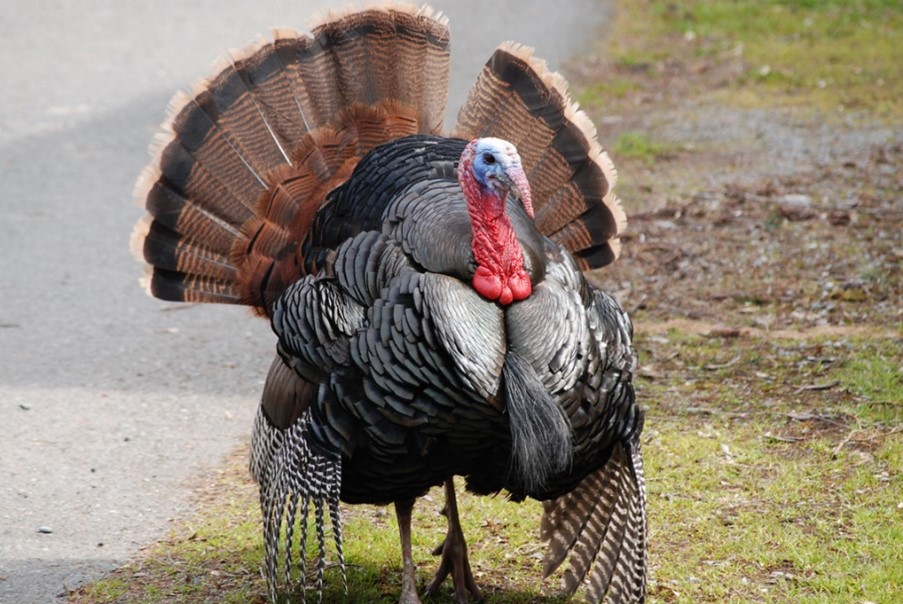
I, like so many, am upset that I will not be able to see my family in person this Christmas but over the last few days I began to wonder just how much of a hardship that is. There was a man on the news the other day that was moaning about the Christmas restrictions, he and his wife had a 15 lb turkey that was now going to waste. My first thought was, so you’d rather catch Covid you *^&$£” **. But this morning I thought, aren’t you lucky to have a 15lb turkey and, as my wife and I discussed whether we will be having a roast on Christmas day and the Sunday after, I thought aren’t I lucky too. There are two things that strike me, I’m able to have what food I want on Christmas day and I’m saving a bloody fortune not having to have all the family round or take them out for Christmas dinner and drinks. The pandemic has some upsides.
But, this is the crux of the matter, how can I sit down to my Christmas lunch knowing that I have money I would have spent sitting in the bank when there are people out there who will be wondering right now, not about the massive turkey, or the family not coming round, or whether to have chicken on Christmas day and Sunday but, whether they can feed themselves and their family tomorrow, let alone Christmas day. We could of course blame Boris and his government (a very rational decision) but judging by Reece Mogg’s comments the other day, they have little interest. We could just ignore it, don’t think about it, pretend all is well and on Christmas day raise a glass to our nearest and dearest and those that we are missing. But as we must face facts that Covid – 19 is here, so must we face facts that people, real people, are starving in this country. It shouldn’t be like that, but it is.
So my wife and I have decided that we will work out how much extra we would have spent this Christmas, by going out, by going to parties, by catering for family and we will spend that money on food and give it to a food bank. It won’t be very much in the greater scheme of things, but it will be something. I’m not writing this blog to say how marvellous we are, far from it, but rather to challenge all of you to do the same. Even a little extra in your shopping before Christmas is going to make a huge difference. Let’s turn this Christmas into one we can remember for the right reasons and turn the Covid- 19 pandemic into an opportunity that we seized for the good.
Please see below for a list of local and national organisations helping families this Christmas and throughout the year:
AmplifiedNN Community Group
AmplifiedNN Festive Family Fundraiser
Northamptonshire Food Poverty Network
Share this:


Yorkshire Ripper: Not an Obituary
Wilma McCann, 28
Emily Jackson, 42
Irene Richardson, 28
Patricia Atkinson, 32
Jayne MacDonald, 16
Jean Jordan, 21
Yvonne Pearson, 22
Helen Rytka, 18
Vera Millward, 40
Josephine Whitaker, 19
Barbara Leach, 20
Marguerite Walls, 47
Jacqueline Hill, 20
As the team northerner I took it upon myself to write about Peter Sutcliffe after hearing of his death. Sutcliffe was a serial killer who operated in West Yorkshire and the North West of England. He was convicted of murdering 13 women and attempting to kill 7 more in the 1970s, and was serving 20 life sentences for his crimes.
Ironically, the ripper was killed by covid-19, the deadliest killer of 2020 (incidentally I asked students to imagine covid-19 being a serial killer in a lecture yesterday). Reports suggest that he was in ill health prior to contracting the coronavirus, was obese and had diabetes. He died 2 days after his diagnosis after refusing treatment.
When I started writing about the Yorkshire Ripper, I couldn’t help but think about his victims. Those he killed (named above – remember them), those he harmed and who survived, the relatives of both and the women in the areas in which he would prey on his victims, who feared leaving their homes every day for half a decade. These are the people I am thinking about, those who are in my thoughts. How do they feel about the news of his death? How have they felt every time they have heard his name for the last few decades? How, 40+ years later, are the living victims coping?
I didn’t know a lot about Peter Sutcliffe. It was before my time so when I read about the secondary victimisation as a result of police and the prosecution blaming the victims it made me angry. Peter Sutcliffe would prey on women, often prostitutes. The police at the time differentiated between the victims who were sex workers and the victims who weren’t and referred to those that weren’t as ‘innocent victims’, insinuating that the sex workers were not entirely blameless and may have precipitated their fate. Thankfully, West Yorkshire Police have issued a statement to apologise for the language and tone used at the time but the damage has already done.
I’d like to say society has learned from its mistakes, but sadly I don’t think we have. There is still evidence of victim blaming, particularly in cases of femicide and rape. Think of the Grace Millane murder and the protests in Ireland after a barrister suggest the jury consider the victim’s underwear, questioning consent. I hope one day we, as a society, learn. I hope the victims of Peter Sutcliffe get some sort of relief from both his passing and the apology from West Yorkshire Police.
Share this:


A Lockdown Moan
As the second lockdown has come to an end, I find myself reflecting on my own lockdown experiences quite a lot. My overall sense is that of gratitude, in that I have been fortunate enough to maintain and be offered new employment during this difficult time.
During the first lockdown I was a key worker and travelled to and from work on public transport whilst everyone else was ordered to ‘stay safe, and stay at home’. At times this was frustrating, and although I generally had faith in humanity my views on this were tested. During, lockdown 1.0 I witnessed people being much more aggressive to key workers. I worked in a place where I did not expect people to be nice to me, but even on my route to and from work I found that I was subjected to the odd remark.
One morning at 6am whilst in the city center I was even called ‘a rapist’ because I did not have any change to give to a homeless person, he then sort of offered to fight me. Of course, I wouldn’t ever fight anyone, and he would have been completely unaware that I had just finished a night shift so I would not prove to be a worthy opponent in any sense. I also remember sitting on the bus one night whilst a man, who appeared mentally unwell, persisted to cough all over me (mask free) before exiting at his stop.
I didn’t take any of these experiences personally, and thankfully I didn’t get Covid. It was clear that these people had many of their own problems – many of which may have been exacerbated due to Covid. The lack of understanding of Covid for some people also highlights a key issue i.e., that mainstream concerns are not being communicated to wider population within our society.
I did find myself frustrated by the general population who in my experience, did not appear as positive and kind as the media seemed to suggest. I experienced many incidents of people being selfish, such as people snapping and venting their frustrations at others who are simply just trying to do their jobs (with shocking pay and poor contracts might I add). On top of this was the notion of visiting a supermarket after a 12 hour night shift whilst people scramble for the last scraps of essentials whilst you are walking around like a zombie. With bare shelves, rude people and long queues….what more could key workers ask for? For Christ sake, someone even tried to steal a tin of beans out of my shopping trolley on one occasion!
During lockdown 2.0 I have been very privileged indeed, as I am able to work from home. Staying in this bubble of mine has also made me feel much less frustrated. But I do still wonder, why is it that we feel that those who provide a ‘service’ to us are not people themselves? People with their own problems, thoughts and feelings. Do we think that people are robots? Is this why some people think that it is ok to vent their frustrations at others? I am sure that other people have had more positive experiences than this, but I can’t understand why people aren’t being more kind and understanding of each other. There is a difference between being a service provider and being a servant…people seem to forget this sometimes.
Share this:


The Lockdown Lowdown
I took this photo a few years ago on a solo visit to Copenhagen, I had just quit my job and was in the process of leaving where I called home, my PTSD was certainly at its worst and the future was entirely uncertain…
A cosy Sunday evening, the flat has been hoovered, the washing is out to dry, lunch has been prepped for the following day…yet despite all of this normality me and my partner sit here on our cosy Sunday armed with the knowledge that another national lockdown is imminent. So whats next for us?
Before I explore whats next I want to reflect on what has been, it was only this time last year that my mental health was at its worst since I was diagnosed with PTSD some years ago and it was during this month last year that I found out I was pregnant. After many difficult conversations I decided that that chapter of my life was not ready to begin, not just yet, and so the guilt consumed me and I relied on anti-depressants to help me through that difficult time. Eventually as time passed so did the guilt and my mental health became stronger, because I willed it so, and after a short stint I stopped using the anti-depressants because I knew within myself I didn’t have to rely on them…
…More time passed and I found that the strength of my mental health had started to peak, I set myself goals that only I knew about and only I could achieve, I started to be critical of the people I surround myself with to ensure that I was living as authentically true to who I am as possible. This was my attempt at self care, As I withdrew from these friendships I simultaneously removed my negative addictions and repeated behaviours (drugs, alcohol, time-wasting, self-depreciation), I realised that my actions allowed me to concentrate my full energy on the things that truly matter in my life (my studies, my family, my relationship)… and then lockdown happened.
And boy was I prepared for that, I wont deny that I grew a few stretch marks and after some self hate Ive learnt to accept and love them as a natural process of my body. I realised I didn’t do much exercise during lockdown and my appetite was unruly, with zoom quiz night’s came alcohol and snacks (lots of them). Despite my growing waist I was okay mentally and yes I wont deny that having my own apartment and living with my partner helps but also having dealt with a bit of a breakdown some months prior helped order my perspective on my life, how I want to live it and how I would tackle this challenging time. As a 2nd year student I lost all hope and focus for a while as the outstanding assignments were piling up and I was heavily relying on the august submission date, I felt like I wasn’t worthy of being a university student, that I was never going to graduate and self doubt quickly reappeared into my life, Its a strange thing really during lockdown I didn’t really do anything at all, but I also never found the time to study? And the strangest thing is that actually most students felt this way and when me and my peers communicated how we were feeling we were able to support each other more and eventually those assignments were submitted and here we are… 3rd years!
So 3 days to go before lockdown 2 and how can I get through this?… how can you get through this? Undoubtedly there are many people who have dealt with a world of pain since coronavirus first graced our planet and yet in my experience I found this year to be quite grounding and it has allowed me to focus my energy on me, who I am, what I want and who I want to be (without sounding narcissistic but rather rightfully selfish), because I have no control over external happenings neither do you and thats okay. what we can do is focus on our little world; ourselves and the people around us. heres a few quotes I find to be quite relevant to this train of thought.
“To what goal are you straining? The whole future lies in uncertainty; live immediately” – Seneca
“Just keep in mind the more we value things outside our control, the less control we have” – Epictetus
“Man conquers the world by conquering himself” – Zeno
So how can you, how can we, get through lockdown? granted it may not be as-long as the last one but we’ve had a taste of normality again and so this time round it may be harder, this time we have long winter days and a lack of vitamin D combined with the uncertainty of celebrating Christmas with family looming over us, so in consideration of Epictetus’ wise words lets focus on what we can control; 1. lets schedule consistent self care( for me that comes in the medium of being disciplined, in terms of uni work.. and diet), 2. Lets move our bodies! go for a walk outside and pick up litter? (later in this blog post you’ll find some of my suggestions for walks around Northamptonshire), 3. don’t pressure yourself into being consistently pro-active! 4. do drink hot chocolate. 5. And if your sad about missing out on getting your Christmas shopping in early then try to buy from local independant businesses, you might find many local stores posting available items onto their social media pages and offering contact-free deliveries! 6. Check up on your friends and family, be mindful of keeping communication going, you don’t know who just might be struggling! 7. Buy a homeless person a warm meal!
(TIP: when looking for businesses check out this new hashtag on instagram introduced by some local Northampton businesses to get people buying more locally)… #SHOPLOCALSAVECHRISTMAS
https://www.instagram.com/explore/tags/shoplocalsavechristmas/
Overall lets focus on our own self betterment and where possible our local communities betterment (and as always wear a mask!!)
And most importantly if you are struggling then reach out to someone and let them know, as always with my posts as the focus tends to be on mental health I will provide links to the university’s, the local communities and national charities mental health resources, so please take note and rely on them if you need to.
For my previous blogs/context have a read of the following:
Navigating Mental Health at University
Navigating your mental health whilst studying at university during a worldwide health pandemic
“Joy comes to us from those whom we love even when they are absent” – Seneca
“Never let the future disturb you. You will meet it, if you have to, with the same weapons of reason which today arm you against the present” – Marcus Aurelius
“Don’t hope that events will turn out the way you want, welcome events in whichever way they happen: this is the path to peace” – Epictetus
I could continue on with a great deal more of these philosophical quotes and if you are interested in them then I’d recommend reading up on the discipline of stoicism, but if you’d like to read on you’ll find a few suggestions of areas to walk in and around Northamptonshire in aid of keeping your body moving during this lockdown, (and if you can take a bag and pick up litter).
Exploring Northampton’s Parks and Reservoirs
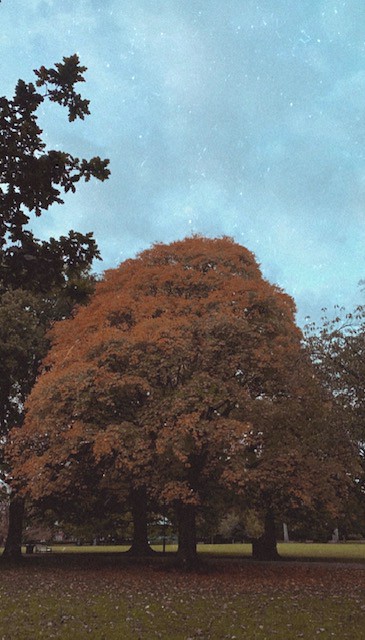
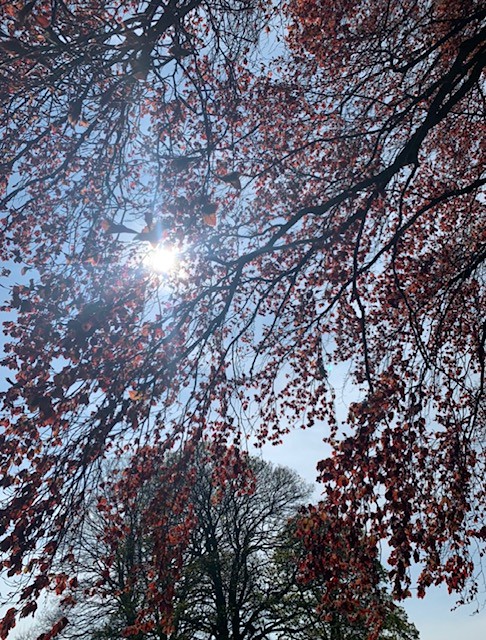
Abington Park; Located in the NN1 postcode a short distance from the town centre. The park has plenty of areas to explore with ponds, forestry areas and it offers some lovely autumnal photo opportunities, heres a particularly orangey-ember tree that caught my eye.

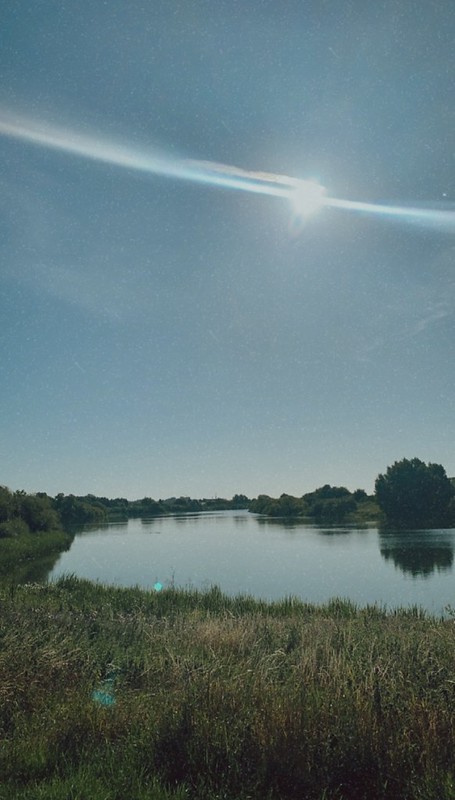
Sixfields lakes and reservoir; Unless you know of this lake you wouldn’t know it was there, Its situated a little down from the Sixfields football stadium, there is a small roundabout you can take to go up towards the cinema (Walter Tull Way), down Edgar Mobbs way, or join the A5076, and there is a fourth almost hidden turning that will take you down a road adjacent to Duston mill road, it is down this road that you will find this little gem.
There are two lakes to walk around, one being the main option where most people park up (there is parking on site) at a leisurely stroll the walk will take around an hour, you may see plenty of fishermen and lots of wildlife!
There is a second walk which I’ve only recently discovered myself, just down from the car park there is a small gate and it is through there you can explore to your hearts content!
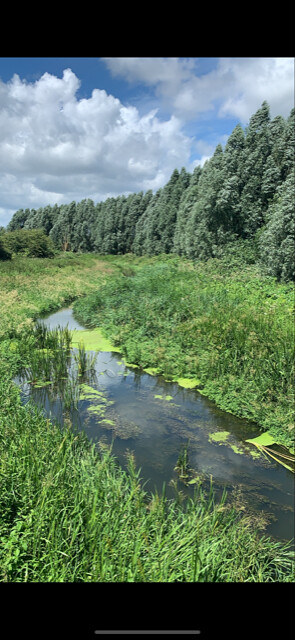
The Racecourse; I Imagine plenty of students and teachers alike will be aware of this location as it housed the university campus for many many years. As a budding criminologist I cant ignore the fact that the Racecourse has developed a rather unruly reputation for crime, I’ve personally never experienced anything and Ive lived in Northampton the majority of my life but thats not to say that it doesn’t happen, so as always be wise about your walk, perhaps avoid late night’s, let someone know where you are walking and stick to the street lights. The racecourse is a roughly 15 minute walk from the town centre and on good weather days offers views like this;

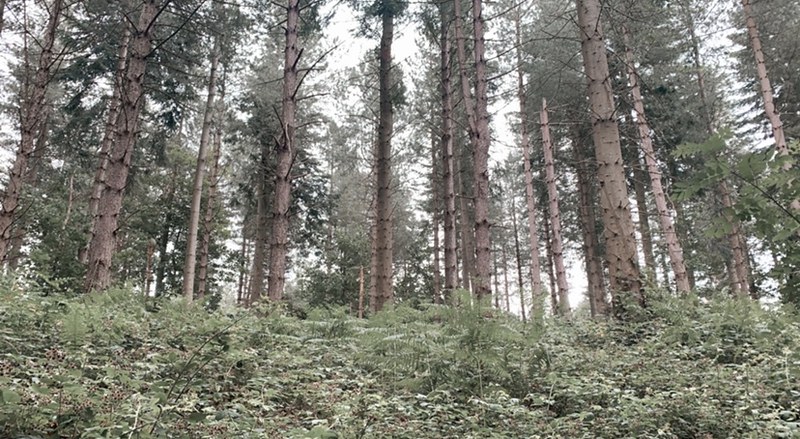
a-bit further afield: Harlestone Firs; I would recommend driving to this location if you can, there may be local busses that run in the area but I would recommend checking the COVID guidance with regard to bus routes. So Harlestone Firs is a fantastic location to get lost in the woods for a few hours, and I literally mean get lost… I have been there countless times and I still lose myself in there, but its a welcome loss. You’ll find endless amounts of huge ferns, fir trees, endless pathways and there is a working timber yard in amongst this location too. Wear boots for this spot I always choose my trusty Dr.Martens.
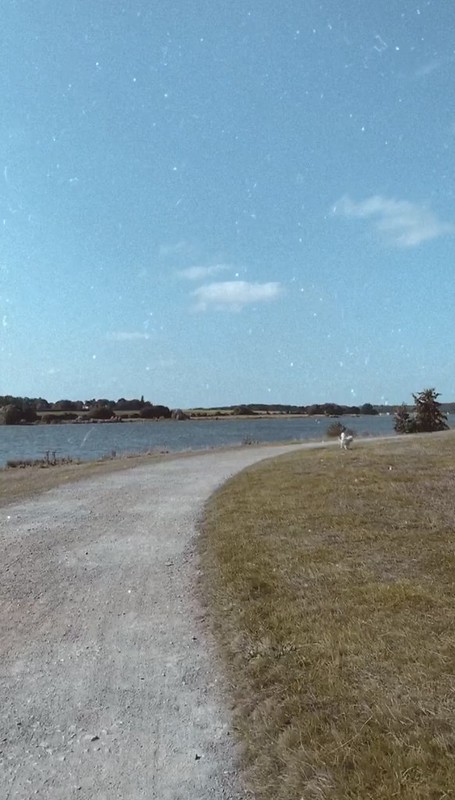
Brixworth Country Park/ Pitsford Reservoir; Another location you’ll likely need a vehicle to visit. This huge location offers a giant walk or a bike ride, you can of-course take your pooch with you too but keep them on a lead as theres plenty of cyclists at this location. I recently made the mistake of biking around here with the pooch on an extremely hot day and wow was that an interesting experience. There is paid parking on site or a little slip road you can park along. If you need to just take a few hours or even the whole day go and visit this location, take a packed lunch and sit and enjoy the view.
Here are some more locations that you may already know about and can explore during this lockdown, do make sure to check local COVID guidance, and even if you cant visit some locations now then make a note of them and visit them when you get a chance, Northamptonshire has such a vast amount of countryside to offer!
Becketts Park – Located just of the university campus offering a short distanced walk but plenty of wildlife and a nice view of the canals and lake.
Sywell Reservoir – You’ll likely need a vehicle to visit this location but you could also take the X46 bus (or X47?) Sywell takes around 2-3 hours to walk depending on pace, its one of my favourite spots as I grew up walking around this location.
Victoria Park and Dallington Park – Both are situated in St.James, and both are relatively small in comparison to the other locations but well worth incorporating into your daily exercise if you live within this location.
– Brackmills Country Park
– Delapre Park and Delapre Wood
– Earls Barton just of Doddington road, a pathway leading down to Summer Leys, here you can explore plenty of the river nene, beautiful views of the surrounding landscape and lots of horses!
– Rectory Farm fields; Here you can explore the fields (but be respectful of the farmers land) these fields stretch out to Overstone and Sywell, if you’d like to visit sywell reservoir and living within rectory farm then just take the fields route this route would take around 30 mins to walk to sywell reservoir and its well worth it.
So thats it for me, if you have any of your own suggestions not just in regard to walks around Northamptonshire but also how to keep your mind healthy during this next lockdown then please do comment any suggestions you might have, were all in this together!
If you’ve read this far then here’s one last quote to guide you into your day…
“The impediment to action advances action, what stands in the way becomes the way” – Marcus Aurelius
see below for references to guidance and advice.
- Counsellors – The Counsellors will listen to you and help you respond to the difficulties in your life, they will allow you to develop your abilities to address and resolve issues in your life. https://www.northampton.ac.uk/student-life/support/counselling-and-mental-health-team/counsellors@northampton.ac.uk
- Mental Health Advisors – The Mental Health Advisors will provide a private and comfortable space to discuss your mental health difficulties and work with you to develop coping strategies whilst studying. https://www.northampton.ac.uk/student-life/support/counselling-and-mental-health-team/
mha@northampton.ac.uk - Assist – Assist can give you advice and guidance for managing your disability whilst studying, for me they helped with a DSA application regarding my Anti-Depressant medication, the DSA application will give me the opportunity to have 6 appointments with the counselling team who can further help me work through my issues by providing me with a safe and comfortable space to talk. https://www.northampton.ac.uk/student-life/support/about-assist/ ASSIST@northampton.ac.uk
- Speak to your GP, they can refer you to the NHS Mental Health Services.
- https://www.nhs.uk/using-the-nhs/nhs-services/mental-health-services/how-to-access-mental-health-services/
- Other helpful support links (local and national)
- https://www.mind.org.uk/
- http://thelowdown.info/
- https://www.mentalhealth.org.uk/
Share this:


Witches and warlocks
Time and time again we revisit previous times of our lives, especially when trying to come to terms with unprecedented realities. Society works with precedent and continuity that allows people to negotiate their own individual identities. We live in a society that fostered the culture of the one, and played down the importance of the collective, especially when people in positions of power declared that they can do more with less.
One pandemic later, and we clapped at the heroes those we regarded as needy money-grabbers previously, those we acknowledge now, that we previously cast aside as low skilled workers. One pandemic later, and social movements came to prominence, asking big questions about the criminal justice system and the way it interacts with those numerous people, that are not perceived as “mainstream”. Across Western countries, people are registering the way the system is operating to maintain social order, through social injustice. Each case that appears in the news is not an individual story as before, but are becoming evidence of something wider, systemic and institutional.
Covid-19 affects people, and so we must maintain social distancing, cover our faces and clean our hands. Clear advice from WHO about the pandemic, but people also die when they drown as refugees crossing troubled waters. People also die when someone puts a knee on their throat (who knew?), people die when they have to deal with abject poverty and have no means to cover their basic subsistence. People die, and we record their deaths but officially some of those are normalised to the point that they become expected. Every year I pose the question about good and evil to a group of young adults who seem uncertain about the answer.
I was recently reminded of a statement made a long time ago by Manos Xatzidakis in relation to the normalisation of evil: “If you are not afraid of the face of evil it means that you have become accustomed to it. Then you accept the horror and you are frightened by beauty”. When we are expecting death for seemingly preventable causes, we have crossed that Rubicon according to Xatzidakis.
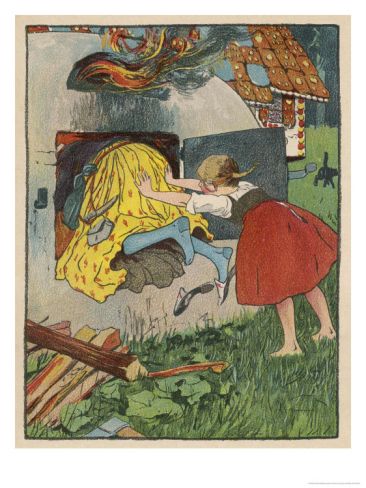
As a kid, one of my favourite stories was Hansel and Gretel. Like all fairy-tales it has a moral signature and is a cautionary lesson. In my mind it contracted the first image of evil, that of a witch. The illustration made it very real, but also quite specific. An oversized, badly dressed witch, with an unsatisfiable taste for children’s flesh. It was the embodiment of true evil. In later years, reading The Witches by Roald Dahl exacerbated the fear of this creature, seemingly normal but with layers of ugly under their skin. The evil that was on the face of the beholder, their intentions clear and their behaviour manipulative but clear on their objectives. This, I learn as an adult, is an evil that only exists in stories.
This kind of witch, is a demonstration of the social vilification of women and especially those who actively try to challenge the status quo, but not the evil that runs in our societies. The construction of social demons is a convenient invention to evoke fears and maintain order; well that is something a sceptic may say…but social scientists ought to question everything and be a bit of a sceptic. In my version of the fairytale the wicked witch is pushed into the oven by Hansel and Gretel, the image of her oversized bottom sticking out, whilst the rest of her body is consumed by the flames.
Admittedly, I was too old to get into the Harry Potter genre and read the books but the image of his opposition made it to popular culture. The “He who cannot be named” became another convenient, albeit complex, evil capable of unspeakable evils. An icon in its own right of the corruptive nature of evil.
The reality of course is slightly different. The big evils do not get extinguished with flames or other means. They do not cease and there is not necessarily happy ever after; social injustice and unfairness is continuous and so is the struggle to fight them. The victories are not complete, but gradual and small. If the pandemic shows us something other than death and heartache, it is the brittleness of life and the need to ask for more in a society that is geared to prime individualism over social solidarity. It is perhaps a good time, for those who never did, to engage with social movements, for those who left them to return and all find their passion of sharing human experience, that is predicated on equality and fairness.
Fairytales, are interesting insomuch of giving us some moral direction but they do not help us to understand the wider social issues and the actions people have to take. The witches out there may not carry brooms and mix spells in cauldrons but evil carries indifference, apathy and lack of empathy. As Edmund Burke said “The only thing necessary for the triumph of evil is for good men to do nothing”, now that is true evil. After all, is there such a thing called evil or are we content with finding easy answers?
Share this:


We are Spartacus: the publishing industry and race
As one of only a handful of non-white authors on the British crime fiction map, I thought it might be worthwhile spending a moment reflecting on the worldwide rebalancing touched off by the George Floyd killing in America. Fear not. There’s no need to put on your tin hats and dive for the trenches. My purpose isn’t to haul anyone over the coals. But there’s little doubt that some of what I say might make for uncomfortable reading. More importantly, I will ask you to reflect, at a personal level, on what we mean by systemic inequality, particularly as it applies to the publishing industry.

First, some background. My parents are from the subcontinent. They came to the UK in the early seventies, lured by the immigrant dream. The streets of London may not have been paved with gold, but they were paved with opportunity. My father, who was not literate, spent his life in honest labour, in an industrial bakery, while my mother raised children, demonstrating the much-lauded immigrant work ethic by slaving away at her sewing machine every hour she wasn’t feeding us or stopping us from poking each other’s eyes out with eraser-tipped pencils. She instilled in us the need, above all else, to study, to educate ourselves, to progress.
So far, so good.
But what if I were to tell you that my parents were, in a broad sense, xenophobes, too? Not overtly. They didn’t oppress anyone; or traffic slaves across the oceans; or pillage defenceless communities for profit. But their attitude towards black people – cultivated by the insular world they had grown up in – was, at best, indifferent, or, at worst, mistrustful.
Here’s a simple, unpalatable truth. Racism, in its most basic form, is a feature of most societies. It shouldn’t be. But it is. A simple example illustrates my point.
The outpouring of angst and handwringing currently gripping the world has seen celebrities across the globe express their views on racism (rightly so), only for some to discover that a seat on this particular bandwagon can be an uncomfortable one. In India, numerous Bollywood stars were called out for the disparity between their #blacklivesmatter tweets and the fact that they had fronted campaigns for skin-lightening creams. Across the subcontinent, lighter skin has traditionally been valued (usually alluded to in matrimonial ads by the rainbow-bending adjective “wheatish”), so much so that white foreigners, especially Brits, are treated with overt deference, while black people are routinely afforded a lesser welcome. An odd perversity, given that it was the whites that pillaged the subcontinent for three centuries while, with those of Afro-Caribbean descent, one might assume Indians would evince a colonial-era solidarity.
Let me be clear: this idea of a sort of universal xenophobic instinct does not in any way excuse or mitigate the horrors of the slave trade, or the enormous, long-term damage done to black people because of that terrible practice. Nor does it justify the entrenched, systemic prejudice that continues to colour western societies, prejudice that culminates in overt racism of the kind that permits white American policemen to routinely kill black men with little fear of reprisal, and prejudice of the less obvious kind that serves to keep black people ‘in their place’. My point was merely to demonstrate that, in the wider, global race equality agenda now under discussion, we all have a part to play.
Part of the issue is that many well-meaning efforts to redress the balance are hampered by a profound lack of insight into how unconscious bias can affect the lives of people of colour, in a million different, small, but, ultimately, debilitating ways. The problem is further hampered by an education system that often fails to properly tackle the ‘race issue’.
Yet, the problem must be addressed. Because the world has become a smaller place. The goldfish bowl has shrunk and we are now all swimming in the same seas. It behoves us to make the effort, not just because it is the right thing to do, but because it is also the most effective means of progressing humanity towards a more equitable, more meritocratic, global society. If the Covid-19 pandemic has proven anything, it is how interdependent we are.
Coming, now, to the publishing industry. Cards on the table. Since my first book was published six years ago, I have received tremendous support from my agent, publisher, critics, bloggers, readers, event organisers, and crime writers. My experience is not typical. A simple look at the statistics tells us what we already know. Any way you slice it and dice it – diversity of publishing staff, published writers of colour, books featuring characters of colour – the industry is dominated by white thought and enterprise. Some of this can be ascribed to the fact that, in terms of population, BAME communities, by definition, are a minority. You wouldn’t expect there to be a 50:50 split along these dimensions. That isn’t the issue. The problem is the entrenched attitudes that make it so damned difficult for writers of colour to break into the industry and then to enjoy the same rewards and freedom of expression that is accorded to their white counterparts.
The world’s most successful crime writer, James Patterson, became famous with a series about a streetwise black detective, Alex Cross. James Patterson is not black. Nothing wrong with that scenario, in my opinion. Authors should not be constrained by artificial constructions of propriety. But, if the industry is being honest with itself, it will acknowledge that a writer of colour attempting to do something similar – trying, as it were, to write outside of their cultural straightjacket – is rarely accorded the same privilege. Questions of ‘authenticity’, ‘voice’ and ‘cultural appropriation’ suddenly come racing to the fore, like Cinderella’s ugly sisters questioning our right to go to the ball. Asian writers, for instance, are often expected to pen literary tomes about colonialism or exposes of the immigrant experience. Again, nothing wrong with that, and, indeed, brilliant writing is regularly published exploring those themes. But there are so many other stories that we would like to tell. White writers can be published writing about matters far outside their experience – wizards, serial killers, aliens. But for non-white writers, the same consideration is much harder to find. A lot of this is not the result of overt racism, but rather the mindset that accepts as perceived wisdom the idea that profitability comes almost entirely from white authors writing white stories, or writers of colour writing stories suited to their ethnic background. This thought is so prevalent in the industry that it may as well be an eleventh commandment.
A terrific article by Laura B. McGrath, associate director of the Stanford University Literary Lab, in a Jan 2019 issue of the Los Angeles Review of Books, entitled “Comping White” identifies the true nature of the problem. Paraphrasing her research, it goes like this: publishers buy new books by comparing them to books that have been successful. Is this the new Harry Potter? Is this the next Gone Girl? Given that the majority of books are white, the process becomes a closed loop, a vicious cycle. The industry buys and promotes white books because they sell. White books sell because they’re the only books the industry buys and promotes. Do you see the problem?
Making the gatekeepers more diverse, McGrath argues, will have only a marginal impact. It’s the system that’s at fault. The same applies to practically any walk of life that you might care to name – hence the reason so few people of colour in boardrooms, or lecturing at top universities, or opening Michelin-starred restaurants. White people have done all those things successfully before, so why take a chance on the unproven?
Until we change this structural, often unconscious, bias, all the current furore around race will do little to improve the prospects of the average BAME person.
Can readers help? Of course! By voting with their feet. By buying books written by authors of colour, readers signal to publishers that they won’t be put off by a ‘funny-sounding’ name on the cover, or a protagonist who doesn’t share their own cultural background. The only bar should be quality.
In an ideal world, a good story, well told, should stand on its own merits.
What else can we do? In my opinion, people shape people. If we want better, more thoughtful attitudes in the industry, we must all stand up and be counted. Solidarity is the name of the game. A solidarity of thought that acknowledges that a genuine change of perspective is needed. From agent to reader, all along the chain. What we need, in other words, is for all of us to stand up and say: ‘We are Spartacus.’
Vaseem Khan, author, Midnight at Malabar House and Baby Ganesh series
London, June 2020
Share this:


Parole in Lockdown

It’s a sad fact of life in and after lockdown that everything is a bit rubbish. We have called groups of friends a few times to chat via Zoom. It’s nice to see everyone but the conversation doesn’t flow. You can’t pick up the cues to detect who wants to speak next and if everyone talks at once you can’t hear anything. Zoom quizzes are fun, but, for the same reasons, they lack the banter of a real pub quiz and are therefore focussed and functional. A couple of times we have sat down as a family to watch streamed theatre performances. They were very good but it’s not the same as a night at the theatre and, without the atmosphere of a live performance, you might as well watch a TV drama which has been written for the medium through which it is presented. Things which were once simple are now complicated – you need an appointment to go to the tip for heaven’s sake! And while Peter Crouch: Save Our Summer is quite amusing, it is no substitute for the live international football that the Euros were promising.
On 23rd March 2020, the Parole Board made the decision to postpone all face to face hearings with immediate effect. The decision was inevitable – prisons had closed their gates to visitors and it was no longer possible for members and witnesses to travel the country for hearings. A couple of weeks of frenzied activity followed as cases were reviewed. Some were deferred, some were decided on the papers, others were converted to telephone or video hearings. Since then, I have participated in 20 remote Parole hearings, all conducted by Skype / telephone. So, has the Parole process, like so many other things, become a bit rubbish?
The simple answer to that is, surprisingly, no. Remote technology has been available to the Parole Board since I was appointed ten years ago. A new “Parole Hub” had just been established and its virtues were extolled at my initial training. The idea was that the panel would convene in a suite in London while the prisoner and witnesses would join via video link. It was to be the future. In reality, hub hearings never took off in the way that was hoped. While the Parole Hub has been running continuously, only a few prisons have the necessary technology. Most cases were considered too complex to risk making a decision without seeing the prisoner. Any suggestions of learning difficulties, mental health problems, serious or unusual offending meant that cases were deemed unsuitable to be heard remotely. Despite expressing a willingness to conduct hub hearings, I have only done two in ten years.
All that changed on 23rd March. If we had deferred every “complex” case, we would have a massive backlog by now. Instead, after the initial confusion of the first couple of weeks, the Parole system has adjusted. We are now hearing just as many cases as we would have expected in normal times and the backlog is reducing rather than increasing. Telephone hearings are by no means perfect. Sometimes the line crackles and you have to ask people to repeat themselves. Sometimes participants disappear altogether. In one of my hearings, the chair vanished for 10 minutes but after a few frantic e-mails he was able to re-join. Sometimes witnesses don’t pick up the non-verbal cues that they have answered the question and ramble on for longer than they may otherwise. As a result, remote hearings tend to take slightly longer than face to face hearings.
But there are advantages too. In my experience, telephone hearings start on time – everyone logs on when they are supposed to, no one gets stuck in traffic. From a personal point of view, I can wear what I like, I can get up and stretch, I can drink coffee and eat snacks during the hearing, all without looking unprofessional. Hearings may take a little longer but I don’t have a long drive home afterwards, so they are less tiring. If one of my hearings is cancelled, it is relatively easy to find another one to take its place because I’m no longer restricted by geography – I can pick up a vacancy anywhere in the country. And remote hearings cost the tax payer a lot less in travel expenses and hotel costs. As long as solicitors are able to consult with their clients by telephone prior to hearings, they are able to represent their interests effectively. Several of my remote hearings have involved vulnerable prisoners, with learning difficulties, mental health problems, physical health problems and dementia. Prior to 23rd March, none of these would have been considered for remote hearings but in most cases, despite these challenges, the prisoners were able to participate just as effectively as they would have been in face to face hearings.
The crucial issue, however, is whether the quality of our decisions is affected by our new way of working. That remains to be seen. We will have to wait for the statistics to see whether we are more risk averse and reluctant to release from remote hearings. Time will tell whether serious further offences by prisoners on Parole increase. In theory, the fact that we don’t know what the prisoners we are dealing with look like, may help to reduce unconscious bias and make our decisions fairer. It is very difficult to tell whether someone is lying to you, whether you can see them or not. Not being able to see the “whites of their eyes” is unlikely to make much difference to whether or not we are fooled by prisoners who present themselves well but have made little genuine change to the risk they present.
So remote Parole hearings are probably here to stay. While face to face hearings will return for the most complex and vulnerable prisoners, the majority will continue on the telephone or video link. COVID-19 has forced technological change on the Board in a way that the Parole Hub did not. This may be a good thing or it may not – we will have to wait and see.
Share this:


Zombie Apocalypse

In post-war cinema, movies became part of political propaganda, especially when the creators did not want to tackle directly on a particular issue.* The use of metaphors and euphemisms became part of the story telling especially when the creators tried to avoid strong opposition from censors and political groups. This allowed social commentary to be made under the nose of “puritan” critics! Visual semiotics in modern cinema revealed a new reality in social symbolism.
One of those symbolisms was the living dead, later known as zombies! Zombies appear on the screens in the late 40s and 50s but predominately appear with the name in the 70s. The critics show in their representation of apathetic citizens who are not alert to the dangers of communism. Originally the zombie and the alien body-snatcher became metaphors of the red danger in the US at the time of McCarthyism. The fear of communist expansion was fertile ground to play with public fears. It became evident that a good citizen in order to avoid zombification has to take up arms and resist the menace. Inaction is accessory to the crime of overthrowing the social order.
As the paranoia leading to the red danger subsided, the zombie metaphor began to lose it potency and it become a cult population for those who love watching “B-movies.” In the 80s and 90s, zombie movies became aligned with the impeding doom of the millennium and technological bug that allegedly was coming to wipe out civilisation as we know it.
In the new century, zombie became a representation of those who succumb to technology and become its blind users. Generations Y and Z were accused of spending more time than before on game consoles, surfing the web and becoming “couch potatoes.” The gamers who binge on games for days, losing all other engagements with life until the game is completed. The motionless body of the gamer sitting in the same spot, non-engaging in conversation, was likened to the brainless zombie who slowly moves in space with no volition and conscience.
More recently, the zombie movie genre promoted the idea of a global medical pandemic, mostly caused by a virus that mutates people and turn them into flesh eating abominations! The virus breakout of the zombie disease became so convincing that a concerned member of the public back in 2011 asked Leicester City Council about their preparation in case of an invasion. Of course, at the time, cultural sociologists argued how zombies are a representation of “the other” in terms of race, nationality, and of course gender. Whilst others saw them as a representation of end of days, an eschatological message that bring an end to life as we know it.
Therefore, in the situation of Covid-19 the contagion of the potent virus that can kill some whilst others carry it without even realising it, brings to the surface the zombie fears Hollywood warn us about. In a recent survey a third of US believe that the virus was created in a lab, and whilst most people according to WHO acknowledge the seriousness of the pandemic there are those who question its existence. With opinions divided about the causes of covid19, life in 2020 appears to be a prequel to a post-apocalyptic reality.
Back in zombie movies and we are coming out of a lockdown when cities and towns feel deserted like 28 Days Later, people came out with protective masks like in Resident Evil and became frightened of the invisible threat like in every movie in the genre. Back in 2011, we laughed at the question “how ready are we for a zombie apocalypse?” Maybe if we asked is there a likelihood for a pandemic we could have planned and prepared for now, slightly better. There are great lessons to be learned here and possibly we can establish that when we are looking at healthcare and services, we cannot do more with less! Just whatever what you do, do not take lessons from Hollywood!
Until the next time!
*At this stage, I would like to apologise to my younger colleague and blog comrade @treventoursu who is far more knowledgeable than myself on movies!
Share this:


Deniable racism: ‘I’m alright Jack’

Photograph: Bill Orchard/Rex/Shutterstock
I heard on the news a week or so ago that an investigation by ITV news had found that the majority of NHS Trusts have not completed full risk assessments on BAME staff. Considering that BAME groups are impacted disproportionately by COVID-19 I have to ask why? And, probably more importantly, now that the issue has been raised, what are the government doing to make sure that the risk assessments are carried out? Since I heard about it I’ve seen no response, so I guess I can answer my own question ‘nothing’.
But then maybe I shouldn’t be surprised, I read an article on Racism and the Rule of Law and you can’t but be appalled by the number of recommendations from various inquiries and reviews that have failed to be acted upon. The problem is that the action requires more than just the eloquently spoken or written word; to put it very bluntly and maybe crudely, ‘put your money where your mouth is’. It is easy to state that this is wrong or that is wrong in our institutions, the term ‘institutional racism’ trots off the tongue, seized upon by the wronged and more worryingly banded about by the societal racists of the elite who are only too willing to blame someone else. In thinking about this I wonder whether when we use the term racism, we are all talking the same language. The ‘deniable’ racism is easy to identify, ‘we don’t use that sort of language anymore’, ‘we no longer put those signs in our windows’, we have laws that say you can’t act in that way. ‘Actually, I’m not a racist’. But the statistics don’t lie, they can be bent, manipulated to some extent to favour one argument or another but there are some very basic inescapable facts, BAME groups are over represented in the wrong areas of our society and under represented in the right areas. And most of this I dare say does not owe itself to ‘deniable’ racism, it’s more than that, it’s embedded in our society, it’s not institutional racism, it’s societal racism and it’s hidden. The problem with societal racism is that we only see the positive attributes of people that are like us and we promote those that excel in showing those attributes. Hence, we have the elite in business and government that are not ‘deniable’ racists but nonetheless are the epitome of, and lead a racist society.
I want to return to the idea of ‘putting your money where your mouth is’ mantra. They say money makes the world go around, I’m not sure that is entirely true, but it certainly goes a long way to getting things done and conversely the lack of it ensures that nothing happens or in some cases that good things come to an end. A prime example is the austerity measures put in place in 2010 that saw budgets to government agencies and funding to councils cut significantly. Those that suffered were the most deprived. Even worse, was the fact that funding for youth projects in inner cities suffered and those initiatives that were aimed at reducing violent crime amongst young people ground to a halt. Policing saw huge cuts and with it the withdrawal of neighbourhood policing. This link to communities was severed and any good work that was going on was quickly undone. That doesn’t explain all that is wrong with policing, but it certainly doesn’t help in building bridges. Who in their right mind would embark upon fiscal policies with no regard to such outcomes, our elected government did. If we think now about the so-called return to normality post the Covid-19 pandemic, which caring company or institution would suggest that the most impacted by the virus should continue or return to work, or study, or any other activity, without considering their specific risks and needs? Probably those that have more concern for the bottom line than peoples’ lives. ‘I’m alright Jack’ comes to mind or at least I want to make sure I am.
In thinking about policies, procedures, risk assessments or recommendations, managers have an eye to finance. In the NHS, the day to day business still has to happen, in policing, incidents still need to be attended to, so where is the money to do the extra? Everything comes at a cost and every recommendation in every review will cost something. The NHS risk assessments will cost money. The question is whether government and all of us in society really believe that ‘black lives matter’. If we do, then then it’s time to acknowledge the type of society we live in and who we really are and for government to ‘put the money where its mouth is’ so that the recommendations can be acted on. Or of course, we could just have another review and ‘Jack’ will do very nicely out of that as well thank you.

 Thoughts from the criminology team