
Home » New Year
Category Archives: New Year

25 years is but a drop in time!

If I was a Roman, I would be sitting in my comfortable triclinium eating sweet grapes and dictating my thoughts to a scribe. It was the Roman custom of celebrating a double-faced god that started European celebrations for a new year. It was meant to be a time of reflection, contemplation and future resolutions. It is under these sentiments that I shall be looking back over the year to make my final calculations. Luckily, I am not Roman, but I am mindful that over 2025 years have passed and many people, have tried to look back. Since I am not any of these people, I am going to look into the future instead.
In 25 years from now we shall be heading to the middle of the 21st century. A century that comes with great challenges. Since the start of the century there has been talk of economic bust. The banking crisis slowed down the economy and decreased real income for people. Then the expectation was that crime will rise as it did before; whilst the juries may still be out. the consensus is that this crime spree did not come…at least not as expected. People became angry and their anger was translated in changes on the political map, as many countries moved to the right.
Prediction 1: This political shift to the right in the next 25 years will intensify and increase the polarisation. As politics thrives in opposition, a new left will emerge to challenge the populist right. Their perspective will bring another focus on previous divisions such as class. Only on this occasion class could take a different perspective. The importance of this clash will define the second half of the 21st century when people will try to recalibrate human rights across the planet. Globalisation has brought unspeakable wealth to few people. The globalisation of citizenship will challenge this wealth and make demands on future gains.
As I write these notes my laptop is trying to predict what I will say and put a couple of words ahead of me. Unfortunately, most times I do not go with its suggestions. As I humanise my device, I feel sorry for its inability to offer me the right words and sometimes I use the word as to acknowledge its help but afterwards I delete it. My relationship with technology is arguably limited but I do wonder what will happen in 25 years from now. We have been talking about using AI for medical research, vaccines, space industry and even the environment. However currently the biggest concern is not AI research, but AI generated indecent images!
Prediction 2: Ai is becoming a platform that we hope will expand human knowledge at levels that we could have not previously anticipated. One of its limitations comes from us. Our biology cannot receive the volume of information created and there is no current interface that can sustain it. This ultimately will lead to a divide between people. Those who will be in favour of incorporating more technology into their lives and those who will ultimately reject it. The polarisation of politics could contribute to this divide as well. As AI will become more personal and intrusive the more the calls will be made to regulate. Under the current framework to fully regulate it seems rather impossible so it will lead to an outright rejection or a complete embrace. We have seen similar divides in the past during modernity; so, this is not a novel divide. What will make it more challenging now is the control it can hold into everyday life. It is difficult to predict what will be the long-term effects of this.
During the late 20th and early 21st centuries drug abuse and trafficking seemed to continue to scandalise the public and maintain attention as much as it did back in the 1970s and 80s. Drugs have been demonised and became the topic of media representation of countless moral panics. Its reach in the public is wide and its emotional effect rivals only that of child abuse. Is drugs abuse an issue we shall be considering in 25 years from now?
Prediction 3: People used substances as far back as we can record history. Therefore, there will be drugs in the future to the joy of all these people who like to get high! It is most likely that the focus will be on synthetic drugs that will be more focused on their effects and how they impact people. The production is likely to change with printers being able to develop new substances on a massive scale. These will create a new supply line among those who own technology to develop new synthetic forms and those who own the networks of supply. In previous times a takeover did happen so it is likely to happen again, unless these new drugs emerge under formal monopolies, like drug companies who will legalise their recreative use.
One of the biggest tensions in recent years is the possibility of another war. Several European politicians have already raised it pretending to be making predictions. Their statements however are clear signs of war preparation. The language is reminiscent of previous eras and the way society is responding to these seems that there is some fertile ground. Nationalism is the shelter of every failed politician who promises the world and delivers nothing. Whether a citizen in Europe (EU/UK) the US or elsewhere, they have likely to have been subjected to promises of gaining things, better days coming, making things great…. only to discover all these were empty vacant words. Nothing has been offered and, in most cases, working people have found that their real incomes have shrunk. This is when a charlatan will use nationalism to push people into hating other people as the solution to their problems.
Prediction 4: Unfortunately, wars seem to happen regularly in human history despite their destructive nature. We also forget that war has never stopped and elusive peace happens only in parts of the world when different interests converge. There is a combination of patriotism, national pride and rhetoric that makes people overlook how damaging war is. It is awfully blindsided not to recognise the harm war can do to them and to their own families. War is awful and destroys working people the most. In the 20th century nuclear armament led to peace hanging by a thread. This fear stupidly is being played down by fraudsters pretending to be politicians. Currently the talk about hybrid war or proxy war are used to sanitise current conflicts. The use of drones seems to have altered the methodology of war, and the big question for the next 25 years is, will there be someone who will press THAT button? I am not sure if that will be necessary because irrespective of the method, war leaves deep wounds behind.
In recent years the discussion about the weather have brought a more prevailing question. What about the environment? There is a recognised crisis that globally we seem unable to tackle, and many make already quite bleak predictions about it. Decades ago, Habermas was exploring the idea of “colonization of the lifeworld” purporting that systemic industrial agriculture will lead to environmental degradation. Now it seems that this form of farming, the greenhouse gasses and deforestation are becoming the contributing factors of global warming. The inaction or the lack of international coordination has led calls for immediate action. Groups that have been formed to pressure political indecision have been met with resistance and suspicion, but ultimately the problem remains.
Prediction 5: The world acts when confronted with something eminent. In the future some catastrophic events are likely to shape views and change attitudes. Unfortunately, the planet runs on celestial and not human time. When a prospective major event happens, no one can predict its extent or its impact. The approach by some super-rich to travel to another planet or develop something in space is merely laughable but it is also a clear demonstration why wealth cannot be in the hands of few oligarchs. Life existed before them and hopefully it will continue well beyond them. On the environment I am hopeful that people’s views will change so by the end of this century we will look at the practices of people like me and despair.
These are mere predictions of someone who sits in a chair having read the news of the day. They carry no weight and hold no substantive strength. There is a recognition that things will change at some level and we shall be asked to adapt to whatever new conditions we are faced with. In 25 years from now we will still be asking similar questions people asked 100 years ago. Whatever happens, however it happens, life always finds a way to continue.
Share this:


Welcome to the University: How can I help you?

In recent years, and to be more specific, ever since universities were forced to introduce fees, a wider discussion emerged regarding what the Universities are for. The fees changed the nature of education and from a right, it became a privilege. The choice of going to Higher Education [HE] to improve oneself was combined with what the universities can offer to make their education “value for money”! This of course had to be done in line with consumer policy and practice. That led to a shift from educational principles to commercial concerns. Changing the process from what universities do, to what they can offer for their prospective students. Talking consumer law and setting thing up to align with what we can offer, not what students can achieve. This led to a fierce competition in the sector about which university offers the greatest value for money.
“Come to our university, we have nice buildings”, “come to us we have nicer laptops”, “no, come to us we have fabulous sports facilities” “no please come to us we will take you away on great trips”. Although telling students what to expect and how this is offered is great, it does miss the fundamental principle of what a university is! Universities evolved from philosophical academies that posed questions about the world. The participants engaged in dialogue that challenged their perspectives and viewpoints. Out of their works our collective understanding on nature and the world, was and is still, being shaped.
A university is an annex of learning. It covers a wide variety of disciplines and provides opportunities for advancing education locally, nationally and internationally. Academics who teach are experts in their field, having undergone a long educational process themselves. The people who come to the university to learn, are adults, the majority still young adults, who wish to develop their skills and advance their education to the highest level. The last point is the most poignant when it comes to Higher Education. It builds up learning experience together with hard and soft skills on academic writing and articulation, advancing disciplinary knowledge and a profound understanding of self; “a know thyself” moment.
The services offered pale into comparison with what students can really acquire from a university education. No amount of consumer products can replace the insight and of course the transformative nature of Higher Education. A number of helpful services are a great addition to the educational experience, and I am forever grateful to the hard work to all of our colleagues in students’ services and other administrative services that makes our lives, and the lives of the students so much better, but they are not the main reason why so many come through the doors of HE. The university has its place in education and what it does is already clear. It gives people the opportunity for employment and personal advancement, and that is great, but what it really does is to be transformative. People get time to consider things they may have never thought before and discuss them with people who have spent a considerable time in studying them.
As this week marks the start of the academic year and we are all happy welcoming our students, I would like to remind everyone that Higher Education is not a passive process but an active one that allows each participant to interact with and to interrogate the materials and ideas they are presented with. Whilst some students influenced by a consumer mentality may be asking what I am getting, this may not be a satisfactory question because each person wants different things, but we all aspire to improve ourselves in the process. So to paraphrase a US president: “Ask not what your University can do for you – ask what you can do for your University studies”.
Share this:


2024: the year for community and kindness?



The year 2023 was full of pain, loss, suffering, hatred and harm. When looking locally, homelessness and poverty remain very much part of the social fabric in England and Wales, when looking globally, genocide, terror attacks and dictatorships are evident. Politics appear to have lost what little, if any, composure and respect it had: and all in all, the year leaves a somewhat bitter taste in the mouth.
Nevertheless, 2023 was also full of joy, happiness, hope and love. New lives have been welcomed into the world, achievements made, milestones met, communities standing together to march for a ceasefire and to protest against genocide, war, animal rights, global warming and violence against women to name but a few. It is this collective identity I hope punches its way into 2024, because I fear as time moves forward this strength in community, this sense of belonging, appears to be slowly peeling away.
When I recollect my grandparents and parents talking about ‘back in the day’ what stands out most to me is the community identity: the banding together during hard times. The taking an interest, providing a shoulder should it be required. Today, and even if I think back critically over the pandemic, the narrative is very singular: you must stay inside. You must be accountable, you must be responsible, you must get by and manage. There is no narrative of leaning on your neighbours, leaning on your community to the extent that, I’m under the impression, existed before. We have seen and felt this shift very much so within the sphere of criminal justice: it is the individual’s responsibility for their actions, their circumstances and their ‘lot in life’. And the Criminologists amongst you will be uttering expletives at this point. I think what I am attempting to get at, is that for 2024 I would like to see a shared identity as humankind come front and central. For inclusivity, kindness and hope to take flight and not because it benefits us as singular entities, but because it fosters our shared sense of, and commitment to, community.
But ‘community’ exists in so much more than just actions, it is also about our thoughts and beliefs. My worry: whilst kindness and support exist in the world, is that these features only exist if it does not disadvantage (or be perceived to disadvantage) the individual. An example: a person asks me for a sanitary product, and having many of them on me the vast majority of the time, means I am able and happy to accommodate. But what if I only had one left and the likelihood of me needing the last one is pretty high? Do I put myself at a later disadvantage for this person? This person is a stranger: for a friend I wouldn’t even think, I would give it to them. I know I would, and have given out my last sanitary product to strangers who have asked on a number of occasions. And if everyone did this, then once I need a product I can have faith that someone else will be able to support me when required. The issue, in this convoluted way of getting there, is for most of us (including me as evidenced) there is an initial reaction to centralise ‘us’ as an individual rather than focus on the community aspect of it. How will, or even could, this impact me?
Now, I appreciate this is overly generalised, and for those that foster community to all (not just those in their community and are generally very selfless) I apologise. But in 2024, I would like to see people, myself included, act and believe in this sense of community rather than the individualised self. I want people to belong, to support and to generally be kind and not through thinking about how it impacts them to do so. We do not have to be friends with everyone, but just a general level of kindness, understanding and a shared want for a better, inclusive, and safe future would be great!
So Happy New Year to everyone! I hope our 2024 is full of peace, prosperity, community, safety and kindness!

Share this:


Festive messages, a legendary truce, and some massacres: A Xmas story

Holidays come with context! They bring messages of stories that transcend tight religious or national confines. This is why despite Christmas being a Christian celebration it has universal messages about peace on earth, hope and love to all. Similar messages are shared at different celebrations from other religions which contain similar ecumenical meanings.
The first official Christmas took place on 336 AD when the first Christian Emperor declared an official celebration. At first, a rather small occasion but it soon became the festival of the winter which spread across the Roman empire. All through the centuries more and more customs were added to the celebration and as Europeans “carried” the holiday to other continents it became increasingly an international celebration. Of course, joy and happiness weren’t the only things that brought people together. As this is a Christmas message from a criminological perspective don’t expect it to be too cuddly!
As early as 390 AD, Christmas in Milan was marked with the act of public “repentance” from Emperor Theodosius, after the massacre of Thessalonica. When the emperor got mad they slaughtered the local population, in an act that caused even the repulson of Ambrose, Bishop of Milan to ban him from church until he repented! Considering the volume of people murdered this probably counts as one of those lighter sentences; but for people in power sentences tend to be light regardless of the historical context.
One of those Christmas celebrations that stand out through time, as a symbol of truce, was the 1914 Christmas in the midst of the Great War. The story of how the opposing troops exchanged Christmas messages, songs in some part of the trenches resonated, but has never been repeated. Ironically neither of the High Commands of the opposing sides liked the idea. Perhaps they became concerned that it would become more difficult to kill someone that you have humanised hours before. For example, a similar truce was not observed in World War 2 and in subsequent conflicts, High Commands tend to limit operations on the day, providing some additional access to messages from home, some light entertainment some festive meals, to remind people that there is life beyond war.
A different kind of Christmas was celebrated in Italy in the mid-80s. The Christmas massacre of 1984 Strage Di Natale dominated the news. It was a terrorist attack by the mafia against the judiciary who had tried to purge the organisation. Their response was brutal and a clear indication that they remained defiant. It will take decades before the organisation’s influence diminishes but, on that date, with the death of people they also achieved worldwide condemnation.
A decade later in the 90s there was the Christmas massacre or Masacre de Navidad in Bolivia. On this occasion the government troops decided to murder miners in a rural community, as the mine was sold off to foreign investors, who needed their investment protected. The community continue to carry the marks of these events, whilst the investors simply sold and moved on to their next profitable venture.
In 2008 there was the Christmas massacre in the Democratic Republic of Congo when the Lord’s Resistance Army entered Haut-Uele District. The exact number of those murdered remains unknown and it adds misery to this already beleaguered country with such a long history of suffering, including colonial ethnic cleansing and genocide. This country, like many countries in the world, are relegated into the small columns on the news and are mostly neglected by the international community.
So, why on a festive day that commemorates love, peace and goodwill does one talk about death and destruction? It is because of all those heartfelt notions that we need to look at what really happens. What is the point of saying peace on earth, when Gaza is levelled to the ground? Why offer season’s wishes when troops on either side of the Dnipro River are still fighting a war with no end? How hypocritical is it to say Merry Christmas to those who flee Nagorno Karabakh? What is the point of talking about love when children living in Yemen may never get to feel it? Why go to the trouble of setting up a festive dinner when people in Ethiopia experience famine yet again?
We say words that commemorate a festive season, but do we really mean them? If we did, a call for international truce, protection of the non-combatants, medical attention to the injured and the infirm should be the top priority. The advancement of civilization is not measured by smart phones, talking doorbells and clever televisions. It is measured by the ability of the international community to take a stand and rehabilitate humanity, thus putting people over profit. Sending a message for peace not as a wish but as an urgent action is our outmost priority.
The Criminology Team, wishes all of you personal and international peace!
Share this:


A race to the bottom
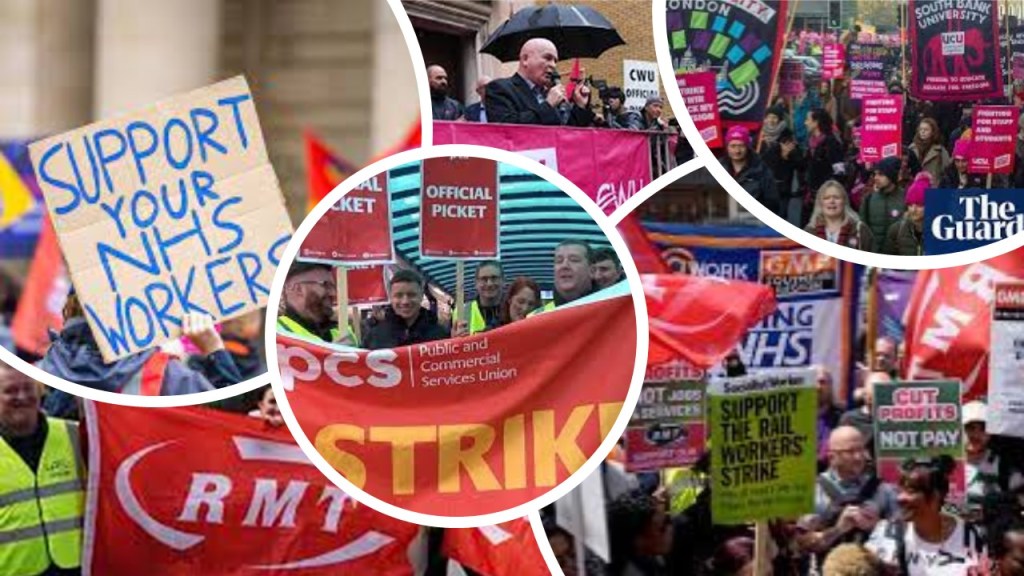
Happy new year to one and all, although I suspect for many it will be a new year of trepidation rather than hope and excitement.
It seems that every way we turn there is a strike or a threat of a strike in this country, reminiscent, according to the media, of the 1970s. It also seems that every public service we think about (I mean this in the wider context so would include Royal Mail for example,) is failing in one way or another. The one thing that strikes me though, pardon the pun, is that none of this has suddenly happened. And yet, if you were to believe media reporting, this is something that is caused by those pesky unions and intransigent workers or is it the other way round? Anyway, the constant rhetoric of there is ‘no money’, if said often enough by politicians and echoed by media pundits becomes the lingua franca. Watch the news and you will see those ordinary members of the public saying the same thing. They may prefix this with ‘I understand why they are striking’ and then add…’but there is no money’.
When I listen to the radio or watch the news on television (a bit outdated I know), I am incensed by questions aimed at representatives of the railway unions or the nurses’ union, amongst others, along the lines of ‘what have you got to say to those businesses that are losing money as a result of your strikes or what would you like to say to patients that have yet again had their operations cancelled’? This is usually coupled with an interview of a suffering business owner or potential patient. I know what I would like to say to the ignorant idiot that asked the question and I’m sure most of you, especially those that know me, know what that is. Ignorant, because they have ignored the core and complex issues, wittingly or unwittingly, and an idiot because you already know the answer to the question but also know the power of the media. Unbiased, my ….
When we look at all the different services, we see that there is one thing in common, a continuous, often political ideologically uncompromising drive to reduce real time funding for public services. As much as politicians will argue about the amount of money ploughed into the services, they know that the funding has been woefully inadequate over the years. I don’t blame the current government for this, it is a succession of governments and I’m afraid Labour laying the blame at the Tory governments’ door just won’t wash. Social care, for example, has been constantly ignored or prevaricated over, long before the current Tories came to power, and the inability of social care to respond to current needs has a significant knock-on effect to health care. I do however think the present government is intransigent in failing to address the issues that have caused the strikes. Let us be clear though, this is not just about pay as many in government and the media would have you believe. I’m sure, if it was, many would, as one rather despicable individual interviewed on the radio stated, ‘suck it up and get on with it’. I have to add, I nearly crashed the car when I heard that, and the air turned blue. Another ignoramus I’m afraid.
Speak to most workers and they will tell you it is more about conditions rather than pay per se. Unfortunately, those increasingly unbearable and unworkable conditions have been caused by a lack of funding, budget restraints and pay restraints. We now have a situation where people don’t want to work in such conditions and are voting with their feet, exacerbating the conditions. People don’t want to join those services because of poor pay coupled with unworkable conditions. The government’s answer, well to the nurses anyway, is that they are abiding by the independent pay review body. That’s like putting two fingers up to the nurses, the health service and the public. When I was in policing it had an independent pay review body, the government didn’t always abide by it, notably, they sometimes opted to award less than was recommended. The word recommendation only seems to work in favour of government. Now look at the police service, underfunded, in chaos and failing to meet the increasing demands. Some of those demands caused by an underfunded social and health care service, particularly mental health care.
Over the years it has become clear that successive governments’ policies of waste, wasted opportunity, poor decision making, vote chasing, and corruption have led us to where we are now. The difference between first and third world country governments seems to only be a matter of degree of ineptitude. It has been a race to the bottom, a race to provide cheap, inadequate services to those that can’t afford any better and a race to suck everyone other than the rich into the abyss.
A government minister was quoted as saying that by paying wage increases it would cost the average household a thousand pound a year. I’d pay an extra thousand pound, in fact I’d pay two if it would allow me to see my doctor in a timely manner, if it gave me confidence that the ambulance would turn up promptly when needed, if it meant a trip to A&E wouldn’t involve a whole day’s wait or being turned away or if I could get to see a dentist rather than having to attempt DIY dentistry in desperation. I’d like to think the police would turn up promptly when needed and that my post and parcels would be delivered on time by someone that had the time to say hello rather than rushing off because they are on an unforgiving clock (particularly pertinent for elderly and vulnerable people).
And I’m not poor but like so many people I look at the new year with trepidation. I don’t blame the strikers; they just want to improve their conditions and vis a vis our conditions. Blaming them is like blaming cows for global warming, its nonsensical.
And as a footnote, I wonder why we never hear about our ex-prime minister Liz Truss and her erstwhile Chancellor Kwasi Kwarteng; what a fine mess they caused. But yesterday’s news is no news and yet it is yesterday’s news that got us to where we are now. Maybe the media could report on that, although I suspect they probably won’t.
Share this:


Public confidence in the CJS: ending on a high?

2022 has been a turbulent and challenging year for many. Social inequalities and disadvantage are rife, with those in power repeatedly making bad, inhumane decisions and with very little, to no, accountability or consequences (insert your favourite example from the sh** storm that is the Conservative Party here). Union after Union, across sectors, engage in industrial action in response to poor working conditions and pay, amidst a cost-of-living crisis. And although seemingly unconnected, as the year comes to a close, the Sentencing Guidelines (2022) report on Public Confidence in the Criminal Justice System (CJS) has got me feeling frustrated. My previous blog entries have often been ‘moans’. And whilst January is often dubbed the month of new beginnings and change for the year ahead: we’re not quite there yet so true to form here is my latest moan!
The report exists as one of many conducted by Savanta to collate data on public confidence, in terms of effectiveness and fairness, in the CJS and public awareness of the sentencing guidelines. The data collected in March 2022, was via online surveys given to a “nationally representative sample of 2,165 adults in England and Wales” (Archer et al., 2022, p.9). Some of their highlighted ‘Key Findings’ include that confidence levels in CJS remains relatively stable in comparison to 2018, on the whole, respondents viewed sentences as ‘too lenient’ however this varied based on offence, the existence of the sentencing guidelines improves respondent’s confidence in the fairness of sentencing, and that engagement with broadcast news sources was high across respondents (Archer et al., 2022). It is not the findings, per se, that I take umbrage with, but rather the claim it is a “nationally representative sample of adults in England and Wales” (Archer et al., 2022, p.9).
I take issue on two fronts. The first being that the sample size of 2,165 adult respondents is representative when the demographic factors included are: gender (male and female), age (18-34yo, 35-54yo and 55+), region, ethnicity (White, Mixed, Asian, Black and Other) and socio-economic grade. Now considering we are, thankfully, at the end of 2022 we should all be able to recognise that a sample which only includes cis-gendered options, narrows ethnicity down to 4 categories and the charming ‘other’, and does not include disabilities is problematic. There has been a large body of research done on people with disabilities and their experiences within the CJS, the lack of representation, the lack of accessibility to space and decisions, potentially impacting a defendant’s right to a fair trial, and a victim’s right to justice (Equality and Human Rights Commission, 2021; Hyun et al., 2013 ). So I ask, is this not something which needs considering when looking at public confidence in the CJS of a “nationally representative” sample?
In addition to this, I take issue with the requirement that the sample be “nationally representative”. We have research piece upon research piece about how Black men and Black boys experience the CJS and its various agencies disproportionately to their white counterparts (Lammy, 2017; Monteith et al., 2022; Parmar, 2012). Their experiences of stop and search, sentencing, bail, access to programmes within the Secure and Youth estate. There is nothing representative about our CJS in terms of who it processes, how this is done, and by whom. According to Monteith et al., (2022) 1% of Judges in the CJS are Black, and there are NO Black judges on the High Court, Court of Appeal of Supreme Court: this is not representative! Why then, are we concerned with a representative sample when looking at public confidence in CJS and the sentencing guidelines, when it is not experienced in a proportionate manner?
Maybe I’ve missed the point?
The report is clear, accessible, visible to the public: crucial concepts when thinking about justice, and measuring public confidence in the CJS is fraught with difficulties (Bradford and Myhill, 2015; Kautt and Tankebe, 2011). But this just feels like another nail being thumped into the coffin that is 2022. Might be the eagerness I possess to leave 2022 behind, or the impeding dread for the year to follow but the report has angered me rather than reassured me. As a criminologist, I am hopeful for a more inclusive, representative, fair and accountable CJS, but I am not sure how this will be achieved if we do not accept that the system disproportionately impacts (but not exclusively) Black men, women and children. Think it might be time for another mince pie…
Happy New Year to you all!
References:
Archer, N., Butler, M., Avukatu, G. and Williams, E. (2022) Public Knowledge of Confidence in the Criminal Justice System and Sentencing: 2022 Research. London: Sentencing Council.
Bradford, B. and Myhill, A. (2015) Triggers of change to public confidence in the police and criminal justice system: Findings from the crime survey for England and Wales panel experiment, Criminology and Criminal Justice, 15(1), pp.23-43.
Equality and Human Rights Commission (2021) Does the criminal justice system treat disabled people fairly? [Online] Available at: https://www.equalityhumanrights.com/en/inquiries-and-investigations/does-criminal-justice-system-treat-disabled-people-fairly [ Accessed 4th November 2021].
Hyun, E., Hahn, L. and McConnell, D. (2013) Experiences of people with learning disabilities in the criminal justice system, British Journal of Learning Disabilities, 42: 308-314.
Kautt, P. and Tankebe, J. (2011) Confidence in the Criminal Justice System in England and Wales: A Test of Ethnic Effects, International Criminal Justice Review, 21(2),pp. 93-117.
The Lammy Review (2017) The Lammy Review: An independent review into the treatment of, and outcomes for, Black Asian and Minority Ethnic Individuals in the Criminal Justice System, [online] Available at: https://assets.publishing.service.gov.uk/goverment/uploads/system/uploads/attachment_data/file/643001/lammy-review-final-report-pdf [Last Accessed 14th February 2021].
Monteith, K., Quinn, E., Dennis, A., Joseph-Sailsbury, R., Kane, E., Addo, F. and McGourlay, C. (2022) Racial Bias and the Bench: A Response to the Judicial Diversity and Inclusion Strategy (2020-2025), [online] Available at: https://documents.manchester.ac.uk/display.aspax?DOCID=64125 [Accessed 4th November 2022].
Parmar, A. (2012) Racism and ethnicity in the criminal justice process, in: Hucklesby, A. and Wahidin, A. (eds.) Criminal Justice, 2nd ed, Oxford: Oxford University Press, pp.267-296.
Share this:


An alternative Christmas message

Sometime in October stores start putting out Christmas decorations, in November they slowly begin to play festive music and by December people organise office parties and exchange festive cards. For the best part of the last few decades these festive conventions seem to play a pivotal role in the lead up to Christmas. There are jumpers with messages, boxes of chocolates and sweets all designed to spread some festivity around. For those working, studying, or both, their December calendar is also a reminder of the first real break for some since summer.
The lead up to Christmas with the music, stories and wishes continues all the way to the New Year when people seem to share their goodwill around. Families have all sorts of traditions, putting up the Xmas tree on this day, ordering food from the grocers on that day, sending cards to friends and family by that day. An arrangement of dates and activities. On average every person starts in early December recounting their festive schedule. Lunch at mum’s, dinner at my brother’s, nan on Boxing Day with the doilies on the plates, New Years Eve at the Smiths where Mr Smith gets hilariously drunk and starts telling inappropriate jokes and New Year’s at the in-laws with their sour-faced neighbour.
People arrange festivities to please people around them; families reunite, friends are invited, meaningful gifts are bought for significant others and of course buy we gifts for children. Oh, the children love Christmas! The lights, the festive arrangements, the delightful activities, and the gifts! The newest trends, the must have toys, all shiny and new, wrapped up in beautiful papers with ribbons and bows. In the festive season, we must not forget the kind words we exchange, the messages send by local communities, politicians and even royalty. Words full of warmth, well-meaning, perspective and reflection. Almost magical the sights and sounds wrapped around us for over a month to make us feel festive.
It is all too beautiful, so you can be forgiven to hardly notice the lumbering shadow, at the door of an abandoned shop. Homelessness is not a lifestyle as despicably declared by a Conservative councillor/newspapers decades ago. It is the human casualty of those who have been priced out in the war of life. Even since the world went into a deep freeze due to the recession over a decade ago and the world is still in the clutches of that freeze. More people read about Christmas stories in books and in movies, because an even increasing number of people do not share the experience. Homelessness is the result of years of criminal indifference and social neglect that leads more people to live and experience poverty. A spectre is haunting Europe, the spectre of homelessness. There is no goodwill at the inn whilst the sins of the “father” are now returning in the continent! Centuries of colonial oppression across the world lead to a wave of refugees fleeing exploitation, persecution, and crippling poverty. Unlike the inn-keeper and his daughter, the roads are closed, and the passages are blocked. Clearly, they don’t fit with the atmosphere… nor do the homeless. Come to think of it, neither do the old people who live alone in their cold homes. None of these fit with the festive narrative.
As I walked down a street I passed a homeless guy is curled up in a shop door. A combination of cardboard, sleeping bag and newspapers all jumbled together. Next to him a dog on the cardboard and around them fairy lights. This man I do not know, his face I have not seen, his identity I ignore; but I imagine that when he was born, there was someone who congratulated his mother for having a healthy boy. Now he is alone, fortunate to have a canine companion, as so many do not have anyone. What stands out is that this person, who our festive plans had excluded, is there with his fairy lights, maybe the most festive of all people, without a burgundy coat, I hear some people like these days.
It is so difficult to say Merry Christmas this year. In a previous entry the world cup and its aftermath left a bitter taste in those who believe in making a better world. The economic gap between whose who have and those who do not, increases; the social inequalities deepen but I feel that we can be like that man with the fairy lights, fight back, rise up and end the party for those who like to wear burgundy, or those who like to speak for world events, at a price.
Merry Christmas, my dear criminologists, the world can change, when we become the agents of change.
Share this:


A year of many firsts
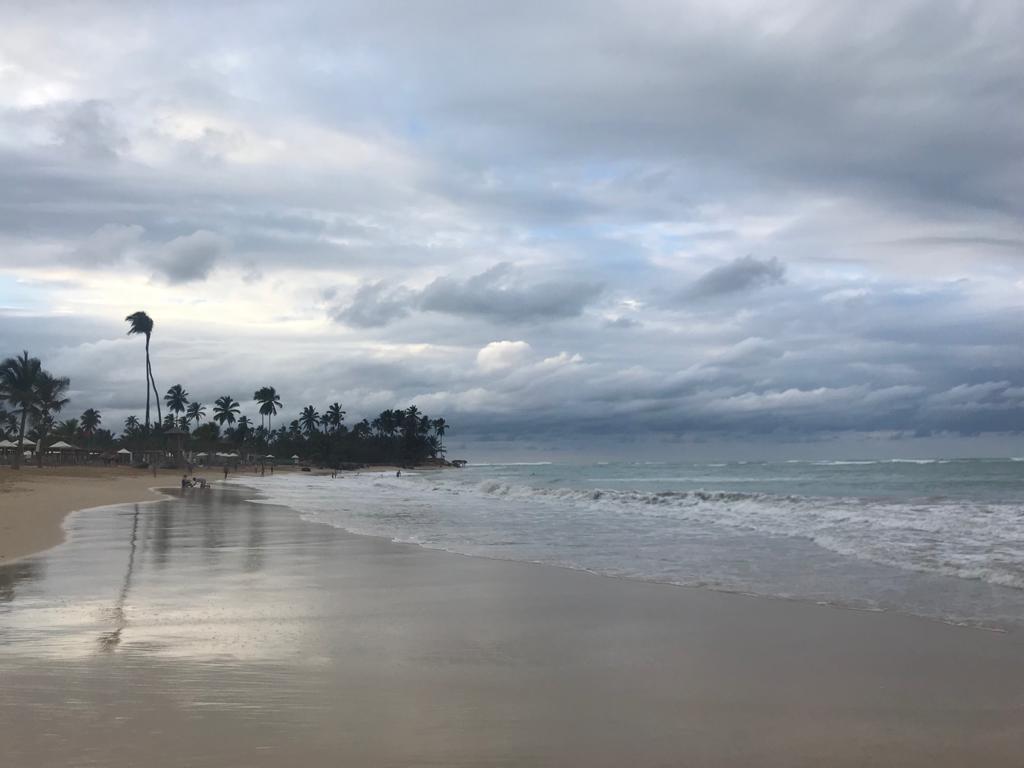
2020 was a year of many firsts for myself, and therefore in spite of the global pandemic (which brought with it the destruction of lives both figuratively and literally) it was actually quite an interesting personal year. I am exceptionally fortunate to be able to say I still have my health (physical, cannot claim with as much certainty about my mental health), a job, a roof over my head and have not suffered direct loss of loved ones due to COVID. Therefore, I feel a content warning is required: this blog does not look to boast or minimalize all the loss, hardship and destruction that was experienced in 2020. But taking a leaf out of my colleagues’ book, I would like to try and reflect upon 2020 positively where possible: and in all honesty I experienced some really beautiful firsts in 2020.
January 2020 saw the most magical ‘first’ I have experienced in my life: the first (and I am very hopeful my only) day as a bride! The day was filled with so much love, joy, food and laughter: where memories where created which cause me to smile on even my darkest days! And with this magical day came a wonderful honeymoon where my first experiences as a newly-wed were not too shabby at all! The Dominican Republic was beautiful in scenery, activities and people! Again, memories which fill me with warmth.
January also saw me graduate with my first masters, although I did not attend the graduation as was sunning it up with cocktails and novels in the DR!
During the first lockdown, my partner and I moved. This brought with it my first experience of living without a washing machine, along with my first experience of purchasing a washing machine (not that fun and quite expensive!). It was also my first experience of living in a house with my partner, with more than 3 rooms! Which, during a lockdown, proved to be essential in many ways: a luxury I know many could not afford.
The Criminology book club began in lockdown (not my first book club: sorry guys), but it was my first virtual book club which is something! Along with this came the delivery of workshops online, another first, and later in the year the delivery of lectures online, again another first! I also experienced my first online interview (panel, presentation the whole works) which was joyous. And received my first offer of full-time employment.
The holiday season brought with it the odd few firsts as well. It was the first holiday season my partner did not work in all the years I have known them (not through choice unfortunately), it was the first time we both drank on Christmas day (partner is usually driving or conscious of work on Boxing day). And it was the first time I did not feel the ‘lull’ in between Christmas and New Years, which was more scary than anything else.
2020 started out with such promise and hope, and threw some serious ‘end of the world’ vibes at us, and for some these were more than just vibes. It has been hard for all and catastrophic for many, but there have been glimmers throughout the year which have kept us going when it did not seem possible. For me 2020 will always be the year of destruction but also a year of firsts: some of which are currently up there as the best days, experiences and moments of my life 😊
Share this:


2020: A Year on “Plague Island”

Last year in this blog, I argued that 2019 had been a year of violence. My colleague, @5teveh provided a gentle riposte, noting that whilst things had not been that good, they were perhaps not as bad as I had indicated. Looking back at both entries it is clear that my thoughts were well-evidenced, but it is @5teveh‘s rebuttal that has proved most prescient in respect of what was to come….
The year started off on a positive, personally and professionally, when both @manosdaskalou and I were nominated for Changemaker Awards. Although beaten by some very tough competition, shortly before leaving campus we were both awarded High Sheriff Awards, alongside our prison colleagues, for our module CRI3006 Beyond Justice. As colleagues and students will know, this module is taught entirely in prison to year 3 criminology students and their incarcerated peers. Unfortunately, the awards took place in the last week on campus, but we are hopeful that we can continue to work together in the near future.
Understandably much of our attention this year has been on Covid-19 and the changes it has wrought on individuals, communities, society and globally. Throughout this year, the Thoughts from the Criminology Team have documented the pandemic in a variety of different ways. From my very early thoughts, written in the panic of abandoning campus for the experience of lockdown to entries from @helentrinder @treventoursu @jesjames50 @cherylgardner2015 @5teveh @manosdaskalou @anfieldbhoy @samc0812 @drkukustr8talk @zeechee @saffrongarside @svr2727 @haleysread The blog has explored Covid-19 from a variety of different angles reflecting on the unprecedented experience of living through a pandemic. It is interesting to see how the situation and our understanding and responses have adapted over the past 9 months.
Alongside the serious materials, it was obvious very early on that we also needed to ensure some lightness for the team and our readers. With this in mind, early in the first lock down, we created the #CriminologyBookClub. We’re currently on our 8th novel and we’ve been highly critical of some of the texts ;), as well as fallen in love with others. However, I know I speak for my fellow members when I say this has offered some real respite for what’s going on around us.
Another early initiative was to invite all our bloggers to contribute an entry entitled #MyFavouriteThings. We ended up with over twenty entries (which you’ll find via the link) from the criminology team, students, as well as a our regular and occasional contributors. Surprisingly we learnt a lot about each other and about ourselves. The process of something as basic as writing down your favourite things, proved to be highly cathartic.
Whilst supporting each other in our learning community, we also didn’t forget our friends and colleagues in prison. Although, the focus has rightly been on the NHS and carers, the pandemic has hit the prison communities very hard. Technology can solve some of the issues of loneliness, but to be locked in a small room, far away from family and friends creates additional problems. For the men and the staff, the last 9 months has brought challenges never seen before. Although, we could not teach the module, we did our best, along with colleagues in Geography and the Vice Chancellor @npetfo, to provide quizzes and competitions to help pass the hours.
In June, the world was shocked by the killing of George Floyd in the USA. For many of us, this death was one in a long line of horrific killings of Black men and women, whereby society generally turned a blind eye. However, in the middle of a pandemic, the killing of George Floyd meant that people could not turn away from what was playing on every screen and every platform. This lead to a resurgence of interest in Black Lives Matter and an outpouring of statements by individuals, organisations, institutions and the State.
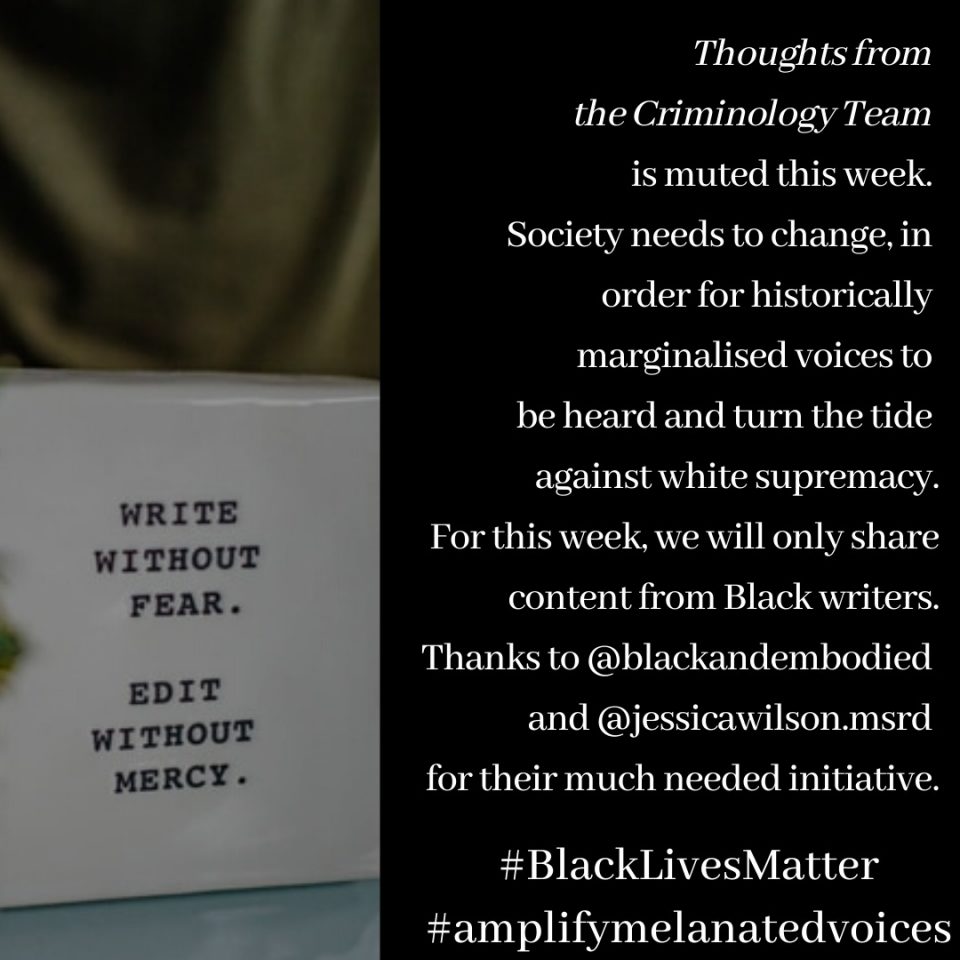
For a week in June, the Thoughts from the Criminology Team muted all their social media to make space for the #AmplifyMelanatedVoices initiative from Alishia McCullough and Jessica Wilson This was a tiny gesture in the grand scheme of things but refocused the team’s attention on making sure there is a space for anyone who wants to contribute.
Whether this new found interest in Black Lives Matters and discussions around diversity, racism, decolonisation and disproportionality continue, remains to be seen. Hopefully, the killing of George Floyd, alongside the profound evidence of privilege and need made evident by the pandemic, has provided a catalyst for change. One thing is clear, everyone knows now, we can no longer hide, there are no more excuses and we all can and must do better.
This year some old faces left for pastures new and we welcomed some new colleagues to the Criminology Team. If you haven’t already, you can read about our new (or, in some cases, not so new) team members’ – @jesjames50 @haleysread and @amycortvriend – academic journeys to becoming Lecturers in Criminology.
Finally, looking back over the last 12 months, certain themes catch my eye. Some of these are obvious, the pandemic and Black Lives Matter have occupied a lot of our minds. The focus has often been on high profile individuals – Captain Tom Moore, Joe Wickes, Marcus Rashford – but has also shone on teams/organisations/institutions such as the NHS, carers, shop workers, delivery drivers, the scientists working on the vaccines, the list goes on. Everyone has played a part, even if that is just by staying at home and out of the way, leaving space for those with a frontline role to play. Upon reflection it is evident that the over-riding themes (and why @5teveh was right last year) are ones of kindness, of going the extra mile, of trying to listen to each other, of reaching out to each other, acknowledging unfairness and privileges, recognising the huge loss of life and the impact of illness and bereavement and trying to make things a little better for all. Hope has become the default setting for all of us, hope that the pandemic will be over, alongside hopes that we can build a better world with its passing. It has also become extremely clear that critical thinking is at a premium during a pandemic, with competing narratives, contradictory evidence and uncertainty, testing all of our ability to cope with change and respond with humility and humanity.
There is no doubt 2020 has been an unprecedented year and one that will stay with us for ever in the collective memory. Going into 2021 it’s important that we remember to consider the positives and keep trying to do better. Hopefully, in 2021 we will get to celebrate Criminology’s 21st Birthday together
Remember to stay safe, strong and well and look out for yourself and others.

Share this:


How to prepare for a year in University

In our society consumerism seems to rain supreme. We can buy stuff to make us feel better and we can buy more stuff to express our feeling to others and mark almost most events around us. Retail and especially all the shops have long been aware of this and so they have developed their seasonal material. These seasonal promotions may have become consumer events now although they do signify something incredibly important to culture and our collective consciousness. There is time for Christmas decorations and festive foods, Easter time and chocolate eggs, mother’s day and nauseating cards father’s day for equally grinchworthy cards. There is valentine’s day to say I love you in full fat chocolates, Halloween to give little kids rotten teeth and a red poppy to remember some of our dead. To those add the summer season with the disposable BBQs and of course the back to school season!
The back to school is one of the interesting ones. Geared to prepare pupils and parents for going back to school and plan ahead. From ordering the uniforms to getting all the stationery and books required. I remember this time of the year with some rather mixed emotions. It was the end of my summer holidays, but it was also the time to get back to school. Until one day I finished school and I went to university. Education is seen as part of a continuous process that we are actively involved from the first day at school to the last day in high school and more recently for more people also involve the first day of going to university. Every year is more challenging than the next, but we move up and continue. For those of us who enjoy education we continue the journey further to further or high education.
There is something to said about the preparation process coming to University; it is interesting seeing advertisements on education this time of the year on the tv and social media promoting stuff for this transition; from the got to have smartphone to the best laptop, the fastest printer scanner all in one thingy to the greatest sound system and many more stuff that would get you ready for the year ahead. Do they really help us out and if not, what do we got to do to prepare for coming to university?
Unfortunately, there is no standard formula here but there is a reason for that. Higher education is adult education. This is the first time in our educational journey that we are sitting firmly on the driving seat. We choose to study (or ought to) what we wish to study. It is an incredibly liberating process to have choice. This however is only the beginning. We make plans of our time. In higher education the bulk of the time required is independent study, and as such we got to negotiate how we will plan our time. We got to decide which reading we are going to do first which notes to read what seminar we shall prepare and what assignment we will make a draft of.
There will be days spent in the library looking for a book, days in a coffee shop talking to fellow students about the seminar reading, days in the learning hub working on an assignment. There are highs, lows and everything in between. But regardless of the emotion at every stage thee will be a sense of ownership of knowledge.
In the first couple of sessions, the bulk of the students keep quiet expecting the correct answer to be given. One interpretation or one truth that describes all. It takes a few times before the realisation emerges that the way we analyse, and project knowledge can be different provided we go through the same processes of scrutiny and analysis. Then conversation emerges and the more reading the better the quality of the ideas that shall emerge.
The first year at University is definitely a declaration of independence and the realisation that we all have a voice. Getting on to the road on empowerment. This is a long journey, and on occasions arduous but incredibly rewarding because it leads to an insight greater than before that removes ignorance and lifts the veil of the unfamiliar.
To our newest students – Welcome to the University and to our returning 2 and 3 years – Welcome back!

 Thoughts from the criminology team