
Home » Ministry of Justice
Category Archives: Ministry of Justice

What price justice?

It was reported in the news a couple of days ago that a super complaint has been lodged against the police in England and Wales in respect of their handling of sexual offence cases (The Guardian 15.12). Not long before that article was published, another gave us the news that prisoners have erroneously been released from prison (BBC 5.11). These stories sandwiched another, that concerning the abolition of trial by jury for offences attracting anything less than three years imprisonment (BBC 02.12). The rationale behind these proposals is the reduction of the appalling backlog of court cases awaiting trial.
These stories beg the very simple question what an earth is going on with the criminal justice system? To say it is in crises would be an understatement. The system is broken, and it is hard to see how it can be fixed but perhaps it isn’t difficult to see how it got into its present state.
The justice process is complex and above all else, for it to work effectively, it is costly and by its very nature, it is inefficient. And this has presented problems for successive governments over decades. The conundrum, how to deliver a cost effective, efficient criminal justice system. Put simply the mantra seems to have been how do you achieve cheap justice?
The various components of the criminal justice system are interdependent, when one part fails, it has a knock-on effect to the others. Each part of the criminal justice system has seen so called efficiency and economy drives over the decades, and the consequence has been a cut in service across the board.
How many times do we hear complaints that the police just don’t turn up when a crime is reported or that they are disinterested? But have a look at the sustained cuts in budgets, the burgeoning costs of policing as the social and technological worlds change around us and the constant reprioritising of policing efforts and, it is little wonder that there is no one to turn up or that the crime you are reporting just isn’t important enough. Or maybe the people that do the policing are simply just worn out, disenchanted and frustrated by a system that fails their efforts at every turn. They even conspire to fail themselves.
And what of the Crown Prosecution Service (CPS)? Understaffed and under crude directions to enforce tests and codes to minimise court cases as best they can. With a little bit of research, you can find complaints against the CPS relating to the changing of the threshold in relation to sexual offences. To some extent CPS lawyers act as judge and jury before a defendant is even charged. Economic perhaps, effective, no. This has a knock-on effect to the police who then pre-empt that decision making. No point in sending a file to the CPS just to see it knocked back. The CPS must of course also have a mind to the backlog in the courts, no point sending a case there if it won’t be heard for months, if not years on end. And then the courts. The consistent closure of courts, both magistrates and crown over the years beggars belief. There is no local justice now, if you are defendant, witness or victim, you will be travelling miles to get to the allotted court. And if you do make it, the chance of your case being heard on that day is a lottery. As for legal aid, a pipe dream. Defendants in court trying to defend themselves and having to be assisted by the court clerk because quite frankly, they do not have a clue. But then who would? All of this presupposes the case gets to court in a timely fashion. You try remembering what happened 3 years ago when cross examined by a solicitor or barrister.
And prisons, well, overcrowded, understaffed and failing to provide anything but the basics, if that. Many a report suggests a crumbling prison estate and inhumane conditions within prisons. There has to be something fundamentally wrong with a system that allows prisoners to walk out the gates and then sees vast sums of money and resource poured into trying to find them. Efficient, or effective, not really. As for rehabilitation, don’t even bother thinking about it.
And what of you and I, the public? What faith do you have in the criminal justice system? Is it little wonder that victims will not report crimes, and if they do, they quickly lose interest in supporting a prosecution. If the police rely on the public to help them investigate cases, what hope have they got if the public have no faith in them or the rest of the system?
The problem with successive governments is that they have been too keen to cut costs without understanding or caring about the impact. And they are too quick to judge when things go wrong, pointing the finger anywhere but at themselves. They fail to see the system as a whole; they just seem to fail to see.
Justice costs money. Cutting cases that can go to trial by jury simply displays a lack of interest in justice or incompetence in governing or perhaps both. A government that fails to deliver justice for its citizens is failing in its fundamental duty as a government. The problem is, it’s not only this government that has failed us; the failures go a long way back and any attempt to fix the issues requires a fundamental shift in policy and a significant injection of public money that is just not available. Well, that’s what they will have us believe anyway.
Share this:


The Journey of a University of Northampton Criminology Graduate

On this Jubilee year, I ponder and reflect on my 3 years as a joint honours Criminology student, and where my life journey has taken me since
In 2012-2015, I did joint honours Criminology and Education studies, and later did the LLM in International Criminal Law and Security at from 2015-2017.
My journey as a Criminology Student alumni has lead me to all sorts of unique pathways.
Having a background in notetaking and student support at different universities, I worked for 6 1/2 years as a Co-op Member Pioneer (8th January 2018-10th August 2024), where, in the community I served, I supported the local police with crime related issues, and mediated between them and the public on crime issues that mattered to them and helped to support the police, as blogged about here ‘As a Member Pioneer Supporting the Police’ . Whilst this role was about connecting communities, supporting charities, causes and local people, I saw the opportunity to help the police and the community on crime related issues.
From December 2019-June 2020, I worked for 6 months in an addiction recovery unit. Here, I learned about addiction on a more deeper and personal level. I was one of 2 members of staff who were not addicts, and so the experience was eye-opening! The staff who had ‘come clean’ from their addictions would talk about their lives before becoming clean, and how they would resort to crime to fund their addictions. It was a vicious cycle for them as they were fighting traumatic battles which lead them down the route of addiction, and could not find their way out.
I was trained on taking phone calls, and spoke with so many devasted individuals who had lost their sons, daughters, husbands and wives to addiction, and were desperate to get them the help they needed. Seeing families torn apart by addiction, and meeting with new clients who had come in to get help and learning about their stories revealed deep sufferings and traumas, some of which were life-changing events, and harrowing cries for help.
I audited medication on a daily basis, worked with the Addiction specialist doctor to make sure all new clients had been seen to, and prepared folders for each client which the support team used in their care plans. I would also create certificates for all clients who had completed their time at the unit, and celebrated in their success.
When COVID struck, I was put on furlough, and later made redundant – such is life XD – Onto my next adventure!
Where am I now?
Fast forward to March 2021; after completing a lengthy job application and job interview, I landed myself a job in the Civil Service working for the Ministry of Justice! I do casework, work with the Judges on progressing cases, I clerked a few hearings previously too. Everyday is different, and every case I work on is different.
I process new claims and with the support of the Legal Officers, issue directions to the parties if any other information is required. I oversee the progress of cases and ensure all correspondence is up to date, all orders have been issued, and the case is ready to be heard.
Each day is different, and I love everything that I do working for the justice system.
Share this:


Just semantics?

This summer has seen the opening of the first secure school in England and Wales. The idea of secure schools was first introduced in 2016 in line with reforming the youth secure estate given a wide range of failings across institutions and harms experienced by children placed in there. The original proposed date for opening one of the schools was 2020; but what is a four-year delay? In 2022 the National Audit Office reported the refurbishment of Medway Secure Training Centre (closed down in March 2020 following the harrowing findings by Panorama), where the new secure school would be, was costing approximately £36.5 million (National Audit Office, 2022). But will this new secure school actually change something within the youth secure estate, or this is more of the same but with a new sparkly name?
Oasis Restore (the first secure school in England and Wales) opened this summer and can hold up to 49 children. It is registered jointly as a Secure Children’s Home (SCH) and a secure academy which has raised concerns by Ofsted due to difference in size of Oasis Restore in comparison to other SCHs. Education is central to the secure school (although haven’t we heard this before with Secure Training Centres), with comments from Youth Justice Board (YJB) Chief Executive Steph Roberts-Bibby comparing Oasis Restore with University accommodation (Youth Justice Board, 2024). Apparently, the new secure school is a far cry from the unsafe, violent, prisons which already exist in the youth secure estate (SCT and YOIs). On a tour of the secure school earlier in the year, the Chief Executive was very positive about the physical environment and philosophies underpinning Oasis Restore where ‘strong relationships between staff and children are at the heart of the Oasis model’ and the importance of ‘having a space promoting learning, togetherness and care’ as being essential in line with rehabilitation (Youth Justice Board, 2024). So far, so good. The right words are being uttered, changes appear to have been made, but… we have been here before. The same rhetoric of the child’s best interests being promoted and being seen as ‘children first’: which is good. But is this round of reform just more of the same with different semantics?
End Child Imprisonment (2024) demonstrates how child imprisonment, which Oasis Reform still is, is beyond reform. There are ample examples of how the Youth Secure Estate has historically, and remains, a harmful unsafe environment which does not address the needs of the children they come into contact with. Missing from the positive comments from the Chief Executive of the YJB is the highlighting that the children who come into contact with the YJS are incredibly vulnerable and have often experienced traumas before their incarceration. The language is still all wrong: the myriad of challenges these children have already faced and will face within the YJS remain overlooked. In 2023 the United Nations Committee on the Rights of the Child urged the UK to introduce legislation directly prohibiting the use of solitary confinement, due the continuing harms/findings of its use: but so far, no comment from the UK Government. Time and time again, we see reforms brought in but with little to no actual change or improvement. Will Oasis Restore be the face of change of just another failure in a long line of failing reforms?
Something which rings true: “A recurrent theme in the history of child imprisonment is that evidence of failure and maltreatment is met with promises of reform which too frequently involve semantic amendment rather than changes of substance” (End Child Imprisonment, 2024, p.28). And as John Rawls argues when thinking about justice, if an institution cannot be reformed then it should be abolished. Is it finally time to abolish the child prisons which exist within society?
References:
End Child Imprisonment (2024) Why child imprisonment is beyond reform: A review of the evidence August 2024. [online] Available at: https://article39.org.uk/wp-content/uploads/2024/08/Why-child-imprisonment-is-beyond-reform.-A-review-of-the-evidence-August-2024.pdf [Accessed 14th October 2024].
Monster Ztudio/Shutterstock (2017) Change. [Online] Available at: https://ziplinelogistics.com/blog/navigating-change/ [Accessed 21.10.24].
National Audit Office (2022) Children in custody: secure training centres and secure schools. [online] London: National Audit Office. Available at: https://www.nao.org.uk/wp-content/uploads/2022/04/Children-in-custody-secure-training-centres-and-secure-schools.pdf [Accessed 17.10.24].
Rawls, J. (1971/1999) A Theory of Justice. Oxford: Oxford University Press
Youth Justice Board (2024) Inside the Oasis Restore Secure School. GOV.UK [online]. Available at: https://www.gov.uk/government/news/inside-the-oasis-restore-secure-school [Accessed 17.10.24]
Share this:


What cost justice? What crisis?
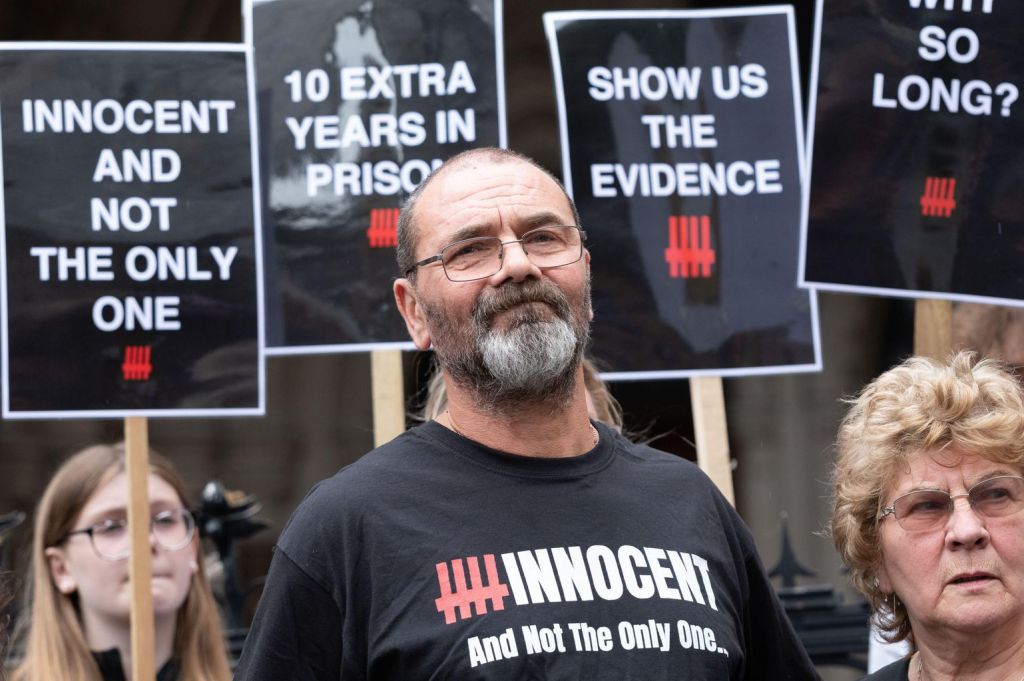
The case of Andrew Malkinson represents yet another in the long list of miscarriages of justice in the United Kingdom. Those that study criminology and those practitioners involved in the criminal justice system have a reasonable grasp of how such cases come about. More often than not it is a result of police malpractice, negligence, culture and error. Occasionally it is as a result of poor direction in court by the trial judge or failures by the CPS, the prosecution team or even the defence team. The tragic case of Stefan Kiszko is a good example of multiple failures by different bodies including the defence. Previous attempts at addressing the issues have seen the introduction of new laws such as the Police and Criminal Evidence Act 1984 and the Criminal Procedure and Investigations Act 1996. The former dealing in part with the treatment of suspects in custody and the latter with the disclosure of documents in criminal proceedings. Undoubtedly there have been significant improvements in the way suspects are dealt with and the way that cases are handled. Other interventions have been the introduction of the Crown Prosecution Service (CPS), removing in part, charging decisions from the police and the introduction of the Criminal Cases Review Commission (CCRC) to review cases where an appeal has been lost but fresh evidence or information has come to light.
And yet, despite better police training regarding interviews and the treatment of suspects, better training in investigations as a whole, new restrictive laws and procedures, the independence of the CPS, the court appeal system and oversight by a body such as the CCRC, miscarriages of justice still occur. What sets the Malkinson case aside from the others appears to be the failure of the CCRC to take action on new information. The suggestion being that the decision was a financial one, with little to do with justice. If the latter is proved to be true, we will of course have to wait for the results of the inquiry, then how can anyone have any confidence in the justice system?
Over the years we have already seen swingeing cuts in budgets in the criminal justice system such that the system is overloaded. Try to pop into the local police station to make a complaint of a crime, you won’t find a station open to the public. Should you have been unfortunate enough to have been caught for some minor misdemeanour and need to go to magistrates’ court for a hearing, you’ll be lucky if you don’t have to travel some considerable distance to get there, good luck with that if you rely on public transport. Should you be the victim of a more serious crime or indeed charged with a more serious offence, triable in crown court, then you’ll probably wait a couple of years before the trial. Unfortunate if you are the alleged offender and on remand, and if you are the victim, you could be forgiven for deciding that you’d rather put it all behind you and disengage with the system. But even to get to that stage, there has to be sufficient evidence to secure a prosecution and it has to be in the public interest to do so. Your day in court as a victim is likely to be hang on the vagaries of the CPS decision making process. A process that has one eye on the court backlog and another on performance targets. Little wonder the attrition rate in sex offences is so high. Gone are the days of letting a jury decide on occasions where the evidence hangs on little more than one person’s word against the other.
Andrew Malkinson and his legal representative have called for a judicial review, a review where witnesses can be compelled to attend to give evidence and documentary evidence can be demanded to be produced. Instead, the government has said there will be an independent inquiry. On a personal note, I have little faith in such inquiries. My experience is that they are rarely independent of government direction and wishes. Andrew Malkinson’s case is a travesty and the least that can be done is to have a proper inquiry. I suspect though that the Malkinson case might just be the tip of the iceberg. The Criminal Justice System is in crisis but budgetary restraint and political whim seem to be far more important than justice. We can look forward to more finger pointing and yet more reorganisation and regulation.
Share this:


April Showers: so many tears

What does April mean to you? April showers as the title would suggest, April Fools which I detest, or the beginning of winter’s rest? Today I am going to argue that April is the most criminogenic month of the year. No doubt, my colleagues and readers will disagree, but here goes….
What follows is discussion on three events which apart from their occurrence in the month of April are ostensibly unrelated. Nevertheless, scratch beneath the surface and you will see why they are so important to the development of my criminological understanding, forging the importance I place on social justice.
On 15 April 1912, RMS Titanic sank to the bottom of the sea, with more than 1,500 lost lives. We know the story reasonably well, even if just through film. Fewer people are aware that this tragedy led to inquiries on both sides of the Atlantic, as well, as Limitation of Liability Hearings. These acknowledged profound failings on the part of White Star and made recommendations primarily relating to lifeboats, staffing and structures of ships. Each of these were to be enshrined in law. Like many institutional inquiries these reports, thankfully digitised so anyone can read them, are very dry, neutral, inhumane documents. There is very little evidence of the human tragedy, instead there are questions and answers which focus on procedural and engineering matters. However, if you look carefully, there are glimpses of life at that time and criminological questions to be raised.
The table below is taken from the British Wreck Commissioners Inquiry Report and details both passengers and staff onboard RMS Titanic. This table allows us to do the maths, to see how many survived this ordeal. Here we can see the violence of social class, where the minority take precedence over the majority. For those on that ship and many others of that time, your experiences could only be mediated through a class based system. Yet when that ship went down, tragedy becomes the great equaliser.

On 15th April, 1989 fans did as they do (pandemics aside) every Saturday during the football season, they went to the game. On that sunny spring day, Liverpool Football Club were playing Nottingham Forest, both away from home and over 50,000 fans had travelled some distance to watch their team with family and friends. Tragically 96 of those fans died that day or shortly after. @anfieldbhoy has written a far more extensive piece on the Hillsborough Disaster and I don’t plan to revisit the details here. Nevertheless, as with RMS Titanic, questions were asked in relation to the loss of life and institutional or corporate failings which led to this tragedy. Currently it is not possible to access the Taylor Report due to ongoing investigation, but it makes for equally dry, neutral and inhuman, reading. It is hard to catch sight of 96 lives in pages dense with text, focused on answering questions that never quite focus on what survivors and families need. The Hillsborough Independent Panel [HIP] is far more focused on people as are the Inquests (also currently unavailable) which followed. Criminologically, HIP’s very independence takes it outside of powerful institutions. So whilst it can “speak truth to power” it has no ability to coerce answers from power or enforce change. For the survivors and family it brings some respite, some acknowledgement that what happened that day should have never have happened. However, for those individuals and wider society, there appears to be no semblance of justice, despite the passing of 32 years.

On 22 April 1993, Stephen Lawrence was murdered. He was the victim of a horrific, racially motivated, violent assault by a group of young white man. This much was known, immediately to his friend Duwayne Brooks, but was apparently not clear to the attending police officers. Instead, as became clear during the Stephen Lawrence Inquiry the police investigation was riddled with institutional racism from the outset. The Macpherson report (1999) tries extremely hard to keep focus on Stephen Lawrence as a human being, try to read the evidence given by Duwayne Brooks and Stephen’s parents without shedding a tear. However, much of the text is taken is taken up with procedural detail, arguments and denial. In 2012 two of the men who murdered Stephen Lawrence were found guilty and sentenced to be detained under Her Majesty’s pleasure (both were juveniles in 1993). Since 1999, when the report was published we’ve learnt even more about the police’s institutional racism and their continual attacks on Stephen’s family and friends designed to undermine and harm. So whilst institutions can be compelled to reflect upon their behaviour and coerced into recognising the need for change, for evolution, in reality this appears to be a surface activity. Criminologically, we recognise that Stephen was the victim of a brutal crime, some, but not all, of those that carried out the attack have been held accountable. Justice for Stephen Lawrence, albeit a long time coming, has been served to some degree. But what about his family? Traumatised by the loss of one of their own, a child who had been nurtured to adulthood, loved and respected, this is a family deserving of care and support. What about the institutions, the police, the government? It seems very much business as usual, despite the publication of Lammy (2017) and Williams (2018) which provide detailed accounts of the continual institutional racism within our society. Instead, we have the highly criticised Sewell Report (2021) which completely dismisses the very idea of institutional racism. I have not linked to this document, it is beneath contempt, but if you desperately want to read it, a simple google search will locate it.

In each of the cases above and many others, we know instinctively that something is fundamentally wrong. That what has happened has caused such great harm to individuals, families, communities, that it must surely be a crime. But a crime as we commonly understand it involves victim(s) and perpetrator(s). If the Classical School of Criminology is to be believed, it involves somebody making a deliberate choice to do harm to others to benefit ourselves. If there is a crime, somebody has to pay the price, whatever that may be in terms of punishment. We look to the institutions within our society; policing, the courts, the government for answers, but instead receive official inquiries that appear to explore everything but the important questions. As a society we do not seem keen to grapple with complexity, maybe it’s because we are frightened that our institutions will also turn against us?
The current government assures us that there will be an inquiry into their handling of the pandemic, that there will be some answers for the families of the 126,000 plus who have died due to Covid-19. They say this inquiry will come when the time is right, but right for who?
Maybe you can think of other reasons why April is a criminologically important month, or maybe you think there are other contenders? Either way, why not get in touch?
Share this:


Is justice fair?

There is a representation of justice. A woman (lady justice) blindfolded holding the scales of justice in one hard and a sword in the other. This representation demonstrates a visualisation of the core principles of justice: blindfold for impartiality, the scales for weighting the evidence and the sword, the authority. The need for this representation is making the point that justice is fair. To all people justice is an equaliser that brings the balance back to everyday life. Those who break the natural order are faced with the consequences of the arbitration made by the system that assumes equality for all against the law.
The representation of justice must be convincing in order to be accepted by the public. The impartiality has to be demonstrable and the system forms a bond across all social strata. Well, at least in principle. There is a difference between representation and reality. This is something we learn from early on. As a kid, I remember a special ice-cream in a cup that had a little toy in the bottom of the cup. It looked so appealing, but the reality never met my expectations. Still, I continued to buy it, in anticipation that maybe the representation and the reality will meet. Like the ice cream, the justice system, has a beautiful packaging that makes it incredibly appealing.
Forged in the flames of the renaissance and the enlightenment, justice transformed from a convenient divinity to a philosophical ideal and a social need. It became a concept that reflected social changes and economic growth. Many of the principles of justice, like equality and fairness, carried forward from the classical era. Only at this time these concepts were enriched with philosophical arguments influenced by humanism. The age of exploration and knowledge added to the scientific rigour of forensic investigation and the procedures became standardised. Great minds conceptualised some of theoretical aspects and transferred them in everyday practice. Cesare Beccaria’s treatise On Crimes and Punishments demonstrated how humanist principles can affect procedure and sentencing.
This justice system was/is our social “ice cream”. Desirable and available to all citizens. A system beyond people and social status, able to call individuals to account. Unfortunately like my childhood “ice cream” equally disappointing, primarily because the reality is not even close to the representation. The principles of justice are all noble and inspiring. There is however something behind the systems that needs to be explored in order to understand why reality and representation are so far apart. The guiding principle of any justice system from inception to this day is not to restore the balance (as so beautifully demonstrated with the scales) but to maintain the established order or the social status quo.
On the occasions where societies broke down because of war or revolution, significant changes happened. Those allowed some reforms in different parts of the system allowing changes, sometimes even radical. Even at those situations the reforms were never too radical or too extensive. Regardless of the political system, tyrannical, dictatorial or democratic, the establishment is keen to maintain its authority over the people. For this to happen, the system must be biased in its inception about what we mean about justice. If the expectations of law and order are given a direction, then the entire system follows that direction and all changes are more cosmetic than fundamental. Quite possibly this explains what we recognise as miscarriages of justice as simply the inability of the system to be more tactful about its choices and arbitrations.
Therefore, tax avoidance and drug use take a different level of priority in the system. It is the same reason that people from different socioeconomic groups are seem differently, regardless of the system’s reassurance on equality and fairness. Maybe the biggest irony of all is that the representation of justice is a woman, in one of the most male dominated systems. From the senior judiciary to the heads of police and the prison systems, women are still highly underrepresented. Whilst the representation of ethnic minorities is even lower. Of course, even if it was to change in composition, that would be arguably a cosmetic change. Perhaps it is time as society to use consumer law and demand that our justice system is like it’s been advertised…fair.

Share this:


How literature failed me as a black student

My name is Francine Bitalo, I am 21 years old and a Criminology undergraduate at the University of Northampton. Coming from a black African background I have always had a strong interest in the Criminal Justice System and its treatment towards different groups in society.
My dissertation was based on the impact of police practices such as stop and search on young black men and their families. Whilst statistics present the alarming racial disproportionately which exist in many areas in the criminal justice system, it fails to portray the long-lasting effects it has had on Black families. For example, the daily harassment and differential treatment subjected to young Black men has forced black families to reinvent themselves to conform to institutional racism. Coming from a Black family myself and having male family member, the findings in my dissertation quickly became personal to me, as I could constantly relate them to the structuring of my own family. For example, the fact that it would take my father longer to find a job due to institutional racism, making my mother the breadwinner, or when my mother is preparing my brothers for police harassment and discrimination, but not me and sisters.
While conducting my research I was quick to learn that what literature may describe as a phenomenon, for many of us is a reality. If I am honest the writing stage of my dissertation was difficult for me because it was a passionate topic. I experienced a lot of self-doubt regarding my positionality for example, being a Black woman and facing my own forms of discrimination and now having to talk about the experiences of young Black men. I think my dissertation tutor would agree with me on this as I remember emailing her after I submitted my work expressing how I felt like I didn’t effectively capture the effects and the voices of the young Black men I interviewed, despite that being my main goal. I mean who would blame me, as a student, if I am honest I felt like literature really let me down for instance, when writing my literature review I found that literature neglected the subject of racism solely from the perspectives of young Black men, despite statistics showing them to being the largest group to experience institutional racism. At this point I had to laugh at the criminal justice system and its propositions to improving police relations as well as re offending.
With that being said the information I did come across I couldn’t help but sense the notion of white privilege lingering in the perspective of some scholars. I understand this is a strong claim to make however I say this because not only did literature provide little of the work of Black scholars regarding the topic, yet it was evident that most white scholars did not see the issue with stop and search and its discriminate use. Arguments for this were discussed in my dissertation for example, some argued that the process of racial socialisation in Black households were ineffective to police relations and the functioning of their services, which creates the notion that the Black community should submit to discrimination and harassment in favour of procedures and compliance during police encounter. Some tried to justify the disproportionality in stop and search by claiming that young Black men should be harassed because they tend to be out more especially in certain urban areas or the disproportionate targeting of Black minors is due to parental criminality. I felt there was a lack of accountability from white scholar thus, little understanding in the issue of race which is natural because their experiences do not allow them to understand. Yet this led me to ask questions such as why shouldn’t Black mothers have the right to prepare their sons for police discrimination, does it matter what time and area should a person of colour be around for them to be targeted at?
After completing my dissertation and getting a First Class I felt extremely proud of myself, the fact that I did not shy away from the research topic despite it being limited in literature. As a result, it was satisfying to know that I was able to articulate the experiences of others to a First Class standard. I hope this can encourage others to trust in their abilities and put aside any doubts especially when choosing a research topic. As a student writing a dissertation or even an assignment, I believe we should explore the unexplored, open the unopened and always be willing to discover and learn. Do not be afraid of researching something that is limited or has never been done. Lastly as my dissertation was extremely passionate to me I have decided to turn it into a personal project and continue researching the topic
Share this:


White and Male: the diversity of the judiciary
My name is Anita and I graduated with a Criminology degree in 2016. I did have a great time at the University of Northampton. The course was challenging and intense however this meant that it provided me with the opportunity to overcome my barriers and develop myself both academically and personally. I miss going to lectures and seminars, revising for exams and even writing the dissertation. If you are reading this and you are in your third year, you are probably thinking that I am mad but I do miss it. I can’t help it! I can honestly say that going to University was the best decision I ever made and I would love to go back and do a postgraduate course. My advice to all students is enjoy it because time goes by so fast.
Before we start, please stop and think…… What percentage of court judges would you guess are women? How many members of the judiciary are from ethnic minorities?
If your guess is that we have a substancial amount of women and members from ethnic minorities in the judiciary, then this blog post might dissapoint you.
Let’s define the judiciary before we progress any further. The judiciary can be defined as ‘the judges of a country or a state, when they are considered as a group’ (Hornby, 2000, p.700).
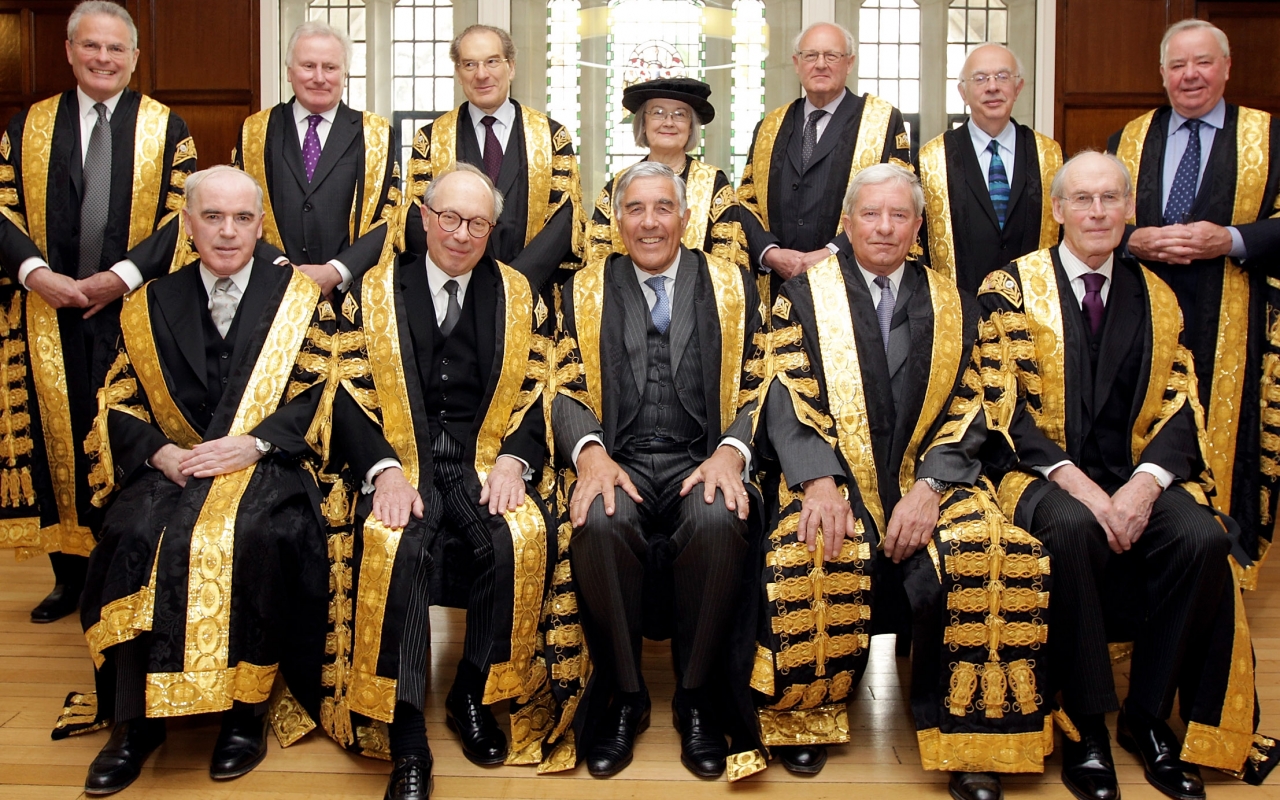
The judiciary in the UK is dominated by Oxbridge educated white middle-class men. It is estimated that three quarters of all judges in England and Wales are male and 95% are white (Lieven, 2017). The gender imbalance can be well illustrated by looking at the Supreme Court. There is only one woman among the 12 Justices on the Supreme Court. Lady Hale is the only woman ever to serve on the Court and all of the judges are and have always been white. Only Armenia and Azerbaijan have lower proportions of women in their judiciary than the UK (Lieven, 2017). This is unacceptable in 2018, changes must be made to address this gender imbalance.
In terms of race, as at 1 April 2017, only 7% of court judges were Black, Asian or Minority Ethnic (BAME). Of these Asian and Asian British accounted for 3% and the remaining three groups, Black and Black British, Mixed Ethnicity and Other Ethnic Group at around 1% each (Ministry of Justice, 2017).
This shows that judges are not reflective of wider society. This is a significant problem because the public should be confident that the judiciary delivers justice fairly. The lack of diversity means that concerns about the legitimacy and objectivity of judgements may be raised.
There are three main explanations for the continuing lack of diversity. The first explanation is that there are not enough women, BAME people and people from less privileged backgrounds who would be suitable for appointment. However, I would question the validity of this argument. This explanation seems to suggest that women or BAME people might be lacking lacking adequate knowledge or experience. There is no evidence to support this argument.
The second explanation given is that women and BAME candidates do not apply for appointment. However, it could be argued that the issue is more complicated than simply failing to apply. For example, Allen (2009) found that when BAME candidates and solicitors do apply for appointment they are significantly less likely to be successful than white candidates or barristers. This shows that the issue is not the lack of applications received from women or BAME candidates but perhaps the discriminatory recruitment process.
The third explanation is that the key principle governing our appointments to judicial office is merit. Unfortunately, the term ‘merit’ is not defined, but the implication is that achieving merit and diversity are at odds.
In conclusion, the lack of diversity in the judicial system is very concerning and should be addressed as soon as possible. This needs to be done to ensure that our justice system is fair, accessible and efficient. It is in our interest to produce a judiciary of the highest quality that reflects the make-up of our nation. Difference should be valued and not feared.
References
Allen, A (2009) Barriers to Application for Judicial Appointment Research. London: Judicial Appointments Commission.
Hornby, A.S (2000) Oxford Advanced Learner’s Dictionary. 6th ed. Oxford: Oxford University Press.
Lieven, N (2017) Increasing judicial diversity. London: Justice.
The Ministry of Justice (2017) Judicial Diversity Statistics 2017. London: MOJ.
Share this:


CRCs: Did we really expect them to work?

For those of you who follow changes in the Criminal Justice System (CJS) or have studied Crime and Justice, you will be aware that current probation arrangements are based on the notion of contestability, made possible by the Offender Management Act 2007 and fully enacted under the Offender Rehabilitation Act 2014. What this meant in practice was the auctioning off of probation work to newly formed Community Rehabilitation Companies (CRCs) in 2015 (Davies et al, 2015). This move was highly controversial and was strongly opposed by practitioners and academics alike who were concerned that such arrangements would undermine the CJS, result in a deskilled probation service, and create a postcode lottery of provision (Raynor et al., 2014; Robinson et al., 2016). The government’s decision to ignore those who may be considered experts in the field has had perilous consequences for those receiving the services as well as the service providers themselves.
Picking up on @manosdaskalou’s theme of justice from his June blog and considering the questions overhanging the future sustainability of the CRC arrangements it is timely to consider these provisions in a little more detail. In recent weeks I have found myself sitting on a number of probation or non-CPS courts where I have witnessed first-hand the inadequacies of the CRC arrangements and potential injustices faced by offenders under their supervision. For instance, I have observed a steady increase in applications from probation, or more specifically CRCs, to have community orders adjusted. While such requests are not in themselves unusual, the type of adjustment or more specifically the reason behind the request, are. For example, I have witnessed an increase in requests for the Building Better Relationships (BBR) programme to be removed because there is insufficient time left on the order to complete it, or that the order itself is increased in length to allow the programme to be completed[1]. Such a request raises several questions, firstly why has an offender who is engaged with the Community Order not been able to complete the BBR within a 12-month, or even 24-month timeframe? Secondly, as such programmes are designed to reduce the risk of future domestic abuse, how is rehabilitation going to be achieved if the programme is removed? Thirdly, is it in the interests of justice or fairness to increase the length of the community order by 3 to 6 month to allow the programme to be complete? These are complex questions and have no easy answer, especially if the reason for failing to complete (or start) the programme is not the offenders fault but rather the CRCs lack of management or organisation. Where an application to increase the order is granted by the court the offender faces an injustice in as much as their sentencing is being increased, not based on the severity of the crime or their failure to comply, but because the provider has failed to manage the order efficiently. Equally, where the removal of the BBR programme is granted it is the offender who suffers because the rehabilitative element is removed, making punishment the sole purpose of the order and thus undermining the very reason for the reform in the first place.
Whilst it may appear that I am blaming the CRCs for these failings, that is not my intent. The problems are with the reform itself, not necessarily the CRCs given the contracts. Many of the CRCs awarded contracts were not fully aware of the extent of the workload or pressure that would come with such provisions, which in turn has had a knock-on effect on resources, funding, training, staff morale and so forth. As many of these problems were also those plaguing probation post-reform, it should come as little surprise that the CRCs were in no better a position than probation, to manage the number of offenders involved, or the financial and resource burden that came with it.
My observations are further supported by the growing number of news reports criticising the arrangements, with headlines like ‘Private probation firms criticised for supervising offenders by phone’ (Travis, 2017a), ‘Private probation firms fail to cut rates of reoffending’ (Savage, 2018), ‘Private probation firms face huge losses despite £342m ‘bailout’’ (Travis, 2018), and ‘Private companies could pull out of probation contracts over costs’ (Travis, 2017b). Such reports come as little surprise if you consider the strength of opposition to the reform in the first place and their justifications for it. Reading such reports leaves me rolling my eyes and saying ‘well, what did you expect if you ignore the advice of experts!’, such an outcome was inevitable.
In response to these concerns, the Justice Committee has launched an inquiry into the Government’s Transforming Rehabilitation Programme to look at CRC contracts, amongst other things. Whatever the outcome, the cost of additional reform to the tax payer is likely to be significant, not to mention the impact this will have on the CJS, the NPS, and offenders. All of this begs the question of what the real intention of the Transforming Rehabilitation reform was, that is who was it designed for? If it’s aim was to reduce reoffending rates by providing support to offenders who previously were not eligible for probation support, then the success of this is highly questionable. While it could be argued that more offenders now received support, the nature and quality of the support is debatable. Alternatively, if the aim was to reduce spending on the CJS, the problems encountered by the CRCs and the need for an MoJ ‘bail out’ suggests that this too has been unsuccessful. In short, all that we can say about this reform is that Chris Grayling (the then Home Secretary), and the Conservative Government more generally have left their mark on the CJS.
[1] Community Orders typically lasts for 12 months but can run for 24 months. The BBR programme runs over a number of weeks and is often used for cases involving domestic abuse.
References:
Davies, M. (2015) Davies, Croall and Tyrer’s Criminal Justice. Harlow: Pearson.
Raynor, P., Ugwudike, P. and Vanstone, M. (2014) The impact of skills in probation work: A reconviction study. Criminology and Criminal Justice, 14(2), pp.235–249.
Robinson, G., Burke, L., and Millings, M. (2016) Criminal Justice Identities in Transition: The Case of Devolved Probation Services in England and Wales. British Journal of Criminology, 56(1), pp.161-178.
Savage, M. (2018) Private probation firms fail to cut rates of reoffending. Guardian [online]. Available from: https://www.theguardian.com/society/2018/feb/03/private-firms-fail-cut-rates-reoffending-low-medium-risk-offenders [Accessed 6 July 2018].
Travis, A. (2017a) Private probation firms criticised for supervising offenders by phone. Guardian [online]. Available from: https://www.theguardian.com/society/2017/dec/14/private-probation-firms-criticised-supervising-offenders-phone [Accessed 6 July 2018].
Travis, A. (2017b) Private companies could pull out of probation contracts over costs. Guardian [online]. Available from: https://www.theguardian.com/society/2017/mar/21/private-companies-could-pull-out-of-probation-contracts-over-costs [Accessed 6 July 2018].
Travis, A. (2018) Private probation firms face huge losses despite £342m ‘bailout’. Guardian [online]. Available from: https://www.theguardian.com/society/2018/jan/17/private-probation-companies-face-huge-losses-despite-342m-bailout [Accessed 6 July 2018].
Share this:


Another broken promise – Ministry of Justice announcement to postpone plans to reduce female prison population

The plight of women in prison aptly demonstrates some of the issues I have with our current government. There seems to be a pattern of u-turns, postponing on strategies and little remorse or concern shown for the impact of these decisions. Now I don’t know if this is to do with focus on Brexit, or some other reason that only those in the corridors of power can know. What I am concerned about is the cavalier way this government back tracks and displays levels of incompetency that anyone else would be sacked for. I am concerned because these tactics affect lives, they impact on people’s health wellbeing and survival. Women in prison suffer disproportionately compared to men, and it seems, they are easy target to disregard. They are also a prison population which is predominantly low risk and would benefit from assistance, welfare and support, much more so than punishment and retribution. By the way, I also firmly believe there are plenty of male prisoners and young offenders in the same boat – as do others. Women in prison, including those who are also mothers (up to 66%) (Epstein, 2014) do however face greater impact for a variety of reasons. It is these reasons which make the recent announcement by the Ministry of Justice to postpone plans to reduce the female prison population all the more galling.
An article in the Guardian states ‘women account for 5% of the prison population of in England and Wales but have much higher rates of deaths, suicide attempts and self-harm than men’ (Syal, 2018). The focus of the multimillion pound government strategy to reduce the number of women being imprisoned for non-violent offences was to set up community prisons and provide more support for female offenders. The postponement was reported to be due to spending pressures, which is also affected spending on the prison system more widely. This is a strategy which has been developed over several years and this postponement must surely test the patience of those reformers who have campaigned for this change. Indeed, Peter Dawson, the director of the Prison Reform Trust has expressed disbelief that a strategy which had widespread support is being treated in this way. He also added that to cite the postponement as an issue with cost is contradictory, given better support in the community and the aims of the strategy to reduce the numbers of women in prison would actually reduce costs to the Ministry of Justice. Women prisoners have complex needs, with mental health issues, abuse, debt, homelessness, poor education as well a significant number having child care responsibilities and with a prison sentence, facing the very real prospect of losing their child to the social care system (Baldwn, 2017).
The MoJ strategy embraced multi-agency working and even found a way to navigate achieving its aims under the current Transforming Rehabilitation arrangements, with the National Probation Service working with the police, mental health charities and courts to co-ordinate better support services and better arrangements to help women due for release. The need for this was clear as a report by Inquest (2018) showed that 116 women died post release during 2010-11 and 2016-17. In addition to increased incidences of self-harm and suicides, and given that 84% of women are imprisoned for non-violent offences (ibid), it was clear that not only should something be done, but also that something could be done. The benefits were evident in saving money, reducing risks to women prisoners and not compromising on public protection. The report by Inquest (2018) also shows that the disproportionate number of women on short term sentences (62%) reiterates the need to reduce this, given the disruptive effects on housing, jobs and childcare. Deborah Coles of Inquest suggest this postponement by the MoJ will costs lives and that the harms of the justice system to women need to be acknowledged.
This need for change is also supported by the Magistrates Association, who also report that help and support is much more effective than short term sentences. Given this arena is where the decision to sentence occurs, it is an important move to get magistrates thinking differently about the delivery of justice. This is not just about considering community sentences, but also to consider how the court room can be a place for different approaches to those offenders – male or female – who present complex needs, experiences of abuse and discrimination and who require more than stern words and retributive acts of punishment.
There have long been concerns about the rising numbers of female prisoners, given that this is attributed to increasing punitiveness in sentencing decisions (Hedderman, 2004). There is a strong case for using community sentencing where this is appropriate (Corston, 2007; Prison Reform Trust 2011; Baldwin, 2015), i.e. for non-violent and low risk offenders. This is evidence from campaigns (e.g. from the Howard League for Penal Reform, the Prison Reform Trust, Women in Prison, Make Justice Work) to reduce the use of custody more generally, but especially for women and mothers who break the law. A recent edited text on the plight of mothers in prison further emphasises the need for a different approach (Baldwin, 2015). It collates contributions from academics and practitioners working within the prison system, managing the needs of mothers and mothers to be, as well as those research these issues (e.g. Baldwin, 2015; Epstein, 2012; Minson 2014). A core theme is that short term sentences create a narrative of continuing disadvantage, felt for generations (Baldwin, 2015). It also demonstrates the long-term effects of the imprisonment of mothers, as a ripple effect which impacts the mother, their child, other family members for a length of time way past the length of the sentence – what Baldwin (2015) has referred to as a ‘sentence which keeps on punishing’. This text reiterates the potential for change starting with the courts, where different approaches would have a lasting impact and lead to more positive outcomes.
This is just the tip of the iceberg in terms of evidence which shows a different way to deal with offenders is possible, the evidence is there, the options are there and until recently, some degree of political will and investment was also there. I hope this is a postponement and not just another broken promise. This seems to be a pattern for this government, and there seems to be no one holding them to account when such decisions are made. It may well be because the prison population is a group we can all too easily disregard. However, given that these are people who have faced a life of disadvantage and whose reformation would benefit all of us who wish to feel safe in our communities, this view is misguided. The problem is, it seems it is all too easily accepted.
References
Baldwin, L. (2015) Mothering Justice: Working with Mothers in Criminal and Social Justice Settings, Waterside Press.
Baldwin, L. (2015d). Rules of Confinement: Time for Changing the Game. Criminal Law and Justice Weekly, 179 (10).
Corston, J. (2007). The Corston Report: A report by Baroness Jean Corston of a Review of Women with Particular Vulnerabilities in the Criminal Justice System. London: Home Office.
Epstein, R. (2014). Mothers in Prison: The sentencing of mothers and the rights of the child, Howard League What is Justice? Working Papers 3/2014, Howard League for Penal Reform.
Hedderman, C. (2004). The ‘criminogenic’ needs of women offenders. In G. McIvor
(ed) Women Who Offend: Research Highlights in Social Work 44. London: Jessica
Kingsley Publishers.
Inquest (2016) Still Dying On The Inside: Examining deaths in women’s prisons (see https://www.inquest.org.uk/Handlers/Download.ashx?IDMF=8d39dc1d-02f7-48eb-b9ac-2c063d01656a)
Minson, S. (2014). Mitigating Motherhood: A study of the impact of motherhood on sentencing decisions in England and Wales, Howard League for Penal Reform, London.
Prison Reform Trust (2011). Reforming Women’s Justice: Final Report of the Women’s Justice Taskforce. London: Prison Reform Trust.
Syal, R. (2018) Ministry of Justice postpones plans to reduce female prison population, The Guardian, 2 May 2018.

 Thoughts from the criminology team