
Home » Media (Page 6)
Category Archives: Media

Netflix and Study?

Bethany Davies is an Associate Lecturer teaching modules in the first year.
As each year and each term goes by, it brings to light how much more we are all connected through media and also how we use media to socialise and also learn.
Now, watching television, movies and using music to learn is not a new concept, I understand this, but on a personal level, I have found more individuals using television and more specifically, crime documentaries to fuel their interest in criminology and their understanding of elements of the criminal justice system.
I believe firstly, the idea of enjoying, what is termed ‘binge watching’, crime documentaries, an interesting concept. As previously explored on the blog regarding ‘enjoyment’ and ‘fun’ of criminology, the themes in these documentaries are very dark and in most cases, the gorier it is, the more it seems to be enjoyed by some viewers. Each September that rolls around we have the (sometimes dreaded) ‘ice breaker’ session, where we get to know our students and what has made them want to pursue a criminology degree at this University. Within that you will always have some who choose to voice their love of a certain crime TV show. This does not always end at first introductions either, there is often a continuation of comparisons made between that of a serious historical event and that of Netflix documentary (for example) which can often contain more dramatic music and pictures than it does criminological discussion.
The question I would like to present is, do we nourish the idea of using documentaries and crime dramas to keep the interest of those who wish to pursue criminology as a field of learning, or would doing so be disingenuous to what criminology is and neglect the love for reading and debates in criminology? I do not necessarily feel this is a question we have to worry about tremendously as I feel those who seek to study criminology purely based on their love for crime documentaries will either soon realise that there is so much of criminology that does not fit those ideas and either love it or abandon it at that point.
But in years to come these questions may be more significant than they are currently. Especially if used as a tool in universities to attract more students into a certain discipline. There are such large elements of criminology that I feel have to be explored with literature or within a seminar setting with questions and debates, and it can be easy for institutions to say that these elements will always be fundamental to a criminology degree for years to come. However, if other institutions start to use more and more media and visual aids to demonstrate a theory or issue of crime in the future, or what I suspect more as a marketing campaign to attract students, will we conform? There are some articles (from questionable sources) that some institutions are using Snapchat and social media takeovers to help attract students to certain courses, most of which I have read about have been media based, granted. But let’s hope all this drivelling nonsense is just my brain after a long bank holiday weekend and not a possibly looming prospect of the future of criminology, right?
Share this:


You know what really grinds my gears…

Jessica is an Associate Lecturer teaching modules in the first year.
Unlike the episode from Family Guy, which sees the main character Peter Griffin present a segment on the Quahog news regarding perhaps ‘trivial’ issues which really grind his gears, I would hope that what grinds my gears is also irritating and frustrating for others.
What really grinds my gears is the portrayal of women without children being pitied in the media. Take a recent example of Jennifer Aniston who has (relatively recently) split from her partner. The coverage appears to be (and this is just my interpretation) very pitiful around how Jennifer does not have any children; and this is a shame. Is it? Has anyone bothered to ask Jennifer if she feels this is a shame? Is this something Jennifer feels is missing from her life? Who knows: It might be the case. But the issue that I have, and ultimately what really grinds my gears, is this assumption that as a woman you are expected to want and to eventually have children.
There are lots of arguments around how society is making progress (I’ll leave it amongst yourselves to argue if this is accurate or not, and if so to what extent), however is it in this context? If women are still pressured by the media, family and friends to conform to the gendered stereotype of women as mothers, has society made progress? I am not for one minute saying that women shouldn’t be mothers, or that all women should be mothers; what I am annoyed about is this apparent assumption that all women want to be mothers and more harmful, the ignorant assumption that all women can be mothers.
It really grinds my gears that it still appears to be the case that women are not ‘doing gender’ correctly if they are not mothers, or if they do not want to be mothers. Families and friends seem to assume that having a family is what everyone wants and strives to achieve, therefore not doing this results in some form of failure. How is this fair? The human body is complex (not that I have any real knowledge in this area), imagine the impact you are having on women assuming they want and will have a family, if biologically, and potentially financially, having one is difficult for them to do? Is it not rude that you are assuming that women want children because their biology allows them the potential to have them?
In answer to the last question: Yes! I think it is rude, wrong and ultimately irritating that it is assumed that all women want children and them not having them somehow means their life has missed something. As with all lifestyle choices and decisions, not every lifestyle is for everyone. Therefore I would greatly appreciate it if society acknowledged that women not wanting or having children does not mean that they have accomplished less in life in comparison to those who have children, it just means they have made different choices and walked different paths.
For me, this just highlights how far we still have to go to eradicate gender stereotypes; that is, if we even can?
Share this:


A Bloody Shame
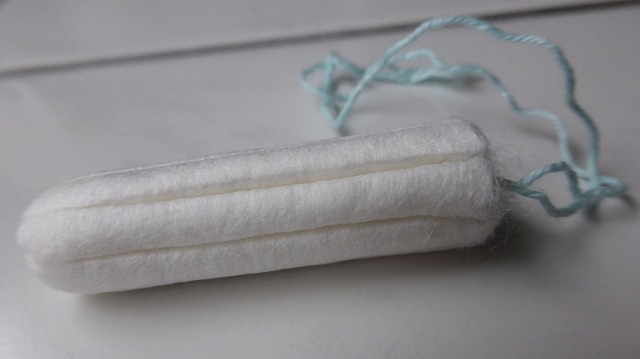
I find it fascinating that when I ask my students whether they watch or read the news the reply is generally in the negative. Maybe part of the reason might be found in the fact that so much news resides only temporarily in our conscience before it is replaced by yet another item of news, ‘fake or not’ and we are bombarded with information churned out 24/7, minute by minute. What is alarming is that important issues are reported on, sometimes in a somewhat perfunctory manner, and lost in the mix of other important and less important issues.
And so it is for an item of news that caught my eye just before Christmas. I didn’t really think much about it until somewhere in the back of my mind I had a niggling feeling that just can’t be right. The news item, as I recall it, related to a protest outside Downing Street about women’s sanitary products. A young lady led the protest about the lack of availability of the products for young people, or was it that V.A.T was being added to the products? I just remember the banal comments made by some supporting actress and what I thought were somewhat distasteful banners being displayed. But on reflection all of this masked a serious issue, that of equality and Human Rights. Part of the storyline behind the news was that some young women were not going to school at certain times because they could not afford sanitary products. I couldn’t even imagine the embarrassment this must cause for young ladies. And then I thought about how it might affect other women on low or no income.
There has been much in the news about equality for women recently, most notably around the issue of equal pay. But this issue of sanitary products is even more fundamental. If you don’t have a decent education, how can you get into the work place, let alone achieve parity on pay?
The last time I looked, education was a Human Right. I don’t think the basis of this was something along part time education according to certain times of the month. Women did not ask to be put into this position and it isn’t something that afflicts men. I bet if it did, sanitary products would be available in every public toilet for free and you could probably order your free delivery on line.
I’m not sure how it should work but if we believe in Human Rights and we believe in equality, sanitary products, or the lack of should not be allowed to hold women back. There may be a cost but the payback would be tremendous.
More recently in the news, the Prime Minister, Mrs May, has been visiting China and according to the news had some difficult conversations about Human Rights records. I would suggest that perhaps she ought to look closer to home. And as for the media, perhaps some issues should linger longer to have a chance of embedding themselves in the public’s conscience.
Share this:


The true message of Christmas

One of the seasonal discussions we have at social fora is how early the Christmas celebrations start in the streets, shops and the media. An image of snowy landscapes and joyful renditions of festive themes that appear sometime in October and intensify as the weeks unforld. It seems that every year the preparations for the festive season start a little bit earlier, making some of us to wonder why make this fuss? Employees in shops wearing festive antlers and jumpers add to the general merriment and fun usually “enforced” by insistent management whose only wish is to enhance our celebratory mood. Even in my classes some of the students decided to chip in the holiday fun wearing oversized festive jumpers (you know who you are!). In one of those classes I pointed out that this phenomenon panders to the commercialisation of festivals only to be called a “grinch” by one of the gobby ones. Of course all in good humour, I thought.
Nonetheless it was strange considering that we live in a consumerist society that the festive season is marred with the pressure to buy as much food as possible so much so, that those who cannot (according to a number of charities) feel embarrassed to go shopping; or the promotion of new toys, cosmetics and other trendy items that people have to have badly wrapped ready for the big day. The emphasis on consumption is not something that happened overnight. There have been years of making the special season into a family event of Olympic proportions. Personal and family budgets will dwindle in the need to buy parcels of goods, consume volumes of food and alcohol so that we can rejoice.
Many of us by the end of the festive season will look back with regret, for the pounds we put on, the pounds we spent and the things we wanted to do but deferred them until next Christmas. Which poses the question; What is the point of the holiday or even better, why celebrate Christmas anymore? Maybe a secular society needs to move away from religious festivities and instead concentrate on civic matters alone. Why does religion get to dictate the “season to be jolly” and not people’s own desire to be with the ones they want to be with? If there is a message within the religious symbolism this is not reflected in the shop-windows that promote a round-shaped old man in red, non-existent (pagan) creatures and polar animals.
According to the religious message about 2000 years ago a refugee family gave birth to a child on their way to exile. The child would live for about 33 years but will change the face of modern religion. He promised to come back and millions of people still wait for his second coming but in the meantime millions of refugee children are piling up in detention centers and hundreds of others are dying in the journey of the damned. “A voice is heard in Ramah, mourning and great weeping, Rachel weeping for her children, because her children are no more” (Jeremiah 31:15). This is the true message of Christmas today.
Happy Holidays to our students and colleagues.
FYI: Ramah is a town in war torn Middle East
Share this:


Perceptions of tattooed bodies

Charlotte Dann is a psychology lecturer in the Faculty of Health and Society, researching women’s tattooed bodies. You can find out more and get in touch via Twitter – @CharlotteJD
Whenever I discuss my tattoo research, I always frame it historically, because I think it’s important to consider how we have come to the point we are at with how tattoos are perceived and understood. And you know, it’s good for a laugh.
In the late 1800s, Lombroso researched deviancy and criminality, and as part of this, came to the conclusion that people who had tattoos were criminals and prostitutes. However, this research was conducted on – you guessed it – criminals and prostitutes. Despite the poor correlation that was presented, his research was influential in how we perceive deviancy and deviant bodies, to the point that those negative connotations towards tattooed bodies still ring true today. Tattoos may be ever rising in popularity (figures indicated one in five has a tattoo, and the number of studios rose by around 170% in the last decade in the UK), but tattooed bodies can still be found to be associated with deviancy.
Let’s consider the influence of the media in this. Over the past few years, there has been a flurry of articles that express shock for the fact that ‘normal’ people are getting tattoos, and why tattoos are becoming more popular for women. It only takes a quick gander at the comments left on these articles to see that public opinion hasn’t changed that much, and that these articles perpetuate negative perceptions about tattoos (i.e. they’re not meant for ‘normal’ people). Newspaper articles such as this often make reference to the ‘normal’ people who are now adorning their bodies – normal being white, middle-class, ‘respectable’ people. The narrative of such newspaper articles often seems to rely on a discourse that positions tattooing as the proper domain of ‘the other’, associated with deviant, problematised, and generally male bodies. Newspaper articles often reflect a certain moral panic about the rise of tattoos among so called ‘normal’ people, whilst at the same time, normalise the practice of tattooing itself.
The media does not do a good job in quelling negative connotations regarding tattooed people, as they tend to focus more on the extremes – the eye-catching headlines, the things that make you wince and tut, not the everyday person who is tattooed. In recent years, newspapers have reported on tattooed teachers as being ‘inappropriate’ for children, on young adults who get cheap ‘joke’ tattoos on holidays in Magaluf, and present morality tales such as those who regret their tattoo choices. In addition, they also frame our understandings of ‘who’ this ‘normal’ tattooed person is (look – even Samantha Cameron and David Dimbleby have them!)
I think what we need to do is question the idea of what a ‘normal’ body is, and really think about the assumptions we make about that body based on frankly outdated perceptions. There is no longer one particular type of person who is tattooed – the availability and accessibility of tattoo studios, designs, and techniques, has meant that you cannot stereotype all tattooed people as one homogenous group.
Share this:


Just good business or theft?

In October the Citizens Advice Bureau published a report about overcharging by mobile phone companies for mobile phones (CAB 2017). In short, a mobile phone contract usually includes the price of the mobile phone as well as the service. ‘Many people take out a mobile phone contract with the cost of the new handset included in the overall price of the fixed term deal – the majority of which are paid off on a monthly basis for a period of 2 years’ (CAB 2017). The companies often notify the consumer that the contract is coming to an end and offer an upgrade and new contract. If you are too busy or forgetful or naïve and leave the contract running, you will continue to pay for the phone even though it is paid up. According to CAB this can be as much as £38 a month.
Now consider this scenario, you enter a shop and hand over £10 for goods purchased and receive change for £20. Realising the mistake, you pocket the money despite having knowledge of the mistake.
Sections 1-7 of the Theft Act 1968 are very clear and Section 1 states:
“(1) A person is guilty of theft if he dishonestly appropriates property belonging to another with the intention of permanently depriving the other of it; and “thief” and “steal” shall be construed accordingly.
(2) It is immaterial whether the appropriation is made with a view to gain, or is made for the thief’s own benefit.
Section 5 is also very clear in defining whether property belongs to another and subsection 4 states:
Where a person gets property by another’s mistake, and is under an obligation to make restoration (in whole or in part) of the property or its proceeds or of the value thereof, then to the extent of that obligation the property or proceeds shall be regarded (as against him) as belonging to the person entitled to restoration, and an intention not to make restoration shall be regarded accordingly as an intention to deprive that person of the property or proceeds.”
In the case of the wrong change being provided at the shop, it is very clear that theft has occurred. So why not so for mobile phone overcharging? It is clear that you have handed over more money than you should through your bank account and this is an error, unless of course you wanted to pay more for your phone than it’s worth. The company keeps the money, knowing that they have overcharged you. Does that not sound like theft too? I don’t think a contract is worded in such a way that you give permission to be overcharged, nor can the company rely on the fact that the contract represents the whole package, otherwise how else would they maintain a pricing differentiation between different models? Maybe they can argue that all transactions are automated and therefore nobody forms any intent. To the latter I would suggest to those that are overcharged, ask for your money back from a person in the company and when they refuse…. Is it good business or theft?
Citizens Advice Bureau (2017) Mobile phone networks overcharging loyal customers by up to £38 a month, [online] available at www.citizensadvice.org.uk/about-us/how-citizens-advice-works/media/press-releases/ [accessed 24 November 2017].

 Thoughts from the criminology team