
Home » Lockdown (Page 6)
Category Archives: Lockdown
Technology and Learning: A baby and the bathwater moment

I recently shared some thoughts about the problems with technology and working from home. I suppose the nub of the matter was twofold firstly, if I have problems with technology, why would this not also impact some of my colleagues and students, thus limiting what can be delivered online. Secondly, whatever is delivered online does not suit everyone and whilst as educators we need to adapt to circumstances and new ways of working, we should be cognisant that simply imposing the new ways on students does not always suit what they want or more importantly, what they need. If we acknowledge that everyone learns in different ways at different times, then a one size fits all approach is not delivering anything like a premium learning environment.
In writing my previous blog, I also started to think about how difficult it is to be motivated whilst working from home and how my experiences have at least partially prepared me for this. I say partially because past experiences did not encompass being in lockdown.
When I was 15, I returned from overseas and went to the local college to study for my ‘O’ levels (GCSE now) rather than a school. It was far more relaxed in respect of attending classes. This was a time when at 16 people could leave school, so the college was full of students who were 16 and essentially independent from the school regime. I turned 16 whilst at college. I remember not going to every class, sometimes perhaps because I preferred to spend time playing football in the sunshine and at other times because there was some casual work somewhere that would earn me a bit of money. There were no distractions such as computers and mobile phones so actually attending college was in the main better than being bored outside of it. That was one incentive to engage in my education, I had others such as friends being at college but probably above all I recognised I needed some qualifications. I think my parents might also have been a little peeved if I’d not done anything. I had a structure to my life and a major part of it was getting up in the morning and attending college on my bicycle; rain or shine, for the most part I was there.
At an early point in my policing career, I decided I would like to take the promotion exam to sergeant. An annual exam which incorporated, as I recall, three two-hour papers, one relating to crime, one traffic and one general police duties. An awful lot of legislation and procedure was to be tested and all of it could be found in the regularly updated promotion manual. A tome, if ever there was one, divided into various sections that covered everything a would-be sergeant needed to know and in addition, legislation for the inspector’s exam. Years went by with well intentioned attempts to study, followed by a lack of action. I just couldn’t get my head round how to do this, despite trying to answer the questions in the promotion section of the Police Review magazine.
I can’t remember exactly when it was but there was an announcement that the promotion process was to change, the exam which gave you a ticket to a promotion board, was to be replaced with an assessment centre. This new way involved not only an exam, but scenario based assessments. That year I decided I really needed to pass the promotion exam to avoid the new process, so I purchased access to a correspondence course. It wasn’t cheap, and it was before computers as we know them. I received a plethora of books each divided up into various chapters and each requiring me to answer questions that were then sent by mail to someone to mark and provide feedback. What this required was organisation and commitment. I was lucky, I was working in a very disciplined job, organisation and commitment were to some extent, if I set my mind to it, second nature. And two added incentives, an easier passage to promotion as I saw it, and I’d paid out a lot of money that I wasn’t going to waste. That year I passed the sergeants and the inspector’s exam, two in the bank although it was still some time before I was promoted.
When I embarked on my degree, I had to apply the same self-discipline. Despite it being part-time, attendance for lectures and seminars was difficult, there was no way I could attend everything whilst doing shift work, but I tried my best. I even had to take time out because I was involved in a major investigation that took me away from home for 6 months. By this time, I had a very young family, so every assignment was a challenge to complete and there was no online Google access to papers and blogs and the like. It was library based work, sometimes the university library, other times local libraries and often late nights in the office at work. What it needed was self-discipline, commitment and a structure to each day, well as best as possible given the demands of shift work, major enquiries and long working hours. Every time I faltered I reminded myself that I’d done a lot of work, put a lot into this and I wasn’t about to throw all of that away.
When I embarked on my Ph.D. my commitment and self-discipline was sorely tested at times. Tragedy and life altering events pushed me to the limits, but I managed to maintain that commitment and self-discipline, sometimes aided by others at work who tried to make things a little easier. The office at work provided space for both my day job and my Ph.D. The two morphing into one at times.
Why tell you all of this, well its simply this. I ask myself what makes a student engage in their course and more importantly, what inhibits them? Firstly, they need self-discipline. When I went to college, there were a number of things that ensured I would turn up; my parents wouldn’t have countenanced my staying in bed or around the house all day; day time telly was rubbish (only three channels) and there wasn’t an awful lot else to do. My friends were either at school, at college or working and there were no mobile phones, so contact was either at college or in the evenings and weekends. Learning could only be done at college, no recorded lectures or Collaborate or e-books. I also recognised I needed qualifications to get on in life.
When I embarked on my promotion exams I recognised the need to have a structure to my learning. This was partly provided by the correspondence course and the way it was set up and partly provided by discipline I learnt in my work. It did though need a structure provided by the course and an incentive to do it at that moment in time.
My degree also needed self-discipline, nobody chased me to turn up and nobody chased me for assignments. Not being there, meant missing out on discussions and learning from other students, not just the lecturers. I’d paid for this as well so another incentive to succeed, this was not some loan to be possibly paid in the future, this was real money, my money up front. And the more I did the more determined I became that I wasn’t going to waste my efforts.
Anyone will tell you that a Ph.D. is challenging and that for the most part, the achievement is not about knowledge or brilliance but about gritted determination to complete it. That determination requires self-discipline and that self-discipline for me was aided by tagging the Ph.D. onto my job. My office at work was my sanctuary, it was easier to stop working on one thing and then seamlessly move onto writing up the Ph.D. I had a structure to my studying and my work.
So, I begin to wonder, do recorded lectures, Collaborate, ebooks, the internet, social media and a plethora of other advances really help students? Why get up in the morning to attend lectures if you can watch a recorded version of it later, ‘a must get round to it moment’? Why bother to go to the library when you can Google stuff and read, well at least skim’ e-books? Why bother with classes when you can chat with your mates and so called ‘friends’ on Facebook or the plethora of other social media apps. There is no financial incentive when the payment for the course is made on your behalf and whilst you have a massive debt on paper, the reality is that you will never pay it back (If you don’t believe me, have a look at the Martin Lewis website). There are no parents to get you up in the morning or to scorn your lethargy, at worst any failure will be chided sometime in the misty future. All that students can rely on is self-discipline and their own belief in commitment. A hard ask when you don’t have all the anchors you had at school and college. I was lucky, I grew up in an era of much fewer distractions. I was employed in a job that required a high degree of disciple, so self-discipline was much easier. I was also a mature student so could call on a vast amount of experience.
I’ll leave you with a thought. The year 1840 saw the introduction of the first stamp, the Penny Black. Despite the advent of emails, texts and the internet, nearly two hundred years later, Royal Mail are still delivering letters and packages. Whilst you can get your bank statements online, you can still have paper copies. Whilst you can read books on Kindle and other contraptions, book stores still exist, and hard copy books are still sold by the millions. Whilst, music can now be delivered in so many different electronic formats, there is still a clamour for vinyl records. Whilst films are available at home in so many different ways, people still go to see films at the cinema.
Technology is wonderful and is a great enabler in so many ways. That doesn’t give us licence though to ignore the value of what by some may be seen as ‘old fashioned, stick in the mud’ structures, processes and transactions. Sometimes things are the way they are for a reason, change them and there are at times problematic unintended consequences. Making changes through the use of technology and ignoring tried and trusted methods might actually be akin to ‘throwing out the baby with the bathwater’.
Share this:


Please don’t clap or cheer

In an uncomfortable irony, my regular blog entry has fallen on the 8 May 2020, the seventy-fifth anniversary of the end of World War 2 in Europe. I say uncomfortable because I find this kind of commemoration particularly challenging to comprehend, given my pacifist tendencies. I’m therefore going to take a rather circuitous route through this entry.
On the 20 March 2020 I wrote the first Thoughts from the Criminology team blog entry (focused on Covid-19), just a few hours after the University had moved to virtual working. Since then the team has tackled the situation in a variety of different ways. In that I detailed my feelings and observations of life, as we knew it, suddenly coming to abrupt halt. Since then we have had 7 weeks of lockdown and it is worth taking stock of where we are currently.
At present the UK has recorded over 30,000 deaths attributed to the virus. These figures are by necessity inaccurate, the situation has been moving extremely fast. Furthermore, it is incredibly challenging to attribute the case of death, particularly in cases where there is no prior diagnosis of Covid-19. There has been, and remains a passionate discourse surrounding testing (or the lack of it), the supplies of Personal Protective Equipment (or the lack of it) and the government’s response (or lack of) to the pandemic. Throughout there has been growing awareness of disparity, discrimination and disproportionality. It is clear that we are not in all this together and that some people, some groups, some communities are bearing the brunt of the current crisis.
Having studied institutional violence for many years, it is evident that the current pandemic has shown a spotlight on inequality, austerity and victimisation. The role of institutions has been thrown into sharp relief, with their many failings in full view of anyone who cared to look. In 1942, Beveridge was clear that his “five giant evils” could have been addressed, prior to World War 2, yet in the twenty-first century we have been told these are insurmountable. Suddenly, in the Spring of 2020, we find that councils can house the homeless, that hungry children can be fed, that money can be found to ensure that those same children have access to educational resources. We also find that funds can be located to build emergency hospitals and pay staff to work there and across all other NHS sites.
Alongside this new-found largesse, we find NHS staff talking about the violences they face. The violence of being unable to access the equipment they need to do their jobs, the violence of being deprived of regular breaks, the violence of racism, which many staff face both internally and externally. We hear similar tales from care workers, supermarkets workers, delivery drivers, the list goes on. Yet we are told by the government that we are all in this together. This we are told, is demonstrated by gathering on doorsteps to clap the NHS and carers. It can be compared with the effort of those during World War II, or so we are told. If we just invoke that “Blitz Spirit” “We’ll Meet Again” at the “White Cliffs of Dover”.
However, such exhortations come cheap, it costs nothing in time, or money, to clap, or to sing war time songs. To do so puts a veneer of respectability and hides the violent injustices inherent in UK society and the government which leads it. It disguises and obfuscates the data that shows graphic racial and social economic disparity in the death toll. Similarly, it avoids discussion of the role that different individuals, groups and communities play in working to combat this horrible virus. As a society we have quickly forgotten discussions around deserving/undeserving poor, the “hostile environment” and those deemed “low-skilled”. It camouflages the millions of people who are terrified of unemployment, poverty and all of the other injustices inherent within such statuses. It hides the fact that these narratives are white and male and generally horribly jingoistic by ignoring the contribution of anyone, outside of that narrow definition, to WWII and to the current pandemic. It is trite and demonstrates an indifference to human suffering across generations.
Let’s stop focusing on the cheap, the obvious and the trite and instead, once this is over, treat people (all people) with respect. Pay decent wages, enable access to good quality nutrition, education, health care, welfare and all of the other necessities for a good life. And by all means commemorate the anniversary of whatever you like, but do not celebrate war, the biggest violence of all, without which many more lives would be improved.
Share this:


Things I Miss (and don’t) – Flower Violet (Stephanie Nixon)

“Once this is all over, Steph, you can come over and we can have a great big hug!”
Things I miss… let’s just start by highlighting that it is a lot of things!
Since the lockdown and being furloughed, my daily routine been shot, and all the freedoms that everyone once had have now been restricted. However, I am taking each day as it comes, and I endeavor to remain as positive as possible and do what makes me happy. This pandemic has opened up people’s eyes to everything that they take for granted on a daily basis, whether it’s visiting friends and family, going shopping or spending time out with others.
Here are some of the things that I miss:
I miss visiting some of my friends in the local area. I miss having cups of tea and doing shopping with them too.
I miss my occasional trip to Costa, or some cafe, where I can sit on my own, gather my thoughts, and put together my to-do list.
I miss going to my 2 church services on Saturday evenings, and Sunday Mornings. I miss serving the church community, and spending time with people that I love, and supporting Christian campaigns.
I miss taking my dad who his favourite Indian restaurant, and my mum to her favourite Singaporean and Malaysian restaurant.
I miss doing all my face-to-face community work and activities, and meeting with members of the community.
I miss visiting family members, and have had to call and text them to check in on them, and make sure that they are safe.
I miss going out to collect donations of glasses and small ink jets for my local Lions club as part of our local and international service.
I miss being able to regularly leave my house and go out as many times as I would like to. Before the pandemic, I would often leave the house on multiple occasions (predominantly on Saturdays as I work Monday-Friday) whether it’s to do a family shop run, post bottle tops to Lush, visiting friends and family, or going for a long walk.
However, whilst there is so much I miss doing, I am getting as much done as I possibly can during this time too, so, it’s not all that bad and negative.
I am doing so much more writing, have drafted multiple blog posts and have even tried my hand at poetry! (1) I have also immersed myself in other hobbies, such as reading more books, doing longer and multiple workouts at home. I’ve also got more time to continue working on my author page and reach more people (2).
I am calling my partner multiple times a day! Due to being furloughed and my partner working from home, we can speak on the phone for longer periods, and call each other during the day to check in on each other! It’s wonderful being able to check in on each other regularly! ❤️
As I am at home most of the time now, I am using the time to rest, recharge my batteries, and clear my head. Something which I really need to do more of…
I’ve caught up with people that I haven’t spoken to in a while. I’ve connected with old friends from university, and kept in touch with people to see how everyone is doing during this time. It’s been great catching up and speaking to people who I love and care about ❤️

In my part time job as a Member Pioneer, myself and the store have worked tirelessly to help the community. Together, we have donated PPE equipment to district nurses, donated care packs to the police, fire service and NHS staff for their work, and donated 100 Easter Eggs, 50 for nurses and 50 for a local food pantry, to say thank you, and help struggling families. This was earlier blogged about here: Love, Resilience and Practicality in the face of a Pandemic ❤️
In addition, there has been a massive increase in the time spent with the family at home! Everyone is together, and we have played games, laughed together, done family workouts, done more baking, did a family BBQ in the hot sunshine, and have spent so much more time together! The family bonding has been wonderful!
It does ask the question; once this pandemic is over, will we ever take for granted all the liberties and freedoms that were restricted? I know I certainly will not!
Let’s just take each day at a time – we’ll all pull through this!
Links
(1) The poem I wrote: Mercy! Mercy! https://blog.sivanaspirit.com/mercy-mercy/
(2) https://www.facebook.com/LifeOfMiraclesAndLove/
Other
My author page: https://www.facebook.com/LifeOfMiraclesAndLove/
Share this:


#CriminologyBookClub: The Yellow Room

In times of crisis it is beneficial to occupy yourself with things to do. This helps us to cope with boredom, and to distract us from the bleakness of reality. What better way to help with this than to start a book club? That’s right, whilst some of us were sitting at home twiddling our thumbs, @paulaabowles had sent us all a book that we were to read and discuss in virtual book club meetings. Little did we know that this book club was to be our very own ray of sunshine during such an unprecedented time.
Our first book is The Yellow Room by Mary Robert Rinehart (dubbed the American Agatha Christie by the blurb, which is generous). Set in Maine (USA) during WWII, this is a classic whodunit crime novel. With the wealthy Spencer family finding themselves tangled in a web of evidence that instigates their involvement with a dead woman that is found in the closet of their holiday home. The book is filled with intrigue and the plot thickens with each chapter, with more and more clues being thrown into the mix. Until too much is thrown in, and what is left of the book is quite simply… a mess.
The book consists of 30 chapters, and we think the club is in agreeance that the first 20-24 chapters are pretty great. Rinehart throws a number of spanners in the works, with near misses, burning hillsides, death by frights, illegitimate children and secret marriages. We all had our theories, some boarding on plagiarism (they know who they are!). However as it turns out a few of us were half right, and then so were some of the others. We will not give away any spoilers, but the ending, the answer we were all waiting for was disappointing and quite frankly we are still not 100% sure who did it, and what was actually done. The leading lady of the book Carol Spencer, dubbed drippy Carol by the club, because she is, well… DRIPPY, does nothing but smoke and drink coffee, whilst surrounded by crime and uncertainty. But, alas, when all is righted, she finds herself in the arms of an arrogant moody man, all happily engaged! Possibly a romance (although a bad one) or possible a classic whodunit (a half decent one), who can tell?
Overall the book was a success: it inspired intrigue and discussion! The virtual book club even more so! A bunch of misfits, gathered together (20minutes after the allotted time because one member of the group is late- @manosdaskalou), discussing the book, thinking about the social context, the characters, and how it is received today. It is a fantastic virtual club consisting of familiar suspects: the princess, the athlete, the criminal, the brain, the basket case, the parent and the “carol” (representations may not be literal or accurate). What will the misfits think of the next book? Will they all agree? Will one read ahead and sit silently and sheepishly, without the others knowing? Stay tuned…
@jesjames50 and @haleysread – founding members of the #CriminologyBookClub
Share this:


Teaching, Technology, and reality
I’m not a fan of technology used for communication for the most part, I’d rather do things face to face. But, I have to admit that at this time of enforced lockdown technology has been to a large extent our saviour. It is a case of needs must and if we want to engage with students at all, we have to use technology and if we want to communicate with the outside world, well in the main, its technology.
However, this is forced upon us, it is not a choice. Why raise this, well let me tell you about my experiences of using technology and being shut at home! Most, if not all my problems, probably relate to broadband. It keeps dropping out, sometimes I don’t notice, that is until I go to save my work or try to add the final comment to my marking. I know other colleagues have had the same problem. Try marking on Turnitin only to find that nearly all of your feedback has just disappeared in a flash. Try talking to colleagues on Webex and watch some of them disappearing and reappearing. Sometimes you can hear them, sometimes you can’t. And isn’t it funny when there is a time lag, a Two Ronnies moment when the question before the last is answered. ‘You go, no you go’, we say as we all talk over each other because the social cues relied on in face to face meetings just aren’t there. I’ve tried discussion boards with students, it’s not like WhatsApp or Messenger or even text. It is far more staid than that. Some students take part, but most don’t and that in a module where attendance in class before the shutdown was running at over seventy per cent. I’m lucky to get 20% involved in the discussion board. Colleagues using Collaborate tell me a similar tale, a tale of woe where only a few students, if any appear. Six hours of emptiness, thumb twiddling and reading, that’s the lecturer, not the students.
Now I don’t know whether my problems with the internet are resultant of the increased usage across the country, or just in my area. I suspect not because I had problems before the lockdown. I live in a village and whilst my broadband package promises me, and delivers brilliant broadband speed at times, it is inconsistent, frequently inexplicably dropping out for a minute or two. It is frustrating at times, even demoralising. I have a very good laptop (supplied by the university) and it is hardwired in, so not reliant on Wi-Fi, but it makes little difference. I suspect the problems could be anywhere in the broadband ether. It could be at the other end, the university, it could be at Turnitin for instance or maybe its somewhere in a black hole in the middle. Who knows, and I increasingly think, who cares? When my broadband disappeared for a whole day, a colleague suggested that I could tether my phone. A brilliant idea I thought as our discussion became distorted and it sounded like he was talking to me from a goldfish bowl. I guess the satellite overhead moved and my signal gradually disappeared. I can tell you now that my mobile phone operator is the only one that provides decent coverage in my area. Tethered to a goldfish bowl, probably not a solution, but thanks anyway.
If I suffer from IT issues, then what about students? We are assured that those that live on campus have brilliant Wi-Fi but does this represent the majority of our student body? Not usually and certainly not now. Do they all have good laptops; do they all have a decent Wi-Fi package? I hazard a guess, probably not. But even if what they have is on par with what I have available to me could they not also be encumbered with the same problems? We push technology as the way forward in education but don’t bother to ask the end user about their experience in using it. I can tell you from student feedback that many don’t like Collaborate, find the discussion boards difficult to engage with and some are completely demotivated if they cannot attend physical classes. That’s not to say that all students feel this way, some like recorded lectures as it gives them the opportunity to watch it at their leisure, but many don’t take that final step of actually watching it. They intend to, but don’t for whatever reason. Some like the fact that they can get books electronically, but many don’t, preferring to read from a hard copy. Even browsing the shelves in the library has for some, a mystical pleasure.
I’ll go back to the beginning, technology has undoubtedly been our saviour at this time of lockdown, but wouldn’t it be a real opportunity to think about teaching and technology after this enforced lockdown? Instead of assuming all students are technology savvy or indeed, want to engage with technology regardless of what it is, should we not ask them what works for them. Instead of telling staff what they can do with technology, e.g. you can even remotely mark students’ work on a Caribbean island, should we not ask staff what works? Let’s change the negative narrative, “you’re not engaging with technology”, to the positive what works in teaching our students and how might technology help in that. Note I say our students, not other students at other universities or some pseudo student in a theoretical vacuum. We should simply be asking what is best for our students and a starting point might be to ask them and those that actually teach them.
Share this:


The day after!
“I know not with what weapons World War III will be fought, but World War IV will be fought with sticks and stones.” This quote allegedly belongs to A. Einstein who imagined a grim day in the aftermath of a world war among nations who carried nuclear arms.
It is part of human curiosity to imagine beyond the current as to let the mind to wonder on the aftermath of this unique international lockdown! Thoughts wonder on some prosaic elements of the lockdown and to wonder the side effects on our psyche. Obviously as I do not have a vast epidemiological knowledge, I can only consider what I know from previous health scares.
The previous large-scale health scare was in the 1980s. I still remember the horrible ad with the carved headstone that read AIDS. One word that scared so many people then. People were told to practice safe sex and to avoid sharing needles. People became worried and at the time an HIV diagnoses was a death sentence. Images of people suffering Kaposi’s sarcoma began to surface in what became more than a global epidemic; it became a test in our compassion. Early on, gay people reported discrimination, victimisation and eventual, vilification. It took some mobilisation from the gay community and the death of some famous people to turn the tide of misconceptions, before we turned the tide of the disease. At this stage, HIV is not a death sentence and people who are in receipt of medical attention can live full and long lives.
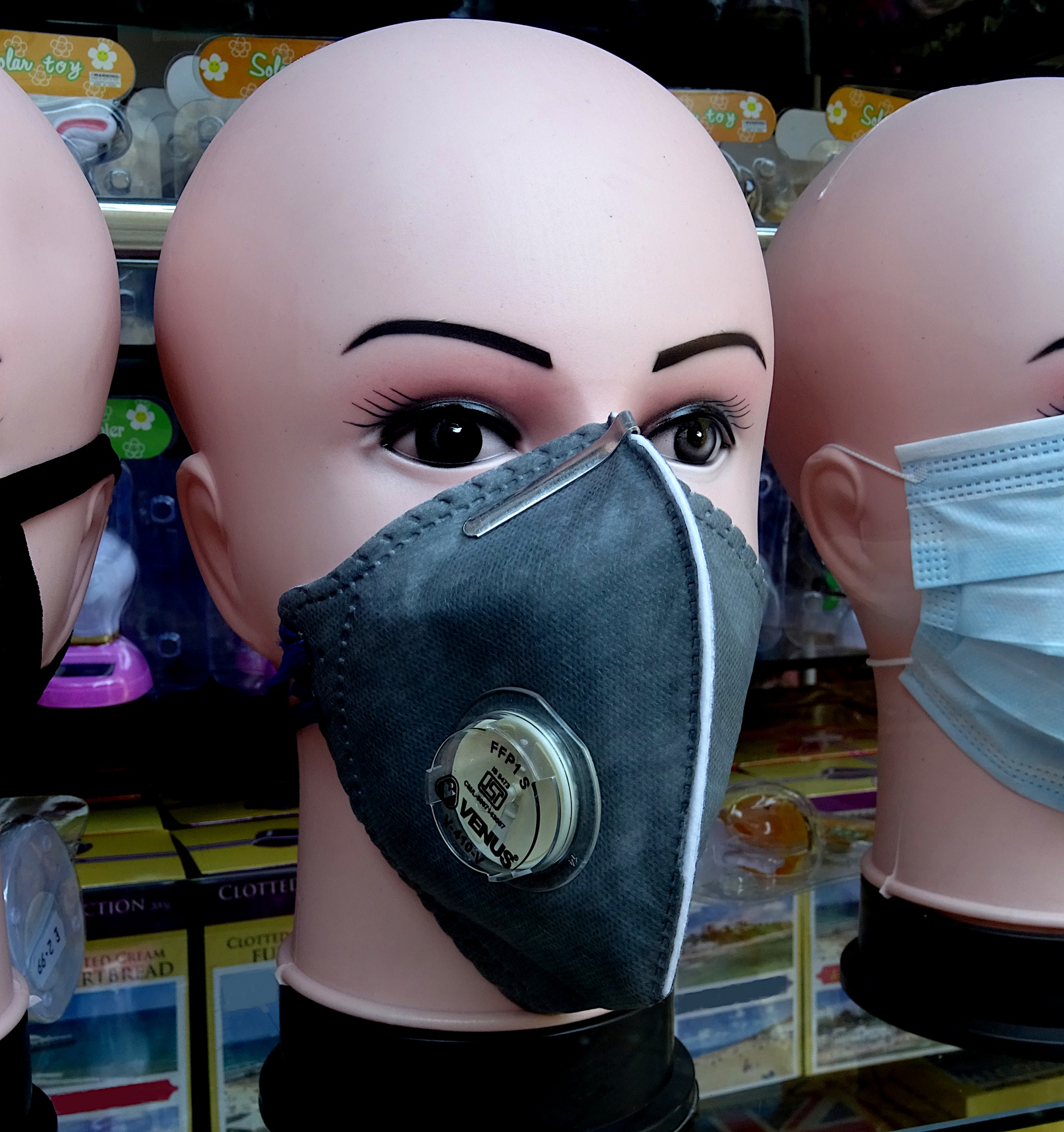
It is interesting to consider how we will react to the easing of the restrictions and the ushering on a new age. In some Asian countries, since SARS in 2003 some people wear face masks and gloves. Will that become part of our attire and will it be part of professional wear beyond the health care professions? If this becomes a condition, how many people will comply, and what will happen to those who will defy them.
We currently talk about resilience and the war spirit (a very British motif) but is this the same for all? This is not a lockdown on equal terms. There are people in isolation in mansions, whilst some others share rooms or even beds with people, they would rather they did not. At the same time, we talk about resilience, all domestic violence charities speak of a surge in calls that have reached crisis levels. “Social distancing” has entered the lexicon of our everyday, but there are people who simply cannot cope. One of the effects the day after, will be several people who will be left quite traumatised. Some may develop an aversion to people and large crowds so it will be interesting to investigate if agoraphobia will surge in years to come.
In one of my exercise walks. I was observing the following scene. Grandparents waving at their children and grandchildren from a distance. The little ones have been told not to approach the others. You could see the uneasiness of contactless interaction. It was like a rehearsal from an Ibsen play; distant and emotionally frigid. If this takes a few more months, will the little ones behave differently when these restrictions are lifted? We forget that we are social animals and although we do not consciously sniff each other like dogs, we find the scent of each other quite affirming for our interactions. Smell is one of the senses that has the longest memory and our proximity to a person is to reinforce that closeness.
People can talk on social media, use webcams and their phones to be together. This is an important lifeline for those fortunate to use technology, but no one can reach the level of intimacy that comes from a hug, the touch on the skin, the warmth of the body that reassures. This was what I missed when my grandparents died, the ability to touch them, even for the last time.
If we are to come out of social distancing, only to go into social isolation, then the disease will have managed something that previous epidemics did not; to alter the way we socialise, the way we express our humanity. If fear of the contagion makes us withdrawn and depressed, then we will suffer a different kind of death; that of what makes us human.
During the early stages of the austerity we saw the recurrence of xenophobia and nationalism across Europe. This was expected and sociologically seemed to move the general discussions about migration in rather negative terms. In the days before the lockdown people from the Asian community already reported instances of abusive behaviour. It will be very interesting to see how people will react to one another once the restrictions are lifted. Will we be prepared to accept or reject people different from ourselves?
In the meantime, whilst doctors will be reassessing the global data the pandemic will leave behind, the rest of us will be left to wonder. Ultimately for every country the strength of healthcare and social systems will inevitably be evaluated. Countries will be judged, and questions will be asked and rightfully so. Once we burry our dead, we must hold people to account. This however should not be driven by finding a scapegoat but so we can make the most of it for the future. Only if we prepare to see the disease globally, we can make good use of knowledge and advance our understanding of the medicine.
So maybe, instead of recriminations, when we come outside from our confinement, we connect with our empathy and address the social inequalities that made so many people around us, vulnerable to this and many other diseases.
Share this:


Coronavirus (Covid-19): The greatest public health crisis in my lifetime
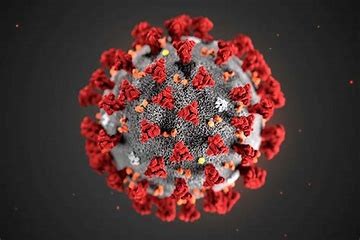
The coronavirus has caused an ongoing pandemic of coronavirus disease 2019 (COVID-19), caused by severe acute respiratory syndrome. The outbreak started in Wuhan, Hubei province, China, as early as November 2019. The World Health Organization (WHO) declared the outbreak to be a Public Health Emergency of International Concern on 30 January 2020 and recognized it as a pandemic on 11 March 2020. Whilst we all have an interest in the ongoing spread and consequence of the greatest public health crisis in generations it holds a specific interest for me given my visits to Wuhan and Hubei province whilst working for Coventry University. Wuhan is a massive city with over 11 million of a population, but little heard of until this outbreak. It is believed that its origins are most likely linked to the Huanan Seafood Wholesale Market, in Wuhan which also sold live animals, and one theory is that the virus came from one of these kinds of animals. The virus spread quickly through the population of Wuhan City which led to comprehensive lockdown to contain the virus. However, the virus spread beyond the city across China and into other countries. The scale of the spread has been significant and by the time the World Health Organisation declared the outbreak a full pandemic in March 2020 there were cases recorded in hundreds of countries.
Cases in the UK emerged on January 31st 2020, which prompted a government response to manage the outbreak. In the early stages there was some discussion about “taking it on the chin” and allowing the virus to spread through the population in order to gain “herd immunity”. However, the public health, medical and scientific experts at Imperial College London suggested that the death toll through their modelling exercises, if this strategy played out, could be in excess of 500,000. This was a situation that would be socially and politically unpalatable, and a change of thinking emerged with a combination of social distancing, public health advice on washing hands and a strategy to protect the capacity of the NHS to cope with escalating cases. A new lexicon emerged that we are now all familiar with: flattening the curve, delaying the spread, the peak of the infection and latterly the language of the health professionals in the frontline supporting and caring for people acutely ill with Covid-19; Personal Protective Equipment (PPE), Continuous Positive Airway Pressure (CPAP), ventilation and oxygen saturation and therapy. This is because the virus can attack the respiratory system leading to pneumonia and in several cases an immune response that leads to multi-organ shutdown. The media presentation of this crisis is all very frightening.
At the time of writing the pandemic has progressed relentlessly in the UK with currently over 65,000 people have tested positive and of those hospitalised nearly 8,000 patients have died. Some commentators have suggested that the UK was slow to recognise the seriousness of the virus and was slow to initiate the “lockdown” measures required to halt the spread. In addition, the UK’s position on testing for the virus has been criticised as slow, lacking preparation despite the global warnings from WHO and a shortage of the essential materials required. Whether these criticisms are valid only time will tell but the UK’s data on cases, hospitalisation, need for critical care and deaths is on a trajectory like other countries which could be described as liberal democracies. Here is the first clue to the timing of the response. The measures required to halt the spread of the virus have massive economic consequences. Balancing these two issues is incredibly difficult and has led to some commentators suggesting all liberal democracies will struggle to respond quickly enough.
What is now abundantly clear is that this is going to take some time for us to get through as a society and the consequences for large sections of our society are going to be devastating. However, what I’d like to discuss in the remainder of this blog are a number of early lessons and personal observations in terms of what we are seeing play out.
First, the data emerging indicates that the narrative about the “virus does not discriminate” is a false one. It is clear that health professionals are much more greatly exposed and that the data on cases and deaths indicate higher numbers of the socially deprived and BAME community. This should not be a surprise as the virus will be keenest felt in communities negatively impacted by health inequalities. This has been the case ever since we recognised this in the “Black Report” (DHSS 1980). The Report showed in detail the extent to which ill-health and death are unequally distributed among the population of Britain and suggested that these inequalities have been widening rather than diminishing since the establishment of the National Health Service in 1948. It is generally accepted that those with underlying health issues and therefore most at risk will be disproportionately from socially deprived communities.
Second, the coronavirus will force the return of big government. The response already supports this. In times of real crisis, the “State” always takes over. Will this lead to more state intervention going forward? If so then we will witness the greatest interventionist Conservative government in my lifetime.
Third, the coronavirus provides one more demonstration of the mystique of borders and will help reassert the role of the nation state. Therefore, the coronavirus is likely to strengthen nationalism, albeit not ethnic nationalism. To survive, the government will ask citizens to erect walls not simply between states but between individuals, as the danger of being infected comes from the people we meet most often. It is not the stranger but those closest to you who present the greatest risk.
Fourth, we see the return of the “expert”. Most people are very open to trusting experts and heeding the science when their own lives are at stake. One can already see the growing legitimacy that this has lent to the professionals who lead the fight against the virus. Professionalism is back in fashion, including recognition of the vital role of the NHS.
Fifth, the coronavirus could increase the appeal of the big data authoritarianism employed by some like the Chinese government. One can blame Chinese leaders for the lack of transparency that made them react slowly to the spread of the virus, but the efficiency of their response and the Chinese state’s capacity to control the movement and behaviour of people has been impressive.
Sixth, changing views on crisis management. What governments learned in dealing with economic crises, the refugee crisis, and terrorist attacks was that panic was their worst enemy. However, to contain the pandemic, people should panic – and they should drastically change their way of living.
Seventh, this will have an impact on intergenerational dynamics. In the context of debates about climate change and the risk it presents, younger generations have been very critical of their elders for being selfish and not thinking about the future seriously. Ironically the coronavirus reverses these dynamics.
Finally, I return to a point made earlier, governments will be forced to choose between containing the spread of the pandemic at the cost of destroying the economy or tolerating a higher human cost to save the economy. In conclusion, I have heard many say that this crisis is different to others we may have faced in the past 30 years and that as a result we can see society changing. Whilst I’m sure a number of the issues raised in this blog could potentially lead to society change it is also a truism that our memories are short, and we may return to life as it looked before this crisis quite quickly. Only time will tell.
Reference
“The Black Report” (1980): Inequalities in Health: Report of a Research Working Group. Department of Health and Social Security, London, 1980.
Share this:


A moment of volition and free will

On Good Friday, Christians will remember one of the most important covenants in their faith. The arrest, trial and execution of the head of their church. Jesus, an inspiring figure across centuries, will be in the garden of Gethsemane asking his father “to take this cup from me” (Luke 22:42), but finally accepting his fate. The significance of this self-sacrifice is the glue that connects the faith to its followers, because it is a selfless act, despite knowing in advance all that is to follow. The betrayal, the rejection, the torture, the humiliation and the eventual death. Even the resurrection, appears distant and therefore he will momentarily wish to abstain. Then, comes the thought; if not me, who? This act is conditional to all that will follow and so his free will ultimately condemn him.
These are steps that inspired many of his followers to take his word further across the world and subject themselves to whatever fate they were to suffer. The message rests in pure religious motives and motivations and over the years has eroded the implicit humanity that it contains. People have been able to demonstrate their destructive nature in wars, crime and continued injustices. Against them some people have taken exception and in acts of altruism willingly, sacrifice themselves for the greater good. People of, or without, faith, but with a firm conviction on the sacrament of humanity.
People stood up against oppression and faced the judgement of the apartheid regime that murdered them, like Steve Biko. People who spoke out against social injustice like Oscar Romero, who was shot during mass. Those who resisted fascism like Ilektra Apostolou, a woman tortured and executed by the Nazis, and countless others throughout time. These people maybe knew the “risks” of speaking out, of making a stand, but did it anyway. A free will that led them to their damnation, but for millions of others, they became an inspiration. At the worst of times, they shine and take their place in history, not for conquering and victories, but for reminding us all of the nobility in being principled.
Selflessness offers a signal to all, of how important it is, for all of us to be part of our society. It is when we dig deep on those qualities, that some may not even know that they have. I remember reading the interview of a person tortured during a dictatorship, being described as a hero; their response was incredibly disarming. “I am not a hero; I was just there”. I am quite aware that I write this blog at a time of self-isolation, lockdowns and the daily body count of the dead. Over a period of weeks, our lives have radically changed, and we live in self-imposed confinement. We are spectators in a medical drama with serious social implications. Those we do not quite know, but it looks very likely that these reverberations will last for at least a while.
It is interesting to see a renewed appreciation for professionals, namely health care and for those professions that we did not hold in high regard previously. Hero as a term seems to be rebranding itself and this may be one of those long-term effects afterwards. Just to remind us all that on this Good Friday, numerous professionals in the health care system, carers, teachers, public transport, logistics, council and retail workers will be going to work with their free will, knowing some of the risks for them and their families. This is their testament, this is their covenant and that forms part of our collective civilisation. Whilst people remind us to wash our hands, I kiss their hands for their altruism
Share this:


Some kind of normality in times of turmoil, or is it?

Way back when before we were in lockdown, social distancing and self-isolation, myself and my partner started to look for somewhere to move to. It wasn’t a decision made lightly, moving never is, but we had been in our current place of residency for 6 years and had got unlucky this year with the neighbours. Very unlucky! Fast forward to today, and we have signed contracts exchanged monies, and have received keys: a time to celebrate or a time of guilt?
Considering the circumstances we leave behind regarding neighbours, I am mostly happy, and grateful that the Government have stated moving is essential and still able to go ahead. The issues with this are as we have gone from a furnished property to an unfurnished property, we will be sleeping on a mattress until normalcy returns (or whatever that will look like when we are eventually through the end of the tunnel). Additionally we can’t help feeling guilty with being outside, packing/ unpacking cars, walking mattresses through the streets (because you cannot hire a van), and potentially increasing the risk of spreading anything. We are both fine, and have been in isolation since teaching moved online so we believe we are not carrying anything, but then I assume that is what everyone thinks.
So, it is an exciting time for us, but also a time filled with unease. What will people think of us moving in this time, should we have cancelled/pulled out? But then equally having this normal part of life during this time, I know, is making us happy: but is this selfish? My parents, whom I am contacting daily, and my grandparents are very excited and it seems to also be bringing them some kind of escape (not literally, they are isolating as hopefully we all are), so should I feel guilty?
Would this be something we could universalise? Is this absolutely wrong? I am not saying it is right, but knowing our previous circumstances and why we are moving, it is not a case of we want to live somewhere different (I would have stayed indefinitely – its home), but we were left with little choice, and the timing just outright sucks. But we will be sensible and get moved as soon as possible, and maintain social distancing whilst moving, and also fully submerge back into isolation when we are done!
Maybe I am being selfish, maybe us moving is wrong? What do you think?

 Thoughts from the criminology team