
Home » Life long learning (Page 6)
Category Archives: Life long learning

My Criminology Journey: Haley

The start of my criminology journey is not very exciting. I am not fully sure of how or why I ended up studying the subject. I was advised to study hairdressing at school as my predicted grades were not good enough for university, but the idea of trusting myself with a pair of scissors was very unnerving. I had a dilemma at college as I was unable to decide whether I wanted to study healthcare or construction – two courses which bore no similarity. In the end I give up trying to make decisions and studied A Levels because that was what my friends were doing.
University may as well have been on Mars at this point, as it was completely mysterious and unknown to me. Whilst at college, I was asked by my tutor to go to an open day at Oxford University. I saw this as an opportunity to unmask this university ‘thing’ for what it really was, so I agreed to go. I felt completely out of place throughout the day and found myself gobsmacked by the sheer privilege of the place, the culture and the students etc. At the same time, I was fascinated by the available courses, so I decided to continue my studies into higher education.
My first attempt at university did not go as well as I had intended it to. I had other issues to contend with at the time, so I dropped out after two weeks. However, in 2010 I enrolled at the UoN and never really left. I had a great time studying criminology at UoN as I thought that my course was very interesting and the teaching staff (aka @paulaabowles and @manosdaskalou) were spectacular.
I did not realise this it at the time but I was well prepared for critical criminological discussions because I came from a background where people would be demonized for a whole host of social problems – it was clear to me at the time that this was unfair. Whilst enjoying the course content I did have to make a considered effort to improve on my writing skills, but it was worth the effort as this improvement worked wonders on my grades. As an undergraduate, I used my overdraft and savings from working part-time jobs to go travelling at the end of each academic year, this was beneficial for helping me to understand criminological issues outside of the UK.
In 2015 I began teaching as an associate lecturer at UoN and I really enjoyed it. I also completed an MA degree in Social Research. To fast-forward to today, I now work as a lecturer in criminology – and this really is, beyond my wildest dreams!
Studying is not always a smooth ride for some, but if you work hard, you never know where you might end up.

Share this:

Road trip
In all fairness a road trip is a metaphor for life. We live in perpetual motion, moving forward and going from place to place. Our time is spent through journeys in our space, through the time of our lifespan. Alone or with others, planned or unplanned journeys are to happen. That is life as it is.
Sometimes of course a road trip is nothing more than an actual trip in a countryside, quickly to be forgotten replaced by the next one! On this occasion, I shall try to narrate it as it happened, as it is fresh in my mind and the images can be vividly recalled. Maybe in future it would serve as a reminder, but on this occasion, it is merely a reminder of a very odd trip! At this stage, I would like to state that no humans nor animals were hurt during this road trip.
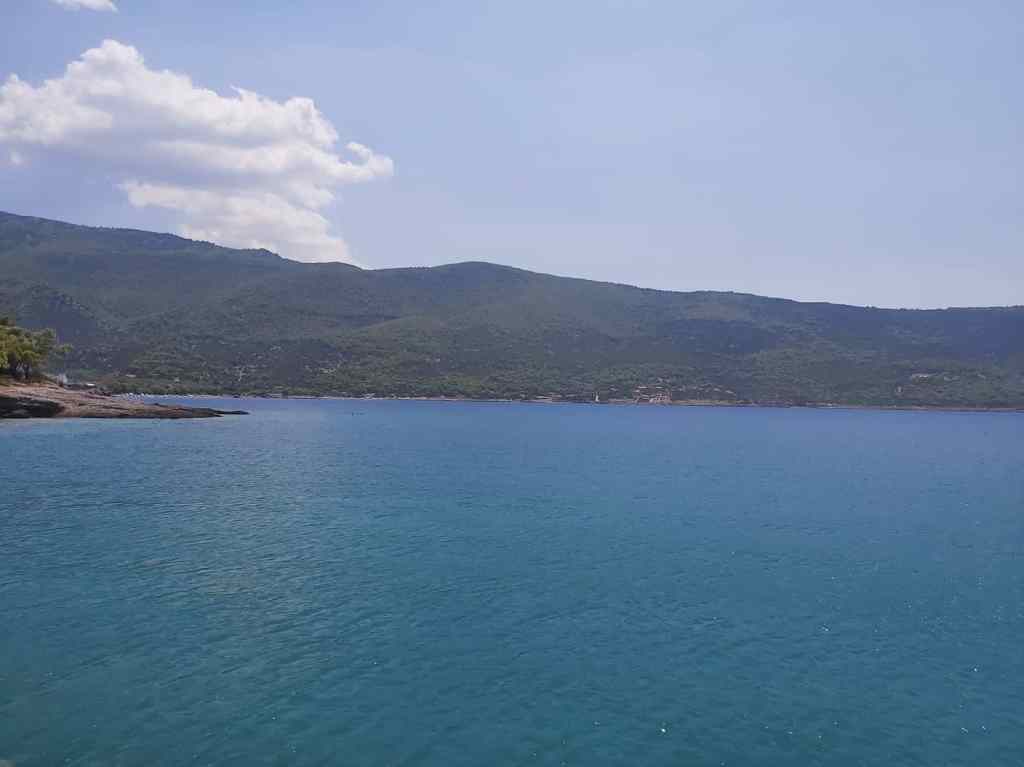
I am driving on one of the island’s country roads, the road is narrow going through the lush pine forest, some sycamore trees on the side. The track is leading up and down the mountainous path. The scenery is scenic and probably the reason people choose it. The road alternates views from the forest, the valleys, the canyons and the sea in the distance. Hues of green, and blue everywhere; and the smell. The pines joined with thyme and other fragrant herbs, a combination that gives the air that scent I cannot describe. The light blue of the sky meet the Aegean blue in the distance.
As per usual, on a road trip I prepare my maps, and plan the route in advance, but just in case I also keep an eye on the road in case there is a change. On this occasion, the public works are working wonders; the street signs are non-existent so I opted out. Interestingly instead of traffic information there were signs but not about the road ahead. Somewhere is the midst of the journey there is the first sign about Jesus. According to the sign “He is the truth, the way and the life”. I am unsure about the destination, but at least Jesus is aware. The next couple of signs involve Jesus and his teachings whilst the last one is making me feel a bit uncomfortable. “Jesus died for your sins” it proclaims! Ok fair enough, let’s say that he did. Any chance of knowing also whereabouts I am and where I am heading. The route continues with further signs until we come to a stop.
Finally, more signs. On this occasion there are some holy sites and monasteries. One of them is of a Saint most revered that apparently most of his body rests in a nearby location, (minus an arm and a shin). Later, I discover the Saint helps sick children and those who suffer from cancer. Admirable, considering that he’s almost 300 years dead. Still no actual traffic information on the road! At least the signs got me reading of a fascinating man long gone. It is fascinating reading on beliefs and miracles. Within them they hold peoples’ most secret expectations, those that under normal circumstances, they dare not to speak about. This is a blog post for another time; back on the road trip and almost two hours on the journey.
At this point, a herd of cows who have been lunching on the side of the road, decided to take a nap on the road. To be honest, it is only one of them who is blocking the way, but the rest are near idly watching. At this stage, I come to a stop waiting for the cow to move. The cow who was napping opened her eyes and looks at me, I look back, she looks away and continues to lay motionless in the middle of the road. I briefly evoke the Saint. Nothing. I am contemplating Jesus and still nothing. After some time, around an hour of cow staring I am going for my last resort. I get out of the car and promise that unless the cow moves, I shall part with vegetarianism. Now I am openly threatening the cow to eat her. This is when nature retaliates. A flock of goats join the cow. They meander around me and the stubborn bovine. The road is now akin to a petting zoo.
I employ a trick I picked up from cowboy films. I raise my hat, luckily, I am wearing a hat, weaving my arms furiously and making sounds. The cow is despondent at first and the goats just talk back. After a few minutes I have managed to get the cow to move and the goats are now at the side of the road. That’s my opportunity to leave. As I turn back, I notice another car behind me; they are also travelers who begin to applaud my efforts at husbandry. The road is clear, and I am on my way.
The next hour is less eventful although the road is still hairpinned; now it’s heading downwards and from the mountains its heading to the sea. I arrive at the sea way over the expected time and I manage to find a spot to park. One the wall, next to the spot someone wrote “you vote for them every four years like cows”. The writing is black, so I assume an anarchist, or maybe the author had a similar driving experience to me, or it’s just an unfortunate metaphor. The sea is cool and the views of the sea and in the distance a group of islands, spectacular. There are hot springs near by but in this weather the sea is more than enough. After all that drive, a stop at a local taverna is inevitable. Speciality dish mosxaraki or beef stew! I think the Saint is testing me!
On the way back, the road is empty. The cows rest on the side of the road. I slow down, I look out…they look away. At a local coffee shop a patron asks for the Covid-special coffee. I suppose a joke about the thing that occupies everyone’s mind. He doesn’t wear a mask and doesn’t seem to believe this pandemic “nonsense”. I was wondering if he is related to the stubborn cow. The trip ended and it formed another of those planned road trips. There was nothing spectacular about it. There is however the crux of my point. Like life, most of our roadtrips are unspectacular on their own. It is what we remember of them that matters. In the last months millions of people went into lockdown. Their lives seemed to stand still; a road trip can also be a metaphor, provided we don’t forget the details.
Share this:


Ask the expert, if you can find one

It was around four years ago I discovered the title of ‘Doctor’ extended beyond medical staff. I’m not sure many people outside of the academic world fully understand or have any reason to know the order in which post nominal letters are awarded or titles are given. Gaining the title of ‘doctor’ at the very beginning of any academic journey, seems so distantly part of any future plan, its barely imaginable. Some career paths seem wildly ambitious. Wanting to be an ‘expert’ in your field for the humble student, feels much like aspiring to become an astronaut midway through a physics degree.
Once you enter the world of academia, the titles people hold seem to determine an awful lot of their credibility. It’s rare to find a university lecturer who isn’t working towards doctoral qualification, most already have one. The papers, books and research journals are filled with the knowledge of individuals who once were nothing more than students. I often wonder though, at what point someone becomes an expert? At what point, (if ever) do the most academically qualified individuals refer to themselves as experts within a narrow area of their field.
The government often talks about relying on ‘expert’ evidence. Watching the experts stand beside the PM discussing the current pandemic, they appear uneasy, particularly when questions are raised about a different expert having a contradicting opinion. One thing I feel quite sure of is that experts seem to rarely agree. As Bertrand Russell (1927/42) states, “even when all the experts agree, they may well be mistaken” . Maybe that’s because it’s questionable if anyone can ever truly know everything on a given subject area.
The scientific committee seems to be buzzing with accusations that the experts are not quite what they seem. The ‘data scientists’ advising government and sitting on SAGE are not all from a background which comfortably implies they are qualified to discuss virology or immunology. In the background lingers the fact with such a new virus, with so little known about it, expert knowledge in a narrow sense, is undoubtedly in its infancy and will probably require some degree of hindsight later on.
In the past week one of the UK’s leading experts has resigned from his job after breaking his own guidance. Meanwhile the public watched Matt Hancock ‘snap’ at an opposition MP in parliament. A woman who despite being no more of an ‘expert’ than himself, at least has experience as a qualified A&E doctor to base her opinions and views on. It seems last week’s experts and heroes are this week’s victims in the ongoing witch-hunt for someone to blame.
I’ve started to wonder if labelling someone an ‘expert’ is something other people do to install confidence that a piece of research being relied upon is credible, rather than the experts referring to themselves that way. There’s almost an assumption of arrogance for anyone who dares to protest that their knowledge should be recognised with a title, outside of the academic world anyway. Maybe people simply don’t understand what it took to reach that level of knowledge in the first place.
I’ve looked a lot at ‘labelling’ within the criminological context and it seems to me the labels that are attached to us, almost always seem to come from someone else. In an age of self-proclaimed ‘internet experts’ the real experts, it seems are hard to find.
Reference
Russell, Bertrand (1927/1942) cited in The Collected Papers of Bertrand Russell: A Fresh Look at Empiricism, 1927-42, edited by by John Slater and Assisted by Peter Köllner, (London: Routledge)
Share this:


“My Favourite Things”: Saffron Garside

My favourite TV show - It's probably Peep Show, I've rewatched it so many times and it doesn't stop being funny. I often find myself quoting it to other people too and it's what I put on when I don't want to think about anything

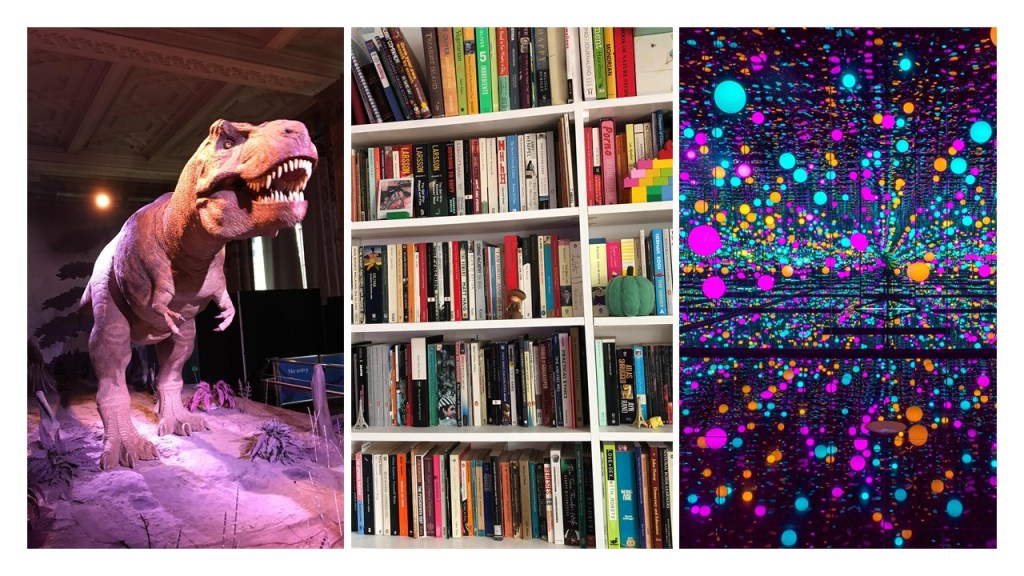
My favourite place to go - The Natural History Museum has been my favourite place to go for a very long time - the building is beautiful and you could spend days in there and still not see everything. I learn something new every time I go. I also love taking the kids there now - some stuff is still the same as when I was small like the T-Rex and the earthquake room! It'll be one of the first places we go when museums and galleries reopen

My favourite city - It's definitely Paris - it really reminds me of London in a lot of ways, it feels small and big at the same time and there is so much to see and do there. I was lucky enough to go at the beginning of March on a surprise trip - it was fun to be a tourist and we walked so much!

My favourite thing to do in my free time - Read! If I'm not doing something else then I'm usually reading. I carry a book everywhere just in case I get a couple of minutes to read. I'm in two book clubs so always juggling a few books at once

My favourite athlete/sports personality - I'm not a big sports fan and I'm not sure this counts but the kids and I have been loving doing PE with Joe Wicks. It's been great for keeping us moving during the lockdown and it's a pretty big commitment to show up every day. He always seems so positive

My favourite actor - Edward Norton. I think I've seen nearly all the films he's ever been in!

My favourite author - It's too difficult to choose. I really like Chuck Palahniuk and I've reread the Harry Potter series by J.K. Rowling a lot of times!

My favourite drink - I'm not sure you can beat a good cup of tea. It's about the most comforting thing I can think of and it's never not a good time to put the kettle on

My favourite food - caramel shortbread - but it has to be one of the really good ones (no digestive base!) and you need a good chocolate to caramel ratio!

My favourite place to eat - Every Sunday my husband and I take it in turns to cook a big family meal (complete with pudding!) and we play lots of board games after. It's one of my favourite times in the week and it always feels special.

I like people who - are enthusiastic about life and the things they are learning about, who want to share stories and make spontaneous decisions

I don’t like it when people - don't communicate their feelings or try to resolve things through conversation - I think things would often be simpler if people tried to talk about things honestly

My favourite book - I think my favourite book of all time is Treasure Island by Robert Louis Stevenson it's such a good adventure story and bits of it are really scary!

My favourite book character - Bilbo Baggins! I really enjoyed The Hobbit as a child and my kids love it so much we've already read it together twice. There is something wonderful about how his character develops throughout his quest - he goes from being a reluctant adventurer to the person holding the whole thing together. He isn't motivated by greed or fame and commits himself to seeing it through. Whenever he feels disheartened he dreams of the comforts of home; cooked meals, a boiling kettle, a warm fire

My favourite film - Fight Club is easily my favourite film- great actors, great soundtrack, great twist!

My favourite poem - Wild Geese by Mary Oliver. She's my absolute favourite poet and it felt like magic when I first discovered her! She writes about nature with such reverence and wonder

My favourite artist/band -  For more than half my life it's been Green Day so I think I am stuck with them now!

My favourite song - In My Mind - Amanda Palmer. I really, really love this song - positive messages and ukulele, what more do you need?

My favourite art - I don't know if I have a very favourite piece of art - I love going to a modern art gallery like the Tate Modern in London or the Centre Pompidou in Paris and just spending hours losing myself in all the emotions that get stirred up. I really love the work of Yayoi Kusama but haven't been lucky enough to see her art in person yet

My favourite person from history - Mary Anning made some really important fossil discoveries but didn't really get the recognition she deserved during her lifetime. Plus she was struck by lightning as a baby, which is a pretty cool story!
Share this:


On being a University Student with Asperger Syndrome
To all new students starting university who are on the autism spectrum and Asperger Syndrome – YOU CAN DO IT! YOU WILL THRIVE!
As a child I was different.
I preferred spending time on my own, did not care much about what others were doing, and kept myself to myself. In primary school I was a daydreamer, and always lived in a world of my own. I was always very happy and had a smile on my face. The early years of my life were cheerful and full of happiness. I loved painting and drawing and being outdoors. When I started secondary school, I faced a variety of challenges.
I struggled socially, especially as I went to a mainstream school, and generally disliked being around other people. I loved studying and learning, and was always very ambitious when I was in my teenage years. I dreamed of being an author and a lawyer among many things, and always aimed high. Due to being different I was left out, but didn’t care much. I struggled with my senses at times, and became overwhelmed when there was lots of loud noises. My memory was unusual – I could remember silly little details, facts and useless information. I loved learning new things, reading and filling my head with knowledge. In my family, I was the oddball – I had specific interests, displayed intense focus, and displayed signs of phalilalia (repeating myself). [1]
My mum suspected that I was ‘different’, and she wanted me to be properly seen by a medical doctor. One morning, after a number of referrals, it happened; Friday 2nd February, 2010, 9:35am 42 seconds within the minute, I received my diagnosis: High Functioning Autism/Asperger Syndrome. This diagnosis explained so much about me.
Fast forward 3 years, on Saturday 15th September 2012, after an hour long drive away from home, I was settled into my new flat at the University of Northampton. My family left and I was with my new flatmates. The start of a new chapter in my life. My time at university enabled me to flourish and blossom in ways I never knew I could! At this point, I knew that I could not stay in my shell and isolate myself, I pushed myself out of my comfort zone, tried new things, and challenged myself. I wanted to be able to integrate and enjoy myself as much as I possibly could.
Aware of how my Aspergers affected me; from sensory difficulties, challenges in reading people (which I’m much better at now), to social awareness (knowing how to behave in different social situations), but I was determined to learn and grow. I overcame them all by going out, meeting and learning from new people, and enjoying myself! First year at university was one of the happiest years of my adult life! I remember smiling so much that my cheeks hurt. I fully immersed myself into university life, and loved every single minute of it! I got myself a job, did some volunteering, and loved studying. Being away from home helped me to really grow, and was the best decision I ever made!
I’m somewhat of a chameleon; meaning that I have learned to blend in and ‘mask’ my Aspergic traits. My social skills were very good already, so, to the majority of people I met, no-one could pick up on my Aspergers. I have an unusual memory for detail, am very focused, driven and energetic. There were times where I would interpret things differently, or misunderstand. That’s ok. I just asked more questions and for clarification, so that I could understand.
After getting my DSA (Disabled Students Allowance) approved, I was given specialist equipment and software’s to help meet my academic needs. These were so useful and handy! I had never recieved so much support for studying before! I was given all the training and guidance I needed to help get to grips with everything.
On my assignments, I had an extra front sheet, informing my lecturers of my Aspergers, so that they were aware and could take it into consideration when reviewing my work.
Students with disabilities can also get a mentor, note-taking support, and other support in accordance with their needs.
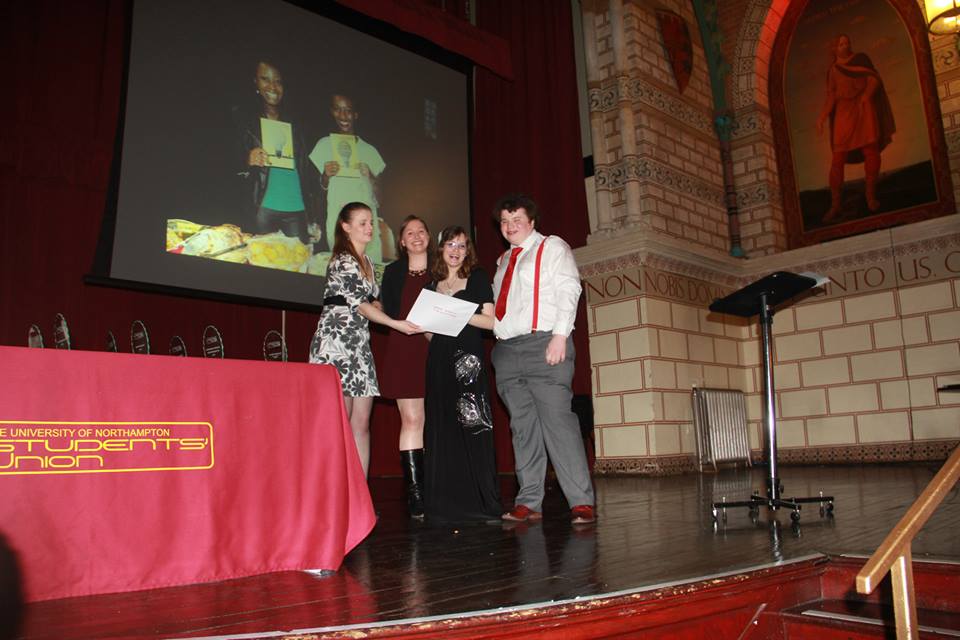
When I was in my first year, I founded the Auto-Circle Spectrum Society; the first society of its kind in the country, supporting students with autism, Asperger Syndrome and other learning disabilities. Upon seeing that there was no group in the Student’s Union to represent this demographic of students, I wanted to help others.
The second and third year flew by very quickly; I found myself starting each year with excitement and enthusiasm. I loved studying too. I remember collecting several books, finding my corner in the library and reading for hours, noting each reference as I went, putting together bodies of information for my assignments.
Auto-Circle Spectrum also grew over the 3 years, and I met so many incredible individuals who brought their own sense of uniqueness, fabulouslness and eccentricity to the group! I became increasingly aware of the challenges other students with autism face, particularly, transitions and dealing with change. After a parent got in touch with me, concerned for her son who was to start university. Wanting to further my help for students on the spectrum, I undertook the Change Maker Certificate, guided by the incredible Tim Curtis; which, after numerous meetings, resulted in a, Autism Spectrum Condition Taster Day, which was a huge success!
Today, I am the first person from both sides of my family to go to university, and the only one to have a masters degree. Do NOT let others tell you what you can and can’t do. You can overcome all odds if you put your mind to it and let yourself grow. The more you put into university life, the more you get out, and the more memorable it will be. YOU CAN DO IT!
Links to info about Aspergers/Autism
[1] National Autistic Society ‘Obsessions, Repetitive Behavior and Routines’ Available online at: https://www.autism.org.uk/about/behaviour/obsessions-repetitive-routines.aspx
Share this:


Terrorised into compliance

Learning and teaching is a complex business, difficult to describe even by those in the process of either/or both. Pedagogy, as defined by Lexico is ‘[t]he method and practice of teaching, especially as an academic subject or theoretical concept’. It underpins all teaching activity and despite the seemingly straightforward definition, is a complex business. At university, there are a variety of pedagogies both across and within disciplines. How to teach, is as much of a hot topic, as what to teach and the methods and practices are varied.
So how would you feel if I said I wanted Criminology students to quake in their boots at the prospect of missing classes? Or “literally feel terror” at the thought of failing to do their reading or not submitting an assessment? Would you see this as a positive attempt to motivate an eager learner? A reaction to getting the best out of lazy or recalcitrant students? A way of instilling discipline, keeping them on the straight and narrow on the road to achieving success? After all, if the grades are good then everything must be okay? Furthermore, given many Criminology graduate go on to careers within Foucault’s ‘disciplinary society’ maybe it would be useful to give them a taste of what’s to come for the people they deal with (1977: 209).
Hopefully, you are aghast that I would even consider such an approach (I promise, I’m definitely not) and you’ve already thought of strong, considered arguments as to why this would be a very bad idea Yet, last week the new Home Secretary, Pritti Patel stated that she wanted people to “literally feel terror” at the prospect of becoming involved in crime. Although presented as a novel policy, many will recognise this approach as firmly rooted in ideas from the Classical School of Criminology. Based on the concepts of certainty, celerity and severity, these ideas sought to move away from barbaric notions and practices to a more sophisticated understanding of crime and punishment.
Deterrence (at the heart of Classical School thought) can be general or specific; focused on society or individuals. Patel appears to be directing her focus on the latter, suggesting that feelings of “terror” will deter individuals from committing crime. Certainly, one of the classical school’s primary texts, On Crime and Punishment addresses this issue:
‘What is the political intention of punishments? To terrify, and to be an example to others. Is this intention answered, by thus privately torturing the guilty and the innocent?’
(Beccaria, 1778: 64)
So, let’s think through this idea of terrorising people away from crime, could it work? As I’ve argued before if your crime is a matter of conscience it is highly unlikely to work (think Conscientious Objectors, Suffragettes, some terrorists). If it is a crime of necessity, stealing to feed yourself or your family, it is also unlikely to succeed, certainly the choice between starvation and crime is terrifying already. What about children testing boundaries with peers, can they really think through all the consequences of actions, research suggests that may not be case (Rutherford, 1986/2002). Other scenarios could include those under the influence of alcohol/drugs and mental health illnesses, both of which may have an impact on individual ability to think through problems and solutions. All in all, it seems not everyone can be deterred and furthermore, not all crimes are deterrable (Jacobs, 2010). So much for the Home Secretary’s grand solution to crime.
As Drillminister demonstrates to powerful effect, violent language is contextual (see @sineqd‘s discussion here). Whilst threats to kill are perceived as violence when uttered by young, black men in hoods, in the mouths of politicians they apparently lose their viciousness. What should we then make of Pritti Patel’s threats to make citizens “literally feel terror”?
Selected bibliography
Beccaria, Cesare, (1778), An Essay on Crimes and Punishments, (Edinburgh: Alexander Donaldson), [online]. Available from: https://archive.org/details/essayoncrimespu00Becc/page/n3
Foucault, Michel, (1977), Discipline and Punish: The Birth of the Prison, tr. from the French by Alan Sheridan, (London: Penguin Books)
Jacobs, Bruce A., (2010), ‘Deterrence and Deterrability’, Criminology, 48, 2: 417-441
Rutherford, Andrew, (1986/2002), Growing Out of Crime: The New Era, (Winchester: Waterside Press)
Share this:


Thinking “outside the box”
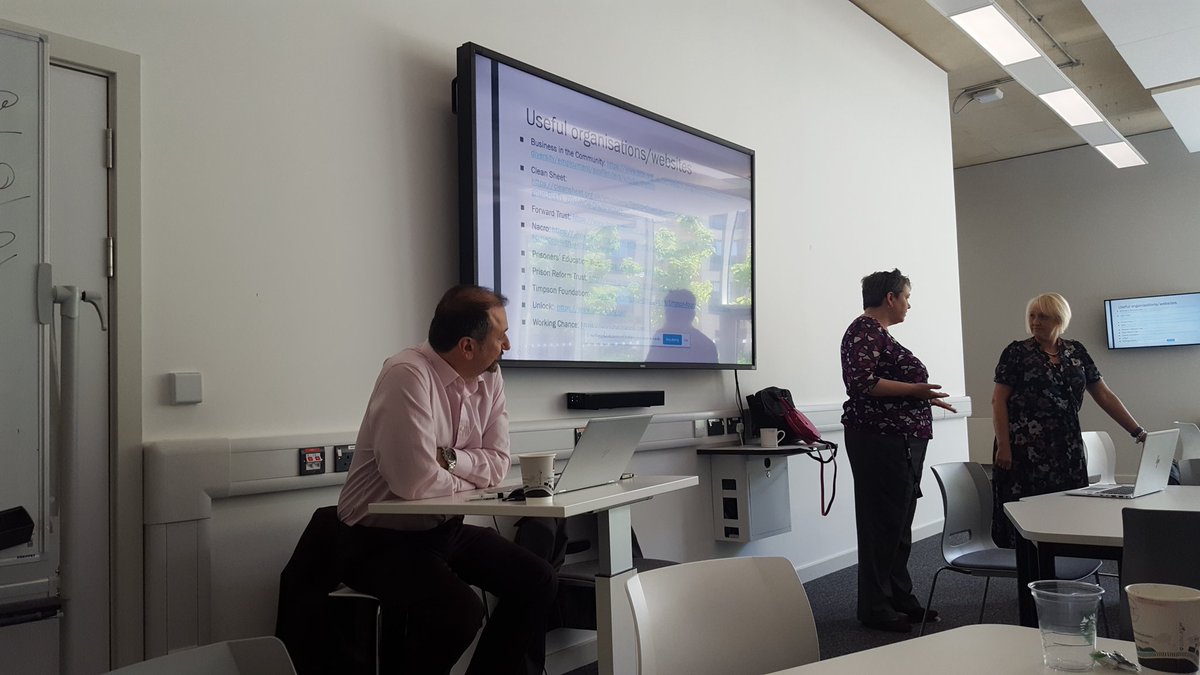
Having recently done a session on criminal records with @paulaabowles to a group of voluntary, 3rd sector and other practitioners I started thinking of the wider implications of taking knowledge out of the traditional classroom and introducing it to an audience, that is not necessarily academic. When we prepare for class the usual concern is the levelness of the material used and the way we pitch the information. In anything we do as part of consultancy or outside of the standard educational framework we have a different challenge. That of presenting information that corresponds to expertise in a language and tone that is neither exclusive nor condescending to the participants.
In the designing stages we considered the information we had to include, and the session started by introducing criminology. Audience participation was encouraged, and group discussion became a tool to promote the flow of information. Once that process started and people became more able to exchange information then we started moving from information to knowledge exchange. This is a more profound interaction that allows the audience to engage with information that they may not be familiar with and it is designed to achieve one of the prime quests of any social science, to challenge established views.
The process itself indicates the level of skill involved in academic reasoning and the complexity associated with presenting people with new knowledge in an understandable form. It is that apparent simplicity that allows participants to scaffold their understanding, taking different elements from the same content. It is easy to say to any audience for example that “every person has an opinion on crime” however to be able to accept this statement indicates a level of proficiency on receiving views of the other and then accommodating it to your own understanding. This is the basis of the philosophy of knowledge, and it happens to all engaged in academia whatever level, albeit consciously or unconsciously.
As per usual the session overran, testament that people do have opinions on crime and how society should respond to them. The intriguing part of this session was the ability of participants to negotiate different roles and identities, whilst offering an explanation or interpretation of a situation. When this was pointed out they were surprised by the level of knowledge they possessed and its complexity. The role of the academic is not simply to advance knowledge, which is clearly expected, but also to take subjects and contextualise them. In recent weeks, colleagues from our University, were able to discuss issues relating to health, psychology, work, human rights and consumer rights to national and local media, informing the public on the issues concerned.
This is what got me thinking about our role in society more generally. We are not merely providing education for adults who wish to acquire knowledge and become part of the professional classes, but we are also engaging in a continuous dialogue with our local community, sharing knowledge beyond the classroom and expanding education beyond the campus. These are reasons which make a University, as an institution, an invaluable link to society that governments need to nurture and support. The success of the University is not in the students within but also on the reach it has to the people around.
At the end of the session we talked about a number of campaigns to help ex-offenders to get forward with work and education by “banning the box”. This was a fitting end to a session where we all thought “outside the box”.
Share this:


Should reading be a punishment?

Gillian is an Academic Librarian at the University of Northampton, supporting the students and staff in the Faculty of Health and Society.
I was inspired to write this blog post by an article from the BBC news website that my friend sent me (BBC, 2019). A reading list was used as a punishment for teenagers who were convicted of daubing graffiti across a historically significant building in the state of Virginia, USA. Normally such an offence would earn a community service order. In this case, due to the nature of the crime – using racially charged symbols and words, the Prosecutor and Deputy Commonwealth Attorney Alejandra Rueda decided education may be the cure. She provided the five teenagers with a reading list that they had to read, and write assignments on, over the course of their 12-month sentence.
“Ignorance is not an excuse” is a principle expressed regularly throughout society, yet are we doing anything to address or dispel this ignorance? Rueda realised that books may help these teenagers to understand the impact of what they’d done and the symbols and language they had used in the graffiti. She chose books that would help educate them about racism, anti-Semitism, apartheid and slavery, to name just a few of the topics covered in the reading list. These were the books that helped her understand the wider world, as she grew up. Rueda’s approach indicated that punishment without an understanding of the impact of their crime, would not help these teenagers to engage with the world around them. These books would take them to worlds far outside their own and introduce them to experiences that were barely covered in their High School history lessons.
It’s not the only time an ignorance of history has been highlighted in the news recently. A premiere league football player was investigated for apparently making a Nazi salute. Although he was found not guilty, the FA investigation found him to be appallingly ignorant of Fascism and Hitler’s impact on millions of people across the globe (Church, 2019). Whilst the FA lamented his ignorance, I’m unsure they have done anything to help him address it. Would he be willing to read about the Holocaust and impact of Fascism in Europe? Would being forced to read about the lives of people over 70 years ago, help him understand how a chance photograph can affect people?
Should reading be a punishment, would it help people understand the impact of their actions? As a Librarian, people often assume that all I do all day is read. For me, reading is a luxury I indulge in daily, when I’m at home. I find a distinct difference between reading by choice, for escapism, and reading because you have to. I remember studying English Literature at school and finding any books I was forced to read, quickly lost their charm and became a chore rather than a pleasure. I’m not sure reading should be a punishment; it could disengage people from the joy and escapism of a good book. However, I understand the value of reading in helping people to explore topics and ideas that may be well outside their own world.
There is a growing body of literature that reflects on bibliotherapy and how reading can help people in varying stages of their life (Hilhorst et al., 2018; Brewster et al., 2013). A recent report by Hilhorst et al., (2018) advocates reading to transform British society, address isolation and improve social mobility. I believe reading can help improve our quality of life, helping us improve literacy, understand complex social issues and offer escapism from the everyday. However, I hesitate to view reading as a magical solution to society’s problems. Some people advocate the literary classics, the numerous lists you can find online that extort the virtues of reading the finest of the literary canon – but how much of it is just to conform to the social snobbery around reading ‘good literature’, a tick list? We should encourage reading, not force it upon people (McCrum, 2003; Penguin Books Ltd, 2019; Sherman, 2019).
Reading can help expand horizons and can have a tremendous impact on your world view, but it shouldn’t be a punishment. What Rueda did in Virginia, is illustrate how an education can help us address the ignorance in our society. We should encourage people to explore beyond their community to understand the world around us. Reading books can offer an insight and allow us to explore these ideas, hopefully helping us to avoid repeating or perpetuating the mistakes of the past.
References:
BBC (2019) Graffiti punished by reading – ‘It worked!’ says prosecutor, BBC News [Online]. Available from: https://www.bbc.co.uk/news/stories-47936071 [Accessed 18/04/19].
Brewster, L., Sen, B. and Cox, A. (2013) ‘Mind the Gap: Do Librarians Understand Service User Perspectives on Bibliotherapy?’, Library Trends, 61(3), pp. 569–586. doi: 10.1353/lib.2013.0001.
Church, B. (2019) Wayne Hennessey: EPL player showed ‘lamentable’ ignorance of Fascism, CNN [Online]. Available from: https://edition.cnn.com/2019/04/16/football/wayne-hennessey-fa-nazi-salute-english-premier-league-crystal-palace-spt-intl/index.html [Accessed 18/04/19].
Hilhorst, S., Lockey, A. and Speight, T. (2018) “It’s no exaggeration to say that reading can transform British society…”: A Society of Readers, DEMOS [online] Available from: http://giveabook.org.uk/wp-content/uploads/2018/11/A_Society_of_Readers_-_Formatted__3_.pdf [Accessed 15/04/19]
McCrum, R. (2003) The 100 greatest novels of all time: The list, The Guardian [Online]. Available from: https://www.theguardian.com/books/2003/oct/12/features.fiction [Accessed 18/04/19].
Penguin Books Ltd (2019) 100 must-read classic books, as chosen by our readers, Penguin [Online]. Available from: https://www.penguin.co.uk/articles/2018/100-must-read-classic-books/ [Accessed 18/04/19].
Sherman, S. (2019) The Greatest Books, The Greatest Books [Online]. Available from: https://thegreatestbooks.org/ [Accessed 18/04/19].
Share this:


Ignorance to curiosity
My name is Sean, I started studying Criminology at the University of Northampton in 2012, graduating in July 2016.
I started University as a switched off young man. I was very much in tune with media and social attitudes as wearing them cost very little and seemed to reap gratification. Studying was always enjoyable as it sparked my brain in ways television and games, or at least my choices in such, didn’t. Appreciating the concept and the opportunity however was always lacking in my 18 year old self. Coming to University and experiencing the electricity of passion mixed with contempt was very perplexing time. Not for long had I decided to think freely or passionately; choosing to study Criminology was a start. Meeting peers and idols of simultaneous do-good and work little nature, was an intense influence. Gratification ultimately came from within and this was the basis to which I began to restructure myself.
Personally, the highest credit should be placed with my course leaders and the content provided. Never in an academical setting had I experienced someone ask me so many questions, yet rather than make me feel stupid; made me feel unprepared. Rather than build themselves up to be superior and towering; made them feel wise and welcoming. It was this, paired with the already enticingly dark yet morally complex content of Criminology that lead to me to free many barriers and much ignorance. This is when the real questions followed and the search for real answers began. Never before had I truly questioned what I had read, seen, heard, even felt or experienced and wholly questioned myself.
This change truly opened a new way of living for me. I am fully aware that such reasoning and ways of thinking could been explored previously, however it was my ignorance and choices, rebellion and ego, that locked these gates. In reference to the timeless ‘Nature vs Nurture’ topic; it was within my path that University, Criminology, @paulaabowles and @manosdaskalou were to be the ones to trigger the break in the lock. Now, admittedly, this was not just an overnight spawning of a butterfly from a larva. I still, like many in life, held onto what was familiar with a tight grasp as for an ignorant; change is to admit defeat. Furthermore, to change, to really change, requires dedication and belief. But once logically thinking, questioning and reasoning, alongside giving in to pure curiosity; it is extremely hard not to follow the exciting direction within a moral compass.
From here I can genuinely say I have enjoyed life more and all of its experiences. I have appreciated people more, and taken much more time to try and understand exactly where they stand and come from. I have spent a long time questioning everything, looking for answers or options wherever I can, trying to better myself as a human and continuing to do so. I am honestly far from where I would like to ideally be, but I am truly proud of my experience and change. When I finished University I saw this as the end of my further education, and having worked full time for a few years I could feel my curiosity shift towards less academic interests and the passion begin to fade. However it was not long before a shift back began. This is where I came to a conclusion, which fills me with a happy heart when taken with a positive perspective, that we are all students; students of life. The stronger my curiosity is, the more passionately I will study. So thank you, Criminology Team, for igniting mine. I intend to try and share this passion wherever I go.


