
Home » Lectures (Page 2)
Category Archives: Lectures

Things I Miss (and don’t) – 5teveh

I was chatting with my wife the other day about household finances in the current situation. My wife has lost her two zero hours contract jobs (I’m not sure why they call it a contract when basically it’s a one-way thing; you work when we want you to and if you don’t agree then you don’t work) and adjustments have to be made. I’m not moaning about our finances, just stating a fact, things have to change. Anyway, my wife declares that whilst she enjoys visiting coffee shops it’s not something she particularly misses. A bit ironic really as we can’t go out for coffee anyway in the current countrywide shutdown. Of course, not going out for coffee saves money. The conversation got me thinking about what I miss, and conversely what I don’t in these unusual circumstances.
In a previous conversation, a friend and colleague said he missed the chats over coffee that we’d have on a weekly basis. I too miss this, but it wasn’t just the chats but also the venue, where we were able to somehow hide ourselves in our own little sanctuary, away from what at times felt like the madness of the daily machinations of campus life.
I never thought I’d say this, but I miss the classes, lectures, seminars, workshops, call them what you will. I miss the interaction with the students and that spark that sometimes occurs when you know they’ve got it, they comprehend what it is you are saying. I don’t miss the frustration felt when students for what ever reason just can’t or won’t engage. I don’t miss travelling into work in all the traffic. At least my fuel bill has gone down, and the environment is benefitting.
I miss seeing my boys, I get to speak to them or text them all the time but its not quite the same. They are grown men now but, they are still my boys. I miss being able to see my mum, she’s getting on a bit now. Sometimes I thought it a bit of a chore having to visit her, a duty to be carried out, but now… well its hard, despite speaking to her everyday on the phone.
I miss being able to pop out with my wife to various antique shops and auction rooms in pursuit of my hobby. I’m repairing an old clock now and need some parts. Ebay is useful but its not quite the same as sourcing them elsewhere.
I miss going out to meet my best mate for a beer and a Ruby (calling it a curry just isn’t cool). We’ve been friends for over forty years now and perhaps only meet up every three or four months. We text and chat but its not quite the same.
But what I miss most of all, is freedom. Freedom to see who I like and when I like. Freedom to visit where I like and to chat to whom I like, whether that be in a coffee shop with the owner or another customer or at an auction with other bidders and onlookers. It’s funny isn’t it, we take our freedom for granted until it is taken away from us. All those things that we moan about, all the problems that we see, real or imagined, pale into insignificance against a loss of freedom.
Share this:


Are you faking it? : Impostor Syndrome in Academia

Bethany Davies is an Associate Lecturer teaching modules in the first year.
I really enjoyed my time at university but for me it felt almost like I’d got in by some whim of luck, I worked hard to get there but I still felt as though I had got in by chance. Which meant by I had even started; I feared others would think that too and I would become exposed. I’d picture that in class everyone would know something about a really important event in history that I was ignorant to not have heard of. I remember wishing there was a documentary I could watch or a book I could read that gave a brief summary of everything that was meant to be important so I could at least have a basic knowledge of everything and maybe I could fake the rest.
Impostor syndrome doesn’t go away, it evolves and alters and that doesn’t mean it necessarily grows or decreases in time. But rather it just seems like an annoying person sat in the back of hall that occasionally shouts loud enough that you can hear it.
I think it’s important to talk about it, I’m not even sure what it could be regarded as, I don’t believe it be a disease or a form of anxiety but rather something just in its own class that to a degree I like to think everybody has. It doesn’t have to ruin your university experience, it didn’t ruin mine, but it was certainly a part of it, almost like a step in the process; go to lectures, deal with the feeling that I’m pretending I belong there, go home, revise.
I had really only became aware of it properly further in my studies and it continues when working in academia. The labels of what degree you have or what level you are and how many certificates you have can give you the confidence you need to overcome this, but it can also feed it.
There will be students starting University in the next few weeks who already feel like this, asking questions of themselves or even dreading having to talk in lectures in case they reveal what they most fear – that they are a fake and do not actually know what they think they should know by now. There will be others submitting essays or dissertations who think they have got to where they are by pure luck and chance and that this is the time where it might be made public that they are not worthy of their previous grades. There are individuals who are considered as ‘Experts’ on a particular subject by everyone but themselves as they feel the area is so vast that even they are at the basics of the subject.
Even when I received high grades, or was given positive feedback, it didn’t silence the thoughts that I somehow didn’t earn them. From graduation to working in academia, I thought that would be it, I would prove to myself that I knew enough and that I wasn’t an impostor. To an extent, it did help, mainly because I didn’t have to prove myself in an essay or a test anymore. But I still think it’s there, because I know there is always another step when you are in academia, you can keep going forever and you’ll never truly be done.
If that sounds familiar, it is something you can take some comfort in the number of others with the same feelings. It should give you comfort because it shows the inaccuracy in those intrusive thoughts, as surely, we can’t all be faking it and impostors in our academic journeys? And if we are… then there isn’t really a problem either.
I’m not a psychologist nor would I be so impostorous to claim to be (do you like what I did there?) but I think we all know that the negative things we say about ourselves are not true, but they are a way to stop ourselves from doing something out of our comfort zone, which in itself is subjective – but that’s starting a philosophical ramble.
This blog post isn’t to make you overly aware of your fears nor do you have to address them right now. But rather, my intention is letting students know you are not alone, it doesn’t go away but it can get better if you separate how you think you feel about yourself from the reality of what you are achieving whether that be good feedback or even achieving a degree. The same way as receiving negative feedback, should not reaffirm your fears. Learn to accept that you will never know everything and that it’s okay to not know something even if everyone makes you feel like you should. Be kind to yourself in your studies, otherwise you might forget to enjoy the process of learning.
Share this:


Three Tips for Uni:

There are lots of blogs, articles, and Youtube videos which offer some useful tips for going to university, yet it always appears as though students haven’t watched/read them or in the excitement of coming to university they have forgotten what they were. So in the hope that new and existing students might read this, here are my 3 tips for studying at university, and they apply to all levels:
1) READ!!!
At various stages throughout your degree you will be told that you are reading for a degree, and that is the truth. Now reading may not be everybody’s cup of tea, however it is vital to attaining a degree. Lecturers will provide reading lists for your modules, and readings for seminars, however it is vital you go beyond these lists. In first year everything is new, and the likelihood of you being experienced in reading academic journals and textbooks is pretty slim, and therefore there is a good chance you’ll be reading things that don’t appear to make much sense. That is how I remember most of my first year at undergrad! However, perseverance is key: if you didn’t understand it the first time round, take a break and read it again! Still not making sense, then read it again. Variety in source selection and reading is also key, do not feel like you have to read everything off the reading lists, or that those are the only sources you should be engaging with: get creative, mix it up! To change a phrase from a certain, loveable but forgetful blue fish: ‘Just keep reading, just keep reading, just keep reading reading reading, what do we do, we read, read…’.
2) TALK!!
University is a new experience and it is very different from school! There are no teachers who will give you the answers, but rather lecturers who will help you harness the tools in order to pursue answers. Even returning students who are familiar with the university format of being vocal in seminars still feel uncomfortable the first few weeks back as they find their rhythm. Reading is key to acquire knowledge, but so is talking. Share your ideas and understandings with your friends, colleagues and lecturers. Answer the questions put to you by others. Ask questions when you are unsure or curious. Challenge views. Seminars run much smoother for everyone when discussion takes place, and discussion cannot happen without first reading and second talking. It can be uncomfortable and unnerving, even at MSc level when you’ve had 3 years of undergrad experience of talking in front of others and sharing ideas. It is not easy, and there is always fear of being wrong or sounding silly, but that is how we learn. I’m not saying you should go around talking to everyone and anyone about anything and everything, because I most certainly would not do that. But in seminars and lectures where knowledge is the goal, talking is key.
3) ENGAGE WITH FEEDBACK!
Finally, part of university life is assessments. Now if you are successful with reading and talking, then the assessment part of university should be less scary and more positive than if you otherwise have not read or asked questions/shared ideas. A large part of assessment is writing style, and there are various resources provided by the university at your disposal to help improve your writing, and to tailor your writing depending on the assessment. But a really crucial and essential tool is the feedback given to you by your lecturers. Whilst the feedback given to you on a piece of assessment is specific to that assessment in terms of content covered, it can also be applied to future assignments and therefore should be engaged with. We spend a large amount of time constructing feedback for students, in order to help improve their work and ultimately to help them succeed but very few students engage with it. If we have said you need to engage with more sources, the likelihood is that this needs to be done for all your assessments, similarly if there is a referencing issue or writing style concern. Engaging with your feedback is one of the quickest ways to improve your work, and if you do not understand the feedback, TALK to your lecturer about it.
Studying any level at university is very different to A-levels and college: it is ultimately independent learning where the lecturers will guide you and help you attain the skills required to complete your degree. It is an exciting and challenging time regardless of which stage you are at in your academic journey, and ultimately when you look back it should be something you are proud of. So to new students, welcome, to returning students, welcome back, and to you all: GOOD LUCK! 😊
Share this:


Empower like Michelle

If you go to Freshers’, you will probably think this is for White people. But you’ve got to occupy your space. Better get used to occupying your space now because you’ll have to fight wherever you go, university or otherwise. Don’t let that deter you from your goals but more vitally, don’t let anybody make you feel bad about yourself. Don’t be silent in the discussions on slavery or the prison system. Use your voice, a sonicboom in the seminar. Don’t be mute to appease the White fragility of your peers, or even your lecturers and personal academic tutors.

You worked hard to get here, so occupy your space. Fill these spaces with jollof rice and jerk chicken and calypso and steel drums – the guts, determination and sheer willpower your parents and grandparents had when they arrived all those years ago. Don’t ever feel that you have to dilute your opinions for White consumption, or tell bitesize histories for the masses. In that Business class, talk loud about the Cheshire and Lancashire cotton mills written in the blood of African-American slaves.
Students, you might get lecturers that call you angry, who will have a hard time coming to terms with their own prejudice and White privilege. You will see that within a few weeks of studying. But keep your head down and think about graduation. Come and speak to me at the Students’ Union if you have any worries or just want to vent. Sometimes it’s just about finding solace in someone that gets it. Cry into that cheeky Nando’s. Buy that weave. Write a damn good assignment and prove all the naysayers wrong.
You will also find lecturers that are willing to listen to your experiences of racism and prejudice. They will implore you to write a dissertation that’s personal to you. You will find lecturers that give a shit, and will stand by you to the very end – who will say it’s absolutely fine to lace your dissertation with personal history – roots, rocks, and rebellion – academic staff that are activists in their own right (but will never openly admit it!)

Write about the politics of Black hair. Write about the Windrush Scandal or the legacy of colonialism on the Black body, or even Black men and mental health. Write every assignment for your aunties, who live in headwraps, talking in Twi and give you sound advice. Write in ruthless rebellion to the White Eurocentric reading of your degree, break the colour bar in style!
You will likely not relate to your course content. You will find it reflects the experiences of White people. No Afropean stories. No love for Sarah Forbes on History, or the Slave Trade cases of the 1700s on Law – the cases that helped forge the legal profession into what it is today. Or even the racial theories of the 18th and 19th century that we living in the remnants of – not Edward Long’s History of Jamaica nor the Black writers that top bestsellers lists. Write about a decolonised curriculum and inclusive course content.
When your lecturers make no allusion to American Slavery when you study the Industrial Revolution, give them the evilest evils you can muster. And challenge them on it. Leave them shook. Educate your “woke” White friends on why this is important. And when it comes to race, don’t feel you need to talk about race just because you’re the only non-White person in the class.
When you come to university, you will feel the urge to be someone that you are not just to fit in. BE YOU. You will try studenty things. JUST DO YOU. You’ll go out drinking, even if you don’t normally drink. You will join every society at Union Day and your emails will be chocka block. You’ll change your accent and “be friends” with people you dislike to conform to social norms. You will then admit you hate going out out and prefer a good book, or one of my poetry nights or just a chat with good people in your halls.
Tell yourself “Black is beautiful.” You know it, I know it. But there are people out there that’ll try to make you feel bad about your culture, as is life. Come back to campus in January with that Angela Davis afro, or be a dreadlock rastaman. Play cricket, like Jofra Archer or play football like Raheem Sterling. And, your hair is not an exotic specimen to gawked at and touched like a museum exhibit. Remember, say no. No means no. Always.

Black students, walk with pride. YOU DO YOU. Be united. You’ll see quickly that there are forces that are waiting for you to make a mistake. To fail. To point the finger. You’ll see quickly that failure is racialised and that failure in a White person is not as bad. You’ll see that we live in a society that doesn’t include you in its definition of beauty standards. So girls, when someone says “You’re pretty for a dark-skinned girl,” pay them no mind. Find beauty in your melanin. Find your tribe. Sisterhood is paramount.
When someone asks “Where are you from?” – it’s fine to say London or Milton Keynes or any British town or city. You do not need to entertain them when they ask “Where are you really from?” You can be British and African. You can be British and Caribbean. You belong here. You can just be British. And that is also fine. Previously, you’d not have found events that represent Black people or felt inclusive. But my philosophy is “Black History Month is every month, 365 days a year.” October, November forever. See me!
Listen, you might be made to feel conscious of your otherness and not everyone will get your “I Am Proud of My Blackness” mentality. Not everyone will understand the nuanced politics of Blackness at Northampton. That even in inaction, the supposed “woke” White people are still complicit in racism. And remember it isn’t YOUR JOB to explain what is racist and what is not. Do not take on that emotional labour. You are not the mouthpiece for Black people, and you don’t have to be.
You will have days where you will say “I hate this town, I want to go home – there is no culture and nothing to do” but Northampton can work for you. There are other communities of African and Caribbean here where you will be welcomed with rice and stew. You will find family and community.

And you are not alone. There are a lot of us here. Build communities. Join the resident ACS (African-Caribbean Society). Empower yourselves. Come to see me, as your Student Union representative. Look after each other. Be good to yourselves and one another – and above all, enjoy it.
Yours,
Tré Ventour
Vice President BME
Northampton Students’ Union
Share this:


How to prepare for a year in University

In our society consumerism seems to rain supreme. We can buy stuff to make us feel better and we can buy more stuff to express our feeling to others and mark almost most events around us. Retail and especially all the shops have long been aware of this and so they have developed their seasonal material. These seasonal promotions may have become consumer events now although they do signify something incredibly important to culture and our collective consciousness. There is time for Christmas decorations and festive foods, Easter time and chocolate eggs, mother’s day and nauseating cards father’s day for equally grinchworthy cards. There is valentine’s day to say I love you in full fat chocolates, Halloween to give little kids rotten teeth and a red poppy to remember some of our dead. To those add the summer season with the disposable BBQs and of course the back to school season!
The back to school is one of the interesting ones. Geared to prepare pupils and parents for going back to school and plan ahead. From ordering the uniforms to getting all the stationery and books required. I remember this time of the year with some rather mixed emotions. It was the end of my summer holidays, but it was also the time to get back to school. Until one day I finished school and I went to university. Education is seen as part of a continuous process that we are actively involved from the first day at school to the last day in high school and more recently for more people also involve the first day of going to university. Every year is more challenging than the next, but we move up and continue. For those of us who enjoy education we continue the journey further to further or high education.
There is something to said about the preparation process coming to University; it is interesting seeing advertisements on education this time of the year on the tv and social media promoting stuff for this transition; from the got to have smartphone to the best laptop, the fastest printer scanner all in one thingy to the greatest sound system and many more stuff that would get you ready for the year ahead. Do they really help us out and if not, what do we got to do to prepare for coming to university?
Unfortunately, there is no standard formula here but there is a reason for that. Higher education is adult education. This is the first time in our educational journey that we are sitting firmly on the driving seat. We choose to study (or ought to) what we wish to study. It is an incredibly liberating process to have choice. This however is only the beginning. We make plans of our time. In higher education the bulk of the time required is independent study, and as such we got to negotiate how we will plan our time. We got to decide which reading we are going to do first which notes to read what seminar we shall prepare and what assignment we will make a draft of.
There will be days spent in the library looking for a book, days in a coffee shop talking to fellow students about the seminar reading, days in the learning hub working on an assignment. There are highs, lows and everything in between. But regardless of the emotion at every stage thee will be a sense of ownership of knowledge.
In the first couple of sessions, the bulk of the students keep quiet expecting the correct answer to be given. One interpretation or one truth that describes all. It takes a few times before the realisation emerges that the way we analyse, and project knowledge can be different provided we go through the same processes of scrutiny and analysis. Then conversation emerges and the more reading the better the quality of the ideas that shall emerge.
The first year at University is definitely a declaration of independence and the realisation that we all have a voice. Getting on to the road on empowerment. This is a long journey, and on occasions arduous but incredibly rewarding because it leads to an insight greater than before that removes ignorance and lifts the veil of the unfamiliar.
To our newest students – Welcome to the University and to our returning 2 and 3 years – Welcome back!
Share this:


Come Together

For much of the year, the campus is busy. Full of people, movement and voice. But now, it is quiet… the term is over, the marking almost complete and students and staff are taking much needed breaks. After next week’s graduations, it will be even quieter. For those still working and/or studying, the campus is a very different place.
This time of year is traditionally a time of reflection. Weighing up what went well, what could have gone better and what was a disaster. This year is no different, although the move to a new campus understandably features heavily. Some of the reflection is personal, some professional, some academic and in many ways, it is difficult to differentiate between the three. After all, each aspect is an intrinsic part of my identity.
Over the year I have met lots of new people, both inside and outside the university. I have spent many hours in classrooms discussing all sorts of different criminological ideas, social problems and potential solutions, trying always to keep an open mind, to encourage academic discourse and avoid closing down conversation. I have spent hour upon hour reading student submissions, thinking how best to write feedback in a way that makes sense to the reader, that is critical, constructive and encouraging, but couched in such a way that the recipient is not left crushed. I listened to individuals talking about their personal and academic worries, concerns and challenges. In addition, I have spent days dealing with suspected academic misconduct and disciplinary hearings.
In all of these different activities I constantly attempt to allow space for everyone’s view to be heard, always with a focus on the individual, their dignity, human rights and social justice. After more than a decade in academia (and even more decades on earth!) it is clear to me that as humans we don’t make life easy for ourselves or others. The intense individual and societal challenges many of us face on an ongoing basis are too often brushed aside as unimportant or irrelevant. In this way, profound issues such as mental and/or physical ill health, social deprivation, racism, misogyny, disablism, homophobia, ageism and many others, are simply swept aside, as inconsequential, to the matters at hand.
Despite long standing attempts by politicians, the media and other commentators to present these serious and damaging challenges as individual failings, it is evident that structural and institutional forces are at play. When social problems are continually presented as poor management and failure on the part of individuals, blame soon follows and people turn on each other. Here’s some examples:
Q. “You can’t get a job?”
A “You must be lazy?”
Q. “You’ve got a job but can’t afford to feed your family?
A. “You must be a poor parent who wastes money”
Q. “You’ve been excluded from school?”
A. “You need to learn how to behave?”
Q. “You can’t find a job or housing since you came out of prison?”
A. “You should have thought of that before you did the crime”
Each of these questions and answers sees individuals as the problem. There is no acknowledgement that in twenty-first century Britain, there is clear evidence that even those with jobs may struggle to pay their rent and feed their families. That those who are looking for work may struggle with the forces of racism, sexism, disablism and so on. That the reasons for criminality are complex and multi-faceted, but it is much easier to parrot the line “you’ve done the crime, now do the time” than try and resolve them.
This entry has been rather rambling, but my concluding thought is, if we want to make better society for all, then we have to work together on these immense social problems. Rather than focus on blame, time to focus on collective solutions.
Share this:


The Unbreakable Bond of Criminology

Every student has a different experience in their studies, be it through what they have studied, who they studied with or even where they studied. “Team Cops and Robbers” studied the same degree, the same modules at UON, yet we had different experiences. However what we share (and are all very fond of) is how positive the experience was, tackling the stresses (and joys) of the degree as a trio. We each offer a brief overview of our experience as a member of “Team Cops and Robbers”, who graduated in 2015 and still remain very involved in each other’s lives…
Jes: I was a late comer to Team Cops and Robbers, as Emma and Leona had already bonded without me (rude I know!). We were thrown together in Drew’s 2nd year History module, where there were only a few Crim students – so they didn’t get much of a choice with regards to me joining, the then, duo. And the rest as they say is history! What stemmed from there is quite remarkable; we all had own our strengths when it came to Crim. My recollection is Emma knew everything about everything, Leona kept us all motivated and on top of our seminar preparation and I kept us glued to the library and bossed us around -especially with group work (my car Geoffrey was an unofficial member of the gang taking us to and from Park campus). Although we took the same modules, due to our differing interests, we all did different assignment questions and had very different ways of writing and tackling assessments. In my third year, I distinctly remember Emma and Leona reminding me to take time to myself and to not live 24/7 in the library; and had they not been there to encourage me to breathe, it is likely I would have burned out! They were not afraid to question my views, or understanding, or challenge my bossy attitude when it came to group work, for which I am very grateful! And still today, even though we are no longer studying together, they keep me motivated with the MSc, sending me motivational gifts as a reminder that even though they are not studying with me, I am not alone! My academic journey would have been very different had it not been for our trio, and likely would not have been as successful.
Leona: Sometimes being in class with friends can be detrimental as you end up spending so much time having fun, you end up forgetting the work side of uni. However when you meet friends who are so determined to do well and hard-working, it can really motivate you to push yourself. Myself, Jes and Emma became a power trio; encouraging each other, motivating each other and always making sure we were working together for group projects. We are all completely different when it comes to learning but I think these differences really helped us. Learning from them really helped me to improve my own standard of work, and having the girls’ input and guidance throughout, really encouraged me and helped me gain confidence in my own voice. Plus it made doing all the studying we did much more bearable. I’m sure sometimes it took us longer to get through everything as we would be half working, half chatting, but as a trio it meant we could help each other if we got stuck or go for coffee breaks if we were bored or unmotivated. Having Jes and Emma there with me meant there was always someone there to go through notes with, always someone to explain something in a different way if I didn’t fully understand something, always someone to motivate me when I was exhausted and didn’t feel like working any more. It meant that my viewpoint expanded as I learned from their experiences and that once we had all finished writing our essays we could share them with each other to check, critique and make suggestions for improvement. But more than all that, it meant there was always someone there to help you balance the workload, someone to tell you when to take a break, and to “day drink” in the SU, explore winter wonderland, or have a Disney film day. During my time at uni these girls inspired me to work harder, and to really challenge myself to improve on everything I was doing. Without them there to encourage me and spur me on, I don’t think I would have come out with the grade I did, and I am certain that my uni experience wouldn’t have been half as memorable.
Emma: Meeting Jes and Leona was one of the best things about university. Not just because they are now two very dear friends of mine, but because we were vital to each other’s sanity at uni. I met Leona first in welcome week with a very interesting exchange asking if I was at the right seminar and proceeding to tell her my name, that I was from the south west and that I liked reading about serial killers. Leona reciprocated with the main difference being that she was from the north and from there our friendship blossomed. Jes was some girl who sat with another group of people. It wasn’t until 2nd year that Jes really came into our friendship group and “Cops and Robbers” was formed. We all had strengths and weaknesses that helped us when it came to group work. Jes was always super, super organised, having her essays completed with weeks to go. Leona was always bubbly and would follow Jes with completing her essay with time to spare. Me… I would research and collect quotes and references and then write my essays with 48-24hrs to go, as I liked the time pressure. This changed in my 3rd year though as being around Leona and Jes, they moulded me and proof read my concepts and challenged me back on things. Any time we had group work, I knew we would do well because as a trio we kicked ass! We did not always have the same views in our seminars and would often debate but we would always leave as friends. Best advice for getting through university sane, is to find people who are fun, you get on with and drive you to be the best.
Hopefully what is clear from each of our perspectives is how important we were to keeping each other (relatively) sane! Your friendship groups during your studies are essential to keeping you happy, but also keeping you motivated! Whilst it is independent studies, and at the end of the day is YOUR degree; the input from friends and family will shape your own ability and attitude. If you find the right group, hopefully you will find that they push you, support you and challenge you!
Share this:


Am I a criminologist? Are you a criminologist?

I’m regularly described as a criminologist, but more loathe to self-identify as such. My job title makes clear that I have a connection to the discipline of criminology, yet is that enough? Can any Tom, Dick or Harry (or Tabalah, Damilola or Harriet) present themselves as a criminologist, or do you need something “official” to carry the title? Is it possible, as Knepper suggests, for people to fall into criminology, to become ‘accidental criminologists’ (2007: 169). Can you be a criminologist without working in a university? Do you need to have qualifications that state criminology, and if so, how many do you need (for the record, I currently only have 1 which bears that descriptor)? Is it enough to engage in thinking about crime, or do you need practical experience? The historical antecedents of theoretical criminology indicate that it might not be necessary, whilst the existence of Convict Criminology suggests that experiential knowledge might prove advantageous….
Does it matter where you get your information about crimes, criminals and criminal justice from? For example, the news (written/electronic), magazines, novels, academic texts, lectures/seminars, government/NGO reports, true crime books, radio/podcasts, television/film, music and poetry can all focus on crime, but can we describe this diversity of media as criminology? What about personal experience; as an offender, victim or criminal justice practitioner? Furthermore, how much media (or experience) do you need to have consumed before you emerge from your chrysalis as a fully formed criminologist?
Could it be that you need to join a club or mix with other interested persons? Which brings another question; what do you call a group of criminologists? Could it be a ‘murder’ (like crows), or ‘sleuth’ (like bears), or a ‘shrewdness’ (like apes) or a ‘gang’ (like elks)? (For more interesting collective nouns, see here). Organisations such as the British, European and the American Criminology Societies indicate that there is a desire (if not, tradition) for collectivity within the discipline. A desire to meet with others to discuss crime, criminality and criminal justice forms the basis of these societies, demonstrated by (the publication of journals and) conferences; local, national and international. But what makes these gatherings different from people gathering to discuss crime at the bus stop or in the pub? Certainly, it is suggested that criminology offers a rendezvous, providing the umbrella under which all disciplines meet to discuss crime (cf. Young, 2003, Lea, 2016).
Is it how you think about crime and the views you espouse? Having been subjected to many impromptu lectures from friends, family and strangers (who became aware of my professional identity), not to mention, many heated debates with my colleagues and peers, it seems unlikely. A look at this blog and that of the BSC, not to mention academic journals and books demonstrate regular discordance amongst those deemed criminologists. Whilst there are commonalities of thought, there is also a great deal of dissonance in discussions around crime. Therefore, it seems unlikely that a group of criminologists will be able to provide any kind of consensus around crime, criminality and criminal justice.
Mannheim proposed that criminologists should engage in ‘dangerous thoughts’ (1965: 428). For Young, such thinking goes ‘beyond the immediate and the pragmatic’ (2003: 98). Instead, ‘dangerous thoughts’ enable the linking of ‘crime and penality to the deep structure of society’ (Young, 2003: 98). This concept of thinking dangerously and by default, not being afraid to think differently, offers an insight into what a criminologist might do.
I don’t have answers, only questions, but perhaps it is that uncertainty which provides the defining feature of a criminologist…
References:
Knepper Paul, (2007), Criminology and Social Policy, (London: Sage)
Lea, John, (2016), ‘Left Realism: A Radical Criminology for the Current Crisis’, International Journal for Crime, Justice and Social Democracy, 5, 3: 53-65
Mannheim, Hermann, (1965), Comparative Criminology: A Textbook: Volume 2, (London: Routledge and Kegan Paul)
Young, Jock, (2003), ‘In Praise of Dangerous Thoughts,’ Punishment and Society, 5, 1: 97-107
Share this:


The roots of criminology; the past in the service of the future;
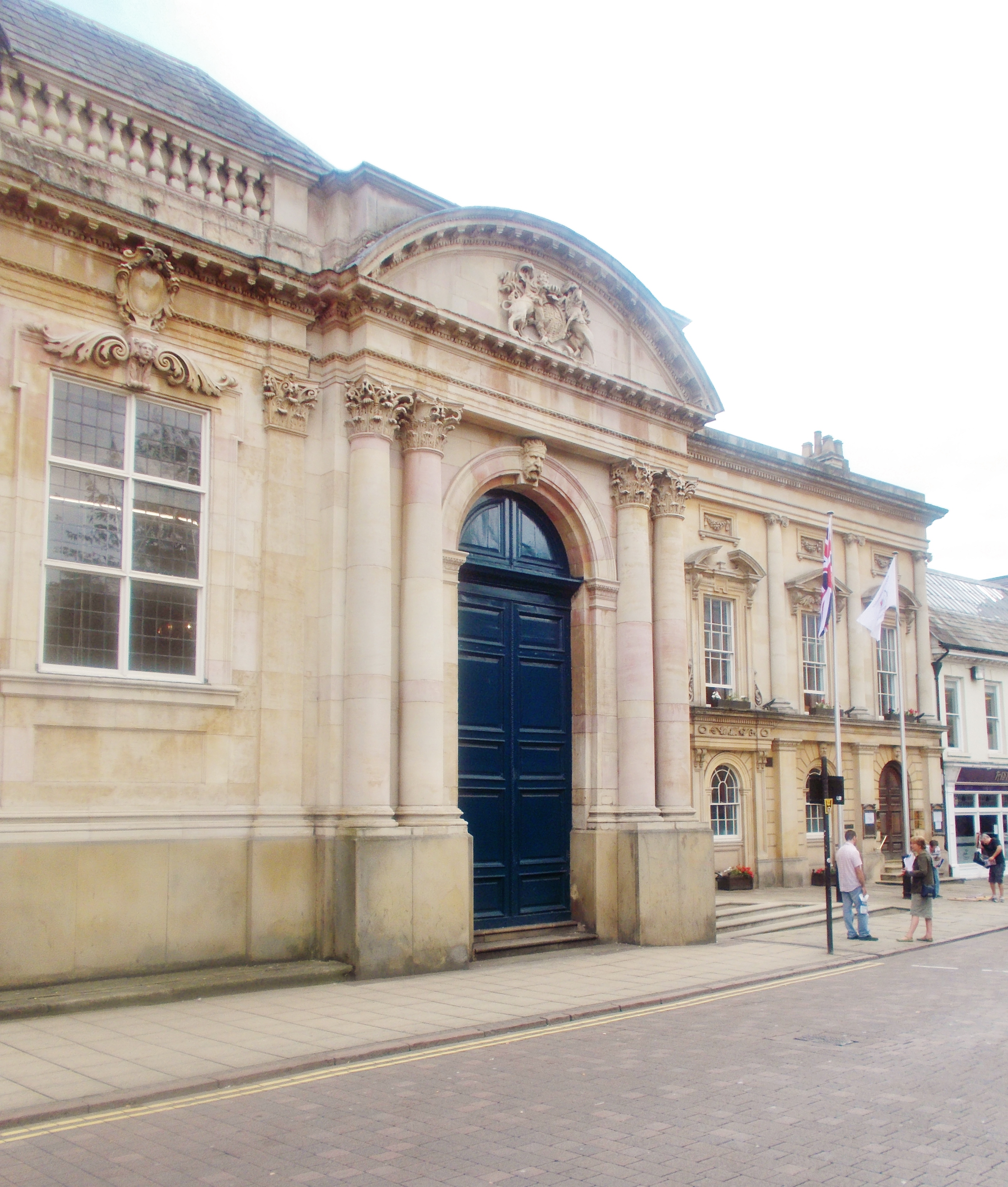
In a number of blog posts colleagues and myself (New Beginnings, Modern University or New University? Waterside: What an exciting time to be a student, Park Life, The ever rolling stream rolls on), we talked about the move to a new campus and the pedagogies it will develop for staff and students. Despite being in one of the newest campuses in the country, we also deliver some of our course content in the Sessions House. This is one of the oldest and most historic buildings in town. Sometimes with students we leave the modern to take a plunge in history in a matter of hours. Traditionally the court has been used in education primarily for mooting in the study of law or for reenactment for humanities. On this occasion, criminology occupies the space for learning enhancement that shall go beyond these roles.
The Sessions House is the old court in the centre of Northampton, built 1676 following the great fire of Northampton in 1675. The building was the seat of justice for the town, where the public heard unspeakable crimes from matricide to witchcraft. Justice in the 17th century appear as a drama to be played in public, where all could hear the details of those wicked people, to be judged. Once condemned, their execution at the gallows at the back of the court completed the spectacle of justice. In criminology discourse, at the time this building was founded, Locke was writing about toleration and the constrains of earthy judges. The building for the town became the embodiment of justice and the representation of fairness. How can criminology not be part of this legacy?
There were some of the reasons why we have made this connection with the past but sometimes these connections may not be so apparent or clear. It was in one of those sessions that I began to think of the importance of what we do. This is not just a space; it is a connection to the past that contains part of the history of what we now recognise as criminology. The witch trials of Northampton, among other lessons they can demonstrate, show a society suspicious of those women who are visible. Something that four centuries after we still struggle with, if we were to observe for example the #metoo movement. Furthermore, from the historic trials on those who murdered their partners we can now gain a new understanding, in a room full of students, instead of judges debating the merits of punishment and the boundaries of sentencing.
These are some of the reasons that will take this historic building forward and project it forward reclaiming it for what it was intended to be. A courthouse is a place of arbitration and debate. In the world of pedagogy knowledge is constant and ever evolving but knowing one’s roots allows the exploration of the subject to be anchored in a way that one can identify how debates and issues evolve in the discipline. Academic work can be solitary work, long hours of reading and assignment preparation, but it can also be demonstrative. In this case we a group (or maybe a gang) of criminologists explore how justice and penal policy changes so sitting at the green leather seats of courtroom, whilst tapping notes on a tablet. We are delighted to reclaim this space so that the criminologists of the future to figure out many ethical dilemmas some of whom once may have occupied the mind of the bench and formed legal precedent. History has a lot to teach us and we can project this into the future as new theoretical conventions are to emerge.
Locke J, (1689), A letter Concerning Toleration, assessed 01/11/18 https://en.wikisource.org/wiki/A_Letter_Concerning_Toleration
Share this:


Findings on the ‘traditional lecture’ format – perfect timing!

I seem to be reading more and more reports on the need to retain lectures as a form of teaching, as it is claimed to ensure students are more engaged and committed to their studies when this method is used. Well, these findings have come to my attention just as I am testing online technologies to replace the ‘traditional’ lecture, via Collaborate on the new Waterside campus. Collaborate is a tool in Blackboard which opens an online classroom for students to join, listen to the lecture and see slides or other media, while also being able to pose questions via a chat function.
On the face of it, not so different, just the physical world replicated in the real world, right? Well, I will reserve judgement as I am still coming to grips with what this technology can do, I am aware younger generations of students may embrace this, and the reality is, it is the only forum I have to offer teaching to large numbers of students. I suspect student experiences are mixed, I know some really like it, some are not so keen, so again, not so different to lectures? The article in the times suggests that students are less likely to drop out if they are taught via lectures and have perceptions of good one-to-one contact with staff. Some more interesting issues were raised from replies in the tweet about the story, raising questions about the need to focus on quality, not method, that many universities are playing catch up with new teaching technologies and that this needs to be better understood from social and cultural perspectives. I think it is also worth picking up on perceptions of students, along with their expectations of higher education and remember, they must develop as independent learners. The setting in this respect would not seem to matter, it is the delivery, the level of effort put in to engage students and reinforcing the message that their learning is as much their responsibility as ours.
There is certainly a lot to grapple with, and for me, just starting out with this new technology, I myself feel there is much to learn and I am keeping an open mind. I do feel there are aspects of traditional teaching which must be retained and this can be done via group seminars, with smaller numbers and an opportunity for discussion, debate and student-led learning. If we see the lecture as the foundation for learning, then perhaps its method of delivery is less important. Given the online provision I must use for lectures, during seminars, I step away from the powerpoint and use the time I have with students in a more interactive way. For those modules where I don’t use online lectures, not much has changed on the new campus, but I am always keen to see how online teaching methods could be adopted – and I am prepared to use them if I genuinely can see their value.
It would be easy to offer only critique of this technology, and I think it is also important not to see it as an answer to the perennial problems with lack of engagement and focus many lecturers experience from mid term onwards. Perhaps online provision can at least overcome barriers to attendance for commuting students, those who feel intimidated in large lecture halls, and those who simply find they don’t engage with the material in this setting. At a time when some courses attract high numbers of students, and the reality of having lectures with 150+ students in a room means potential for noise disruption, lack of focus and interaction then maybe online provision can offer a meaningful alternative. There is provision for some interaction, time can be set aside for this, students can join in without worrying about disruption or not being able to hear the lecturer and it removes the need for lecturers to discipline disruptive behaviour. It does require some level of ‘policing’ and monitoring, but the settings can enable this. Having done lectures with 100 plus students, it is not something I miss – I’ve always preferred smaller seminar group teaching and so I can see how online provision can be a better support for this.
Currently, I use the online session as a form of recap and review, with some additional content for students. This is in part due the timing of the session and I am sure it can work equally as well as preparation for seminars. Students can then use the time to clarify anything they don’t understand and it reinforces themes and issues covered in seminars as well as introducing news ways to examine various topics. As with any innovation, this needs more research from across the board of disciplines and research approaches. In order to move such innovation on from ‘trial and error’ and simply hoping for the best, as with any policy we need to know what works, when it works and why. Therefore, along with my colleagues, I will persist and keep a watchful eye on the work of pedagogic experts out there who are examining this. There have been the inevitable issues with wifi not supporting connectivity – I can’t believe I just used this sentence about my teaching, but there it is. I am optimistic these issues will be overcome, and in the meantime, I always have a plan B – relying on technology is never a good plan (hence the featured image for this blog), but this is perhaps something to reflect on for another day.

 Thoughts from the criminology team