
Home » Learning (Page 8)
Category Archives: Learning

“Things you need to know about criminology”: A student perspective: ej213

We are all living in very strange times, not sure when life will return to normal...but if you're thinking about studying criminology, here is some advice from those best placed to know!

The most important module to my understanding of criminology is: True Crime - this module highlights the fact that cases you have seen in the media and in films may not be accurate due to the true crime genre exaggerating facts for entertainment. Whilst, this module does not cover quite as much theory as others, it gives the chance to explore cases and discover the truth underneath the exaggeration. Love this module.

The academic criminology book you must read:
The Oxford Handbook of Criminology (sixth edition) - I was recommended this book at an open day and there was rarely an assessment I couldn't find some background knowledge for in this book. It is a great tool.

The academic journal article you must read:
Testosterone and masculinity

The criminology documentary you must watch:
FBI: Cold Cases - it is a Netflix original I think but it shows how crimes committed 20 or 30 years ago can be solved due to modern technology. Really interesting especially if you have an interest in forensics.

The most important criminologist you must read:
Either Lombroso or Marx.

Something criminological that fascinates me:
The fact that crime is defined by the wealthy meaning that the prisons are mostly filled with the lower classes due to the upper classes' crimes being seen as victimless

The most surprising thing I know about criminology is:
That criminology is a relatively recent study

The most important thing I've learnt from studying criminology is:
There is rarely one answer so long as you can support your argument

The most pressing criminological problem facing society is:
This could be an essay in itself. I guess I would have to say poverty because 14 million people (2019/20) still live in poverty and these people are not going to have the same advantages or prospects in education or the workplace meaning they are more likely to commit crime in order to survive

When family and friends ask, I tell them criminology is:
Amazing and the most interesting course I have chosen to study because it never had a definite answer which I guess can make it complex however, the debates within the course are great to participate in because it is interesting to hear another's perspective but also voice my own. It is also very inclusive in its module content which is great

Share this:


“Things you need to know about criminology”: A student perspective – Bonnie Middleton (2017-2020)
We are all living in very strange times, not sure when life will return to normal...but if you're thinking about studying criminology, here is some advice from those best placed to know!

The most important module to my understanding of criminology is: All of them! Every module contributes to your understanding of Criminology and all are different and enjoyable. Personally, my favourite module was Violence: From Domestic to Institutional in Year 3; this module ties together everything you know about Criminology; the reasons why we are subjective as criminologists and our ability to look beyond the scope of what we know.

The academic criminology book you must read:
Outsiders: Studies in the sociology of deviance (1963) by Howard Becker. Albeit a dated book, its ideas are relevant and relate to many criminological such as; how and why criminals are labelled and stigmatised; why are the youth demonised; why people reject the norms and values of society and become criminals in doing so.

The academic journal article you must read:
This is a hard one. Articles are great for discovering new ideas and methodologically testing theories. I would recommend reading: Arrigo, J. (2004). A Utilitarian Argument Against Torture, Interrogation of Terrorists. Science and Engineering Ethics. 10(3), pp. 543-572. This article poses many questions for a criminologist which enlightens you to think subjectively and challenge your own views; which is what Criminology is all about. From reading this article you will learn to think critically when faced with a challenging dilemma; the rights of a terrorist and how can the law can be tailored to fit the crime.

The criminology documentary you must watch:
Where do I begin? Louis Theroux and Stacey Dooley are both great journalists and documentary makers. If I had to pick one, I would recommend watching the BBC’s documentary on Grenfell If you watch this documentary you must consider; the government’s response; who is accountable; why are the residents of Grenfell still in temporary accommodation. These are the sorts of questions you should be asking as someone studying Criminology.

The most important criminologist you must read:
Familiarise yourself with the ideas of Lombroso, this will aid your understanding on how criminological theory and ideas have developed overtime through biological, psychological and sociological standpoints.

Something criminological that fascinates me:
Domestic abuse. I had done my dissertation on this as I have a great interest in male dominance and power over women, especially in intimate relationships. Gender plays a key role in this which when examined in depth, will change your view on gender paradigms.

The most surprising thing I know about criminology is: Criminality was believed by Lombroso to be inherited and that criminals possessed physical defects, criminality would be measured by the size and shape of particular body parts; this was later discredited. I can remember learning this in first year and it fascinated me.

The most important thing I've learnt from studying criminology is:
To not judge a book by its cover and to not take everything at face value. Do not be afraid to challenge other’s standpoints and beliefs. Thinking critically is the most important skill to have, search deeper into issues and apply your own thoughts and experiences.

The most pressing criminological problem facing society is:
Mass incarceration and reoffending rates. The UK is yet to move away from the ‘tough on crime’ approach favouring law and order and punishment. The penal system needs to be reformed to ensure offenders are rehabilitated to break the cycle of criminality; definitely educate yourself on political party’s manifesto’s and what they say about crime and justice before voting.

When family and friends ask, I tell them criminology is: I tell family and friends that criminology is such a broad field of study; we look at law, psychology, science, sociology, politics, penal systems, criminal justice organisations, media and much more. From this, you attain the ability to think critically and reflect, it can help you in many situations not just criminological issues. It is an incredibly insightful and enlightening field to study; it opens up many opportunities.

Share this:


Ask the expert, if you can find one

It was around four years ago I discovered the title of ‘Doctor’ extended beyond medical staff. I’m not sure many people outside of the academic world fully understand or have any reason to know the order in which post nominal letters are awarded or titles are given. Gaining the title of ‘doctor’ at the very beginning of any academic journey, seems so distantly part of any future plan, its barely imaginable. Some career paths seem wildly ambitious. Wanting to be an ‘expert’ in your field for the humble student, feels much like aspiring to become an astronaut midway through a physics degree.
Once you enter the world of academia, the titles people hold seem to determine an awful lot of their credibility. It’s rare to find a university lecturer who isn’t working towards doctoral qualification, most already have one. The papers, books and research journals are filled with the knowledge of individuals who once were nothing more than students. I often wonder though, at what point someone becomes an expert? At what point, (if ever) do the most academically qualified individuals refer to themselves as experts within a narrow area of their field.
The government often talks about relying on ‘expert’ evidence. Watching the experts stand beside the PM discussing the current pandemic, they appear uneasy, particularly when questions are raised about a different expert having a contradicting opinion. One thing I feel quite sure of is that experts seem to rarely agree. As Bertrand Russell (1927/42) states, “even when all the experts agree, they may well be mistaken” . Maybe that’s because it’s questionable if anyone can ever truly know everything on a given subject area.
The scientific committee seems to be buzzing with accusations that the experts are not quite what they seem. The ‘data scientists’ advising government and sitting on SAGE are not all from a background which comfortably implies they are qualified to discuss virology or immunology. In the background lingers the fact with such a new virus, with so little known about it, expert knowledge in a narrow sense, is undoubtedly in its infancy and will probably require some degree of hindsight later on.
In the past week one of the UK’s leading experts has resigned from his job after breaking his own guidance. Meanwhile the public watched Matt Hancock ‘snap’ at an opposition MP in parliament. A woman who despite being no more of an ‘expert’ than himself, at least has experience as a qualified A&E doctor to base her opinions and views on. It seems last week’s experts and heroes are this week’s victims in the ongoing witch-hunt for someone to blame.
I’ve started to wonder if labelling someone an ‘expert’ is something other people do to install confidence that a piece of research being relied upon is credible, rather than the experts referring to themselves that way. There’s almost an assumption of arrogance for anyone who dares to protest that their knowledge should be recognised with a title, outside of the academic world anyway. Maybe people simply don’t understand what it took to reach that level of knowledge in the first place.
I’ve looked a lot at ‘labelling’ within the criminological context and it seems to me the labels that are attached to us, almost always seem to come from someone else. In an age of self-proclaimed ‘internet experts’ the real experts, it seems are hard to find.
Reference
Russell, Bertrand (1927/1942) cited in The Collected Papers of Bertrand Russell: A Fresh Look at Empiricism, 1927-42, edited by by John Slater and Assisted by Peter Köllner, (London: Routledge)
Share this:


“My Favourite Things”: Saffron Garside

My favourite TV show - It's probably Peep Show, I've rewatched it so many times and it doesn't stop being funny. I often find myself quoting it to other people too and it's what I put on when I don't want to think about anything

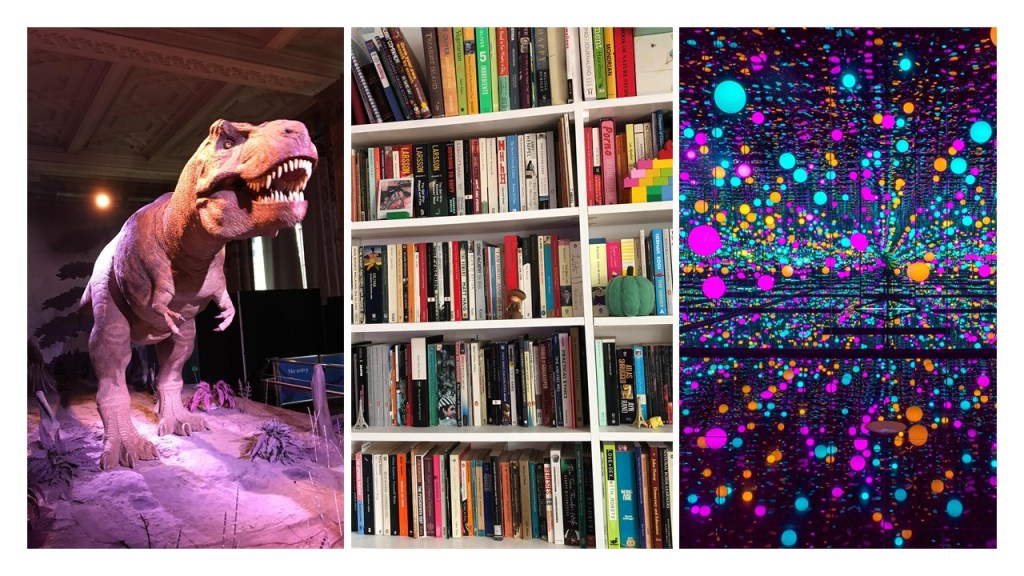
My favourite place to go - The Natural History Museum has been my favourite place to go for a very long time - the building is beautiful and you could spend days in there and still not see everything. I learn something new every time I go. I also love taking the kids there now - some stuff is still the same as when I was small like the T-Rex and the earthquake room! It'll be one of the first places we go when museums and galleries reopen

My favourite city - It's definitely Paris - it really reminds me of London in a lot of ways, it feels small and big at the same time and there is so much to see and do there. I was lucky enough to go at the beginning of March on a surprise trip - it was fun to be a tourist and we walked so much!

My favourite thing to do in my free time - Read! If I'm not doing something else then I'm usually reading. I carry a book everywhere just in case I get a couple of minutes to read. I'm in two book clubs so always juggling a few books at once

My favourite athlete/sports personality - I'm not a big sports fan and I'm not sure this counts but the kids and I have been loving doing PE with Joe Wicks. It's been great for keeping us moving during the lockdown and it's a pretty big commitment to show up every day. He always seems so positive

My favourite actor - Edward Norton. I think I've seen nearly all the films he's ever been in!

My favourite author - It's too difficult to choose. I really like Chuck Palahniuk and I've reread the Harry Potter series by J.K. Rowling a lot of times!

My favourite drink - I'm not sure you can beat a good cup of tea. It's about the most comforting thing I can think of and it's never not a good time to put the kettle on

My favourite food - caramel shortbread - but it has to be one of the really good ones (no digestive base!) and you need a good chocolate to caramel ratio!

My favourite place to eat - Every Sunday my husband and I take it in turns to cook a big family meal (complete with pudding!) and we play lots of board games after. It's one of my favourite times in the week and it always feels special.

I like people who - are enthusiastic about life and the things they are learning about, who want to share stories and make spontaneous decisions

I don’t like it when people - don't communicate their feelings or try to resolve things through conversation - I think things would often be simpler if people tried to talk about things honestly

My favourite book - I think my favourite book of all time is Treasure Island by Robert Louis Stevenson it's such a good adventure story and bits of it are really scary!

My favourite book character - Bilbo Baggins! I really enjoyed The Hobbit as a child and my kids love it so much we've already read it together twice. There is something wonderful about how his character develops throughout his quest - he goes from being a reluctant adventurer to the person holding the whole thing together. He isn't motivated by greed or fame and commits himself to seeing it through. Whenever he feels disheartened he dreams of the comforts of home; cooked meals, a boiling kettle, a warm fire

My favourite film - Fight Club is easily my favourite film- great actors, great soundtrack, great twist!

My favourite poem - Wild Geese by Mary Oliver. She's my absolute favourite poet and it felt like magic when I first discovered her! She writes about nature with such reverence and wonder

My favourite artist/band -  For more than half my life it's been Green Day so I think I am stuck with them now!

My favourite song - In My Mind - Amanda Palmer. I really, really love this song - positive messages and ukulele, what more do you need?

My favourite art - I don't know if I have a very favourite piece of art - I love going to a modern art gallery like the Tate Modern in London or the Centre Pompidou in Paris and just spending hours losing myself in all the emotions that get stirred up. I really love the work of Yayoi Kusama but haven't been lucky enough to see her art in person yet

My favourite person from history - Mary Anning made some really important fossil discoveries but didn't really get the recognition she deserved during her lifetime. Plus she was struck by lightning as a baby, which is a pretty cool story!
Share this:


“My Favourite Things”: samc0812
My favourite TV show - My favourite current show is Friday Night Dinner. My all-time favourite has to be Breaking Bad, I’ve watched from beginning to end three times!

My favourite place to go - Definitely has to be the beach, I always find being by the sea calming. My favourite place in the world is Thailand. I’ve never met such happy, friendly people. Thai street food is amazing and it’s a beautiful peaceful part of the world

My favourite city - London. I have so many memories of day trips, nights out and experiences in London. Every time I probably don’t spend as much time there as I would like actually considering how easily it’s reached from where I live

My favourite thing to do in my free time - Bake. You can’t beat a home-made cake. I’ve been baking a lot lately, my children are fed up of cake!

My favourite athlete/sports personality - I’m not a huge sports fan but I have a lot of respect for Usain Bolt. I watched a documentary about his life once, his commitment to training and resilience was incredible

My favourite actor - Morgan Freeman. He always seems to choose roles well that suit him. I don’t think I’ve seen any film’s he’s been in that I haven’t enjoyed

My favourite author – I don’t think I could choose. It’s not very often I read books by the same author for myself. I do with my children though, my favourite children’s author is probably A.A. Milne or Roald Dahl because they’re classics which never grow old

My favourite drink - Chocolate milkshake… I’m not sure I’ve ever grown out of drinking chocolate milk!

My favourite food - Cheeseburgers. My friends call me a connoisseur of cheeseburgers because I eat them so much. Everyone I know asks me before trying out a new burger restaurant

My favourite place to eat - My mum and dads house. My mum makes an amazing roast dinner. There’s nothing better than a family meal, even if I do normally end up washing up at the end

I like people who - are open minded, honest and empathetic. I don’t see any reason to be anyone other than yourself. I also think the best way to learn and grow as a person is to remain open minded. As for as being empathetic, I think people show this in many different ways, sometimes it’s less obvious. I like to believe most people have some good in there somewhere

I don’t like it when people - are closed minded and argumentative. I think there’s a fine line between intelligent debate and opinionated argument

My favourite book - Since I was a teenager my favourite book has always been Junk by Melvin Burgess

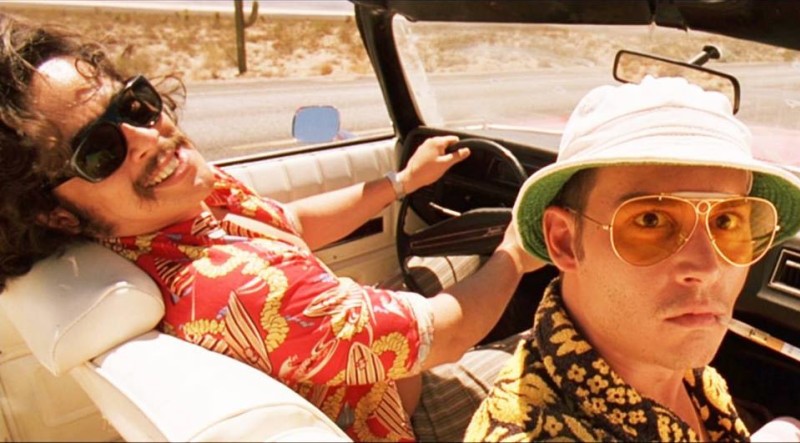
My favourite book character - Raoul Duke in Fear and loathing in Las Vegas. I find it interesting the way the character is a representation of the way the author views his life. Hunter S. Thompson was an interesting enough character without needing a fictional version

My favourite film - Interstellar. Space fascinates me. I like to ponder over the possibilities of time travel. I love that physicist Nolan Thorne was hired to make the explanation of a black hole accurate

My favourite poem -
Warning by Jenny Joseph. I read it on my wedding day. It was actually the priest who suggested it, I think he saw I was a little bit of a wild, independent woman!

My favourite artist/band - I’ve been going to raves since I was 16 so most of my favourite artists are small and less well-known DJ’s. My husband Dj’s as well, so many of them I met through him, and are now good friends of mine. I don’t think I could pick just one

My favourite song - This a tough one, I like so many genres of music. I guess if I had to choose one, it would be “The way you look tonight” by Tony Bennet because it was my wedding dance song and it always makes me think of my grandparents

My favourite art - My favourite type of art is portraits. I watched a documentary with artist Grayson Perry and he described how portraits are an interpretation of how the artist see’s that person. I like to look at portraits and imagine what I think that person is like

My favourite person from history - It would have to be Albert Hoffman. My area of research is mostly based in psychedelic medicines and drug policy. Albert Hoffman is the scientist who discovered LSD. He’s quite well-known for accidentally administering himself the first documented dose of LSD and riding his bicycle home. He was one of the first people to recognise the potential pharma psychological benefits of hallucinogens, I like to think one day modern science will make a strong enough case to revolutionise psychiatric care with substances like LSD. Although Hoffman discovered LSD in 1943 we still don’t fully understand the full complexities of how it works on the mind
Share this:


Teaching, Technology, and reality

I’m not a fan of technology used for communication for the most part, I’d rather do things face to face. But, I have to admit that at this time of enforced lockdown technology has been to a large extent our saviour. It is a case of needs must and if we want to engage with students at all, we have to use technology and if we want to communicate with the outside world, well in the main, its technology.
However, this is forced upon us, it is not a choice. Why raise this, well let me tell you about my experiences of using technology and being shut at home! Most, if not all my problems, probably relate to broadband. It keeps dropping out, sometimes I don’t notice, that is until I go to save my work or try to add the final comment to my marking. I know other colleagues have had the same problem. Try marking on Turnitin only to find that nearly all of your feedback has just disappeared in a flash. Try talking to colleagues on Webex and watch some of them disappearing and reappearing. Sometimes you can hear them, sometimes you can’t. And isn’t it funny when there is a time lag, a Two Ronnies moment when the question before the last is answered. ‘You go, no you go’, we say as we all talk over each other because the social cues relied on in face to face meetings just aren’t there. I’ve tried discussion boards with students, it’s not like WhatsApp or Messenger or even text. It is far more staid than that. Some students take part, but most don’t and that in a module where attendance in class before the shutdown was running at over seventy per cent. I’m lucky to get 20% involved in the discussion board. Colleagues using Collaborate tell me a similar tale, a tale of woe where only a few students, if any appear. Six hours of emptiness, thumb twiddling and reading, that’s the lecturer, not the students.
Now I don’t know whether my problems with the internet are resultant of the increased usage across the country, or just in my area. I suspect not because I had problems before the lockdown. I live in a village and whilst my broadband package promises me, and delivers brilliant broadband speed at times, it is inconsistent, frequently inexplicably dropping out for a minute or two. It is frustrating at times, even demoralising. I have a very good laptop (supplied by the university) and it is hardwired in, so not reliant on Wi-Fi, but it makes little difference. I suspect the problems could be anywhere in the broadband ether. It could be at the other end, the university, it could be at Turnitin for instance or maybe its somewhere in a black hole in the middle. Who knows, and I increasingly think, who cares? When my broadband disappeared for a whole day, a colleague suggested that I could tether my phone. A brilliant idea I thought as our discussion became distorted and it sounded like he was talking to me from a goldfish bowl. I guess the satellite overhead moved and my signal gradually disappeared. I can tell you now that my mobile phone operator is the only one that provides decent coverage in my area. Tethered to a goldfish bowl, probably not a solution, but thanks anyway.
If I suffer from IT issues, then what about students? We are assured that those that live on campus have brilliant Wi-Fi but does this represent the majority of our student body? Not usually and certainly not now. Do they all have good laptops; do they all have a decent Wi-Fi package? I hazard a guess, probably not. But even if what they have is on par with what I have available to me could they not also be encumbered with the same problems? We push technology as the way forward in education but don’t bother to ask the end user about their experience in using it. I can tell you from student feedback that many don’t like Collaborate, find the discussion boards difficult to engage with and some are completely demotivated if they cannot attend physical classes. That’s not to say that all students feel this way, some like recorded lectures as it gives them the opportunity to watch it at their leisure, but many don’t take that final step of actually watching it. They intend to, but don’t for whatever reason. Some like the fact that they can get books electronically, but many don’t, preferring to read from a hard copy. Even browsing the shelves in the library has for some, a mystical pleasure.
I’ll go back to the beginning, technology has undoubtedly been our saviour at this time of lockdown, but wouldn’t it be a real opportunity to think about teaching and technology after this enforced lockdown? Instead of assuming all students are technology savvy or indeed, want to engage with technology regardless of what it is, should we not ask them what works for them. Instead of telling staff what they can do with technology, e.g. you can even remotely mark students’ work on a Caribbean island, should we not ask staff what works? Let’s change the negative narrative, “you’re not engaging with technology”, to the positive what works in teaching our students and how might technology help in that. Note I say our students, not other students at other universities or some pseudo student in a theoretical vacuum. We should simply be asking what is best for our students and a starting point might be to ask them and those that actually teach them.
Share this:


“My Favourite Things”: Bethany
My favourite TV show - I have many. But if I must select just one... Fleabag. I have rewatched several times, I have even read the book (which is more of a script).

My favourite place to go - Peak district, I have several favourite spots within, but overall, it's my favourite place.

My favourite city - Cambridge. It may be more familiarity than anything else, but it does have a charm.

My favourite thing to do in my free time - READ. I have other loves, such as video games and walking. But reading is my everyday pastime.

My favourite athlete/sports personality - Hard one for me, as I'm not really into sports. The only sport I follow which may surprise some is body-building! There's an element of obsession, dedication and art that fascinates me.  So, I will say Kai Greene - but I'm not sure how many will know who this is.

My favourite actor - Tough one, I like most films/TV that has either Bill Hader or Meryl Streep in.

My favourite author - Tough one- Can I give 2 - is that cheating?  Margaret Atwood & Lucy Clarke

My favourite drink - Coca Cola - Full Fat - The good stuff

My favourite food - Bangers & Mash

My favourite place to eat - Anywhere with good food that I don't have to cook myself!

I like people who - Ask Questions. Questions are the stepping-stone before acquiring knowledge.

I don’t like it when people - Assume things stay the same. One of my pet peeves is "Well they should have thought of that before X happened". Things change, feelings change, people's finances change. Therefore, we should try withholding judgement and think how circumstances change.

My favourite book - This one is hard for me. The academic in me says Paul Willis' Learning to Labour, the book opened my mind and genuinely changed my life. But the child in me and the one who loves to explore... The Secret Garden

My favourite book character - This doesn't go in line with my favourite book, but I love the character Charmaine in The Heart Goes Last she's complex but she is also empathetic.

My favourite film - Hocus Pocus - More of a sentimental thing of carving pumpkins every year while watching it!

My favourite poem - While I am not one much for poetry, I adored Rupi Kaur's poetry book Milk and Honey

My favourite artist/band - I have a few, I like The 1975, Alicia Keys, Sam Smith and even some Billie Eilish

My favourite song - Not fitting at all to the above - But - It's Can't help falling in Love

My favourite art - I didn't actually know the name of it till now as I never really thought about it, but what I used to call 'Crazy Stairs' (apparently actually called Relativity by M.C.Escher). It used to be in my Art room at school, I remember thinking it seemed pointless, then I realised that was probably the point.

My favourite person from history - Angela Davis. After I read Women, Race & Class I wanted to explore more – This woman has had a fascinating, challenging, but above all, inspiring life.
… Side note: as I wasn’t asked … Maisie – My dog (pictured) is my favourite…of everything, really. Just look at her, she’s beautiful.

Share this:


Empathy Amid the “Fake Tales of San Francisco”*
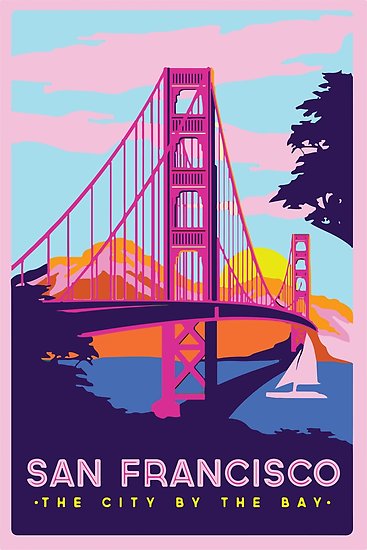
This time last week, @manosdaskalou and I were in San Francisco at the American Society of Criminology’s conference. This four-day meeting takes place once a year and encompasses a huge range of talkers and subjects, demonstrating the diversity of the discipline. Each day there are multiple sessions scheduled, making it incredibly difficult to choose which ones you want to attend.
Fortunately, this year both of our two papers were presented on the first day of the conference, which took some of the pressure off. We were then able to concentrate on other presenters’ work. Throughout discussions around teaching in prison, gun violence and many other matters of criminological importance, there was a sense of camaraderie, a shared passion to understand and in turn, change the world for the better. All of these discussions took place in a grand hotel, with cafes, bars and restaurants, to enable the conversation to continue long after the scheduled sessions had finished.
Outside of the hotel, there is plenty to see. San Francisco is an interesting city, famous for its Golden Gate Bridge, the cable cars which run up and down extraordinarily steep roads and of course, criminologically speaking, Alcatraz prison. In addition, it is renowned for its expensive designer shops, restaurants, bars and hotels. But as @haleysread has noted before, this is a city where you do not have to look far to find real deprivation.
I was last in San Francisco in 2014. At that point cannabis had been declassified from a misdemeanour to an infraction, making the use of the drug similar to a traffic offence. In 2016, cannabis was completely decriminalised for recreational use. For many criminologists, such decriminalisation is a positive step, marking a change from viewing drug use as a criminal justice problem, to one of public health. Certainly, it’s a position that I would generally subscribe to, not least as part of a process necessary to prison abolition. However, what do we really know about the effects of cannabis? I am sure my colleague @michellejolleynorthamptonacuk could offer some insight into the latest research around cannabis use.
When a substance is illegal, it is exceedingly challenging to research either its harms or its benefits. What we know, in the main, is based upon problematic drug use, those individuals who come to the attention of either the CJS or the NHS. Those with the means to sustain a drug habit need not buy their supplies openly on the street, where the risk of being caught is far higher. Thus our research population are selected by bad luck, either they are caught or they suffer ill-effects either with their physical or mental health.
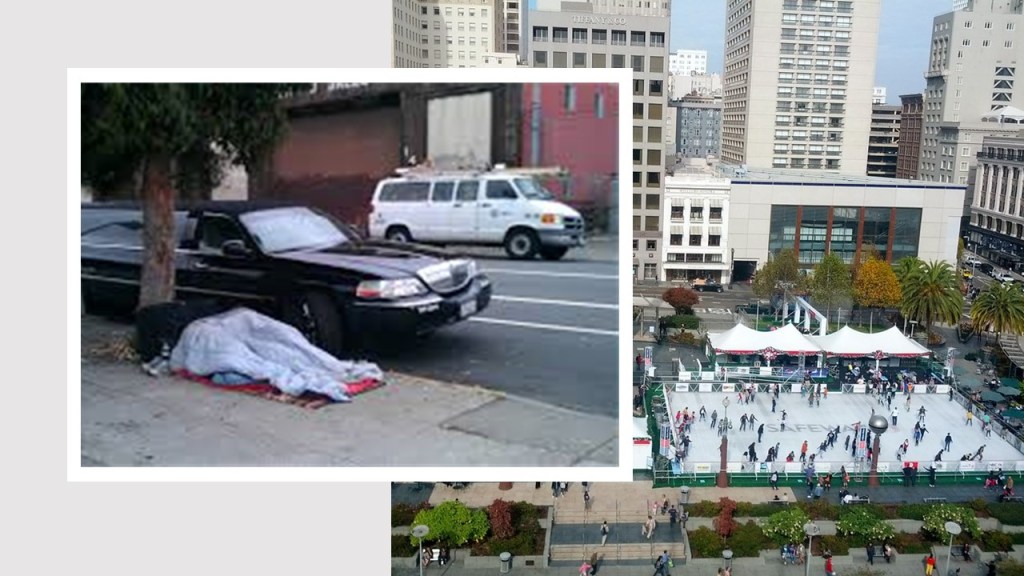
The smell of cannabis in San Francisco is a constant, but there is also another aroma, which wasn’t present five years ago. That smell is urine. Furthermore, it has been well documented, that not only are the streets and highways of San Francisco becoming public urinals, there are also many reports that public defecation is an increasing issue for the city. Now I don’t want to be so bold as to say that the decriminalisation of cannabis is the cause of this public effluence, however, San Francisco does raise some questions.
- Does cannabis cause or exacerbate mental health problems?
- Does cannabis lead to a loss of inhibition, so much so that the social conventions around urination and defecation are abandoned?
- Does cannabis lead to an increase in homelessness?
- Does cannabis increase the likelihood of social problems?
- Does the decriminalisation of cannabis, lead to less tolerance of social problems?
I don’t have any of the answers, but it is extremely difficult to ignore these problems. The juxtaposition of expensive shops such as Rolex and Tiffany just round the corner from large groups of confused, homeless people, make it impossible to avoid seeing the social problems confronted by this city. Of course, poor mental health and homelessness are not unique to San Francisco or even the USA, we have similar issues in our own town, regardless of the legal status of cannabis. Certainly the issue of access to bathroom facilities is pressing; should access to public toilets be a right or a privilege? This, also appears to be a public health, rather than CJS problem, although those observing or policing such behaviour, may argue differently.
Ultimately, as @haleysread found, San Francisco remains a City of Contrast, where the very rich and the very poor rub shoulders. Unless, society begins to think a little more about people and a little less about business, it seems inevitable that individuals will continue to live, eat, urinate and defection and ultimately, die upon the streets. It is not enough to discuss empathy in a conference, no matter how important that might be, if we don’t also empathise with people whose lives are in tatters.
*Turner, Alex, (2006), Fake Tales of San Francisco, [CD]. Recorded by Arctic Monkeys in Whatever People Say I Am, That’s What I’m Not, The Chapel: Domino Records
Share this:


Are you faking it? : Impostor Syndrome in Academia

Bethany Davies is an Associate Lecturer teaching modules in the first year.
I really enjoyed my time at university but for me it felt almost like I’d got in by some whim of luck, I worked hard to get there but I still felt as though I had got in by chance. Which meant by I had even started; I feared others would think that too and I would become exposed. I’d picture that in class everyone would know something about a really important event in history that I was ignorant to not have heard of. I remember wishing there was a documentary I could watch or a book I could read that gave a brief summary of everything that was meant to be important so I could at least have a basic knowledge of everything and maybe I could fake the rest.
Impostor syndrome doesn’t go away, it evolves and alters and that doesn’t mean it necessarily grows or decreases in time. But rather it just seems like an annoying person sat in the back of hall that occasionally shouts loud enough that you can hear it.
I think it’s important to talk about it, I’m not even sure what it could be regarded as, I don’t believe it be a disease or a form of anxiety but rather something just in its own class that to a degree I like to think everybody has. It doesn’t have to ruin your university experience, it didn’t ruin mine, but it was certainly a part of it, almost like a step in the process; go to lectures, deal with the feeling that I’m pretending I belong there, go home, revise.
I had really only became aware of it properly further in my studies and it continues when working in academia. The labels of what degree you have or what level you are and how many certificates you have can give you the confidence you need to overcome this, but it can also feed it.
There will be students starting University in the next few weeks who already feel like this, asking questions of themselves or even dreading having to talk in lectures in case they reveal what they most fear – that they are a fake and do not actually know what they think they should know by now. There will be others submitting essays or dissertations who think they have got to where they are by pure luck and chance and that this is the time where it might be made public that they are not worthy of their previous grades. There are individuals who are considered as ‘Experts’ on a particular subject by everyone but themselves as they feel the area is so vast that even they are at the basics of the subject.
Even when I received high grades, or was given positive feedback, it didn’t silence the thoughts that I somehow didn’t earn them. From graduation to working in academia, I thought that would be it, I would prove to myself that I knew enough and that I wasn’t an impostor. To an extent, it did help, mainly because I didn’t have to prove myself in an essay or a test anymore. But I still think it’s there, because I know there is always another step when you are in academia, you can keep going forever and you’ll never truly be done.
If that sounds familiar, it is something you can take some comfort in the number of others with the same feelings. It should give you comfort because it shows the inaccuracy in those intrusive thoughts, as surely, we can’t all be faking it and impostors in our academic journeys? And if we are… then there isn’t really a problem either.
I’m not a psychologist nor would I be so impostorous to claim to be (do you like what I did there?) but I think we all know that the negative things we say about ourselves are not true, but they are a way to stop ourselves from doing something out of our comfort zone, which in itself is subjective – but that’s starting a philosophical ramble.
This blog post isn’t to make you overly aware of your fears nor do you have to address them right now. But rather, my intention is letting students know you are not alone, it doesn’t go away but it can get better if you separate how you think you feel about yourself from the reality of what you are achieving whether that be good feedback or even achieving a degree. The same way as receiving negative feedback, should not reaffirm your fears. Learn to accept that you will never know everything and that it’s okay to not know something even if everyone makes you feel like you should. Be kind to yourself in your studies, otherwise you might forget to enjoy the process of learning.
Share this:


On being a University Student with Asperger Syndrome
To all new students starting university who are on the autism spectrum and Asperger Syndrome – YOU CAN DO IT! YOU WILL THRIVE!
As a child I was different.
I preferred spending time on my own, did not care much about what others were doing, and kept myself to myself. In primary school I was a daydreamer, and always lived in a world of my own. I was always very happy and had a smile on my face. The early years of my life were cheerful and full of happiness. I loved painting and drawing and being outdoors. When I started secondary school, I faced a variety of challenges.
I struggled socially, especially as I went to a mainstream school, and generally disliked being around other people. I loved studying and learning, and was always very ambitious when I was in my teenage years. I dreamed of being an author and a lawyer among many things, and always aimed high. Due to being different I was left out, but didn’t care much. I struggled with my senses at times, and became overwhelmed when there was lots of loud noises. My memory was unusual – I could remember silly little details, facts and useless information. I loved learning new things, reading and filling my head with knowledge. In my family, I was the oddball – I had specific interests, displayed intense focus, and displayed signs of phalilalia (repeating myself). [1]
My mum suspected that I was ‘different’, and she wanted me to be properly seen by a medical doctor. One morning, after a number of referrals, it happened; Friday 2nd February, 2010, 9:35am 42 seconds within the minute, I received my diagnosis: High Functioning Autism/Asperger Syndrome. This diagnosis explained so much about me.
Fast forward 3 years, on Saturday 15th September 2012, after an hour long drive away from home, I was settled into my new flat at the University of Northampton. My family left and I was with my new flatmates. The start of a new chapter in my life. My time at university enabled me to flourish and blossom in ways I never knew I could! At this point, I knew that I could not stay in my shell and isolate myself, I pushed myself out of my comfort zone, tried new things, and challenged myself. I wanted to be able to integrate and enjoy myself as much as I possibly could.
Aware of how my Aspergers affected me; from sensory difficulties, challenges in reading people (which I’m much better at now), to social awareness (knowing how to behave in different social situations), but I was determined to learn and grow. I overcame them all by going out, meeting and learning from new people, and enjoying myself! First year at university was one of the happiest years of my adult life! I remember smiling so much that my cheeks hurt. I fully immersed myself into university life, and loved every single minute of it! I got myself a job, did some volunteering, and loved studying. Being away from home helped me to really grow, and was the best decision I ever made!
I’m somewhat of a chameleon; meaning that I have learned to blend in and ‘mask’ my Aspergic traits. My social skills were very good already, so, to the majority of people I met, no-one could pick up on my Aspergers. I have an unusual memory for detail, am very focused, driven and energetic. There were times where I would interpret things differently, or misunderstand. That’s ok. I just asked more questions and for clarification, so that I could understand.
After getting my DSA (Disabled Students Allowance) approved, I was given specialist equipment and software’s to help meet my academic needs. These were so useful and handy! I had never recieved so much support for studying before! I was given all the training and guidance I needed to help get to grips with everything.
On my assignments, I had an extra front sheet, informing my lecturers of my Aspergers, so that they were aware and could take it into consideration when reviewing my work.
Students with disabilities can also get a mentor, note-taking support, and other support in accordance with their needs.
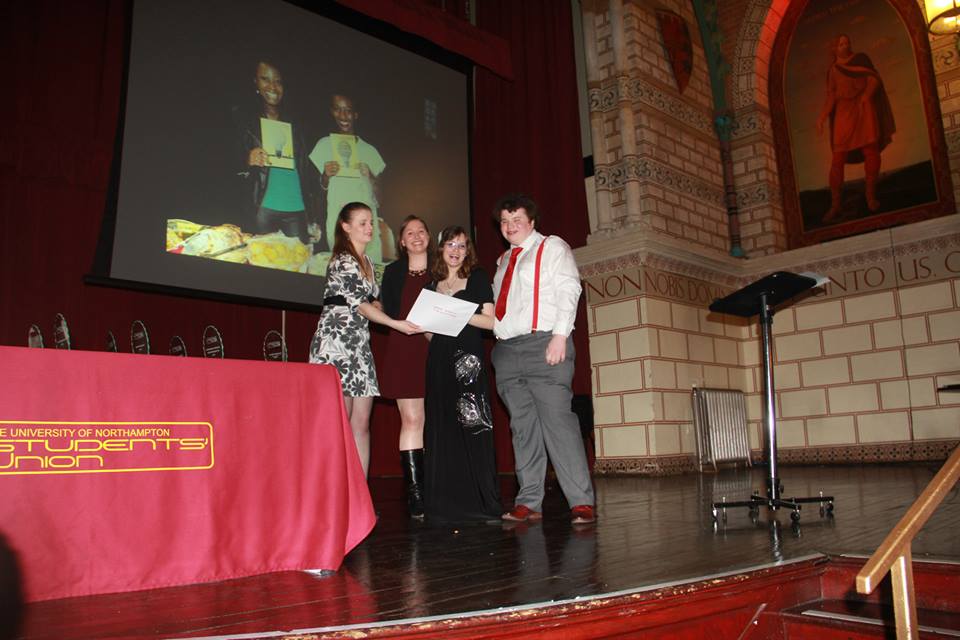
When I was in my first year, I founded the Auto-Circle Spectrum Society; the first society of its kind in the country, supporting students with autism, Asperger Syndrome and other learning disabilities. Upon seeing that there was no group in the Student’s Union to represent this demographic of students, I wanted to help others.
The second and third year flew by very quickly; I found myself starting each year with excitement and enthusiasm. I loved studying too. I remember collecting several books, finding my corner in the library and reading for hours, noting each reference as I went, putting together bodies of information for my assignments.
Auto-Circle Spectrum also grew over the 3 years, and I met so many incredible individuals who brought their own sense of uniqueness, fabulouslness and eccentricity to the group! I became increasingly aware of the challenges other students with autism face, particularly, transitions and dealing with change. After a parent got in touch with me, concerned for her son who was to start university. Wanting to further my help for students on the spectrum, I undertook the Change Maker Certificate, guided by the incredible Tim Curtis; which, after numerous meetings, resulted in a, Autism Spectrum Condition Taster Day, which was a huge success!
Today, I am the first person from both sides of my family to go to university, and the only one to have a masters degree. Do NOT let others tell you what you can and can’t do. You can overcome all odds if you put your mind to it and let yourself grow. The more you put into university life, the more you get out, and the more memorable it will be. YOU CAN DO IT!
Links to info about Aspergers/Autism
[1] National Autistic Society ‘Obsessions, Repetitive Behavior and Routines’ Available online at: https://www.autism.org.uk/about/behaviour/obsessions-repetitive-routines.aspx


