
Home » Immigration (Page 3)
Category Archives: Immigration

Those kinde of people
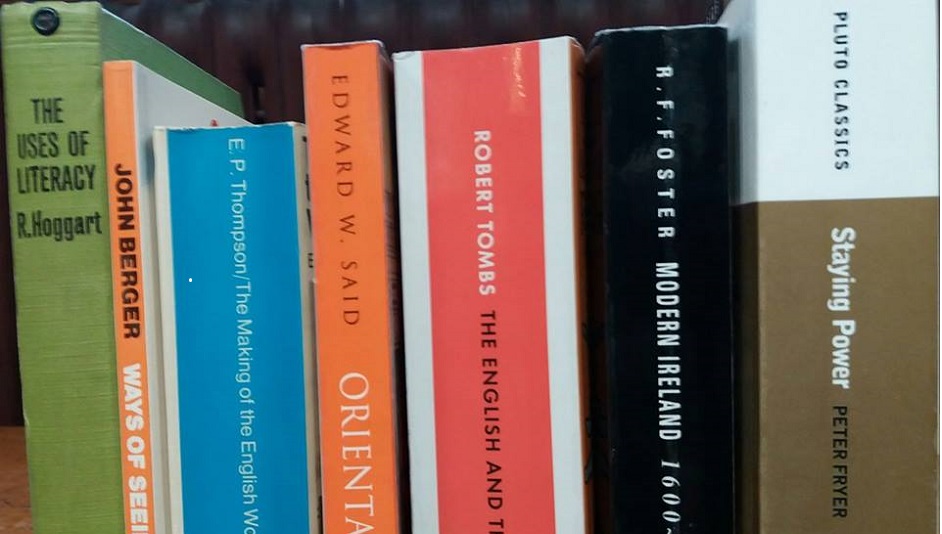
This poem is named for the first chapter of the iconic book Staying Power (1984) by historian and academic Peter Fryer. A book that talks about the history of Black people in Britain, from Roman times up to his modern-day. It’s also inspired by ‘Mathematics’ by British poet and author Hollie McNish.
Adam said:
those goddamn universities
and their goddamn books
learned people, crippling egos
with nothing but a look
he says those goddamn historians
and their god damn history
I tell them they worked hard
to get there, can’t you see?
I ask him what
he expects British history to be
he says he remembers
the land of Blyton and Christie
coastal wrecks, greenery
and a good wage before those people came
where people went to work, pot-bellied
national pride, stood proud before they came
now no British jobs, their kinde are to blame

I ask how he knows this to be true
he said he saw it on BBC News
every time a Pole takes a job from us
each time he hears a different language
whilst riding the bus
this divide and conquer, them and us
to me just does not add up
he makes a brew, two sugars in his tea
I say didn’t you know those granules
came from the sugar economy
he grunts, goddamn Blacks came and took our stuff
I tell him about sugar and cotton, you know
how slaves gave us indigo and tobacco – hot air to puff
I show him Brixton Road and Portobello Market
I show him rock n roll, Network Rail and the NHS
I show him the immigrant-built west
I show him straight roads and pictures of my Gran
how the Jamaican ackee comes from the Ghanaian Akan
He’s sick of history and social science
sitting all sad and smug on his island
I spent three years on a degree
did a dissertation on British identity
I geek over John Blanke
renaissance trumpeter who was Black
Oh and Ann Lister, call her Gentleman Jack
and Afro-Romans and The Slave Trade
Black Georgians, Saxons and Viking Raids
and I so want to scream when I hear folks say
goddamn immigrants taking our jobs
but how we teach history – we don’t talk
of Mrs Shah’s shop employing Bill and Bob
where people with money love to spend
employing women and men in tens,
her gift for business is self-taught
all her plans meticulously well-thought
and all your prejudice talk
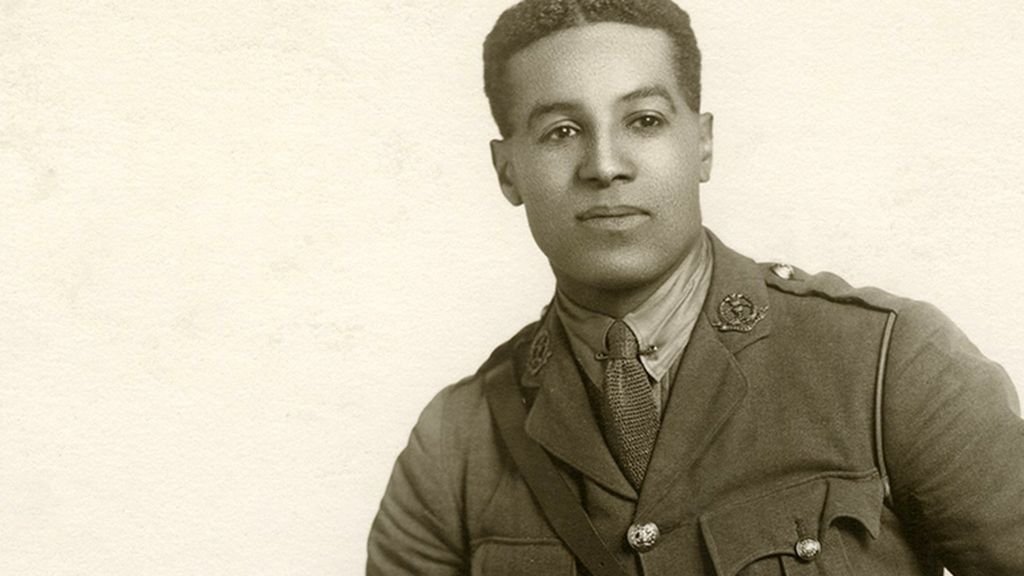
forgets the soldiers the colonies pledged
forgets the men left for dead
in Tangiers, Dunkirk and at the Somme
as the world wars went on and on
from Mr Smith to Mr Wong
and I know people love to complain
but England our name
the land of Angles is all that remains
from Saxons to Jutes
stories of migration since before WW2
and often, those kind of people
are more native than the locals.
Share this:


Is unconscious bias a many-headed monster?
When I was fourteen, I was stopped and searched in broad daylight. I was wearing my immaculate (private) school uniform – tie, blazer, shoes… the works. The idea I went to private school shouldn’t matter, but with that label comes an element of “social class.” But racial profiling doesn’t see class. And I remember being one of those students who was very proud of his uniform. And in cricket matches, we were all dressed well. I remember there being a school pride to adhere to and when we played away, we were representing the school and its reputation that had taken years to build. And within those walls of these private schools, there was a house pride.
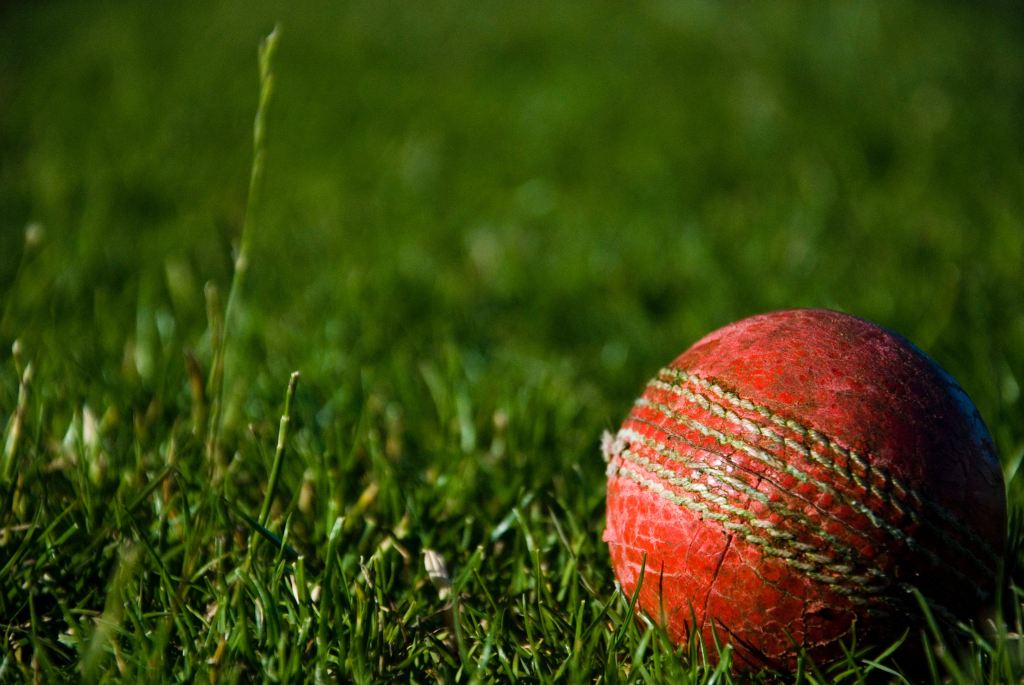
Yet when I was stopped, it smeared a dark mark against the pride I had. I was a child. Innocent. If it can happen to me – as a child – unthreatening – it can really happen to anyone and there’s nothing they can to stop it. Here I saw unconscious bias rear its ugly head, like a hydra – a many-headed monster (you have to admire the Greeks, you’re never stuck for a metaphor!)
If we’re to talk about unconscious bias, we must say that it only sees the surface level. It doesn’t see my BA Creative Writing nor would it see that I work at a university. But unconscious bias does see Black men in hoodies as “trouble” and it labels Black women expressing themselves as “angry.”
Unconscious bias forces people of colour to censor their dress code – to not wear Nike or Adidas in public out of fear that it increases your chances of being racially profiled. Unconscious bias pushes Black and Asians to code-switch. If a White person speaks slang, it’s cool. When we do it, it’s ghetto. That’s how I grew up and when I speak well, I’ve had responses such as “What good English you speak.” Doomed if you do, doomed if you don’t.
How you speak, what you wear – all these things are scrutinised more when you don’t have White Privilege. And being educated doesn’t shield non-White people (British people of colour included) from racist and xenophobic attacks, as author Reni Eddo-Lodge says in her book:
“Children of immigrants are often assured by well-meaning parents that educational access to the middle classes can absolve them from racism. We are told to work hard, go to a good university, and get a good job.”
The police can stop and question you at any time. The search comes into play, depending on the scenario. But when I was growing up, my parents gave me The Talk – on how Black people can get hassled by police. For me, I remember my parents sitting me down at ten years old. That at some point, you could be stopped and searched at any time – from aimlessly standing on a street corner, to playing in the park. Because you are Black, you are self-analysing your every move. Every footstep, every breath.
And to be stopped and searched is to have your dignity discarded in minutes. When it happened, the officer called me Boy – like Boy was my name – hello Mr Jim Crow – like he was an overseer and I was a slave – hands blistering in cotton fields – in the thick of southern summertime heat. Call me Boy. Call me Thug. No, Call me Target. No, slave. Yes master, no master, whatever you say master. This was not Mississippi, Selma or Spanish Town – this was Northamptonshire in the 2000s and my name is Tré.

Yes, Northamptonshire. And here in 2019, the statistics are damning. Depending on which Black background you look at, you are between six and thirteen times more likely to be stop and searched if you are Black than if you are White (British). And reading these statistics is an indication of conversations we need to be having – that there is a difference between a Black encounter with the police and a White encounter. And should we be discussing the relationship between White Privilege and unconscious bias?
Are these two things an overspill of colonialism? Are they tied up in race politics and how we think about race?
Whilst these statistics are for Northamptonshire, it wouldn’t be controversial to say that stop and search is a universal narrative for Black people in Europe and the Americas. Whether we’re talking about being stopped by police on the street or being pressed for papers in 1780s Georgia. Just to live out your existence; for many its tiring – same story, different era.
You are between six and thirteen times more likely to be stopped if you are Black than if you are White (British) – but you know… let’s give Northamptonshire police tasers and see what happens. Ahem.
Bibliography
Eddo-Lodge, Reni. Why I’m No Longer Talking to White People About Race. London: Bloomsbury Publishing, 2018. Print
Share this:

Your Name Is Not BAME

My name is Tré Ventour and I am the Students’ Union’s Vice President BME Sabbatical Officer. When I’ve asked students what BME stands for, most have been clueless – Black Minority Ethnic. The same could be said for BAME – Black Asian Minority Ethnic. I was elected to represent ethnic minority students. But I’ve been asking myself how much longer will this 47% be an ethnic minority? At Northampton, they will soon be the majority. This 14,000-student university in which nearly 7000 fit into this BME box.

Pigeon-holed. To be put into a box. I don’t like to think in boxes. I try not to think in labels but in this world, it’s naive to be colourblind. In the education sector, in this day and age, especially at Northampton, to not see race is to ignore the experiences of nearly 7,000 students – nearly 7,000 stories about potential hate crimes, and what about BAME members of staff? We must see race. We must see sex, class, and gender (all genders).
To be colourblind is to live life high on privilege – to exist without the consequences of hate crime. Some people live with racism, sexism and / or homophobia all their lives.
Many say “there’s one race, the human race.” That may be true but how comfortable must you be in your existence to come to that notion? And then push that notion on those who experience racism on a daily basis.
When I’ve spoken to students about BAME or ethnic minority, they say “Just call me by my name.” Students are flesh and bone, more than acronyms. And I do what they tell me to do (in a manner of speaking / within reason). I’m not Vice President, I’m not Mr Ventour; I am Tré and I am here to help students, to represent students (of colour) – more so Black students that look at White authority and see invader. Who I have heard compare university to apartheid South Africa – one in, one out – to a Zimbabwe under British rule – De Beers, Rhodes and racism. Fear and exclusion.
Call them minorities, call them BME, call them BAME. Yet, this acronym just seems like coded language for Black. And at Northampton, when people say BME or BAME, they mean Black students, so just say what you mean, “Black.”
And if these labels, if these pigeon-hole terms help Higher Education solve issues like attainment perhaps it’s worth it. But what I can say is that not all Black experiences are the same. To be a Black British student is not the same as to be a Black international from Africa, the EU or elsewhere.

But to be a person of colour in this country is to be immigrant, British or otherwise. To be overly polite. To be overly grateful or gracious. To be a good immigrant.
Share this:


‘Quelle surprise’: it’s all in the timing.

“Inauguration of Polish EU Presidency (011)” by Bruce MacRae is licensed under CC BY-NC-SA 2.0 edited by SH
The Office of National Statistics has admitted to some frailties in its data collection around migration. What a shock it must have been to discover that the manner in which it collected the data was somewhat flawed, so much so that they have now downgraded the data to ‘experimental’.
It might seem almost laughable that an organisation that prides itself in, and espouses data accuracy and has in the past criticised police recorded figures for being inaccurate (we know they are) has itself fallen foul of inaccuracies brought about by its own ill thought out data gathering attempts. The issue though is far greater than simple school boy errors, these figures have had a major impact on government policy for years around immigration with calls for greater control of our borders and the inevitable identification of the ‘other’.
The figures seem to be erroneous from somewhere between the mid-2000s and 2016, although it is unclear how accurate they are now. New analysis shows that European Union net migration was 16% higher in 2015-16 than first thought. Whilst the ONS admits that its estimation of net migration from non-EU countries is overestimated, it is not clear exactly by how much this might be.
Such a faux pas led to the story hitting the news; ‘EU migration to UK ‘underestimated’ by ONS’ (BBC, 2019) and ‘Office for National Statistics downgrades ‘not fully reliable’ official immigration data as experts claim figures have been ‘systematically under-estimating net migration from EU countries’ (Daily Mail, 2019).
So, there we are the ONS gets statistics wrong as well and the adjusted figures simply support what Brexiteers have been telling everyone all along. But why release the figures now? When were these errors identified? Surely if they have been inaccurate until 2016 then the mistake must have been found some short time after that. So why wait until the eleventh hour when ‘Brexit means Brexit’ is about to come to a calamitous conclusion? And why those headlines? Why not the headline ‘Big mistake: net migration from outside the EU vastly overestimated’?
I’m not one to subscribe to conspiracy theories but at times it is difficult to overlook the blindingly obvious. So called independent bodies may not be that independent, the puppet master pulls the strings and the puppets dance. Little value in headlining facts that do not support the right-wing rhetoric but great political value to be had in muddying the waters about the EU and open borders.
This discourse ignores the value of migration and simply plays on the fears of the populace, these are well rehearsed and now age-old arguments that I and many others have made*. The concern though is when ‘independent institutions’ subtly start to join in the furore and the moral compass starts to become distorted, subjugated to political ideals. I can’t help but wonder, what would Durkheim make of it?
* It is well worth watching Hollie McNish’s Mathematics on YouTube.
Share this:


The Crime of Tourism
Every year millions of people will visit a number of countries for their summer vocations. European, American and Asian, mainly tourists will pack their bags and seek sea, sun and long beaches to relax, in a number of countries. In Greece for example, tourism is big business. The country’s history, natural beauty, large unspoiled countryside and of course, climate make it an ideal destination for those who wish to put some distance between the worries of work and their annual leave. There is something for everyone, for the culture seeker, to the sun lounger, to the all-inclusive resident. For the next however long you are on Greek time.
Last year the country was visited by approximately 30 million tourists, 3 million of whom come from the UK. This is not simply a pleasure trip; it is a multi-billion dollar industry, involving tour operators, airlines, hotels, catering, tour-guides, car rentals and so many more industries. They all try to acquire the tourist dollar in the pursuit of happiness; in Greece alone the tourist contributions last year came somewhere near to 14 billion euros and provide 17% of the country’s jobs.
In this context, tourism is a wonderful social activity that allows people from different cultures to come together, try new things and perspectives. Most importantly to get some tan, so people in the office know we were away, get some tacky t-shirts and a bottle of suspiciously strong local drink which tasted like ambrosia whilst on holiday. Some of us will learn to pronounce (badly) places we have never heard of, while others will
be reading questionable novels about romance, mystery or drama. Others will bag a romance, maybe a venereal disease, heartbreak (especially if the previous is confirmed) or even the love of their life. All these and many more will happen this summer and every summer since the wave of mass tourism began.
During this season and every season, countless people will prepare meals, clean rooms, and serve cold drinks on the sinking sand, paid minimum wage and rely heavily on the few tips left behind. The work hours are excruciatingly long, over 8 hours in the baking sun in some cases, without a hat, protection or even a break. If this was a mine it would have been the one I read about in Herodotus, where the Athenians were sent to as slaves. In the back of the house an army of trainee cooks, warehouse staff and cleaners will slave away without tips or recognition. In their ranks, there is a number of unrecorded migrants that work under exploitative conditions out of fear of deportation or worst.
In the midst of the worker’s exploitation we have the odd cultural clashes between tourists as to who gets the sun lounger closest to the pool and who can push pass the queue to get first to the place of interest you were told by someone in the office you must go to. Of course there are those who have famously complained before, because on their way to their exclusive resort were confronted by sad looking refugees. Not a real advertisement on tolerance and co-existence, quite the opposite. Of course, in this blog I have left completely out the carbon footprint we leave whenever we do these summer escapes, but that shall be the subject for another post.
Tourism is a great thing but when Eurostat claims that one in two Greeks cannot afford a weeks’ vacation in Greece, then something maybe wrong with the world. Holidays are great and we want the places to be clean, we want to travel in comfort and we want quality in what we will consume. I wonder if we have the same concerns about those people who enter Europe in shaky boats, the back of lorries or on foot, crossing borders without shoes.
Share this:


The struggle is real

© Jonathan McHugh
Stephanie is a BA Criminology graduate of 2019 and was motivated to write this blog through the experience of her own dissertation.
Last year was a very important time for me, during my second year of studying Criminology I began doing a work placement with Race Act 40, which was an oral history project to celebrate 40 years of the Race Relations Act 1974. The interviews that were conducted during my placement allowed me to get a variety of in-depth stories about racial inequalities of Afro-Caribbean migration settlers in the UK. During my time with the Race Act 40 project it became clear to me that the people who had volunteered their stories had witnessed a long line of injustices from not only individuals within society, but also institutions that makeup the ‘moral fabric’ within society. When exploring whether they have seen changes post and pre-Race Relations they insisted that although the individual within society treated them better and accepted them post-Race relations, to an extent there is a long way to go to improve the hostile relationships that has been formed with politicians and police.
The notion of hostility between politicians and the Afro-Caribbean community was reinforced, as the UK was going through the Windrush scandal which affected the core of every Afro-Caribbean household within the UK. This was extremely important for me as both paternal and maternal grandparents were first generation Windrush settlers. During the scandal my father became extremely anxious and the ramifications of the Windrush scandal hit home when some of his friends that came to the UK in 1961, the same time as he did, were detained and deported on the grounds of them being ‘illegals’. The UK Government used their ‘Hostile Environment’ policy to reintroduce Section 3 paragraph 8 of the Immigration Act 1971, which puts burden of proof on anyone that is challenged about their legal status in the UK’.
The UK government was ‘legally’ able to deport Caribbean settlers, as many of them did not have a British passport and could not prove their legal right to be in the UK and the Home Office could not help them prove their legal rights because all archival documents had been destroyed. This was a hard pill to swallow, as the United Kingdom documents and preserves all areas of history yet, overnight, the memory of my family’s journey to the UK was removed from the National Archives, without any explanation or reasoning. The anxiety that my father felt quickly spread over my whole family and while I wanted to scream and kick down doors demanding answers, I used my family’s history and the experiences of other Black people under British colonial rule as the basis for my dissertation. The hostility that they faced stepping off the Windrush echoed similar hostility they were facing in 2018, the fact that the British government had started deporting people who were invited into the country as commonwealth workers to build a country that had been torn apart as a corollary of war was a slap in the face.
Under Winston Churchill’s government, officials were employed to research Black communities to prove they were disproportionately criminal as a strategy to legally remove them from the UK and although they did not have any evidence to prove this notion the government did not apologize for the distasteful and racist treatment they demonstrated. It is hard to convince Black people in 2019 that they are not targets of poor similar treatment when they have been criminalised again and documents have been destroyed to exonerate them from criminality.
A final thought:
I have outlined the reasons why this topic has been important to me and my advice to any Criminology student who is going to be writing a dissertation is, to find a topic that is important and relevant to you, if you are passionate about a topic it will shine through in your research.
Share this:


Teaching Criminology….Cui Bono?
Following several conversations with students and reflecting on another year of studying it got me thinking, what is or can be the quintessentially criminological issue that we can impart onto them? It is always interesting to hear from others how your ideas are transferred into their notes, phrases and general understanding. I think that there are a few things that are becoming clear early on, like the usual amazement of those outside the discipline who hear one studying criminology; a reverence as if the person reading the subject is on a par with those committing the deed. There is a natural curiosity to crime in all walks of life and those seen closer to the topic, attract part of that curiosity.
There are however some more profound issues relating to criminology that are neither clear nor so straightforward. The discipline is an amalgamation of thoughts and theories making it incredibly difficult to pinpoint a generic appreciation for the discipline. Some of us like the social discourses relating to social injustice, a matter traditionally closer to sociology or social work, while others ponder the conceptual dynamics of human behaviour, mostly addressed in philosophical debates, then there are those who find the individual characteristics and personality socio-dynamic dimensions intriguing. These distinct impressions will not only inform our understanding but will also provide each of us with a perspective, a way of understanding criminology at a granular level.
In criminological discourses, informed by law, I used to pose the old Latin question: Cui bono (who benefits)? A question posed by the old legal experts to trace liability and responsibility of the act committed. Obviously in their view crime is a choice committed freely by a deviant mind. But then I was never a legal expert, so my take on the old question was rather subversive. The question of who benefits can potentially lay the question of responsibility wide open, if it is to be looked from a social harm perspective. The original question was incredibly precise to identify a person for the benefit of a trial. That’s the old criminal evidence track.
Taking this question outside the forensic setting and suddenly this becomes quite a loaded query that can unpack different responses. Cui bono? Why are we talking about drug abuse as a crime and not about tax avoidance? Why is the first regarded a crime, whilst the second is simply frowned upon? Cui bono? When we criminalise the movement of people whose undocumented by we have very little information for those who have procured numerous properties in the country? If our objection is on transparency of movement then there is clearly a difference of how this is addressed. Cui bono? When we identify violence at interpersonal level and we have the mechanisms to suppress it, but we can engage in state violence against another state without applying the same mechanisms? If our objection is the use of violence, this is something that needs to be addressed regardless of the situation, but it is not. Ironically some of the state violence, may contribute to the movement of people, may contribute to the exploitation of population and to the use of substances of those who returned home broken from a violence they embraced.
Our criminology is merely informed from our perspective and it is my perspective that led me to those thoughts. I am very sure that another colleague would have been making a series of different connections when asked “Cui Bono?”
Share this:


A Love Letter: in praise of poetry

Avoid loud and aggressive persons,
they are vexations to the spirit.
If you compare yourself with others,
you may become vain and bitter;
for always there will be greater and lesser persons than yourself.
Enjoy your achievements as well as your plans
(Max Ehrmann, 1927)
Last week marked International Poetry Day (21 March 2019, to be precise) and it seems only right to consider this form of narrative in more detail. When I was younger (so much younger than today)[i] poetry left me rather cold. Why read short, seemingly impenetrable bursts of language when you could read whole books? To me, it seemed as if poetry was simply lyrics that no-one had got around to putting music to.[ii] Looking back, this may have been the folly of youth, alternatively, I simply was unable at that time to see the value, the beauty of poetry, both written and spoken.
Poetry isn’t meant to be consumed whole, like fast food to be gobbled in between anything and everything else, fuel to get you through the day. Neither is it like googling facts, just enough to enable you to know what you need to know at that instant. Instead, it’s meant to be savoured, to stay with you; like many good things in life, it takes time to ponder and digest. In turn, it takes on its own distinct and entirely personal meaning. It offers the opportunity for all of us, individually, to reflect, ruminate and interpret, at our own pace, according to our own place in time and space. The extract which opens this entry comes from Desiderata which carries particular resonance for me and my academic journey. It may or may not do the same for you, but it’s worth having a look at the entirety of the text, just in case.
An obvious criminological place to start to explore poetry, was always a favourite. Long before I discovered criminology, I discovered the work of Oscar Wilde (1854-1900). Starting with his novels, it wasn’t long before I stumbled upon his Ballad of Reading Gaol. With its haunting refrain; ‘each man kills the thing he loves’ it is difficult not to captured by its innate melody, as well as the story of the murderous soldier. After studying criminology and spending time in prison (albeit not serving a sentence), the verses take on a different dimension. It is difficult not to be moved by his description of the horror of the prison, even more so, given his practical experience of surviving in this hostile and unforgiving environment:
With sudden shock the prison-clock
Smote on the shivering air,
And from all the gaol rose up a wail
Of impotent despair,
Like the sound that frightened marshes hear
From a leper in his lair
(Oscar Wilde, 1898)
On the surface, poets like the Greek, civil servant C. P. Cavafy (1863-1933) have nothing to say about my life, yet his words make my heart ache. Cavafy’s tale of a mystical and mythical journey to Ithaka which seems to me to represent my educational journey in ways that I am only just beginning to appreciate. Replace the mythical Ithaka, with my all too real experience of doctoral study and you get the picture.
Keep Ithaka always in your mind.
Arriving there is what you’re destined for.
But don’t hurry the journey at all.
Better if it lasts for years,
so you’re old by the time you reach the island,
wealthy with all you’ve gained on the way,
not expecting Ithaka to make you rich
(C. P Cavafy, 1910/1911)
Furthermore, The Satrapy appears to represent ambition, desire and above all, the necessity of educating oneself in order to become something more. To truly realise your humanity and not just your mere existence, is a constant struggle. Cavafy’s words offer encouragement and a recognition that individual struggle is a necessity for independence of thought.
Your soul seeks other things, weeps for other things;
the praise of the public and the Sophists,
the hard-won and inestimable Well Done;
the Agora, the Theater, and the Laurels
(C. P. Cavafy, 1911)
Poets like Maya Angelou celebrate gender and race (among many other aspects), identifying intersectionality and the struggles fought and won, and the struggles still ongoing. Despite historical and contemporaneous injustice, to be able to shout from the rooftops Still I Rise in answer to the questions she poses, is truly inspirational:
Did you want to see me broken?
Bowed head and lowered eyes?
Shoulders falling down like teardrops,
Weakened by my soulful cries?
(Maya Angelou, 1978)
Likewise, Hollie McNish utilises her anger and frustration to powerful effect, targeting racism with the linguistic gymnastics and logic of Mathematics , demonstrating that immigration is one of the greatest things to happen in the UK. To really get the full force, you should watch the video!
Cos sometimes one that comes makes two
And sometimes one can add three more
And sometimes two times two is much much more
Than four
And most times immigrants bring more
Than minuses
(Hollie McNish, 2013).
To conclude, you have nothing to lose by immersing yourself in a bit of poetry, but everything to gain. The poets and poems above are just some of my favourites (what about Akala, Cooper Clarke, McGough, Plath, Tempest, Zephaniah, the list goes on) they may not be yours, but it doesn’t matter. Don’t rush it, read a little something and read it again. Let the words and imagery play around in your head. If it sings to you, try to remember the name and the poet, and you can return again and again. If it doesn’t sing to you, don’t lose hope, choose another poet and give their work a chance to inveigle its way into your life. I promise you, it will be worth it
Selected Bibliography
Angelou, Maya, (1978/1999), And Still I Rise, (8th ed.), (London: Virago Press)
Cavafy, C. P., (2010), Collected Poems, tr. from the Greek by Daniel Mendelsohn, (New York: Alfred A. Knopf)
Lennon, John and McCartney, Paul, (1965) Help!, [CD], Recorded by The Beatles in Help!. Parlophone, [s.l.], Apple
Wilde, Oscar, (1898), The Ballad of Reading Gaol by C. 3. 3., (London: Leonard Smithers)
[i] Lennon and McCartney, (1965).
[ii] Not always the case, as can be seen by the Arctic Monkey’s (2013) musical rendering of John Cooper Clarke’s I Wanna Be Yours
Share this:


Are we really free?

This year the American Society of Criminology conference (Theme: Institutions, Cultures and Crime) is in Atlanta, GA a city famous for a number of things; Mitchell’s novel, (1936), Gone with the Wind and the home of both Coca-Cola, and CNN. More importantly the city is the birthplace and sometime home of Dr Martin Luther King Jr and played a pivotal role in the Civil Rights Movement. Throughout the city there are reminders of King’s legacy, from street names to schools and of course, The King Center for Non-Violent Social Change.
This week @manosdaskalou and I visited the Center for Civil and Human Rights, opened in 2014 with the aim of connecting the American Civil Rights Movement, to broader global claims for Human Rights. A venue like this is an obvious draw for criminologists, keen to explore these issues from an international perspective. Furthermore, such museums engender debate and discussion around complex questions; such as what it means to be free; individually and collectively, can a country be described as free and why individuals and societies commit atrocities.
According to a large-scale map housed within the Center the world is divided up into countries which are free, partially free and not free. The USA, the UK and large swathes of what we would recognise as the western world are designated free. Other countries such as Turkey and Bolivia are classified as partially free, whilst Russia and Nigeria are not free. Poor Tonga receives no classification at all. This all looks very scientific and makes for a graphic illustration of areas of the world deemed problematic, but by who or what? There is no information explaining how different countries were categorised or the criteria upon which decisions were made. Even more striking in the next gallery is a verbatim quotation from Walter Cronkite (journalist, 1916-2009) which insists that ‘There is no such thing as a little freedom. Either you are all free, or you are not free.’ Unfortunately, these wise words do not appear to have been heeded when preparing the map.
Similarly, another gallery is divided into offenders and victims. In the first half is a police line-up containing a number of dictators, including Hitler, Pol Pot and Idi Amin suggesting that bad things can only happen in dictatorships. But what about genocide in Rwanda (just one example), where there is no obvious “bad guy” on which to pin blame? In the other half are interactive panels devoted to individuals chosen on the grounds of their characteristics (perceived or otherwise). By selecting characteristics such LGBT, female, migrant or refugee, visitors can read the narratives of individuals who have been subjected to such regimes. This idea is predicated on expanding human empathy, by reading these narratives we can understand that these people aren’t so different to us.
Museums such as the Center for Civil and Human Rights pose many more questions than they can answer. Their very presence demonstrates the importance of understanding these complex questions, whilst the displays and exhibits demonstrate a worldview, which visitors may or may not accept. More importantly, these provide a starting point, a nudge toward a dialogue which is empathetic and (potentially) focused toward social justice. As long as visitors recognise that nudge long after they have left the Center, taking the ideas and arguments further, through reading, thinking and discussion, there is much to be hopeful about.
In the words of Martin Luther King Jr (in his 1963, Letter from Birmingham Jail):
‘Injustice anywhere is a threat to justice everywhere. We are caught in an inescapable network of mutuality, tied in a single garment of destiny. Whatever affects one directly, affects all indirectly’
Share this:


Criminology: in the business of creating misery?
I’ve been thinking about Criminology a great deal this summer! Nothing new you might say, given that my career revolves around the discipline. However, my thoughts and reading have focused on the term ‘criminology’ rather than individual studies around crime, criminals, criminal justice and victims. The history of the word itself, is complex, with attempts to identify etymology and attribute ownership, contested (cf. Wilson, 2015). This challenge, however, pales into insignificance, once you wander into the debates about what Criminology is and, by default, what criminology isn’t (cf. Cohen, 1988, Bosworth and Hoyle, 2011, Carlen, 2011, Daly, 2011).
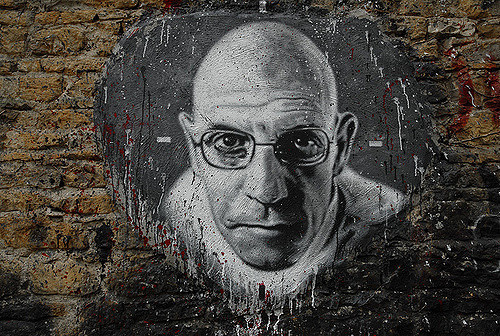
Foucault (1977) infamously described criminology as the embodiment of utilitarianism, suggesting that the discipline both enabled and perpetuated discipline and punishment. That, rather than critical and empathetic, criminology was only ever concerned with finding increasingly sophisticated ways of recording transgression and creating more efficient mechanisms for punishment and control. For a long time, I have resisted and tried to dismiss this description, from my understanding of criminology, perpetually searching for alternative and disruptive narratives, showing that the discipline can be far greater in its search for knowledge, than Foucault (1977) claimed.
However, it is becoming increasingly evident that Foucault (1977) was right; which begs the question how do we move away from this fixation with discipline and punishment? As a consequence, we could then focus on what criminology could be? From my perspective, criminology should be outspoken around what appears to be a culture of misery and suspicion. Instead of focusing on improving fraud detection for peddlers of misery (see the recent collapse of Wonga), or creating ever increasing bureaucracy to enable border control to jostle British citizens from the UK (see the recent Windrush scandal), or ways in which to excuse barbaric and violent processes against passive resistance (see case of Assistant Professor Duff), criminology should demand and inspire something far more profound. A discipline with social justice, civil liberties and human rights at its heart, would see these injustices for what they are, the creation of misery. It would identify, the increasing disproportionality of wealth in the UK and elsewhere and would see food banks, period poverty and homelessness as clearly criminal in intent and symptomatic of an unjust society.
Unless we can move past these law and order narratives and seek a criminology that is focused on making the world a better place, Foucault’s (1977) criticism must stand.
References
Bosworth, May and Hoyle, Carolyn, (2010), ‘What is Criminology? An Introduction’ in Mary Bosworth and Carolyn Hoyle, (2011), (eds), What is Criminology?, (Oxford: Oxford University Press): 1-12
Carlen, Pat, (2011), ‘Against Evangelism in Academic Criminology: For Criminology as a Scientific Art’ in Mary Bosworth and Carolyn Hoyle, (eds), What is Criminology?, (Oxford: Oxford University Press): 95-110
Cohen, Stanley, (1988), Against Criminology, (Oxford: Transaction Books)
Daly, Kathleen, (2011), ‘Shake It Up Baby: Practising Rock ‘n’ Roll Criminology’ in Mary Bosworth and Carolyn Hoyle, (eds), What is Criminology?, (Oxford: Oxford University Press): 111-24
Foucault, Michel, (1977), Discipline and Punish: The Birth of the Prison, tr. from the French by Alan Sheridan, (London: Penguin Books)
Wilson, Jeffrey R., (2015), ‘The Word Criminology: A Philology and a Definition,’ Criminology, Criminal Justice Law, & Society, 16, 3: 61-82

 Thoughts from the criminology team