
Home » Human Rights (Page 2)
Category Archives: Human Rights

Christmas Toys

In CRI3002 we reflected on the toxic masculine practices which are enacted in everyday life. Hegemonic masculinity promotes the ideology that the most respectable way of being ‘a man’ is to engage in masculine practices that maintain the White elite’s domination of marginalised people and nations. What is interesting is that in a world that continues to be incredibly violent, the toxicity of state-inflicted hegemonic masculinity is rarely mentioned.
The militaristic use of State violence in the form of the brutal destruction of people in the name of apparent ‘just’ conflicts is incredibly masculine. To illustrate, when it is perceived and constructed that a privileged position and nation is under threat, hegemonic masculinity would ensure that violent measures are used to combat this threat.
For some, life is so precious yet for others, life is so easily taken away. Whilst some have engaged in Christmas traditions of spending time with the family, opening presents and eating luxurious foods, some are experiencing horrors that should only ever be read in a dystopian novel.
Through privileged Christmas play-time with new toys like soldiers and weapons, masculine violence continues to be normalised. Whilst for some children, soldiers and weapons have caused them to be victims of wars with the most catastrophic consequences.
Even through children’s play-time the privileged have managed to promote everyday militarism for their own interests of power, money and domination. Those in the Global North are lead to believe that we should be proud of the army and how it protects ‘us’ by dominating ‘them’ (i.e., ‘others/lesser humans and nations’).
Still in 2023 children play with symbolically violent toys whilst not being socialised to question this. The militaristic toys are marketed to be fun and exciting – perhaps promoting apathy rather than empathy. If promoting apathy, how will the world ever change? Surely the privileged should be raising their children to be ashamed of the use of violence rather than be proud of it?
Share this:


What value life in a far-off land?

Watching the BBC news and for that matter any other news broadcast has become almost unbearable. Over the last three weeks or so the television screen has been filled with images of violence, grief, and suffering. Images of innocent men, women and children killed or maimed or kidnapped. Images of grieving relatives, images of people with little or no hope. And as I watch I am consumed by overwhelming sadness and as I write this blog, I cannot avoid the tears welling up. And I am angry, angry at those that could perpetuate such crimes against humanity. I will not take sides as I know that I understand so little about the conflict in Israel, Gaza, and the surrounding area, but I do feel the need to comment. It seems to me that there is shared blame across the countries involved, the region, and the rest of the world.
As I watch the news, I see reports of protest across many countries, and I see a worrying development of Islamophobia and Antisemitism. The conflict is only adding fuel to the actions of those driven by hatred and it provides plenty of scope for politicians in the West and other countries, to pontificate, and partake in political wrangling and manoeuvring before showing their abject disregard for morality and humanity. The fact that Hamas, as we are constantly reminded by the BBC, is a proscribed terrorist organisation, proscribed by most countries in the west, including the United Kingdom, seems to give carte blanche to western politicians to support crimes against humanity, to support murder and terrorism. How else can we describe what is going on?
The actions of Hamas should and quite rightly are to be condemned, any action that sees the killing of innocent lives is wrong. To have carried out their recent attacks in Israel in such a manner was horrendous and is a reminder of the dangers that the Israeli people face daily. But the declaration by Israel that it wants to remove Hamas from the face of the earth would, and could, only lead to one outcome, that being played out before our very eyes. The approach seems to be one of vengeance, regardless of the human cost and regardless of any rules of war or conflict or human dignity. How else can the bombing and shelling of a whole country be explained? How else can the blockading of a country to bring it to the brink of disaster be justified? How do we explain the forced migration of innocent people from one part of a country to another only to find that the edict to move led them into as dangerous a place as that they moved from? There seems to be a very sad irony in this, given the historical perspectives of the Israeli nation and its people.
We don’t know what efforts are going on behind the scenes to attempt to bring about peace but the outrageous comments and actions or omissions by some western politicians beggar belief. From Joe Biden’s declaration ‘now is not the time for a ceasefire’ to our government’s and the opposition’s policy that a pause in the conflict should occur, but not a ceasefire, only demonstrates a complete lack of empathy for the plight of Palestinian people. If not now, at what time would it be appropriate for a ceasefire to occur? It seems to me, as a colleague suggested, politicians and many others seem to be more concerned about accusations of antisemitism than they are about humanity. Operating in a moral vacuum seems to be par for the government in the UK and unfortunately that seems to extend to the other side of the house. Just as condemning the killing of innocent people is not Antisemitic nor too are the protests about those killings a hate crime. Our home secretary seems to have nailed her colours to the mast on that one but I’m not sure if its xenophobia, power lust or something else being displayed. Populism and a looming general election seems to be far more important than innocent children’s lives in a far off land.
The following quote seems so apt:
‘…. politicians must shoulder their share of the blame. And individuals too. Those ordinary citizens who allowed themselves to be incited into hatred and religious xenophobia, who set aside decades, sometimes centuries of friendship, who took up sword and flame to terrorise their neighbours and compatriots, to murder men, women, and children in a frenzy of bloodlust that even now is difficult to comprehend (Khan, 2021: 323).’[1]
If you are not angry, you should be, if you do not cry, then I ask why not? This is not the way that humanity should behave, this is humanity at its worst. Just because it is somewhere else, because it involves people of a different race, colour or creed doesn’t make it any less horrendous.

Khan, V. (2021) Midnight at Malabar House, Hodder and Stoughton: London.
[1] Vaseem Khan was discussing Partition on the Indian subcontinent, but it doesn’t seem to matter where the conflict is or what goes on, the reasons for it are so hard to comprehend.
Share this:


The Importance of Lived Experience in Making Change
***There is a content warning for this post as it briefly mentions self-harm***
I am a mature student entering the 3rd year of my degree, joint honours psychology and criminology. My choice in academic study (and hopeful career path) is largely informed by my own life experiences which have and will continue to be one of my biggest strengths. I have been in mental health services as a patient since my pre-teens and I have worked in a variety of mental health settings including inpatient forensic mental health and rehabilitation. My criminological interest was piqued after being a victim to violent crimes as an adult. All of this, as well as some conversations I have had with lecturers and peers over the last 2 years, has me thinking about the influence and importance of lived experiences in our academic and career choices, and the opportunities that lived experiences create for making change and battling adversity.
When we experience anything in life, big or small, positive or negative, we can gain incredible insight about ourselves and the world around us in a way that we would never have done if we didn’t have those experiences. It can change or set the trajectory of our lives. When we are in the correct place in our lives, our recovery, our minds to be able to pour from a cup that isn’t empty, we can find ourselves in an amazing place where we can help others and inspire change for those who have experienced or are likely to experience what we have. Perhaps even the ones who never have and never will. All equally as important.
Every system, service, or organisation needs to have the input from those who have experienced it from the other side. We need to know how the work is being perceived at the other end. It can be really difficult to collate feedback, especially the positive stuff, or see end-to-end results and we find that if no-one speaks up, what will be done is the easy thing, the cheap thing, or the well-intentioned but mismatched thing. Of course, we may be able to go beyond advice and become a part of a service or a voice ourselves and ‘be the change.’ We can inspire change by instilling more trust in others that we truly understand their predicament and that we have moved or are moving through it, showing them that it is possible or that they’re not alone. It can be refreshing and a huge learning experience for others in the service, as a user or provider, who may be stuck, going through the motions unequipped with knowledge of how to make change for the better, especially in sectors that can be particularly challenging day-to-day.
If I may give a personal example from when I worked on a psychiatric ward for forensic rehabilitation. I worked with many patients who felt as though it was staff vs patients, that we couldn’t possibly know what it was like for them, that we were only there because we were paid, and because they were detained against their will, we had to keep them there. I didn’t hide my personal experiences, my real reasons for being there, but no one really asked so I didn’t shout about them either. When the COVID-19 pandemic hit, for reasons of infection control, I had no choice but to obey a rule, ‘‘bare-below-the-elbow.’’ That meant I had to wear short sleeves on the ward. It meant revealing to my patients the scars I bear from self-harm. This prompted lots of questions, some less awkward than others, but it opened up so many wonderful conversations and breakthroughs. I spoke with my patients about knowing how that feels, that I’ve been on the medication they’re struggling with, and I’ve done the therapy they’re reluctant to try. It connected me to my patients and my work in such a wonderful way and meant my patients trusted me more, trusted the process more and engaged in ways they haven’t before. It meant that when decisions were made about patient care or ward processes, I could advocate from a place of empathy and understanding and in cases where people have their rights reduced or taken away, detained against their will, are vulnerable, are disadvantaged, we can’t do it enough.
Being loud about our experiences means raising awareness, breaking down stigma and stereotypes to create more inclusive and accepting societies, building supportive communities, and helping people along their path. It can serve as inspiration for people who may never have even given a thought to their experiences, things they witness or people who experience hardship and keep it under wraps.
Perhaps this even serves as a little nudge to be open to the experiences of others, to recognise and challenge your own biases, the things you may or may not understand. If you find yourself in a position to decide who to hire, interact with, which project to run; find the lived experience, consider the people who just need a little more support and feel like a little risk, because you never know what it could do. We can apply this to healthcare, criminology, charity, or anything that feels like it is our calling.
It can be such a tough and slow process, it won’t always be welcomed, it might not always work out. There may be people, services and societal norms or stigma that have an agenda or goals that don’t align with yours, not everybody likes change or will be willing to put in the effort. We may not always get the answers we are looking for because of the complex world we live in. But that doesn’t mean we shouldn’t try, right?
Share this:


Proud to be kind
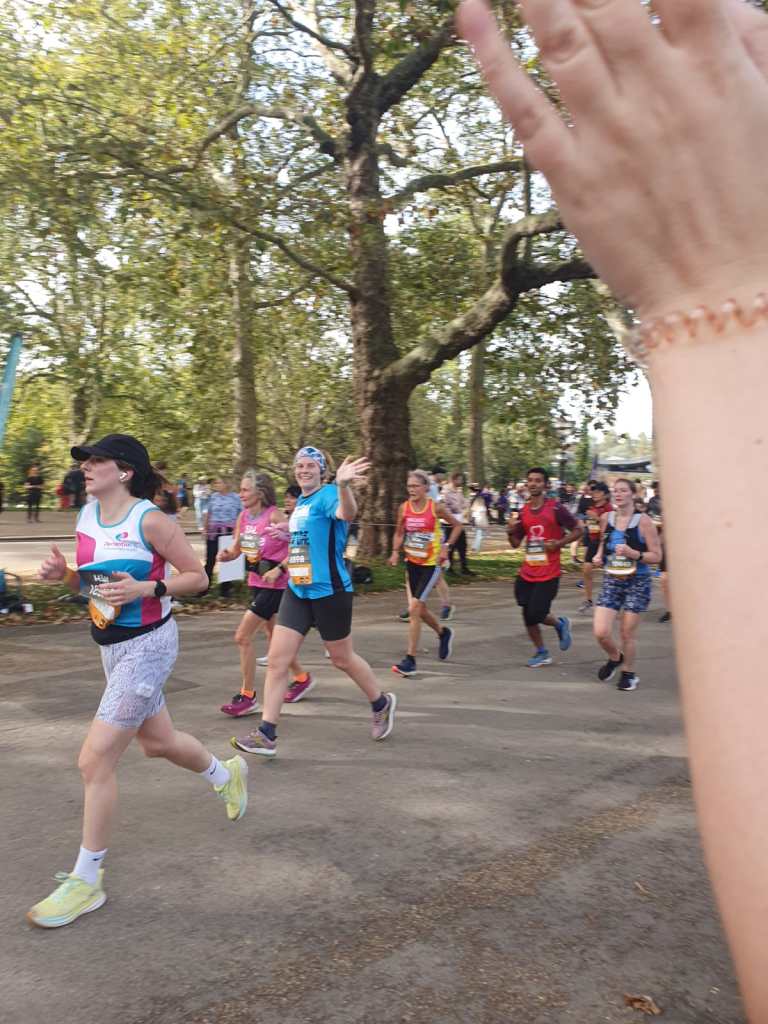
On Sunday 8th October 2023, I ran the Royal Parks Half Marathon to raise money for Freedom From Torture. It took 2hrs 11mins and 56 secs in 24 degree heat; 27 supporters who donated to Freedom From Torture to sponsor me; 5 friends who were with me on the day and kept my dehydrated spirits up; 30+ individual messages of support and encouragement on and before race day; countless well wishes and congratulations after the race; and £705 raised to rehabilitate and treat torture survivors.
The humanity and kindness shown by those who donated, checked in on me, wished me well and trained with me was overwhelming. £705 is an extraordinary amount of money and is going to make a huge difference to people’s lives who have run from torture, harm and unlawful persecution. Freedom From Torture offers, people who have experienced torture, safety and provides them with skills to be able to manage and overcome their trauma. Rooted in the foundations of this charity, and individuals that support it, is the notion of kindness, caring and wanting to live in a better world were our identities as humans are what transcends all conflict, hostility and harm in the world.
Sunday 8th October was an emotional day. Because of the focus on training (actually reaching 13.1miles/21.097km), my reasons for running and raising money for Freedom From Torture became, sort of, an afterthought- something that snuck up on me now and then rather than the focal fuel powering my legs! Even the steady influx of donations didn’t quite have the gravatas to let the reality sink in. That my silly (albeit very long) run is going to be positively impacting people’s lives! People who have experienced grave harms, displacement and social injustice. It wasn’t until the race began, where other charities and organisations were visible, being surrounded by other runners in their tops signifying who they were running for, where the enormity of the event, distance and possible impact this could have, hit home! Tears as the race begins.
Tears also followed after the race. Not to be too boastful but: I ran a half marathon! On a week where my chronic illness had seriously kicked my butt! Flash back to Thursday that week and I was concerned I wouldn’t make it to the race, let alone finish it! Once that wave of overwhelmingness passed, the next wave was not far behind. People I know and care for, and people I do not know, have banded together to support survivors of torture. Their donations will provide therapy, counselling, support for survivors of torture to manage their trauma and to be able to rebuild lives which had been destroyed. The people who donated and supported in all capacities have demonstrated incredible kindness, and the reality of what this money is going towards reduced me to yet another round of tears. But this time, tears of joy. Look what we can achieve! Look what we can do with kindness! Look what we can do when we lean on those around us!
Sunday 8th October 2023 will be a day I shall not forget. It is a day which I am immensely proud of. Not just of my running achievement, but the achievement of all those committed to making a change and providing support to those that need it. Thank you to everyone who has been with me on this journey to raise money to support survivors of torture: it couldn’t have been done without you!
Share this:


Reproductive Healthcare Ramblings

Reproductive health in England and Wales is a shambles: particularly for women and people who menstruate. The failings start early, where, as with most things, stereotypes and ‘norms’ are enforced upon children from GPs, schools, from parents/guardians who have experienced worse, or who do not know any different, which keep children from speaking up. These standards and stereotypes come from a male dominated health care system especially in relation to gynaecology, and our patriarchal society silences children without the children even realising they are being silenced. As a child, you are expected to go about your daily routine, sit your exams, look after your siblings, represent the school at the tournament of the week, and do all this while, for some, bleeding, cramping, being fatigued but not be expected to talk about it. After all, you are told time and time again: it’s normal.
Moving through life, women and people who menstruate face similar stigma, standards, assumptions during adulthood as they faced during childhood. There is more awareness now of endometriosis, adenomyosis, uterine fibroids, Polycystic Ovary Syndrome Condition (PCOS) to name but a few. But women and people who menstruate report feelings of being gaslighted by [male] gynaecologists, encouraged to have children in order to regulate their hormones (pregnancy and childbirth comes with a whole new set of healthcare problems and conditions), to take the contraceptive pill and deal with the migraines, mood swings, weight gain and depression which many women and girls report. Some of the above chronic illnesses impact fertility, so ‘try for a baby’ is not an easy, or even a wanted path. Diagnosis is also complex: for example a diagnosis for endometriosis takes on average 8 years (Endometriosisuk, 2023), and can only be confirmed with surgery. That relies on women and people who menstruate going to their GP, reporting their symptoms, listening to the ‘have you tried the pill’ or ‘having a baby will help manage your symptoms’: which relies on trust. Not everyone trusts the NHS, not everyone feels comfortable being dismissed by a nurse, or GP or then their gynaecologist. Especially when a number of these illnesses are framed and seen as a white-woman illness. Communities of women and people who menstruate remain hidden, dealing with the stigma and isolation that our reproductive health system carries in England and Wales. And this is not a new issue.
The reproductive healthcare for women and people who menstruate is dire. Just ask anyone who has experienced it. What then is it like for women in prison? The pains of imprisonment are well documented: deprivation of goods, loss of liberty, institutionalisation, no security, depreciation of mental health (Sykes, 1958; Carlen, 1983). The gendered pains, fears and harms less so, but we know women in prison are fearful about the deterioration of relationships (especially with children), lack of facilities to support new mothers, physical and sexual abuse, and poor mental and physical health support including reproductive health. The poor reproductive healthcare available to women and people who menstruate within society, is a grade above what is available in prisons. These women are quite literally isolated, alone and withdrawn from society (through the process of imprisonment), and for some, they will become further isolated and withdrawn via the pains of their chronic illness.
There isn’t really a point to this blog: more like a rambling of frustrations towards all the children who will journey through our subpar reproductive healthcare system, who will navigate the stigma and assumptions littered within society. To all the women and people who menstruate who are currently wading through this sh*t show, educating themselves, their family, their friends and in some cases their GPs, those people unable to speak out, not knowing how or simply not wanting to. And to those in the Secure Estate, grappling with the pains of imprisonment and having their reproductive healthcare needs ignored, overlooked or missed.
I haven’t even mentioned menopause…
References:
Carlen, P. (1983) Women’s Imprisonment, Abingdon: Routledge.
Corston, Baroness J. (2007) The Corston Report: A Review on Women with Particular Vulnerabilities in the Criminal Justice System, London: Home office.
Endometriosis UK (2023) Endometriosis Facts and Figures [online] Available at: https://www.endometriosis-uk.org/endometriosis-facts-and-figures#:~:text=Endometriosis%20affects%201.5%20million%20women,of%20those%20affected%20by%20diabetes.&text=On%20average%20it%20takes%208,symptoms%20to%20get%20a%20diagnosis. [Accessed 24th August 2023]
Sykes, G. (1958/2007) The Society of Captives: A Study of a Maximum Security Prison, Princeton: Princeton University Press.

Share this:


Regulation and the Internet

*Trigger warning: article contains mentions of suicide, mental illness and self harm in regard to a recent news article*
It seems that internet usage, regulation and monitoring can be a divisive topic for some. The internet can be a fantastic tool for learning, communicating and employment, among other things. However, as with everything, there is a dark side to it. I once watched a video about the internet and regulation, the narrator likened internet usage to when people drove cars with no seatbelts. The world now has this wonderful tool, with little to no effective safety mechanisms, and with many young people, and vulnerable people being able to view harmful content without regulation, we are seeing extreme and negative repercussions.
I think one of the main appeals of the internet is the inherent freedom that it gives the user, the key word here is freedom. It seems that some people believe that unregulated usage of the internet is now an inherent part of their freedoms. This is perhaps why attempting to further regulate usage could result in disagreement and objection. The topic of internet regulation is a very nuanced topic; it toes the line of freedom and restriction and profit and protection. Algorithms are one way that social media companies can prolong the amount of time a person is scrolling through their newsfeed, for example: If you ‘liked’ a picture of a cat, it is more likely that related content would then be shown to you. For social media companies, more engagement equals more money. The algorithmic style of newsfeeds seems great in theory but they can become harmful. If we replace viewing cat content on Instagram with viewing suicide related content, we can see how this can become very problematic very quickly.
Questions concerning the ‘wild west’ type environment that is the internet are becoming more common. With the recent inquest concerning the suicide of Molly Russel, these questions are even more relevant. Molly Russel saved thousands of images related to self harm and suicide months before her death, posts also included some promoting depressive content and encouragement to not seek the help from a mental health professional. Tech giant Meta’s response in the inquest was that the majority of these posts did not breach their social media posting guidelines (they conceded a few did breach the rules). Their response totally contradicts the reactions of those present at the court, with Molly Russel’s father stating that these images were graphic, dark and harmful. With mental health resources already being stretched beyond capacity, this unregulated environment that is legally accessible to children will surely exacerbate these problems. Molly Russel’s experience will not be the only one, thousands of vulnerable and impressionable people, young and old experience similar things and view similar medias. Whether it be accessing pro-anorexia content, content which promotes weapons and violence or content which advocates for avoiding professional mental health support.
The repercussions of an ineffectively regulated internet are unmeasured and the continuation of this deregulation is for the pursuit of profit fuelled by misguided ideas about what freedom of action and freedom of expression mean.
Share this:


Mundial: Why I won’t be watching the World Cup this time

It has been called the beautiful game; in the past even during war the opposing sides played a game; it has made some of its players stars and household names, football or soccer has a global appeal. From the townships in South Africa, to the Brazilian Favelas, the makeshift pitches the world over to the highly pristine pitches in academies, kids the world over learn to kick a ball, and play the game that requires speed, agility, and dexterity in the feet. Kids who just play for fun in an after-school club or to bond with friends. The appeal of this game has been intertemporal.
Generations of kids, begged their parents to stay longer out to play with their friends, asked for another ball, shoes or shorts and each family responded according to their means. After all, football is/was a working-class game. The relative low cost makes it accessible; it allows plenty of kids to play together and build relationships. Football was an equaliser that did not care who you are or where you come from.
I remember as a kid, year after year playing in the summer with the same kids in teams between Greek and Yugoslavians. We were keeping score and the losing side was buying the other side ice-creams. Not quite the golden ornate cup but a wager worth playing 10 games across the summer. We called each other’s teams with the name of the country we came from. My lasting memory was the last time we played together before the civil war in Yugoslavia erupted. The Yugoslavians won and they were chanting “Yugoslavia, Yugoslavia”. Those kids did not come the following summer. In the next summer, the same kids would be carrying the flag and arms of one of the opposing sides armed to kill each other. When football is not the game, disputes are resolved in brutality.
In the past decades, football’s appeal made it the game to watch. The transition to professional football made the game lucrative, some clubs acquired big budgets and of course attracted a finer audience. The pundits, as a former footballer put it, started eating “prawn sandwiches” an indication of their more expensive tastes. Still people stick with the sport because of their own memories and experiences. My first ever game was with my grandfather. We went to the stadium of the club that was to become the team I support for life. The atmosphere, the emotional roller coaster and most importantly a shared experience with someone very dear, that even when they are gone, you carry the sounds, the emotions with you forever.
Some footballers started earning enormous fees for playing the game; the club colours became trademarked and charged over the odds for a simple scarf or a top. The rights to the games sold to private companies requiring people to pay subscriptions to watch a simple game. People objected but continued still to support, although some people were priced out of the game altogether. The game endures because it still resonates with people’s experiences.
In particular, the national games have kept some of their original appeal of playing for your country, playing for your colours! Football is an unpredictable sport and in international events you can have an outsider taking the cup against the odds! Like Greece winning the UEFA Euro in 2004! The games in international tournaments leads to knock out games, with the drama of extra time and of course the penalty shootout. Nail biting moments shared with family and friends. These magical moments of personal and collective elevation, as if you were there with the players, part of their effort, part of their victory.
When the host country was announced some years ago that will be hosting this year’s world cup there were already calls for investigation into the voting process raising concerns. Since then, there have been concerns about the safety of those who work on the infrastructure. Thousands of migrant workers, many of whom are/were undocumented have worked in building the stadiums that the games will be played in. There are accusations of numerous deaths of migrant workers (an estimate from The Guardian comes to a staggering 6,500 deaths). This has raised a significant question about priorities in our world. It is unthinkable to put a game above human life. This was later followed by “the guidelines” to teams and visitors that alternative sexualities will not be tolerated. Calls about respecting the host’s culture adding to the numbers of people calling for a boycott. So why I won’t be watching this time around?
We have been talking for years about inclusivity and tolerance. Women’s rights, LGBTQ+, immigrant rights, worker rights and all of them being trampled for the sake of a competition. Those who have been asked about the issues from the football federation, former footballers and even governments have played down all these concerns. In some cases, they opted for a tokenistic move like rainbow-coloured planes or include the rainbow on national team logo. Others will be issuing rainbow bracelets and some saying that they will raise issues if/when given the opportunity. This sounds too little considering what has happened so far especially all the fatalities caused building all the constructions. If we are not to uphold civil rights and if we are not ready to act on them, why talk about them?
I remember the game for being inclusive and serving to get people together; this competition is setting an incredibly horrible precedent that human life is cheap and expendable; that people’s rights are negotiable and that you can stop being who you are momentarily, because the game matters more than any of the above. It does not! Without rights, without respect, without life there is no game, there is nothing, because there is no humanity. These games do not bother me, they offend me as a human being. If people died to build this stadium then this space is not fit for games; it’s a monument to vanity and greed; hardly sportsmanlike qualities.
Share this:


‘Now is the winter of our discontent’
As I write this blog, we await the detail of what on earth government are going to do to prevent millions of our nations’ populations plummeting headlong into poverty. It is our nations in the plural because as it stands, we are a union of nations under the banner Great Britain; except that it doesn’t feel that great, does it?
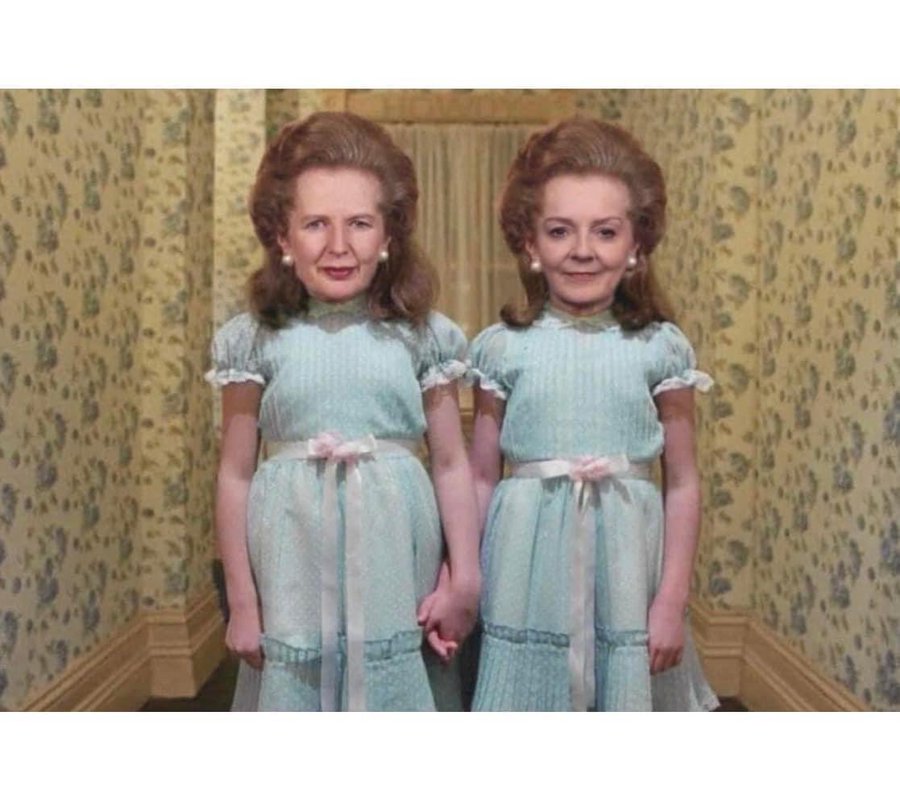
As autumn begins and we move into winter we are seeing momentum gaining for mass strikes across various sectors somewhat reminiscent of the ‘winter of discontent’ in 1979. A few of us are old enough to remember the seventies with electricity blackouts and constant strikes and soaring inflation. Enter Margaret Thatcher with a landslide election victory in 1979. People had had enough of strikes, believing the rhetoric that the unions had brought the downfall of the nation. Few could have foreseen the misery and social discord the Thatcher government and subsequent governments were about to sow. Those governments sought to ensure that the unions would never be strong again, to ensure that working class people couldn’t rise up against their business masters and demand better working conditions and better pay. And so, in some bizarre ironic twist, we have a new prime minister who styles herself on Thatcher just as we enter a period of huge inflationary pressures on families many of whom are already on the breadline. It is no surprise that workers are voting to go on strike across a significant number of sectors, the wages just don’t pay the bills. Perhaps most surprising is the strike by barristers, those we wouldn’t consider working class. Jock Young was right, the middle classes are staring into the abyss. Not only that but their fears are now rapidly being realised.
I listened to a young Conservative member on the radio the other day extolling the virtues of Liz Truss and agreeing with the view that tax cuts were the way forward. Trickle down economics will make us all better off. It seems though that no matter what government is in power, I have yet to see very much trickle down to the poorer sectors of society or for that matter, anyone. The blame for the current economic state and the forthcoming recession it seems rests fairly on the shoulders of Vladimir Putin. Now I have no doubt that the invasion of Ukraine has unbalanced the world economic order but let’s be honest here, social care, the NHS, housing, and the criminal justice system, to name but a few, were all failing and in crisis long before any Russian set foot in the Ukraine.
That young Conservative also spoke about liberal values, the need for government to step back and to interfere in peoples lives as little as possible. Well previous governments have certainly done that. They’ve created or at least allowed for the creation of the mess we are now in by supporting, through act or omission, unscrupulous businesses to take advantage of people through scurrilous working practices and inadequate wages whilst lining the pockets of the wealthy. Except of course government have been quick to threaten action when people attempt to stand up for their rights through strike action. Maybe being a libertarian allows you to pick and choose which values you favour at any given time, a bit of this and a bit of that. It’s a bit like this country’s adherence to ideals around human rights.
I wondered as I started writing this whether we were heading back to a winter of discontent. I fear that in reality that this is not a seasonal thing, it is a constant. Our nations have been bedevilled with inadequate government that have lacked the wherewithal to see what has been developing before their very eyes. Either that or they were too busy feathering their own nests in the cesspit they call politics. Either way government has failed us, and I don’t think the new incumbent, judging on her past record, is likely to do anything different. I suppose there is a light at the end of the tunnel, we have pork markets somewhere or other.
Share this:


Au revoir Le Pen, take the rest of the far right with you!

The recent French election once again saw centrist Macron head to head with far right nationalist Le Pen. Macron won the election by a much narrower margin that the 2017 elections. I have an interest in the French elections as my parents live there and are not far away from applying for citizenship. For them, the prospect of a far right president was worrying.
The politics of much of the world has shifted to the right of late, often to the far right. Perhaps this hasn’t been a recent thing. Indeed, before this wave of Trump, Modi, and Le Pen, we had UKIP and for a while the BNP was making a lot of noise. The writing was on the wall with New Labour and their many new immigration offences, Blair’s tough on crime and it’s causes approach, and not forgetting war on Iraq and Afghanistan. This was swiftly followed with then Home Secretary Theresa May’s hostile environment agenda which has been advanced again and again by consecutive Home Secretaries until we passed the point of no return with Priti Patel and her Nationality and Borders Act 2022 (it pains me to type ‘Act’ instead of ‘Bill’ – it’s black and white now) from which not the Lords nor God nor the best lawyers in the land seem have yet been able to save us from. What we see now is a Conservative government embedded with far right ideology, and this is not an isolated island in that respect.
This current uprising of the far right, racist, and xenophobic politicians is a global phenomenon. Modi, the far right Hindu nationalist is knee deep in his campaign against Muslims, revoking autonomy in Jammu and Kashmir (ironically – or deliberately – this took place on 31st October 2019, the day Britain was supposed to leave the EU), invoking the Citizenship (Amendment) Act 2019 which disproportionately affects the citizenship of Muslims who now face the possibility of expulsion, and even outright attacks on Muslims.
Then there was Trump and the less said about him, the better. But let us return to France. This is the second consecutive election in which Macron has faced Le Pen and won. In France, elections are held in two stages. All parties and candidates go head to head in stage one and if no candidate holds a majority, a second round between the top two candidates takes place. In 2017, Macron won the second stage with 66.1% of the vote. This time around, the vote was much narrower 58.6%. Le Pen’s Rassemblement National party has ‘transformed’ since the 2017 election, with the party’s councillor for Gironde arguing that they are not the far right, and instead are localists and nationalists. Are they not one and the same?
In recent years, the rise of the far right in Europe has been fuelled by fears of refugees, terrorism, and open borders within the European Union. In addition to this, concerns over employment and poverty have contributed to this. It is not all about them, it is preservation of us.

In a globalised era, we have seen decades of erosion of the working class jobs of old combined with distorted perceptions of immigration and population changes. People living in poverty, unemployed or in insecure employment look for someone to blame and the someone tends to be them. So, parties who say they stand for the working man and oppose immigration become popular, not because voters are necessarily racist but because they are fearful and suffering. Bearing that in mind, where does that leave us now? The whole of Europe is facing a cost of living crisis, war on our doorstep. Here in the UK, inflation and interest rates are rising but wages are not. We cannot blame this on them, on people fleeing persecution, on people who come to the UK to fill the jobs nobody wants or are not qualified to do. This us and them narrative causes nothing but division and hatred, fuelling hateful politicians who – let’s face it – serve nobody’s interests but their own.
My Monday message: Choose love
Share this:


Protect international law

In criminological discourses the term “war crime” is a contested one, not because there are no atrocities committed at war, but because for some of us, war is a crime in its own right. There is an expectation that even in a war there are rules and therefore the violation of these rules could lead to war crimes. This very focused view on war is part of a wider critique of the discipline. Several criminologists including, Ruggiero, DiPietro, McGarry and Walklate, to name a few, have argued that there is less focus on war as a crime, instead war is seen more as part of a metaphor used in response to social situations.
As far back as the 1960s, US President Johnson in his state of the union address, announced “The administration today here and now declares unconditional war on poverty in America”. What followed in the 1964 Economic Opportunity Act, was seen as the encapsulation of that proclamation. In some ways this announcement was ironic considering that the Vietnam war was raging at the time, 4 years before the well documented My Lai massacre. A war crime that aroused the international community; despite the numbers of soldiers involved in the massacre, only the platoon leader was charged and given a life sentence, later commuted to three and a half years incarceration (after a presidential intervention). Anyone can draw their own conclusion if the murder of approximately 500 people and the rape of women and children is reflected in this sentence. The Vietnam war was an ideological war on communism, leaving the literal interpretation for the historians of the future. In a war on ideology the “massacre” was the “collateral damage” of the time.
After all for the administration of the time, the war on poverty was the one that they tried to fight against. Since then, successive politicians have declared additional wars, on issues namely drugs and terror. These wars are representations of struggles but not in a literal sense. In the case of drugs and terrorism criminology focused on trafficking, financing and organised crimes but not on war per se. The use of war as a metaphor is a potent one because it identifies a social foe that needs to be curtailed and the official State wages war against it. It offers a justification in case the State is accused being heavy handed. For those declaring war on issues serves by signalling their resolve but also (unwittingly or deliberately) it glorifies war as an cleansing act. War as a metaphor is both powerful and dangerous because it excuses State violence and human rights violations. What about the reality of war?
As early as 1936, W.A Bonger, recognised war as a scourge of humanity. This realisation becomes ever more potent considering in years to come the world will be enveloped in another world war. At the end of the war the international community set up the international criminal court to explore some of the crimes committed during the war, namely the use of concentration camps for the extermination of particular populations. in 1944 Raphael Lemkin, coined the term genocide to identify the systemic extermination of Jews, Roma, Slavic people, along with political dissidents and sexual deviants, namely homosexuals.
In the aftermath of the second world war, the Nuremberg trials in Europe and the Tokyo trials in Asia set out to investigate “war crimes”. This became the first time that aspects of warfare and attitudes to populations were scrutinised. The creation of the Nuremberg Charter and the outcomes of the trials formulated some of the baseline of human rights principles including the rejection of the usual, up to that point, principle of “I was only following orders”. It also resulted in the Nuremberg Code that set out clear principles on ethical research and human experimentation. Whilst all of these are worthwhile ideas and have influenced the original formation of the United Nations charter it did not address the bigger “elephant” in the room; war itself. It seemed that the trials and consequent legal discourses distanced themselves from the wider criminological ideas that could have theorised the nature of war but most importantly the effects of war onto people, communities, and future relations. War as an indiscriminate destructive force was simply neglected.
The absence of a focused criminological theory from one end and the legal representation as set in the original tribunals on the other led to a distinct absence of discussions on something that Alfred Einstein posed to Sigmund Freud in early 1930s, “Why war?”. Whilst the trials set up some interesting ideas, they were criticised as “victor’s justice”. Originally this claim was dismissed, but to this day, there has been not a single conviction in international courts and tribunals of those who were on the “victors’” side, regardless of their conduct. So somehow the focus changed, and the international community is now engaged in a conversation about the processes of international courts and justice, without having ever addressed the original criticism. Since the original international trials there have been some additional ones regarding conflicts in Yugoslavia and Rwanda. The international community’s choice of countries to investigate and potentially, prosecute has brought additional criticism about the partiality of the process. In the meantime, international justice is only recognised by some countries whilst others choose not to engage. War, or rather, war crimes become a call whenever convenient to exert political pressure according to the geo-political relations of the time. This is not justice, it is an ad hoc arrangement that devalues the very principles that it professes to protect.
This is where criminology needs to step up. We have for a long time recognised and conceptually described different criminalities, across the spectrum of human deviance, but war has been left unaccounted for. In the visions of the 19th and 20th century social scientists, a world without war was conceptualised. The technological and social advancements permitted people to be optimistic of the role of international institutions sitting in arbitration to address international conflicts. It sounds unrealistic, but at the time when this is written, we are witness to another war, whilst there are numerous theatres of wars raging, leaving a trail of continuous destruction. Instead of choosing sides, splitting the good from the bad and trying to justify a just or an unjust war, maybe we should ask, “Why war”? In relation to youth crime, Rutherford famously pondered if we could let children just grow out of crime. Maybe, as an international community of people, we should do the same with war. Grow out of the crime of war. To do so we would need to stop the heroic drums, the idolisation of the glorious dead and instead, consider the frightened populations and the long stain of a violence which I have blogged about before: The crime of war

 Thoughts from the criminology team